
22 Stackable Washer Dryer Laundry Room Ideas
A stacked washer and dryer can completely change how you use a laundry room, especially when every inch needs a clear purpose.
Once the appliances move upward, you get more freedom to add storage, a folding spot, hanging space, or even a small sink.
In this article, you’ll find stackable washer dryer laundry room ideas that make the space feel practical, organized, and well planned.
Let’s jump in!
Is A Stackable Washer And Dryer A Good Idea?
Yes, especially if you want to free up floor space and use the remaining area for storage, folding, or hanging clothes.
A stacked setup works best when you plan the room around the appliances instead of squeezing them into whatever space is left.
Before you build cabinets or shelves, check the exact machine size, door swing, hookups, ventilation needs, and access for future repairs.
If the dryer controls sit too high or you need a long countertop, a side-by-side setup may work better for your daily routine.
For a small laundry room or closet, though, stacking can give you much more flexibility without making the room feel crowded.
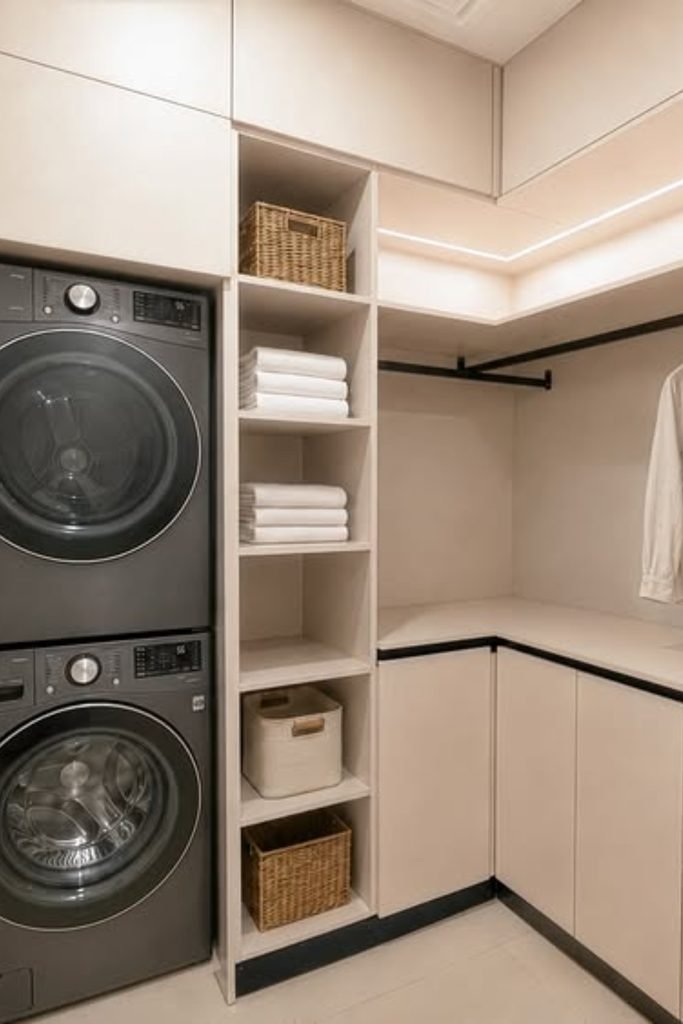
Hanging Zone
Use the space beside your stacked machines for a hanging rail when shirts, uniforms, or delicate pieces need air-drying straight away.
Add a slim shelving tower between the appliances and rail so folded towels, baskets, and daily supplies stay easy to reach.
Keep the lower cabinets simple and deep, because closed storage will hide bulkier laundry items without making the room feel crowded.
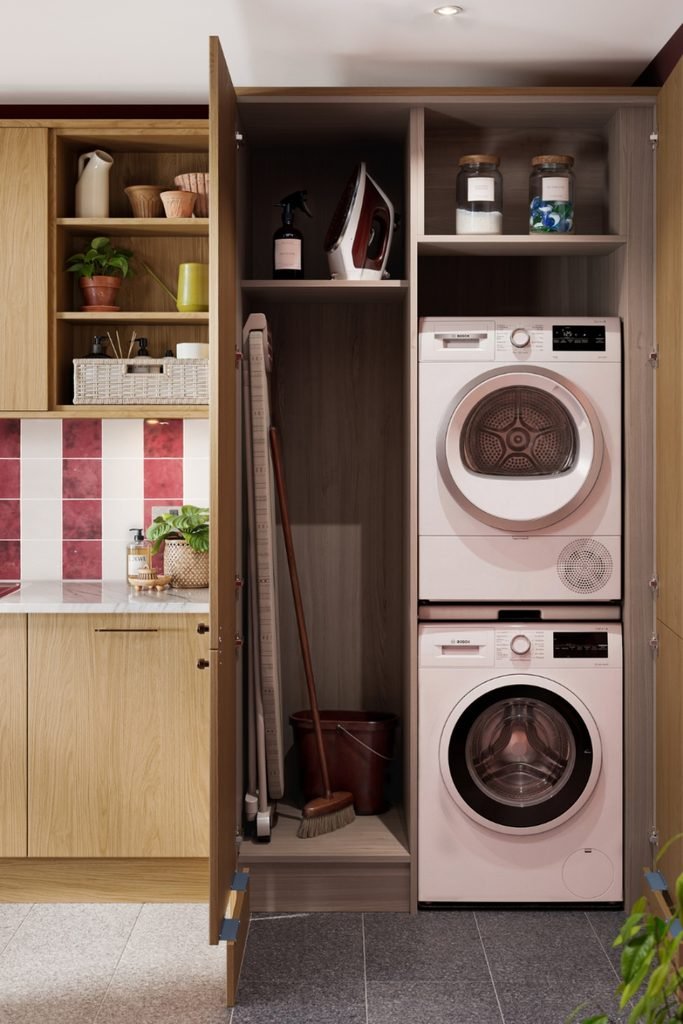
Hidden Utility
A full-height cabinet works especially well when your laundry shares space with a kitchen, hallway, or utility zone that stays visible.
Place the stacked machines on one side, then reserve the narrow section beside them for an ironing board, broom, and cleaning tools.
Use doors that open wide enough for servicing, and keep frequently used detergent on a shelf you can reach without stretching.
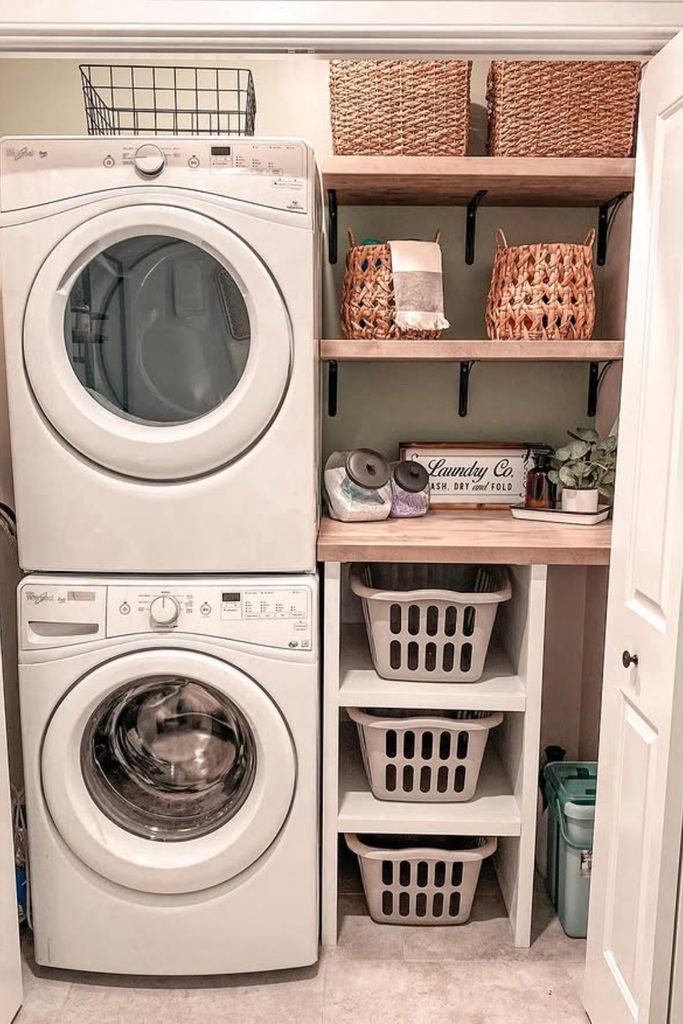
Sorting Closet
Turn a standard laundry closet into a sorting station by giving the free side to shelves, hampers, and everyday laundry supplies.
Open cubbies work well here because you can pull baskets out quickly, while upper shelves keep refills and less-used items above.
Leave enough floor clearance in front of the washer so a loaded hamper never blocks the door when you transfer clothes.
Sink Pairing
Pairing a compact sink with stacked machines makes sense when you need a place for handwashing, soaking stains, or filling cleaning buckets.
Keep the sink cabinet shallow enough to preserve walking space, especially in narrow balcony laundries or long utility rooms with limited width.
Add a slim side cabinet for detergents and small tools, then use upper storage for refills that you do not need daily.
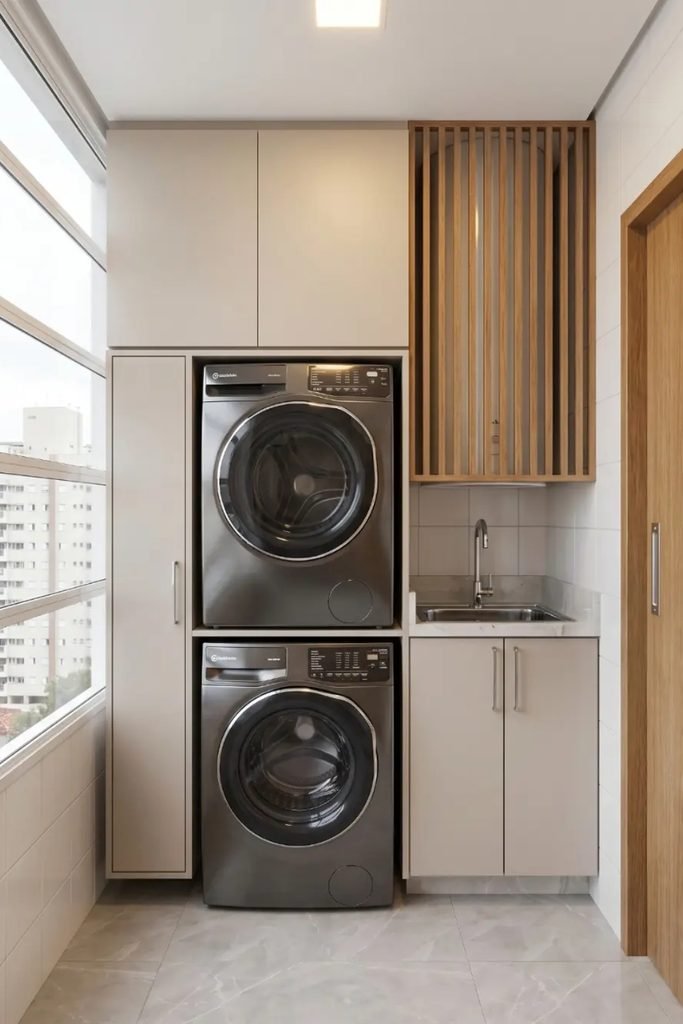
Appliance Wall
Create one clean appliance wall when your laundry room opens into another space, because matching heights make bulky machines feel intentionally placed.
Frame the stacked unit with simple cabinetry, but measure the exact machine depth first so doors and service access stay practical.
Keep nearby storage visually quiet and handle-free, letting the dark appliance finish become the focal point instead of fighting surrounding details.
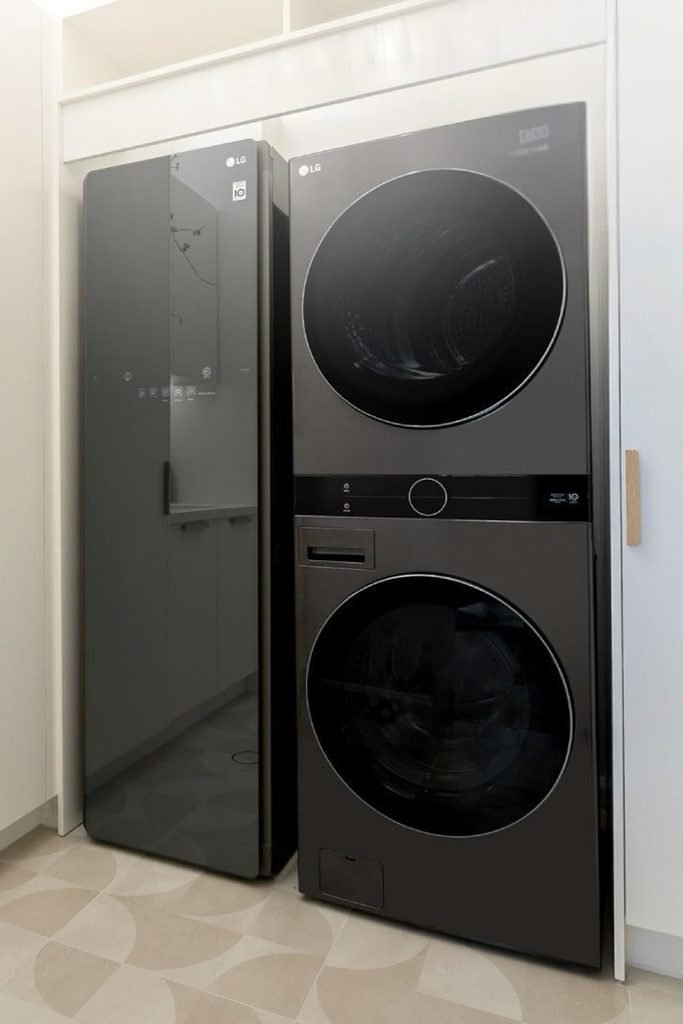
Storage Tower
A narrow storage tower beside stacked machines can hold far more than shelves alone, especially when you mix drawers, cupboards, and open cubbies.
Use upper cabinets for refills, middle openings for grab-and-go supplies, and lower drawers for heavier products you do not want overhead.
This layout suits small laundry rooms where floor width is limited, because every function stays vertical without blocking the appliance doors.
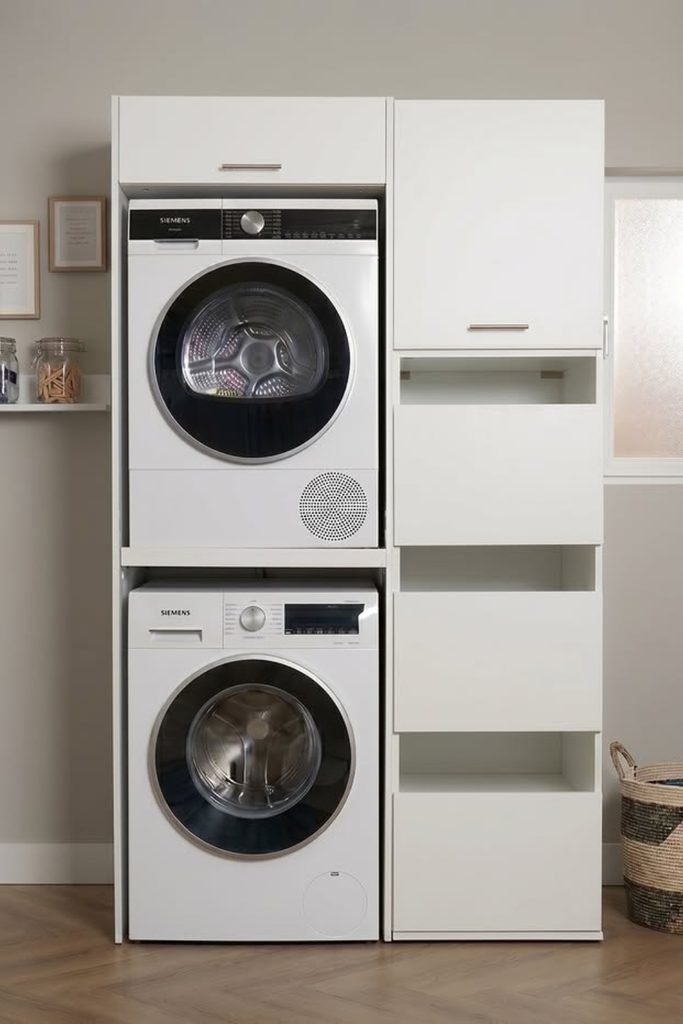
Mudroom Blend
When laundry shares space with an entry zone, stacking the machines leaves enough wall width for a sink, bench, hooks, and storage.
Add a pull-out shelf between the washer and dryer if you need a quick landing spot for folded pieces or laundry baskets.
Keep finishes consistent across cabinets and seating so the utility area reads as one planned room rather than two unrelated zones.
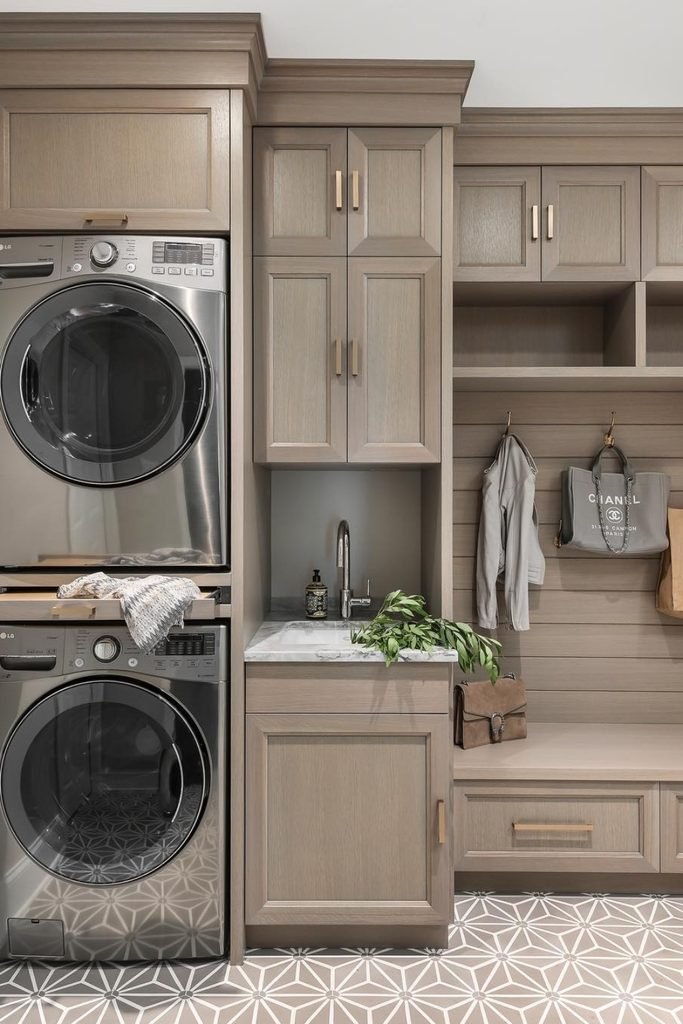
Galley Setup
A narrow galley laundry room works best when the stacked machines stay on one side and a continuous counter runs opposite.
Use that counter for folding and stain treatment, then hide detergents in drawers below so the walkway stays clear and uncluttered.
Choose a slim hamper or basket that can tuck against the wall, because bulky floor storage quickly makes this layout harder.
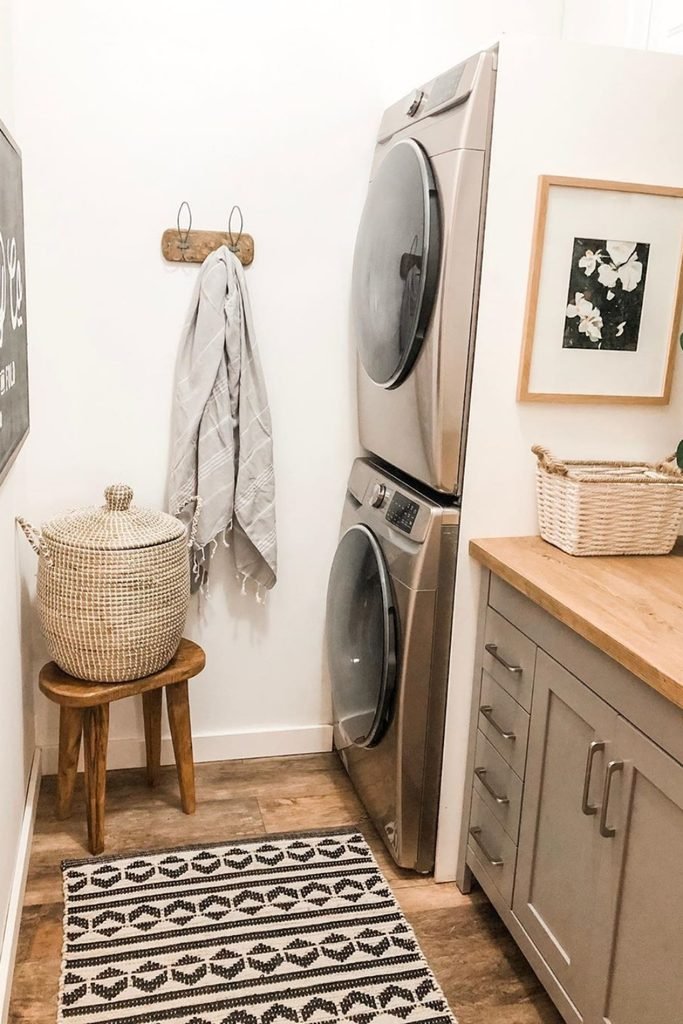
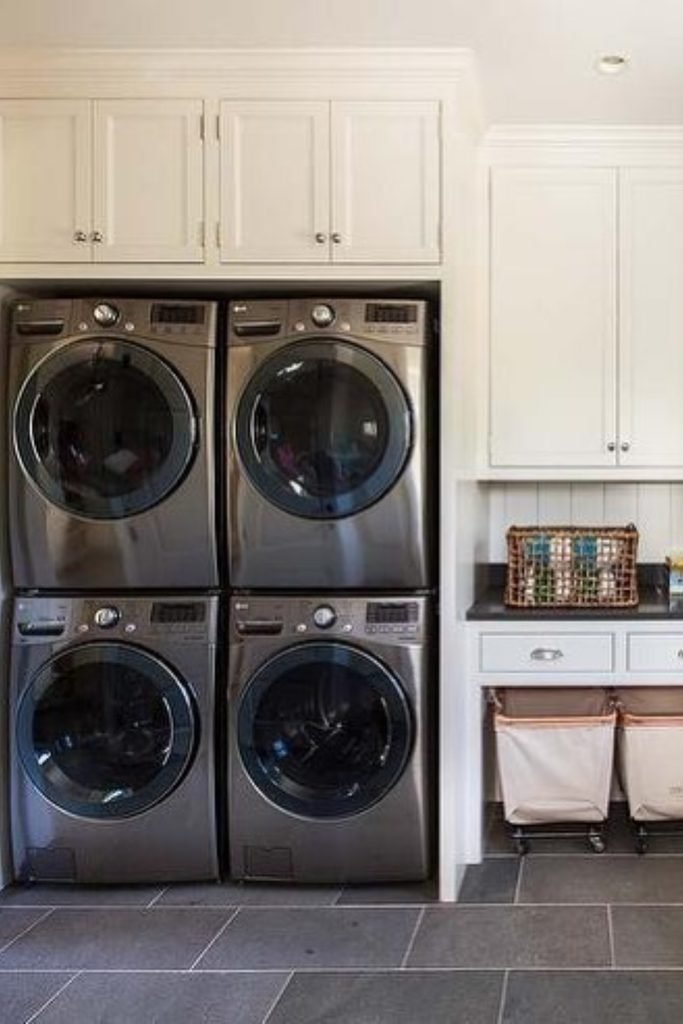
Dual Stacks
If your household runs several loads each day, two stacked pairs can double capacity without taking over the entire laundry wall.
Keep a counter beside them for sorting, then add open hamper storage underneath so clean and dirty loads stay separated.
This setup suits larger families best, but leave enough clearance around both towers so doors, vents, and future servicing remain practical.
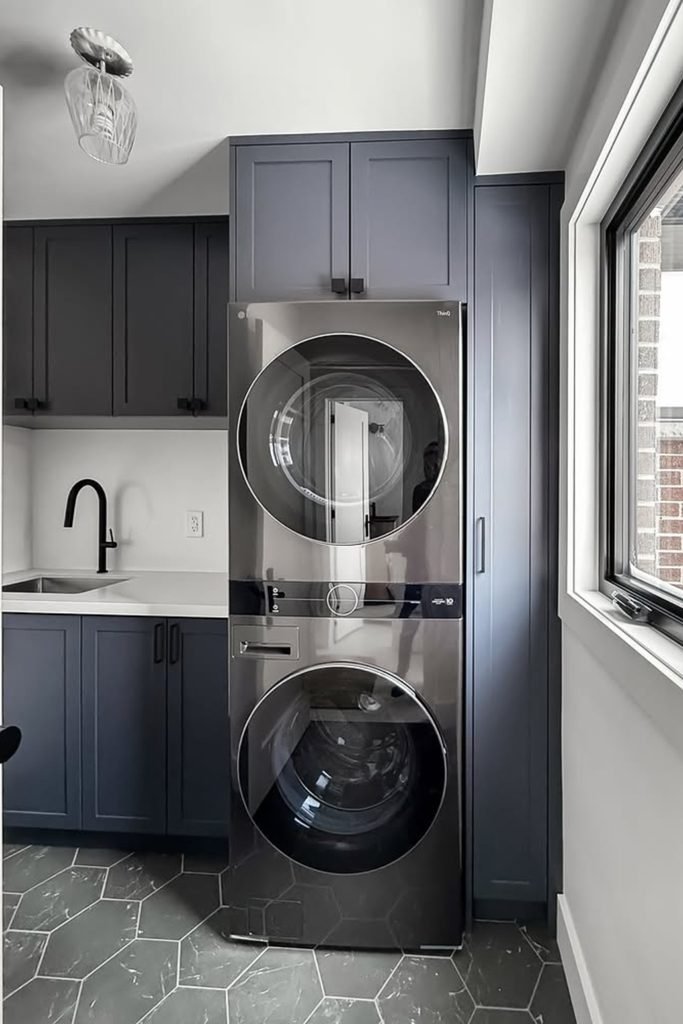
Corner Stack
Tuck the stacked machines into one end of the room when you want to keep the sink and counter completely separate.
Frame the tower with tall cabinetry to hide supplies, while upper cabinets above the sink handle lighter items you reach often.
A window beside the appliances helps the narrow room feel brighter, so keep that wall free of deep shelves or bulky storage.
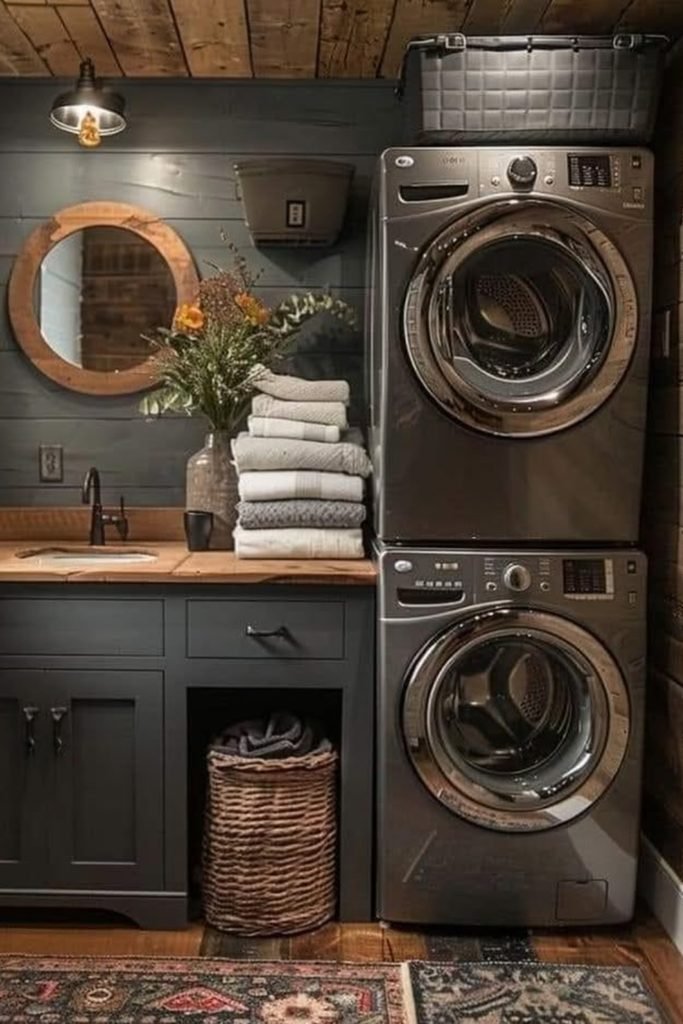
Rustic Counter
A warm wood counter can soften a dark laundry room and give you a practical place for folding, sorting, or stain treatment.
Keep the stacked machines tight to one side, then use the remaining width for a sink, drawers, and an open hamper bay.
This layout works especially well in compact rooms where you want strong storage without losing the cozy, lived-in look of natural materials.
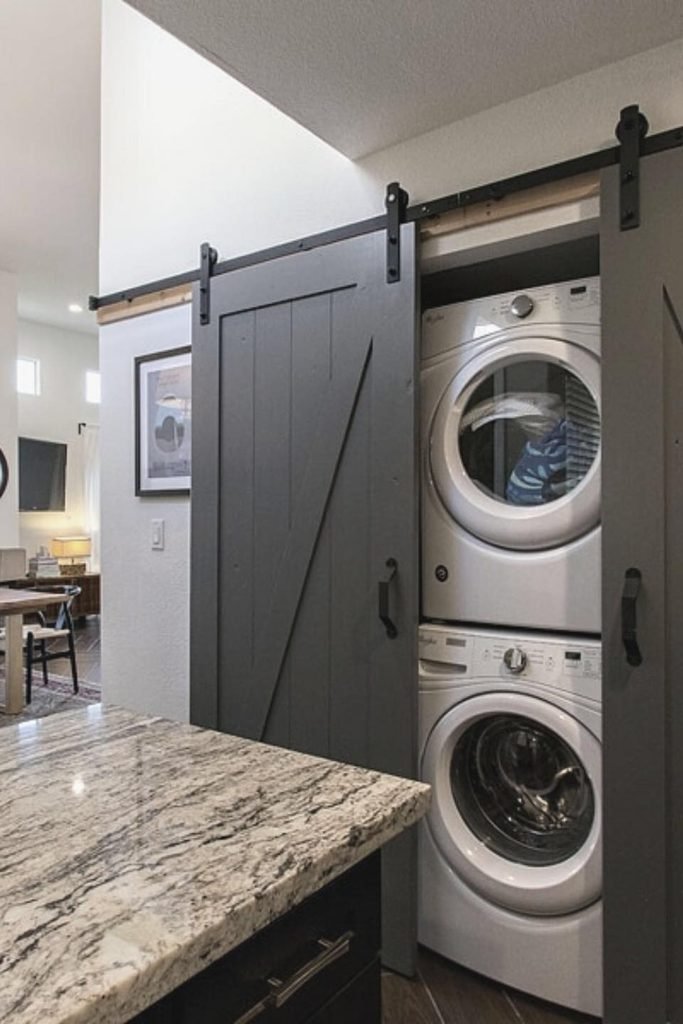
Sliding Hideaway
Use sliding doors when your laundry sits beside a kitchen or living area and you want the machines completely hidden between loads.
Because the doors move sideways, they avoid the floor-space loss of hinged doors and work well where walkways already feel tight.
Measure the opening carefully so both appliance doors can swing freely, and keep ventilation and service access clear behind the enclosure.
Sorting Cubbies
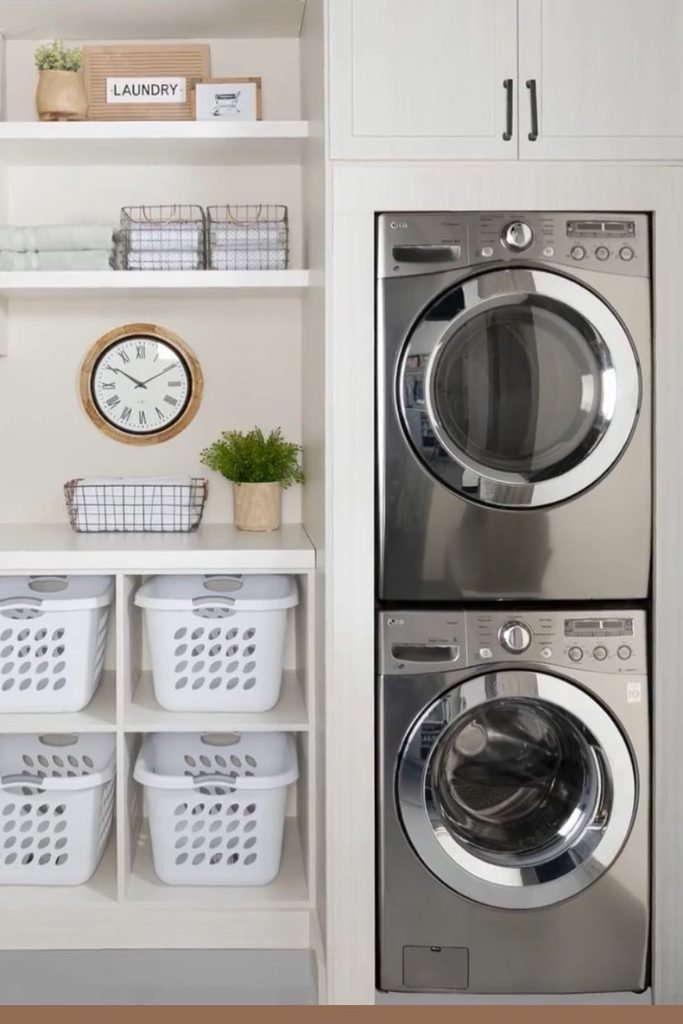
Build basket cubbies beside the stacked machines when you want sorting to happen before clothes ever reach the washer door.
Keep open shelves above the baskets for towels and daily supplies, then use closed cabinets for bulk products and backup stock.
This setup works especially well for busy households because each hamper gets a clear job without taking over valuable floor space.
Ventilated Closet
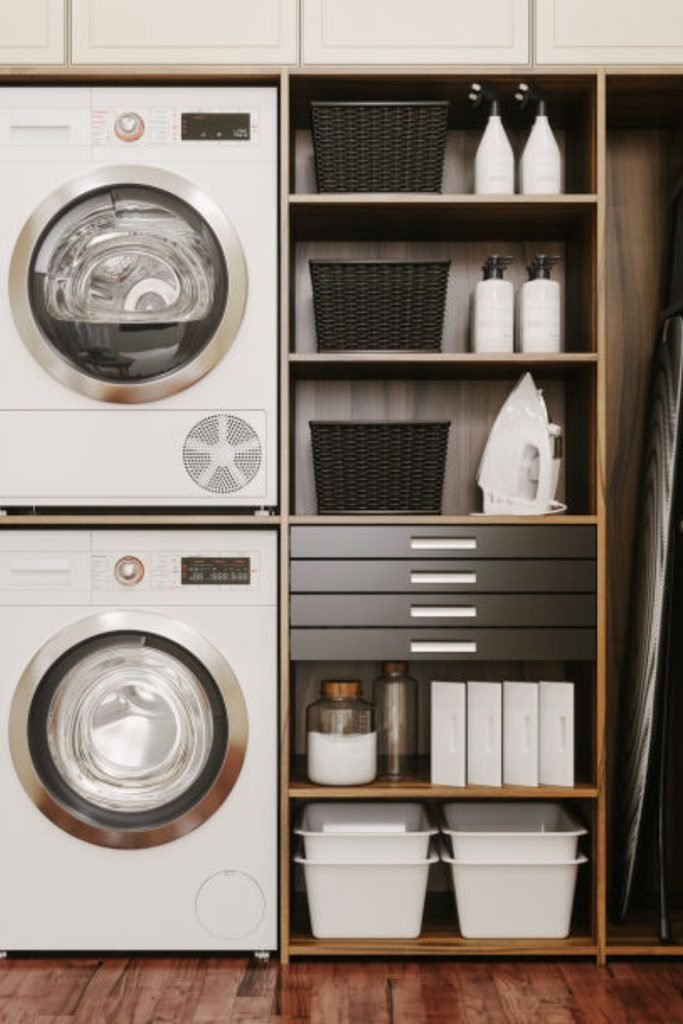
A full laundry closet can hide the entire setup while still giving shelves, drawers, and narrow tool storage their own zones.
Use one side for everyday supplies and the other for ironing boards or tall tools, so nothing crowds the machines.
If you add louvered doors, treat them as part of the design, but still follow your appliance’s exact ventilation requirements.
Hanging Station
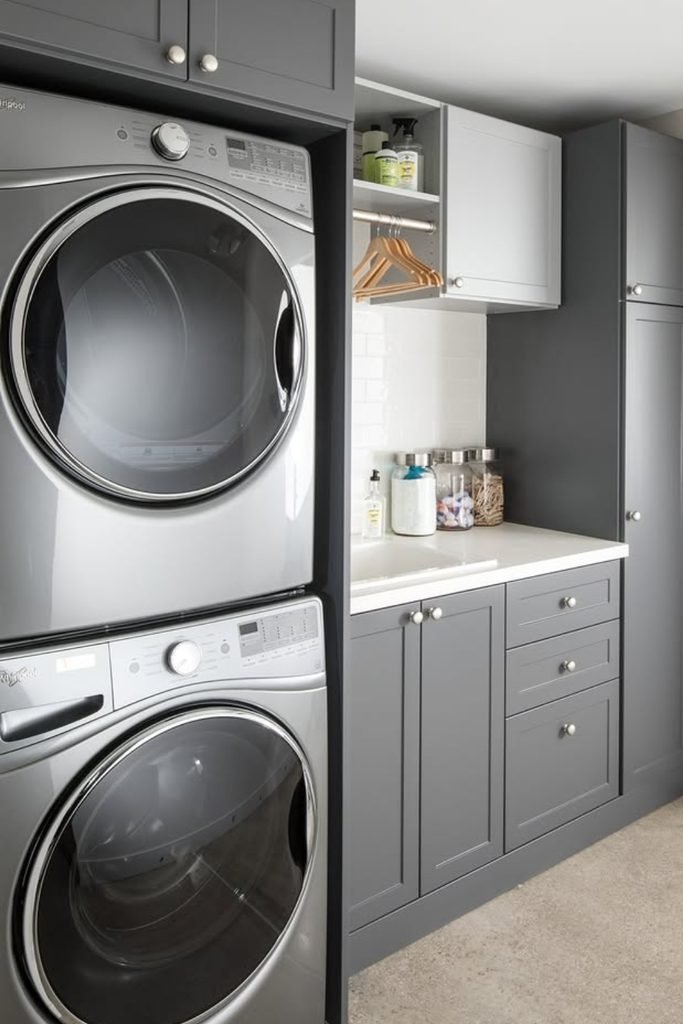
Turn the wall beside your stack into a hanging station when shirts or delicate pieces need somewhere to dry without wrinkling.
Install the rail beneath a shallow cabinet so hangers stay close to the counter without blocking your folding surface below.
Pair it with drawers and a tall cabinet nearby, giving small laundry rooms both quick access and hidden storage in one wall.
Drop Zone
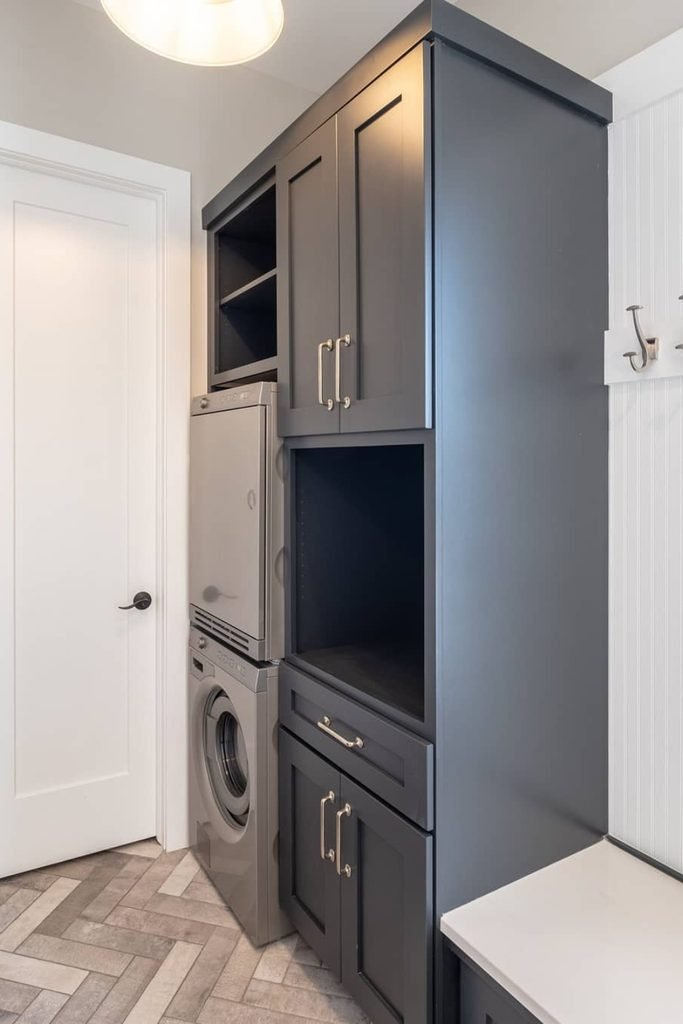
Combine stacked laundry with a drop zone when the room also handles coats, bags, shoes, or everyday items near an entry.
Keep the machines on one end and build a tall cabinet beside them to separate laundry storage from entry clutter.
An open cubby and lower drawers give you a quick landing spot while closed doors keep less attractive supplies out of sight.
Folding Nook
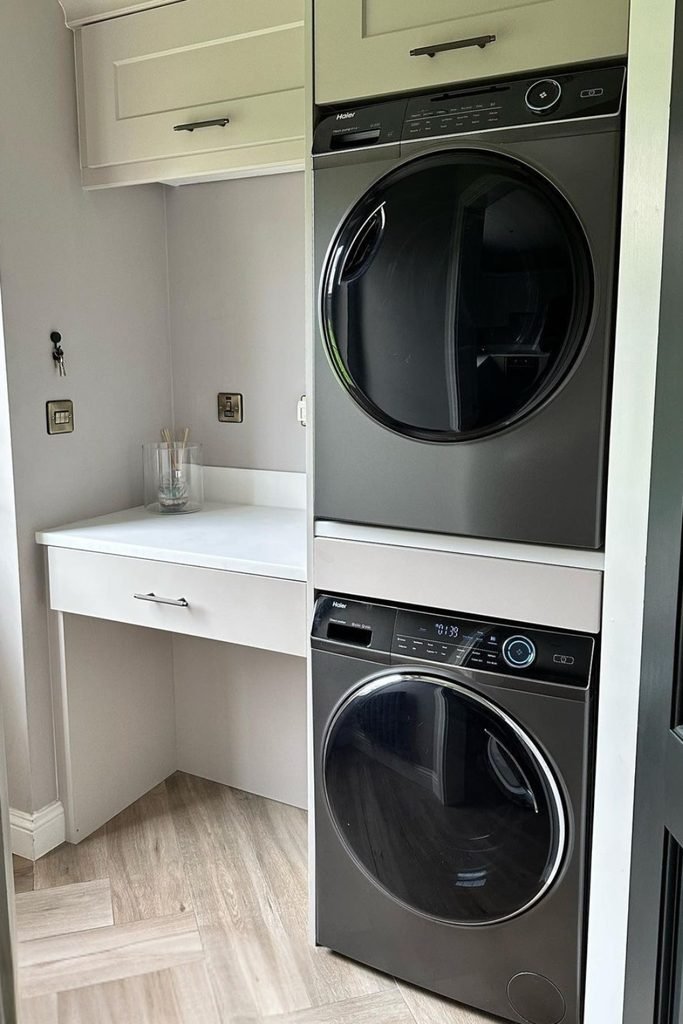
Use a slim counter beside the stacked machines when you need a dedicated folding spot without giving up much floor space.
Add one drawer underneath for small supplies, then keep the lower area open so a laundry basket can slide in easily.
Mount a cabinet above the counter for refills, but leave enough working height so folding and sorting still feel comfortable.
Sink Wall
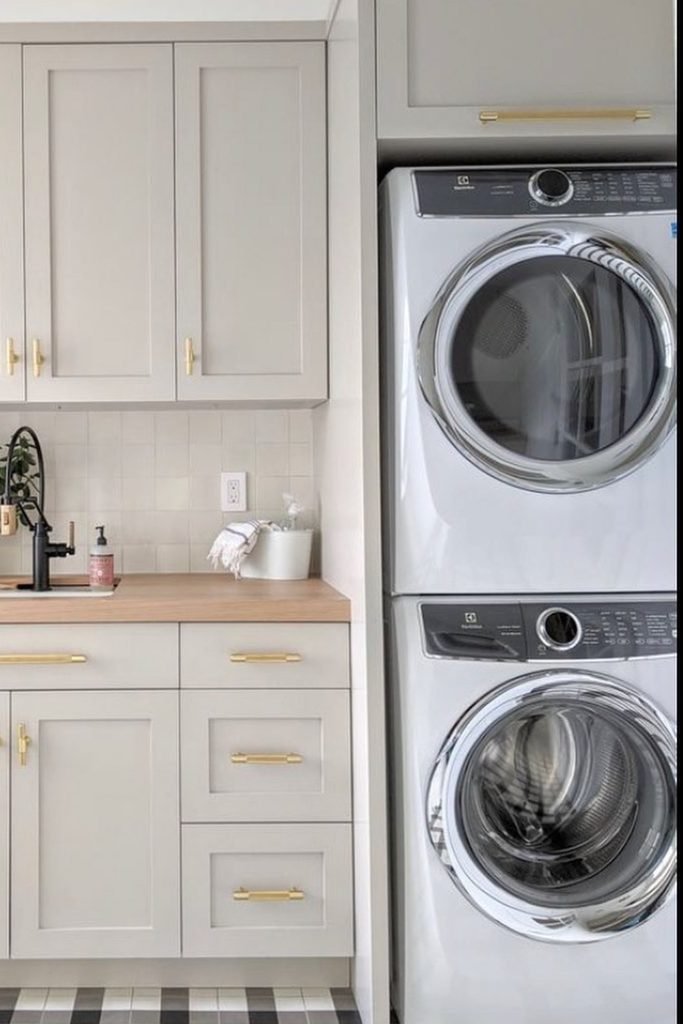
Place the stack beside a sink when you want one wall to handle washing, stain treatment, folding, and everyday storage.
Keep drawers close to the sink for small tools, while open shelves make towels and baskets easy to grab quickly.
If the room is narrow, keep the counter shallow enough to protect the walkway without losing useful prep space beside it.
Counter Wall
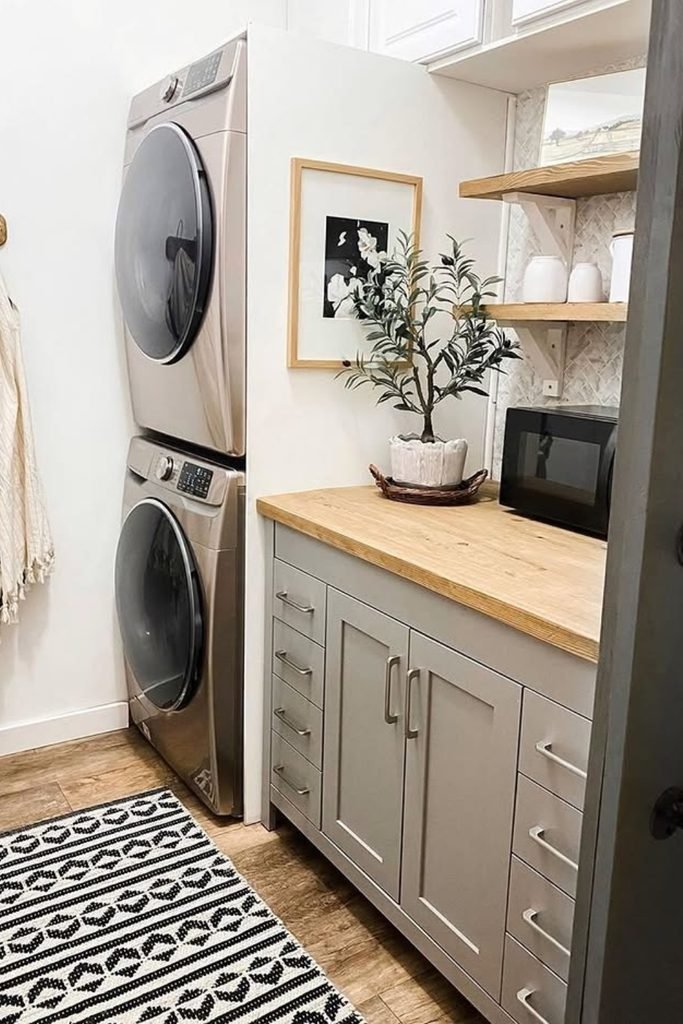
Give the wall opposite your stack a full counter when you need more room for folding, sorting, or treating stains.
Use drawers for smaller products and deep cabinets for bulk supplies, so the countertop stays clear enough for actual laundry work.
Floating shelves above the counter can hold light items, but keep your most-used detergent within easy reach instead of overhead.
Double Tower
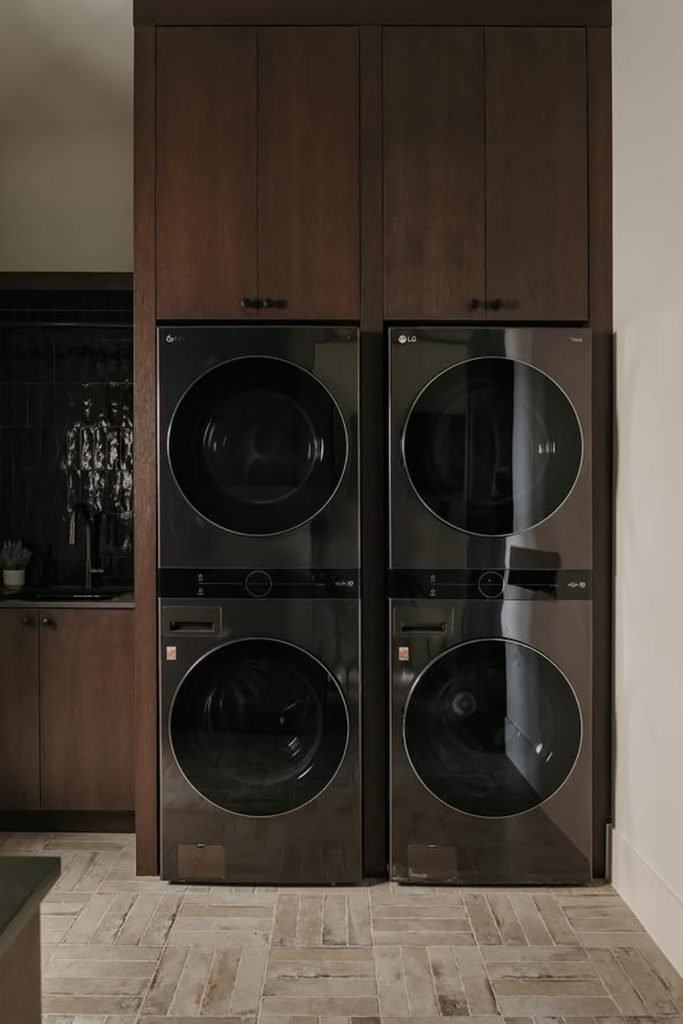
Two stacked pairs make sense when laundry volume is high, because you gain double capacity without spreading appliances across the room.
Frame both towers with tall cabinetry so the setup looks intentional, then use upper cupboards for supplies you buy in bulk.
Keep enough space around each unit for doors, hookups, ventilation, and servicing, especially before committing to expensive custom millwork around them.
Sink Cabinet
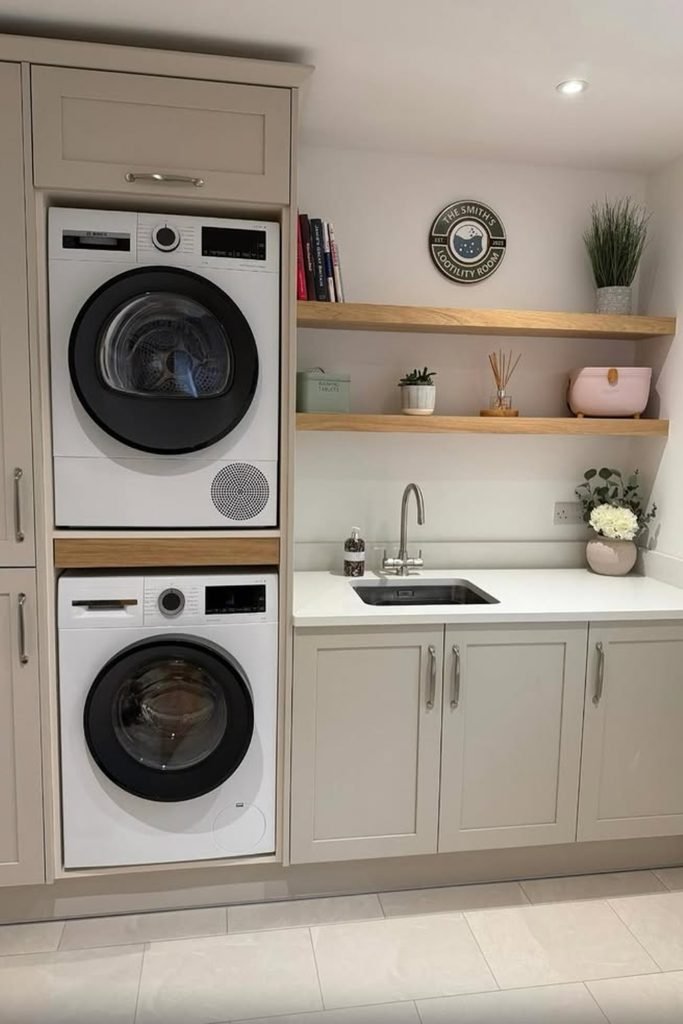
Build the stacked machines into one cabinet run when you want the sink, storage, and appliances to feel completely connected.
Keep the sink directly beside the stack so handwashing, stain treatment, and quick rinsing happen without crossing the room during laundry days.
Use floating shelves for lighter items and closed base cabinets for bulk supplies, keeping the countertop open for actual laundry work.
Hidden Closet
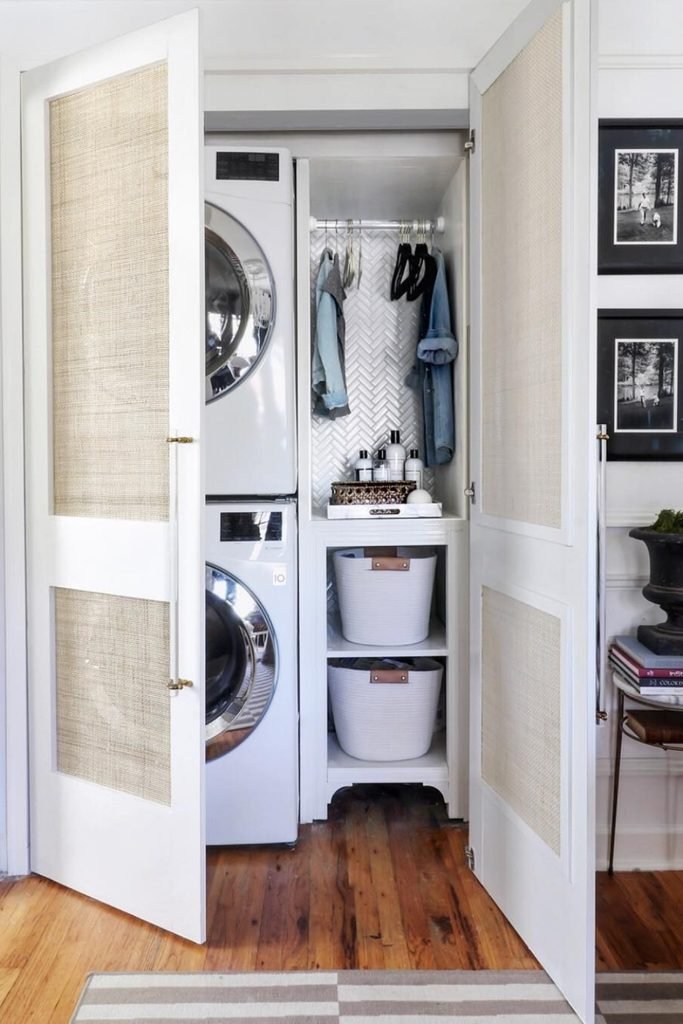
Turn a shallow closet into a full laundry zone when you need machines, baskets, and hanging space behind closed doors.
Place the stacked pair on one side, then use the narrow section beside it for a rail and pull-out basket storage.
Use woven-front doors for a softer furniture look, but still follow the appliance maker’s ventilation and service-clearance requirements inside the closet.
FAQs
Can a stacked washer and dryer go in a closet?
Yes, a stacked washer and dryer can work in a closet if the space meets the appliance maker’s clearance and ventilation requirements.
Measure the doors, hookups, and machine depth first, because a closet that technically fits the appliances can still be frustrating to use.
Plan enough room for servicing and door movement too, especially if you want shelves or baskets beside the stacked pair.
What should go beside a stacked washer and dryer?
The best use depends on your routine, but a counter, tall cabinet, hamper cubbies, or hanging rail usually adds the most function.
Choose a counter if you fold nearby, or use vertical storage when detergents, cleaning tools, and spare linens need a permanent home.
Before building anything, check door swing and service access so your new storage does not make the machines harder to reach.
