
21 Moody Laundry Room Ideas
Some laundry rooms look their best when they stop trying to be bright and start leaning into deeper color.
Dark green, charcoal, navy, warm wood, and soft lighting can turn a basic utility space into something far more intentional.
In this article, you’ll find moody laundry room ideas that show different ways to bring depth, warmth, and character into the space.
Let’s jump in!
What Colors Make A Moody Lounge Look Expensive?
Deep, muted colors usually make a room feel more expensive because they add depth without looking loud or overly trendy.
For a moody laundry room, start with charcoal, forest green, navy, deep brown, or soft black as your main color.
If the lounge already feels dark, balance these shades with warm white, cream, natural wood, or a lighter countertop.
You can also add brass, bronze, or black hardware, but keep the finish consistent so the room looks planned rather than busy.
The key is not choosing the darkest color possible, but using rich shades with enough contrast, texture, and light around them.
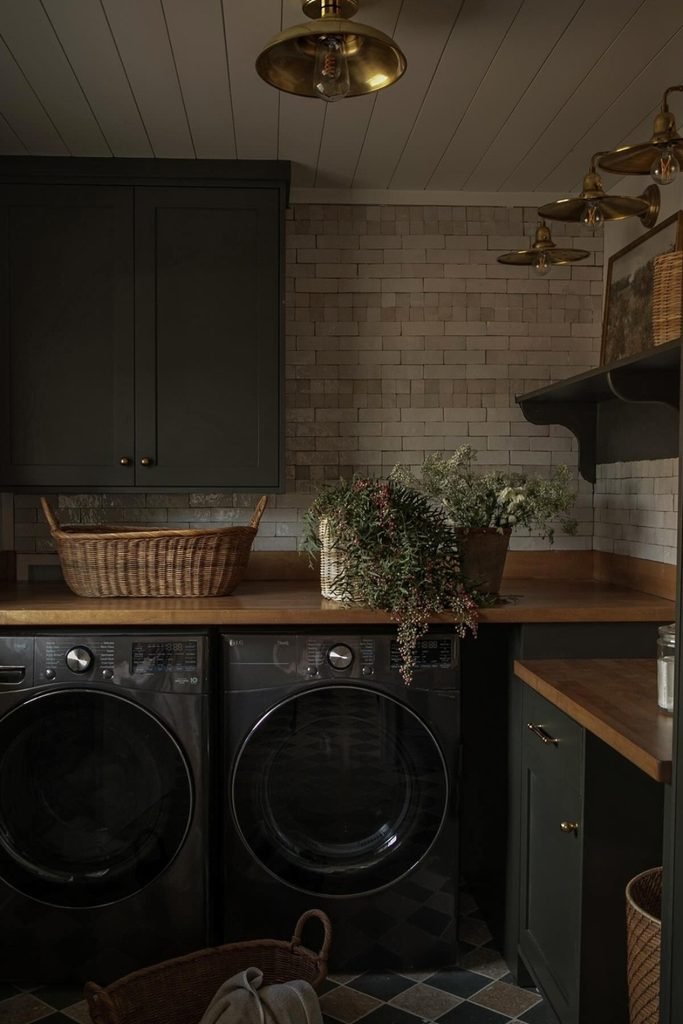
Warm Charcoal
Dark cabinetry works best when you break up the heaviness with warm wood counters, woven baskets, and softer aged metal lighting.
If your machines are black, let them blend into the lower cabinetry instead of forcing contrast around an already compact room.
Keep the backsplash lighter and slightly textured so the room still reflects enough light without losing its deep, cocooned mood.
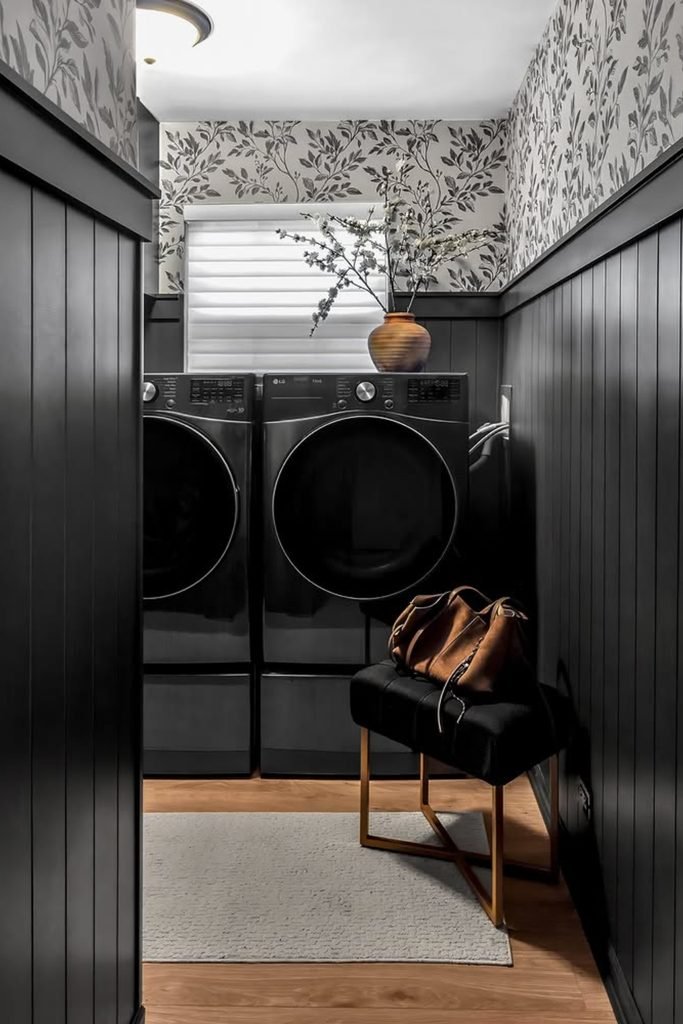
Botanical Contrast
A dark lower wall gives a narrow laundry room structure, while pale botanical wallpaper keeps the upper half from feeling closed in.
Use this split treatment when you want strong color but still need the room to hold onto brightness from one small window.
Match the machines and paneling closely, then bring warmth through wood flooring or bronze details so the scheme feels connected.
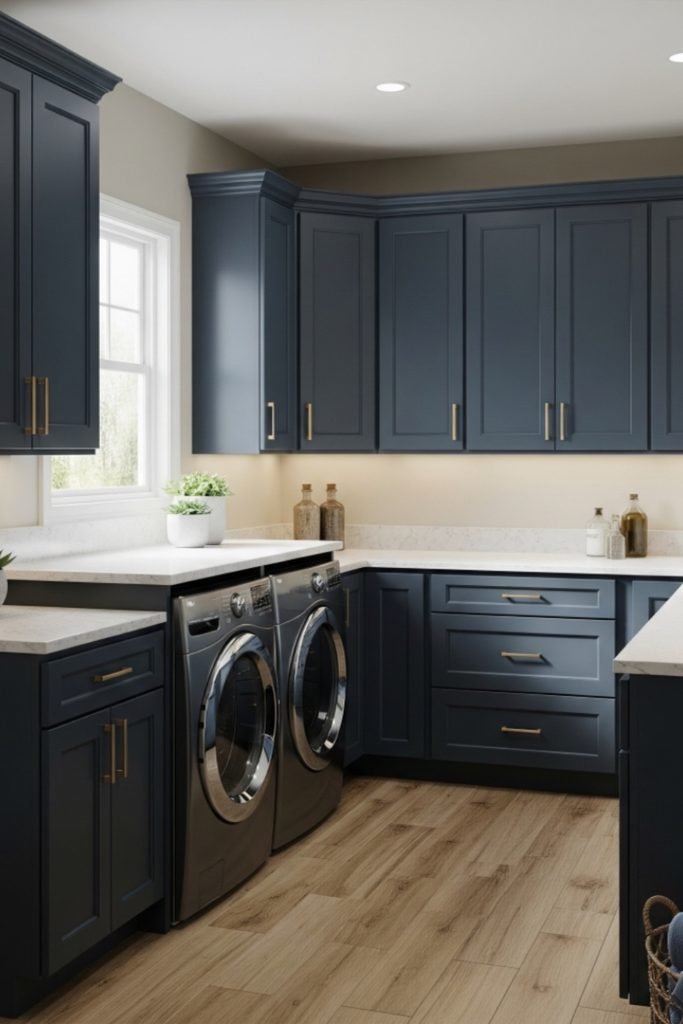
Navy Balance
Navy cabinetry gives you a moody look without pushing the room as dark as black, especially when natural light is available.
Run lighter counters around the perimeter to create a clear folding surface and stop the deep cabinetry from dominating every horizontal plane.
Brass pulls and warm flooring are enough to soften the blue, so you do not need extra decorative finishes competing for attention.
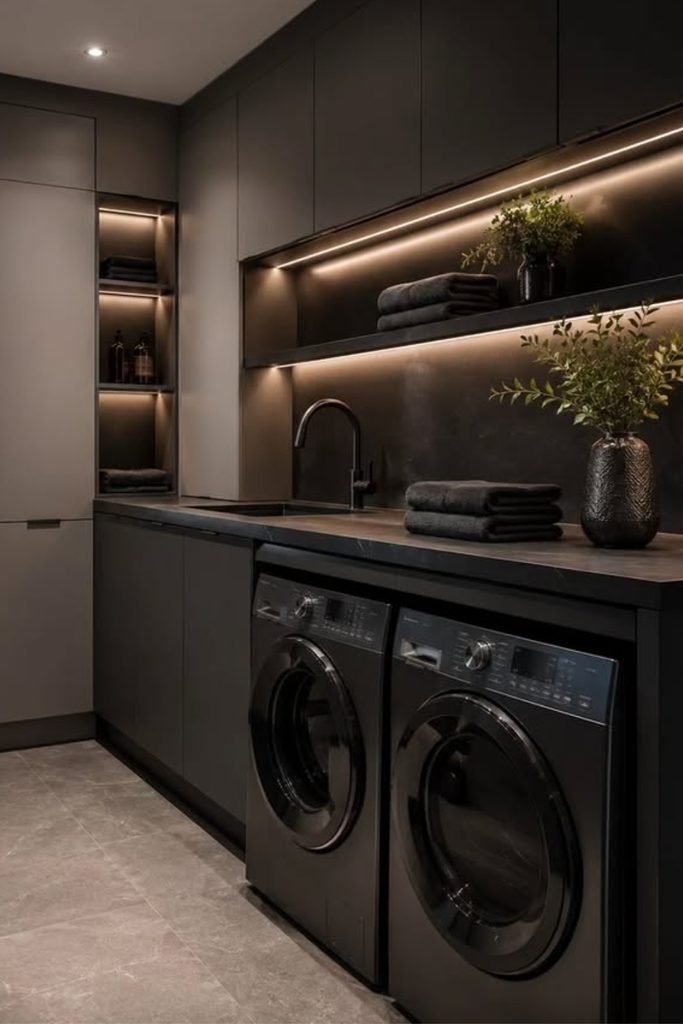
Layered Lighting
If you want an almost all-black laundry room, lighting has to become part of the design rather than an afterthought.
Use continuous under-cabinet strips to wash the backsplash and counter evenly, which keeps dark finishes visible instead of flattening together.
Keep cabinets handle-light and surfaces simple if you want this look, because too many details can make a monochrome room feel busy.
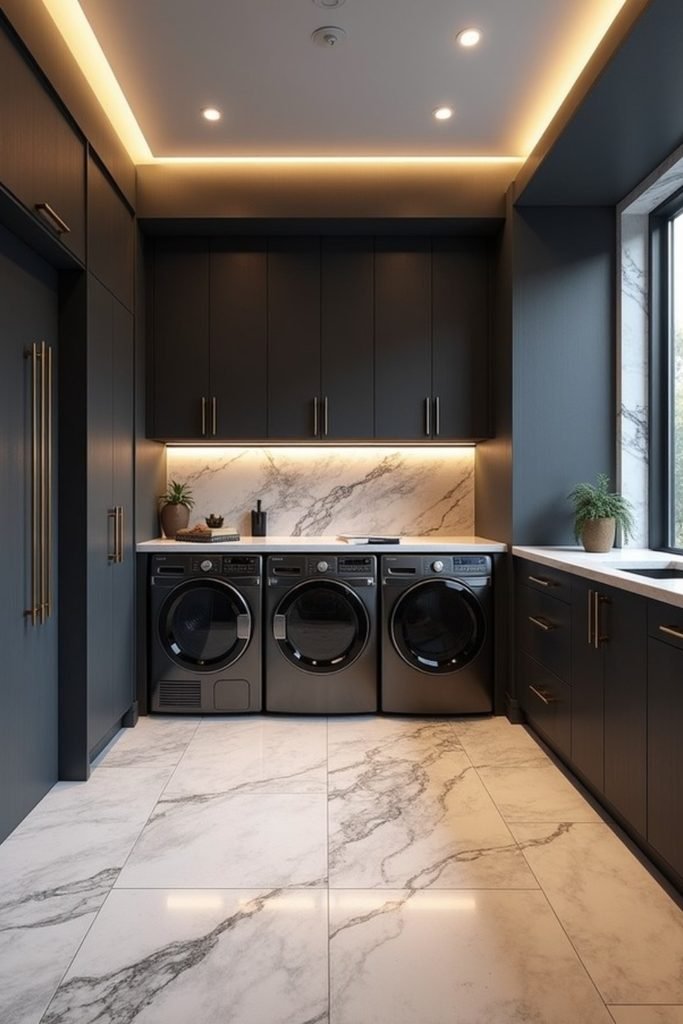
Marble Contrast
When black cabinetry covers most walls, large marble surfaces keep the room from feeling flat while adding a more polished finish.
Carry the same pale stone from the floor onto the backsplash or counters so the contrast feels deliberate instead of scattered.
Warm perimeter lighting helps soften all that black, especially in larger laundry rooms where dark cabinetry could otherwise dominate the space.
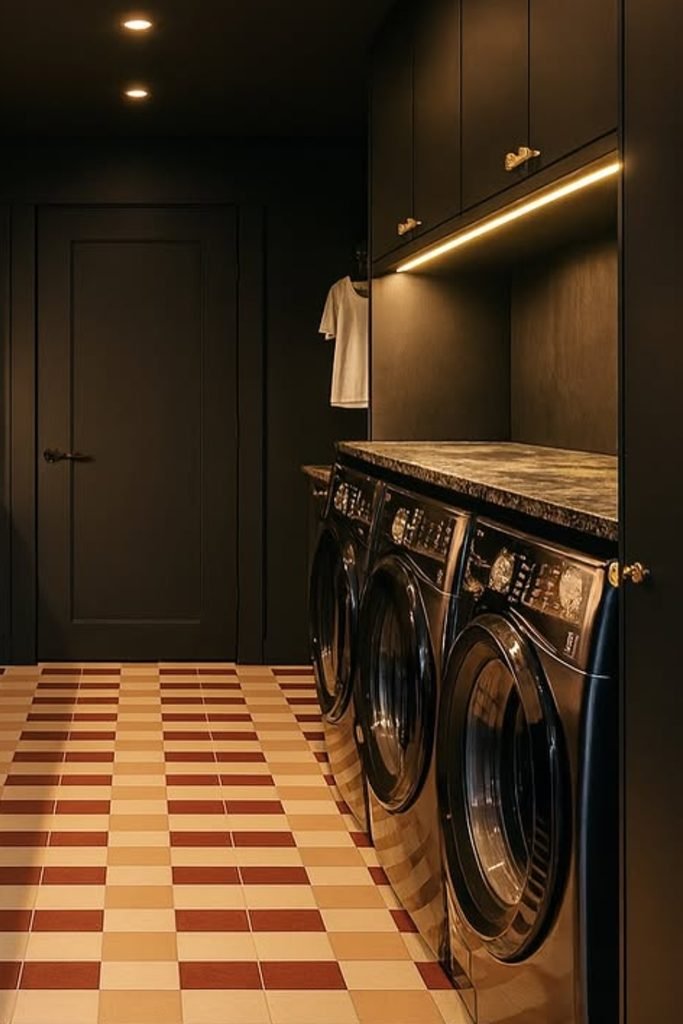
Patterned Floor
A patterned floor can carry the personality in a dark laundry room, letting the walls and cabinetry stay simple and restrained.
This works especially well in long, narrow layouts because the repeating checks pull your eye forward and break up heavy black surfaces.
Keep the counters and lighting warm so the floor feels intentional, not like another competing layer in an already dramatic room.
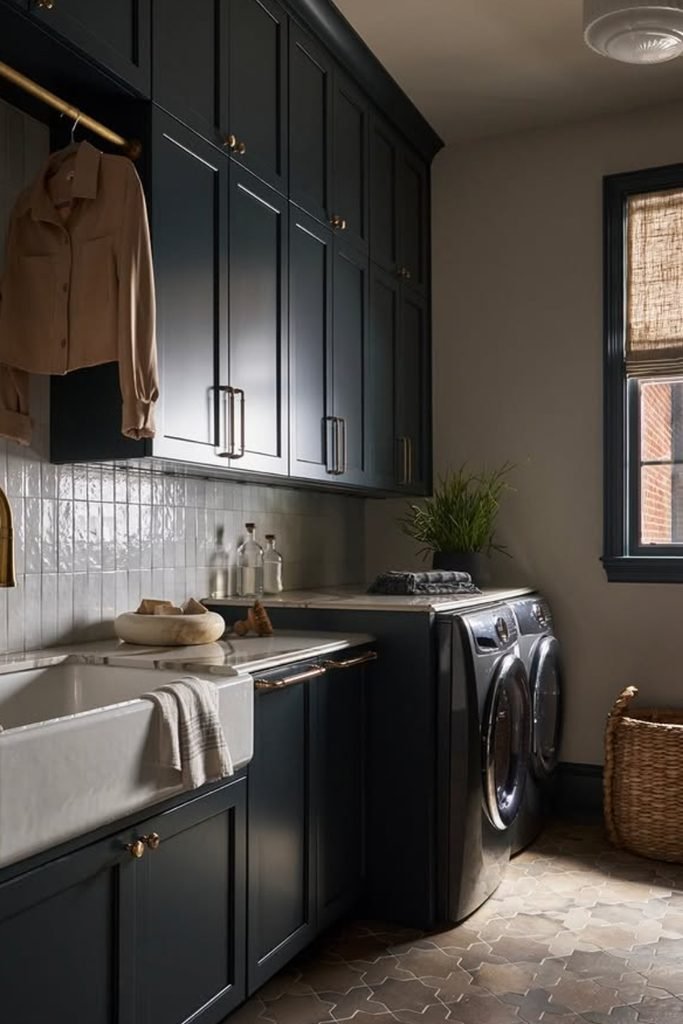
Apron Sink
A white apron sink gives dark cabinetry a clean stopping point, which is useful when the room has very little visual contrast.
Choose a deep basin if you hand-wash clothes often, then place the drying rail nearby so wet pieces move straight upward.
Glossy light tile behind the sink also reflects window light, helping the darker millwork feel rich instead of overly heavy.
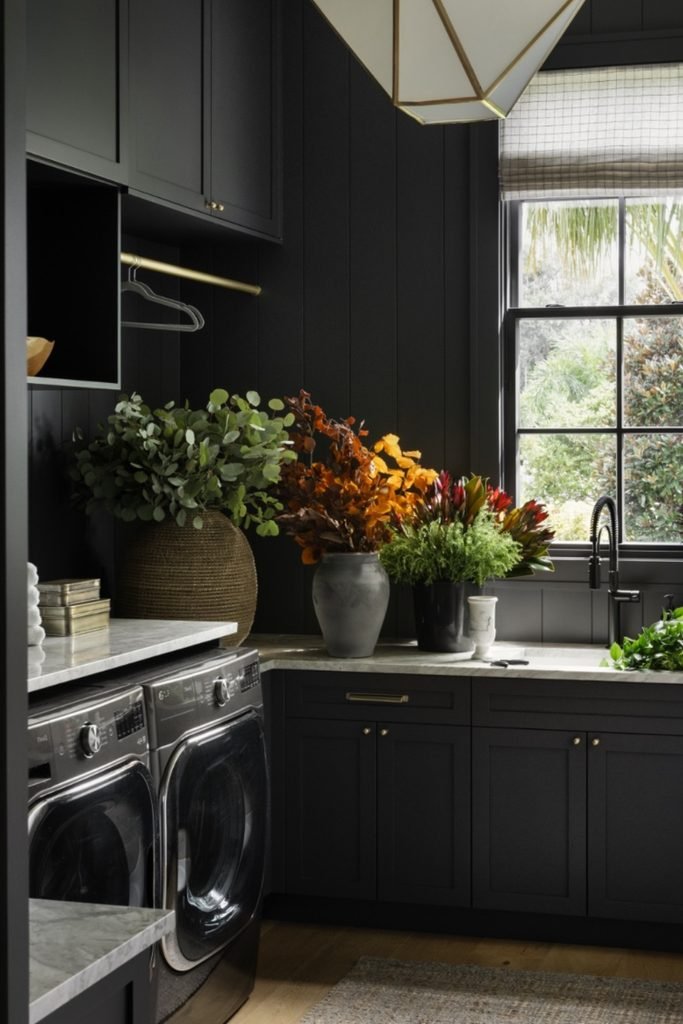
Paneled Walls
Vertical paneling adds enough shadow and texture to make black walls interesting, so you do not need extra patterns everywhere else.
This treatment suits laundry rooms with a good window best, because daylight can catch the grooves and keep the finish dimensional.
Pair it with lighter stone counters and one oversized pendant, then let greenery or flowers provide the softer color the room needs.
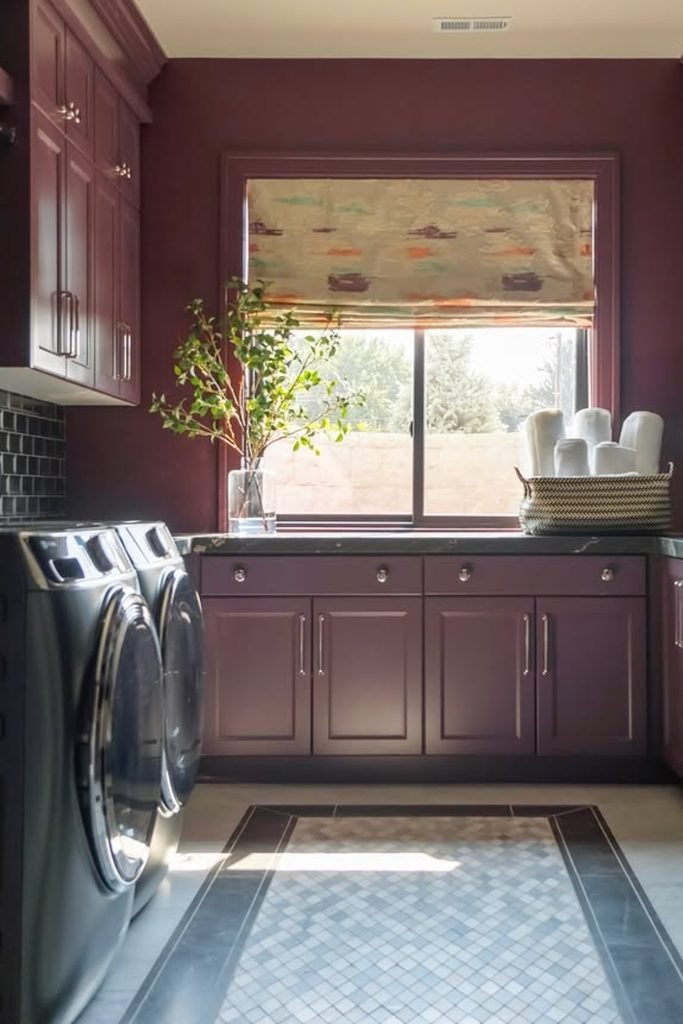
Plum Cabinetry
Plum cabinetry gives a moody laundry room more personality than black, especially when you want depth without making the space feel severe.
Use the same shade on upper and lower cabinets, then let a dark backsplash keep the color feeling grounded and intentional.
A large window helps this richer palette breathe, while soft baskets and lighter flooring stop the room from becoming visually heavy.
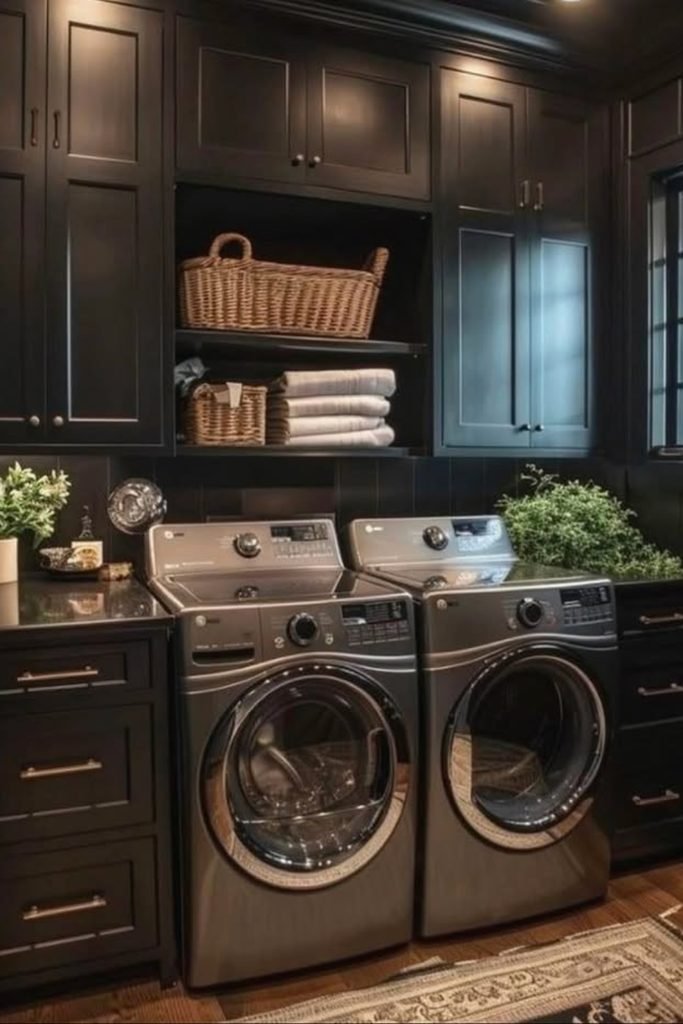
Hidden Storage
Floor-to-ceiling cabinetry is worth using when clutter is the real problem, because dark doors hide supplies while keeping the room visually calm.
Leave one open shelf between cabinets for towels and baskets, so the storage wall does not feel like one solid block.
This setup works especially well around top-load machines, where side drawers can handle smaller items and upper cabinets take bulkier products.
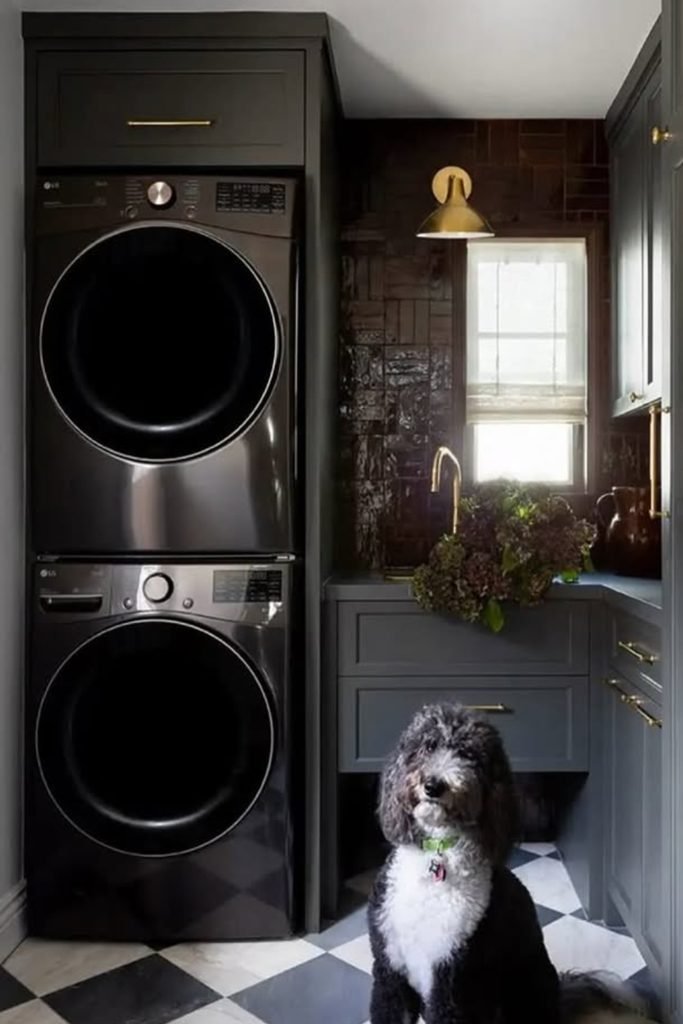
Stacked Machines
Stacking the washer and dryer is the easiest way to reclaim floor space when a moody laundry room is narrow or awkward.
Use the freed-up wall for a sink, counter, or tall cabinet, then keep the surrounding finishes dark for a built-in look.
Glossy tile behind the work zone will bounce window light around, while a checkerboard floor keeps the small footprint from feeling plain.
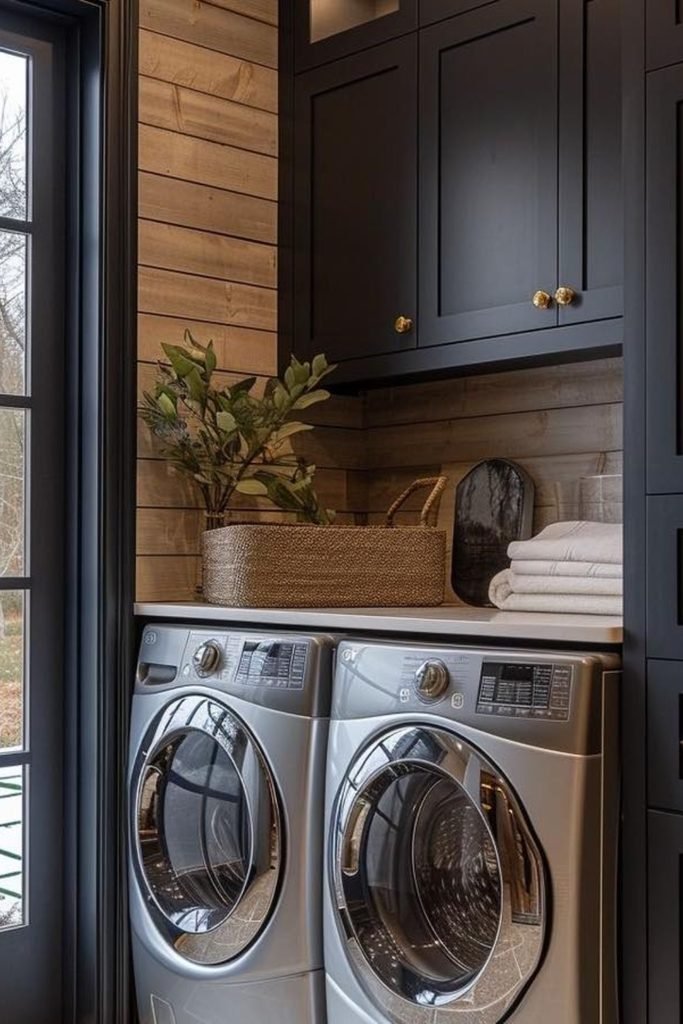
Wood Warmth
Warm wood walls are a smart counterbalance to black cabinetry, giving a moody laundry room depth without letting the palette turn cold.
Run the wood behind the machines and into open sections, so it reads as part of the room rather than decoration.
If the cabinetry is nearly black, use medium or honey-toned timber and small brass details to bring back enough warmth and contrast.
Framed Walls
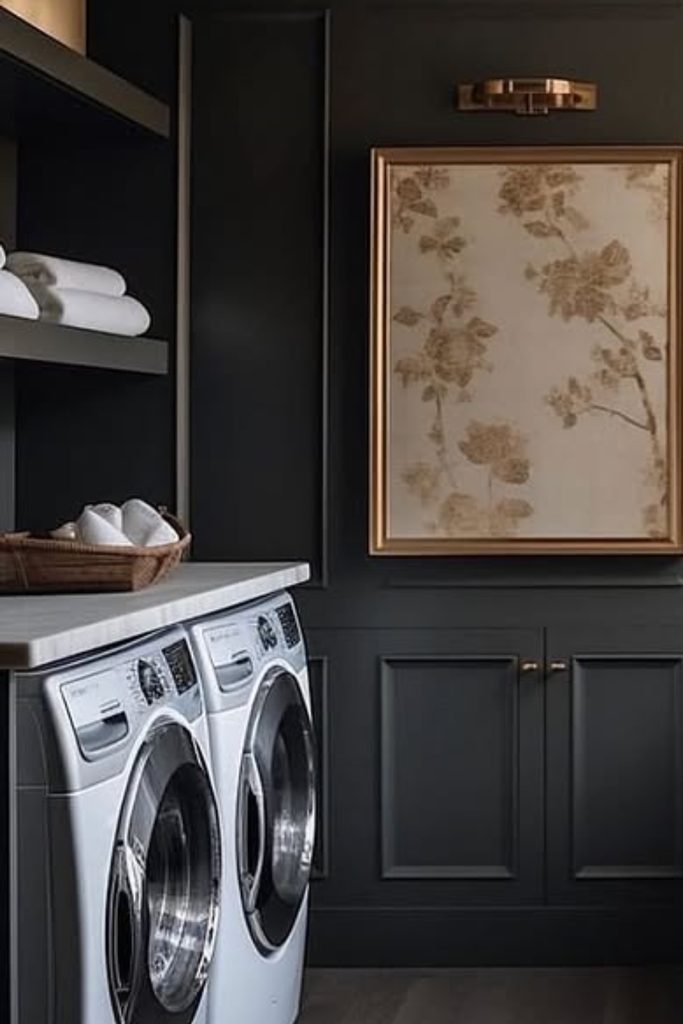
Wall molding gives black paint more structure, which helps a dark laundry room feel finished instead of looking like one flat box.
Use this treatment when you want a formal look, then keep counters pale so the room still has enough visual relief.
Brass fixtures and framed art can add warmth, but keep both limited so the wall detail remains the main feature.
Rustic Stack
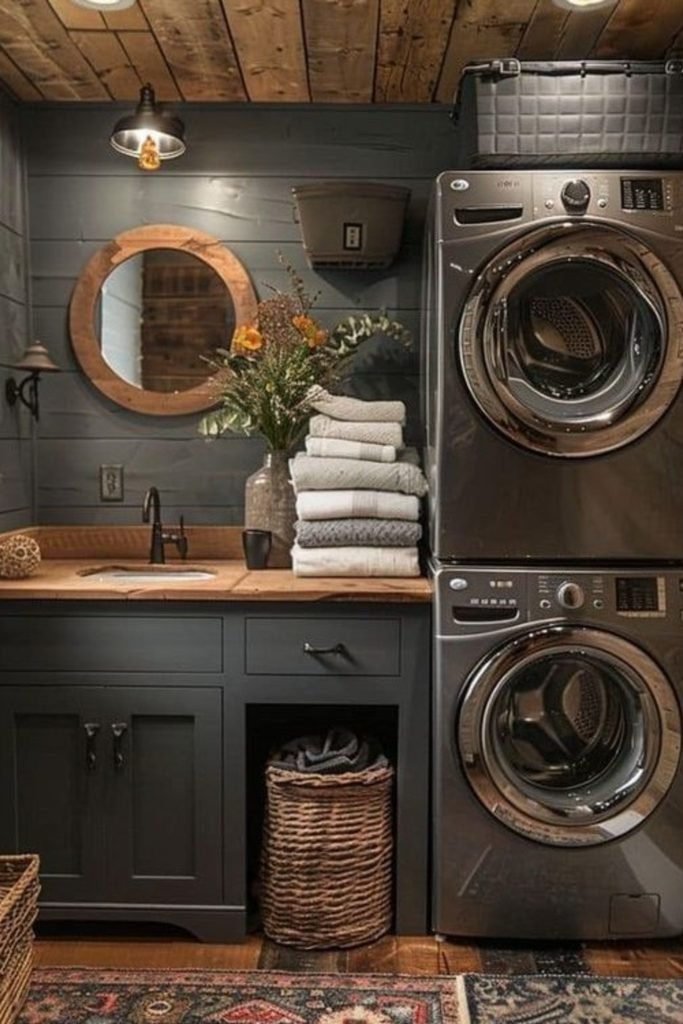
A stacked setup frees enough room for a real sink and counter, which matters more in compact laundry spaces than extra floor area.
Use dark gray cabinets with reclaimed wood above and beside them if you want the room moody without making it feel polished.
A round wood mirror and woven hamper soften the hard finishes, while a small wall light keeps the sink zone practical.
Open Storage
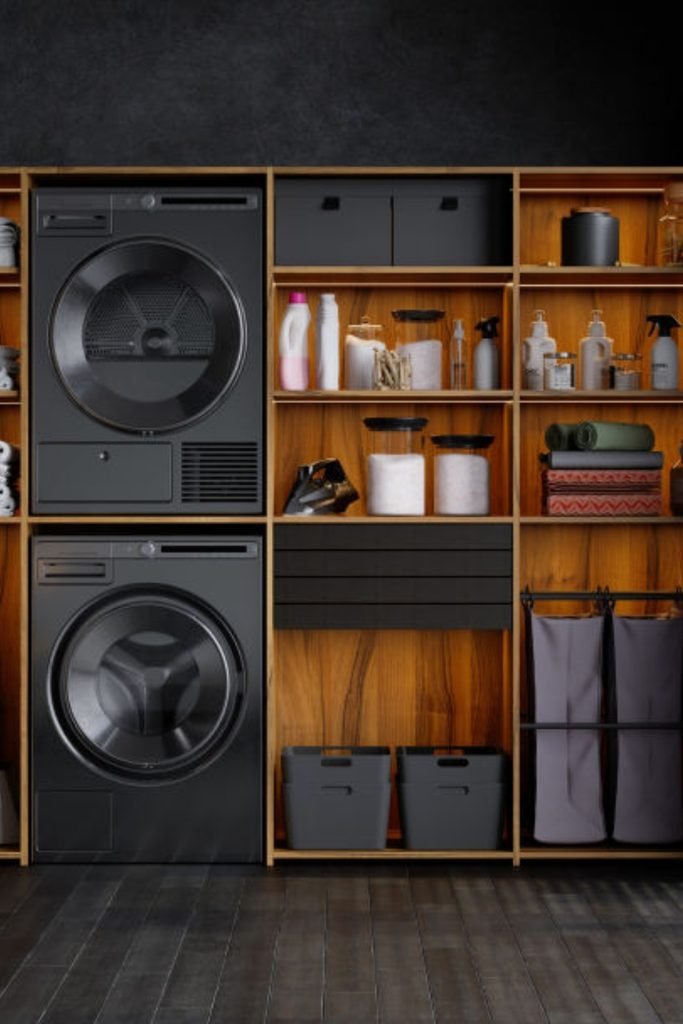
Open shelving works in a moody laundry room when every category has a place, because exposed clutter will stand out against black walls.
Build storage around stacked machines, then use matching bins and hampers to keep detergents, towels, and sorting zones visually controlled.
Warm wood inside the shelving keeps the black scheme from feeling cold and also makes smaller supplies easier to spot quickly.
Dark Florals
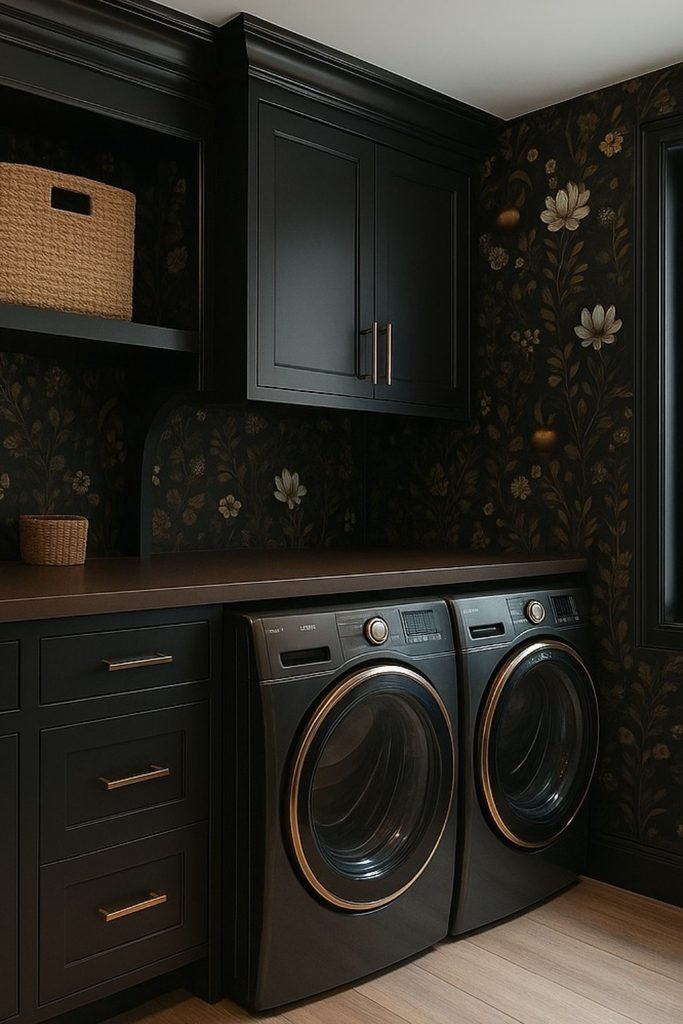
Dark floral wallpaper adds pattern without breaking the moody palette, making it useful when plain black walls feel too empty.
Keep cabinetry close to the wallpaper background color, then use woven baskets and bronze hardware to bring warmth into the darker scheme.
This approach works especially well on one main wall, where the pattern can add interest without overwhelming a compact laundry room.
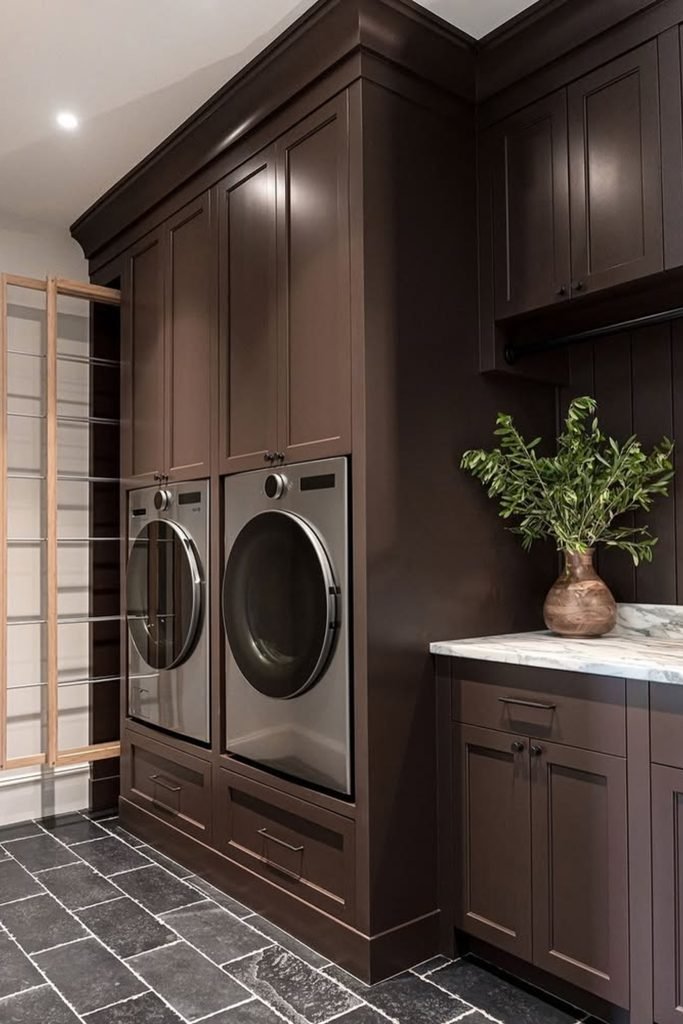
Brown Drenching
Deep brown cabinetry gives a moody laundry room warmth that black sometimes lacks, especially when you want a softer, furniture-like finish.
Build the machines into tall cabinets and continue the same color around them so the wall reads as one clean storage unit.
A pale stone counter and simple drying rack add contrast and function without pulling attention away from the rich brown palette.
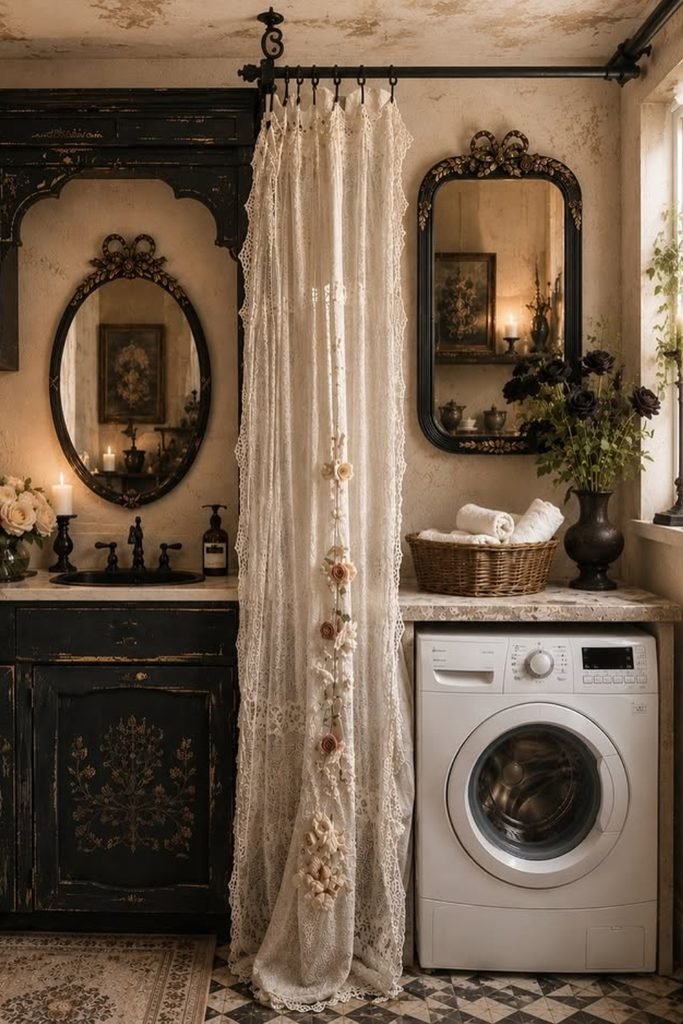
Vintage Romance
If you want mood without a modern look, aged black cabinetry and ornate mirrors can make the laundry room feel collected.
Use worn finishes, warm cream walls, and patterned flooring together, then keep the washer visible so the room still feels practical.
A ceiling-mounted curtain can hide appliances or storage when needed, while lace and brass details soften the darker furniture around them.
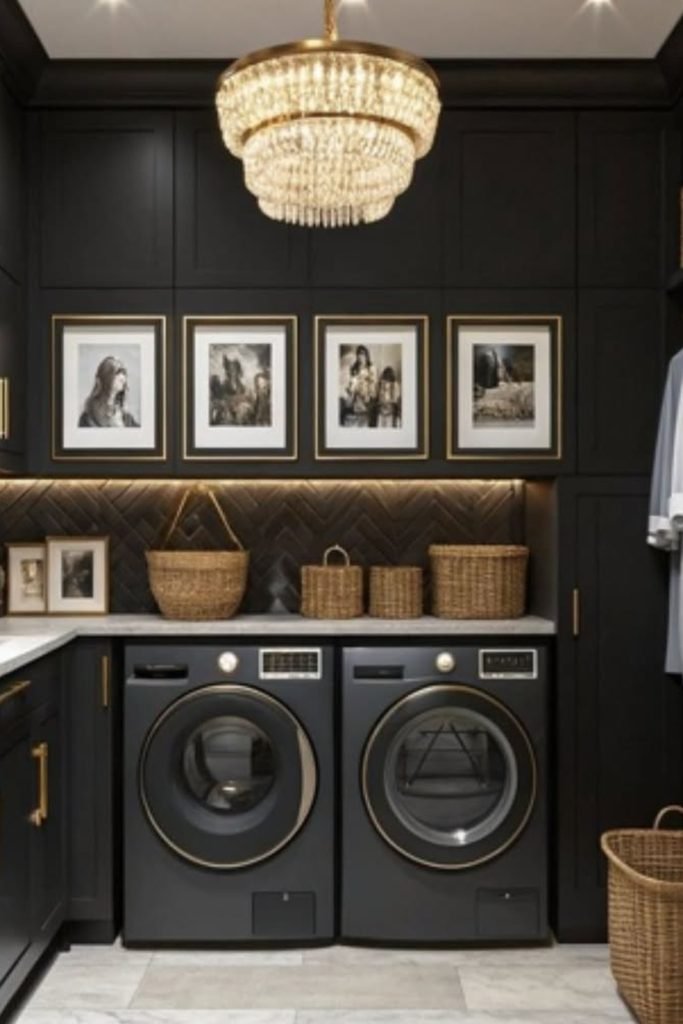
Gallery Wall
A row of framed photos can make a dark laundry room feel more personal, especially when the cabinetry leaves one blank wall.
Keep the frames evenly spaced and use slim picture lights or under-cabinet lighting so the display stays visible after dark.
A statement chandelier works here because the rest of the palette is controlled, giving the room polish without adding more color.
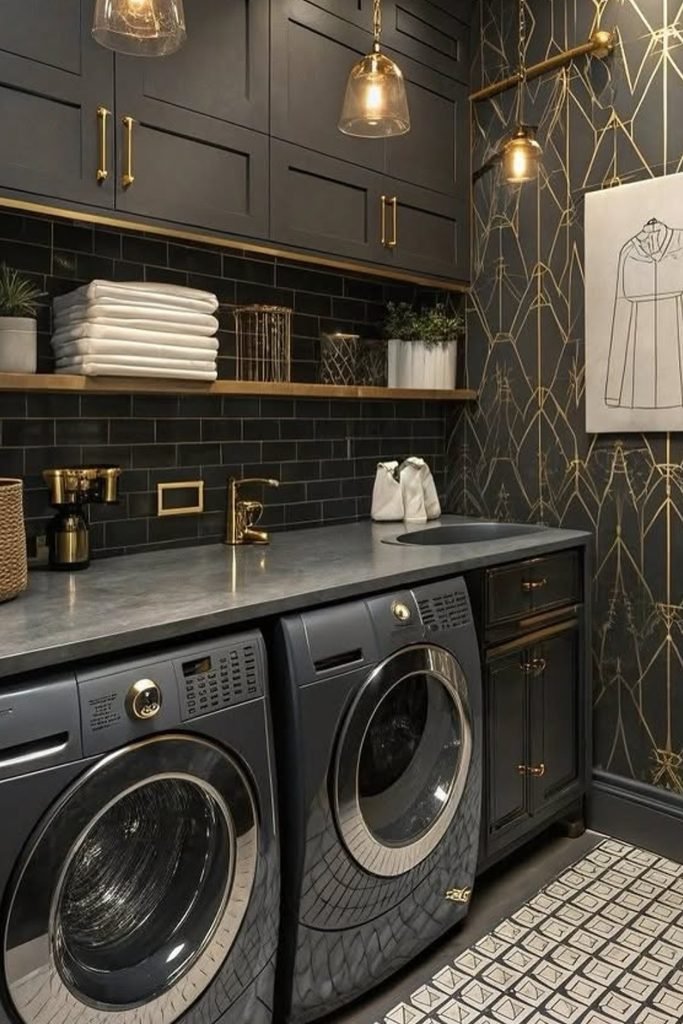
Geometric Wallpaper
Geometric wallpaper can carry the drama in a black laundry room, especially when you want pattern without bringing in extra colors.
Use it on one wall and keep the remaining cabinetry plain, so the metallic lines become an accent instead of visual noise.
Warm pendants and brass hardware repeat the gold detail, while a gray counter gives your folding area a calmer visual break.
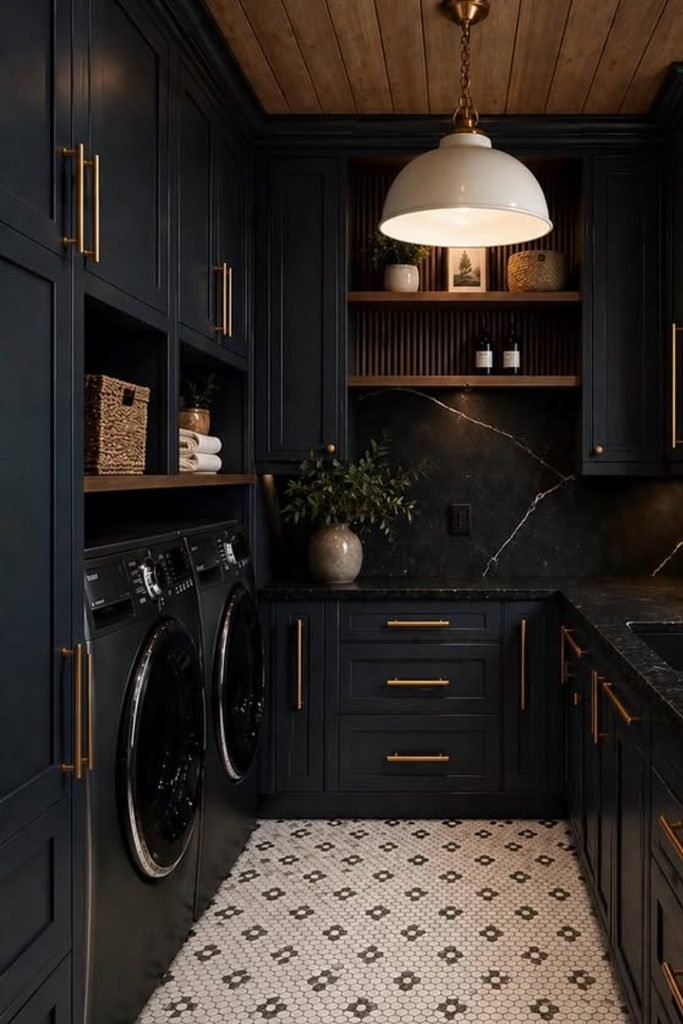
Wood Ceiling
A wood ceiling can soften an all-black laundry room from above, adding warmth without interrupting the darker cabinetry or stone surfaces.
Use natural planks when the room has tall cabinets, because the warmer finish keeps the upper half from feeling boxed in.
Balance the ceiling with light patterned flooring and brass hardware, then keep counters dark if you want the moody palette to stay strong.
FAQs
Do Dark Laundry Rooms Feel Smaller?
Dark colors can make a laundry room feel tighter if every surface absorbs light and there is very little contrast.
Use lighter counters, flooring, or appliances to break up deep walls and cabinetry while keeping the overall look rich and moody.
Good task lighting also matters, especially in windowless spaces where dark finishes need more help staying practical and visually balanced.
What Lighting Works Best in a Moody Laundry Room?
Warm ambient lighting works well for mood, but your folding counter and sink still need brighter task lighting for everyday use.
Try recessed lights, under-cabinet strips, or sconces placed near work zones so dark surfaces never hide stains, labels, or small items.
If the room has a window, let natural light handle daytime brightness and use warmer fixtures after dark for a softer finish.
