
25 Laundry Room Organization Ideas
A well-organized laundry room does more than look neat, it makes every step of your laundry routine feel easier and more natural.
With the right setup, you can turn shelves, cabinets, baskets, walls, and even small corners into useful everyday storage.
In this article, you’ll find practical laundry room organization ideas that help you create a cleaner, smarter, and easier-to-use space.
Let’s jump in!
What Is The Best Way To Organize A Laundry Room?
Start by giving each part of your laundry routine a clear place, from sorting dirty clothes to folding clean ones.
Keep detergent and stain products close to the washer, then use shelves or cabinets for anything you do not need every day.
If floor space is tight, use the walls for storage so baskets and supplies do not crowd the room.
Add a dedicated spot for hampers, drying clothes, hangers, and clean laundry instead of letting these items move around constantly.
The best setup is the one that matches how you actually do laundry, because a simple system is much easier to maintain.
Vertical Niche
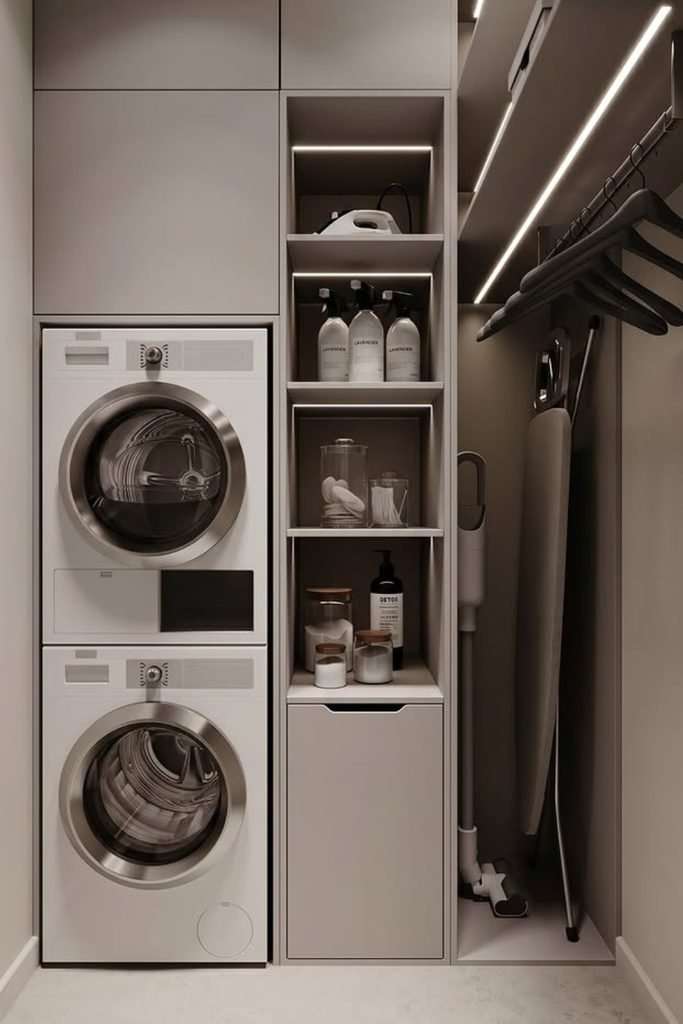
Turn a narrow laundry wall into a full storage zone by stacking appliances and using the leftover strip for everyday essentials.
Keep detergent, stain products, and small tools on open shelves, then reserve the lower cabinet for items you want hidden.
Add a hanging rail and slim ironing-board slot beside it, so drying, pressing, and storage stay together without crowding the floor.
Hidden Laundry
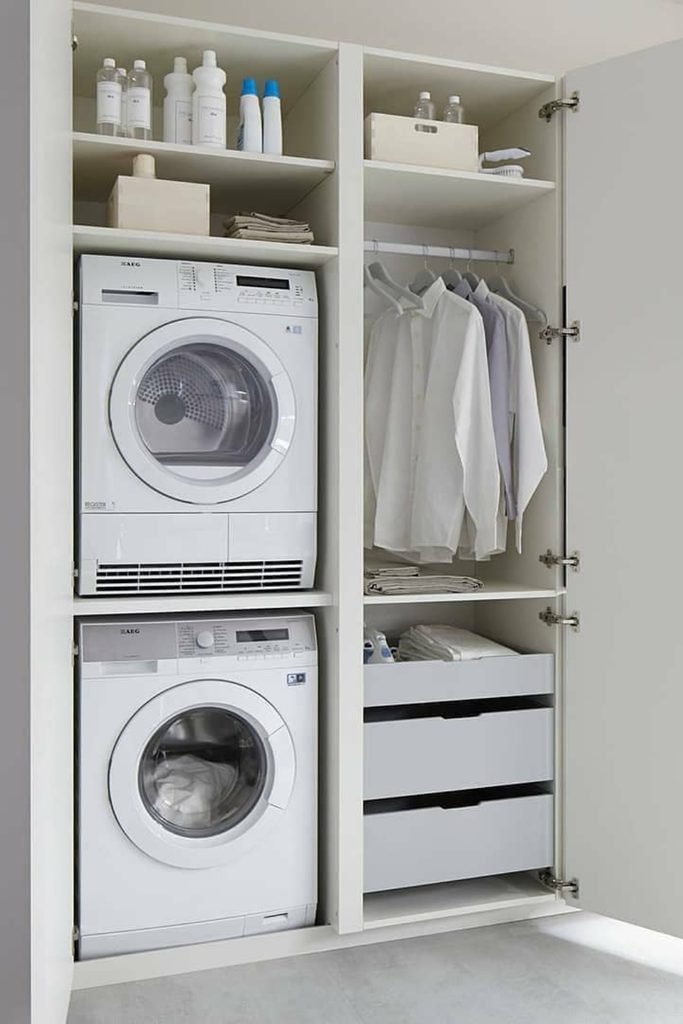
If your laundry area sits inside a hallway or open-plan room, hide the entire setup behind full-height cabinet doors when finished.
Use the upper shelves for backstock, keep a hanging rail at arm level, and place folded linens inside deep pull-out drawers.
This works especially well in compact homes because one tall cabinet handles washing, drying, hanging, and storage without adding separate furniture.
Open Shelving
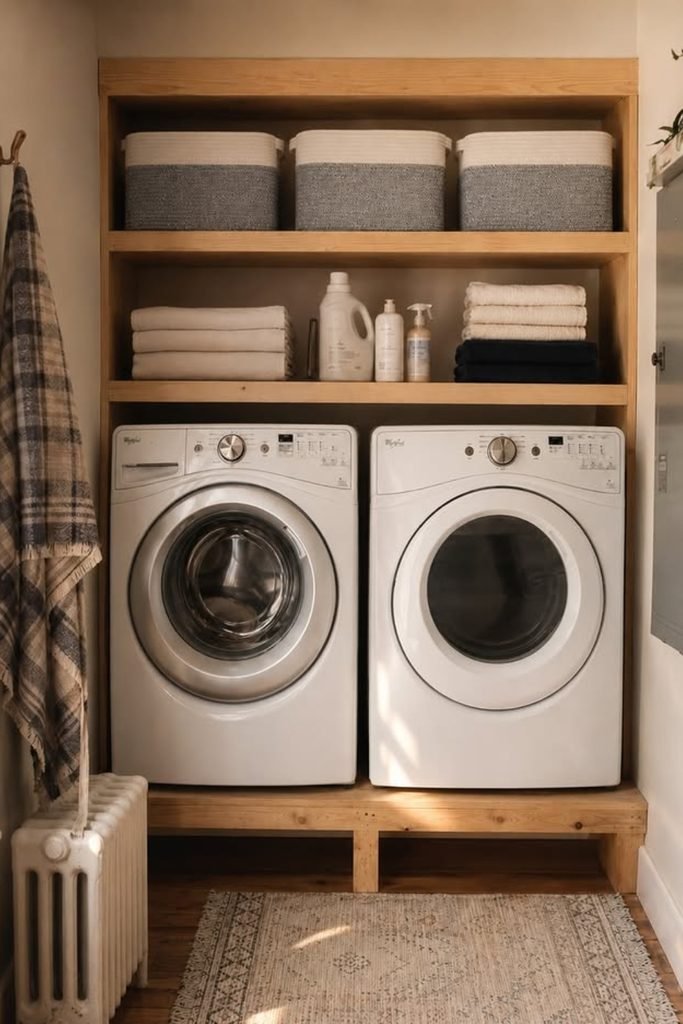
Give an awkward laundry alcove a built-in feel by wrapping the machines with sturdy wood shelving instead of adding several small organizers.
Store bulky towels and baskets above eye level, while keeping detergent on the lowest shelf where you can grab it quickly.
A raised base can also make front-loaders easier to reach, but build it strong enough to handle appliance weight and vibration.
Basket Zones
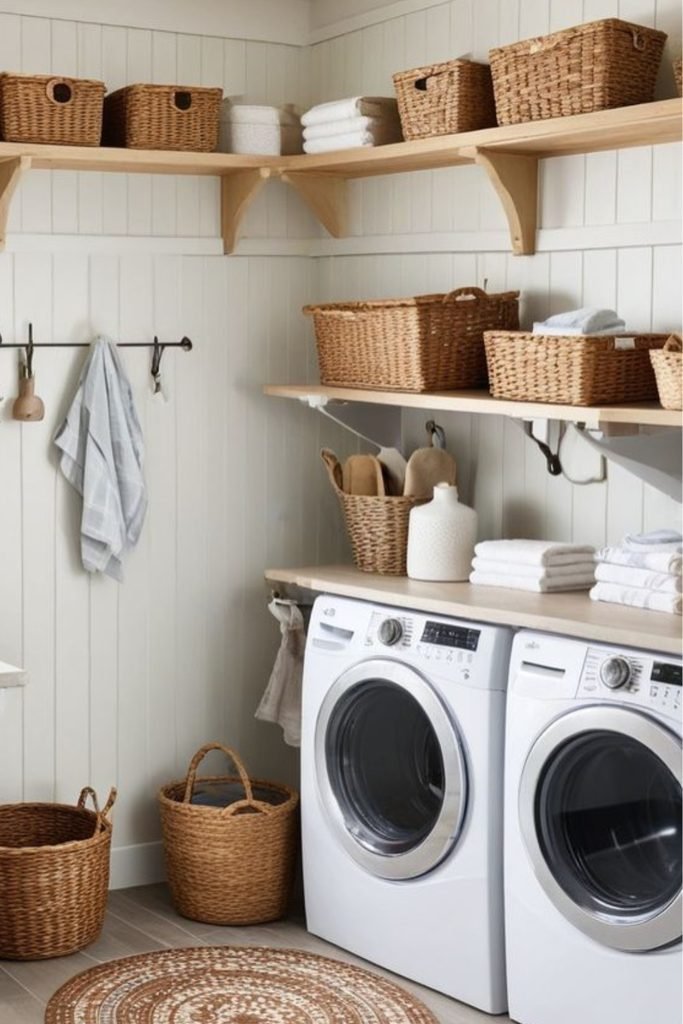
Open shelves work best when every basket has a job, so group towels, cleaning cloths, refills, and loose supplies by category.
Keep the heaviest baskets on lower shelves, then use the upper run for lighter backstock that you do not reach daily.
Hooks beside the counter give damp cloths and small tools somewhere to land, while the worktop stays clear for folding.
Folding Station
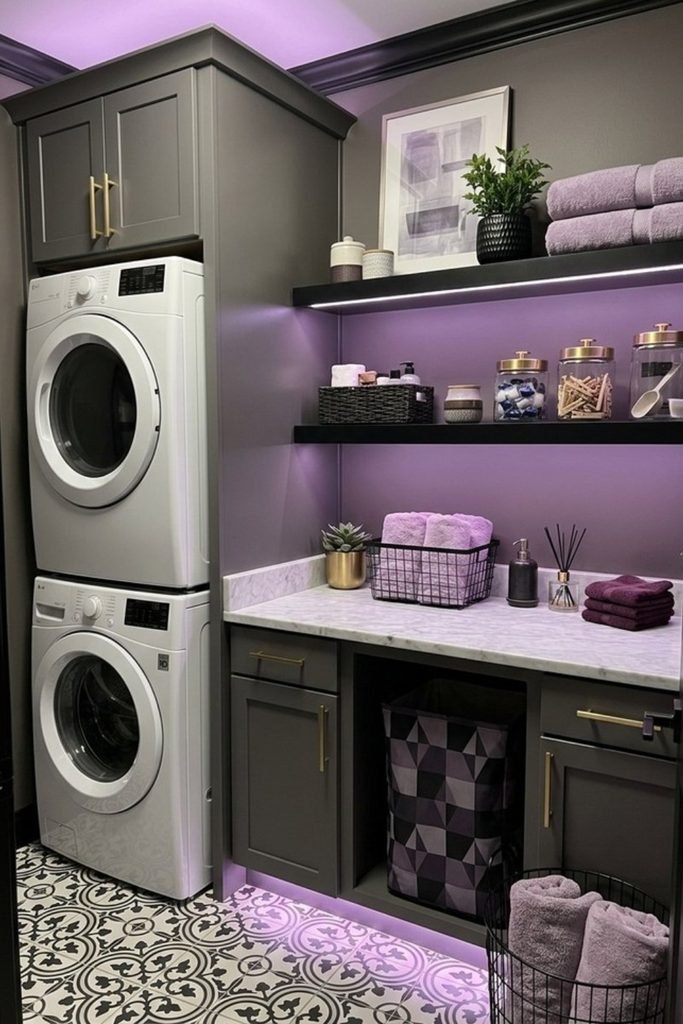
Give stacked machines a proper landing zone by adding a counter beside them, so folding and sorting happen without blocking appliance doors.
Tuck a tall hamper beneath the worktop, then keep daily supplies on open shelves and less attractive extras behind cabinet doors.
This setup suits narrow laundry rooms especially well because storage climbs upward while the counter keeps everyday tasks comfortably within reach.
Utility Wall
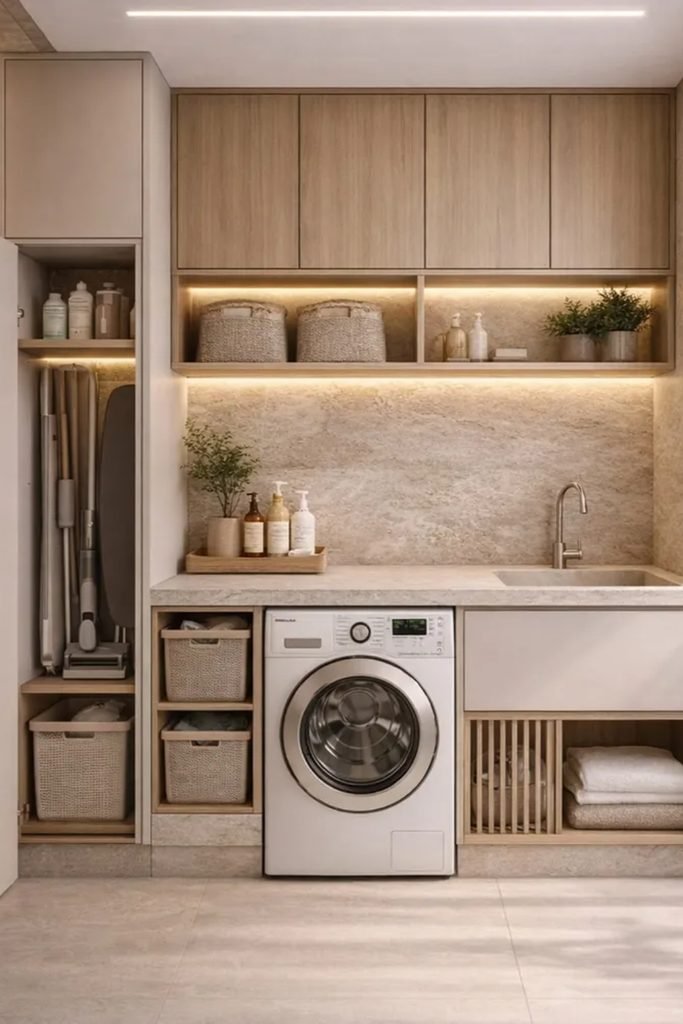
Build storage around the chores you actually do, using one wall for washing, sink work, cleaning tools, baskets, and backstock.
A tall utility cupboard keeps bulky items upright, while lower cubbies hold grab-and-go baskets that are easier to reach during laundry.
Closed upper cabinets reduce visual clutter, making this layout especially useful when your laundry room also needs to look polished.
Shelf Storage
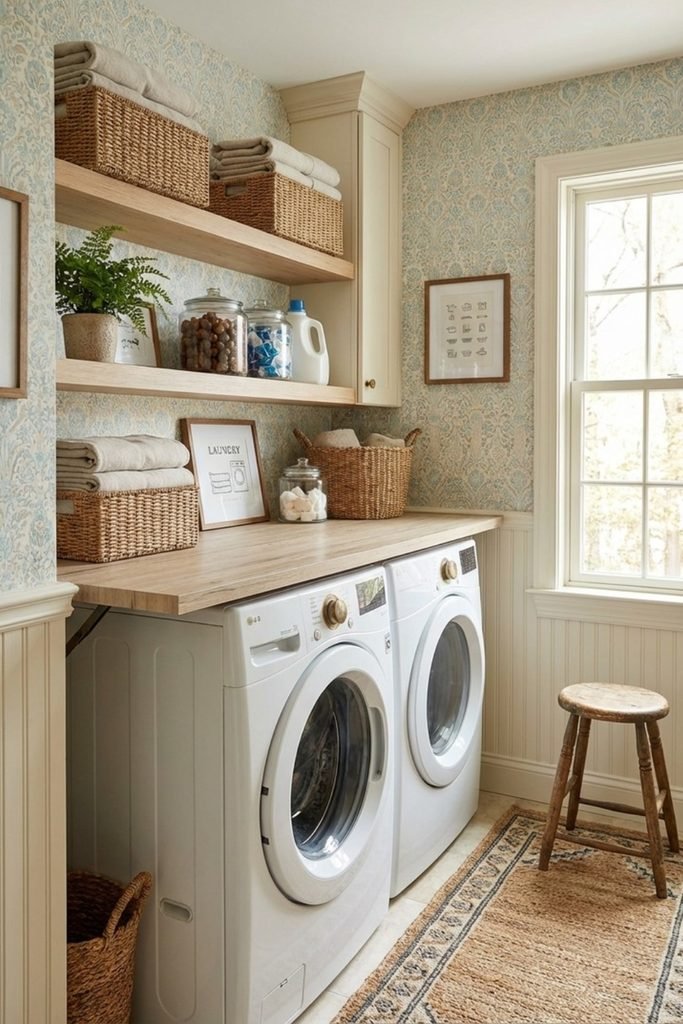
Use the space above side-by-side machines for a full-width counter, then let open shelves handle towels, baskets, and everyday laundry supplies.
Keep heavier baskets lower and lighter backstock higher, so reaching what you need never turns into an awkward lifting job.
This approach works beautifully in wider laundry rooms where you want generous storage without making the wall feel too heavy or closed.
Corner Sorting
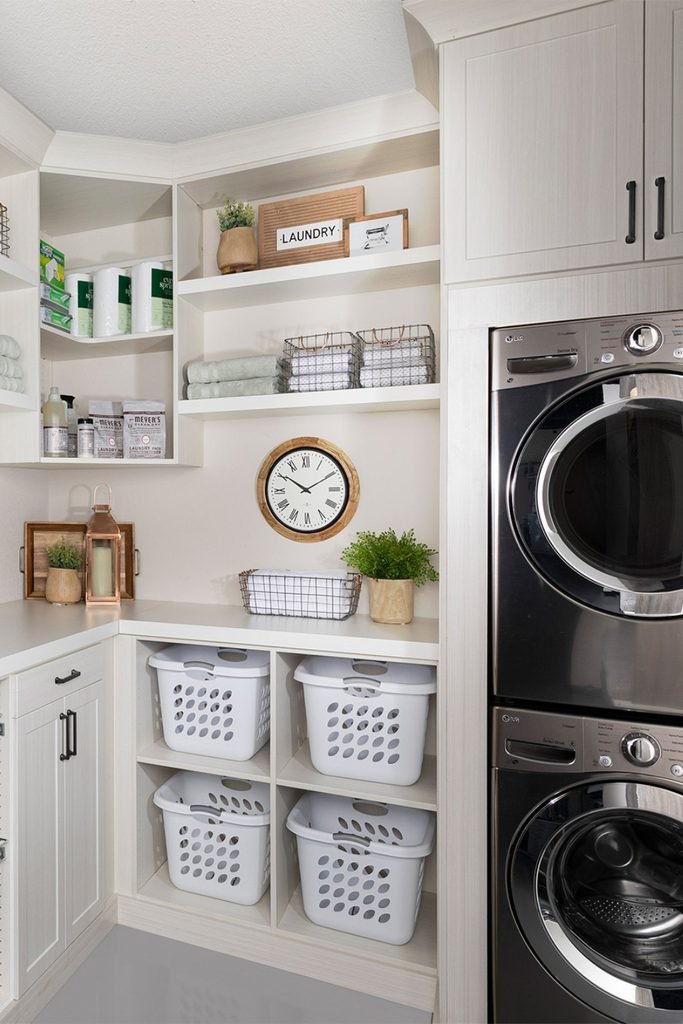
Treat empty corners as working storage, not dead space, by wrapping shelves around them and keeping baskets close to the folding counter.
Open cubbies below the worktop give each laundry basket a permanent home, which stops clean clothes from spreading across the floor.
Pair that setup with pull-out wire baskets for smaller loads, towels, or sorting categories you want separated but still easy to access.
Compact Utility
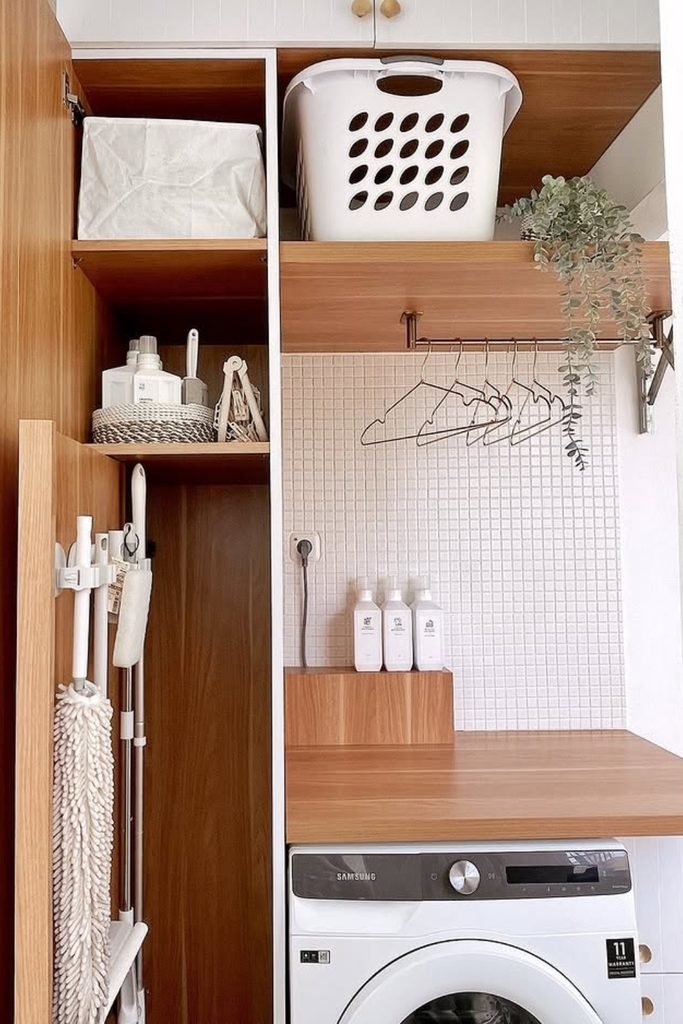
Use a narrow laundry wall for more than washing by combining appliance space, cleaning tools, hanging storage, and everyday supplies.
Keep tall items together in one slim section, then place frequently used products on reachable shelves right beside the washer.
A small hanging rail finishes the setup neatly, giving shirts and delicates somewhere to dry without taking over the room.
Sink Storage
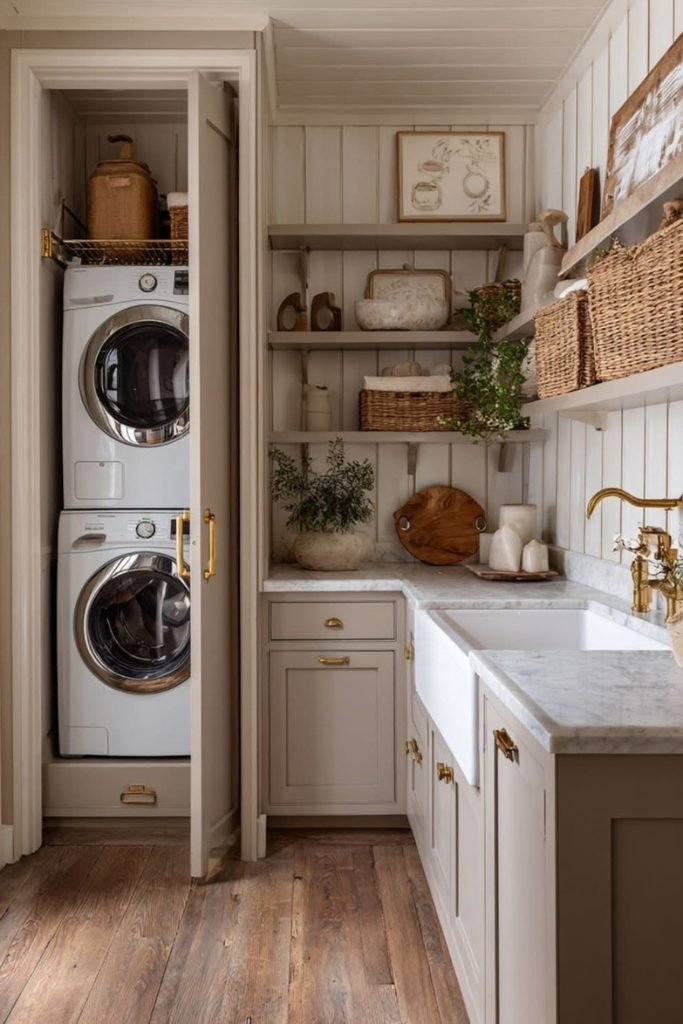
Stacked machines free enough floor space for a proper sink zone, making this layout useful when washing and cleaning share one room.
Keep baskets and everyday supplies on open shelves near the sink, while closed lower cabinets hide bulkier items and visual clutter.
This setup works best in narrow laundry rooms because every wall has a clear job without making the walkway feel crowded.
Worktop Shelves
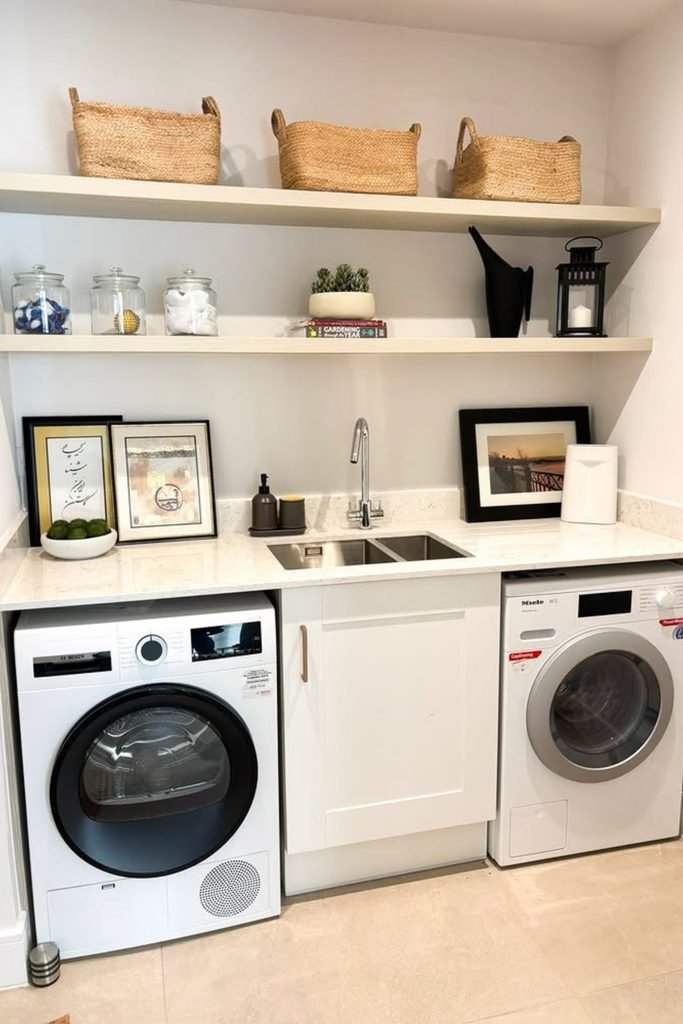
Run a full counter across side-by-side appliances when you need one easy surface for folding, sorting, and quick hand-washing tasks.
Open shelves above the machines keep baskets and small supplies visible, while the sink breaks up the worktop without wasting space.
Use the highest shelf for lighter backstock, then keep daily essentials lower down so you are not constantly reaching overhead.
Sorting Wall
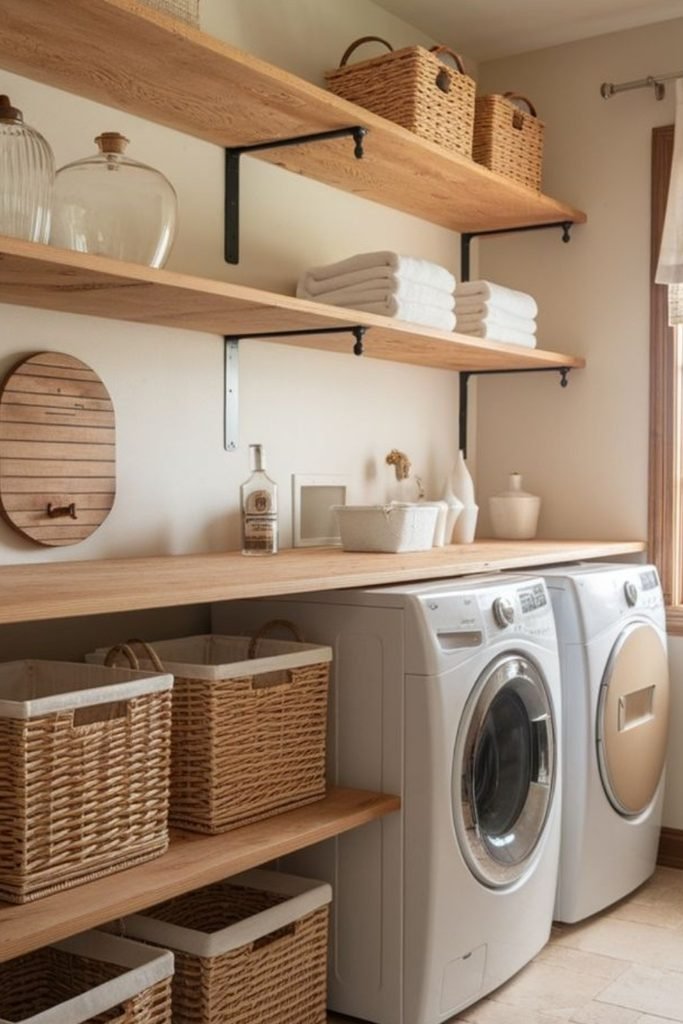
Turn a long blank wall into one organized system by combining open shelves, a folding counter, and baskets for different laundry stages.
Keep empty baskets under the counter so clean clothes have somewhere to land instead of piling across the floor or machines.
Use upper shelves for towels and backstock, leaving the work surface mostly clear so folding remains quick and easy every day.
Top Storage
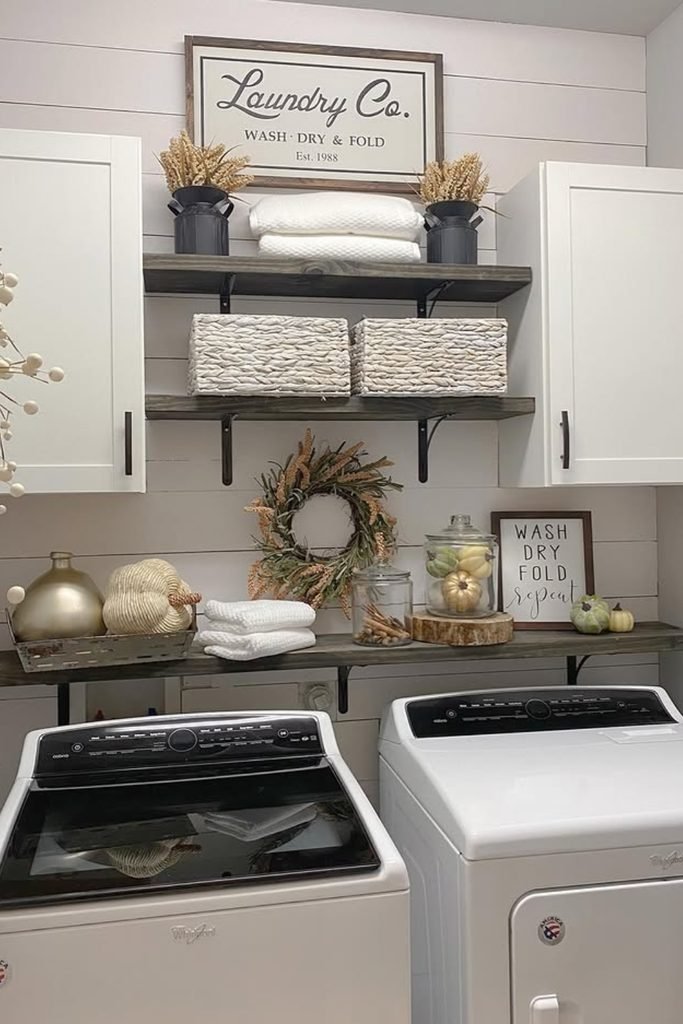
With top-loading machines, keep storage high enough for the lids to open fully, then use the wall above for lighter supplies.
Mix closed cabinets with one or two open shelves, so everyday items stay reachable while bulk products disappear behind doors.
This setup suits compact rooms where floor space matters, but measure appliance clearance first before fixing any shelf or cabinet.
Utility Cabinet
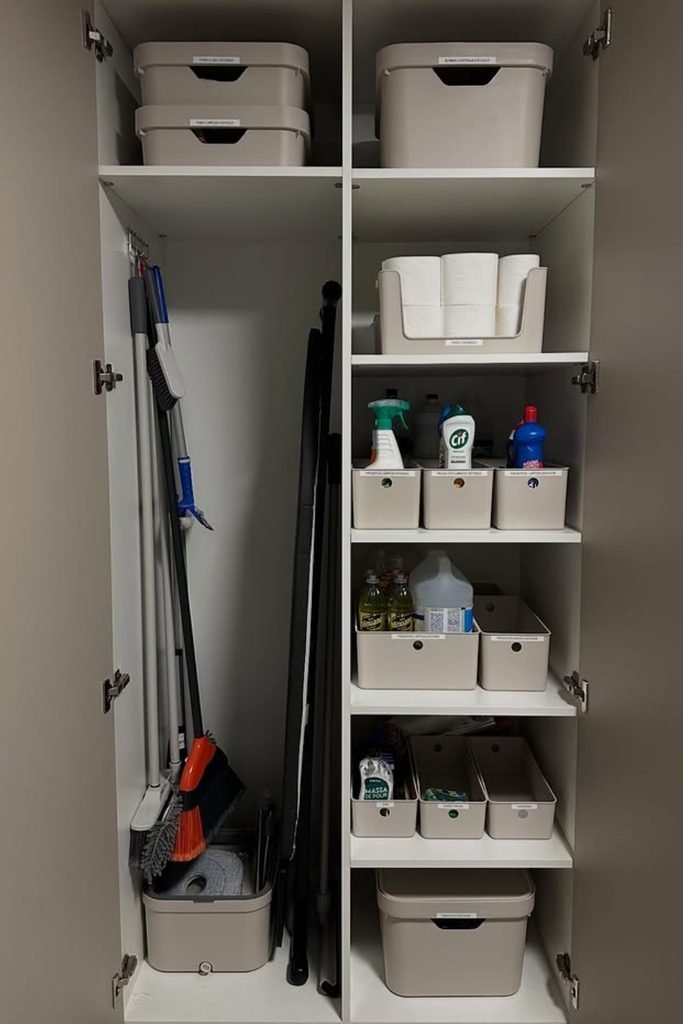
A full-height utility cabinet is worth the space when brooms, mops, paper goods, and cleaning products keep drifting around the room.
Give long tools one tall section, then divide the other side with shelves and bins sized around the supplies you actually use.
Keep frequently used cleaners around waist or shoulder height, while rarely used refills can live higher without stealing easy-access storage.
Vertical Cubby
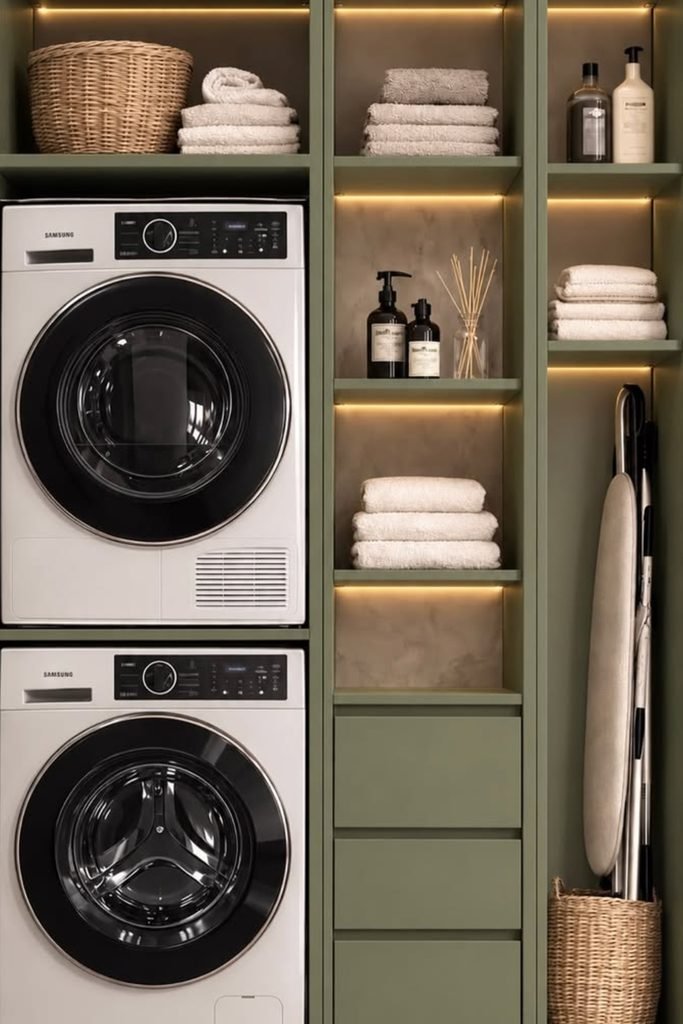
When appliances are stacked, use the narrow side strip for shelves, drawers, and tall-item storage instead of leaving it wasted.
Reserve open cubbies for towels and daily supplies, then hide smaller clutter inside drawers where it cannot crowd the visual space.
A dedicated slot for the ironing board works especially well here, because bulky vertical items stay upright without blocking the walkway.
Sorting Tower
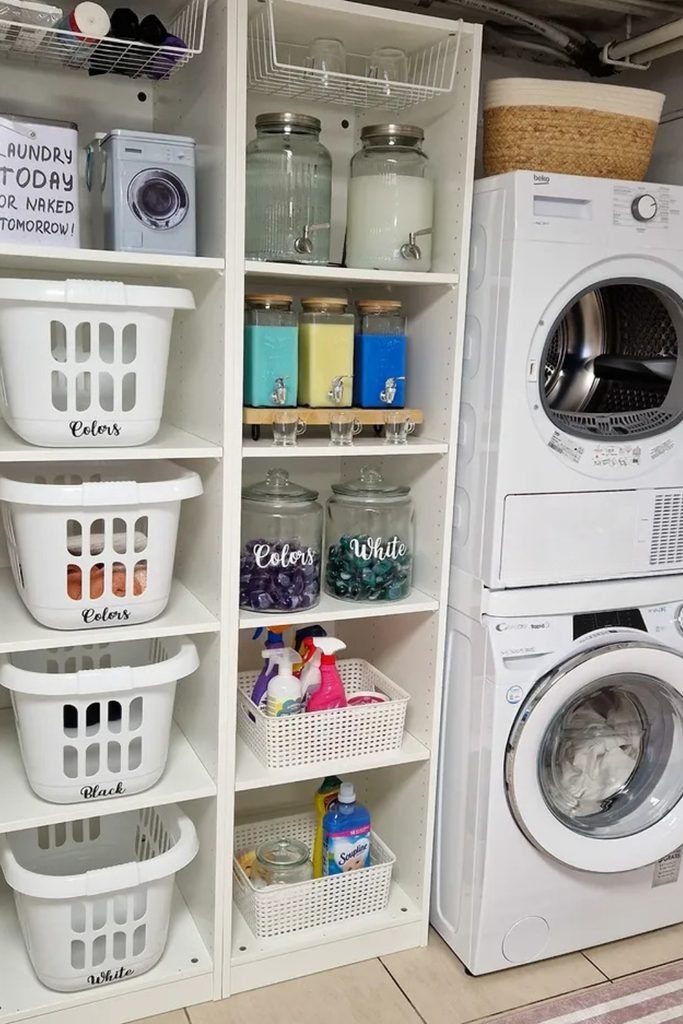
If sorting creates floor piles, give each load type its own basket in a tall open tower beside the machines.
Keep the categories simple enough to match your routine, such as lights, darks, towels, or delicates, rather than overcomplicating the system.
Use nearby shelves for stain tools and other laundry essentials, but keep detergent in its original labeled container for safer storage.
Supply Zones
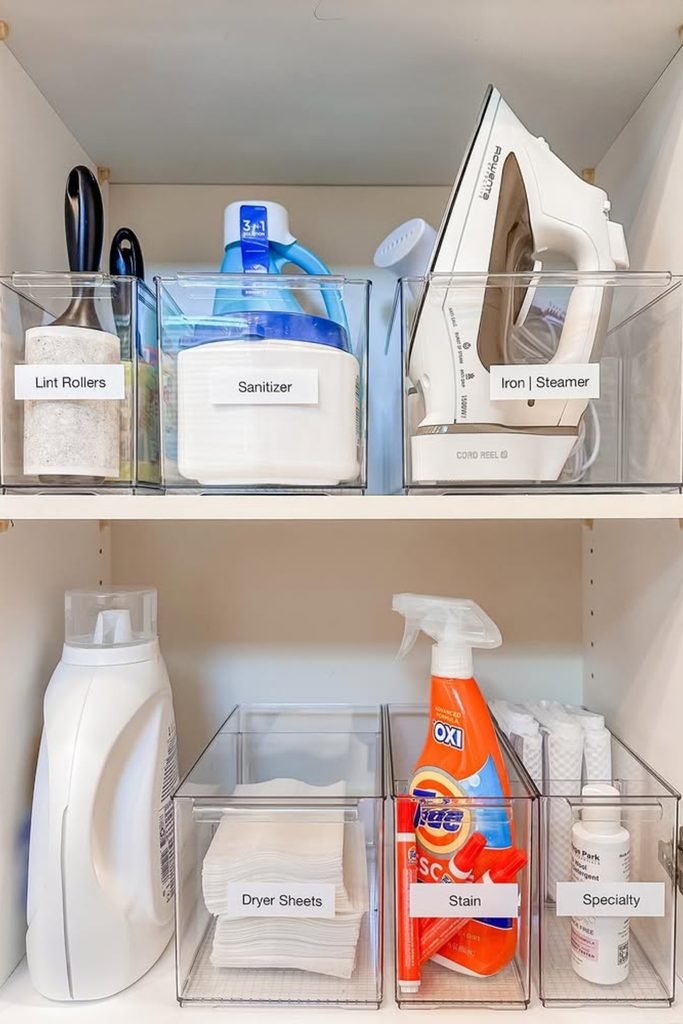
Group small laundry tools by task inside clear bins, so lint rollers, stain products, and steaming supplies never get mixed together.
Use labels only where they save time, then keep the products you reach for most on the easiest shelf to access.
This works especially well inside deep cabinets because containers create boundaries, prevent small items disappearing, and make restocking much easier.
Hanging Station
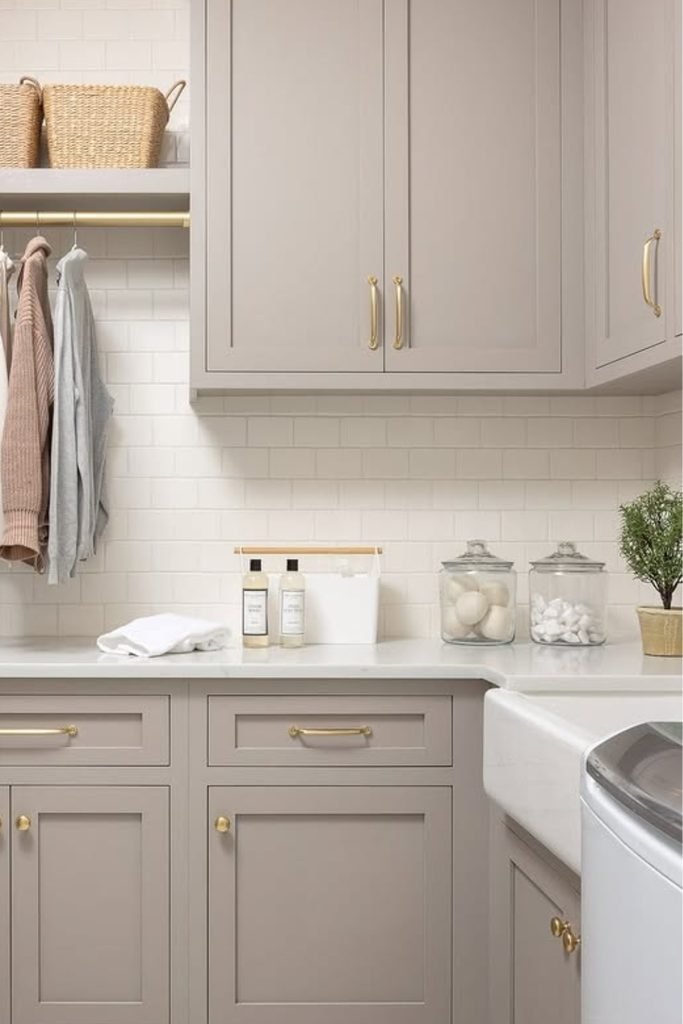
A short hanging rail above the counter gives freshly washed shirts and delicates a proper drying spot without stealing valuable floor space.
Place it near the washer or sink, then leave enough clearance underneath so the worktop still handles folding and pretreating.
Closed cabinets around the station can hold backstock and less attractive supplies, keeping the drying area useful without making it look crowded.
Laundry Cubbies
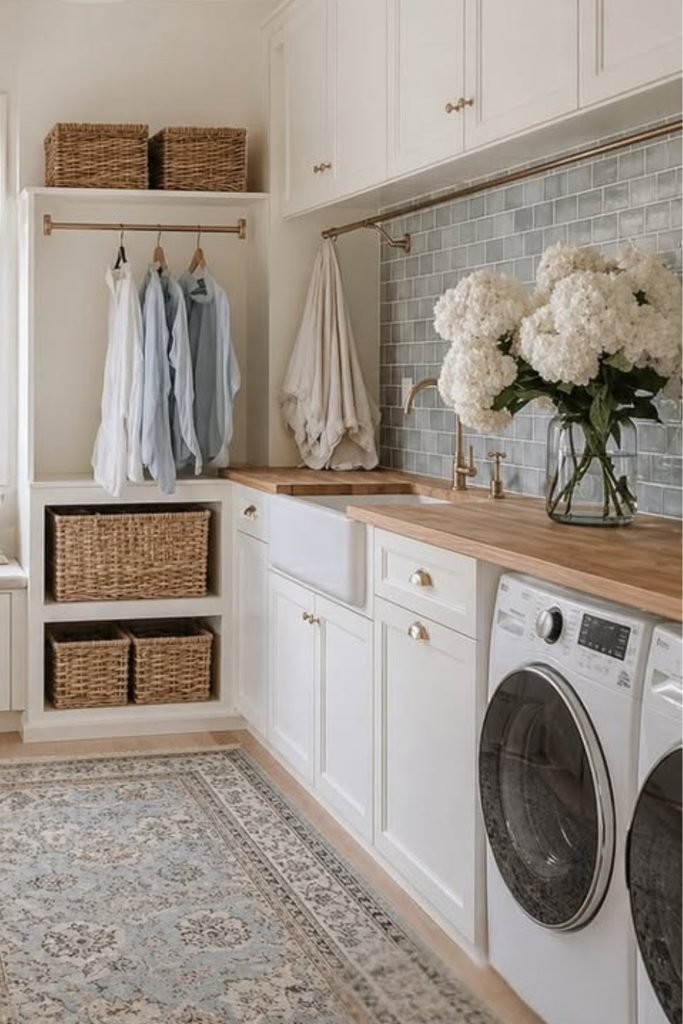
Build open cubbies beside the worktop when baskets need a permanent home, rather than letting clean laundry drift around the room.
Use the upper section for hanging pieces that cannot go straight into drawers, then reserve lower shelves for sorted baskets.
This setup suits longer laundry rooms especially well because it creates a clear handoff point between washing, folding, and putting away.
Cleaning Closet
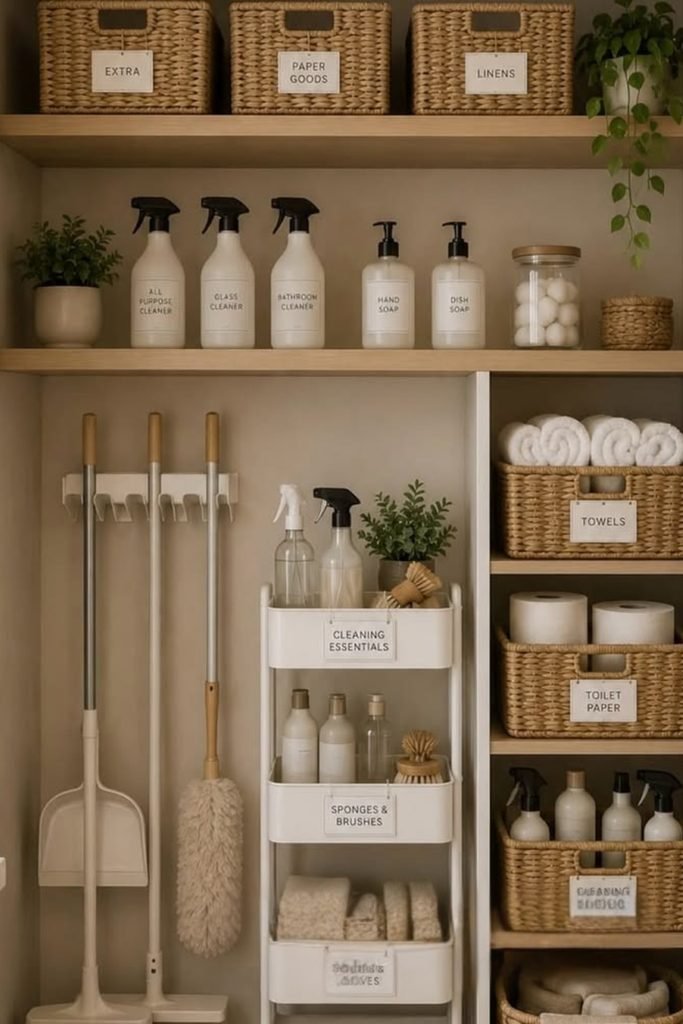
Turn one tall cabinet into a cleaning closet when mops, sprays, paper goods, and spare linens keep spreading through the house.
Mount long-handled tools vertically on one side, then use baskets and a slim cart to separate smaller supplies by job.
Keep frequently used items between waist and shoulder height, while bulk refills and rarely needed extras can sit on upper shelves.
Counter Zone
Let the countertop do more work by running it across the machines, giving you one clear place for folding and sorting.
Keep sink supplies inside the lower cabinet, then use upper cupboards for refills so the main work surface stays completely open.
This layout suits smaller laundry rooms where washing, folding, and hand-cleaning all need to share one compact but practical wall.
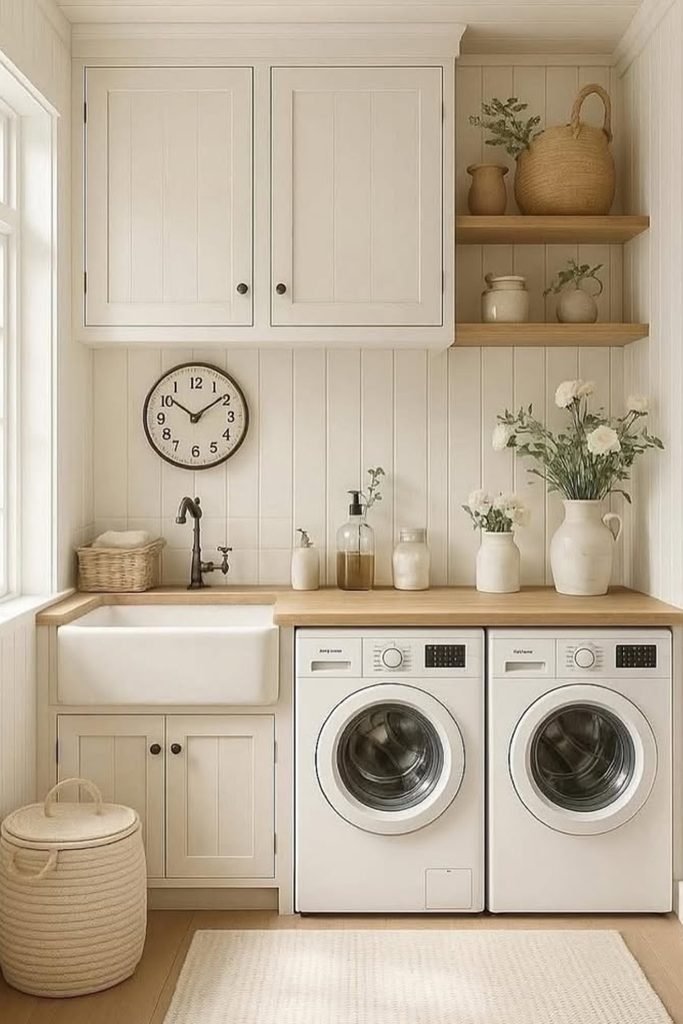
Closed Storage
Closed cabinets are ideal when you want the room to stay calm, especially if laundry supplies usually create visual clutter.
Run storage almost to the ceiling, then keep only a few daily-use items on the open shelf below the cabinets.
A long counter across the machines gives you generous folding space without adding another table that would narrow the walkway.
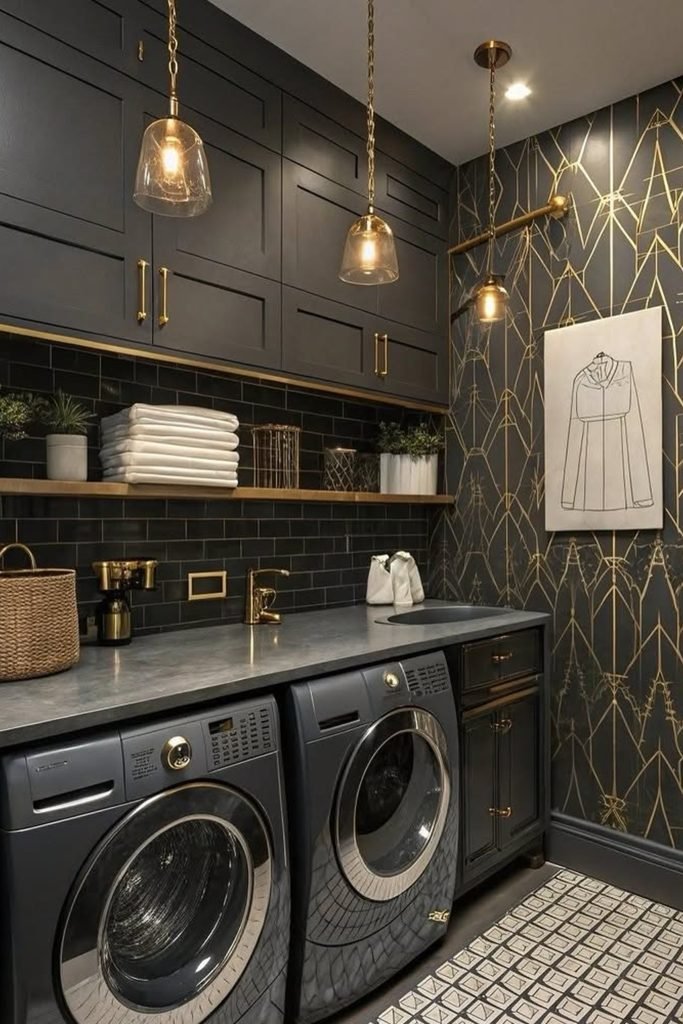
Basket Shelves
Open shelves can handle far more than decoration when you divide them between towels, baskets, supplies, and lighter everyday backstock.
Use matching baskets for loose items, then keep folded linens visible so you can grab them quickly without opening cabinets.
Finish with a counter above the machines, creating a practical work surface while the wall handles nearly all everyday storage.
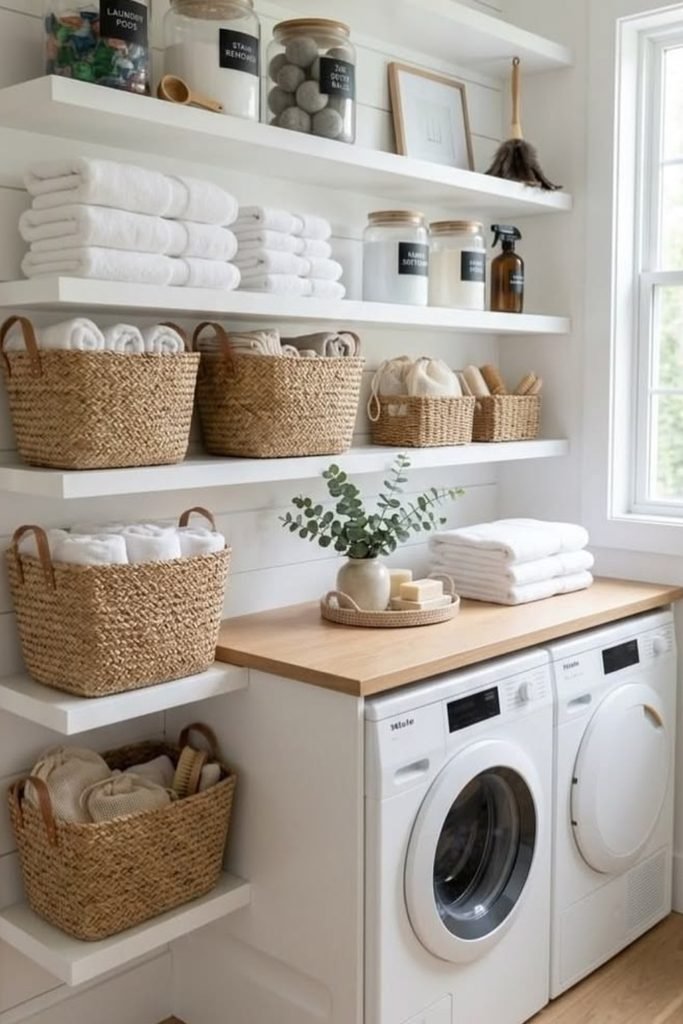
Hanging Zone
Mixing open and closed storage works really well when you want easy access without leaving every product visible all day.
Use the hanging rail for shirts and delicates, then keep baskets in the open cubbies for sorted or finished loads.
Reserve the upper cabinets for bulk supplies and seasonal extras, so the counter and lower storage stay focused on daily laundry.
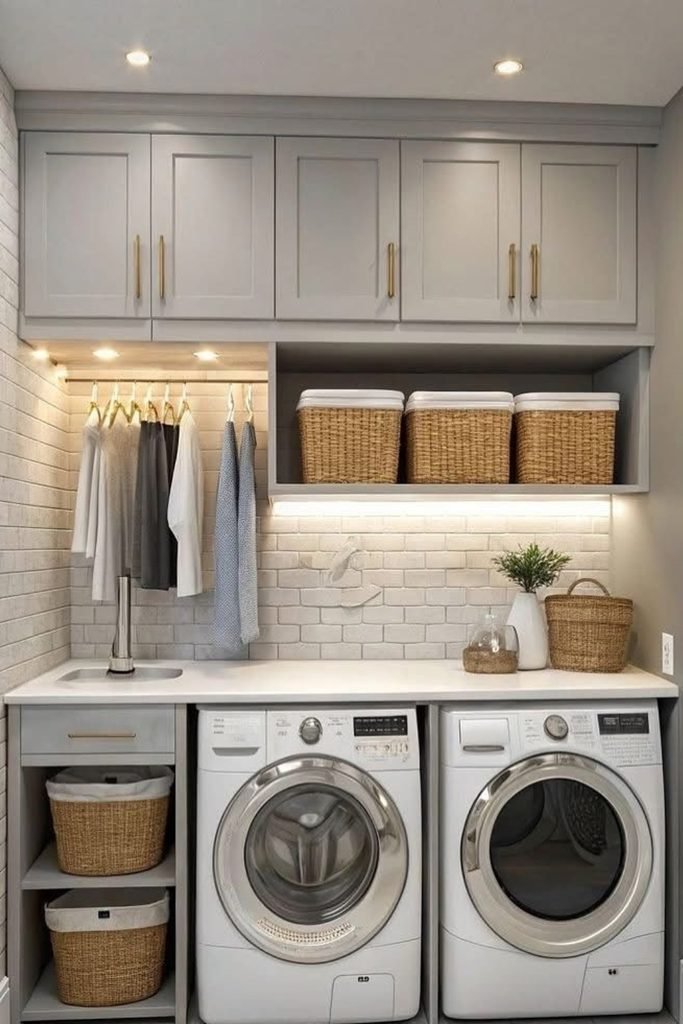
Dual Purpose
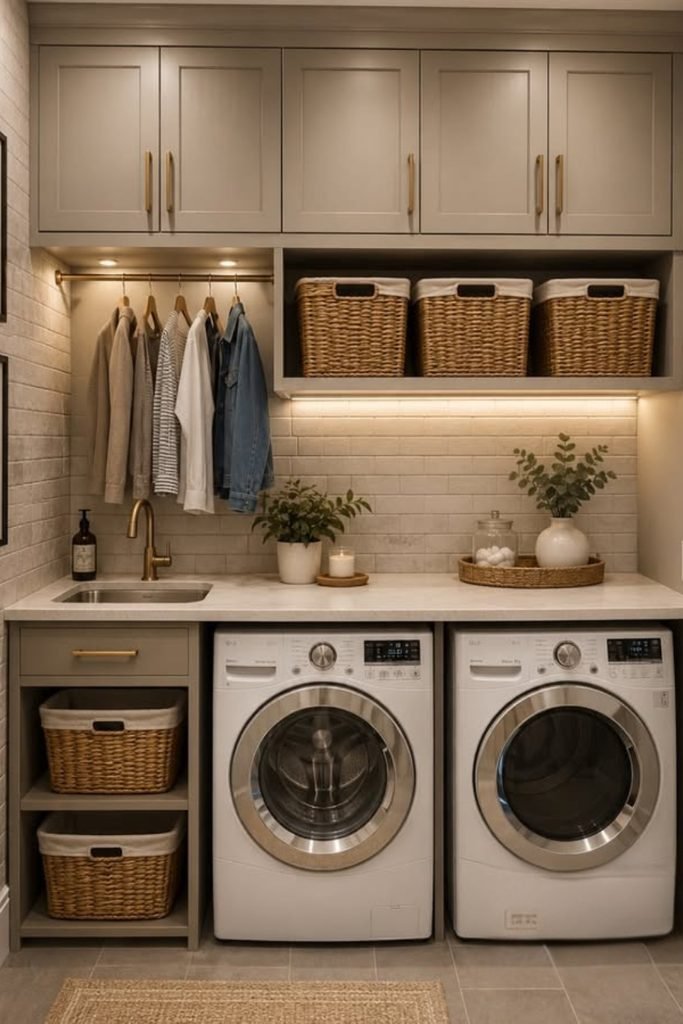
Use one compact wall for washing, hanging, sorting, and sink work, so every task stays connected without spreading across the room.
Keep baskets in open cubbies for quick access, then reserve the upper cabinets for refills, cleaners, and rarely used supplies.
The short rail beside the sink gives shirts and delicates a drying spot while the counter remains clear for folding.
FAQs
How Do I Keep a Laundry Room Organized?
Keep the system simple by giving detergent, baskets, stain products, and clean clothes their own fixed spots near where you use them.
If items keep moving around, add a basket, shelf, or cabinet for that category instead of creating another temporary pile.
Reset the room after each laundry day by returning supplies, emptying baskets, and clearing the folding surface before the next load.
What Should I Store in a Laundry Room?
Store everyday laundry supplies close to the machines, while keeping bulk refills, extra linens, and rarely used tools farther away.
Use closed cabinets for products that create visual clutter, and open shelves for baskets, towels, or items you reach for often.
Keep detergents and laundry pods in their original labeled containers, especially when children or pets can access the laundry area.
