
16 Yellow Kitchen Cabinet Ideas
Yellow kitchen cabinets have a way of making a kitchen feel more personal, especially when the shade works naturally with the rest of the room.
From soft butter tones to deeper mustard shades, yellow can look calm, modern, vintage, or bold depending on what you pair with it.
In this article, you’ll find practical ways to use yellow kitchen cabinets with the right colors, finishes, and design details.
Let’s jump in!
What Wall Color Goes With Yellow Kitchen Cabinets?
Warm white is the easiest choice because it keeps yellow cabinets bright without adding another strong color beside them.
If your cabinets lean mustard or ochre, try cream, beige, sage green, or soft greige to keep the kitchen grounded.
For stronger contrast, navy or muted blue works well, especially when your countertops and backsplash are fairly simple.
Always check the wall color beside your cabinet sample first, because cool whites can make warm yellow look sharper than expected.
If you want the kitchen to feel calm, let the cabinets stay as the main color and keep the surrounding walls softer.
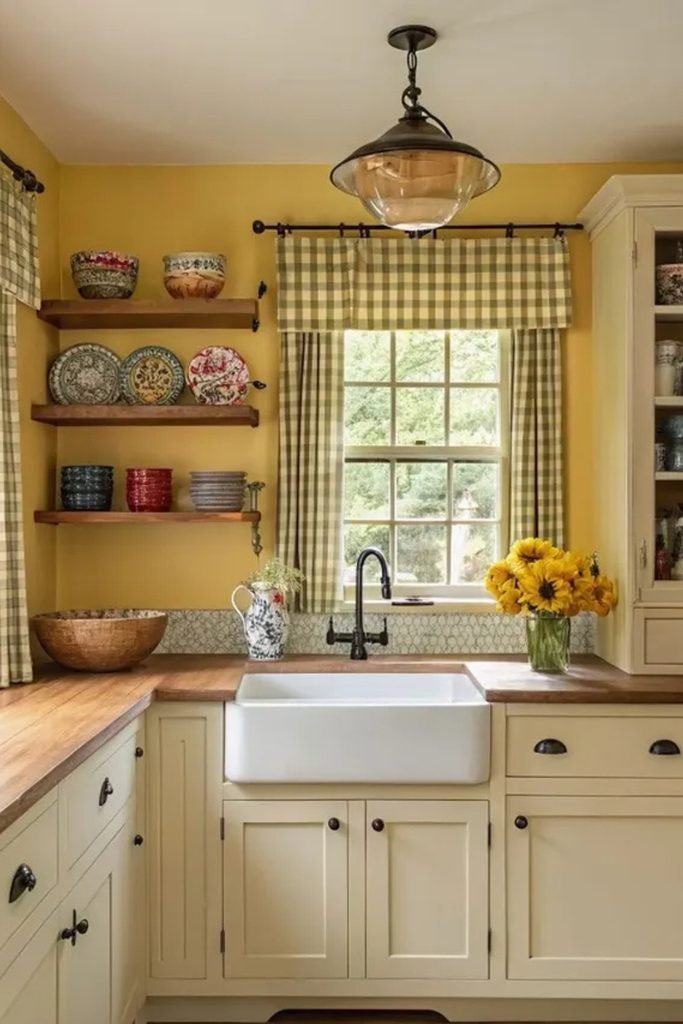
Warm Country
Pair muted yellow cabinets with warm mustard walls when you want a layered country look without making the room feel overly bright.
Natural wood counters help soften the yellow-on-yellow palette, while dark hardware gives the lighter cabinetry enough contrast to stay defined.
Use checked curtains or small patterned details sparingly, because too many busy surfaces can quickly make this cozy combination feel crowded.
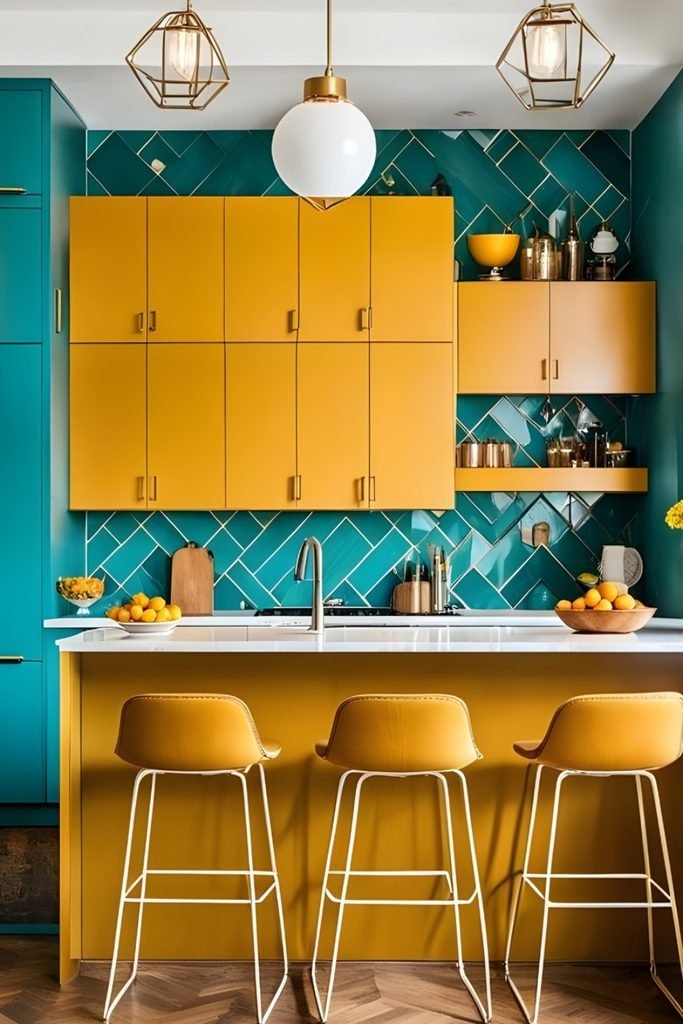
Teal Contrast
Use teal beside saturated yellow when you want a bold kitchen, because the cooler blue-green keeps the warm cabinets from dominating.
Keep countertops pale and simple so both colors stay crisp; adding another strong surface would make the palette feel much harder to control.
Choose slim brass details if you want warmth without clutter, then repeat them lightly across handles and lighting for a more connected finish.
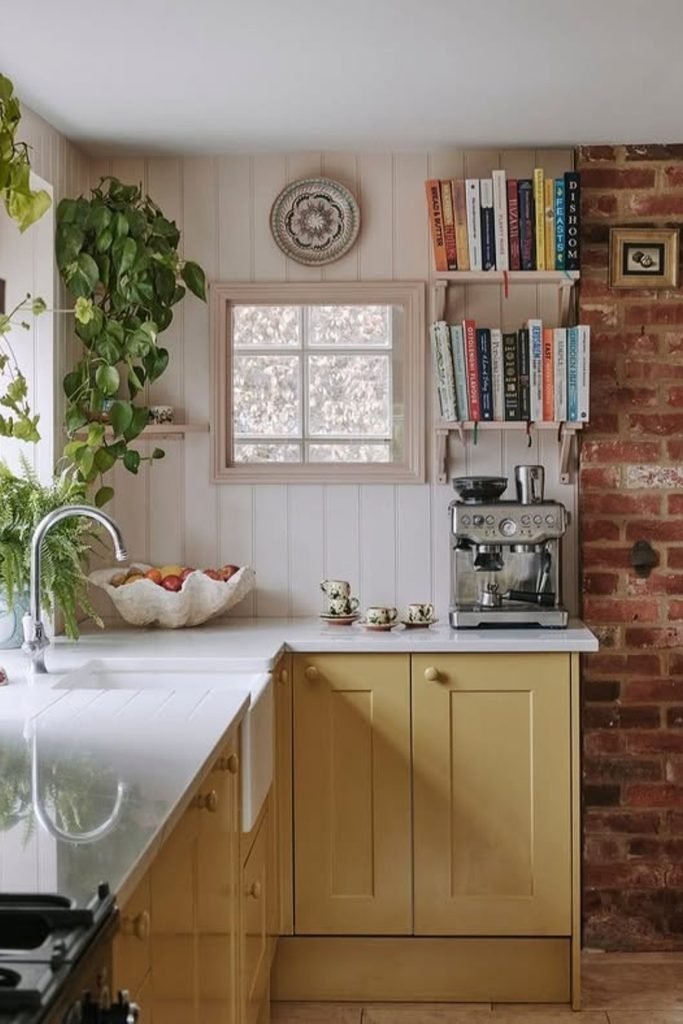
Brick Balance
Try ochre lower cabinets with soft white walls if you want yellow to feel earthy rather than bright or overly decorative.
Exposed brick works especially well here because its red-brown tones sit naturally beside muted yellow and stop the palette from feeling too polished.
Add leafy plants near the worktop to bring in cooler green notes, which helps balance all the warmth from timber and brick.
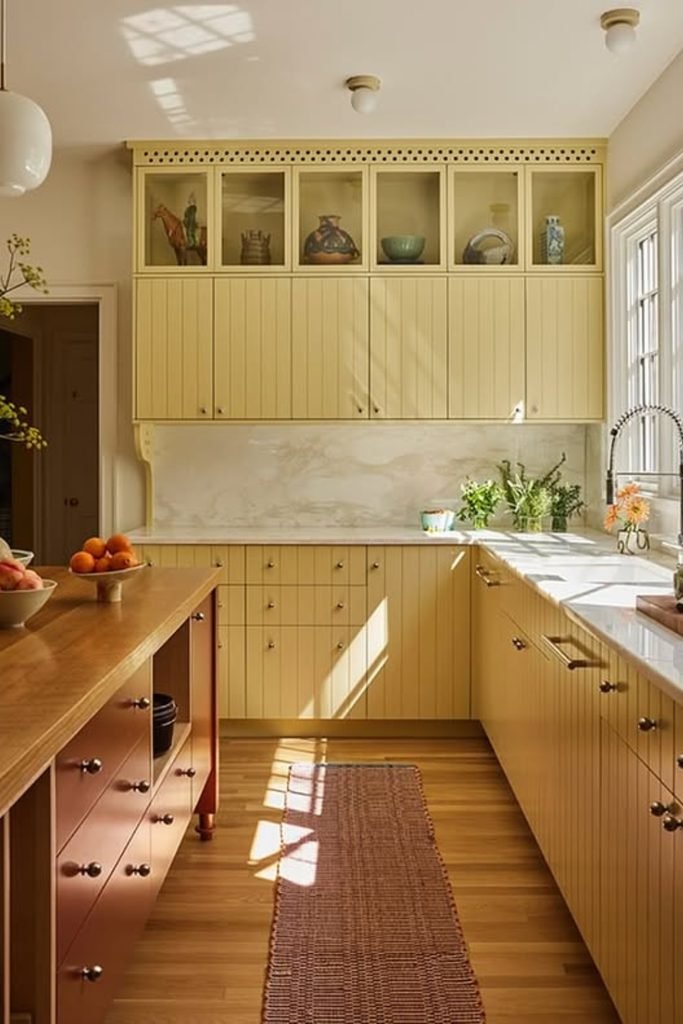
Sunlit Millwork
Use pale yellow on detailed cabinetry when you want color without heaviness, because softer shades let grooves, trim, and glass panels remain visible.
A light stone backsplash keeps the long cabinet run from feeling closed in, while warm timber flooring prevents the room looking washed out.
If you add a darker island, choose a warm wood or terracotta tone so the contrast still feels connected to the yellow.
Plum Contrast
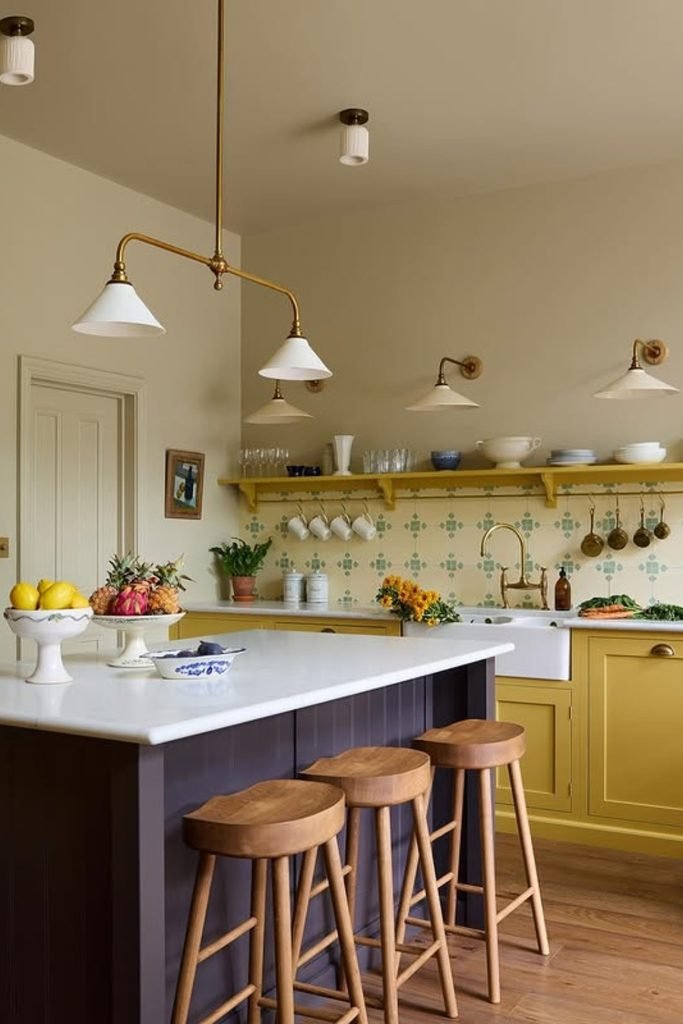
Pair mustard cabinets with a deep plum island when you want richer contrast without introducing a cooler color that breaks the warmth.
Keep the walls soft and creamy, then use a patterned backsplash to connect the yellow cabinetry with the room’s quieter surfaces.
Wood stools and aged brass add enough warmth to make the darker island feel intentional instead of heavy beside the yellow.
Textured Neutral
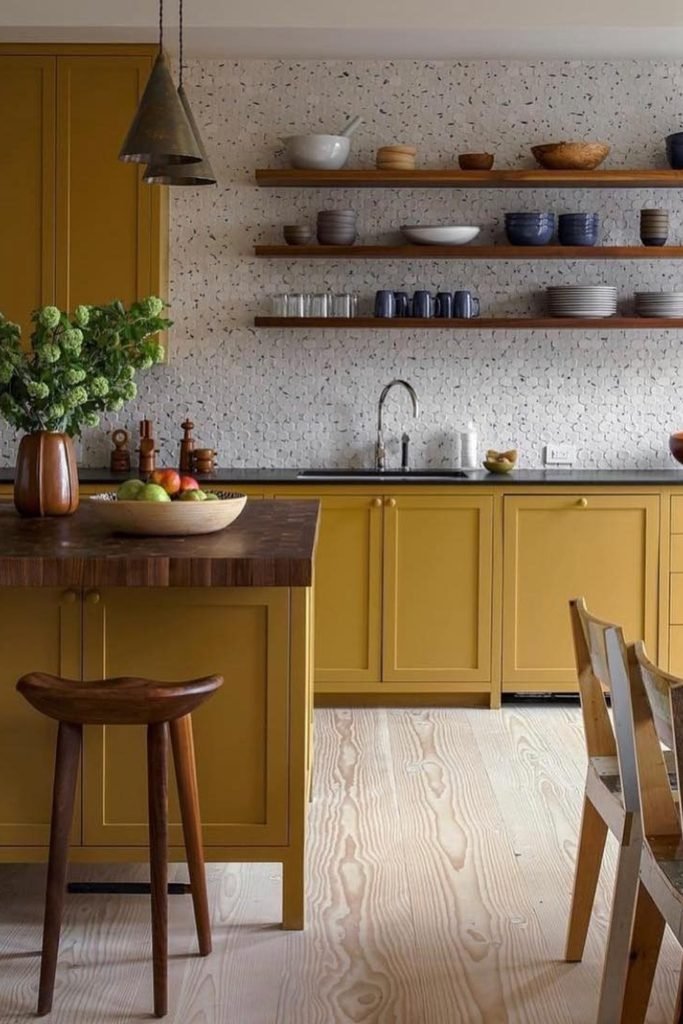
Use a textured white backsplash behind mustard cabinets when you want a light surface that softens the color without making it look flat.
Dark wood countertops give the yellow more depth, while open shelves break up the cabinetry and stop the room from feeling boxed in.
Choose pale flooring if the cabinets and worktops already carry strong warmth, because it keeps the overall palette from becoming visually dense.
Farmhouse Yellow
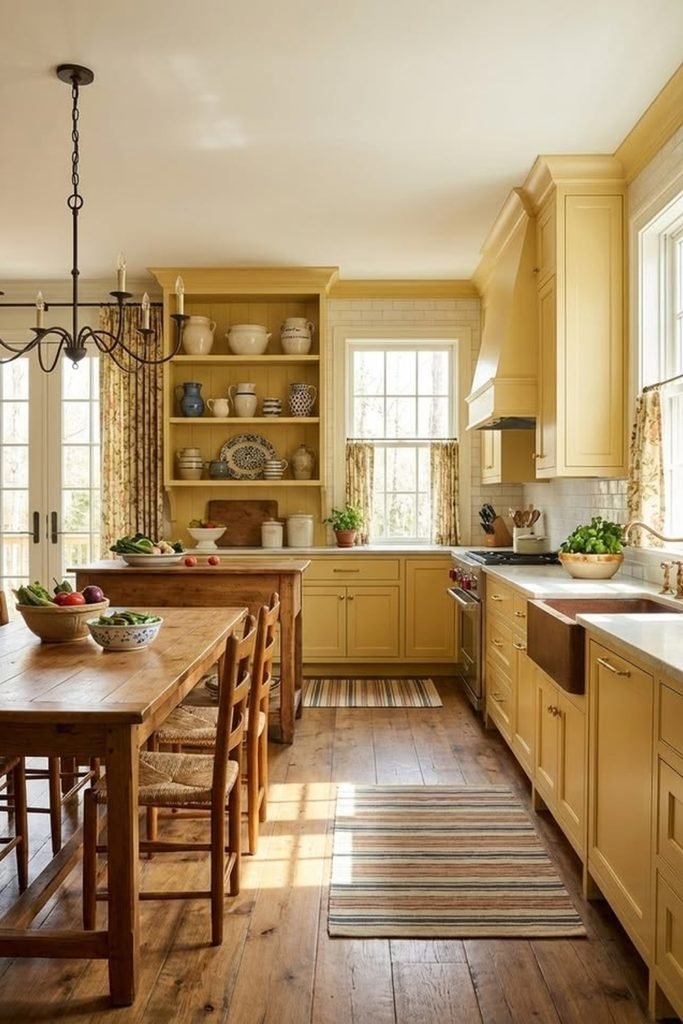
Choose a soft golden yellow for traditional cabinetry when you want color that feels established rather than overly bright or trend driven.
White subway tile keeps the walls quiet, while a large wood table adds enough natural variation to stop the yellow repeating everywhere.
Use simple brass hardware and woven or striped textiles to support the country look without turning every detail into another decorative statement.
Rustic Ochre
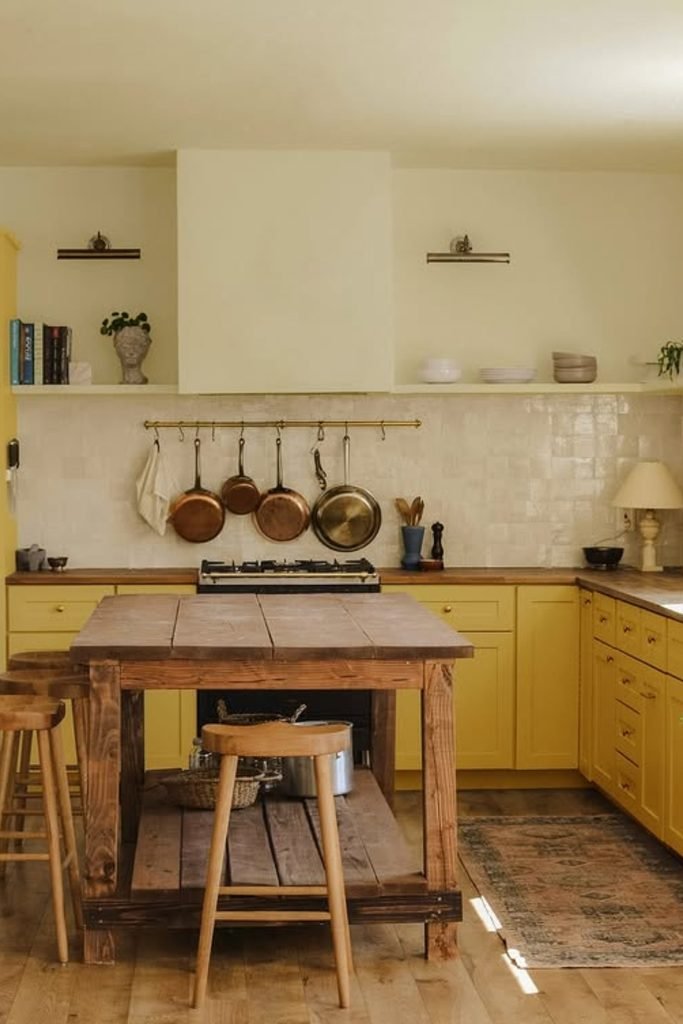
Let ochre cabinets sit against creamy walls when you want a warm kitchen that feels grounded without matching every surface to yellow.
A rough wood island introduces texture and age, which helps painted cabinetry feel more relaxed and less like a perfectly coordinated set.
Hang copper cookware or add leafy plants if the palette needs movement, because both bring natural color without fighting the ochre tones.
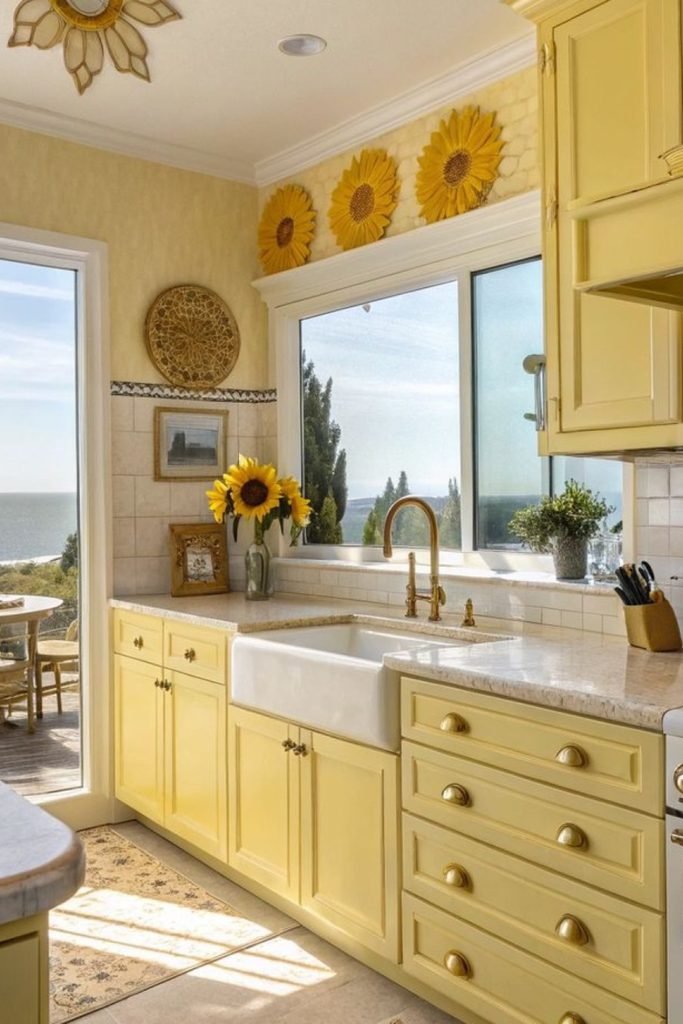
Coastal Butter
Choose a soft butter yellow when your kitchen gets strong daylight, because the lighter shade stays warm without becoming harsh or glaring.
Pair it with creamy stone counters and a white farmhouse sink to keep the room bright while the cabinets remain clearly defined.
Brass hardware works well here, but keep decorative yellow accents limited so the cabinetry still feels intentional rather than themed.
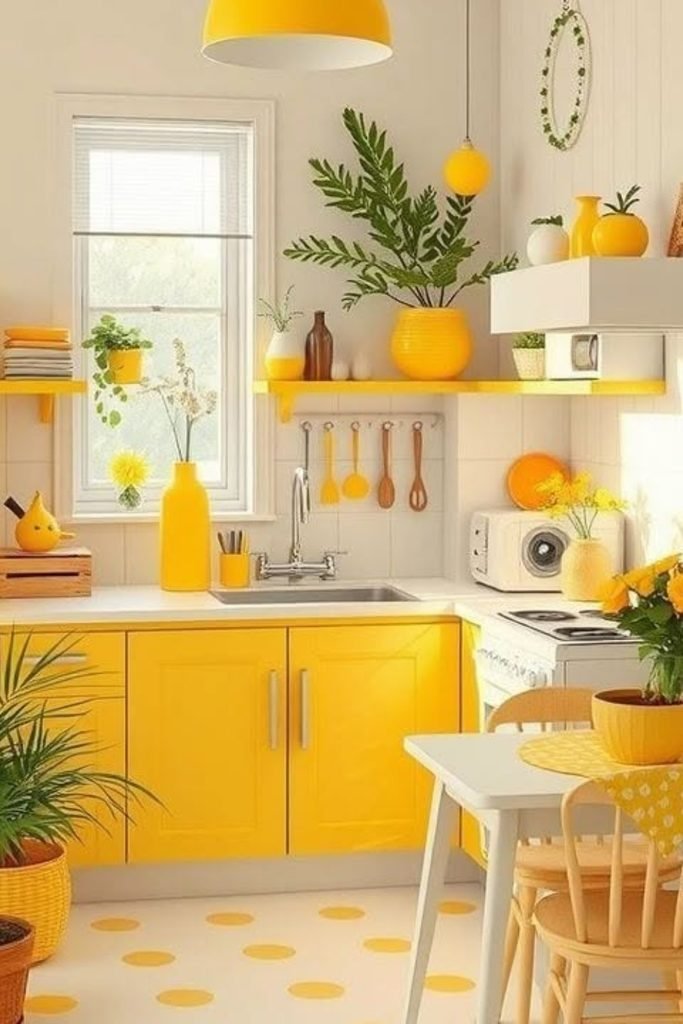
Citrus Pop
Use bright yellow on lower cabinets if you want strong color without filling the whole room, especially in a compact kitchen.
Keep walls, counters, and major appliances white so the yellow reads as a deliberate focal point instead of visual clutter.
Add plants and natural wood in small doses to soften the brightness and keep the space from feeling overly synthetic.
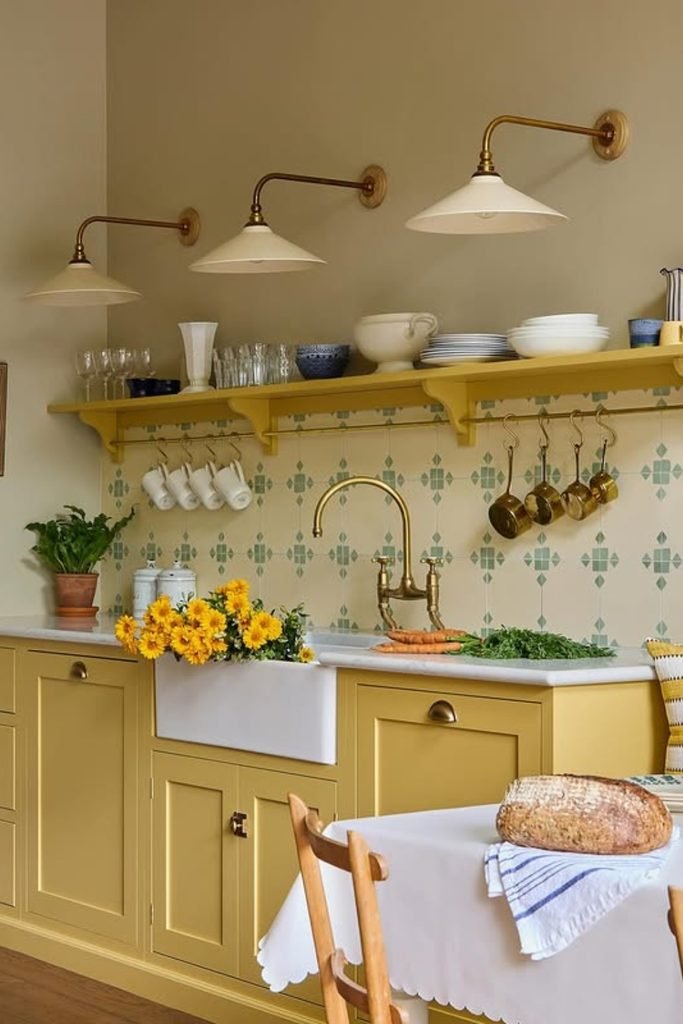
Patterned Calm
Pair muted mustard cabinets with a small-scale patterned backsplash when you want detail without making the kitchen feel busy or overly traditional.
Creamy walls and a white farmhouse sink give the yellow breathing room, while brass fixtures repeat its warmth in a quieter way.
Use one open shelf instead of upper cabinets if the room feels heavy, because exposed dishes can visually break up the color.
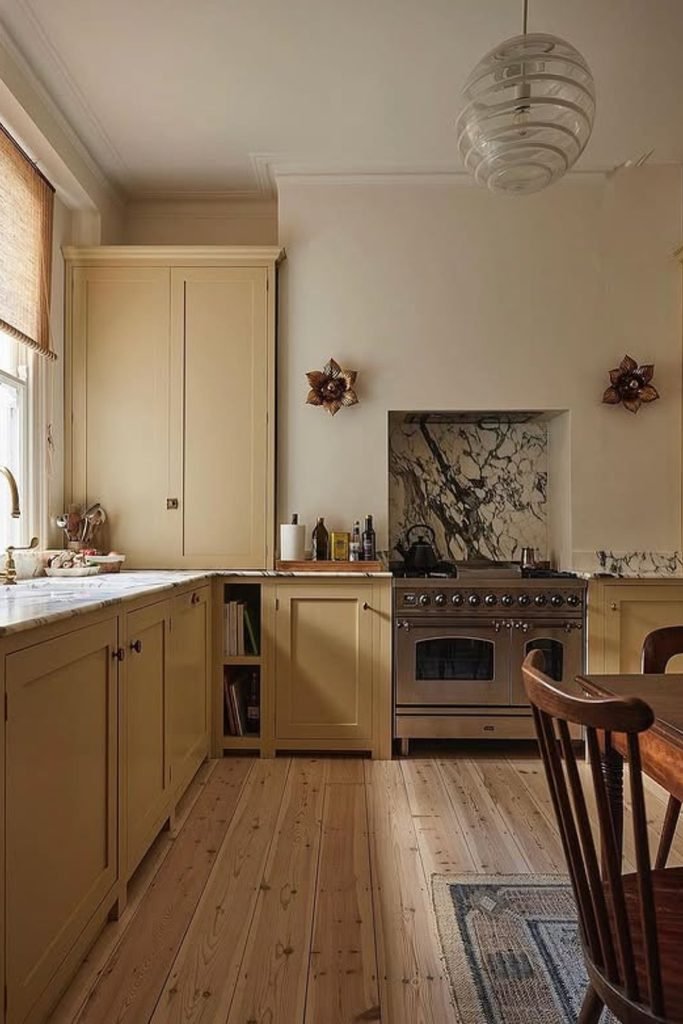
Muted Heritage
Choose a muted ochre-yellow when you want a traditional kitchen that feels grown-up, especially alongside warm timber floors and aged metal.
A veined stone splash behind the range adds movement without introducing another color, which keeps the overall palette calm and grounded.
Keep the walls close to warm white so the cabinetry can deepen naturally in lower light without making the room feel dark.
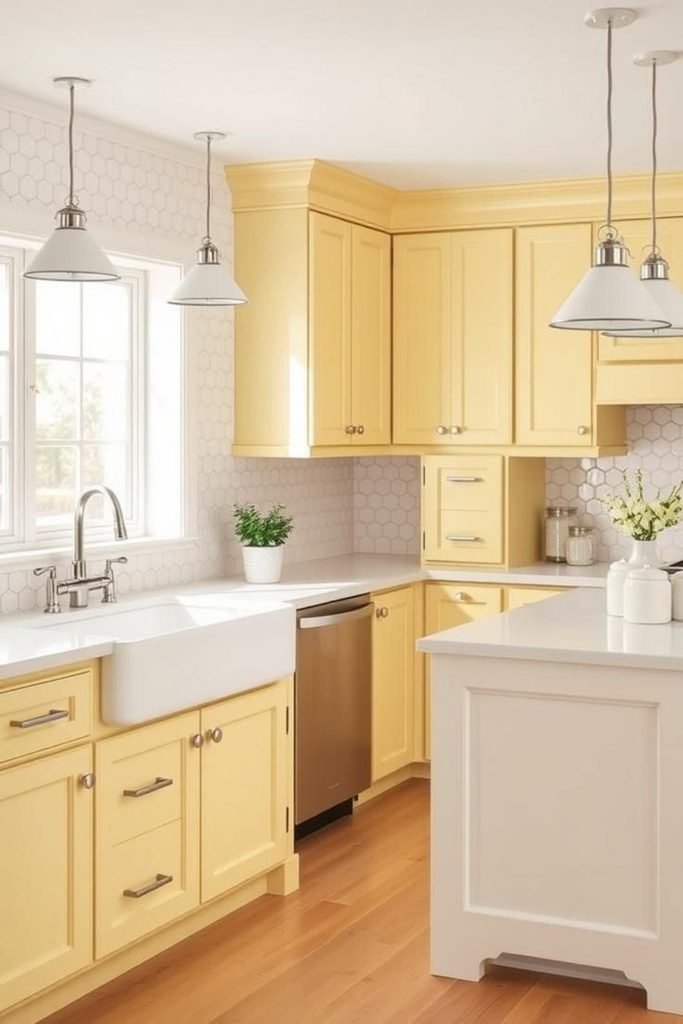
Soft Honey
Choose a soft honey yellow when you want warmth without strong contrast, especially in kitchens with plenty of white surfaces and daylight.
White counters and a simple hex backsplash keep the cabinets feeling fresh, while brushed metal hardware adds a cleaner, more current edge.
Use pale wood flooring to support the warmth, but keep the island lighter so the room does not become too yellow overall.
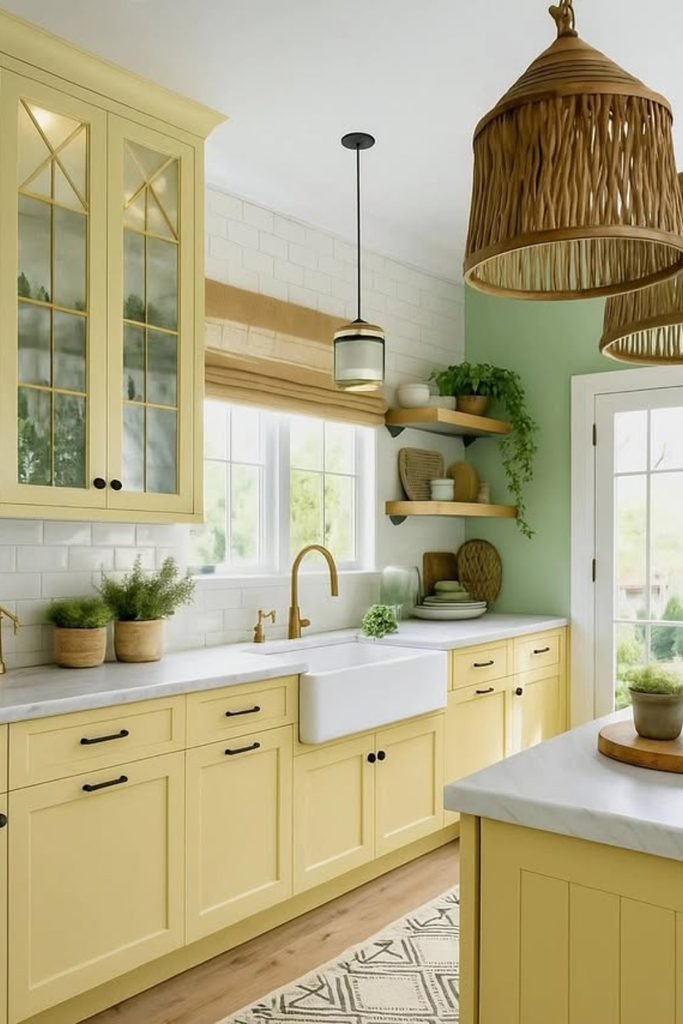
Sage Companion
Pair pale yellow cabinets with a soft sage wall when you want gentle color contrast that still feels calm and easy to live with.
Keep the backsplash white and simple so the green and yellow remain the main story instead of competing with another busy surface.
Add woven lighting and light wood accents to soften both colors, especially if you want the kitchen to feel relaxed rather than formal.
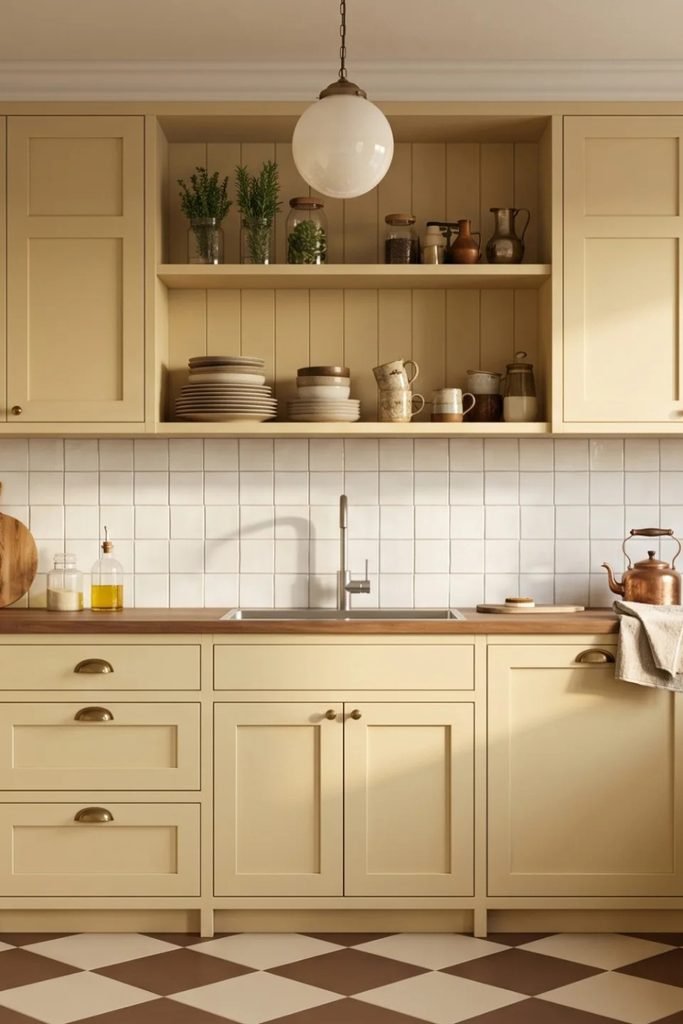
Checkerboard Grounding
Use creamy yellow cabinetry with a darker checkerboard floor when you want a traditional palette that still has enough contrast to feel structured.
Warm wood counters prevent the black and white floor from feeling too sharp, while brass hardware keeps the cabinet color visually connected.
Leave one open shelf section between upper cabinets to break up the yellow and give everyday dishes a useful place to add texture.
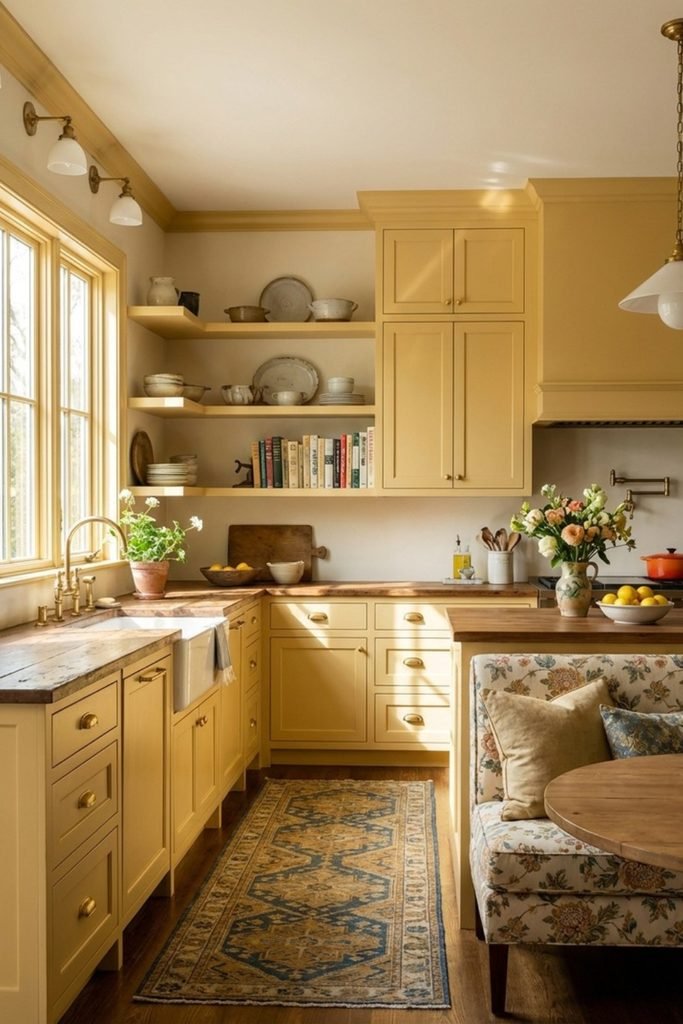
Golden Nook
Choose a richer golden yellow for a kitchen with warm wood counters, especially when you want the cabinetry to feel cozy and established.
Keep the walls creamy rather than bright white, because softer surrounding tones let the yellow deepen naturally without looking overly saturated.
Add a patterned runner or upholstered breakfast nook to introduce quieter colors, which helps a mostly yellow kitchen feel layered instead of repetitive.
FAQs
Are yellow kitchen cabinets outdated?
Yellow kitchen cabinets are not outdated, but softer butter, ochre, and muted mustard shades usually feel easier to live with today.
If you choose a very bright yellow, keep surrounding finishes simple so the color looks intentional instead of tied to one trend.
Classic cabinet shapes, natural wood, and warm stone also help yellow feel settled, which gives the kitchen a more lasting look.
What countertops go with yellow kitchen cabinets?
White quartz and marble brighten soft yellow cabinets, while darker stone creates stronger contrast and makes mustard shades feel more grounded.
Wood countertops work well when you want a warmer country feel, but choose a lighter backsplash so the palette does not feel heavy.
Before choosing any surface, place the countertop sample beside your cabinet color because undertones can shift noticeably under your kitchen lighting.
