
21 Spanish Kitchen Ideas
Spanish kitchens have a way of feeling warm and collected, where every tile, wood finish, and curved detail adds character.
I love how you can bring that same relaxed look into your kitchen with earthy colors, natural materials, and a few thoughtful details.
In this article, you’ll find Spanish kitchen ideas that blend traditional charm with fresh, practical touches you can use in your own space.
Let’s jump in!
What Is the Spanish Word for Kitchen?
The Spanish word for kitchen is “cocina,” and you’ll hear it used for both the room and the act of cooking.
If you’re talking about the kitchen in your home, you can simply say “la cocina,” which means “the kitchen.”
You may also see cocina española when someone is talking about Spanish cuisine rather than the actual design of a kitchen.
For interiors, Spanish kitchen style usually connects warm wood, handmade tiles, terracotta, plaster, stone, and curved architectural details.
Knowing the difference helps you search for Spanish kitchen inspiration without mixing interior design ideas with recipes and traditional Spanish food.
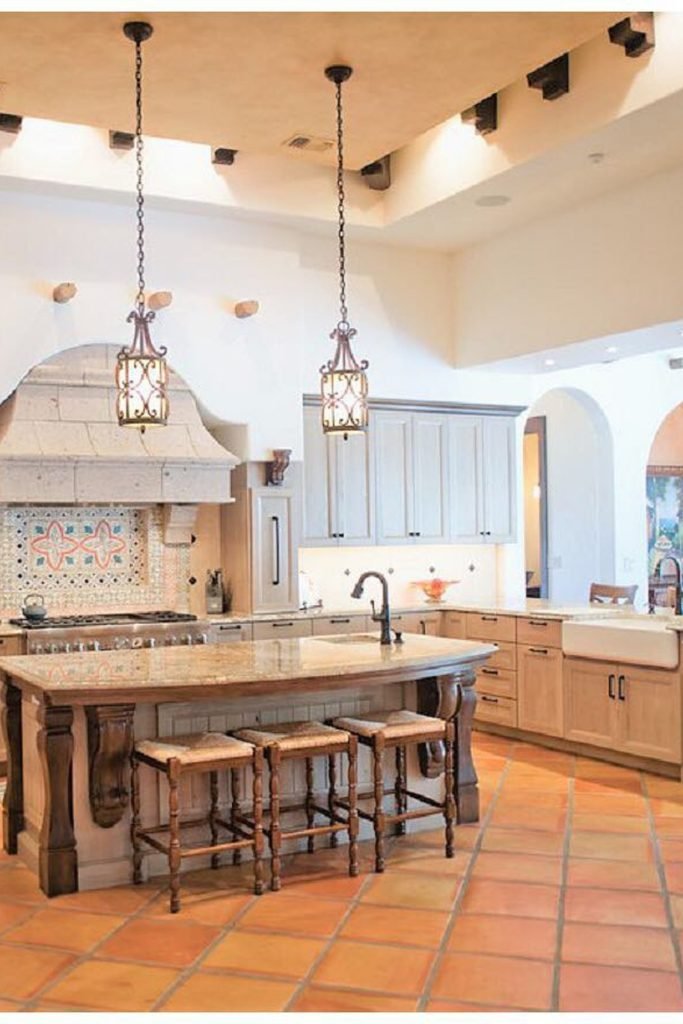
Terracotta Warmth
Let terracotta flooring carry most of the Spanish warmth, then balance its rich color with pale wood cabinets and creamy plaster walls.
An oversized stone hood creates a natural cooking focal point, while patterned tile adds character without spreading busy color across every surface.
Keep the island rustic and substantial, then use iron pendants overhead to connect traditional materials with the kitchen’s brighter, open layout.
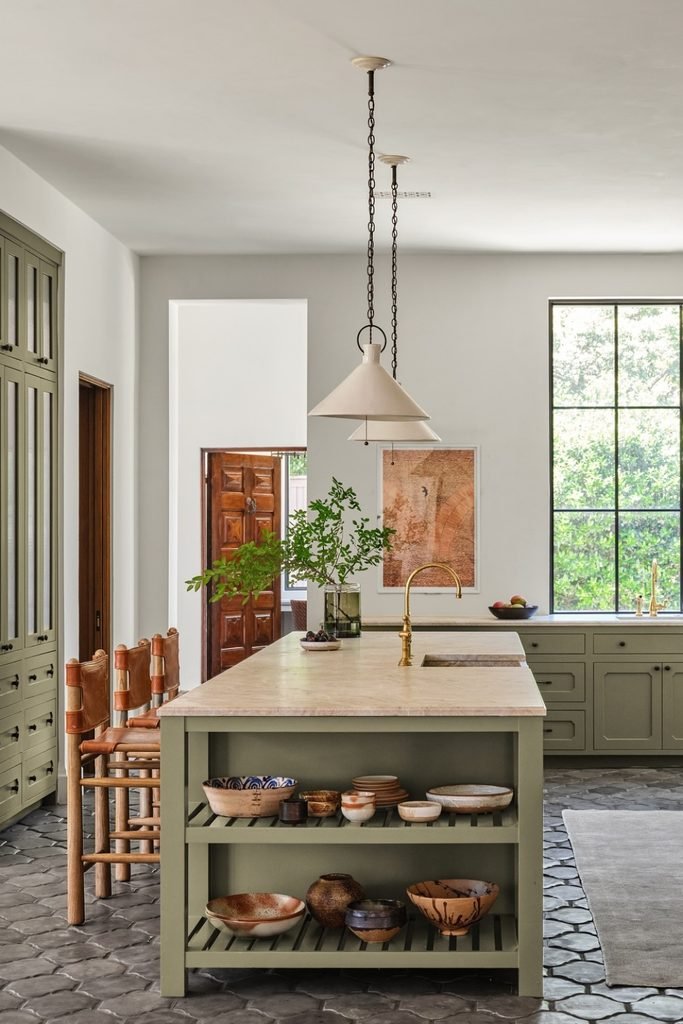
Olive Cabinetry
Muted olive cabinets give Spanish style a calmer direction, especially when you want earthy character without relying on dark brown wood everywhere.
Pair them with aged stone flooring and warm countertops, then bring in brass fixtures to stop the muted palette feeling too flat.
Open island shelves are worth adding when you have handmade pottery to display, turning everyday pieces into part of the room naturally.
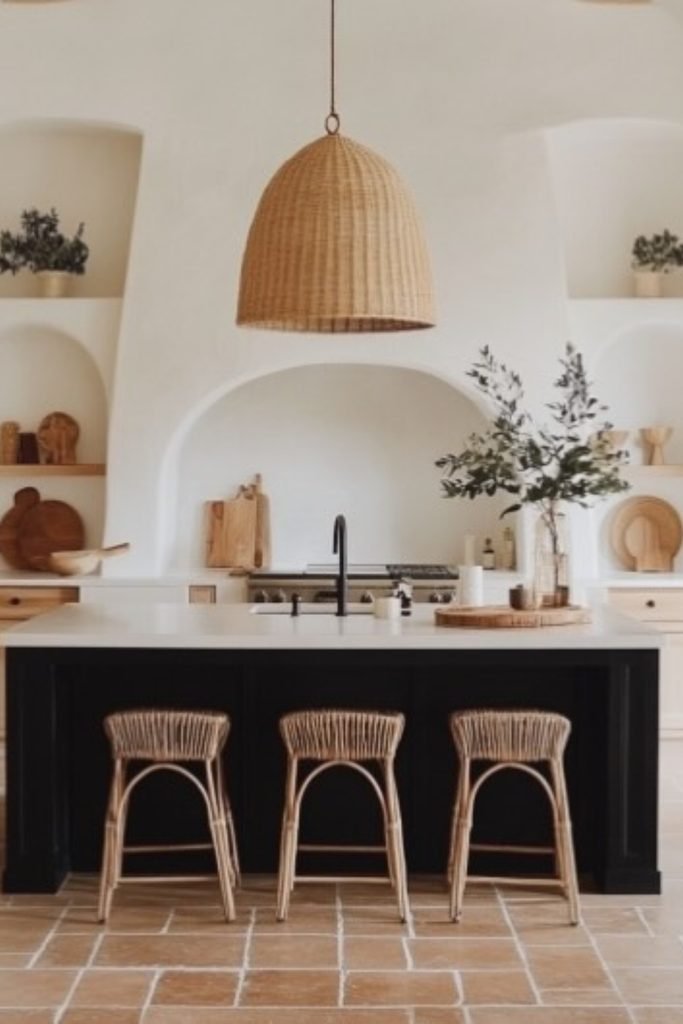
Soft Arches
Curved niches can bring Spanish architecture into a bright kitchen without filling the room with patterned tile or heavy decorative finishes.
Keep surrounding walls warm white and choose pale natural wood cabinetry, allowing every arch to create depth through shadow and simple shape.
A dark island adds just enough contrast, while woven stools and a rattan pendant soften the clean finishes with relaxed natural texture.
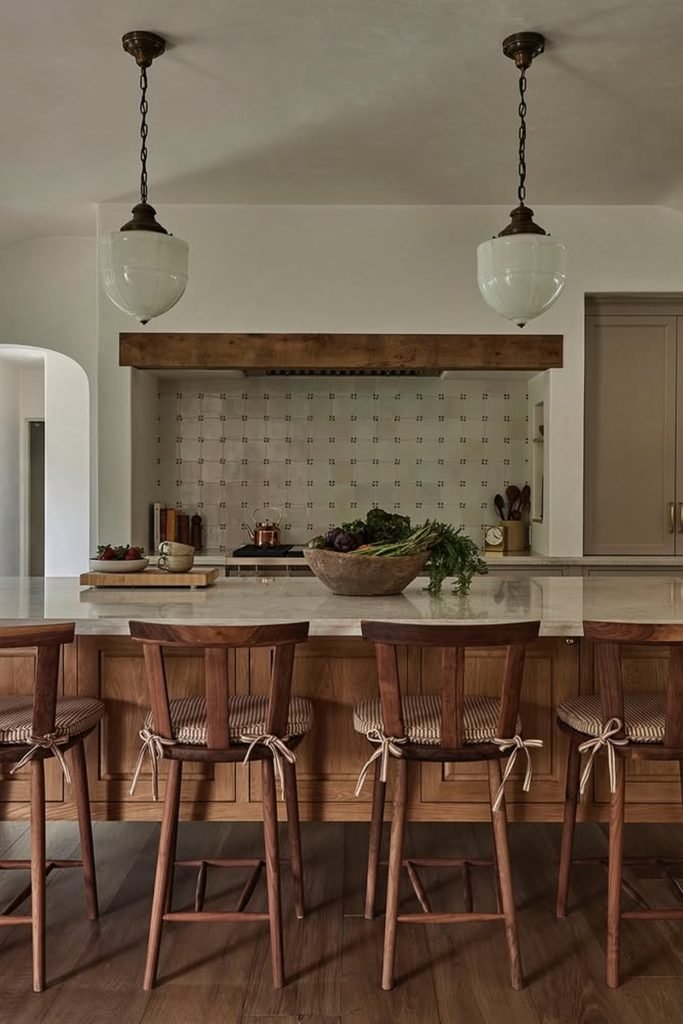
Wood Balance
Rich wood works beautifully in Spanish kitchens when you spread it across selected features instead of covering every cabinet and wall.
Use it on the island and range beam, then choose softer taupe cabinetry and light stone counters to keep everything visually balanced.
Small patterned tiles behind the range bring subtle Spanish detail, while vintage-style pendants make the cooking area feel warm and established.
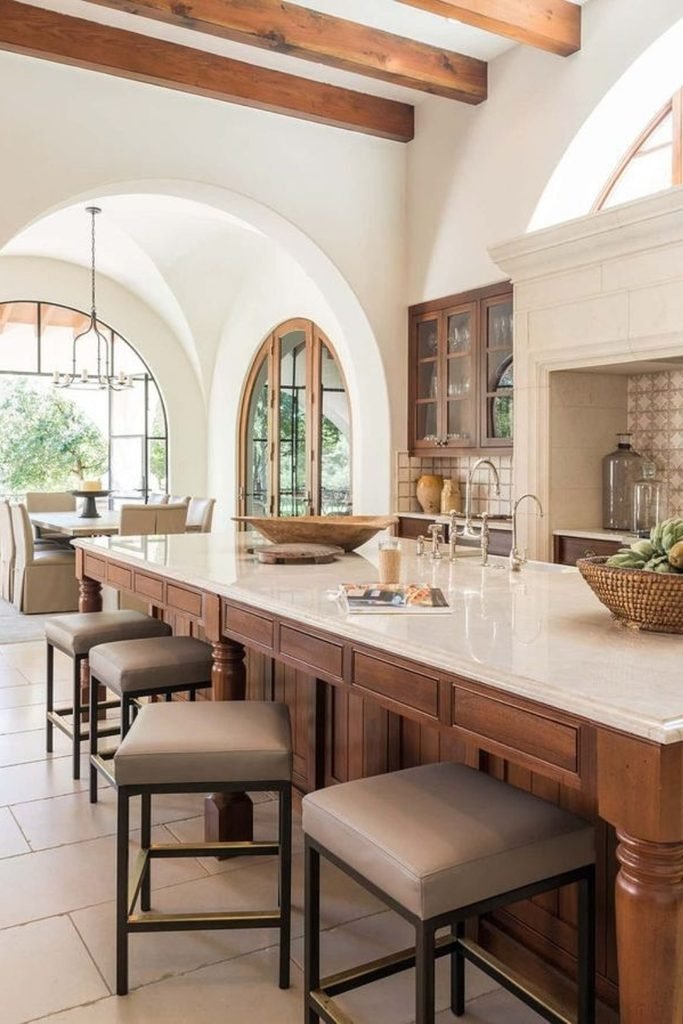
Timber Arches
When your kitchen opens into another room, wide plaster arches can make that transition feel intentional while keeping the Spanish character flowing naturally.
Bring warm timber onto the island and ceiling beams, then use pale stone counters and flooring to stop those woods feeling overly dominant.
A tiled cooking niche adds another quiet layer of detail, letting you introduce pattern without competing against the room’s strong architectural curves.
Rustic Texture
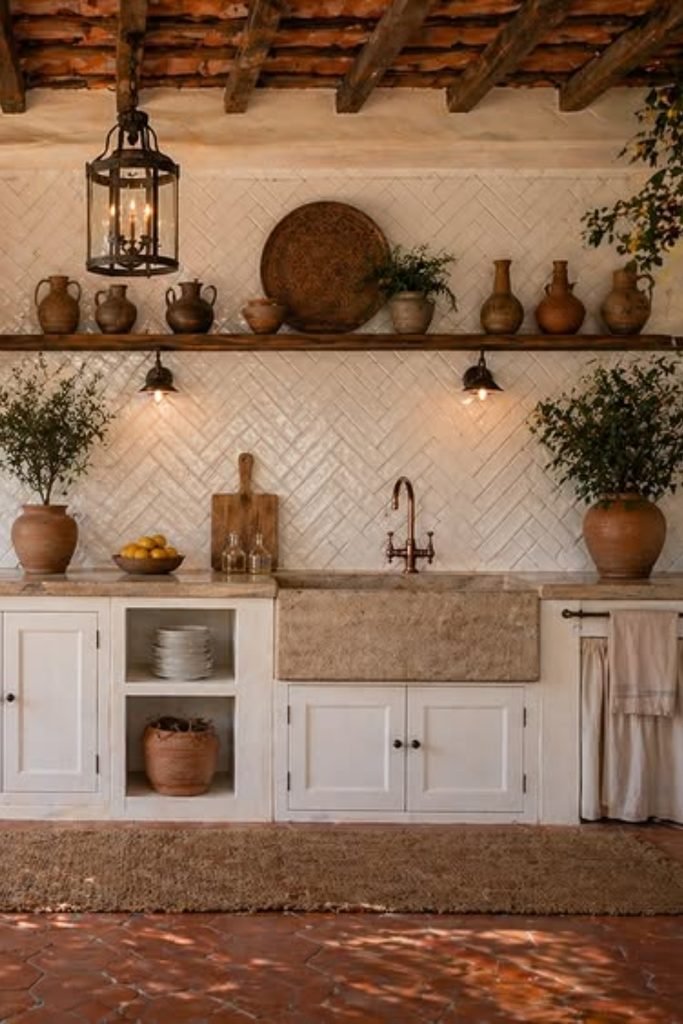
For a more timeworn Spanish feel, let imperfect materials do the decorating instead of filling your counters with lots of small accessories.
Combine terracotta flooring, rough timber overhead, creamy cabinets, and handmade tile so each surface brings a different layer of natural texture.
Finish with open shelves and earthy pottery, then use warm lantern lighting to make those aged surfaces feel especially inviting after sunset.
Earthy Contrast
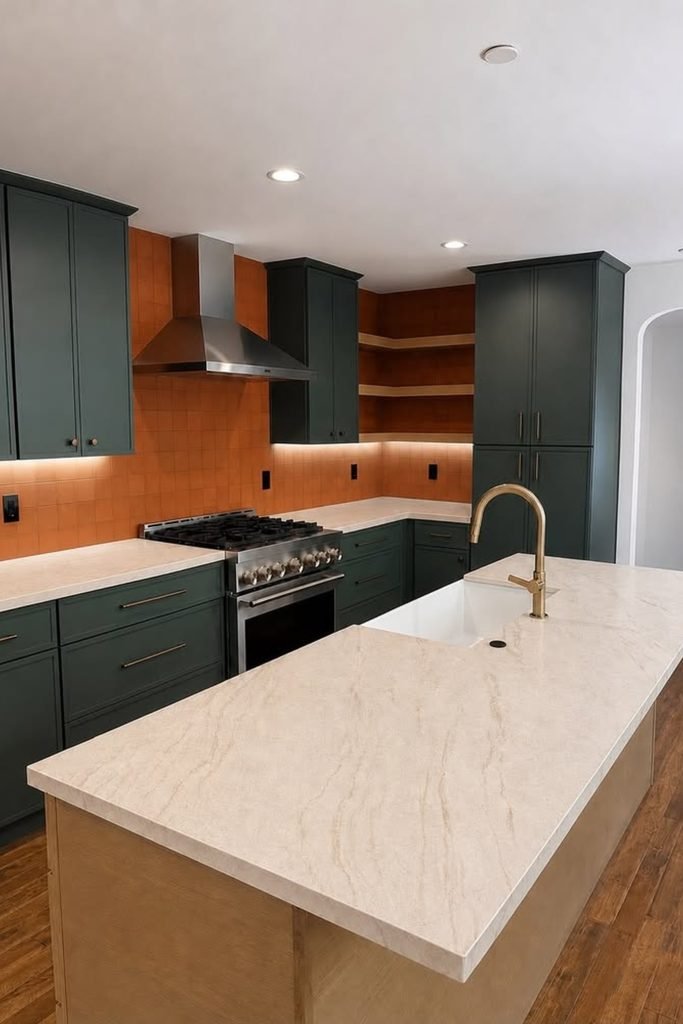
Deep green cabinetry gives you a bold Spanish-inspired base, while terracotta tile brings enough warmth to keep the darker color feeling grounded.
Run the tile across the backsplash for stronger impact, then choose pale stone countertops so the work surfaces stay bright and practical.
Brass fixtures add a softer finish between both colors, making this combination especially useful when you want Spanish influence without rustic detailing.
Tiled Alcove
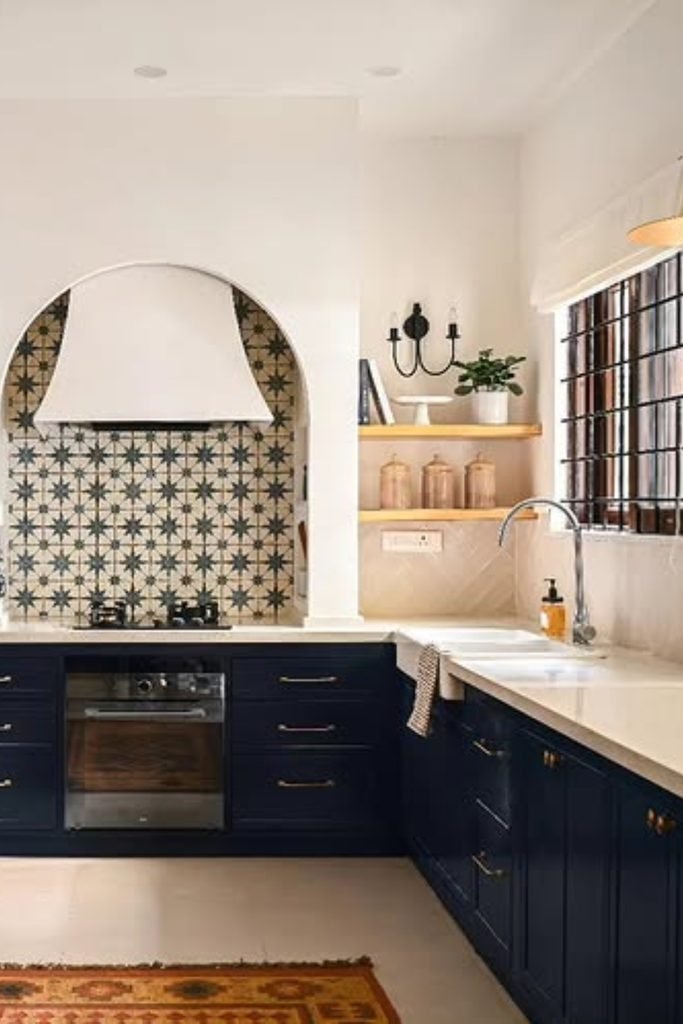
Turn the cooking zone into your main feature by framing the range with a rounded alcove instead of decorating every kitchen wall.
Patterned tile inside the arch creates focused Spanish character, while deep navy cabinetry gives the lighter walls a clean, confident contrast.
Keep nearby shelves simple and open, then repeat warm wood and brass in smaller touches so the patterned centerpiece remains visually balanced.
Carved Warmth
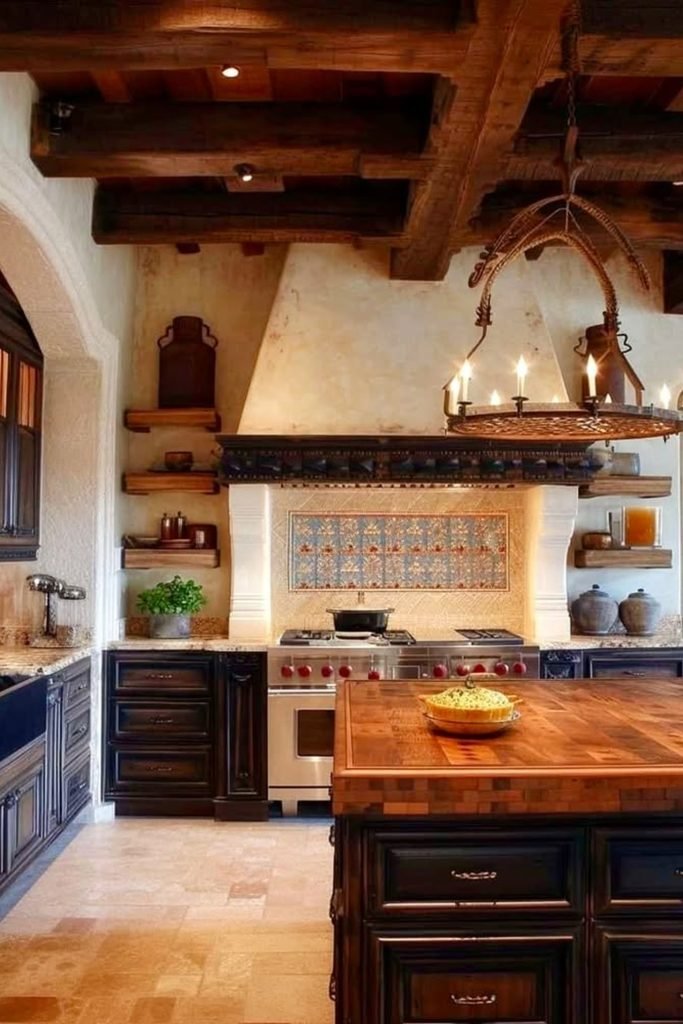
If you enjoy a richer Spanish look, dark carved cabinetry can work beautifully when lighter stone and plaster keep the room from closing in.
Use decorative tile only behind the range, giving that detailed surface its own moment without competing against heavy woodwork and ceiling beams.
A thick butcher-block island adds another warm material, while an iron chandelier pulls attention upward and makes the tall ceiling feel more connected.
Quiet Spanish
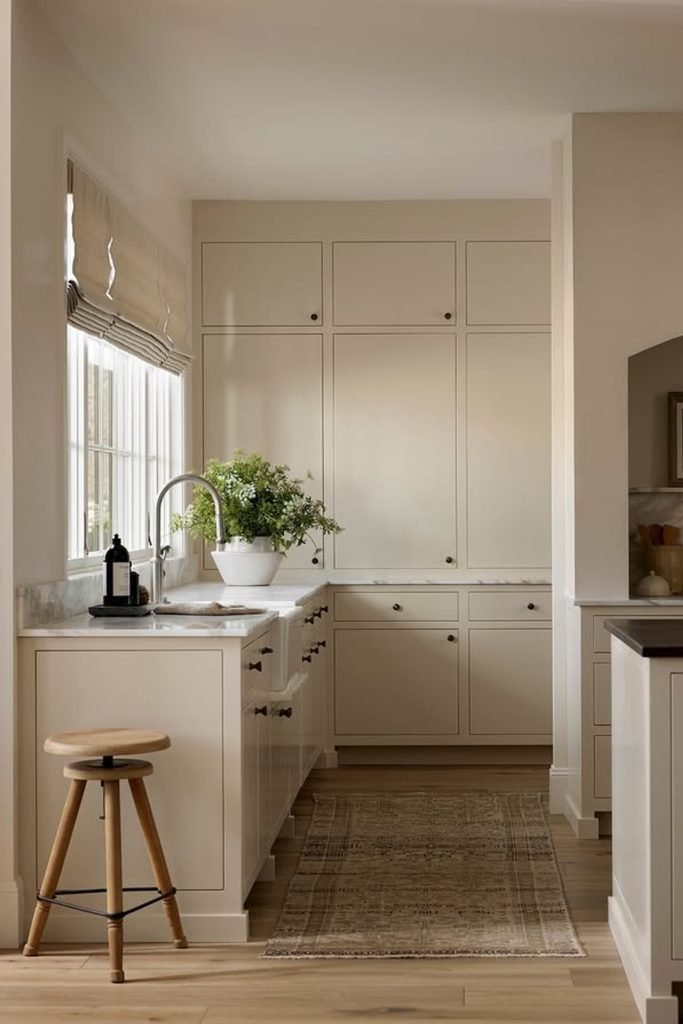
Spanish character does not need bold tile everywhere, especially when you want your kitchen to feel calm, bright, and easy to live with.
Choose creamy cabinetry and pale wood flooring, then shape the cooking area with a soft arch to introduce character through architecture instead.
A faded runner and simple wooden stool bring warmth at floor level, keeping the neutral palette relaxed rather than overly polished or formal.
Reclaimed Beams
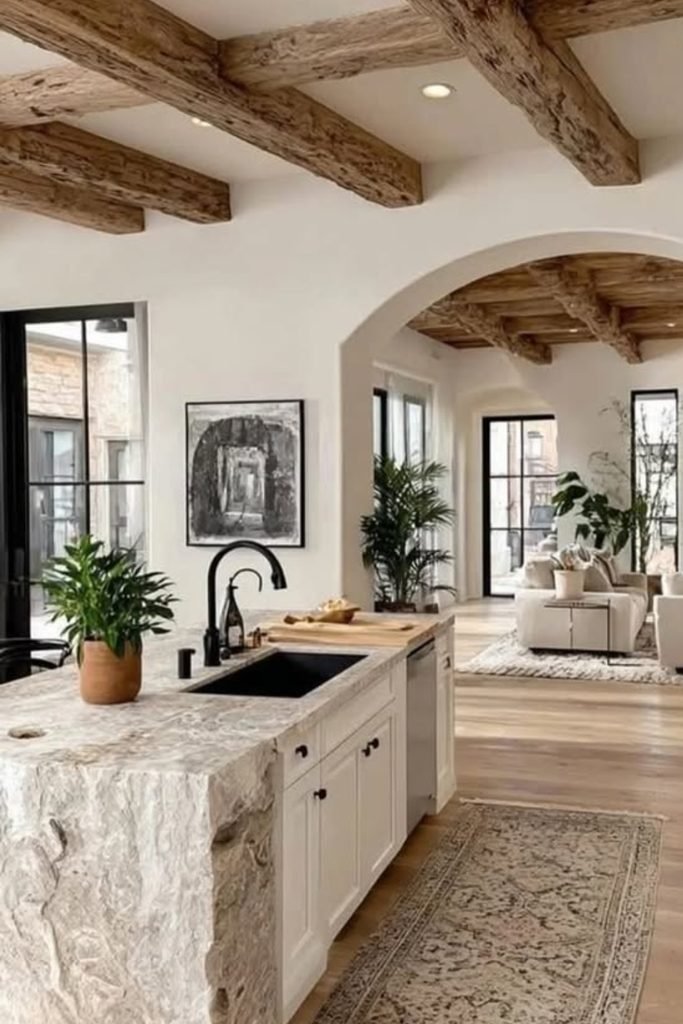
Old-looking timber beams can give a newer Spanish kitchen instant age, especially when the surrounding walls stay simple and warm white.
Carry that natural texture down to a rough stone island, then use light cabinetry so both rugged materials remain the main focus.
A broad arch between kitchen and living areas continues the Spanish influence while helping an open layout feel connected rather than completely modern.
Emerald Tile
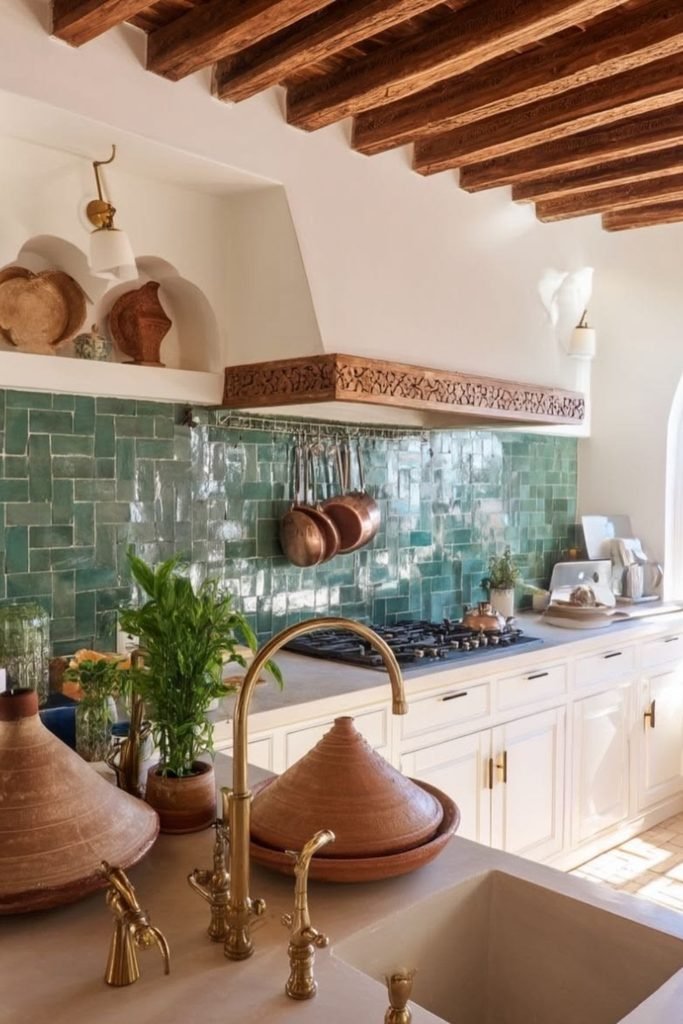
Glossy green tile gives Spanish style a fresher direction, especially when you want color without relying on traditional patterned designs everywhere.
Run it across one cooking wall, then surround it with white cabinetry and plaster so the rich green stays bright and noticeable.
Copper pans, carved wood trim, and brass fixtures introduce warmer tones, helping the cool tile connect naturally with traditional Spanish materials.
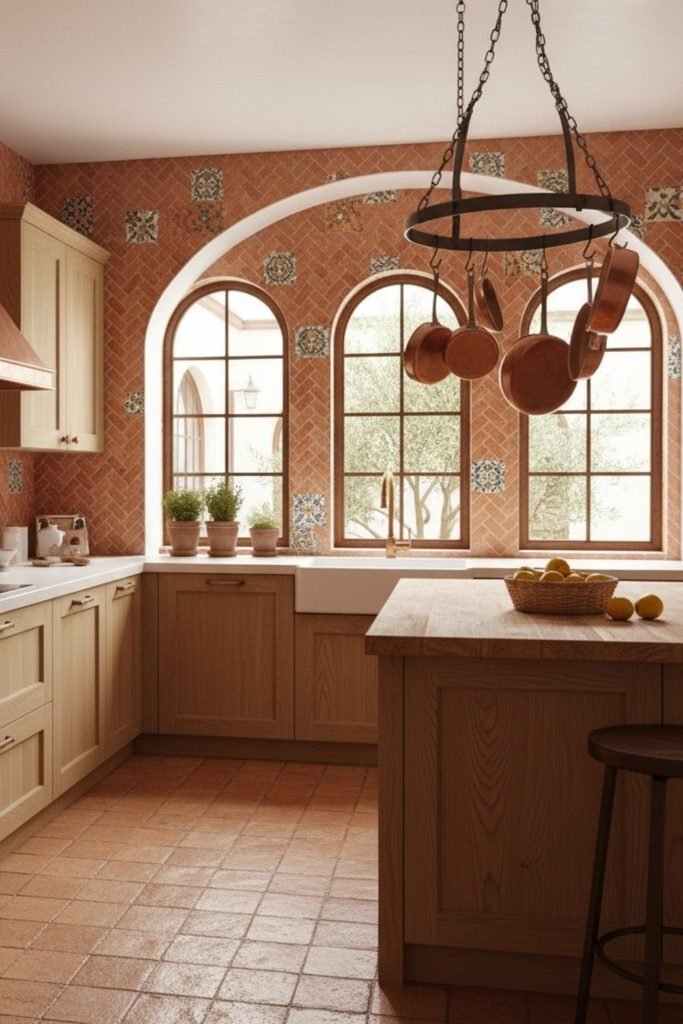
Terracotta Layers
Terracotta can move beyond flooring when you carry it onto the walls, creating deeper Spanish warmth without introducing several unrelated colors.
Mix plain clay tiles with occasional patterned pieces, then choose light wood cabinetry so the layered surface still feels open and balanced.
Arched windows and hanging copper cookware complete the earthy palette, giving you architectural character while keeping everyday kitchen pieces useful and visible.
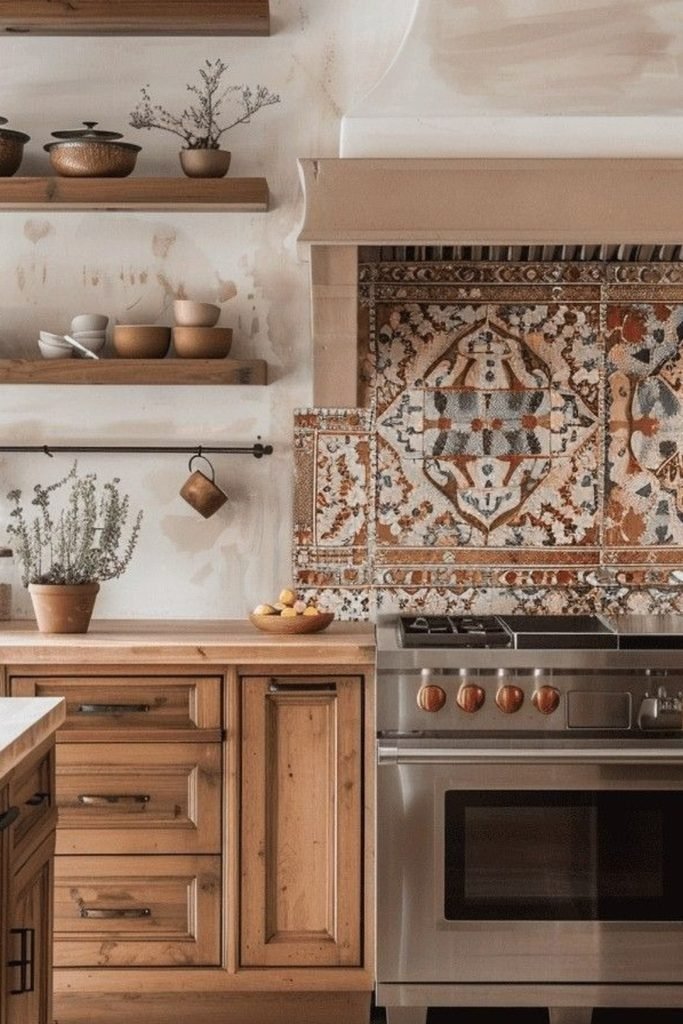
Tile Feature
When you find a Spanish tile pattern you really love, give it one generous focal area instead of repeating smaller patterns everywhere.
Frame the range with decorative tile, then use natural wood cabinets and simple plaster walls to let its detailed colors hold attention.
Floating shelves keep nearby walls relaxed, while handmade bowls and pottery bring smaller earthy details that connect naturally with the patterned centerpiece.
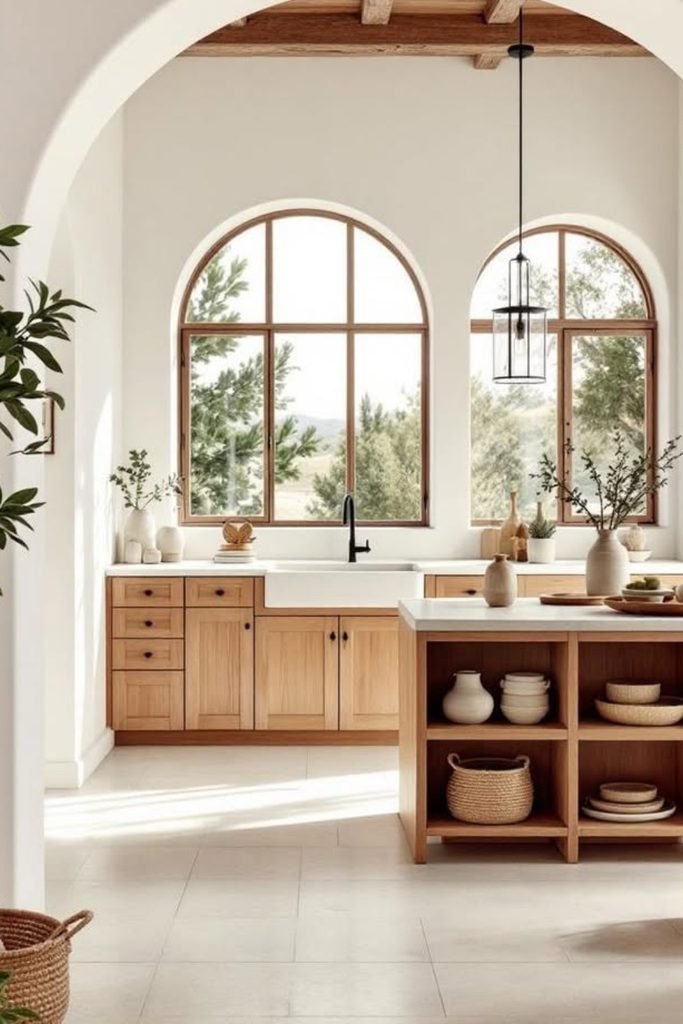
Airy Arches
Large arches can carry most of the Spanish character when you want a kitchen that feels light, simple, and almost minimal.
Pair curved openings and arched windows with pale wood cabinets, leaving the walls warm white so natural light moves easily around them.
An open island gives pottery and baskets a practical home, adding texture without taking away from the room’s clean architectural shapes.
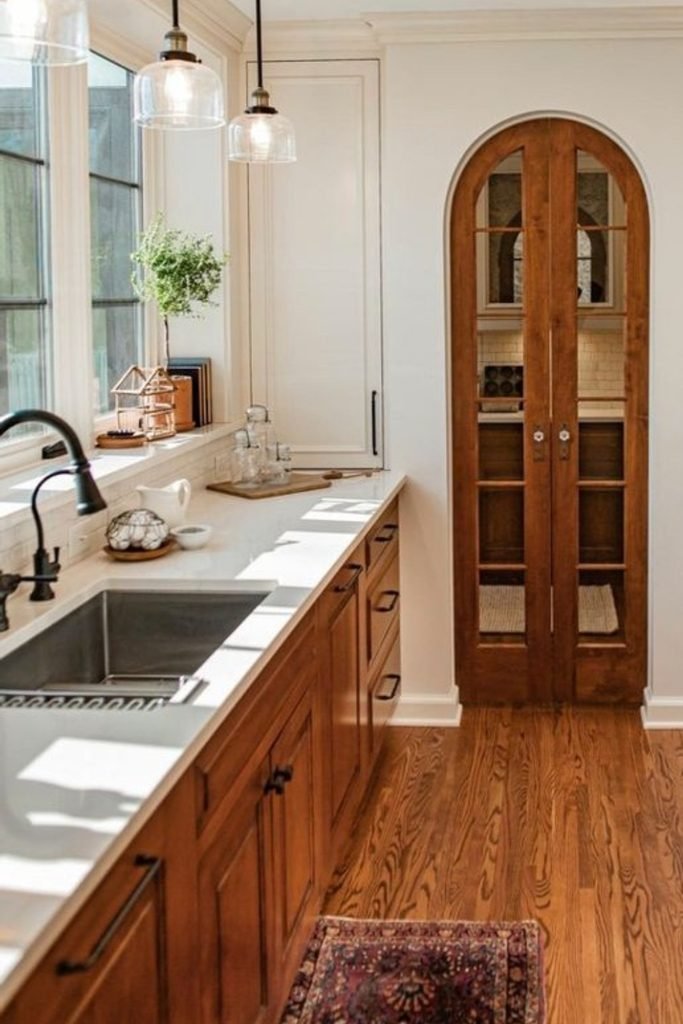
Arched Pantry
One arched wooden door can introduce Spanish character quietly, making it useful when you want warmth without changing every kitchen finish.
Choose medium wood cabinetry nearby and repeat similar tones on the floor, creating a natural connection between storage, architecture, and surrounding surfaces.
Keep counters and walls light, then add black hardware and simple glass pendants so the richer wood details remain crisp and balanced.
Open Storage
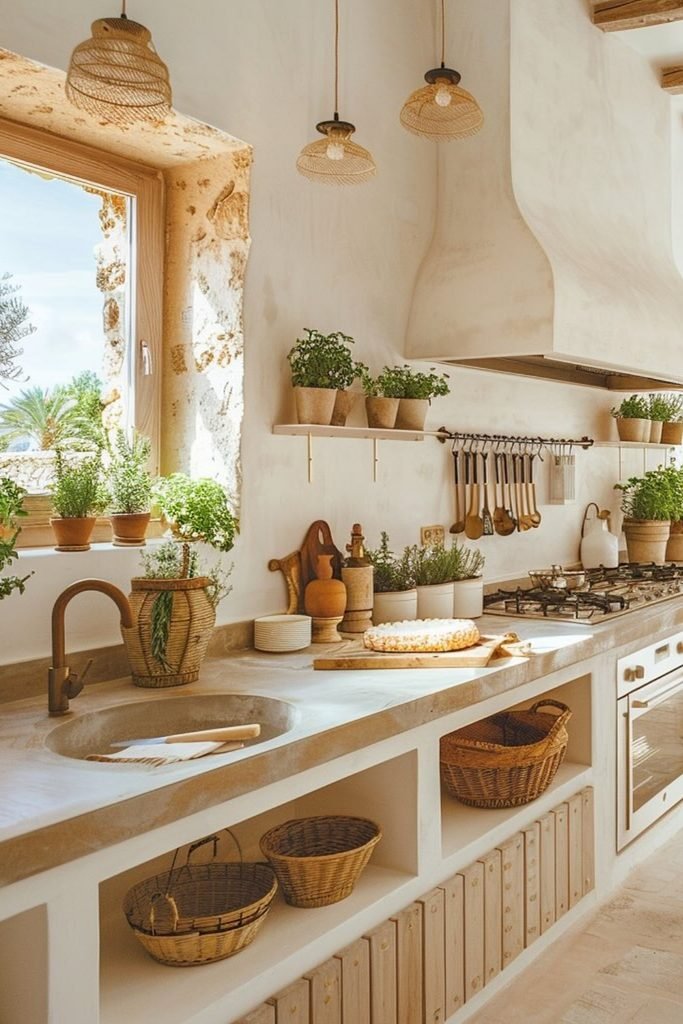
Open lower cabinets can make a Spanish kitchen feel relaxed and practical, especially when you want everyday baskets and pottery within easy reach.
Keep the cabinetry creamy and simple, then add woven pendants, exposed beams, and warm stone counters for texture without introducing heavy color.
Fresh herbs work naturally near sunny windows, bringing useful greenery into the room while reinforcing the casual, Mediterranean side of Spanish design.
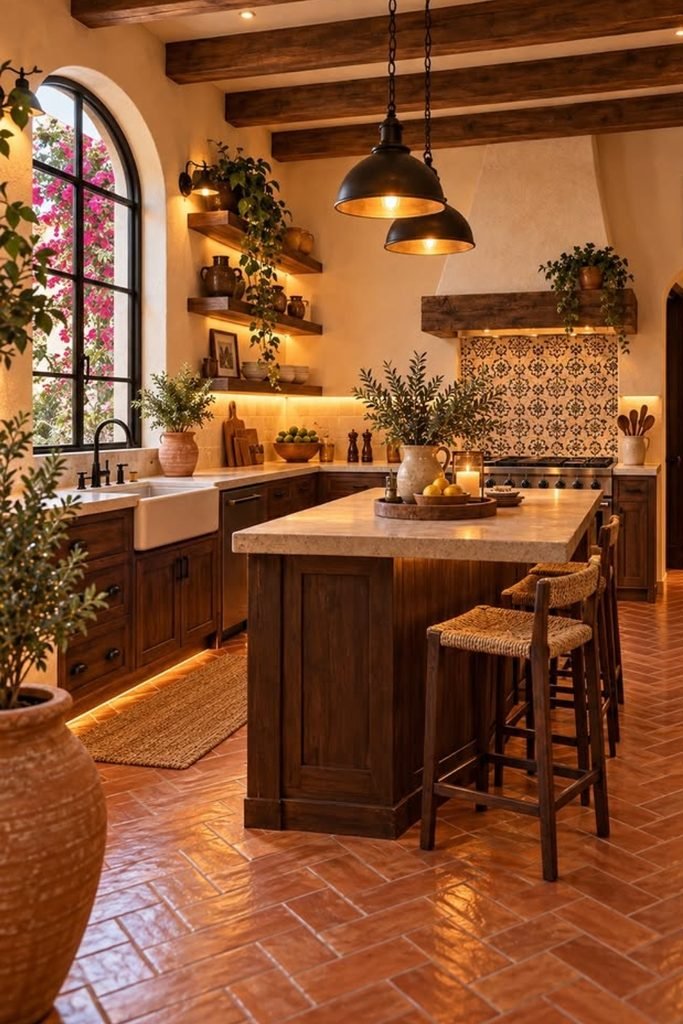
Evening Warmth
Dark wood feels especially inviting when you layer warm lighting around it instead of depending on one bright ceiling fixture overhead.
Use pendants above the island, sconces near shelves, and hidden task lighting below cabinets to soften deep cabinetry and terracotta flooring.
Patterned tile behind the range gives the eye a lighter focal point, while woven stools and pottery keep the richer finishes feeling approachable.
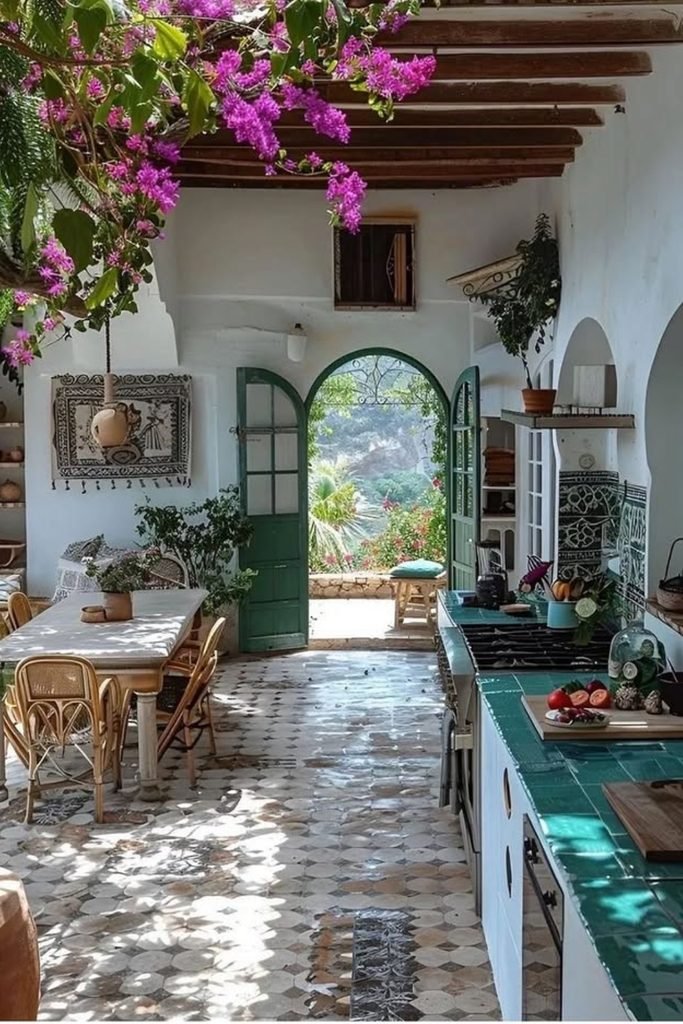
Courtyard Kitchen
A kitchen connected to a garden or courtyard can lean into Spanish character by treating outdoor greenery as part of the interior palette.
Repeat green on doors, countertops, or smaller accents, then keep plaster walls white so plants and colorful tile have room to stand out.
Choose durable tiled floors and simple wooden furniture for this setup, especially where open doors bring more sunlight, dust, and outdoor activity inside.
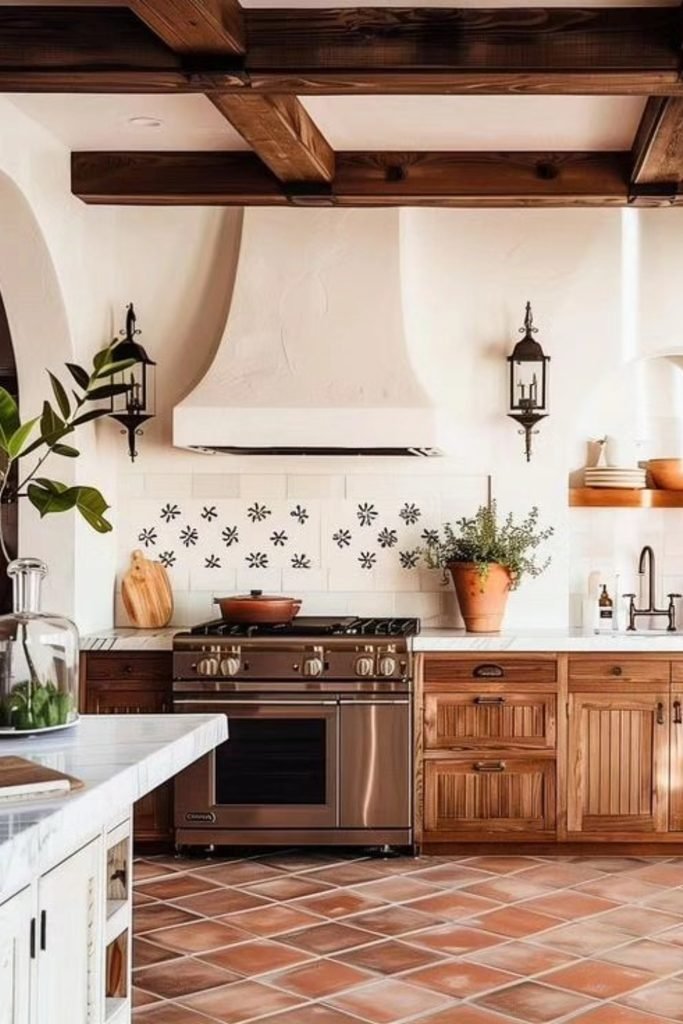
Simple Terracotta
You do not need elaborate decoration when terracotta floors, natural wood cabinets, and strong plaster shapes already create enough Spanish character.
Let the range hood and arched niche shape the cooking wall, then add small patterned tiles instead of covering the entire backsplash.
Dark beams and lantern sconces give the pale walls definition, while lighter countertops prevent all those warm earthy finishes from becoming too heavy.
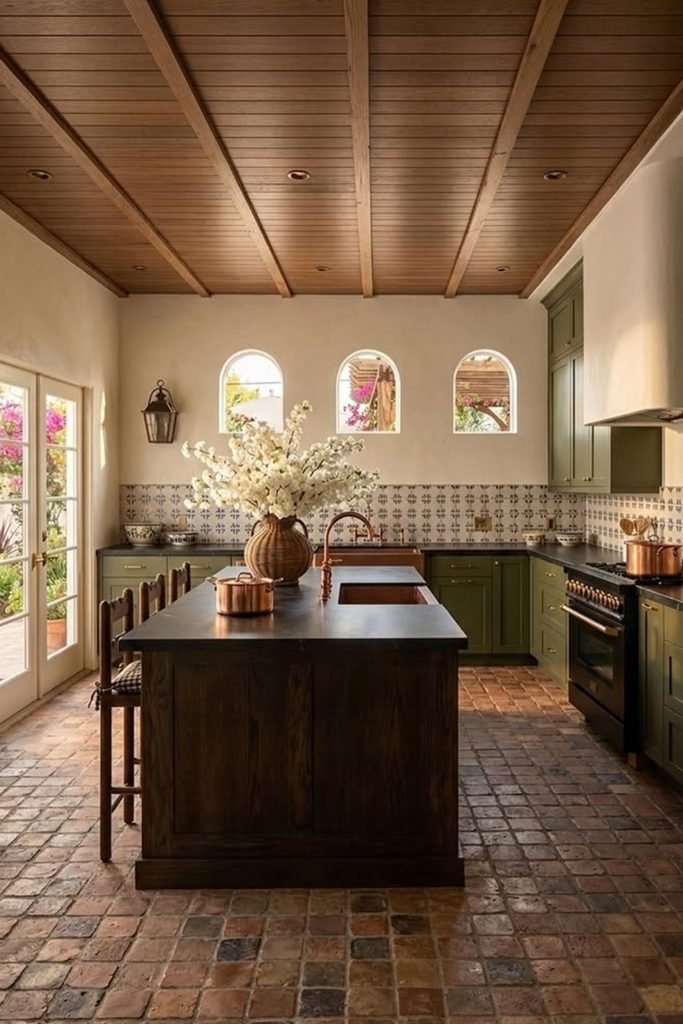
Olive Spanish
Olive cabinetry works beautifully when you want earthy Spanish color without making the kitchen depend entirely on brown wood and terracotta tones.
Pair it with aged brick flooring and patterned backsplash tile, letting their natural variation give the room a collected, timeworn character.
Keep countertops dark and simple, while warm wood overhead and arched windows soften the deeper palette with texture and natural daylight.
FAQs
Can Spanish Kitchens Feel Modern?
Yes, you can keep Spanish character while using cleaner cabinets, simple counters, and modern appliances throughout your kitchen.
Focus on a few warmer details such as plaster arches, natural wood, terracotta, or handmade tile instead of decorating every surface.
Keeping the palette controlled gives traditional Spanish materials room to stand out while making the finished kitchen feel fresh and practical.
Which Colors Work Best?
Warm whites, terracotta, olive green, natural wood, and earthy browns create an easy foundation for a Spanish-inspired kitchen without feeling forced.
You can bring in deeper blue, green, or black accents when lighter walls and countertops provide enough contrast around those stronger colors.
Choose two or three main tones first, then repeat them through tile, cabinetry, hardware, and accessories to keep everything visually connected.
