
21 Laundry Room Tile Ideas
A good laundry room tile choice can completely change how the whole space feels, even when the room itself is small.
I like designs that make practical areas feel more finished without turning them into something overly styled or difficult to live with.
In this article, you’ll find smart laundry room tile ideas that balance everyday function with a clean, well-planned look.
Let’s jump in!
Which Tile Is Best For A Laundry Room?
Porcelain tile is usually the best choice for a laundry room because it handles moisture well and stands up to daily wear.
If you want something easier on the budget, ceramic can also work, but make sure the tile is rated for floor use.
For a laundry floor, choose a matte or lightly textured finish instead of a very glossy surface, especially where water may splash.
Large tiles give you fewer grout lines, while smaller tiles create more grip and detail but usually need more cleaning.
If you care most about low maintenance, start with durable porcelain, practical grout, and a finish that will not show every mark.
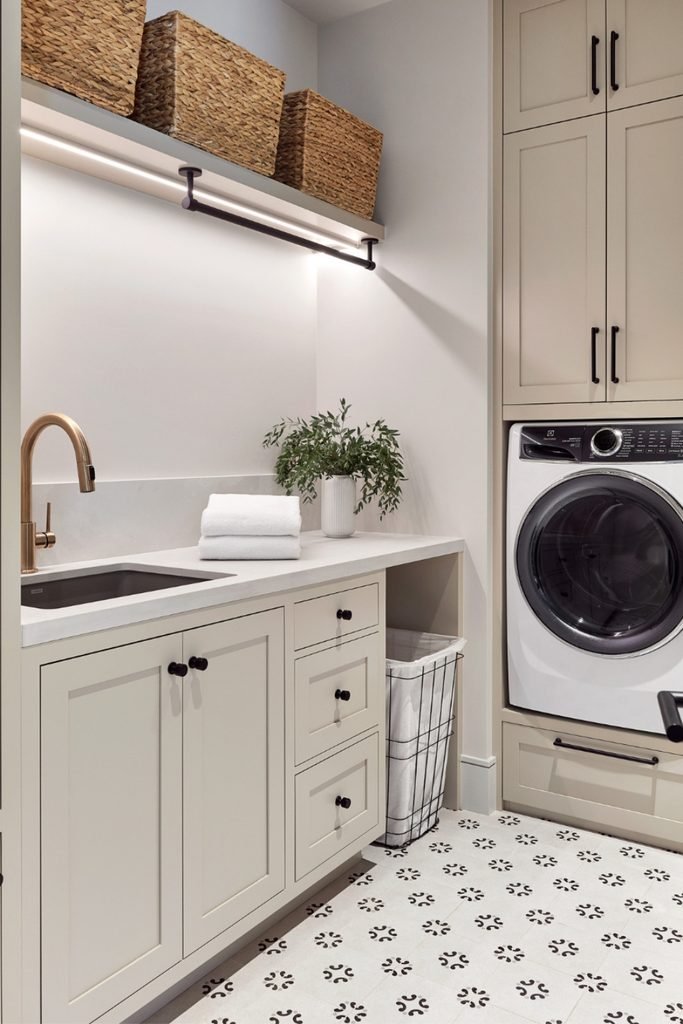
Floral Pattern
A small black pattern on a pale floor works beautifully when your cabinets are warm, simple, and visually quiet overall.
Choose a repeating motif with plenty of open background so the floor feels lively without making a compact laundry room look crowded.
Keep grout close to the tile color, then repeat the darker detail through hardware or fixtures for a cleaner finish.
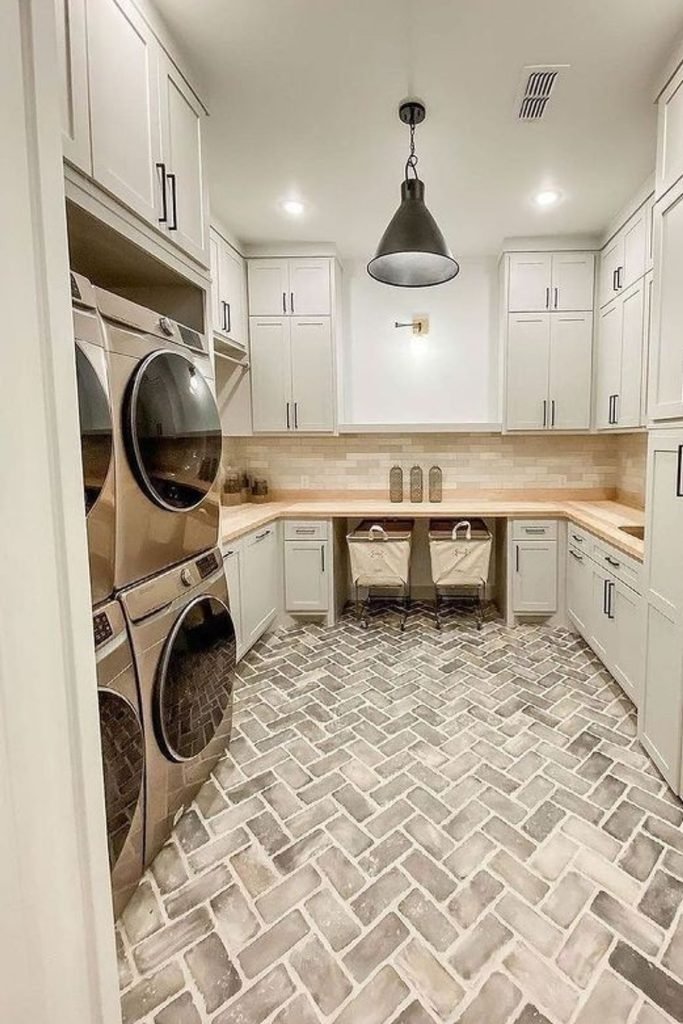
Brick Herringbone
Herringbone flooring is a smart choice when a long laundry room needs movement, because the angled layout breaks up the narrow shape.
Use muted stone or brick toned tiles if you want character without introducing a loud pattern beside white cabinetry nearby.
Before installation, lay out several rows first, since this pattern depends on clean alignment and can make uneven edges obvious.
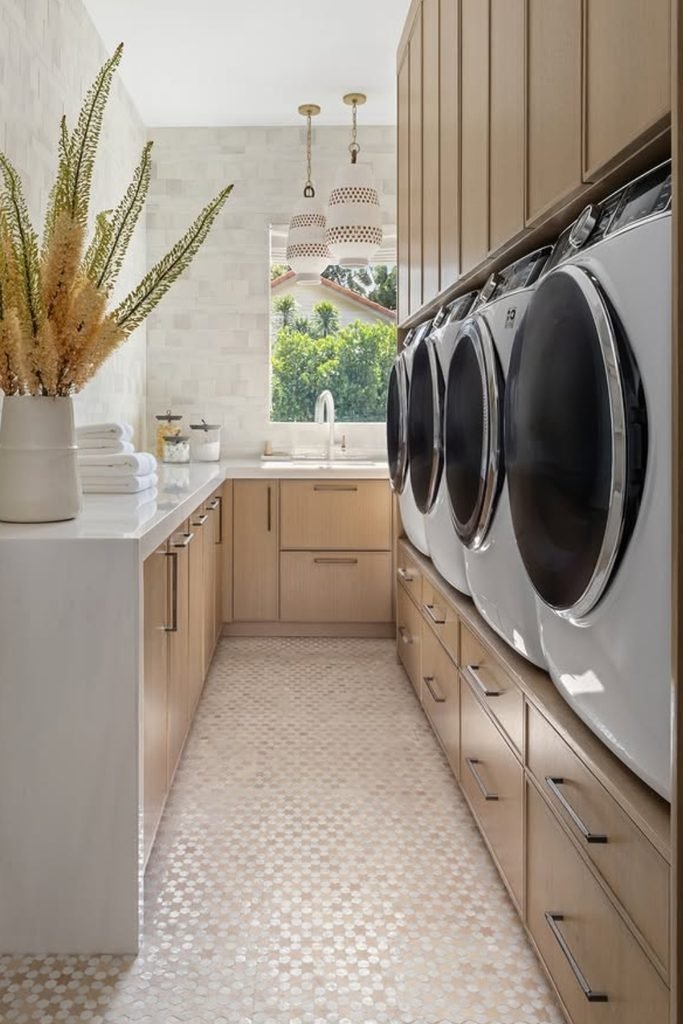
Penny Mosaic
Tiny penny tiles suit narrow laundry rooms because their repeated pattern adds texture while letting the floor follow awkward corners easily.
Pick a soft beige and white mix when you want warmth under light wood cabinetry without creating a strong visual break.
Because mosaics create more grout lines, choose a practical grout shade and seal or maintain it according to the product instructions.
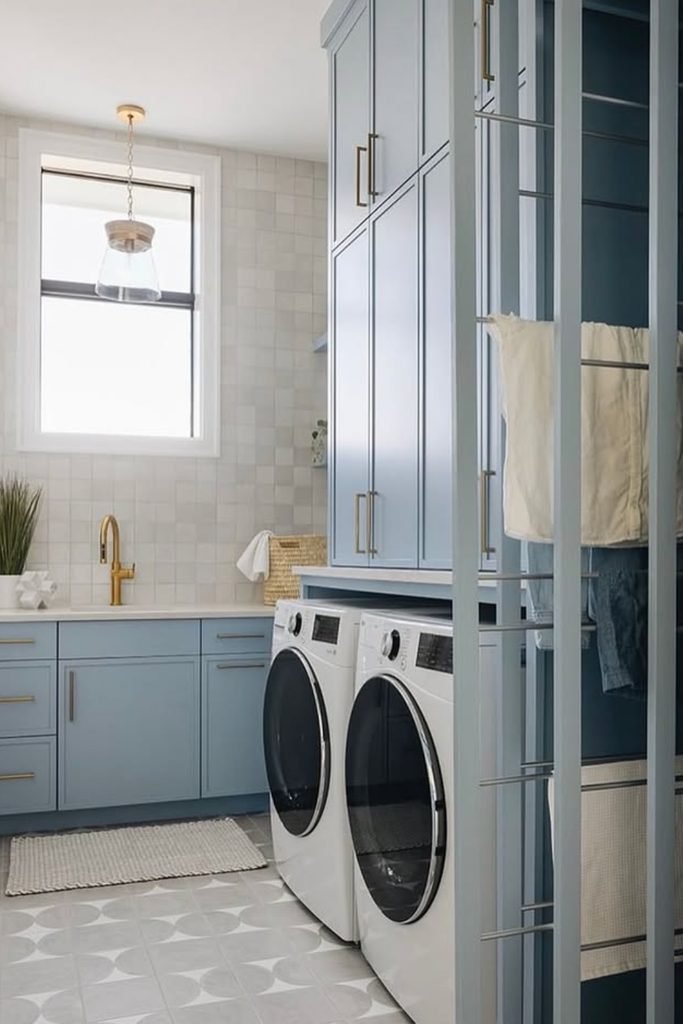
Graphic Floor
A large geometric floor works best when the room already has one clear color story, such as soft blue cabinetry.
Choose oversized shapes in close gray tones if you want pattern underfoot without competing with tall cabinets, storage, or wall tile.
Let the floor carry the stronger design move, then keep the backsplash pale and simple so the whole laundry room stays balanced.
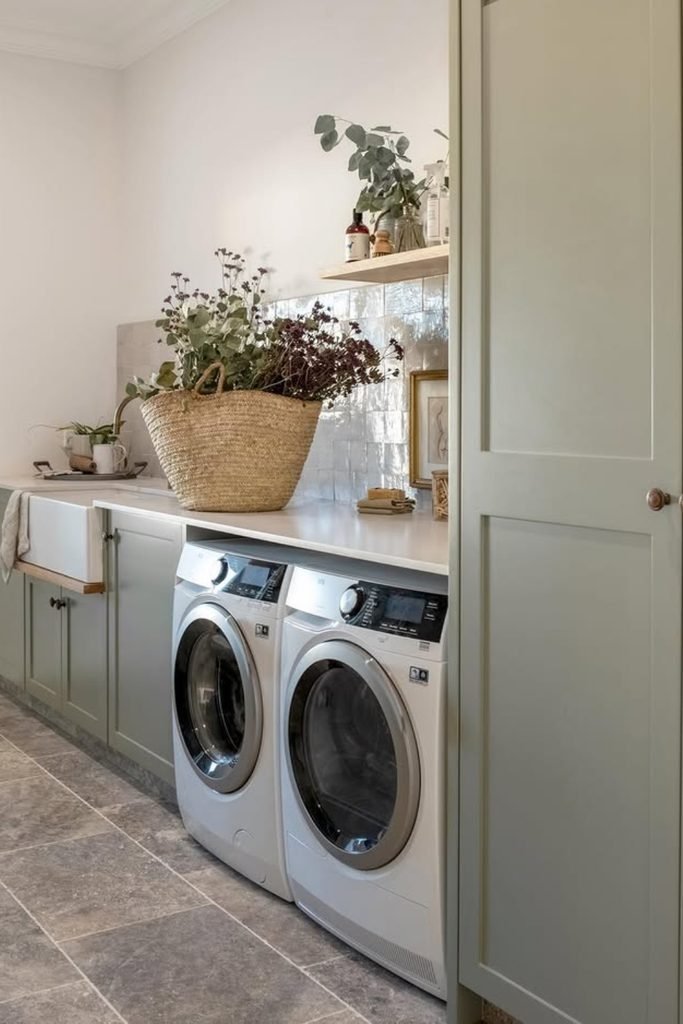
Stone Calm
Muted stone-look floor tiles are a smart match for sage cabinetry because they ground the room without stealing attention from softer colors.
Choose large rectangular tiles with subtle variation if you want an easygoing surface that hides everyday marks better than plain white flooring.
Keep the backsplash light and simple, then repeat warm wood and brass nearby so the gray floor never feels cold.
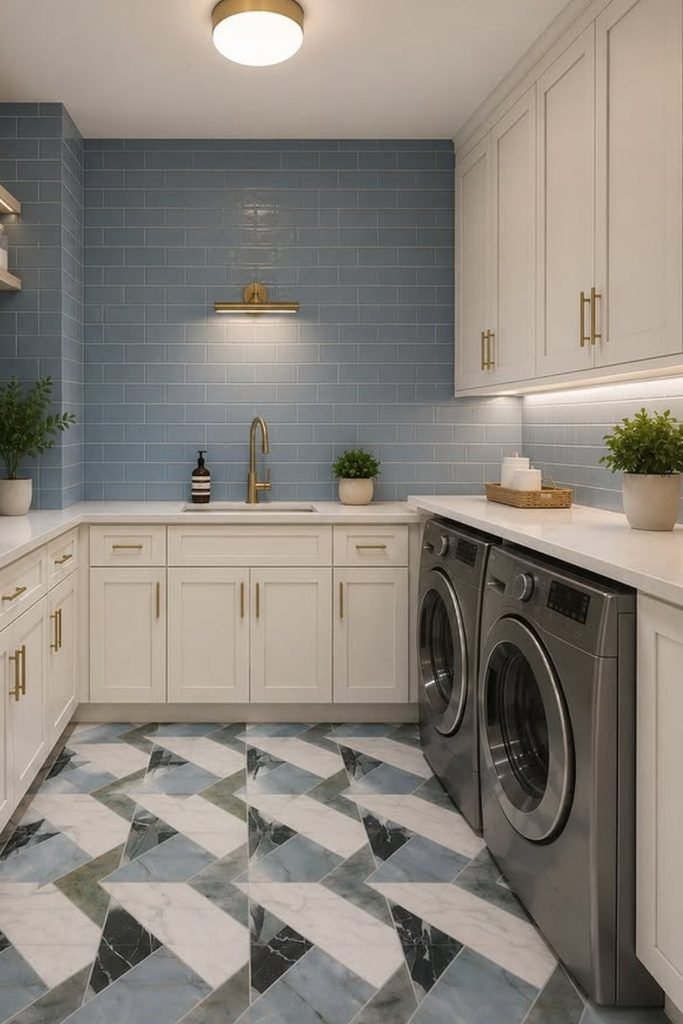
Blue Geometry
Blue subway tile works best when you let it cover a broad wall, because the repeated color makes white cabinetry feel less plain.
Pair it with a geometric floor only when both surfaces share related tones, otherwise the room can start feeling visually disconnected.
Use warm metal hardware and pale counters between the patterns to give your eye a quiet break and keep everything balanced.
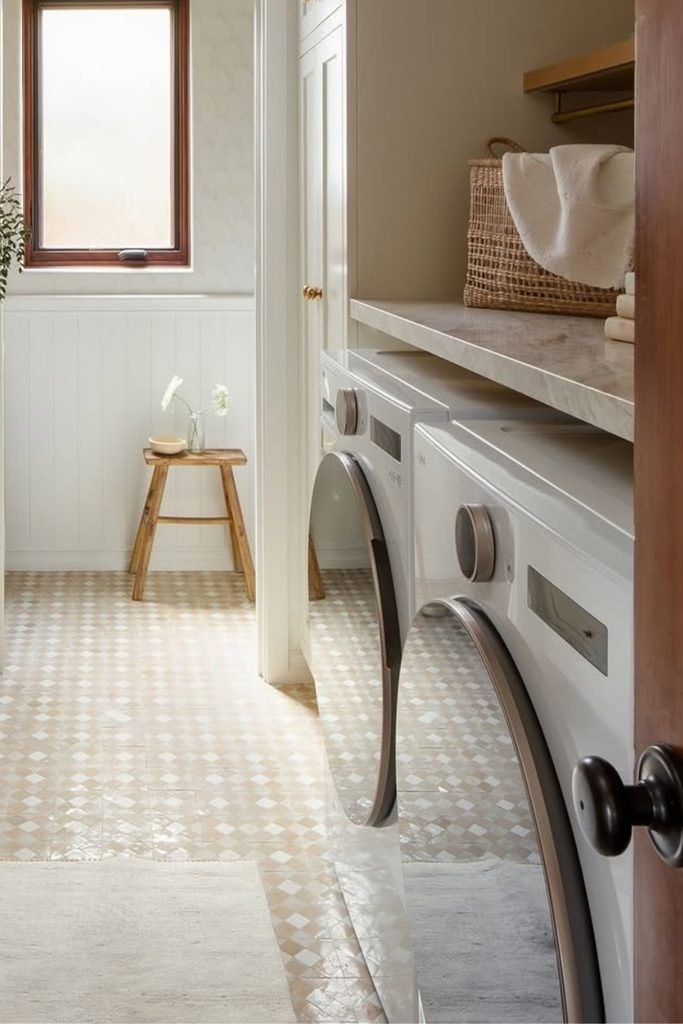
Soft Mosaic
Small cream mosaic tiles suit narrow laundry rooms because their gentle pattern adds detail without making the floor compete with tall cabinetry.
Choose a warm grout close to the tile color if you want the surface to read as one continuous, calmer layer.
This softer palette also works well with brass, wood, and off-white finishes, especially when natural light already gives the room warmth.
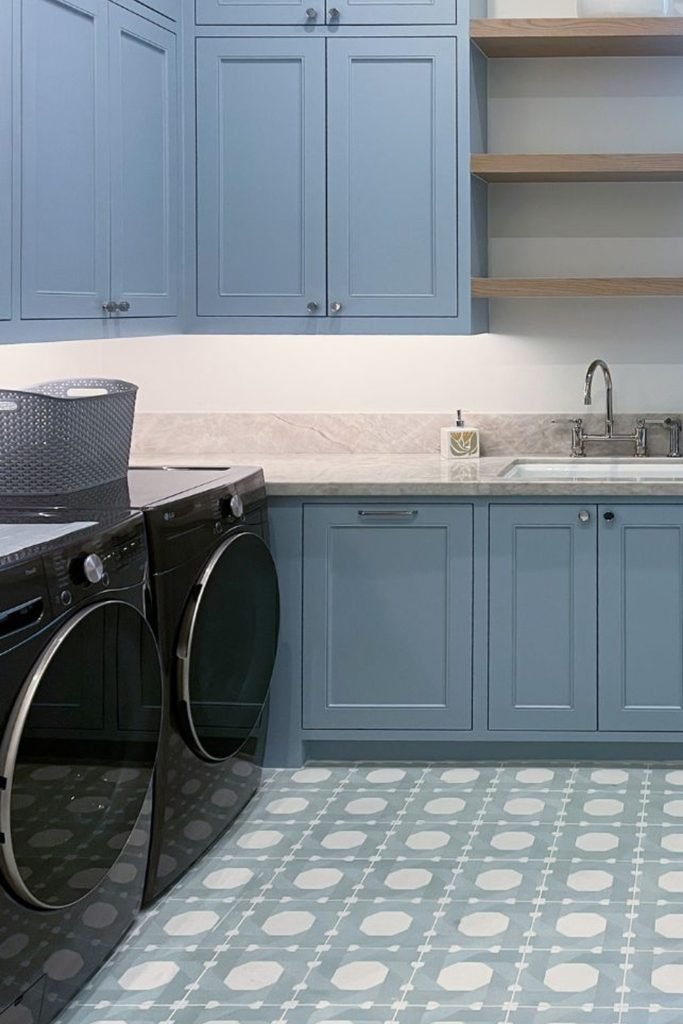
Tonal Pattern
A patterned floor feels much calmer when its main color repeats the cabinetry, which lets you use a bold motif without chaos.
Choose a pale background inside the tile pattern so the floor still reflects light and does not make blue cabinets feel heavy.
Keep counters and walls quiet around this combination, because adding another strong pattern would compete with the floor instead of supporting it.
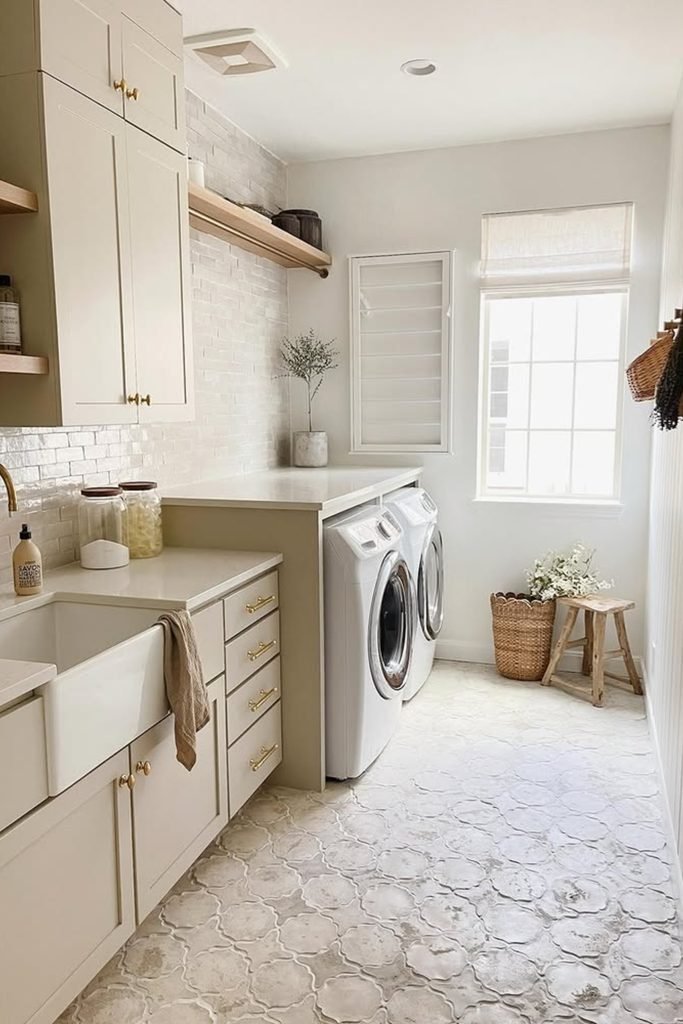
Arabesque Floor
Arabesque floor tiles soften a long laundry room because their curved edges add movement without introducing a strong contrasting color.
Choose a pale stone finish with light grout when you want pattern underfoot while keeping beige cabinets and brass details calm.
This shape works especially well in narrow layouts, where repeating curves break up straight cabinetry and make the floor feel less rigid.
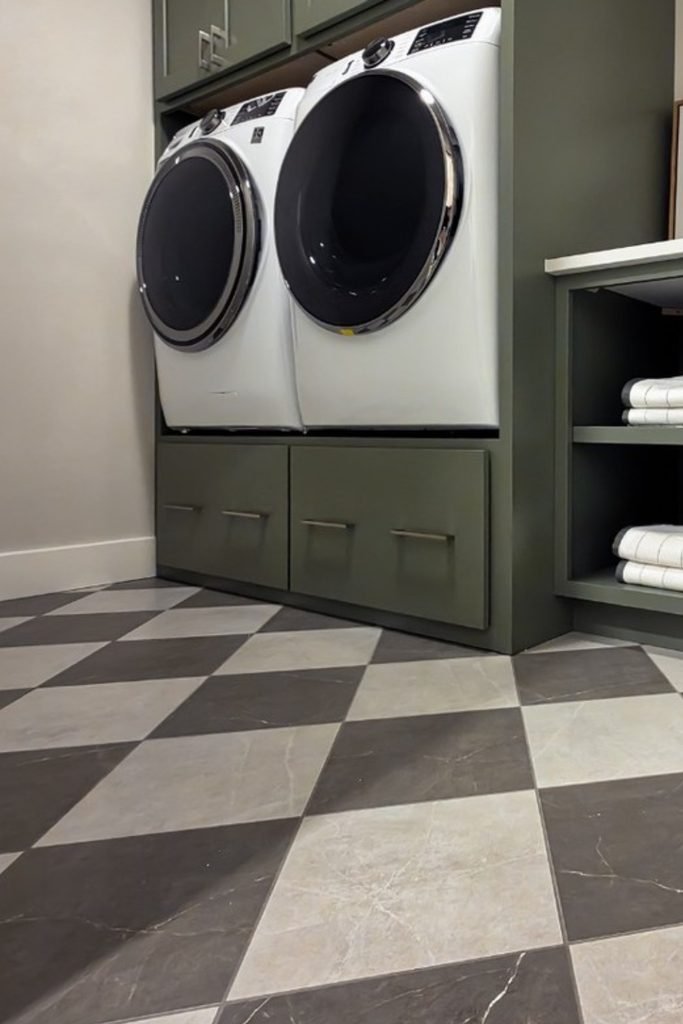
Checkerboard Floor
A large checkerboard floor gives a simple laundry room instant structure, especially when tall green cabinetry needs something equally grounded below.
Turn the squares on a diagonal if you want the pattern to feel more dynamic and visually widen an otherwise plain floor.
Keep both tile colors muted rather than stark, so the pattern feels classic and supports deep cabinetry instead of overpowering it.
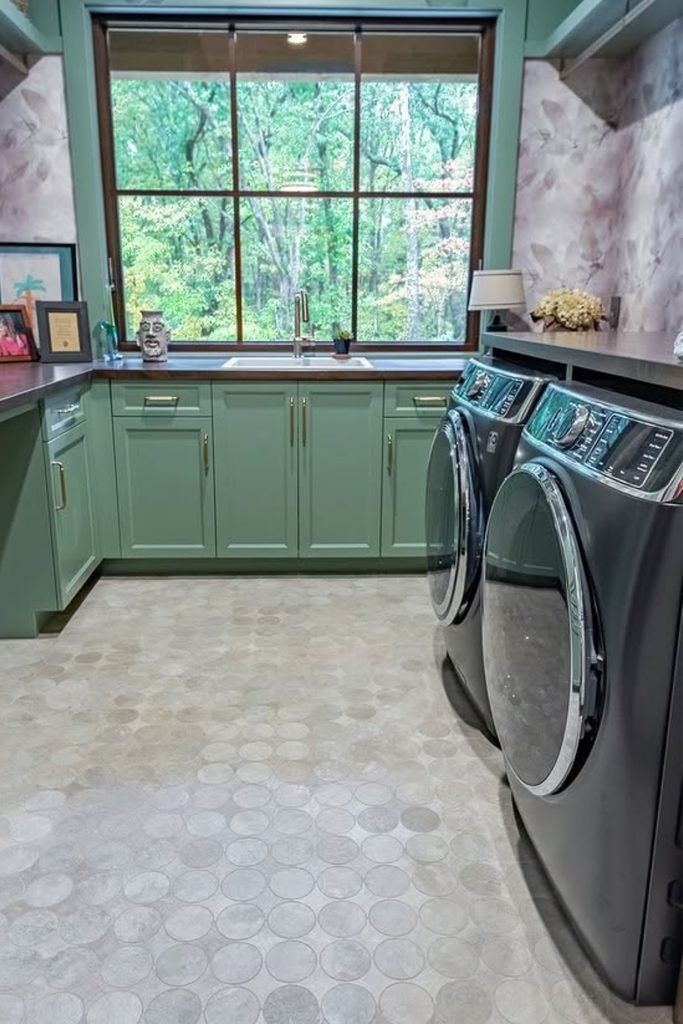
Circle Mosaic
Round mosaic tiles bring gentle texture to a larger laundry room, where a plain floor could feel flat beside strong green cabinetry.
Use close gray and beige tones if you want the circles to register as texture instead of becoming another competing pattern.
Because small rounds create many grout joints, choose a forgiving grout shade and plan for more regular cleaning than large-format tile.
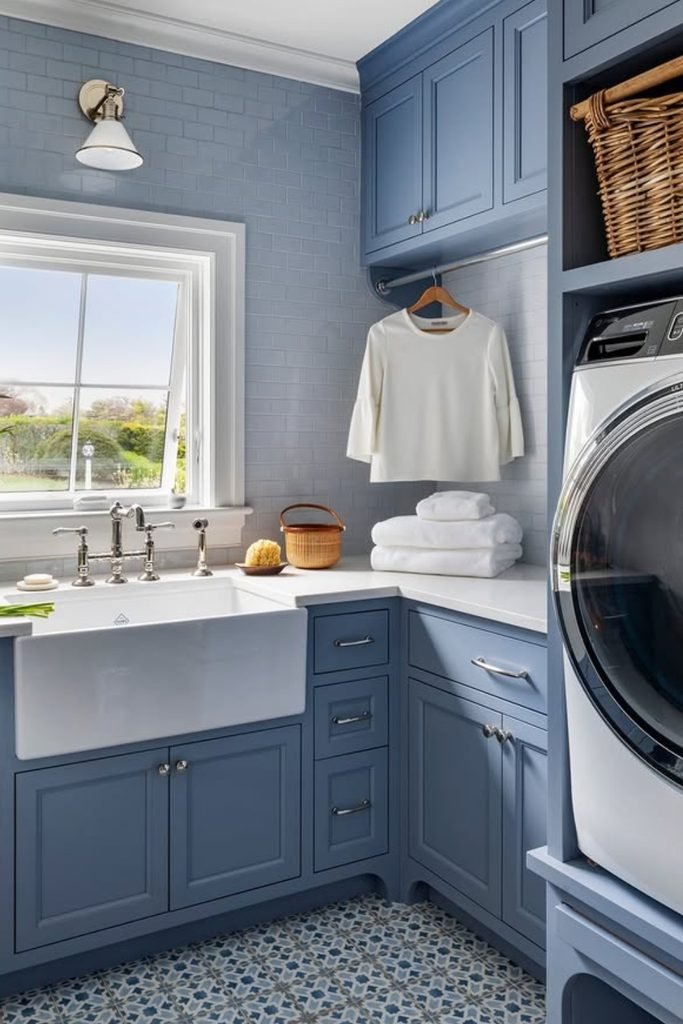
Mosaic Balance
A busy mosaic floor can still feel controlled when its blue tones repeat the cabinetry and wall tile instead of adding new colors.
Use this approach when you love pattern but want a coordinated room, because repeating one palette keeps several tiled surfaces connected.
Let the floor carry the smallest pattern, then choose a simpler wall layout so the room has detail without visual clutter.
Linear Geometry
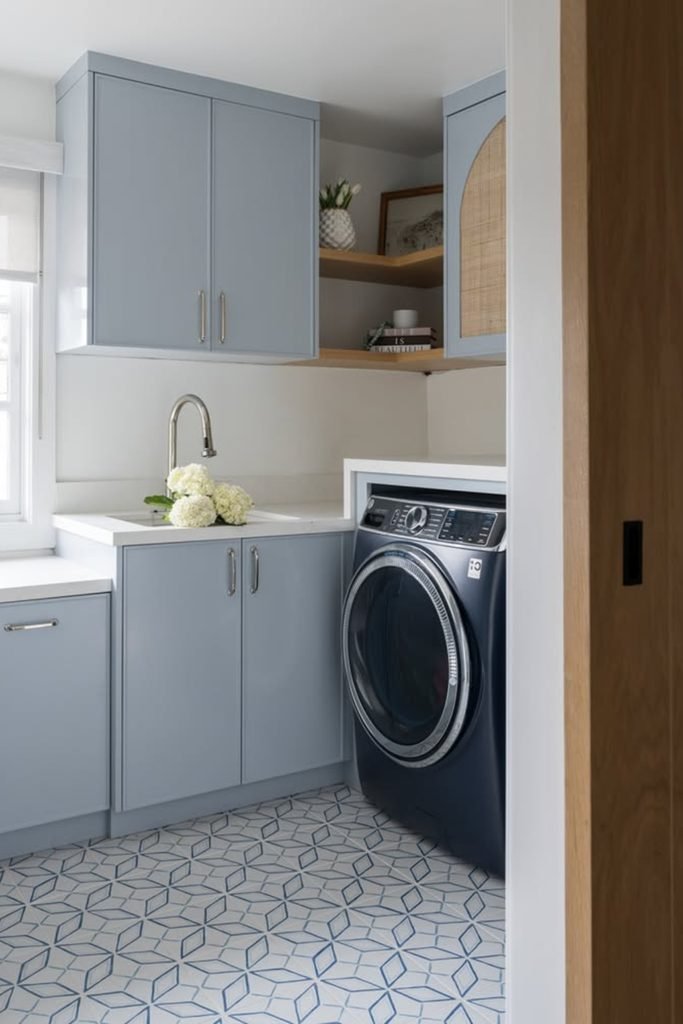
Outlined geometric floor tiles can give a small laundry room personality without adding heavy color, especially beside soft blue cabinetry.
Choose a white or pale base with thin blue lines when you want pattern that feels crisp rather than visually crowded.
Keep surrounding surfaces simple and repeat the blue through cabinets or accessories so the floor feels connected instead of random.
Quiet Arabesque
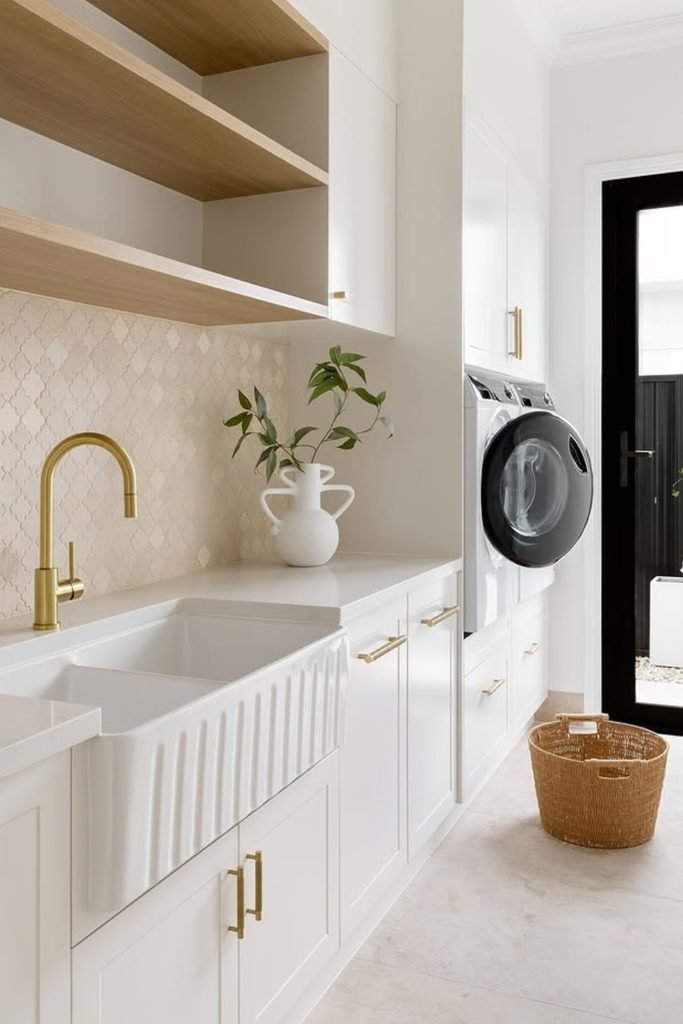
An arabesque backsplash works beautifully when you want texture near the sink without introducing another strong color into the room.
Use a warm white tile with matching grout to keep the pattern subtle, especially beside white cabinetry and natural wood shelves.
This softer wall treatment suits bright, narrow laundries where a busier backsplash could compete with open shelving, brass hardware, and daylight.
Floral Statement
Bold floral floor tiles can turn a compact laundry room into something memorable, but they work best when the cabinetry stays restrained.
Pick one or two colors from the pattern and repeat them nearby, so the floor feels intentional rather than visually isolated.
Keep the backsplash plain and the counters quiet, because adding another strong pattern would make this smaller room feel overly busy.
Vertical Texture
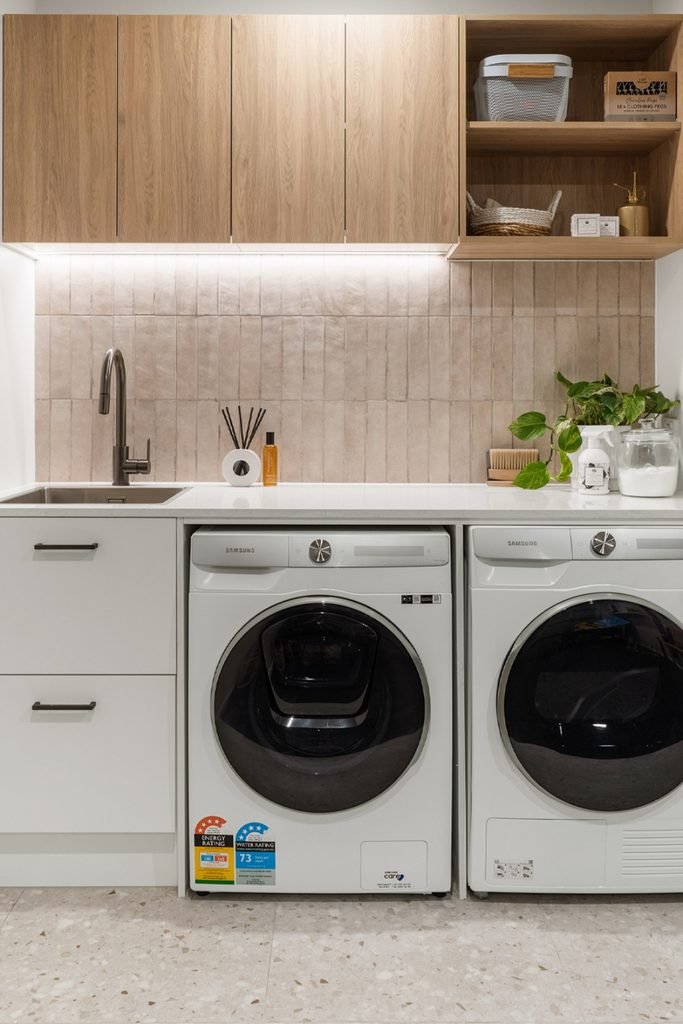
Vertical wall tiles are a smart choice when you want a low laundry backsplash to feel taller and more finished behind appliances.
Choose handmade-look tiles in a warm neutral shade, then use narrow grout lines so the surface keeps its soft, textured character.
Pair that wall with a quiet terrazzo-style floor and simple wood cabinetry to create contrast without making either surface compete.
Patterned Neutral
A delicate gray pattern works well in a compact laundry room when you want interest without pulling attention from painted cabinetry.
Choose a soft repeat with plenty of pale background, then keep nearby walls simple so the floor feels detailed, not busy.
This approach suits smaller rooms especially well, because the pattern adds personality while still keeping the overall palette light and easy.
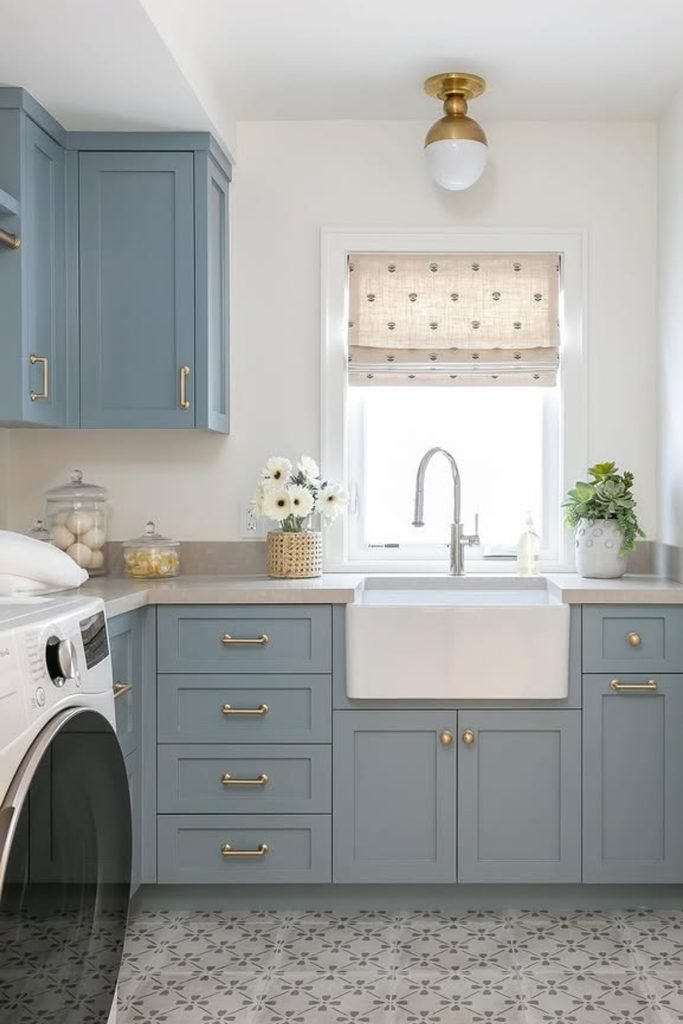
Green Feature
Deep green wall tile can turn one laundry wall into the main feature, especially when warm wood cabinetry already carries strong character.
Use a handmade-looking square tile if you want subtle variation, then keep the floor quieter so both surfaces do not compete.
This works best in rooms with good natural light, where the darker backsplash can feel rich instead of making the space heavy.
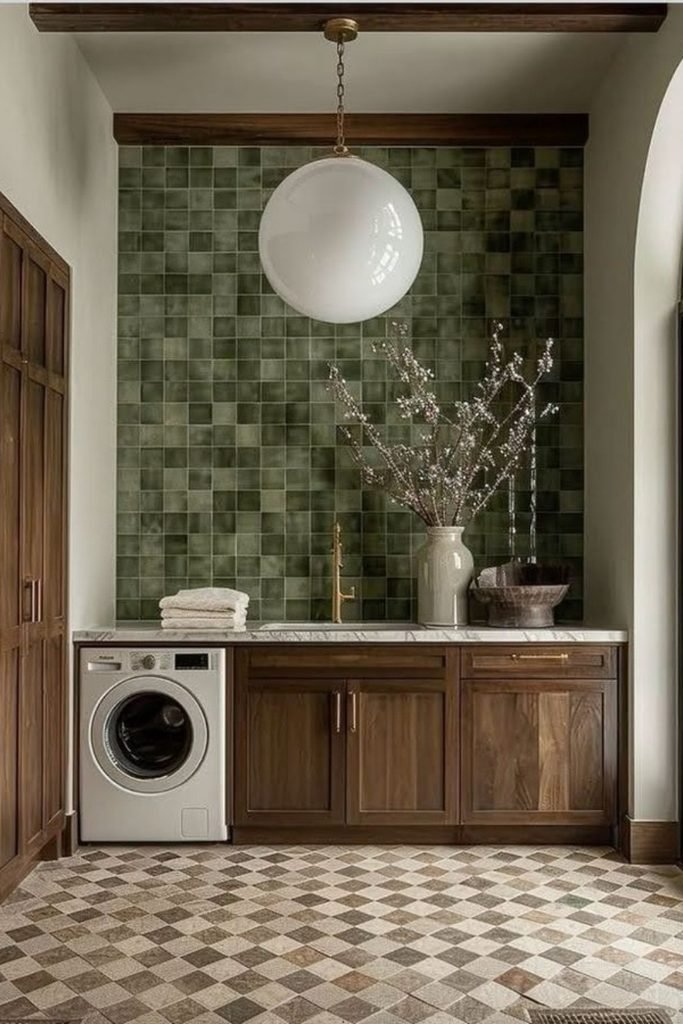
Soft Checkerboard
A muted checkerboard floor gives a laundry room classic structure without the sharp contrast that black and white combinations can create.
Choose beige, cream, or stone-look squares if you want the pattern to blend naturally with dark wood cabinets and warm metal details.
Larger squares also reduce visual clutter, making this a smart option when you want a bold layout that still feels calm.
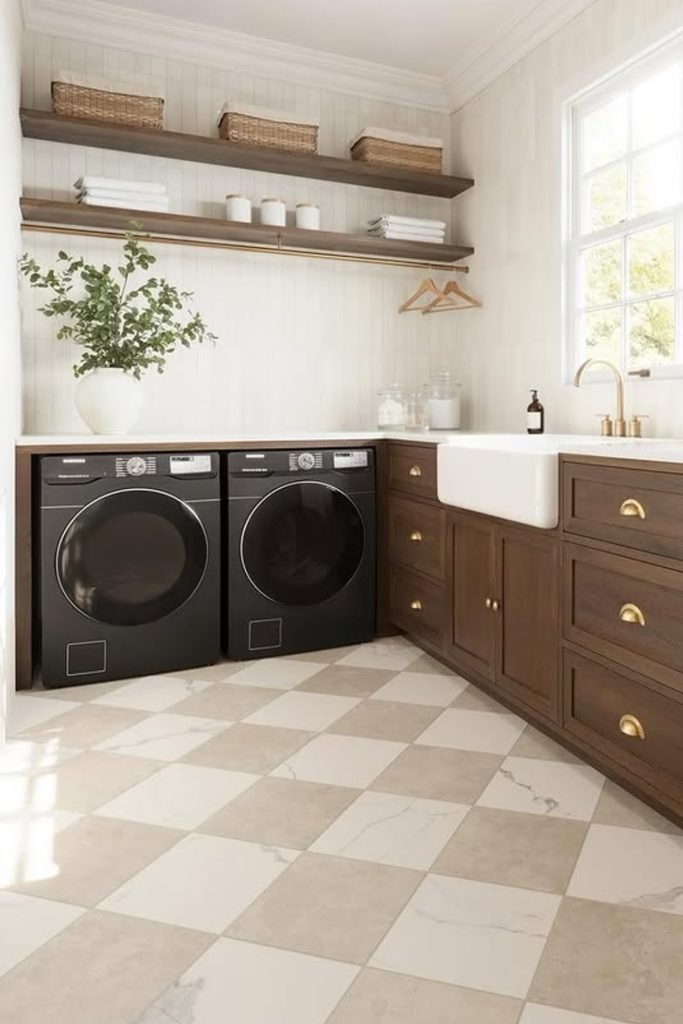
Vertical Green
Vertical green tiles are a strong choice when you want to draw the eye upward and make a wide laundry wall feel taller.
Run the tile behind both the machines and sink, then keep white cabinetry around it so the deep color stays balanced.
Pair the wall with a small black and white floor pattern if you want contrast without introducing another competing color.
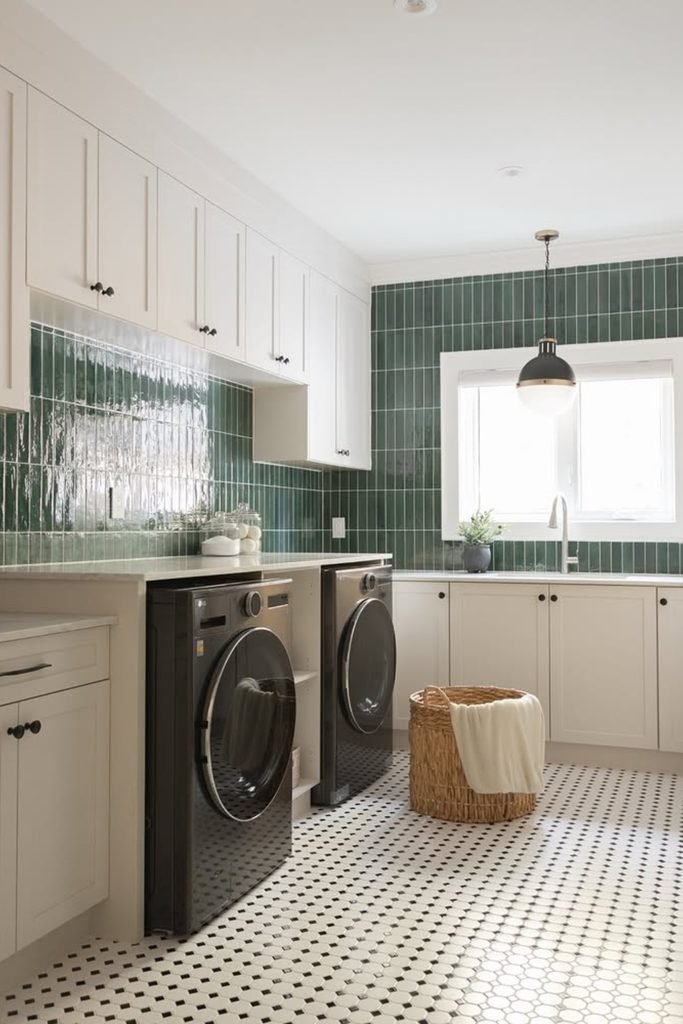
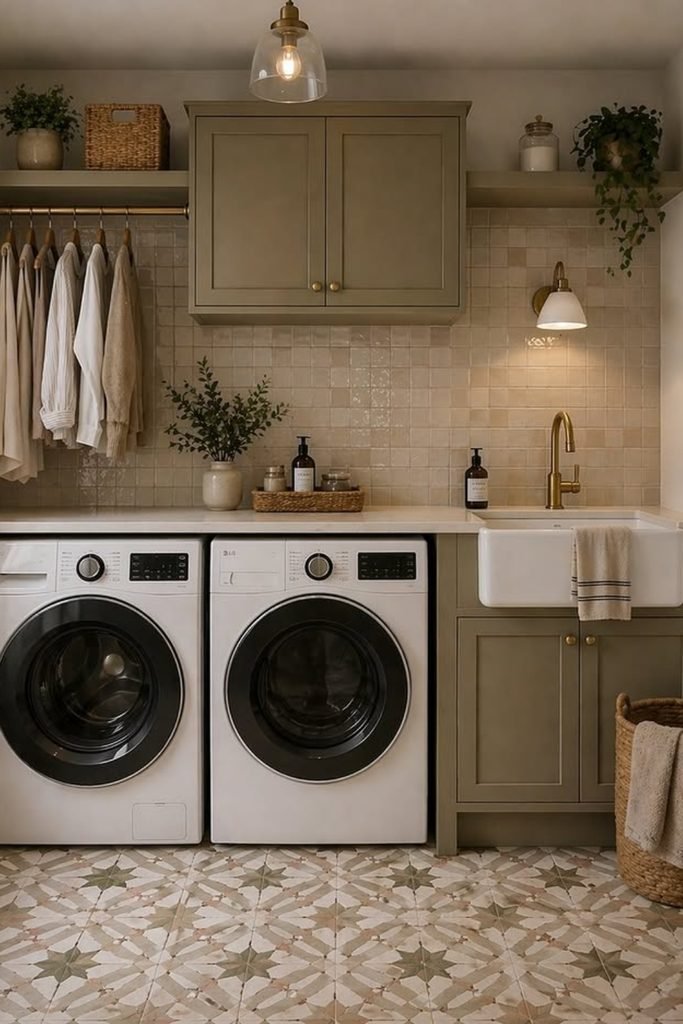
Star Pattern
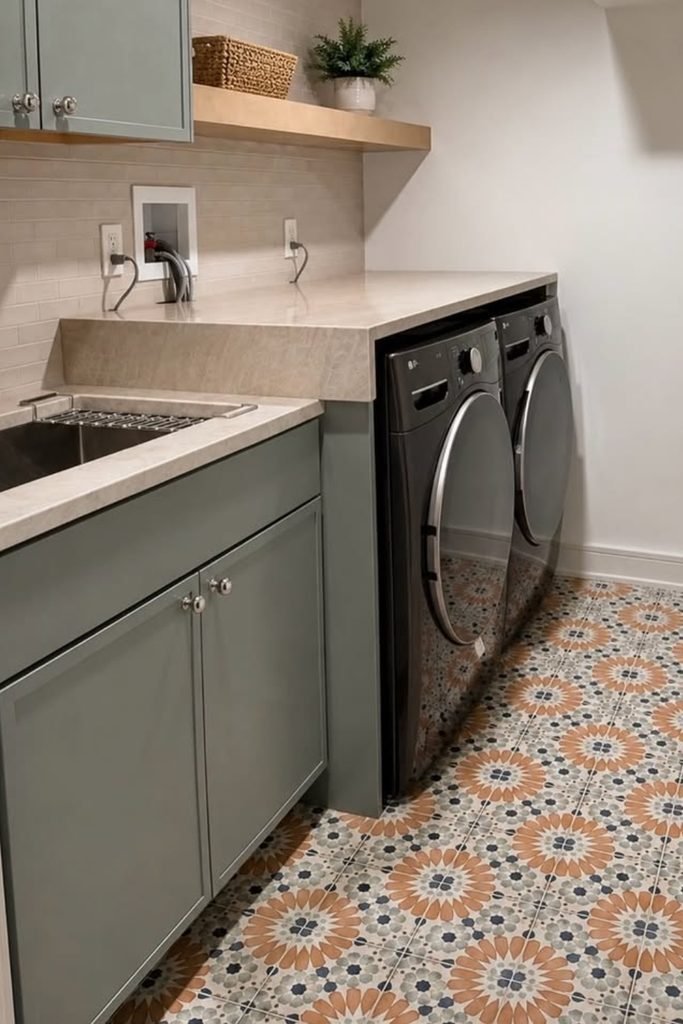
A muted star-pattern floor works beautifully with earthy cabinetry because the repeated shape adds character without pushing the room toward a busy look.
Choose soft olive, beige, and clay tones if you want patterned tile to feel warm, settled, and easy to live with.
Keep the backsplash simple and close in color, then repeat brass and woven textures so the floor stays connected to everything.
FAQs
Can laundry room tile handle water?
Porcelain and properly rated ceramic tiles handle everyday splashes well, but the full floor system still needs good grout, joints, and installation.
If your laundry room sits upstairs, waterproofing under the tile can add extra protection when leaks would damage rooms below.
Do not rely on tile alone for major leaks, because water can still move through grout lines, edges, and weak installation points.
What grout works best?
Use a medium or matching grout shade if you want the floor to stay practical without making every joint stand out.
Darker grout can hide everyday marks better, while very light grout may need more cleaning in busy laundry rooms with frequent spills.
For lower maintenance, ask about stain-resistant or epoxy grout, especially when your design uses small tiles with many grout lines.
