
22 Laundry Room Cabinet Ideas
A smart cabinet layout can completely change how a laundry room looks, feels, and works from day to day.
From slim pull-outs to full-height storage, the right setup can make even a simple laundry space feel thoughtful and well planned.
In this article, you’ll find practical laundry room cabinet ideas that combine useful storage, easy access, and a clean finished look.
Let’s jump in!
How Do I Organize My Laundry Room Cabinets?
Start by keeping the products you use every week on the easiest shelves to reach, then move bulk refills and extras higher up.
Group similar items together so detergent, stain removers, cleaning sprays, towels, and ironing supplies each have their own clear spot.
If a cabinet is deep, use pull-out bins or baskets so bottles at the back do not disappear behind everything else.
Keep heavy products on lower shelves, while tall cabinets work better for brooms, mops, steamers, or an ironing board.
Compact Storage
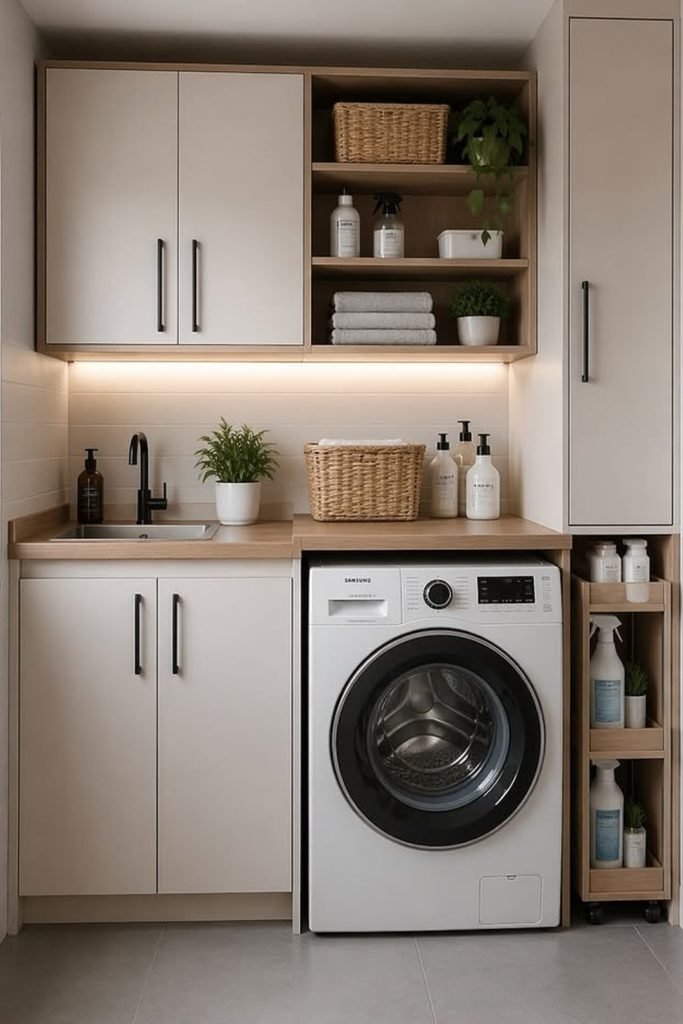
Turn a narrow laundry room into useful storage by pairing closed upper cabinets with open shelves that keep everyday supplies easy to grab.
A tall side cabinet works best for brooms, refills, or cleaning tools, while the slim pullout below uses otherwise wasted space.
Keep the countertop clear for folding or sorting, then add lighting underneath the cabinets so this compact setup stays practical after dark.
Raised Machines
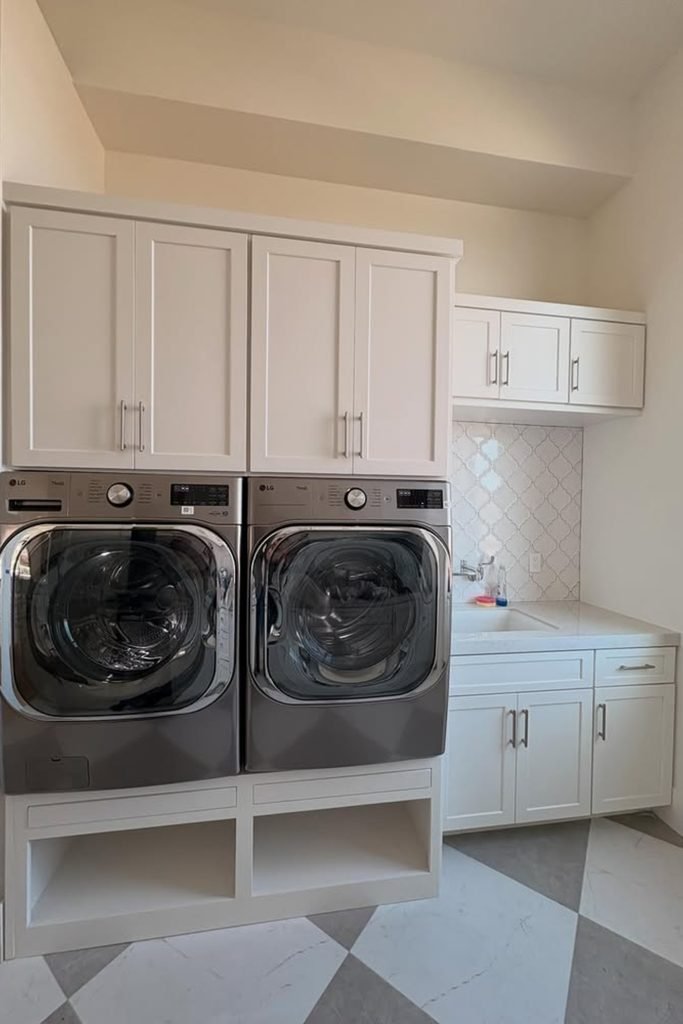
Raise side by side machines on a built in platform, then use the open cubbies underneath for baskets or bulky items.
Upper cabinets can hold detergents and backstock, while the nearby sink cabinet creates a separate spot for soaking and stain treatment.
This layout suits a larger laundry room where you can dedicate one wall to appliances and another section to washing and storage.
Utility Wall
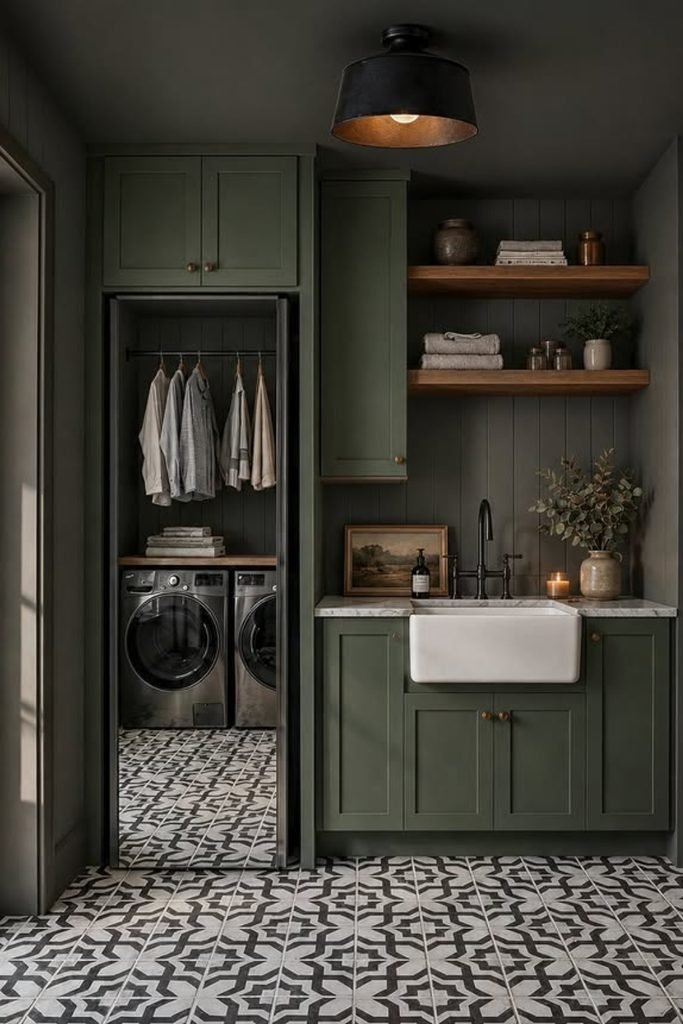
Use a full height cabinet wall when your laundry room also needs to hide hanging clothes, cleaning supplies, and less attractive household items.
Leaving one tall section open for a hanging rail gives shirts and delicates somewhere to air dry without taking over the room.
Pair the darker cabinetry with warm wood shelves and a utility sink to keep the space practical without making it feel too heavy.
Wood Cabinetry
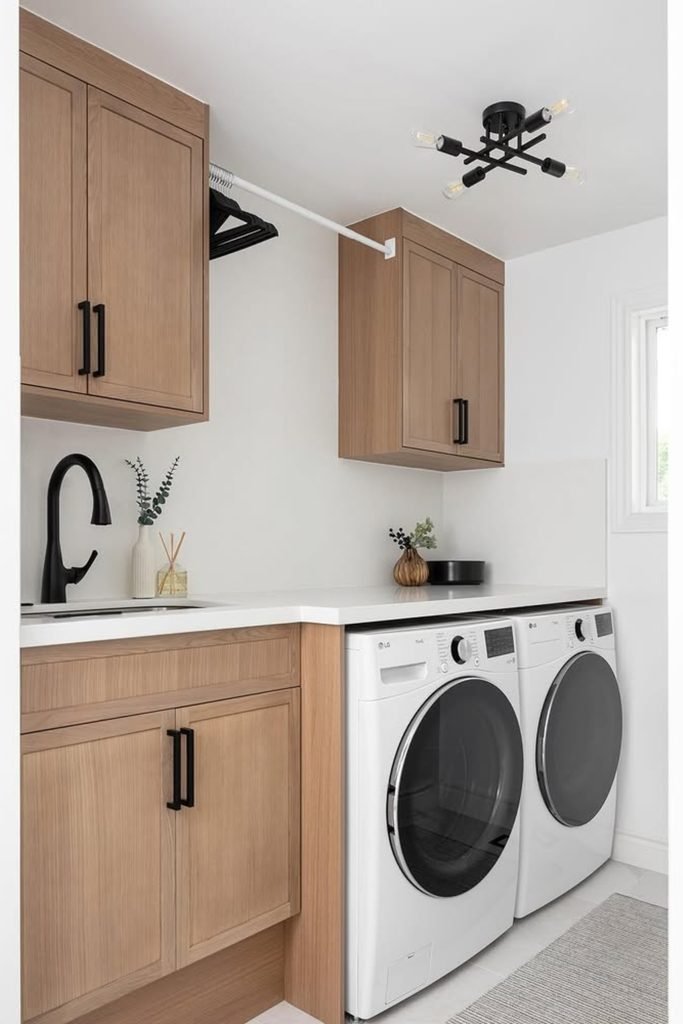
Break up a long cabinet run with open wall space if you want storage without making a bright laundry room feel boxed in.
Natural wood cabinets add warmth, while the countertop above front loading machines gives you a generous surface for folding, sorting, or setting baskets.
A simple hanging rail between cabinet sections keeps freshly washed clothes within reach and uses empty wall space without adding another cupboard.
Lit Shelves
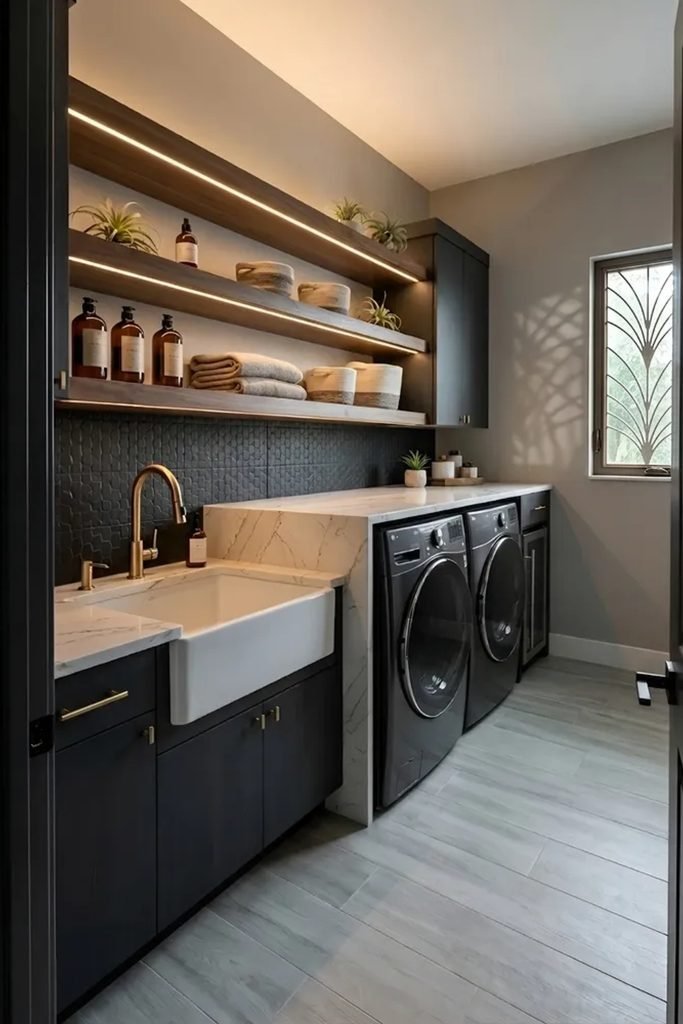
In a narrow laundry room, illuminated open shelves keep daily supplies visible while dark base cabinets hide bulkier products below.
Run the counter across the machines for folding space, then place the sink at one end to keep washing tasks together.
Warm shelf lighting works especially well with charcoal cabinetry, giving this practical setup enough contrast without making the room feel heavy.
Blue Balance
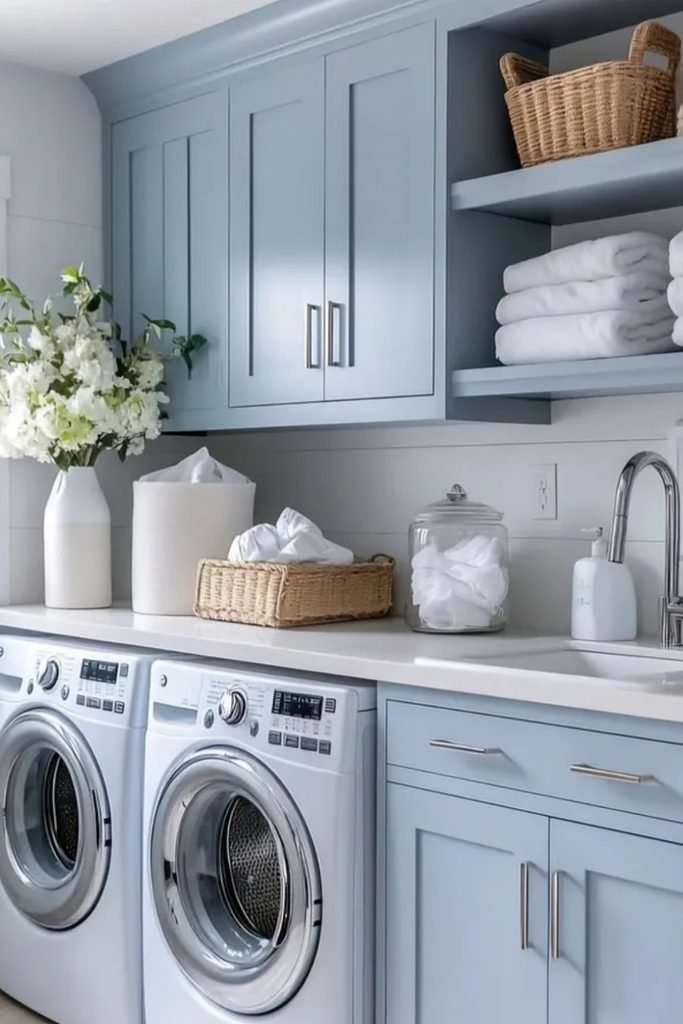
Choose one cabinet color across uppers and lowers when you want the laundry room to feel connected without looking too formal.
Open shelves beside the upper cabinet give towels and baskets a quick-access home, while closed doors handle less attractive supplies.
Keep the sink next to the counter edge so stain treatment, hand washing, and cleanup happen without crossing the whole room.
Hamper Cabinet
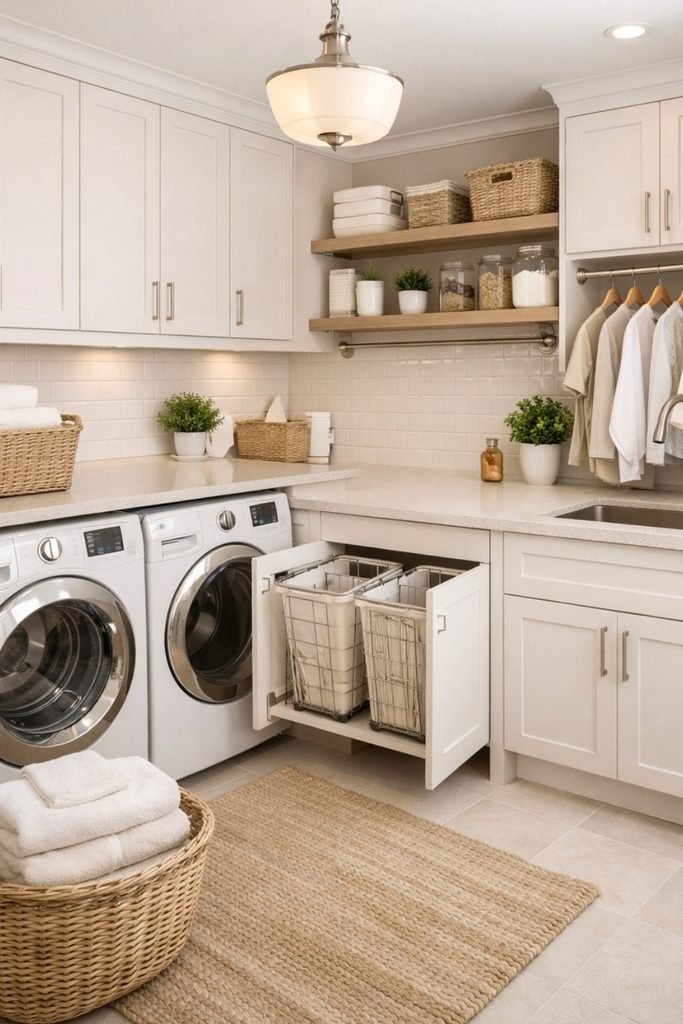
A pull-out hamper cabinet earns its space quickly when loose baskets keep crowding the floor or getting kicked around during laundry.
Place it close to the washer so sorting happens before loading, then use separate bins for lights, darks, or household linens.
The surrounding cabinets can hold detergent and cleaners, while the hanging rail above the sink gives freshly washed pieces room to drip-dry.
Full Wall
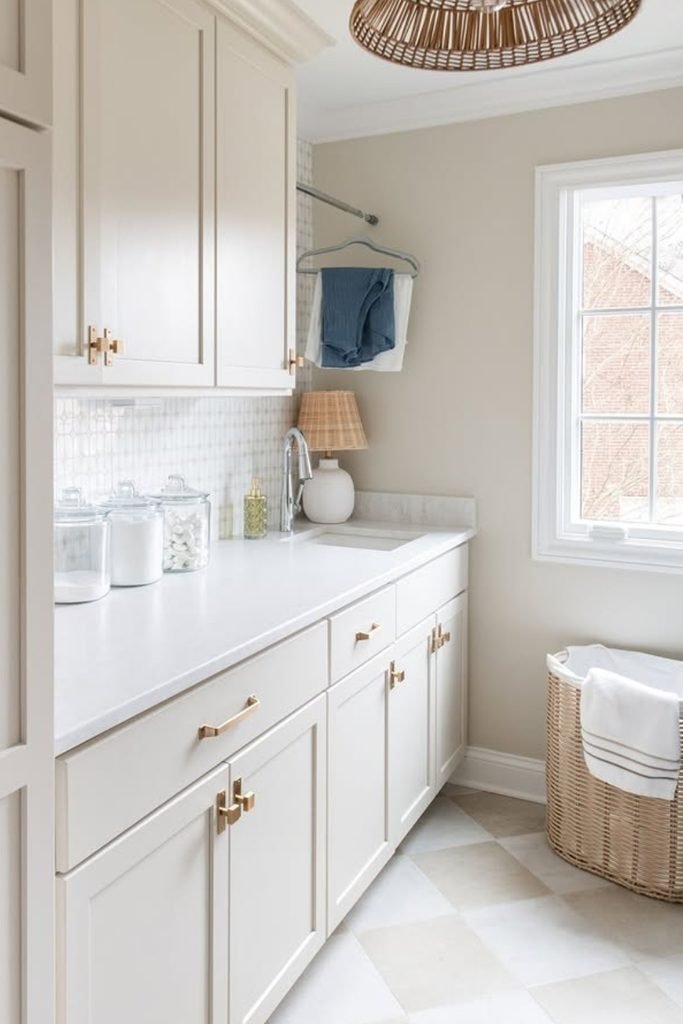
Use a full cabinet wall when you have enough length to separate everyday laundry supplies from bulky cleaning gear and linens.
Deep drawers below the counter keep heavier bottles easier to reach, while upper cabinets reserve eye-level space for frequently used products.
A tall cabinet at the end can hide an ironing board, mop, or vacuum without breaking the long, clean counter run.
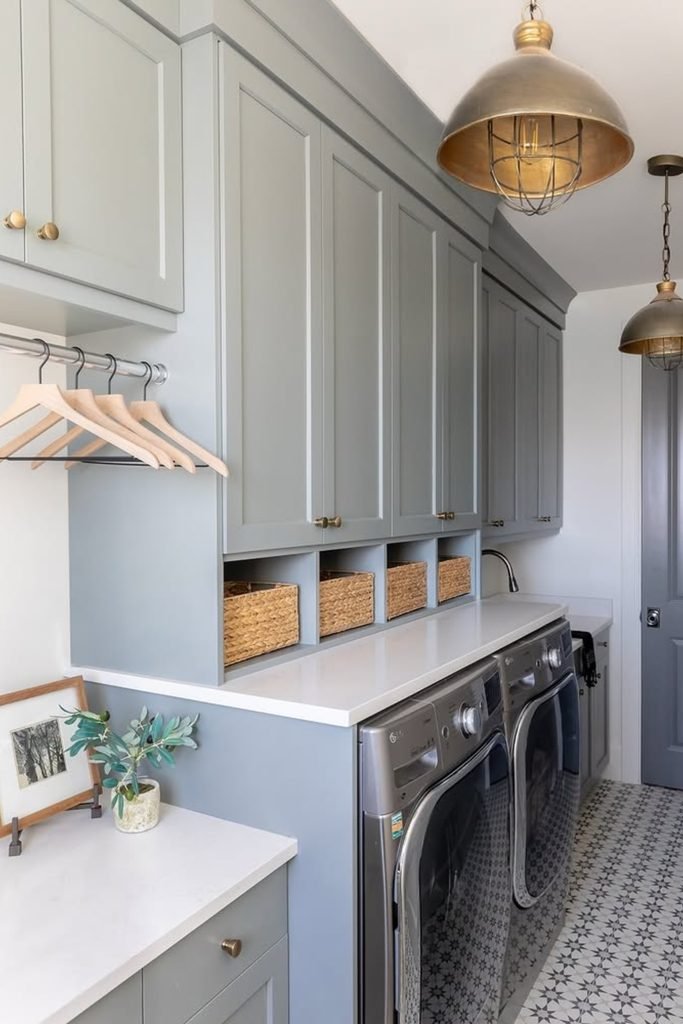
Basket Cubbies
Add open basket cubbies beneath upper cabinets when you want everyday laundry items visible without leaving bottles scattered across the counter.
A hanging rail at one end gives shirts and delicates a quick drying spot while keeping the main work surface clear.
Use matching baskets for smaller supplies, then reserve the closed cabinets above for bulk detergent, refills, and things you use less often.
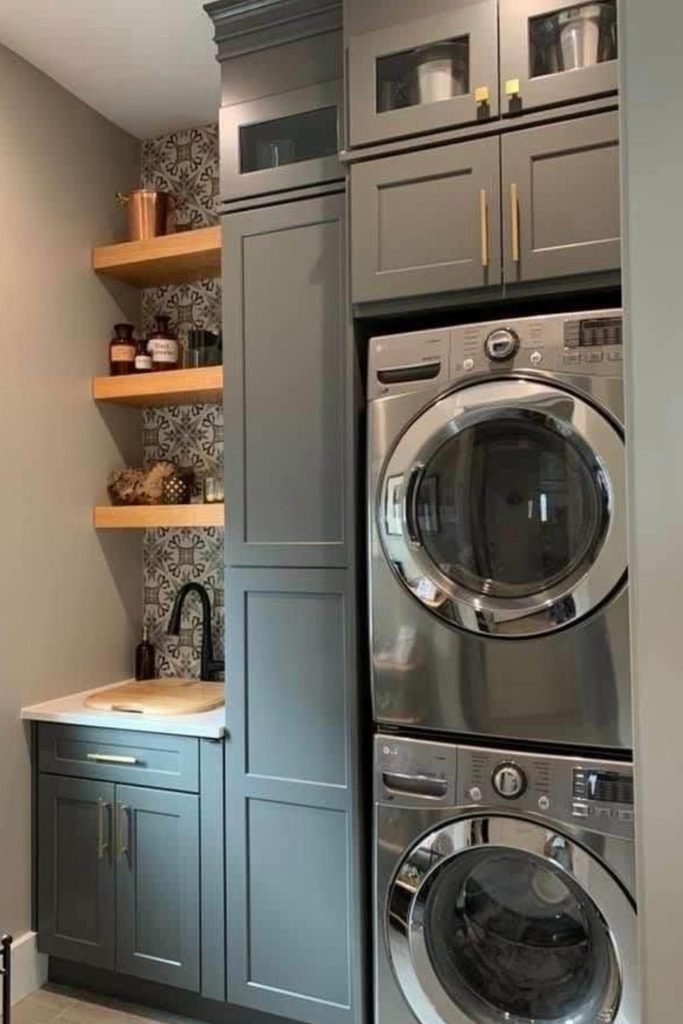
Stacked Storage
Stacking the washer and dryer frees valuable width, making this layout a strong choice for compact laundry rooms with limited floor space.
Build a tall cabinet beside the machines to store cleaning supplies vertically, then use upper cupboards for lighter backstock and spare linens.
Keep a small sink and open shelves nearby so stain treatment, hand washing, and frequently used products stay within easy reach.
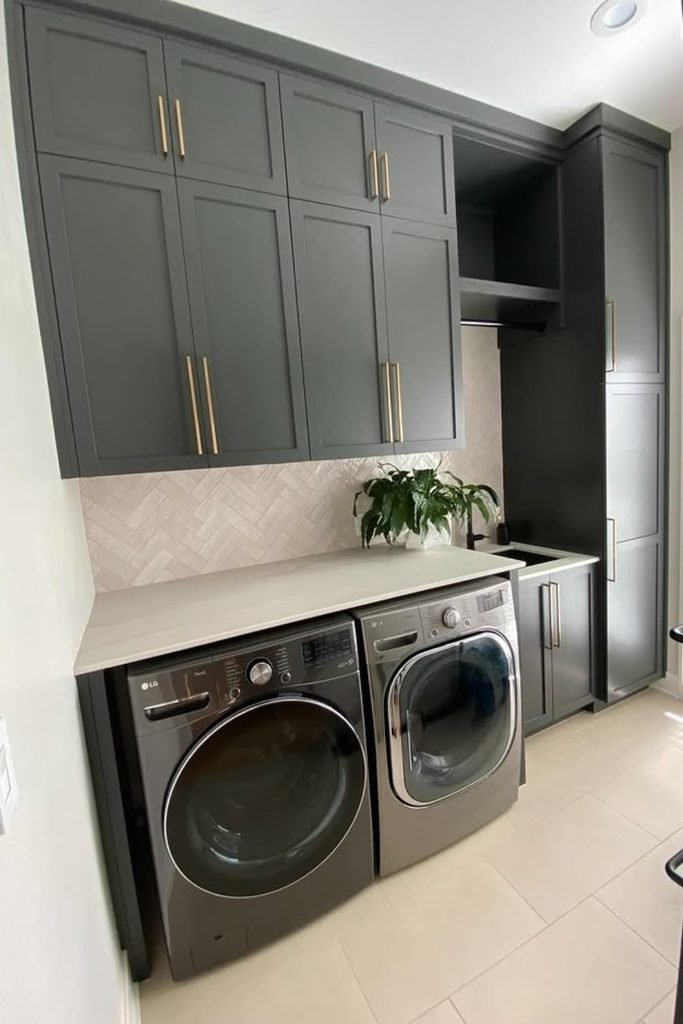
Dark Cabinetry
Run cabinetry to the ceiling when you need serious storage, because the extra height keeps seasonal and rarely used supplies out of sight.
Leave one open vertical bay for a hanging rail so air drying clothes do not compete with your folding or sorting surface.
A long countertop over front loaders works best when daily supplies stay inside upper cabinets instead of slowly taking over the workspace.
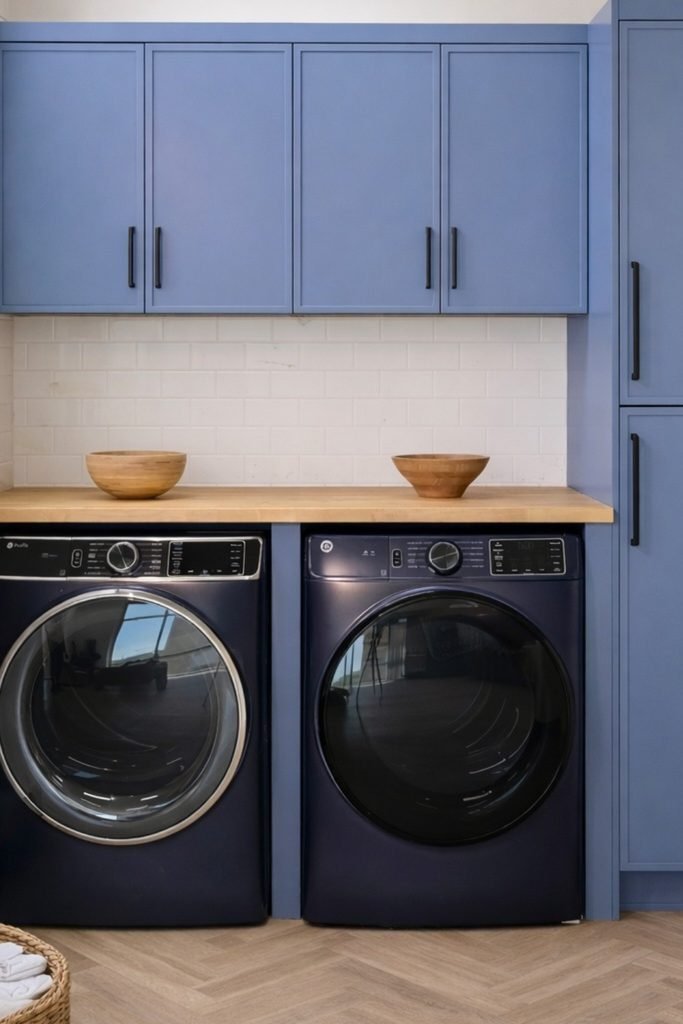
Blue Storage
Choose a tall side cabinet beside front loaders when you need hidden storage for bulky items that standard upper cabinets cannot handle.
Carry the countertop across both machines to create one uninterrupted folding zone, then keep the wall cabinets focused on everyday laundry supplies.
A warm wood counter softens stronger cabinet colors, making this setup especially useful when you want practical storage without an overly utilitarian look.
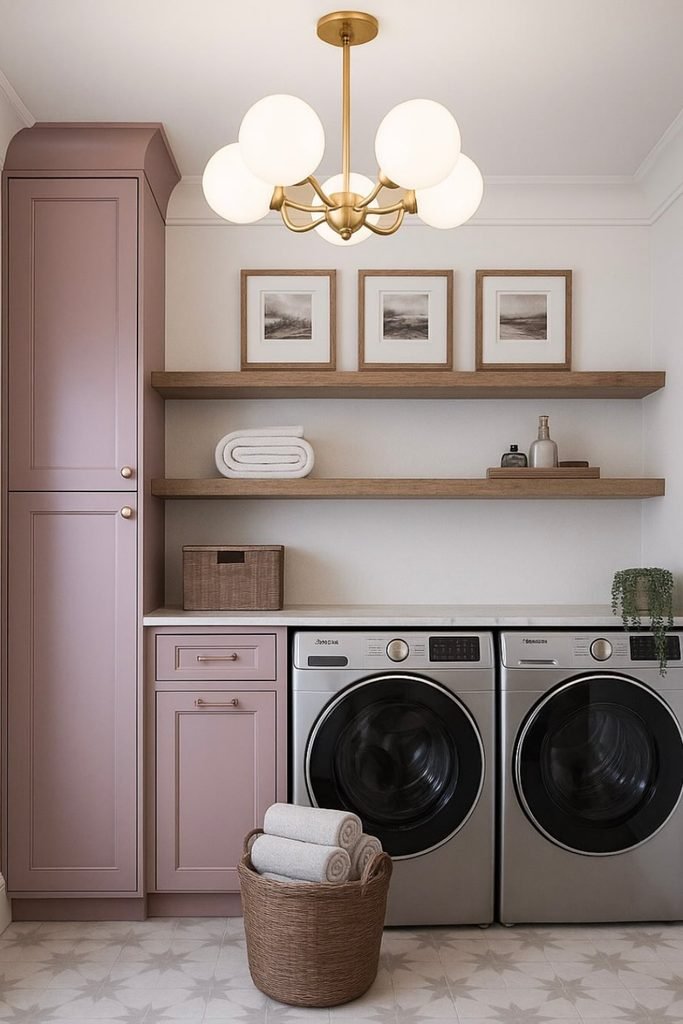
Side Tower
Keep one tall cabinet beside the machines when you need hidden storage, then use open shelves above for lighter everyday items.
That split works especially well in smaller rooms because bulky supplies disappear behind doors without making the whole wall feel closed.
Carry the counter across the washer and dryer so folding stays easy, while the shelf zone handles towels, baskets, and decor.
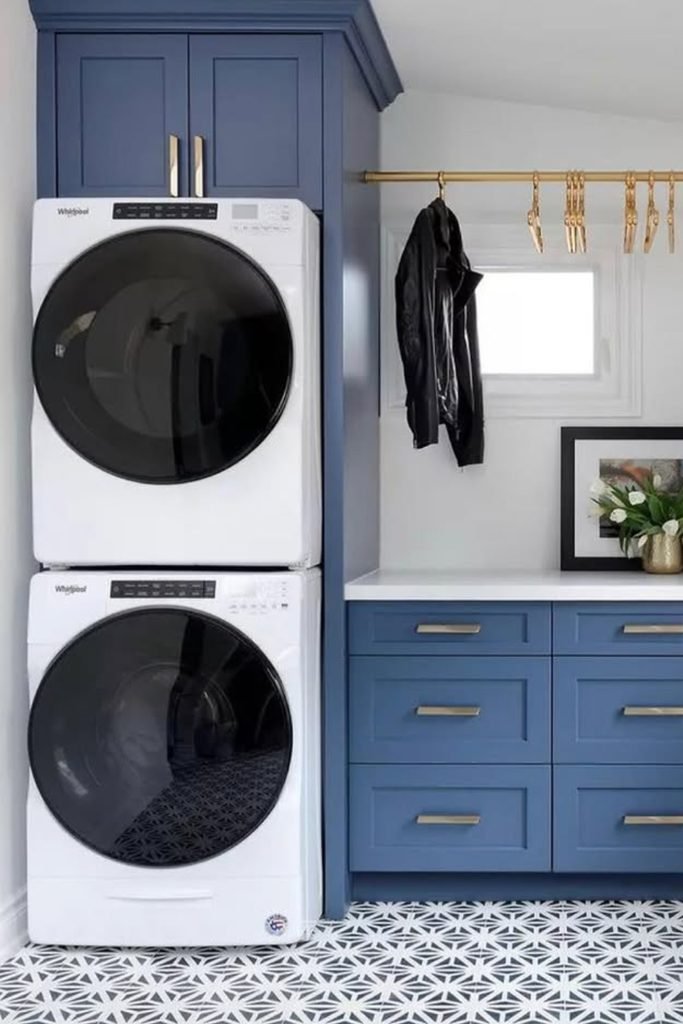
Stacked Station
Stack your machines when floor space is tight, then use the freed width for deep drawers that hold detergent, tools, and linens.
A hanging rod above the counter gives shirts and delicates a dedicated drying spot without stealing room from folding or sorting.
Keep the upper cabinet above the stack for backstock or rarely used products, since that area will be harder to reach.
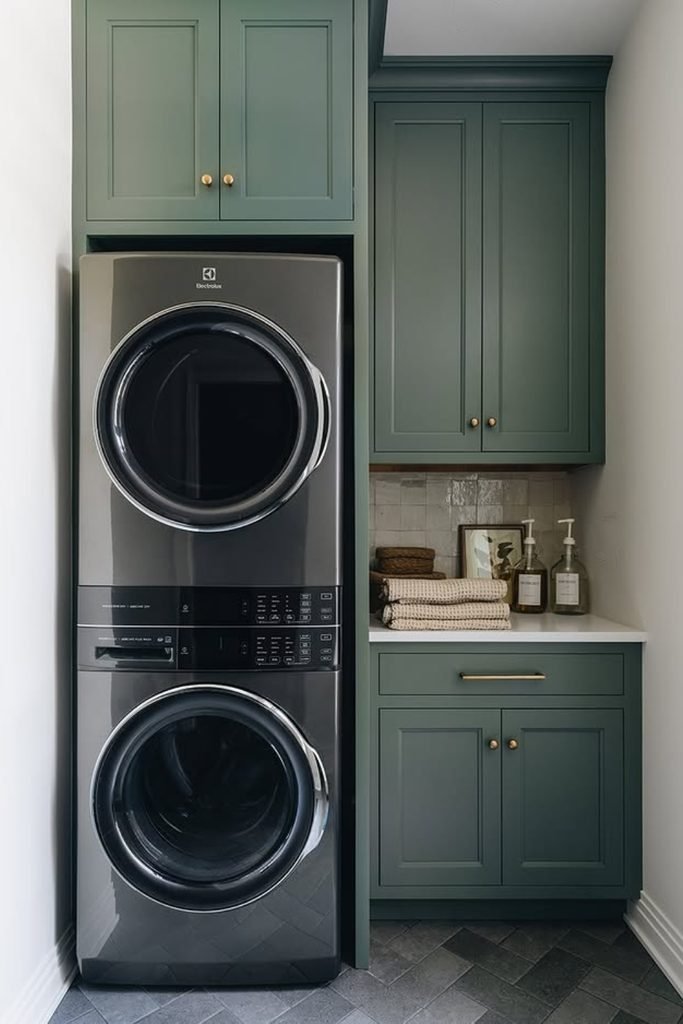
Narrow Nook
Turn a narrow alcove into a complete laundry zone by stacking the machines and fitting one compact cabinet run beside them.
Use the lower drawer for small essentials, keep bottles inside the base cabinet, and leave the counter open for quick folding.
Upper cabinets make the most of limited wall height, but reserve the easiest shelf for products you reach for every week.
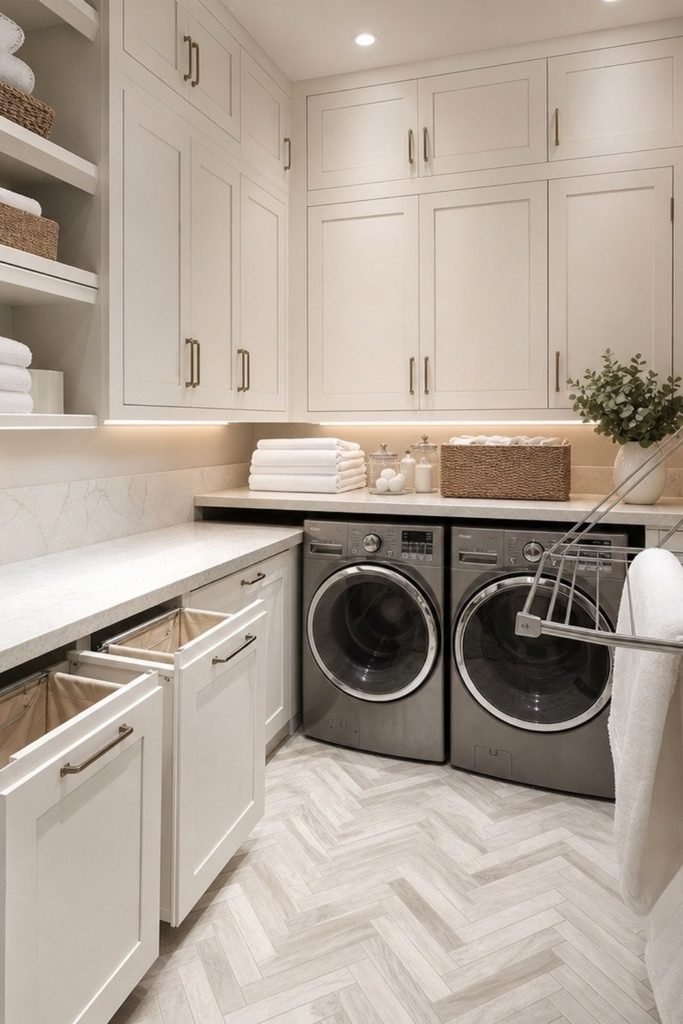
Hidden Hampers
Build pull-out hampers into the base cabinets if baskets usually crowd your floor, because sorting becomes part of the cabinetry itself.
Place them near the washer so dirty clothes can move straight from sorting to loading without being carried across the room.
Pair that storage with a fold-down drying rack and long counter, giving wet pieces and clean laundry separate working zones.
Dark Uppers
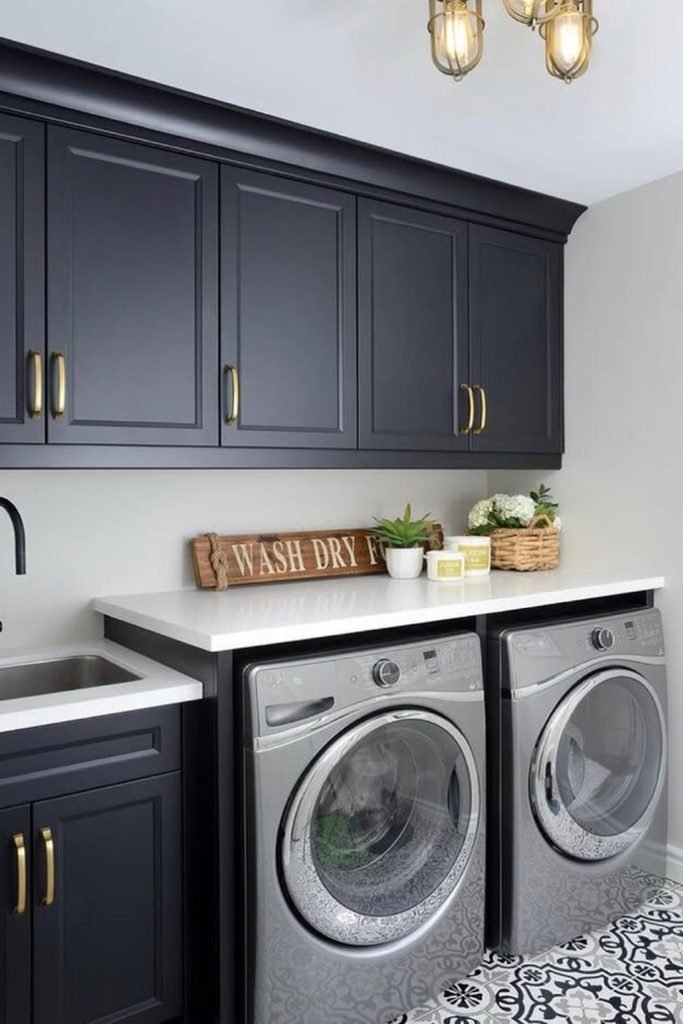
Dark upper cabinets work best in bright laundry rooms, where the deeper color adds contrast without making the space feel cramped.
Keep the counter running above front loaders so you gain a folding surface, while the sink handles soaking and stain treatment nearby.
Use the closed cabinets for detergents and refills, then leave the countertop mostly clear so the whole wall stays practical every day.
Mudroom Mix
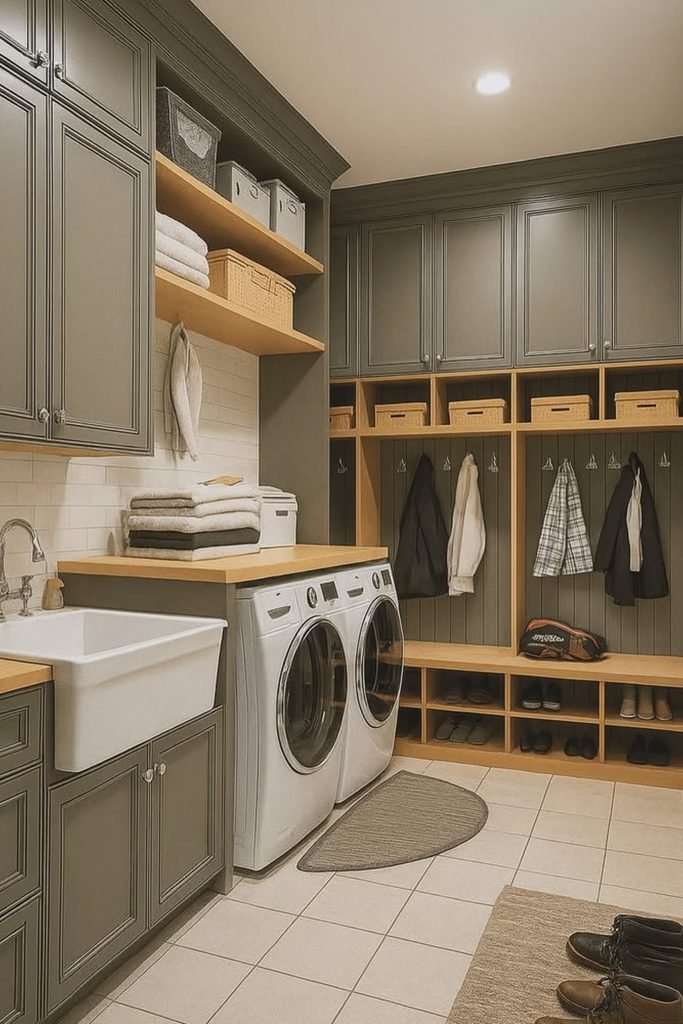
If your laundry room also handles shoes, coats, and bags, combine cabinetry with open cubbies so both jobs stay organized together.
Place closed cabinets above the sink and appliances for laundry supplies, while the opposite bench zone catches everyday entryway clutter quickly.
Wood shelves and shoe compartments keep frequently used pieces accessible, while deeper upper cabinets hide bulk refills and seasonal household items.
Hidden Sorting
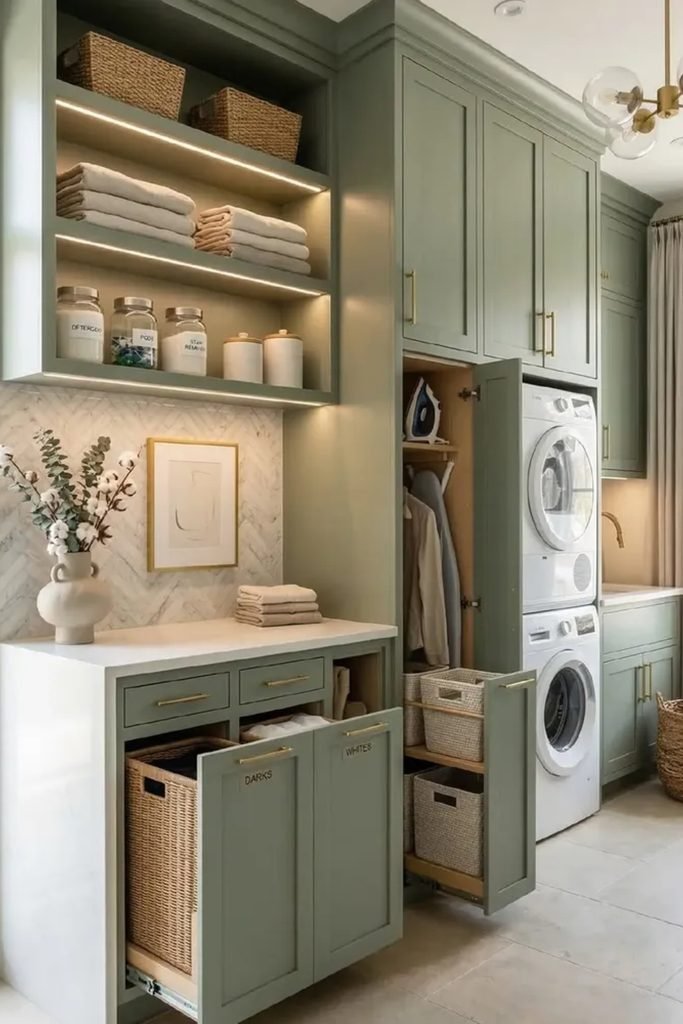
A built-in sorting station is worth adding when laundry piles build up, because pull-out hampers keep lights and darks separated.
Use the tall cabinet beside stacked machines for hanging clothes and baskets, then keep towels and supplies on illuminated open shelves.
This setup suits narrow rooms especially well, since stacking appliances leaves enough width for storage features that normally need separate walls.
Cabinet Frame
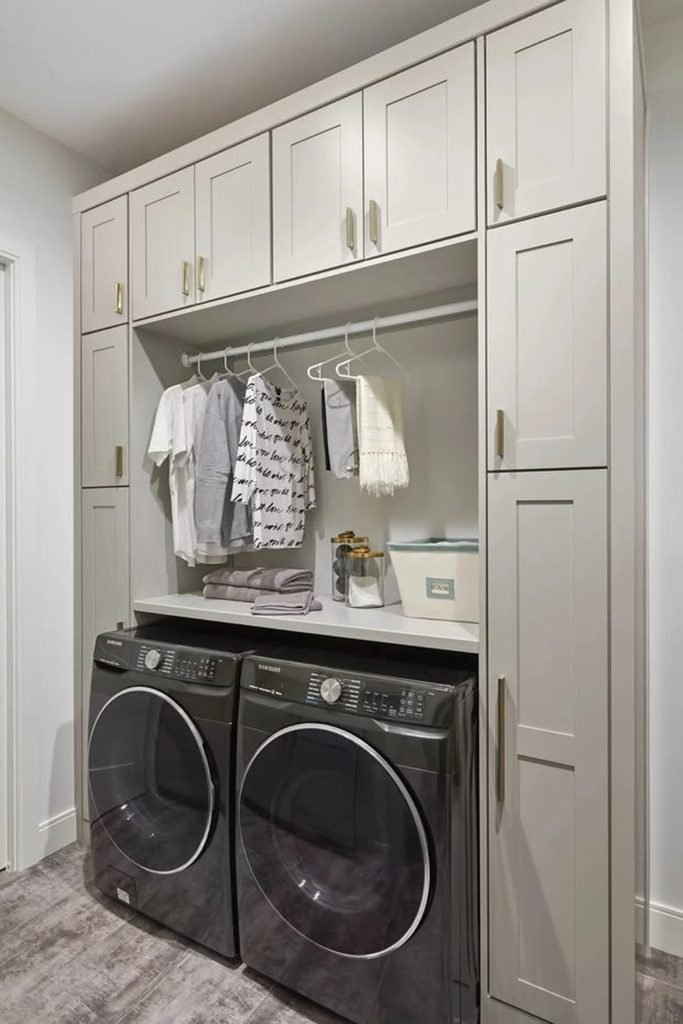
Frame the washer and dryer with tall cabinets when you want maximum storage without breaking the appliance wall into separate zones.
Leave the center open above the machines for a hanging rail, giving shirts and delicates drying space within the same footprint.
Take the side cabinets and uppers to the ceiling so spare linens, bulk detergent, and less-used supplies disappear behind doors.
Center Storage
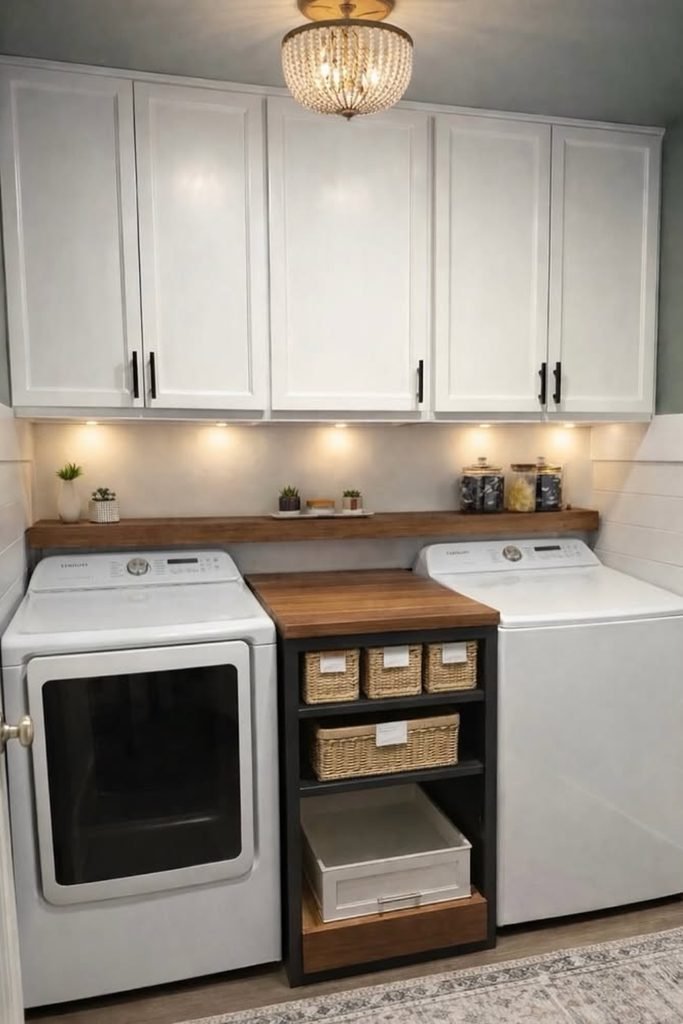
Bridge the gap between a top-loader and dryer with a slim storage tower that gives small supplies a permanent home.
Keep upper cabinets for bulk products, then add a shallow shelf below them so everyday items stay visible and easy to reach.
A wood counter over the center unit creates a landing spot for baskets without blocking the top-loading washer lid beside it.
Laundry Mudroom
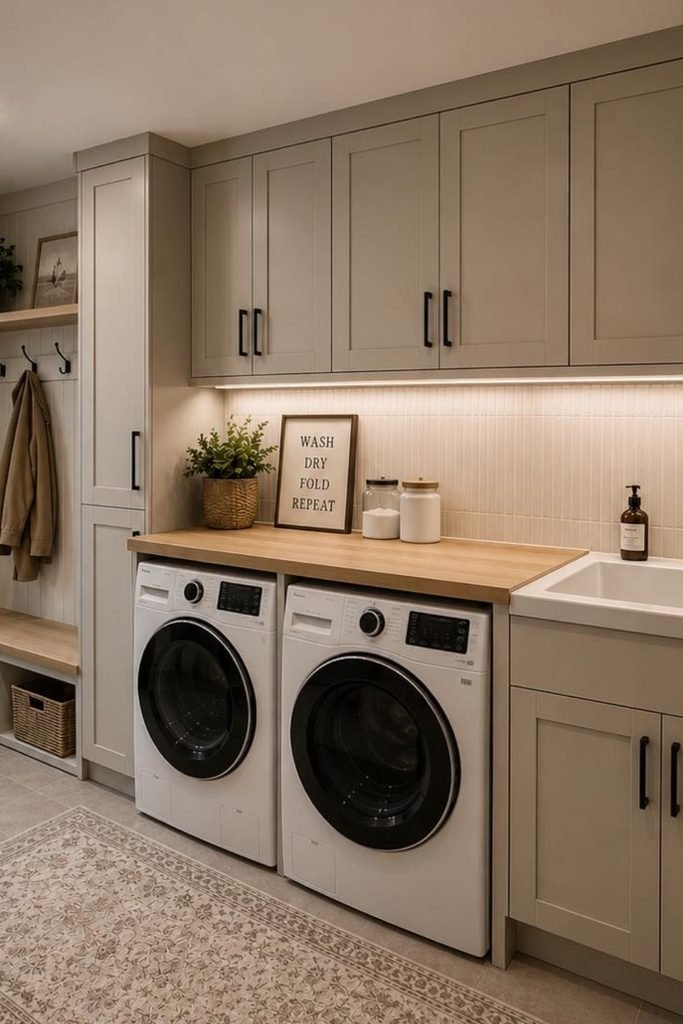
When laundry shares the entry, run closed cabinets above the machines so detergent and household extras stay hidden from arriving guests.
Place a tall cabinet beside the appliances for bulky supplies and use the nearby bench cubbies for shoes, bags, or baskets.
Finish the run with a utility sink and continuous counter, giving folding, soaking, and quick cleanups their own practical work zone.
FAQs
What should I store in laundry room cabinets?
Keep detergent, stain removers, dryer supplies, and cleaning products on shelves you can reach easily because these are the items used most.
Reserve higher shelves for bulk refills, spare towels, and occasional supplies so everyday products do not get buried behind less-used items.
Use tall cabinets for brooms, mops, steamers, or ironing boards, and keep heavier bottles lower so lifting them feels safer.
Should laundry room cabinets go to the ceiling?
Ceiling-height cabinets are useful in small laundry rooms because they turn unused wall space into storage without taking up more floor area.
Keep seasonal items, extra linens, and bulk refills at the top, then store weekly essentials on shelves within comfortable reach.
If the room already feels narrow, break up tall closed cabinetry with open shelves or lighter finishes to reduce visual weight.
