
How to Choose Wall Art for Your Bedroom
You look at your bedroom wall and feel something is missing. It’s not empty enough to ignore, but it’s not styled enough to feel finished either. So you think, “I should add wall art.”
Then you open Pinterest or Instagram and get stuck. There are too many styles, too many colors, too many ideas.
Some look too bold. Some feel too simple. And suddenly, you don’t know what actually fits your room.
So you delay it. Or you buy something random and hope it works. But deep down, it still doesn’t feel right.
That’s the real problem most people face when choosing wall art for their bedroom. It’s not about lack of options.
It’s about not knowing how to choose something that actually fits your space, your style, and the way you want your room to feel.
In this article, you’ll learn 7 way to choose wall art without guessing and then what makes a wall art look balanced.
Let’s jump in!
How Do You Choose Wall Art That Still Feels Right Even When Your Bedroom Style Changes Later?
Choosing wall art that still feels right even when your bedroom style changes is all about keeping things flexible instead of too fixed or trendy.
Most people make the mistake of picking art that only matches their room as it is right now.
But bedrooms often change over time, you may repaint the walls, change bedding, or update furniture.
If your wall art is too specific in style or color, it can start to feel out of place after those changes.
A safer approach is to choose timeless pieces. Simple abstract art, neutral tones, black-and-white photography, or nature-inspired prints usually stay relevant even when your room style shifts.
These types of art don’t lock you into one design direction, so they can adapt easily with future changes.
Another smart idea is to avoid overly trendy designs or very bold color themes that dominate the room. Instead, pick art that blends with different styles instead of depending on just one.
If your wall art feels calm, balanced, and not tied to a specific trend, it will continue to look good even when your bedroom evolves over time.
7 Ways to Choose Wall Art for Bedroom
Following are the 7 ways to choose wall art for bedroom.
1. Decide the Mood of Your Bedroom First
Before you pick any wall art, decide how you want your bedroom to feel. This step makes everything easier because it sets the direction.
If you want a calm space, go for soft colors, nature-inspired prints, or simple abstract designs. If you want something more bold or modern, you can choose stronger colors or graphic art.
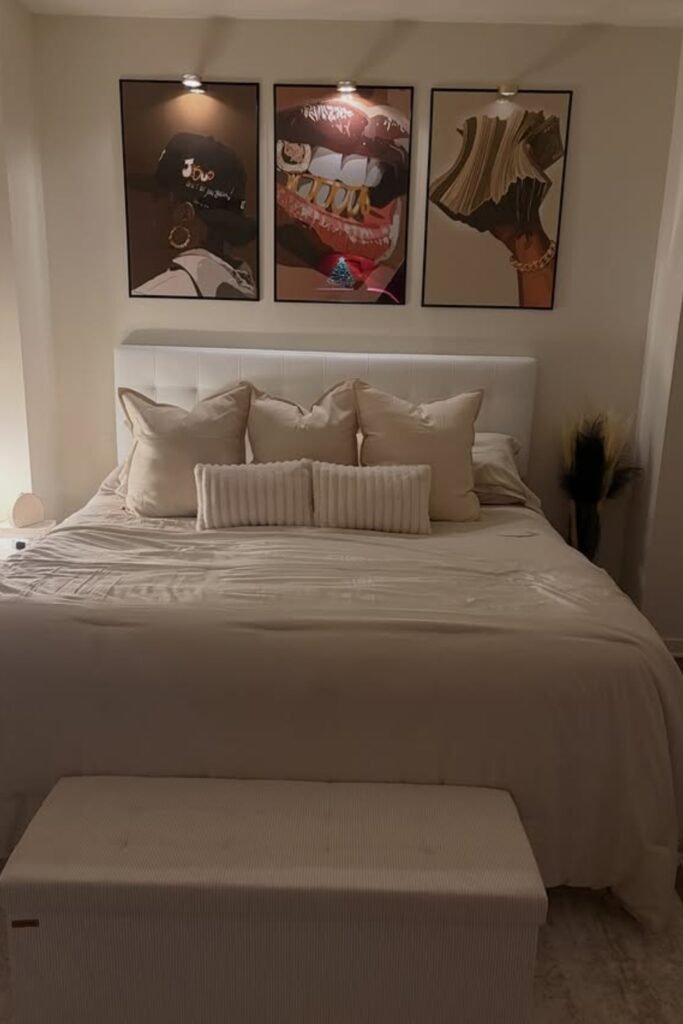
If your room feels cozy, warm tones and personal artwork work better. Most people skip this and jump straight into buying what “looks nice,” but that’s where the confusion starts.
Wall art is not just decoration, it changes the mood of your room.
When you are clear about the feeling you want, you automatically filter out styles that don’t match your space, and you make faster, better decisions.
2. Match Wall Art With Your Bedroom Style
Your wall art should feel like it belongs in your room, not like something added at the end.
Look at your bedroom style first, your bed design, furniture, and overall setup already have a theme.
If your room is modern, abstract or black-and-white art usually fits well. If it is minimal, simple line art or neutral designs work better.
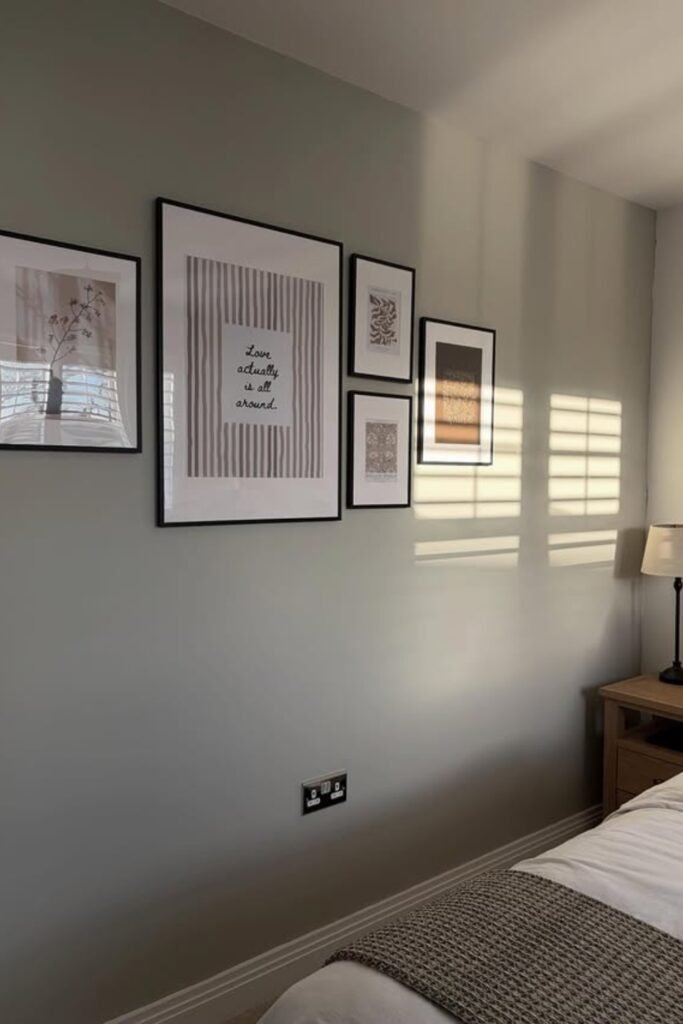
For cozy or boho-style rooms, warm colors and soft textures feel more natural. If your room has a luxury feel, larger framed art or elegant abstract pieces are a good match.
The goal is simple: when someone enters your room, the wall art should feel like part of the same story, not a separate piece that doesn’t connect with anything else.
3. Pick the Right Size for Your Wall
Size is one of the most important parts of choosing wall art, and it’s where most people make mistakes.
If the artwork is too small, it looks lost on the wall. If it’s too big, it can overpower the space.
A simple rule is to make sure wall art above the bed is about two-thirds the width of the bed.
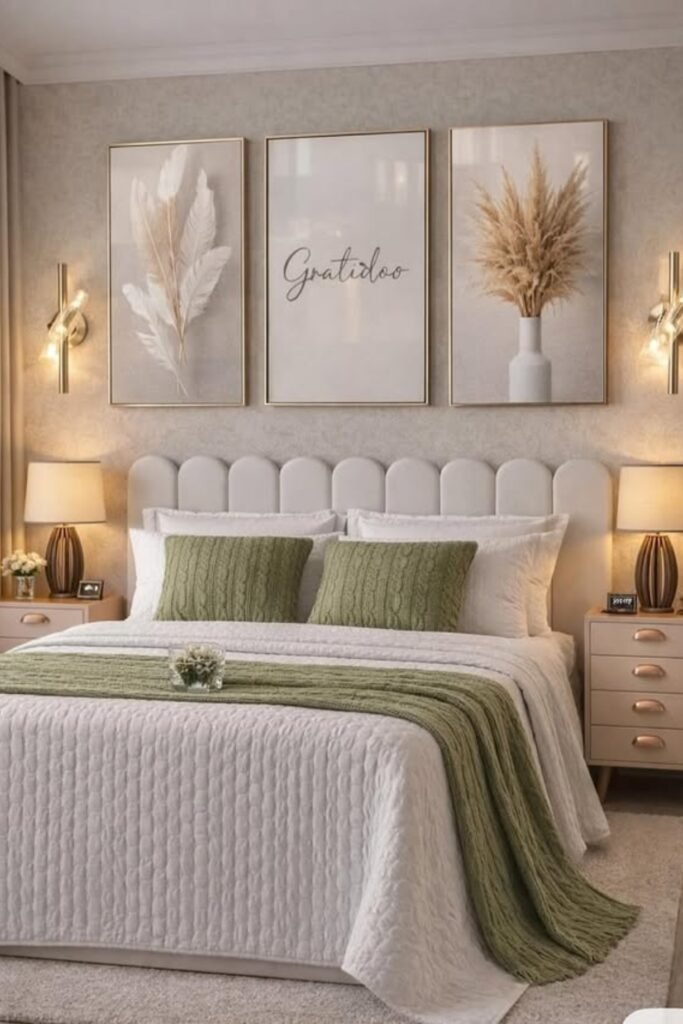
This keeps the balance right. For large empty walls, avoid tiny frames because they won’t fill the space properly.
For smaller walls, avoid oversized pieces that make the room feel crowded.
When you are unsure, it’s usually better to go slightly bigger rather than smaller because small art often disappears visually in a bedroom.
4. Choose Colors That Fit Your Room
Wall art should connect with your room’s existing colors instead of fighting them.
Before choosing anything, look at your bedding, curtains, furniture, and wall paint. If your room already has strong colors, it’s safer to choose neutral or soft-toned artwork.
If your room is mostly neutral, you can use wall art to add color and create focus.
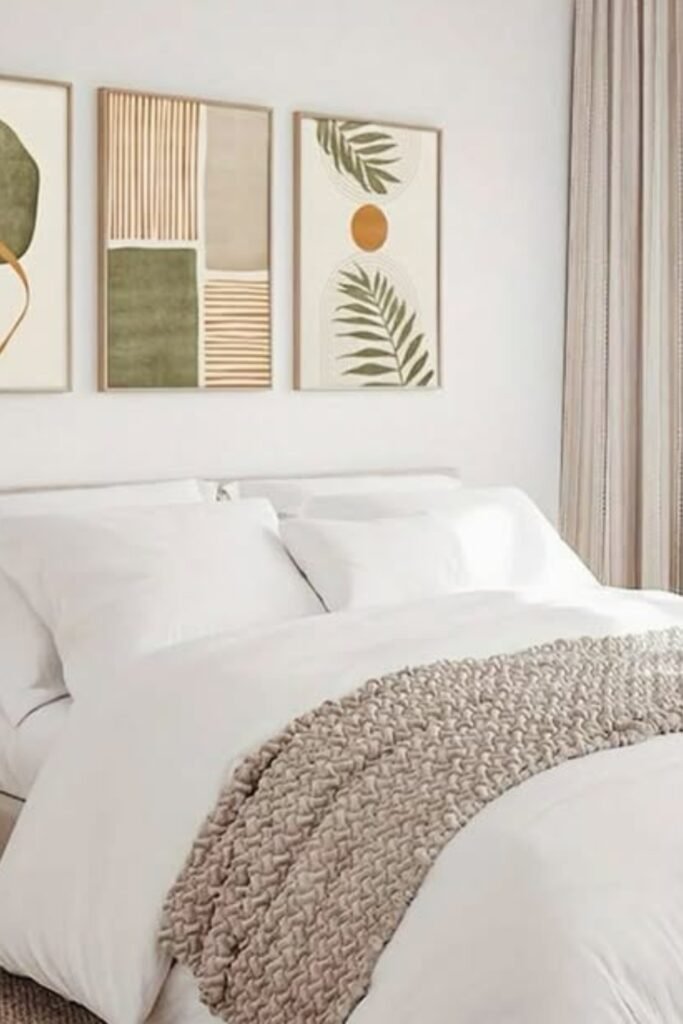
You can either match colors for a calm and blended look or use contrast to create a visual highlight.
If the colors feel random or unrelated to your space, the room will start to feel messy, no matter how nice the artwork is on its own.
5. One Statement Piece or a Gallery Wall
When choosing wall art, you usually end up deciding between one large piece or a set of smaller frames.
A single statement piece works well if you want a clean, modern, and simple look. It creates a strong focal point and keeps the room visually calm.
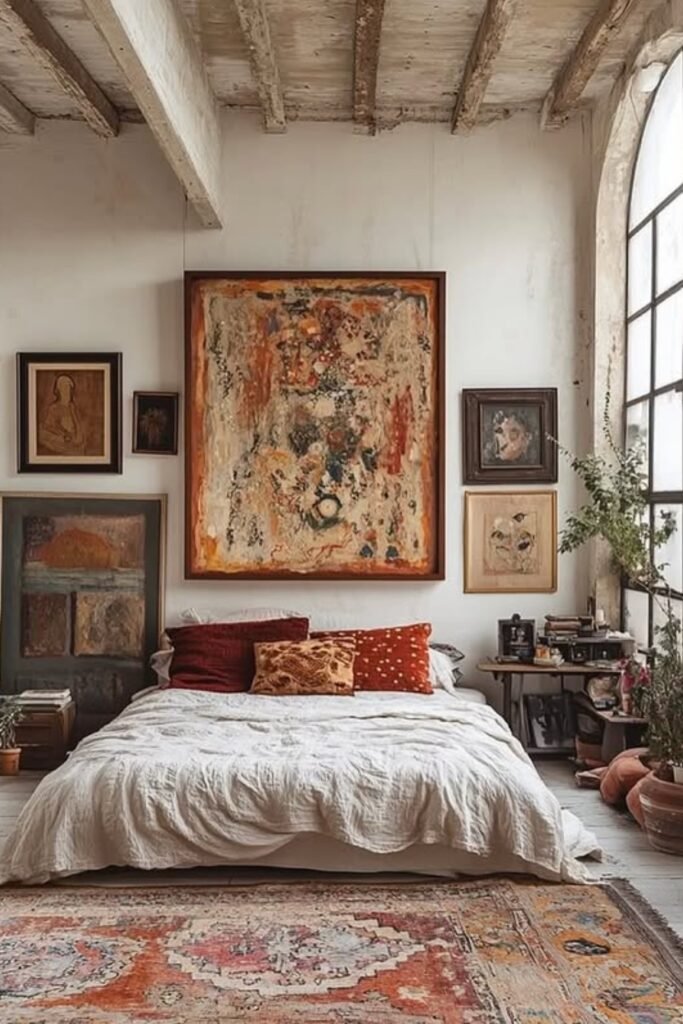
On the other hand, a gallery wall feels more personal and layered. It works well if you want to mix memories, styles, or create a more creative feel.
Both options are good, but the important thing is not to mix them randomly.
Pick one direction and stick with it so your wall feels intentional instead of cluttered.
6. Avoid Common Mistakes People Make
Most people don’t end up with bad wall art because of taste, they end up there because of simple mistakes.
One of the biggest mistakes is choosing art that is too small for the wall. Another is copying Pinterest ideas without checking if the same layout fits their own room.
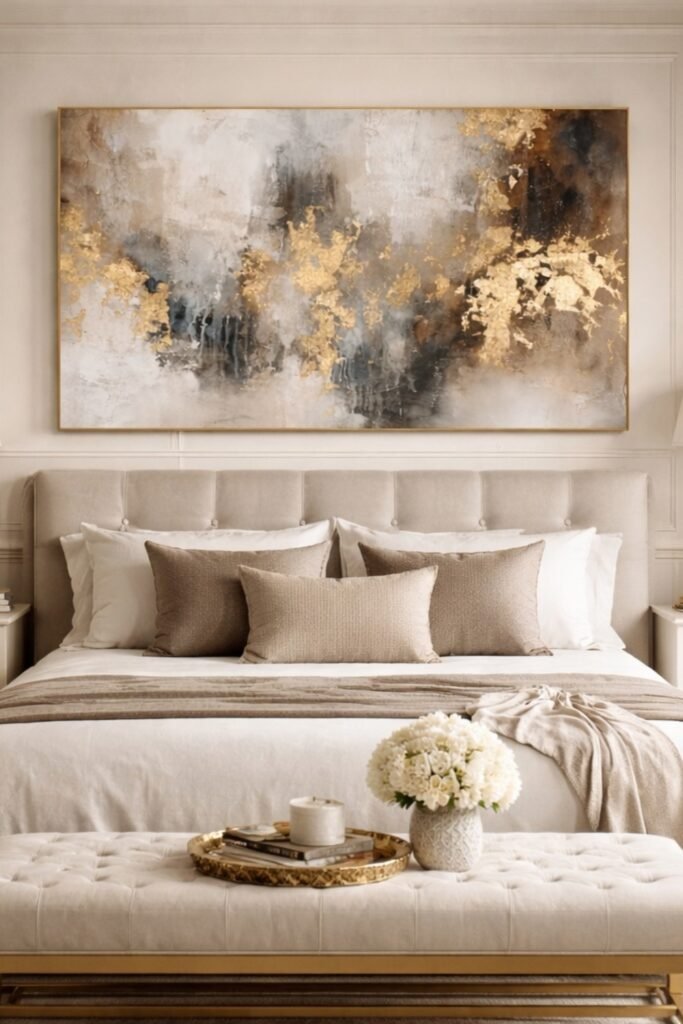
People also often mix too many styles in one space, which makes the room feel confused.
Hanging art too high or too low is another common issue that throws off the balance.
If you avoid these basic mistakes, even simple wall art can look well-designed in your bedroom.
7. Place Wall Art at the Right Height
Placement matters just as much as the artwork itself. A simple rule is to hang wall art at eye level when standing, so it feels natural in the space.
If you are placing it above the bed, don’t push it too close to the ceiling and don’t leave too much empty space between the bed and the frame.
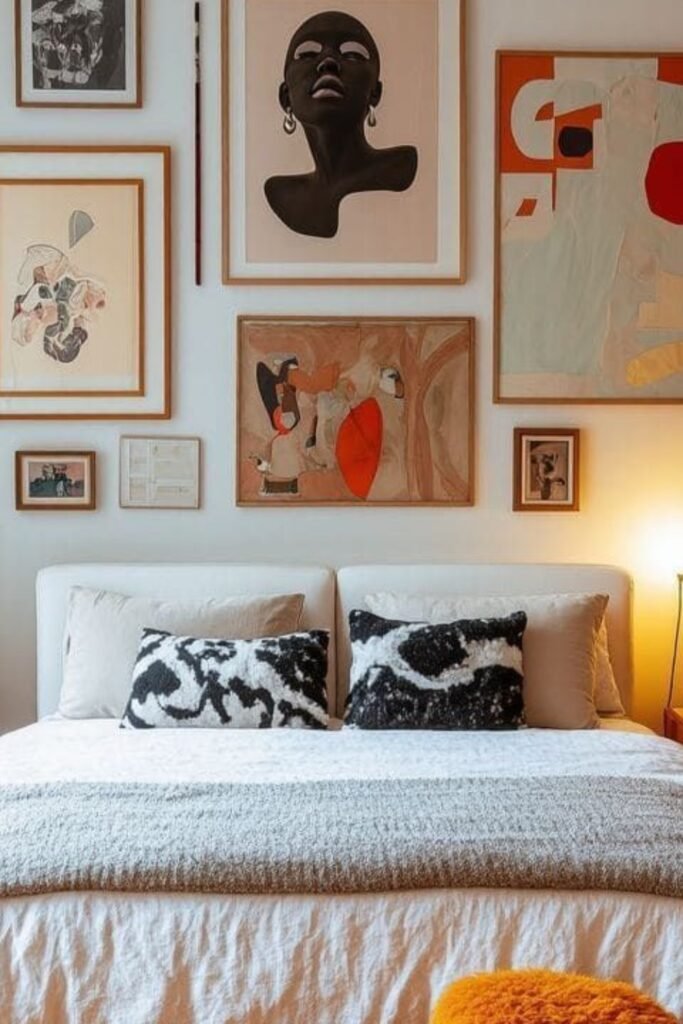
It should feel connected to the furniture below it. Also make sure it is centered properly.
Even good artwork can look wrong if it is slightly off-center or uneven, so placement should always be done carefully.
What Makes a Bedroom Wall Art Choice Feel Balanced Instead of Random?
A wall art choice feels balanced when it connects with the rest of your bedroom instead of standing out without purpose.
Most people think balance is about choosing something “nice,” but it’s actually about how everything works together.
If your wall art matches the size of your furniture, fits the color tone of your room, and feels aligned with your bedroom style, it naturally looks placed with intention.
When balance is missing, even a beautiful piece can feel random.
This usually happens when the art is too small for the wall, placed off-center, or uses colors that don’t relate to anything else in the room.
On the other hand, when the scale, placement, and colors are in harmony, the wall art feels like it belongs there from the start.
So instead of asking, “Do I like this piece?” also ask, “Does this connect with my room or feel like it was added separately?”.
That simple check makes the biggest difference in how your bedroom looks.
How Can You Tell If a Wall Art Style Will Still Look Good After You Live With It for a While?
A wall art style looks good long-term when it doesn’t depend on trends or temporary excitement.
Many people choose something because it looks attractive in the moment, but after a few weeks, it starts feeling boring or out of place.
The key is to choose something that still feels natural even when you stop noticing it every day.
One simple way to judge this is to ask yourself if the style matches your personality and room mood, not just current design trends.
Neutral tones, simple abstract designs, or nature-inspired pieces usually last longer because they don’t feel tied to a specific time or trend.
Another sign of a lasting choice is emotional comfort. If the artwork feels calming or familiar instead of overwhelming or too loud, you are less likely to get tired of it.
Wall art should blend into your daily life, not constantly demand attention.
If you can imagine seeing it every day for months and still feeling okay with it, that’s usually a good sign you’ve made a stable choice.
Conclusion
Choosing wall art for your bedroom is not about picking something that just looks good online.
It’s about making sure it actually fits your space, your style, and the way you want your room to feel every day.
If you slow down and follow a simple order mood, style, size, color, and placement you remove most of the confusion people usually face. You stop guessing and start making clear choices.
At the end of the day, your bedroom should feel comfortable to you. Not too busy, not random, and not forced.
The right wall art doesn’t just fill an empty wall it pulls the whole room together and makes it feel complete.
You may like to read!
