
24 Marble Bathroom Ideas
Marble can make a bathroom look beautiful fast, but use too much and the room can start feeling cold, busy, or hard to live with.
Soft veining, warm metals, natural wood, and simple fixtures can make marble feel more inviting while giving the room a polished, layered look.
In this article, you’ll find marble bathroom ideas that help you create a warm, stylish, and practical space without overdoing the stone.
Let’s jump in!
Is Marble Good For The Bathroom?
Yes, marble can work very well in a bathroom, but you need to use it in the right places and choose the right finish.
If you want marble on the floor, avoid very slippery polished finishes and look for something with better grip, especially near the shower.
Natural marble can stain or etch, so wipe spills quickly, use stone-safe cleaners, and check whether your chosen marble needs sealing.
If you want the same look with less upkeep, marble-look porcelain can be a smarter choice for shower walls, floors, or busy family bathrooms.
The best approach is to match the material to how you actually use the bathroom, not just how good it looks in photos.
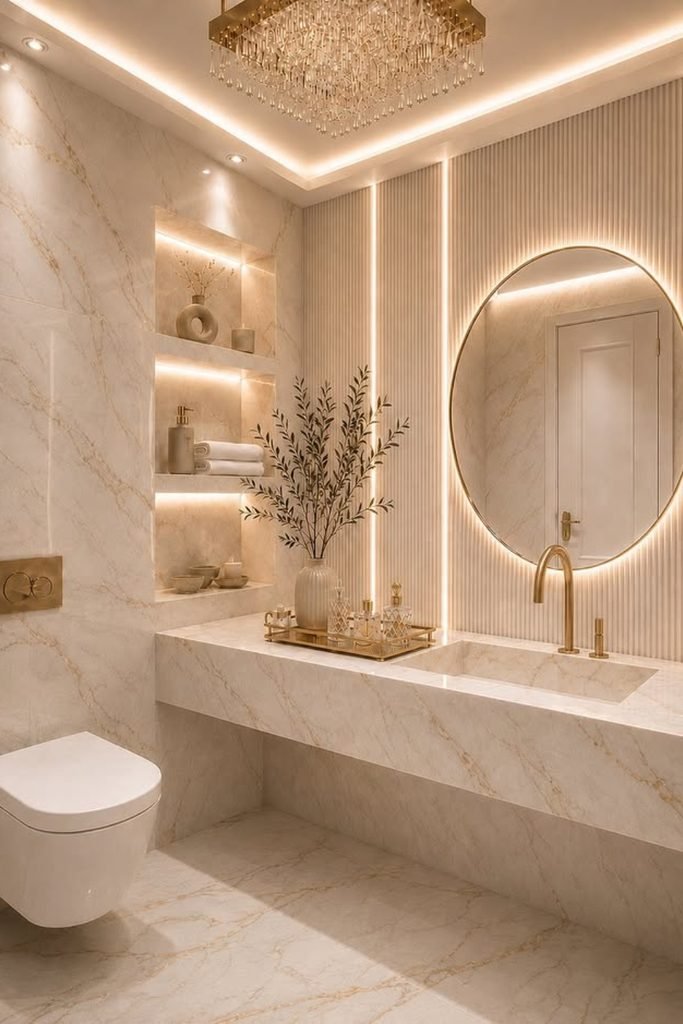
Cream Glow
Too much pale marble can feel flat, so warm lighting and ribbed wall panels give the bathroom depth without adding another pattern.
If you want this polished look, keep the marble veining soft and repeat brass through the tap, mirror, and ceiling fixture.
Built-in lit niches work especially well beside a floating vanity, giving everyday storage a cleaner place while keeping counters visually calm.
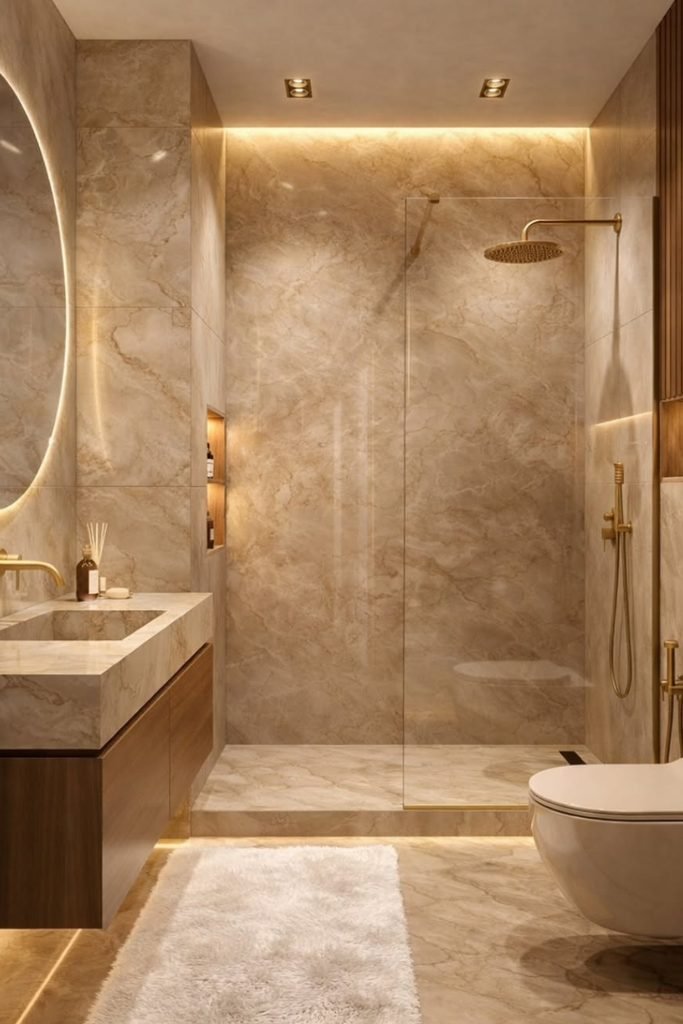
Walnut Warmth
Beige marble is easier to live with visually when you want luxury without the cool, bright feel of an all-white bathroom.
Pair it with dark wood cabinetry and brushed brass fixtures, then use glass around the shower so the room stays open.
Recessed lighting along the ceiling and vanity base adds warmth at night, while large marble panels reduce the number of distracting joints.
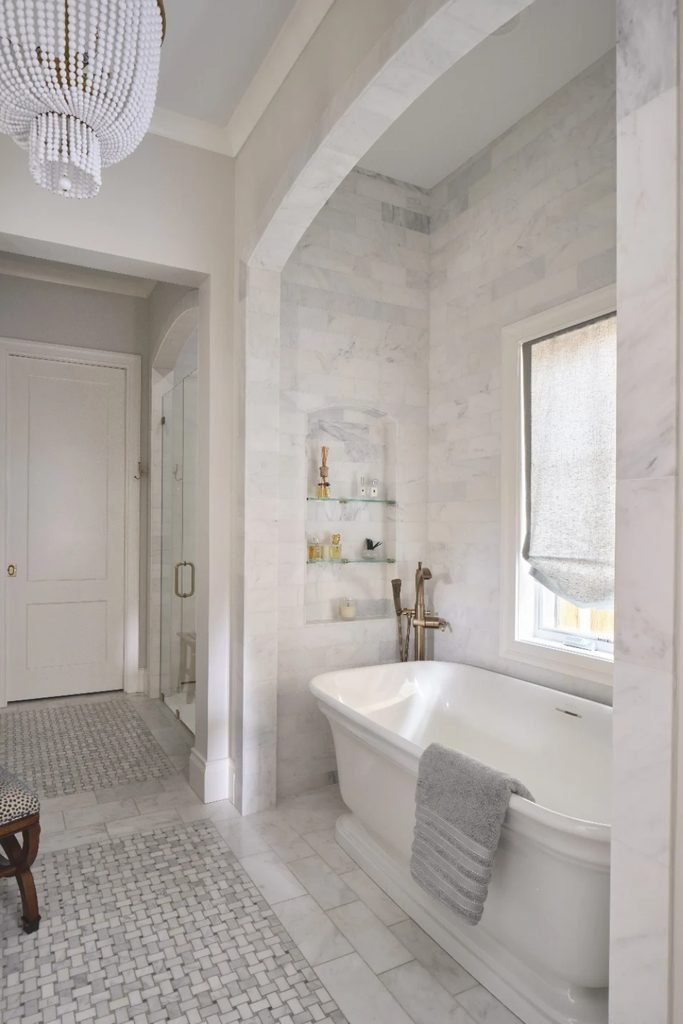
Arched Retreat
If you love a traditional bathroom, use marble as the architectural frame rather than covering every surface with bold veining.
A freestanding tub, arched opening, and small-scale mosaic floor create character, while the pale stone keeps the narrow layout feeling light.
This approach suits longer bathrooms especially well because repeating marble around doorways, floors, and niches helps separate zones without heavy visual breaks.
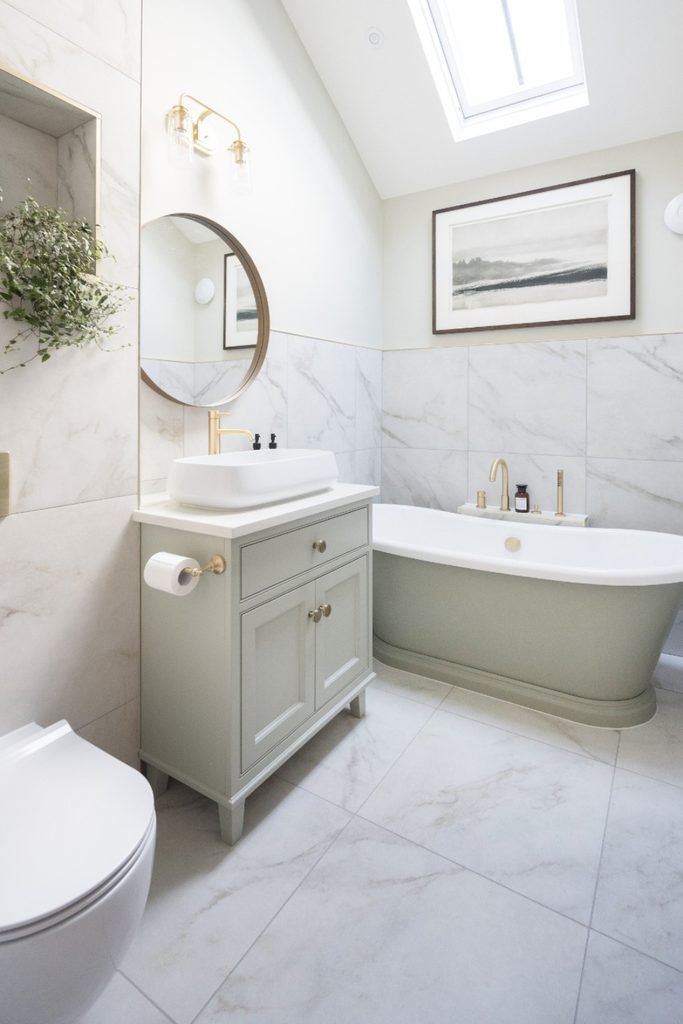
Sage Balance
Small bathrooms need contrast, not more surfaces, so pair pale marble with a muted sage vanity or tub to break up the white.
Keeping marble at half-wall height gives you the stone look without crowding the room, while painted walls make the ceiling feel taller.
If you have a skylight or strong daylight, soft green and brass will warm the gray veining without making the scheme feel busy.
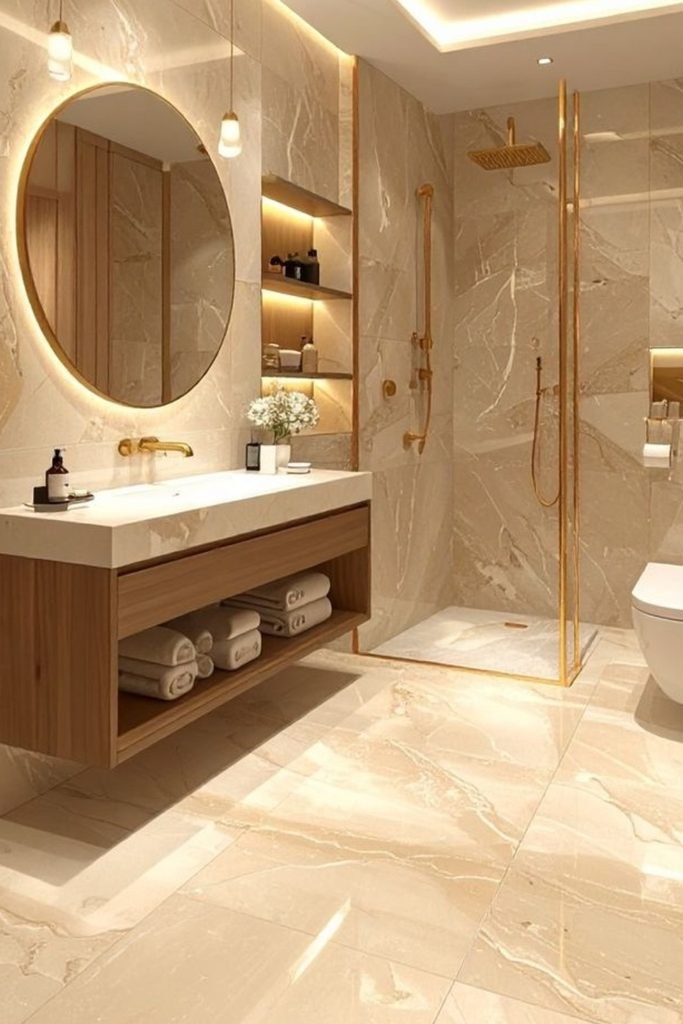
Honey Veining
Warm beige marble works best when you want a rich bathroom without the sharp contrast that bright white stone can sometimes create.
Use medium wood on the vanity, then repeat brushed brass on the taps, shower frame, and mirror for a balanced finish.
Keep the lighting warm and layered because soft ceiling light will pull out creamy veining while stopping the room from feeling flat.
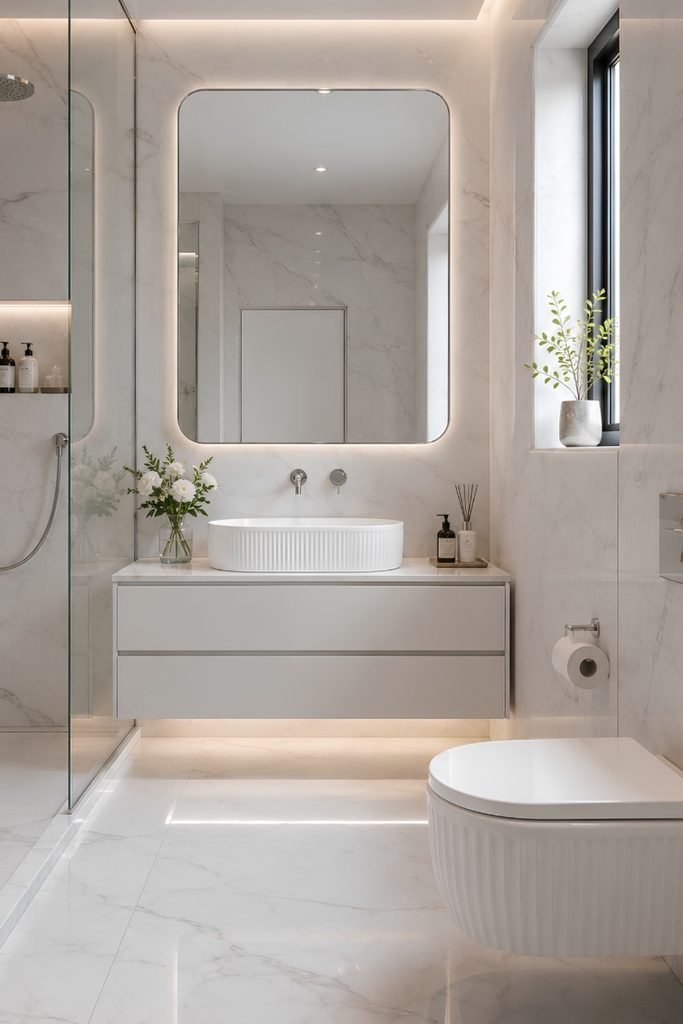
Seamless White
When marble already covers most surfaces, choose very soft veining and simple fittings so the bathroom stays calm instead of visually overloaded.
A floating vanity and clear shower screen are especially useful in smaller rooms because they keep more floor visible and improve flow.
If you want this clean look, keep chrome or nickel hardware consistent and let one mirror provide the main decorative shape.
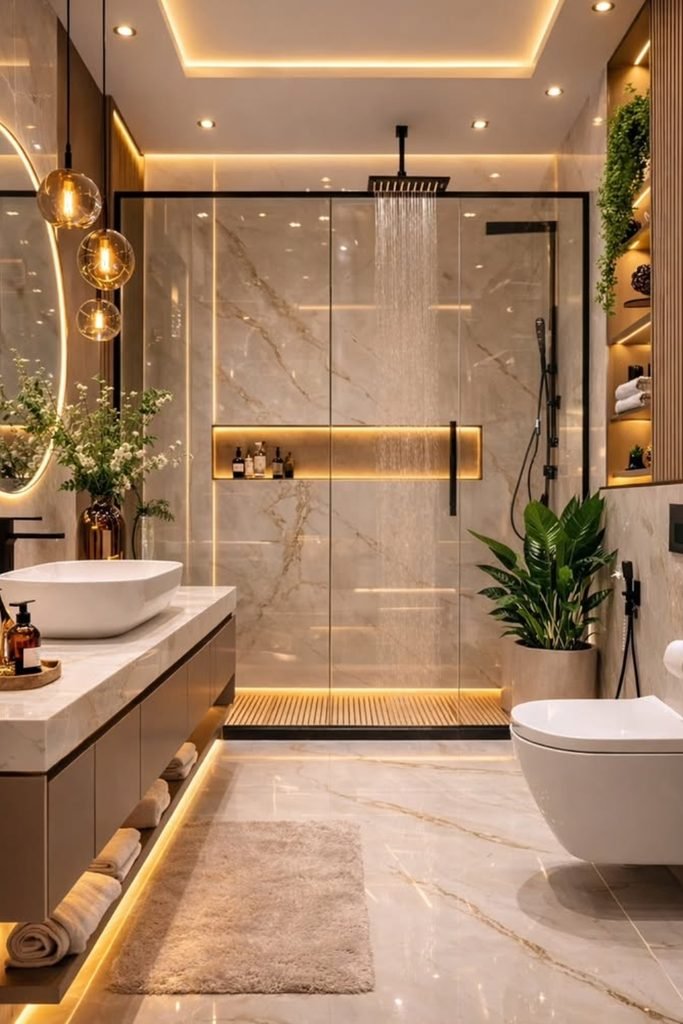
Amber Layers
Marble feels much less formal when you mix it with black framing, warm wood slats, and a few strong green plants.
Use this combination in a larger bathroom where layered lighting can highlight separate zones without making every surface compete for attention.
Keep the marble pattern fairly quiet, then let the dark shower frame and illuminated niche create contrast where the room needs structure.
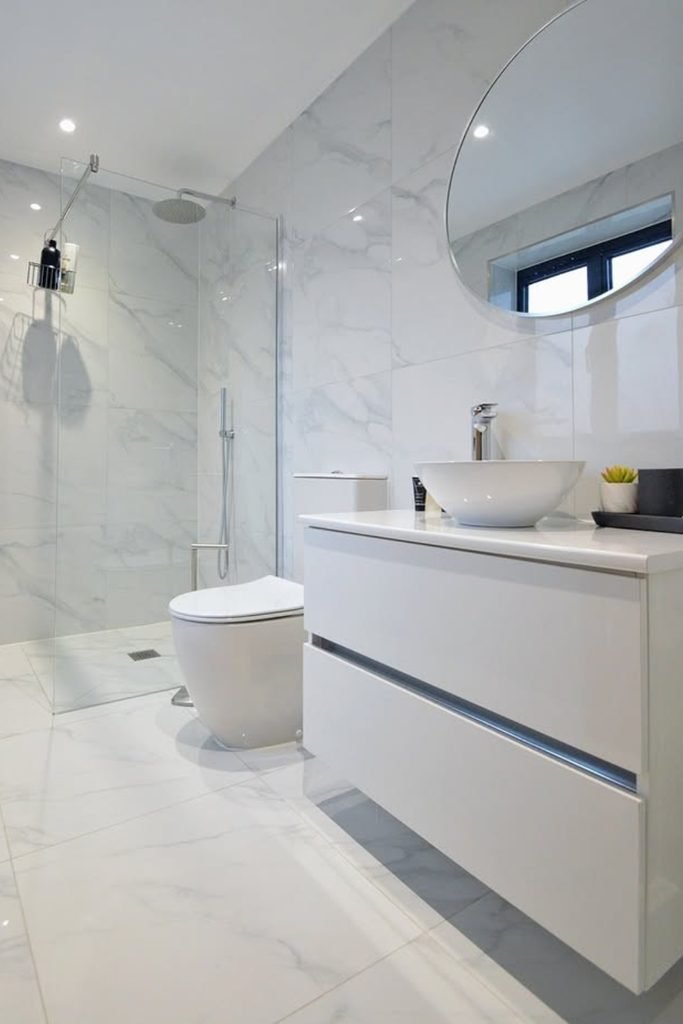
Pure Minimalism
An all-white marble bathroom works best when the veining stays subtle, otherwise a compact room can start looking busier than it is.
Choose large tiles and a frameless shower if you want fewer visual breaks, then keep the vanity front completely plain.
A narrow dark window or small black accessory gives enough contrast to define the space without weakening the clean marble scheme.
Sculptural Stone
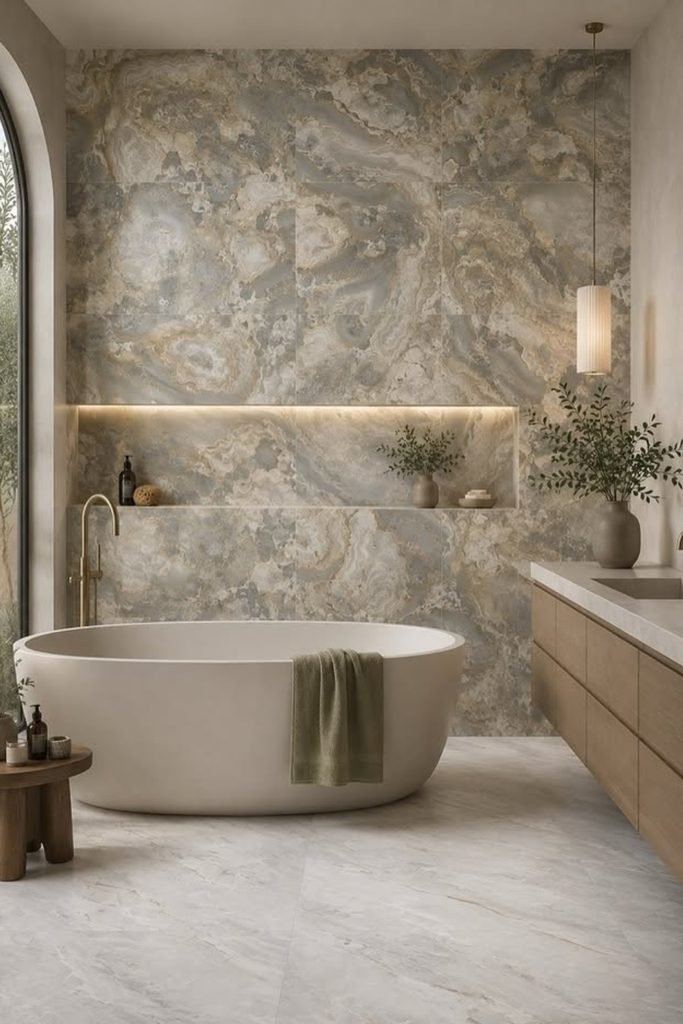
When the stone has this much movement, let one wall do the talking and keep the tub, vanity, and accessories quiet.
This works best in a larger bathroom, where bold marble can become a focal point without making the whole room feel crowded.
Choose warm wood, soft beige flooring, and simple brass fittings so the detailed veining still feels calm instead of overly decorative.
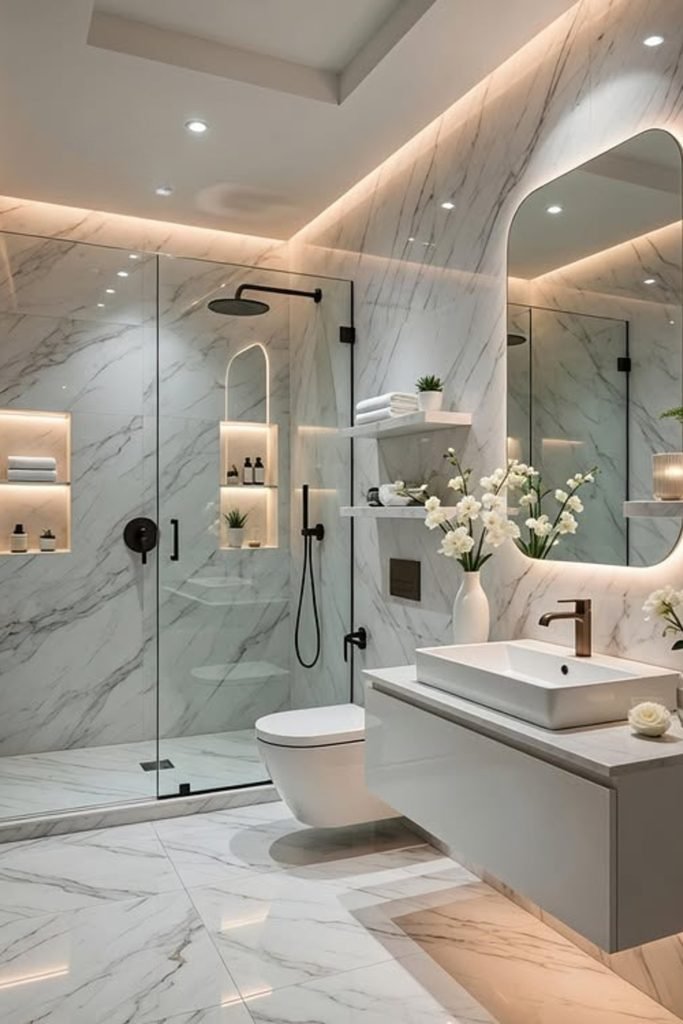
Clean Contrast
White marble can easily disappear into an all-white scheme, so black shower fittings give the room just enough structure and definition.
Keep the vanity and sanitaryware simple, then use softly lit niches to add depth without introducing another color or busy material.
This approach suits modern bathrooms especially well because the contrast sharpens the marble while keeping the overall look bright, open, and easygoing.
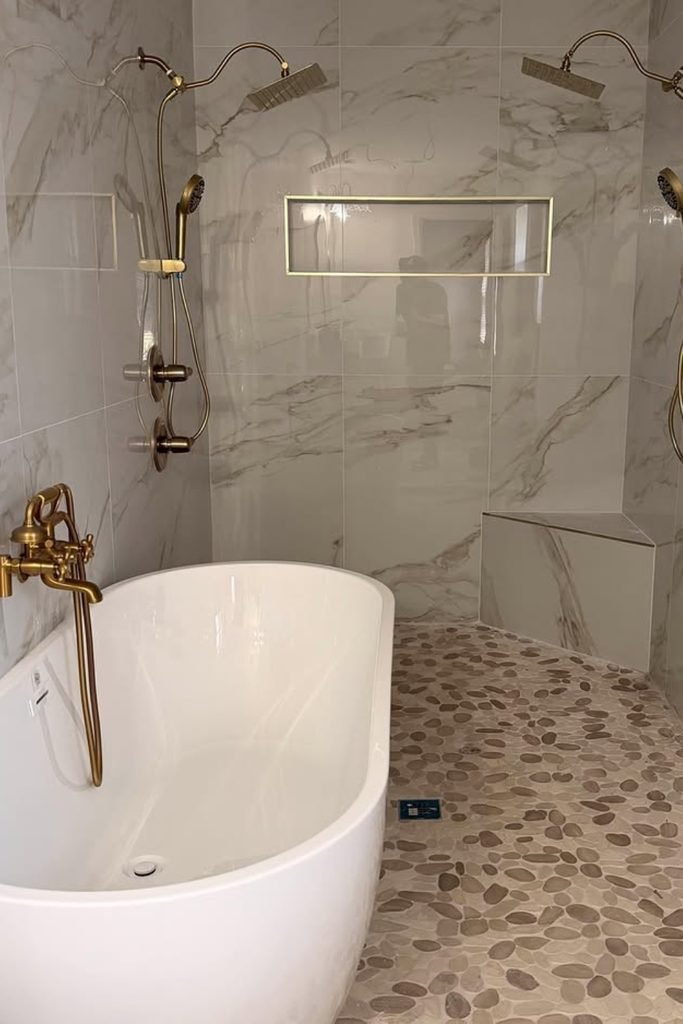
Mixed Texture
A marble bathroom feels less formal when you break the smooth stone with a pebble shower floor and a freestanding tub.
Use this mix in a wet room, where the smaller floor pieces can follow the shower slope more naturally than large tiles.
Keep the wall marble soft and repeat warm metal fixtures on both shower sides so the mixed textures still feel pulled together.
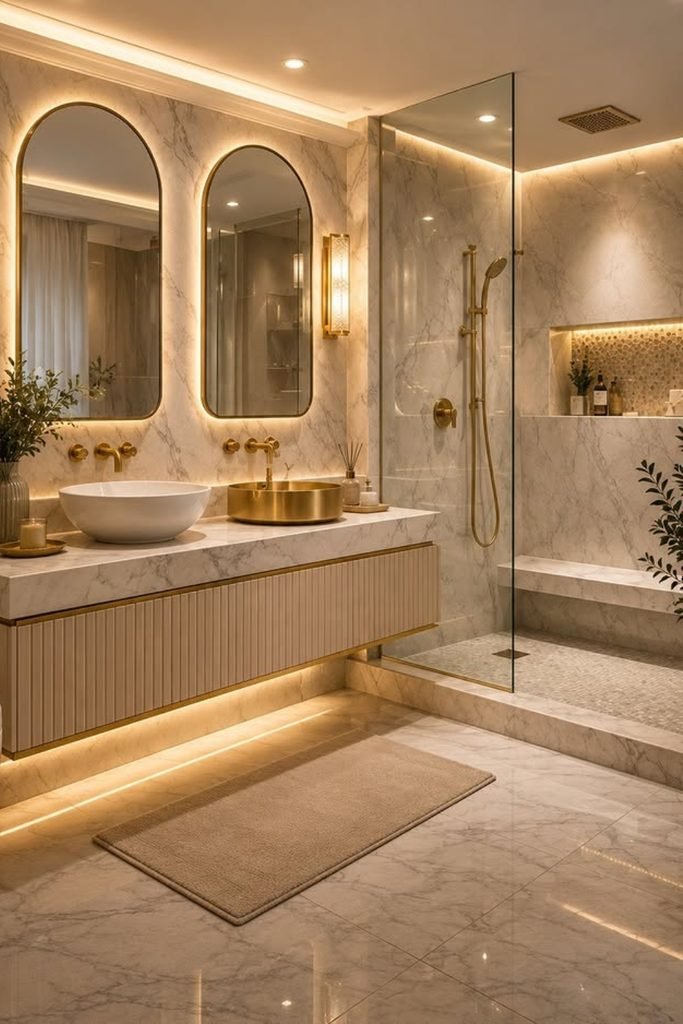
Double Vanity
Two sinks can make a marble bathroom feel busier, so matching mirrors and repeated brass details help both sides read as one.
If you have a shared bathroom, keep the vanity long and floating, then use under-cabinet lighting to make the footprint feel lighter.
A mosaic shower niche is a smart place to add texture because it breaks up marble without competing with the main surfaces.
Cathedral Calm
High ceilings can handle full-height marble beautifully, but keep the veining soft so the room still feels open rather than overwhelming.
A freestanding tub works well here because it breaks the long stone wall and gives the eye one clear resting point.
If you want this grand look, use simple fixtures and one statement light instead of adding more patterns or decorative stone.
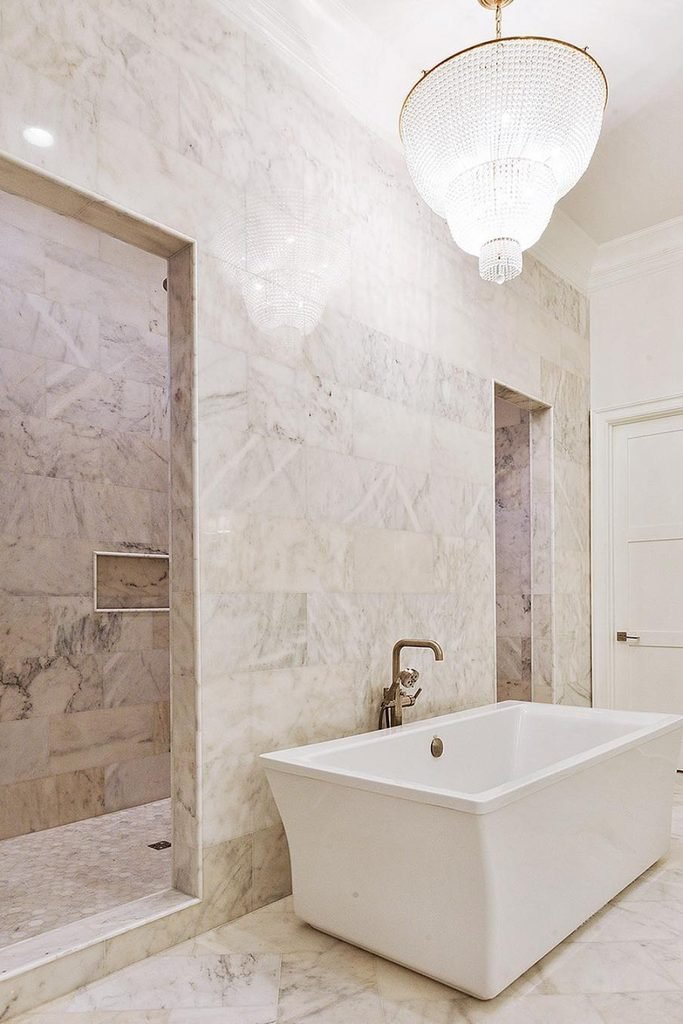
Spa Bench
A built-in marble bench makes a shower feel more useful, especially when you need a place for products, towels, or shaving.
Pair marble on the lower walls with simple white tile above if you want texture without making the shower feel too heavy.
Brass fixtures warm the gray stone nicely, while a glass screen keeps natural light moving through the space instead of closing it.
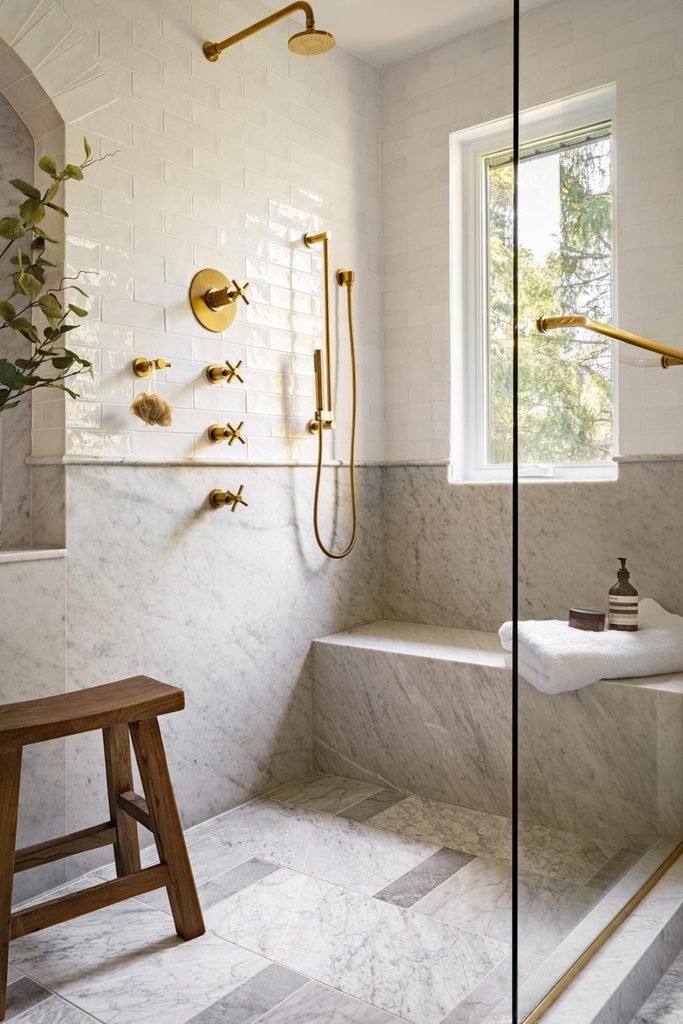
Stone Tub
When the tub already has strong texture, keep the marble behind the vanity limited to panels so both materials can stand out.
Dark wood cabinetry grounds the pale stone and works especially well in larger bathrooms where too many light finishes can feel washed out.
If you want a softer traditional look, add wall molding and warm brass rather than repeating marble across every remaining surface.
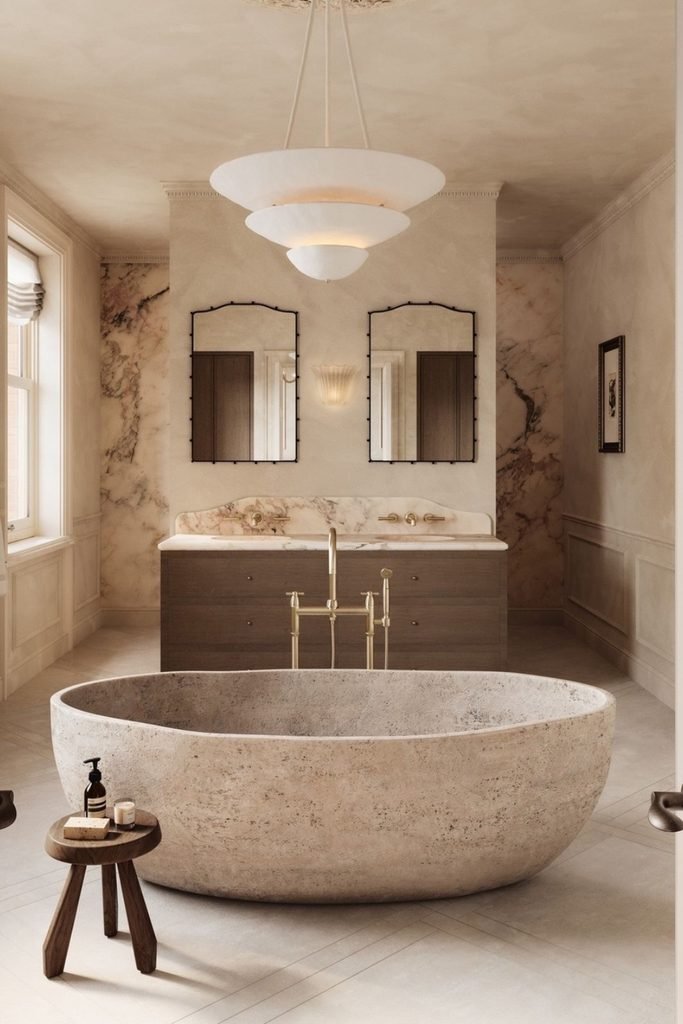
Bold Veining
Strong gray veining can carry a small bathroom on its own, so avoid adding patterned tile or another busy finish nearby.
Use the marble around the tub and floor together if you want continuity, then bring in black details for sharper contrast.
A plain white bathtub gives the eye a break from dramatic stone and stops the compact space from feeling visually crowded.
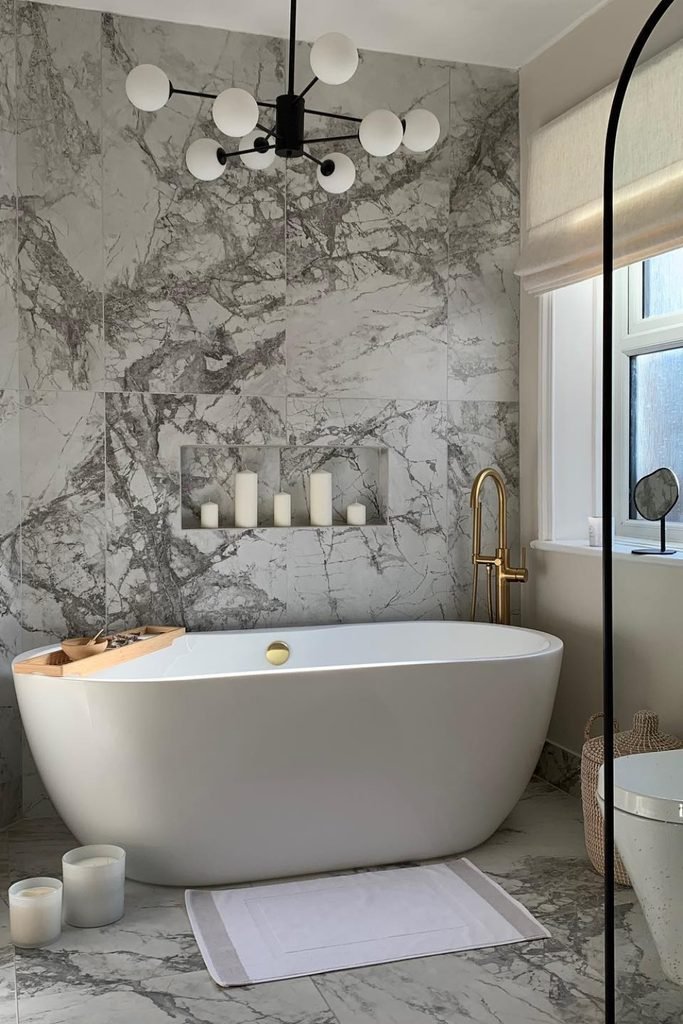
Herringbone Flow
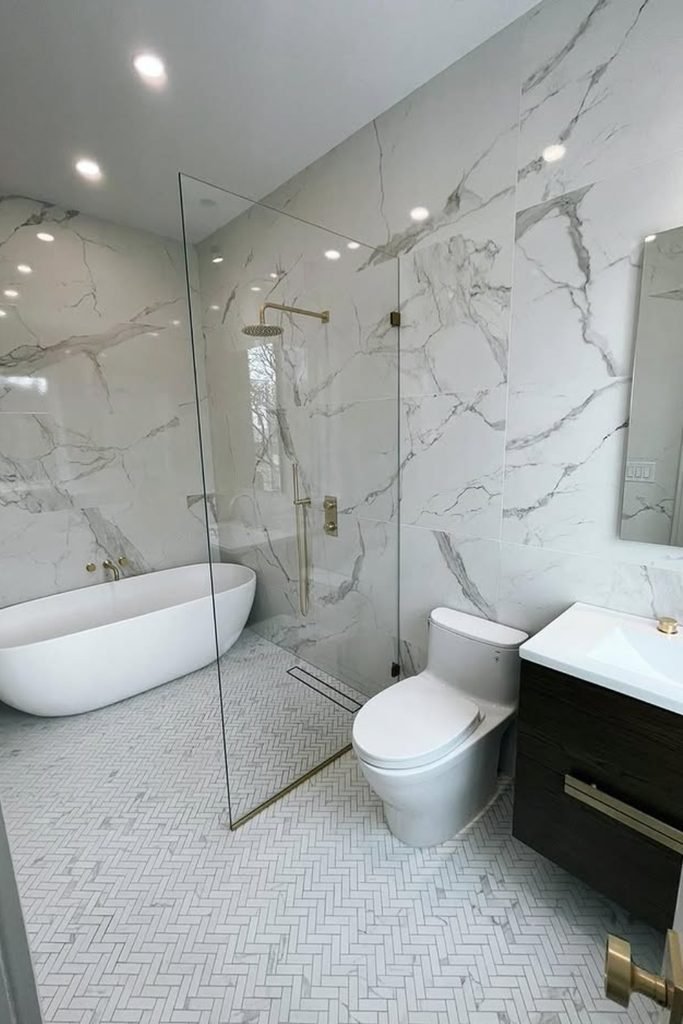
Full-height marble can overwhelm a compact bathroom, so use a small herringbone floor to add texture without introducing another strong color.
A dark vanity gives the pale stone something to contrast with, while brass taps keep the scheme from feeling too cold.
This layout works especially well for narrow bathrooms because clear glass keeps the tub and shower zone visually connected throughout.
Charcoal Mood
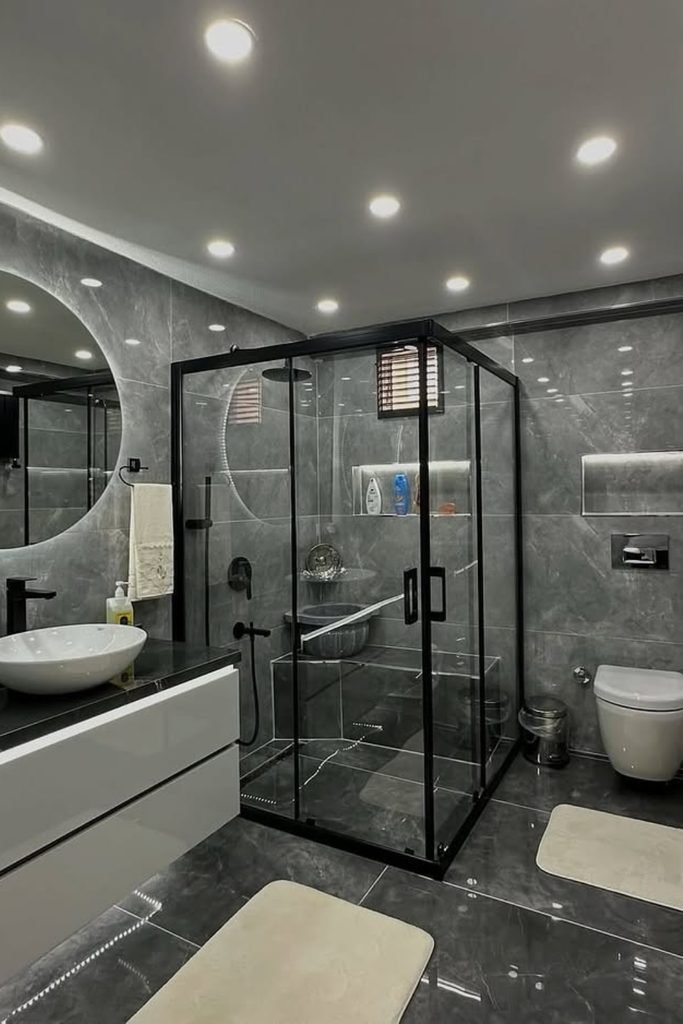
Dark marble needs breathing room, so balance charcoal walls and floors with a white vanity instead of repeating another heavy finish.
Use black shower framing only when you want a sharper modern edge, then keep towels and accessories light for contrast.
Bright ceiling lighting is important here because deep stone absorbs light quickly and can make an enclosed bathroom feel smaller.
Sapphire Shower
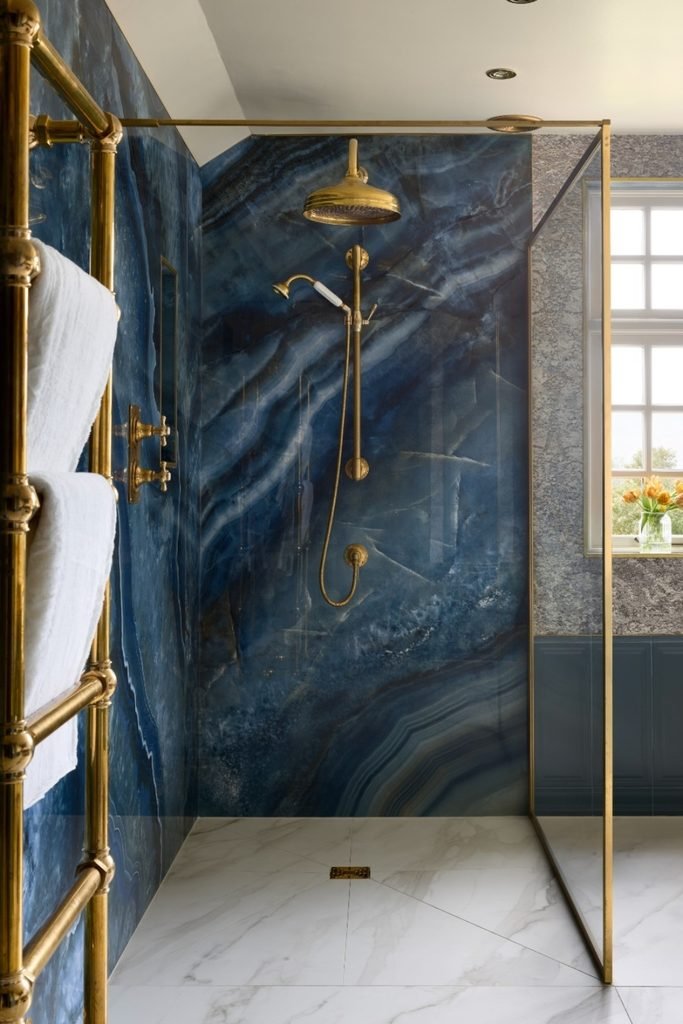
If you want colored marble to feel intentional, carry the blue stone across the shower walls and let brass provide the contrast.
Keep the floor pale and simple, otherwise the strong veining can compete with another dark surface and make the shower feel enclosed.
This look suits bathrooms with good natural light, where deep color can read rich and dramatic instead of visually heavy.
Green Stone
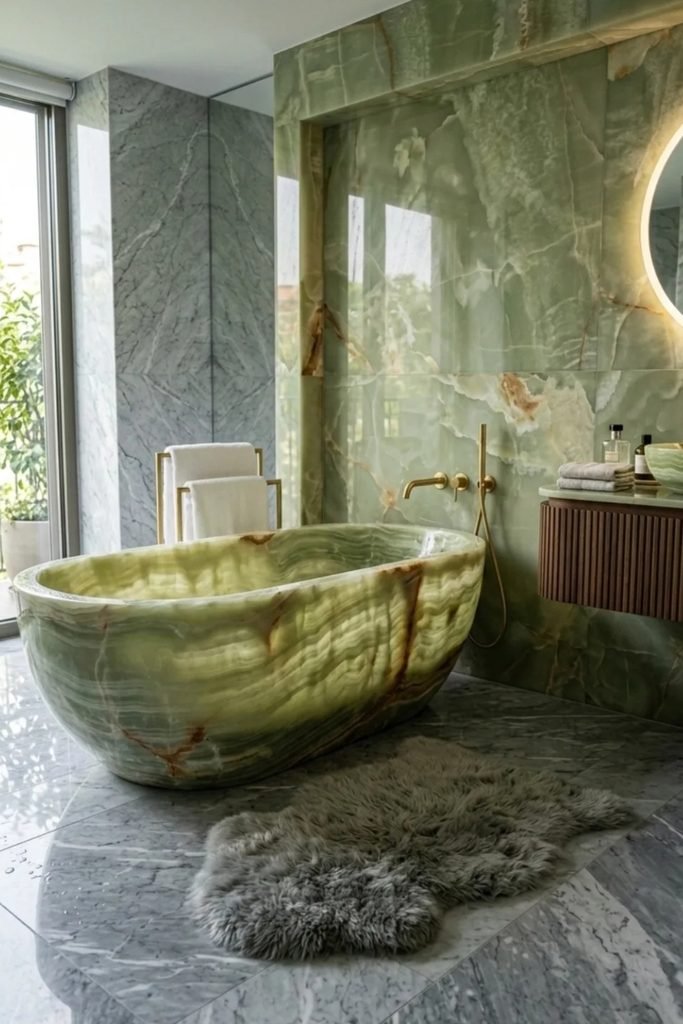
A green stone tub already acts like artwork, so keep nearby cabinetry simple and avoid adding another bold color beside it.
Warm wood and brushed brass are strong partners here because they pick up the earthy tones running through the green surface.
Use this approach in a larger bathroom with plenty of daylight, letting gray marble floors calm the stronger wall treatment.
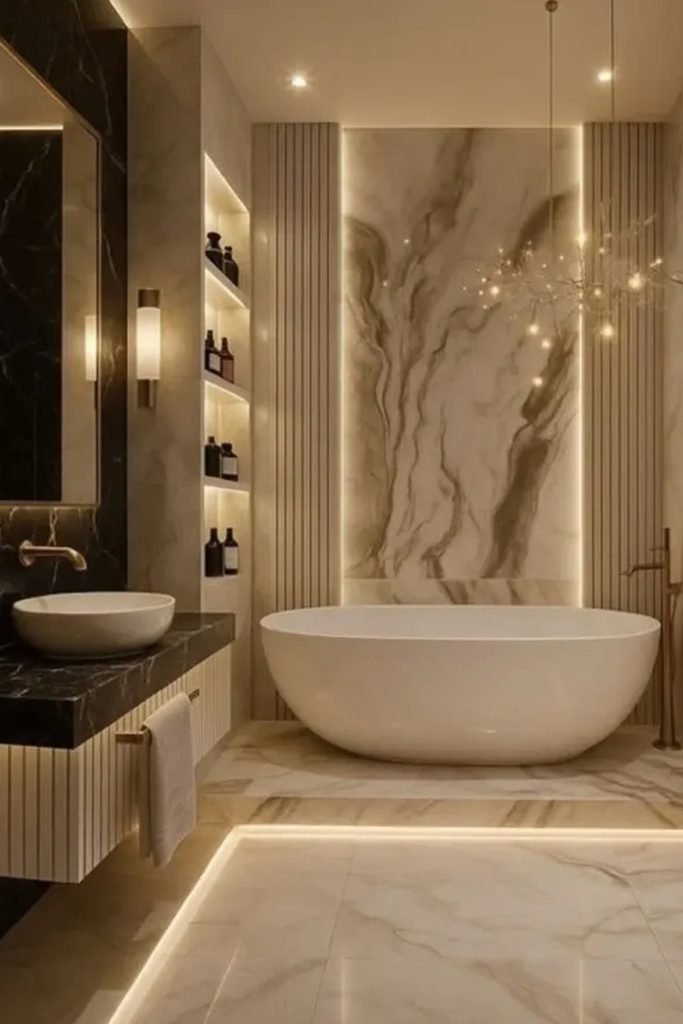
Backlit Slab
If you want dramatic marble without making the whole bathroom dark, place the strongest veining behind the tub as one feature.
Balance that focal wall with pale flooring, ribbed panels, and a black vanity so the room still has clear visual zones.
Warm concealed lighting works best here because it softens the contrast and makes cream marble feel richer instead of flat.
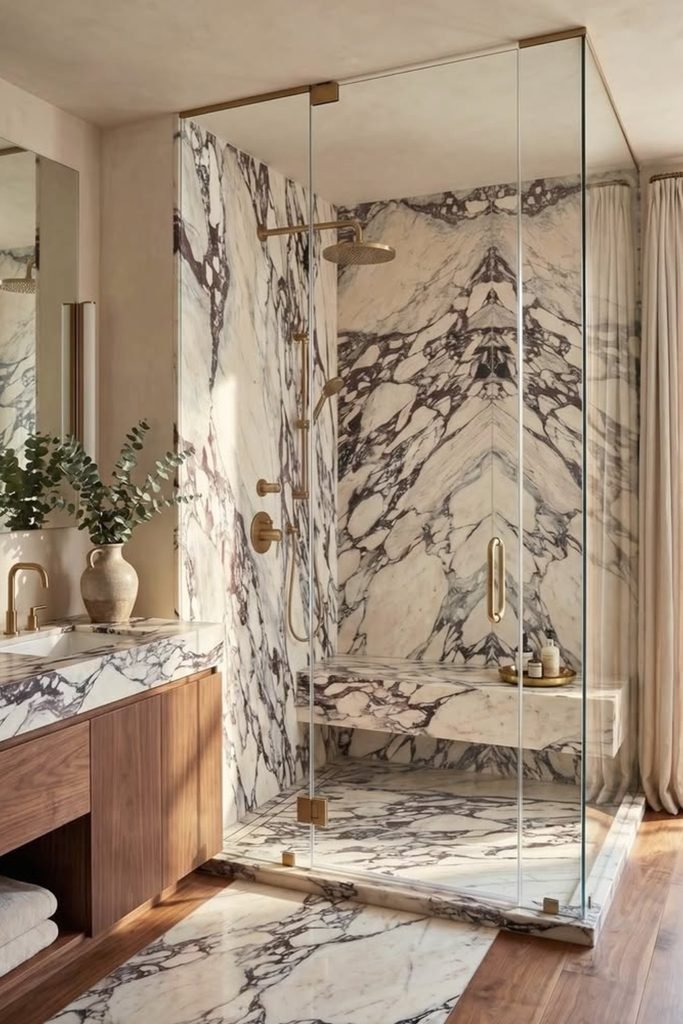
Bookmatched Shower
Bookmatched marble already gives the shower plenty of movement, so keep the vanity simple and let the veining become the main feature.
Use warm walnut and brushed brass nearby to soften the black veins, especially if the stone continues onto the bathroom floor.
This treatment suits a larger shower best, where glass walls can show the slab pattern clearly without closing off the room.
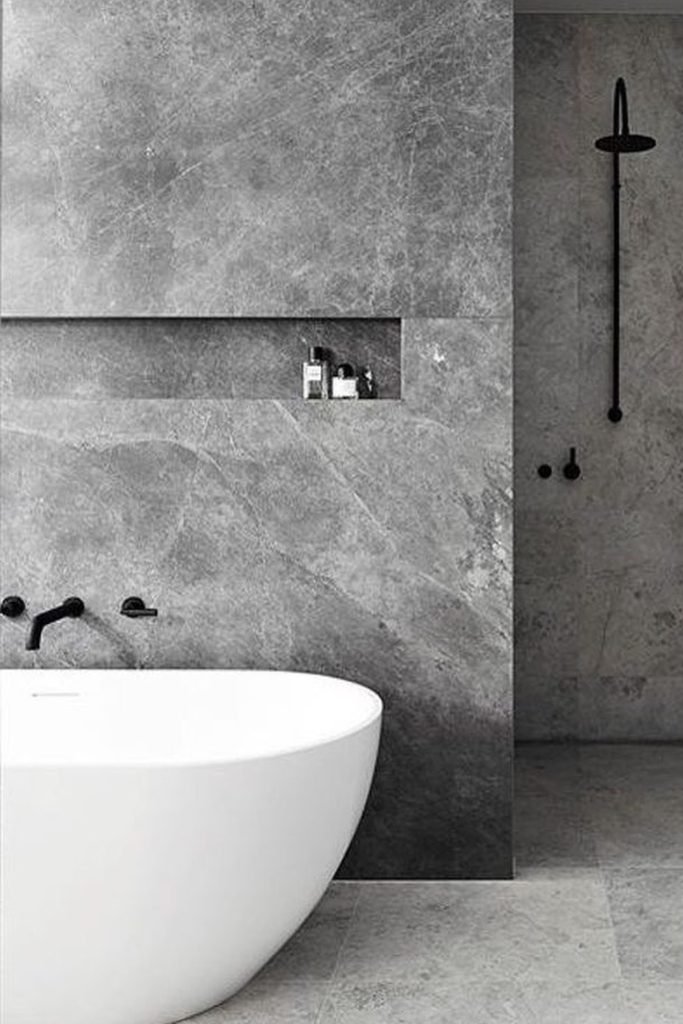
Monochrome Stone
Gray marble can feel heavy fast, so use one white tub and slim black fittings to give the room strong, clean contrast.
Keep the niche flush with the wall and avoid extra shelving, because this look depends on uninterrupted surfaces and simple lines.
This approach works especially well in modern bathrooms where texture, not color, needs to create depth without adding visual clutter.
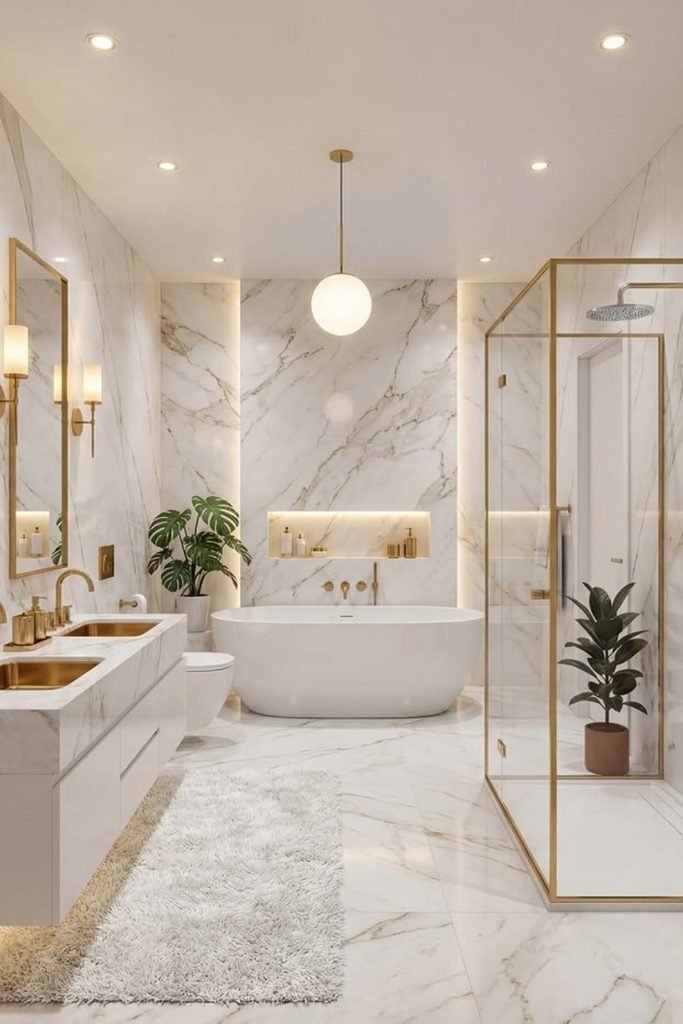
Brass Serenity
When marble covers nearly every surface, choose light veining and repeat warm brass sparingly so the bathroom stays bright instead of busy.
A long double vanity suits shared bathrooms, while the open shower frame keeps the layout feeling connected rather than divided into boxes.
Add only a few green plants or soft textiles for contrast, because too many accessories will compete with the marble pattern.
FAQs
Should marble be polished or honed in a bathroom?
Polished marble gives walls a brighter, reflective finish, but it can feel slippery underfoot when water reaches the floor regularly.
For shower floors or busy family bathrooms, a honed finish usually makes more sense because it offers a softer, less glossy surface.
You can still use polished marble on walls or vanity areas, then switch finishes where extra grip matters most underfoot.
Can you mix marble with other bathroom tiles?
Yes, and mixing materials often keeps marble from taking over the room, especially when the veining is strong or the space is small.
Use marble on one focal wall, vanity, or shower zone, then bring in simple ceramic, porcelain, or painted surfaces nearby.
The safest mix is to repeat one color from the marble elsewhere, so the materials feel connected instead of randomly combined.
