
21 Burgundy Kitchen Ideas
Burgundy has a way of making a kitchen feel warmer, richer, and far more memorable than the usual neutral palette.
Use it on cabinets, an island, walls, or smaller details, and the whole room can take on a completely different character.
In this article, you’ll find burgundy kitchen ideas that show how to use this deep color in fresh, balanced, and practical ways.
Let’s jump in!
What Color Does Burgundy Not Go With?
Burgundy can work with many colors, but very bright shades like lime green, neon yellow, and sharp orange can make the kitchen feel too busy.
Cool blue-gray can also clash if your burgundy has warm brown or red undertones, so compare both colors in your actual kitchen light first.
If you want a softer look, use cream, warm white, beige, muted pink, olive, or natural wood instead of highly saturated colors.
Bright green can also create a strong seasonal look, especially when you use equal amounts of green and burgundy across the room.
The safest approach is to let burgundy lead, then keep the surrounding colors quieter so your cabinets, counters, and flooring do not compete.
Balanced Burgundy
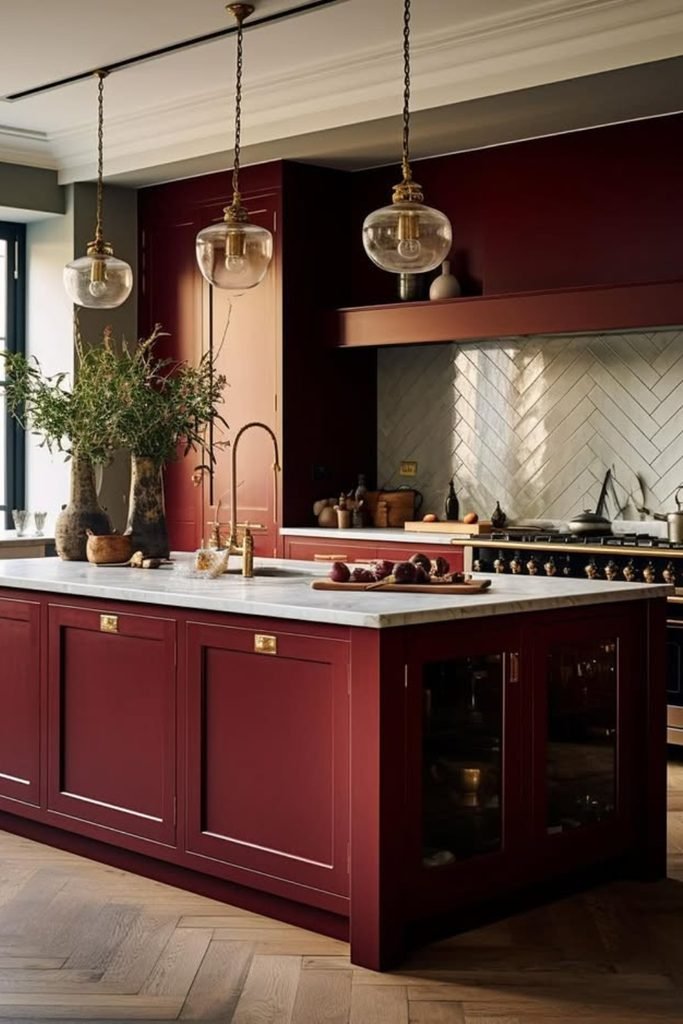
Use burgundy across both the island and perimeter when your kitchen has enough daylight to keep the deep color feeling balanced.
A pale stone worktop breaks up the cabinetry, while a light herringbone backsplash lifts the cooking wall without weakening the burgundy.
Finish with aged brass lighting and hardware if you want warmth, then keep flooring natural so the room does not become overly formal.
Glass Fronts
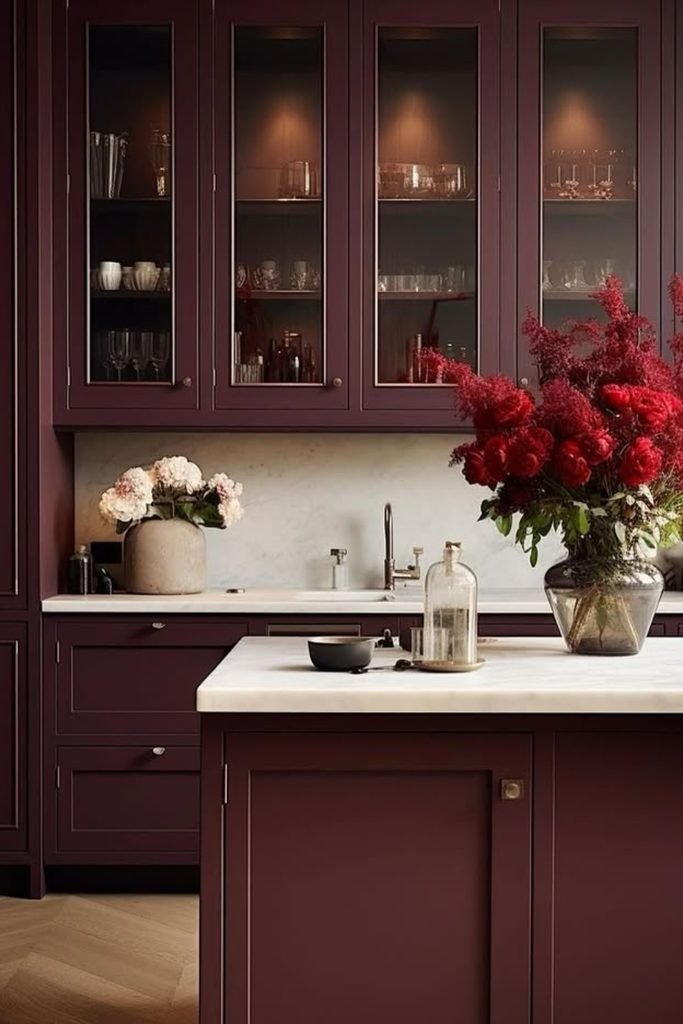
Break up a wall of burgundy cabinetry with glass-front uppers, especially when you want storage to feel lighter without changing the palette.
Keep the shelves dark inside for a seamless look, then use warm internal lighting to stop the upper cabinets from reading flat.
A pale countertop gives your eye a clean pause, which matters most when burgundy covers nearly every cabinet around the room.
Stone Drama
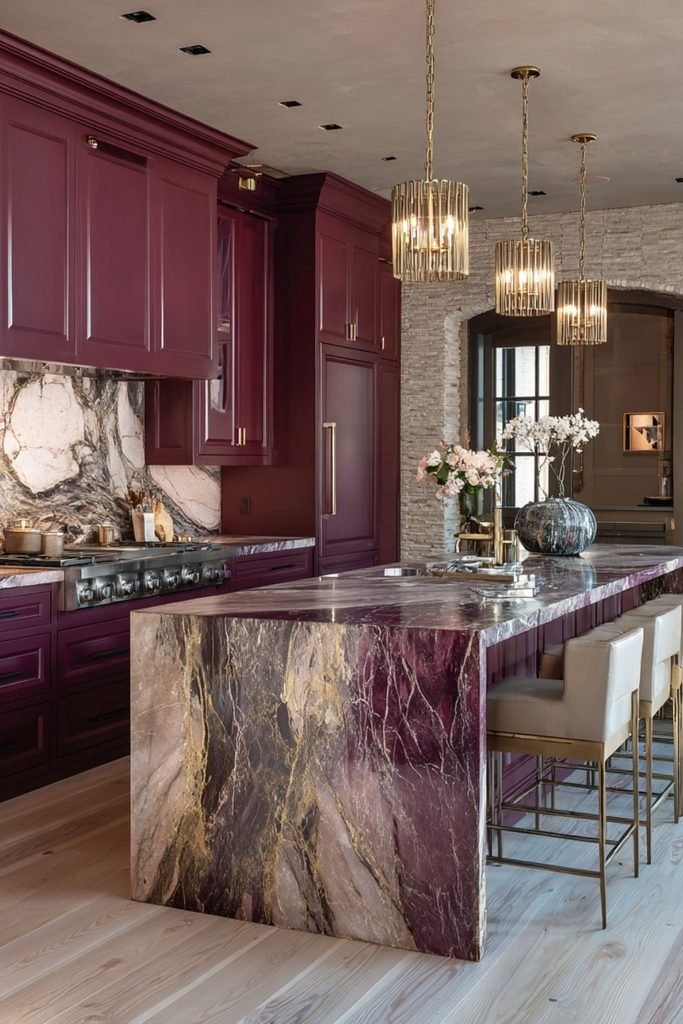
Let dramatic stone do the decorating when your burgundy kitchen already has strong color, rather than adding busy tile or patterned accessories.
Choose a slab with burgundy, cream, or charcoal movement so the worktop connects naturally with the cabinets instead of looking separate.
This approach suits larger kitchens best, where long counters and generous daylight give bold veining enough space to read as intentional.
Cottage Lowers
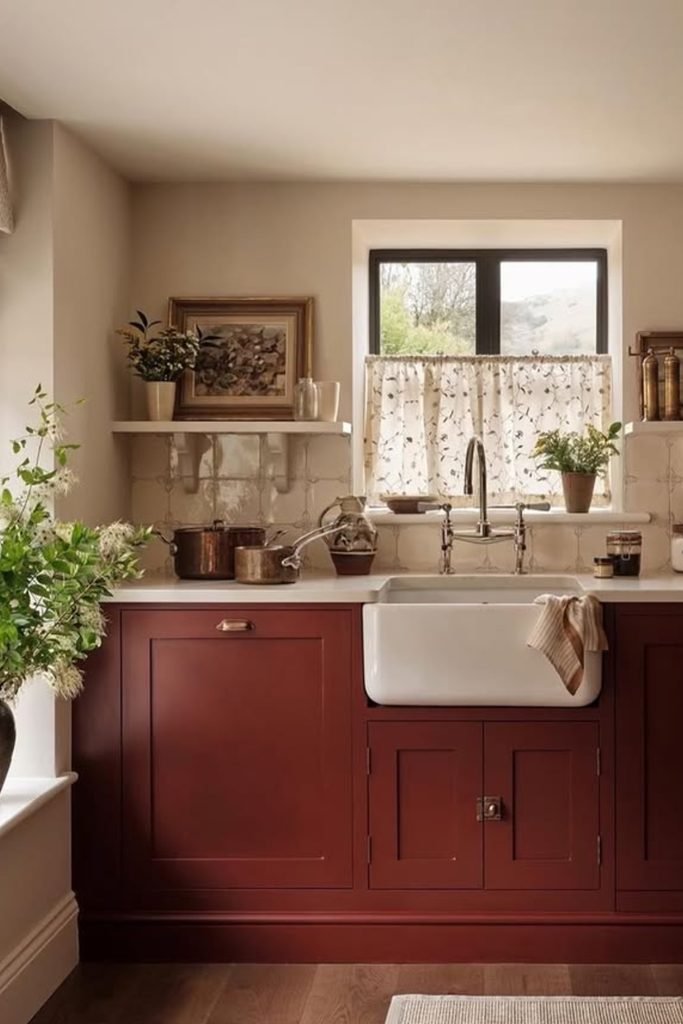
Use burgundy only on the lower cabinets in a smaller kitchen when you want depth without darkening the walls around eye level.
Open shelves, cream walls, and a white farmhouse sink keep the upper half airy, while the cabinet color still grounds the room.
Warm wood flooring and simple brass details suit this softer setup, especially if you want burgundy to feel relaxed rather than formal.
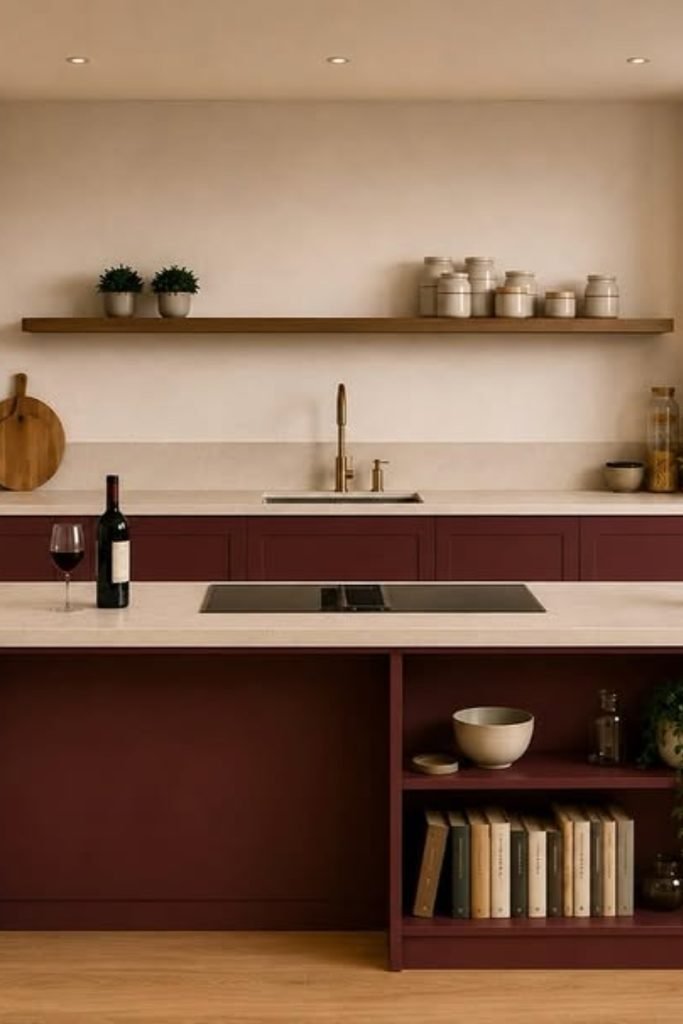
Minimal Burgundy
Keep burgundy streamlined in a modern kitchen by using flat cabinet fronts, clean edges, and only a few visible accessories.
A pale worktop and warm wood floor stop the deep cabinetry from feeling severe, while still keeping the room calm.
Use open shelving sparingly, then match your tall appliance cabinets to the same burgundy so the layout reads as one design.
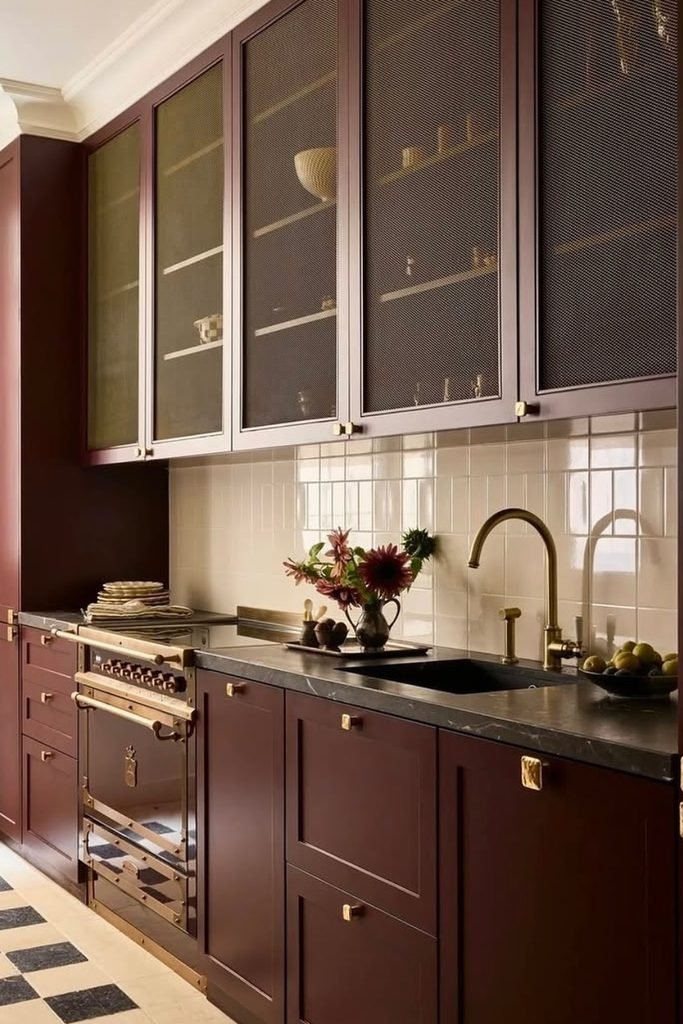
Mesh Cabinets
Swap solid upper doors for metal mesh when a full burgundy kitchen feels too enclosed but you still want visual depth.
Dark stone counters anchor the lower cabinets, while glossy cream tiles bounce light back across the work zone and soften everything.
Checkerboard flooring gives this rich palette some rhythm, so use it when you want burgundy to feel classic rather than overly formal.
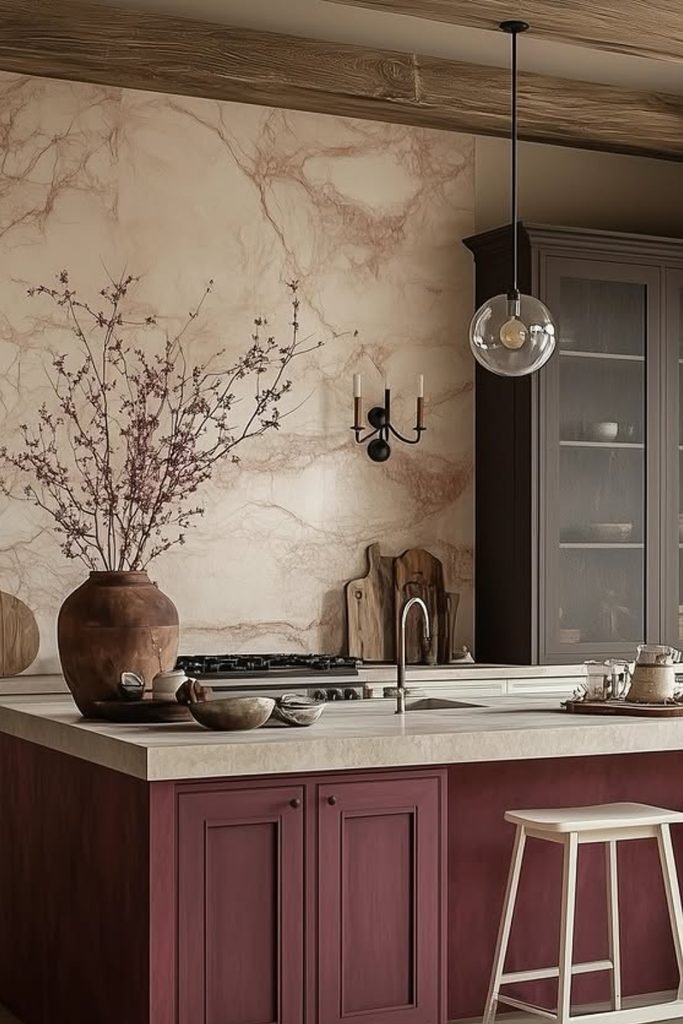
Island Accent
Let the island carry the burgundy when you want the color to stand out without wrapping every wall in the same shade.
Pair it with creamy counters and quieter perimeter cabinetry, then repeat warm wood nearby so the island feels connected, not isolated.
This setup works especially well in open kitchens, where burgundy can define the cooking zone without taking over the adjoining room.
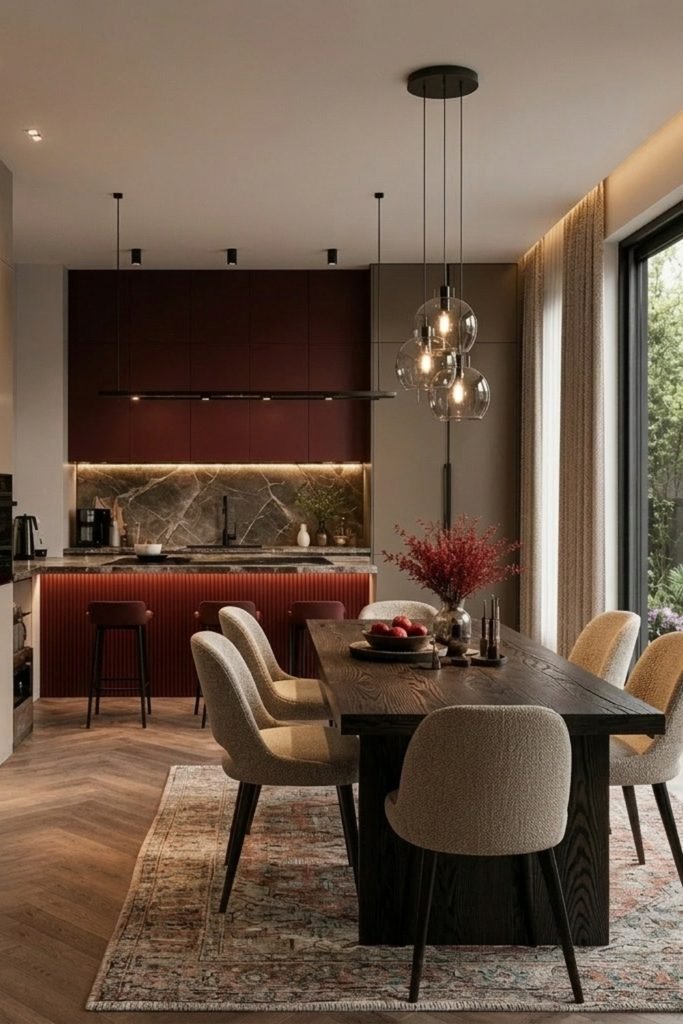
Dining Blend
In an open-plan kitchen, keep burgundy concentrated around the cooking area so the dining space still feels relaxed and easy to live with.
Soft taupe cabinetry, warm timber, and cream seating bridge the color change, which helps the kitchen blend naturally into the room.
Add under-cabinet lighting to deepen the burgundy at night, then keep larger windows uncovered enough to prevent heaviness during daylight hours.
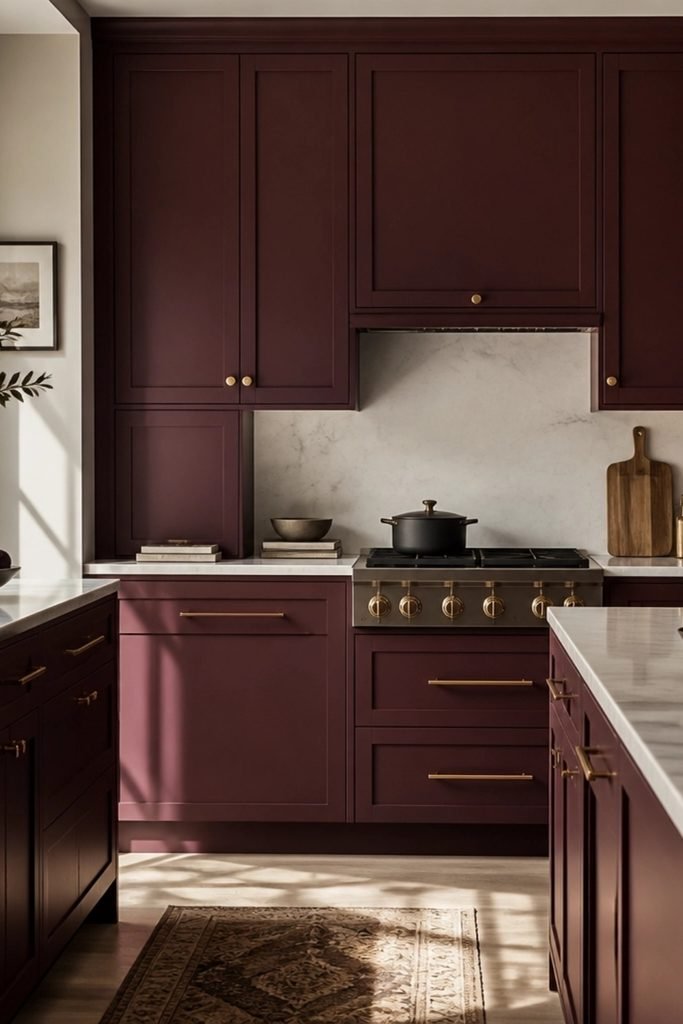
Marble Contrast
Pair deep burgundy cabinetry with pale marble when you want the color to feel rich without letting the room turn visually heavy.
Carry the stone onto the backsplash so one light surface breaks up the cabinets and keeps the cooking wall clean.
Warm brass handles and taps suit this mix especially well, because they connect the red undertone with nearby wood and sunlight.
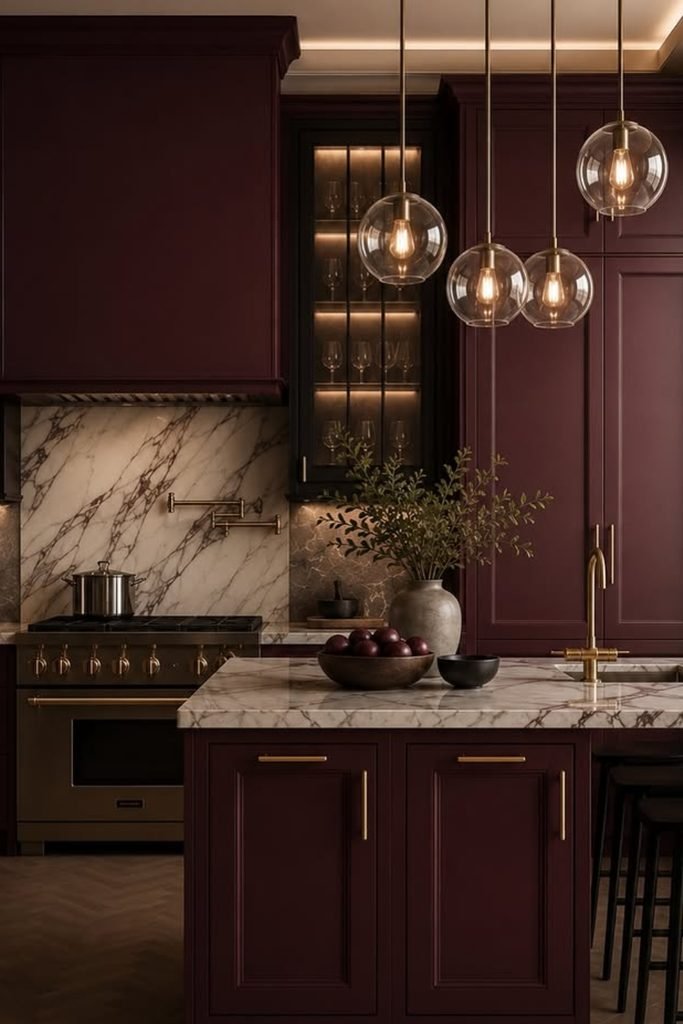
Layered Lighting
When burgundy covers most surfaces, layered lighting becomes part of the color plan rather than something you add after decorating.
Use glass pendants, cabinet lights, and warm under-cabinet strips to pull detail from dark doors instead of flattening them visually.
A veined marble counter gives the eye a brighter landing point, while black stools can stay dark without making everything compete.
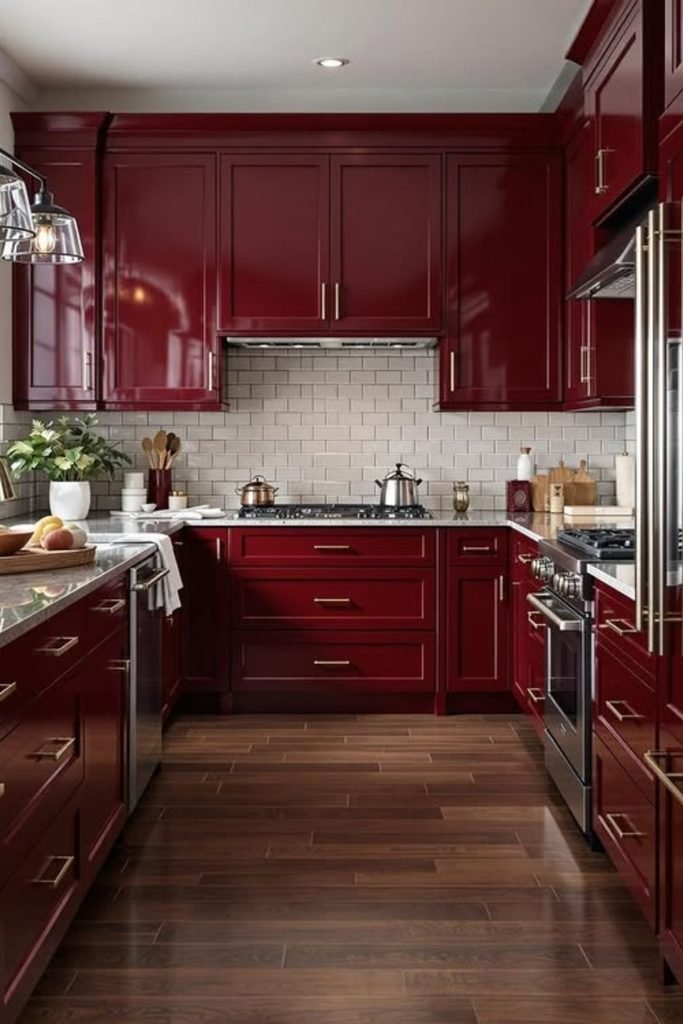
Gloss Finish
A glossy burgundy finish can work in a narrow kitchen because reflected light keeps the long cabinet runs from feeling too dense.
Keep the backsplash simple and bright, using small white tiles so the shine has contrast without introducing another strong pattern.
Stainless appliances and long brass pulls give the room cleaner lines, while dark wood flooring stops the red from looking overly glossy.
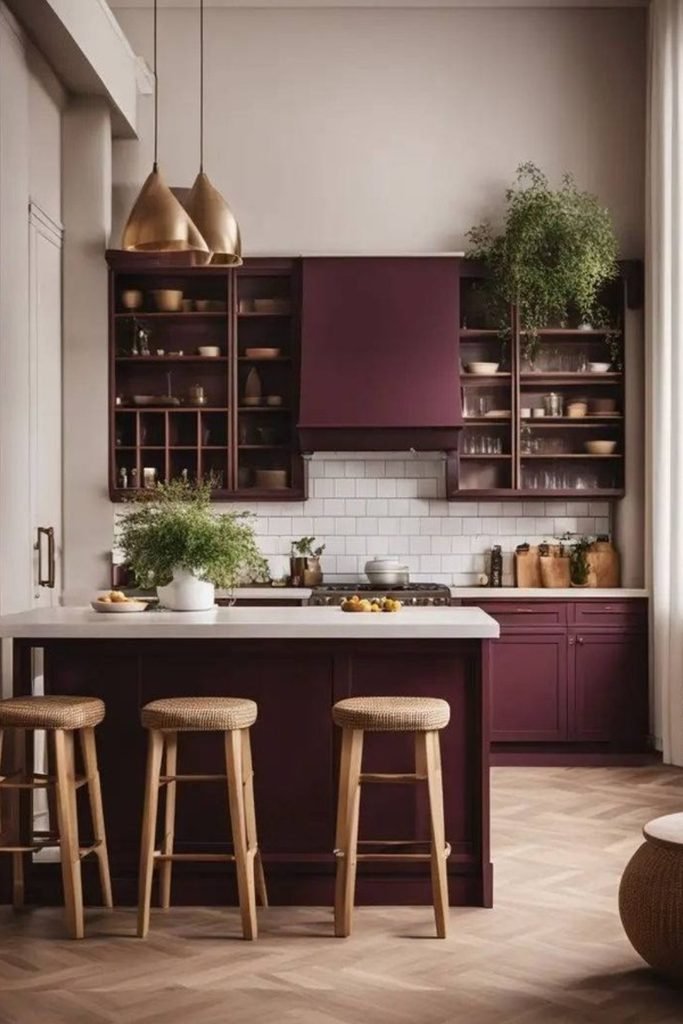
Open Shelving
Replace a few upper doors with open shelving when burgundy starts to feel too solid, especially in a tall or narrow room.
Keeping dishes visible creates small breaks in the dark cabinetry, while a white backsplash gives those shelves a brighter background.
Choose simple wood stools and woven textures around the island if you want the whole kitchen to feel warmer and less formal.
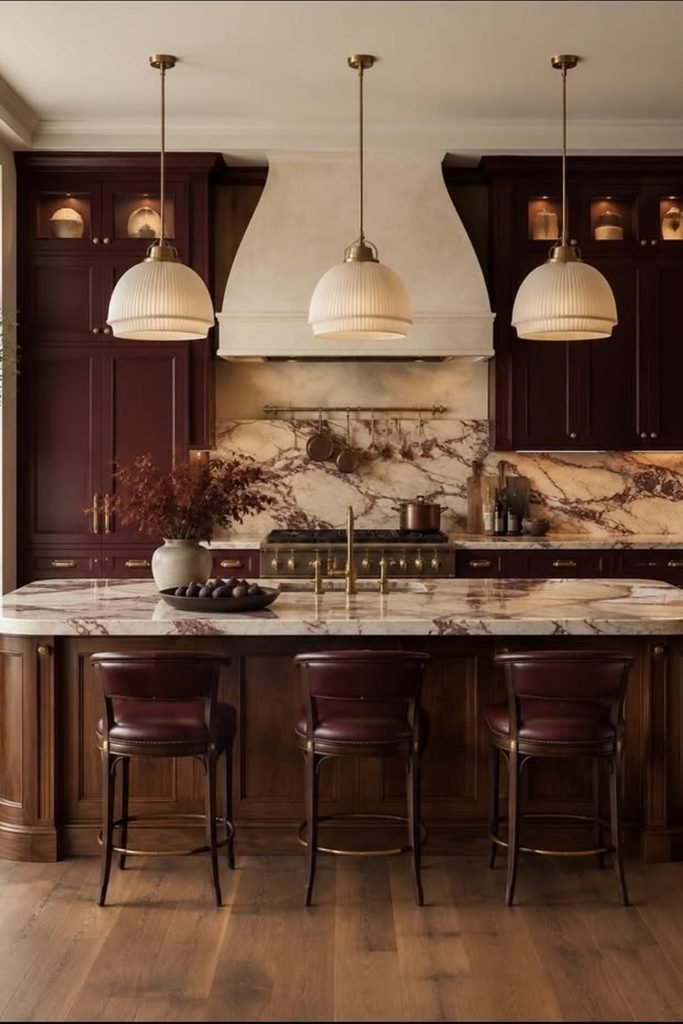
Cream Contrast
Balance deep burgundy cabinets with a creamy plaster hood when you want a traditional kitchen to feel rich without becoming visually heavy.
Carry warm marble across the backsplash and worktops so the stone links the dark cabinetry with lighter architectural details around the room.
Choose natural wood for the island base and flooring, then repeat brass sparingly to keep the whole palette warm and grounded.
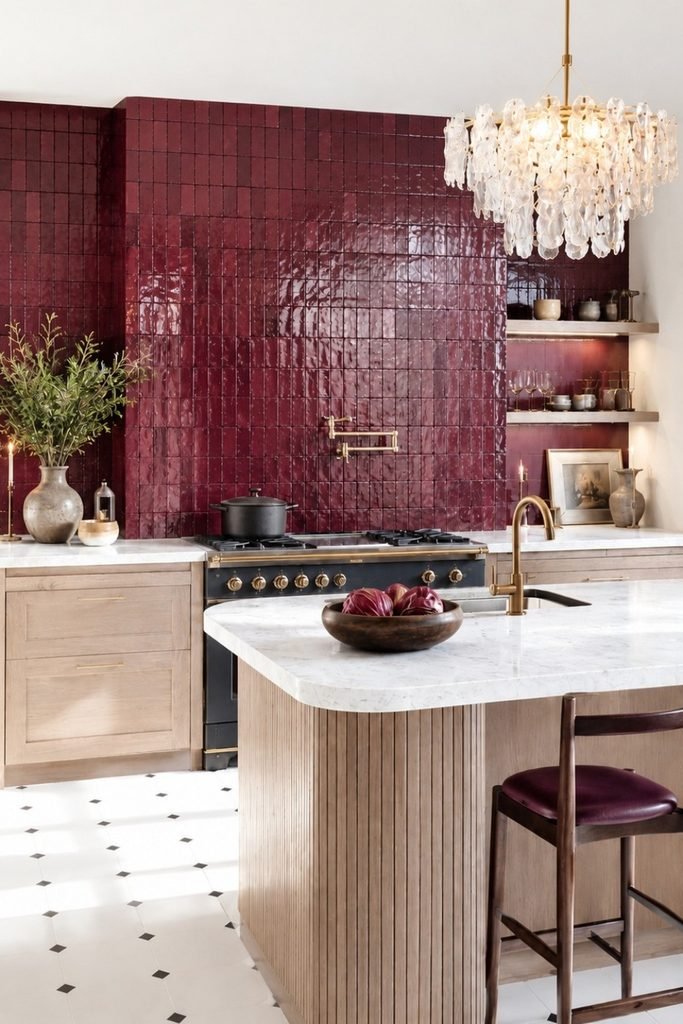
Burgundy Tile
Use burgundy tile as the main statement when you want the color without committing every cabinet front to the same deep shade.
Glossy handmade tiles reflect far more light than painted cabinetry, so they work especially well behind a range in brighter contemporary kitchens.
Keep surrounding cabinets pale wood or cream, then repeat burgundy through one seat or accessory so the accent feels deliberate rather than isolated.
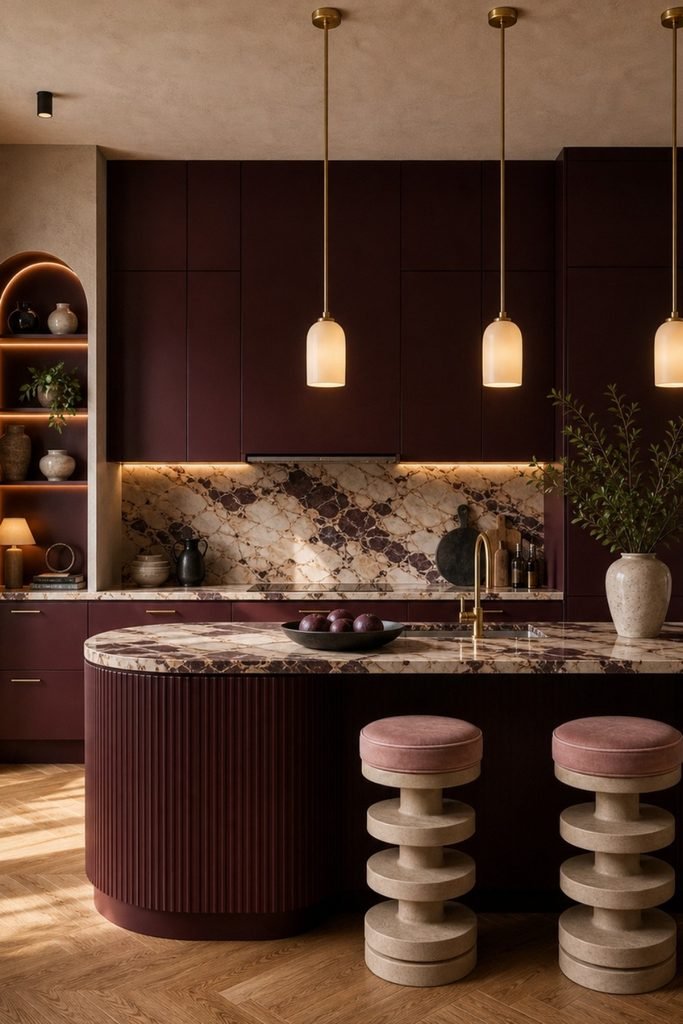
Curved Island
Let a curved burgundy island soften a modern kitchen when straight cabinetry and tall walls are making the layout feel too rigid.
Strongly veined stone can bridge burgundy with cream, brown, and black, which makes it useful when several finishes already share the room.
Keep the cabinet fronts simple, then use warm shelf lighting and brass pendants to create depth without adding more decorative color.
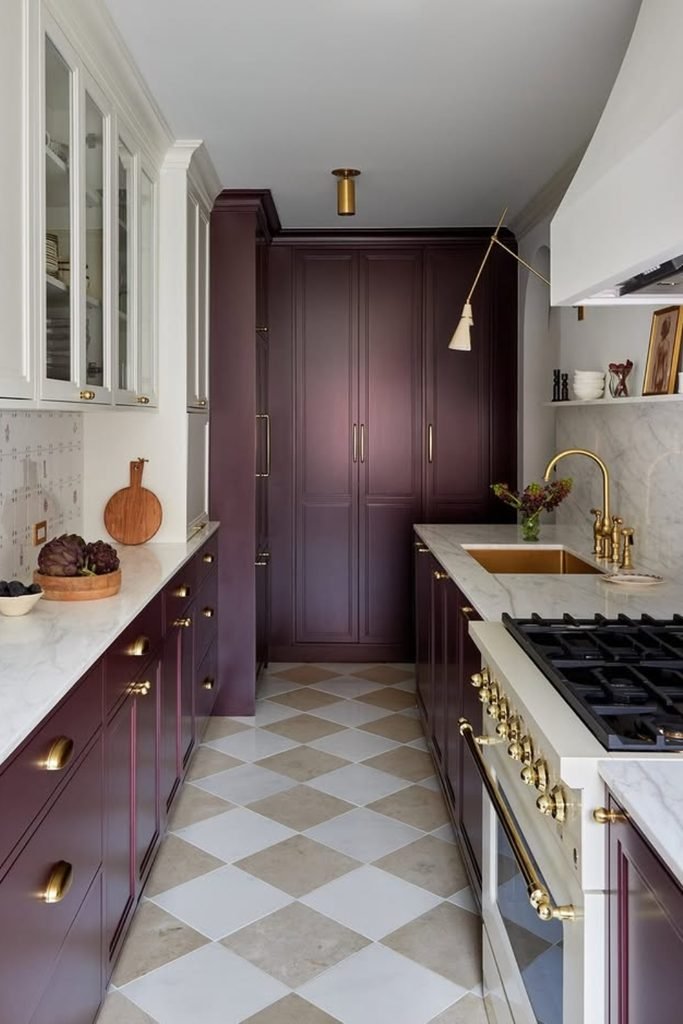
Galley Balance
In a narrow galley, keep burgundy on the lower cabinets and one tall storage wall so the room still feels open.
White upper cabinets lift the sightline, while pale marble counters reflect daylight and stop the deep base color from closing everything in.
Use brass hardware consistently across both colors, because one metal finish helps the split cabinetry read as a planned palette rather than separate zones.
Warm Contrast
Mix burgundy upper cabinets with warm taupe or wood finishes when you want color without making a modern kitchen feel overly dark.
Keep the island and tall storage lighter, then repeat burgundy only where you want the eye to land and stay.
Soft under-cabinet lighting will warm the red undertone at night, while pale stone keeps the daytime palette calm and balanced.
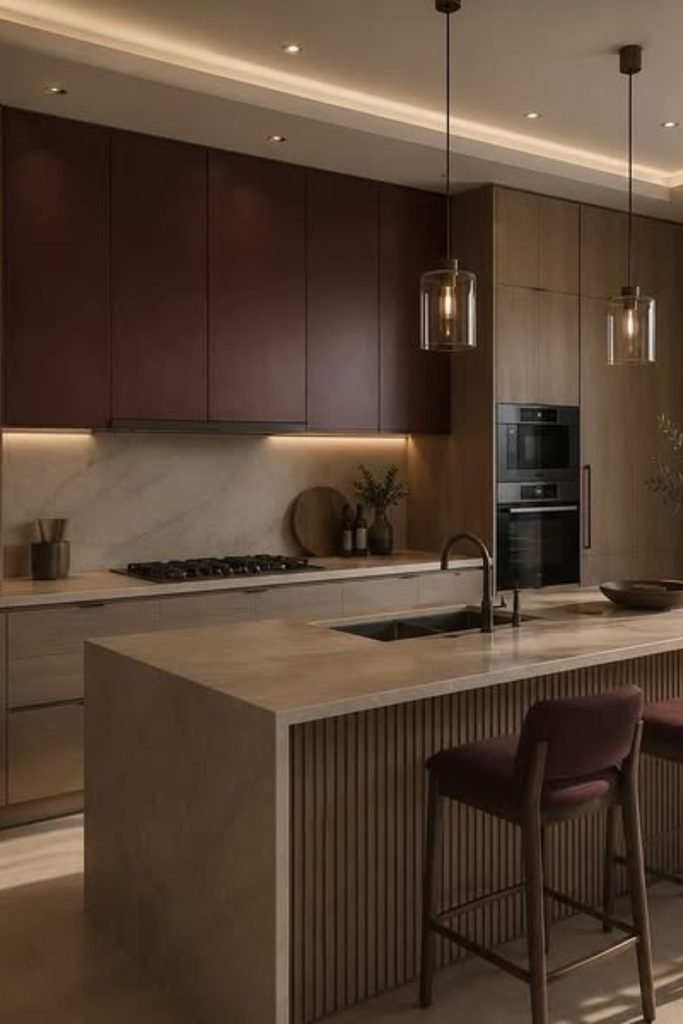
Bright Burgundy
A bright kitchen can handle burgundy across more cabinetry, especially when large windows and white walls already bring in plenty of light.
Use pale counters and a simple backsplash to keep the room fresh, then let brass hardware add warmth without adding another color.
This balance works well for traditional layouts because the deep cabinets feel grounded while the lighter surfaces stop them from dominating.
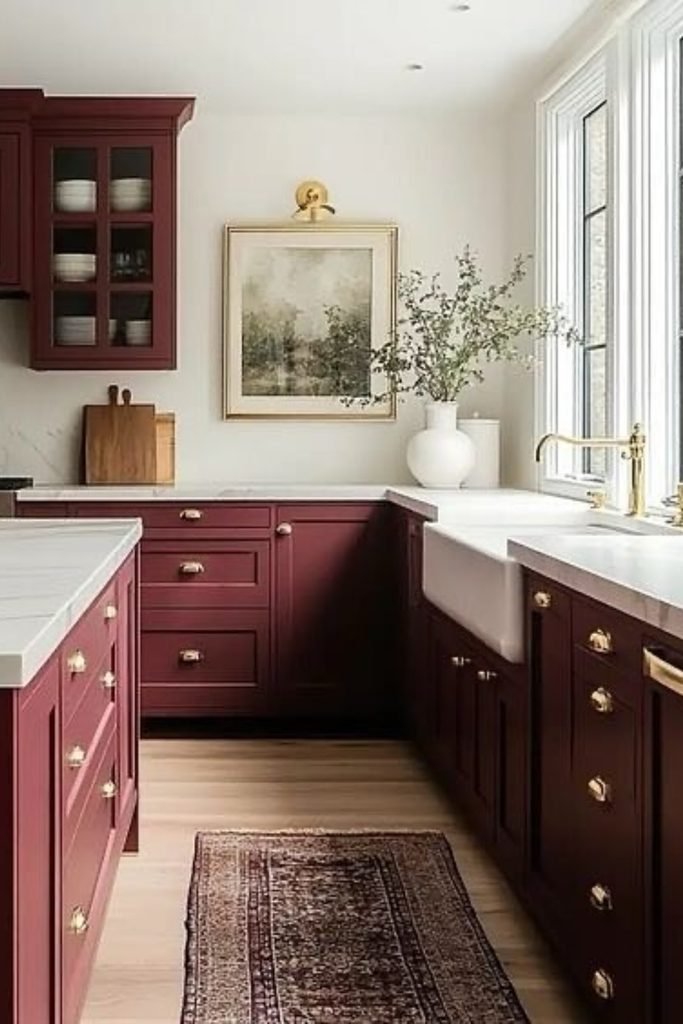
Veined Marble
Choose strongly veined marble when you want burgundy cabinetry to feel more layered, because the stone introduces movement without adding extra decor.
Carry the same stone from backsplash to island so the kitchen reads as one scheme instead of several competing expensive finishes.
Brass lighting and hardware suit this richer direction, but keep stools and flooring quieter so the marble and cabinetry remain the focus.
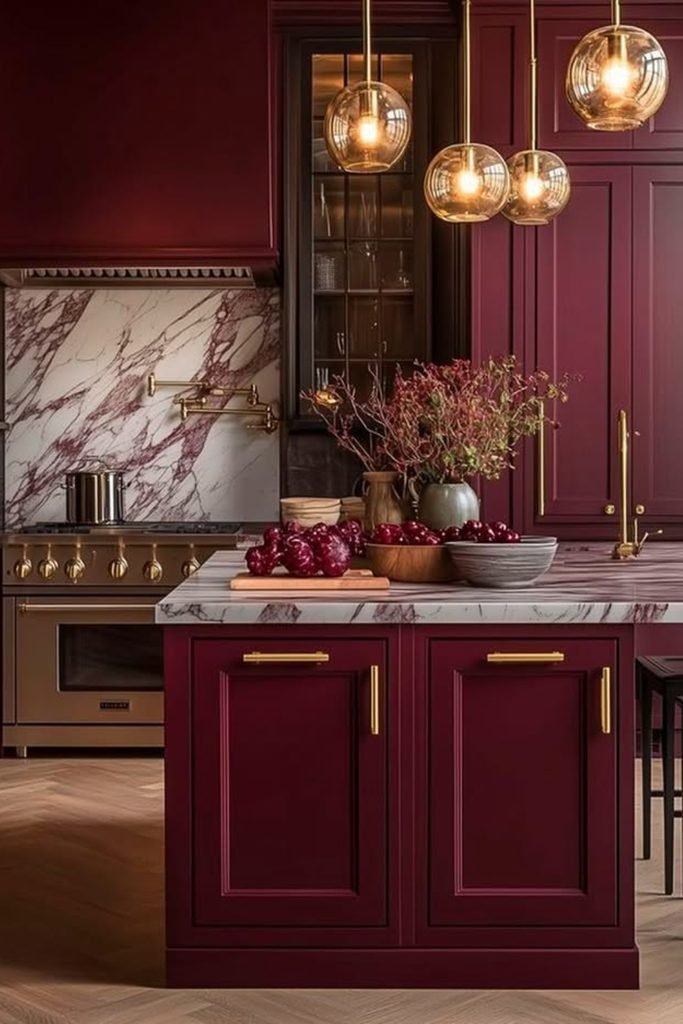
Heritage Paneling
For a heritage-style kitchen, extend burgundy above the worktop with painted paneling when you want the cabinetry to feel built into the room.
A dark countertop gives this treatment a practical edge, while cream walls and a white sink stop the long run feeling too heavy.
Finish with brass taps, rails, and traditional pulls, then keep accessories simple so the old-house character comes from the joinery itself.
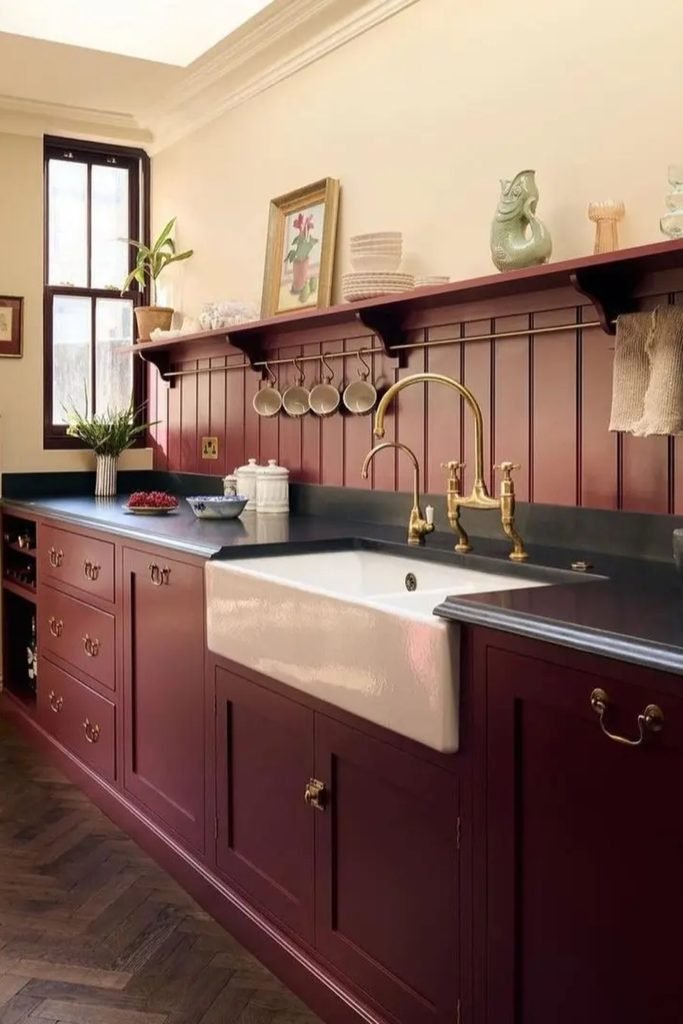
Moody Monochrome
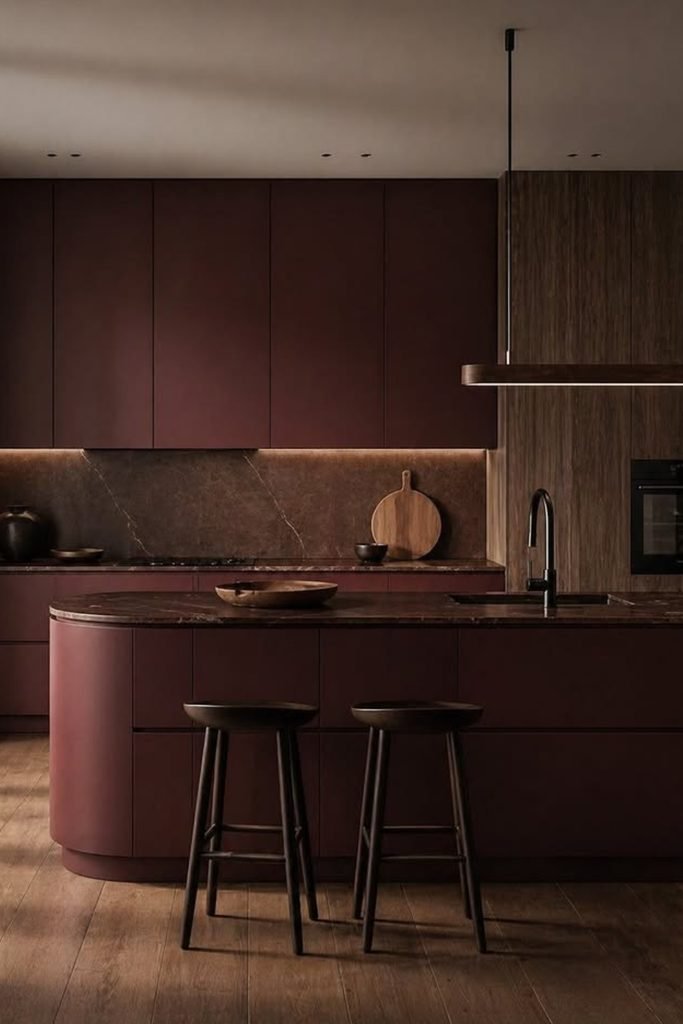
Lean into a darker burgundy scheme when you want the kitchen to feel calm and architectural rather than bright or highly decorative.
Match the backsplash and worktop closely to the cabinetry, then use warm wood nearby so the deep palette still feels natural.
Soft strip lighting under the uppers adds depth at night, while curved island edges keep the strong color from feeling too severe.
Greenery Contrast
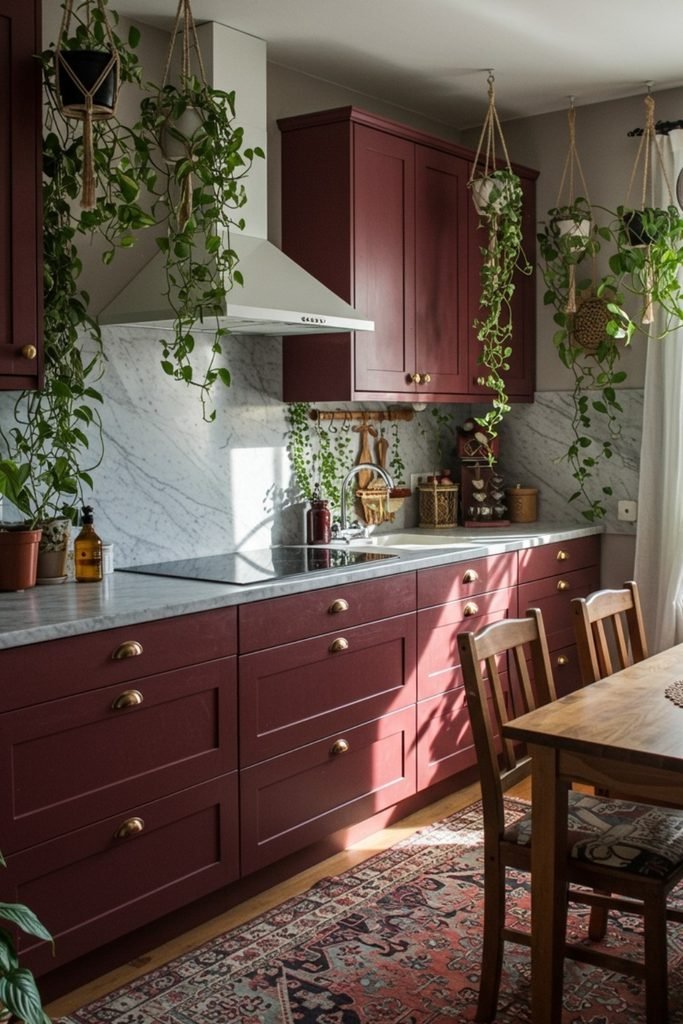
Fresh greenery can soften burgundy faster than another paint color, especially when the kitchen already has warm wood and traditional cabinet fronts.
Hang trailing plants near upper cabinets or windows, then repeat smaller pots along the counter so the green feels connected throughout.
Choose pale marble behind the cabinets to brighten the background, because burgundy and leafy green both read richer against a lighter surface.
FAQs
Do burgundy kitchen cabinets make a room look smaller?
Burgundy can make a small kitchen feel tighter if you use it on every surface without enough light or contrast.
Keep upper walls, counters, or backsplashes lighter, and let natural light reach the deepest corners so the room stays open.
If the space is narrow, burgundy lower cabinets or one island can give depth without surrounding you with dark color.
Can burgundy cabinets work with stainless steel appliances?
Stainless steel works well with burgundy because its cooler finish balances the warmth of red without competing for attention visually.
Use brushed nickel, chrome, or simple black hardware nearby if you want the appliances to feel intentionally connected to the scheme.
Warm brass can still work, but repeat it sparingly so the kitchen does not end up with too many metal finishes.
