
Where To Put Lamps In Living Room
You can decorate your living room nicely, buy good furniture, even pick beautiful lamps, but something still feels off.
The room doesn’t feel warm at night, corners look empty, and the lighting never feels balanced. You turn on one lamp and it feels too dim.
You turn on another and it feels too harsh. So you start wondering what you are doing wrong.
You might already have the right lamps, but if they are sitting in the wrong spots, the whole room feels unfinished and uncomfortable.
People usually place lamps wherever there is space, a corner table, next to the sofa, maybe beside the TV.
In this article, you’ll learn where to actually put lamps in your living room so the space feels balanced, cozy, and natural to live in.
Let’s jump in!
How Many Lamps Do You Actually Need in a Living Room?
Most people either under-light their living room with just one lamp or go the opposite way and add too many lights, making the space feel cluttered and harsh.
The goal is not to count lamps randomly, it’s to make sure light is spread evenly across the room.
A simple way to decide is by looking at your space size and how you use it. In a small living room, 2 to 3 light sources are usually enough.
This can be a mix of one floor lamp and one or two table lamps. For a medium-sized room, 3 to 4 lamps work better to cover seating, corners, and darker areas.
Larger living rooms may need 4 to 5 light sources to avoid empty or dim spots. But numbers alone are not enough. What matters more is placement.
You should have at least one lamp near where you sit, one to fix dark corners, and one to balance the overall brightness of the room.
If your living room still feels uneven, don’t rush to buy more lamps. First, move the ones you already have and see how the light changes.
In most cases, better placement solves the problem faster than adding more lighting.
8 Ways to Put Lamps in Living Room
Following are the 8 ways to put lamps in the livingroom.
1. Next to the Sofa
Placing a lamp next to your sofa is one of the most practical choices you can make. This is where you actually sit, relax, read, or scroll your phone at night.
If the light is too far away, the room feels dim and uncomfortable. If it is too harsh from the ceiling, it feels tiring on the eyes.
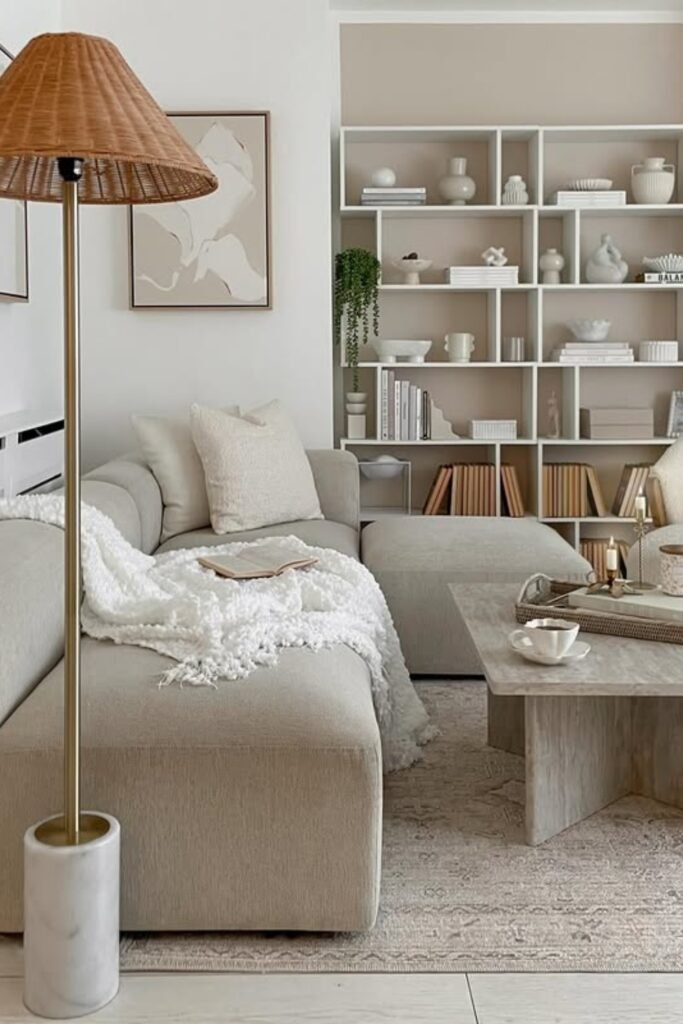
A floor lamp or table lamp beside the sofa gives you direct, soft light right where you need it.
If you place it slightly behind the armrest, the light spreads better across the seating area instead of hitting your eyes directly.
This setup also makes your sofa area feel more “finished” instead of empty or flat.
2. In Dark Corners
Every living room has at least one dark corner that feels unused or awkward. Instead of ignoring it, place a tall floor lamp there.
This instantly fills the space and makes the room feel bigger and more complete.
Corners often pull attention in a bad way when they are dark. A lamp changes that by adding height and warmth.
It also helps balance the overall lighting in the room so everything doesn’t feel concentrated in one spot.
If your living room feels small or dull, fixing the corners is one of the fastest improvements you can make.
3. Near the TV Area
Watching TV in a completely dark room or with only harsh overhead light can feel uncomfortable.
Placing a lamp near your TV area creates a soft background glow that reduces eye strain and makes viewing more relaxing.
The key is placement. Don’t put the lamp directly facing the screen. Instead, place it slightly behind or to the side of the TV console.
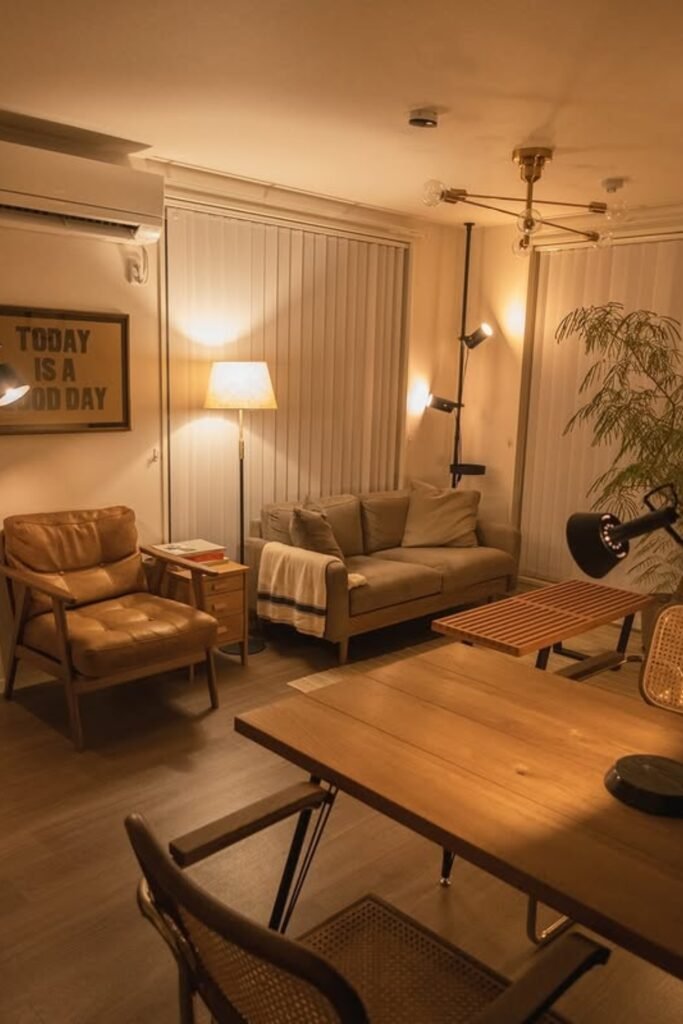
This helps balance brightness without creating reflections on the screen.
This setup also gives your living room a cozy “cinema feel” at night without needing strong lighting everywhere
4. On Side Tables
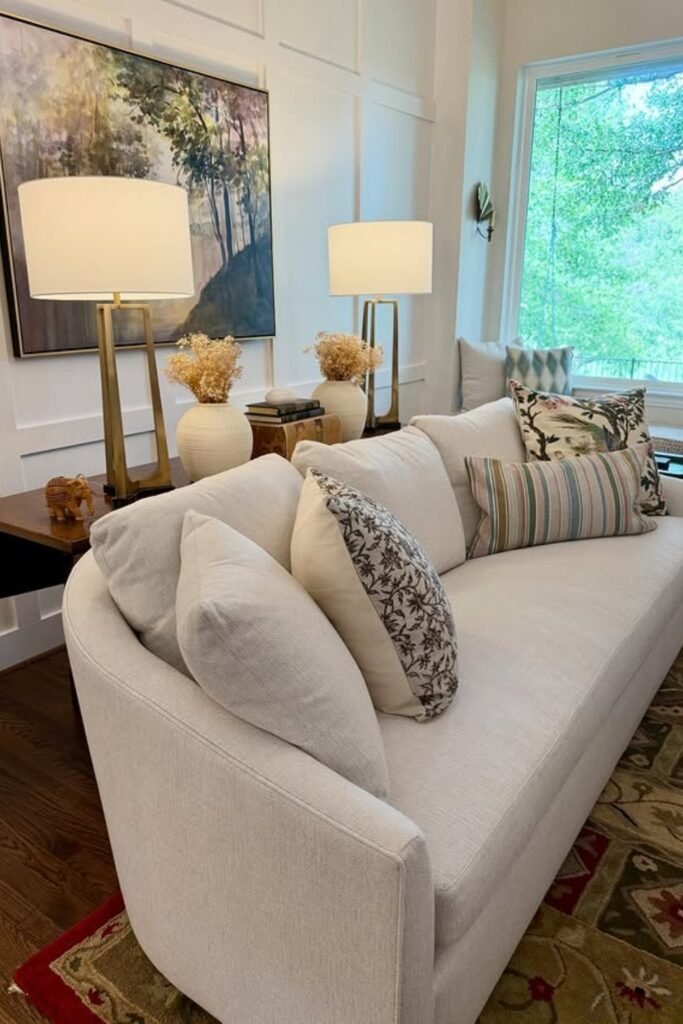
If your sofa has side tables, placing lamps on them creates instant visual balance.
This works especially well in structured or formal living rooms. When both sides of the sofa have equal lighting, the room feels calm and organized.
It also spreads light evenly across the seating area instead of leaving one side brighter than the other.
Ifyour room feels slightly “off” even after decorating, symmetry is often the missing piece. Matching table lamps on both ends of the sofa fix that quickly.
5. Behind the Sofa
Most people only light the front of their seating area, but placing a lamp behind the sofa adds depth. This creates a layered lighting effect instead of a flat look.
When light comes from different directions, the room feels more designed and less basic.
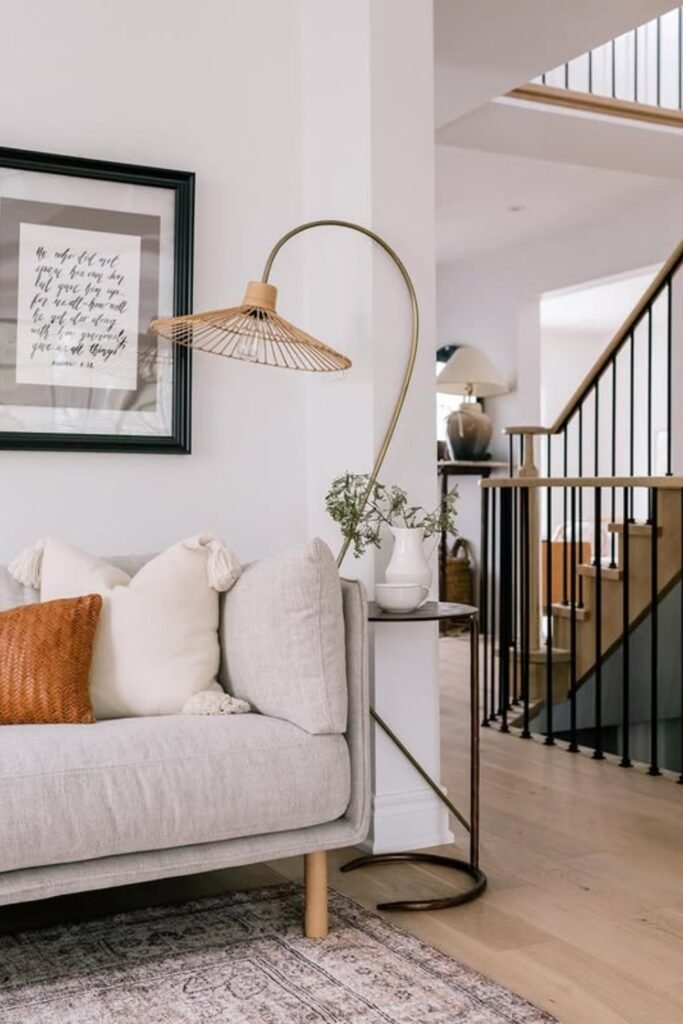
A floor lamp behind the sofa also softly lights the wall, which adds warmth without being too bright.
This is a simple trick that makes your living room look more intentional and visually rich, especially in the evening.
6. Near a Reading Chair
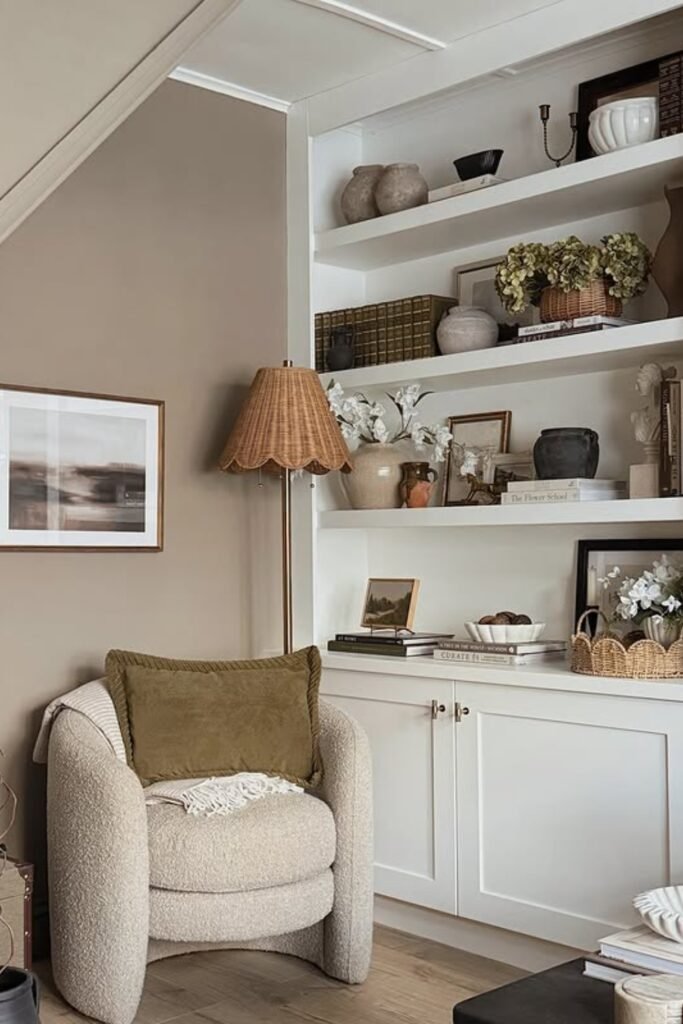
If you have a single chair in a corner, don’t leave it unused. Add a lamp next to it and you instantly create a reading or relaxation spot.
This makes your living room more functional instead of just decorative. It also helps break empty spaces and gives the room more purpose.
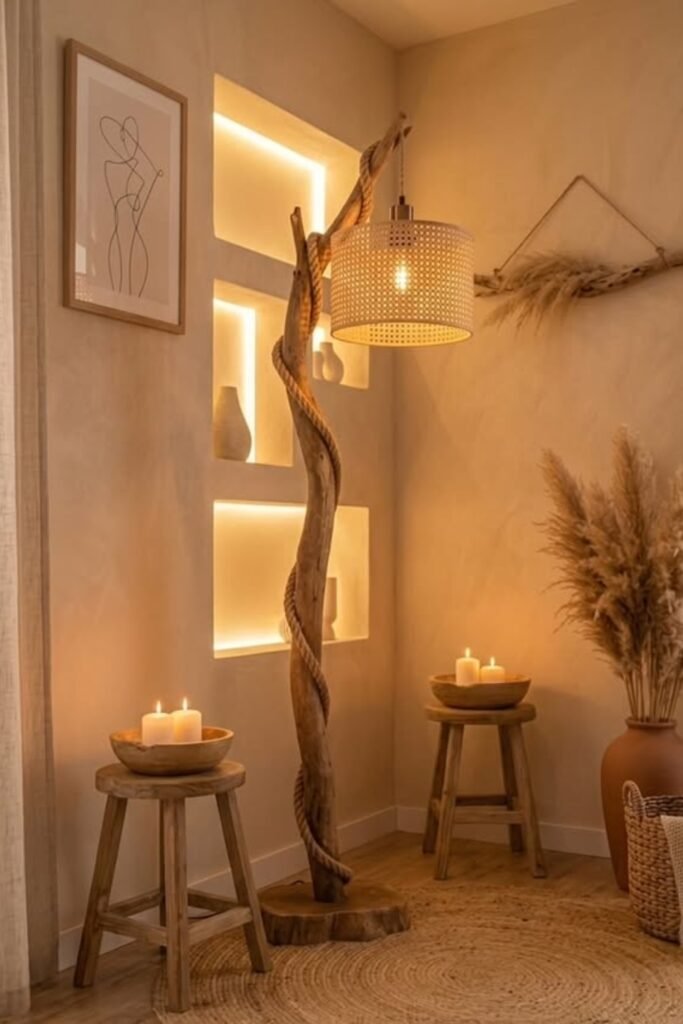
A focused lamp here works better than general lighting because it creates a personal space within the larger room.
7. On a Console Table
A console table lamp is usually placed near the entrance or behind the sofa wall. This adds a soft glow that makes the living room feel warm the moment you enter.
Instead of walking into a harshly lit space, you get a gentle light that feels inviting. It also connects different areas of the room visually, especially in open layouts.
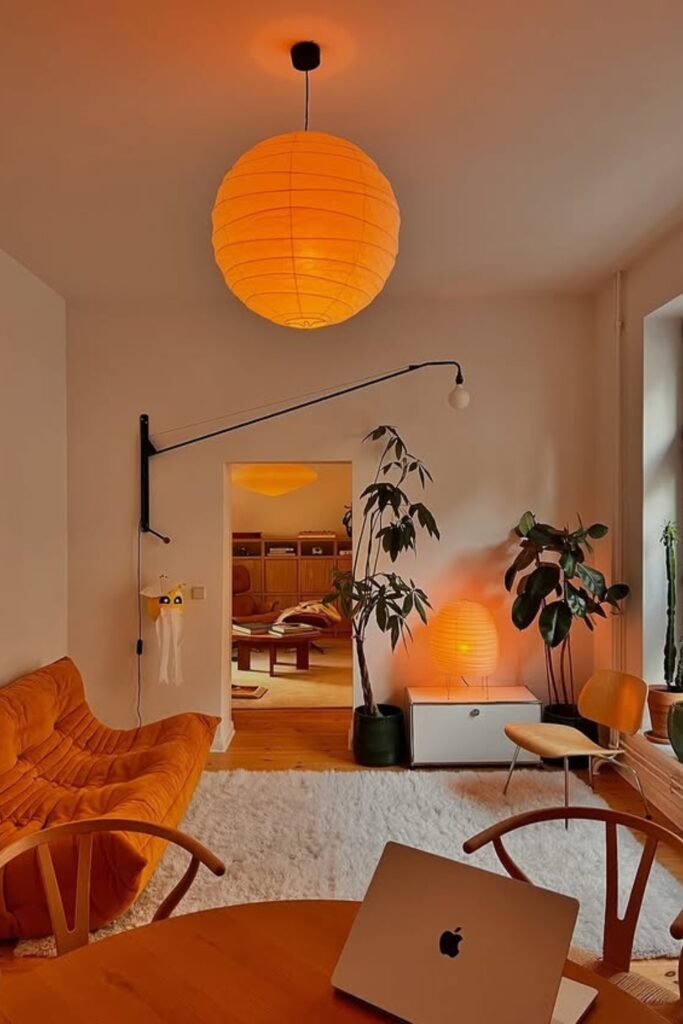
This is one of the easiest ways to make your living room feel more “put together” without changing furniture.
8. Near Mirrors to Spread Light
Placing a lamp near a mirror helps reflect light and spread it across the room.
This is especially useful in small living rooms where you need more brightness without adding extra lamps.
The reflection creates an illusion of space and makes the room feel larger and more open. It also softens shadows and reduces dark patches.
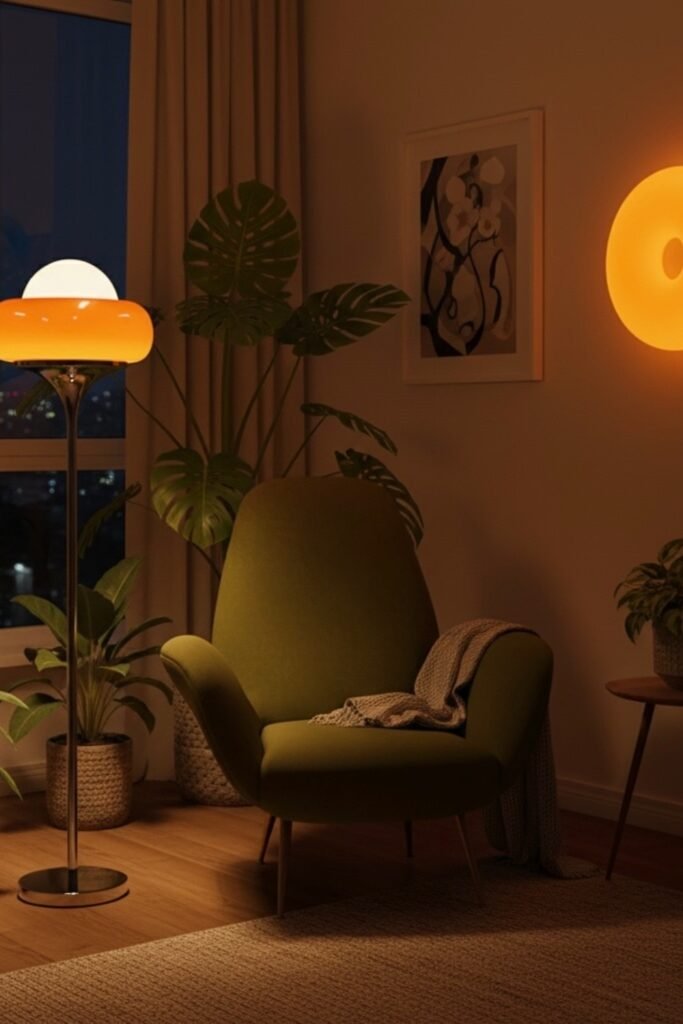
If your living room feels tight or dim, this simple placement trick can change the overall atmosphere quickly.
Why Does Lamp Placement Change the Whole Mood of a Living Room?
Most people think mood in a living room comes from furniture, colors, or décor. But in reality, lighting does most of the work.
And not just the lamp itself, the place where you put it completely changes how the room feels.
If a lamp is placed too high, the room can feel harsh and exposed. If it is stuck in one corner, the rest of the space feels forgotten.
If all the light comes from one direction, the room starts to look flat and boring.
On the other hand, when you spread lamps across the right spots, the room instantly feels warm, layered, and comfortable to sit in.
Lamp placement controls shadows, brightness balance, and how your eyes move across the room.
That’s why the same living room can feel cozy in one setup and uncomfortable in another, even with the same furniture.
If your living room never feels “right” at night, the issue is usually not what you bought. It’s where the light is coming from and how evenly it is spread across the space.
What is the Easiest Way to Fix Bad Lighting in a Living Room Without Redesigning Everything?
You don’t need to repaint walls or buy expensive furniture to fix bad lighting. In most cases, the problem is simple, your light is not reaching the right areas.
The easiest fix is to stop relying on just one main ceiling light and start adding small lamps where the room feels weak.
Look at your living room at night and notice where it feels dark, empty, or uncomfortable. Those are your problem spots.
Start by adding one lamp near your seating area. Then place another in a dark corner or behind the sofa to spread light evenly.
If the TV area feels too harsh, soften it with a side lamp instead of increasing overhead lighting.
The goal is not to make everything brighter, it’s to balance light across the room so no area feels ignored or too strong.
Small changes in placement can completely change the mood without touching your furniture or layout.
Conclusion
Lamp placement is not something small you can ignore or fix randomly. It directly decides how your living room feels every single day.
If the light is only coming from one direction, the room will always feel flat or uncomfortable no matter how good your furniture looks.
The simple truth is this: you don’t need more lamps, you need better placement.
When you spread light where you actually sit, fill dark corners, and balance brightness across the room, everything starts to feel natural and easy on the eyes.
Instead of guessing, start thinking about how you use your living room at night.
That one shift alone will help you place lamps in a way that makes your space feel warmer, more balanced, and actually enjoyable to live in.
You may like to read!
