
21 Stylish Japandi Kitchen Design Ideas
Some kitchens make you want to slow down the moment you walk in, and Japandi kitchens have that quiet pull.
Warm wood, soft neutrals, natural textures, and simple details come together without making the space feel bare or overly styled.
In this article, you’ll find Japandi kitchen ideas that can help you bring that same warm, calm look into your own space.
Let’s jump in!
What Is a Japandi Decor?
A Japandi brings Japanese simplicity and Scandinavian warmth together, so you get a space that feels calm without looking empty.
You usually see natural wood, warm whites, beige or earthy colors, simple cabinets, stone surfaces, and very little unnecessary decoration.
If you want the look to feel warm, let wood grain, handmade ceramics, soft textures, and natural materials add character instead of filling every surface.
Smart storage matters just as much because hiding small appliances and everyday clutter keeps your counters open while everything you use stays close by.
The goal is not to create a perfect showroom kitchen, but a practical space where every color, material, and object has a clear purpose.
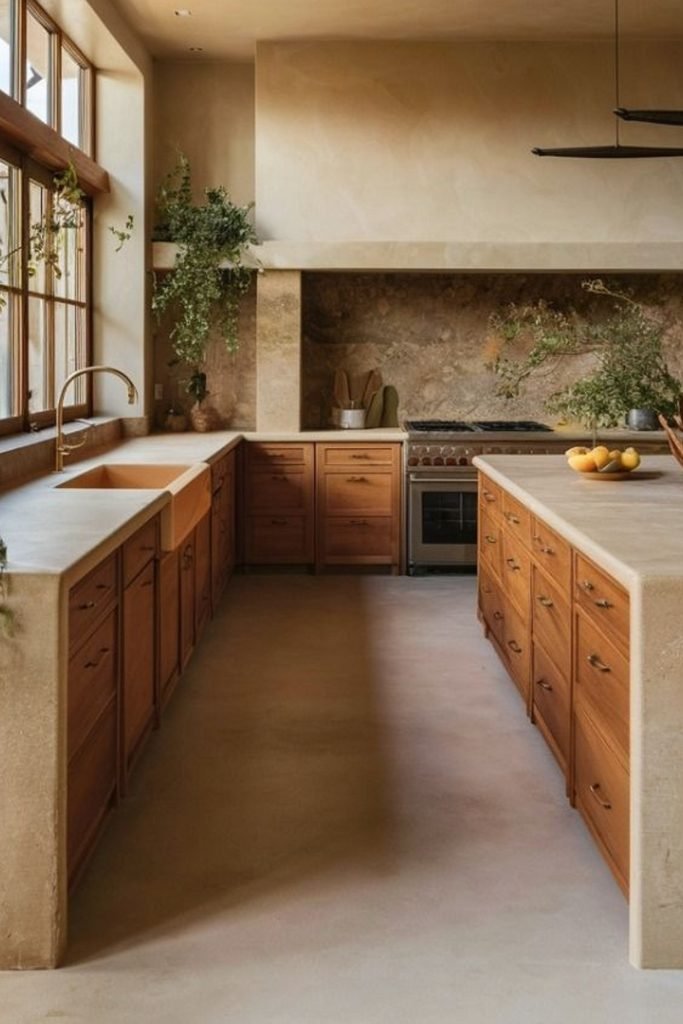
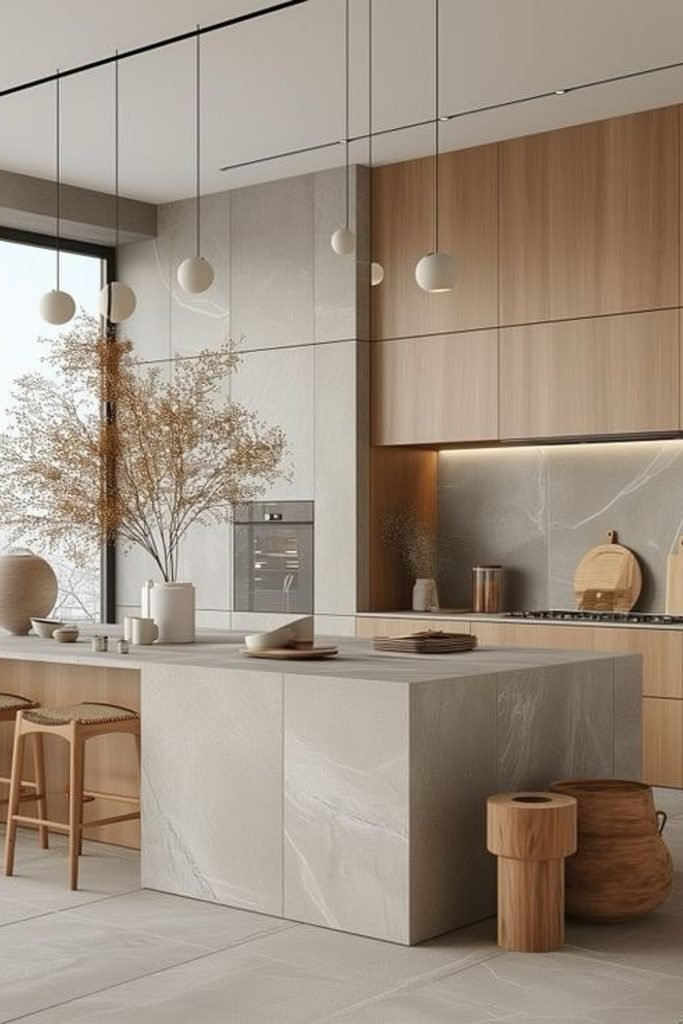
Stone Warmth
If you want Japandi to feel warmer, pair medium wood cabinets with soft stone surfaces instead of relying on plain white finishes.
Carry the stone onto the backsplash and island, so the kitchen gains natural texture without introducing busy patterns or extra decoration.
Finish with leafy branches and slim lighting, letting those small organic details soften the heavier wood and stone around them.
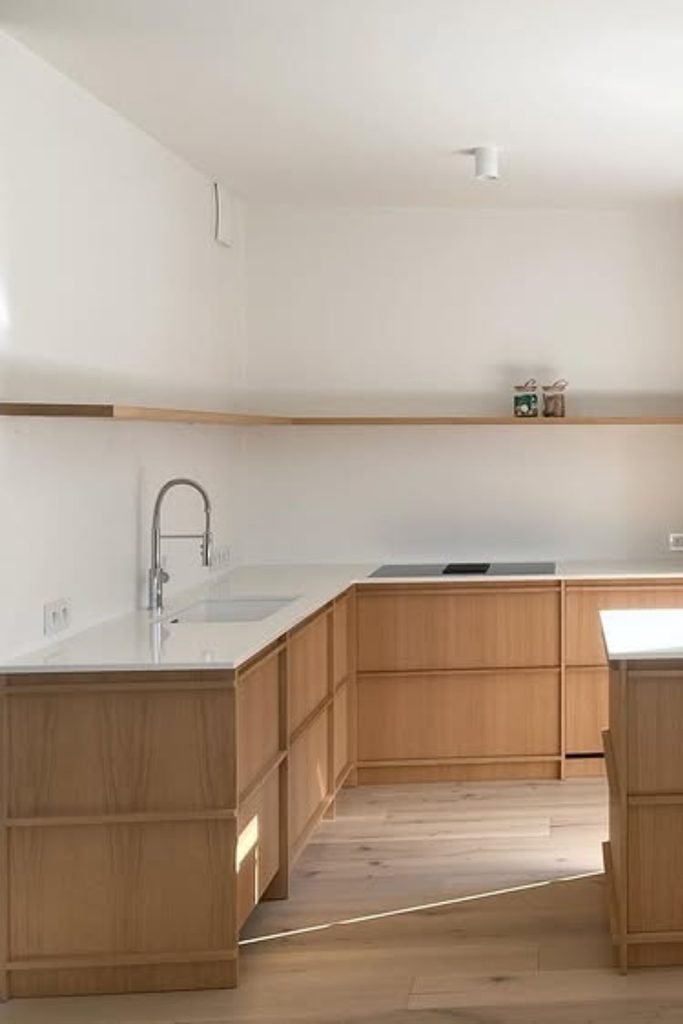
Light Oak
Keep light oak across the main cabinetry when you want an open Japandi kitchen that feels connected without becoming visually busy.
Pair the wood with white counters and walls, allowing natural daylight to brighten the room while keeping the palette soft.
Use tall cabinets for everyday storage, then leave long surfaces mostly clear so the simple materials remain the main focus.
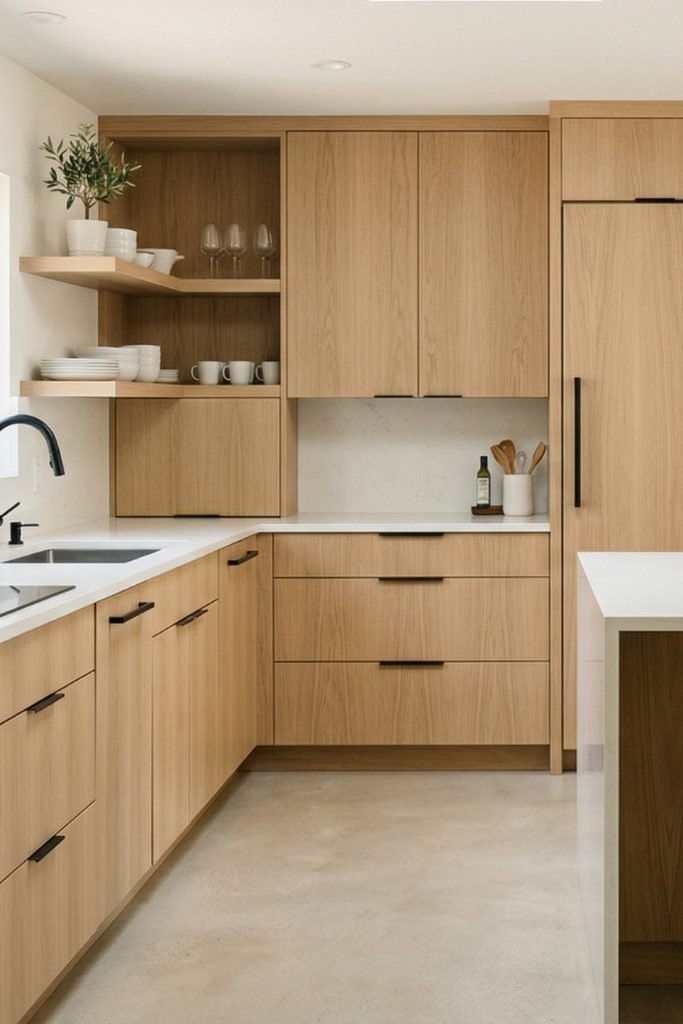
Black Accents
Small black details can stop pale wood from looking washed out, especially when your kitchen uses similar neutral tones throughout.
Choose slim handles, a dark faucet, and simple seating rather than adding black across large surfaces that could overpower the wood.
Keep open shelves lightly styled with everyday ceramics and greenery, giving the kitchen personality while preserving plenty of breathing room.
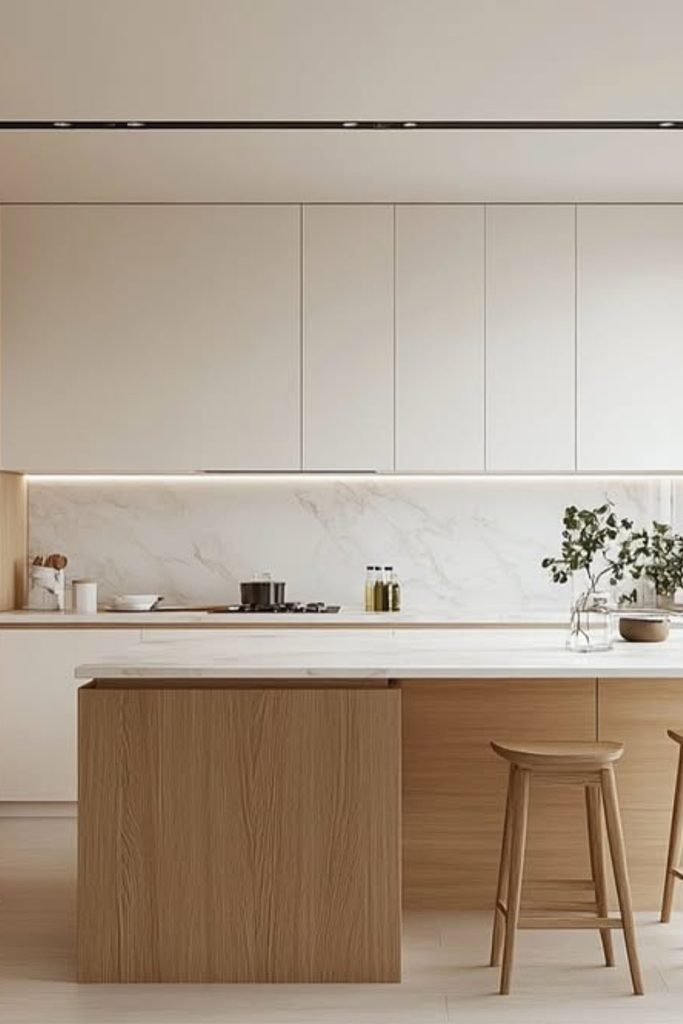
Two Tones
Mixing warm wood with flat white cabinets works well when you want Japandi simplicity without covering every wall in timber.
Keep wood around the island and tall storage, then use white upper cabinets to make the cooking area feel lighter.
Add soft under-cabinet lighting and simple wooden stools, so the contrasting finishes still feel connected rather than sharply divided.
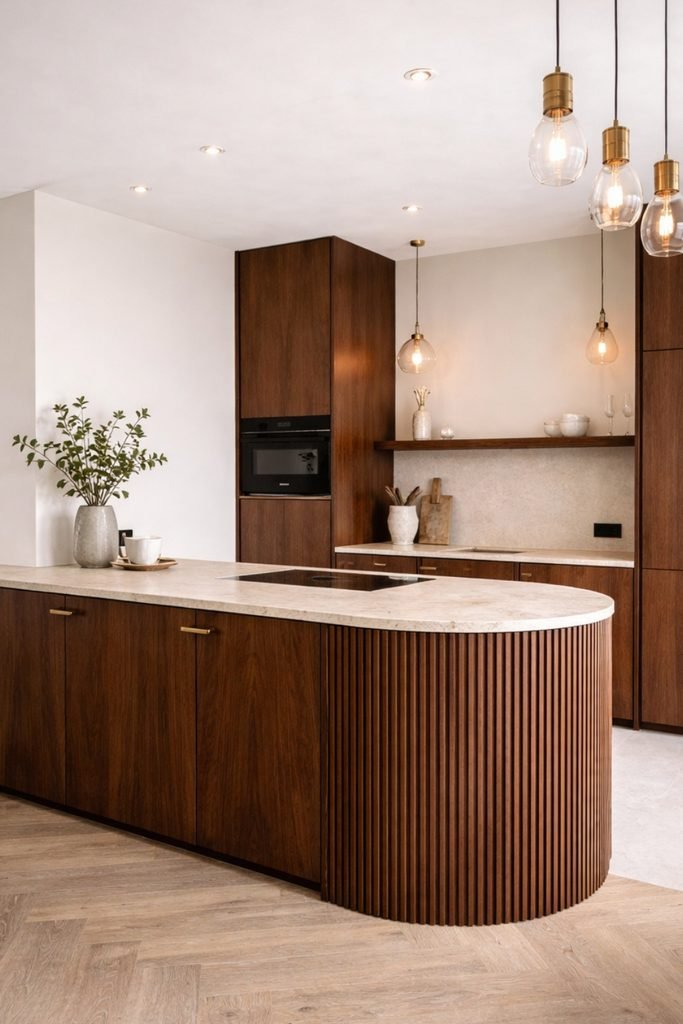
Walnut Curves
If you want a richer Japandi look, dark walnut cabinetry can add depth while still keeping the kitchen calm and natural.
Soften the heavier wood with a pale stone countertop and rounded island edge, which keeps the darker finish from feeling bulky.
Layer simple glass pendants with recessed lights, then keep accessories limited so the wood grain remains the strongest visual detail.
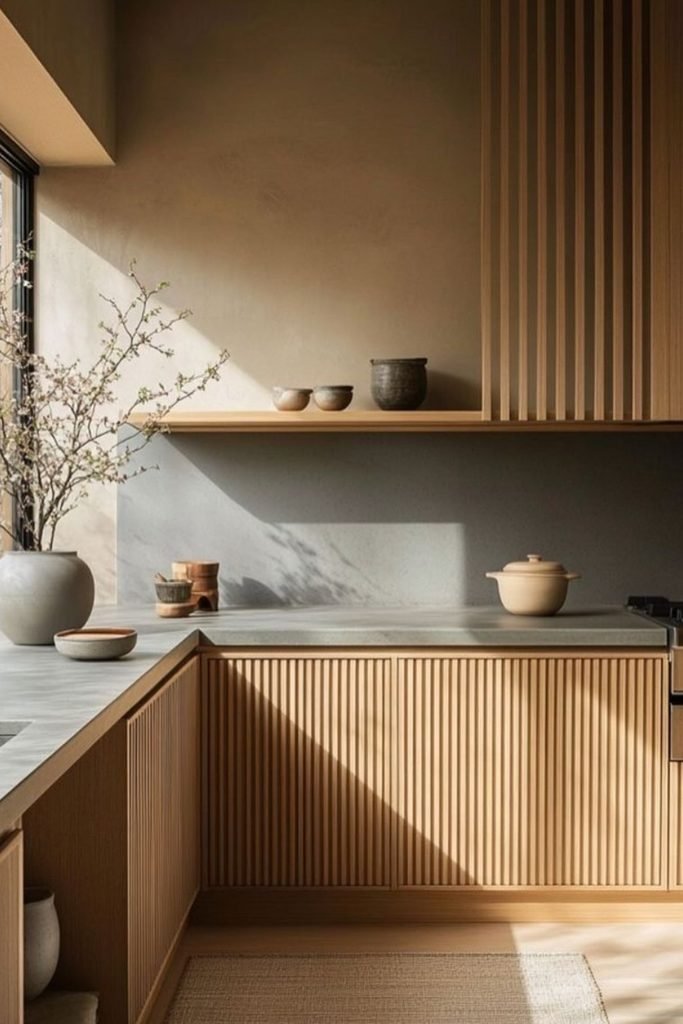
Slatted Wood
Vertical wood slats are an easy way to bring texture into a Japandi kitchen without adding patterns or decorative wall pieces.
Pair them with smooth stone counters and warm neutral walls, letting the difference in texture create interest across the simple palette.
Keep ceramics sparse and use natural window light to highlight the grooves, making the cabinetry feel detailed without becoming visually busy.
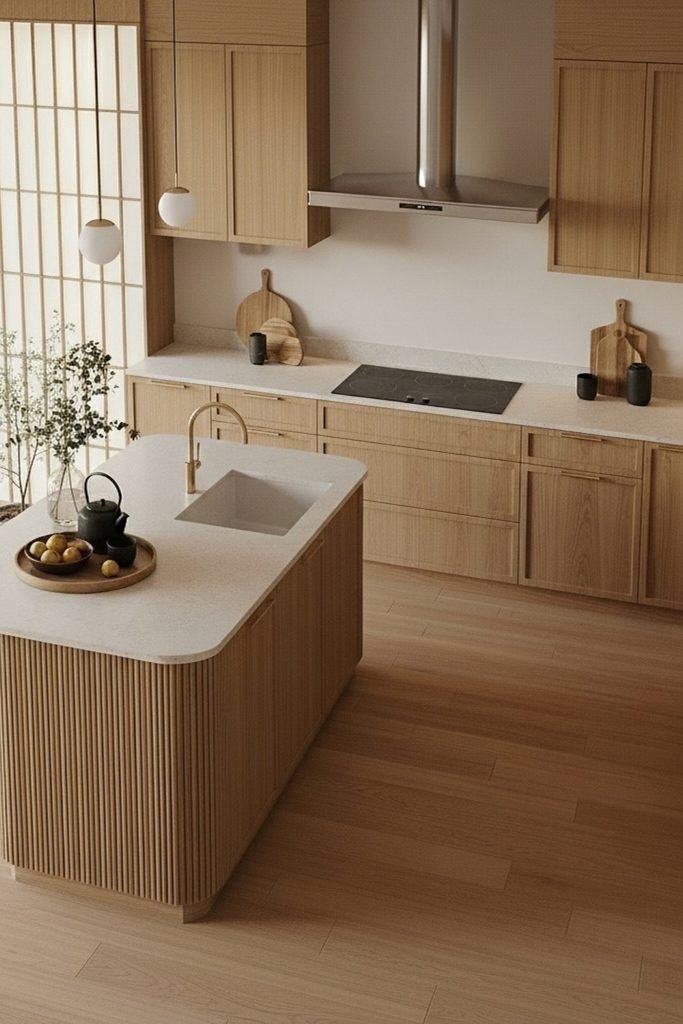
Shoji Influence
If you want stronger Japanese character, bring in shoji-inspired panels alongside pale wood cabinets and simple natural finishes.
Keep countertops light and decoration minimal, then repeat rounded corners around the island to soften all the straight cabinet lines.
Natural daylight can handle most of the atmosphere, while small pendants add focused light without competing with the quiet woodwork.
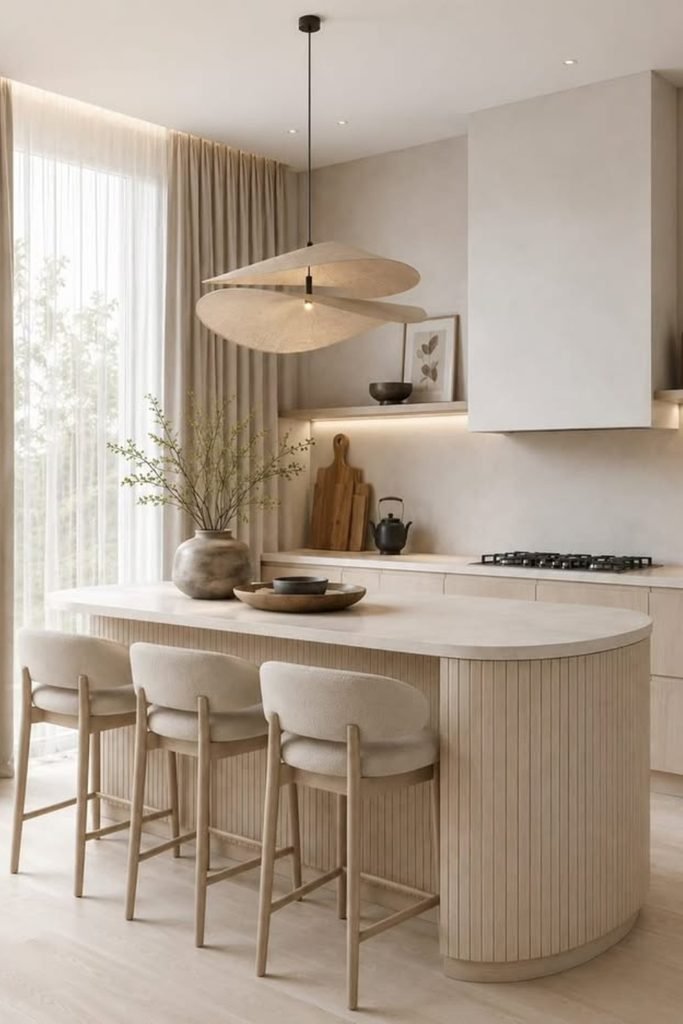
Soft Neutrals
A tonal palette works best when you mix several warm neutral shades instead of choosing the exact same beige for everything.
Combine pale wood, creamy counters, textured seating, and soft curtains so each surface adds depth while staying within one calm palette.
Finish with a sculptural pendant and subtle shelf lighting, giving the kitchen warmth without adding more objects to the countertops.
Hidden Storage
If you want clean counters without losing storage, take your cabinetry to the ceiling and keep the fronts simple and uninterrupted.
Use a darker wood island to break up pale cabinetry, giving the room warmth without introducing another strong color or material.
Add warm lighting beneath an open niche, so the work area feels softer while everyday items remain mostly behind closed doors.
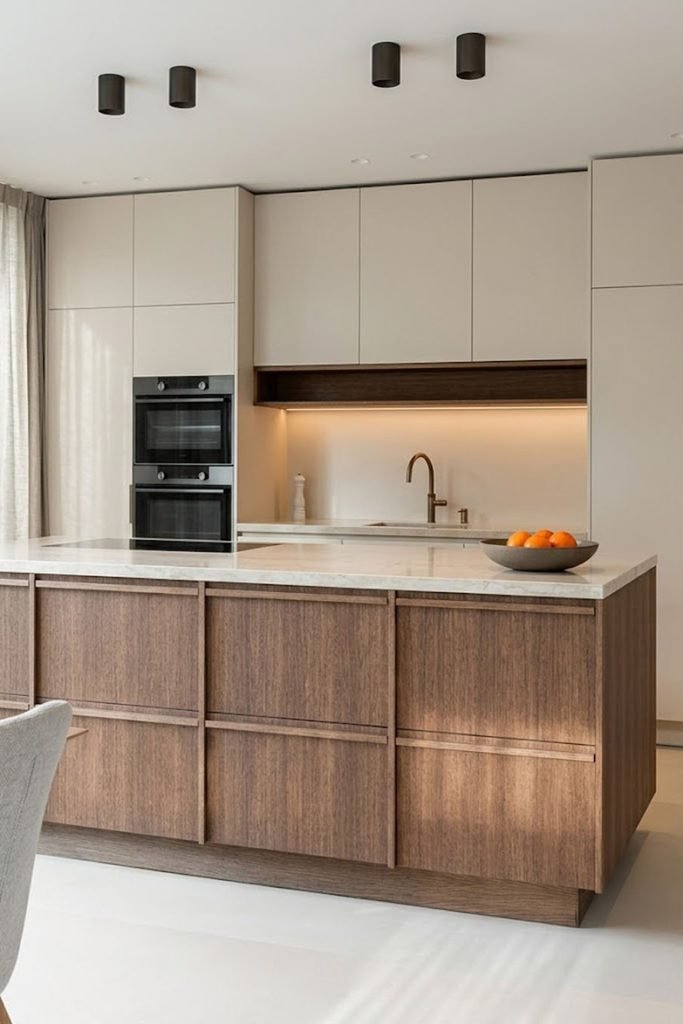
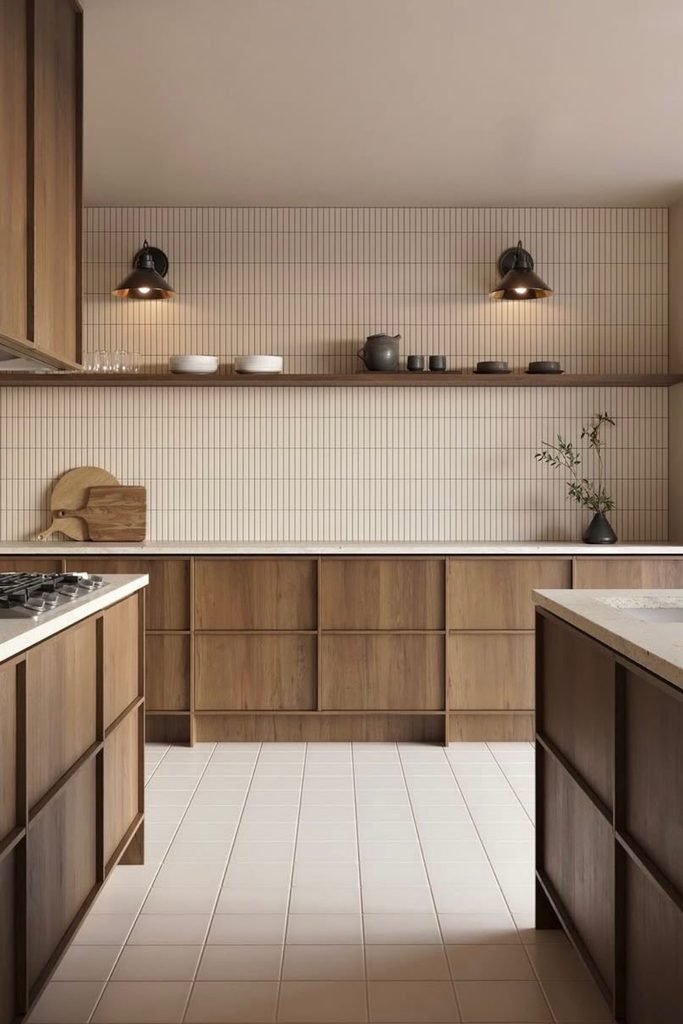
Tiled Texture
Small neutral tiles can add quiet texture when plain walls feel too flat but bold patterns seem wrong for Japandi.
Run the same tile across a larger wall, then keep wood cabinetry simple so the repeated lines never become visually overwhelming.
Use a long shelf for selected ceramics and warm wall lights above, leaving enough empty space between pieces to feel intentional.
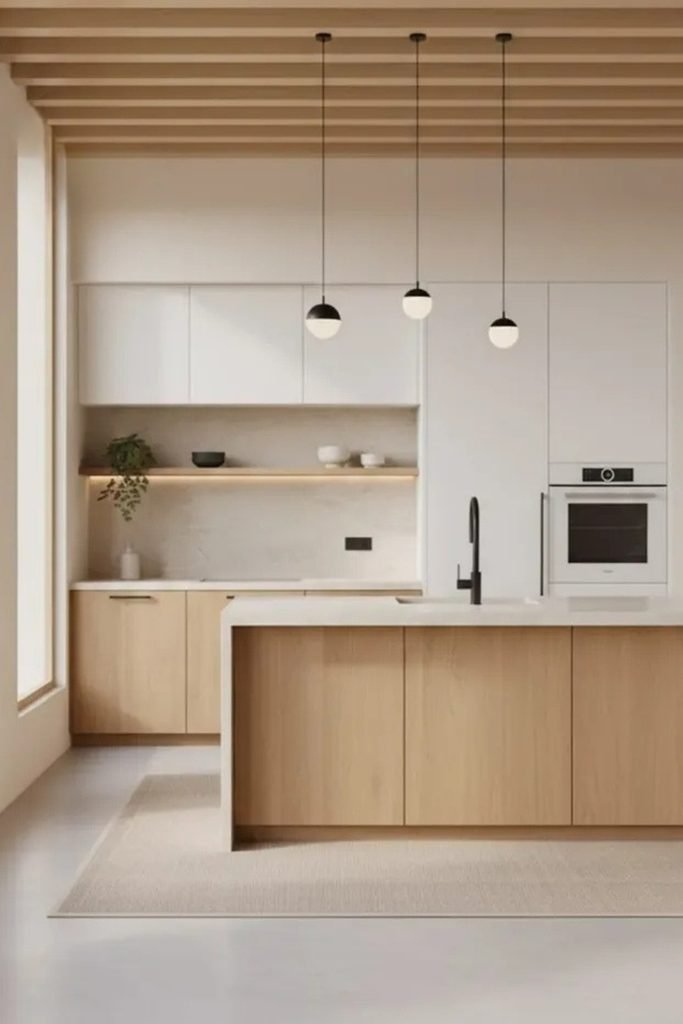
Ceiling Beams
Repeating pale wood from your cabinets onto ceiling beams can make an open Japandi kitchen feel more connected from top to bottom.
Balance that warmth with white upper cabinets and counters, especially when you want the room to stay bright and visually open.
Keep pendant lights small and simple, then use concealed shelf lighting to add warmth without competing with the ceiling detail.
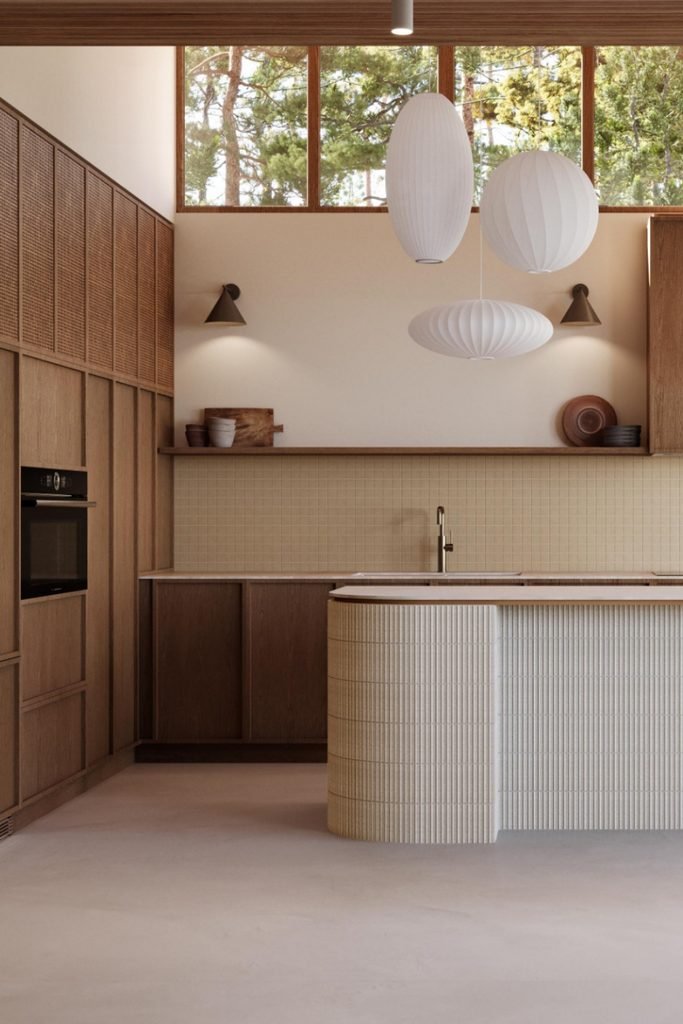
Woven Cabinets
Woven cabinet fronts bring natural texture into a Japandi kitchen while giving large storage walls a softer, more handcrafted appearance.
Pair them with darker wood framing and a lightly tiled island, so each texture stays noticeable without fighting for attention.
Use paper-style pendants and small wall lights for gentle layers, then keep shelves sparse to preserve the kitchen’s calm character.
Layered Lighting
If your neutral kitchen starts feeling flat, layer warm lighting under cabinets, inside shelves, and around the island for more depth.
Bring in a woven pendant to soften the clean cabinetry, then repeat natural texture through wood slats, plants, and a simple rug.
Keep the main counters lightly styled, so greenery adds life without taking away the open workspace you need every day.
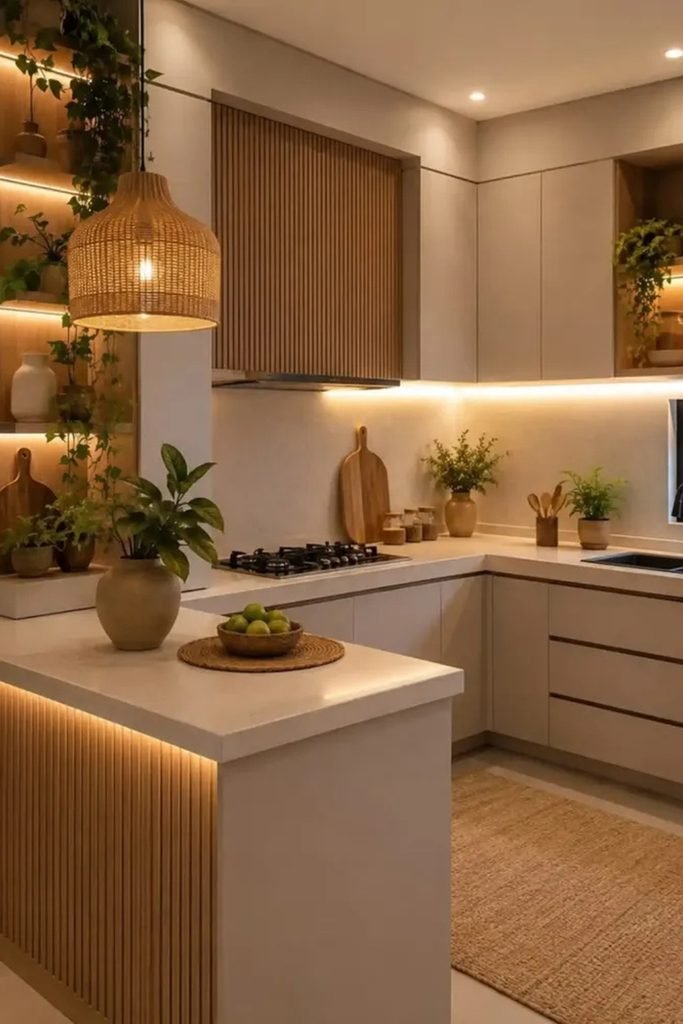
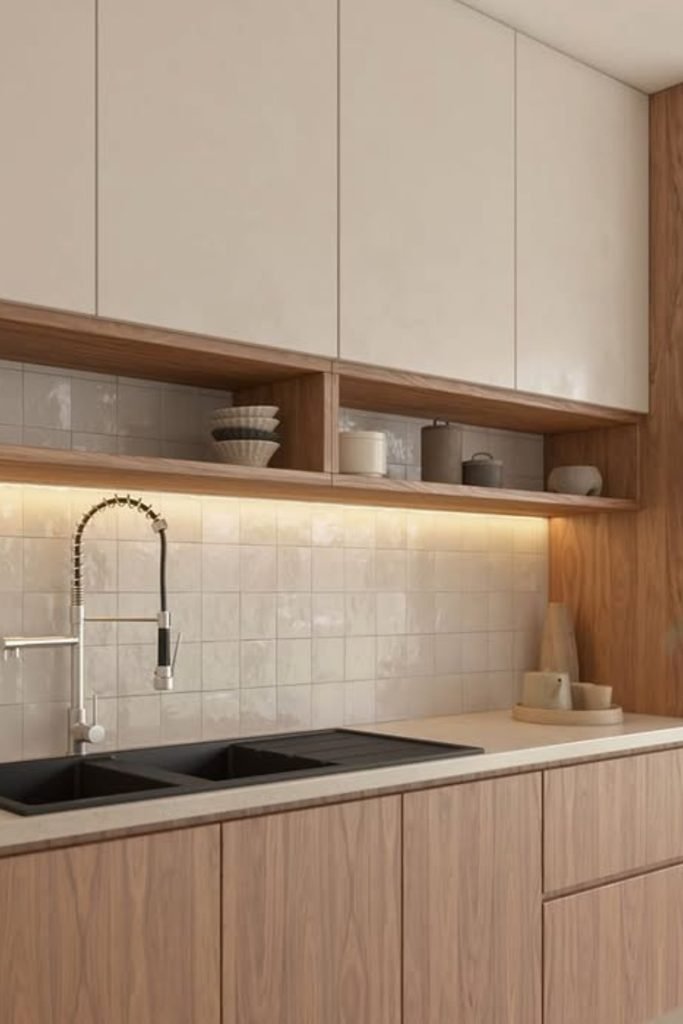
Open Niche
Instead of adding several floating shelves, build one long open niche between upper and lower cabinets for useful everyday pieces.
Frame the niche with warm wood, then use small neutral tiles behind it to bring subtle texture into the simple palette.
Run soft lighting underneath the shelf, giving your sink area useful task light while making the wood feel warmer at night.
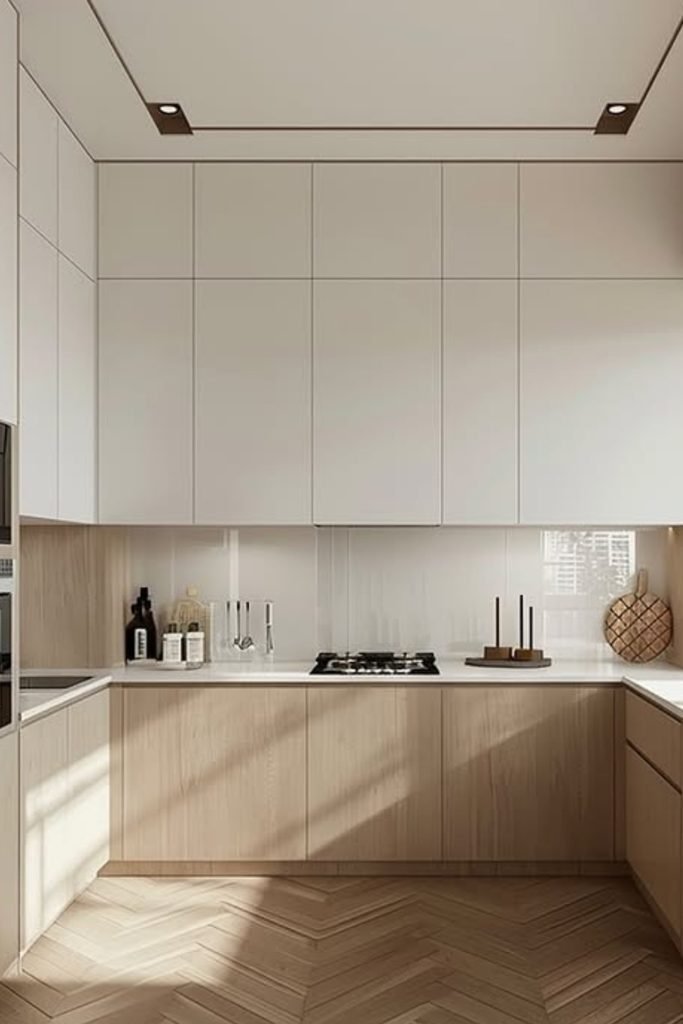
Window Corner
A window-side counter can make a compact Japandi kitchen feel more open, especially when you keep the upper cabinetry visually light.
Use pale wood below and warm white cabinets above, so you gain plenty of storage without making the walls feel heavy.
Let daylight handle most of the brightness, then add small recessed lights around work zones for practical evening use.
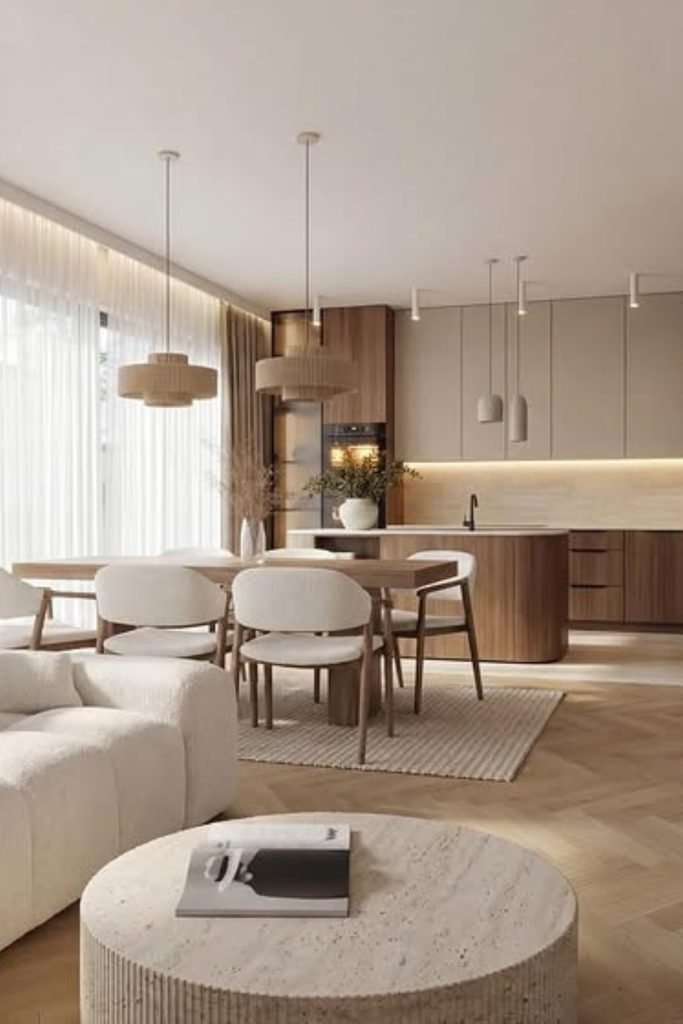
Open Living
If your kitchen shares space with the living room, repeat the same wood tones and soft neutrals across both areas.
Choose simple dining furniture and rounded kitchen details to create an easy transition instead of making each zone feel completely separate.
Use pendants over the dining area and warm task lighting near the kitchen, helping each space feel defined without adding partitions.
Stone Balance
Pair light wood cabinetry with pale stone when you want natural variation without introducing several competing colors into the kitchen.
Let the stone continue across the backsplash and island, creating a steady connection between your cooking and seating areas.
Keep accessories simple with wooden stools, handmade pottery, and one tall branch, so the natural materials stay easy to notice.
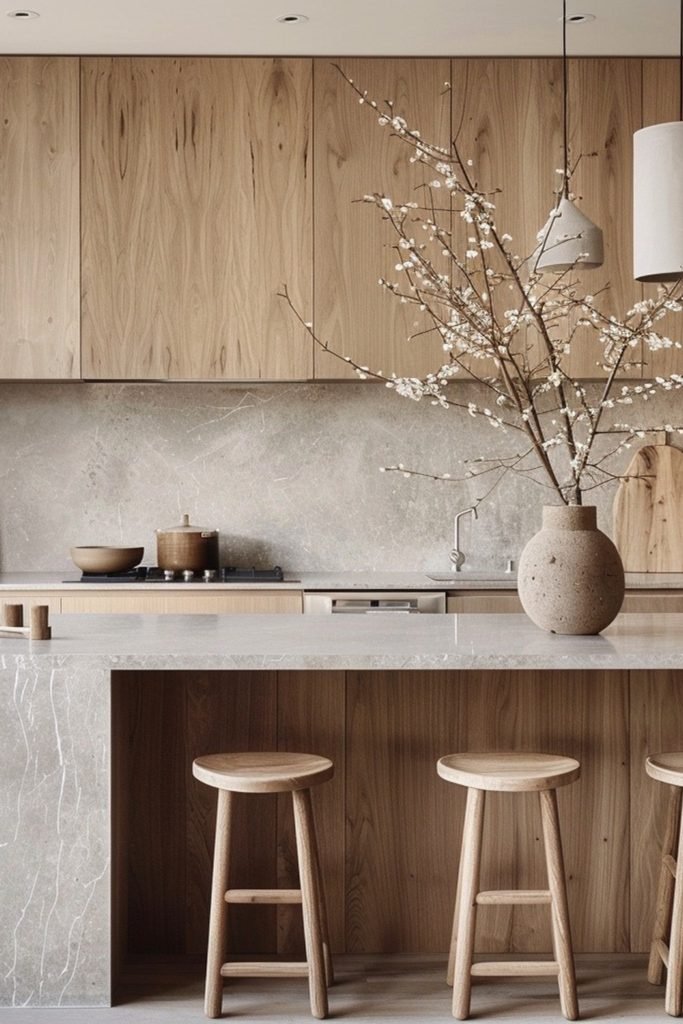
Paper Pendant
A paper-style pendant can soften a wood-heavy kitchen while bringing a clear Japanese influence into the room without extra decoration.
Use warm shelf lighting behind the worktop, then keep ceramics and cutting boards grouped instead of spreading them across counters.
Bring greenery near a large window, allowing natural light and organic shapes to balance the straight lines of the cabinetry.
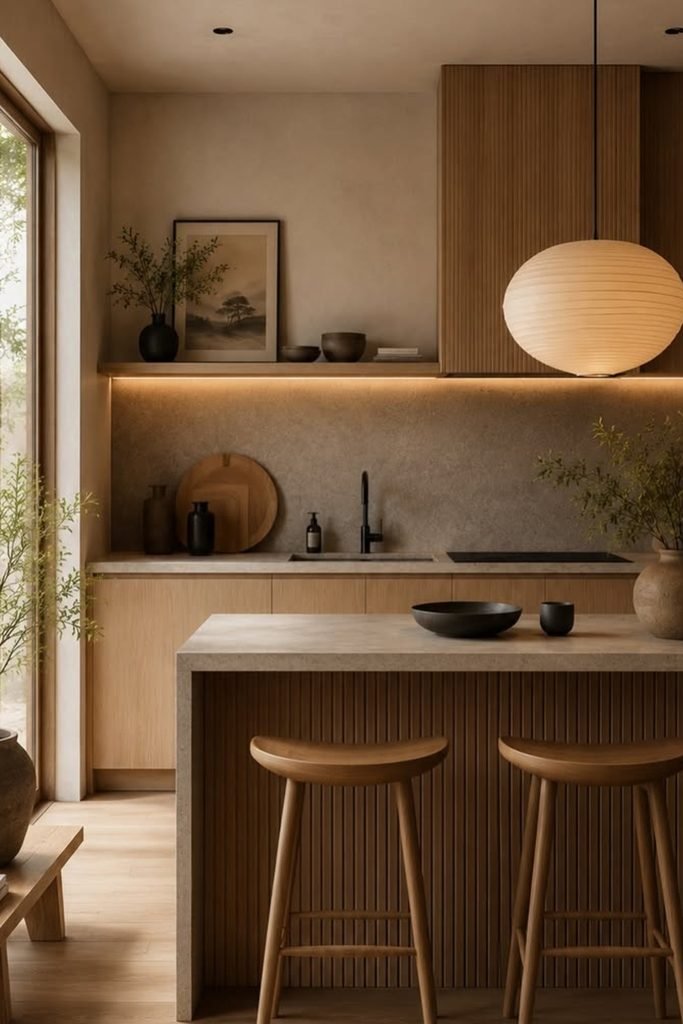
Rounded Island
Rounded island corners work well in an open Japandi kitchen because they soften long cabinet lines and make circulation feel easier.
Repeat similar wood tones across cabinetry, stools, and nearby furniture, so the kitchen connects naturally with your living area.
Use dark pendants as controlled contrast, while large windows and pale surfaces keep the overall room feeling warm and open.
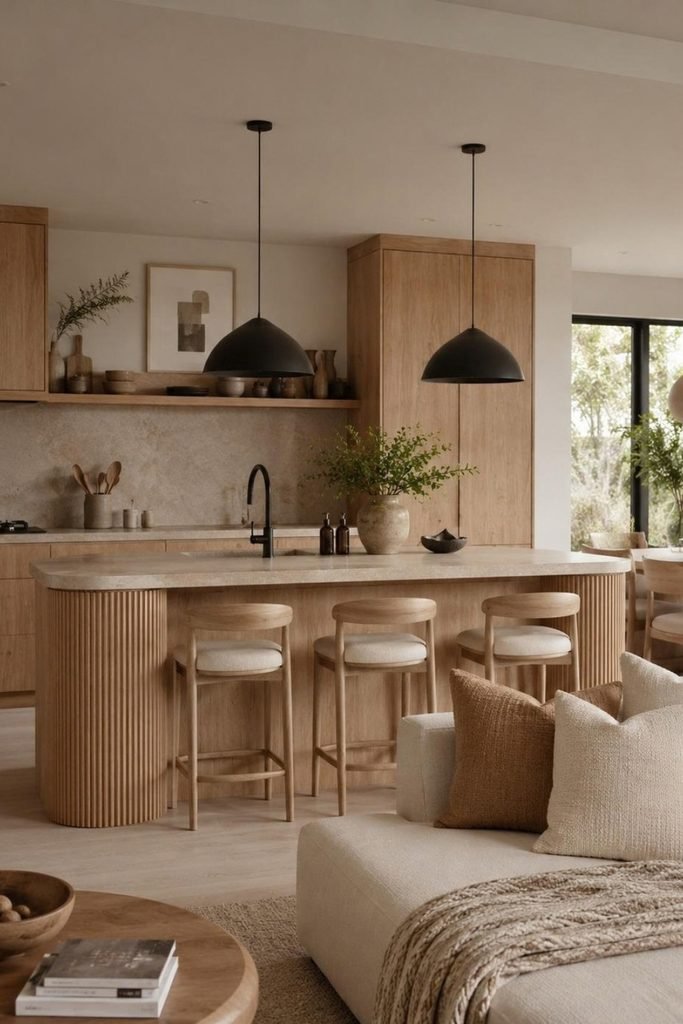
Earthy Contrast
If pale Japandi kitchens feel too light for you, bring in darker handmade tiles behind warm wood cabinetry for stronger depth.
Keep surrounding walls creamy and countertops pale, so the darker backsplash becomes a grounded accent rather than dominating the kitchen.
Finish with one simple pendant, natural greenery, and textured seating to soften the contrast without filling surfaces with unnecessary decor.
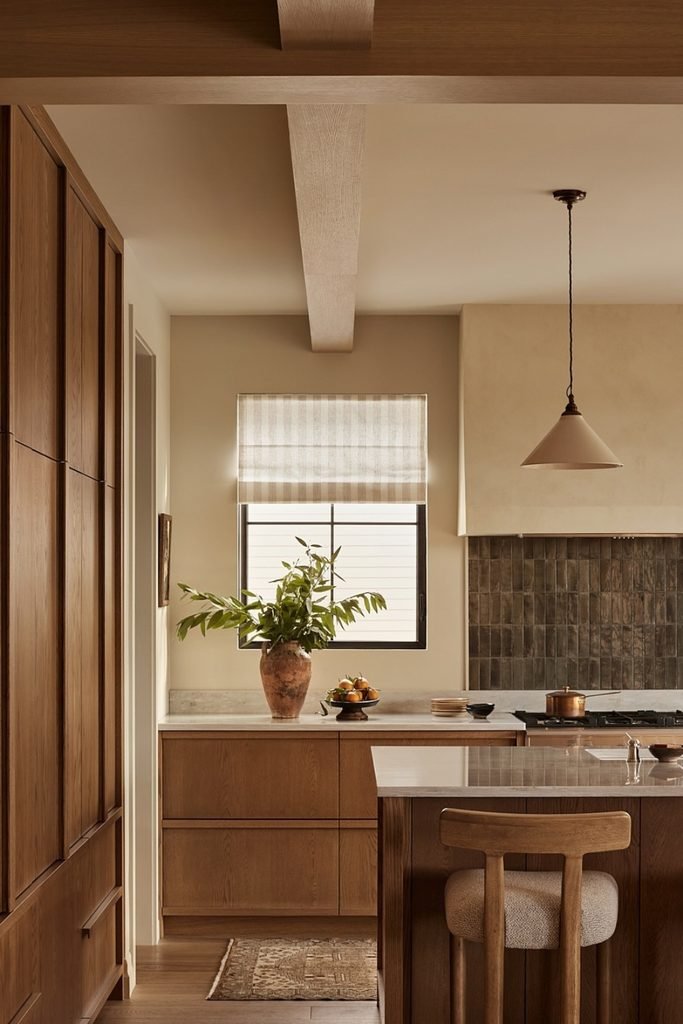
Stone Island
Use a full stone island when you want a stronger focal point without introducing bold colors that can interrupt the Japandi palette.
Balance its visual weight with warm wood cabinetry, keeping the cabinet fronts simple so both natural materials have room to stand out.
Add small pendant lights and soft under-cabinet lighting, then keep accessories minimal to preserve the open, calm feeling.
FAQs
Can Japandi Kitchens Have Color?
Yes, but keep the colors soft and connected to nature, such as sage green, clay, mushroom, muted brown, or charcoal.
Use color on cabinets, tiles, or one feature area instead of spreading several different shades throughout the whole kitchen.
Balance stronger tones with warm wood and pale stone, so the kitchen still keeps the calm feeling that defines Japandi style.
How Do You Keep a Japandi Kitchen From Feeling Too Plain?
Let natural materials create the interest by mixing visible wood grain, stone, handmade ceramics, woven textures, and softly finished walls.
Add one or two organic details, such as a leafy branch or wooden bowl, instead of filling empty surfaces with decorations.
Layer natural daylight with warm task and accent lighting, which brings out those textures and makes a simple kitchen feel more inviting.
