
How To Style Living Room Floating Shelves
You put up floating shelves thinking they’ll make your living room look stylish. But once they’re on the wall, something feels off.
They either look too empty, like something is missing, or they slowly turn into a messy spot where random things get placed without any plan.
And the frustrating part is, you’ve probably tried filling them up, rearranging things a few times, maybe even copied ideas from Pinterest but it still doesn’t look “right.”
Here’s the real issue: styling floating shelves isn’t about just adding decor pieces.
It’s about knowing what to place, how much to place, and where to stop. Without that, even expensive decor will look messy or flat.
In this article, you’ll learn a simple way to style your living room floating shelves so they look balanced, clean, and intentional.
Let’s jump in!
How Do You Know When Your Floating Shelves are Perfectly Styled Without Adding More Items?
You’ll know your floating shelves are styled well when nothing feels out of place and you don’t feel the urge to keep adjusting things.
A common mistake is thinking you need to keep adding items to make shelves look complete, but in reality, over-styling is what makes them look messy.
Step back and look at your shelves from a distance. If your eyes can move easily across the shelf without getting stuck on one heavy or crowded area, that’s a good sign.
Each section should feel balanced, with a mix of height, shape, and spacing.
Also check for breathing room. If every inch is filled, it usually means you’ve gone too far. Well-styled shelves always have some empty space that lets the decor stand out.
If removing one item makes the shelf look better, that’s your answer. Good styling is often about knowing when to stop, not when to add more.
8 Ways to Style Living Room Floating Shelves
Following are the 8 ways to style living room floating shelves.
1. Mix Books with Decor Pieces
Start with books because they give structure to your floating shelves. Stack some books horizontally to create a solid base, then place a few vertically to break the pattern and avoid a stiff look.
Once the base is set, add small decor pieces like candles, vases, or simple sculptures around them.
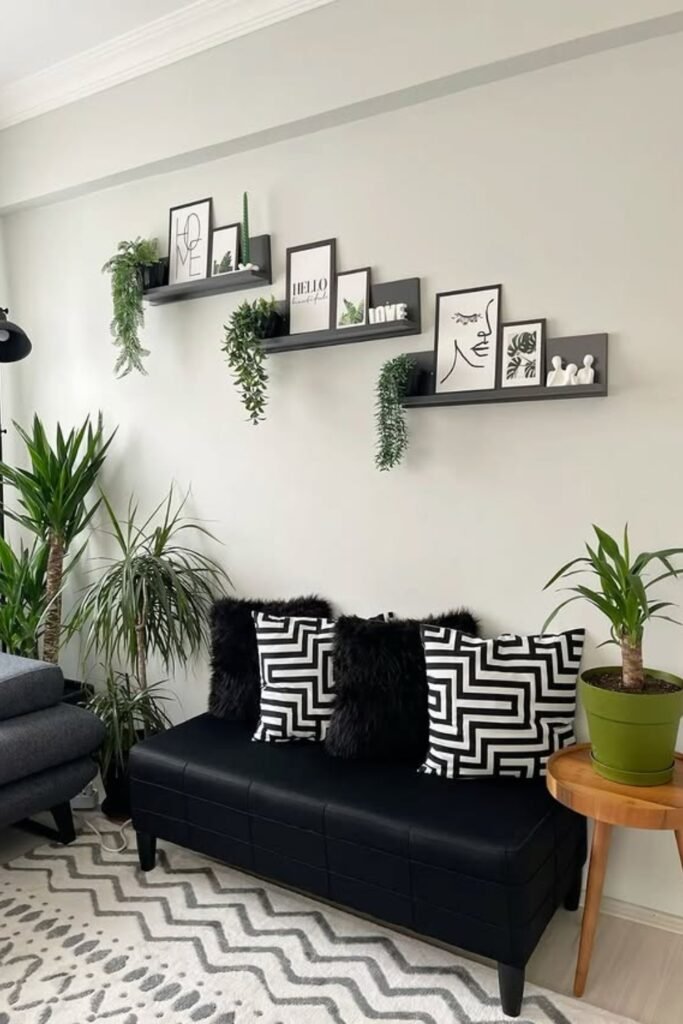
This mix is important because books alone can feel like storage, and decor alone can feel random.
When you combine both, the shelves start to look intentional and styled. Keep adjusting until each section feels balanced and not too crowded.
2. Add Green Plants
Plants are one of the easiest ways to make floating shelves feel fresh and alive.
You can use small indoor plants like pathos, snake plants, or succulents depending on your space and lighting.
Place them in simple pots that match your room style so they don’t look out of place.
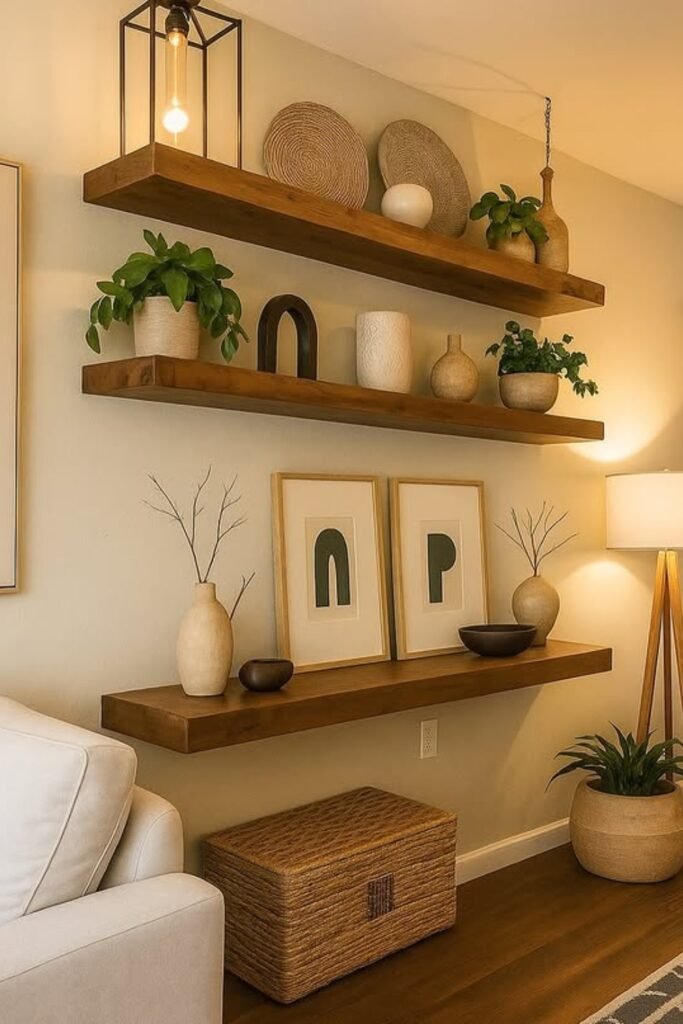
If possible, let one plant slightly trail over the edge of the shelf because it softens the straight lines and makes everything feel more natural.
Just avoid adding too many plants, because overdoing it can make the shelves feel cluttered instead of calm.
3. Balance the Visual Weight
Styling floating shelves is all about balance. If one side looks heavier than the other, the whole setup feels off.
Try to balance tall items with wider or lower objects so the eye moves smoothly across the shelf. It doesn’t need to be perfectly symmetrical, but it should feel visually even.
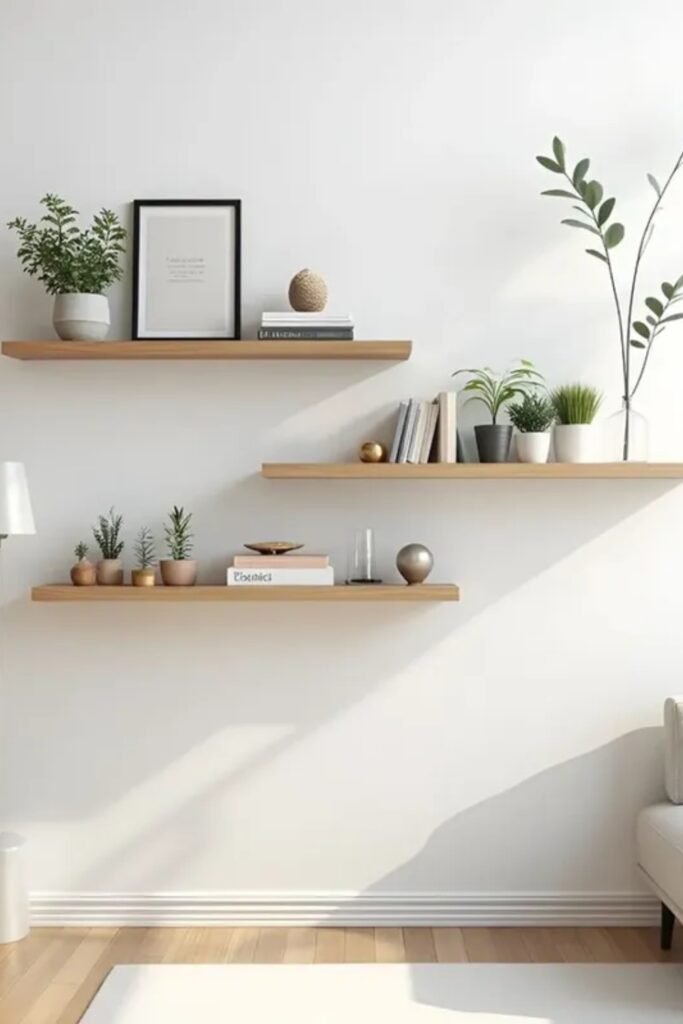
For example, if you place a tall vase on one side, balance it with a group of smaller objects or books on the other.
Step back while styling so you can easily see if anything feels too heavy or out of place.
4. Create Depth with Layering
One common mistake is placing everything in a straight line, which makes shelves look flat and boring. To fix this, you need to create depth by layering items.
Place some objects toward the back of the shelf, like frames or taller decor pieces, and bring smaller items slightly forward.
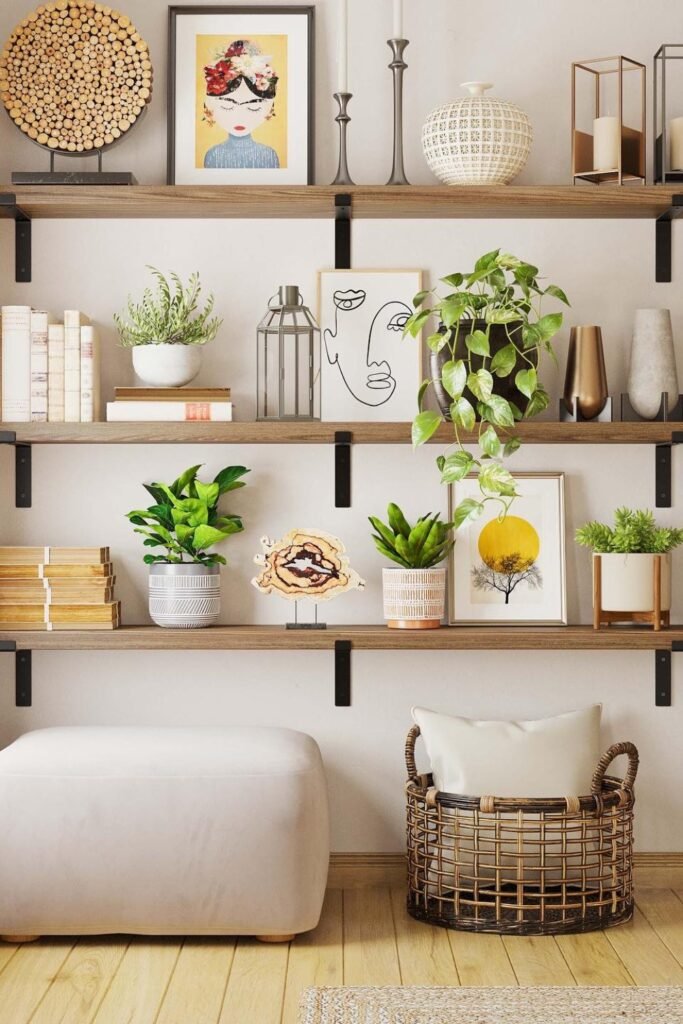
You can even overlap items a little, such as leaning a frame behind a plant or placing a small object in front of books.
This layering effect makes your shelves look more styled and professionally designed instead of just filled.
5. Stick to a Simple Color Palette
If you use too many colors on your shelves, the result will feel messy and unplanned. Instead, choose 2 to 3 main colors that match your living room and stick with them.
For example, you can go with white, wood, and black or beige, green, and gold.
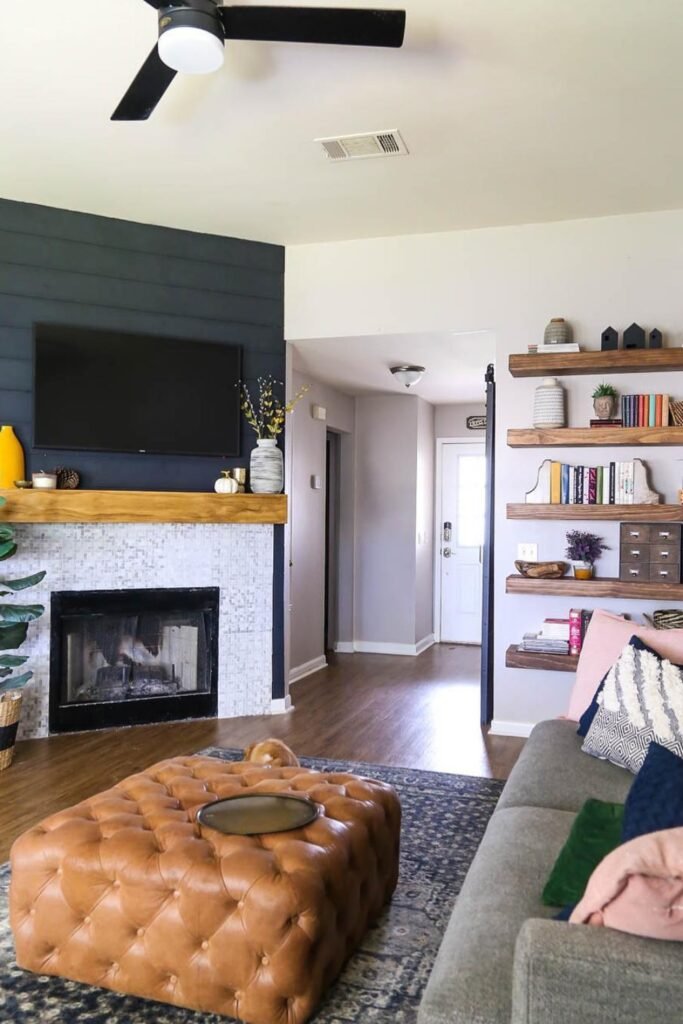
When you repeat these colors across different shelves, everything automatically feels connected and visually calm.
Even if the items are different, the shared color theme keeps the whole setup looking intentional and well-designed.
6. Leave Empty Space
Many people think they need to fill every inch of their floating shelves, but that’s exactly what makes them look cluttered.
Empty space is actually part of good design. When you leave gaps between items, it gives your decor room to breathe and makes each piece stand out more.
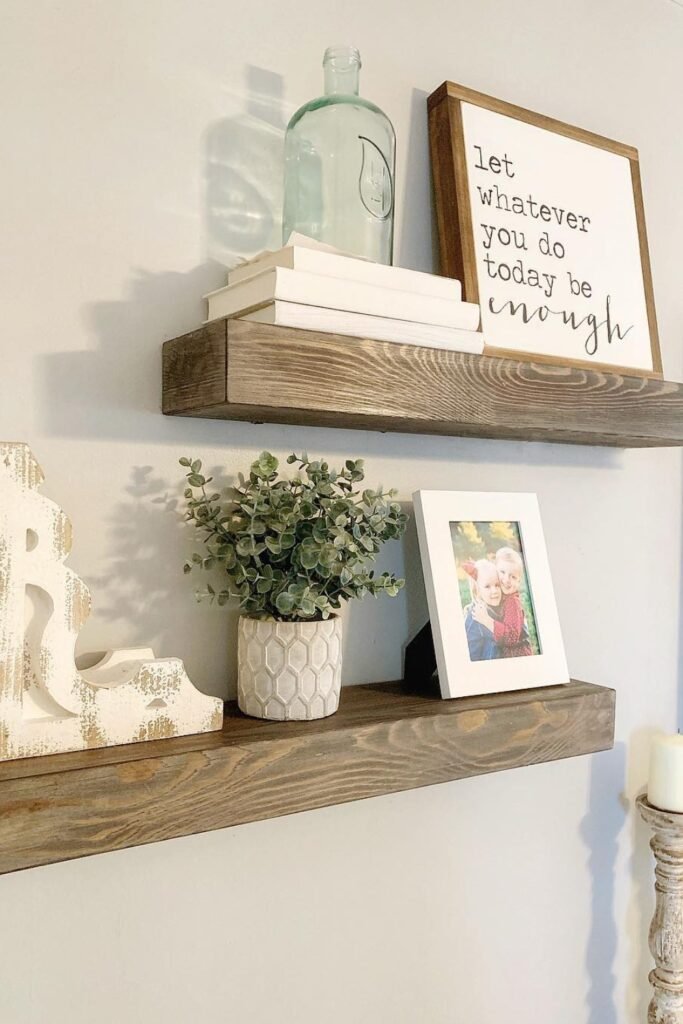
It also creates a more expensive and clean look. A good rule is to only fill about 60 to 70 percent of the shelf and leave the rest open.
This balance is what keeps things from feeling overcrowded.
7. Group Items in Odd Numbers
Arranging items in odd numbers like 3 or 5 makes your shelves look more natural and visually pleasing.
For example, you can group three candles together, stack three books with a decor piece on top, or arrange five small objects in a cluster.
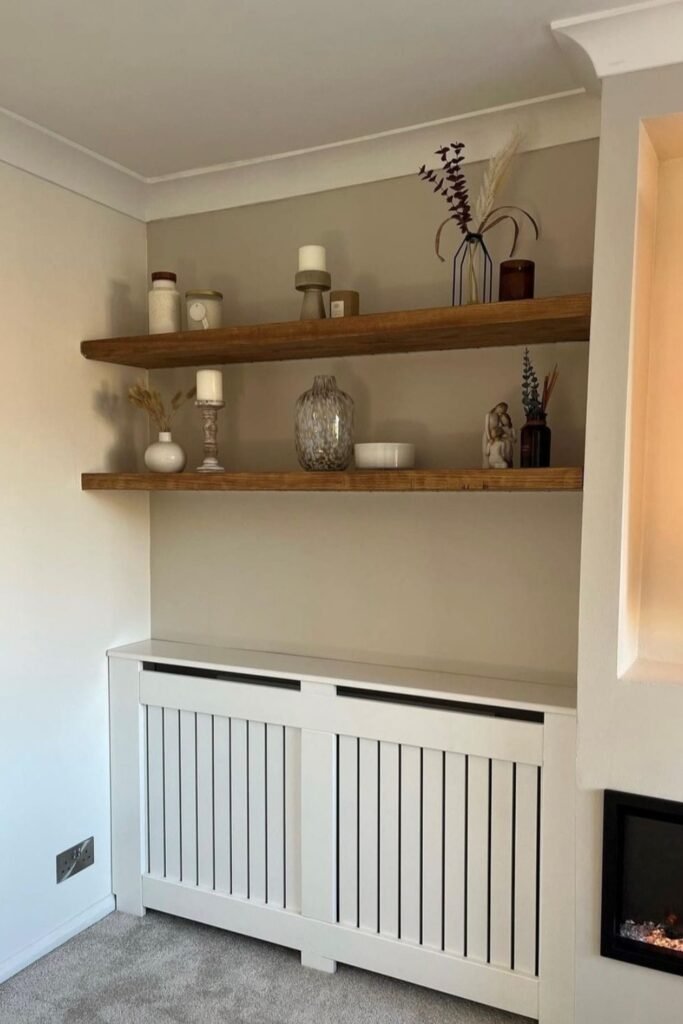
Odd-number groupings feel less staged and more relaxed compared to even numbers.
This simple trick is widely used in interior design because it guides the eye smoothly and avoids that “too perfect” or artificial look.
8. Mix Different Textures
If everything on your shelves has the same material or finish, the setup will feel flat and boring.
To avoid this, mix different textures like wood, glass, metal, and ceramic. Wood adds warmth, glass adds lightness, metal adds contrast, and ceramic adds softness.
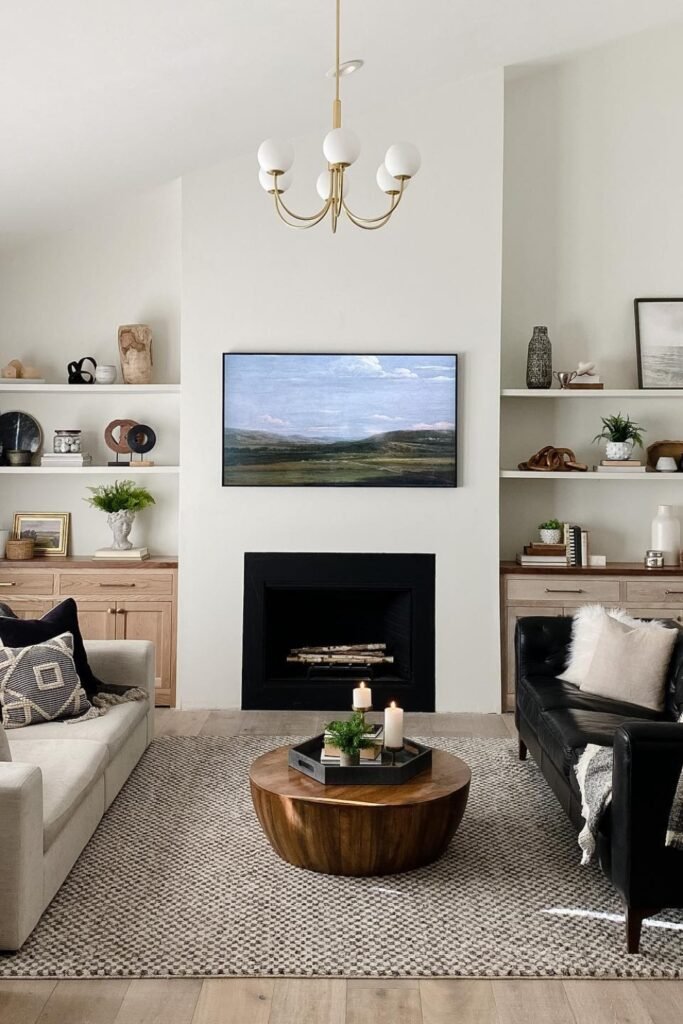
When you combine these textures, even simple items start to look more interesting and styled.
Spread them across the shelves so each section feels rich but still clean and not overwhelming.
Why Do Floating Shelves in Your Living Room Never Look Balanced Even After Decorating Them?
Most people feel this problem after styling their shelves, they add nice items, but the result still feels “off.”
The main reason is not the decor itself, but how it is placed. Balance is not about putting equal things on both sides; it’s about how the visual weight is spread across the shelves.
If one side has tall or bold items and the other side has only small objects, the shelf will always feel uneven.
The same happens when everything is placed in a straight line or grouped without spacing.
Your eyes naturally look for flow, and when that flow is missing, the shelves feel unbalanced even if they are full.
To fix this, you need to think in terms of height, shape, and spacing. Mix tall and short items, spread visual weight across the whole shelf, and leave some empty space so nothing feels forced.
When you start adjusting with balance in mind instead of just filling space, the shelves instantly look more calm, styled, and intentional.
How Can You Turn Empty Floating Shelves into a Styled Focal Point Without Overfilling Them?
Empty floating shelves often feel like a problem because they look unfinished, so the first instinct is to keep adding items.
But that usually leads to clutter. The real trick is not filling space, it’s styling small areas in a planned way so the shelves feel complete without being crowded.
Instead of spreading decor everywhere, create small “styled zones” on each shelf. For example, group a few books with a candle, or pair a plant with a small decor object.
Then leave open space between these groups. This makes the shelves look designed, not randomly filled.
You also need to control how many items you use. Fewer, well-placed objects always look better than too many small ones scattered around.
When you combine simple groupings with empty breathing space, even lightly decorated shelves start to look like a strong focal point in your living room.
Conclusion
Floating shelves don’t look good just because you fill them with nice decor, they look good when everything has balance, space, and intention.
If your shelves ever feel messy or unfinished, it usually means you’re either adding too much or placing things without a clear structure.
The simple fix is to slow down and style in small steps.
Mix items instead of repeating the same type, leave empty space on purpose, and always check how the whole shelf looks instead of focusing on one corner.
When you follow these basic ideas, your shelves stop looking random and start feeling like a natural part of your living room.
You don’t need expensive decor or design skills. You just need a clear approach and a bit of restraint. Once you understand that, styling floating shelves becomes easy every time.
You may like to read!
