
18 Stone Bathroom Ideas
Stone can make a bathroom feel beautifully grounded, but too much of it can quickly turn the space heavy, cold, or dated.
Veined slabs, textured finishes, earthy shades, and warm accents can give the room a naturally refined look with plenty of depth.
In this article, you’ll find practical stone bathroom ideas that balance natural character, warmth, and everyday functionality.
Let’s jump in!
What Stone Is Best for Bathrooms?
The best stone depends on where you plan to use it, because shower floors, walls, and vanity tops deal with moisture differently.
Quartzite and granite are strong choices for durability, while marble brings beautiful veining but needs gentler cleaning and more maintenance.
Travertine works especially well for warm, spa-like bathrooms, although choosing a honed finish makes the surface feel softer and more practical.
Slate can suit floors and showers when you want deeper color and natural texture, but always check the specific stone’s wet-area suitability.
For easier upkeep, stone-look porcelain is worth considering when you want the appearance of natural stone without the same sealing routine.
Travertine Calm
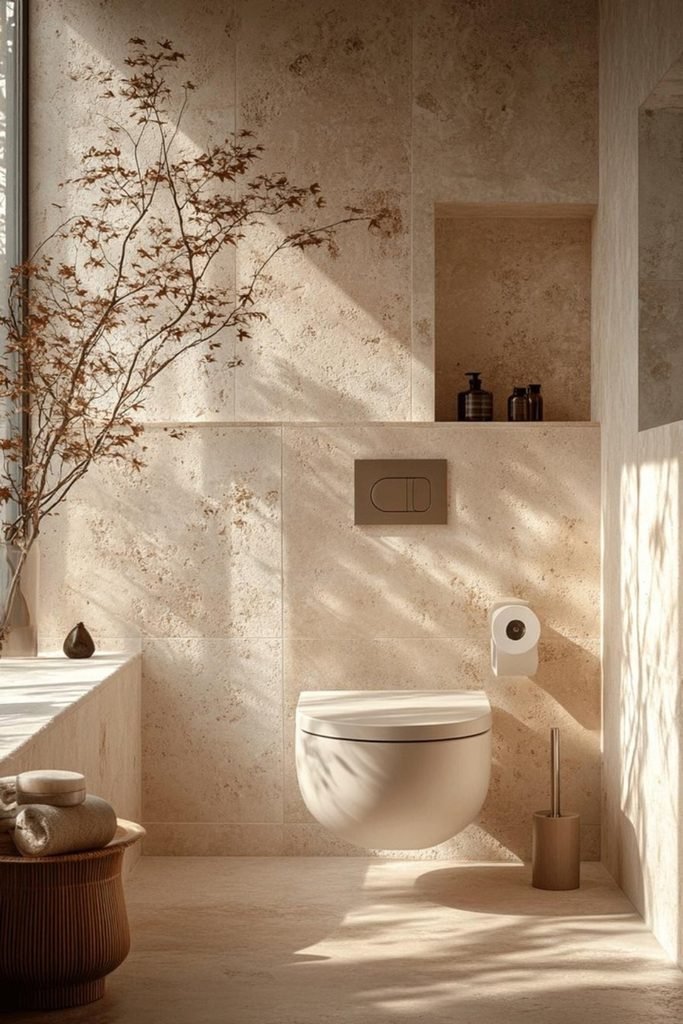
Let pale travertine cover the main wall when you want warmth without visual heaviness, especially in compact bathrooms with generous daylight.
Keep the grout close to the stone tone, then add a wall-hung toilet so the floor stays open and quietly modern.
Natural branches, bronze details, and soft sunlight are enough here, because extra decoration would compete with the stone’s subtle movement.
Textured Stone
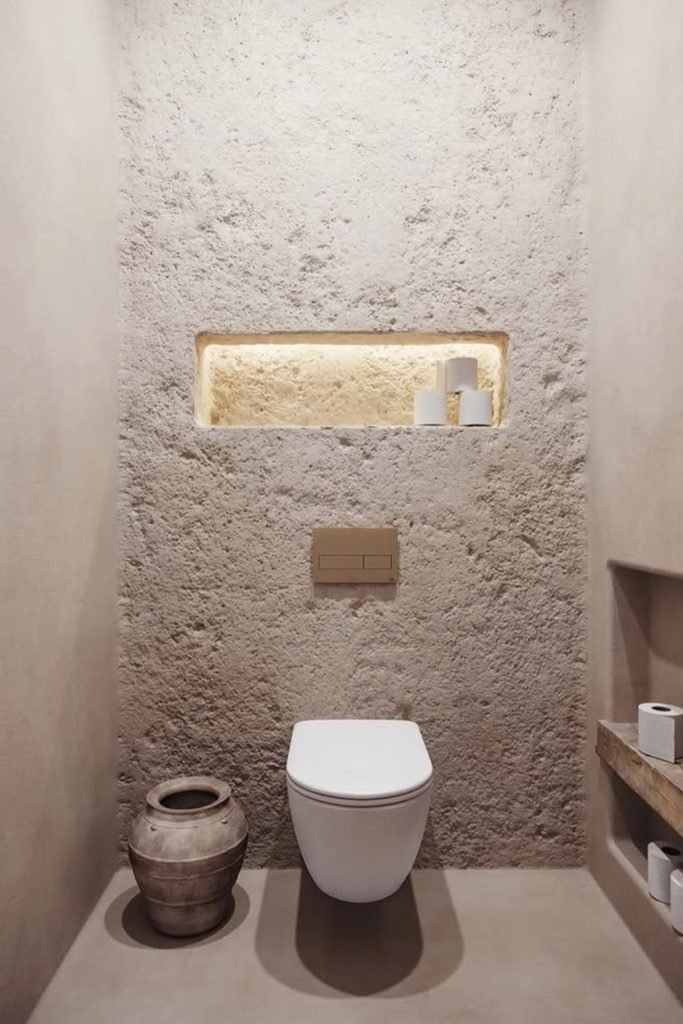
Use rough-cut stone on one narrow wall when a small powder room needs character, but keep surrounding surfaces smooth and restrained.
Recessed lighting works especially well with this treatment, grazing across the uneven surface and turning texture into the room’s main feature.
Choose a simple wall-hung toilet and built-in storage nearby, since clean lines prevent the rugged stone from making the space feel cramped.
Stone Arches
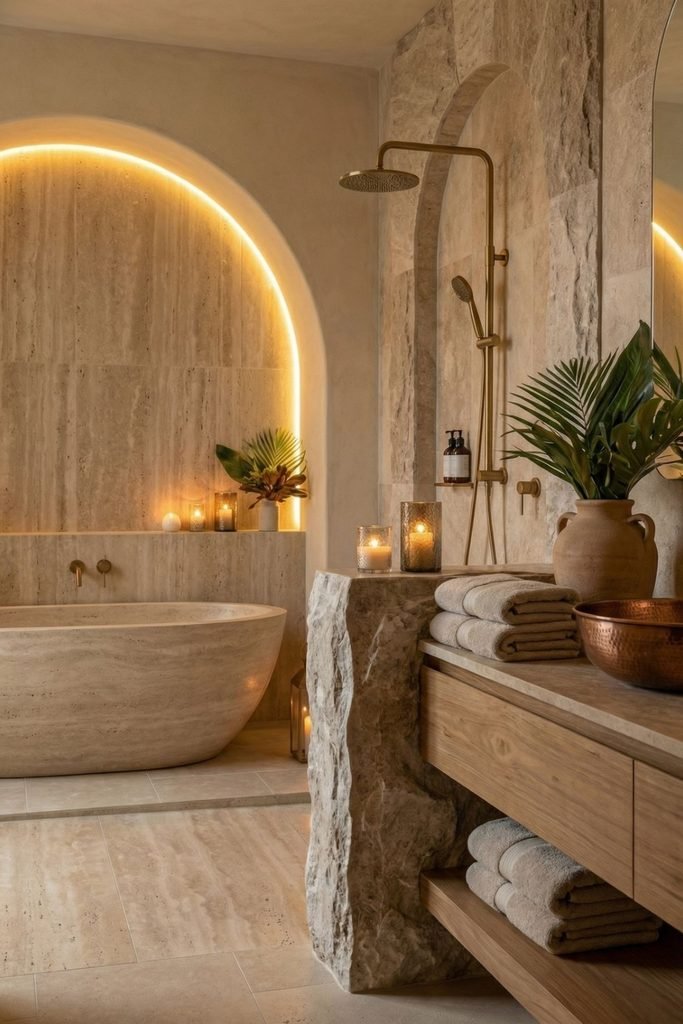
Frame a shower or bathing zone with a stone arch when you want the bathroom to feel architectural rather than simply tiled.
Carry the same warm stone across the tub surround and shower walls, then let wood cabinetry soften the heavier surfaces nearby.
Warm concealed lighting is the finishing move here, because it traces the curved opening and brings out every natural variation gently.
Earthy Layers
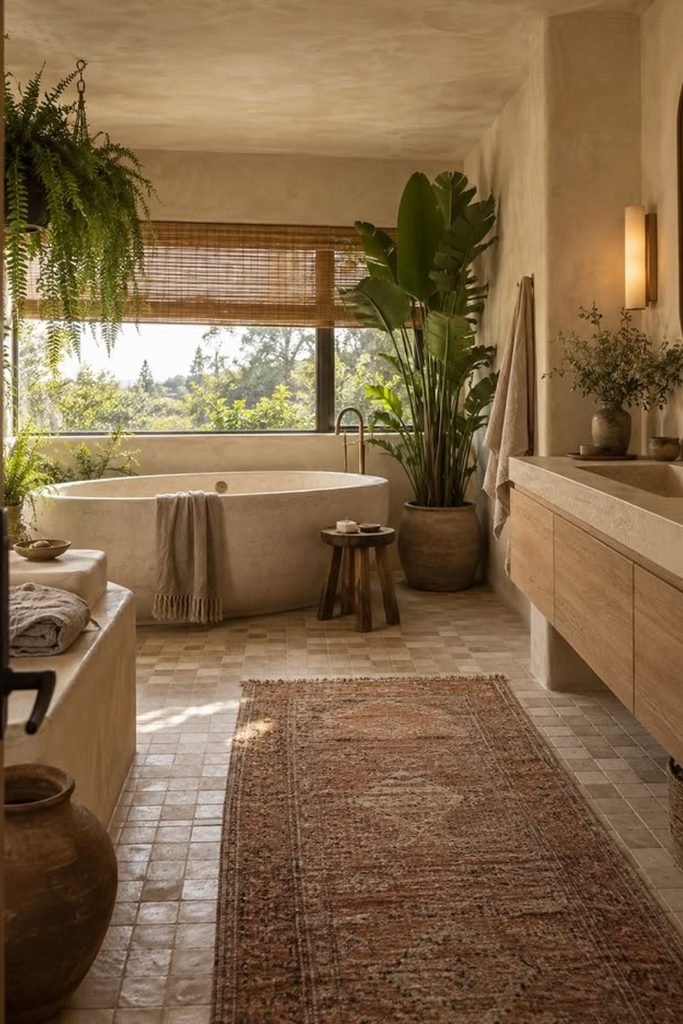
Build a softer stone bathroom by mixing honed surfaces with small-format flooring, warm plaster, and timber instead of matching everything perfectly.
This approach suits long bathrooms especially well, because the varied textures create depth while a single earthy palette keeps the room connected.
Add oversized greenery near the tub and keep the vanity simple, letting natural materials provide the interest instead of decorative clutter.
Mosaic Flooring
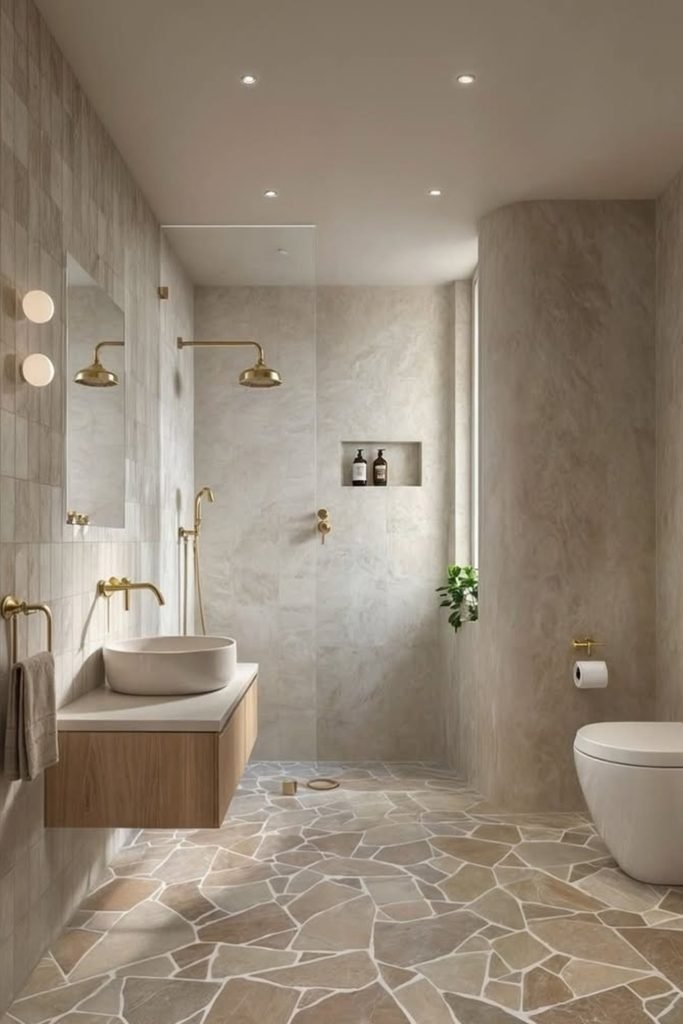
Break up broad stone walls with an irregular mosaic floor when a narrow bathroom needs texture without adding another strong color.
Keep the wall stone quieter and larger in scale, letting the smaller floor pieces create movement while the room stays calm.
Brass fittings and a floating vanity add warmth here, while open floor space prevents the mixed stone pattern from feeling crowded.
Rough Stone
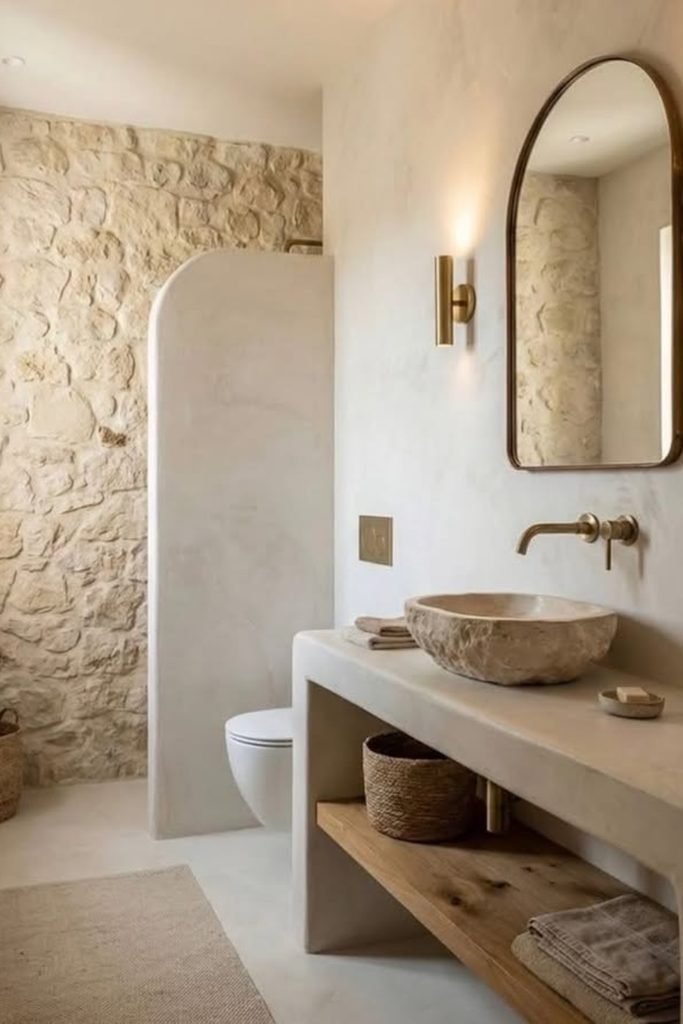
Reserve rough natural stone for one feature wall when you want Mediterranean character without turning every surface into a heavy rustic statement.
Smooth plaster around the vanity gives that texture breathing room, and a simple stone basin repeats the material in a cleaner way.
Use warm wood shelving and aged brass sparingly, because too many earthy finishes together can make a compact bathroom feel visually muddy.
Tub Alcove
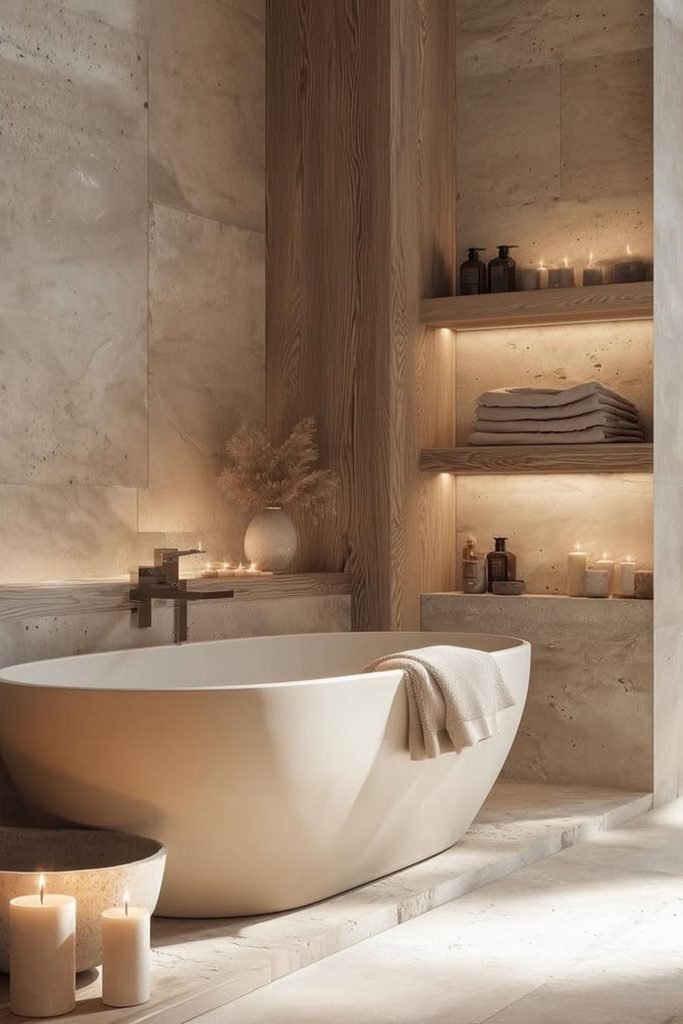
Give a freestanding tub its own stone-backed zone when the bathroom has enough depth for bathing to feel intentionally separated.
Bring vertical timber beside the stone instead of across every wall, creating warmth while still letting the natural surface remain dominant.
Built-in shelves with concealed lighting work best for towels and toiletries, keeping storage useful without interrupting the calm architectural composition.
Wood Contrast
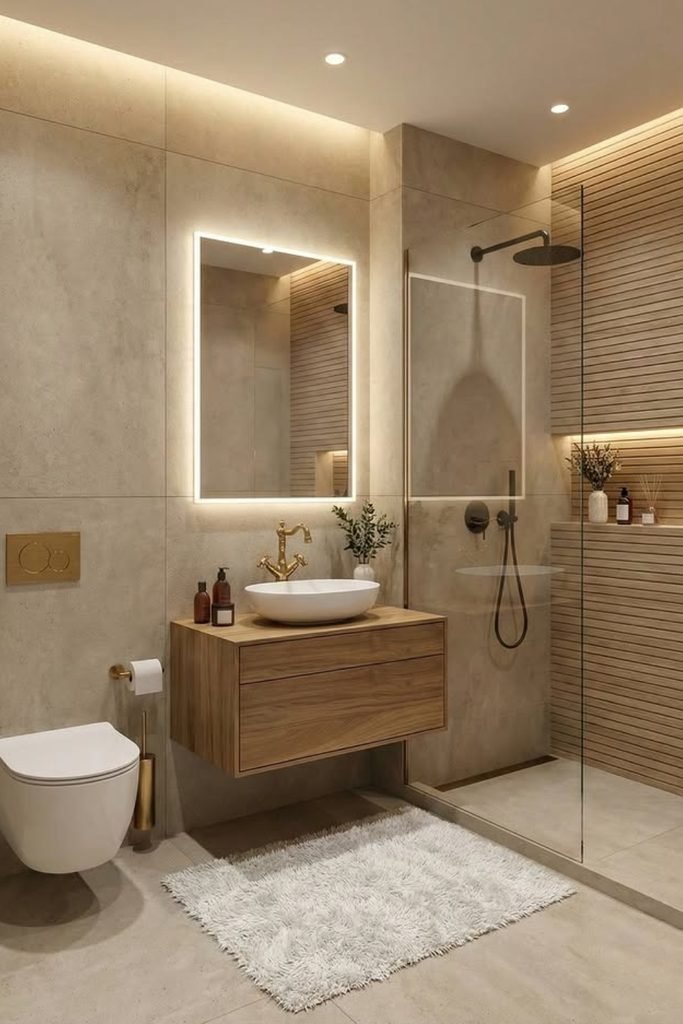
Pair large-format beige stone with narrow timber slats when a modern bathroom needs warmth, rhythm, and relief from broad uninterrupted surfaces.
Keep the vanity floating and compact so the stone remains visible around it, which helps smaller layouts feel lighter and more open.
Use warm brass or bronze as the bridge between wood and stone, avoiding stark chrome when the palette is deliberately soft and earthy.
Rustic Stone
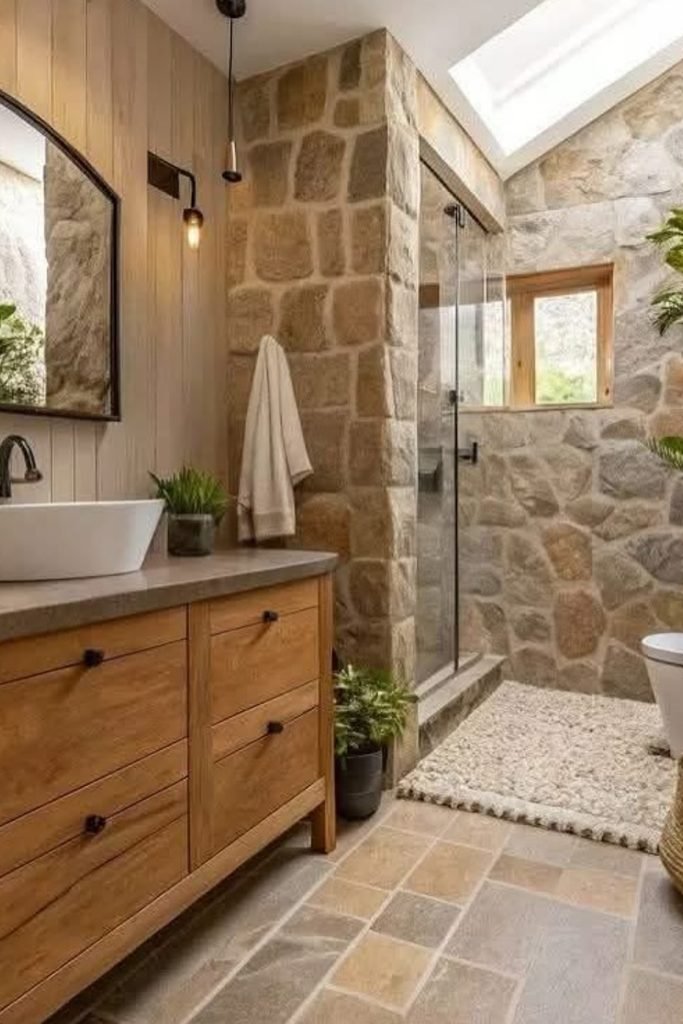
Let chunky stone walls do the heavy lifting when you want a rustic bathroom that still feels bright, clean, and intentional.
Balance all that texture with smooth cabinetry, simple black hardware, and a skylight so the room never slips into farmhouse overload.
This works best in bathrooms with strong daylight, where natural stone variation can feel earthy without making corners look too dark.
Rock Shower
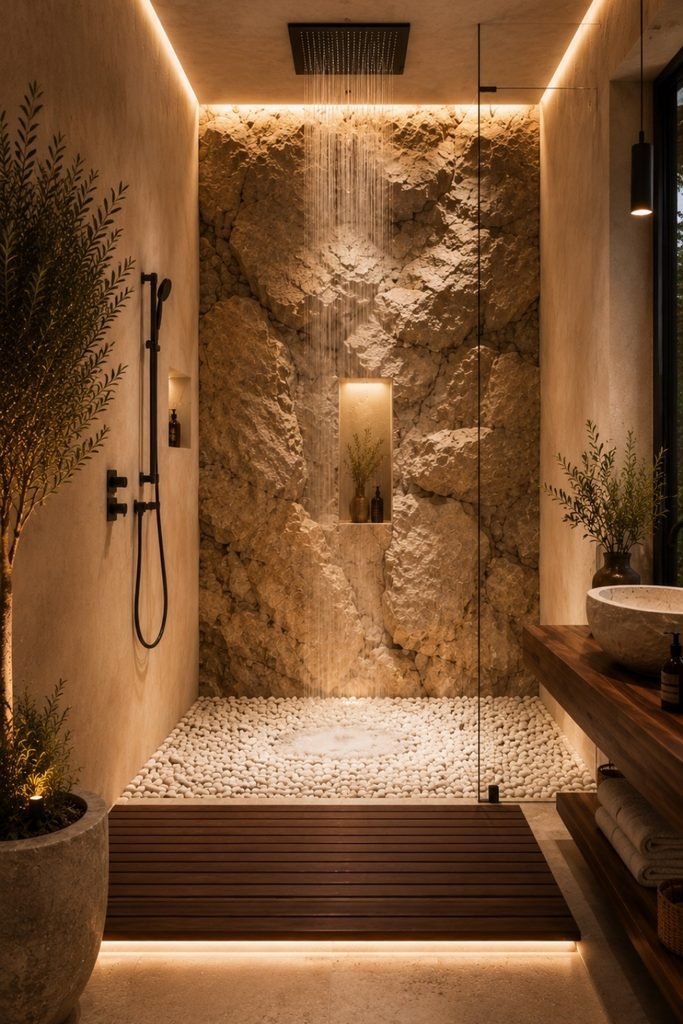
Turn the shower into the focal point by using a rugged stone wall where texture can replace artwork, tile patterns, and decoration.
Warm perimeter lighting is essential here because it skims the uneven surface, deepening shadows and making the stone feel deliberately sculptural.
Keep surrounding plaster smooth and fixtures matte black, then use rounded pebbles underfoot to continue the natural theme without visual competition.
Stone Contrast
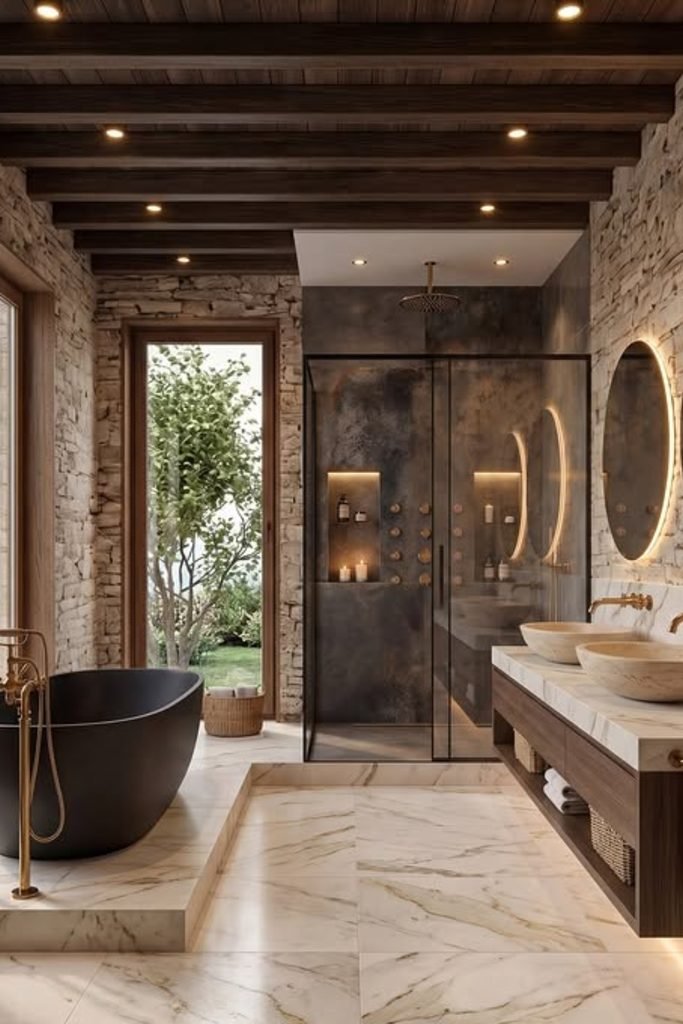
A large bathroom can handle stronger contrasts, so pair pale stone walls and marble floors with one deep charcoal feature.
Use the darkest tone on the tub or shower enclosure rather than everywhere, keeping the room dramatic without losing its natural warmth.
Wood ceiling beams and a long vanity help bridge those extremes, making luxurious stone feel grounded instead of overly polished or formal.
Stone Repetition
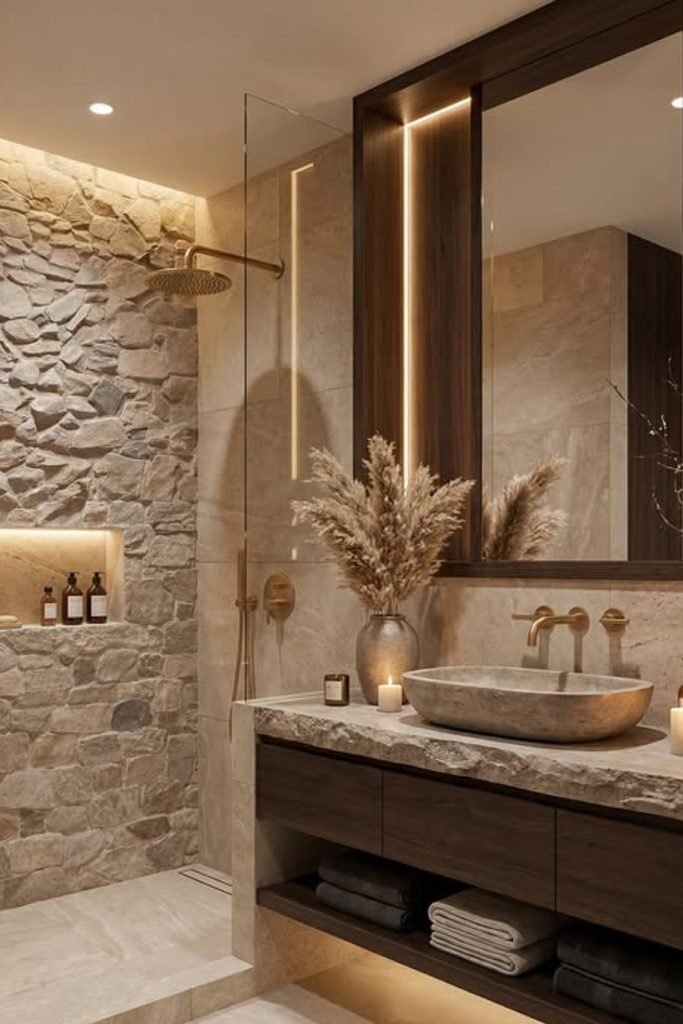
Repeat stone in two separate zones when you want cohesion without wrapping every wall, especially around the shower and vanity.
Choose one rougher application and one smoother surface, allowing texture to vary while the shared color keeps both areas visually connected.
Dark timber underneath gives pale stone enough contrast, while warm lighting softens the transition and stops the scheme from feeling too uniform.
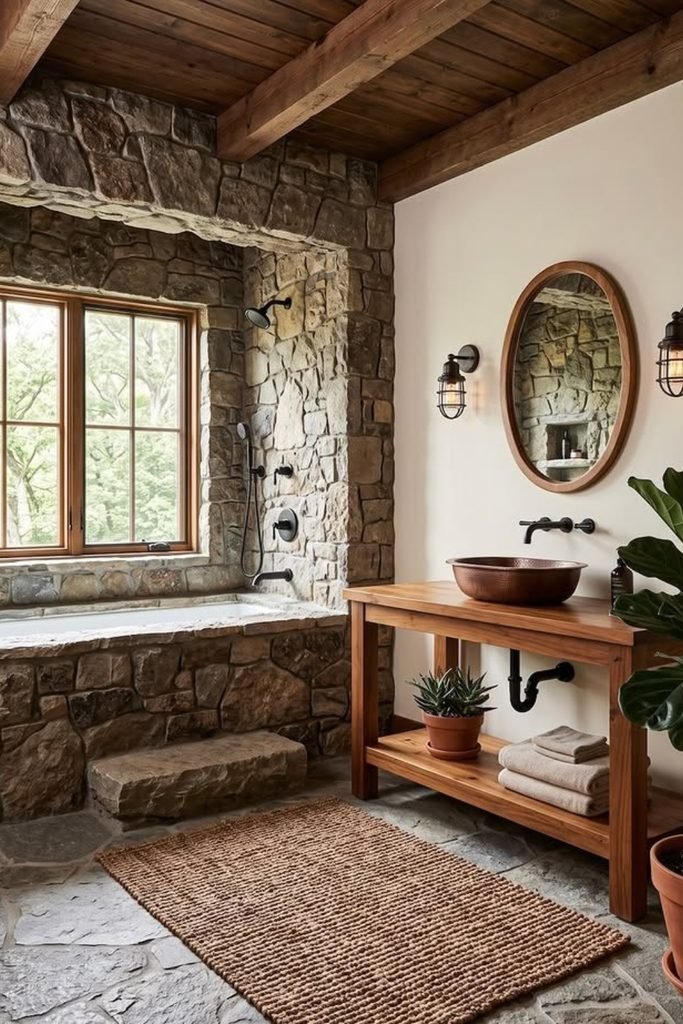
Cabin Stone
Let fieldstone wrap the bathing area when you want a bathroom to feel rooted, rustic, and connected to the architecture around it.
Warm timber overhead and a simple wood vanity keep the stone from feeling harsh, while black fixtures sharpen the traditional cabin palette.
This approach suits country homes or lodge-style spaces best, especially where large windows can brighten the deeper stone tones naturally.
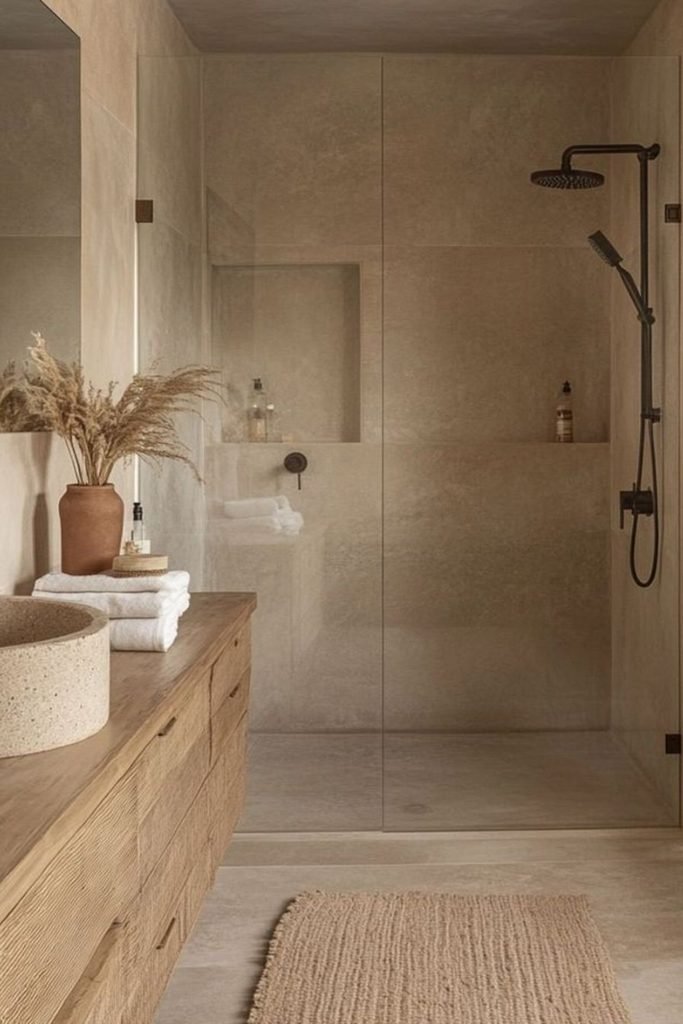
Quiet Stone
Choose large-format beige stone for a calmer bathroom where the goal is continuity, fewer visual breaks, and an easy modern atmosphere.
Keep grout lines subtle and repeat the same tone across shower walls and floors, allowing pale timber to add warmth without distraction.
Matte black shower fittings create enough definition here, so avoid extra patterns that could interrupt the soft, restrained stone envelope.
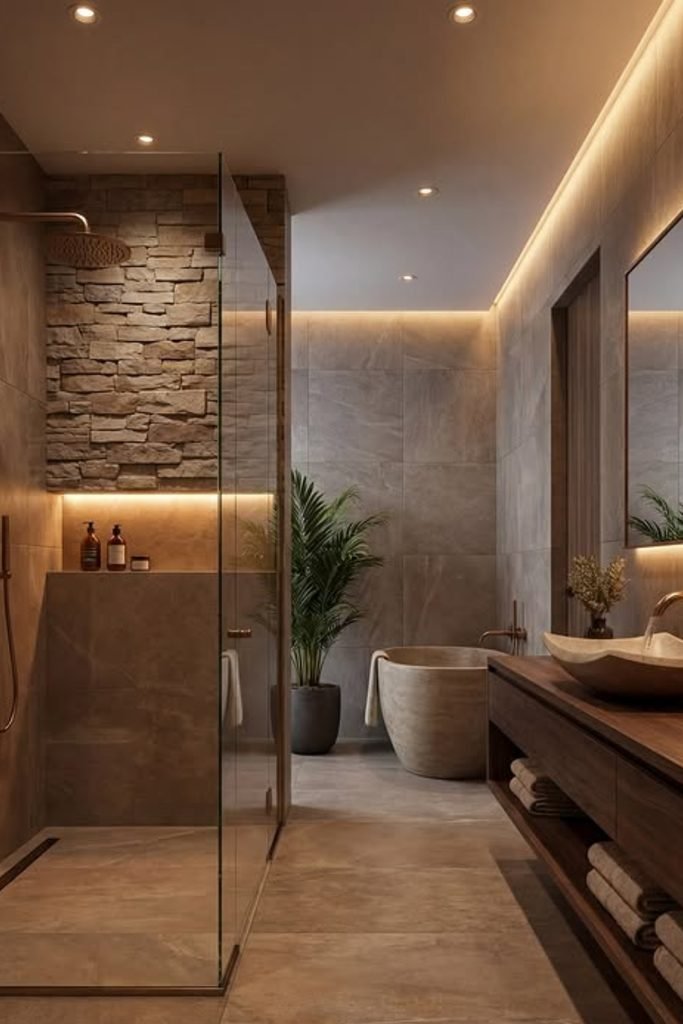
Layered Shower
Use stacked stone only inside the shower when you want texture to stand out without making the entire bathroom feel overly rugged.
Linear lighting beneath the niche and along the ceiling helps every uneven edge register clearly, turning one textured wall into architecture.
Smooth brown stone on surrounding walls keeps the contrast controlled, while a long timber vanity balances the shower with horizontal warmth.
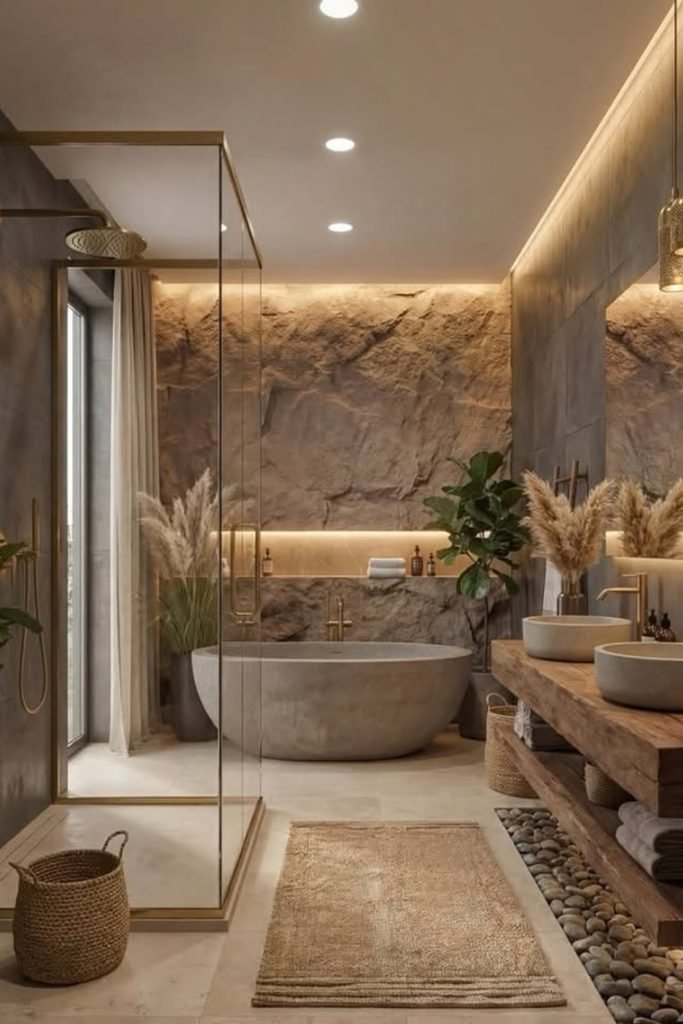
Rock Backdrop
Make one dramatic rock wall the backdrop for the tub when a spacious bathroom needs a natural focal point instead of artwork.
Keep the shower glass nearly invisible and place smoother stone elsewhere, so the rough surface remains powerful rather than visually exhausting.
A chunky timber vanity and simple vessel basins work especially well beside this treatment, bringing warmth without competing with the stone.
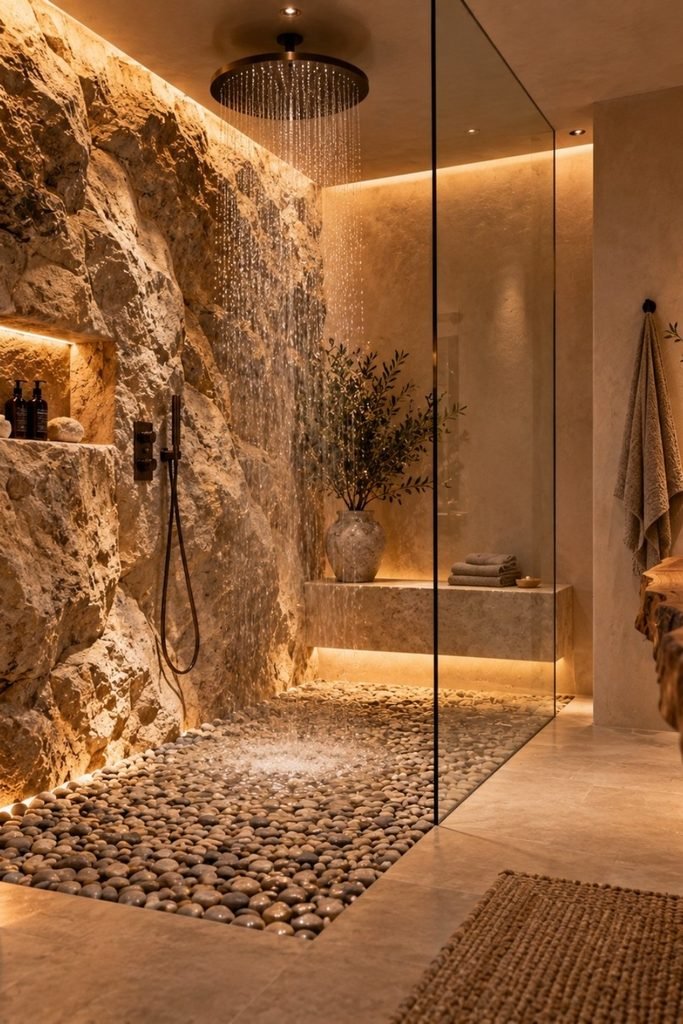
Pebble Shower
Bring river pebbles into the shower floor when you want a softer, more tactile contrast against an oversized rugged stone wall.
Keep the surrounding floor smooth and level, allowing the pebbled zone to feel intentional while remaining visually contained behind clear glass.
Warm concealed lighting works especially well here, tracing the rock texture and helping the shower feel atmospheric rather than harsh.
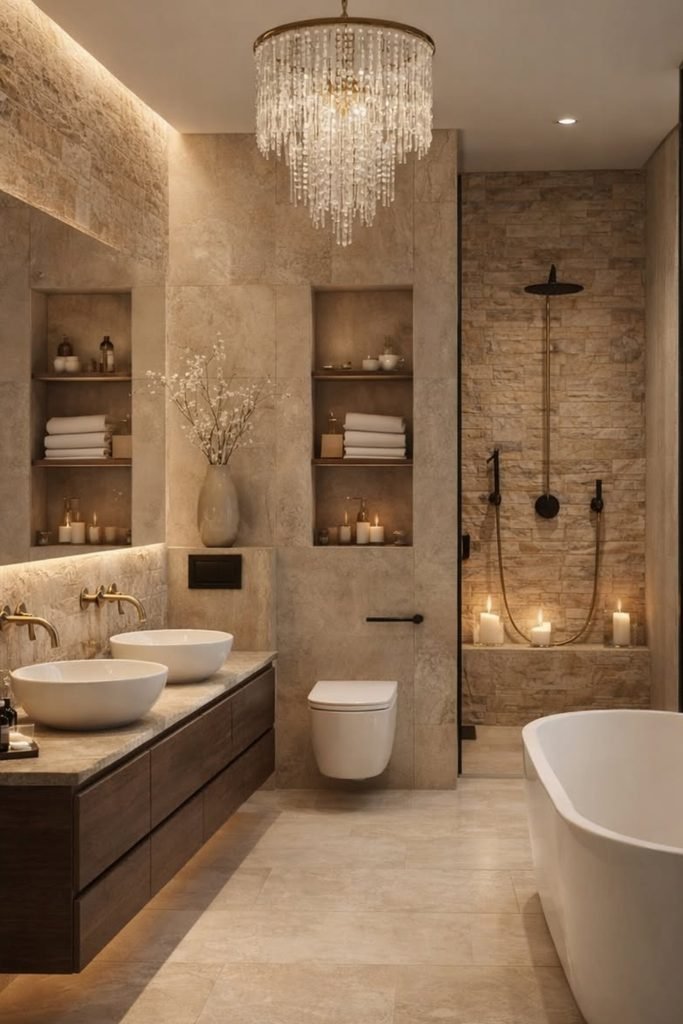
Recessed Stone
Carve storage directly into broad stone walls when you want toiletries and towels accessible without adding cabinets that interrupt the room.
Keep each niche deep, evenly spaced, and softly lit, turning practical storage into part of the architecture instead of an afterthought.
Pair the pale stone with dark timber and simple black fixtures, which gives a spacious bathroom warmth without losing its clean structure.
FAQs
Does Natural Stone Make a Bathroom Feel Cold?
Natural stone can feel visually cold when paired only with gray finishes, but warm lighting, timber, and brass quickly soften the overall look.
Choose beige, cream, or softly veined stone if you want the room to feel warmer without losing the clean, natural character.
Layering wood cabinetry, textured towels, and greenery also prevents large stone surfaces from making the bathroom feel overly hard or sterile.
Can Stone Work in a Small Bathroom?
Stone works beautifully in small bathrooms when you limit it to one strong surface instead of covering every wall and floor.
A shower wall, compact vanity, or stone basin can create the same natural impact while keeping the room visually lighter.
Use larger pieces, subtle grout, and pale tones where possible, because fewer visual breaks help tight layouts appear calmer and more spacious.
