
21 Terracotta Bathroom Ideas
Terracotta has a way of making a bathroom feel warmer, softer, and more full of character without needing much decoration.
You can use it through tile, paint, stone, or small accents, depending on how bold or subtle you want the room to feel.
In this article, you’ll find terracotta bathroom ideas that show how to use this earthy color in fresh, stylish, and practical ways.
Let’s jump in!
Is Terracotta Good For Bathrooms?
Yes, terracotta works well in bathrooms because it adds warmth and texture without making the space feel overly decorated.
If you use real terracotta tile, check whether it is suitable for wet areas because natural clay is porous and may need proper sealing.
If you want less maintenance, terracotta-look porcelain can give you the same earthy look with easier cleaning and better moisture resistance.
For a balanced result, pair terracotta with cream, warm white, light wood, stone, or soft green instead of adding too many warm colors.
The key is choosing the right material and using terracotta where it adds character without making the bathroom feel too heavy.
Clay Contrast
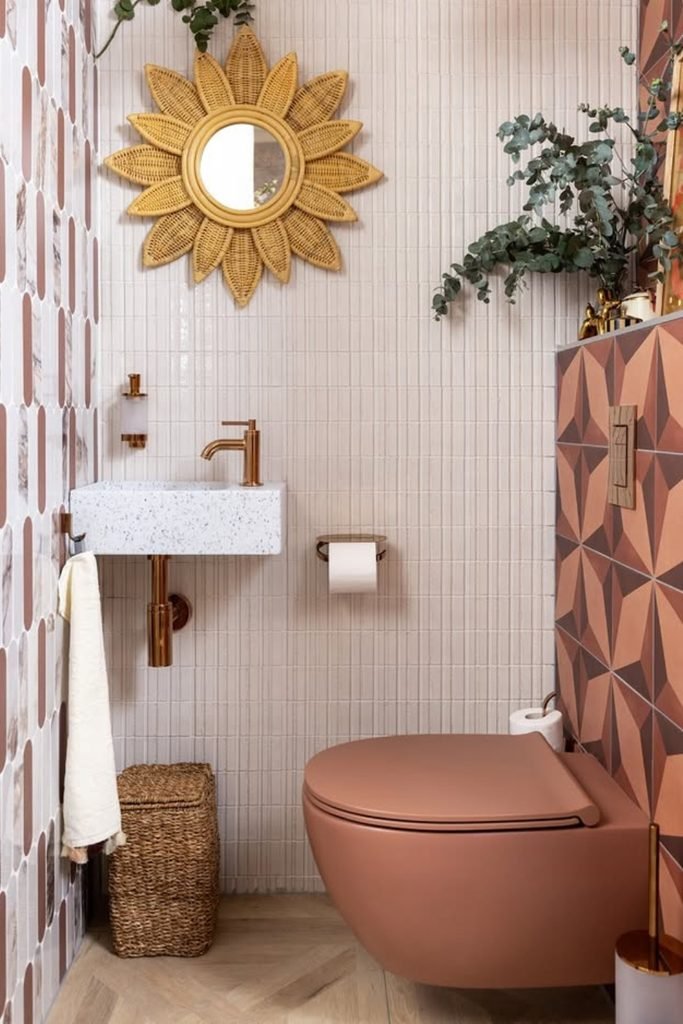
Use terracotta on one bold fixture when you want warmth without covering the whole bathroom, especially in a compact powder room.
Keep the surrounding walls pale and textured so the clay tone stands out, then repeat it through one patterned surface nearby.
Brass fittings, woven storage, and greenery soften the strong color while keeping the room playful instead of making it feel overly themed.
Tiled Warmth
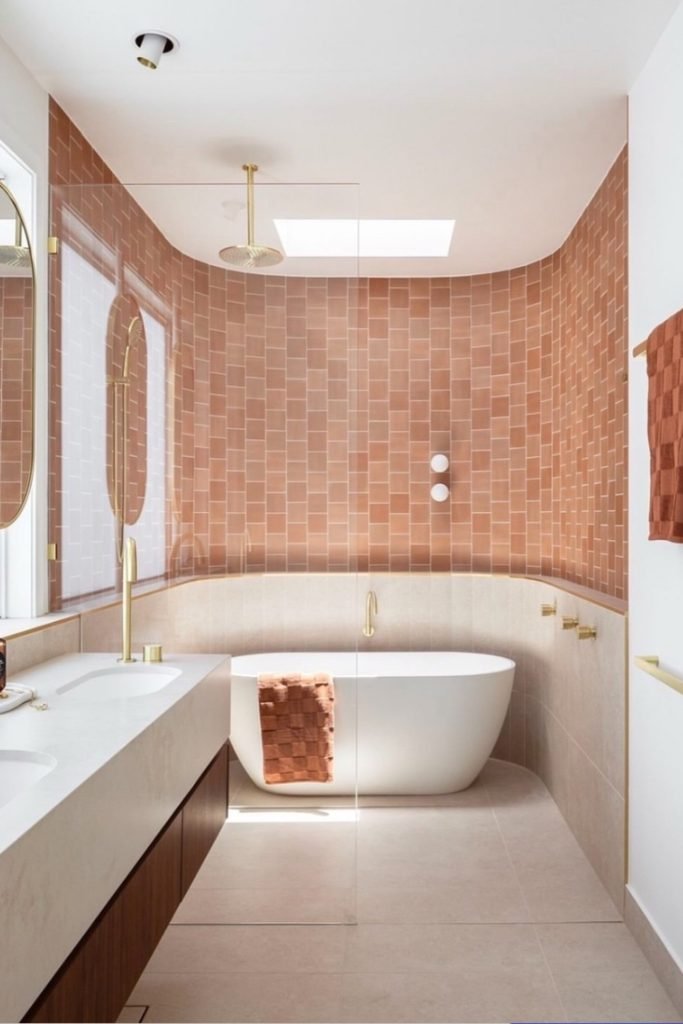
Run terracotta tiles across the main bathing wall when you want a warm focal point that still feels clean and contemporary.
Choose a simple stacked layout with light grout, then stop the color below the ceiling so the room keeps plenty of brightness.
White sanitaryware, pale stone flooring, and slim brass details give the clay backdrop enough contrast without breaking its calm, spa-like feel.
Stone Balance
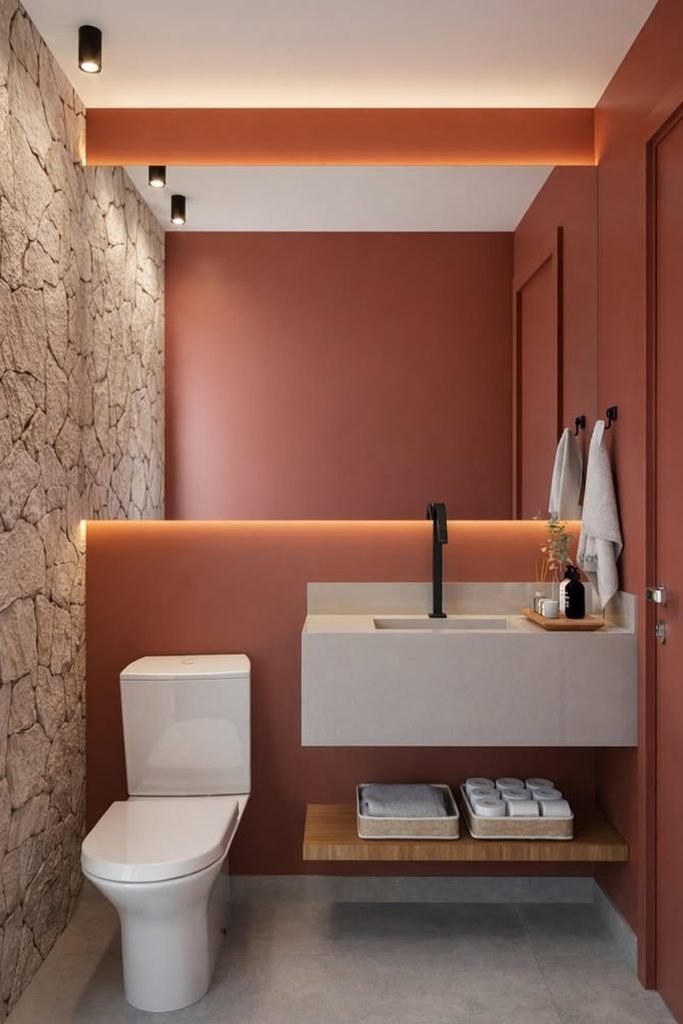
Paint terracotta across the walls when you want a small bathroom to feel intentional, then balance it with one rough natural surface.
A full stone wall adds texture and stops the color from looking flat, while a floating vanity keeps the floor visually open.
Use black taps and simple lighting sparingly here, because dark accents sharpen the scheme without competing with the warm walls and stone.
Warm Layers
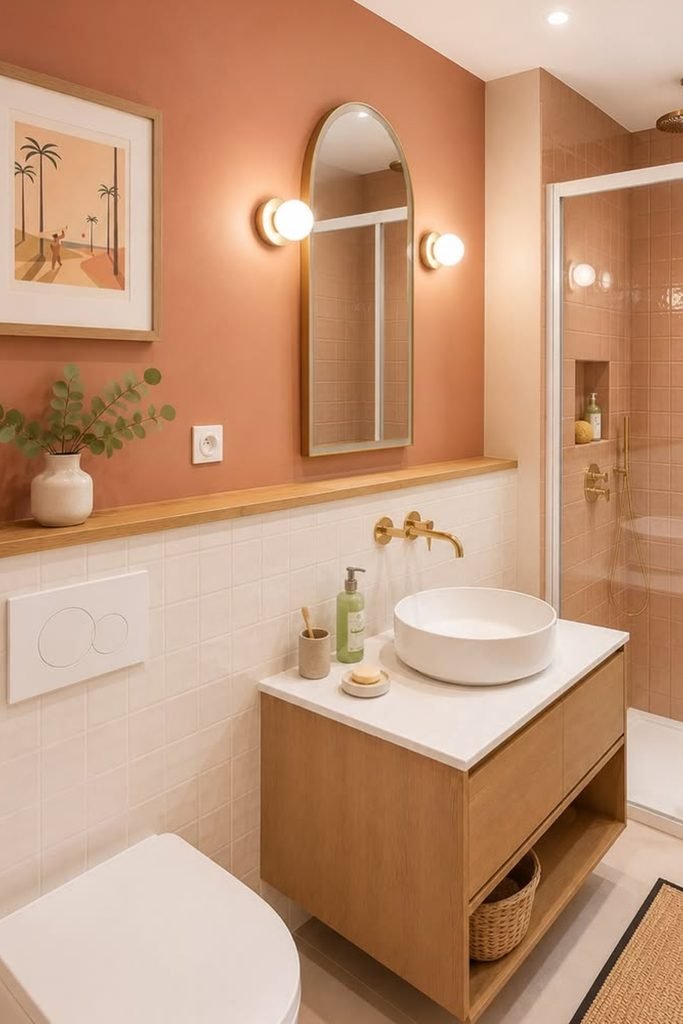
Use terracotta paint above white tile when you want warmth at eye level without making a narrow bathroom feel visually heavy.
Carry the same clay tone into the shower tiles for continuity, then use pale wood cabinetry to soften the stronger color transition.
Warm brass fittings and a white vessel sink keep the palette bright, making this approach especially useful for compact bathrooms with limited daylight.
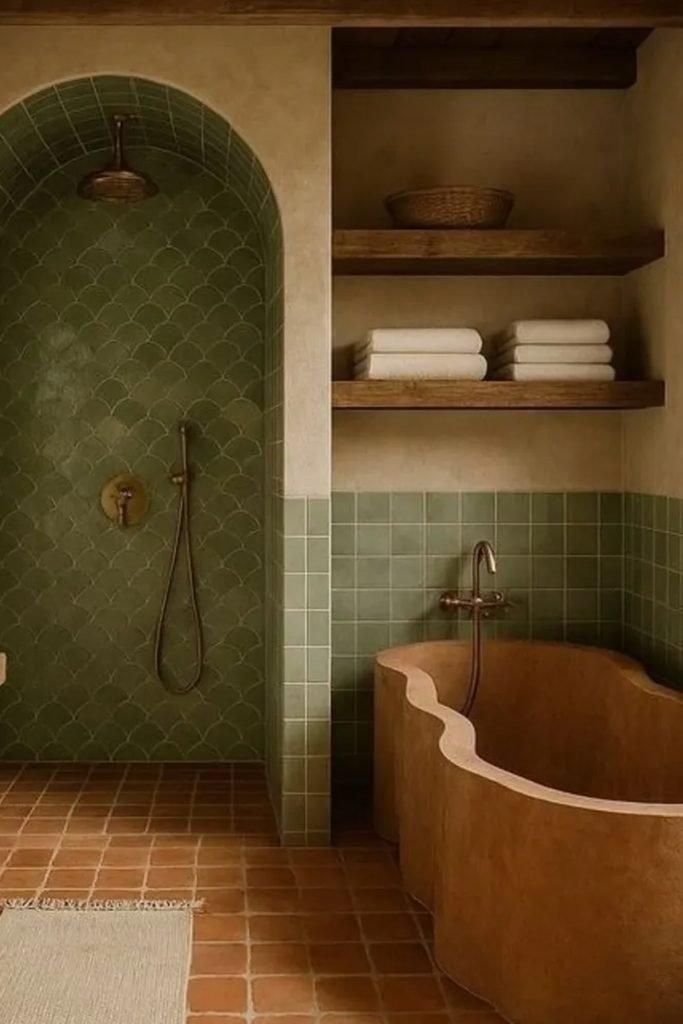
Green Arch
Pair terracotta flooring with muted green shower tile when you want an earthy bathroom that feels layered rather than overly warm.
Carry the green across the arched shower and lower walls, then let natural wood shelves and plaster soften the stronger contrast.
This combination works especially well in Mediterranean spaces, where curved openings, aged brass, and handmade finishes make the palette feel naturally connected.
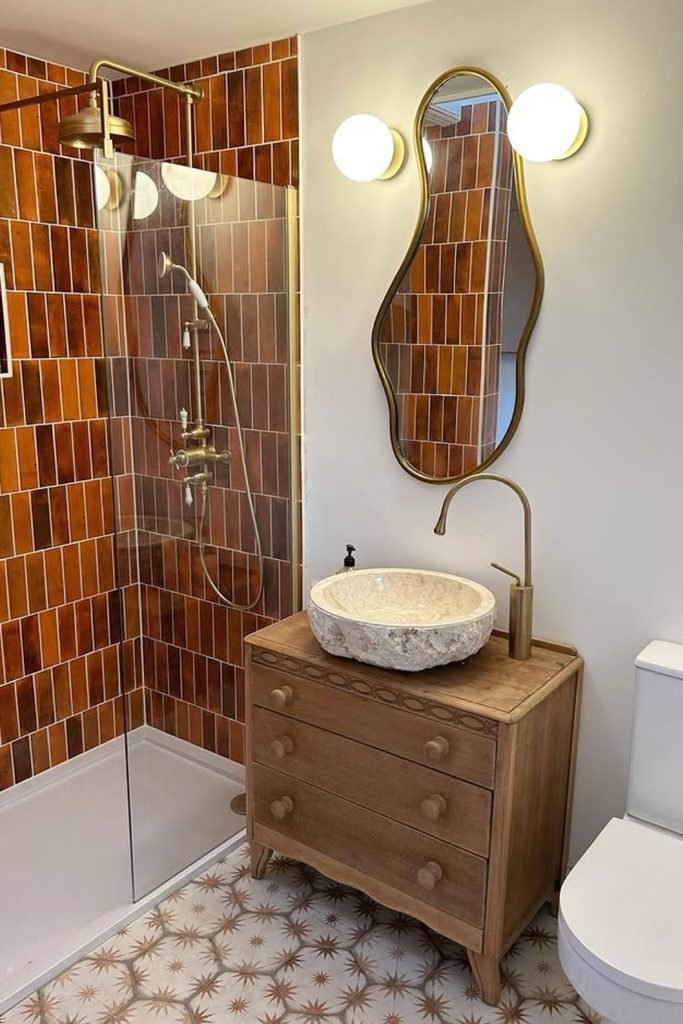
Glossy Clay
Use glossy terracotta shower tile when you want deeper color and stronger light reflection without covering every wall in the bathroom.
Set the warm tile against pale walls, then add a wood vanity and stone basin to keep the room grounded and balanced.
A vertical layout makes the shower feel taller, while brass fittings and patterned flooring add character without competing with the rich tile.
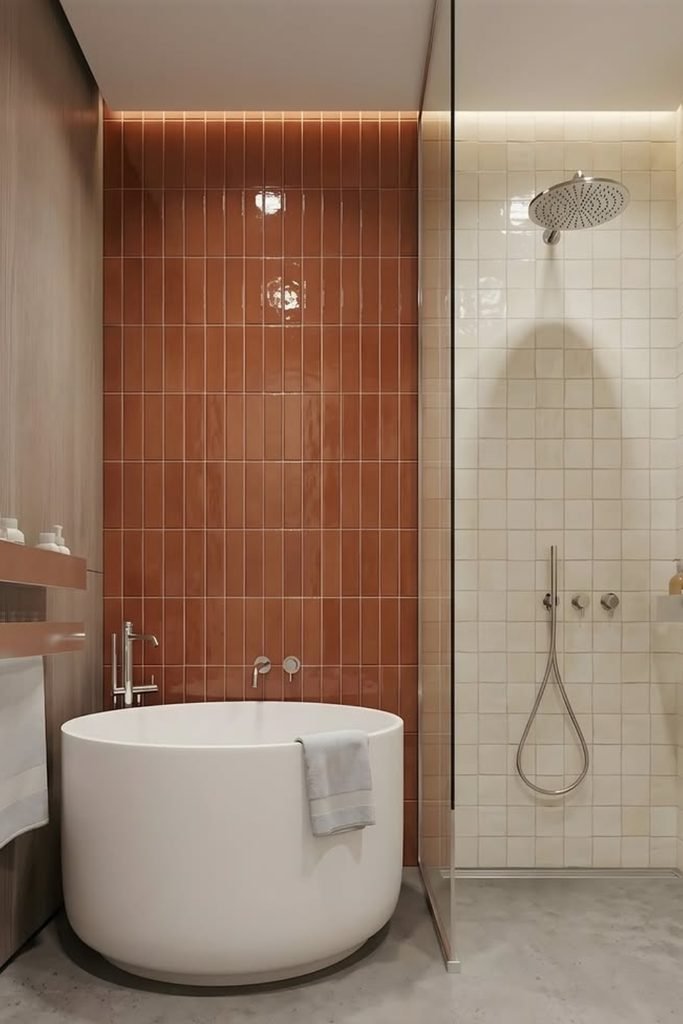
Split Walls
Keep terracotta on one bathing wall when you want a bold focal point without letting the color take over the entire room.
Balance it with white shower tile beside it, using matching grout lines so both surfaces still feel clean and visually connected.
This approach suits narrow bathrooms especially well because the warm wall adds depth, while the lighter shower side keeps everything feeling open.
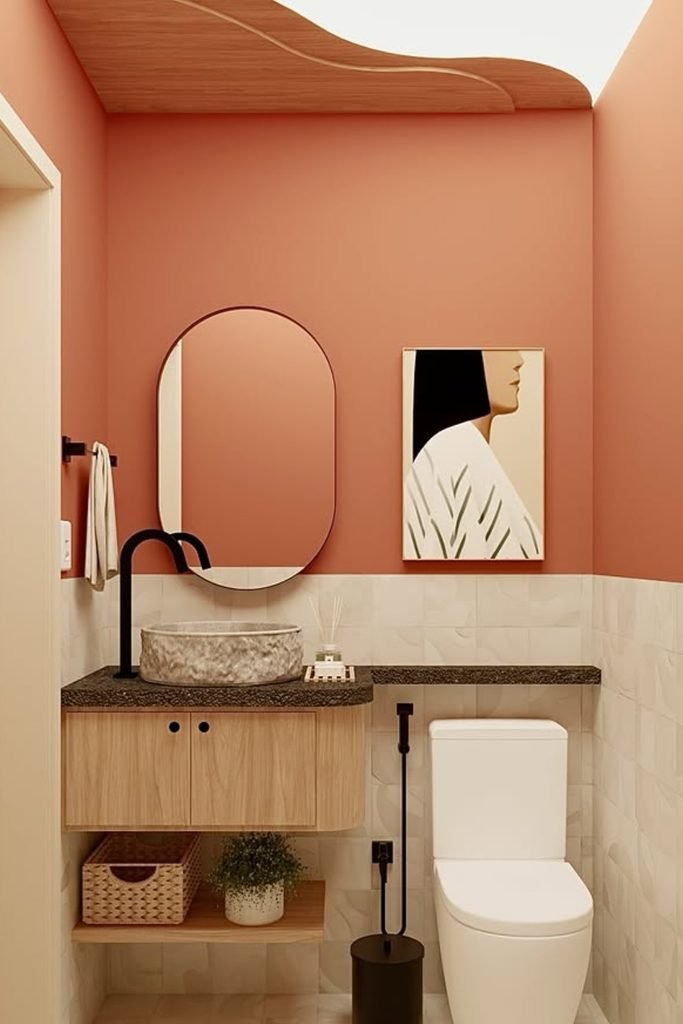
Clay Upper
Paint the upper bathroom walls terracotta when you want strong color without committing to full-height tile across a compact bathroom.
Keep the lower half pale and textured, then use light wood cabinetry and a stone basin to soften the stronger wall color.
Black fittings add enough contrast to sharpen the scheme, while the lighter lower walls stop the room from feeling enclosed or heavy.
Stone Contrast
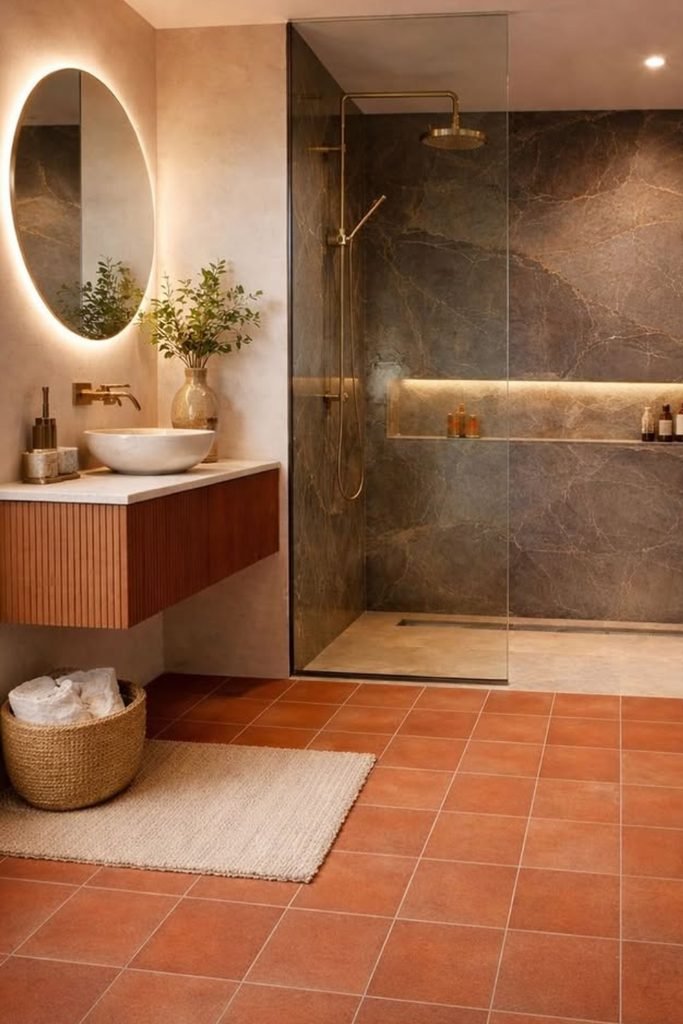
Let terracotta flooring carry the warmth while dark stone in the shower adds depth without making the bathroom feel overly rustic.
Keep the vanity simple and warm toned so it bridges the floor and shower instead of creating another competing focal point.
This mix works best in larger bathrooms where you can balance strong materials with pale walls, soft lighting, and open floor space.
Tub Backdrop
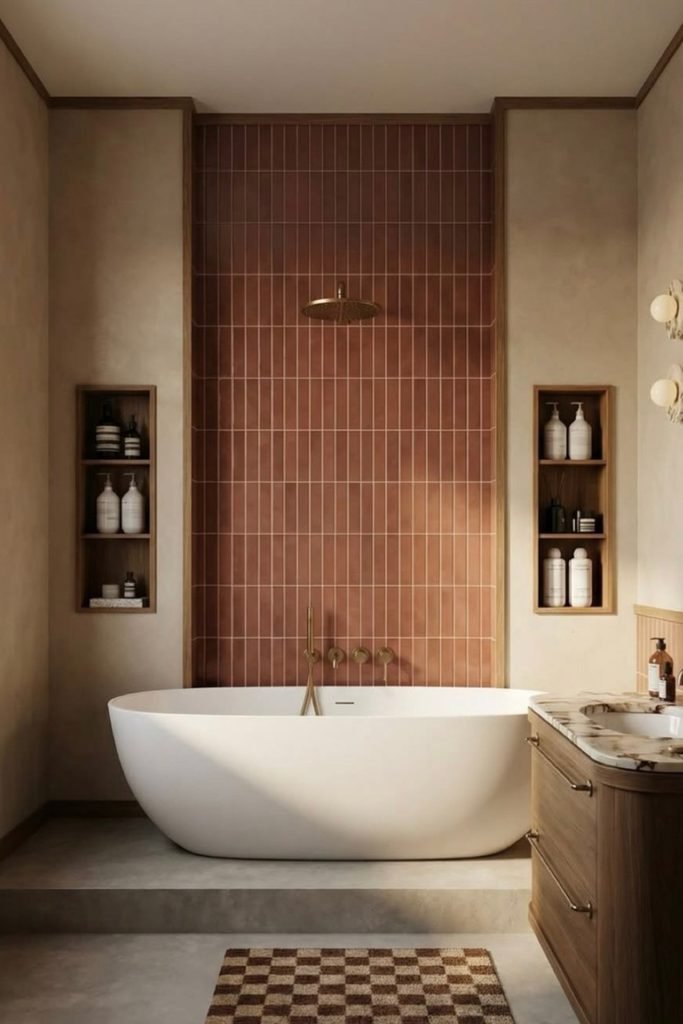
Frame a freestanding tub with vertical terracotta tile when you want one warm feature that draws attention without wrapping the whole room.
Keep the side walls neutral and bring in medium wood so the clay color feels grounded rather than overly bright.
A narrow tile format also adds height behind the tub, making this setup especially useful when the ceiling feels low.
Soft Herringbone
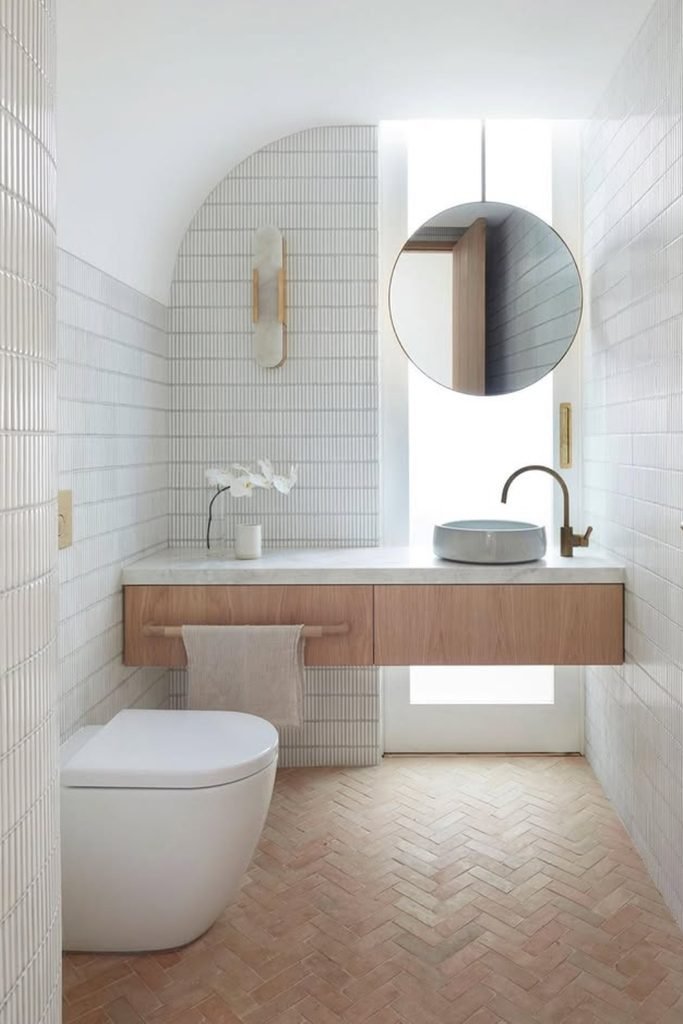
Choose a pale terracotta floor in herringbone when you want warmth to show through texture rather than a strong orange color.
Pair it with slim white wall tile and light wood cabinetry so the small bathroom stays bright and visually open.
The angled floor pattern adds movement underfoot while the simple walls keep attention from bouncing between too many different finishes.
Terrazzo Pairing
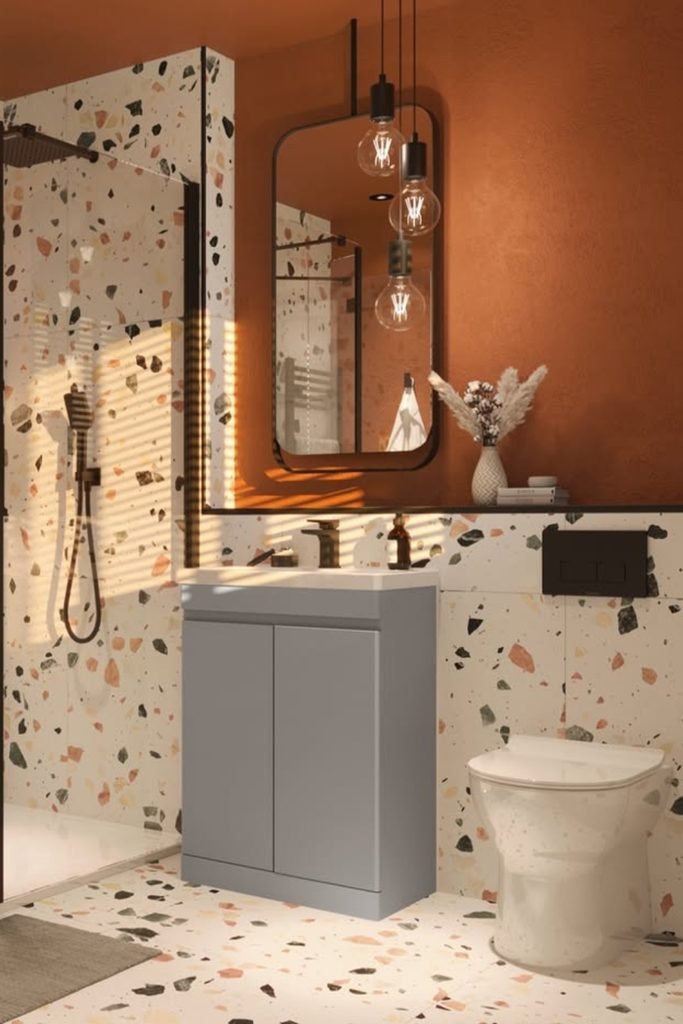
Use terracotta paint above terrazzo when you want the bathroom to feel bold but still easy to balance visually throughout.
Let the terrazzo cover wet and lower surfaces, then repeat its warm chips through the wall color for a connected scheme.
Black shower frames, lighting, and fittings sharpen the mix, giving this combination a modern edge instead of a retro look.
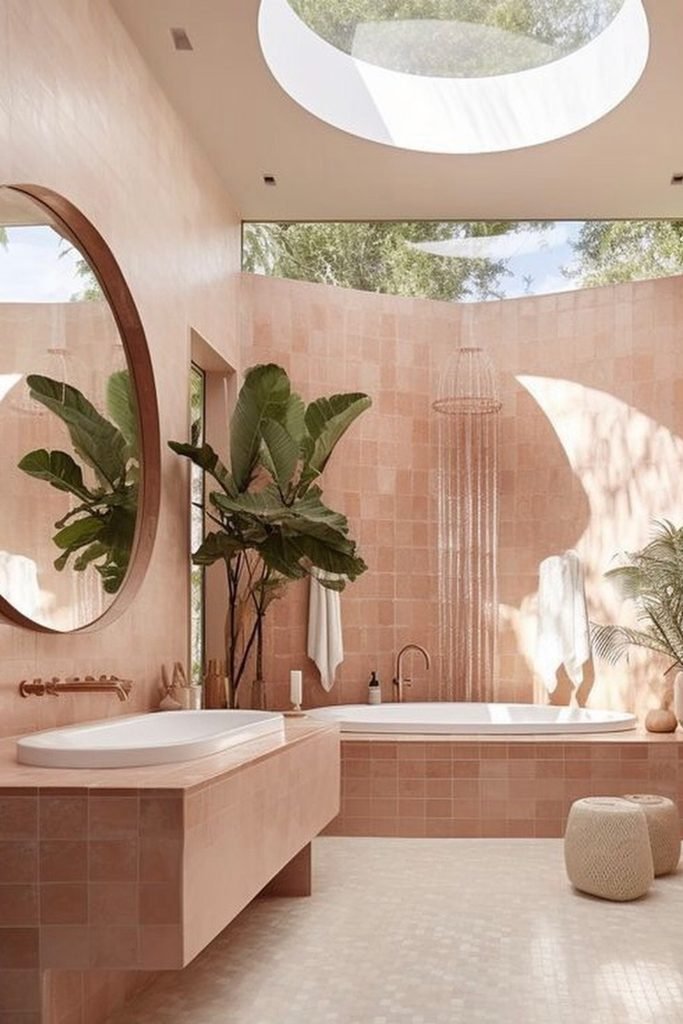
Sunlit Clay
Use pale terracotta across large surfaces when you want an airy bathroom that still feels warm, especially in spaces with strong natural light.
Keep the vanity, tub surround, and wall tile close in tone so the room feels calm rather than broken into separate sections.
Large windows, greenery, and light flooring stop the clay palette from becoming heavy while giving the bathroom a softer indoor outdoor feel.
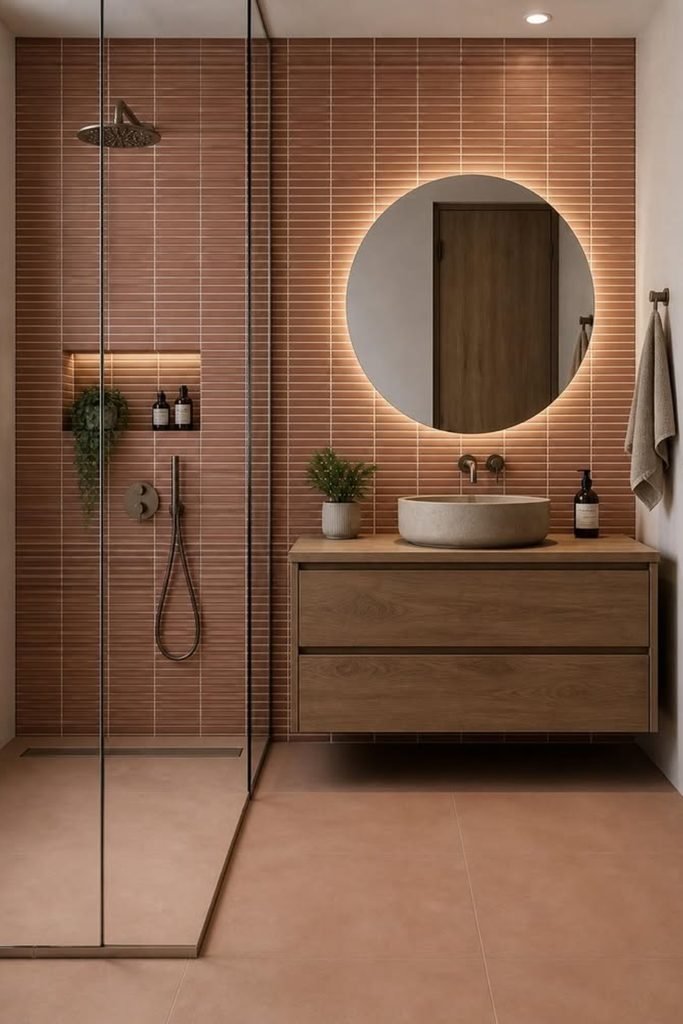
Linear Clay
Choose narrow terracotta tiles when you want a modern wall treatment that adds texture without relying on a busy pattern or strong contrast.
Run the tile behind both shower and vanity so the warm color connects the wet zone and grooming area as one feature.
Pair it with a simple wood vanity and backlit mirror to keep the room streamlined while still letting the clay finish stand out.
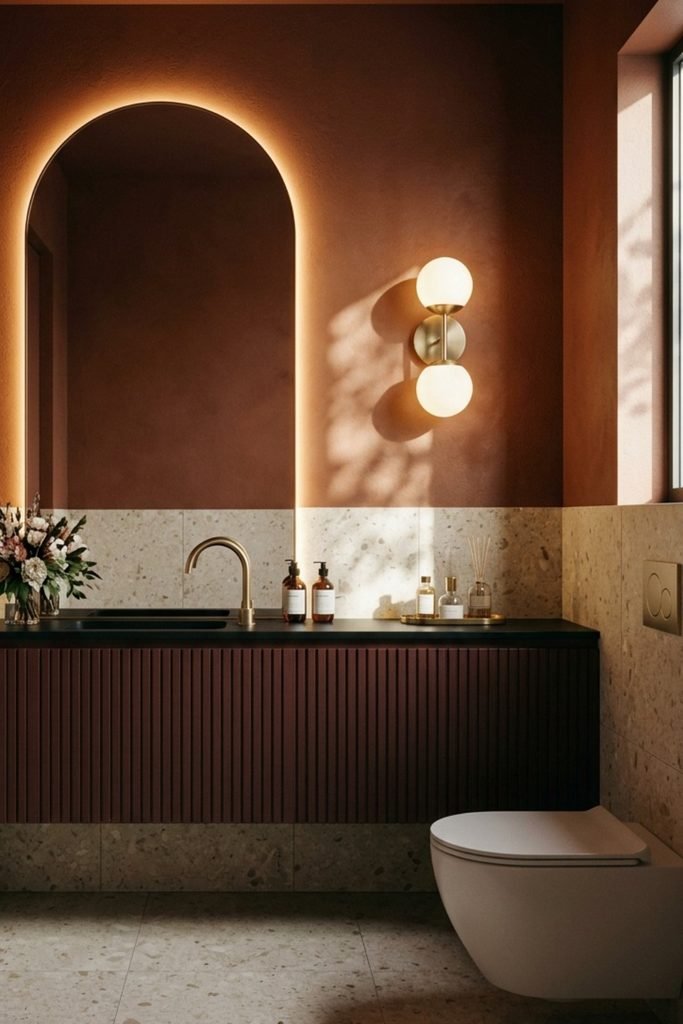
Deep Terracotta
Go darker with terracotta when you want a moodier bathroom, but balance the depth with pale stone across the lower walls and floor.
A dark vanity can work here because the lighter stone breaks up the color before the room starts feeling too enclosed or flat.
Use warm lighting around the mirror and sconces to bring out the red brown undertone instead of letting it look dull or muddy.
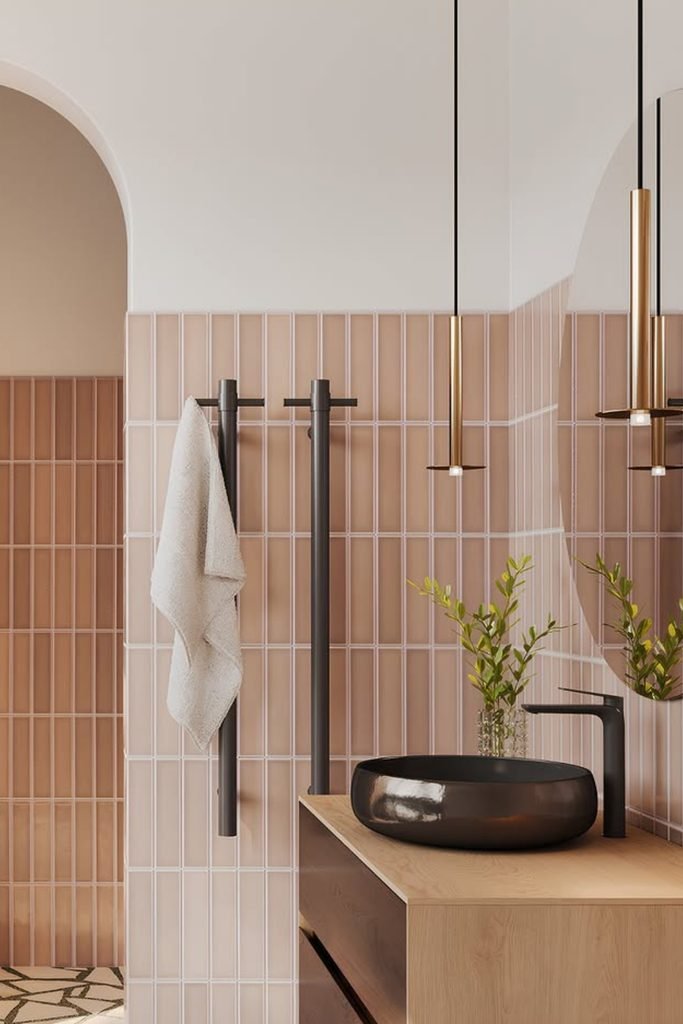
Blush Tile
Use a softer pink leaning terracotta when you want warmth without the stronger orange tone that can dominate a small bathroom.
Keep the tile around half height, then leave the upper walls light so the room stays open and visually easy to live with.
Black fixtures and a dark basin add crisp contrast, while pale wood keeps the overall palette soft enough for a modern bathroom.
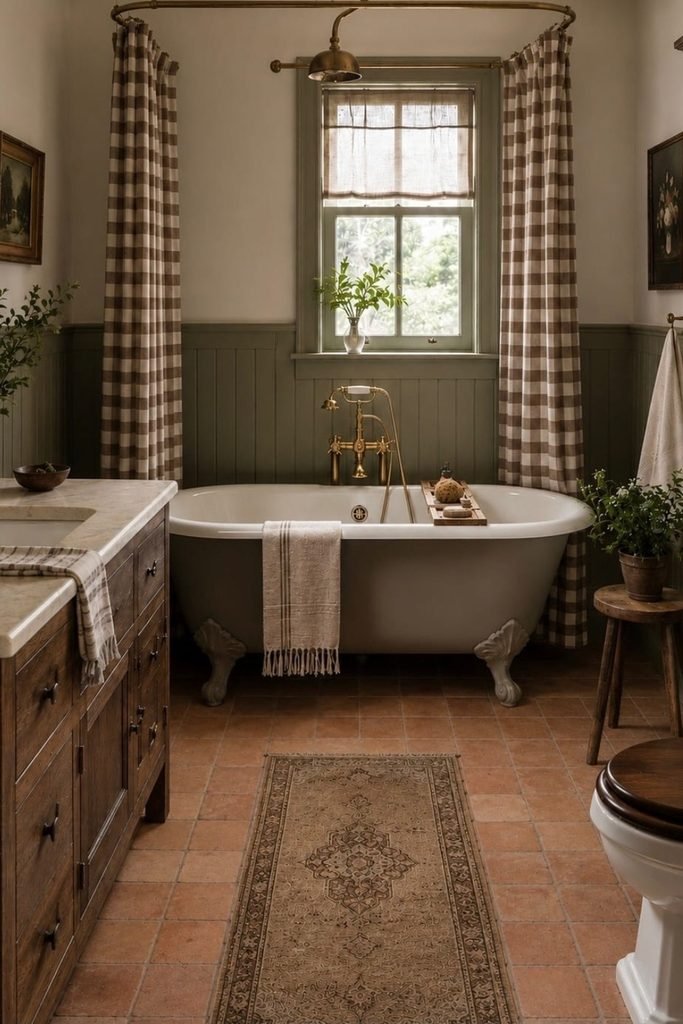
Vintage Clay
Let terracotta flooring warm a traditional bathroom when you want character underfoot without turning every wall into another strong color.
Pair it with olive paneling, dark wood, and aged brass so the floor feels collected rather than like a standalone feature.
Checked curtains and a patterned runner can add softness, but keep their colors muted so the clay tile remains the grounding layer.
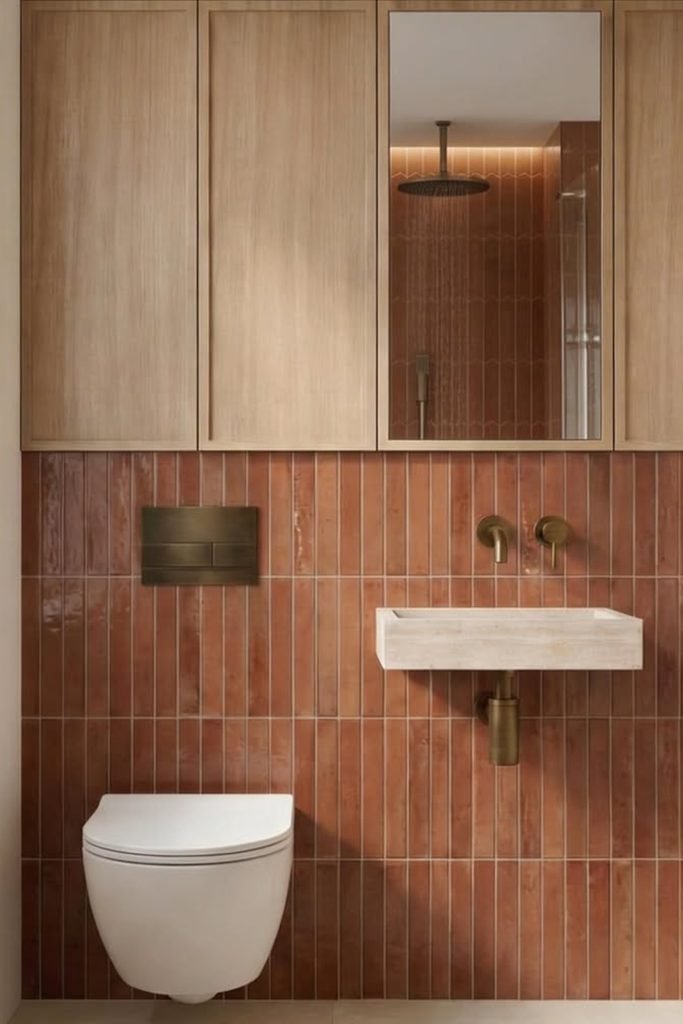
Compact Clay
Use narrow terracotta tiles behind the toilet and sink when you want a compact bathroom to feel warmer without losing clean lines.
Continue the tile across one full wall, then add pale wood storage above to draw the eye upward and save floor space.
A slim stone basin and brushed brass fittings keep the setup refined while letting the clay surface provide most of the visual interest.
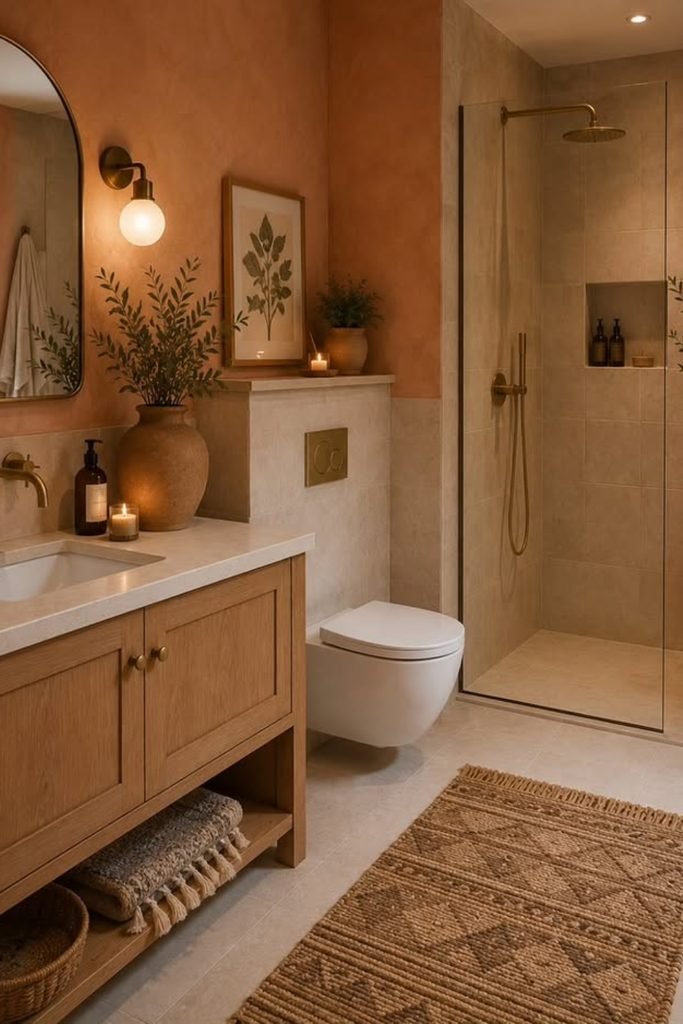
Herringbone Shower
Turn the shower into the main feature with terracotta herringbone tile, especially when the rest of the bathroom stays simple and neutral.
Run the pattern across the back wall and floor, then keep adjacent surfaces plain so the zigzag layout never feels too busy.
Black fixtures give the warm clay a sharper edge, while pale wood and stone stop the shower from becoming too dark or heavy.
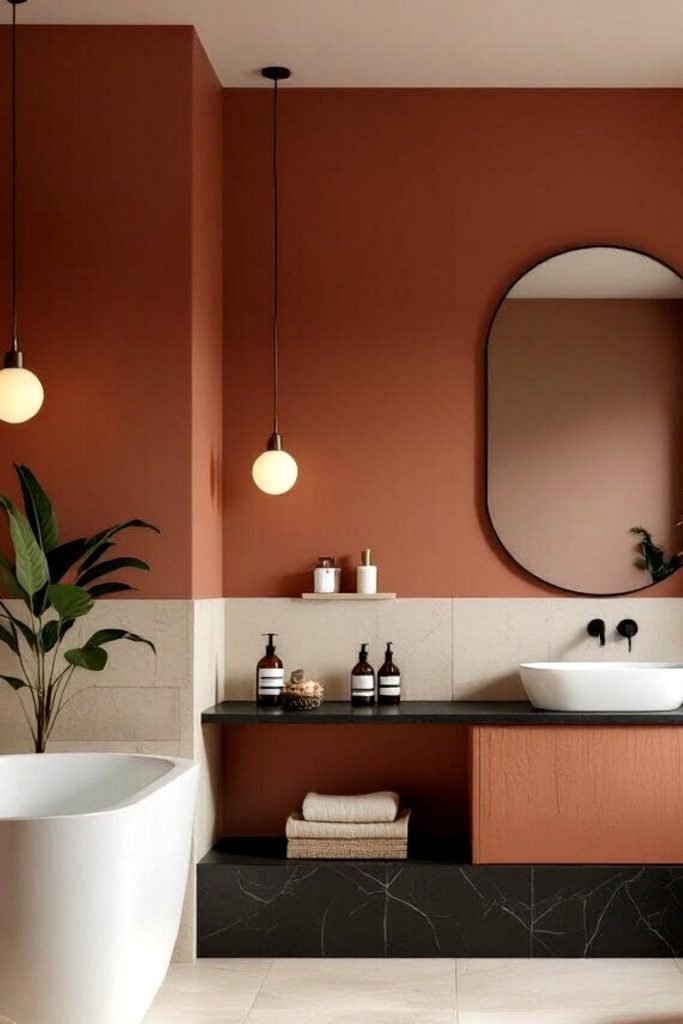
Color Drench
Color drench the upper walls and vanity in terracotta when you want a bold bathroom that still feels controlled and cohesive.
Keep the lower walls and floor pale, because that lighter band breaks up the clay color and stops the room feeling enclosed.
Black counters and fixtures add definition, while white sanitaryware and soft lighting keep the deeper red undertone looking clean and modern.
FAQs
Does terracotta make a bathroom look smaller?
Terracotta can make a small bathroom feel heavier if you cover every surface, especially when the shade is dark or strongly orange.
Keep upper walls, ceilings, or large fixtures lighter so the warm color has space around it and the room still feels open.
Using terracotta on one wall, the floor, or the shower creates impact without making a compact bathroom feel visually crowded.
What color grout works best with terracotta tile?
Warm beige or soft cream grout usually keeps terracotta looking natural because it blends with the clay instead of creating harsh contrast.
If you want the tile shape to stand out more, choose a lighter grout, but test it first because the pattern becomes stronger.
For a calmer finish, match the grout closely to the tile tone so the surface reads as one warm, continuous layer.
