
21 Transitional Bathroom Ideas
A transitional bathroom brings together the charm of traditional design and the clean, simple look of modern spaces.
From classic vanities to sleek fixtures and warm finishes, the right combination can make your bathroom feel elegant without trying too hard.
In this article, you’ll discover transitional bathroom ideas that show you how to mix both styles and create a beautiful space that feels like home.
Let’s jump in!
What Is a Transitional Bathroom?
A transitional bathroom combines traditional details with modern features to create a space that feels both classic and fresh.
You can achieve this look by pairing Shaker-style cabinets, marble countertops, or decorative mirrors with sleek faucets and simple lighting.
Start with neutral colors like cream, beige, or soft gray, then add natural wood or brass fixtures to bring warmth into your bathroom.
The trick is to keep everything balanced. If you choose a traditional vanity, pair it with modern hardware or a frameless glass shower.
You don’t need to renovate everything to achieve this style. Even changing your mirrors, lighting, or cabinet handles can make a noticeable difference.
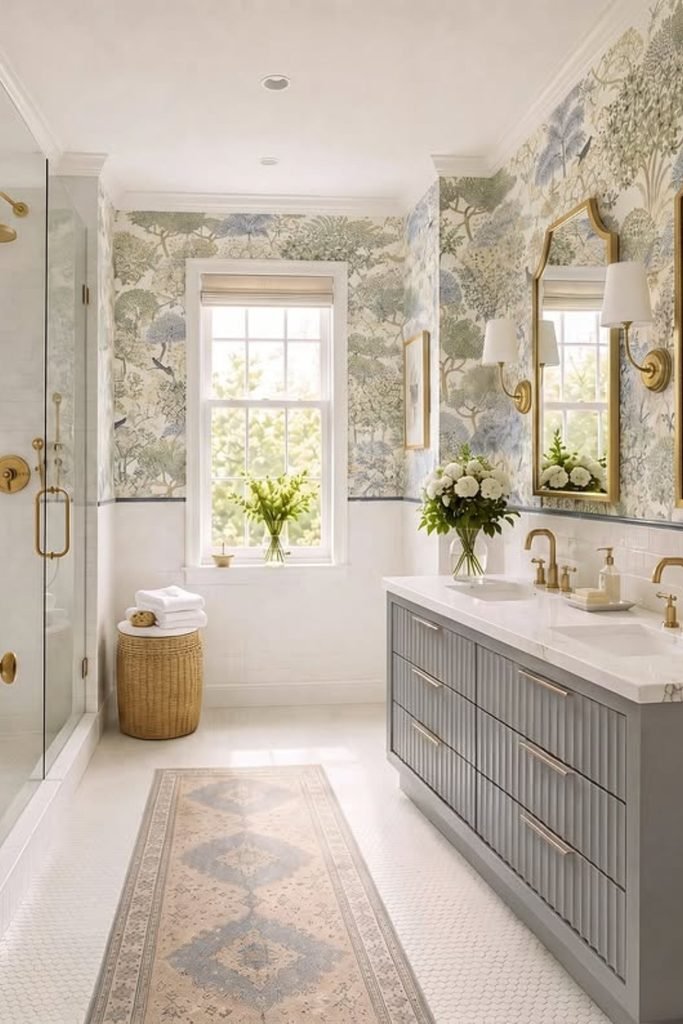
Botanical Elegance
Bring personality into a bright transitional bathroom with botanical wallpaper above white wall tiles, keeping the lower half simple and easy to maintain.
A gray double vanity with fluted drawers adds modern character, while gold-framed mirrors and matching wall sconces introduce a softer traditional touch.
This combination works beautifully in long bathrooms, especially when you have enough natural light to balance the detailed wallpaper without overwhelming everything.
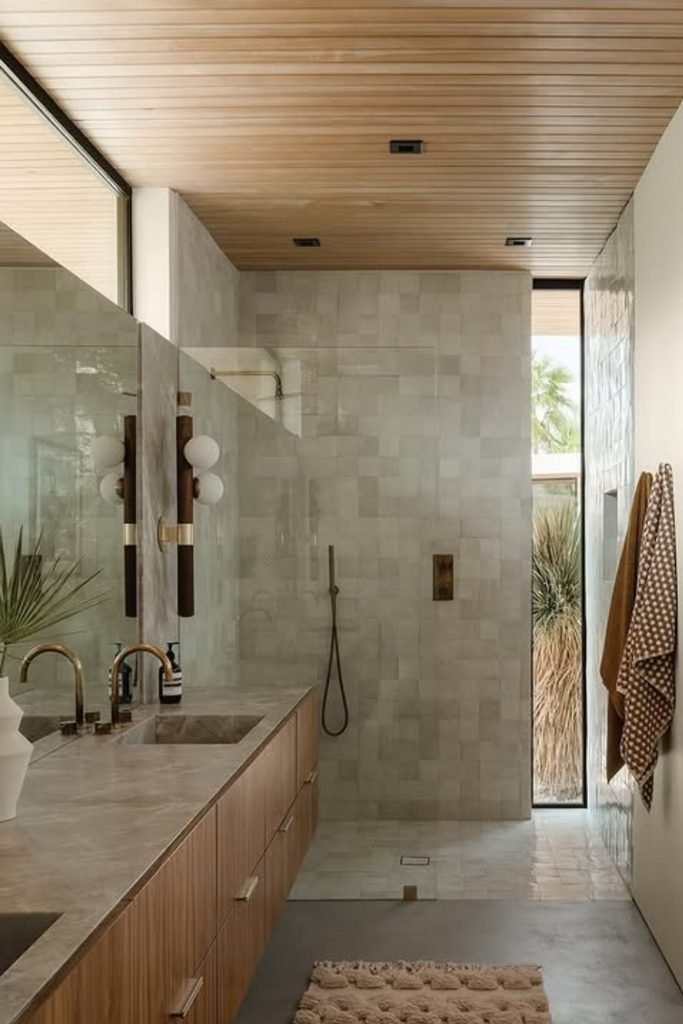
Wooden Warmth
If you prefer an earthy transitional bathroom, extend natural wood from the ceiling to the vanity and keep the surrounding surfaces neutral.
Pair a long wooden cabinet with stone countertops and a spacious walk-in shower, using textured square tiles to soften the contemporary layout.
For larger primary bathrooms, this combination creates a welcoming atmosphere without heavy decoration, while a narrow window brings light into the shower.
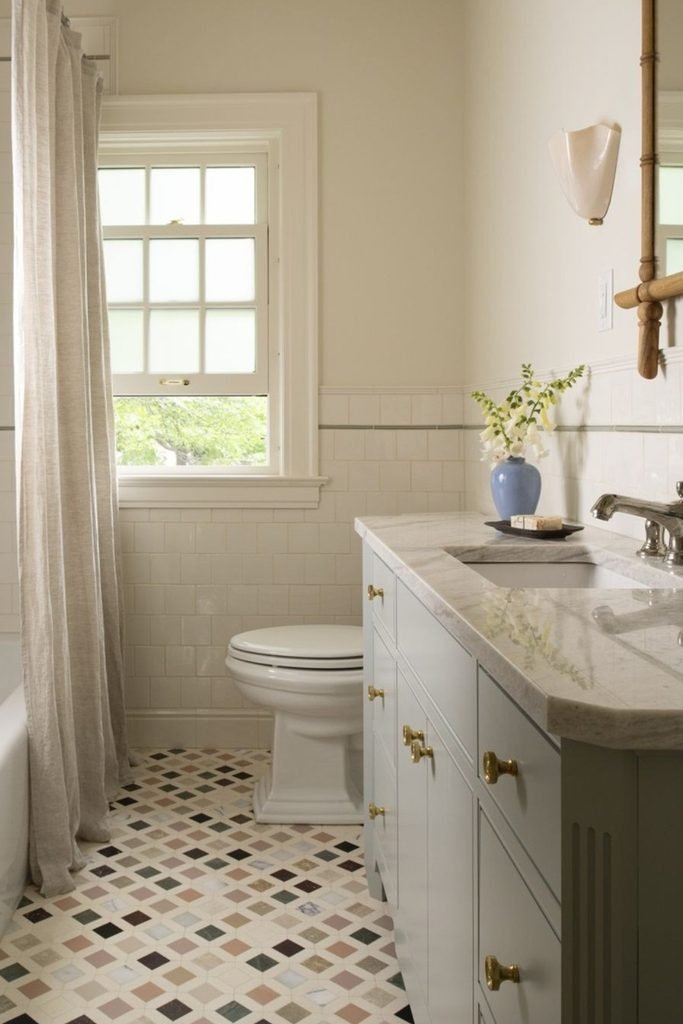
Patterned Flooring
A patterned floor can give a small transitional bathroom plenty of character without requiring bold wall colors or expensive decorative accessories.
Try multicolored geometric tiles alongside white subway walls, then introduce a pale gray vanity with brass knobs to connect traditional and modern elements.
Keep the shower curtain light and simple, allowing the flooring to stand out while the marble countertop maintains a clean appearance.
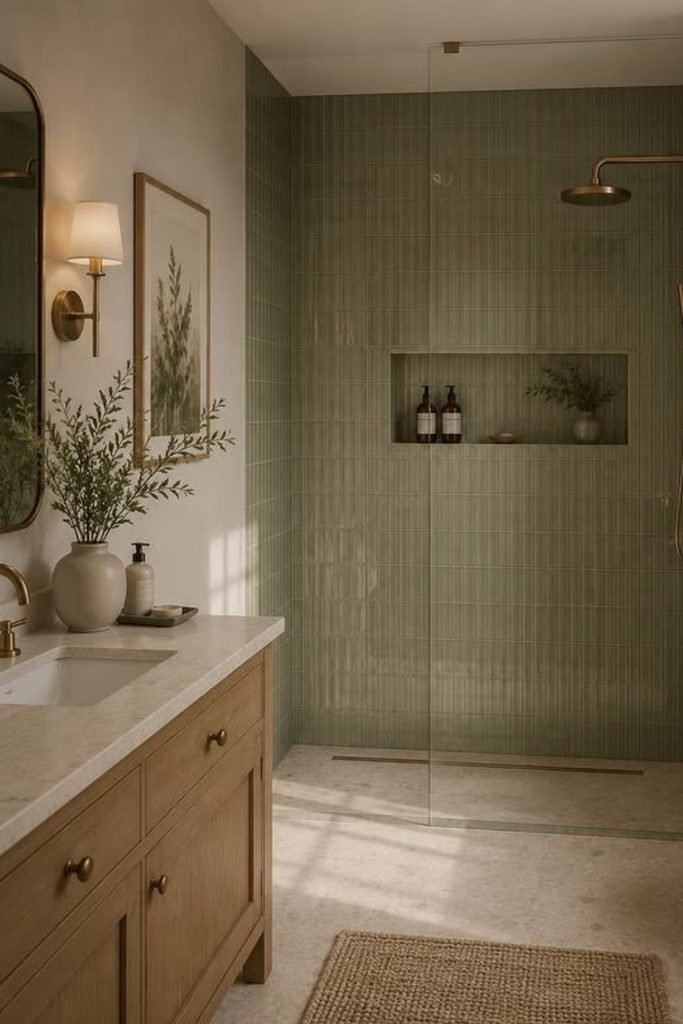
Sage Retreat
Give your transitional bathroom a softer, nature-inspired look by covering the walk-in shower with vertical sage green tiles instead of ordinary white.
A light oak vanity and cream stone surfaces will balance the green beautifully, while brushed brass fixtures add warmth without excessive decoration.
This approach suits bathrooms with separate shower areas, where frameless glass keeps the tiled feature visible and natural materials connect the entire space.
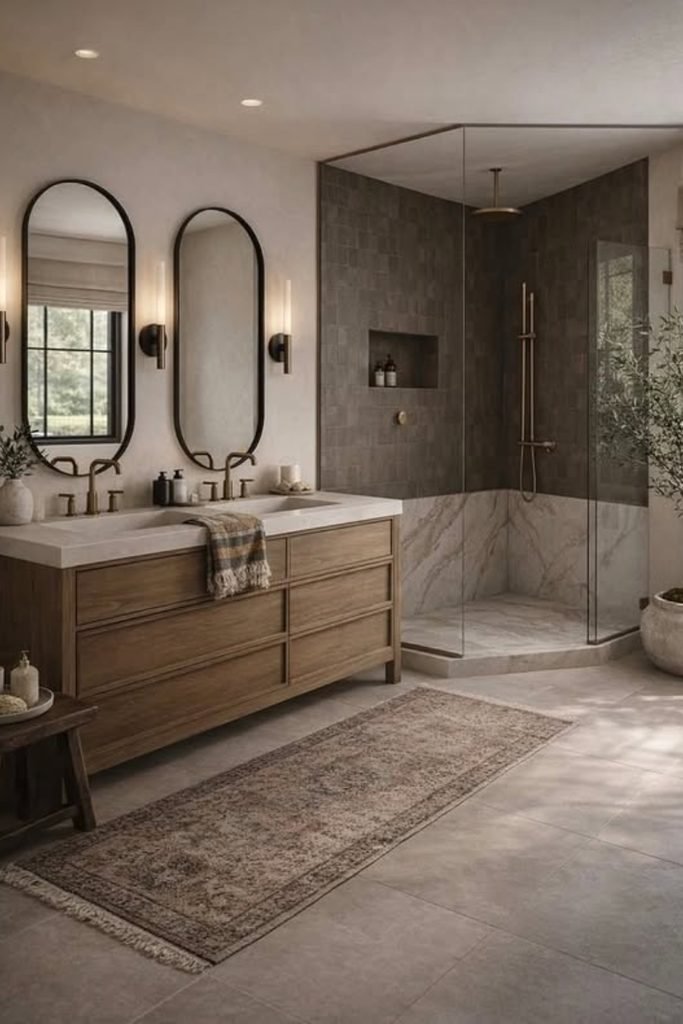
Dark Stone
Dark shower tiles can make a spacious transitional bathroom feel intimate, especially when you balance them with a pale marble base.
Choose a natural wood double vanity and slim black mirrors to connect the classic stone pattern with cleaner, more contemporary shapes.
Keep the glass enclosure frameless and repeat muted metal finishes, so the contrasting surfaces look intentional rather than competing for attention.
Curved Vanity
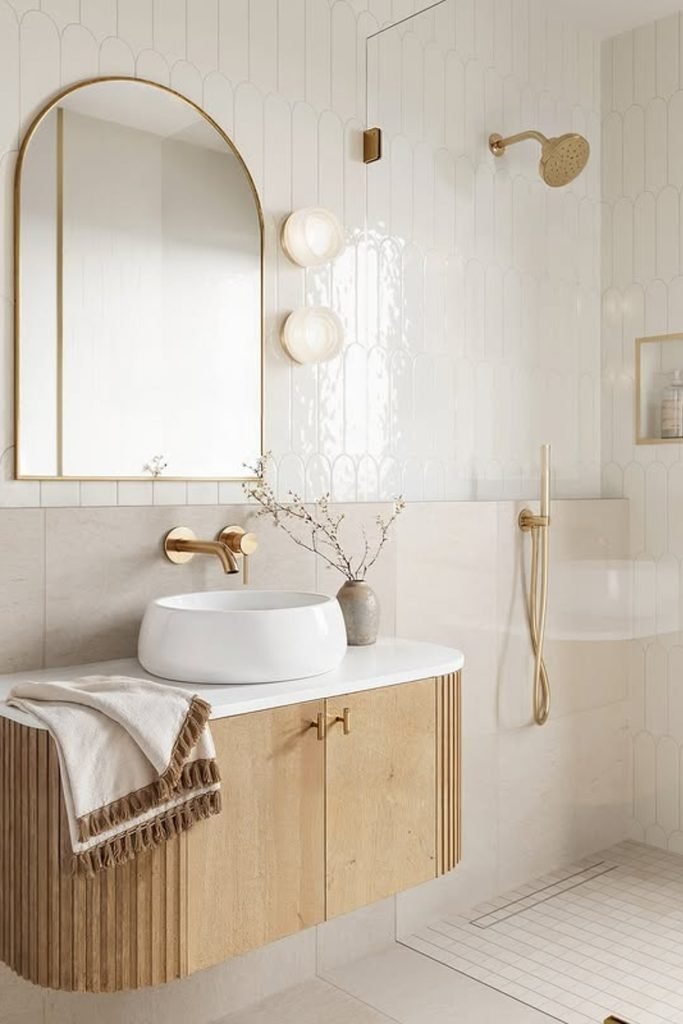
A floating vanity with rounded corners is a clever choice when you want a lighter layout without losing the warmth of wood.
Pair its fluted doors with a simple vessel sink, arched brass mirror, and softly patterned white tiles for subtle traditional character.
Continue the same tiles into a glass shower, especially in compact bathrooms where matching surfaces help the room feel more connected.
Rose Cabinetry
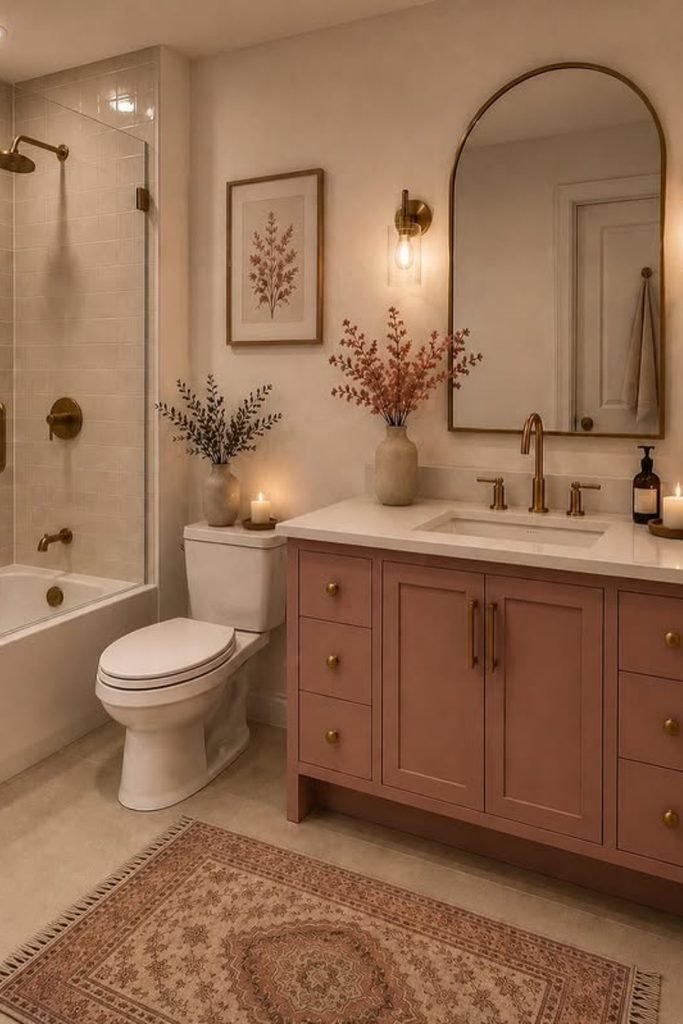
Muted rose cabinetry gives a family bathroom some color while keeping the space calm enough to live with beyond changing trends.
Use a classic paneled vanity with a white countertop, then bring in brass fixtures and an arched mirror for a polished finish.
A neutral tiled tub shower and a vintage-style runner balance the pink beautifully, making this approach suitable for everyday shared bathrooms.
Blue Contrast
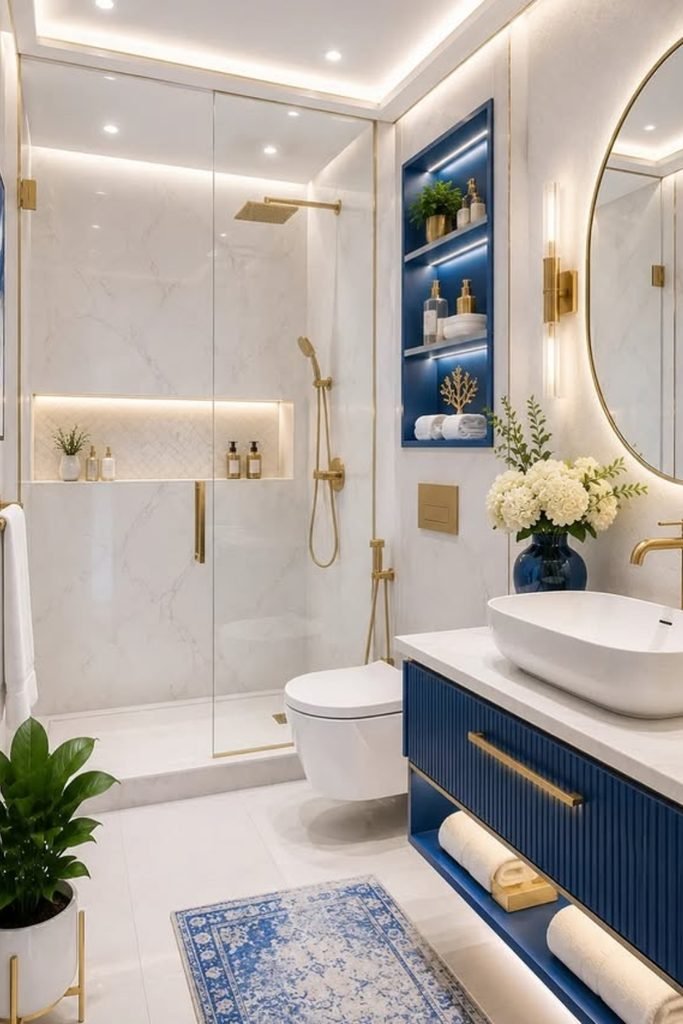
A deep blue fluted vanity can anchor a bright bathroom, giving all that white marble and glass a much-needed point of contrast.
Repeat the blue inside recessed display shelves, then use warm brass taps and a rounded mirror to soften the sharp lines.
This works particularly well in narrow bathrooms, where a wall-mounted toilet and clear shower screen preserve precious visual and walking space.
Oak Serenity
A light oak floating vanity brings warmth to a transitional bathroom without making the space feel heavy, especially beside soft beige walls.
Choose classic drawer fronts, a round brass mirror, and slim vertical shower tiles to mix familiar details with a more contemporary finish.
Leave an open shelf beneath the vanity for folded towels, while an arched shower niche keeps everyday products within easy reach.
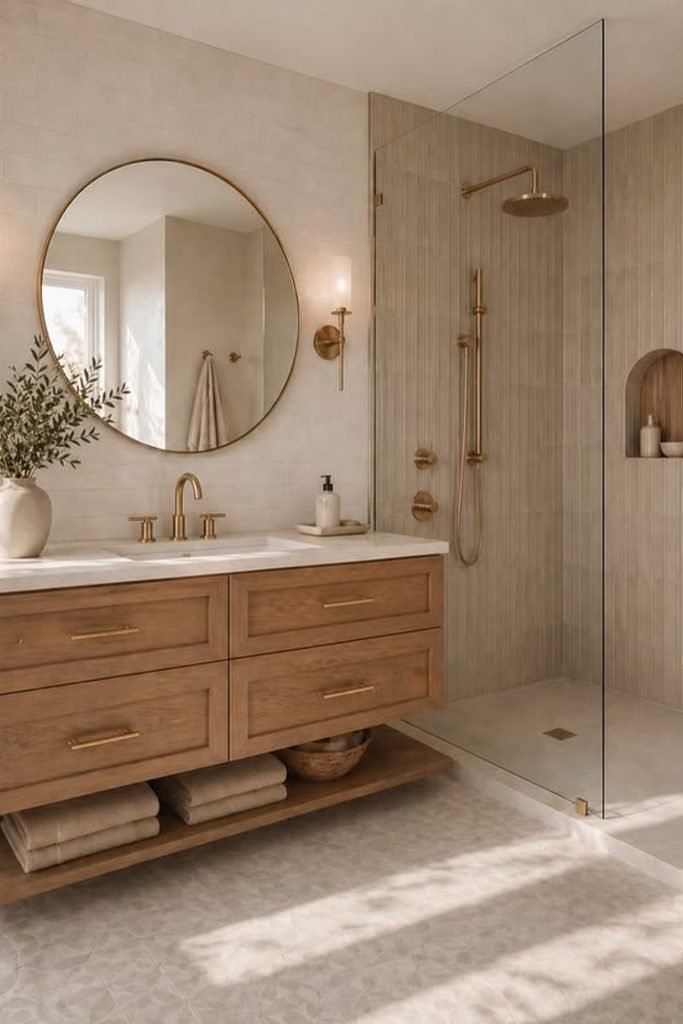
Scalloped Accent
Who says transitional bathrooms need plain walls? Dark scalloped tiles can introduce beautiful traditional detailing while creating contrast behind a wooden double vanity.
Balance this bold feature with small cream mosaic tiles around the shower, then add arched mirrors and ribbed pendant lights for warmth.
Keep the remaining surfaces neutral and the shower glass clear, allowing the contrasting tile patterns to stand out without overcrowding the room.
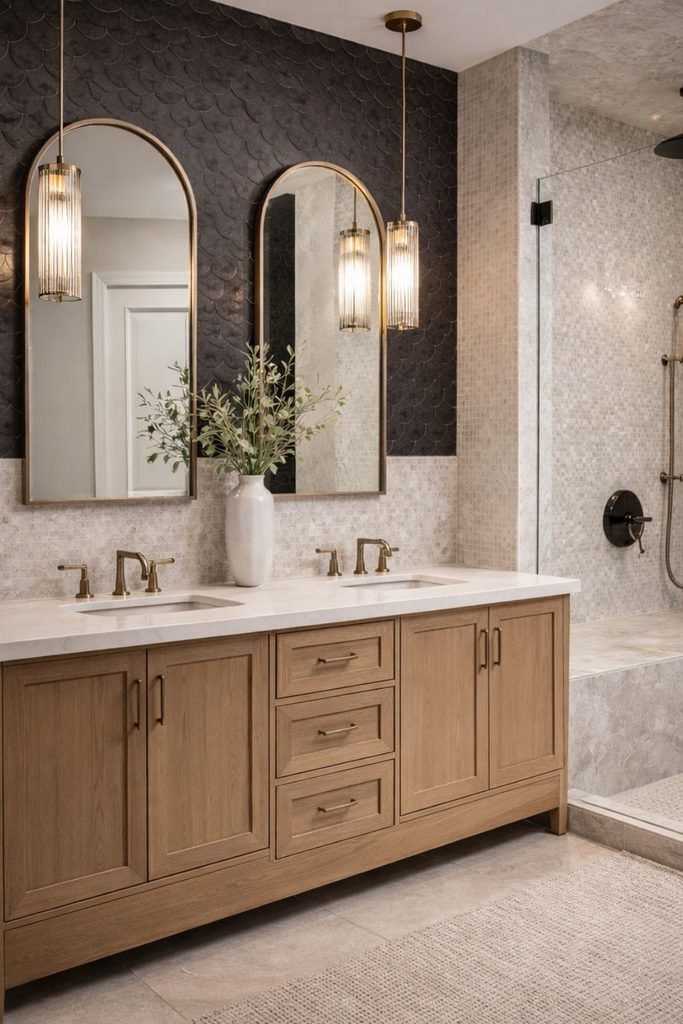
Walnut Vanity
Dark walnut cabinetry can give a transitional bathroom a richer look, especially when paired with pale stone surfaces and understated brass hardware.
Try a wall-mounted faucet above a marble countertop, then choose a simple rectangular mirror to balance the vanity’s traditional paneled doors.
For bathrooms with a separate shower, continue soft neutral tiles across the walls and include a built-in bench for added comfort.
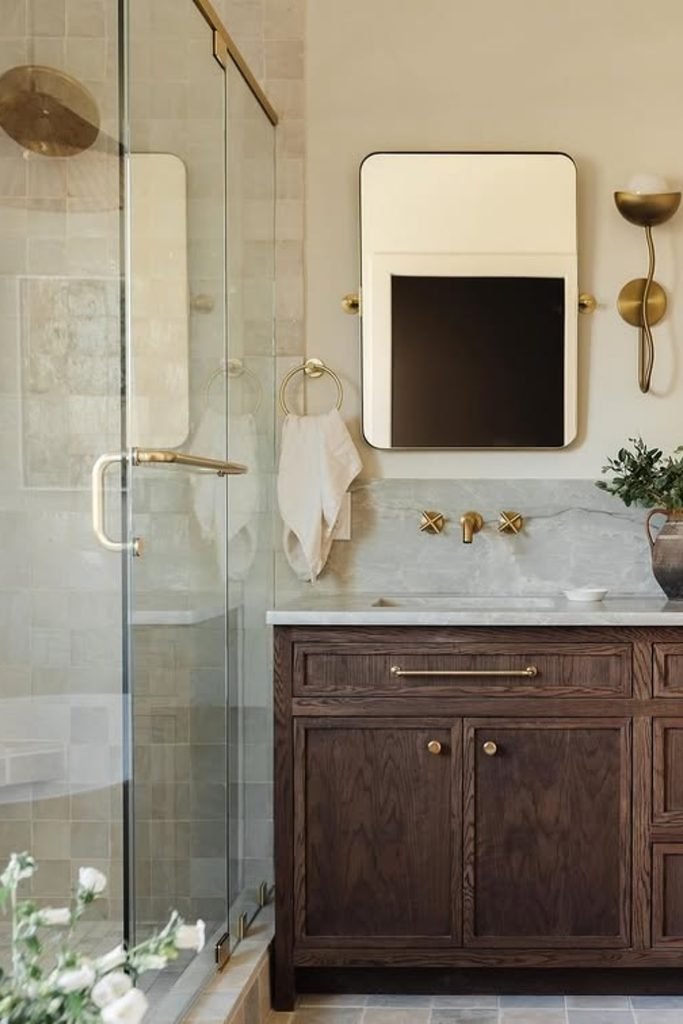
Rustic Storage
Exposed wooden beams and natural timber cabinets can bring traditional charm into a transitional bathroom without making everything look overly rustic.
Install open wooden shelves with black pipe supports above the vanity, giving folded towels, baskets, and daily essentials a practical home.
A freestanding white tub and simple subway tiles balance the rougher wood textures, making this combination particularly suitable for farmhouse-inspired homes.
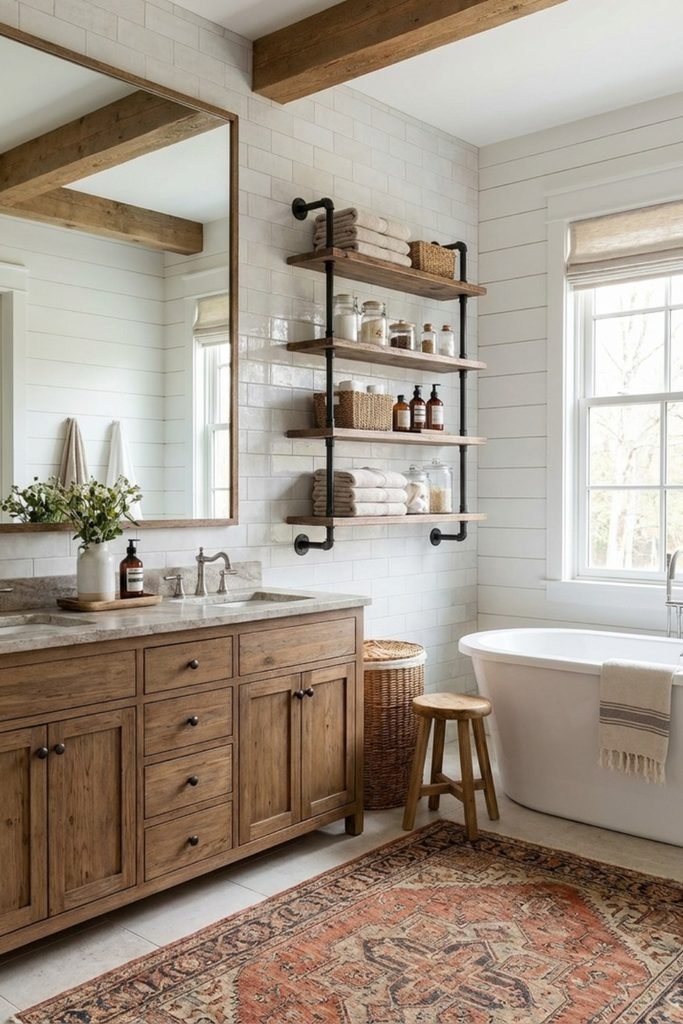
Forest Contrast
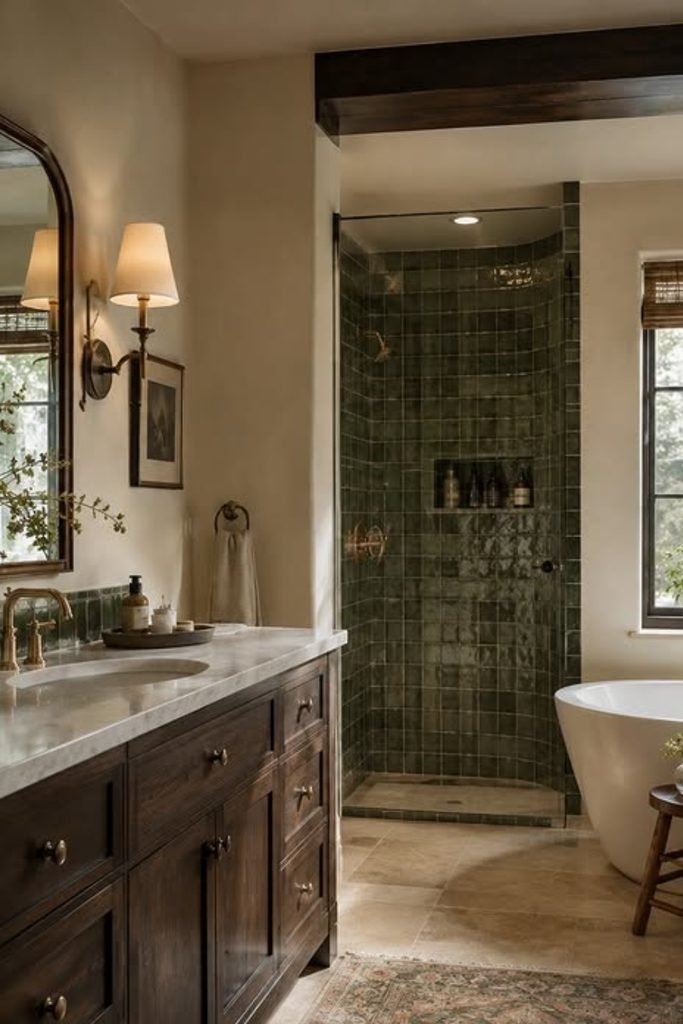
Deep green shower tiles can bring rich color into a transitional bathroom, especially when paired with dark wooden cabinetry and warm stone flooring.
Add a freestanding white tub beside the shower, then introduce traditional wall sconces and an arched mirror to soften the darker finishes.
This combination suits spacious bathrooms with natural light, where an exposed ceiling beam and vintage-style runner can add warmth without feeling crowded.
Slatted Paneling
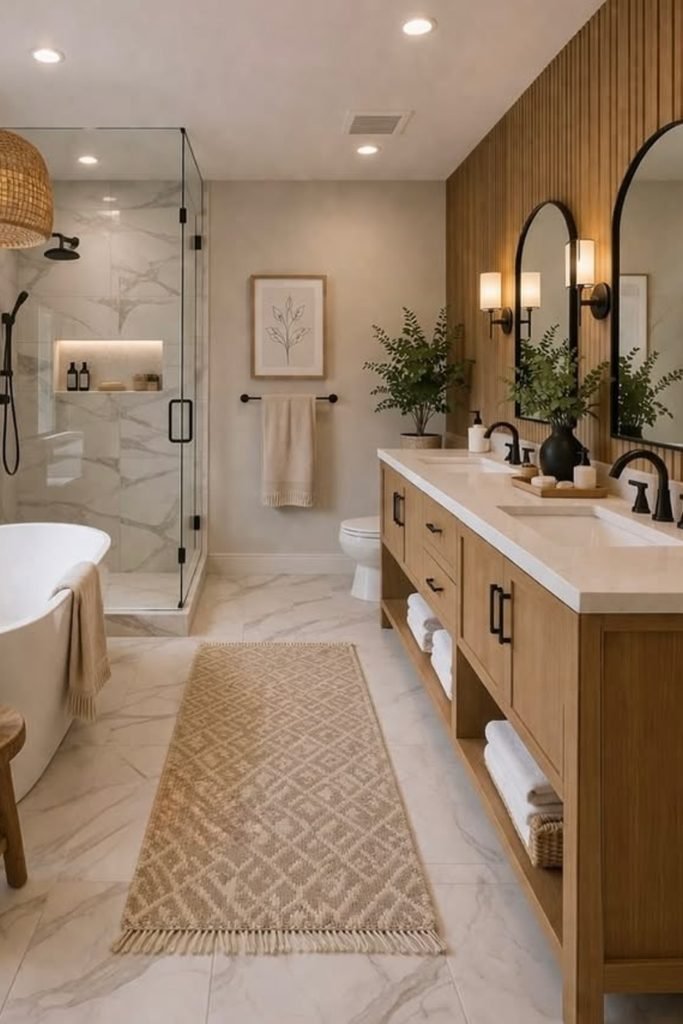
Turn an ordinary double vanity into an interesting feature by adding vertical wooden slats behind the mirrors instead of using traditional painted walls.
Pair light oak cabinetry with black faucets and arched mirrors, then keep the shower bright using large marble-look tiles and clear glass.
For shared primary bathrooms, an open vanity shelf offers convenient towel storage, while a woven runner helps soften the surrounding stone surfaces.
Vintage Glamour
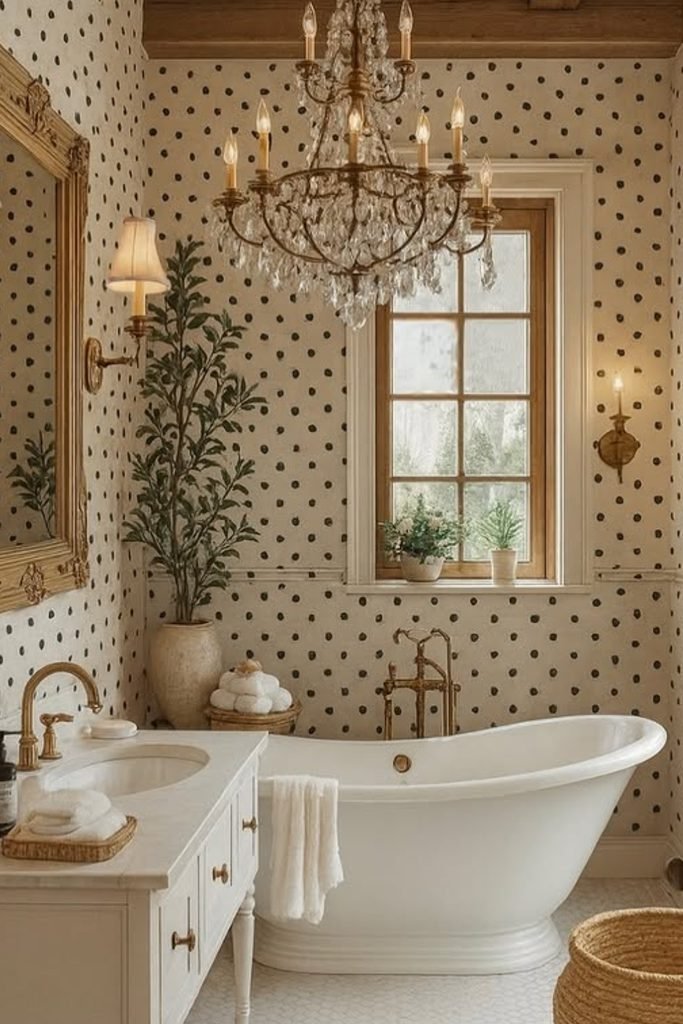
A crystal chandelier might seem unusual for a transitional bathroom, but pairing it with simple white fixtures keeps the traditional detailing balanced.
Try small polka-dot wallpaper above paneled walls, then introduce a freestanding bathtub, framed antique-style mirror, and delicate brass fixtures for added character.
This approach works beautifully in guest or primary bathrooms with enough ceiling height, especially when you keep the flooring neutral and understated.
Bright Simplicity
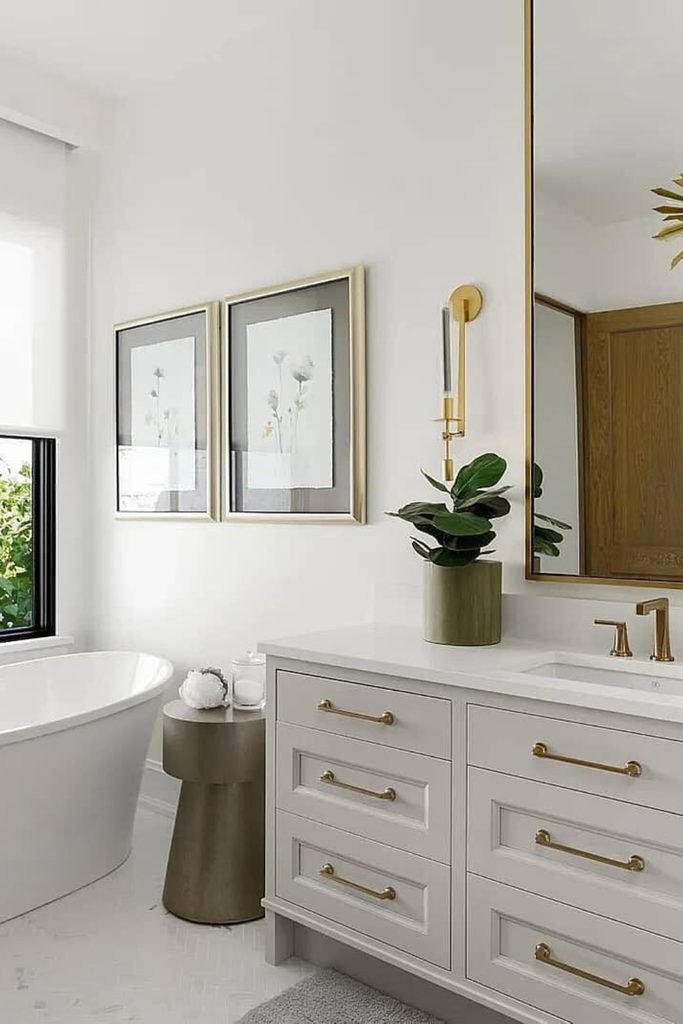
When your bathroom receives plenty of natural light, a white paneled vanity and matching bathtub can create an elegant foundation without looking plain.
Choose long brass cabinet handles, a large rectangular mirror, and simple framed artwork to introduce traditional details alongside cleaner contemporary shapes.
Place the freestanding tub near a wide window if space allows, and add a sculptural ceiling light for a more finished appearance.
Elegant Cabinetry
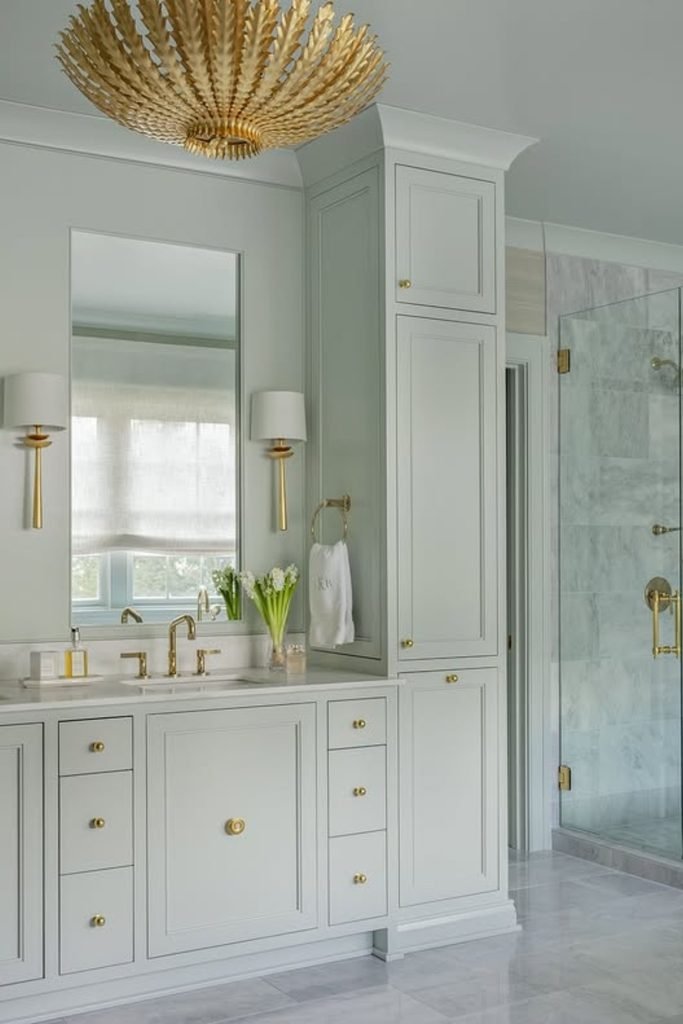
Floor-to-ceiling cabinets can make a spacious transitional bathroom feel more organized, especially when you match their color with the main vanity.
Choose soft gray paneled doors, small brass knobs, and matching faucets, then add a decorative gold chandelier for traditional character.
Keep the shower simple with pale stone tiles and frameless glass, allowing the detailed cabinetry to remain the main feature.
Tiled Partition
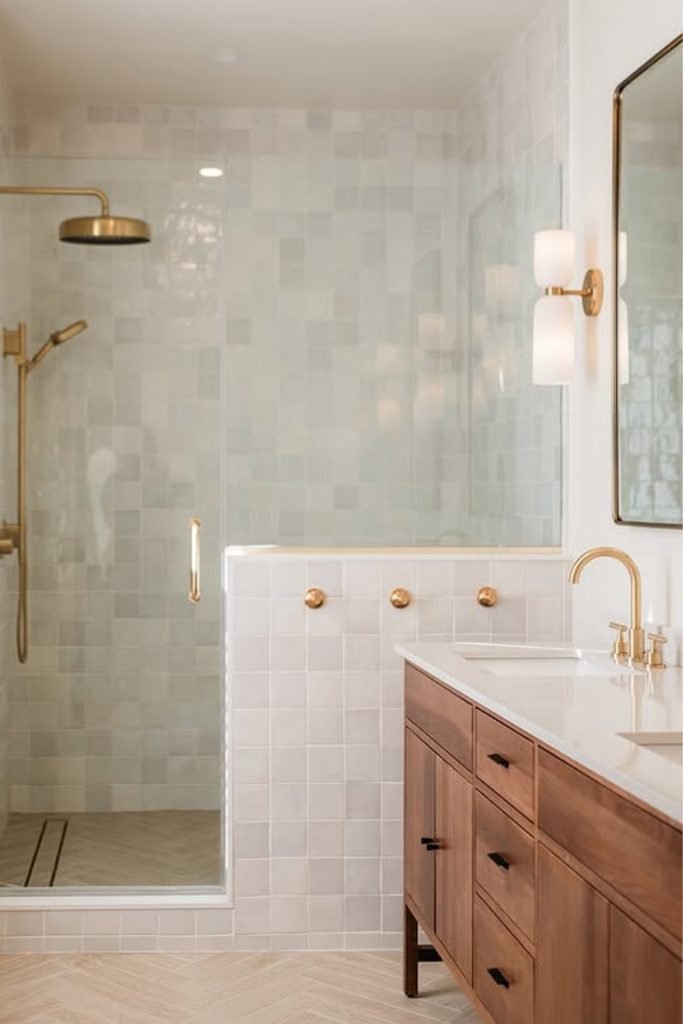
A half-height tiled partition offers a practical way to separate your walk-in shower while keeping the bathroom open and bright.
Pair soft blue-gray square shower tiles with a warm wooden vanity, then use brushed brass fixtures to connect both design elements.
This layout works beautifully in narrow bathrooms, where a glass panel above the partition provides separation without completely blocking natural light.
Vertical Tiles
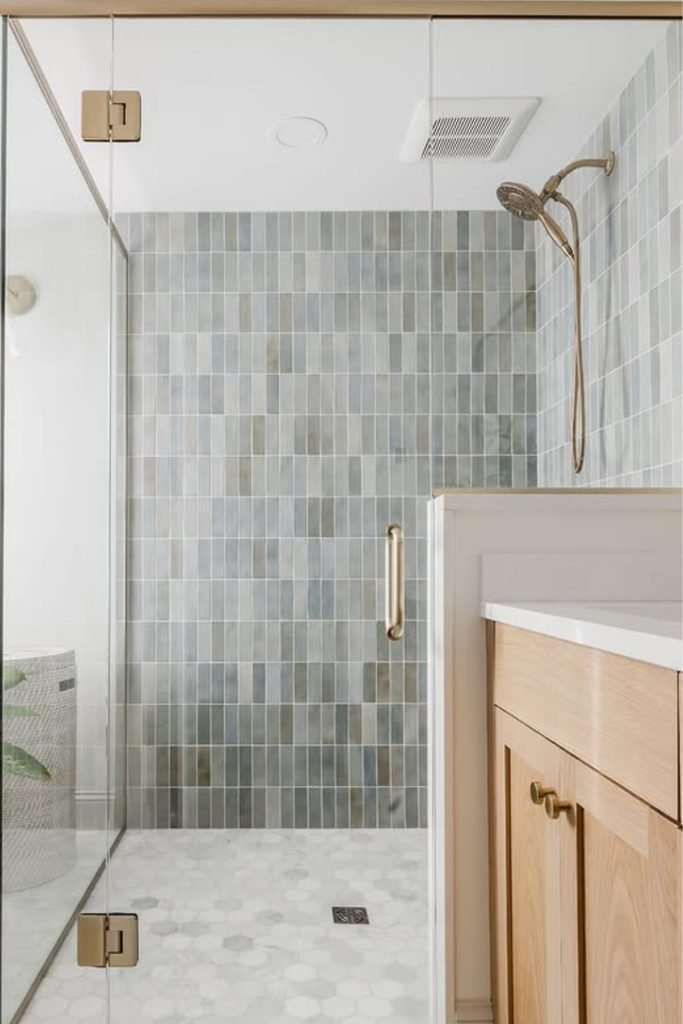
Want a shower that feels taller without changing your bathroom layout? Vertical blue-gray tiles can create that effect through their arrangement.
Continue the tiles across both shower walls, then introduce a warm oak vanity and brass fittings for a softer traditional touch.
Finish with white hexagonal floor tiles and clear glass panels, keeping the shower visually connected to the surrounding bathroom without unnecessary decoration.
Warm Cabinetry
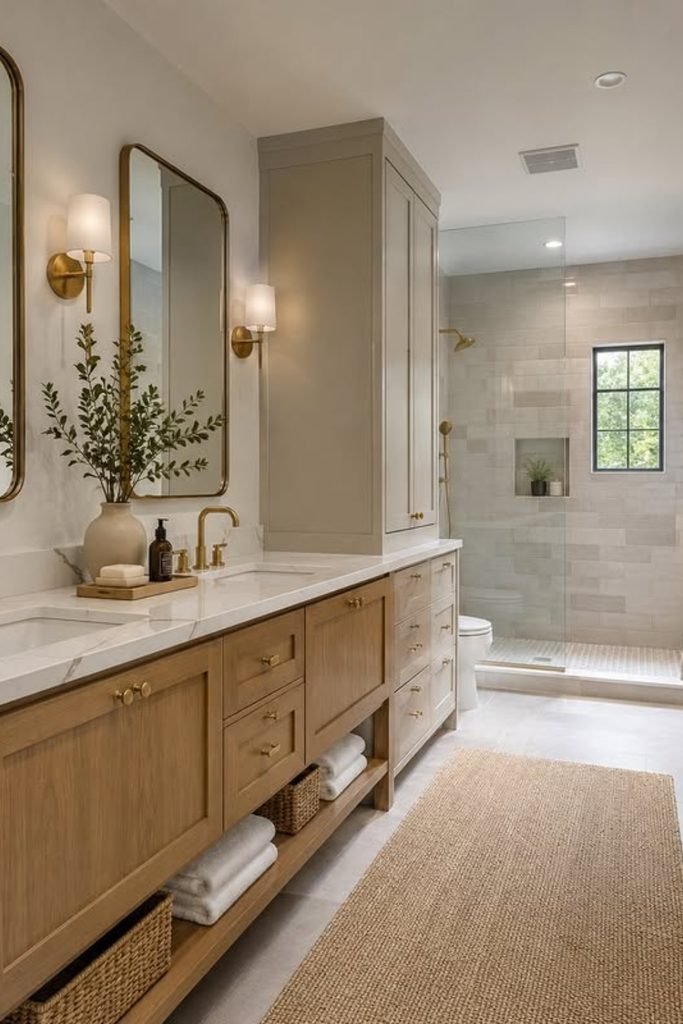
Warm wood cabinetry brings a soft natural feel while giving you plenty of practical storage for everyday bathroom essentials.
Brass faucets and hardware add gentle contrast, helping the neutral finishes feel warmer without making the space look overly decorated.
Wall sconces beside the mirrors layer warm lighting with natural daylight, keeping the long vanity bright and comfortable to use.
Marble Vanity
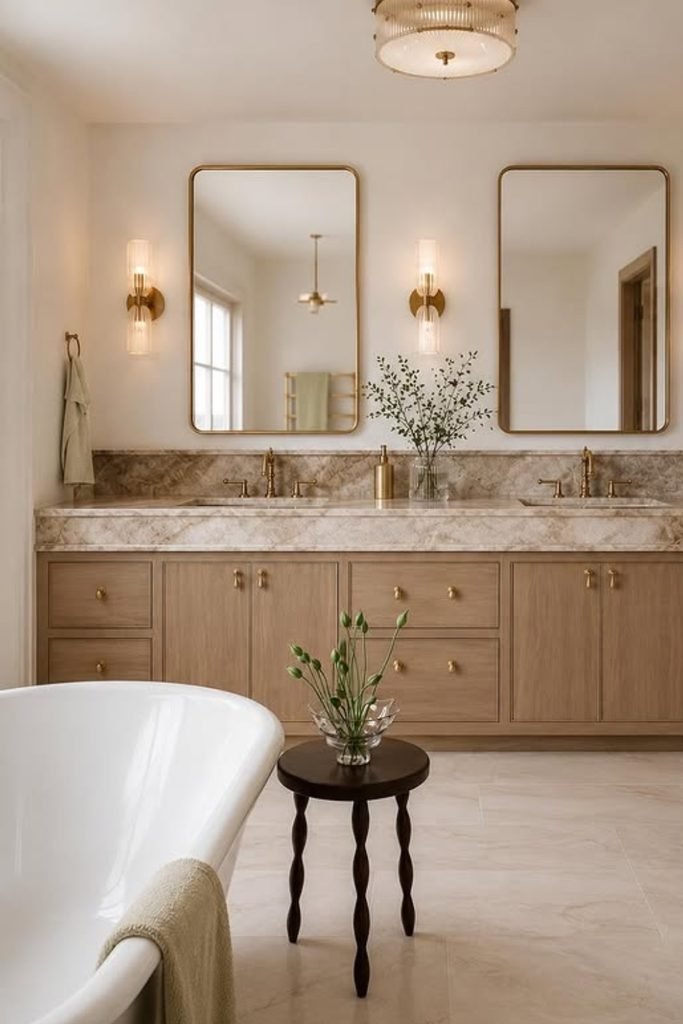
Marble across the double vanity creates a polished focal point, while wood cabinetry keeps the larger bathroom feeling warm and grounded.
Matching brass mirrors, faucets, and cabinet hardware tie the vanity together without competing with the subtle movement in the stone.
Slim wall sconces and the ceiling fixture provide layered lighting, giving you softer illumination around both mirrors and the bathtub area.
FAQs
Can You Create a Transitional Bathroom Without Remodeling?
You can achieve a transitional look without major renovations by updating your existing vanity with fresh paint, modern handles, and simple fixtures.
Replace outdated mirrors with clean-lined designs, introduce warm lighting, and choose neutral accessories that complement the traditional features already in your bathroom.
Even small changes, like adding a patterned runner or switching cabinet hardware, can help connect older elements with a more contemporary style.
What Colors Work Best in Transitional Bathrooms?
Warm whites, beige, greige, and soft gray make excellent foundation colors because they pair easily with both traditional details and modern finishes.
If you prefer more personality, introduce muted sage, dusty blue, or natural wood tones through cabinetry while keeping the surrounding walls lighter.
Avoid mixing too many strong colors at once, and repeat your chosen shades through tiles, towels, or accessories for a more connected appearance.
