
How to Decorate Awkward Corners in a Living Room
You look at that corner in your living room and it just feels off. It’s not broken, it’s not dirty, but it also doesn’t feel right.
It sits there empty or half-used, and somehow it makes the whole room feel unfinished.
Most people ignore it for a while. Then they try something quick, a random chair, a small plant, maybe a lamp, but it still doesn’t feel natural. Either it looks forced, or it just adds more clutter.
So the corner stays in that in-between state: not useful, not styled, just awkward.
It’s not that you don’t have ideas. It’s that you don’t know what that specific corner actually needs.
Every corner is different. Some are too dark, some are too tight, some are too visible, and some just don’t match the rest of the room.
Once you understand that, everything changes. You stop guessing and start fixing it the right way.
In this article, you’ll learn simple ways to figure out what your corner needs and how to style it so it finally looks intentional, not like leftover space.
Let’s jump in!
How Do You Fix an Awkward Living Room Corner Without Making It Look Overdecorated?
The biggest mistake people make when fixing an awkward corner is trying to do too much.
They add a chair, a plant, a table, maybe even shelves, and instead of solving the problem, the corner starts to feel crowded and confusing.
If you want it to look clean and intentional, you need to simplify your approach. Start by looking at what the corner actually lacks.
If it feels empty and flat, it usually needs height, which you can add with a floor lamp or a tall plant. If it feels dark, lighting should be your priority.
If your living room feels cluttered, then the corner should help with storage, not decoration.
The key is to give the corner just one clear role. When a corner tries to do multiple things at once, it loses balance and looks messy.
Also, pay attention to scale. A very small corner cannot handle bulky furniture, and a large empty corner will look odd with just a tiny decor piece.
Match the size of your items to the space so everything feels natural.
Another important detail is spacing. Don’t push everything tightly into the corner. Leave a bit of breathing room so each piece stands out properly.
When you keep things simple, balanced, and purposeful, the corner starts to feel like part of the room instead of something you tried to fix last minute.
8 Ways to Decorate Awkward Corners in Living Room
Following are the 8 ways to decorate awkward corners in livingroom.
1. Turn the Corner Into a Small Reading Spot
If your corner has even a little space, turn it into a reading spot. Place a comfortable chair, a small side table, and a floor lamp.
That’s all you need. The goal is not to build a full setup, but to create a small, usable zone where you can sit quietly.
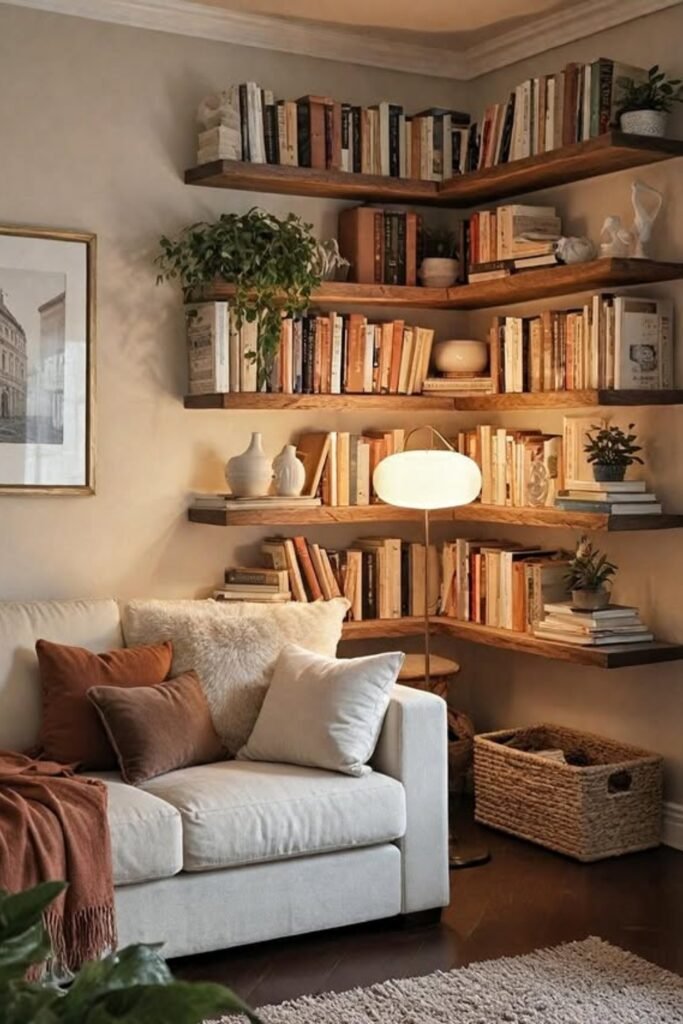
This works especially well in corners near windows or slightly separated from main traffic areas.
It makes the corner feel intentional instead of ignored, and it adds a cozy function to your living room without taking up too much space.
2. Use a Tall Plant to Fill Empty Vertical Space
Some corners feel awkward simply because they look empty from floor to ceiling.
A tall indoor plant solves this in a very natural way. It adds height, texture, and life without making the space feel heavy.
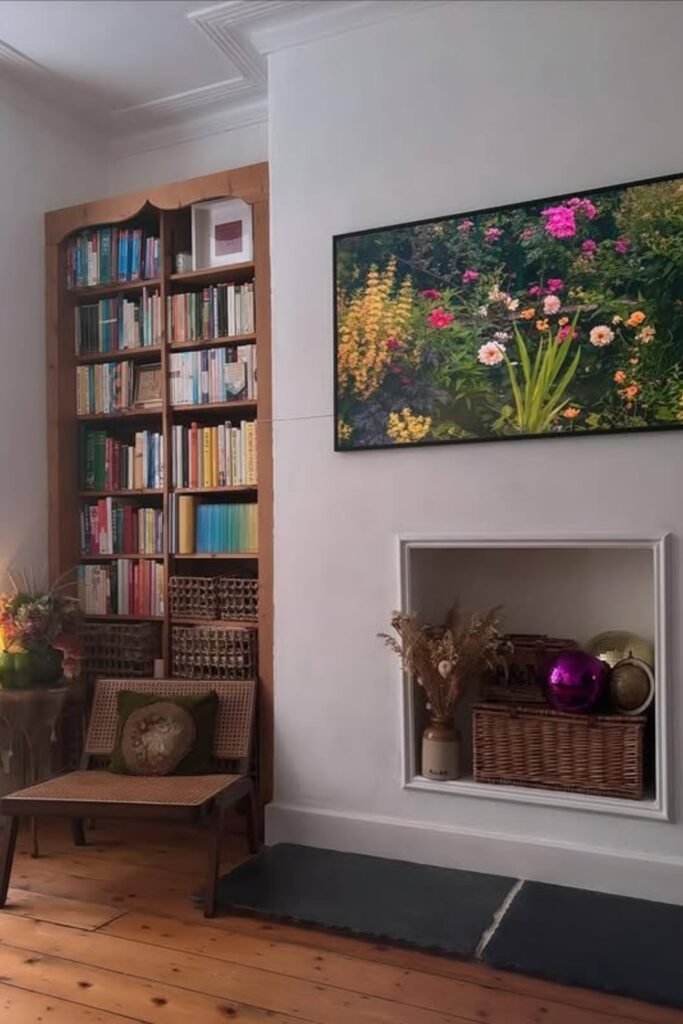
You can also combine a large plant with a smaller one in front to create depth. This works well if you don’t want furniture in that corner but still want it to feel styled.
It also softens sharp edges in the room and makes the overall space feel more relaxed and balanced.
3. Add a Floor Lamp for Both Light & Balance
Dark corners instantly make a room feel incomplete. A floor lamp is one of the easiest fixes because it solves both lighting and decoration at the same time.
It fills vertical space while also improving the mood of the room at night.
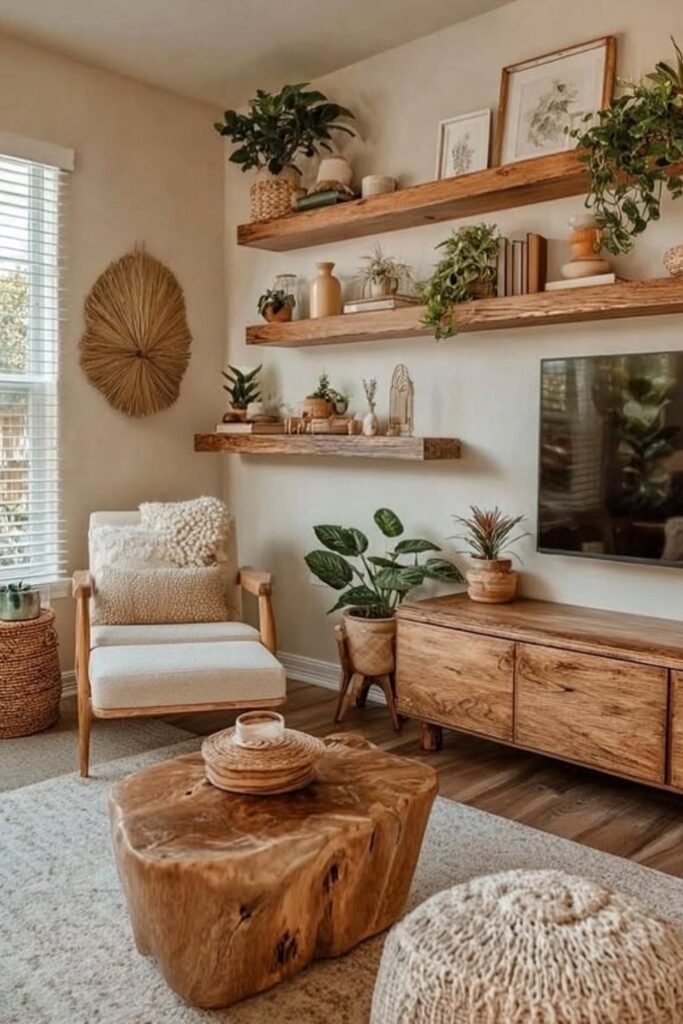
If your living room already has a lot of decor, choose a simple lamp that blends in. If your space feels too plain, go for a statement design.
The key is to use lighting as both a functional and visual tool, not just something you switch on and off.
4. Create a Mini Storage Corner
If your living room always feels slightly messy, use the corner for storage instead of decoration.
A slim cabinet, open shelves, or woven baskets can help you hide everyday clutter like blankets, magazines, or small items.
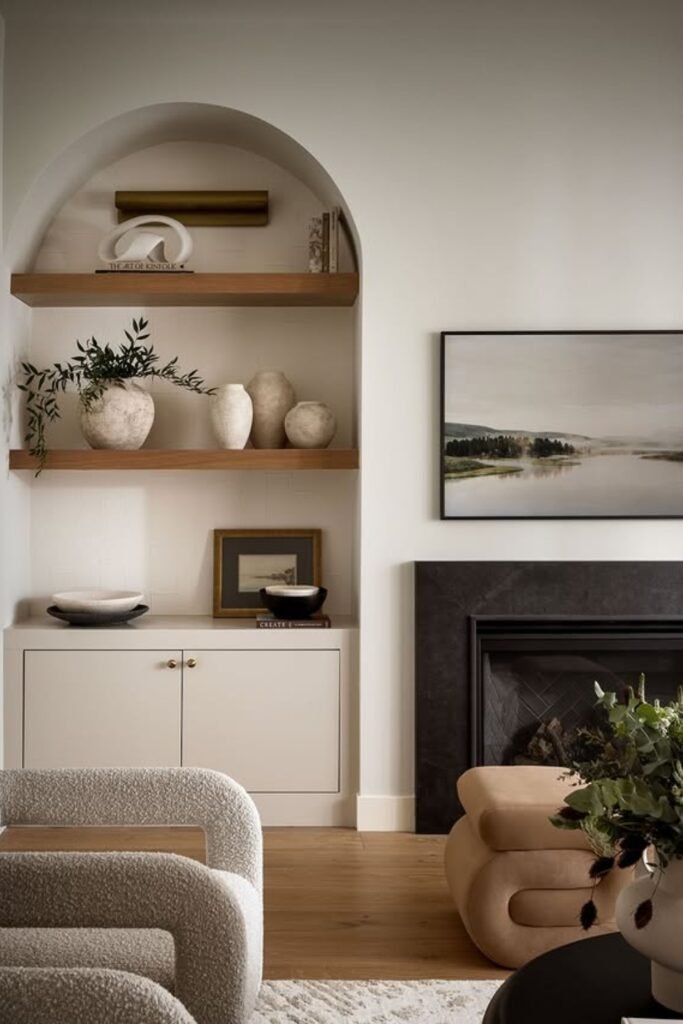
The goal is to make the corner useful while still keeping it visually clean. Choose storage pieces that match your room style so they don’t look out of place.
This is one of the most practical solutions because it improves both organization and design at the same time.
5. Style Floating Shelves for Light Decor
Floating shelves are perfect when you don’t want bulky furniture in a corner.
They let you use vertical space without making the area feel crowded. You can style them with a few books, small plants, or simple decorative pieces.
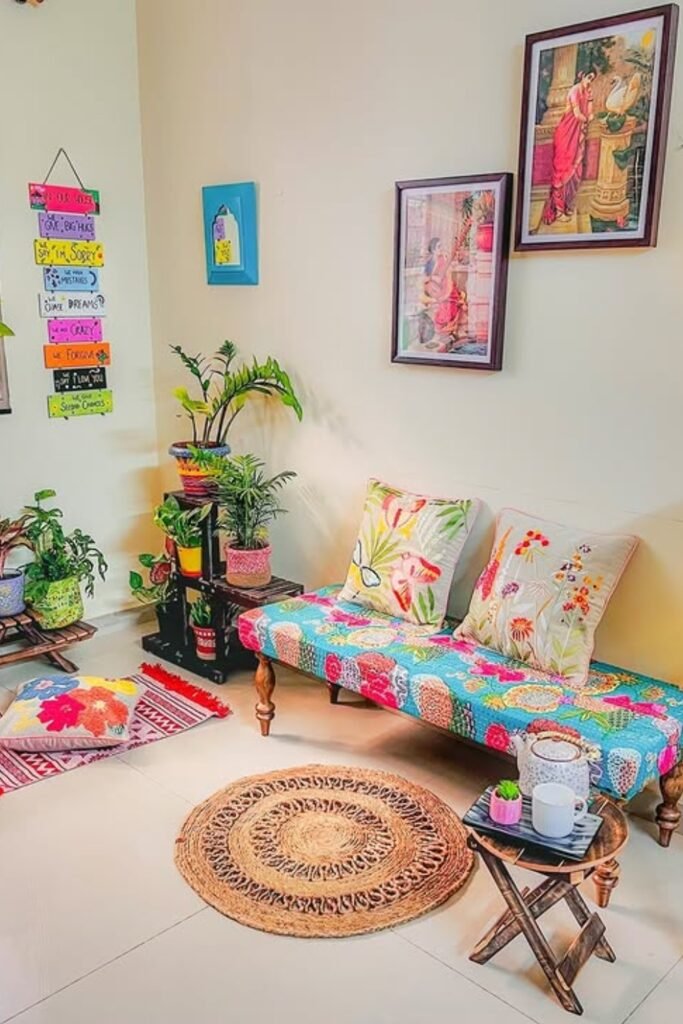
The key is not to overload them. Keep enough empty space so the shelves feel light and intentional.
This works especially well in small living rooms where floor space is limited but wall space is available.
6. Place a Single Statement Chair
Sometimes, one well-chosen piece is enough to fix an awkward corner.
A single accent chair can instantly make the space feel designed instead of ignored. Add a soft cushion or a throw blanket so it doesn’t feel empty or random.
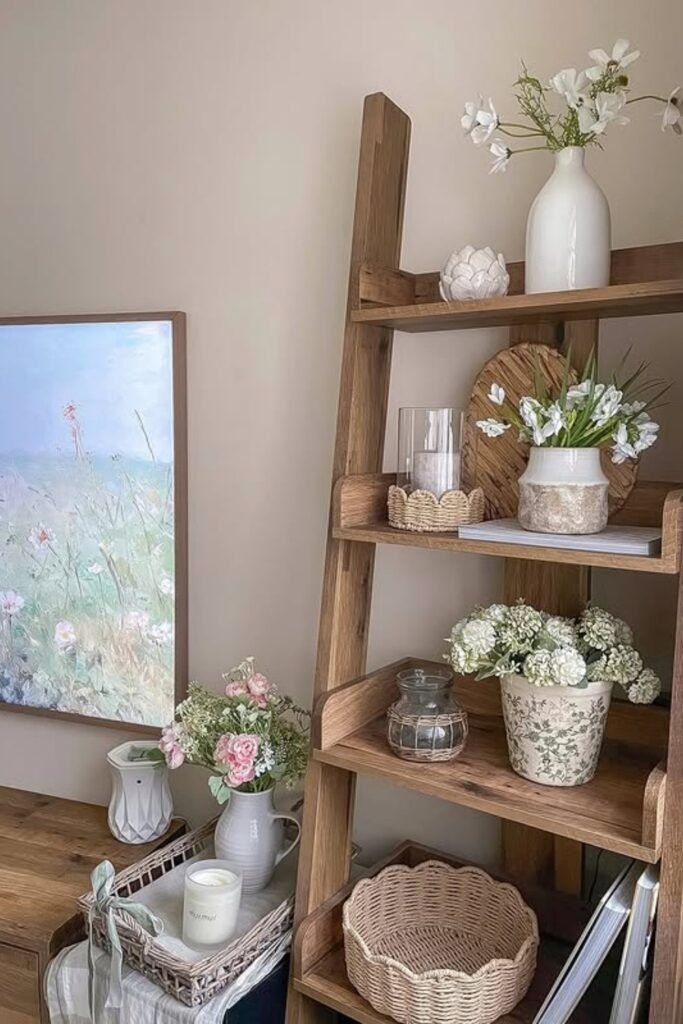
This works best when the chair matches or complements your main furniture. It also adds extra seating without changing the layout of your room too much.
7. Use Artwork to Define the Space
If your corner feels flat, artwork can give it structure.
A large framed piece or a small gallery wall helps define the area and makes it feel intentional. Instead of leaving the wall blank, you give the eye something to focus on.
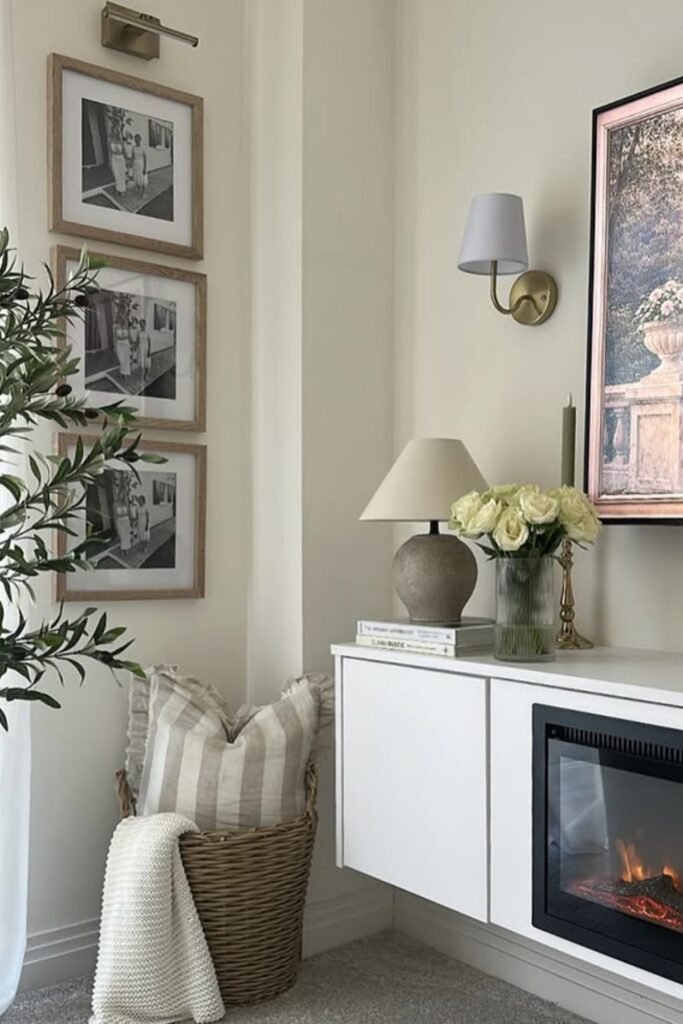
This works especially well in modern or minimal living rooms. Keep the arrangement simple so it doesn’t feel busy or distracting.
8. Add a Decorative Floor Piece
If you want a very loweffort solution, use a tall decorative object like a vase, sculpture, or lantern.
It fills the space without adding furniture or complexity. This is ideal for corners where you don’t want to commit to a full setup.
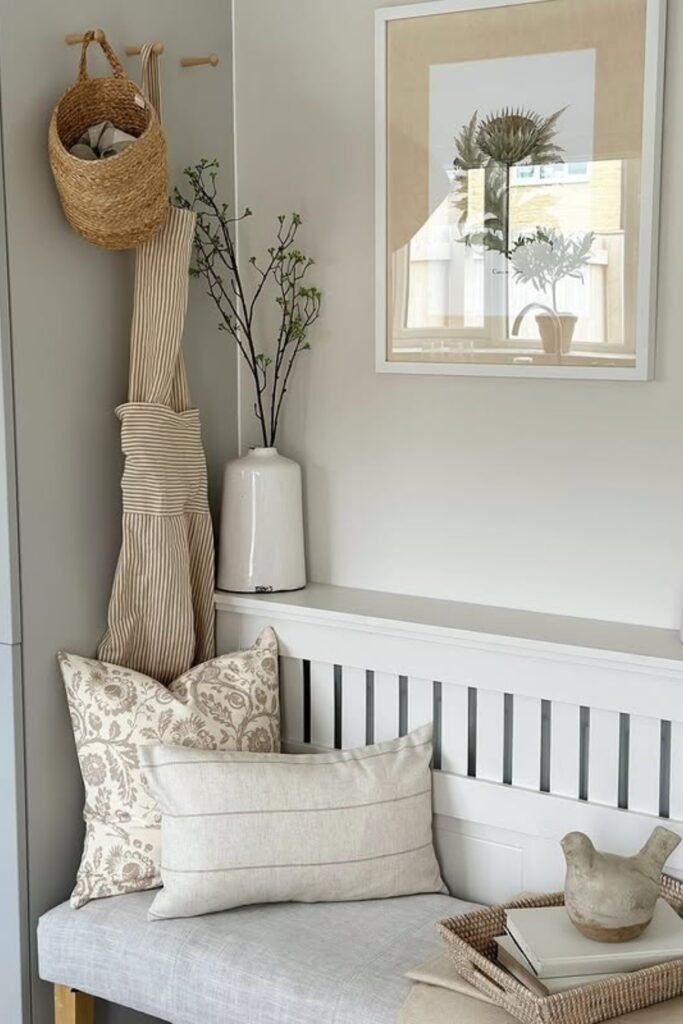
The key is to choose something that matches your room style so it feels like part of the design, not an afterthought.
Why Does One Corner in Your Living Room Always Feel “Off” No Matter What You Do?
Sometimes your living room looks fine overall, but one corner still feels wrong.
You try placing a plant, a chair, or a lamp, but it still doesn’t sit right. The reason is usually not the decor , it’s the imbalance in the space.
That corner might be too dark, too empty compared to the rest of the room, or it may not match the visual weight of nearby furniture.
When one area feels lighter or heavier than the rest, your eyes naturally notice it. Another common reason is that the corner has no clear purpose.
When a space doesn’t “do” anything , like hold light, storage, or seating , it feels unfinished no matter what you place there.
The key is not to keep adding things randomly, but to first understand what the corner is missing.
Once you identify whether it needs light, height, or function, it becomes much easier to fix it in a natural way.
How Do You Decide Whether a Corner Needs Decor, Storage, or Just Space?
Not every corner needs to be filled, and this is where most people go wrong.
Before you decorate, look at how the corner behaves in your room. If the space feels dark or visually heavy, it usually needs decor like a lamp, plant, or artwork to balance it out.
If your living room feels cluttered, that corner might actually work better as storage, using baskets or a slim cabinet to keep things organized.
But if the room already feels full or tight, the best choice is sometimes to leave the corner simple with minimal styling instead of forcing furniture into it.
The decision depends on balance, not just filling empty space. Think of the corner as part of the room’s flow.
If it helps the room feel more open, keep it light. If it helps reduce mess, make it functional. If it breaks the visual balance, then decorate it to bring harmony back.
Conclusion
Awkward corners are not a design problem , they are just unused opportunities in your living room.
Most people try to fix them quickly by adding random decor, but that’s exactly what makes them look worse.
The real solution is simple: first understand what the corner is missing, then give it a clear purpose.
Once you stop treating it as leftover space and start treating it as part of your room’s layout, everything changes.
A corner can add light, storage, seating, or even just visual balance. You don’t need to overfill it , you just need to style it with intention.
Pick one idea that fits your space, keep it simple, and let the corner naturally blend into your living room instead of standing out as a problem.
You may like to read!
