
20 White Walls Living Room Ideas
Most people don’t regret choosing white walls, they regret choosing the wrong white or not knowing how to style it.
You’ve probably seen it happen both ways. You walk into one white living room and you can feel how bright, calm, and expensive it looks.
Then you step into another, and you might notice it feels flat, cold, almost unfinished.
So now you start wondering, will white make your space feel bigger and timeless or boring and sterile?
In this article, you will learn exactly when white walls work, when they don’t, and how you can make them look intentional with 20 ideas to try.
Let’s jump in!
Are White Walls Good for a Living Room?
Yes, but only if you use them the right way. White walls can help your living room feel bigger, brighter, and calmer.
If your space doesn’t get much natural light, you can use white to reflect whatever light you have. If your room feels small or crowded, white can instantly open it up.
That’s why you’ll notice so many modern, farmhouse, and minimalist living rooms start with white walls.
But here’s where you might go wrong. You pick a random white, paint everything, add a gray couch, and stop there. Now your room can feel flat. Cold. Almost unfinished.
Then you might blame the color. But white walls aren’t the problem, how you use them is.
White walls are like a blank canvas for you. If you don’t layer warmth, texture, and contrast on top, your room will look empty.
But when you pair white with warm wood, soft fabrics, proper lighting, and the right undertone, you can make it look clean and expensive, not boring.
You also have to choose the right shade. When you use a cool white in a north-facing room, it can look dull or gray.
And when you pick an overly creamy white in a sunny room, it might turn yellow. Your lighting, flooring, and furniture will all change how white looks in your space.
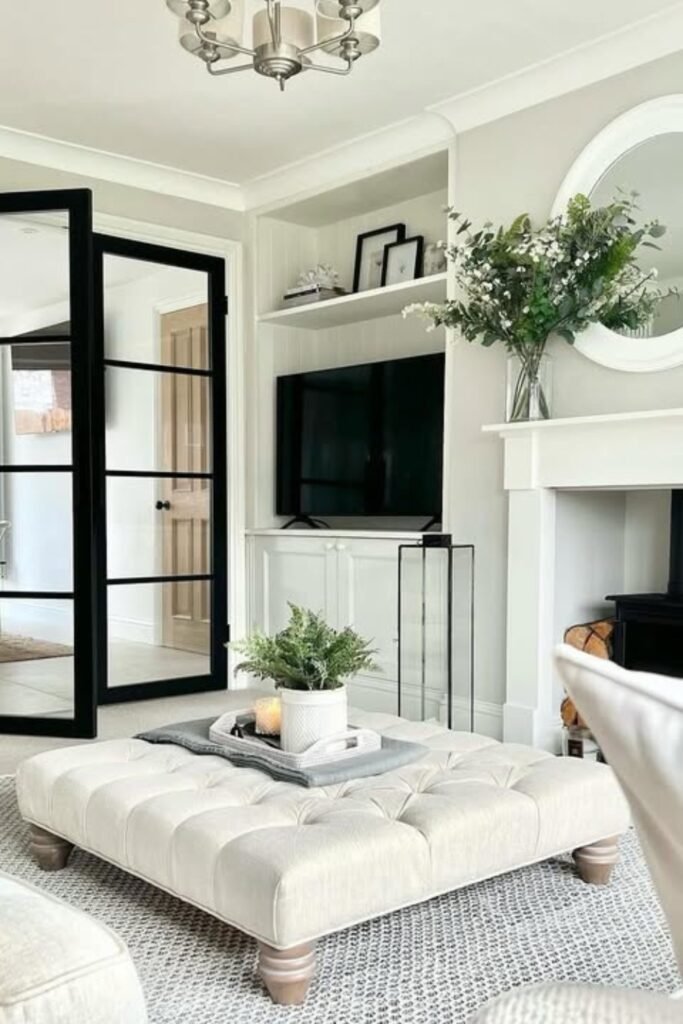
Contrast With Black
White walls feel stronger when you give them something bold to lean against.
Those black-framed glass doors stop the room from looking washed out and instantly add structure.
You can keep your sofa, rug, and built-ins light and neutral, then repeat black in small doses like lighting, frames, or hardware.
This works beautifully in farmhouse or modern spaces where you want softness without losing definition.
Structured Gallery Wall
That clean 3*2 grid of black frames gives the living room structure without overwhelming the calm palette.
If your space feels empty above the sofa, try symmetry instead of random art placement.
You can keep frames consistent, use wide mats, and center everything with your seating.
It works especially well in neutral or family-focused living rooms where you want personality without visual clutter.

Oversized Statement Mirror
When white walls start to feel flat, scale is your secret weapon.
That large black grid mirror instantly anchors the living room and adds depth without introducing more color.
It reflects light, makes the space feel larger, and ties in beautifully with the dark coffee table below.
If your sofa wall feels empty, go big instead of adding multiple small pieces.
You can keep the frame bold and repeat that dark tone in one or two other spots for balance.

Classic Coastal Warmth
White walls don’t have to feel modern or minimal, they can feel timeless and relaxed.
The living room leans into soft creams, patterned upholstery, and warm wood tables to create a classic coastal mood.
If you have large windows or a view, keep the walls light and let the scenery shine.
You can add traditional lamps, layered textiles, and a few blue accents to keep it elegant without feeling formal.

Double-Height Drama
If you have tall ceilings, let your white walls work for you instead of competing with them.
That oversized black artwork pulls the eye up and keeps the living room from feeling empty.
Floor-to-ceiling curtains soften the height, while low, clean-lined seating keeps everything grounded.
This setup works best in open, modern homes where natural light floods in.
You can go big with art and keep the palette tight so the space feels bold, not busy

Soft Monochrome Layers
This living room stays within warm beige and cream, but the mix of curved furniture, textured upholstery, and stone surfaces keeps it interesting.
If you love calm, modern spaces, stick to one color family and vary the materials instead.
You can use boucle, matte finishes, soft wood, and subtle artwork so the room feels rich without adding bold color.

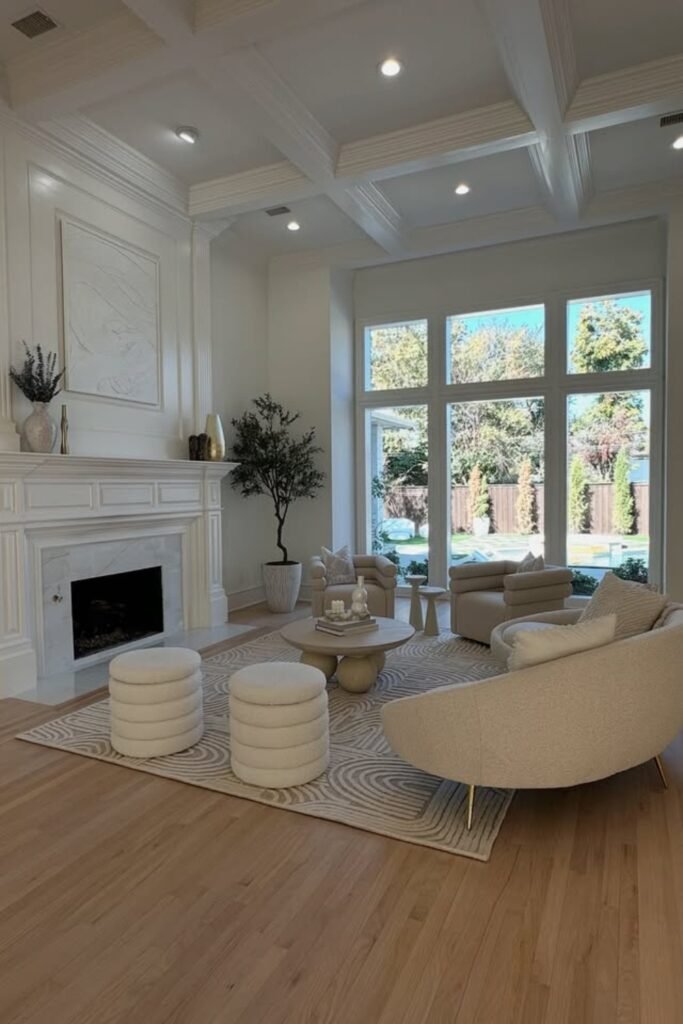
Architectural White Impact
When your living room has strong architectural details, white walls become the highlight instead of the background.
The coffered ceiling, detailed fireplace, and wall molding all stand out because the palette stays clean.
If your home has built-in character, don’t cover it with color.
You can keep the walls soft white, add warm wood floors, and use sculptural furniture in similar tones.
Add Soft Pastels
White walls give you the freedom to play with color without overwhelming the room.
In this living room, soft blues, muted greens, and warm accents bring life to the space while keeping it light.
If your white feels too plain, introduce color through pillows, art, and decor instead of repainting.
This works especially well in casual or coastal-inspired spaces where you want freshness without bold contrast.

Bring In Greenery
If your white living room feels too quiet, plants fix that instantly.
Those tall leafy greens add height, movement, and natural color without disturbing the calm palette.
White walls actually make greenery stand out more, so even one statement plant can change the mood.
You can pair it with warm wood flooring and soft beige seating to keep everything grounded.
This works especially well in small or light-filled spaces that need life without extra clutter.

Elegant White Layers
The panel molding, soft upholstery, carved wood frames, and subtle patterns give the living room depth without adding bold color.
If you love a classic or French-inspired look, keep the palette light but mix finishes, matte walls, linen sofas, aged brass, and patterned rugs.
Your layering tone and detail is what makes an all-white space feel refined instead of plain.

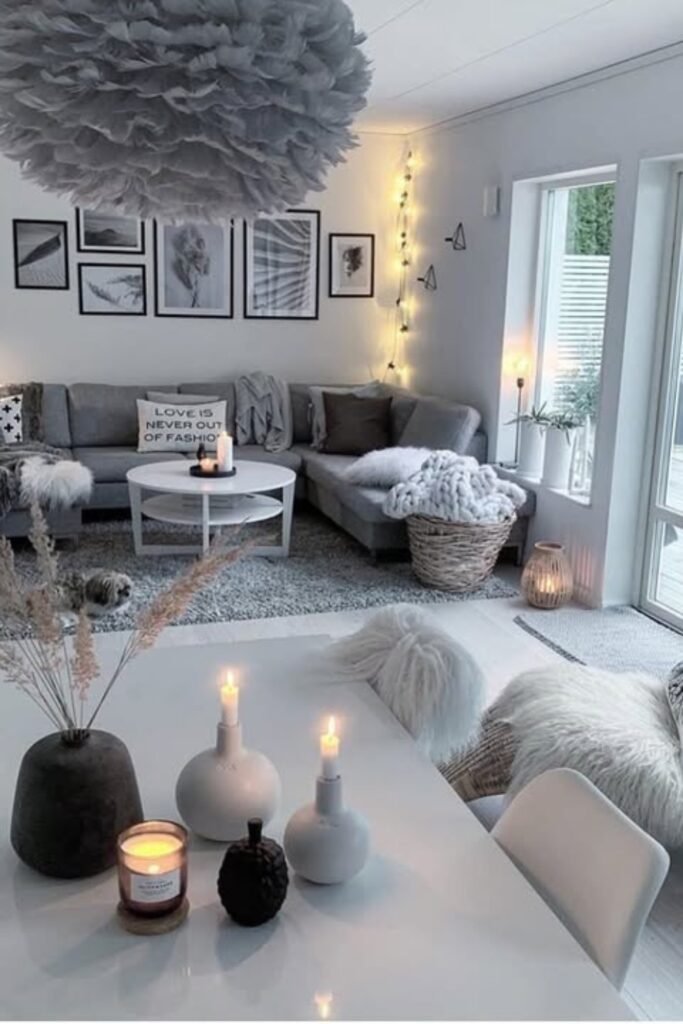
Cozy Evening Glow
The white walls can feel cold during the day, but at night they become the perfect backdrop for warmth.
The soft string lights, table lamps, candles, and textured throws completely change the mood of this living room.
If your space feels flat after sunset, add layered lighting instead of more decor.
You can mix warm bulbs with cozy fabrics like chunky knits and faux fur to make the room feel inviting and lived-in.
Curved Minimal Comfort
The sharp lines can make white walls feel strict. The curves soften everything.
That rounded sectional, sculptural chair, and smooth wood tables create flow in this living room without adding color.

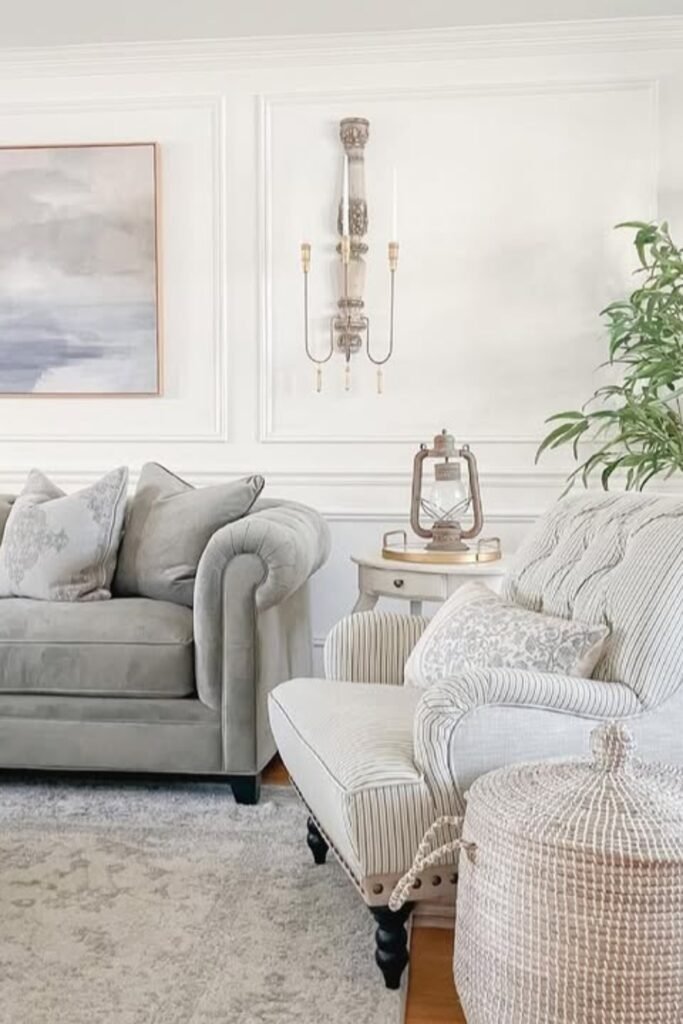
Soft Traditional Contrast
That light gray tufted sofa and striped armchair add gentle contrast while keeping the room calm and cohesive.
If you love a traditional living room look, pair white panel molding with soft neutrals instead of stark color.
You can add brass sconces, textured pillows, and a patterned rug so the space feels layered, not flat. It’s classic without feeling heavy.

Warm Boho Texture
In this living room, woven pendants, rattan stools, layered rugs, and colorful pillows bring warmth and character without repainting a single wall.
If you love a relaxed, collected look, keep your base neutral and build texture through natural materials and vintage-style textiles.
The white keeps everything from feeling heavy while the patterns and wood tones add life.
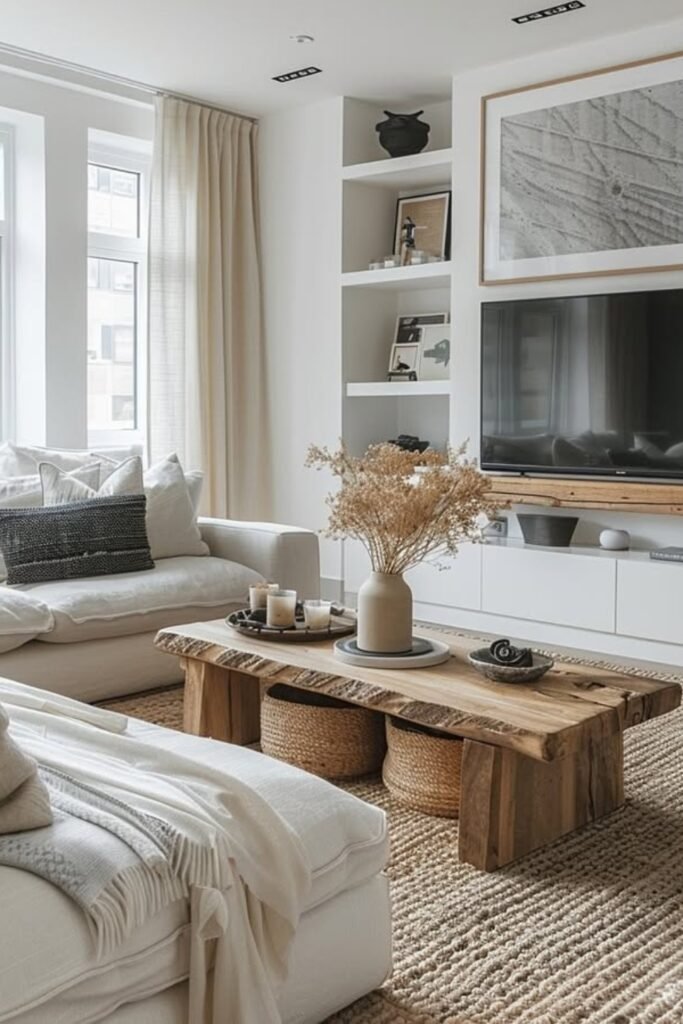
Natural Wood Balance
If your white living room feels too crisp, bring in raw wood. That chunky coffee table instantly warms up the space and grounds all the soft neutrals around it.
The white walls actually make natural textures stand out more, so mix in woven baskets, linen curtains, and a thick jute rug.
This approach works beautifully in modern or Scandinavian-style homes where you want warmth without adding bold color.

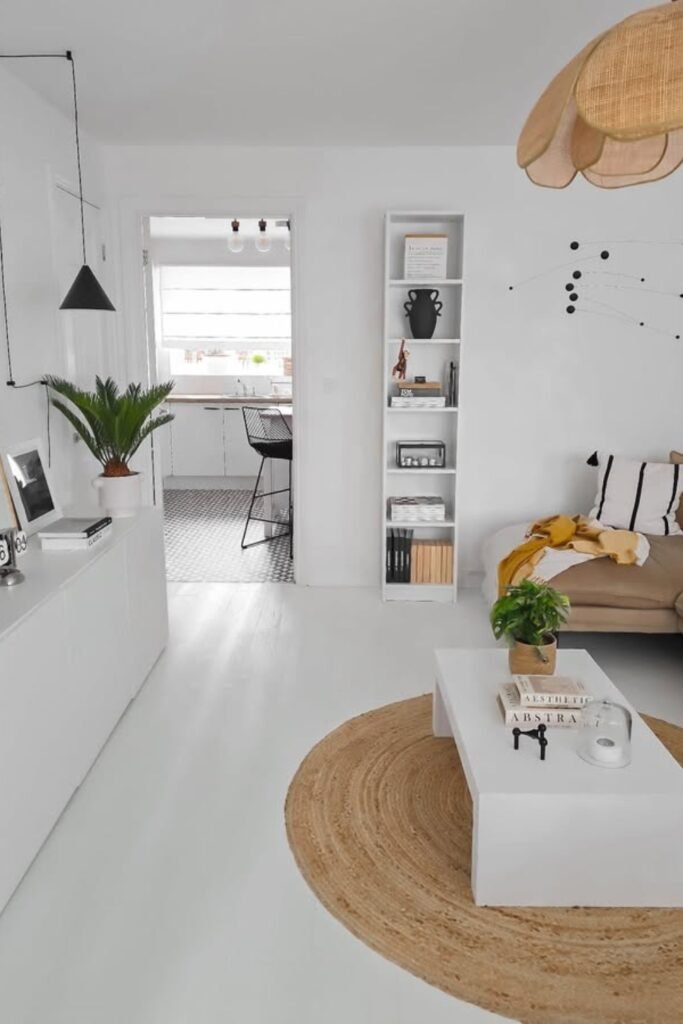
Clean Scandinavian Simplicity
This living room keeps the white walls crisp and pairs them with simple furniture, black accents, and natural textures like the round jute rug.
If you live in a small apartment or open-plan space, stick to clean lines and low-profile pieces so the room feels airy.
You can add warmth through wood tones and soft textiles instead of color to keep the look calm and uncluttered.
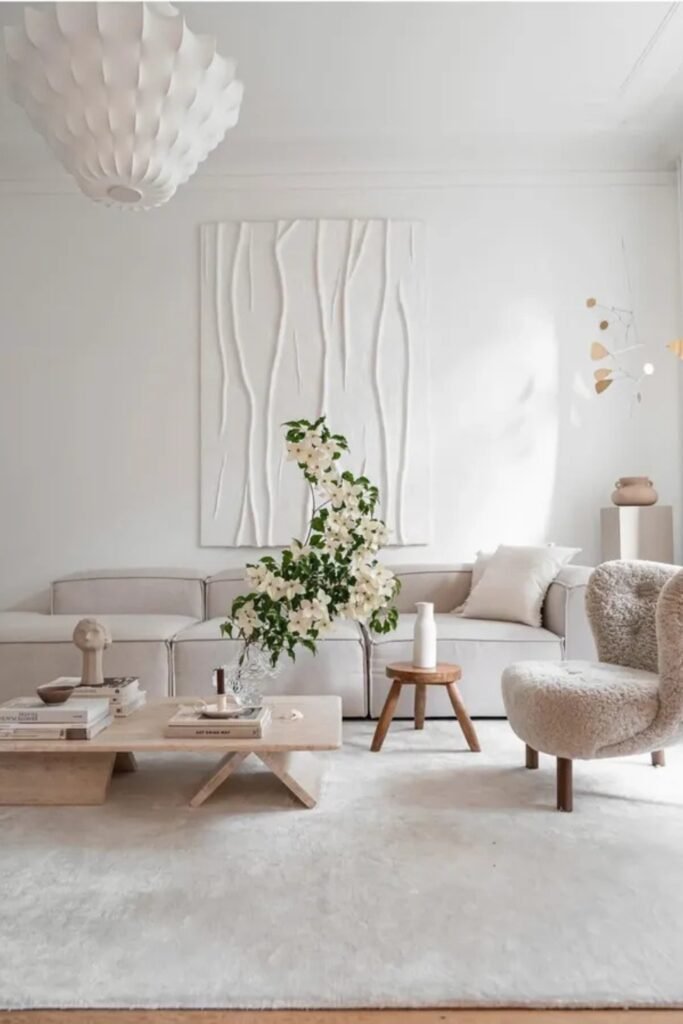
Sculptural Minimal Focus
That raised wall art adds quiet dimension without introducing color, keeping the living room serene but far from boring.
If you prefer a minimalist style, choose one sculptural piece instead of multiple frames.
You can pair it with soft curved furniture and light wood accents so the space feels calm, artistic, and intentionally designed rather than empty.
Subtle Pattern Play
A soft, tonal wallpaper like this adds movement without changing the calm feel of the living room.
If your space feels flat but you’re afraid of bold color, choose a low-contrast pattern in the same color family.
You can pair it with curved furniture, warm brass accents, and layered neutrals so the room feels elevated and designed, not busy.
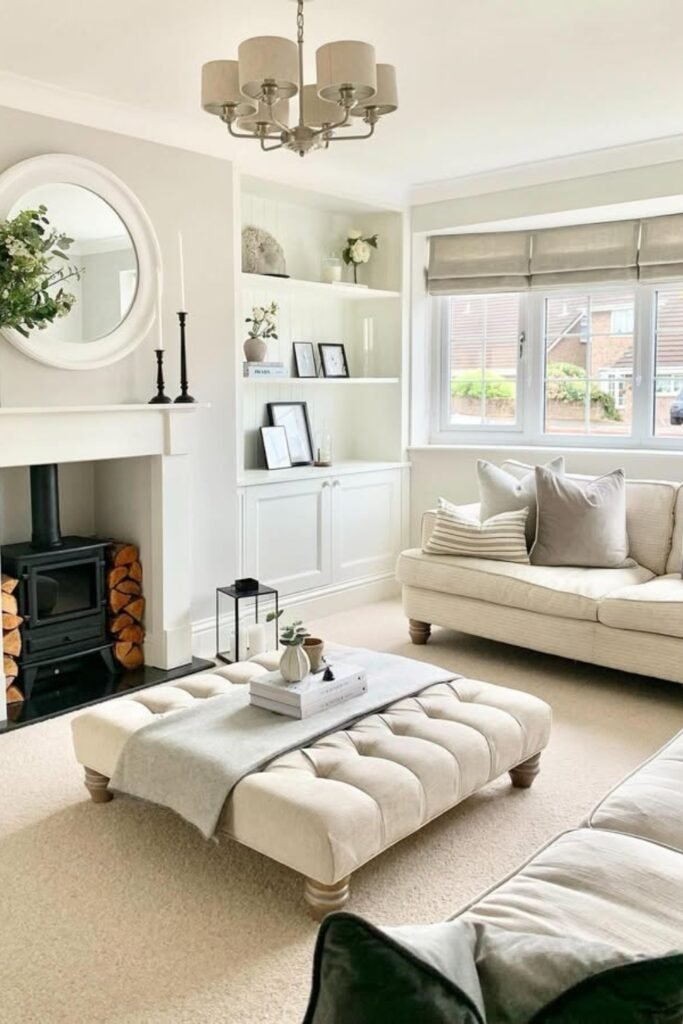
Warm Neutral Harmony
When every piece stays within the same soft color range, white walls feel calm instead of cold.
This living room blends warm beige sofas, layered cushions, and built-in shelving to create depth without contrast.
If you want a safe but beautiful look, stick to creamy whites and light taupes, then add black in small details like a stove or candle holders.

Textured TV Wall
A plain white wall behind the TV can look unfinished. The vertical slats instantly add depth while keeping the color palette light.
If your living room feels too flat, introduce subtle texture instead of bold paint.
You can keep cabinetry sleek and low, repeat warm wood in the coffee table or flooring, and balance it with soft upholstery.
This works especially well in modern homes where you want clean lines without a sterile feel.
Frequently Asked Questions
Do white walls make a living room look bigger?
But you should remember that size isn’t just about color. When you keep your furniture low-profile, avoid heavy dark curtains, and use mirrors or glass accents, you can amplify the effect.
White helps but when you get the layout and lighting right, that’s when the real magic happens.
How do you keep white walls from looking boring?
You can bring in contrast with black accents, greenery, or warm metals so the space doesn’t feel flat. If everything in your room stays the same flat tone, you’ll notice it starts to look dull.
The trick is how you mix materials and shapes, when you do that right, you make the white feel intentional, not empty.
You may like to read!
