
How to Decorate Large Living Room Walls with High Ceilings
You look at your living room and something feels off. The wall is big, the ceiling is high, but the space still feels empty or unfinished.
You may have added a few frames, maybe a light, maybe even some decor pieces, but it still doesn’t come together.
Instead of feeling cozy and styled, the room feels awkward and hard to “complete.”
This is a very common problem with large living room walls and high ceilings. The issue is not that you don’t have enough decor.
Small items get lost, random pieces feel disconnected, and the ceiling makes everything feel even more stretched out.
In this article, you’ll understand why this happens and how to fix it in a simple way.
Let’s jump in!
How Do You Know If Your Living Room Wall and Ceiling Are Properly Balanced?
You can tell your living room is balanced when nothing feels “too empty” or “too heavy” when you look around the space.
A properly balanced wall and ceiling don’t fight for attention. Instead, your eyes move smoothly from one area to another without getting stuck on blank spots or overcrowded sections.
Start by checking your wall first. If your decor feels too small compared to the wall size, it will look like it’s floating in empty space.
On the other hand, if you’ve added too many small pieces, the wall will feel busy but still not complete.
A balanced wall usually has either one strong focal point or a well-structured arrangement that matches the scale of the room.
Now look at your ceiling. If it feels too high or too plain, it will make the room feel cold and disconnected.
A balanced ceiling doesn’t always mean heavy decoration. It can be simple, but it should still have some connection to the rest of the room through lighting, lines, or visual flow.
If your ceiling feels like it’s “separate” from your wall, then the balance is off.
Another simple test is how the room feels emotionally. If the space feels calm, grounded, and comfortable to sit in, it is likely well balanced.
If it feels awkward, unfinished, or visually confusing, then something is off in scale or placement.
Good balance happens when three things work together: wall scale, ceiling height, and focal points.
If all three support each other instead of competing, your living room will naturally feel complete without needing extra decor.
8 Ways to Decorate Large Living Room Wall Ceiling
Following are the 8 ways to decorate large living room wall ceiling.
1. Use One Big Statement Piece Instead of Small Decor
If your wall feels empty, don’t try to fix it with small frames or tiny pieces. That only makes the wall look more scattered.

Instead, go for one large artwork, a big framed print, or a bold wall hanging. A single strong piece immediately gives the wall a clear focus.
It fills the space in a balanced way and stops the wall from feeling “lost” or unfinished. Keep it centered and leave enough breathing space around it so it stands out.
2. Add Floor-to-Ceiling Curtains to Fix Wall Height
Tall walls can feel cold and empty when they are left bare. One simple fix is hanging curtains from the ceiling all the way to the floor.
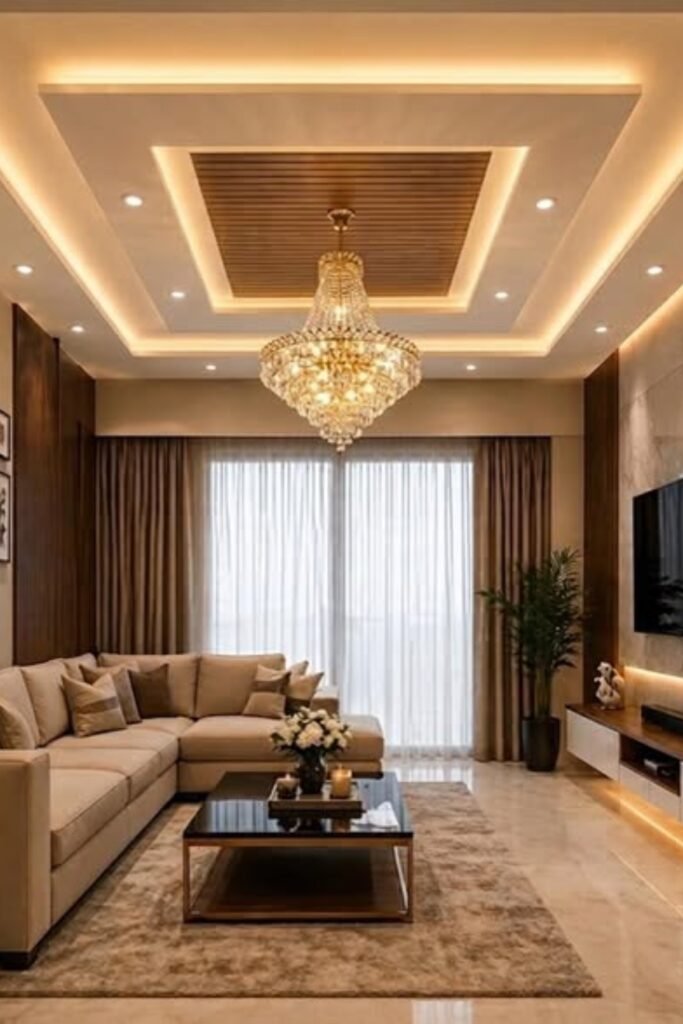
This pulls the eye upward and makes the room feel more complete.
Even if your window is small, you can extend the curtain rod wider and higher to create that tall effect. It softens the space and adds warmth without adding clutter.
3. Use Wall Panels or Vertical Lines for Structure
Large flat walls often feel boring because there is no structure. Adding vertical panels, wooden slats, or simple molding can fix this instantly.

These lines break the wall into sections and make it feel more designed. It also helps control the height visually, so the wall doesn’t feel overwhelming.
4. Install Layered Ceiling Lighting
A big ceiling should never be ignored. Instead of one light in the center, use layered lighting like recessed lights, pendant lights, or LED strips.
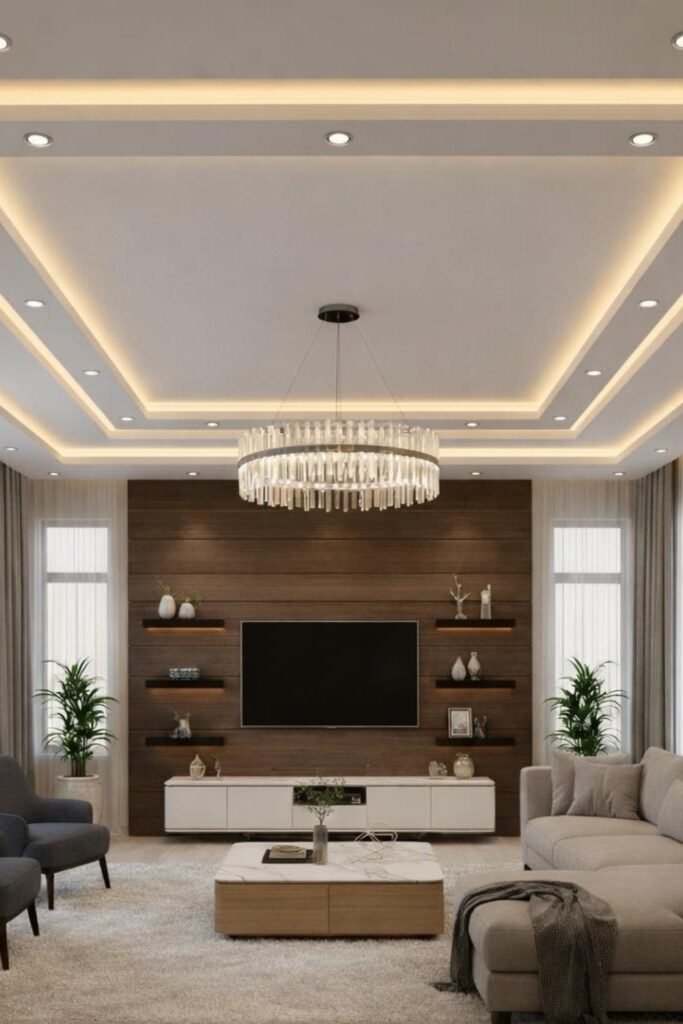
This spreads light across the room and reduces the “empty ceiling” feeling. It also helps balance the height and makes the space feel warm instead of too open.
5. Create a Vertical Gallery Wall
If you want multiple frames, don’t spread them wide. Stack them vertically instead. This draws the eye upward and matches the height of the wall.
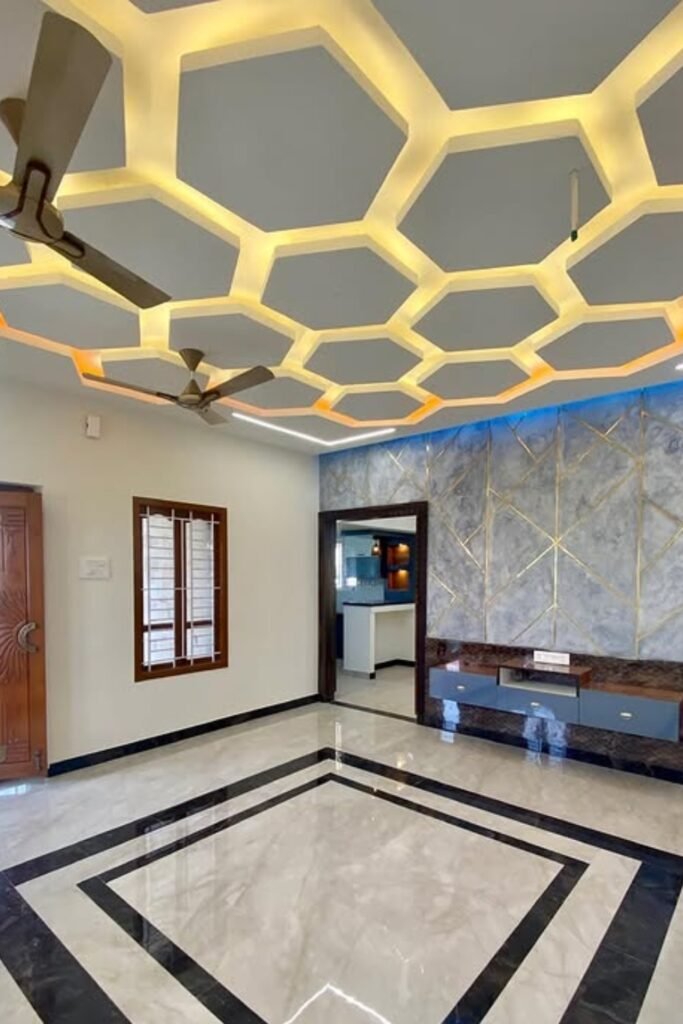
Keep spacing consistent so it looks clean, not messy. A vertical layout works much better in tall spaces than a wide one.
6. Add a Large Mirror to Expand and Balance the Space
A tall or oversized mirror works very well in large living rooms. It reflects light and makes the space feel brighter.
More importantly, it fills the wall without making it look heavy. Place it where it can reflect natural light or a nice part of the room for best effect.
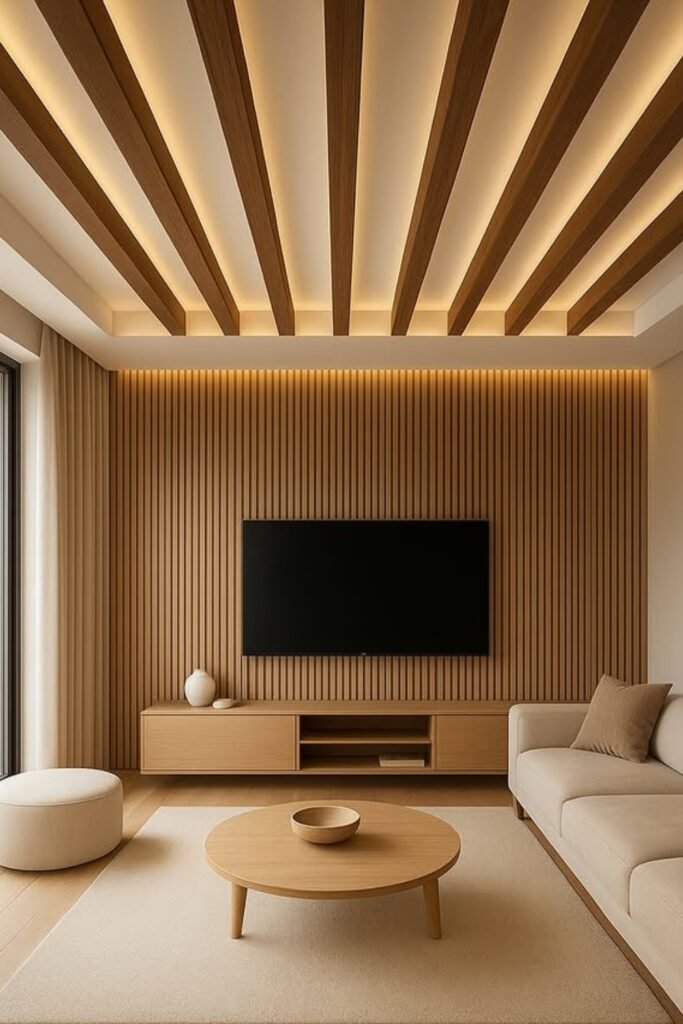
7. Use Ceiling Beams or Simple Architectural Details
If your ceiling feels too plain, adding beams or simple ceiling lines can help. Even fake beams or painted designs can create structure.
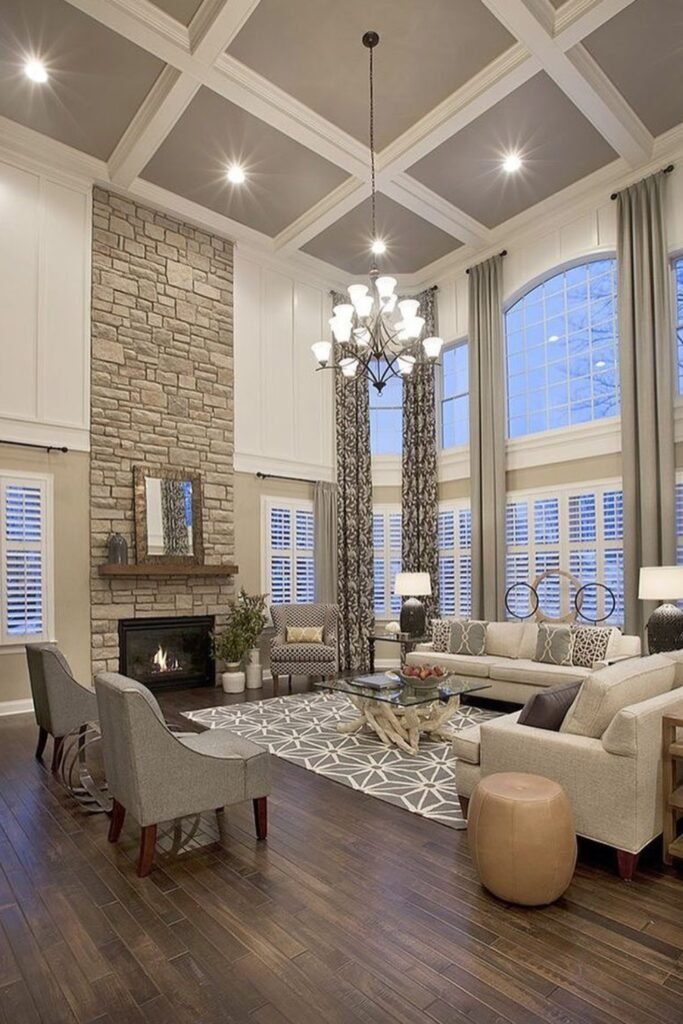
This breaks the ceiling into sections and makes it feel less empty and more intentional. It adds depth without needing heavy decoration.
8. Balance Wall and Ceiling with One Visual Theme
The biggest mistake is treating the wall and ceiling separately. Instead, connect them with one style idea.
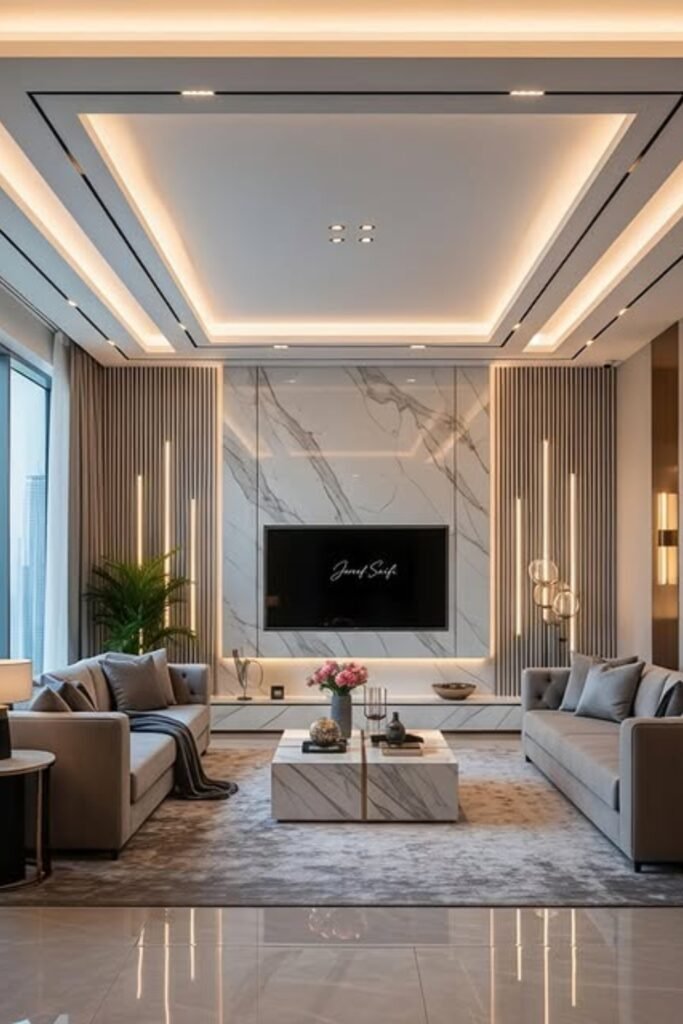
For example, if you use warm wood on the wall, add matching tones in ceiling lighting or beams.
If your wall is minimal, keep the ceiling clean too. When both follow one theme, the room feels complete instead of disconnected.
Why Does a Large Living Room Wall Still Look Empty Even After You Decorate It?
This usually happens when the scale is wrong, not because you lack decor.
A large wall needs visual weight, and small items like tiny frames, small shelves, or scattered pieces can’t hold that space.
Instead of filling the wall, they make it feel more broken and disconnected.
The real issue is that your eyes don’t find a clear focus point. When everything is small or spread out, the wall still feels empty because nothing stands out.
To fix this, you need fewer but larger elements that match the size of the wall. One strong piece, or a grouped layout with proper balance, works much better than many small items.
How Do You Stop a High Ceiling from Making Your Living Room Feel Cold and Unfinished?
A high ceiling often feels cold because there’s too much unused vertical space.
Your eyes go up and stop at emptiness, which makes the room feel incomplete. This is not a decoration problem, it’s a balance problem.
To fix it, you need to bring visual attention down and connect the ceiling with the rest of the room.
Layered lighting, tall curtains, or vertical wall elements help reduce that “empty height” feeling.
The goal is not to fill every inch, but to guide the eye smoothly from floor to ceiling so the space feels connected, warm, and intentional.
Conclusion
A large living room wall and high ceiling can feel difficult at first, but the problem is not the space itself. The real issue is how the space is being balanced.
When everything is small, scattered, or disconnected, the room will always feel empty no matter how much decor you add.
Use fewer but stronger design elements, create one clear focal point, and make sure your wall and ceiling feel like part of the same design instead of separate parts.
Even simple changes like vertical balance, proper lighting, or one large feature piece can completely change how the room feels.
If you apply these ideas step by step, your living room will stop feeling unfinished and start feeling intentional, grounded, and visually complete.
You may like to read!
