
19 Living Room Rug Ideas
You usually don’t realize you chose the wrong rug until it’s already sitting on your floor. You look at the room, and it still feels empty.
There are simple, clear rules you can follow, and once you know them, you won’t guess anymore.
In this article, you’ll see exactly how you can choose the right living room rug so your space finally feels complete and pulled together.
Let’s jump in!
What Is The Rule For A Rug In A Living Room?
You usually don’t realize you picked the wrong rug until you see it on the floor. You place it down, you step back, and suddenly the room still feels empty.
Your sofa looks disconnected, your chairs feel awkward, and you know something is off, even if you can’t explain it.
So you might blame the paint, the lighting, or the layout, when the real issue is simpler: you chose a rug that’s too small or placed it the wrong way. I’ve seen this happen again and again.
The good news is, you can fix it easily. In this article, you’ll see exactly how you can choose the right living room rug so your space finally feels finished.
If you remember one thing, remember this: you should use your rug to connect your furniture, not let it float underneath it.
When you buy a rug that’s too small, you end up breaking the room apart instead of pulling it together.
You see your sofa sitting in one area, your chairs sitting somewhere else, and your rug looking like it belongs to a completely different space.
You should follow: your rug should sit under at least the front legs of your main furniture. That means you want the front legs of your sofa and chairs resting on the rug.
When you have the space and budget, you can place all the legs on the rug and you’ll notice how much more grounded and intentional the room feels.
If you have a sectional, you shouldn’t go small. You will usually need at least an 8×10, and when your room is larger, a 9×12 can work even better.
You should avoid placing a 5×7 under a big sofa, because it will always look like an afterthought. Another rule you can rely on: you should leave some floor showing around the edges.
When you leave about 8 to 12 inches between the rug and the walls, you frame the space instead of overwhelming it.
Before you buy anything, you can use masking tape to outline the rug size on your floor. Walk around it. Sit on your sofa.
If it already looks small with tape, you can be sure it will look even smaller in real life.
When you follow these rules, you’ll see how quickly your living room starts to feel finished instead of awkward.
Soft Scandinavian Calm
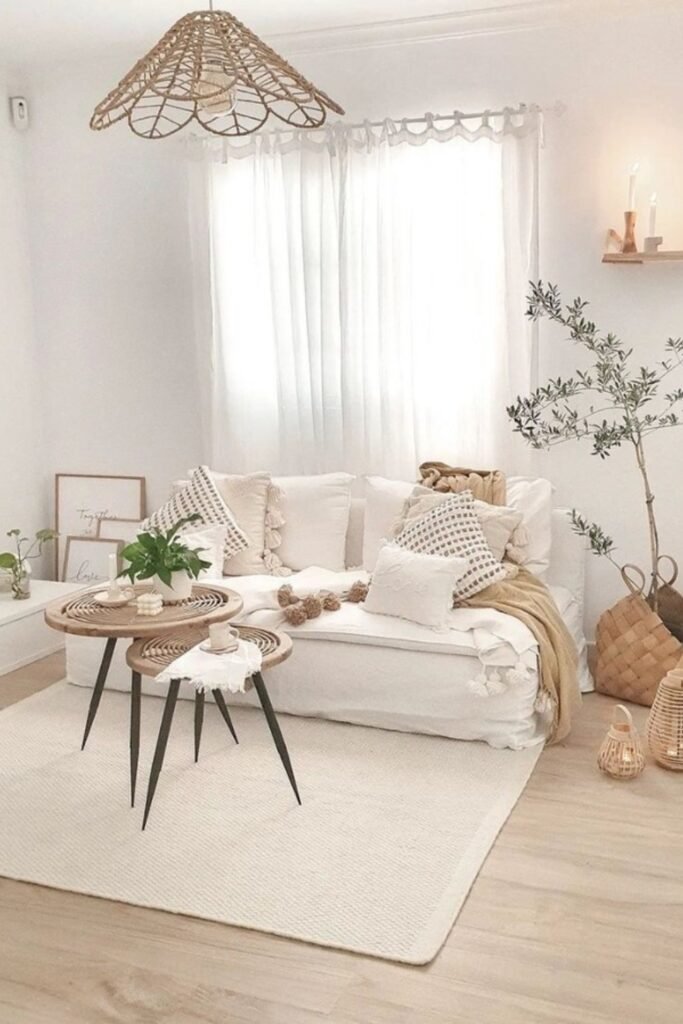
If you want your living room to feel peaceful the second you walk in, you can start with a soft cream rug like this.
You’ll notice how it blends with your white sofa and light wood floor, helping the space feel open, airy, and warm all at once.
This works especially well when you have a small living room or a minimalist home.
You should choose a low-pile neutral rug and place it under the front legs of your sofa.
When you add woven textures and natural plants, you keep the look soft instead of sterile.
Dark Rug Drama
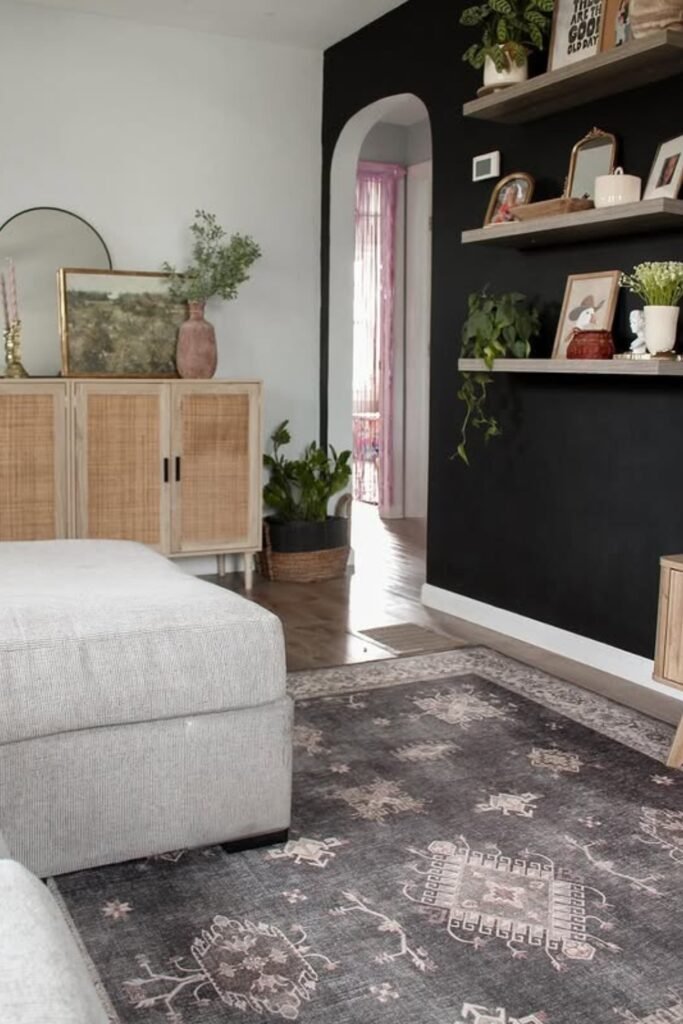
If your living room has a bold wall like this deep black, you can use a dark patterned rug to make everything feel intentional instead of heavy.
You’ll see how the rug balances the dark wall while grounding your lighter sofa. This works best when you lean toward modern or moody spaces.
You should choose a distressed or vintage-style rug so you add depth without fighting your furniture.
Plush Comfort Zone
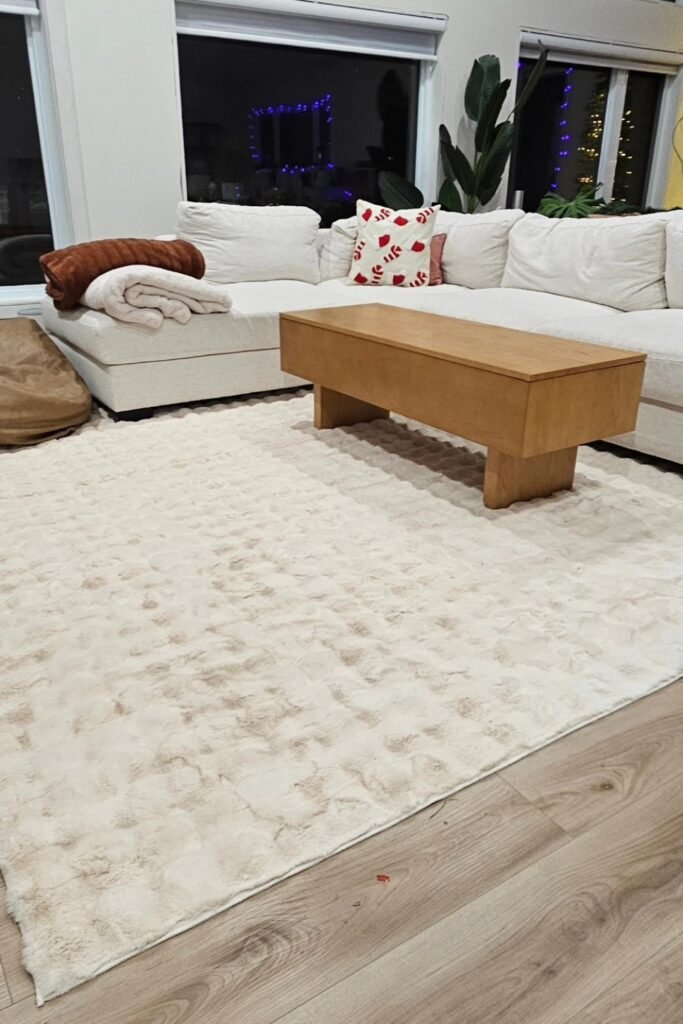
Sometimes you just want your living room to feel cozy fast and you can do that by going soft underfoot.
A thick cream rug like this helps you turn a large sectional area into a true comfort zone. You’ll notice how it reaches under the sofa so nothing feels like it’s floating.
This works best when you have a big living room with a sectional. You should choose a larger size than you expect and let the rug fully define your seating area.
Textured Modern Minimal
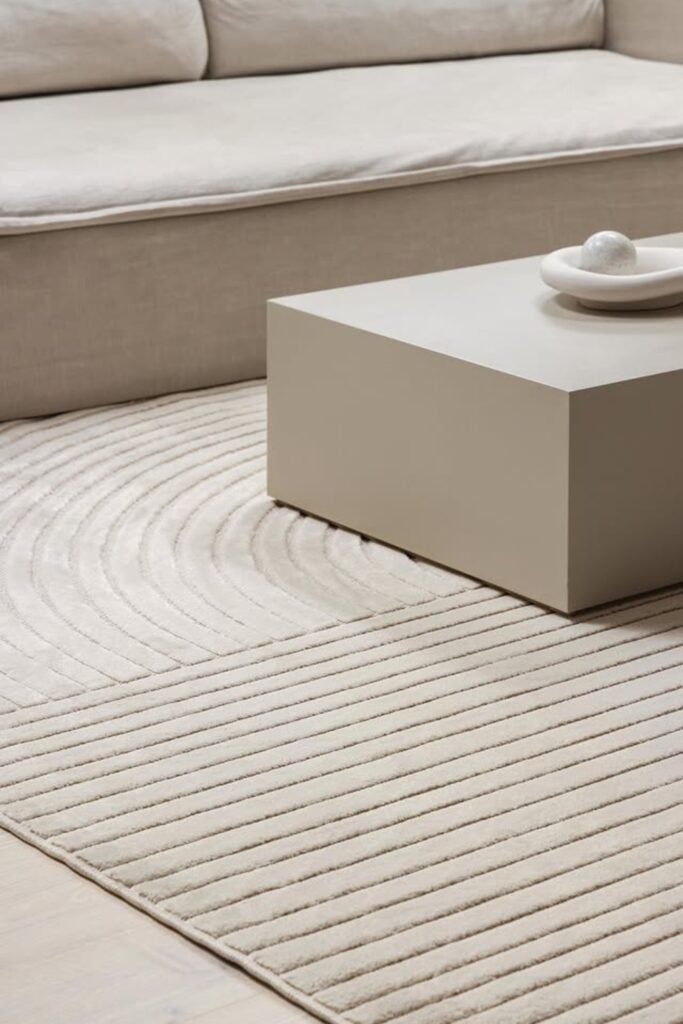
If you think flat rugs are boring, you can rethink that. A subtly textured rug like this adds quiet depth without bringing in bold patterns.
You’ll see how the soft lines add movement while keeping your space calm and clean. This works perfectly when you have modern or minimalist furniture.
You should choose a tone close to your sofa and let texture do the work instead of contrast.
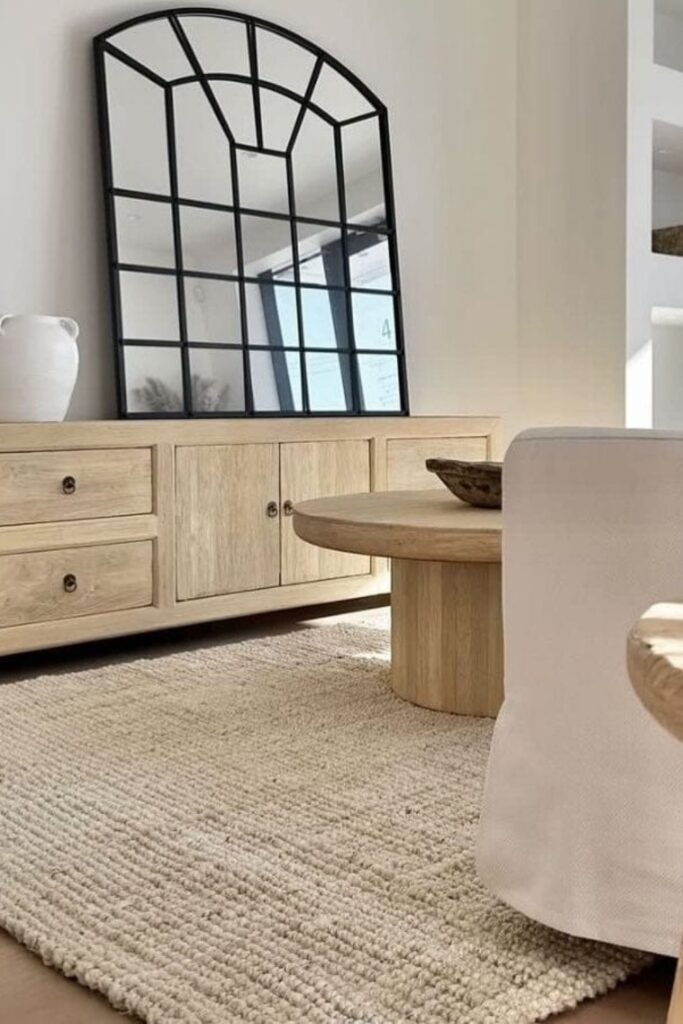
Chunky Natural Texture
If your living room feels too smooth or polished, you can bring in texture right away.
A thick woven rug like this adds warmth and depth, especially when you pair it with light wood furniture.
You keep the space neutral, but you make it feel layered instead of flat. This works beautifully when you like modern farmhouse or organic styles.
You should choose a chunky or handwoven rug and let it sit fully under your coffee table for balance.
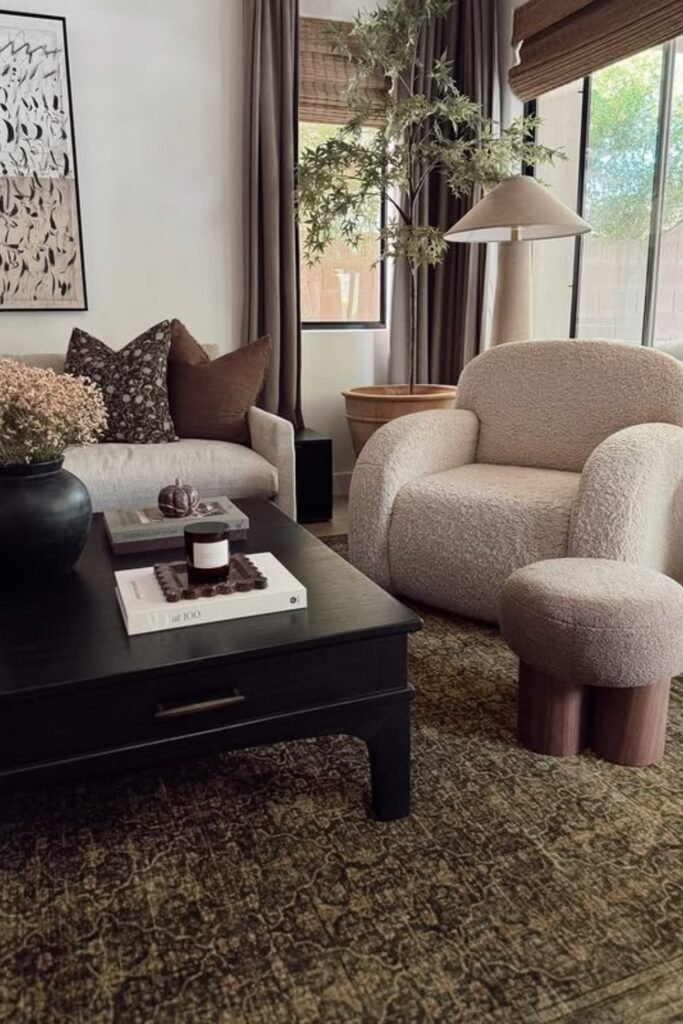
Moody Earthy Base
If you want your living room to feel rich and grounded, you can go darker with your rug.
A deep earthy tone like this helps you tie together black accents, warm wood, and neutral seating without making the space feel heavy.
This works best when you already have cozy lighting and layered textures.
You should choose a low-contrast vintage-style rug and let it anchor your main seating area completely.
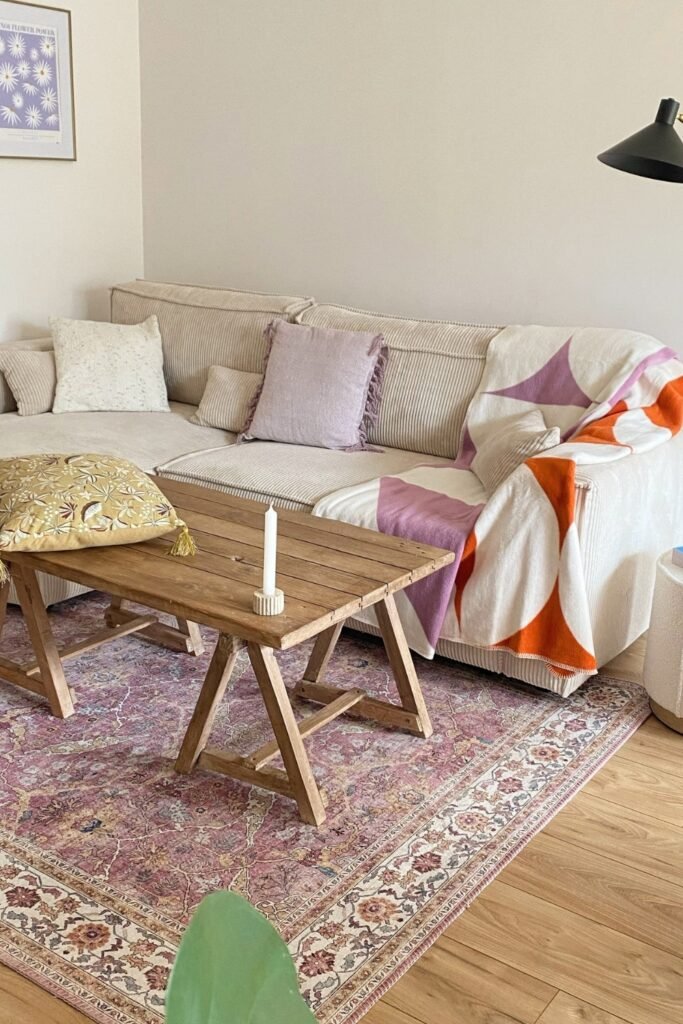
Vintage Color Pop
If your living room feels safe but a little dull, you can wake it up with a vintage-style rug in faded pink or warm tones.
You’ll add personality without overpowering your neutral furniture. This works beautifully when you mix wood, soft fabrics, and simple walls.
You should choose a slightly distressed pattern and let it peek out from under your sofa for warmth and contrast.
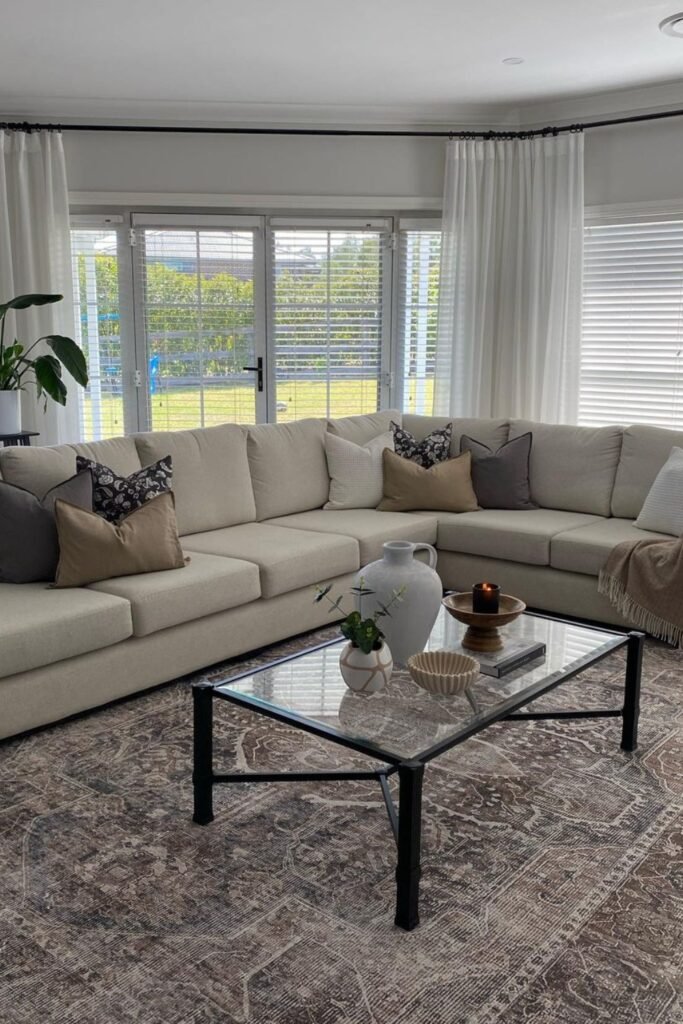
Oversized Sectional Base
When you have a large sectional, you can’t go small with your rug.
If the rug fully supports the entire seating area like this, your living room instantly feels balanced and complete.
You won’t see anything floating or cramped. This works best in open or corner layouts.
You should choose a rug that extends beyond your sofa edges and keeps the front legs anchored.
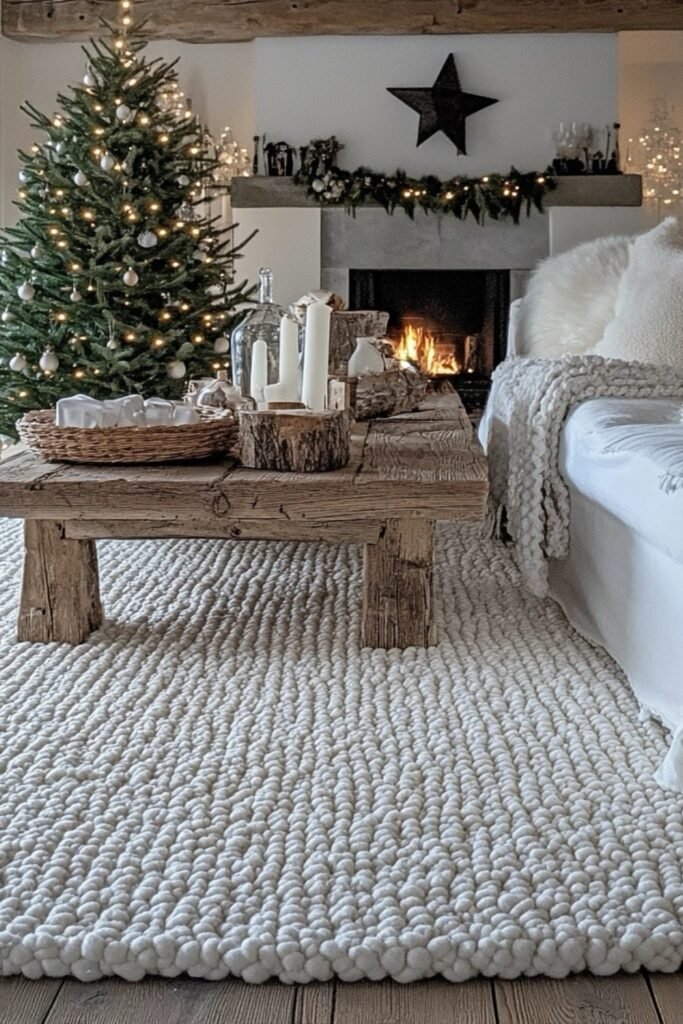
Cozy Winter Texture
If you want instant warmth, you can’t beat a thick, chunky rug like this.
You’ll notice how it softens rustic wood, balances the fireplace, and makes the space feel inviting right away.
This works beautifully when you love farmhouse or cabin-style interiors.
You should choose a high-pile wool rug in a soft cream tone and let it extend past your coffee table.
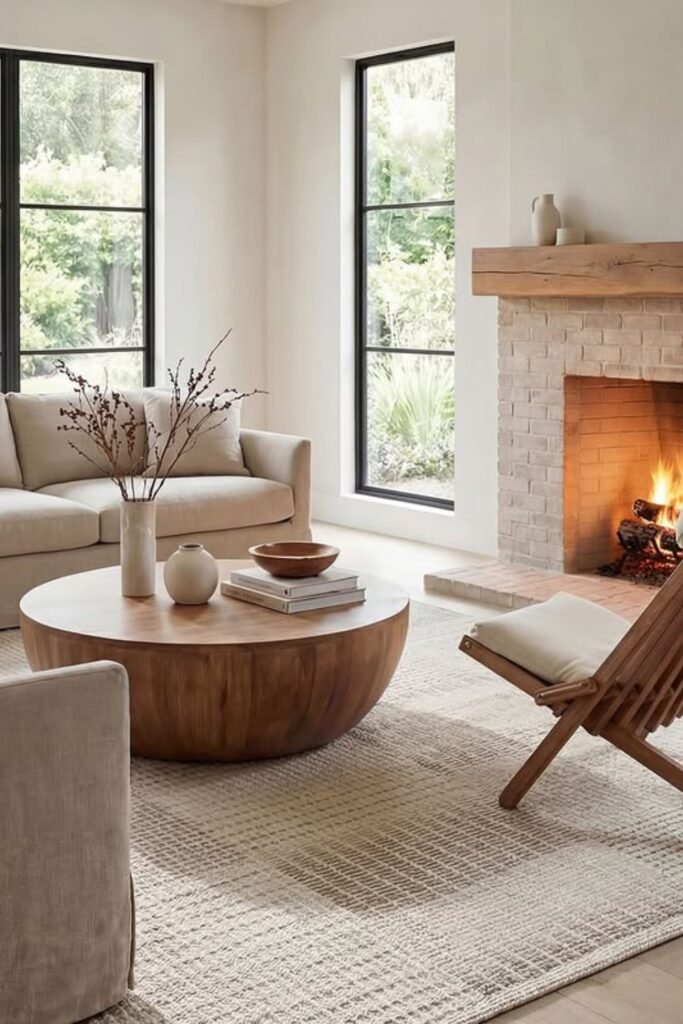
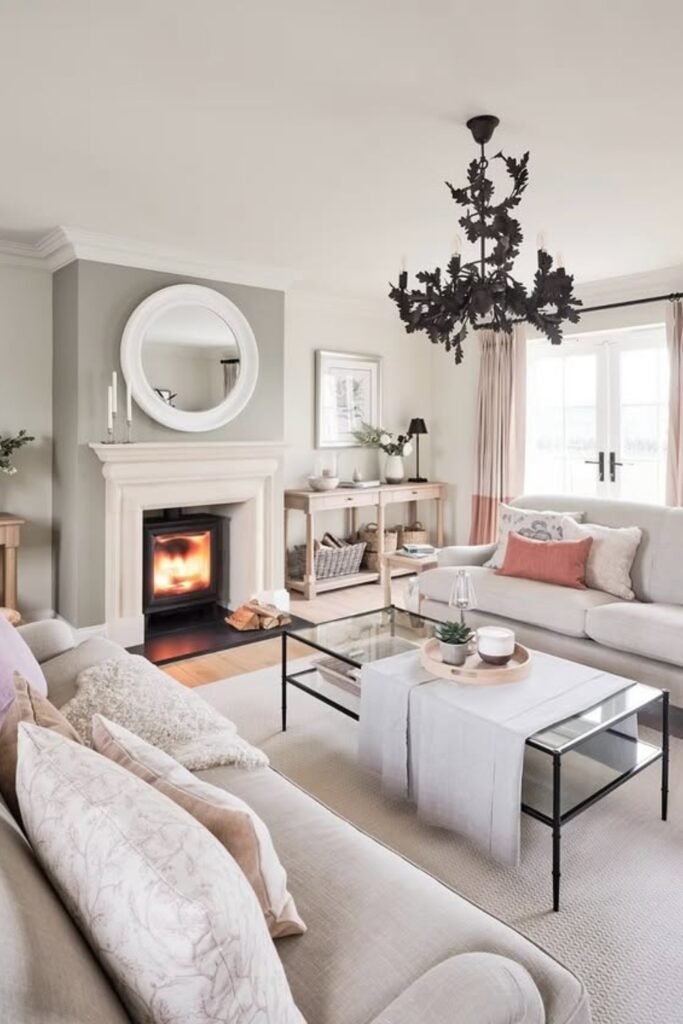
Calm Fireplace Focus
When your living room has a fireplace, you should let the rug support it quietly.
A soft textured neutral like this keeps attention on the fire while warming up your floors.
This works best when you have bright light and wood accents.
You should choose a subtle pattern close to your sofa color and make sure the rug anchors the seating around your coffee table.
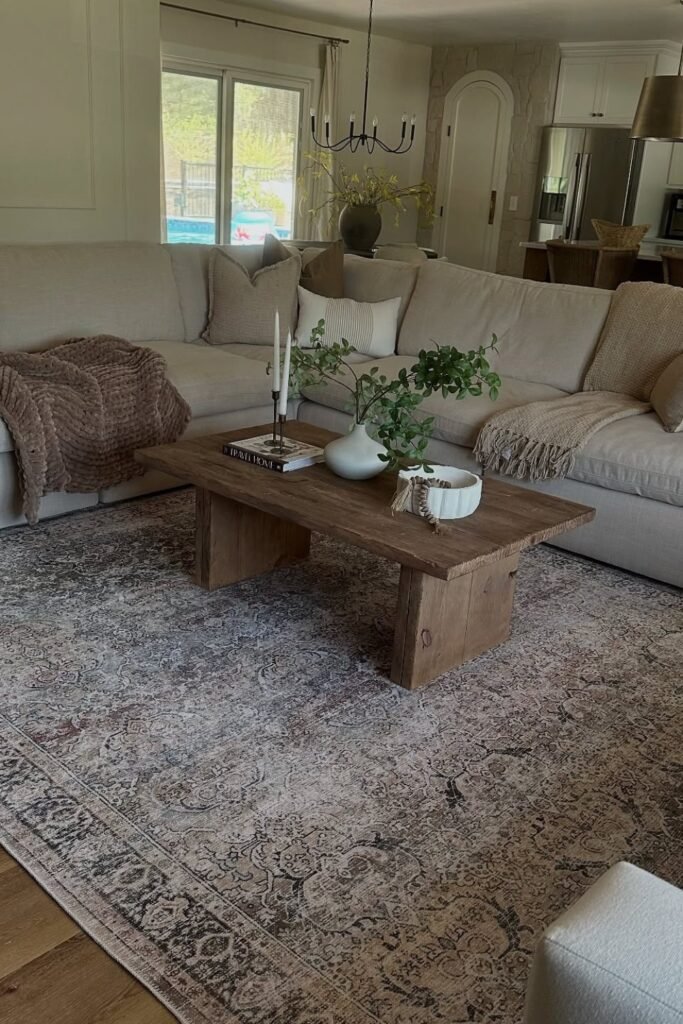
Subtle Pattern Balance
If your living room already has textured pillows and throws, you don’t need a loud rug.
A muted vintage pattern like this helps you add depth without overwhelming your sectional.
You’ll see how it softens the floor while keeping the space calm. This works best in open-plan layouts.
You should choose a low-contrast design and let it extend past your sofa edges.
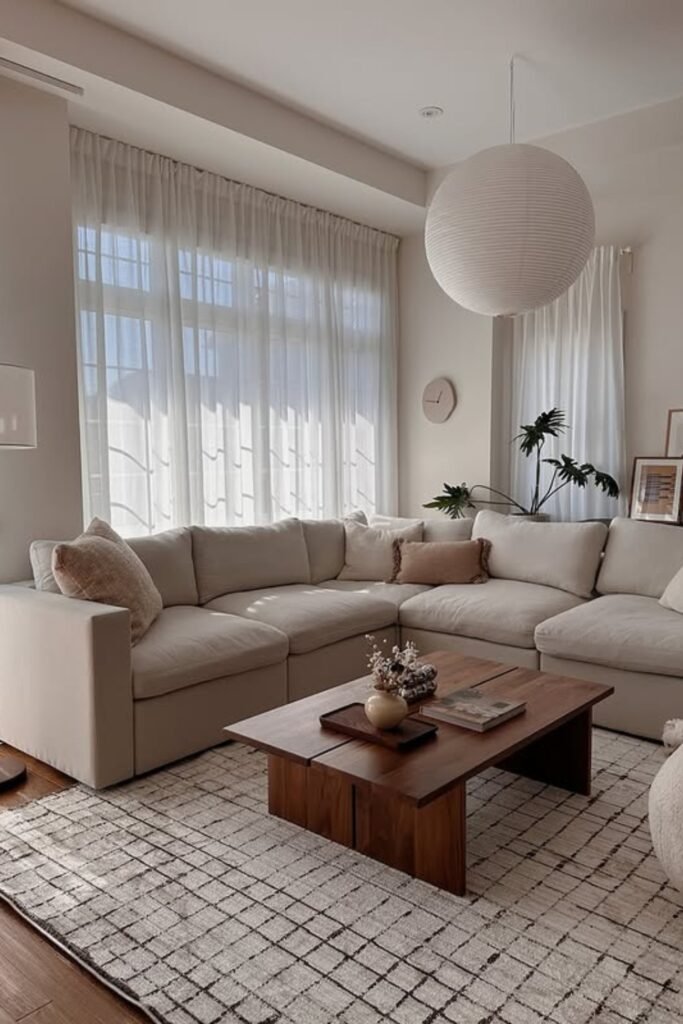
Soft Grid Structure
When everything in your living room feels curved and soft, you can add structure underfoot.
A subtle grid rug like this helps your space feel grounded without losing its calm.
You’ll see how it frames your sectional and coffee table neatly.
This works beautifully in modern, light-filled rooms. You should make sure the rug is large enough to anchor the entire seating area.
Light Neutral Layer
If you want your living room to feel bright but still cozy, you can rely on a soft light rug.
It reflects natural light, balances darker floors, and pulls your seating together.
This works especially well when you have a fireplace or a transitional style.
You should choose a simple low-pile rug and place it under the front legs of both sofas.
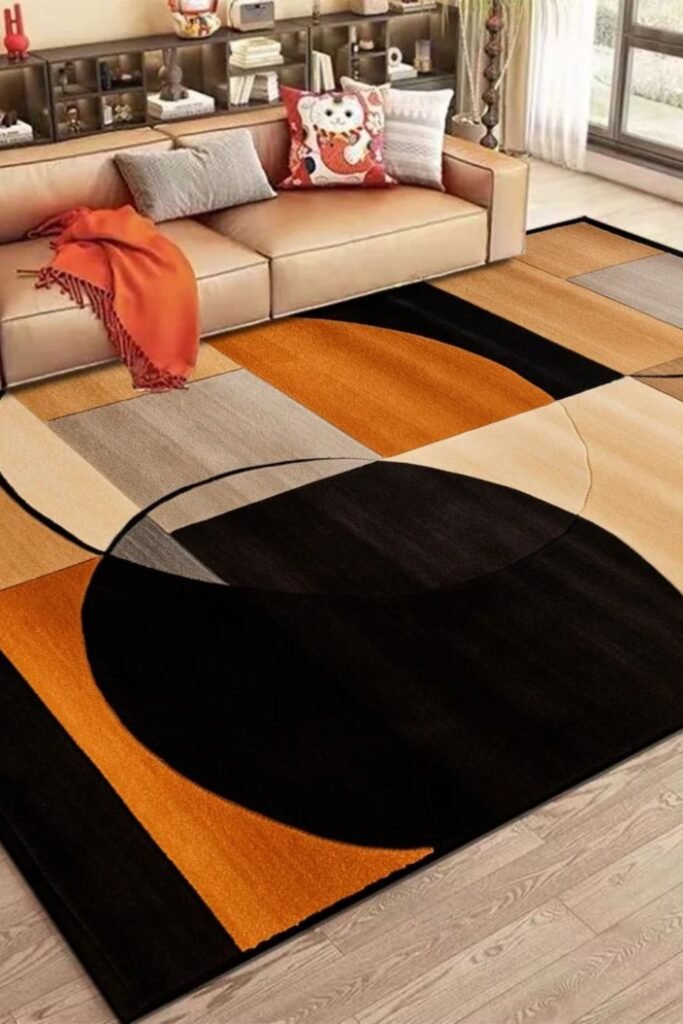
Bold Graphic Statement
If your living room feels too neutral, you can let your rug do the talking.
A bold geometric rug like this adds energy instantly. This works best when your sofas and decor stay simple.
You should keep furniture clean-lined and let the rug carry the color. Just make sure it’s large enough to anchor your sofa so it feels intentional.
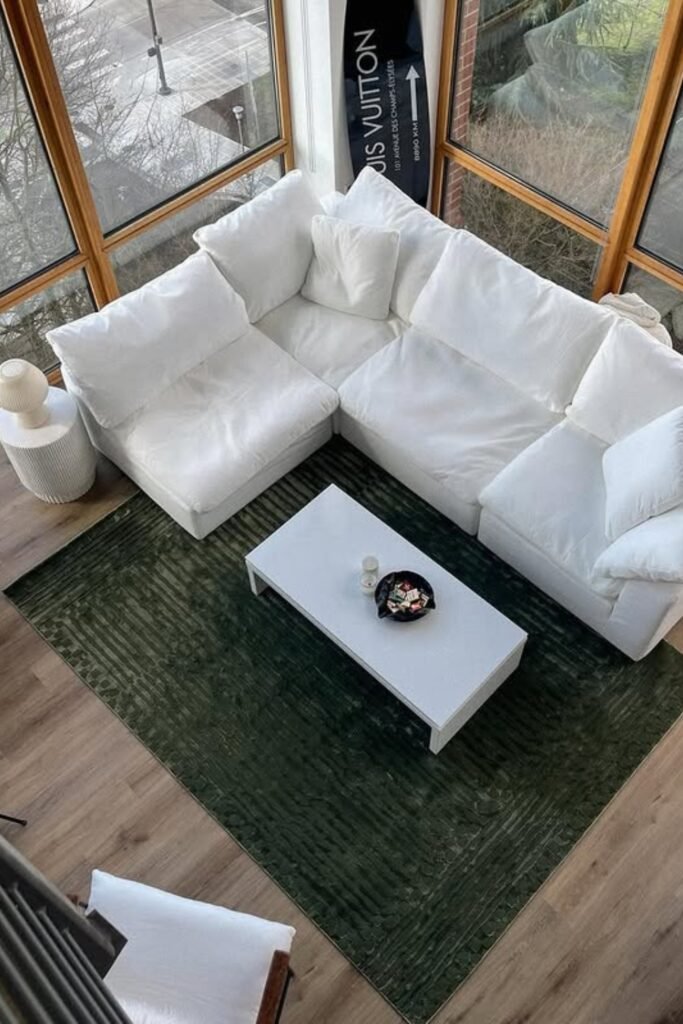
Deep Green Contrast
When you have a white sofa, you might feel it looks too soft on its own.
You can ground it with a deep green rug like this instead of going black. It adds contrast and defines your seating zone clearly.
This works best in bright spaces with lots of natural light. You should keep furniture light and let the rug anchor everything underneath.
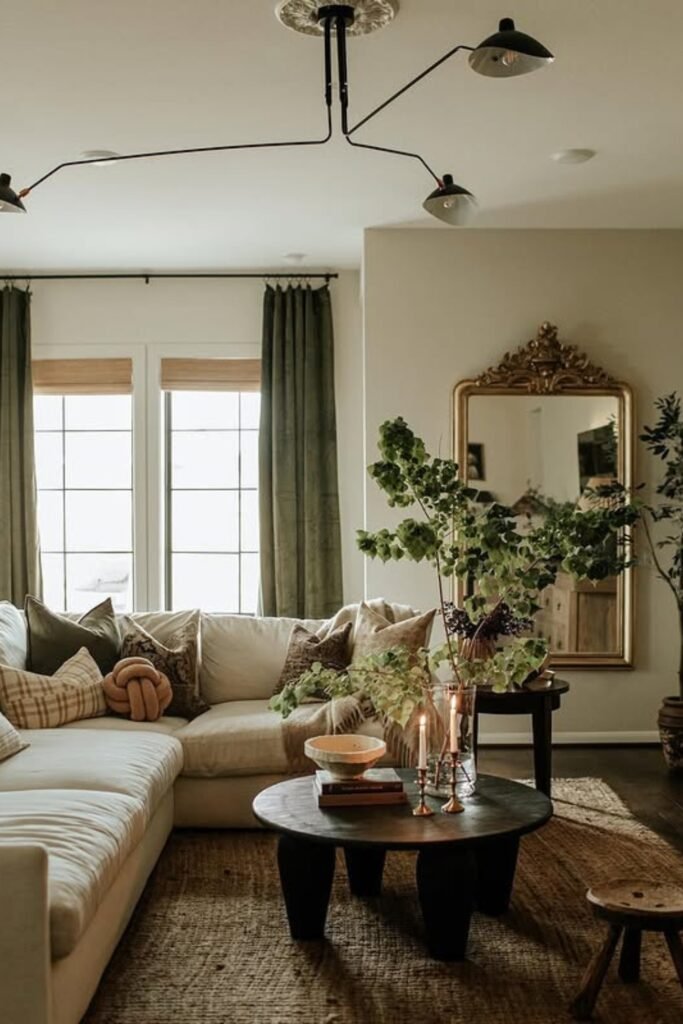
Rustic Natural Ground
If your living room leans warm and earthy, you can skip polished rugs altogether.
A woven jute-style rug like this adds texture while keeping the space grounded. This works best when you love organic or farmhouse-inspired interiors.
You should pair it with neutral seating, darker wood, and choose a size that holds your whole seating area together.
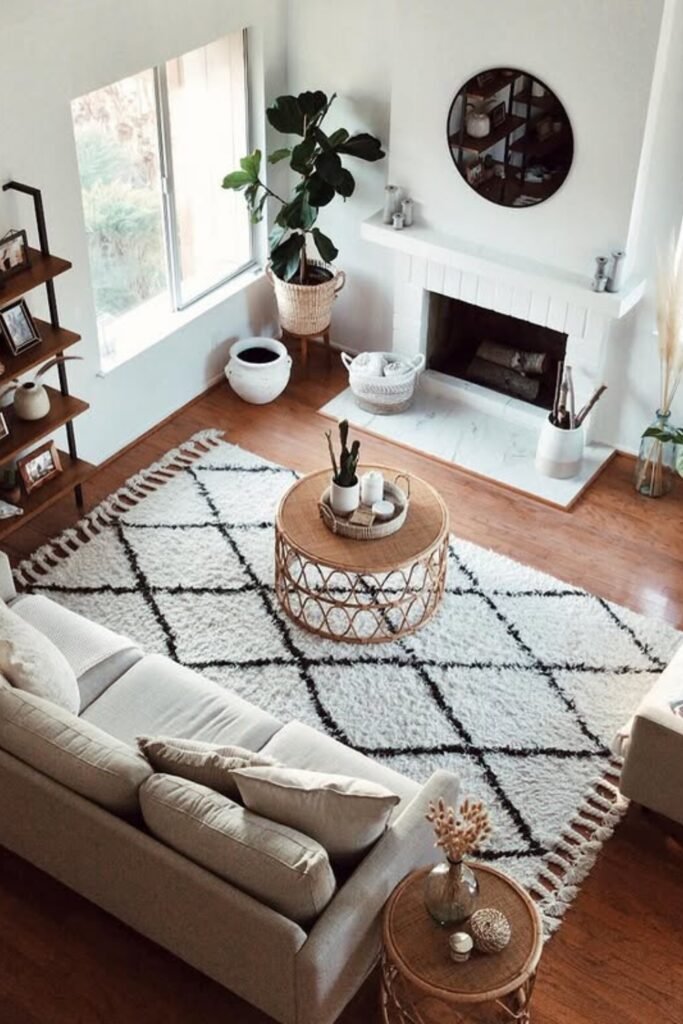
Bold Pattern Contrast
If your living room is mostly neutral, this is how you can add character without touching your furniture.
A high-contrast rug like this helps you instantly define the seating area and bring energy into warm wood floors.
You’ll notice how it lifts the whole space without feeling too busy. This works best when you have bright light, white walls, and simple sofas.
You should choose a bold black-and-cream pattern and make sure you place it fully under the front legs of your seating so everything feels connected.
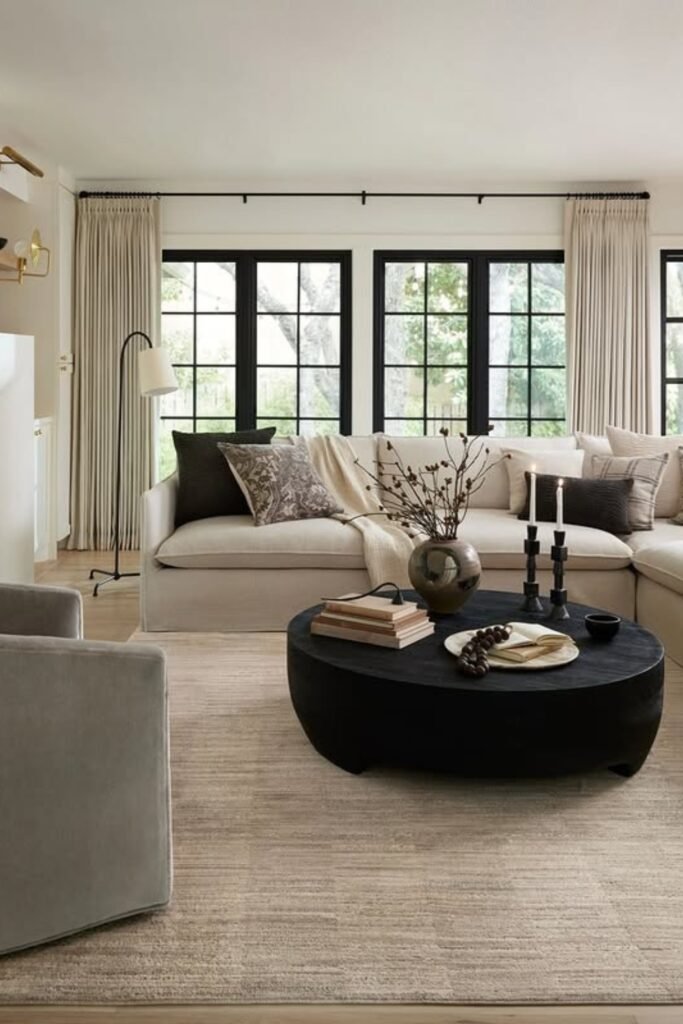
Understated Natural Base
When your living room already has strong features like black windows or a dark coffee table, you don’t need more contrast underfoot.
You can use a simple natural fiber rug like this to calm the space down and keep it grounded. You’ll see how it balances bold elements instead of competing with them.
This works best when you’re styling a modern organic living room.
You should choose a flatweave or jute-style rug in a warm beige tone and size it wide enough to anchor your entire seating area.
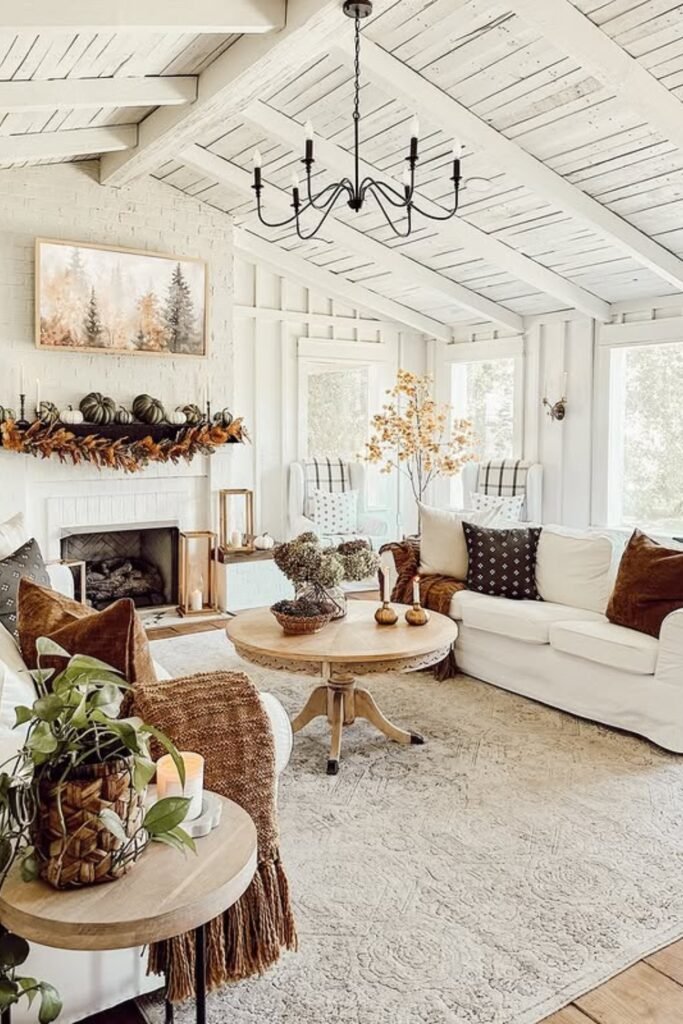
Soft Farmhouse Layer
When your living room already has beams, brick, and warm fall tones, you should let the rug soften the look instead of weighing it down.
A light vintage-style rug like this helps you keep the space bright while still feeling cozy. You’ll notice how it blends everything together gently.
This works beautifully when you lean toward farmhouse or cottage style.
You should choose a muted cream or beige pattern and make sure it stretches under both sofas so your seating feels tied together.
Frequently Asked Questions
What size rug should I buy for my living room?
You can use one simple rule: your rug should extend beyond the front legs of your sofa and chairs so everything feels connected.
If you have a larger living room, you might need a 9×12 rug so your entire seating area fits comfortably on it.
Before you buy anything, you should measure your space first, because you don’t want to end up with a rug that feels too small.
How do I keep my rug from slipping?
You can also protect your floors from scratches and help your rug last longer. When you use a rug pad, you make your space safer and more comfortable at the same time.
You may like to read!
