
18 Laundry Room Flooring Ideas
The floor can quietly set the whole mood of a laundry room, especially when the space is small and every finish stands out.
A smart flooring choice can make the room feel warmer, cleaner, more finished, and much more connected to the rest of your home.
In this article, you’ll find laundry room flooring ideas that help you choose a look that feels practical, stylish, and right for your space.
Let’s jump in!
What Type Of Flooring Is Best for A Laundry Room?
Porcelain tile and waterproof vinyl are two of the safest choices because they handle moisture well and stay easy to clean.
If you want the strongest surface under heavy appliances, porcelain works well, but vinyl feels warmer and is usually easier to install.
For a basement laundry room, sealed concrete or tile can make more sense, especially if the floor already sits on a slab.
If you want a wood look, choose wood-look tile or waterproof vinyl instead of regular hardwood so you get the style without the same moisture risk.
Before choosing anything, check the subfloor, room location, budget, and how much water exposure the space usually gets.
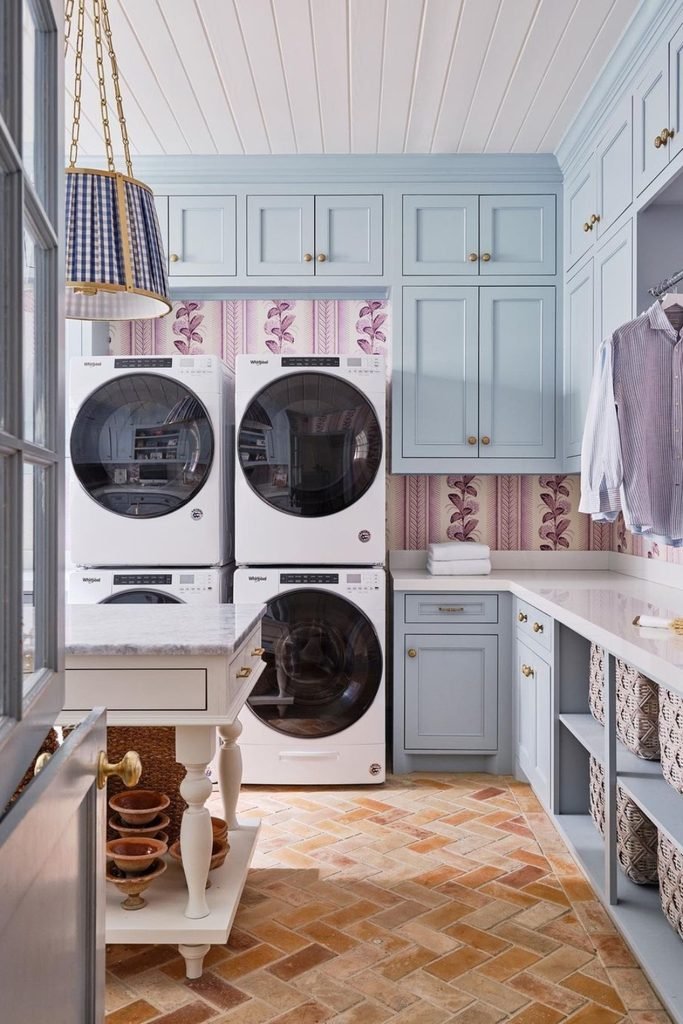
Warm Herringbone
Warm brick flooring makes a narrow laundry room feel less clinical, especially when pale cabinetry needs something earthy to ground the space.
Lay slim brick-look tiles in a herringbone pattern to create movement, then keep grout close in tone for a softer finish.
This works especially well in cottage or traditional rooms, where brass hardware, woven baskets, and muted blue cabinets support the warmer floor.
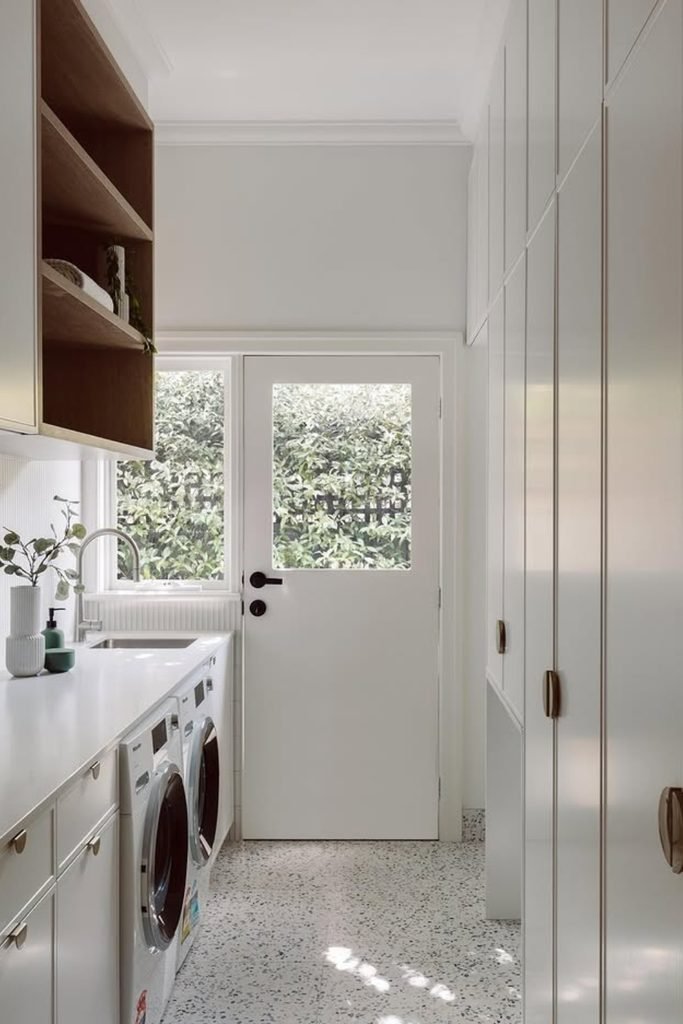
Speckled Terrazzo
A lightly speckled floor keeps an all-white laundry room from looking flat while still staying quiet enough for a narrow layout.
Choose a terrazzo-look tile or vinyl with small gray flecks, then repeat those tones through hardware, shelving, or simple accessories.
The subtle pattern also helps disguise lint and tiny marks between cleans, which makes it a practical choice for busy everyday spaces.
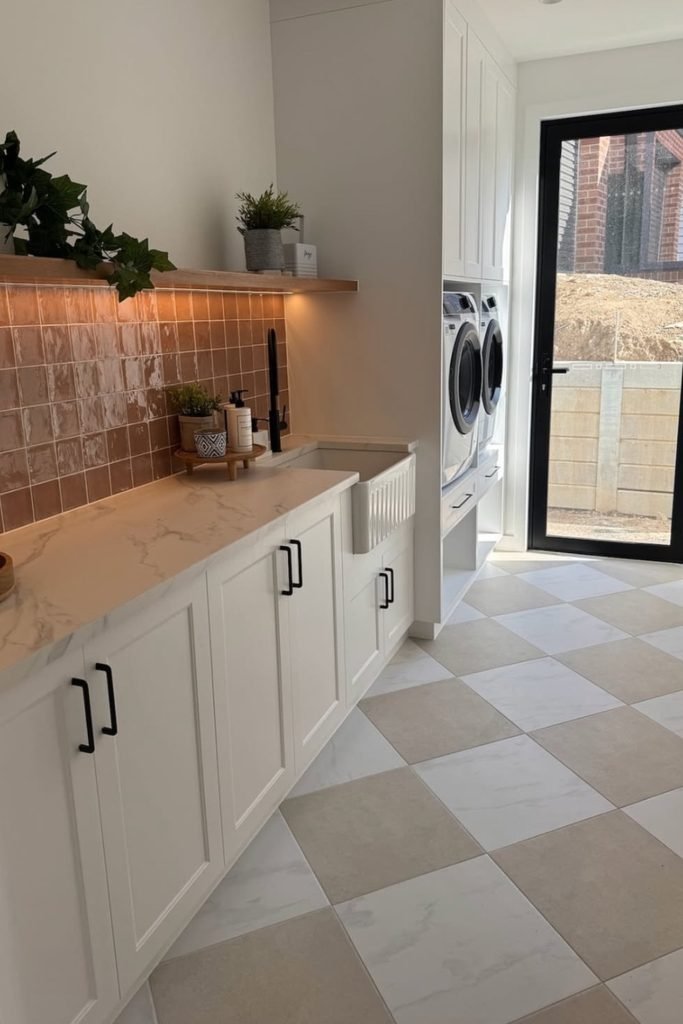
Soft Checkerboard
Beige and white checkerboard flooring gives you pattern without the sharp contrast that can make a slim laundry room feel too busy.
Use large square tiles and keep the surrounding cabinetry simple, so the floor adds structure without competing with every other surface.
This softer palette works best with warm metals, creamy countertops, or terracotta accents when you want the room to feel calm.
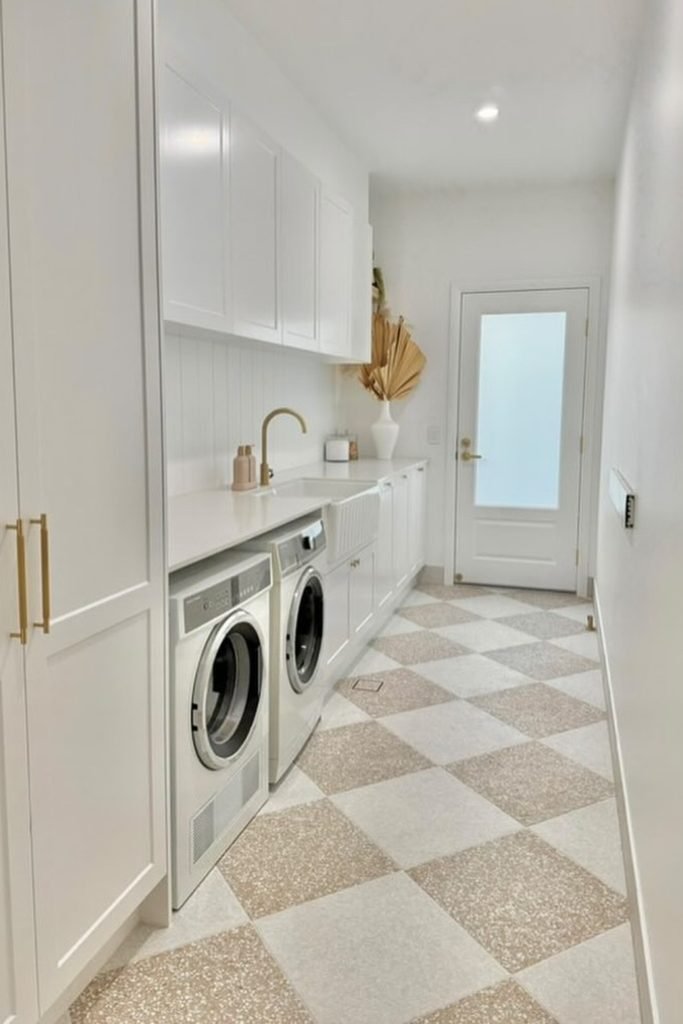
Textured Checks
A checkerboard floor feels much softer when one square carries a speckled texture instead of using two completely solid colors.
Try warm beige and off-white tiles in a large-scale grid, then keep the walls bright so the pattern stays light and airy.
This approach suits long laundry rooms especially well because the repeated squares break up the corridor effect without adding visual clutter.
Geometric Mosaic
Small geometric tiles bring gentle pattern to a compact laundry room, especially when gray cabinetry already gives the space a calm base.
Choose a low-contrast gray and white pattern, then keep the backsplash simple so the floor adds detail without making everything feel busy.
This works best in traditional or transitional rooms, where polished hardware and soft cabinet colors can carry the pattern without extra decoration.
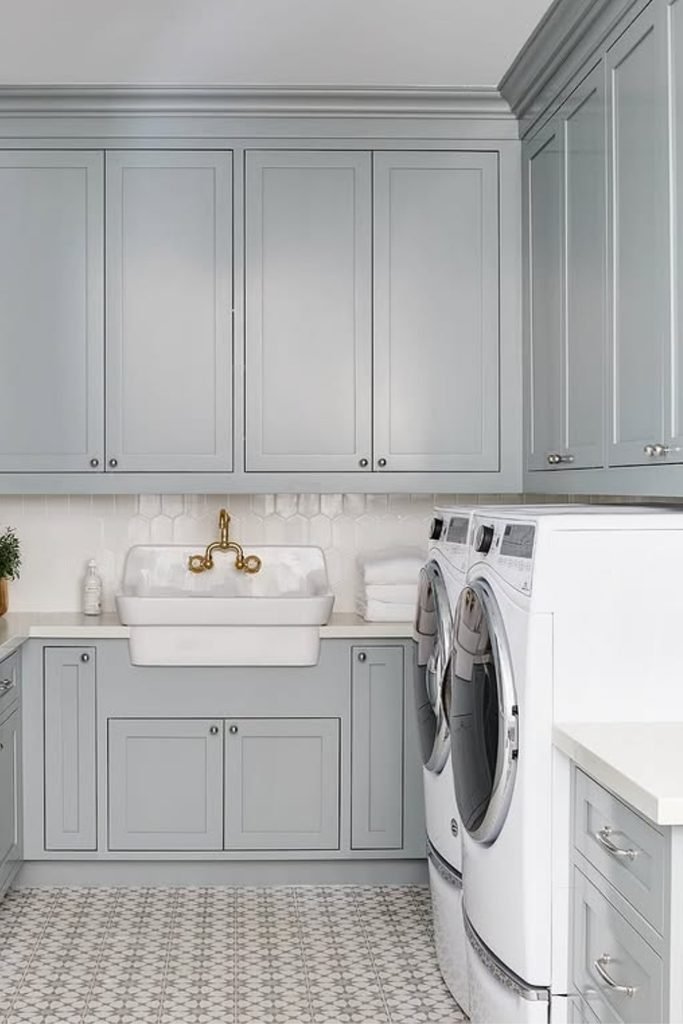
Marble Hexagons
Large marble-look hexagons give a pale laundry room enough shape to feel designed without pulling attention away from the cabinetry.
Use light gray veining and matching grout if you want the floor to read softly instead of breaking the room into sections.
The bigger tile size suits wider laundry rooms especially well, because fewer grout lines keep the surface clean and open rather than fussy.
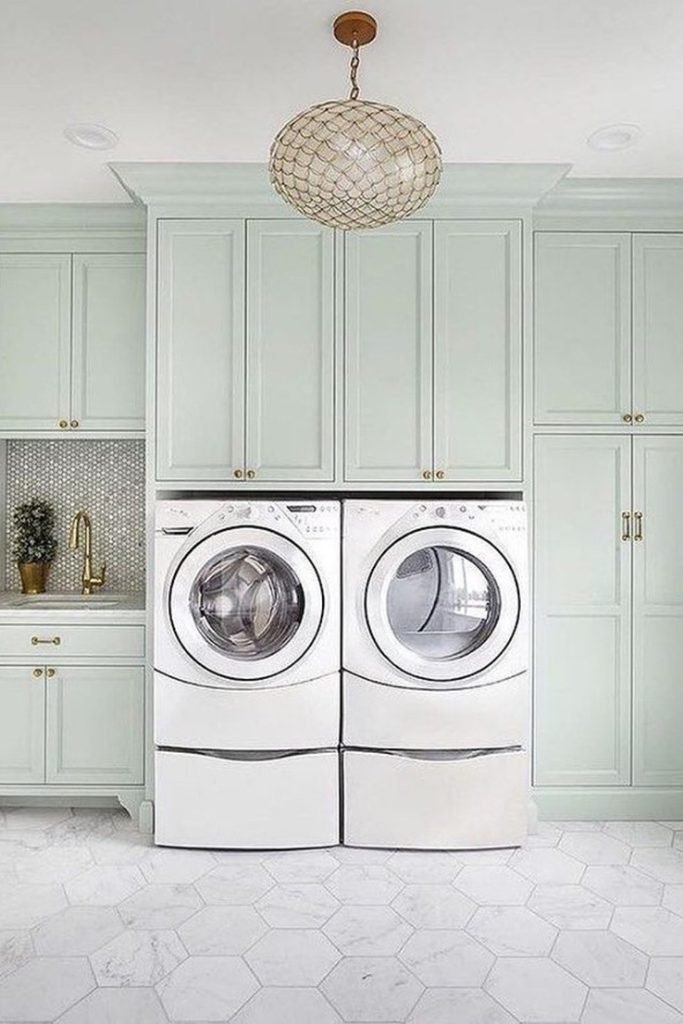
Bold Checkerboard
Oversized gray and white squares can anchor a colorful laundry room, giving strong cabinetry something graphic to balance against visually.
Set the tiles on a diagonal if you want more movement, then repeat one floor tone in the cabinets or hardware.
This approach works especially well in medium or large rooms, where the bigger pattern has enough floor area to feel intentional.
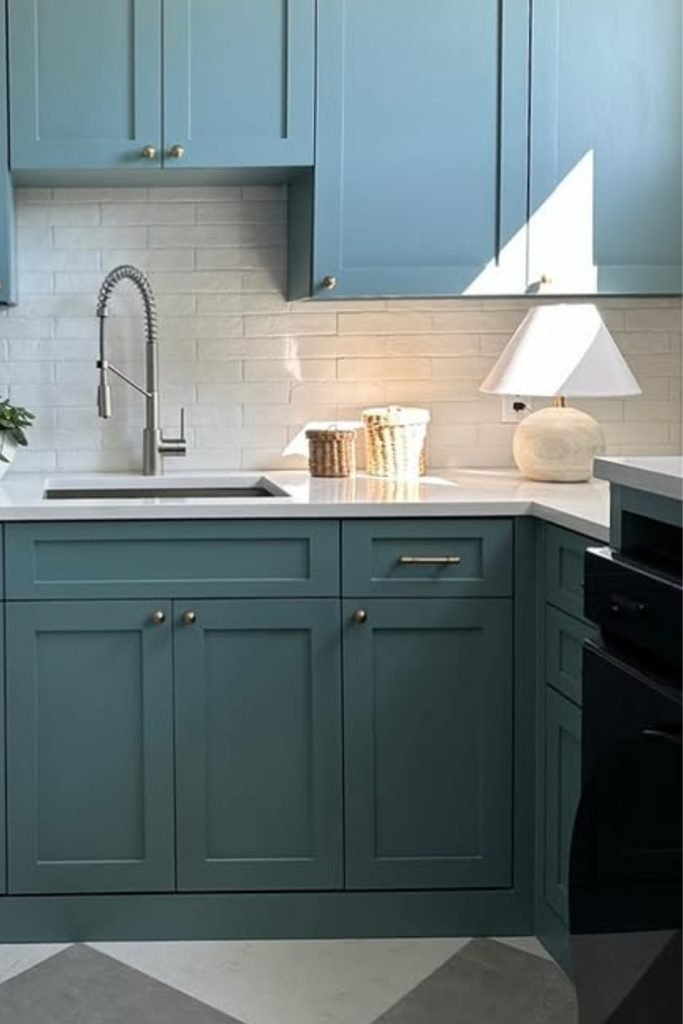
Marble Veining
Wide marble-look tiles make a bright laundry room feel cleaner and more polished while keeping the floor visually quiet around white cabinetry.
Choose soft gray veining instead of heavy contrast, then use large tiles so fewer grout lines interrupt the flowing stone effect.
This finish suits longer laundry rooms beautifully, especially when warm brass details are added to stop the white palette feeling cold.
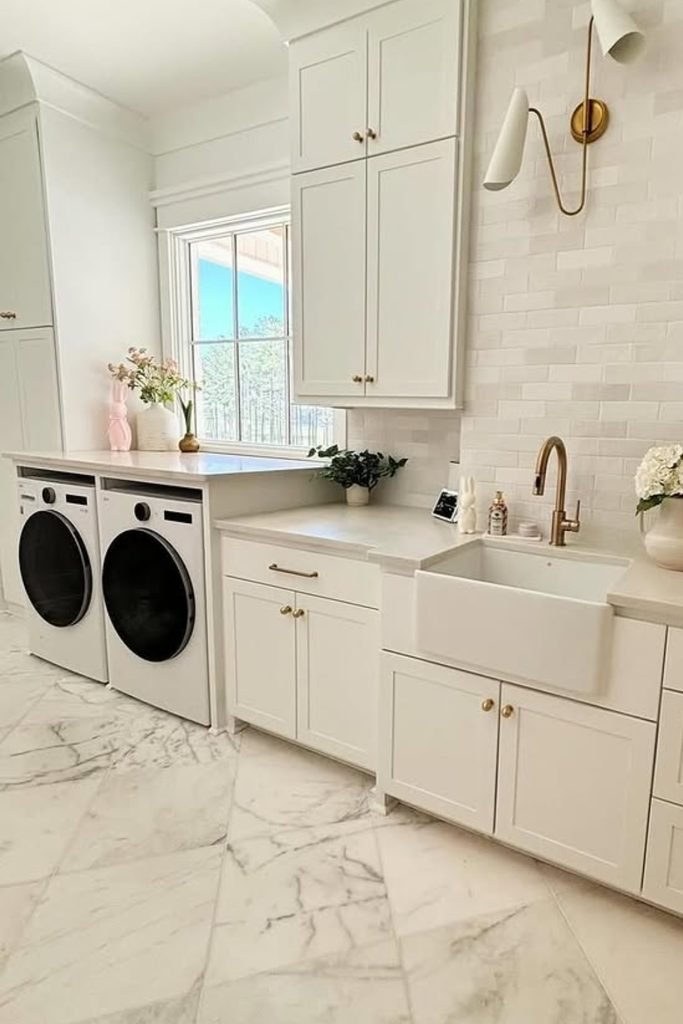
Soft Herringbone
A pale herringbone floor adds movement without making a small laundry room feel busy, especially when cabinetry already uses muted neutral tones.
Choose slim stone-look or porcelain tiles in a warm beige, then use matching grout to keep the pattern soft and easygoing.
This layout works especially well around a floor drain, where smaller pieces make cuts easier and keep the herringbone pattern continuous.
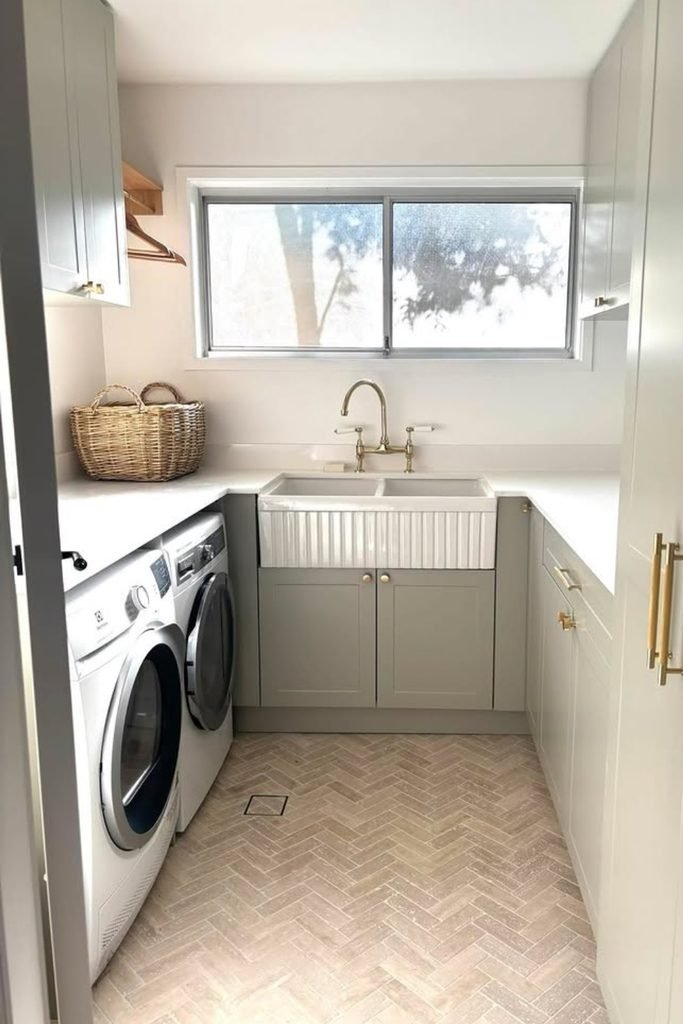
Soft Mosaic
Tiny geometric tiles bring quiet detail to a bright laundry room, making them useful when white cabinets need texture instead of stronger color.
Pick a low-contrast gray and white pattern, then keep grout similar in tone so the floor reads as one gentle surface.
It suits compact rooms beautifully because the small repeat adds character underfoot without competing with open shelving, wood counters, or subway tile.
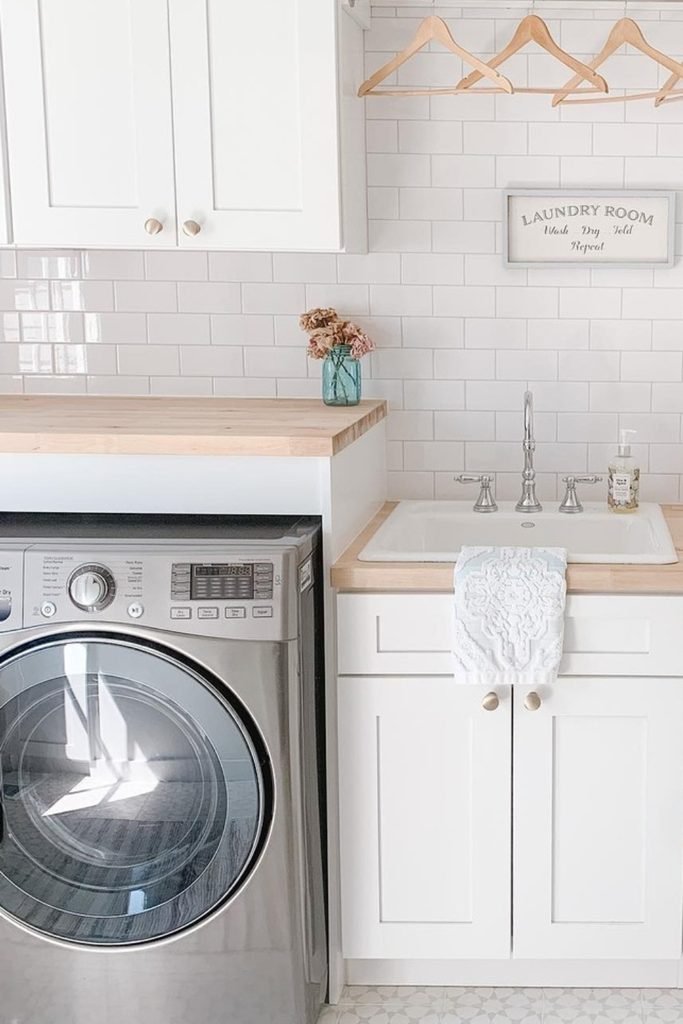
Marble Checks
Mixing warm taupe squares with marble-look tiles gives checkerboard flooring a softer finish than classic black and white combinations usually do.
Use oversized squares in a larger laundry room, where the broad pattern has enough space to feel balanced rather than cramped.
Warm wood tones, cream cabinets, and brushed brass help connect the taupe sections, keeping the whole floor relaxed instead of stark.
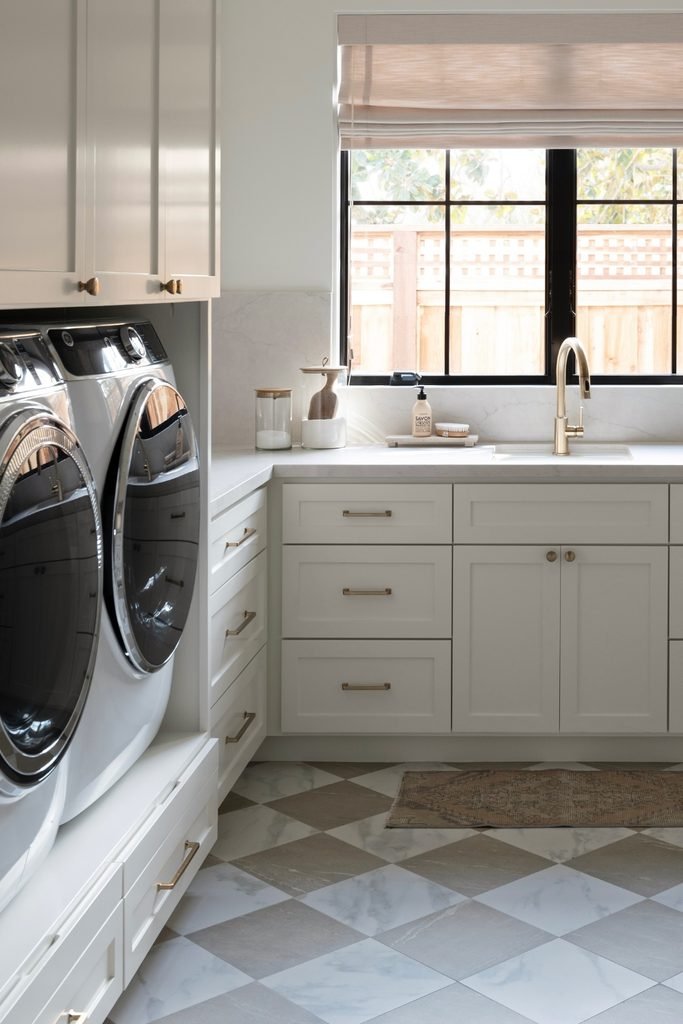
Star Mosaic
A repeating star mosaic can turn an open laundry area into a defined zone without adding another wall or changing cabinetry colors.
Choose marble-look porcelain in soft gray and cream if you want the pattern to feel traditional while staying easy on the eye.
This works best across a wider floor, where the repeated shapes can spread naturally and connect separate washing, sink, and storage areas.
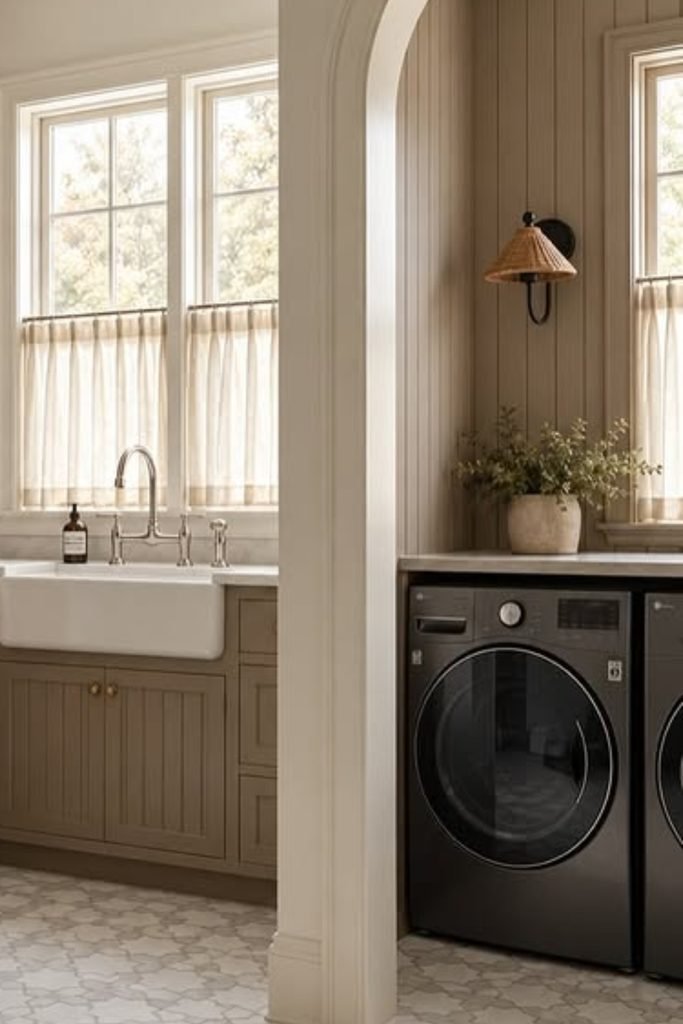
Warm Oak
Warm oak-look planks soften an all-white laundry room and work especially well when you want the space to feel less clinical.
Run the boards lengthwise through a narrow room to stretch the view, then choose a matte finish that hides small scuffs.
If moisture is a concern, use waterproof vinyl or wood-look porcelain rather than real hardwood, especially around washers and utility sinks.
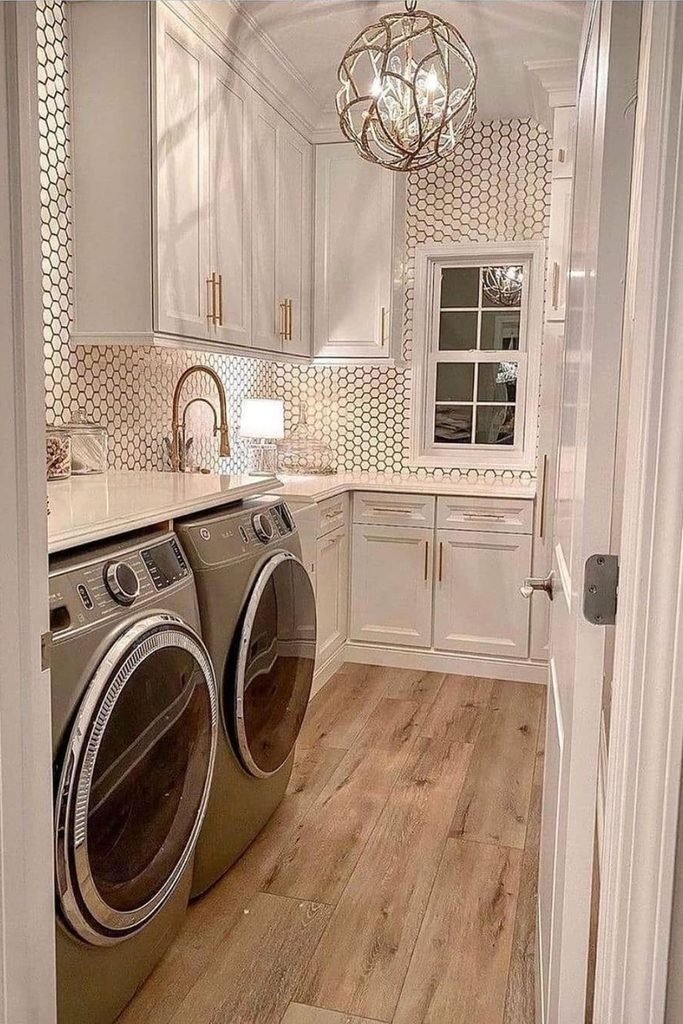
Pale Herringbone
Pale stone-look herringbone gives a long laundry room movement without strong contrast, making it useful for calm modern spaces with simple cabinetry.
Choose narrow porcelain rectangles in two close beige tones, then keep the grout light so the pattern reads softly from end to end.
This layout suits galley-style rooms because the zigzag direction pulls your eye forward while still giving pale cabinets enough visual breathing room.
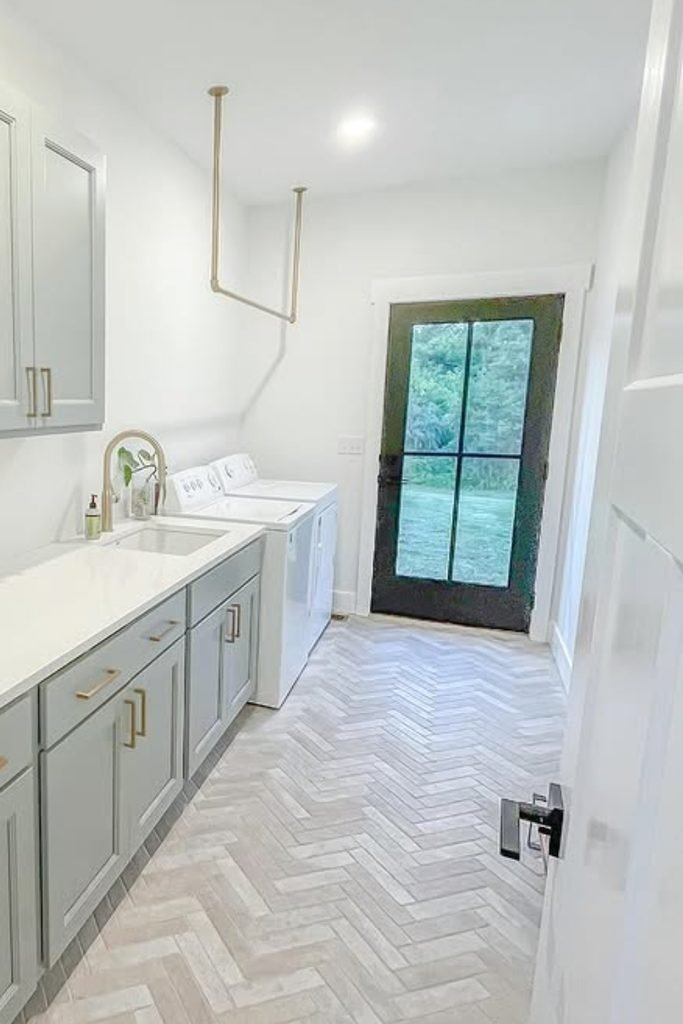
Framed Diamonds
A wood-tone border around pale square tiles creates a custom floor pattern without covering the whole room in a bold print.
Use this in a narrow laundry space when you want definition underfoot, then repeat the wood tone through shelves or nearby accents.
Keep the central tiles light and the borders slim, because heavy contrast can make a small floor feel chopped into separate sections.
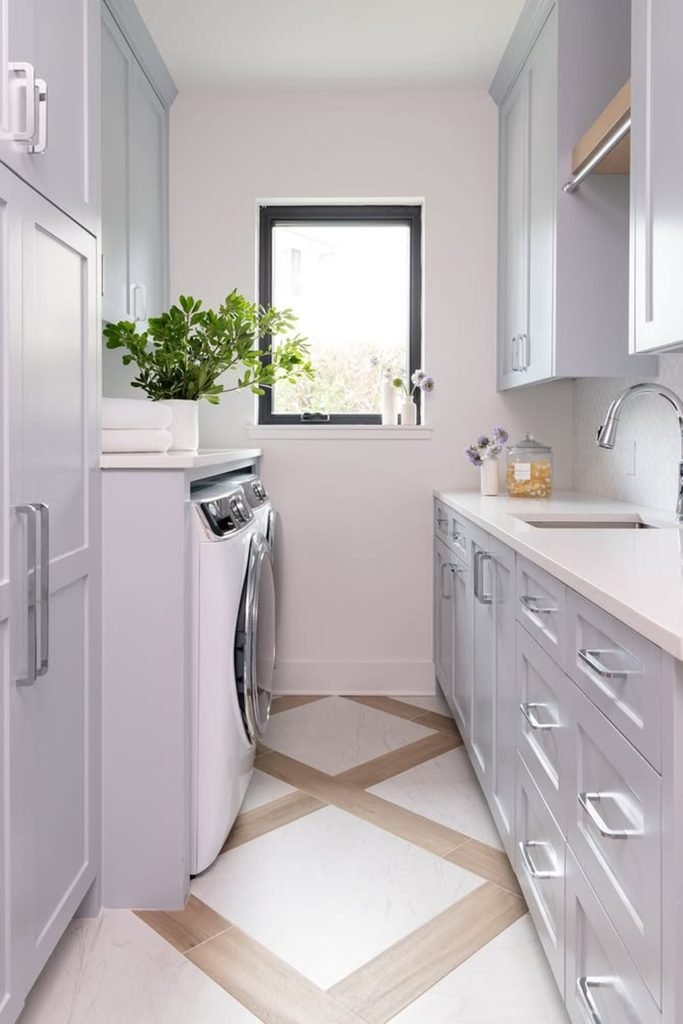
Cork Texture
Cork brings warmth and softness to a basement laundry room, which helps when concrete underneath makes the space feel cold and echoey.
If you choose it, use a sealed product rated for moisture and check the slab first, because trapped dampness can damage cork.
Pair the natural texture with simple painted cabinets and wood counters, but keep washer pans or leak protection part of the plan.
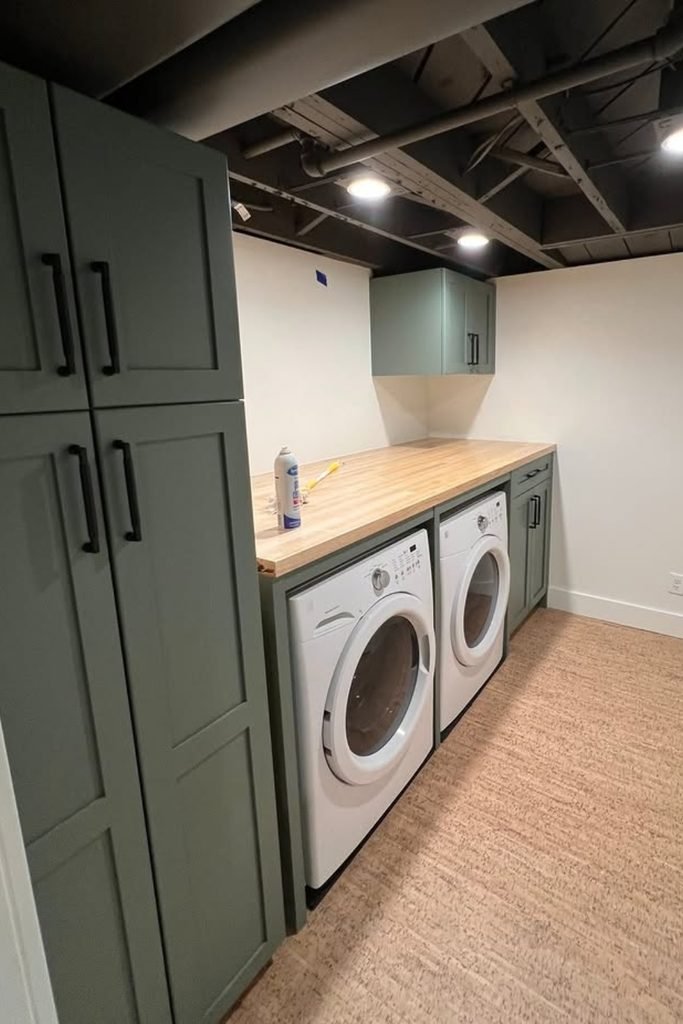
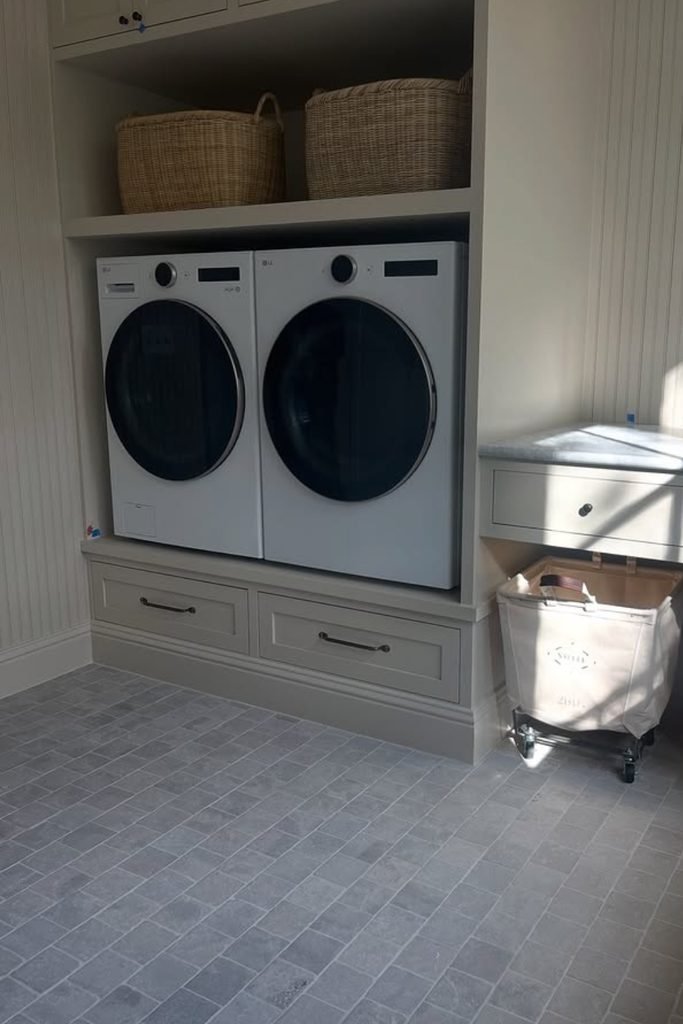
Gray Brick
Soft gray brick tiles give a quiet laundry room more texture without competing with built-in storage, baskets, or simple wall paneling.
Choose a matte porcelain or stone-look finish, then keep grout close in color so the floor reads calm rather than busy.
This works especially well in utility-focused spaces, where the muted surface can handle everyday mess while keeping the room visually grounded.
Stone Checks
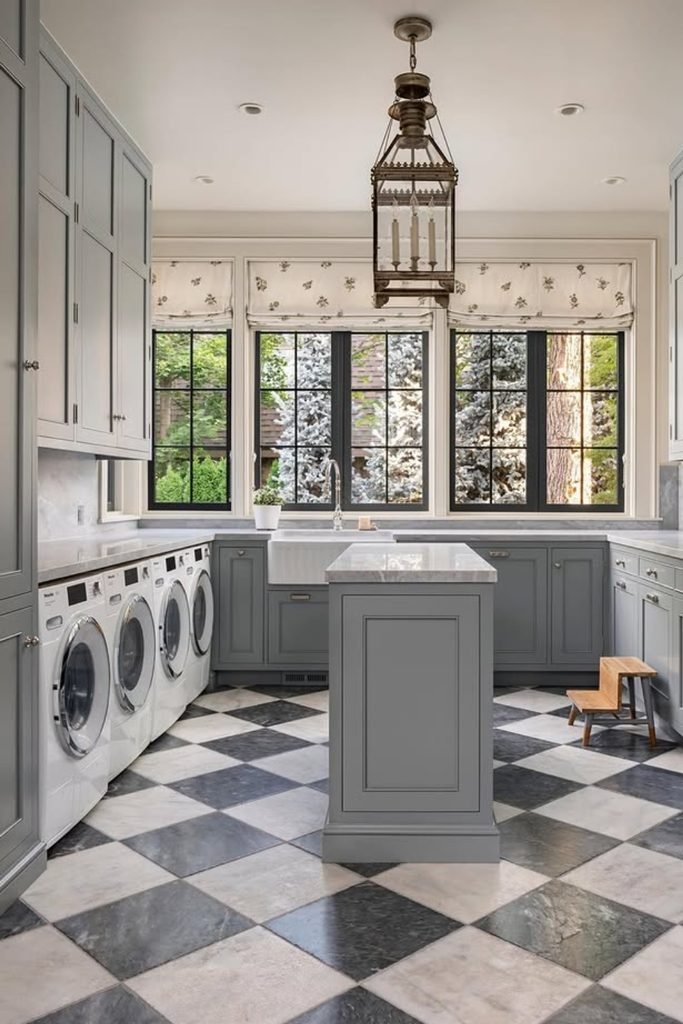
Large stone checkerboard tiles make a spacious laundry room feel intentional, especially when gray cabinetry needs a stronger feature underfoot.
Lay the squares on a diagonal to create movement, then use natural variation instead of flat color for a softer, collected finish.
This scale suits larger rooms best, because wide floor areas give the bold pattern enough space to breathe around islands and cabinets.
FAQs
Is Vinyl Flooring Good for a Laundry Room?
Waterproof vinyl works well in laundry rooms because it handles everyday spills while feeling warmer and softer than most tile floors.
If you choose planks, check the product rating first because water-resistant and fully waterproof flooring do not offer the same protection.
Keep seams tight, protect exposed edges, and clean standing water quickly so moisture has less chance to reach underneath the flooring.
Should Laundry Room Flooring Match Nearby Rooms?
Matching nearby flooring can make a small laundry room feel larger because your eye moves through the spaces without interruption.
If you want the laundry area to feel separate, use a different pattern while repeating one nearby color for connection.
This works especially well between kitchens, hallways, and mudrooms, where continuity matters but the laundry space still needs personality of its own.
