
25 Top Load Washer Laundry Room Ideas
A top-load washer can still sit inside a laundry room that feels thoughtful, polished, and easy to use.
The right layout, storage choices, and small design details can make the whole space feel much more intentional.
In this article, you’ll find practical top load washer laundry room ideas you can adapt to different spaces, styles, and budgets.
Let’s jump in!
What are the Trends for Laundry Room Design?
Laundry rooms are becoming more practical, with better storage, dedicated folding areas, drying solutions, and layouts built around everyday routines.
If you have a top-load washer, plan around the open lid first, then use nearby walls and side cabinets instead of blocking that space.
Closed cabinets are replacing cluttered open storage, while pullout racks, wall-mounted drying systems, basket storage, and tall utility cupboards help smaller rooms work harder.
You can also expect more personality through colored cabinetry, wallpaper, patterned floors, warm wood, and finishes that make the laundry room feel connected to the home.
The best trend to follow is simple: choose features that make washing, drying, sorting, and folding easier before adding anything purely decorative.
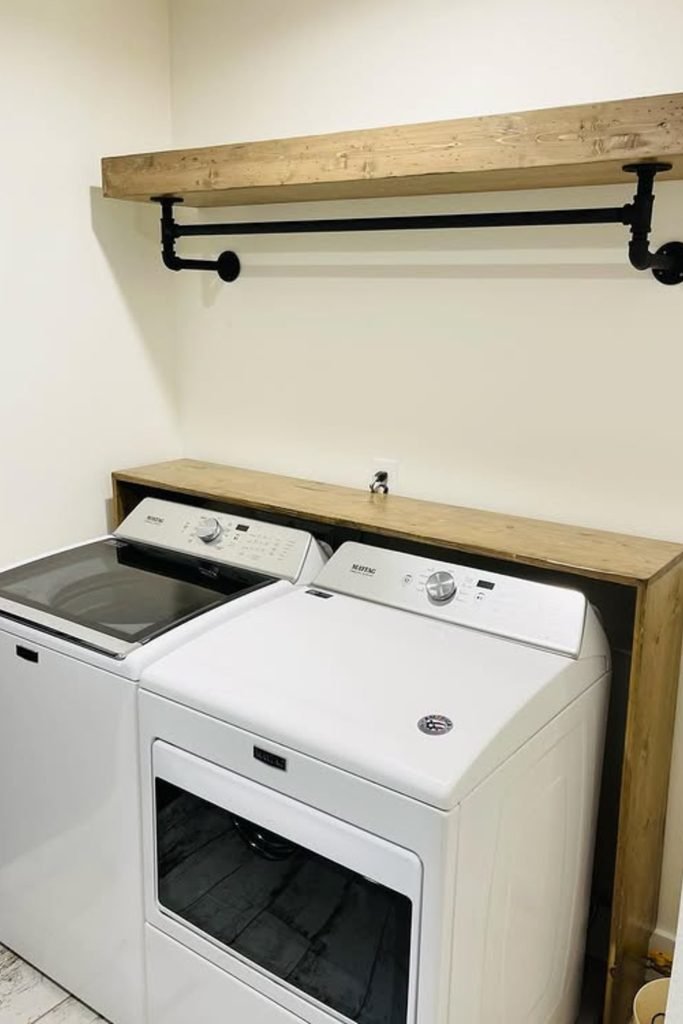
Hanging Rail
Use a wall-mounted rail above your machines when you need hanging space without giving up the floor area around a top-loader.
Keep the lower shelf high enough for the washer lid to open fully, then use it for baskets or everyday supplies.
Choose a shallow shelf and simple rail so you can reach clothes easily without making the wall feel crowded or heavy.
Side Counter
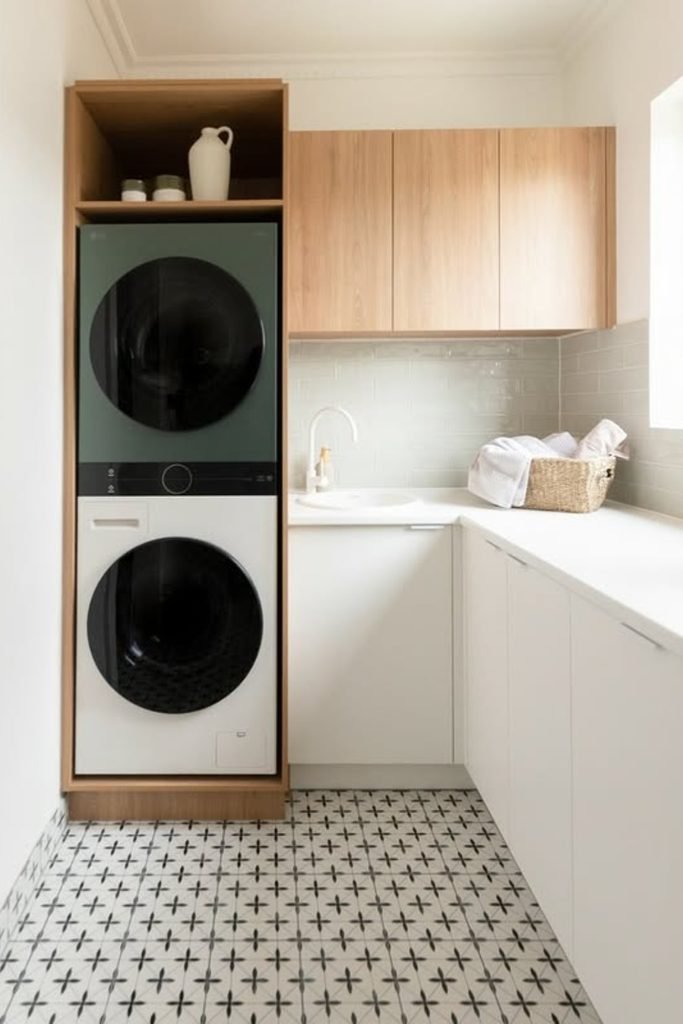
If a counter cannot sit above your top-loader, move the work surface beside it and use that area for folding.
Pair the counter with drawers below and cabinets above so detergent, cloths, and small tools stay close without blocking the lid.
This setup works especially well in narrow rooms because one side handles storage while the washer keeps clear vertical space.
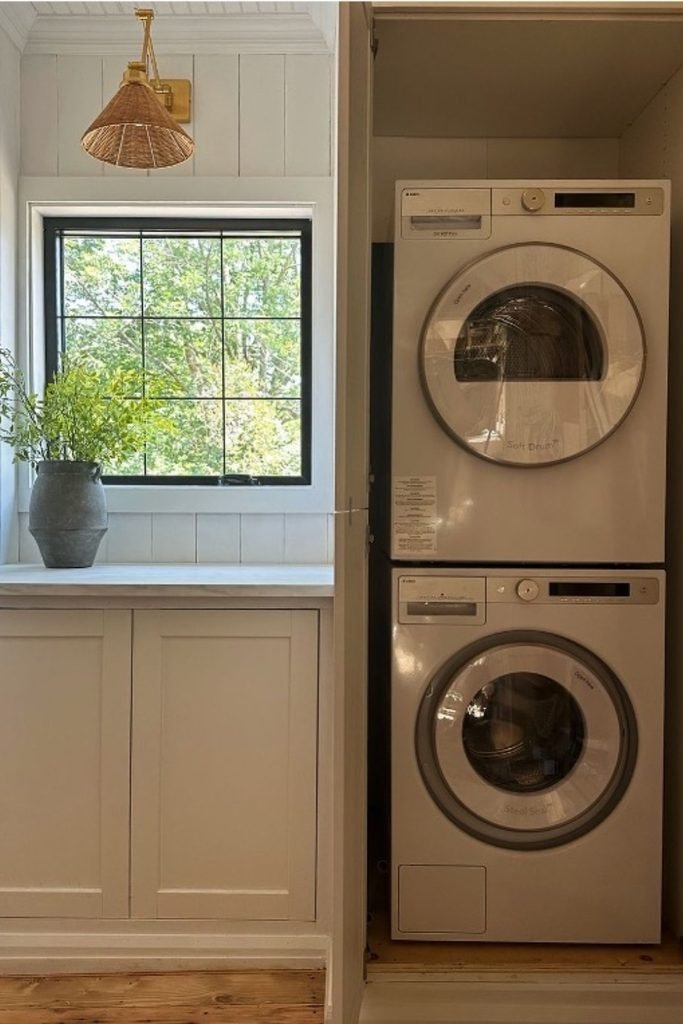
Tall Cabinet
A tall cabinet beside the washer is one of the easiest ways to add serious storage without using the lid zone.
Use the upper shelves for backup detergent and towels, then keep daily products lower where you can reach them without stretching.
Keep enough space around the washer for hoses and servicing, especially if you want the cabinetry to look built-in and finished.
Folding Station
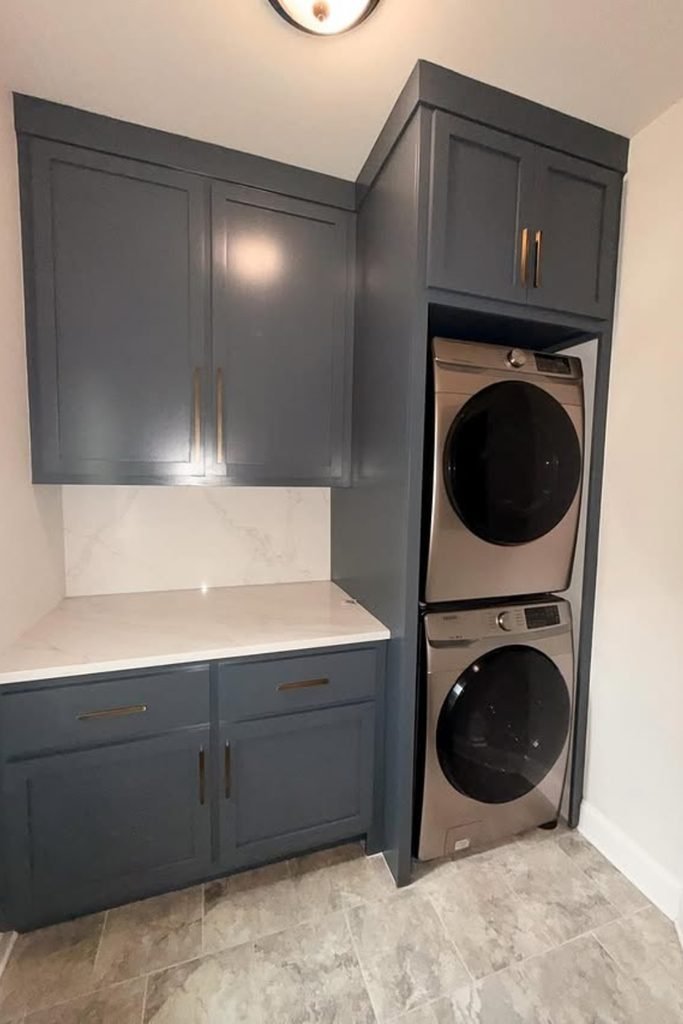
Build a dedicated folding station beside your top-loader instead of forcing a counter across the machine where the lid needs room.
Add drawers for small supplies and closed cabinets for bulk products, so the counter stays clear enough to sort clothes.
A short run of cabinetry can still feel complete when you repeat one finish across the base units, uppers, and trim.
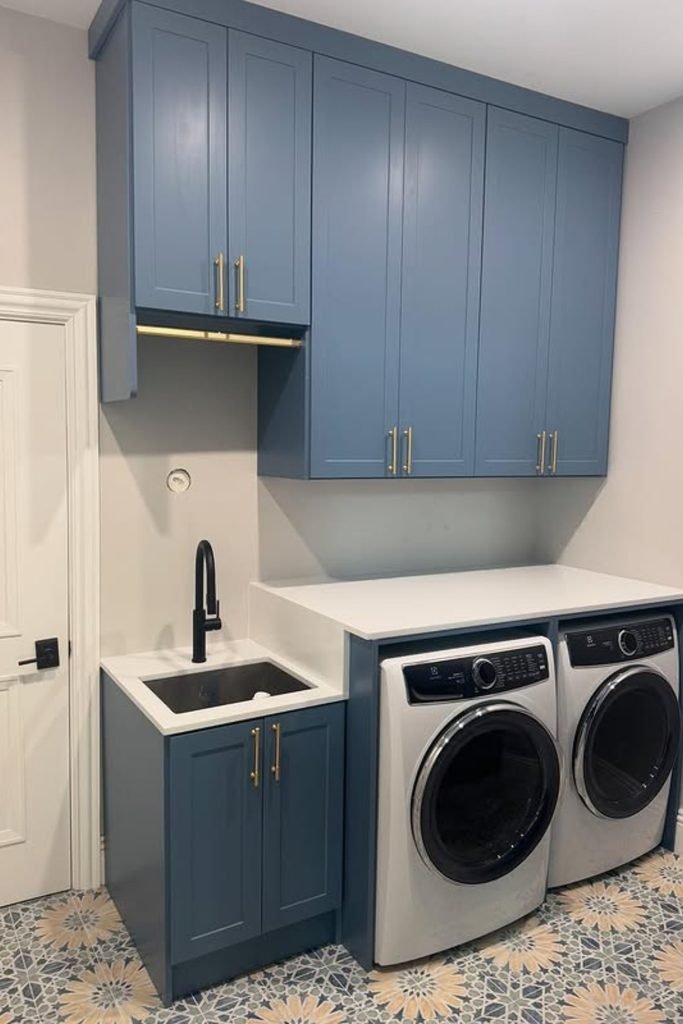
Sink Storage
A sink beside the machines gives you a practical spot for stain treating, hand washing, and filling buckets without crossing the room.
For a top-loader, keep the counter on the sink side and leave the washer completely open above for easy lid clearance.
Tall cabinets above the sink can hold bulk supplies, while lower doors hide cleaning products that you use less often each week.
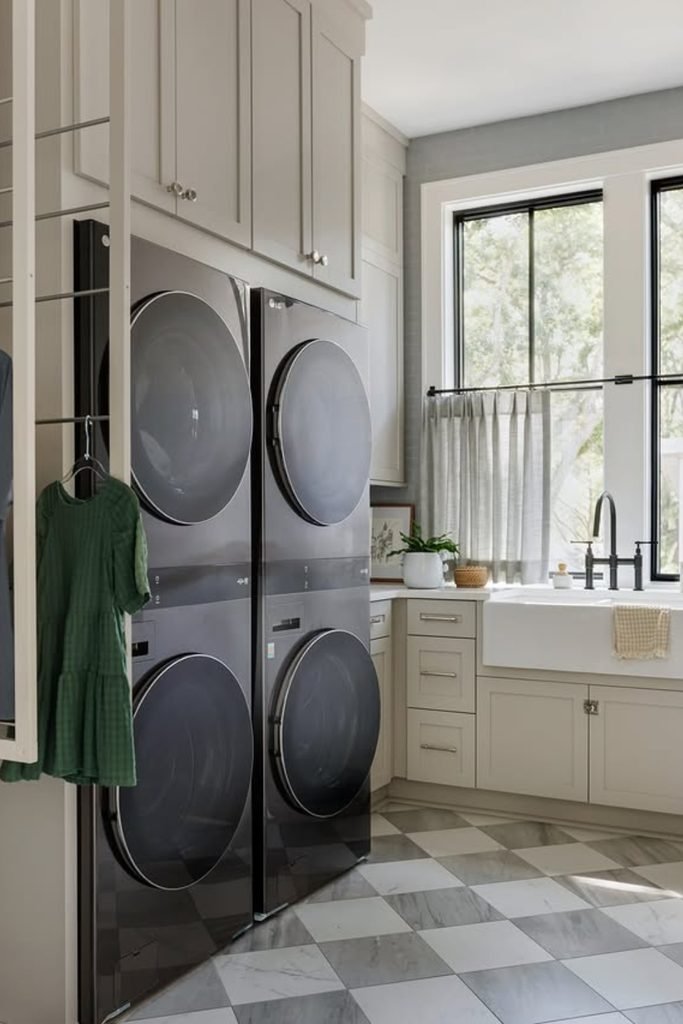
Drying Zone
When floor space is tight, move drying and hanging functions to one side wall instead of crowding the area above your washer.
A slim rail or shallow cabinet near the sink keeps shirts within reach while leaving the main laundry path clear and usable.
Keep everyday supplies in nearby drawers, then reserve upper cabinets for backups so the room stays organized without constant reaching overhead.
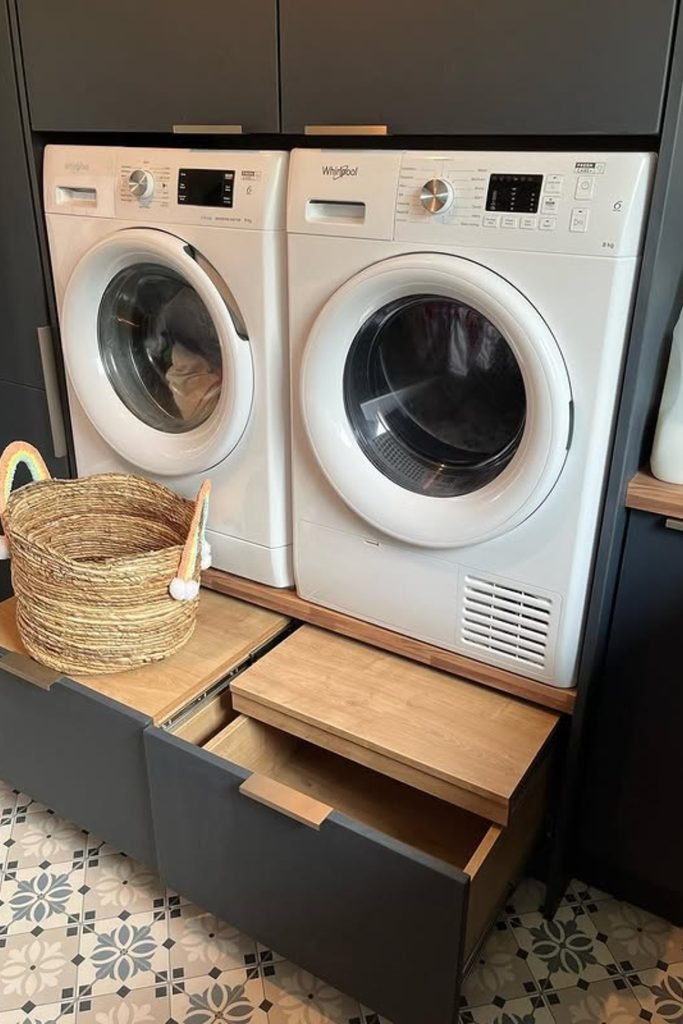
Pullout Storage
Deep pullout drawers can turn unused lower cabinetry into useful storage for baskets, detergent refills, towels, or items you rarely need.
With a top-loader, place this storage beside the washer rather than underneath it, because extra height can make the drum harder to reach.
Use full-extension hardware if possible, so the drawer opens completely and you can reach products stored at the very back without digging.
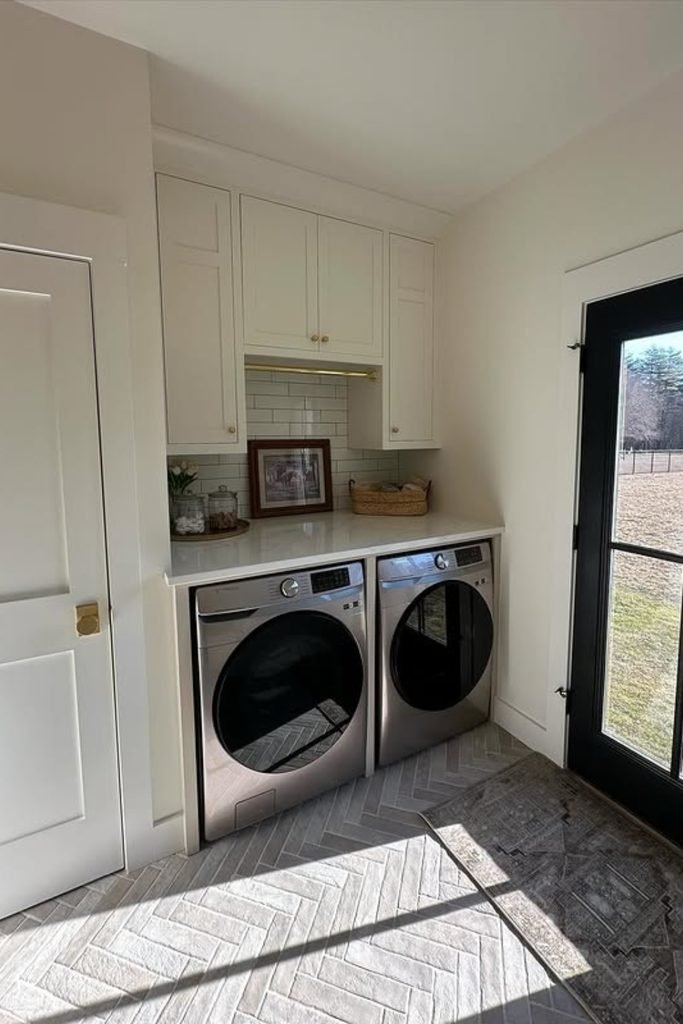
Built-In Nook
Framing the laundry area with tall cabinets makes a plain appliance wall feel finished while giving bulky supplies a dedicated place nearby.
For a top-loader, stop the countertop beside the washer and keep the center opening tall enough for the lid to rise freely.
Matching upper cabinets and side storage creates a built-in look without boxing the machine in so tightly that servicing becomes difficult later.
Compact Utility
When laundry shares space with a bathroom, stack storage vertically and keep the sink compact so the room still feels easy to move through.
For a top-loader, place tall shelving beside the washer instead of above the lid, giving towels and supplies their own narrow zone.
Use closed lower cabinets for cleaning products, while open shelves higher up keep lighter items visible without crowding the working area.
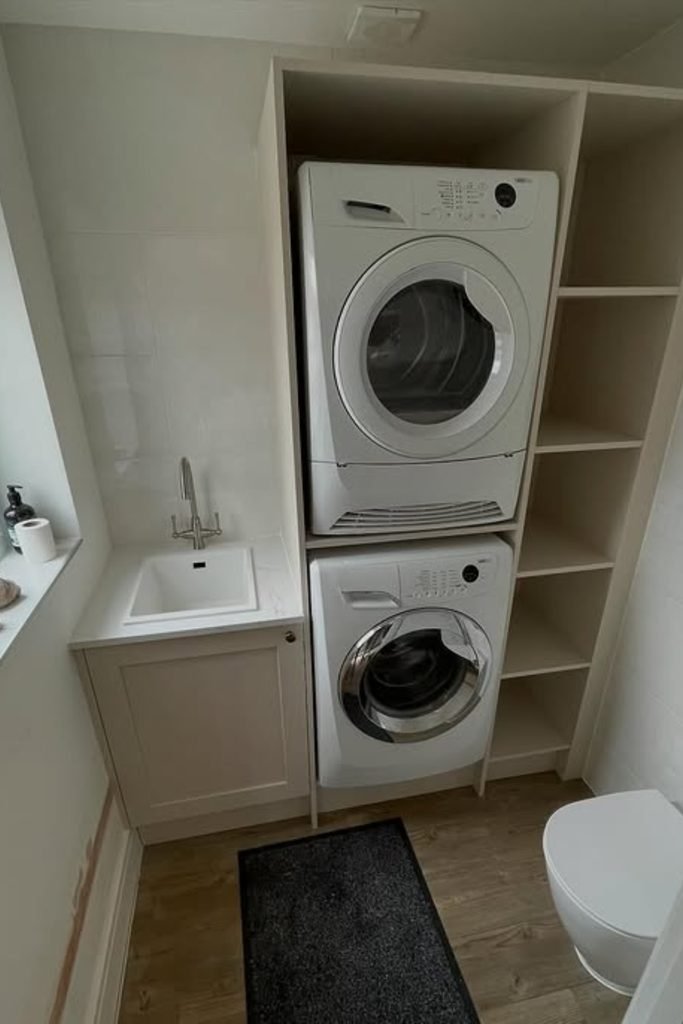
Sink Shelves
A small sink becomes far more useful when shallow shelves sit nearby, keeping stain treatments, brushes, and hand-wash supplies within easy reach.
With a top-loader, keep those shelves over the sink side rather than the washer, so the lid can open without interference.
Choose shelf depths that hold everyday containers comfortably, then reserve the enclosed cabinet above for backups you only need occasionally.
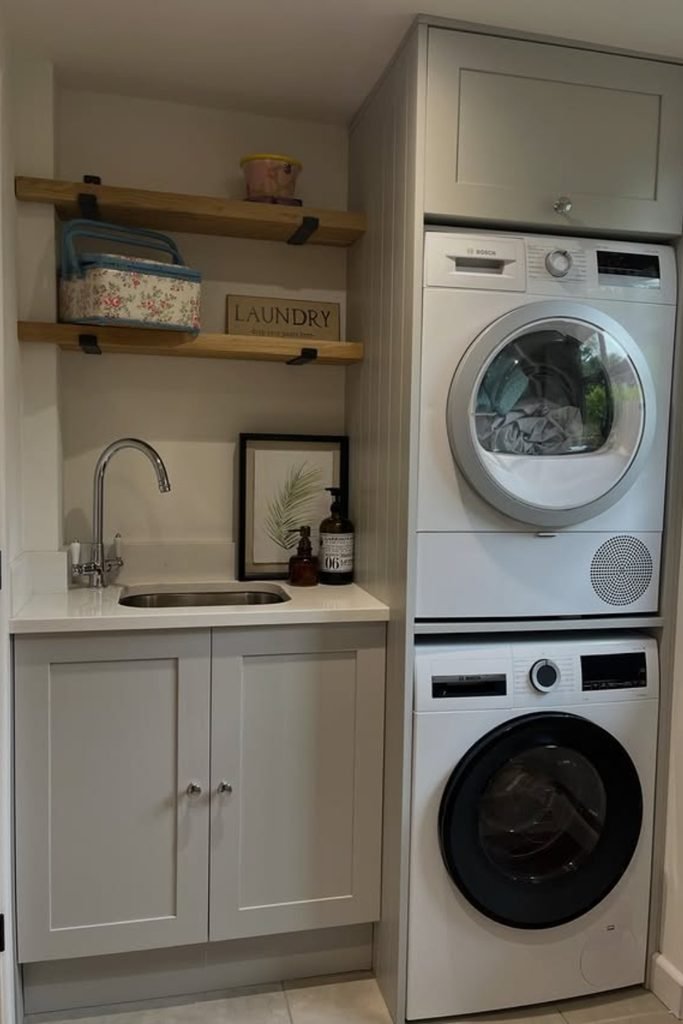
Side Counter
A long folding counter is useful, but with a top-loader, shift that work surface beside the machine instead of covering the lid.
Add open shelves above the counter for labeled bins, keeping detergent sorted while leaving the washer itself completely clear overhead.
A slim hamper at the counter edge gives dirty clothes a landing spot and keeps baskets from blocking the main walking path.
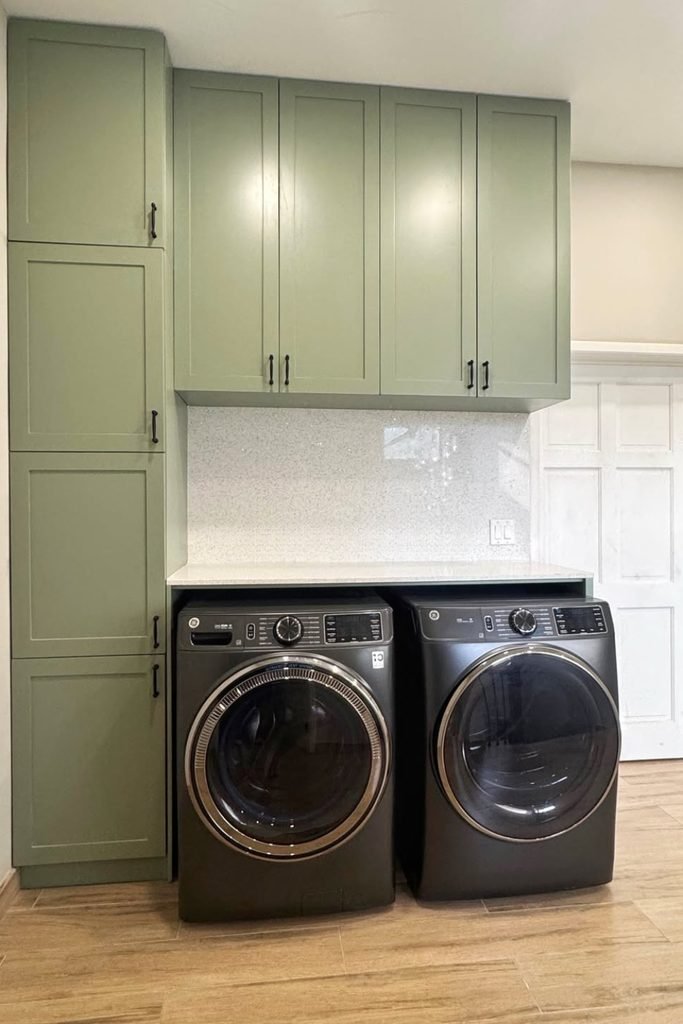
Full Cabinets
Floor-to-ceiling cabinetry works well when you need serious storage, especially if cleaning tools, bulk detergent, and baskets all share one room.
For a top-loader, stop upper cabinets high enough above the machine, then use the tall side cabinet for harder-to-store items.
Keeping cabinet fronts simple makes a large storage wall feel calmer, while dark hardware gives the room enough contrast without adding clutter.
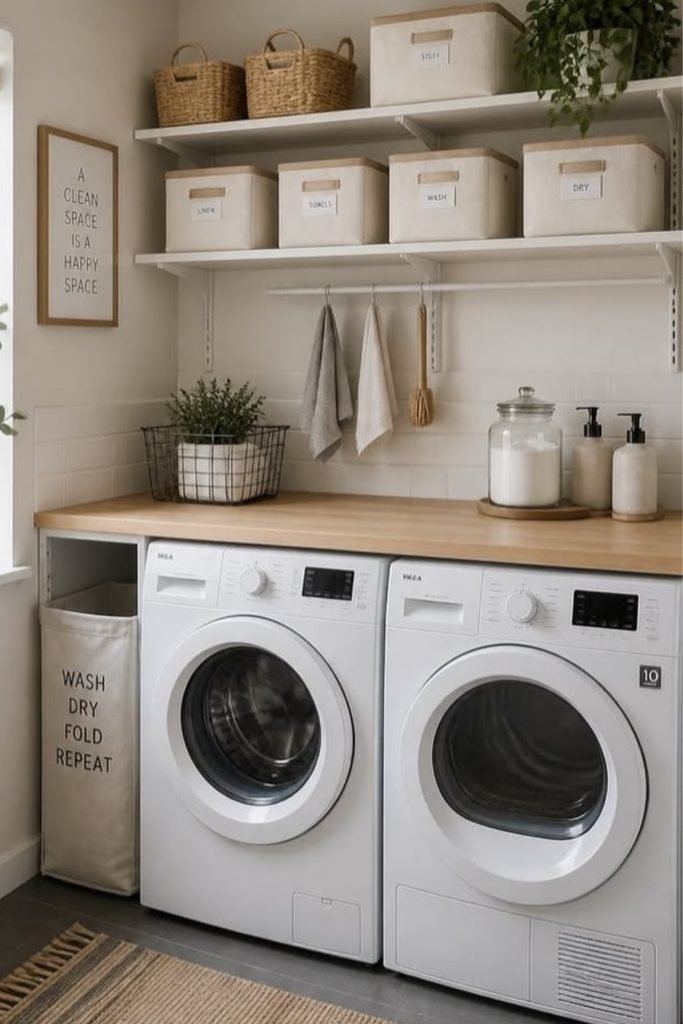
Window Shelves
If natural light falls across your laundry wall, keep upper storage open so the room stays bright instead of feeling boxed in.
For a top-loader, mount the lowest shelf above the fully opened lid and keep baskets or detergent within comfortable reach.
Skip a fixed counter over the washer, then create folding space beside it with a narrow cabinet, cart, or nearby surface.
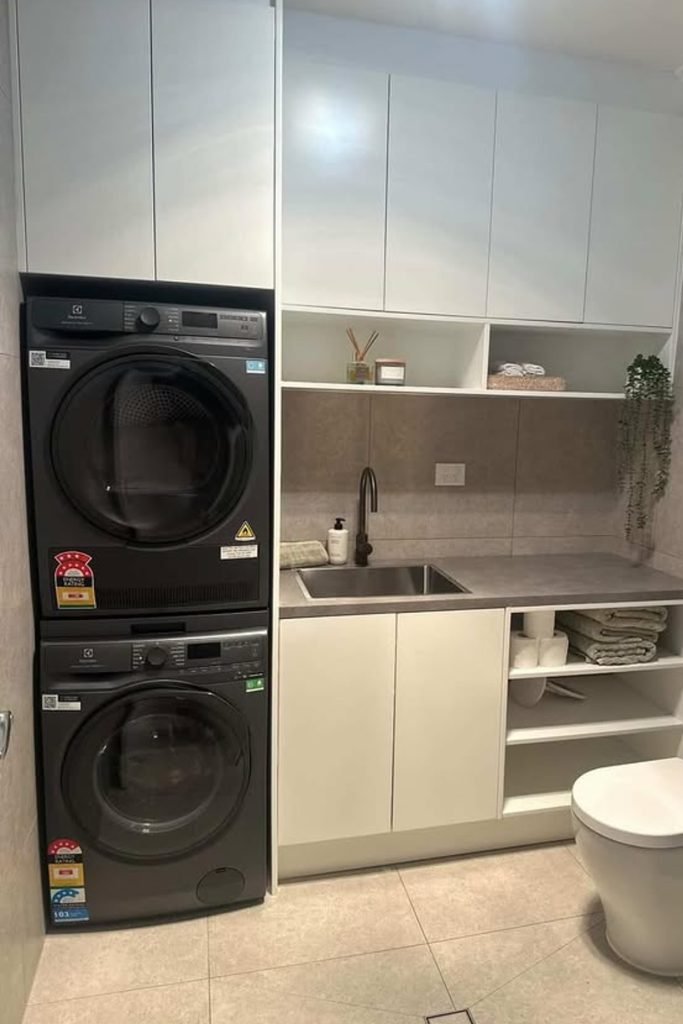
Bathroom Laundry
When laundry shares a bathroom, push storage upward and keep the lower cabinets simple so both functions fit without crowding the floor.
With a top-loader, place the machine beside the sink rather than under cabinetry, leaving enough height for the lid to clear.
Use open cubbies for towels and daily supplies, while closed uppers hold backups that would otherwise make the room look cluttered.
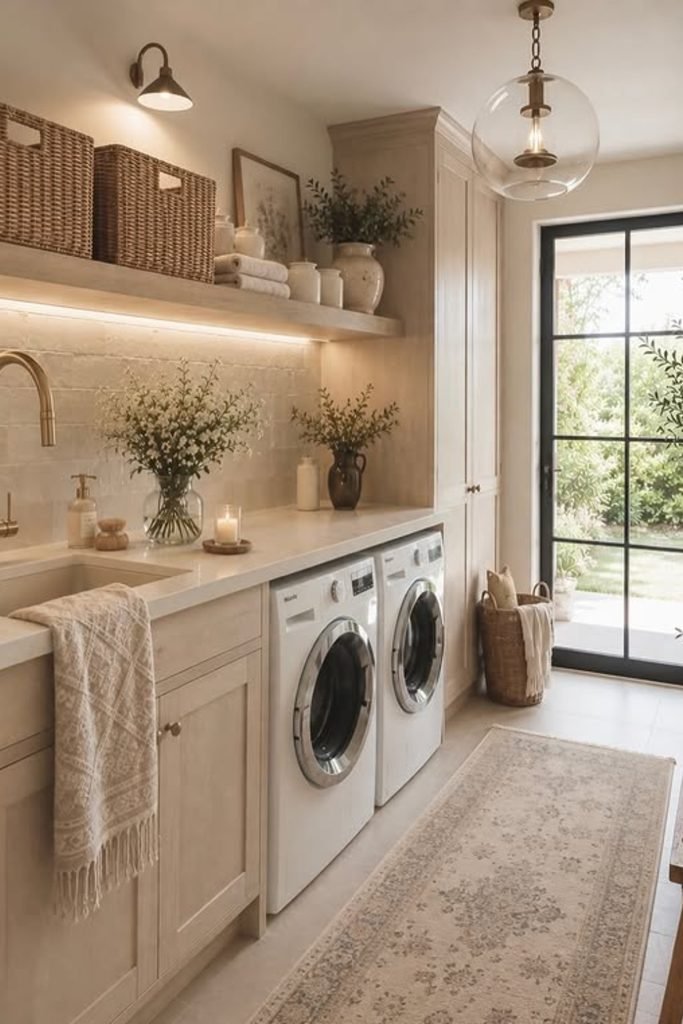
Basket Shelf
A long shelf with matching baskets gives you easy storage without filling the wall with cabinets, which helps a narrow room breathe.
For a top-loader, raise that shelf above the open lid and store only lightweight items you can grab without awkward stretching.
Keep the sink and folding counter on one side, then use warm wood and soft lighting to make utility storage feel intentional.
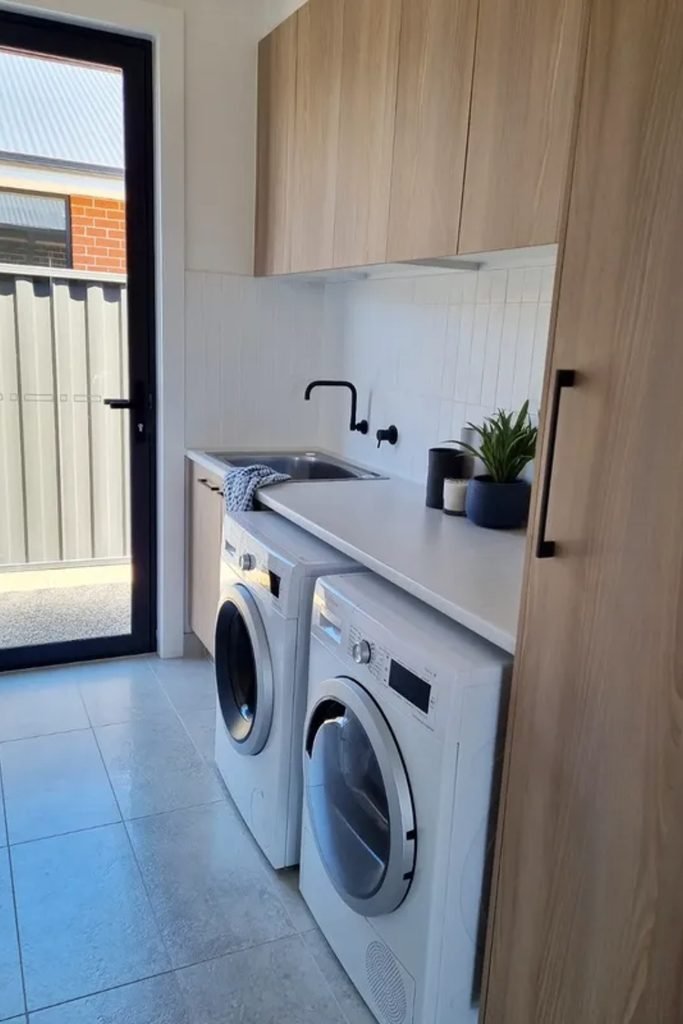
Wood Cabinets
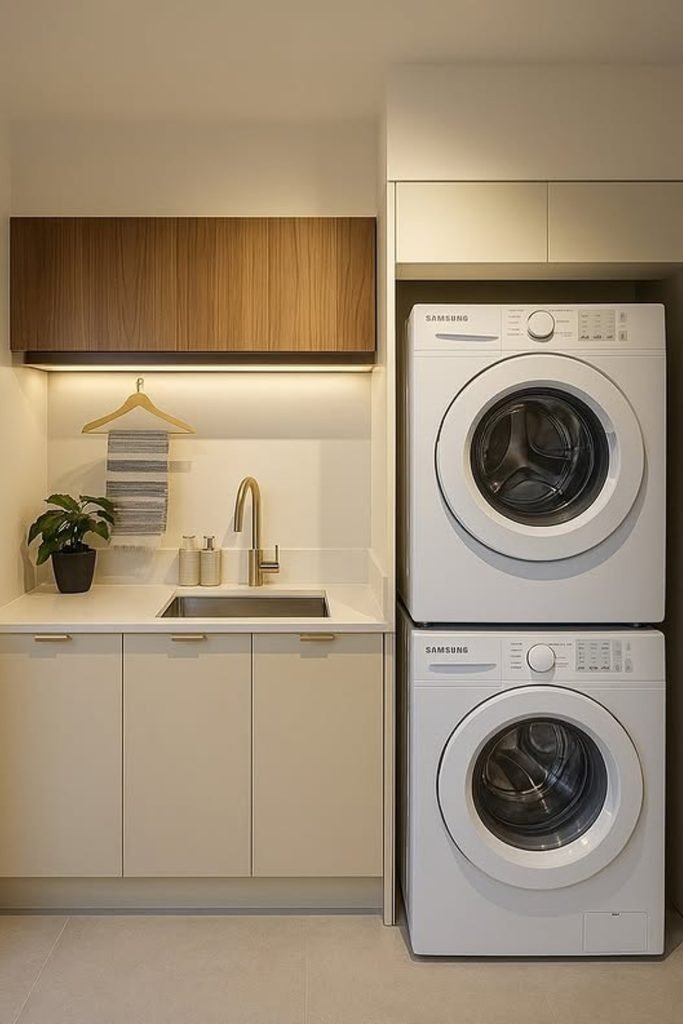
Full-height wood cabinetry works well when you want the laundry area to disappear into the rest of a modern utility room.
If you have a top-loader, keep the worktop beside the washer and leave the machine’s entire lid path completely unobstructed.
Choose tall side cabinets for bulk supplies and cleaning tools, then keep upper doors simple so the wall stays calm and streamlined.
Sink Nook
Use a compact sink beside your laundry zone when you want stain treatment, hand washing, and storage gathered into one efficient wall.
Keep tall cabinets over the sink side, then leave the space above a top-loader open so its lid can move freely.
This layout suits narrow utility rooms because one side handles washing tasks while the machine area stays simple and easy to service.
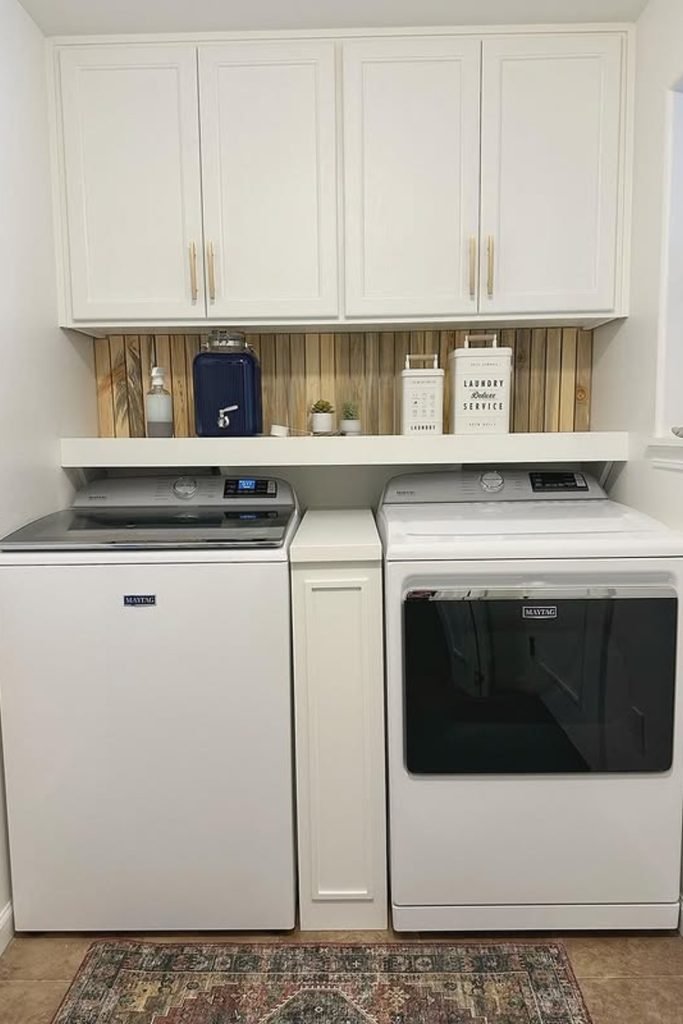
Center Storage
A slim cabinet between the washer and dryer can turn an awkward gap into useful storage for detergent, brushes, and small supplies.
Choose a narrow pullout or door-front unit so you can reach everything easily without sacrificing the washer’s full lid opening.
Mount upper cabinets high enough for clearance, then keep daily products in the center cabinet where you can grab them without stretching.
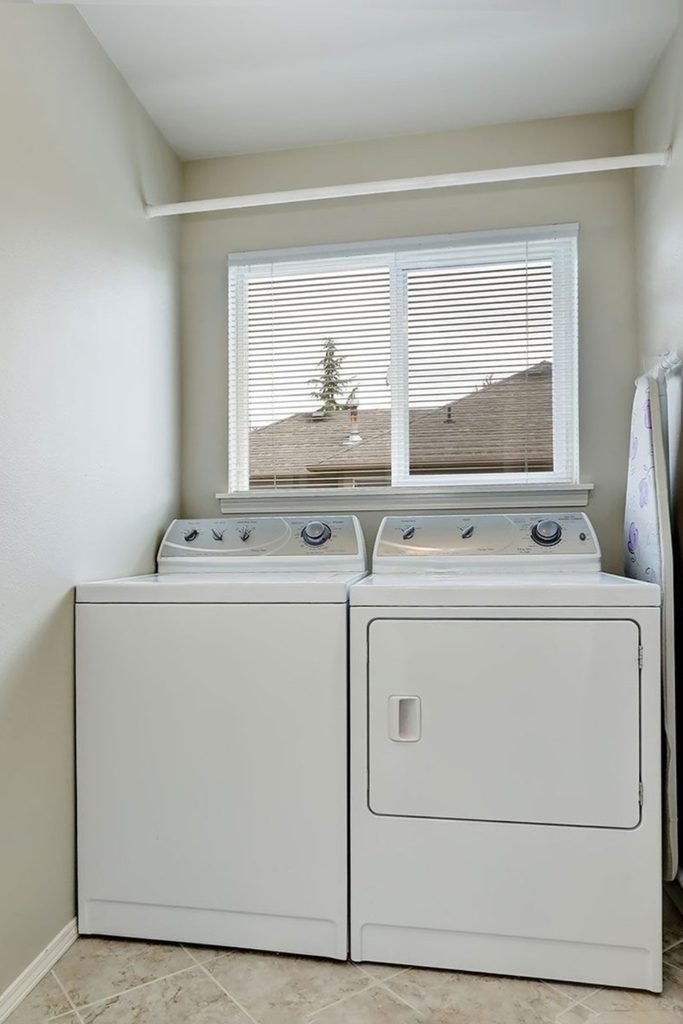
Drying Rod
A wall-to-wall drying rod works well in a narrow laundry room because it uses ceiling height without taking away valuable floor space.
Set the rod far enough above your top-loader that the lid opens fully and hanging clothes never fall into the wash area.
This simple setup is best for rentals or unfinished rooms where you need practical drying space without adding cabinets or permanent built-ins.
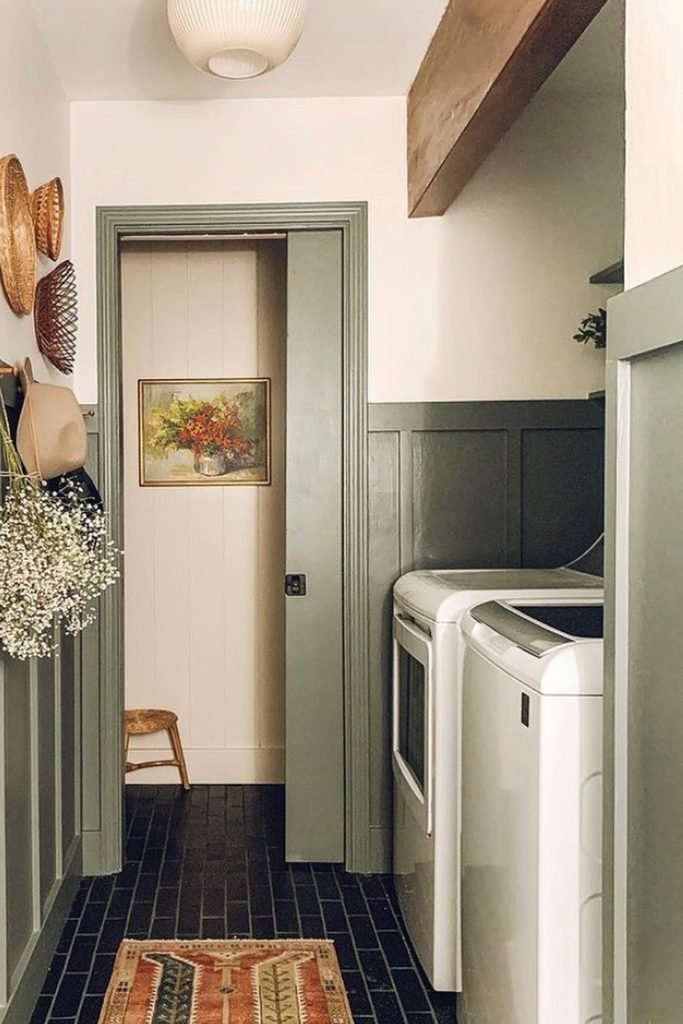
Paneled Laundry
In a hallway laundry, wall paneling can make the appliance zone feel intentional without stealing the few inches you need for circulation.
Keep any shelf or ledge above a top-loader shallow and high, so the lid clears comfortably and the walkway stays open.
A darker lower wall also hides everyday scuffs better, which makes this approach practical for busy pass-through spaces near bedrooms or entries.
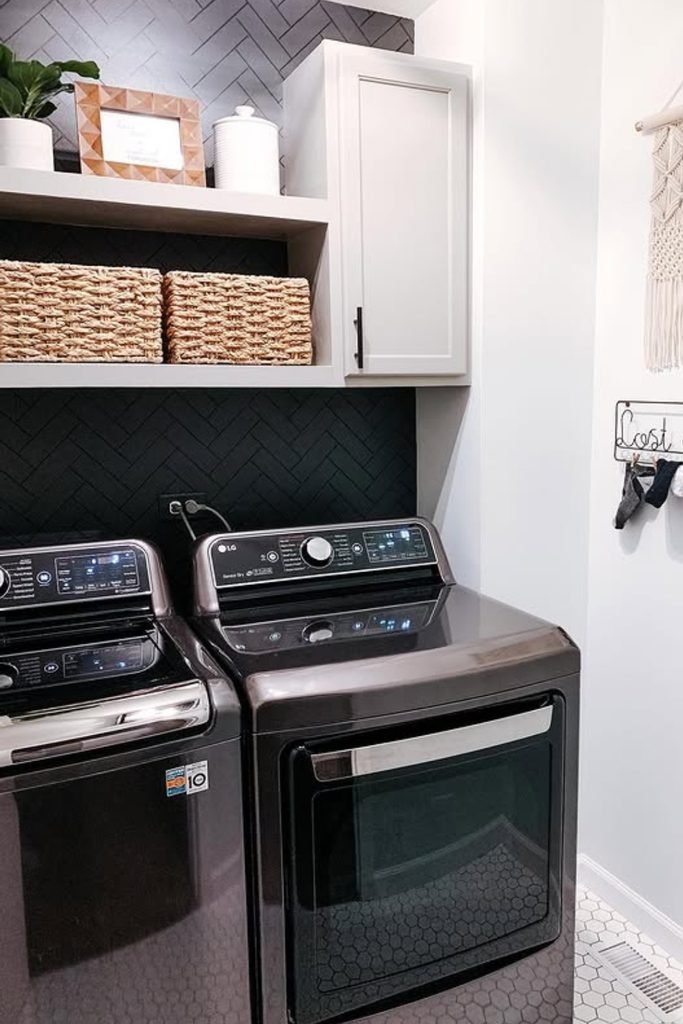
Dark Backsplash
A dark backsplash can make black appliances feel intentional, especially when the rest of the laundry room stays light and uncluttered.
Keep the shelf above a top-loader high enough for the lid to open fully, then use baskets for lighter everyday supplies.
Finish the wall with one closed cabinet for messier products, so open storage never becomes the first thing you notice.
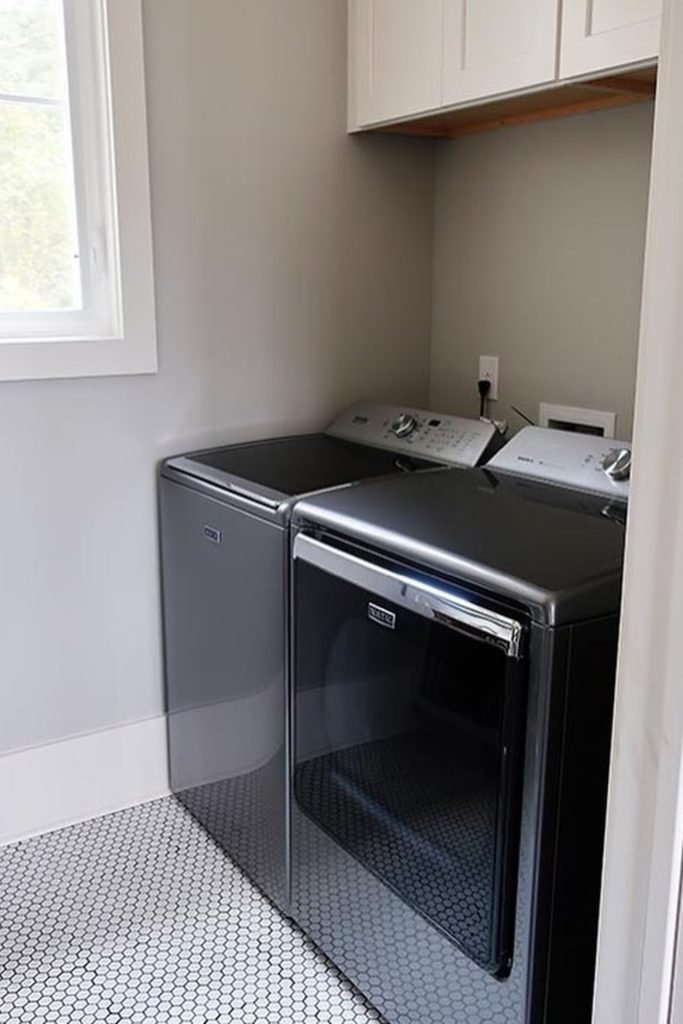
Quiet Alcove
A simple laundry alcove works best when you resist overfilling it, because clear wall space makes a narrow room feel less cramped.
Mount upper cabinets only after checking the washer lid height, leaving enough room for your hands and the controls behind it.
If storage needs stay small, skip extra shelving and let the window, floor space, and easy machine access do the work.
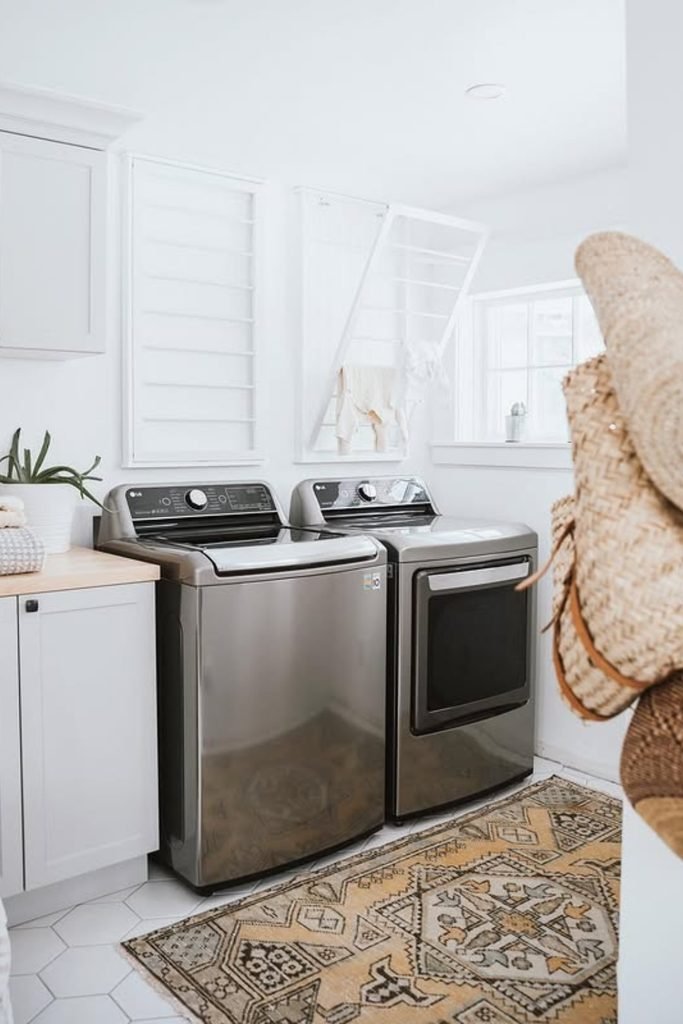
Drying Ladders
Wall-mounted drying ladders give you air-drying space without putting a rod directly above the washer, where clothes can block the lid.
Place them on a side wall, then keep a short counter nearby for folding towels, sorting loads, or treating small stains.
This layout suits bright, compact rooms because every function stays reachable while the center walkway remains open for baskets and movement.
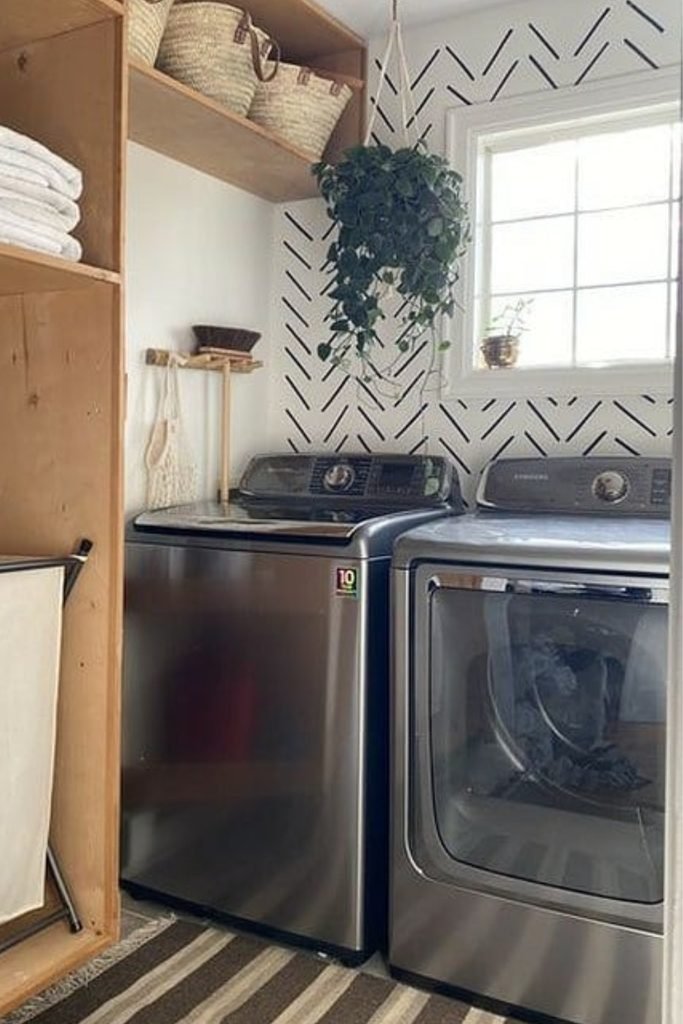
Hamper Tower
A full-height open unit can hold towels, baskets, and a hamper together, which keeps the washer wall from carrying every storage job.
Put the hamper at floor level for quick sorting, then reserve the higher shelves for linens and lightweight backup supplies.
Beside a top-loader, leave the machine completely open above and use the side tower to handle storage without limiting lid movement.
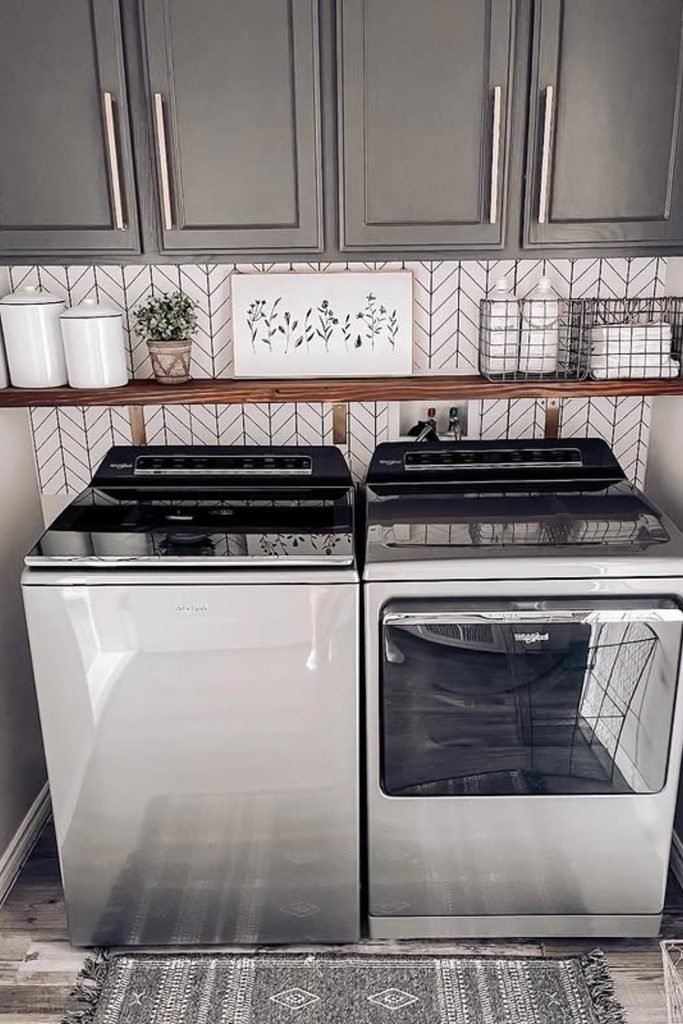
Shelf Bridge
A single shelf below upper cabinets gives everyday laundry supplies a reachable home without sacrificing the closed storage you need for clutter.
For a top-loader, set that shelf above the fully opened lid, then keep baskets and detergent grouped toward the easier-to-reach ends.
Carry the backsplash behind both machines so the whole wall reads as one finished zone instead of two appliances pushed together.
FAQs
How high should shelves be above a top-load washer?
Measure your washer with the lid fully open before mounting anything, because different models need different amounts of vertical clearance.
Leave extra room above that highest point so your hands can move comfortably and the lid never hits the shelf.
Keep frequently used detergent on the lowest reachable shelf, then place lighter backup supplies higher where daily access matters less.
Can you put a countertop over a top-load washer?
A fixed countertop usually blocks the lid, so place your main folding surface beside the washer or over the dryer instead.
If you really need workspace above the machine, use a hinged, removable, or fold-down surface that clears the open lid completely.
Check hoses, controls, and service access before building anything permanent, because a beautiful counter is useless if maintenance becomes difficult.
