
21 Laundry Basket Ideas
I started looking at laundry baskets differently when I realized the best ones do much more than simply hold clothes.
A good setup can make sorting easier, keep everything within reach, and still look like it belongs in the room.
In this article, I’m sharing laundry basket ideas that are practical, easy to use, and worth copying at home.
Let’s jump in!
How Do I Make My Own Laundry Basket?
Start by choosing a size that fits where you plan to keep it, because an oversized basket quickly becomes awkward to use.
For a simple DIY version, use sturdy fabric, rope, wire mesh, or thin wood panels around a solid base.
Add strong handles if you carry laundry between rooms, and leave small openings if damp clothes will sit inside.
If you want separate loads, divide the basket into two or three sections instead of making several individual hampers.
Finish it with a washable liner or removable bag so you can keep the basket clean without much extra work.
Rolling Cart
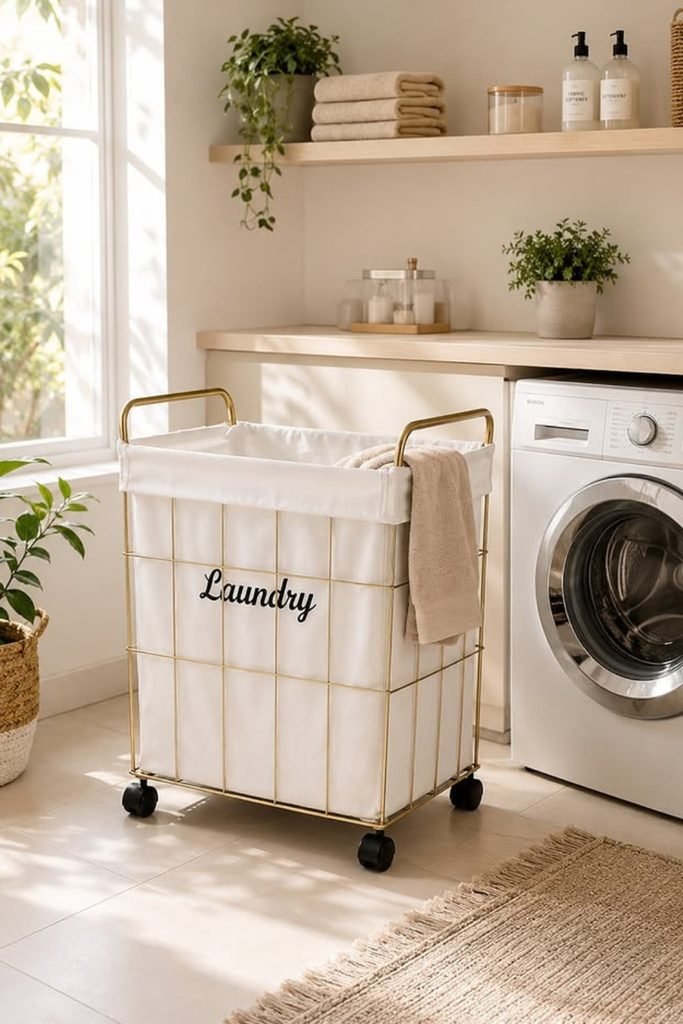
Keep a wheeled hamper beside your washer when laundry travels across one level, because rolling heavy loads saves your arms and floors.
Choose a sturdy metal frame with a removable fabric liner, then lock the casters whenever you are loading or sorting clothes.
An open-top design works best for everyday laundry rooms, especially when you want quick access without lifting lids between repeated loads.
Wicker Divider
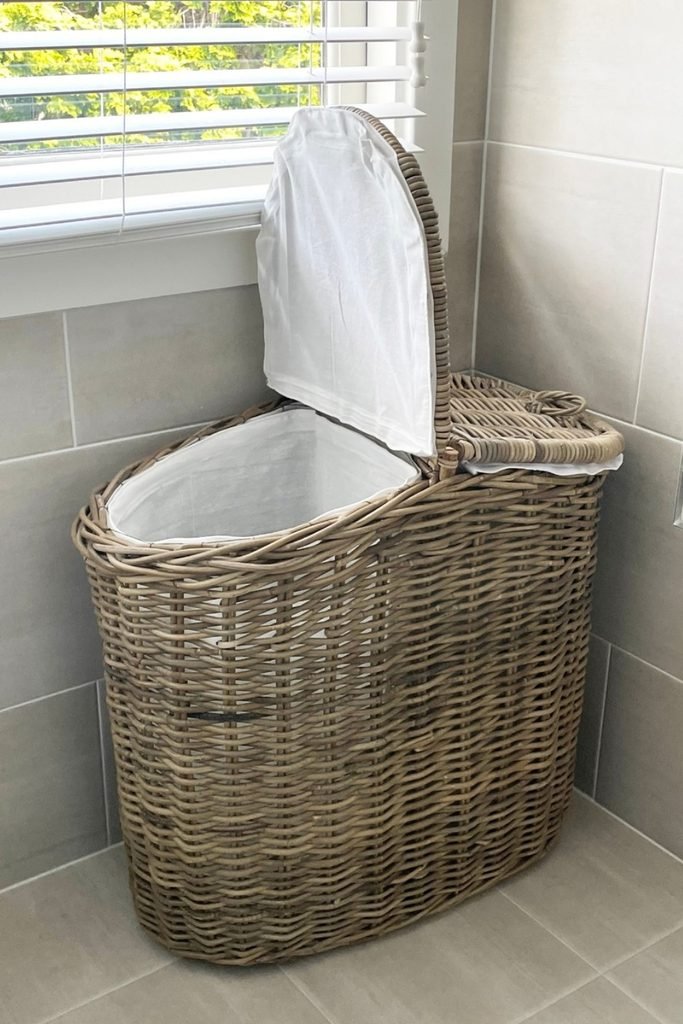
A divided wicker hamper earns its place in a bathroom when you want dirty clothes hidden without adding another plastic-looking container.
Use one side for towels and the other for clothing, then add washable liners so damp fabrics never sit against woven fibers.
Keep the hamper near a window or ventilated corner, because bathroom moisture can linger longer inside tightly packed natural materials.
Matching Baskets
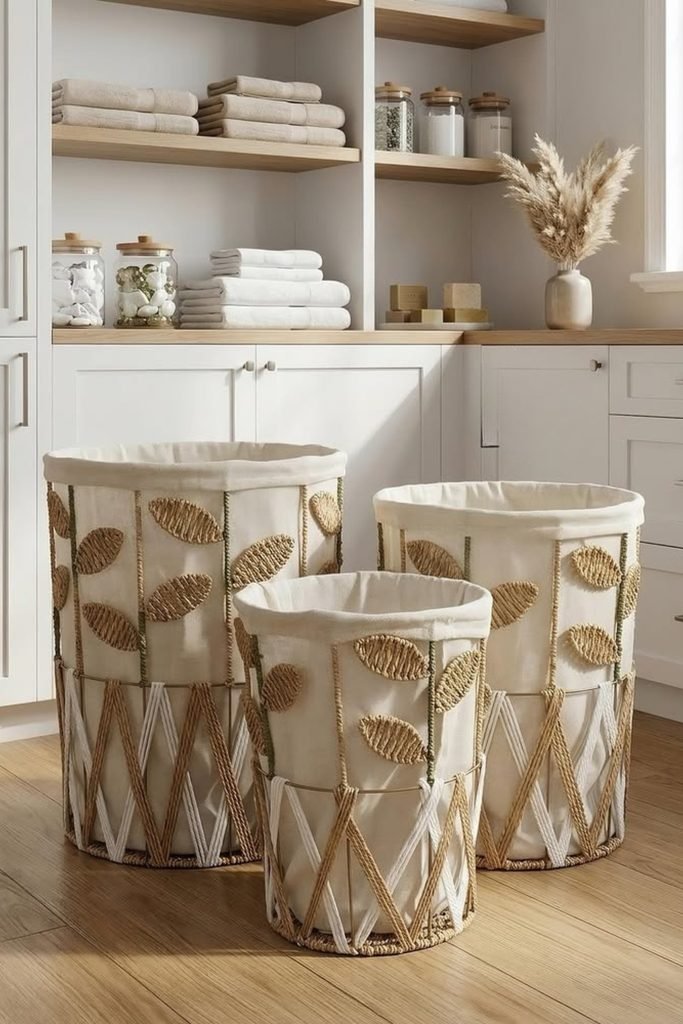
Different basket sizes can handle different jobs, which makes a grouped set useful when one oversized hamper would become too heavy.
Assign the taller baskets to clothing and linens, while the smaller one catches delicates, hand towels, or pieces needing special treatment.
Repeat one material or pattern across the set so open laundry storage feels intentional without forcing every basket to match exactly.
Patterned Hampers
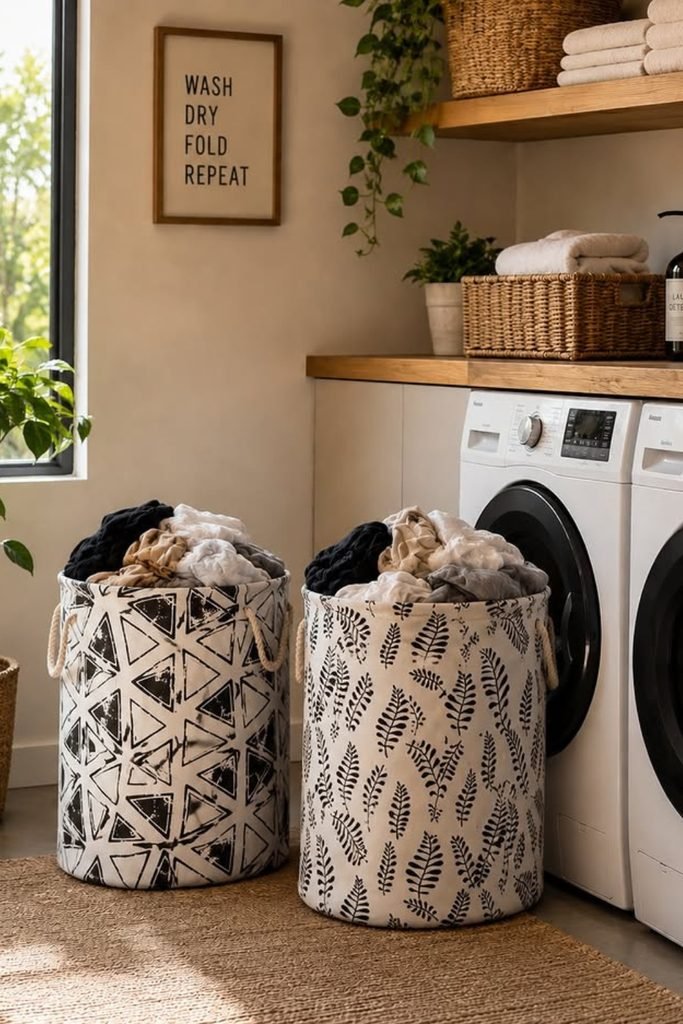
When your hamper has to stay visible, let the fabric do some decorating instead of trying to disguise the basket completely.
Choose sturdy washable canvas with handles, then dedicate one hamper to dark loads and another to lights or frequently washed basics.
This approach suits open laundry rooms especially well, because strong patterns add interest while separate containers keep sorting simple from day one.
Ventilated Sorting
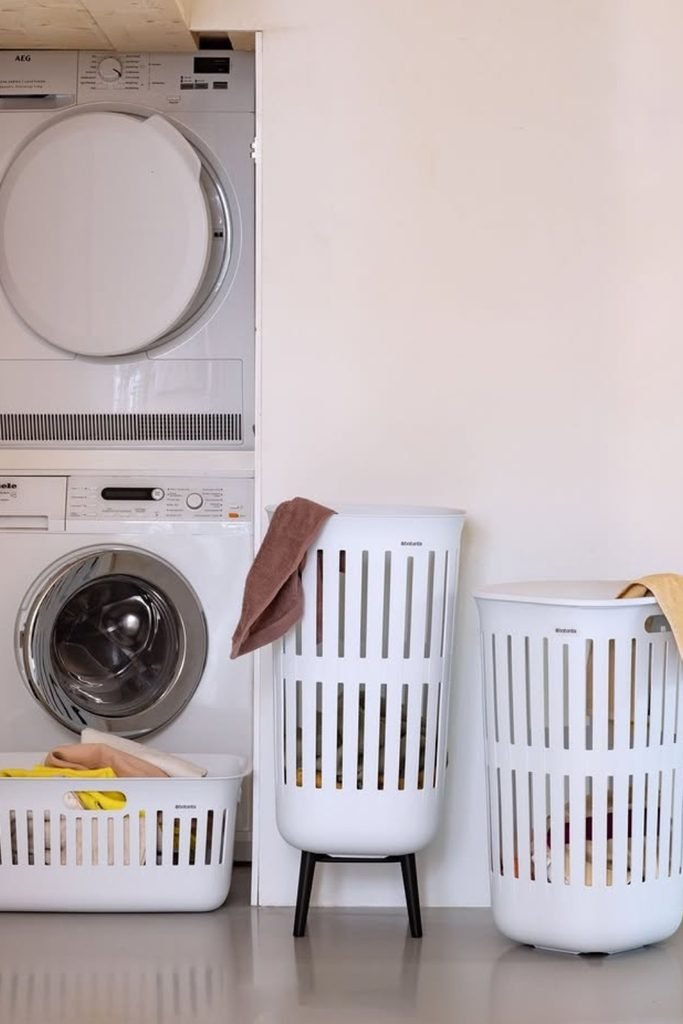
Mixing basket heights works well beside stacked machines, because each container can handle a different load without crowding one narrow laundry zone.
Use ventilated plastic for towels, everyday clothes, or damp pieces, then keep the shortest basket nearby for quick transfers between machines.
Choose open slats whenever airflow matters, especially in compact laundry rooms where tightly packed clothing can hold moisture longer than expected.
Triple Sorter
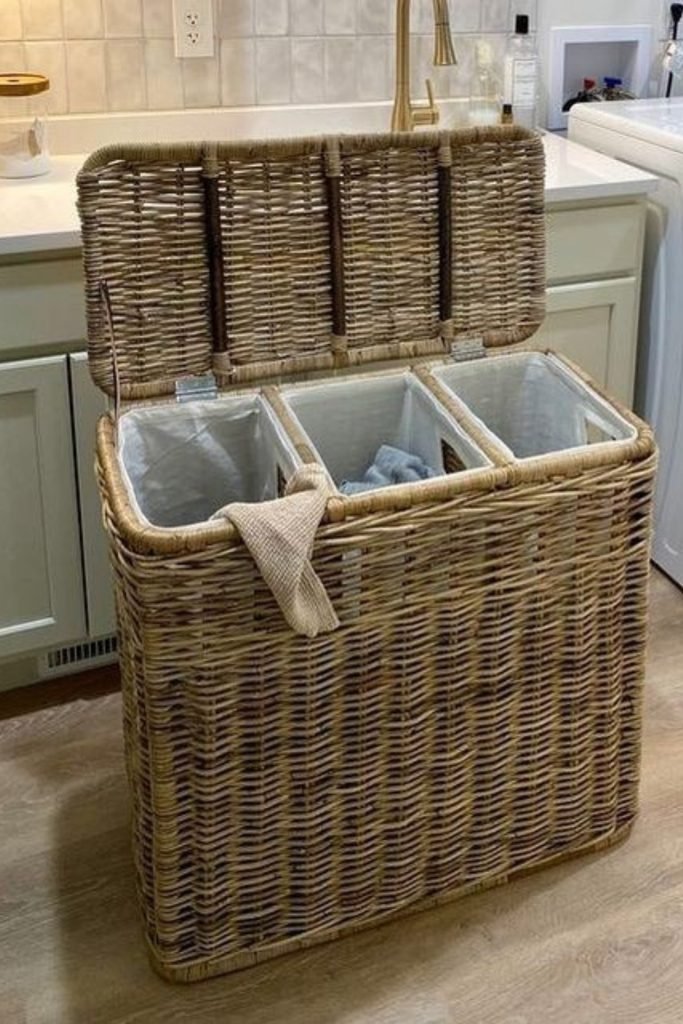
A three-section hamper saves you from sorting everything later, making it useful for households that regularly separate lights, darks, and towels.
Place washable liners inside each compartment so loads lift out easily, while the woven exterior keeps the sorter looking less utilitarian.
This setup works best near the washer, where everyone can drop clothes straight into the correct section before laundry day arrives.
Lidded Weave
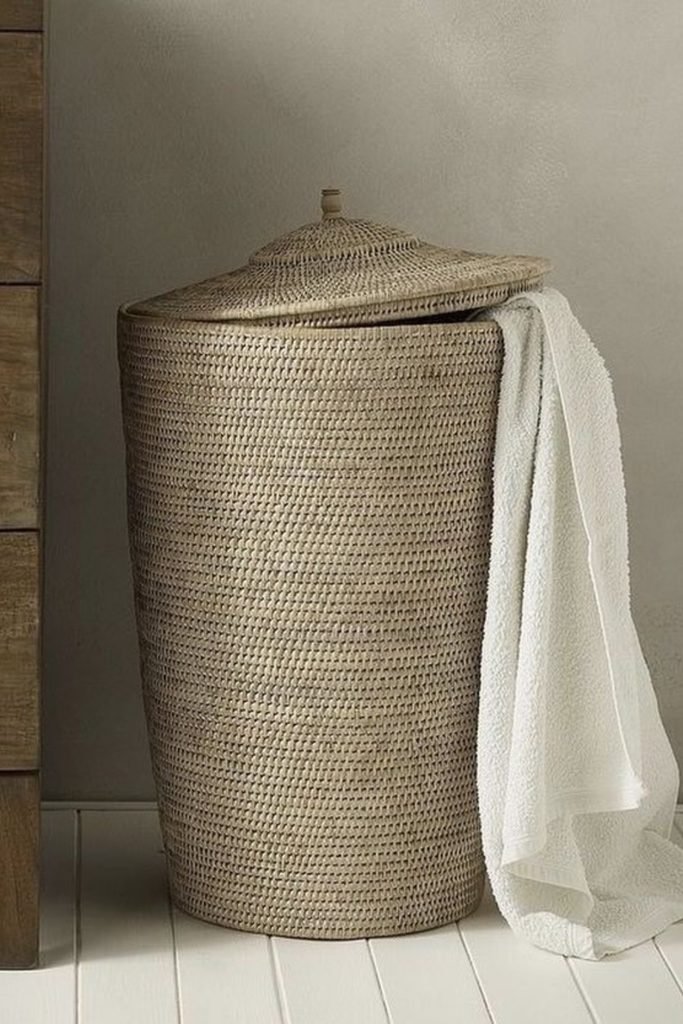
A tall lidded hamper makes sense when laundry must stay visible, because the closed top keeps everyday clutter out of sight.
Use this shape in a bathroom or bedroom corner where floor space is limited, then choose breathable weaving to improve airflow.
Add a removable liner if towels or delicate clothing go inside, since it protects fabric from rough fibers and simplifies cleaning.
Bamboo Hamper
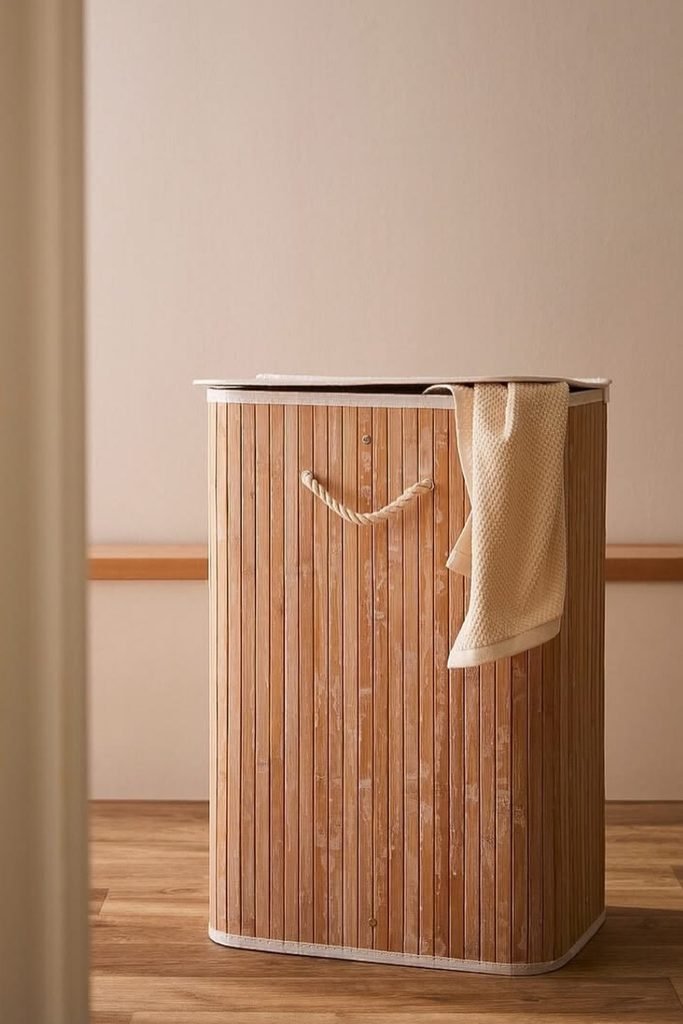
A slim bamboo hamper earns its keep in narrow spaces, especially when a round basket would waste valuable room beside furniture.
Keep the lid easy to lift and add strong side handles, because tall baskets become awkward once they are packed with clothes.
This style suits bedrooms, bathrooms, or laundry corners where you want practical storage that still feels warm and furniture-like at home.
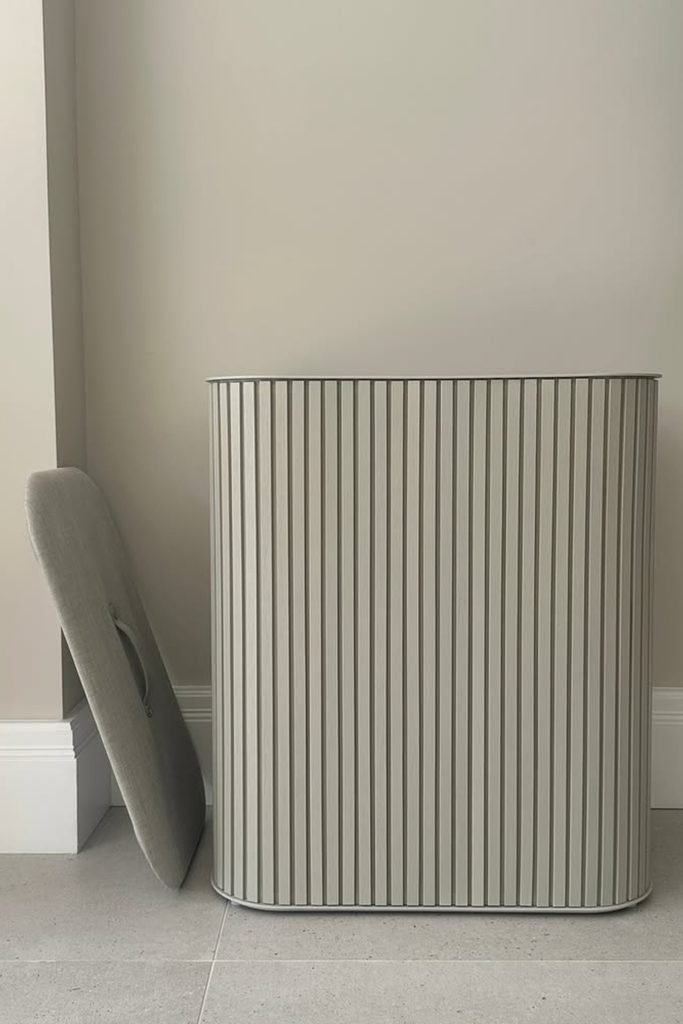
Ribbed Hamper
A flat-sided hamper fits neatly against a wall, making it useful when a round basket would waste valuable floor space.
Choose a removable lid if you want laundry hidden, then leave enough clearance beside the basket so opening stays easy.
This shape works especially well in narrow bedrooms, bathrooms, or laundry closets where every inch along the wall needs purpose.
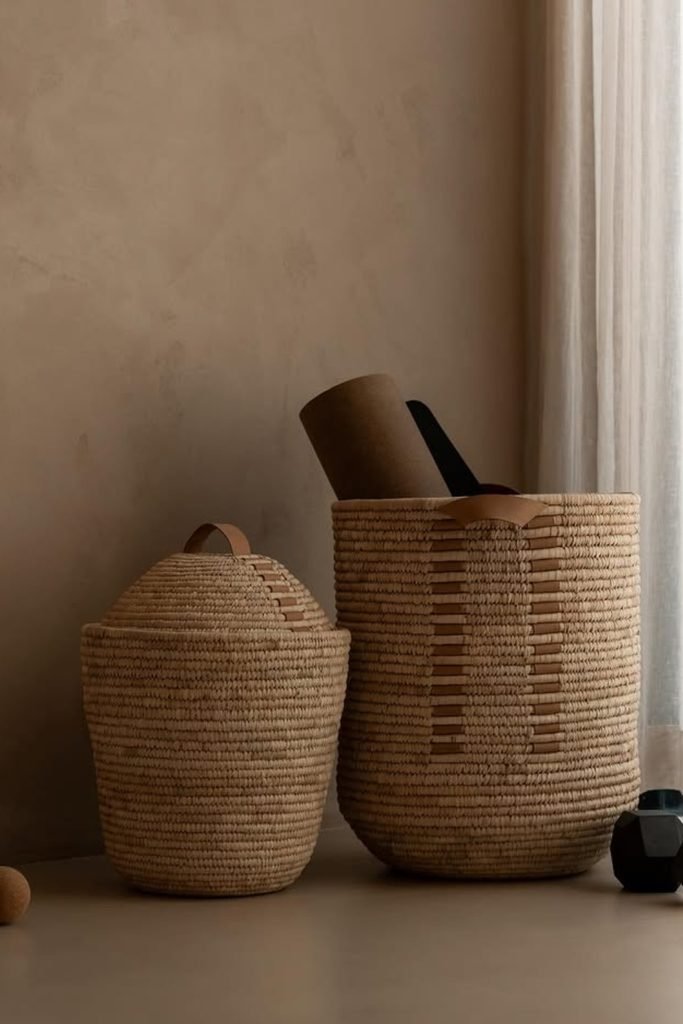
Basket Pair
Pairing two woven baskets gives you a simple way to separate everyday laundry from gym clothes, towels, or reusable workout gear.
Keep the lidded basket for clothes you want hidden, while the open one handles items that need quicker access during busy mornings.
Matching materials keep the pair visually calm, which helps this setup sit comfortably in a bedroom, dressing area, or home gym.
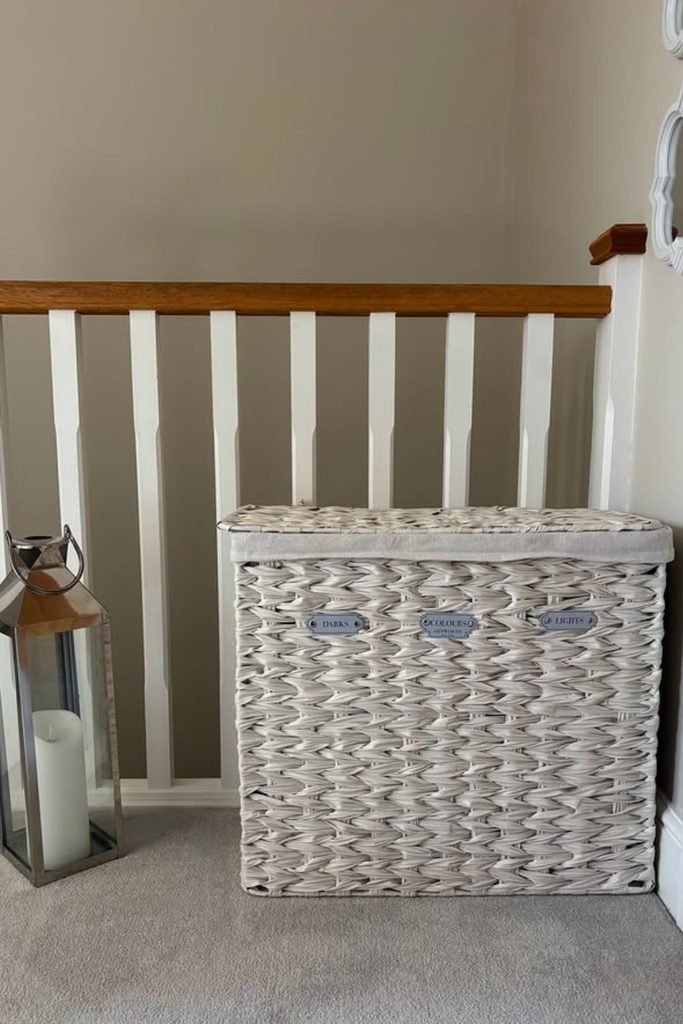
Landing Sorter
A three-section hamper is smart on a landing because everyone can sort clothes before carrying full loads downstairs together later.
Label each compartment by wash type, then keep the categories simple enough that family members can follow them without thinking.
Choose a wide, low-profile basket if the hallway is open, so it stores plenty without making the walkway feel cramped.
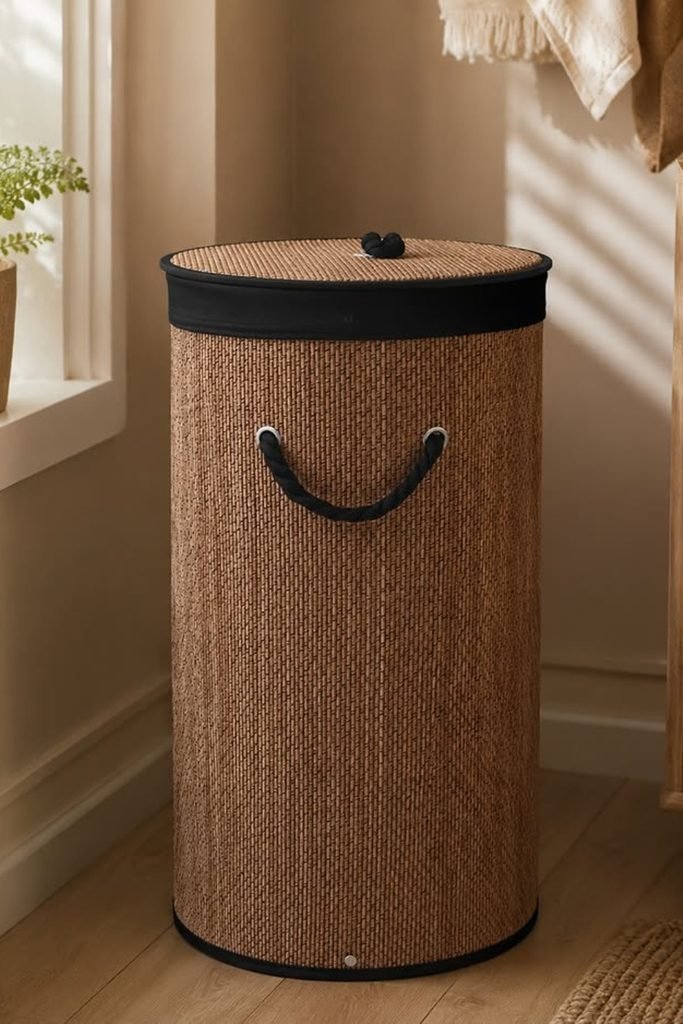
Tall Hamper
A tall cylindrical hamper uses vertical space well, which makes it a strong choice beside dressers where floor width is limited.
Pick a lid with an easy grip if the basket stays in a bedroom, because hidden laundry keeps the room calmer.
Dark edging and rope handles help a simple woven basket feel more finished, while still making full loads easier to carry.
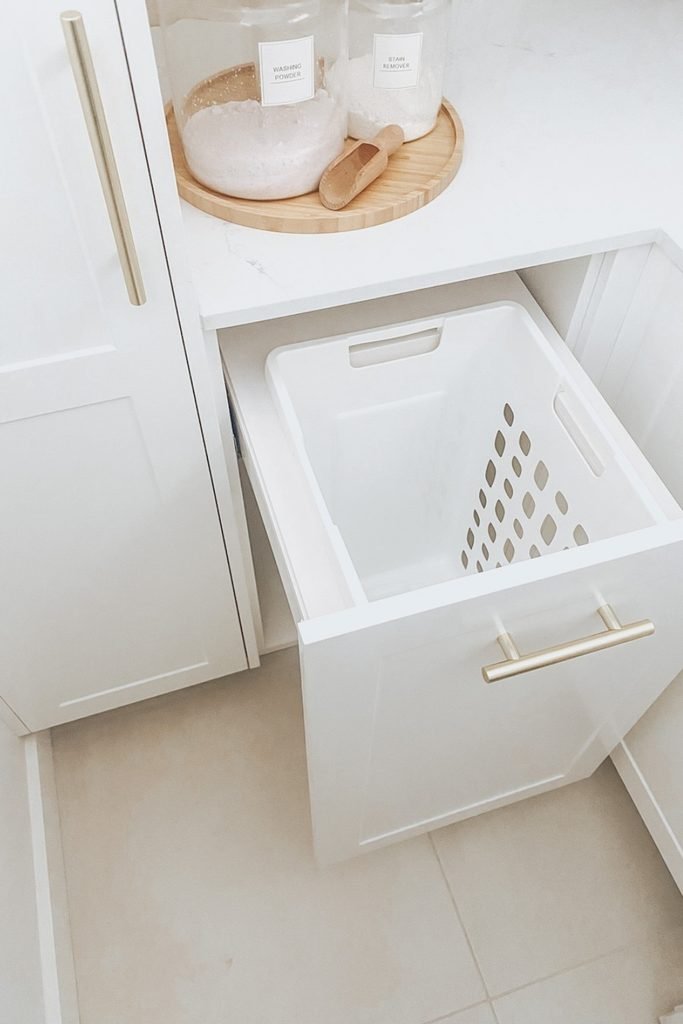
Pullout Basket
A pullout basket keeps dirty clothes completely hidden, making it ideal when you want a polished laundry room without visible hampers.
Choose a basket with side handles and ventilation holes, then size the drawer so it slides smoothly without catching inside.
This works especially well beside a folding counter, because you can collect clothes below while keeping supplies within easy reach.
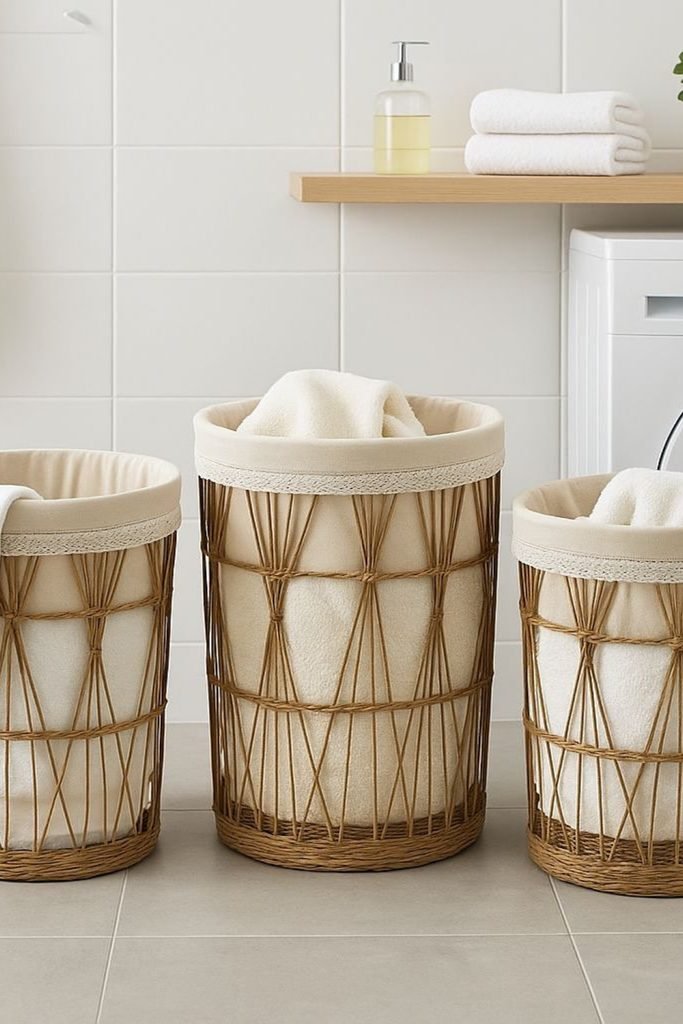
Basket Trio
A matching basket trio gives you flexible sorting without committing to built-ins, and each size can handle a different laundry category.
Use the largest for bulky towels or bedding, then reserve the smaller baskets for delicates, hand towels, or lighter loads.
Keep the liners removable and washable, so the woven frames stay clean while the baskets still feel coordinated on display.
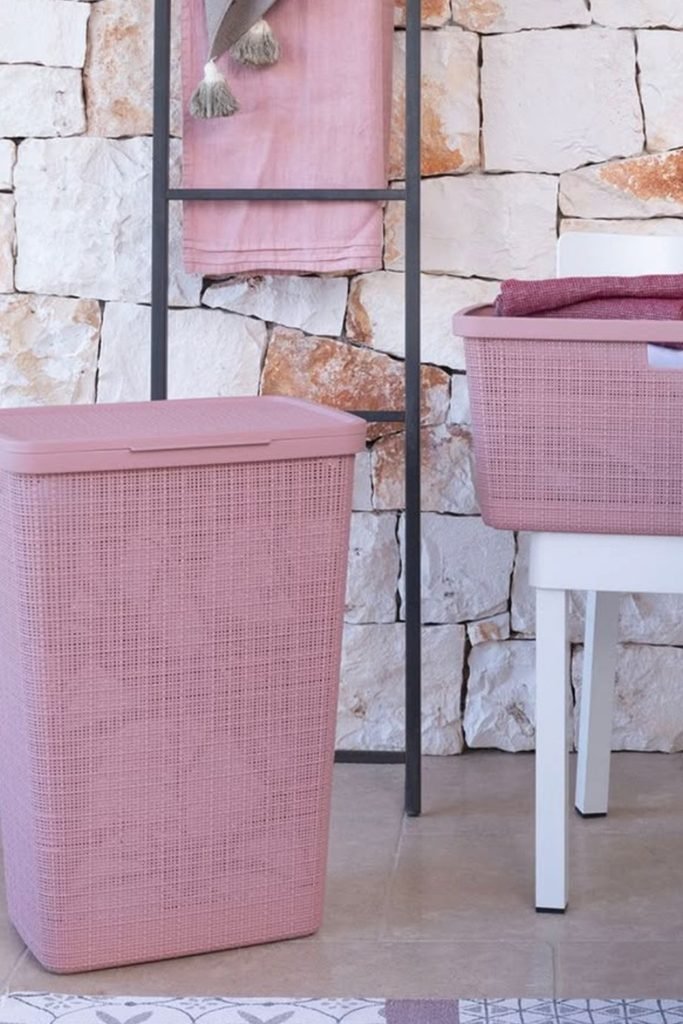
Pink Pair
Color can do more than decorate; using one shade across hampers creates a simple sorting system that still looks coordinated.
Keep the tall lidded basket for dirty clothes, while the open basket handles clean folding, towels, or items awaiting treatment.
This pairing suits bathrooms or laundry corners where you need separate jobs handled without adding several mismatched containers around the room.
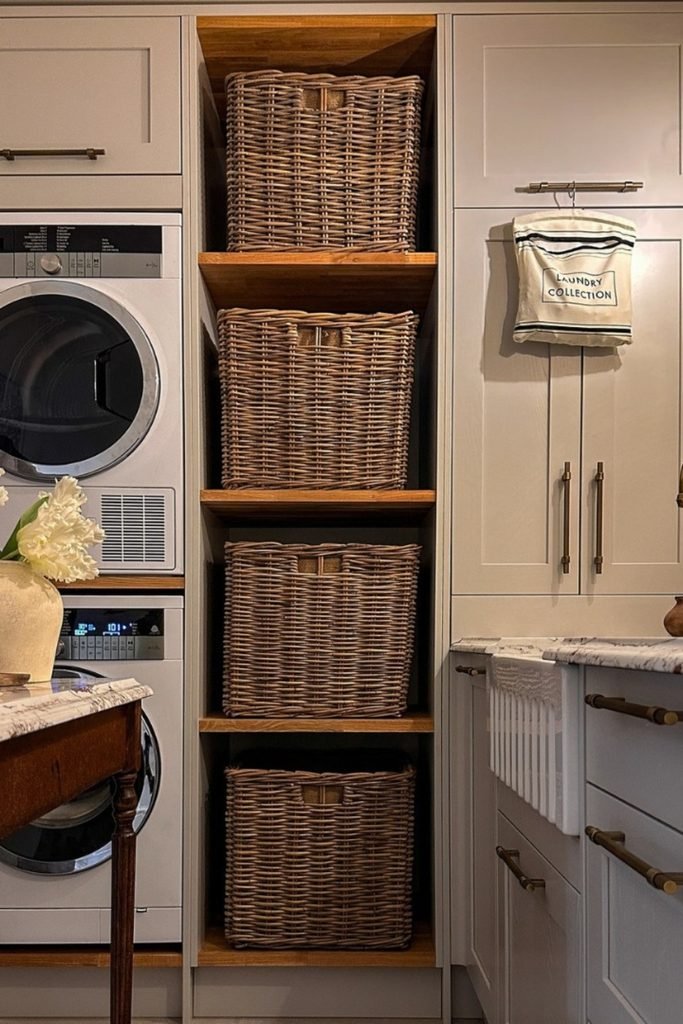
Basket Column
A vertical basket column makes excellent use of narrow cabinetry, especially when you need several sorting zones but little floor space.
Build open cubbies deep enough for each basket, then leave finger clearance above so full hampers slide out without scraping.
Place frequently used loads at waist height, while towels or occasional linens can sit higher or lower in the stack.
Striped Sorters
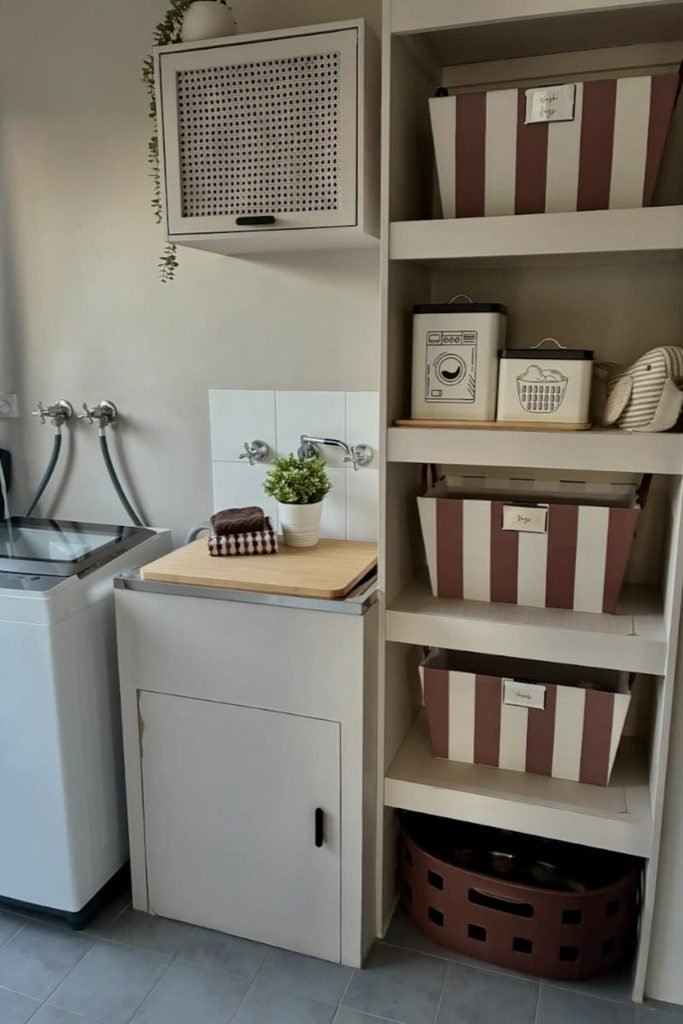
Open shelving becomes much more useful when each basket has a clear job, especially in laundry rooms with limited cabinet storage.
Use separate bins for pegs, cleaning cloths, delicates, or everyday loads, then label them so nobody has to guess later.
Keep frequently used baskets around waist height, while lighter supplies can sit higher where reaching them is less of a hassle.
Bedroom Basket
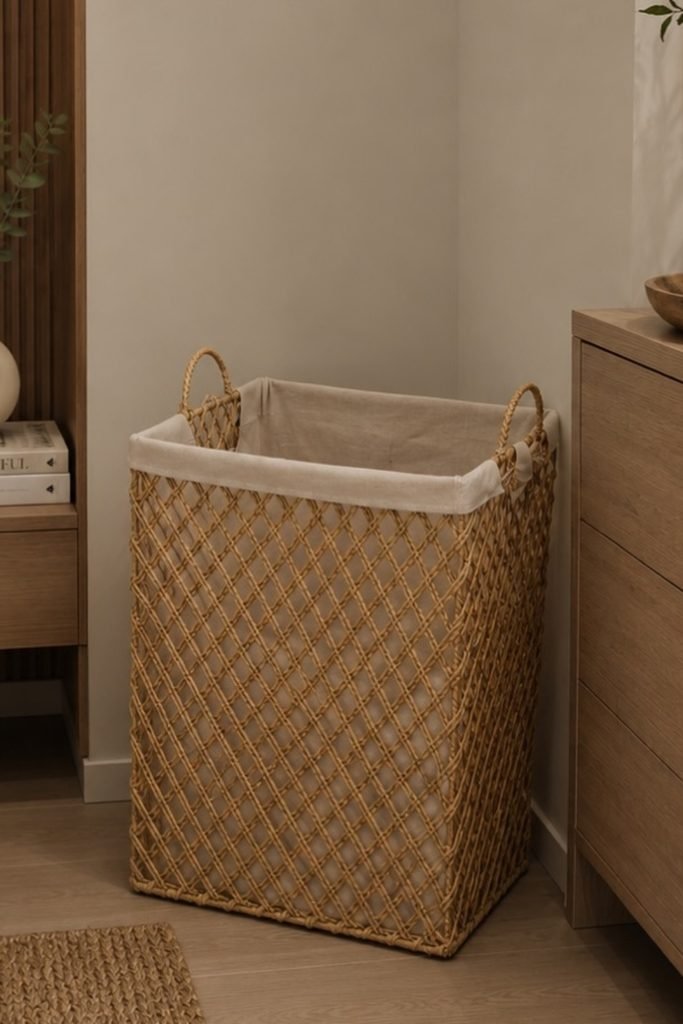
A soft-lined woven basket works beautifully beside a dresser when you want laundry storage that feels like part of the bedroom.
Choose an open weave with sturdy handles, then add a washable liner so clothes stay protected from rough natural fibers.
This setup suits bedrooms best when the basket stays visible, because the texture looks intentional instead of purely practical.
Shelf Baskets
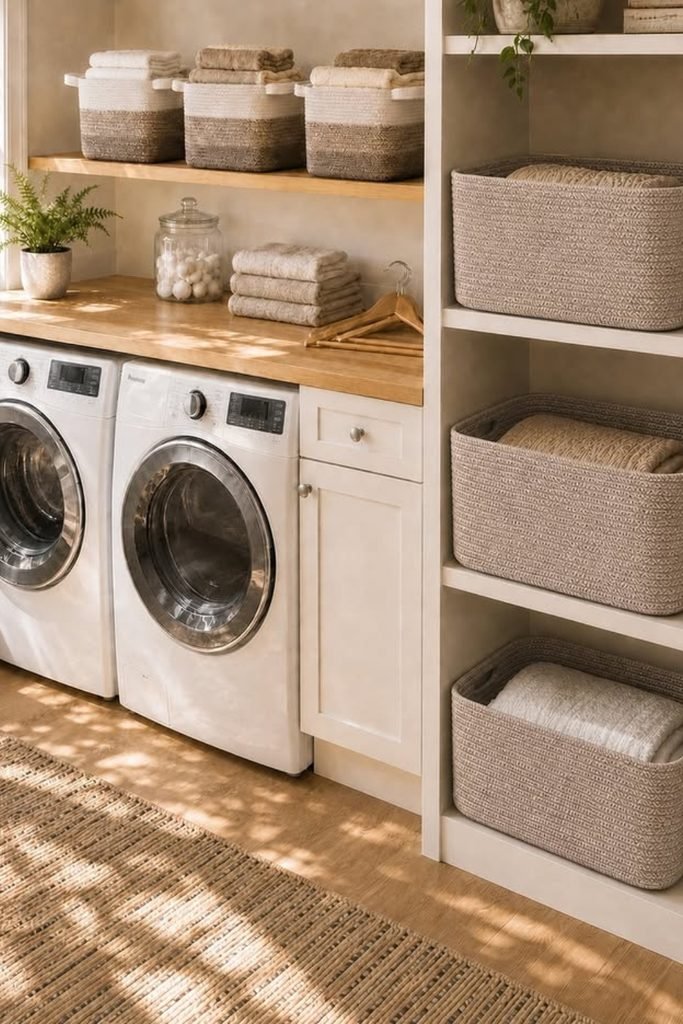
Deep shelf baskets are ideal when you want folded towels and linens easy to grab without stacking everything behind cabinet doors.
Choose rectangular baskets that fill most of each shelf, because wasted gaps make open storage look messier and hold less.
Reserve upper baskets for lighter items, and keep everyday towels lower so pulling a full basket never becomes awkward during busy mornings.
Tiltout Shelf
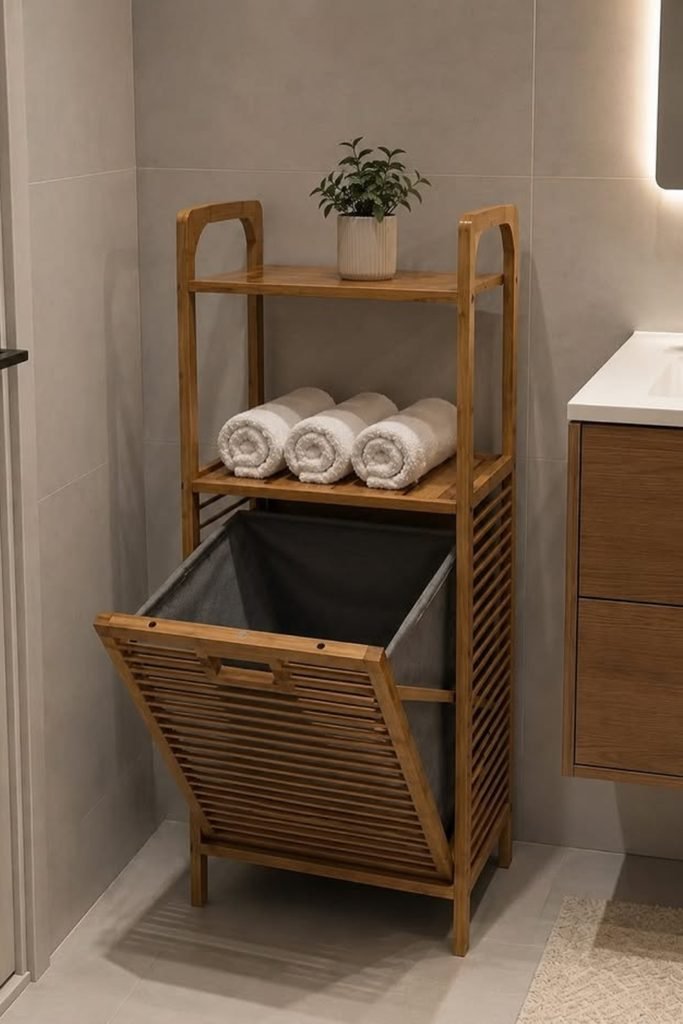
A tilt-out hamper is a smart bathroom choice when you need hidden laundry storage without giving up useful shelving above it.
Use the upper shelves for clean towels or daily toiletries, then keep the hamper section low enough for easy loading.
Choose slatted wood or another breathable front if damp towels go inside, because enclosed fabric can hold moisture much longer.
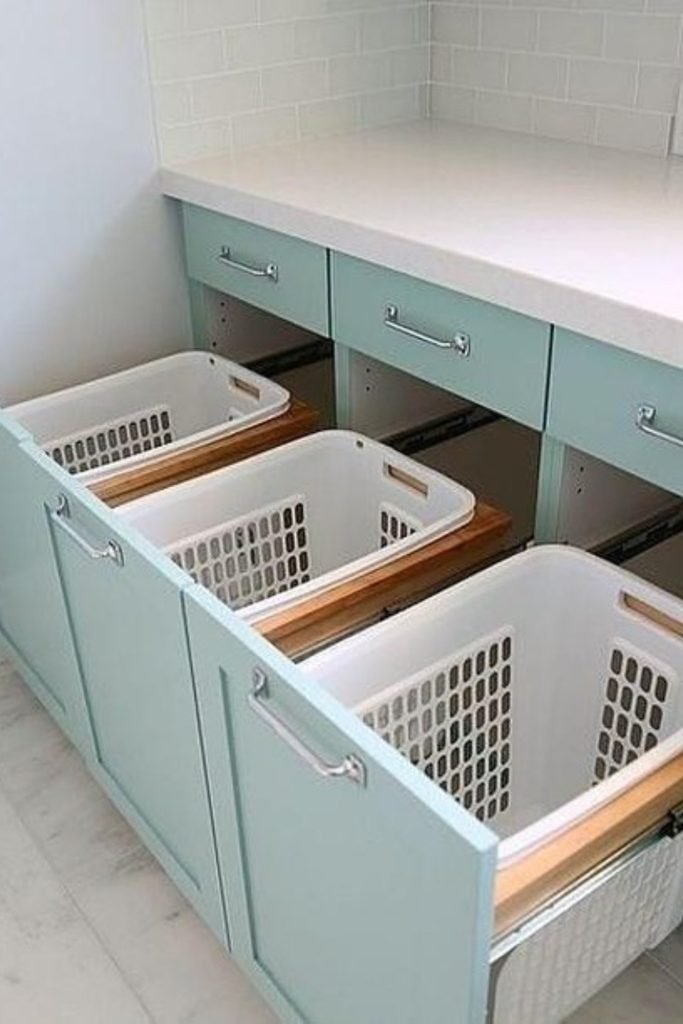
Triple Pullouts
Three pullout baskets make sorting almost automatic, especially when your laundry room has enough cabinet width for separate everyday loads.
Mount each basket on sturdy slides, then assign one to lights, one to darks, and another to towels or linens.
Keep the baskets removable so you can lift a full load straight to the washer instead of transferring clothes twice.
FAQs
Should laundry baskets have lids?
A lid works well when your basket stays in a bedroom or bathroom, because it keeps dirty clothes out of sight.
If you regularly add damp towels or gym clothes, choose a breathable woven or slatted design so moisture can escape.
For easy cleaning, look for a removable liner, since washing the liner is simpler than cleaning the whole hamper regularly.
How many laundry baskets do I need?
One basket may be enough if you wash everything together, but separate hampers make sorting easier for larger households with frequent loads.
Two or three baskets usually cover lights, darks, and towels without creating a complicated system nobody wants to follow consistently.
Choose the number based on your actual washing routine, then place each basket where that type of laundry naturally collects.
