
21 English Cottage Kitchen Ideas
An English cottage kitchen feels like it has grown with the home, with warm colors, useful furniture, natural materials, and pieces collected over time.
The look comes together through simple choices like painted wood, vintage-style storage, soft patterns, aged metals, and a few practical details with character.
In this article, you’ll find English cottage kitchen ideas that help you create a warm, collected, and beautifully lived-in space.
Let’s jump in!
What Colors Work Best In Cottage Kitchens?
Warm, muted colors work best because they give a cottage kitchen character without making the room feel too polished or overly modern.
If your kitchen is small or lacks natural light, choose cream, mushroom, soft beige, or pale blue to keep the space feeling open.
For a richer look, sage, olive, dusty blue, burgundy, or deep green can make painted cabinets feel more traditional and grounded.
Natural wood also helps balance stronger colors, especially when you use it on worktops, shelves, flooring, or a freestanding table.
The best palette usually mixes one main cabinet color with warm wood, aged brass, stone, and softer neutral walls so everything feels connected.
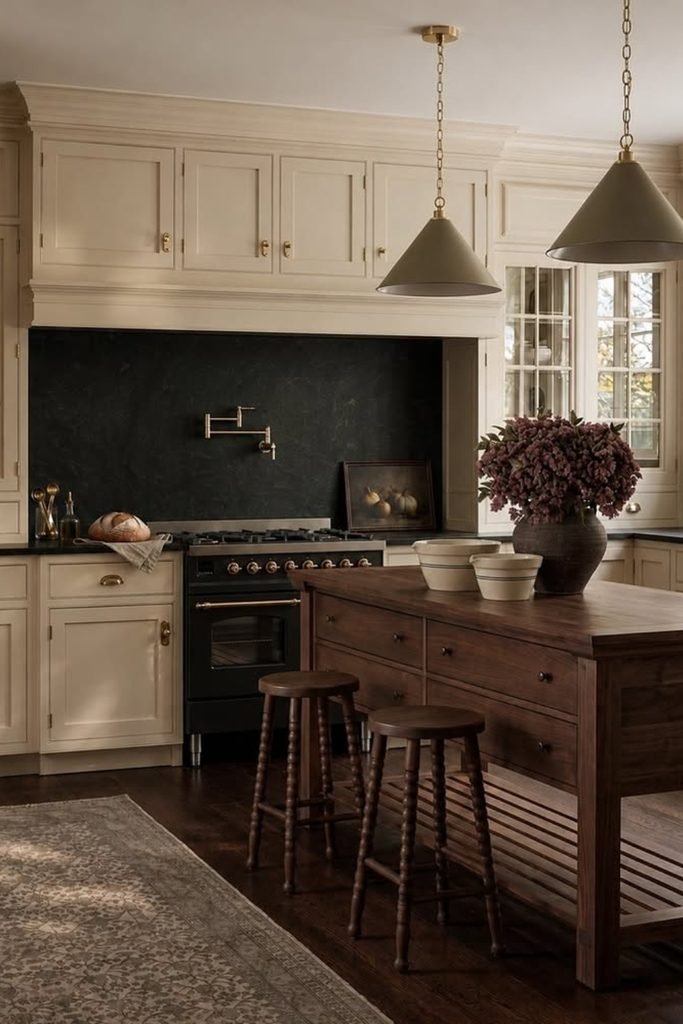
Walnut Worktable
A dark wood island gives a pale cottage kitchen the weight it needs, especially when cream cabinetry already keeps everything feeling light.
Choose a furniture-style island with drawers, open slats, or turned legs so the center feels collected instead of built-in and bulky.
Repeat the wood through stools or flooring, then use aged brass and a dark backsplash to connect the warmer tones naturally.
Cream Galley
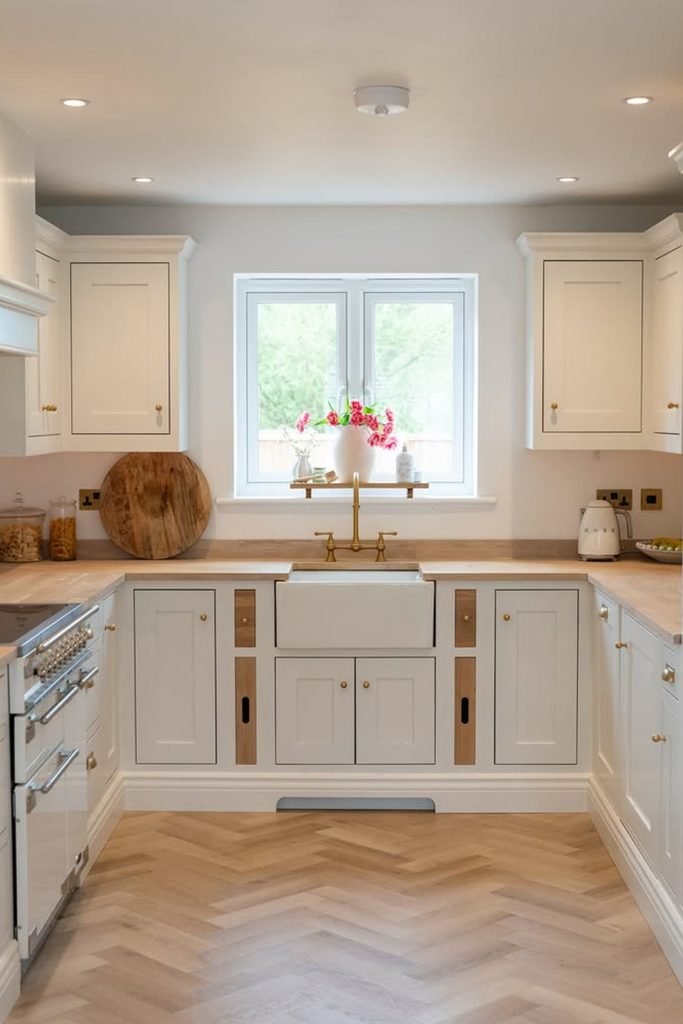
In a narrow kitchen, warm cream cabinets can keep both sides from closing in while still giving you a traditional cottage base.
Run wood worktops around the room and place a deep apron sink beneath the window to make the tight layout feel intentional.
A light herringbone floor adds movement without visual clutter, which works especially well when upper cabinets already provide plenty of storage.
Floral Sage
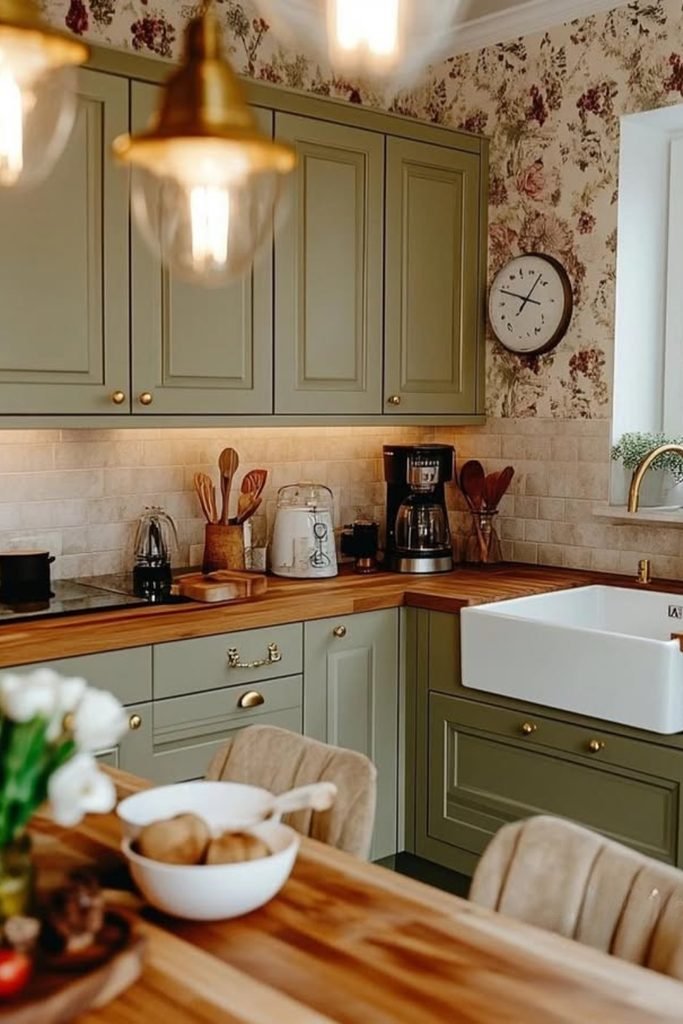
Floral wallpaper can bring cottage character into a hardworking kitchen, but keep the pattern above the backsplash so cleaning stays simple.
Pair it with muted green cabinetry and warm timber worktops, giving the pattern enough color around it without making everything compete.
A Belfast sink and aged brass tap finish the look, while plain tiles below the wallpaper stop the corner from becoming overly decorative.
Skirted Sink
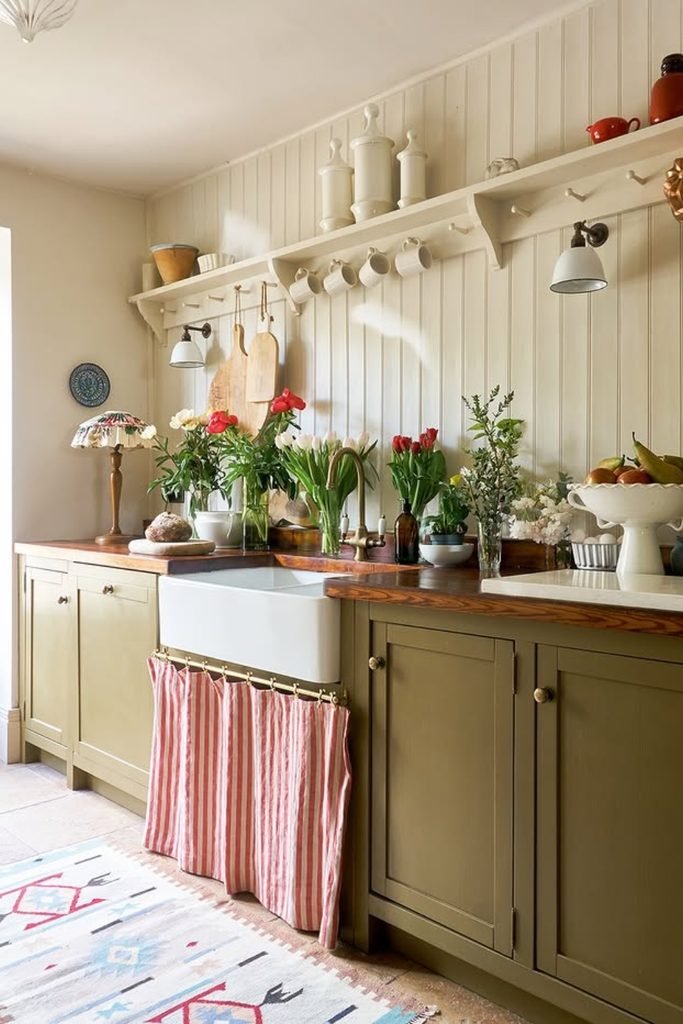
Sink skirts are an easy way to soften solid cabinetry, especially when your cottage kitchen needs pattern without covering an entire wall.
Use washable cotton or linen in stripes or checks, then mount it on a small rail so the fabric stays easy to remove.
Keep the surrounding shelves practical with mugs, jars, and everyday pieces, letting the fabric provide softness while the storage still earns its place.
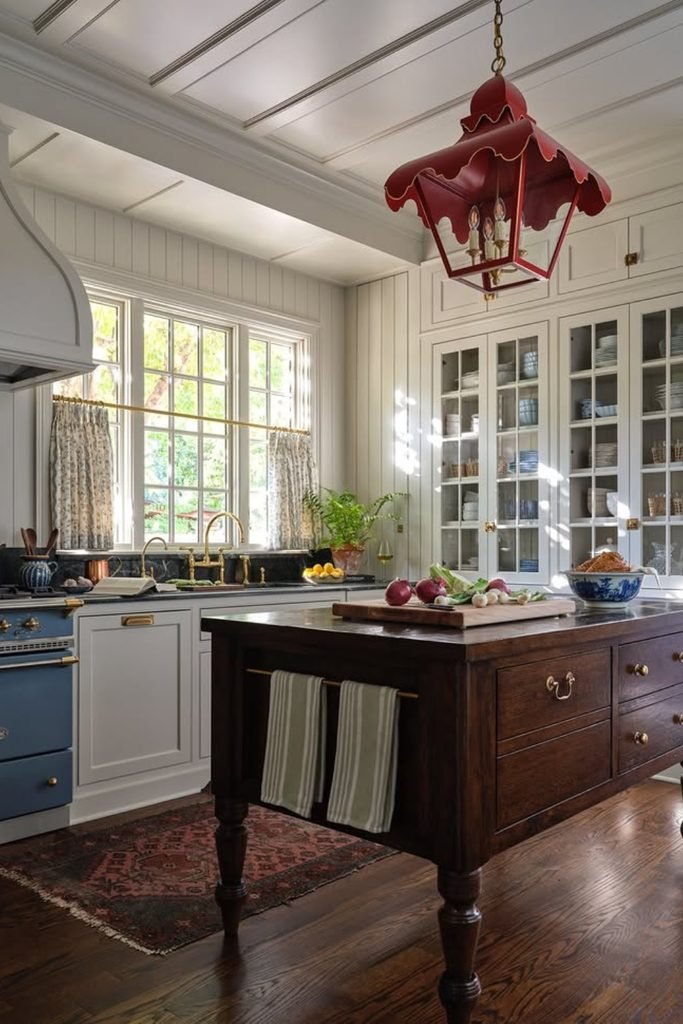
Collected Contrast
A freestanding dark wood island gives a pale cottage kitchen instant depth, especially when fitted cabinetry already keeps the room feeling crisp.
Bring in one bold pendant or colored range, then repeat warm brass details so the stronger accents feel intentional rather than random.
This approach suits larger kitchens where separate furniture pieces can break up long cabinet runs without making the room feel visually busy.
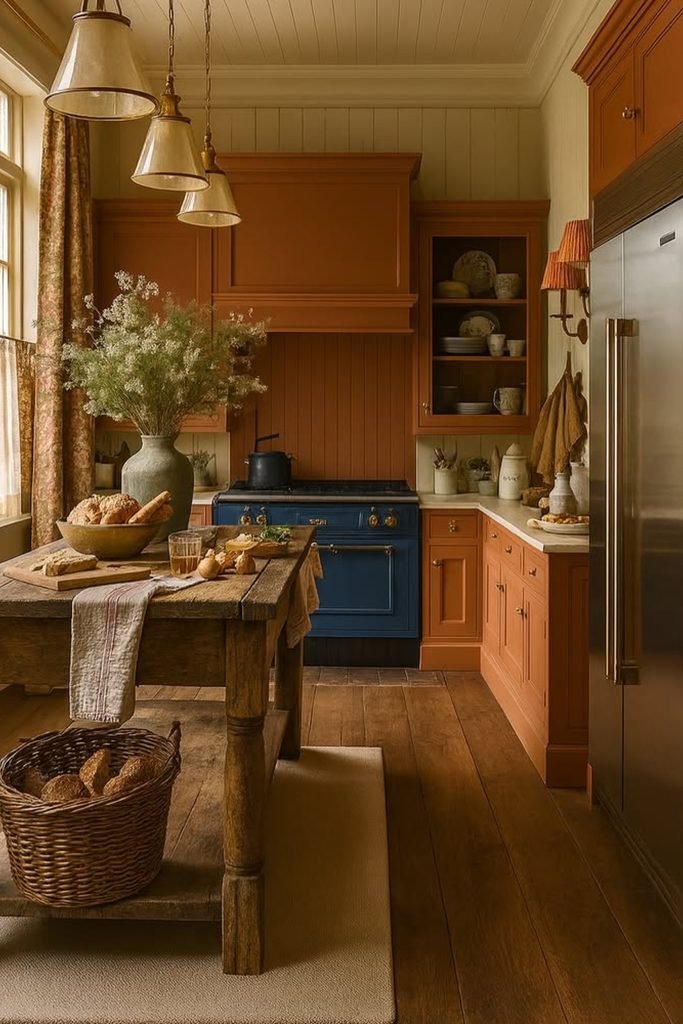
Burnt Umber
Deep rust cabinetry works beautifully when you want cottage warmth without defaulting to green, especially in rooms with generous natural light.
Keep the counters pale and let a blue range interrupt the warm palette, which stops the room from becoming too heavy.
A rough timber table and woven basket add age and texture, helping newer cabinetry feel more relaxed and naturally collected over time.
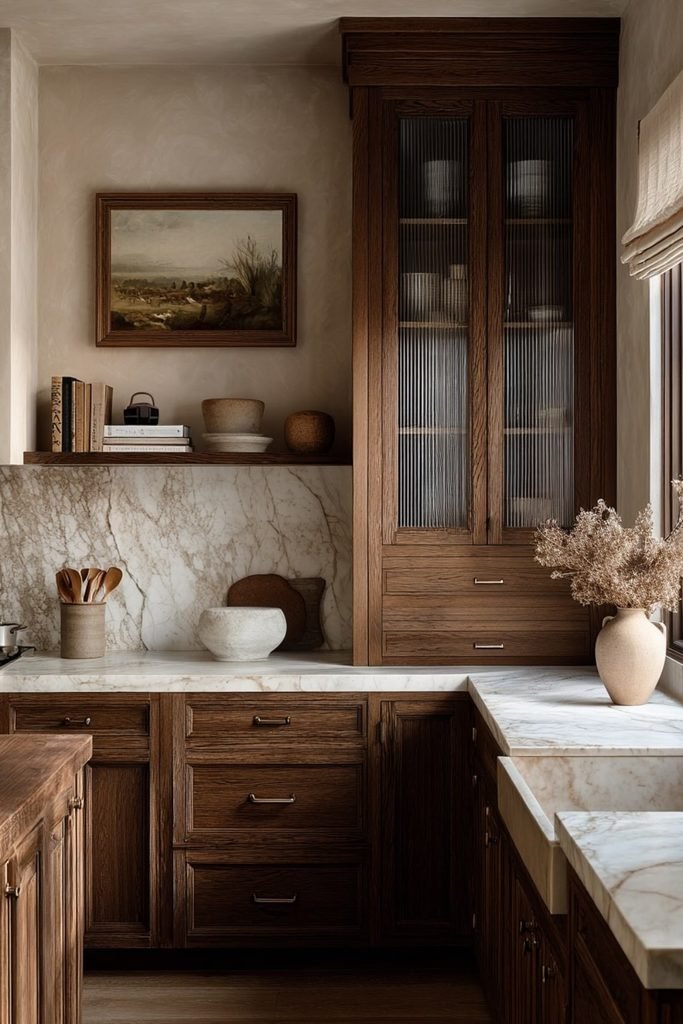
Moody Oak
Dark oak can still feel cottage-like when the grain stays visible and the cabinet shapes remain simple instead of overly formal.
Pair it with creamy marble and softly plastered walls so the darker wood feels grounded, not heavy, especially beside a bright window.
Use reeded glass, slim brass pulls, and a few earthy objects to keep storage practical while adding the layered character cottage rooms need.
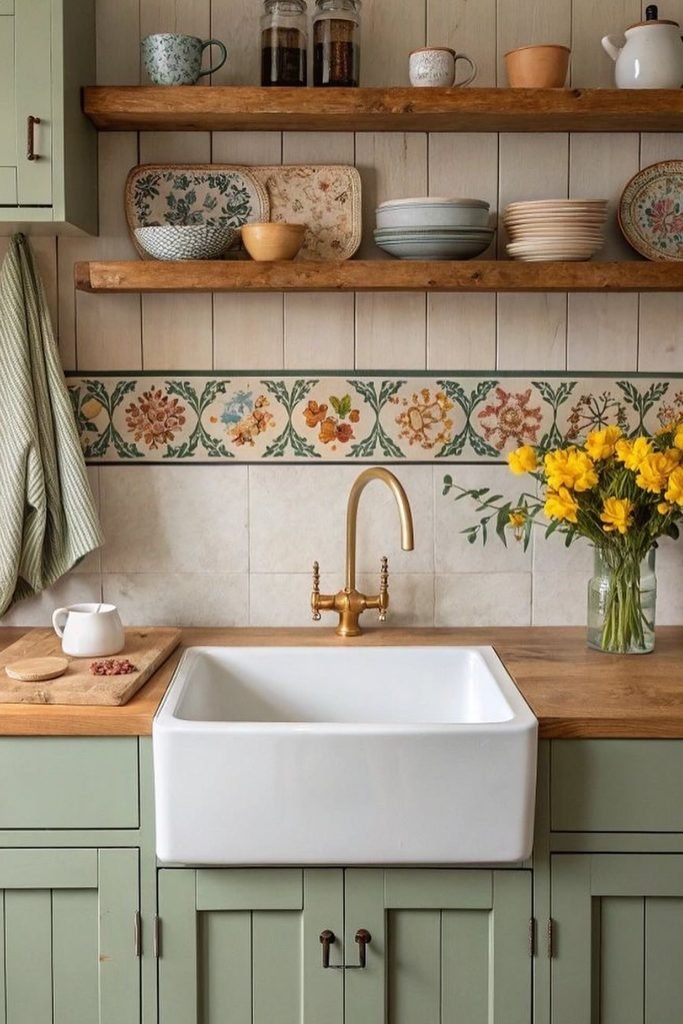
Floral Border
A narrow floral tile border is enough to make a plain backsplash feel personal without covering every surface in busy pattern.
Keep the cabinets in a soft sage and repeat warm wood on shelves and worktops, giving the pattern a calm background.
This works especially well around a Belfast sink, where open shelves can hold everyday crockery and make the whole wall feel useful.
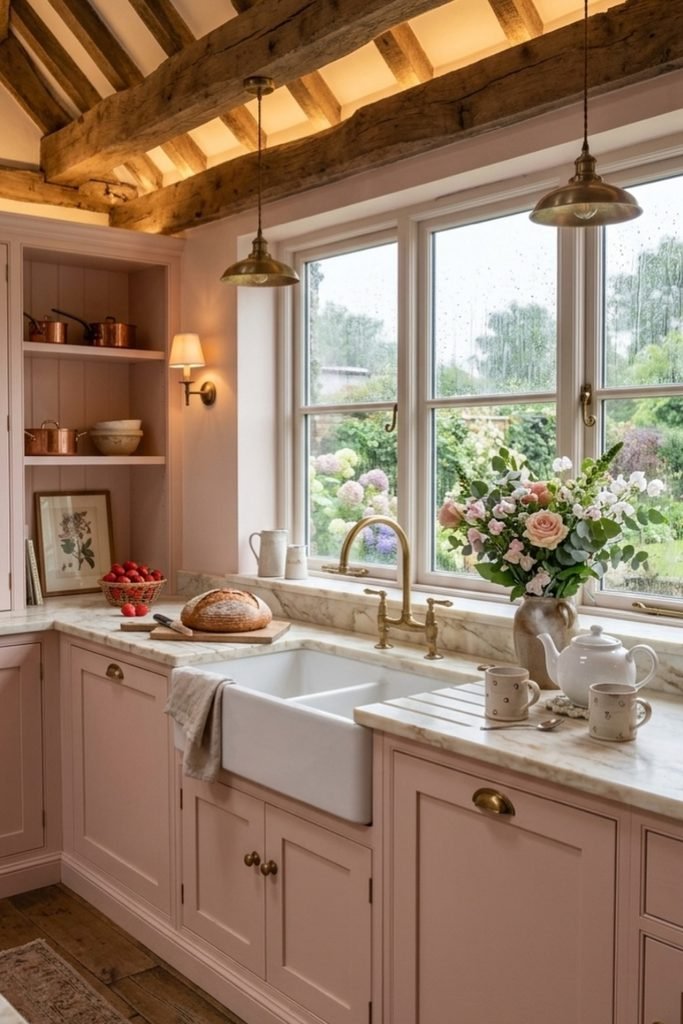
Blush Cabinetry
Soft blush cabinets bring warmth without feeling sugary, making them a smart choice for bright cottage kitchens with lots of natural light.
Pair the color with marble, aged brass, and warm timber so the palette feels grounded rather than overly delicate or decorative.
Keep nearby shelves simple and useful, then let exposed beams or darker flooring add enough contrast to stop everything feeling too soft.
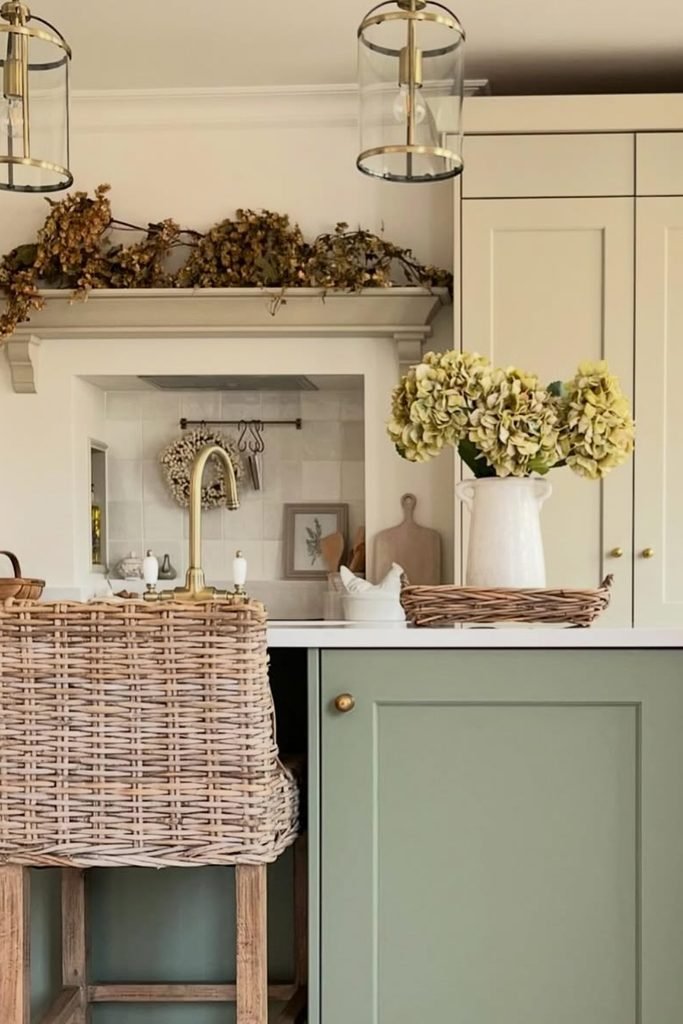
Green Island
A muted green island works well when you want color without committing every cabinet, especially in an open kitchen with tall storage.
Keep surrounding cabinetry creamy or off white, then use wicker seating and aged brass to make the contrast feel relaxed and natural.
This setup also helps separate the island visually, so it reads more like furniture and less like another block of fitted cabinetry.
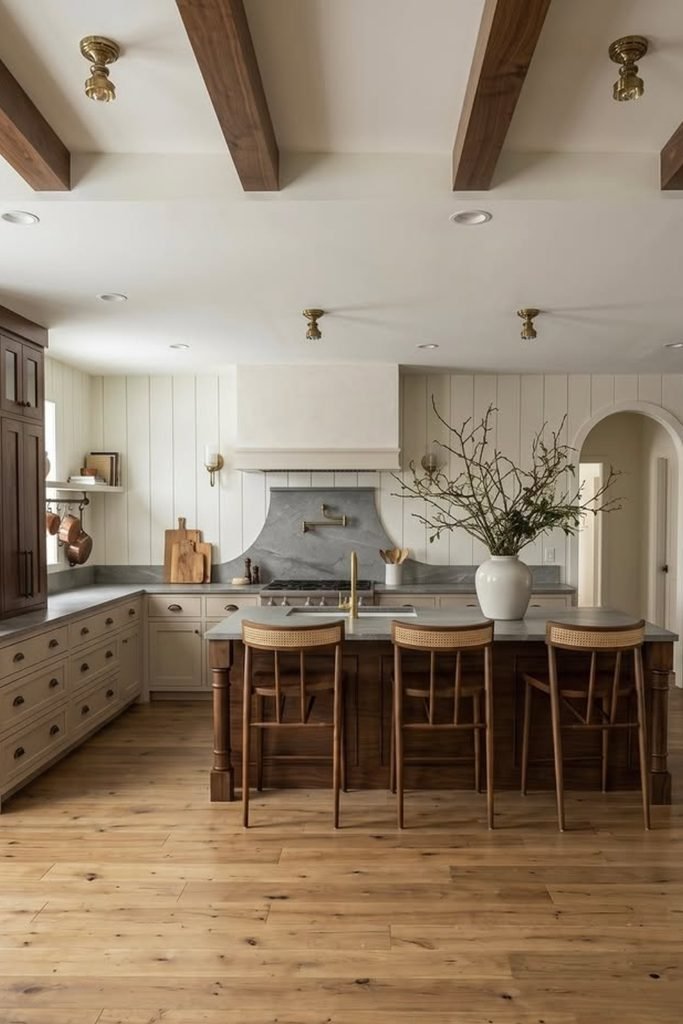
Timber Layers
Mixing painted cabinets with darker timber gives a larger cottage kitchen more depth, while keeping the room from feeling overly matched.
Use wood on the island, tall cupboards, or ceiling beams, then repeat softer neutral cabinetry around the cooking and prep areas.
A restrained palette works best here because the changing wood tones already create enough movement, texture, and visual interest across the room.
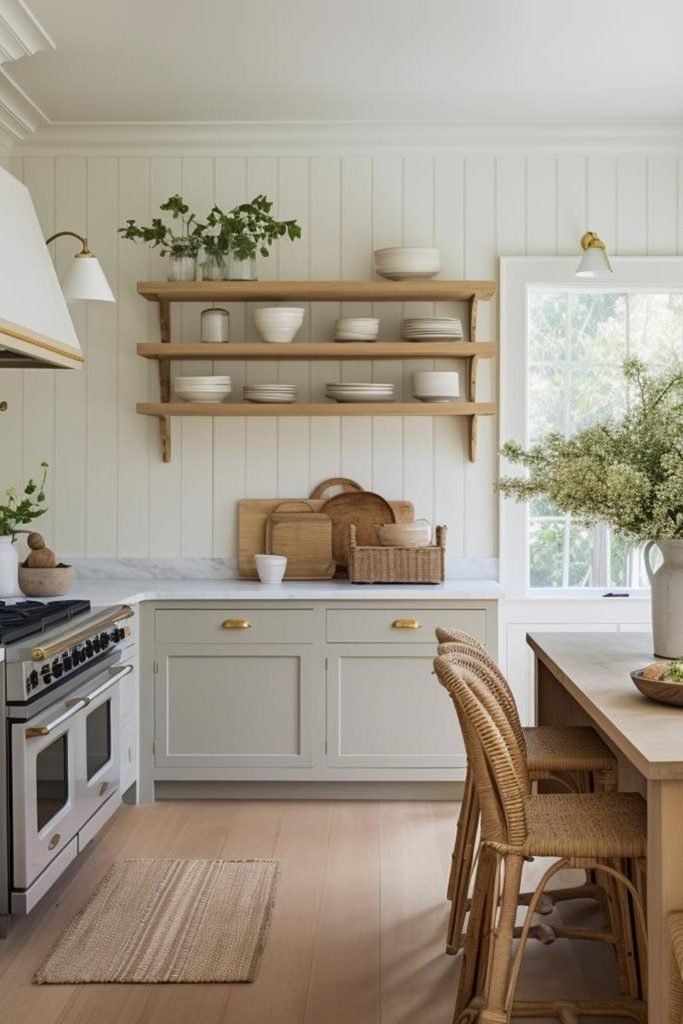
Useful Shelving
Open shelves are most useful when they hold everyday dishes, not decorative clutter, especially in a small kitchen with limited wall space.
Choose thick timber shelves against light paneling, then keep the display mostly neutral so the wall stays calm and easy to use.
A simple table and woven chairs can carry the same natural texture forward, helping the kitchen feel furnished rather than fully fitted.
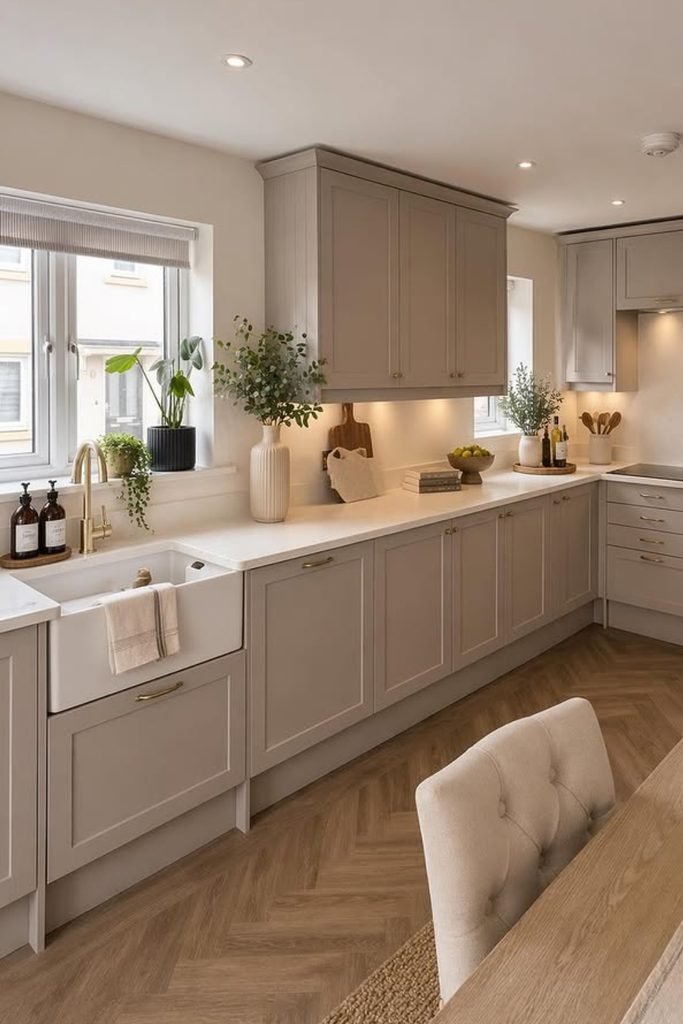
Taupe Warmth
Warm taupe cabinetry is a smart choice when you want cottage softness without using cream, especially in kitchens with limited natural light.
Pair it with pale counters, brass hardware, and a white apron sink so the room stays light, practical, and quietly traditional.
A herringbone wood floor adds movement under the neutral cabinets, giving a compact layout more warmth without introducing another strong color.
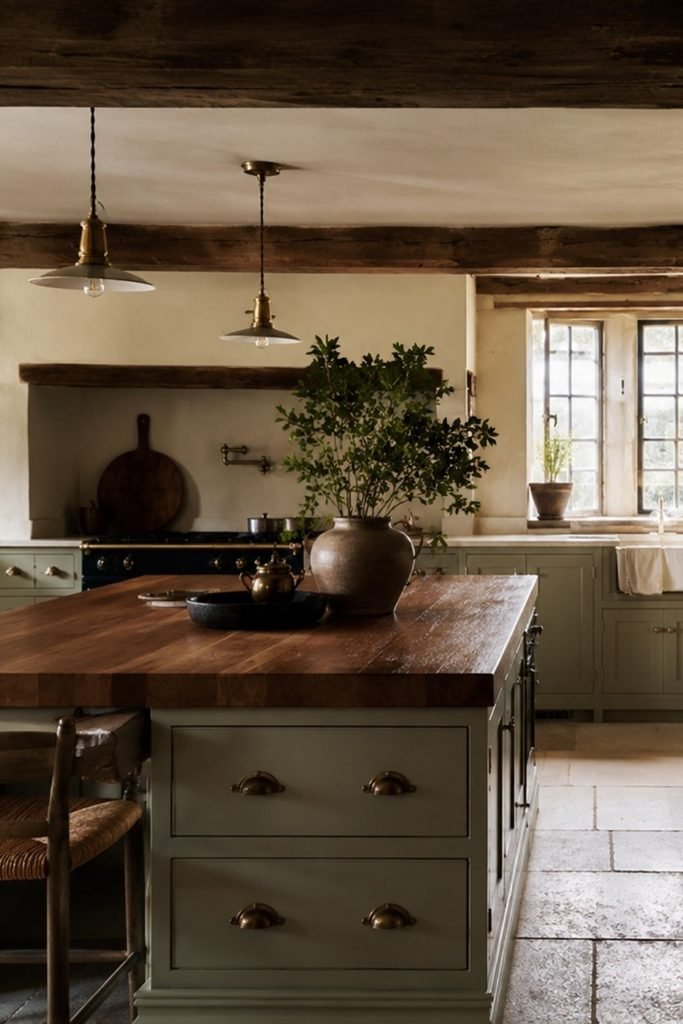
Aged Stone
If your kitchen already has beams or stone, keep the cabinetry muted so those original features stay visible instead of competing.
A soft olive or gray-green works beautifully with rough plaster, aged brass, and a thick timber worktop that can handle daily use.
Choose a generous central island only when circulation allows, because open floor space keeps a rustic kitchen feeling useful rather than cramped.
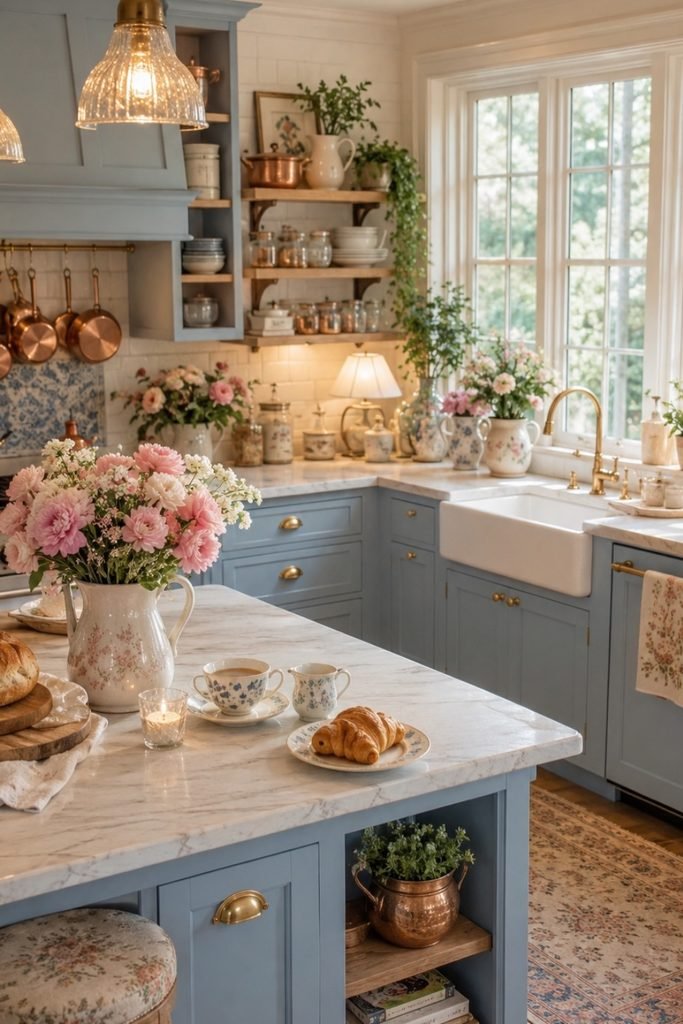
Powder Blue
Powder blue cabinets can make a cottage kitchen feel fresh rather than sugary, especially when you ground them with warm copper and brass.
Keep open shelves for jars, bowls, and cookware you actually reach for, then let floral textiles bring in softer pattern.
A marble island and white farmhouse sink brighten the palette, so the blue can stay noticeable without making the room feel cold.
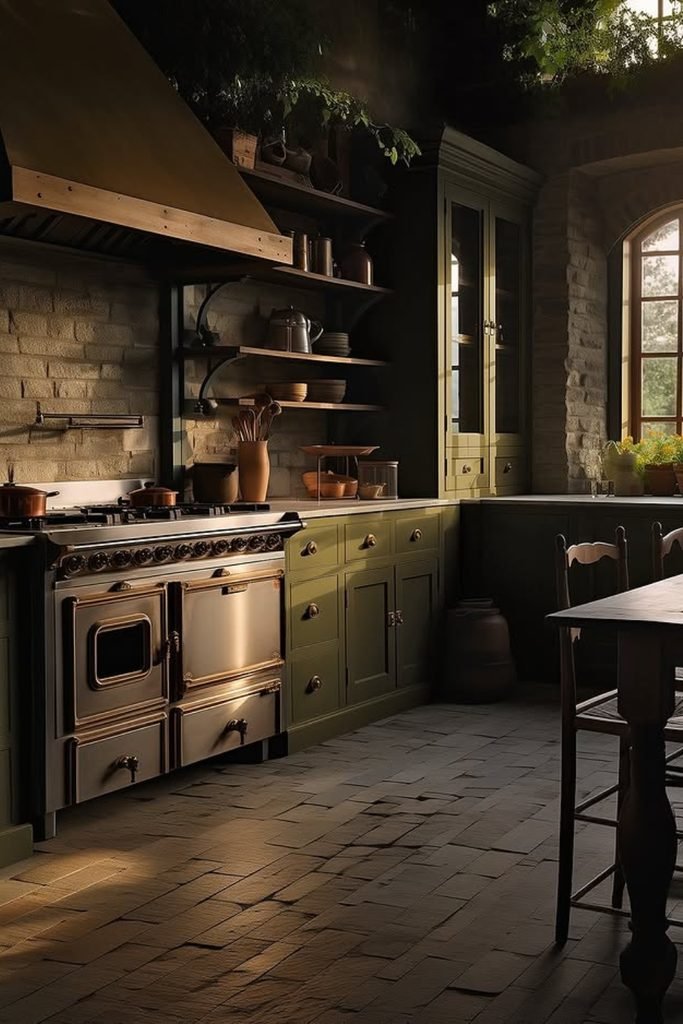
Deep Olive
Deep olive works best when you want an English cottage kitchen to feel moody, but natural light must still reach the room.
Use stone, dark timber, and aged metal around the cabinets, because those textured finishes stop the deeper color from looking flat.
Keep the furniture simple and practical, then let one substantial range become the focal point instead of adding lots of small decoration.
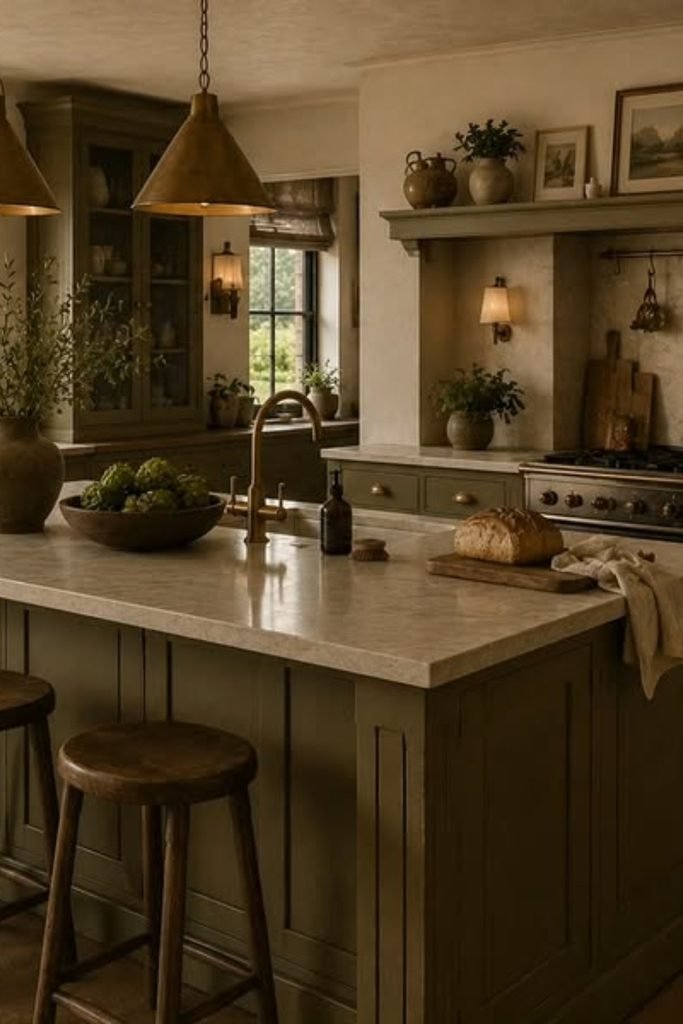
Hearth Alcove
A wide cooking alcove instantly gives an English cottage kitchen a stronger focal point, especially when the room has generous proportions.
Paint surrounding cabinetry in a muted olive, then keep the plastered hood simple so the range feels built into the architecture.
Wood stools, aged brass, and warm stone counters soften the darker palette while keeping the central island practical for everyday prep.
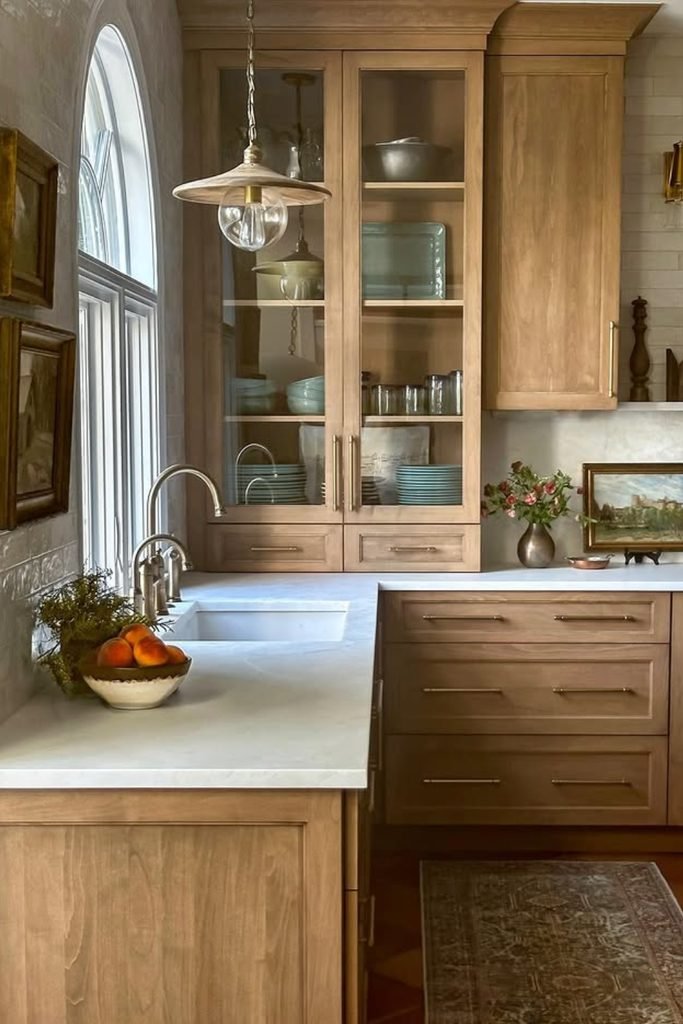
Glass Dresser
Tall glazed cabinetry works like a traditional dresser, giving everyday plates a proper home without hiding everything behind solid doors.
Use natural oak when you want warmth without paint, then keep nearby counters pale so the wood never feels too heavy.
An arched window, small artwork, and simple brass details make the cabinetry feel furnished rather than installed as one matched system.
Garden Extension
A bright kitchen extension can still feel cottage-like when traditional cabinetry sits beside a simple table instead of oversized modern furniture.
Keep the island soft gray or putty, then bring in timber and woven chairs to stop the larger room feeling too polished.
Large garden-facing windows do the decorating naturally, so you can keep walls, tiles, and accessories restrained without losing English country character.
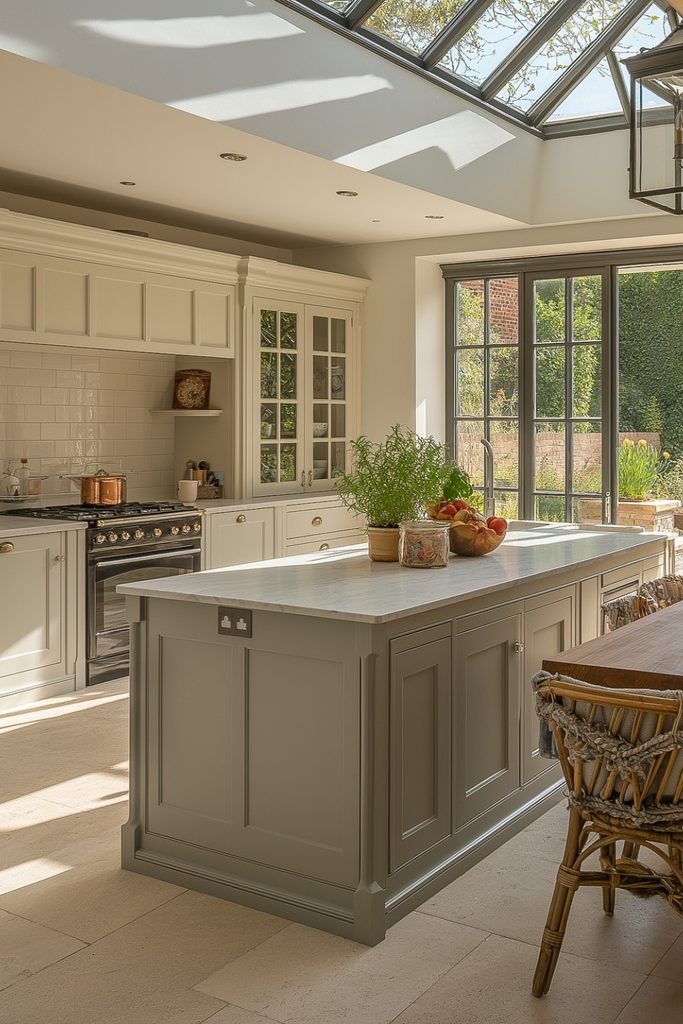
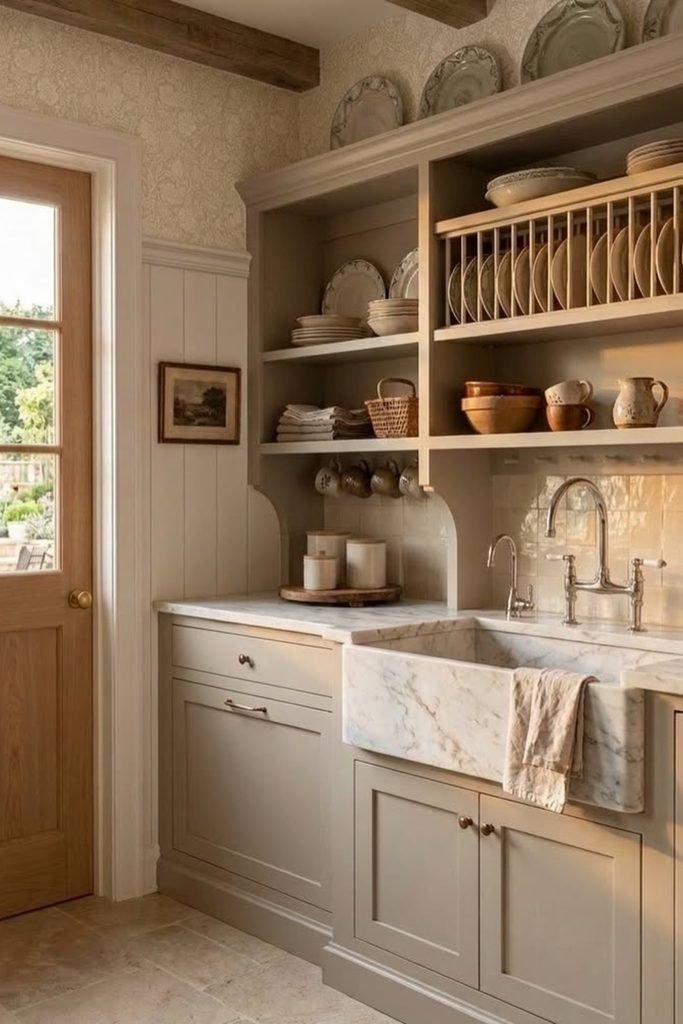
Plate Rack
A built-in plate rack turns useful storage into decoration, which is exactly what works so well in an English cottage kitchen.
Place it above the sink or prep counter, where plates stay easy to reach and the display still serves a daily purpose.
Muted taupe cabinetry, marble, and warm wood keep the open storage calm, while a few mismatched ceramics add collected character naturally.
Gathering Kitchen
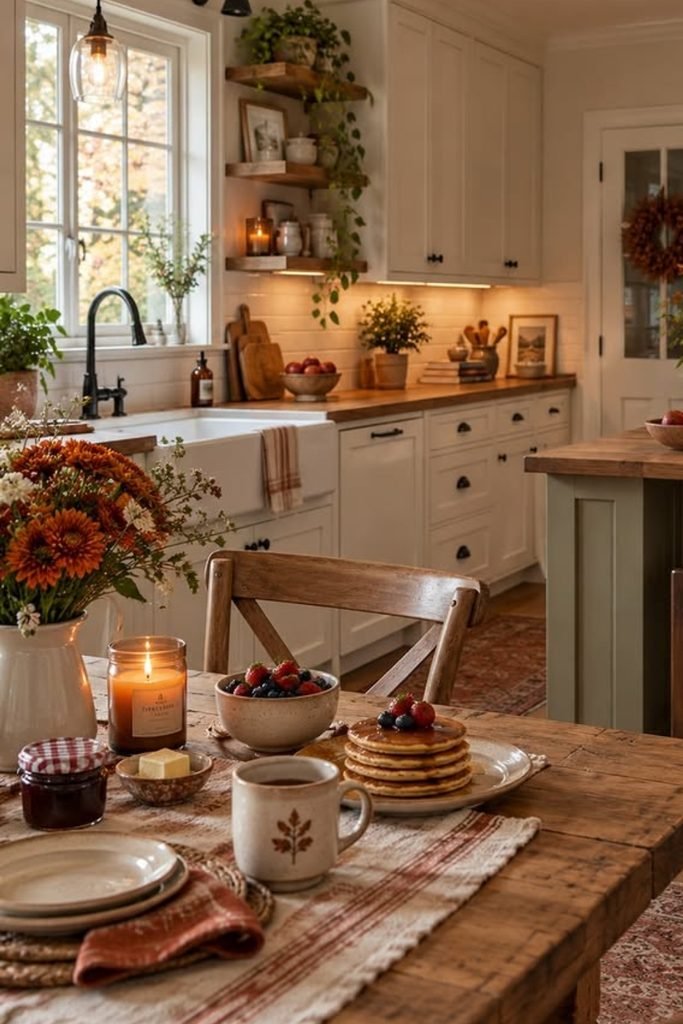
A farmhouse table inside the kitchen makes the room feel lived in, especially when you want cooking and casual meals together.
Keep cabinets warm cream, then use a muted green island and wood worktops to add contrast without breaking the relaxed palette.
Open shelves, black pendants, woven stools, and a patterned runner finish the look while keeping everyday pieces easy to reach.
FAQs
Can a modern kitchen look English cottage?
Yes, you can create the look in a modern kitchen by focusing on warm colors, natural materials, and furniture-style details.
Painted cabinets, aged brass, open shelves, and a wooden table can soften sleek finishes without making the room feel artificially old.
Keep your appliances practical, then hide or integrate the most modern-looking pieces so the cottage character stays clear and believable.
How do you keep a cottage kitchen from looking cluttered?
Use open storage only for attractive everyday pieces, and keep packaging, backup supplies, and bulky appliances behind closed cabinet doors.
Repeating a few colors and materials across shelves, hardware, textiles, and furniture also helps different pieces feel connected instead of random.
Leave some surfaces empty, because visual breathing room makes collected objects look intentional and gives the kitchen a calmer, more usable feel.
