
20 Art Deco Kitchen Ideas
Love the Art Deco look but worry your kitchen could end up feeling too dark, too busy, or more themed than stylish?
The best Art Deco kitchens use bold details with enough balance around them, so every color, curve, and finish has space to stand out.
In this article, you’ll learn how to create an Art Deco kitchen that feels polished, practical, and modern without overdoing the drama.
Let’s jump in!
What is Art Deco Famous For?
Art Deco is famous for bold geometry, clean symmetry, rich materials, and decorative details that make a space feel polished without looking traditional.
In a kitchen, you can bring that look in through fluted cabinets, curved islands, patterned tiles, brass hardware, marble, glass, or strong color contrasts.
You do not need to use every Art Deco feature at once, because one strong element can already set the direction for the whole room.
If your backsplash has a busy pattern, keep the cabinets simpler, or use dramatic cabinetry with a calmer floor and countertop.
The style works best when bold details feel planned, balanced, and practical enough for everyday cooking and storage.
Gilded Drama
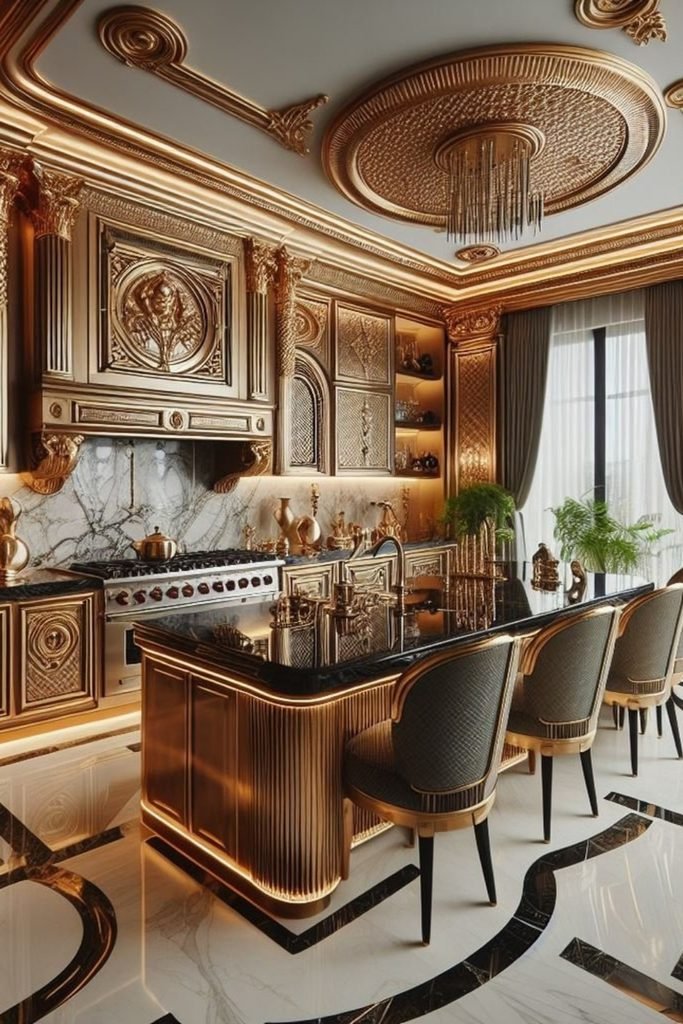
If you want a full Art Deco statement, let metallic cabinetry and ceiling details lead while keeping the countertop palette tightly controlled.
Use this approach in a large kitchen with high ceilings, because heavy ornament needs enough space and light to avoid feeling crowded.
Repeat black through stone, seating, or flooring, then stop adding extra finishes so the gold remains bold instead of visually exhausting.
Mint Streamline
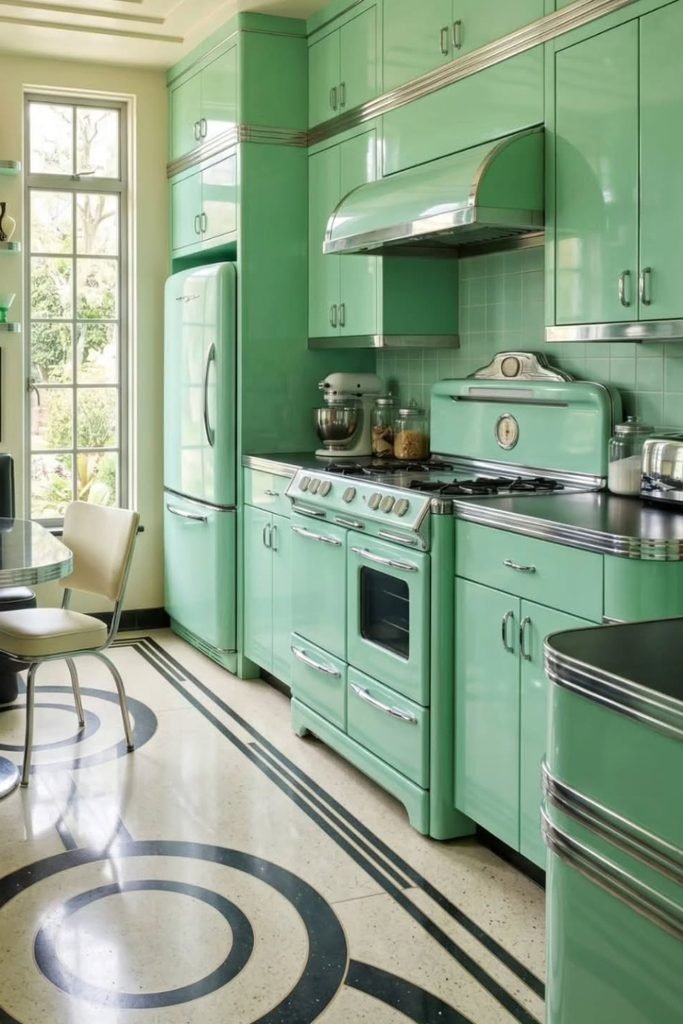
Pastel green works especially well when you want Deco character without a dark palette, and chrome gives the softness a sharper edge.
Carry the same cabinet color onto appliances or a range hood, then use rounded corners to strengthen the streamlined 1930s feel.
A compact breakfast nook suits this look beautifully, especially in narrow kitchens where built-in seating saves space and reinforces the period shape.
Soft Geometry
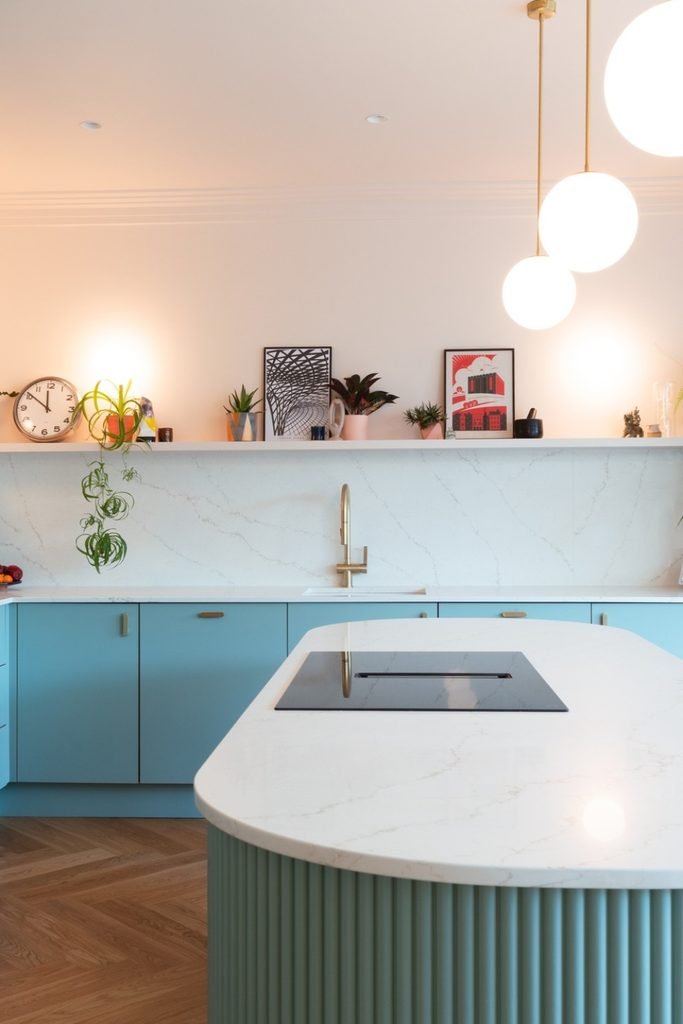
You can make Art Deco feel lighter by pairing soft blue cabinetry with a curved island instead of relying on dark dramatic finishes.
Fluting on the island adds the pattern, while plain cabinet fronts keep the room calm enough for marble and globe lighting.
This combination fits open-plan kitchens particularly well because the rounded counter softens circulation while the pale palette stays easy on adjoining rooms.
Walnut Curves
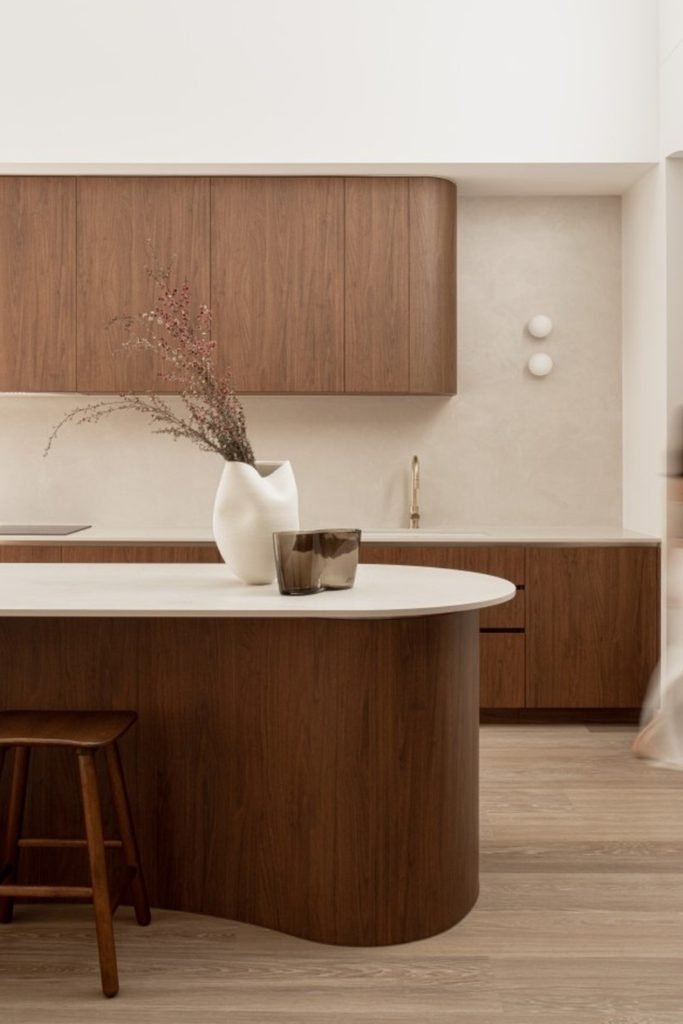
Warm walnut is a smart route into Art Deco when you prefer subtle references, because the richness comes from material rather than ornament.
Choose rounded island ends and slim brass details, then keep walls and counters quiet so the wood grain becomes the main feature.
This restrained version works well in modern homes where strong geometric tile or glossy finishes would fight with an already calm interior.
Fluted Contrast
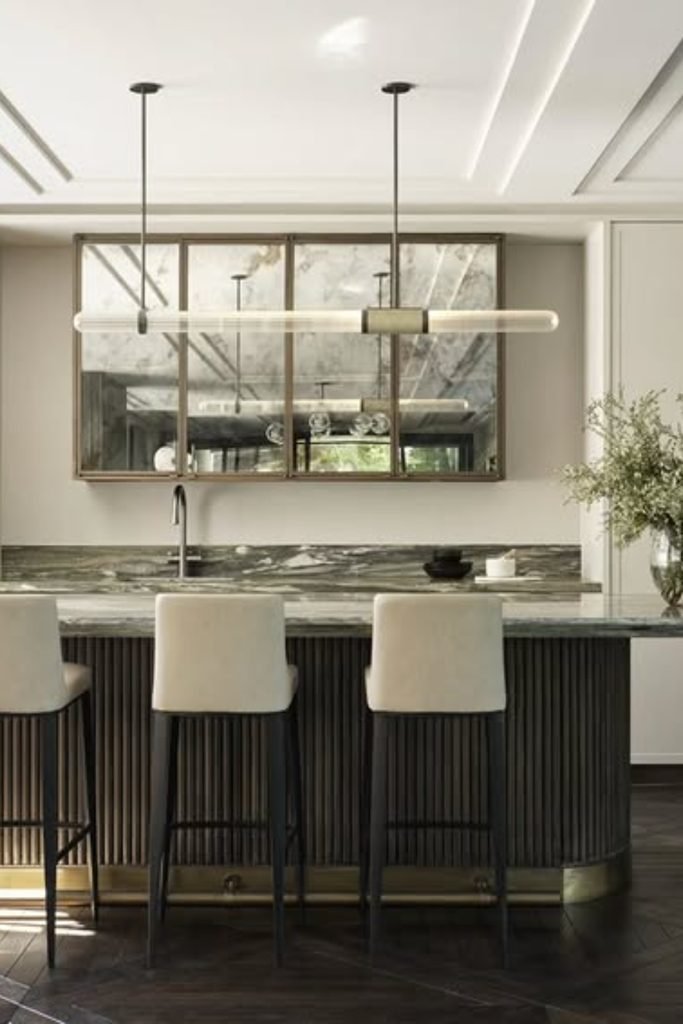
If your kitchen is mostly pale, a dark fluted island adds Art Deco depth without forcing the whole room into a moody palette.
Choose rounded corners, slim brass trim, and a marble top so the island feels detailed, but still clean enough for daily use.
This approach suits open kitchens especially well, because the darker center anchors the room while light cabinetry keeps the surrounding space bright.
Hidden Glamour
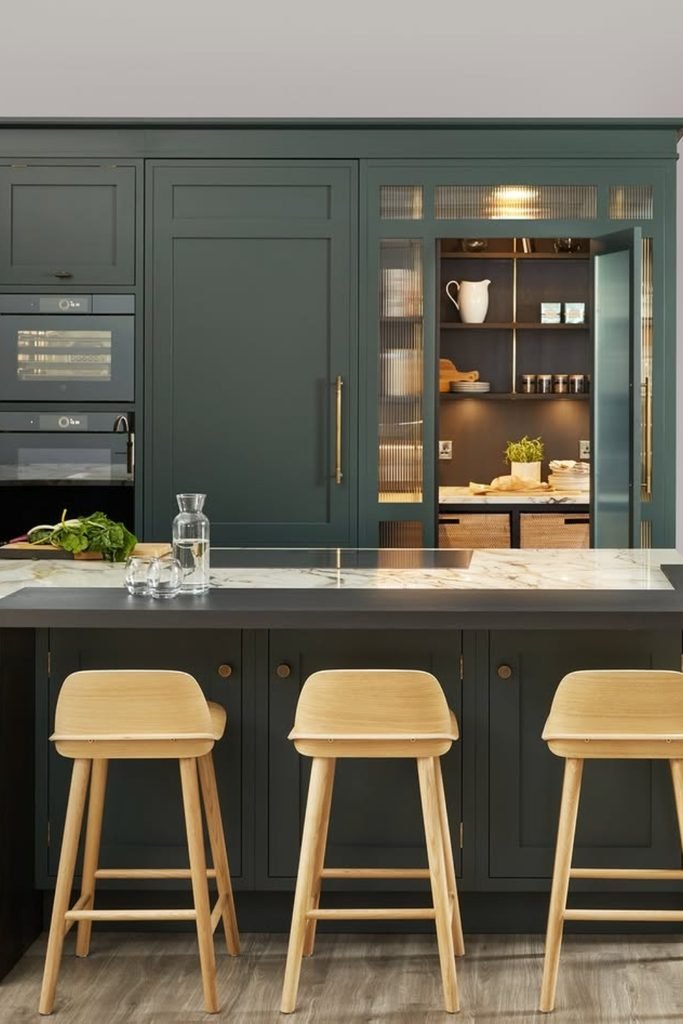
Deep green cabinetry can carry plenty of Art Deco character, so use reeded glass and brass only where you want extra definition.
Turn a pantry or appliance wall into the feature, then keep the island simpler so storage looks intentional rather than visually heavy.
This works beautifully in larger kitchens where tall cabinetry is necessary, because the glass breaks up solid doors and adds a softer shine.
Banquette Balance
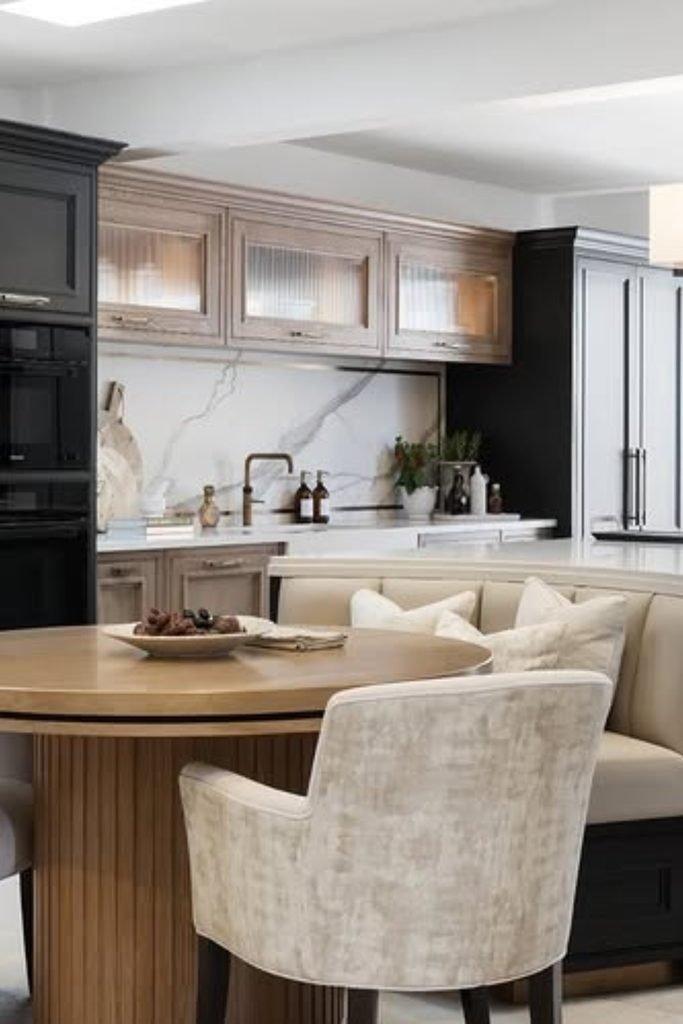
An attached banquette is a smart Art Deco move when you want dining space built into the kitchen instead of adding another zone.
Use a round table and softly upholstered seating to echo Deco curves, then let black cabinetry give the arrangement stronger architectural contrast.
This layout suits family kitchens or open plans where meals happen close to cooking, and it removes the need for a separate dining set.
Mint Deco
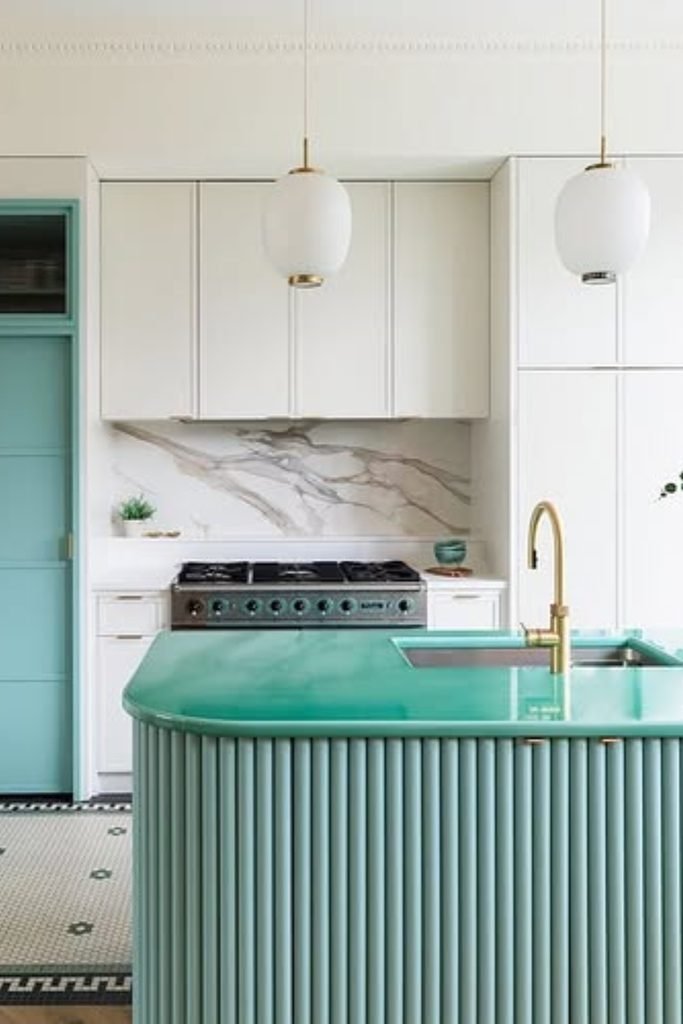
Mint green gives Art Deco a fresher direction, especially when you repeat it on the island, doorway, and one tall cabinet.
Keep most cabinetry white, then add fluting and a patterned floor so the color feels intentional without taking over every surface.
This palette works especially well in bright kitchens, where natural light keeps the green crisp and lets brass accents read warm rather than flashy.
Olive Layers
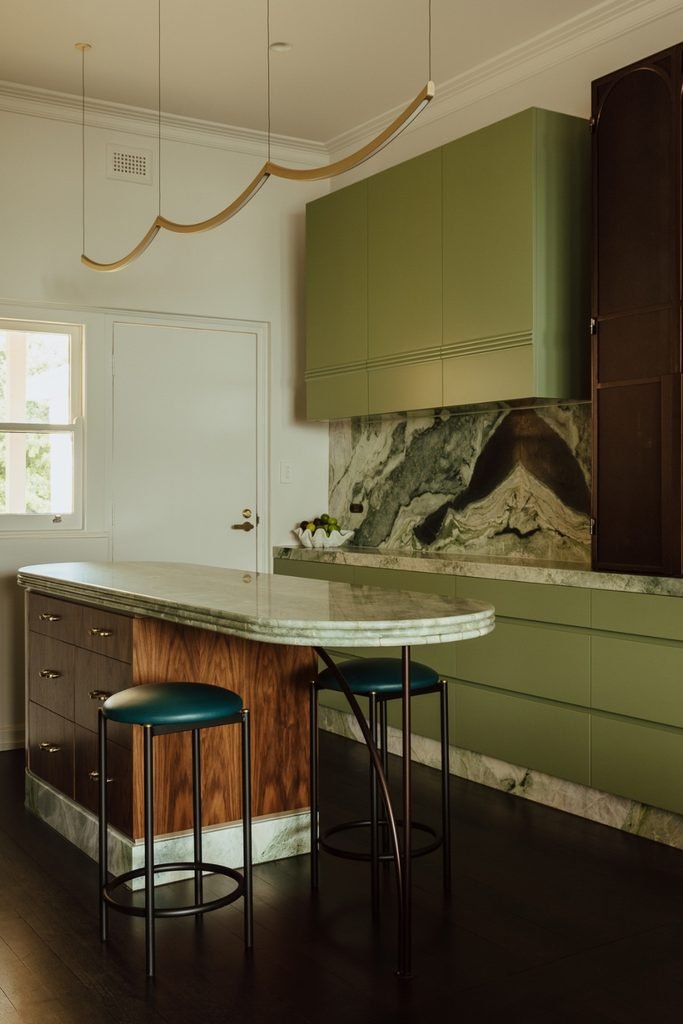
Olive cabinetry feels richer when you pair it with veined stone, especially if you want color without using glossy jewel tones.
Bring walnut onto the island, then round the outer edge so the darker wood softens the straight cabinet wall behind it.
This mix suits medium or large kitchens, where stone can become the focal point without making every finish compete for attention.
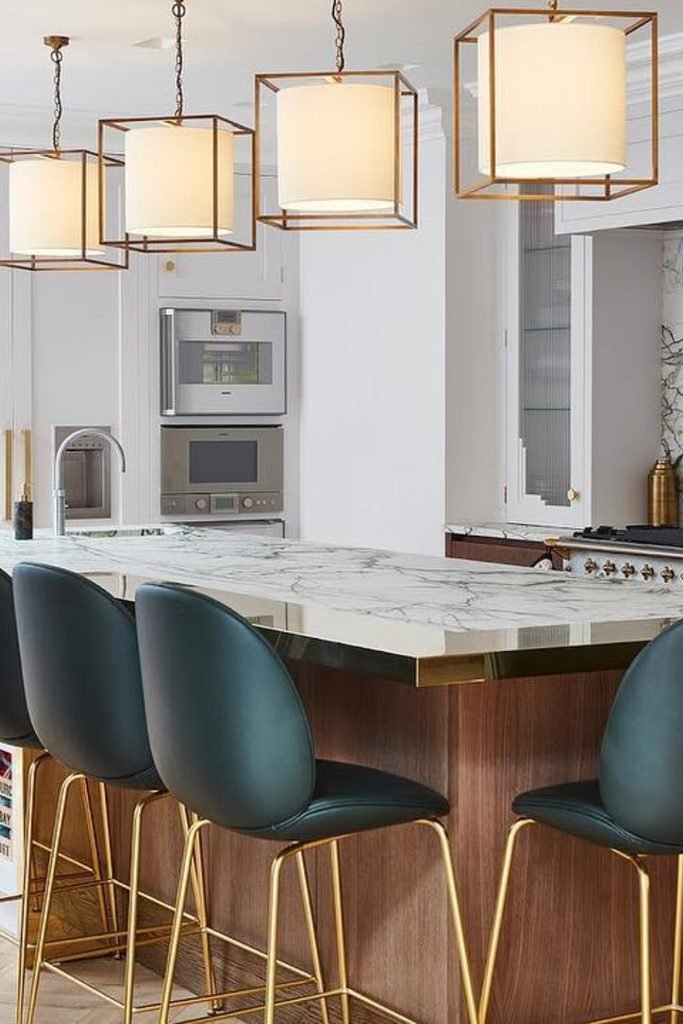
Framed Contrast
A mostly white kitchen gains Art Deco character fast when dark wood, brass frames, and deep green seating create controlled contrast.
Use reeded glass beside the range to break up solid cabinetry, then repeat brass through lighting and stool legs for continuity.
This approach works best when the island stays simple, because the surrounding details already give the room enough pattern and shine.
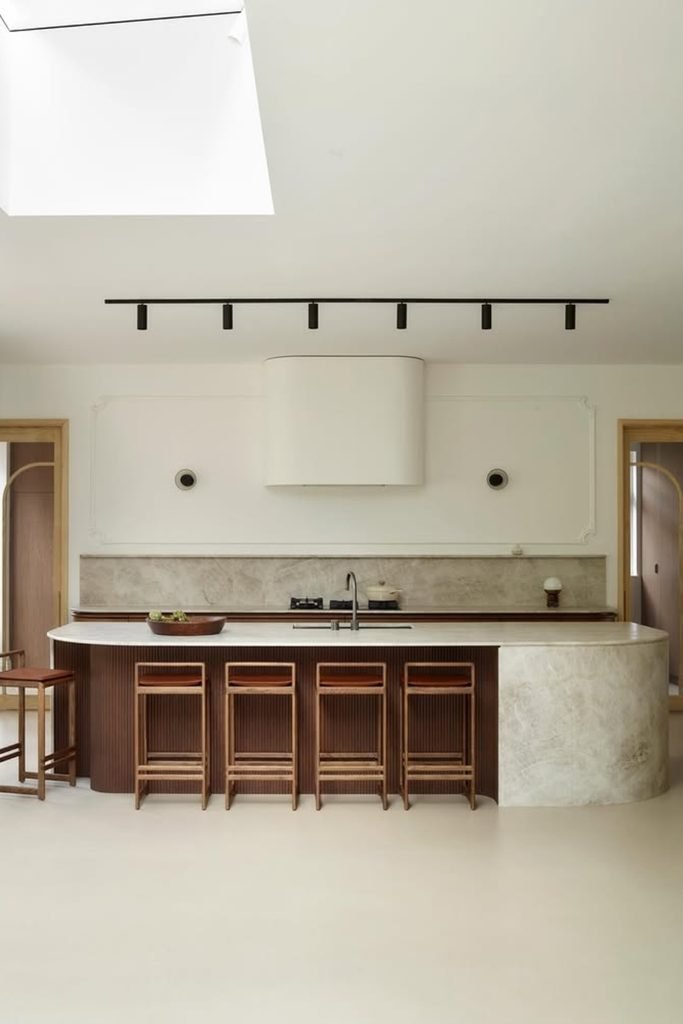
Sculpted Island
When the room is deliberately quiet, let the island shape do the decorating instead of adding busy tiles, metallic trims, or bold color.
A fluted wood front paired with a rounded stone end gives you Deco rhythm while keeping the rest of the kitchen restrained.
Choose this route for open spaces or minimalist homes, where one sculptural feature can carry the style without fighting nearby furniture.
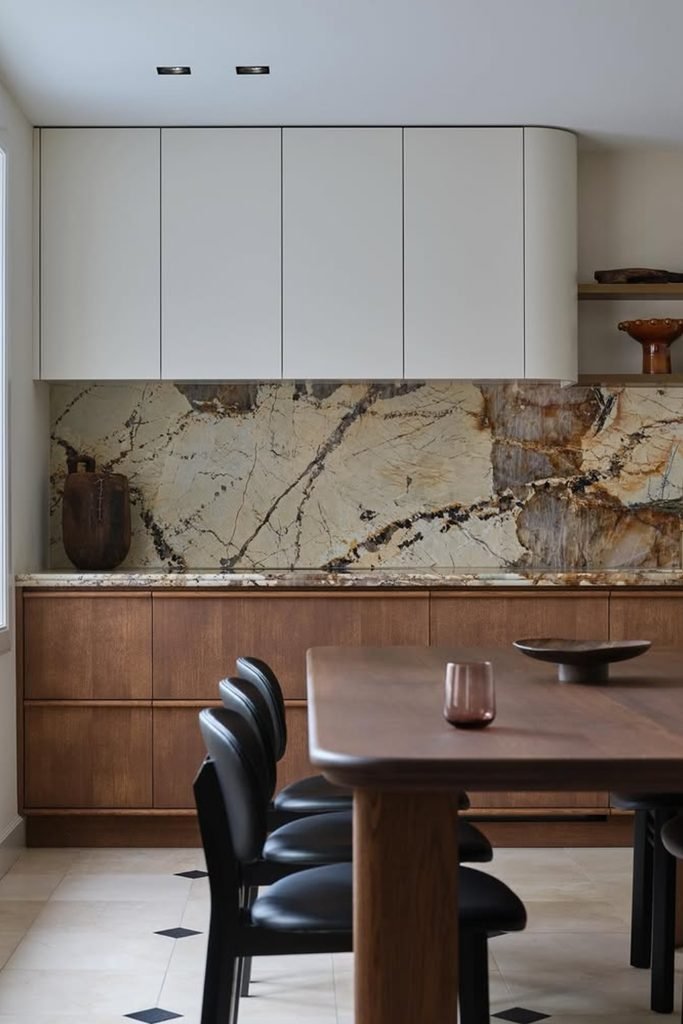
Stone Ribbon
If you prefer warmer Art Deco, let richly veined stone run across the backsplash while walnut lowers keep the room grounded.
Curve the upper cabinet corner and repeat soft edges elsewhere, because small rounded details stop the strong stone pattern from feeling harsh.
This works well in dining kitchens, where black chairs and subtle floor geometry can sharpen the scheme without adding another loud surface.
Burl Statement
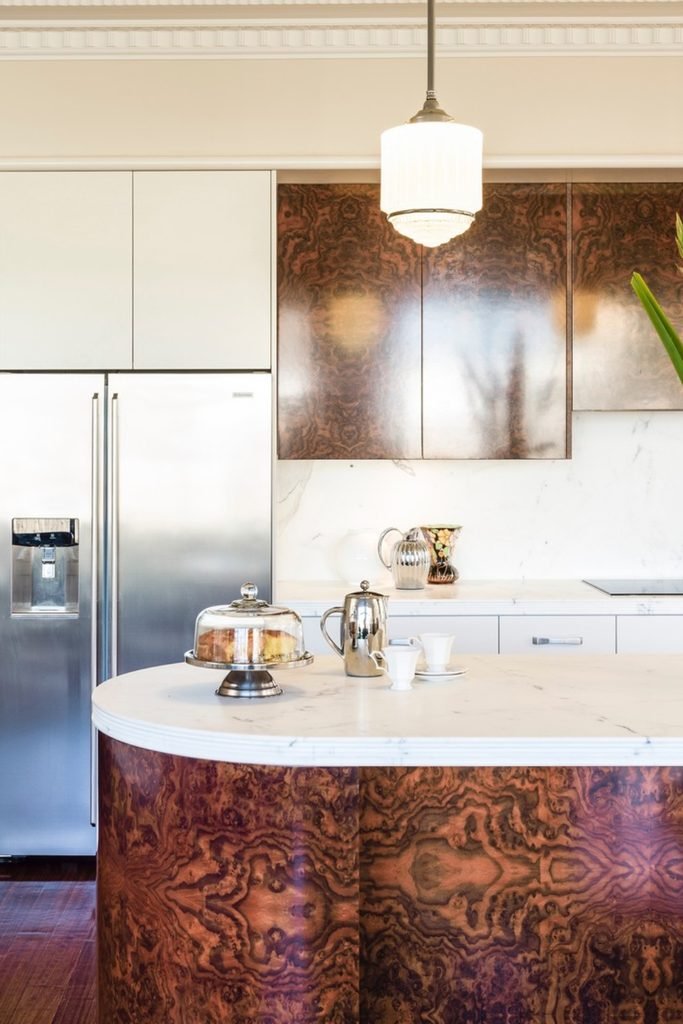
If you want Art Deco warmth without heavy color, use burr wood on one main surface and let its natural pattern provide movement.
Pair that rich grain with plain white cabinetry and pale stone, so the kitchen stays bright while the wood still feels special.
This works especially well in larger kitchens, where a curved island can carry the detail without making every cabinet fight for attention.
Streamline Curve
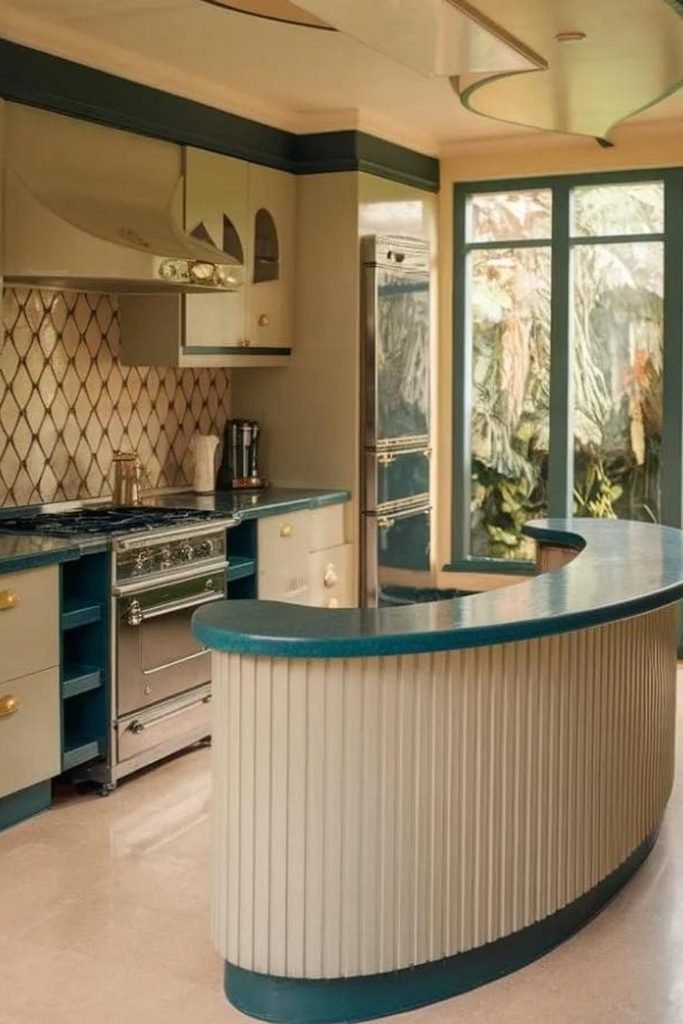
A curved peninsula can give a compact kitchen strong Deco character, especially when straight cabinet runs already make the room feel narrow.
Keep the base ribbed or vertically lined, then repeat one accent color on counters and trim to make the curve feel intentional.
Use this idea where circulation matters, because the rounded edge softens movement while still creating extra prep space and casual seating.
Galley Geometry
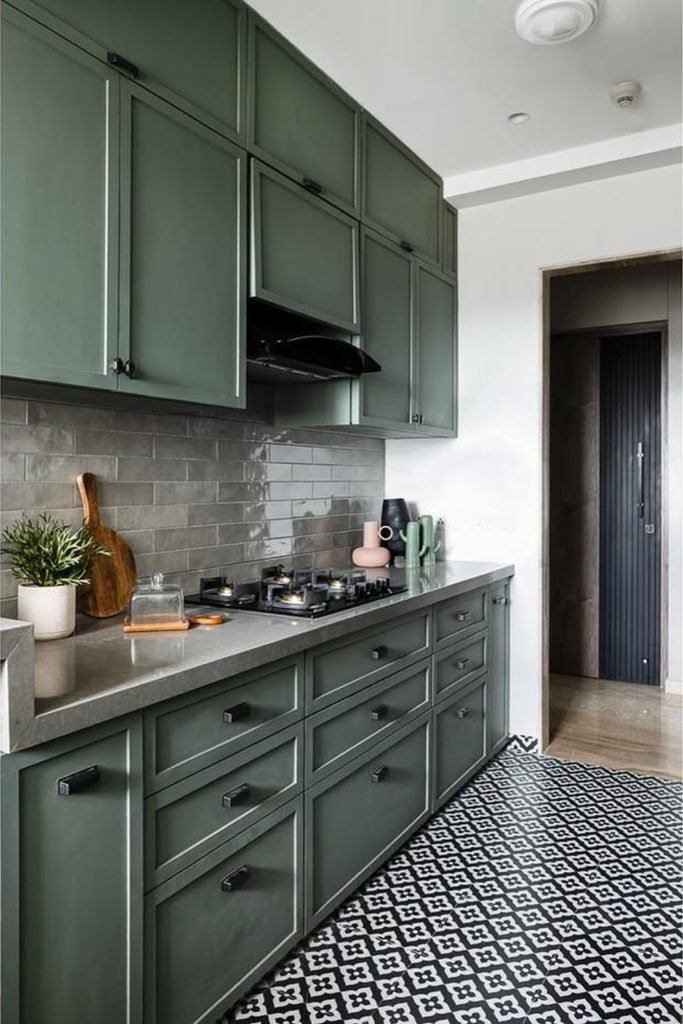
Dark green cabinetry can make a narrow kitchen feel richer, but the floor pattern should do the decorative work instead of extra ornament.
Choose simple cabinet fronts, dark hardware, and a glossy backsplash, then let one repeating geometric floor pattern bring in the Deco rhythm.
This setup suits galley kitchens well because the strong floor draws the eye forward while the cabinets keep storage practical and contained.
Marble Rhythm
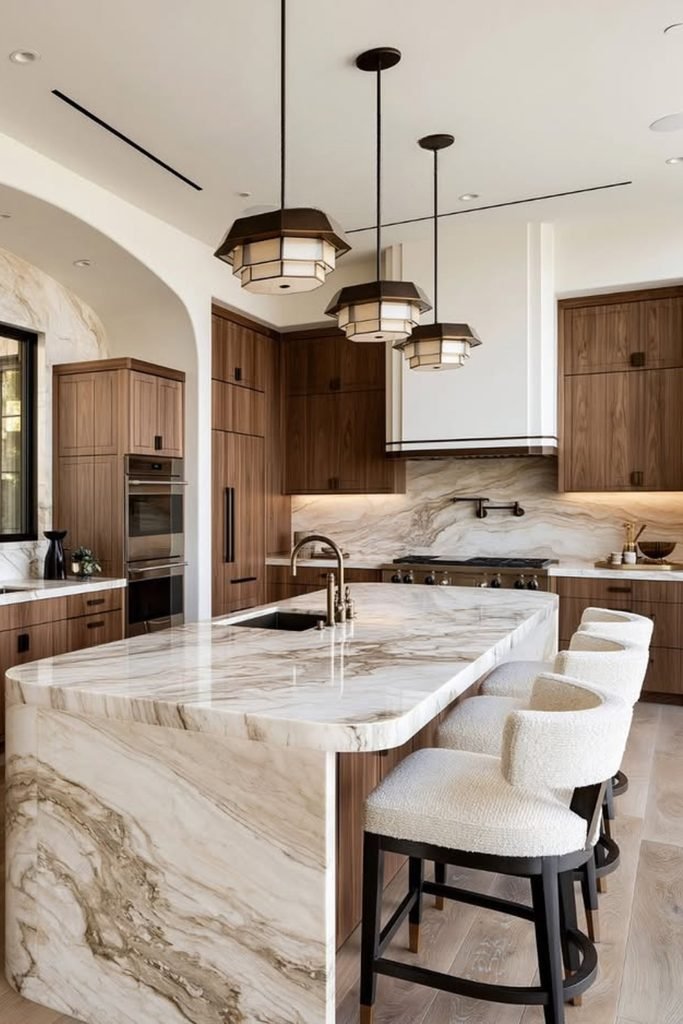
If you want a cleaner Art Deco look, combine walnut cabinetry with one large marble surface instead of layering several decorative finishes.
Rounded island corners, stepped pendant lights, and slim black details give the room enough period character without making it feel costume-like.
This approach works best in open kitchens, where the stone island can act as the focal point while warm wood keeps everything grounded.
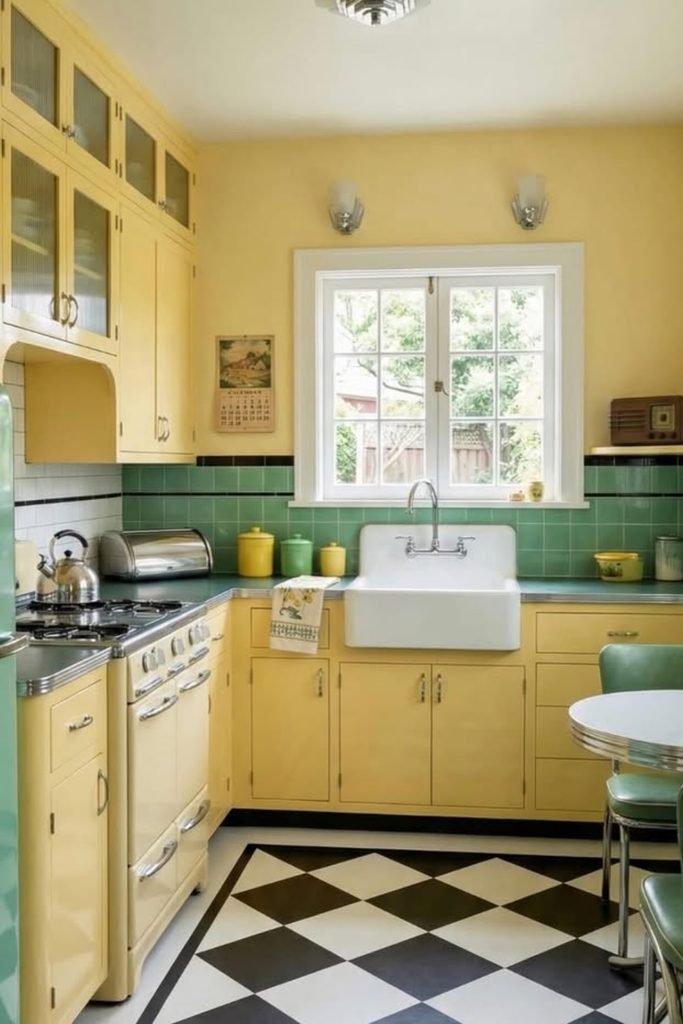
Sunny Deco
Butter-yellow cabinets make a small kitchen feel cheerful, while mint appliances and tile bring enough contrast to keep the palette distinctly Deco.
Use black-and-white flooring as the graphic anchor, then repeat chrome on the range and table so the retro details feel connected.
This combination suits compact kitchens especially well because bright cabinetry lifts the room, while strong floor geometry adds character without using extra decor.
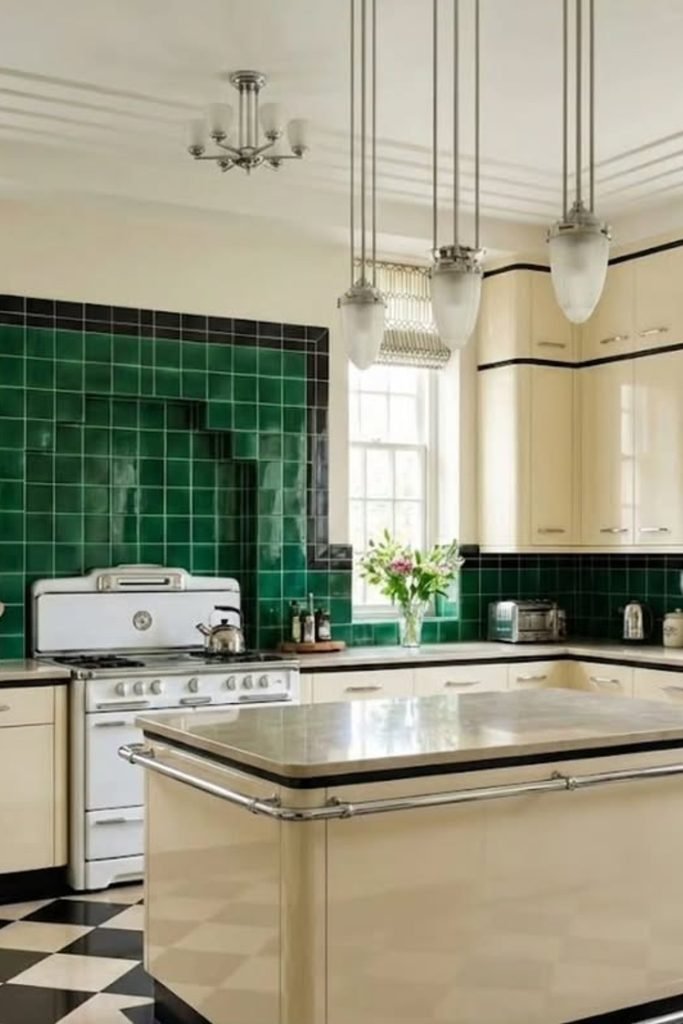
Emerald Frame
Cream cabinetry becomes much more Art Deco when emerald tile is used as a framed focal point instead of covering every wall.
Add chrome rails and black trim around the island, because those crisp lines sharpen the soft cream surfaces without making them heavy.
This look works best in bright kitchens where glossy finishes can catch daylight, keeping the deep green backsplash lively rather than dark.
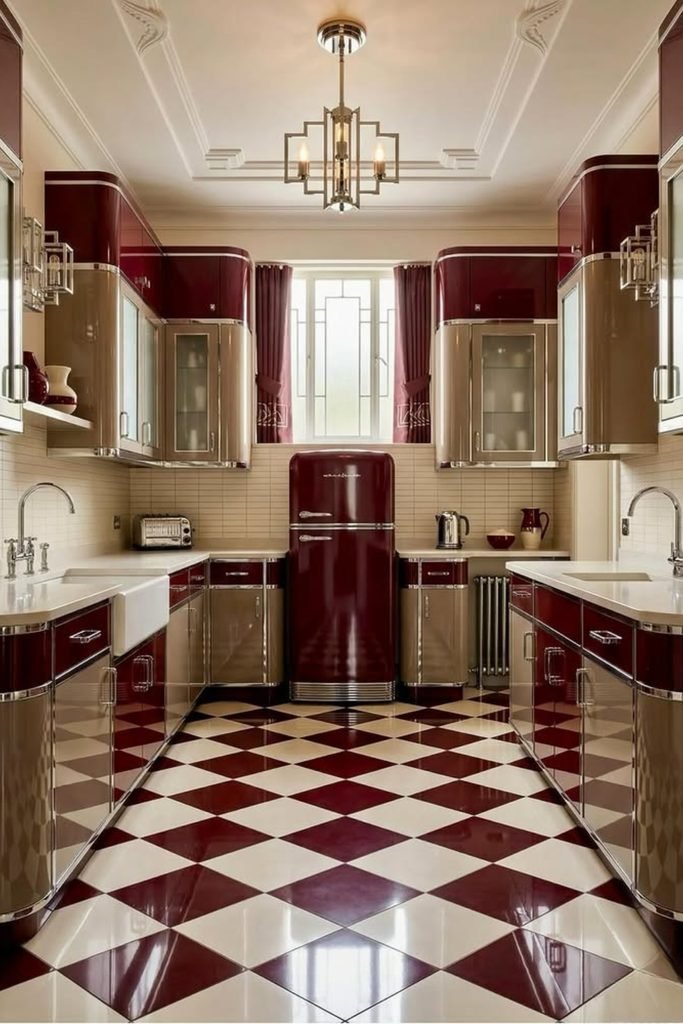
Burgundy Symmetry
A narrow galley can feel intentional instead of cramped when matching cabinet runs create symmetry from one end to the other.
Use burgundy on upper and lower sections, then break it with cream panels and chrome bands so the room keeps visual rhythm.
Checkerboard flooring strengthens the period feel here, while a centered refrigerator and matching lights make the whole layout read more balanced.
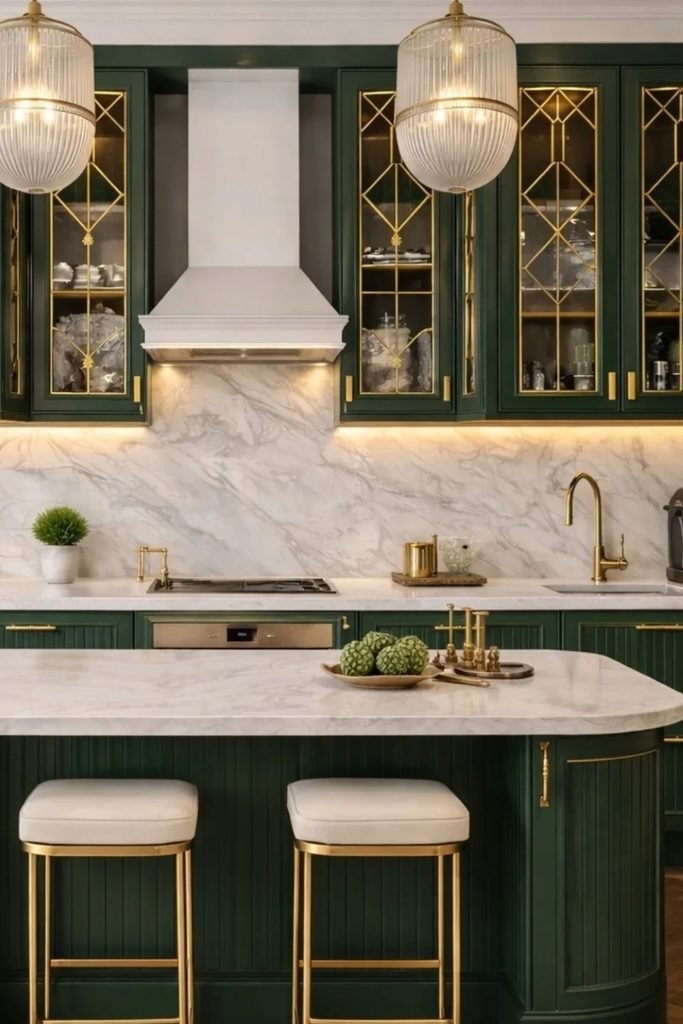
Gilded Glass
If you want a richer Deco look, use brass-framed glass cabinet doors instead of adding pattern across every solid surface.
Deep green keeps the brass from feeling flashy, while a pale marble backsplash gives the detailed doors a clean background to stand against.
Finish with ribbed pendants and a rounded island, then keep stools simple so the cabinetry remains the strongest decorative feature in view.
FAQs
Can Art Deco Work in a Small Kitchen?
Yes, but keep the strongest detail focused on one area, such as the backsplash, lighting, flooring, or a small curved peninsula.
Use lighter cabinets, reflective finishes, and simple hardware around it so the room keeps its character without becoming visually crowded.
Vertical storage and fluted glass can also add Deco detail while helping compact kitchens feel taller, brighter, and easier to use.
What Colors Work Best in an Art Deco Kitchen?
Black and white are classic, but emerald, navy, burgundy, cream, walnut, and soft green can create equally convincing Art Deco schemes.
Choose one main color first, then support it with marble, brass, chrome, or dark wood instead of stacking several bold shades together.
If your kitchen gets limited daylight, use darker colors on lower cabinets and keep upper surfaces lighter to protect the room’s brightness.
