
18 Stunning 90’s Kitchen Ideas
Your 90s kitchen may still work perfectly, but honey oak cabinets, beige counters, and old lighting can make the whole space feel stuck.
Many original features, especially solid wood cabinets and practical layouts, can still work beautifully once the surrounding finishes feel more current.
In this article, you’ll see how to update a 90s kitchen, what features are worth keeping, and which simple changes can make it feel current again.
Let’s jump in!
How To Make 90s Cabinets Look Modern?
If your 90s cabinets are still solid, don’t rush to replace them just because the wood tone feels dated.
Start with the finishes around them, because lighter counters, cleaner backsplashes, and better lighting can completely change how oak cabinets look.
If the doors feel too heavy or traditional, new hardware, simpler trim, or refacing can make a bigger difference than paint alone.
For orange-toned oak, choose warm whites, soft creams, muted greens, or stone shades instead of cool gray finishes that can create harsh contrast.
Once the cabinets work with the countertop, backsplash, flooring, and lighting, the whole kitchen starts feeling current without losing its original warmth.
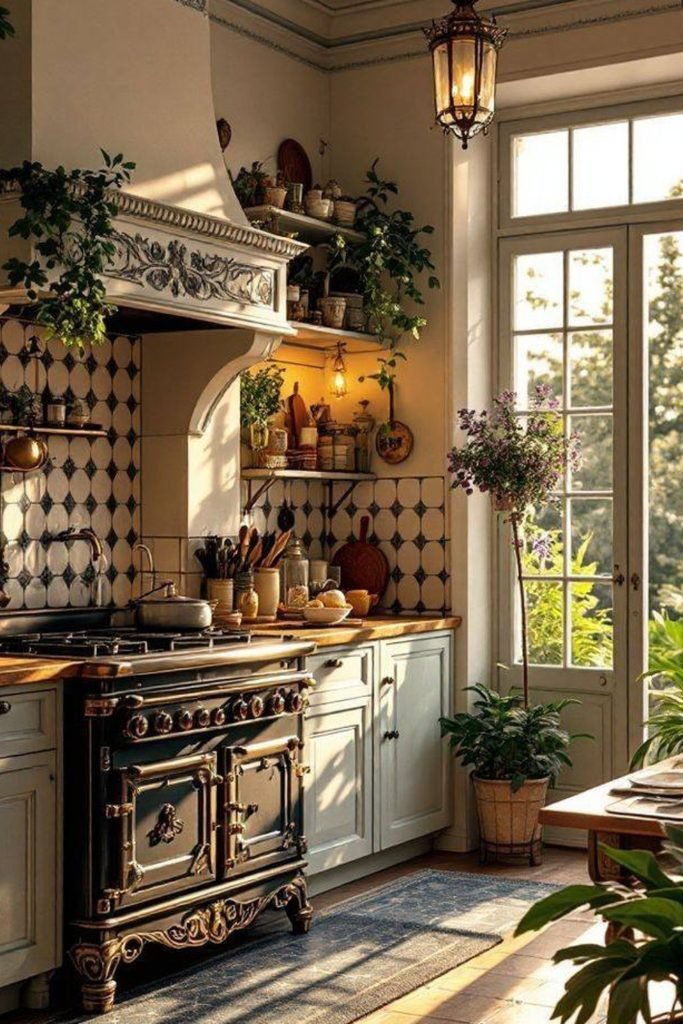
Heritage Range
If your kitchen already has traditional bones, make one vintage range the anchor instead of forcing every surface to look brand new.
Pair it with muted cabinets, a patterned backsplash, and warm wood counters so the room feels collected rather than overly themed.
This approach works especially well in kitchens with tall windows, older trim, or architectural details that can support a softer nostalgic mood.
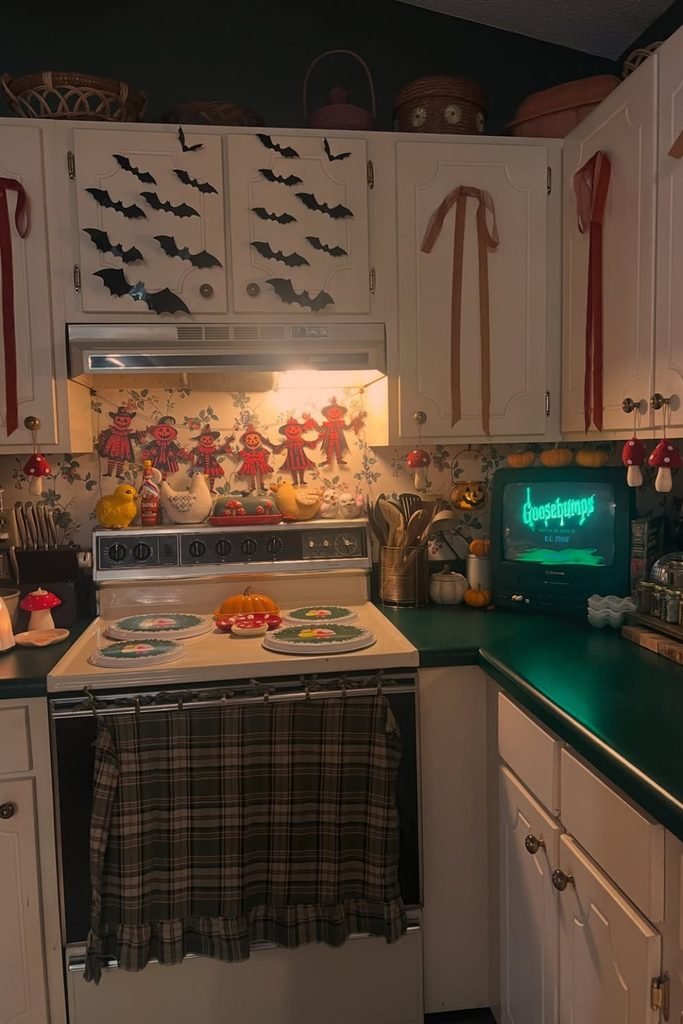
Playful Kitsch
A small 90s kitchen can feel intentional when you lean into playful details instead of trying to make every surface look minimal.
Keep the white cabinets, then use one strong counter color and a few nostalgic accessories to give the room a clear personality.
This works best in compact kitchens, where ribbons, vintage appliances, or seasonal pieces add character without taking away useful counter space.
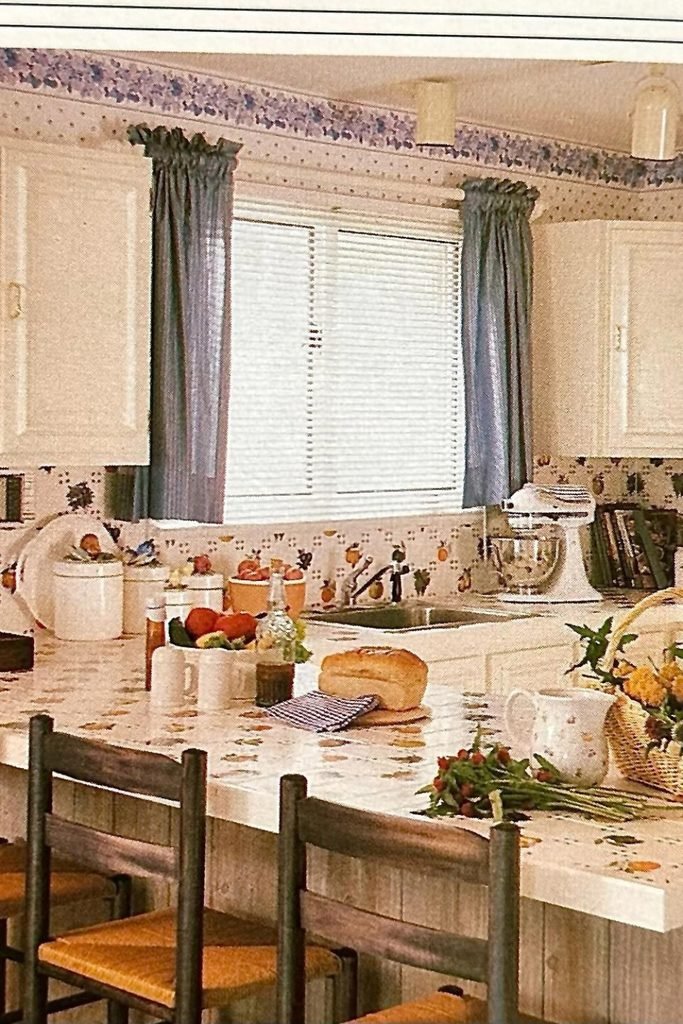
Country Prints
For a true 90s country look, start with white raised-panel cabinets and let one small-scale fruit or floral print carry the theme.
Use that pattern on a backsplash or border first, because repeating it everywhere can quickly make the kitchen feel visually busy.
Woven stools, ceramic canisters, and soft blue curtains finish the nostalgic style without needing expensive changes to the cabinet layout.
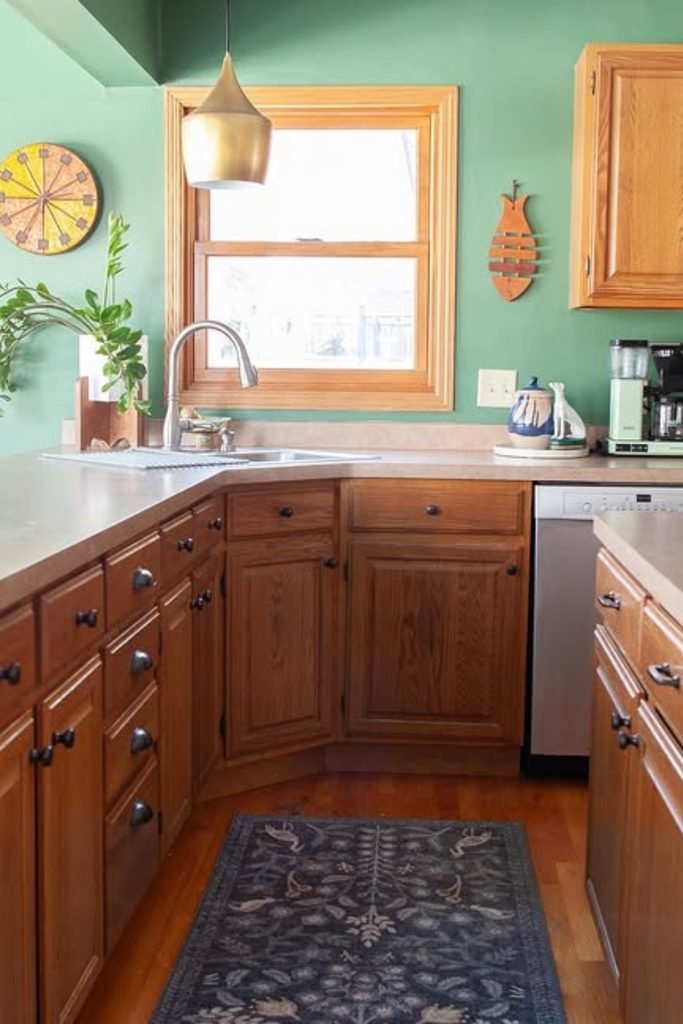
Oak Refresh
Don’t paint solid oak automatically; a fresh wall color can change how the wood reads before you touch the cabinet finish.
Muted green works especially well because it cools orange undertones, while light counters keep the room from becoming too heavy.
Finish with simple dark hardware and one modern appliance, then keep the flooring warm so the update still feels connected to the cabinetry.
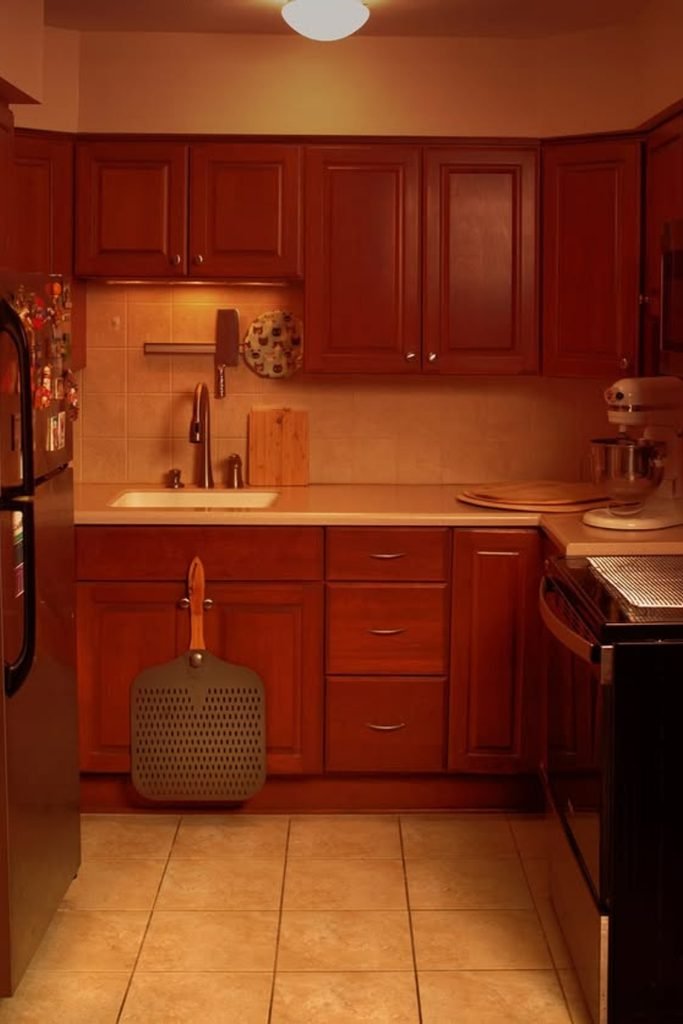
Warm Wood Balance
If dark wood cabinets make your kitchen feel heavy, keep the finish and brighten the room through counters, backsplash, and stronger lighting.
Warm beige tile can stay if it is clean, but cooler bulbs and lighter walls will stop the cabinetry from reading overly orange.
This approach suits narrow kitchens especially well, because you modernize the palette without adding bulky features or replacing useful storage.
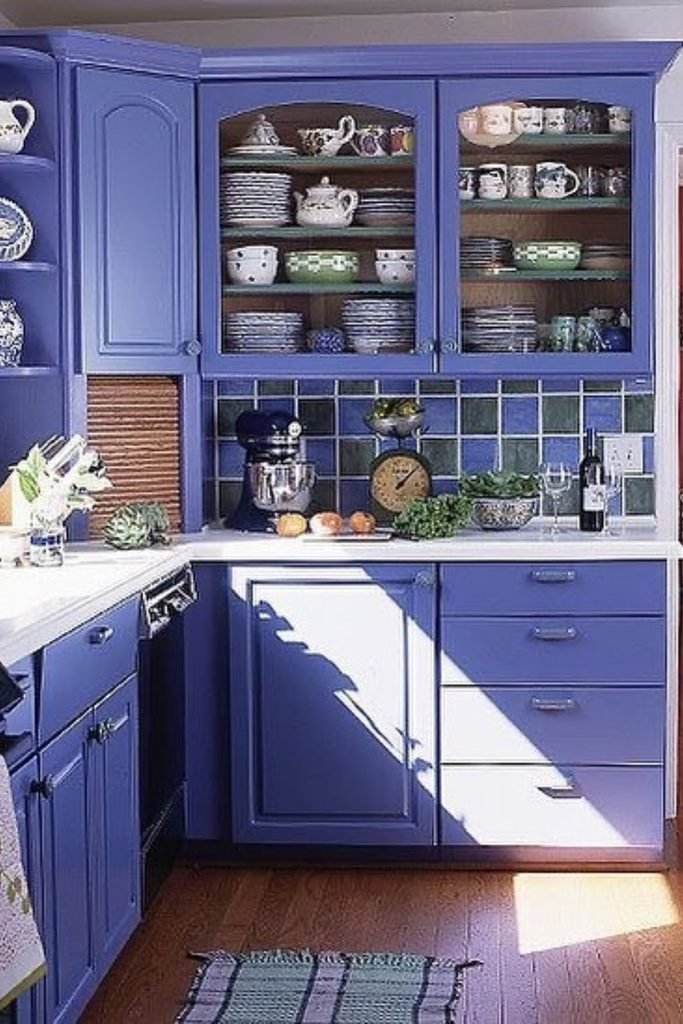
Muted Blue
Painted blue cabinets can rescue a dated layout when the doors are still solid but the original wood tone no longer suits you.
Use a muted blue rather than a bright primary shade, then balance it with white counters and simple square tile for contrast.
Open shelves or glass fronts work best on a few upper cabinets, giving collected dishes room to decorate without creating clutter.
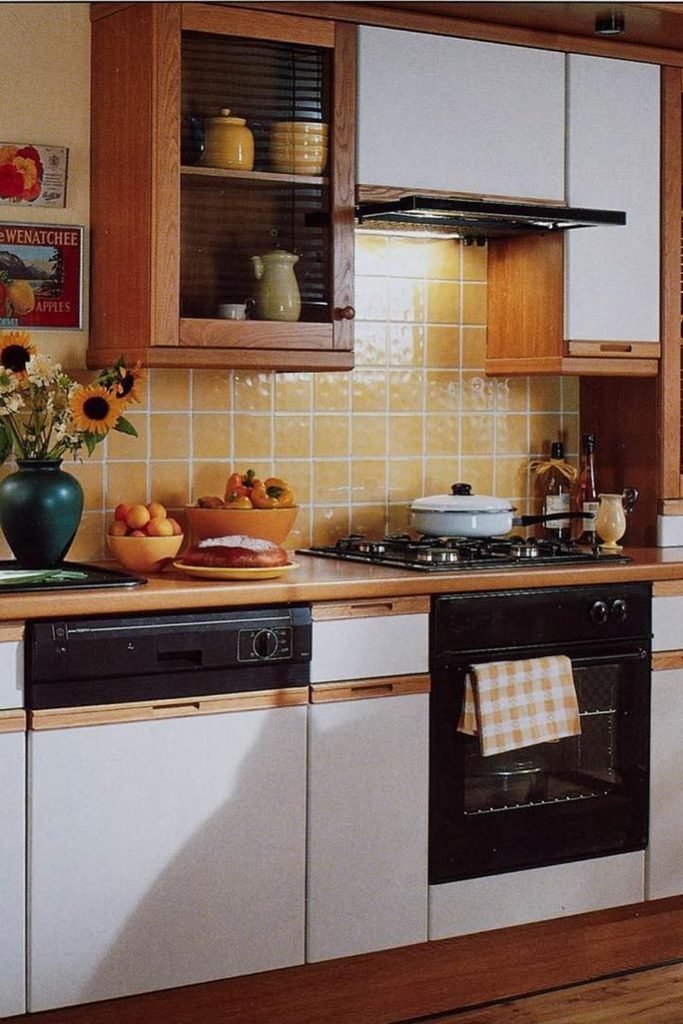
Mixed Cabinetry
Mixing wood frames with white cabinet fronts is a smart way to keep 90s warmth while breaking up a long wall of timber.
Let the yellow tile act as the nostalgic accent, then repeat its warmth through dishes, artwork, or textiles instead of more wood.
This idea works best when the cabinetry is structurally sound, because replacing only door fronts can change the room far more affordably.
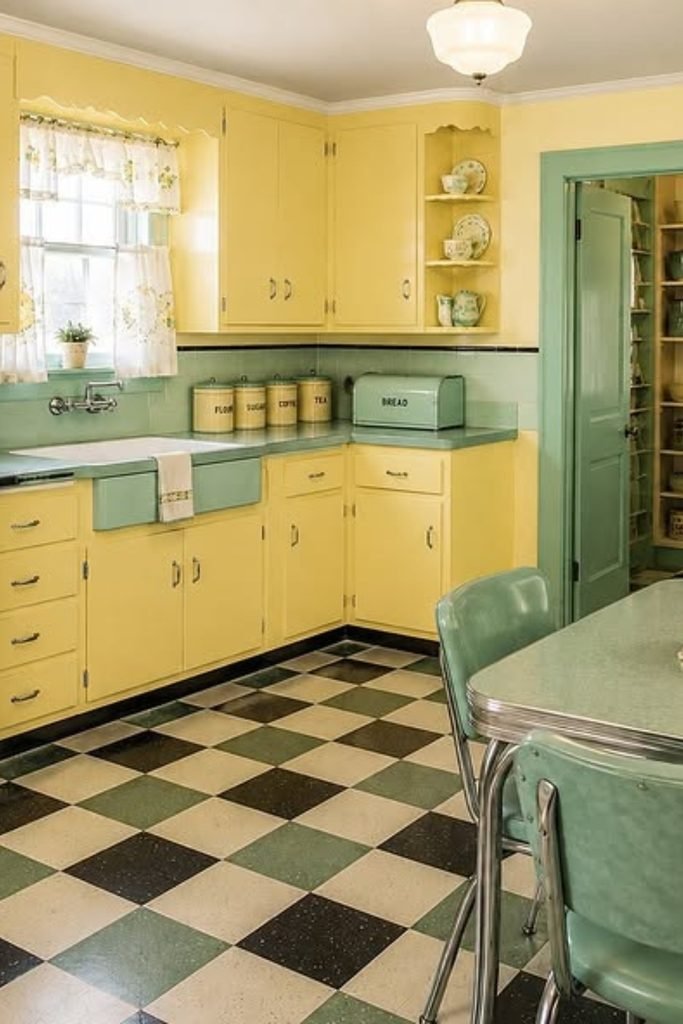
Retro Diner
If you want the playful side of retro kitchens, pair soft yellow cabinetry with mint appliances instead of relying on tiny decorative accessories.
Checkerboard flooring gives the palette structure, while chrome-edged furniture and simple cabinet hardware keep the room feeling cheerful rather than childish.
Use this look in an eat-in kitchen or breakfast area, where the vintage appliances and diner-style seating can become part of daily life.
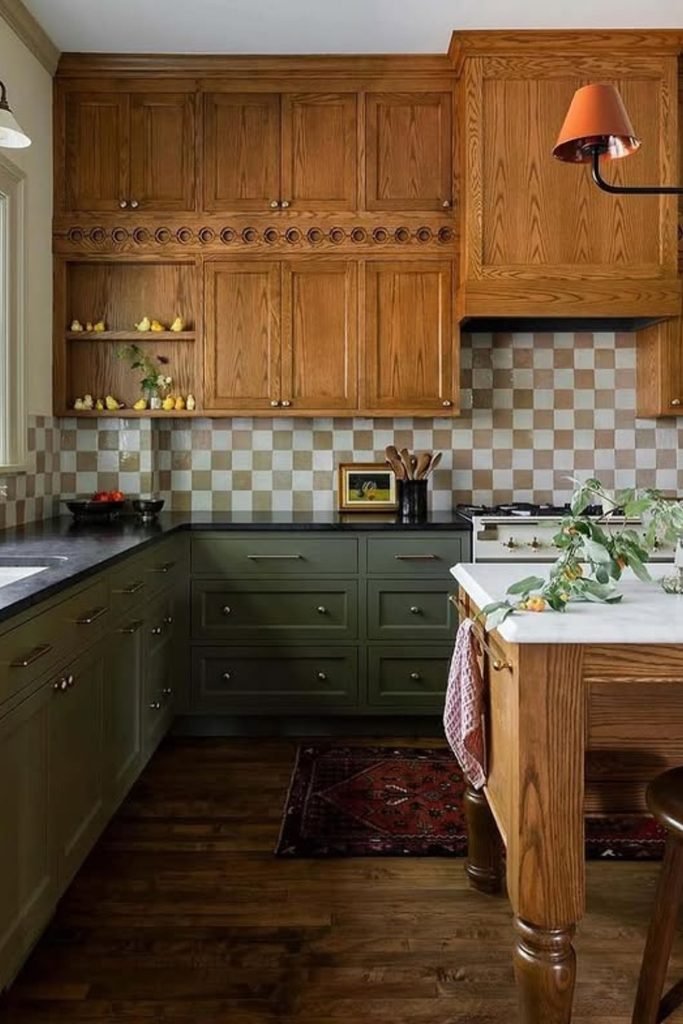
Split Finishes
If your upper cabinets still have beautiful wood grain, keep them natural and modernize the lower half with a deep muted green.
The two-tone split works especially well in larger kitchens, because darker base cabinets ground the room without hiding the original oak.
Repeat warm wood on the island or flooring, then use a simple checkerboard backsplash to connect old cabinetry with newer finishes.
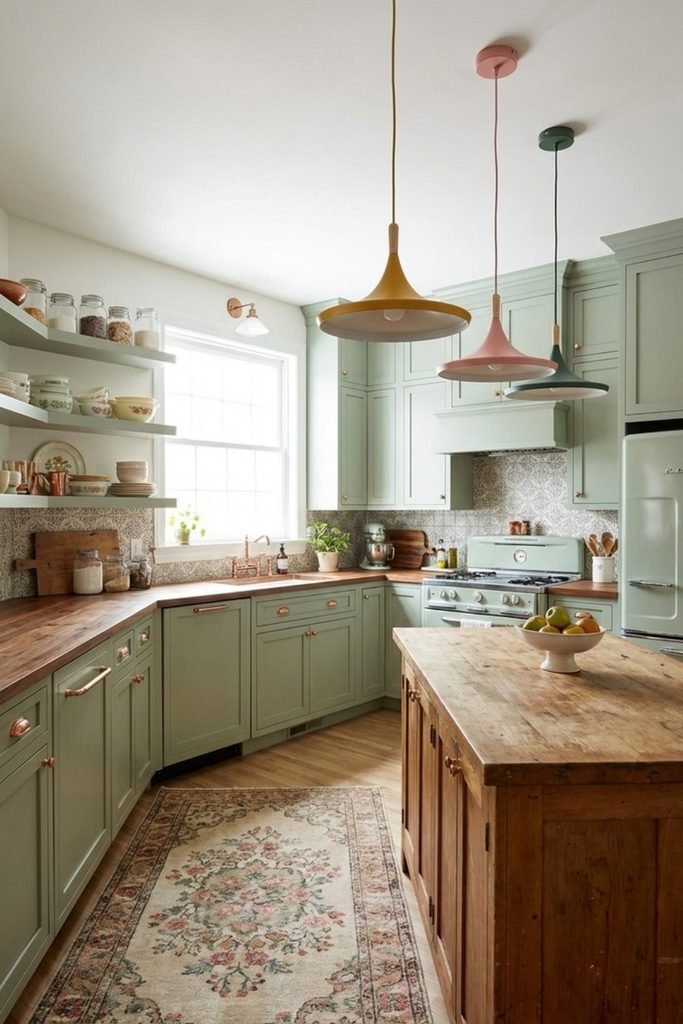
Soft Sage
Soft green cabinetry works when you want a vintage kitchen to feel lighter without stripping away all its old-fashioned character.
Pair the color with butcher-block counters, aged brass hardware, and patterned tile so the room feels layered rather than newly renovated.
Use open shelving on one wall if you need breathing room, then keep taller cabinets elsewhere for the storage you actually use.
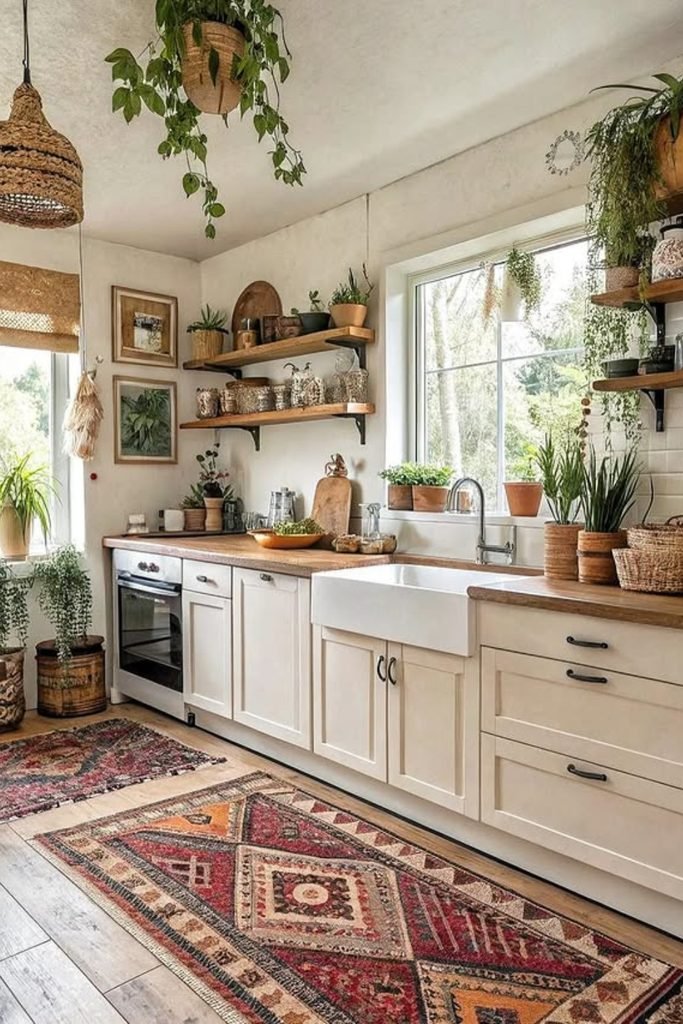
Collected White
White cabinets are useful when a kitchen already has plenty of warm texture from wood counters, woven shades, rugs, and houseplants.
Instead of filling every wall with uppers, remove a few doors or cabinets and add sturdy wood shelves for everyday dishes.
This setup suits bright kitchens best, because natural light keeps the cream cabinetry, timber surfaces, and collected accessories from feeling crowded.
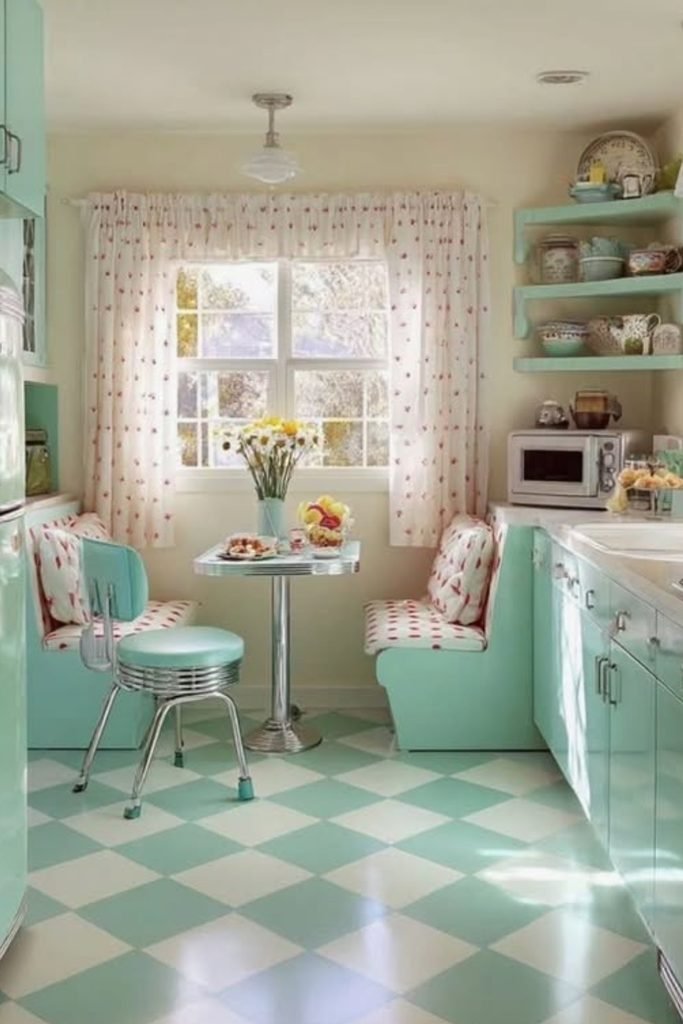
Mint Revival
If you want full retro impact, choose one signature color and repeat it across cabinets, appliances, flooring, and built-in seating.
Mint works especially well with white because the contrast keeps a small kitchen bright while still giving the room unmistakable personality.
Finish the look with chrome details, checked flooring, and simple floral fabric, but keep countertops mostly clear so nostalgia stays practical.
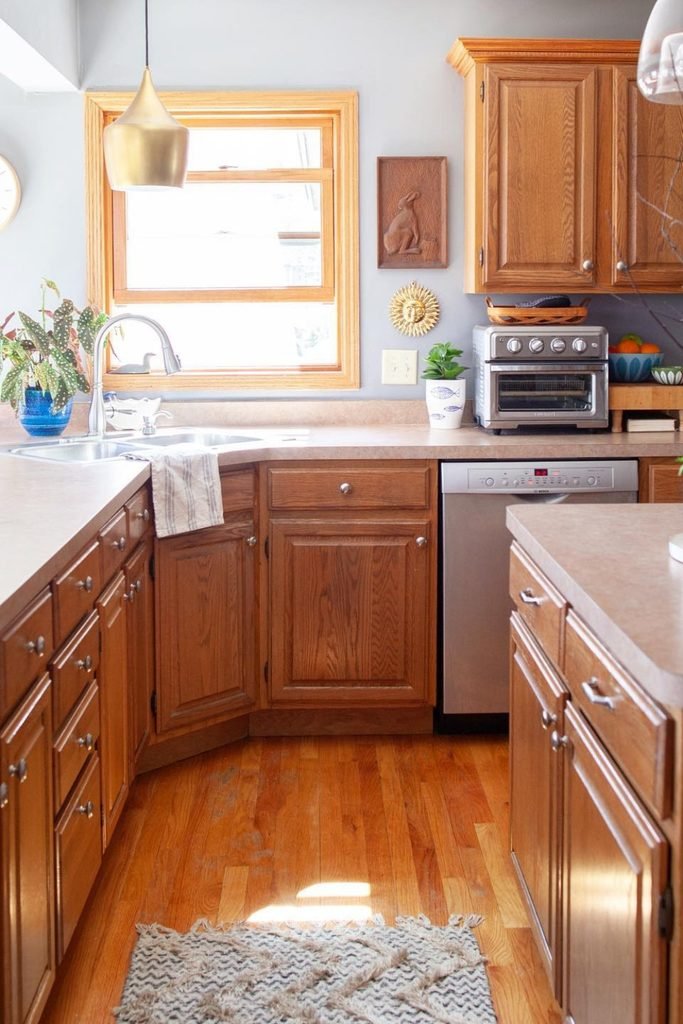
Oak Restraint
If your oak cabinets are still solid, keep them and cool the room with pale gray walls, simple hardware, and cleaner lighting.
Light laminate counters can stay when they are neutral, especially if replacing them would add cost without changing how the kitchen functions.
This works well in compact kitchens, where preserving the original layout saves money and lets small finish updates do most of the work.
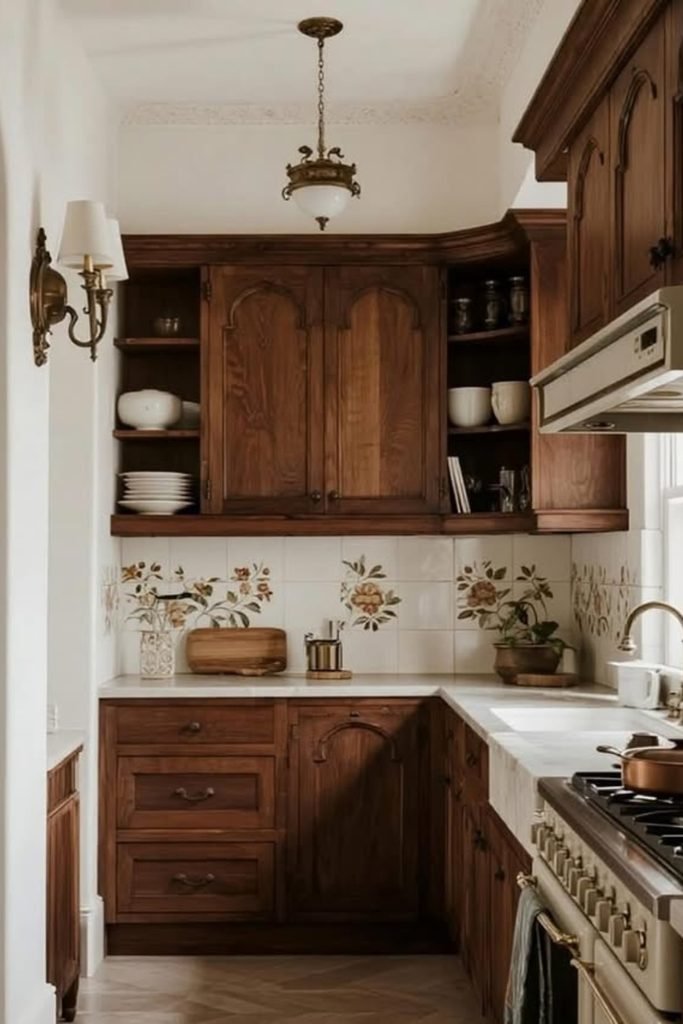
Traditional Revival
Dark carved cabinets already carry plenty of character, so pair them with quiet counters and simple walls instead of adding more decoration.
Floral backsplash tiles can stay if you want a softer period feel, but keep nearby accessories limited so the pattern remains intentional.
This approach suits older homes especially well, because traditional woodwork feels connected to the architecture rather than like a leftover renovation.
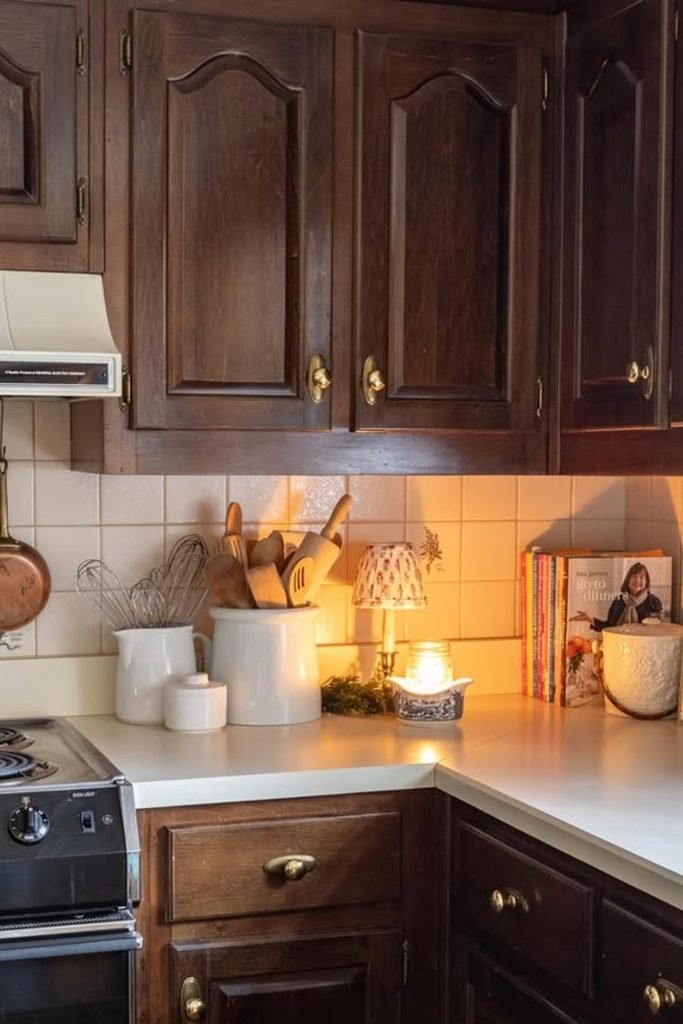
Dark Walnut
If deep brown cabinets make the kitchen feel closed in, brighten the worktops and backsplash before reaching for a paint brush.
Warm white tile, brass hardware, and small lamps soften the cabinetry while keeping the room cozy instead of pushing it toward stark modern.
This setup works best when natural light is limited, because lighter horizontal surfaces help the darker wood feel rich rather than heavy.
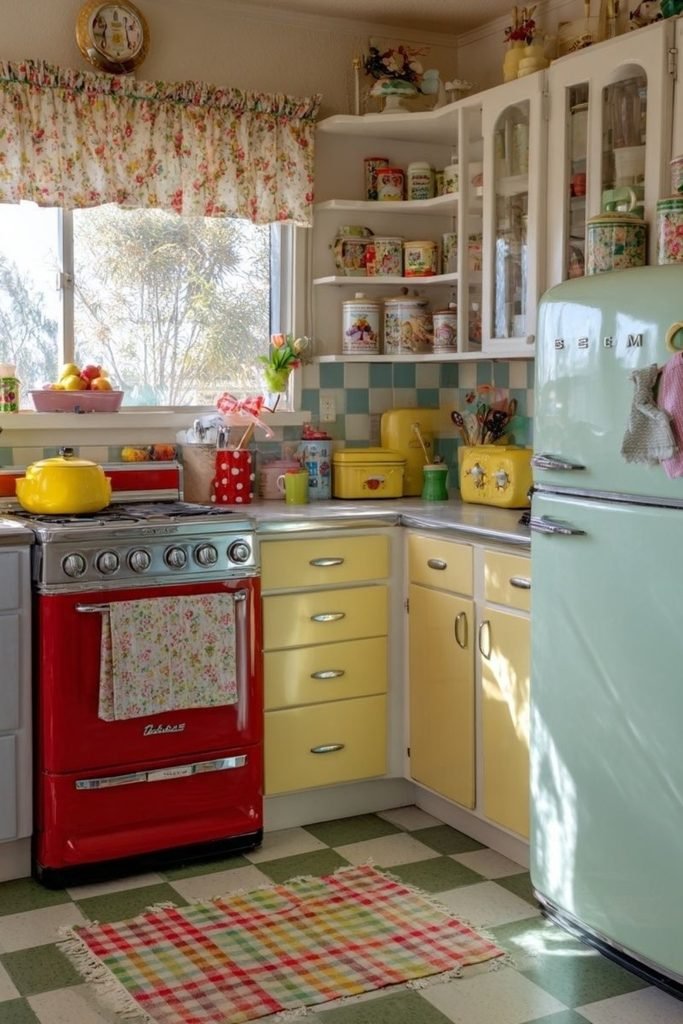
Candy Colors
A playful retro kitchen needs one clear palette, and mint, yellow, red, and white can work beautifully when each color has a job.
Keep cabinets mostly yellow, use mint on larger appliances, and let one red range become the bold focal point without overwhelming everything.
This idea suits cheerful breakfast kitchens, where floral curtains, checkerboard floors, and vintage canisters can support the color story naturally.
Builder Oak
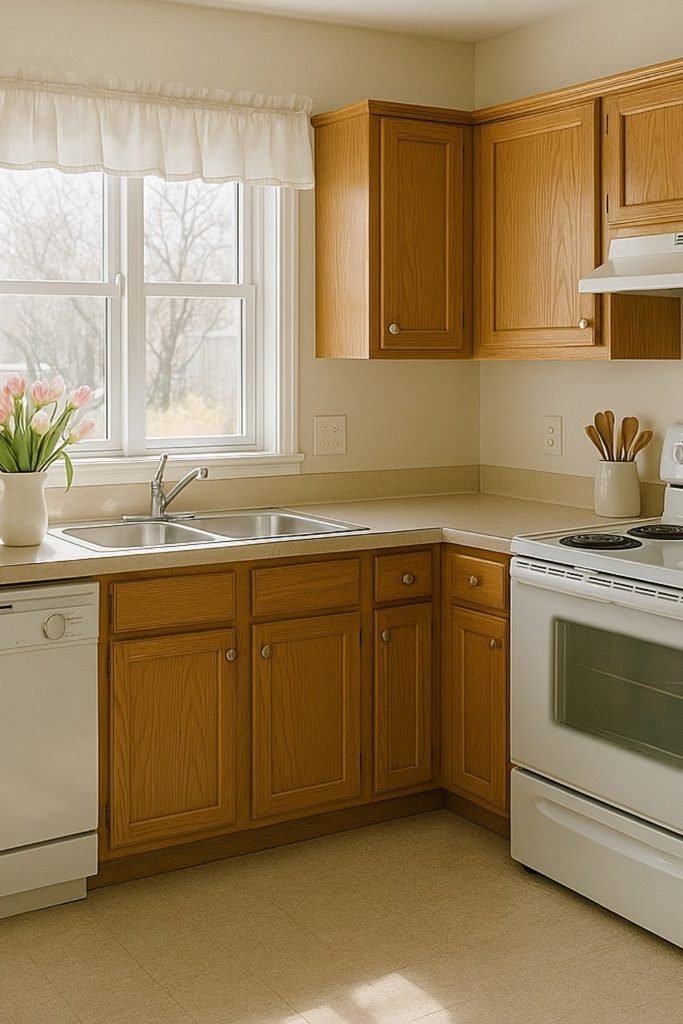
If your 90s kitchen still has honey oak cabinets, keep the wood and simplify everything around it before considering paint.
Soft beige counters and white appliances can still work, especially when the walls stay light and window treatments feel simple.
Use updated hardware or lighting first, because those smaller changes can make original cabinets feel cleaner without stripping away their character.
Cozy Collections
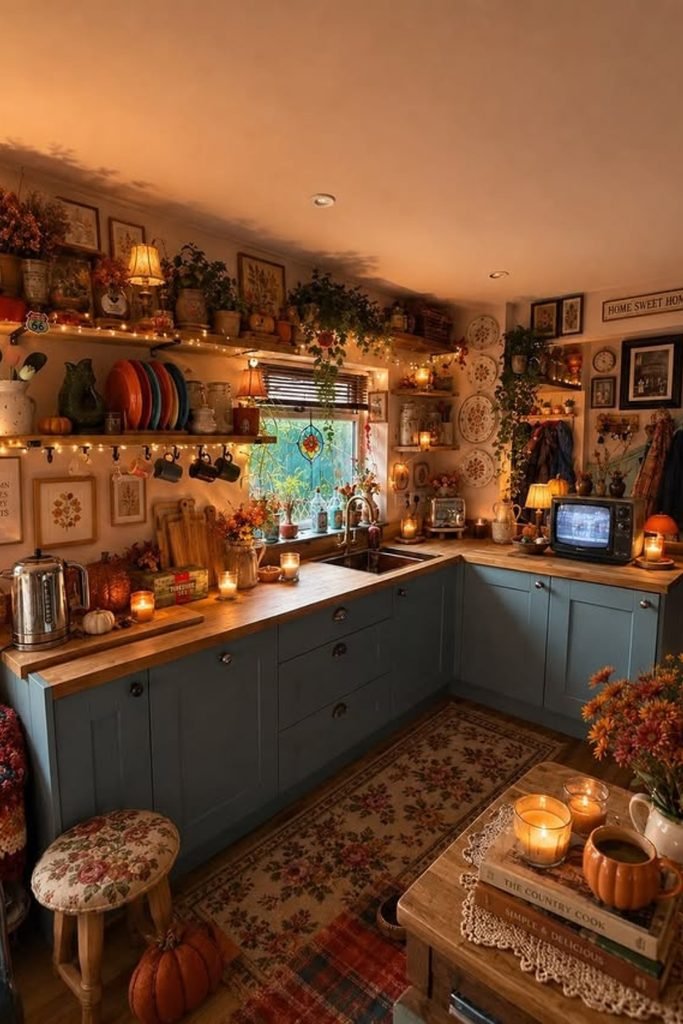
An older kitchen can feel warm instead of dated when you layer open shelves, soft lighting, and collected pieces with purpose.
Choose one calm cabinet color, then bring in wood counters, vintage dishes, plants, and patterned textiles to build the lived-in look.
This idea suits small kitchens especially well, because the visual richness comes from useful objects rather than expensive structural changes or renovations.
FAQs
Are 90s oak cabinets worth keeping?
Yes, if the cabinet boxes and doors are still solid, keeping them can save money and preserve useful storage you already have.
Update the hardware, lighting, backsplash, or counters first, because those changes often reduce the dated look without covering the wood.
Replace or paint them only when the finish is badly damaged, the door style bothers you, or the layout no longer works.
What colors make a 90s kitchen feel newer?
Warm whites, soft creams, muted greens, and gentle stone shades usually work better with oak than icy grays or stark white.
If the room already has beige floors or counters, choose one lighter tone nearby instead of adding another competing undertone.
The goal is not to erase every warm finish, but to balance it with cleaner colors that make the kitchen feel fresher.
