
How to Decorate a Sectional Sofa in Living Room
You set up your sectional sofa thinking it will instantly make your living room look stylish. But when everything is in place, it still feels off.
The sofa looks too big, the cushions don’t sit right, and the whole setup feels either too empty or too crowded.
This is a very common problem, and it has nothing to do with how expensive your sofa is. The real issue is that most people decorate a sectional the wrong way.
They start adding pillows, rugs, and decor without fixing the layout first. And that’s where everything goes wrong.
A sectional is not like a normal sofa. It has corners, long sides, and open ends that all need balance. If one side feels heavier or one corner looks empty, the whole room starts to feel uneven.
In this article, you’ll learn how to fix that step by step. We’ll keep it simple and practical.
Let’s jump in!
How Do You Decorate the Corner Space of a Sectional Sofa Without Wasting it?
The corner of a sectional sofa is where things usually go wrong. It either ends up empty and awkward, or overloaded with random pillows that no one actually uses.
If you style this spot right, your whole living room starts to feel more complete. Start simple. Add one or two larger pillows in the corner instead of stuffing it with many small ones.
This keeps it comfortable while still looking styled. If your sectional has a deep corner, you can slightly layer the pillows to make it feel intentional.
Next, think about what sits beside that corner. If there’s space, place a small side table there.
It instantly makes the area more functional, you can keep a lamp, a book, or even a cup of tea within reach.
If a table doesn’t fit, a tall plant works really well. It fills the vertical space and makes the setup feel fresh instead of empty.
Lighting also helps a lot here. A floor lamp placed near the corner can make that side feel warm and inviting, especially in the evening.
The key is not to overdo it. If you add one functional item (like a table or lamp) and keep the pillows clean and minimal, the corner will stop looking like a leftover space and start feeling like a natural part of your seating area.
8 Ways to Decorate a Sectional Sofa
Following are the 8 ways to decorate a sectional sofa.
1. Fix the Layout Before
Before you add anything to your sectional, focus on where it sits in the room. This step matters more than pillows, rugs, or any decor.
If your layout is wrong, nothing else will look right no matter how much effort you put in. Place your sectional so people can move around it easily.
If it blocks walkways or feels squeezed into a corner, the whole room will feel tight and unbalanced. A sectional needs breathing space because of its size.
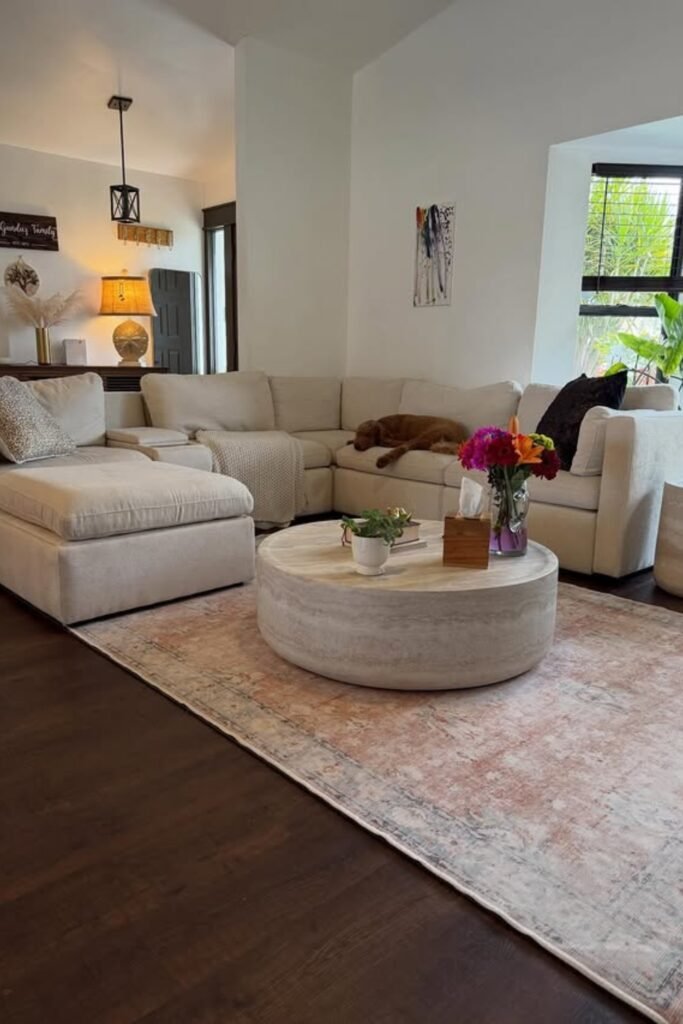
In smaller rooms, pushing it fully against a wall might work, but in most cases, leaving a little space around it looks more natural and modern.
Once the layout feels right, decorating becomes much easier because you’re working with a good base instead of trying to fix a bad setup.
2. Choose the Right Rug
A sectional without a rug often looks like it’s floating with no connection to the room.
The rug is what ties everything together and defines the seating area. One of the biggest mistakes people make is choosing a rug that is too small.
This makes the sofa look disconnected and the room feel broken into pieces.
A good rule is to choose a rug that sits under at least the front legs of your sectional. If you go bigger, the space feels even more grounded and complete.
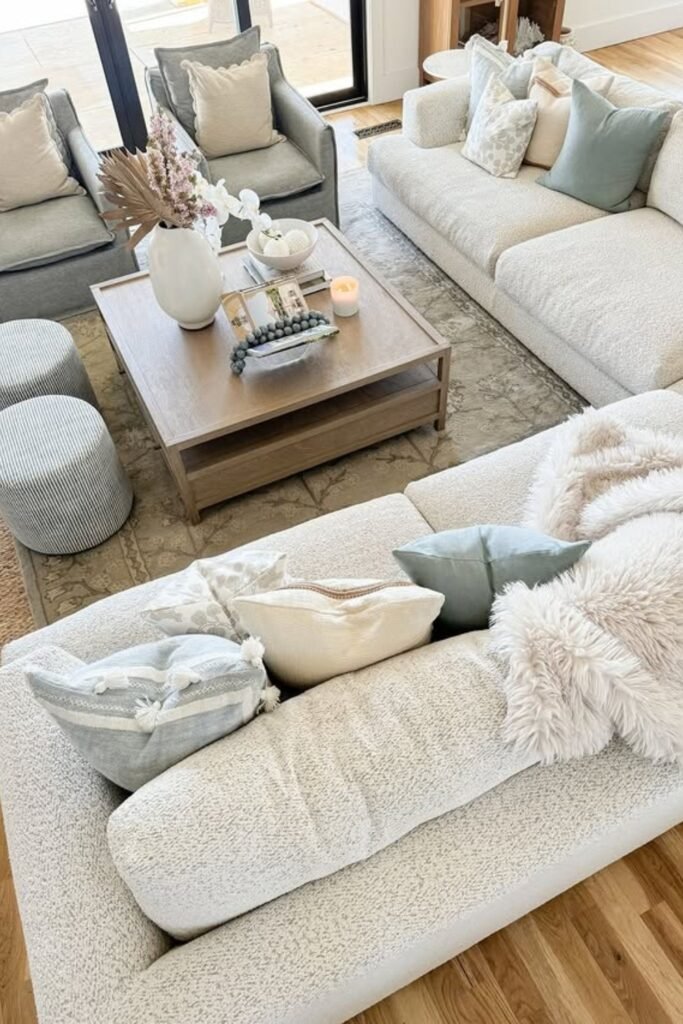
Keep the design simple if your sofa already stands out, or choose texture over bold patterns for balance.
The right rug instantly makes your sectional look more planned and expensive, even before adding any other decor.
3. Use Pillows to Balance
Pillows are one of the easiest ways to style a sectional, but they can also ruin the look if overused.
Many people keep adding cushions until the sofa looks crowded and messy. Instead, focus on balance.
You don’t need pillows on every seat. Place them in small groups of two or three on each side of the sectional.
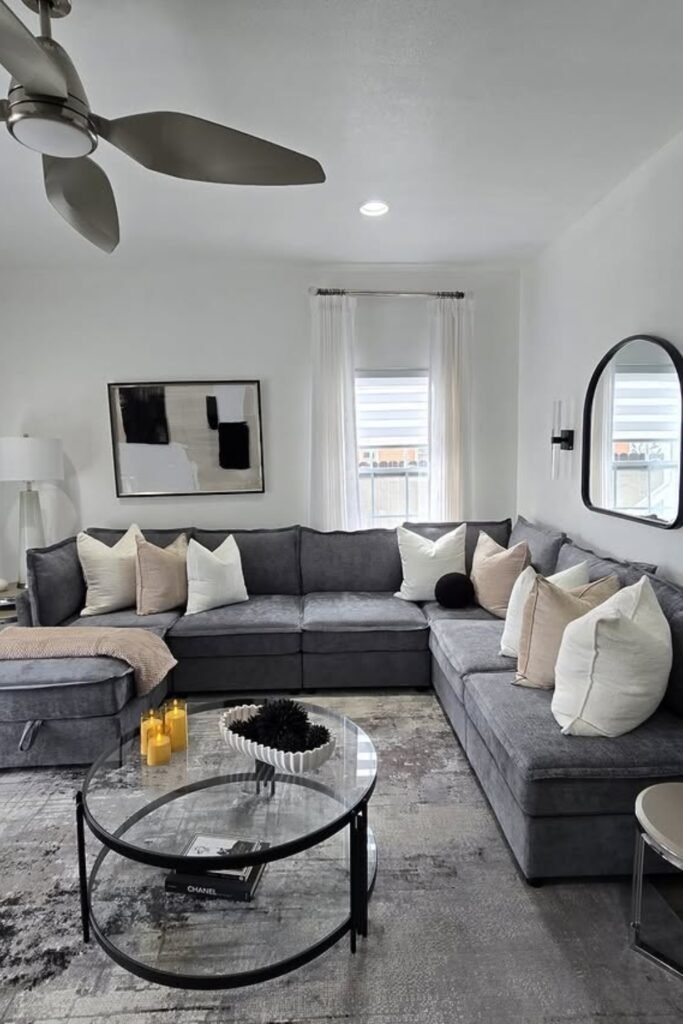
This keeps the sofa soft and inviting without making it feel stuffed. Mix different sizes to create depth, but don’t use too many colors. Stick to a simple palette so everything feels connected.
Also, leave some empty space because a sectional needs room to breathe. The goal is to make it look cozy, not overloaded.
4. Add a Coffee Table
A coffee table plays a big role in how your sectional looks because it connects the seating area. If the table is too small or the wrong shape, the whole setup feels off.
For L shaped sectionals, rectangular or oval tables usually work best because they match the long lines of the sofa.
In smaller spaces, a round table is a better choice because it softens edges and keeps movement easy.
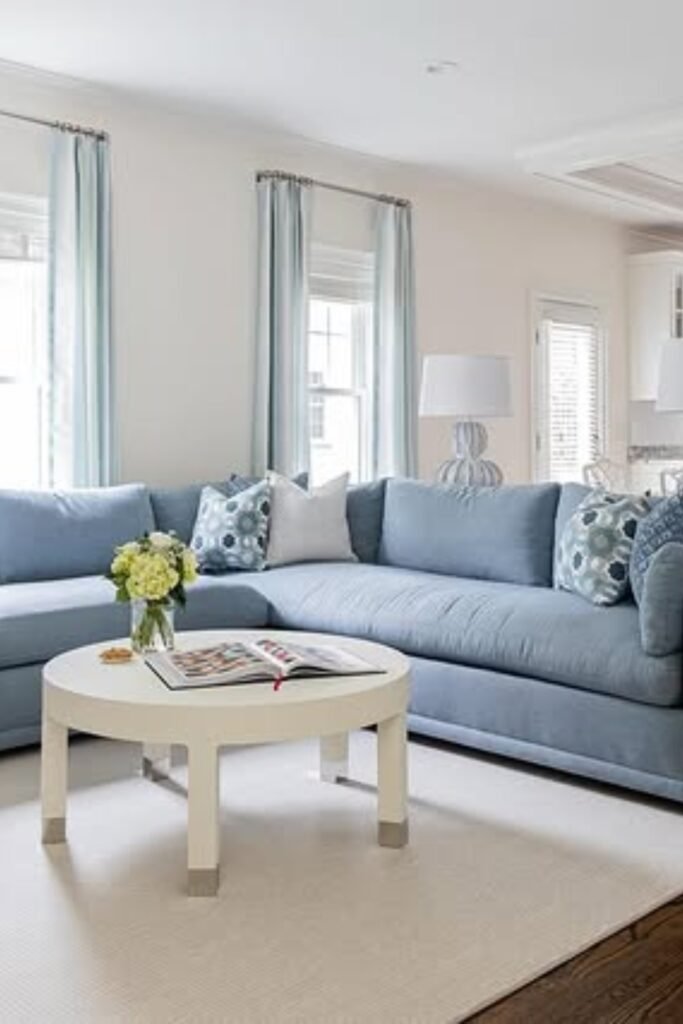
The height should also feel natural, sitting close to the seat level. Avoid going too small because it makes the sofa look oversized, and avoid going too big because it blocks movement.
The right coffee table makes the space feel complete and balanced
5. Keep One Side Slightly Lighter Than the Other
If both sides of your sectional are styled the same way, the space can look flat and boring.
Instead, create a slight imbalance on purpose. Let one side have more pillows or decor while the other side stays simpler.
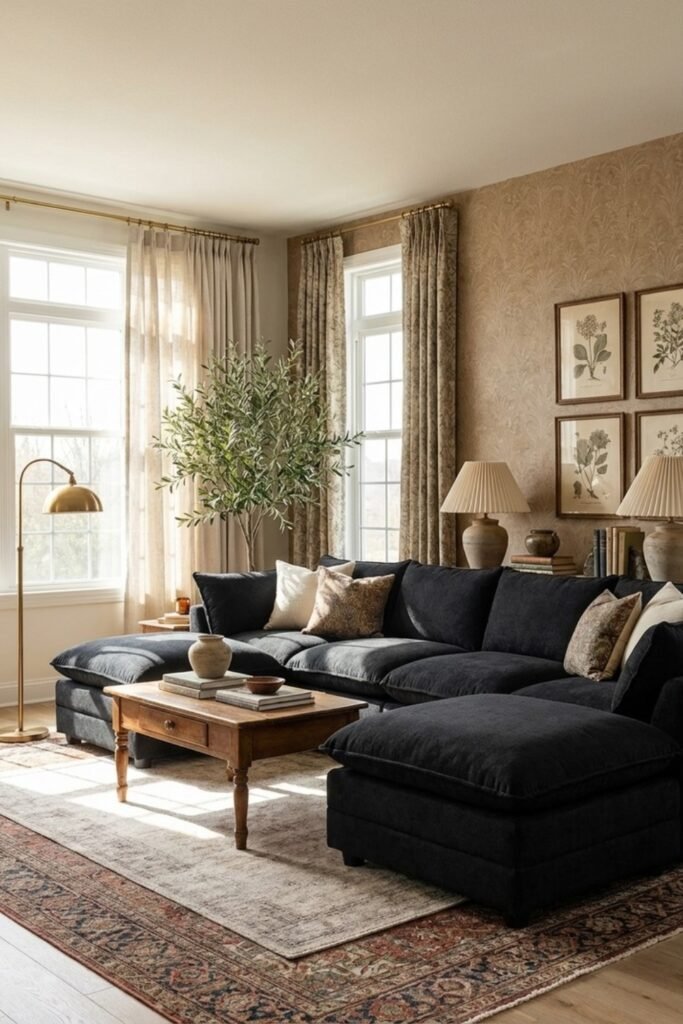
This creates visual movement and makes the room feel more natural. Perfect symmetry often looks stiff in real living spaces, especially with large furniture like sectionals.
When one side is lighter, your eyes have a resting point, which makes the whole setup feel more comfortable and visually interesting.
6. Use Lighting to Frame the Seating Area
Lighting is what makes your sectional feel warm and complete.
Without it, even a well decorated sofa can look dull. Adding a floor lamp or table lamp near the sectional helps define the seating area and creates a cozy atmosphere.
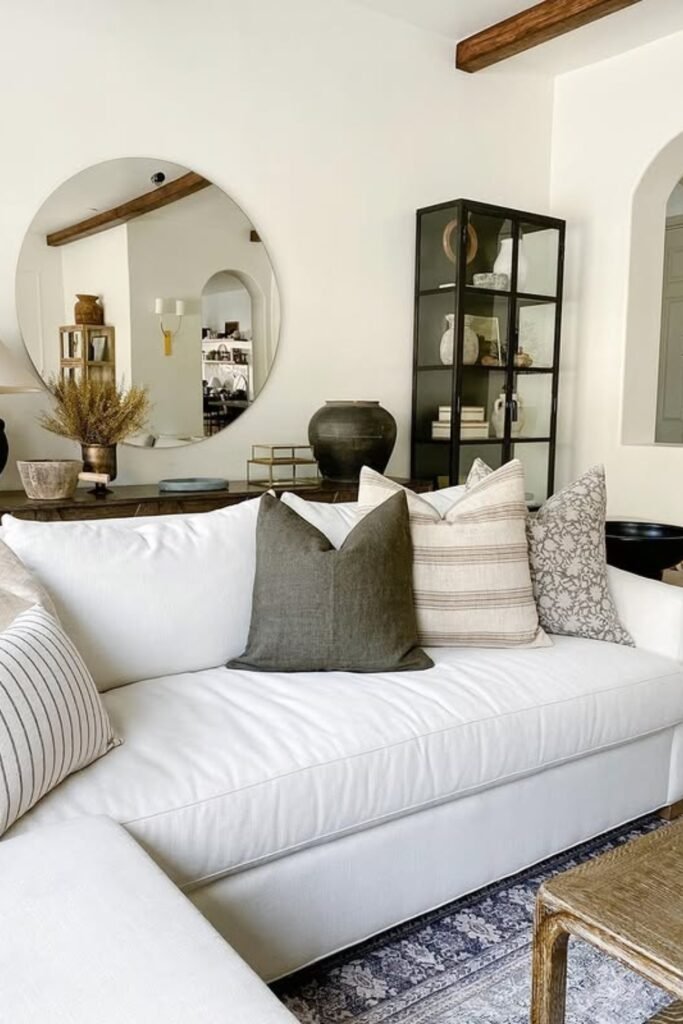
It also adds height to the space, which balances the wide shape of the sofa. Try not to rely only on ceiling lights because they flatten the room.
Layered lighting makes everything feel more inviting and lived-in.
7. Style the Empty Corners and Back Area
Sectionals often leave empty or awkward spaces, especially in corners or behind the sofa in open layouts.
If you ignore these areas, the room can feel unfinished. A simple console table behind the sofa can solve this instantly.
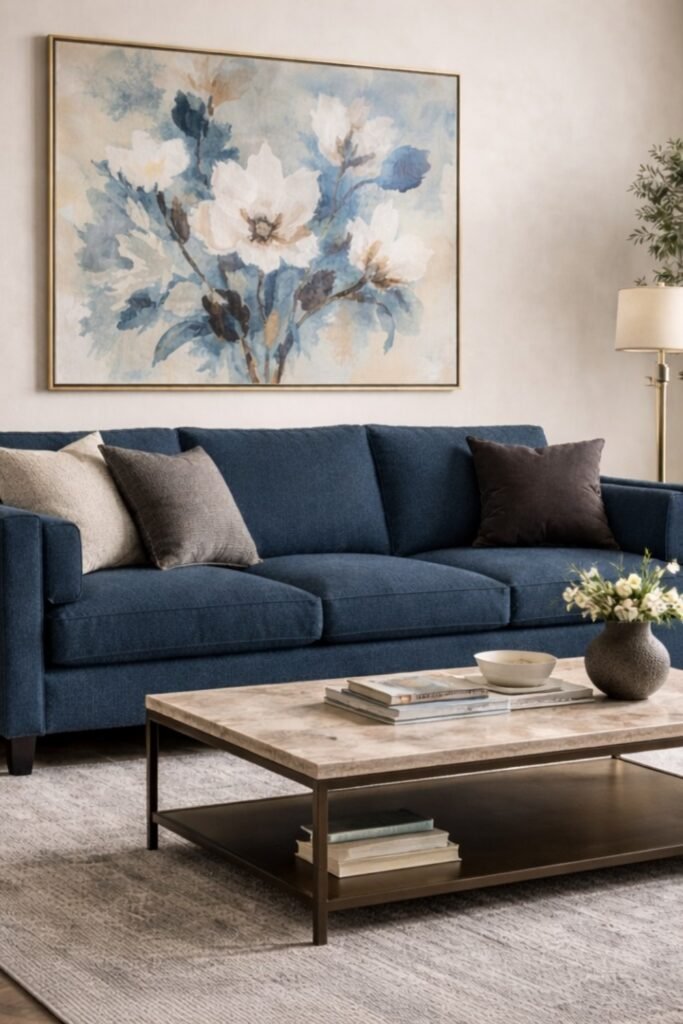
You can also add plants, lamps, or wall art to fill the visual gap.
The goal is not to overcrowd the space but to connect the sectional with the rest of the room so everything feels intentional.
8. Stick to a Simple Color Theme
Too many colors can quickly make a sectional look messy.
Instead, choose a simple color palette and stick to it. A good approach is one base color and two accent colors. This keeps everything calm and visually connected.
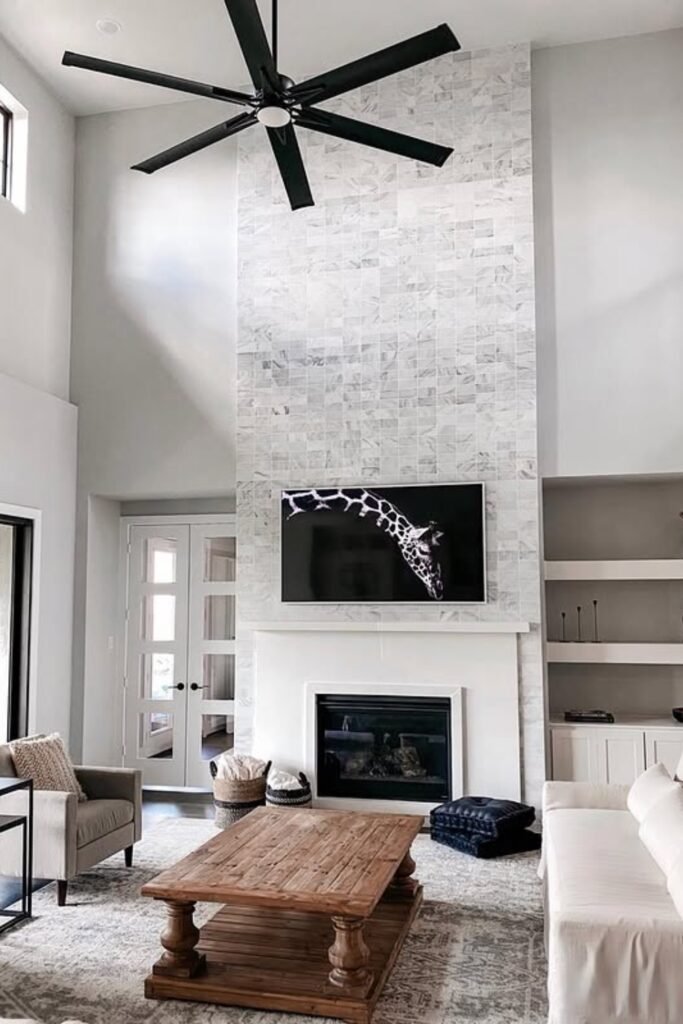
When the color palette is simple, textures and shapes stand out more, which makes the space feel more designed and less random.
Why Your Sectional Looks Unbalanced and How to Fix It Fast?
If your sectional feels “off,” it usually comes down to balance, not decoration.
One side may look heavier because of too many pillows, darker colors, or bulky furniture nearby, while the other side feels empty.
This uneven visual weight makes the whole room feel uncomfortable, even if everything is expensive or well arranged.
To fix it, step back and look at the sofa as one single shape instead of separate sections. If one side feels crowded, remove a few cushions or decor items.
If the other side feels empty, add a small side table, lamp, or one or two pillows. You don’t need to perfectly mirror both sides, in fact, that often looks stiff.
The goal is to create a natural balance where your eyes move smoothly across the sofa.
Once both sides feel equally “light” in visual weight, your sectional will instantly look more put together and intentional.
Simple Styling Tricks That Make a Sectional Sofa Feel Professionally Designed
You don’t need expensive furniture or a full room makeover to make your sectional look professionally styled. Small, simple choices can completely change the way it feels.
Start by limiting your color palette to two or three tones so everything looks connected instead of random.
Then layer textures like soft cushions, woven throws, and natural materials to add depth without clutter.
Another trick is to create height variation. Combine low elements like cushions with taller pieces like lamps or wall art so the eye moves around the space naturally.
Also, avoid filling every seat or corner, leaving some empty space is what makes the setup look intentional, not overdone.
Finally, focus on one clear focal point in the room, like a coffee table or a statement light.
When everything works around that point, your sectional automatically looks more organized and designerlike without needing extra decor.
Conclusion
Decorating a sectional sofa is not about adding more items, it’s about making the right choices in the right order.
When you fix the layout first, everything else becomes easier.
A good rug anchors the space, pillows add comfort without clutter, and the right coffee table brings balance.
What really makes the difference is how everything works together. Your sectional should not feel too heavy on one side or disconnected from the room.
It should feel balanced, open, and easy to live with.
Small details like lighting, color control, and empty space all play a big role in how finished the setup looks.
If your sectional still doesn’t look right, don’t rush to buy new decor. Step back and adjust the basics, layout, balance, and spacing.
Once those are correct, even simple styling will start to look intentional and well-designed.
You may like to read!
