
23 Wall Moulding Ideas to Add Character
A bare wall can make a furnished room feel unfinished, even when the sofa, lighting, and colours already work well together.
Choosing trim gets tricky when every saved photo has different panel sizes, ceiling heights, and furniture sitting in front of it.
These 23 wall moulding ideas will help you choose a layout that suits your space, with practical details to plan before starting.
Plan the Wall Around What Stays
Start with the furniture, doors, windows, and sockets you already have. Their positions should guide the layout before you decide how many frames to add.
Use painter’s tape to test the outlines, then look from the doorway and your usual seat.
Fewer well-proportioned panels often feel more convincing than a crowded wall.
The images below are AI-generated design concepts for inspiration; adapt their proportions and construction details to your own room.
Wall Moulding Ideas for Different Rooms
Classic Picture Frames
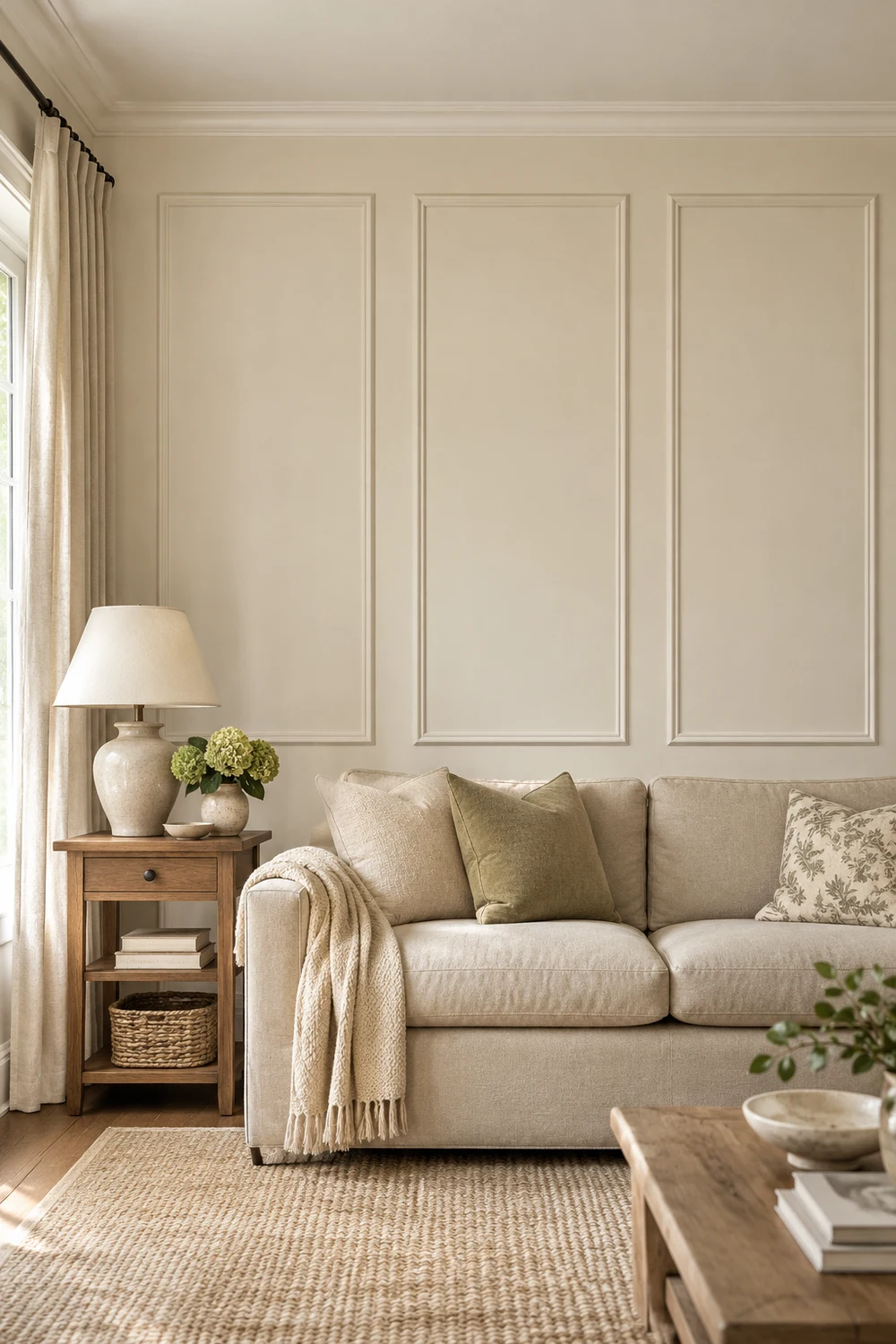
A plain sofa wall often needs structure more than extra artwork. Slim rectangular frames give it a finished outline without filling every gap.
Map the frames around your largest furniture first, leaving a consistent border near the skirting, ceiling, and ends of the wall.
Paint the trim and wall the same warm white, then bring in linen, oak, and a patterned cushion for a relaxed finish.
Two-Tier Wall Frames
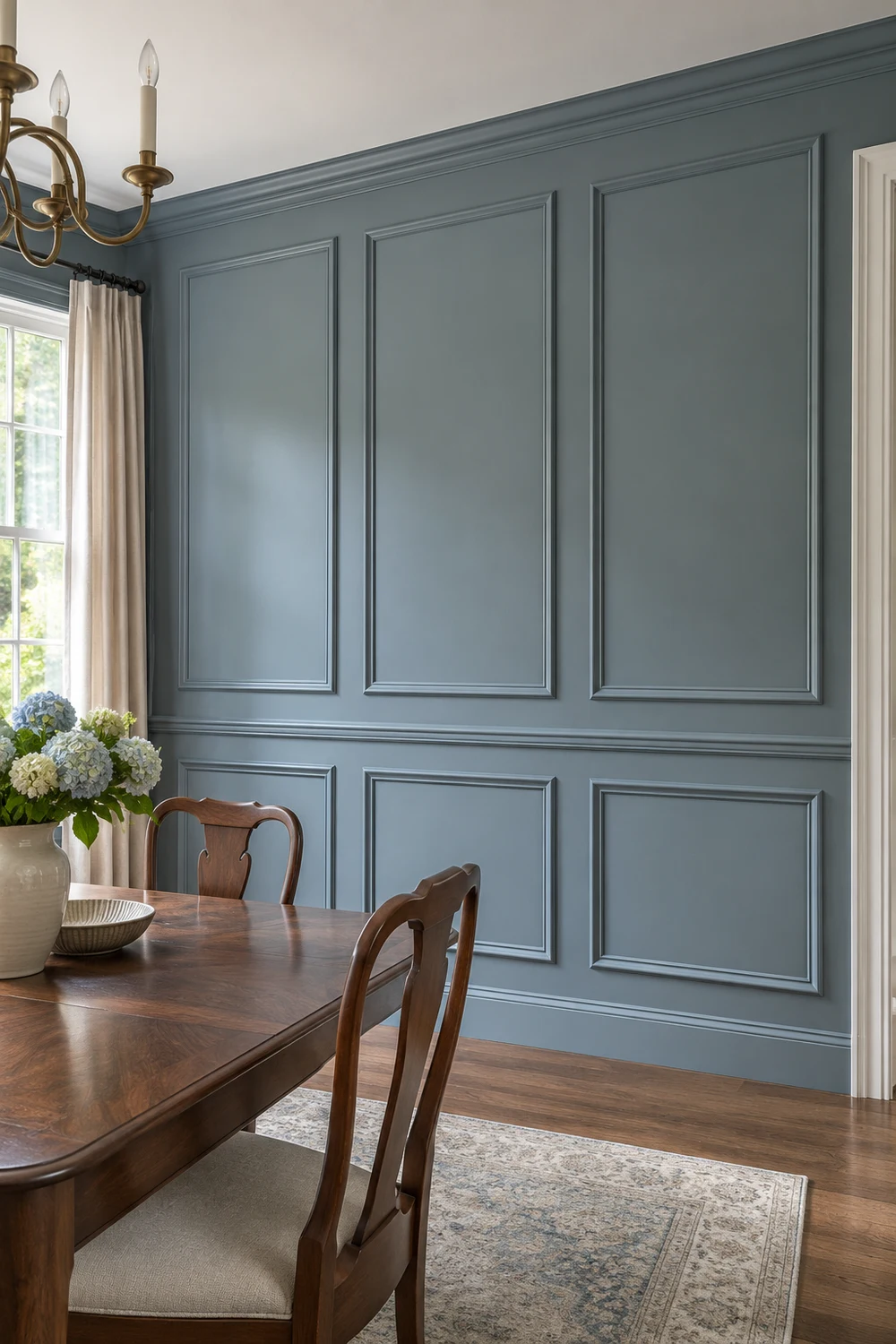
Two rows of frames bring order to a dining room, especially when a long wall feels disconnected from the table below.
Align the vertical edges above and below the chair rail, then test the rail height against your actual chairs and window sills.
A muted blue finish works comfortably with walnut furniture; keep nearby artwork simple so the layered wall detail still has room to show.
Double Border Panels
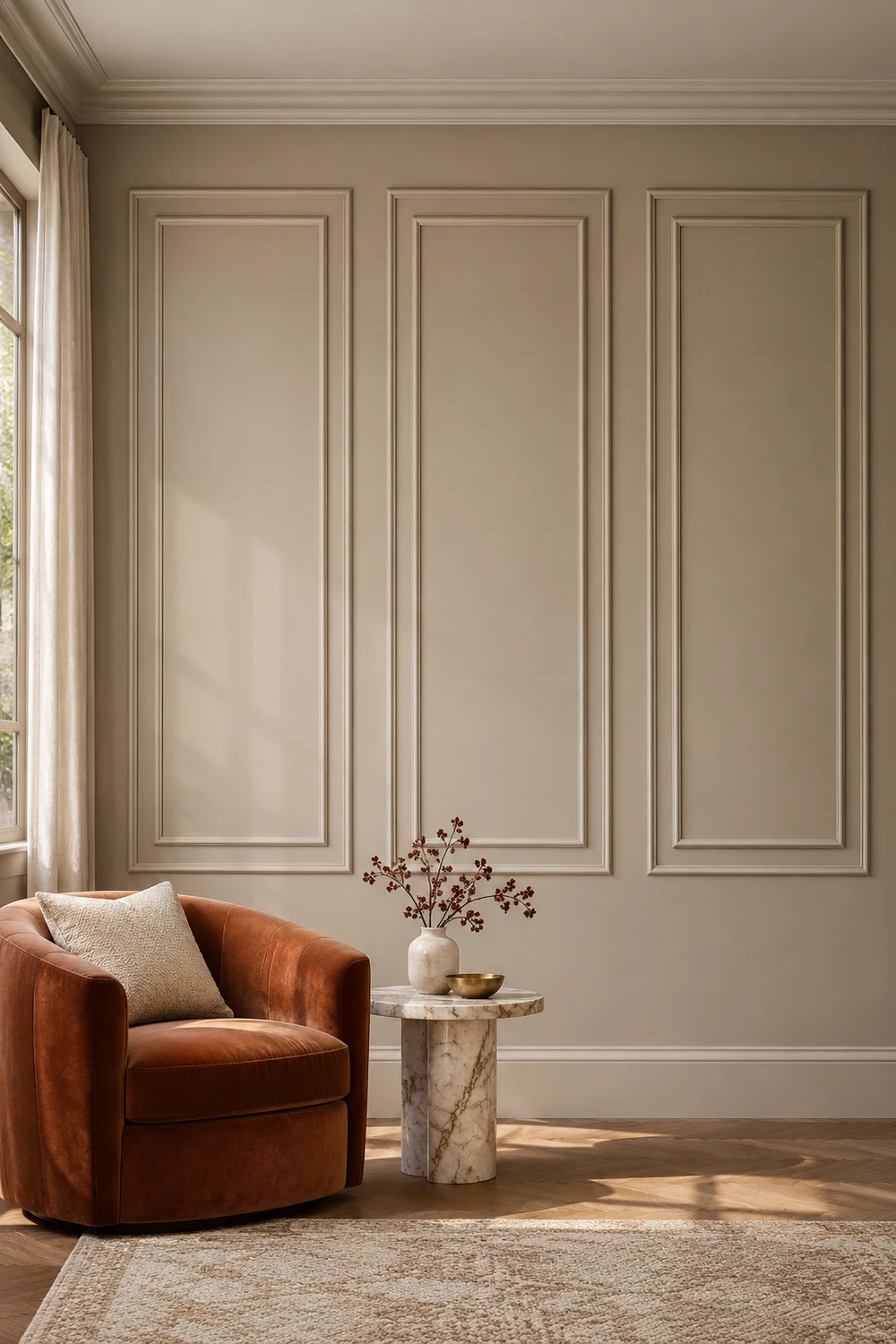
Nested borders add another layer of shadow, giving ordinary rectangular panels a more detailed finish without needing elaborate carvings or oversized trim.
Choose two compatible profiles and keep the space between their outlines consistent. Tape both borders before committing to the extra cuts.
Soft greige helps those small shadows stand out gently, while one velvet chair or stone side table gives the room enough contrast.
Oversized Centre Frame
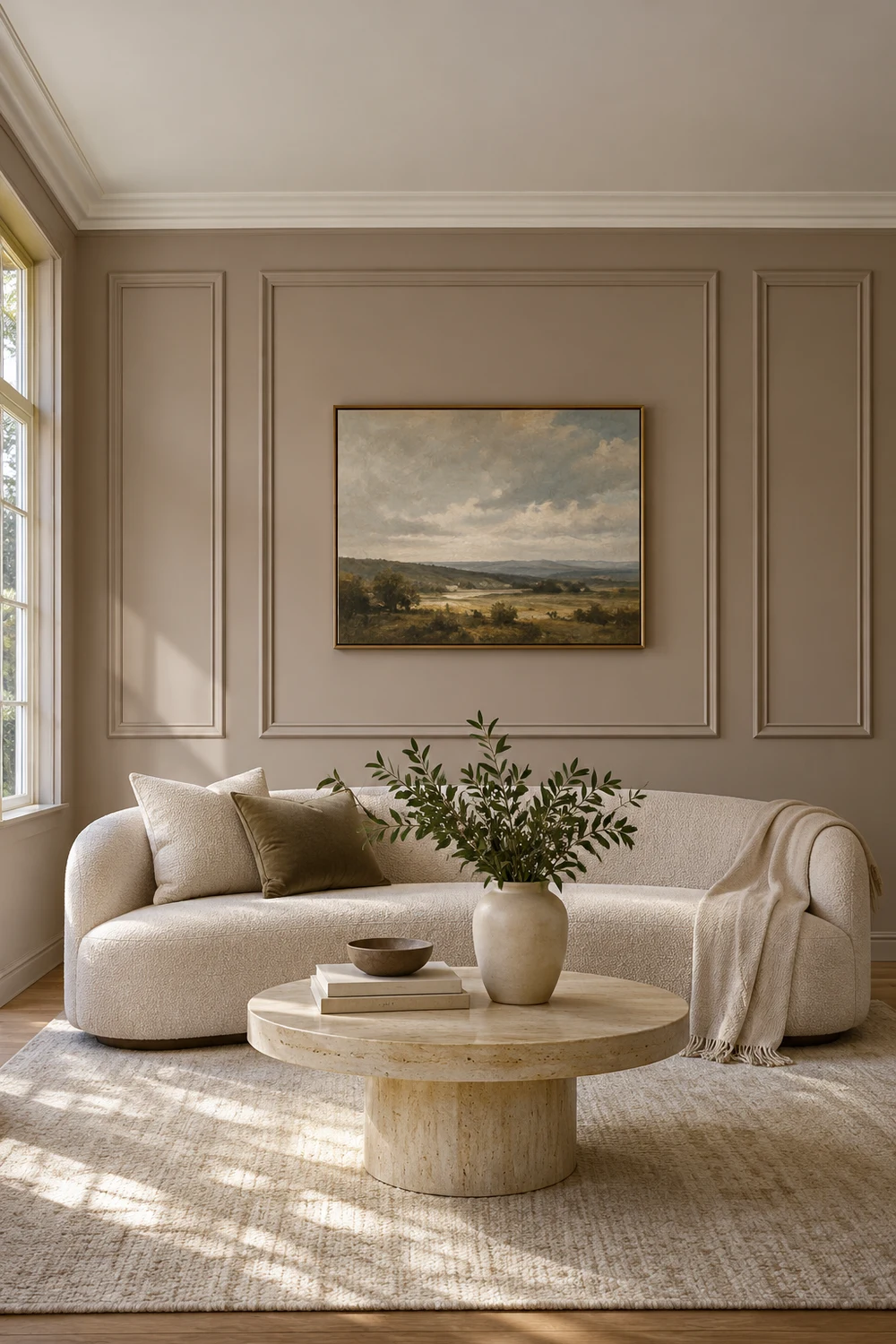
One broad centre panel gives a long wall a clear focal point, with narrower side frames acting like quiet supporting pieces.
Size the middle opening around your artwork and furniture together. Leave visible wall between the art frame and the surrounding decorative moulding.
For more help balancing large living room walls, carry that same sense of scale into your lighting and main seating arrangement.
Wallpaper Above Wainscoting
Pattern feels easier to live with when it has a clear stopping point. Low wainscoting gives busy wallpaper a calm base.
Pick the wallpaper first, then borrow a quiet background shade for the panels below. Check the combination beside your flooring in daylight.
A round wooden table and woven chairs soften the formal trim, making this a comfortable choice for an everyday breakfast nook.

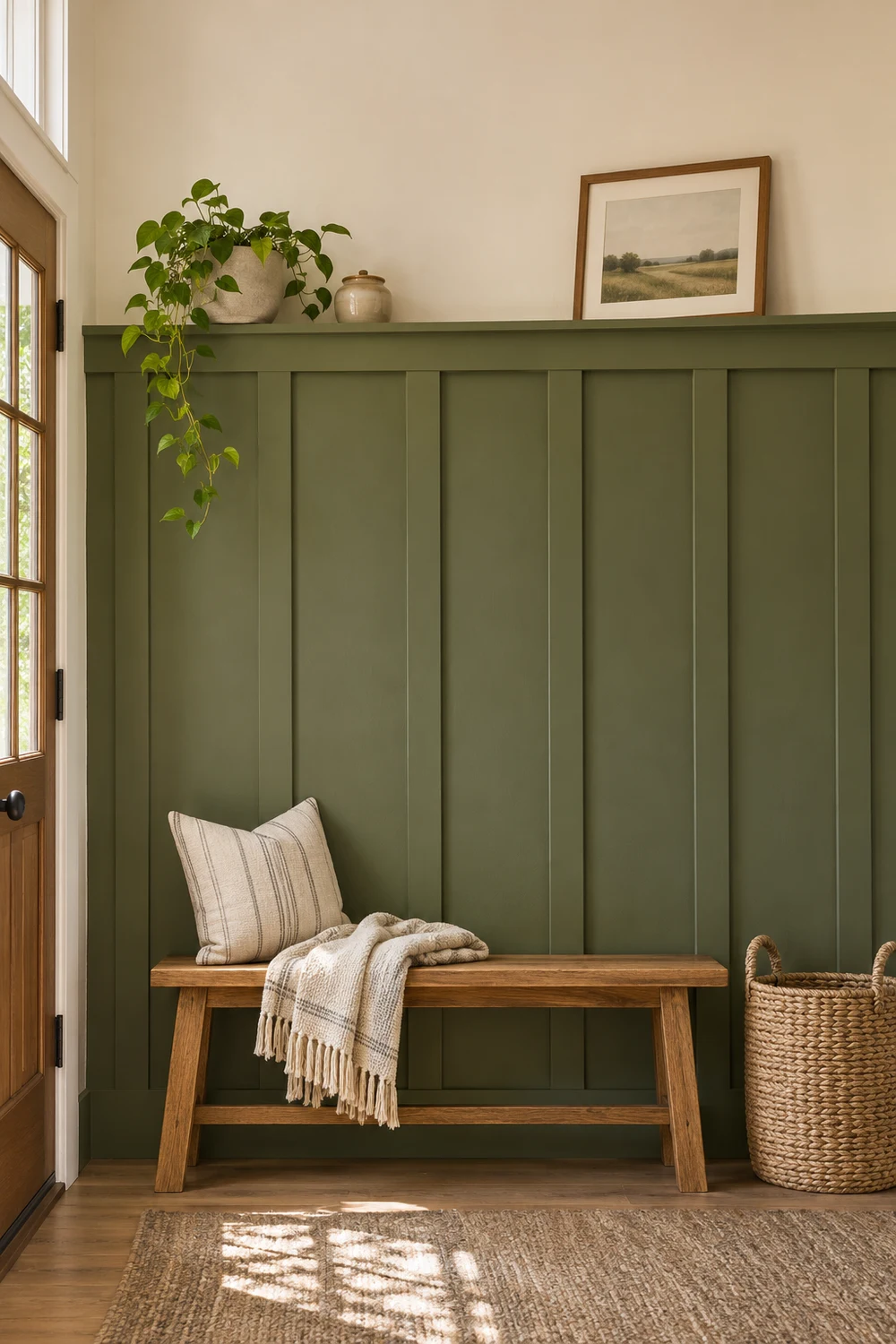
Tall Batten Ledge
A narrow ledge turns tall board-and-batten panelling into a useful backdrop for small prints, rather than leaving the upper edge purely decorative.
Plan its height around anything you want to lean there, and use a properly supported shelf detail suited to the intended load.
Olive paint, an oak bench, and one basket bring cottage character to a modern home without needing lots of extra ornaments.
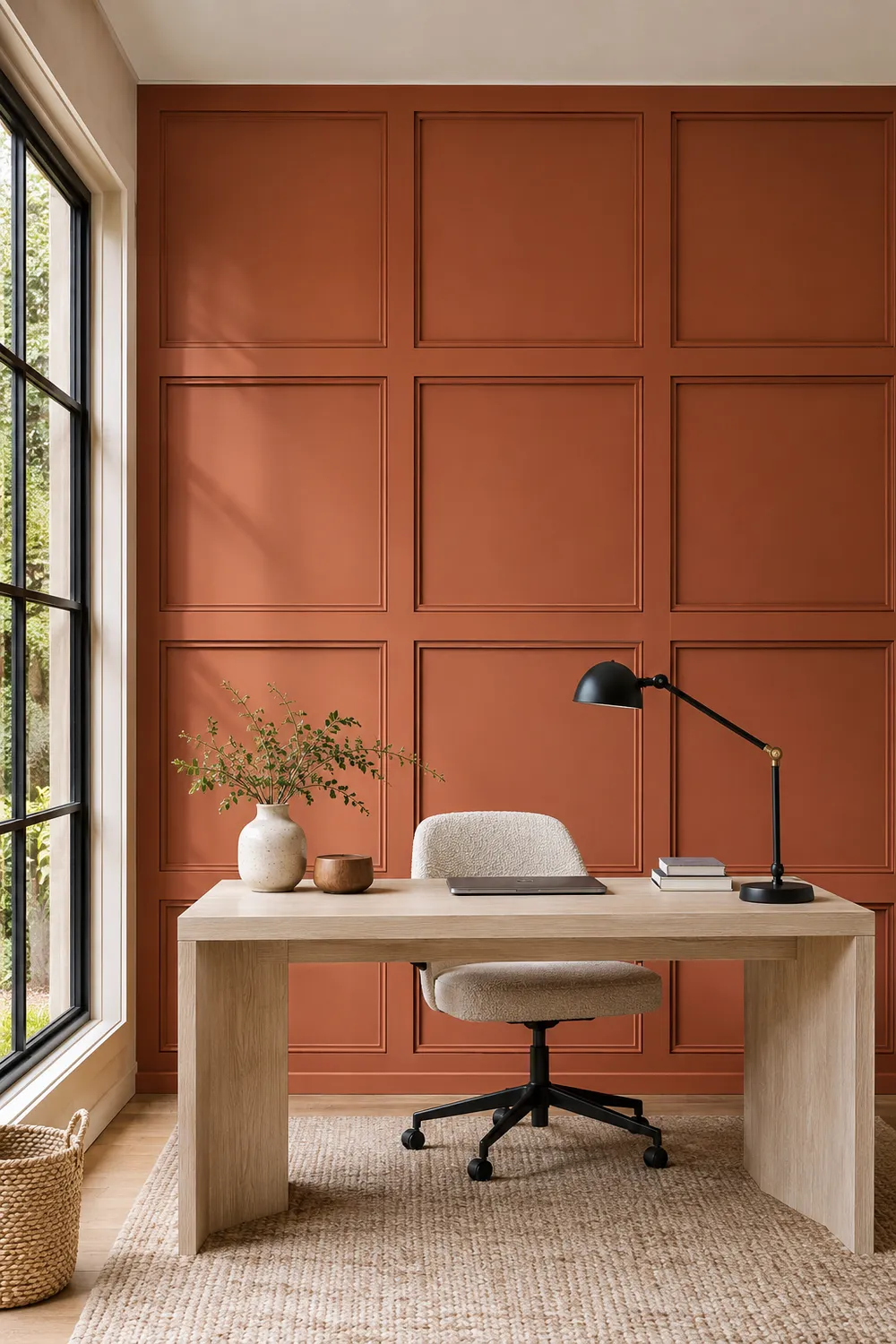
Even Square Grid
Equal squares give a home office a steady rhythm, making a compact desk setup feel connected to the wall behind it.
Use the clear spaces between battens as your starting point, then adjust the grid so sockets remain accessible rather than awkwardly boxed in.
Terracotta adds warmth beside pale timber and a black task lamp. Keep desk accessories low so the wall pattern remains easy to read.
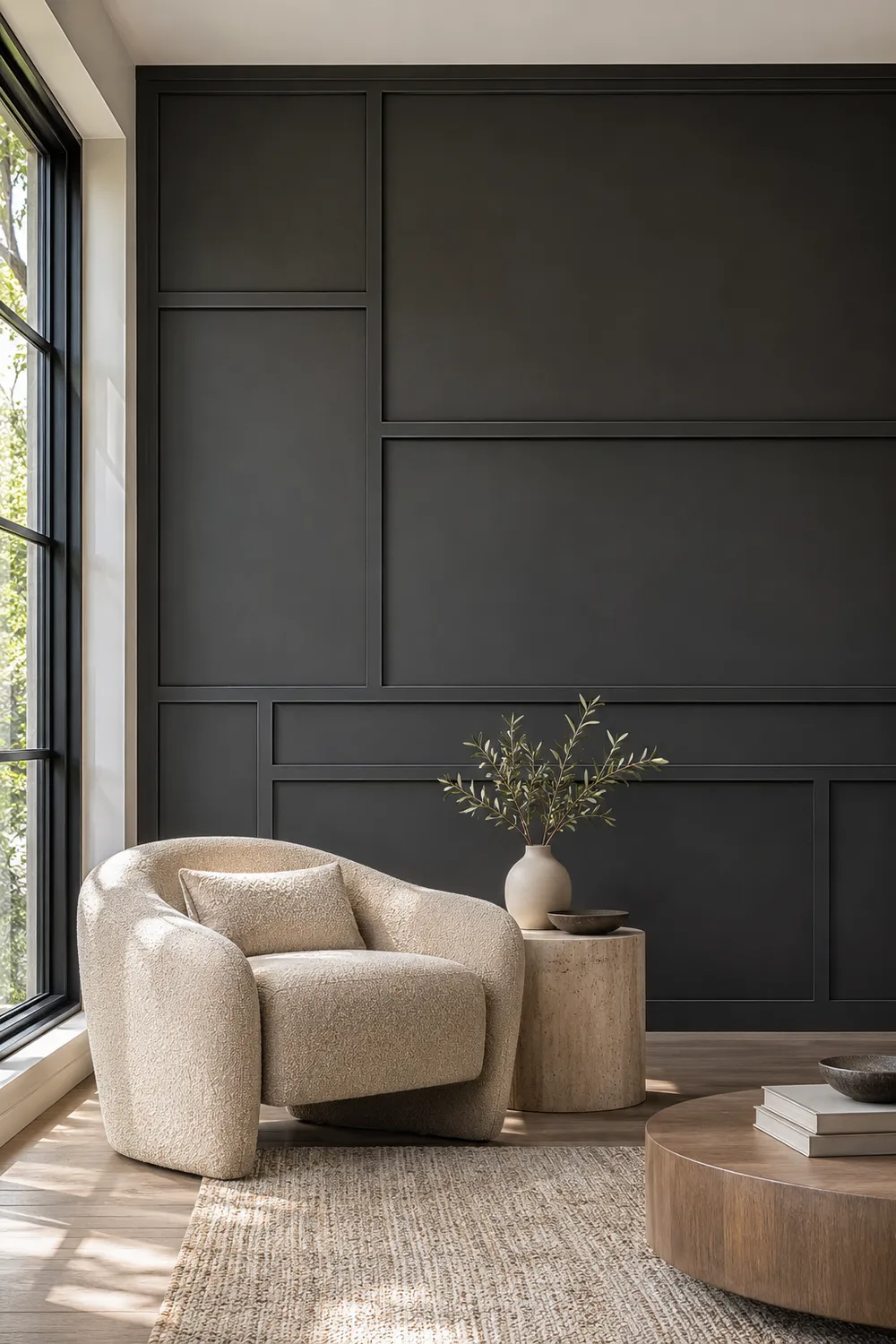
Asymmetric Linear Trim
Straight trim can feel surprisingly modern when the rectangles vary in size. The trick is making the imbalance look planned from the start.
Repeat a few shared horizontal lines across the arrangement, and avoid tiny leftover boxes at the edges that make the layout feel accidental.
Try charcoal with a pale sculptural chair, keeping the other walls quieter so the geometric pattern becomes the room’s main visual detail.
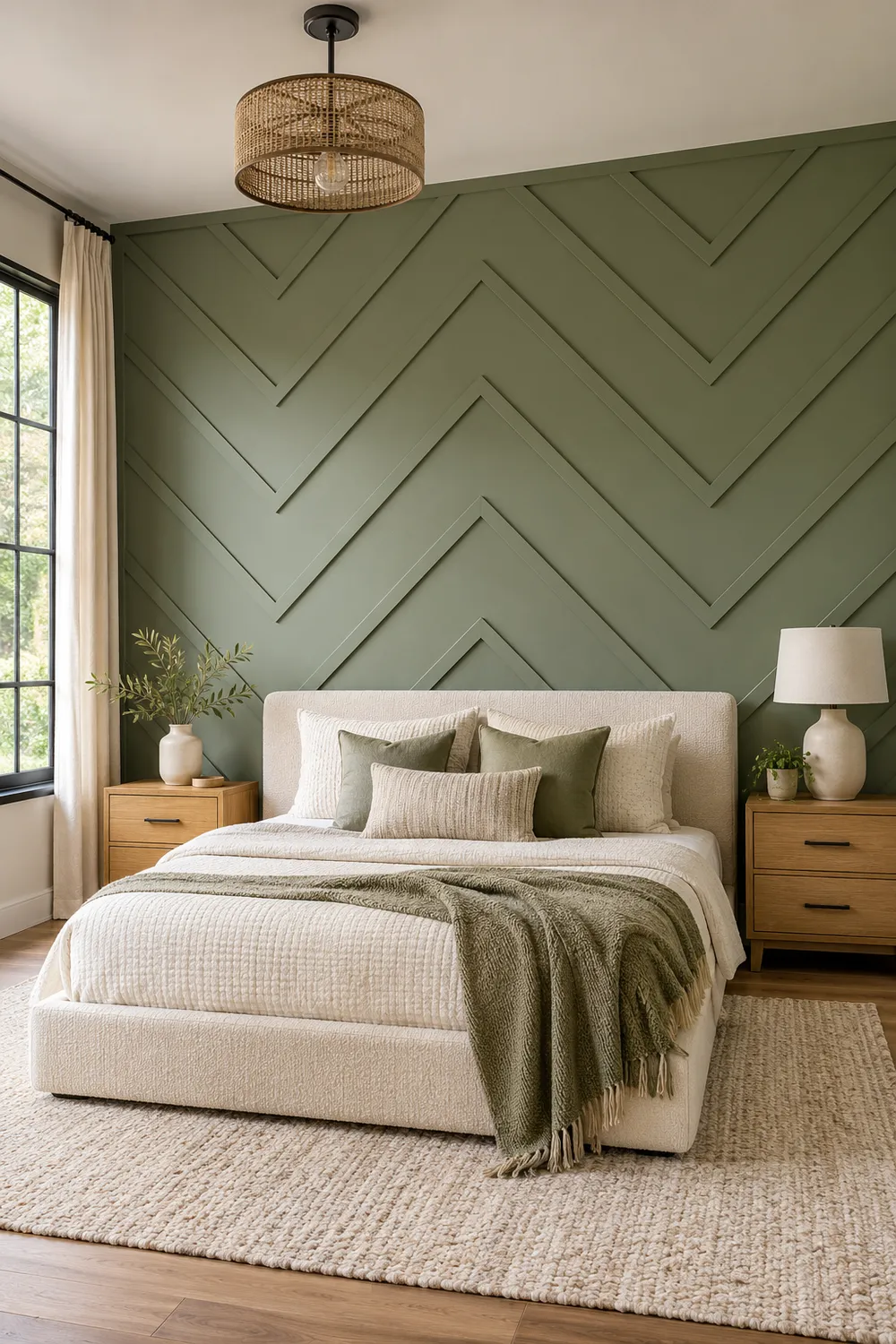
Chevron Batten Wall
A large chevron pattern brings movement to a bedroom without requiring printed wallpaper, particularly when the rest of the furniture has simple lines.
Decide where the zigzags meet before laying out individual battens. A centred pattern behind the bed feels calmer than an arbitrary starting point.
Sage paint and cream bedding keep the angles gentle. Skip a strongly patterned duvet, which would compete with the wall’s repeated direction changes.
Open Diamond Lattice
Open diamonds offer a lighter alternative to a dense grid, letting plenty of painted wall show between the diagonal strips of moulding.
Sketch the complete lattice first, including how it ends at corners and skirting. Awkward partial diamonds are easier to fix on paper.
In a bright sitting room, pale stone paint pairs naturally with wicker and linen; let those softer textures balance the sharper geometry.

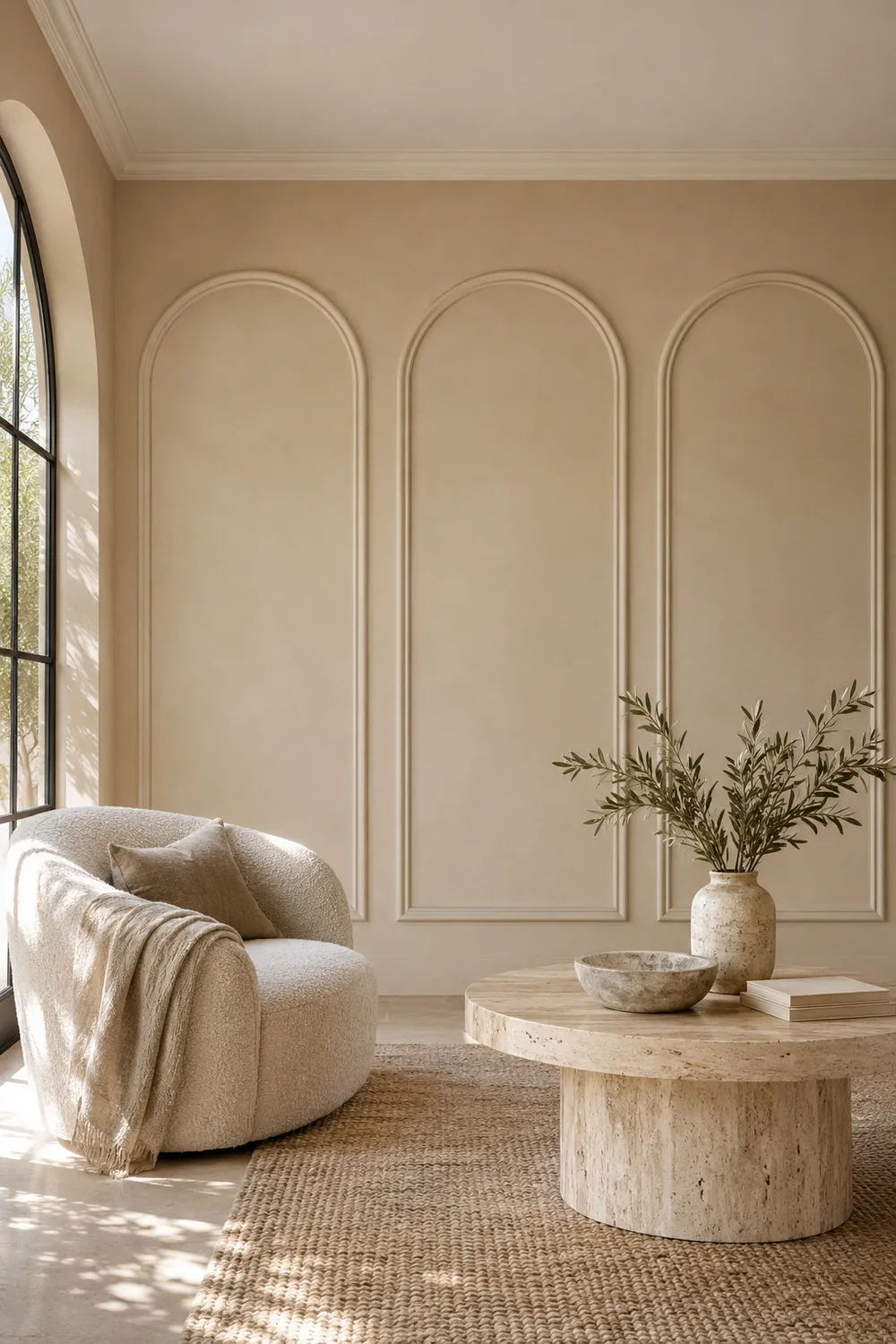
Arched Wall Frames
Arched frames soften a room full of square windows and straight furniture, adding a gentle curve without the work of building actual niches.
Use curved moulding designed for the required shape, checking the manufacturer’s radius guidance rather than forcing a rigid profile around the top.
Keep the inside and outside of each arch the same sandy shade, with a rounded chair nearby to echo the curve subtly.
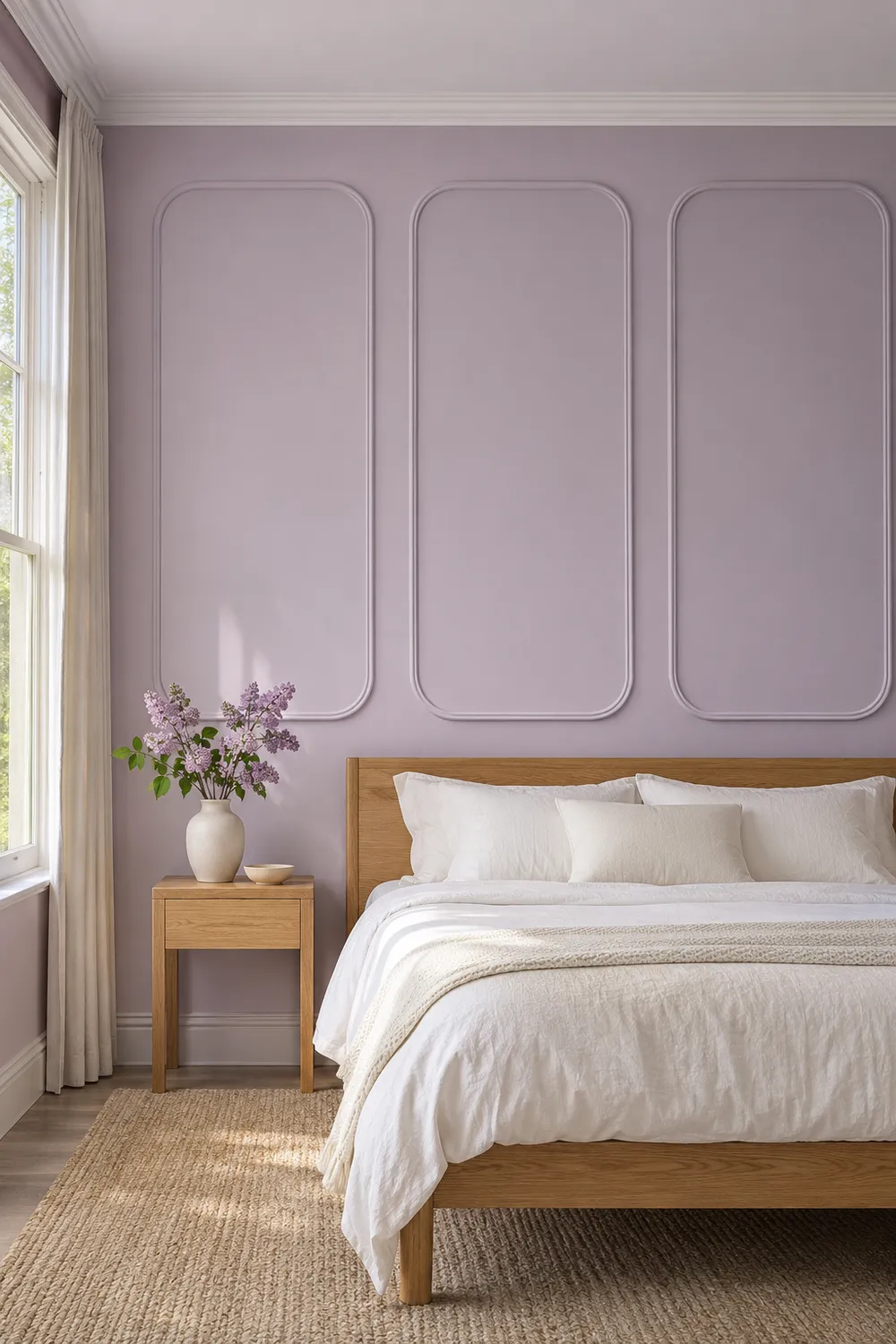
Rounded Corner Panels
Rounded corners keep the clean outline of a rectangle while making bedroom panelling feel a little softer and less formal than sharp-edged boxes.
Choose matching straight and curved components so the profile stays continuous. Make the corner radius consistent across every panel in the room.
Dusty lilac looks restful with white bedding and an oak bed, while plain curtains prevent the small architectural details from becoming visually crowded.
Decorative Corner Details
Small corner ornaments can give simple wall frames a period feel, especially in a room that already has traditional skirting or ceiling trim.
Limit the decoration to selected corners and choose pieces that match the moulding’s scale. Heavy appliques can overwhelm a delicate rectangular border.
Warm white paint keeps everything cohesive; an older wooden seat and a restrained brass lamp add character without turning the room into a showroom.

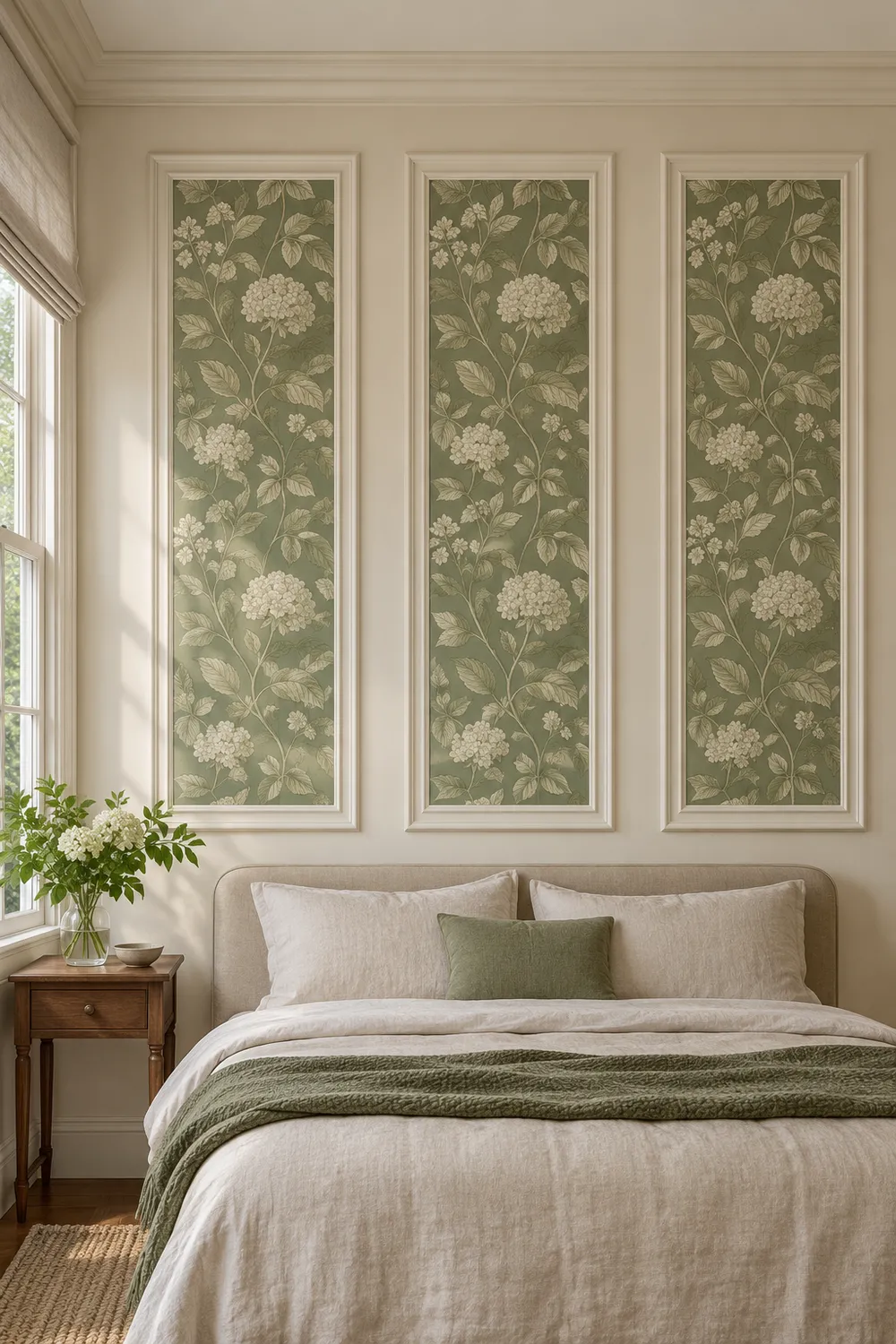
Framed Wallpaper Insets
Framing wallpaper as separate panels lets you enjoy a detailed print while keeping much of the wall plain, which suits quieter bedrooms.
Position the print within each opening before cutting, paying attention to where large flowers or branches land near the edges of the frame.
Choose a moulding colour from the wallpaper’s background. Repeating a soft green in the bedding helps the patterned sections feel connected to the room.
Fabric Inset Panels
Linen inside a moulding frame brings a softer texture to a reading corner, giving the wall interest even when the colour palette stays neutral.
Ask an upholsterer or joiner about a removable fabric-covered insert, and choose a textile you can maintain easily; decorative fabric alone is not soundproofing.
Dark taupe borders define oatmeal cloth gently. Add a walnut chair and a focused reading light, leaving the textile panels free of extra artwork.

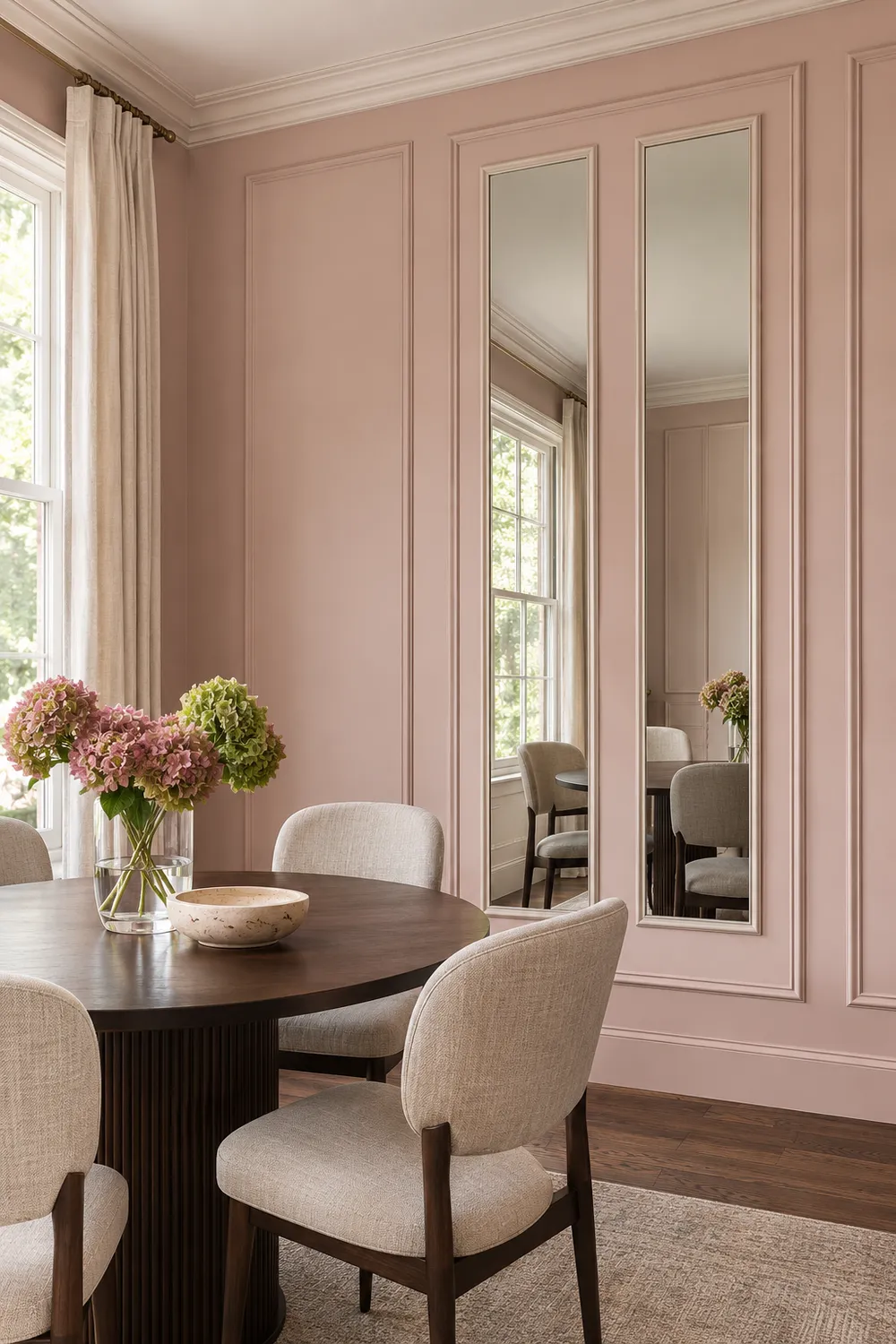
Mirrored Panel Insets
Mirror inserts can bring reflected daylight into a dining corner, while a moulded border gives the reflective surface a more deliberate architectural edge.
Check the view from seated positions before choosing the panel locations. A reflection of a window usually feels calmer than one of clutter.
Have mirror panels fitted with fixings appropriate to their size and wall; decorative trim should frame the glass rather than serve as its support.
Stained Timber Frames
Visible timber grain changes the mood of wall frames, giving a painted room some of the warmth of joinery without covering the entire surface.
Try stain samples on the actual wood species first, since colour varies with the grain. Clean corner joints matter particularly with an exposed finish.
Walnut borders work well with cream walls and leather seating. Repeat the timber in one nearby piece, allowing other finishes to stay lighter.
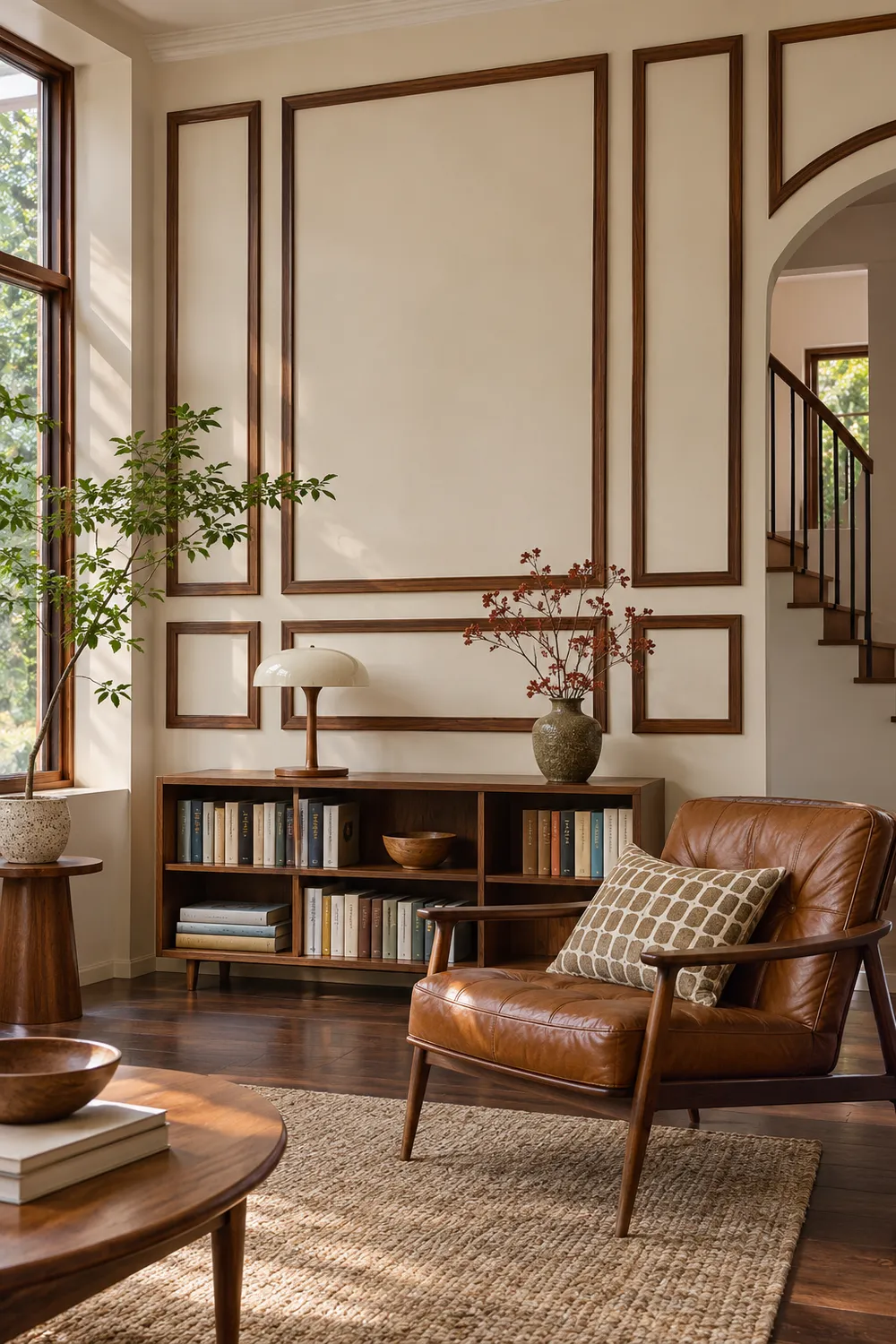
Stair-Following Panels
Stair walls need a layout that understands the slope. Angled panels can follow the climb while keeping the passage feeling visually connected.
Draw the rail and frame outlines together, checking the transition at each landing. Staircase angles need their own measurements rather than standard rectangular cuts.
Keep handrails and clear walking space practical, then explore other staircase wall ideas if you want artwork above the panelling.

Beadboard And Cap
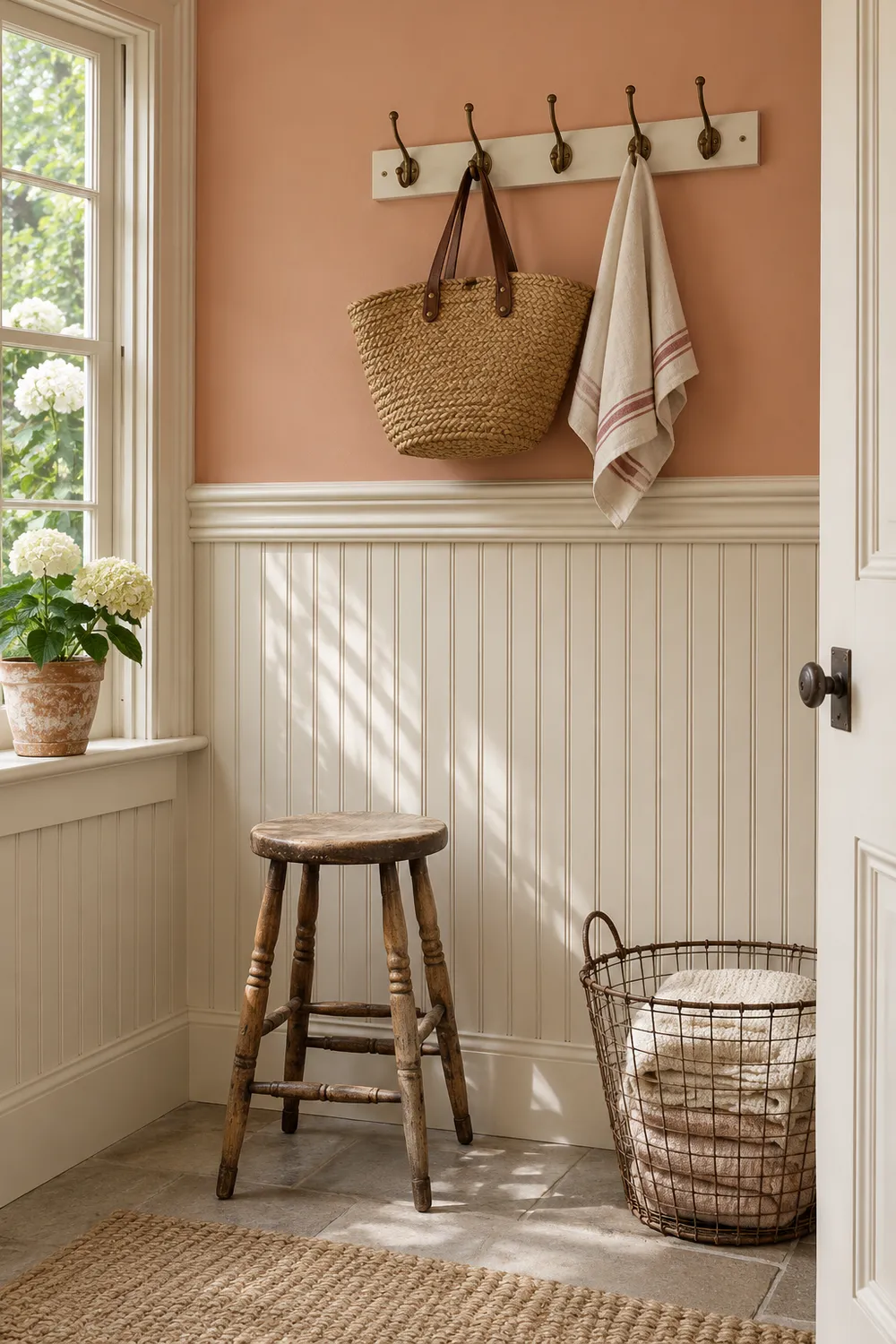
Beadboard brings a finer vertical texture than widely spaced battens, while a shaped cap moulding gives the lower wall a clear, finished edge.
Choose the cap alongside the existing door casing so their depths meet neatly. Resolve those junctions before ordering lengths for the whole room.
Off-white panelling and a peach upper wall suit a utility entry. A simple stool and basket keep the narrow grooves from competing with clutter.
Integrated Door Panels
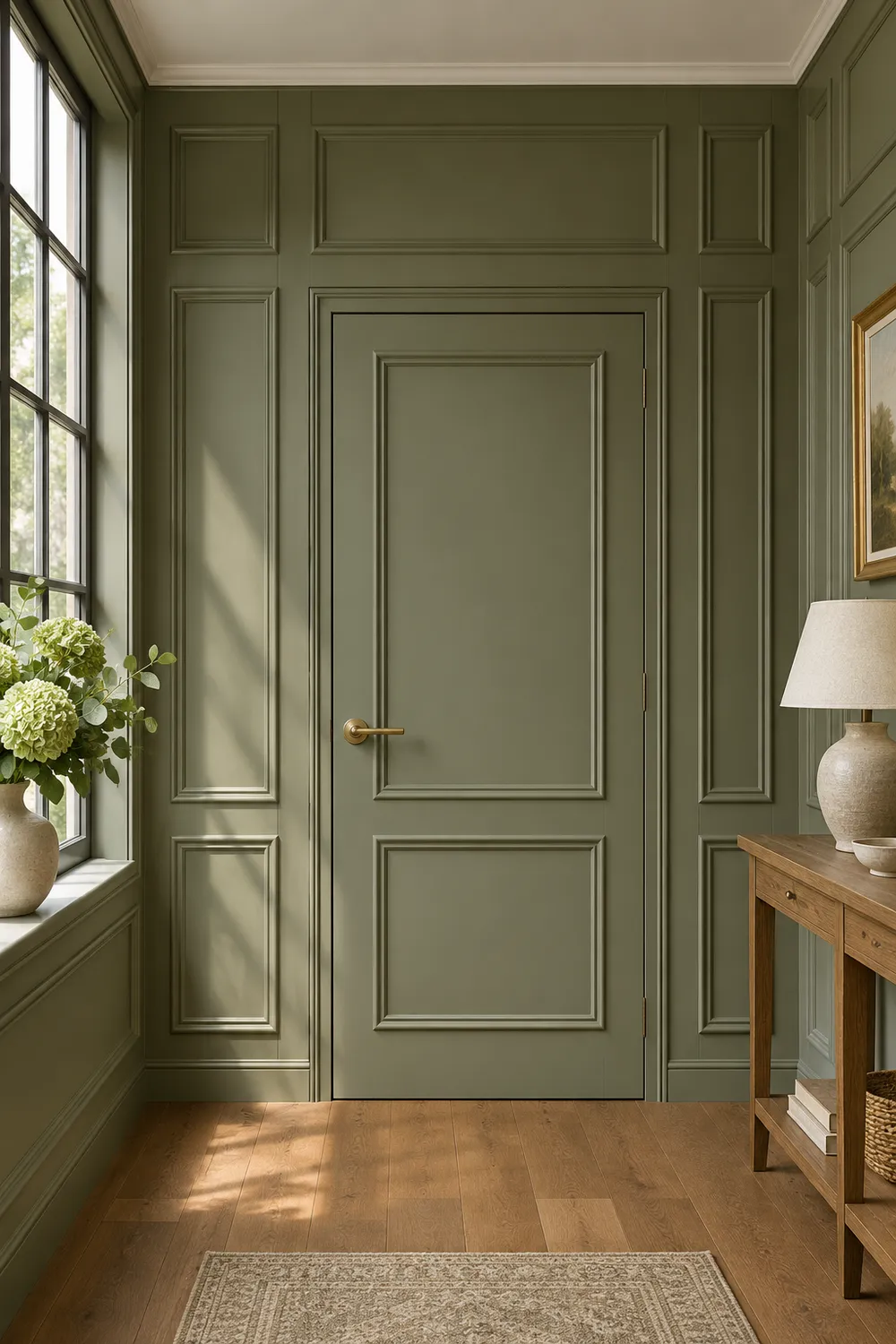
Carrying the wall pattern onto a flush door can make a hallway feel more continuous, particularly where several door openings interrupt the same wall.
Plan around the handle, hinges, and opening arc so added trim cannot catch. Leave door gaps, latches, and any required ventilation working properly.
A single green finish helps the alignment read clearly. Use a joiner for this detail, and avoid modifying fire-rated doors without appropriate specialist guidance.
Under-Window Wall Panels
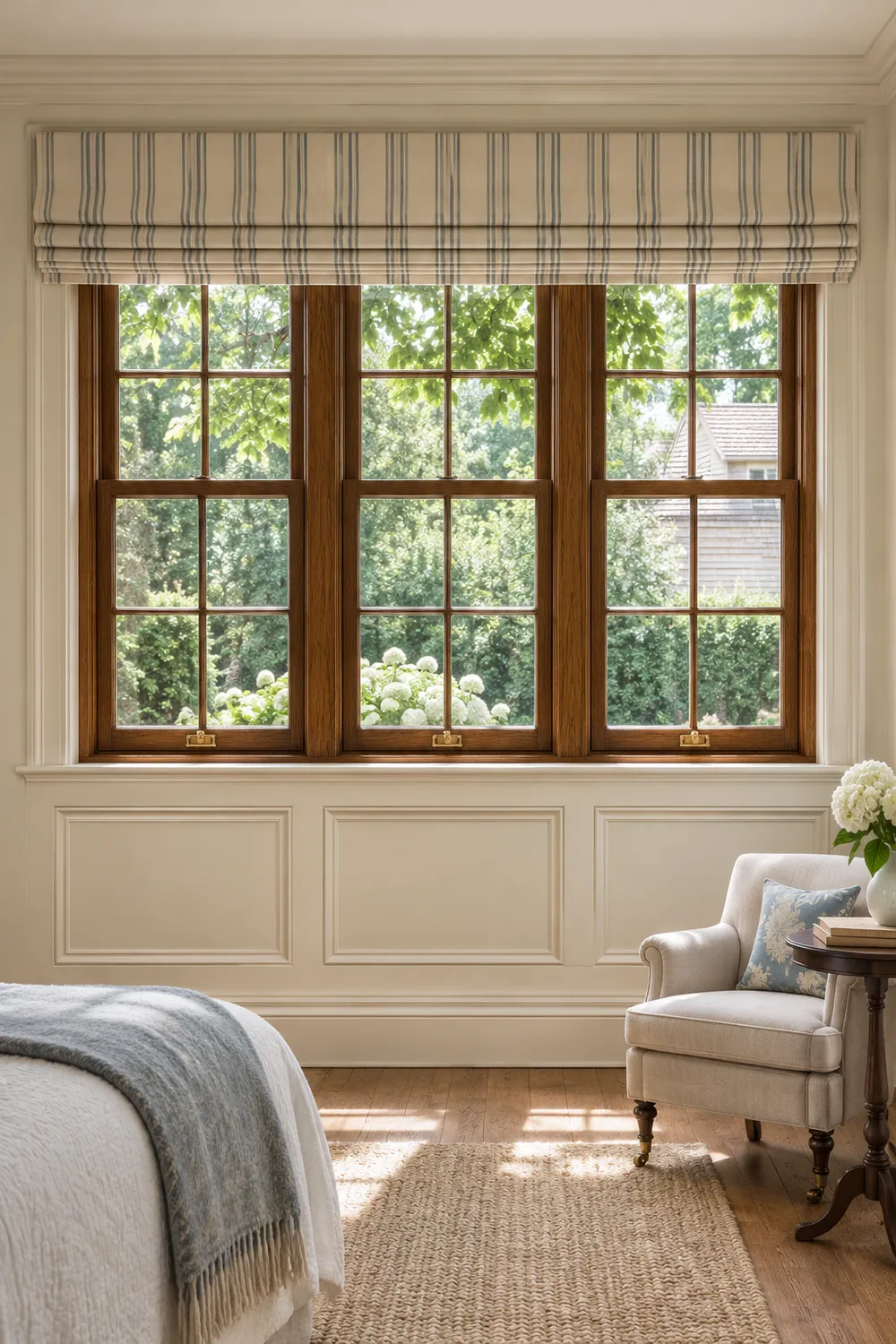
The strip of wall below a window often gets overlooked, yet shallow rectangular panels can make it feel like part of the room’s architecture.
Line up the panel divisions with the window where practical, and check that the trim leaves radiators, vents, sockets, and curtain movement unobstructed.
Cream paint and a simple striped blind keep the treatment light. Leave a little open space nearby rather than filling every panel with furniture.
Corner-Wrapping Frames
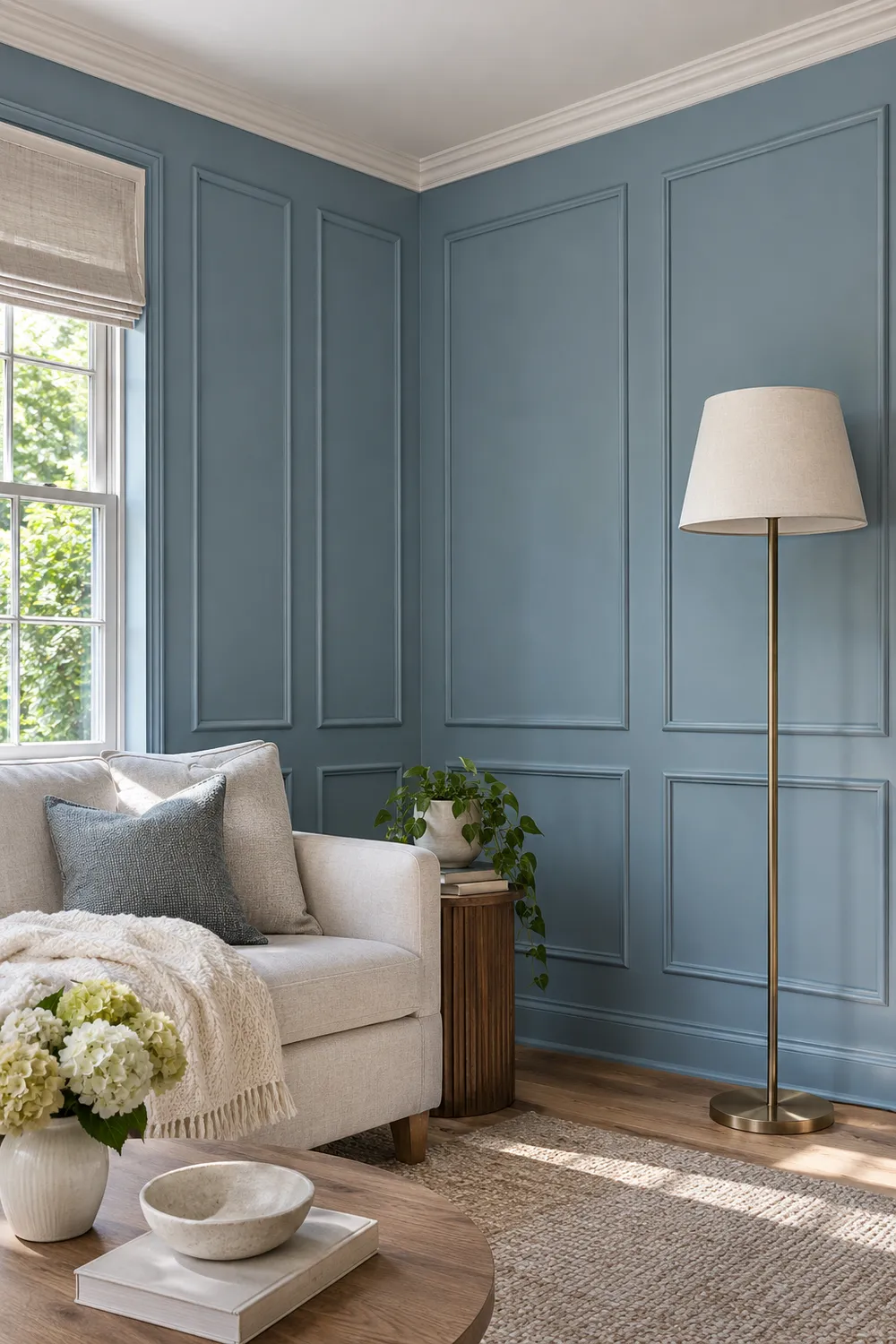
Stopping a feature wall at a corner can feel abrupt. Continuing the frames onto the adjoining wall makes the seating area feel more settled.
Match the top and bottom levels around the turn, then balance the corner margins. Each wall can have different panel widths if necessary.
A muted blue backdrop looks inviting with a pale sofa and warm lamplight, especially when you keep the remaining room finishes fairly simple.
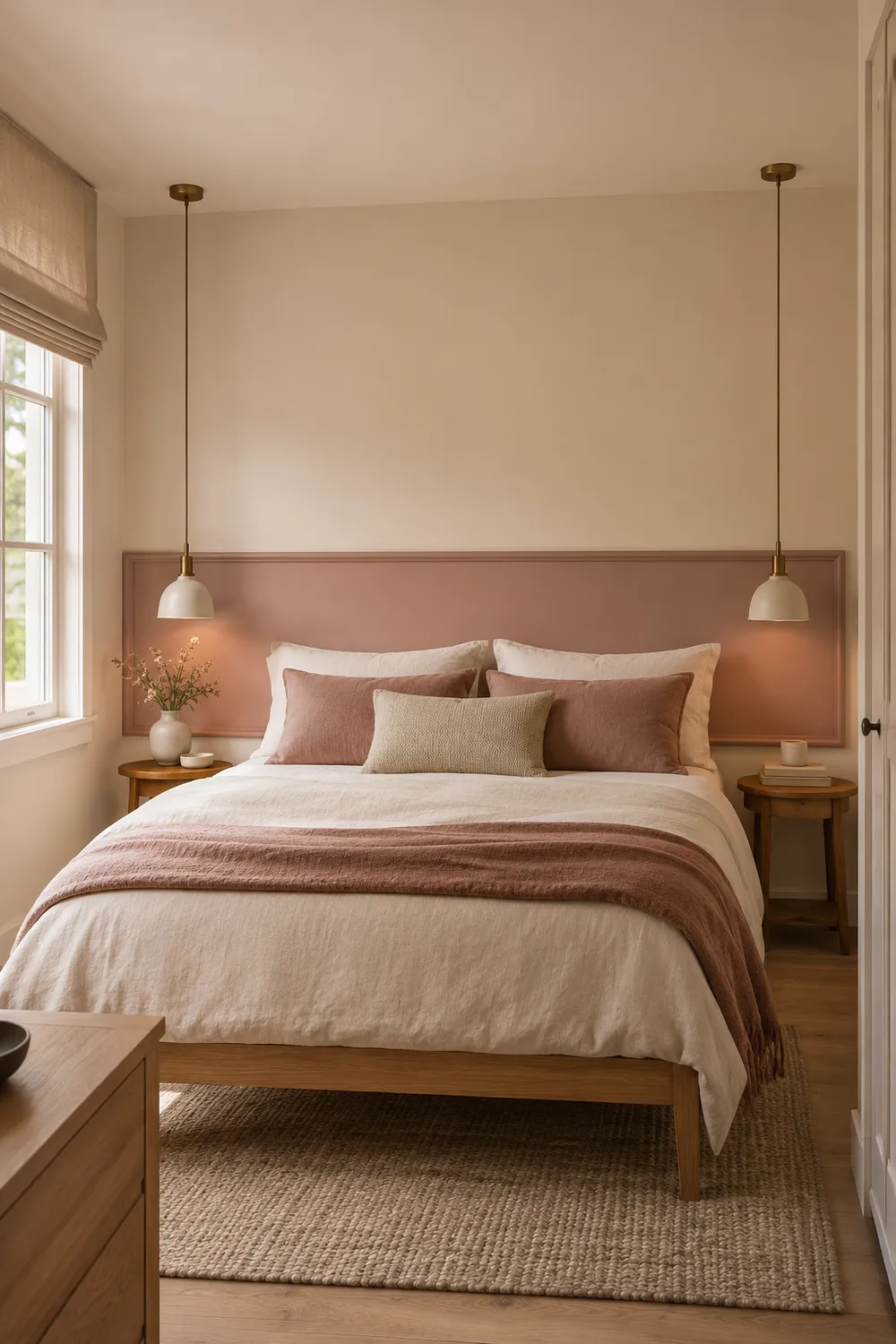
Wide Headboard Panel
A broad panel behind the bed provides a visual anchor when a separate headboard would make the room feel crowded or too heavily furnished.
Plan its width with the bedside tables in place, and keep projecting trim clear of where you sit or rest against the wall.
Paint the inset dusty rose, then follow these ideas for decorating without a headboard to balance the bedding and bedside lighting.
Check These Details Before Buying Trim
Measure the usable wall, excluding door and window casings.
For equal frames, subtract both outer margins and the gaps between frames, then divide what remains by the frame count.
Keep track of whether you are measuring the outside of each frame or the opening inside it. Mixing those measurements makes an otherwise balanced plan drift.
Order a short sample of the profile before committing. Hold it beside the skirting and door trim, and check how far it projects behind furniture.
Match the product and adhesive to the wall surface and room conditions. Orac’s installation guidance distinguishes dry-surface adhesives from products intended for humid or more demanding settings.
For bathrooms, check the exact product’s limits rather than relying on a general material label.
Orac’s product FAQ also distinguishes humid-room use from direct water contact.
Budget for the whole finish: trim, adhesive, any specified fixings, filler, primer, paint, and labour. More corners and nested borders mean more preparation and finishing.
FAQs
Does Wall Moulding Work in Small Rooms?
Yes. A few generous panels with a slim profile can work well, especially when the trim and wall share the same colour.
Plan around the furniture you actually need, rather than squeezing in extra boxes. A taped mock-up helps you judge the balance before buying.
Should Moulding Match the Wall Colour?
Matching paint gives you subtle shadow lines and lets furniture or artwork stay prominent. Contrasting trim makes each outline much more noticeable.
A stronger colour contrast benefits from a simpler layout. Test painted samples beside your existing skirting and doors before choosing the final finish.
Can I Add Moulding Without Damaging the Wall?
Do not assume adhesive or peel-and-stick trim will remove cleanly. Removal can lift paint or damage the surface, depending on the product and substrate.
If you rent, get permission first and check the manufacturer’s removal guidance.
A freestanding decorative screen may suit rooms where permanent changes are unsuitable.

5 Comments