
21 Pink Bathroom Ideas
A pink vanity, a tiled shower, or a vintage sink can give your bathroom a look you’ll enjoy every morning.
Pair soft blush with cream for a gentle feel, or bring in deeper rose and wood for more contrast.
In this article, you’ll find pink bathroom ideas with practical tips to help you recreate the details that catch your eye.
Let’s jump in!
What Year Were Pink Bathrooms Popular?
Pink bathrooms were especially popular in the 1950s, with the look continuing into the early 1960s.
There wasn’t one single peak year, but Mamie Eisenhower helped popularize pink after becoming First Lady in 1953.
The color appeared in wall tiles, sinks, toilets, and bathtubs, giving bathrooms a coordinated look.
If your bathroom still has original pink tiles, you can build your color choices around them.
Pair them with a simple mirror, plain towels, and a coordinating wall color to keep the pink as the main feature.
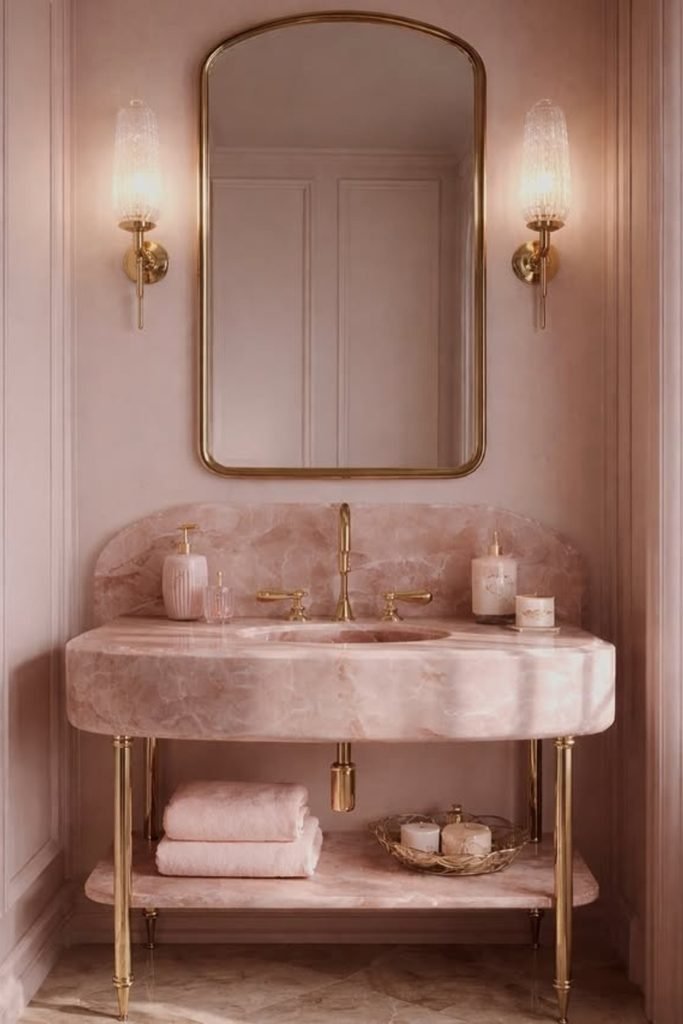
Rose Console
Let a pink stone console carry the color in a small powder room, with matching blush walls keeping the surrounding space calm.
Choose an open brass frame and a curved backsplash to recreate this look, then repeat the metal finish on your taps and mirror.
The lower shelf gives you room for guest towels; keep everyday toiletries in a small tray so the patterned stone stays clearly visible.
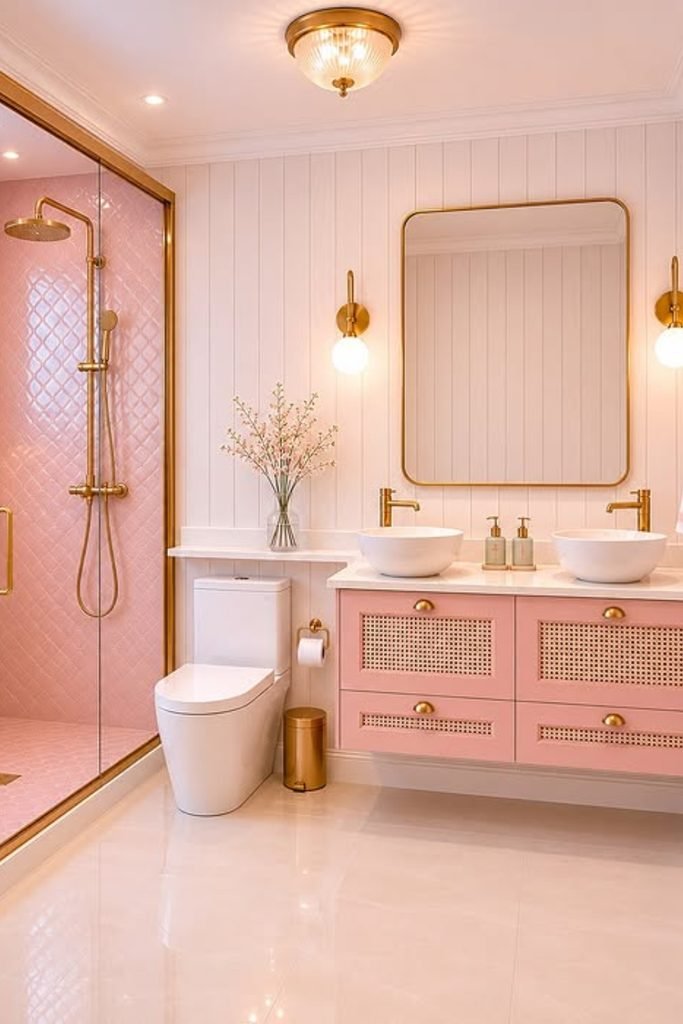
Woven Vanity
Give your pink shower a companion across the room with a matching vanity, while pale paneling and cream flooring soften the overall effect.
Recreate the cabinet detail with woven inserts and brass pulls, then choose plain white basins so the different textures have space to stand out.
For a shared bathroom, check counter width before adding two bowls; leave enough space between them for soap and your daily essentials to sit.
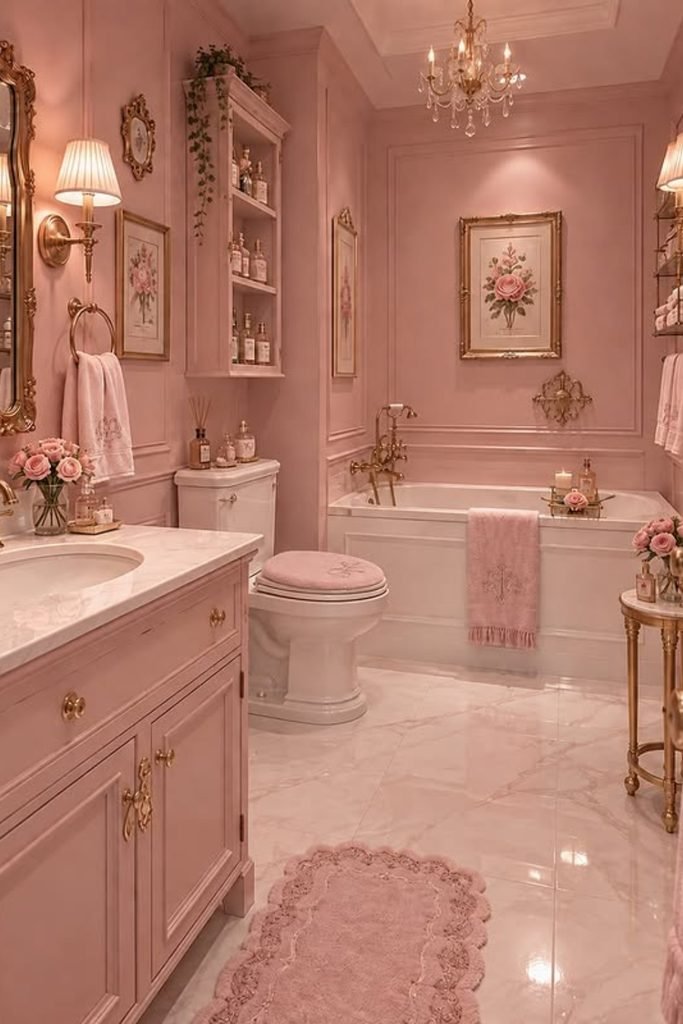
Vintage Florals
A framed rose print gives these pink walls a clear decorating direction, making it easier to choose towels, flowers, and smaller accessories.
Carry the look through a painted vanity and an ornate gold mirror, keeping the bath and countertop white to break up the pink.
This approach suits a traditional bathroom with existing molding; use wall shelves for bottles so decorative touches leave your vanity counter useful and clear.
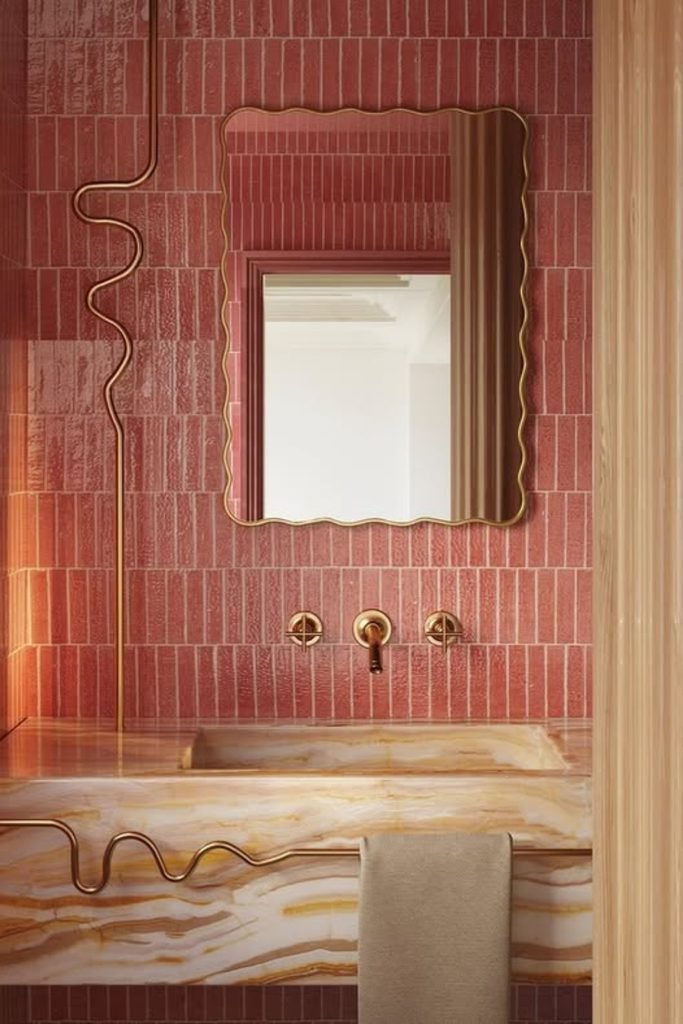
Rippling Brass
Break up straight rows of deep rose tiles with a wavy brass mirror, giving a compact vanity area one detail that immediately draws attention.
Choose narrow rectangular tiles and pale grout to recreate the wall pattern, then bring in a cream stone basin with warm golden veining.
Keep extra accessories plain around the patterned basin; the curved towel rail and mirror already give this pink bathroom plenty of movement and detail.
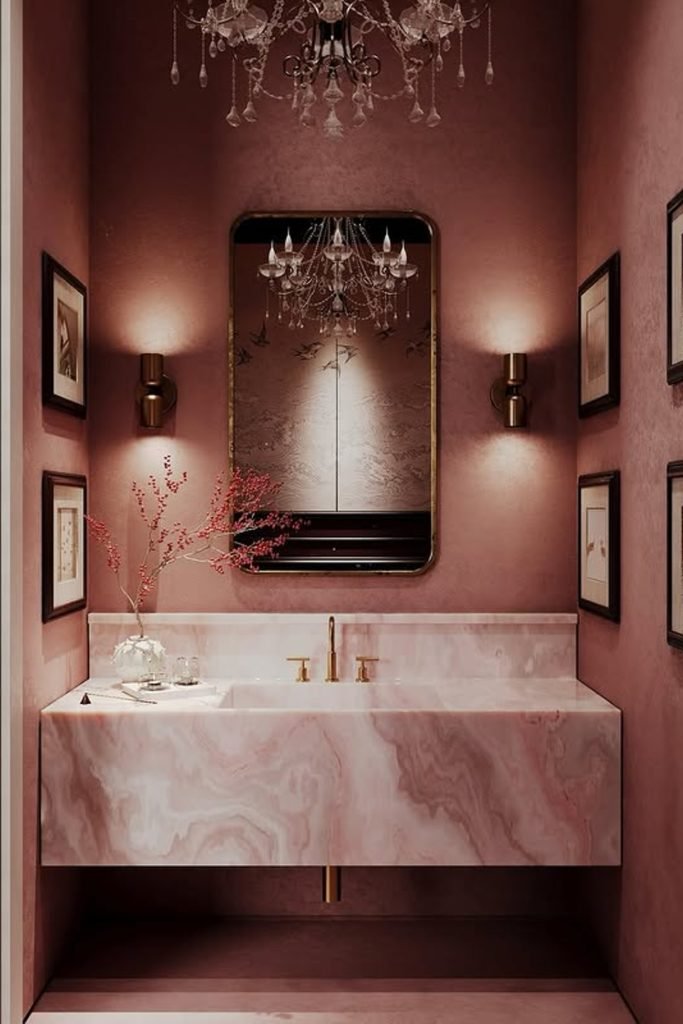
Dusky Gallery
Turn a narrow powder room into a space for framed prints by pairing dusky pink walls with a pale, boldly patterned floating basin.
Choose matching dark frames in two sizes, arranging them along the side walls so the artwork feels connected without covering every available surface.
Keep the basin top mostly clear and add light beside the mirror; this lets you enjoy deeper pink without losing useful lighting.
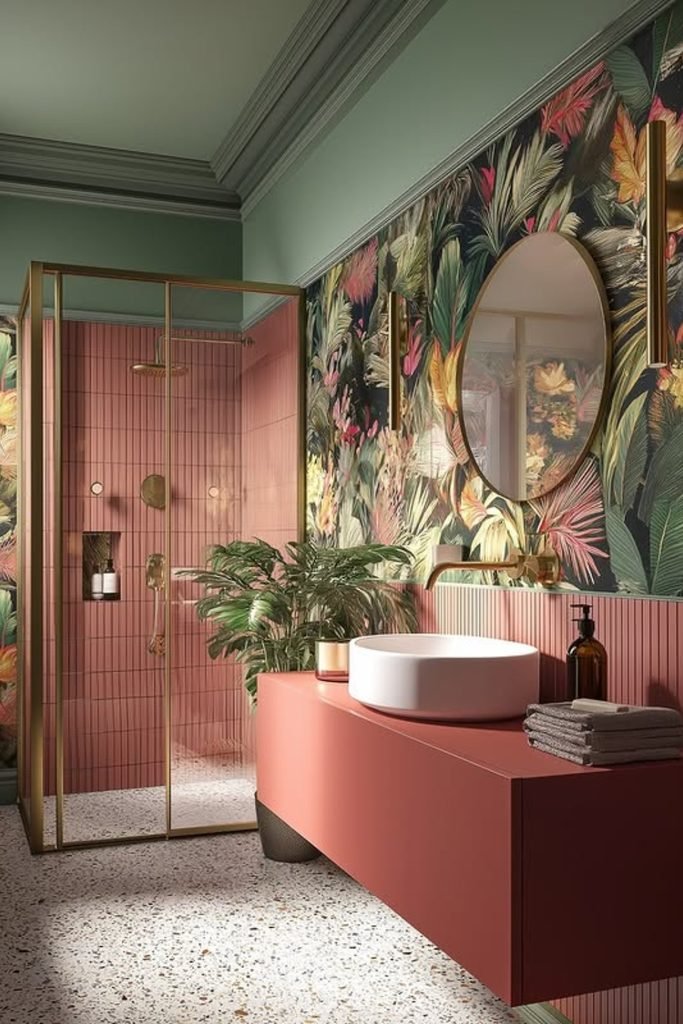
Tropical Contrast
Pull your pink shade from a tropical wallpaper print, then repeat it on the vanity and shower tiles to connect the whole bathroom.
Paint the ceiling and trim green to echo the leaves, while a pale speckled floor gives the busy walls a quieter base.
Use the wallpaper outside direct splash areas and keep towels plain; this approach suits anyone who wants a colorful bathroom with fewer decorative accessories.
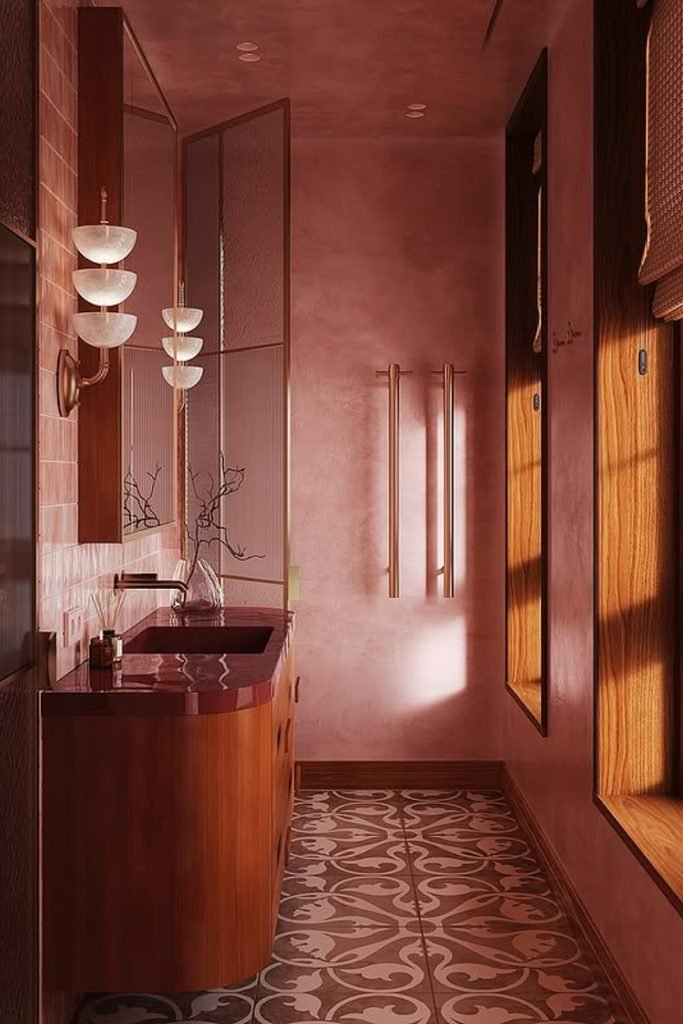
Earthy Passage
In a long bathroom, a rounded wood vanity softens the narrow walkway while earthy pink walls bring the cabinet and patterned floor together.
Choose a deeper rose countertop for contrast, then repeat that darker tone in the floor pattern to make the different surfaces feel connected.
Before ordering the vanity, check its depth against your walking space; shallow storage can give you useful drawers while leaving more room to move.
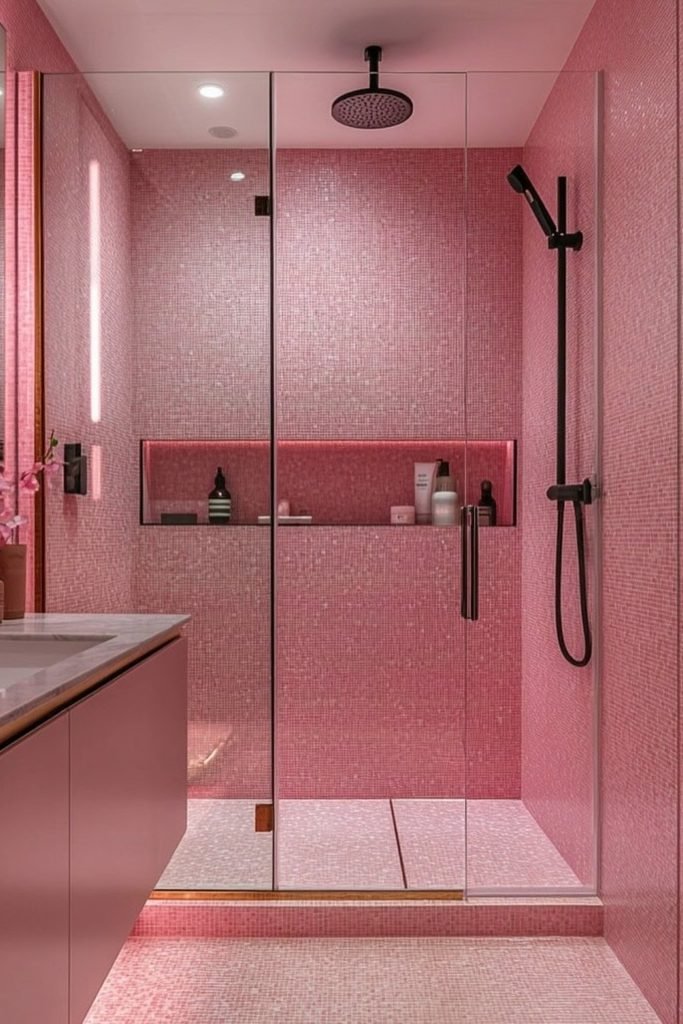
Mosaic Shower
Let tiny pink mosaics wrap the shower walls for continuous color, using clear glass to keep the tiled enclosure visible from the vanity.
Black shower fittings give the pale pink a sharper outline; repeat that finish in small accessories instead of adding another strong accent color.
Plan a recessed shelf before tiling so bottles stay off the floor, and keep the vanity fronts plain to balance the detailed mosaic.
Blush Stripes
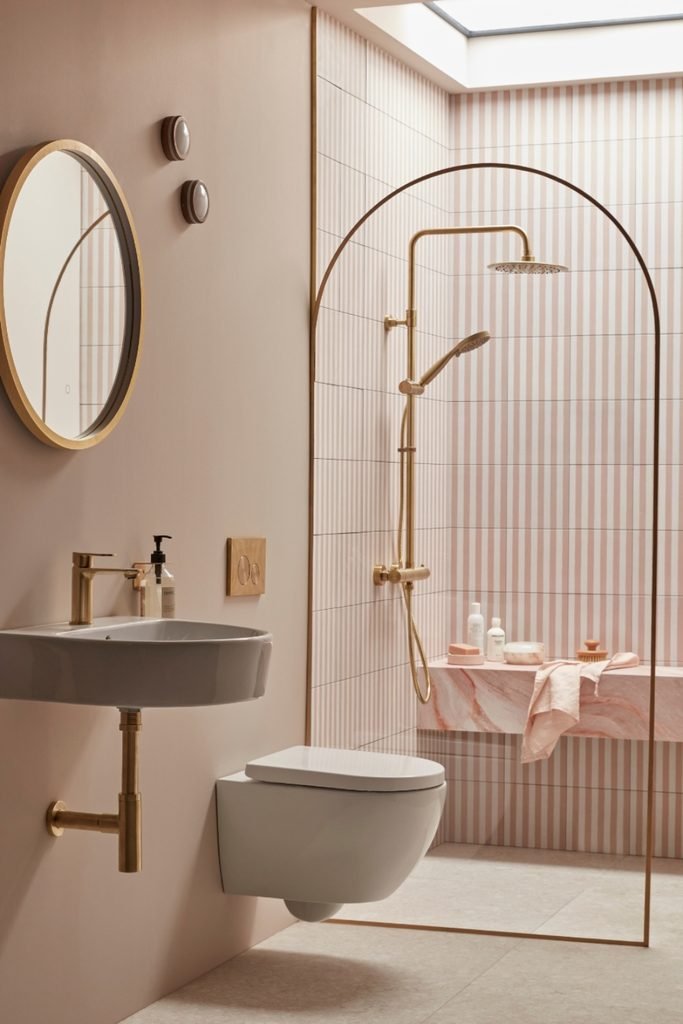
Thin pink and white stripes give this shower its pattern, leaving the plain blush wall beside it free for a compact basin.
Use striped tiles on the shower walls, then repeat the curved glass screen with a round mirror to soften all those straight lines.
For a small bathroom, wall mounted fixtures leave more floor visible; add storage elsewhere because this open basin offers little room for toiletries.
Blossom Paneling
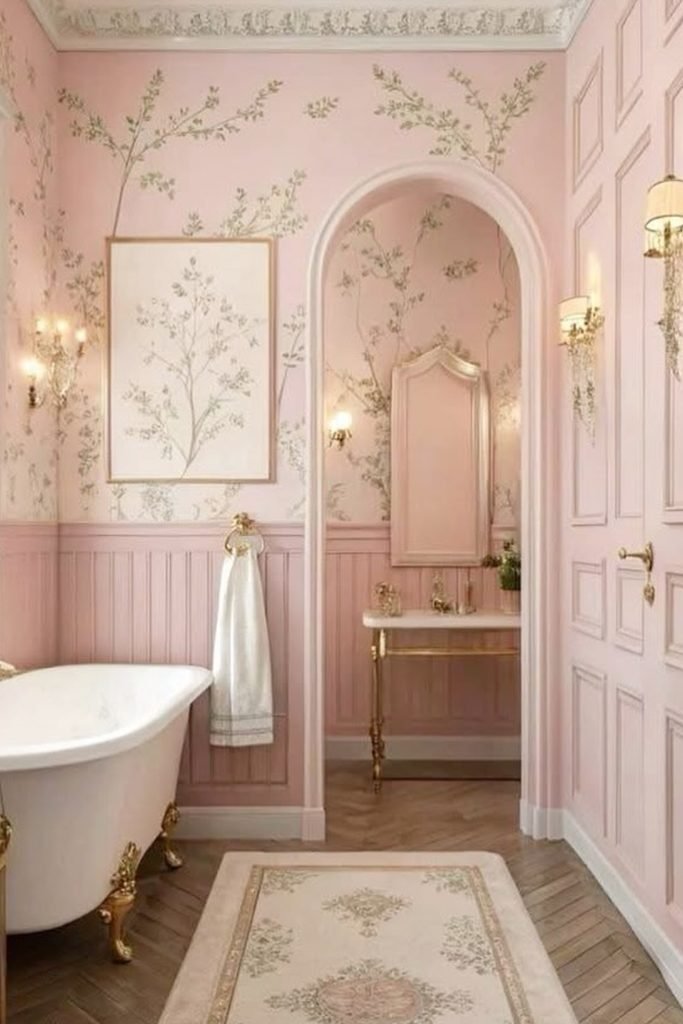
Take your wall color from the pink background of a delicate blossom wallpaper, then carry it across paneling and doors for a connected look.
A white freestanding bath gives the patterned walls a simple focal point, while brass feet and fittings repeat the warmth of the sconces.
This combination suits a traditional bathroom with tall walls; keep the wallpaper above the paneling and choose plain towels to let the branches stand out.
Layered Rose
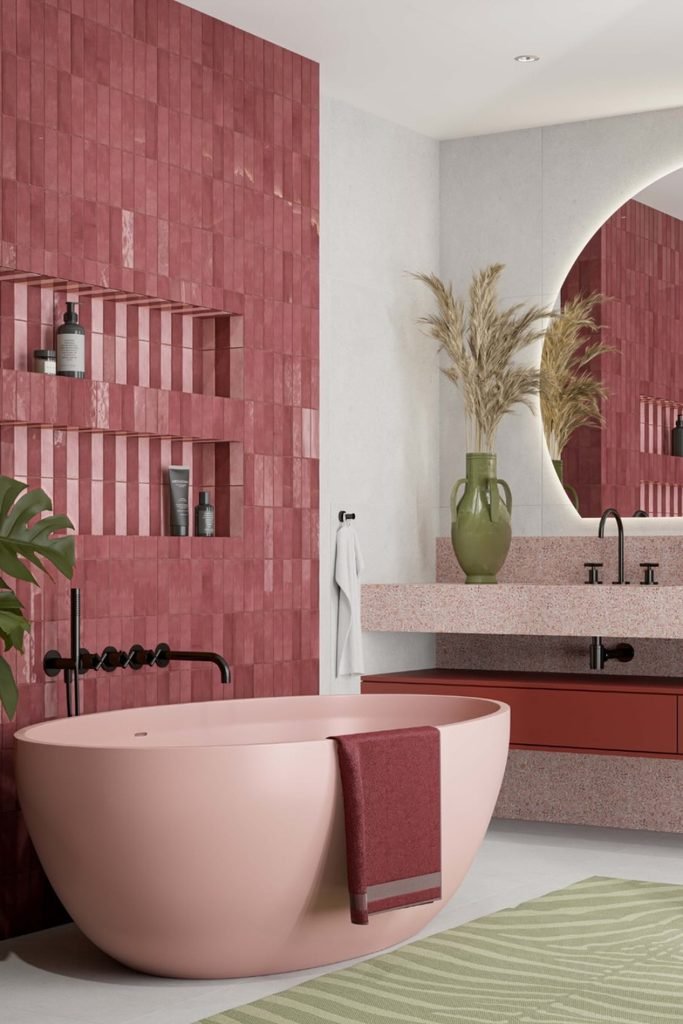
You can combine several pink shades when each has a clear place: a pale bath, deeper wall tiles, and a darker vanity drawer.
Keep the surrounding walls and floor light, then use matching black taps at the bath and basin to connect the two separate areas.
Recessed shelves bring useful storage into the tiled wall; measure your tallest bottles before installation so the openings fit what you actually use.
Painted Birds
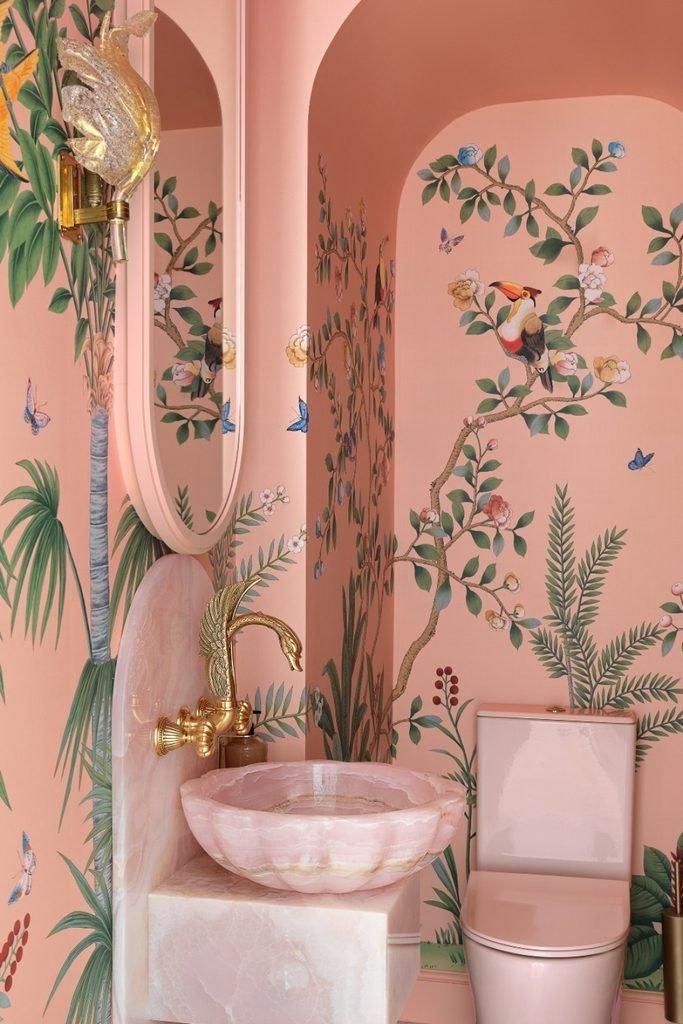
A peach pink backdrop lets colorful birds and leafy branches fill this tiny powder room without needing extra artwork or countertop decorations.
Choose a mural with open space between branches, then position its main bird where the mirror and toilet will leave it clearly visible.
Repeat the soft pink through the basin and mirror frame; a shaped stone backsplash gives the wall behind your tap a practical finishing detail.
Arched Alcove
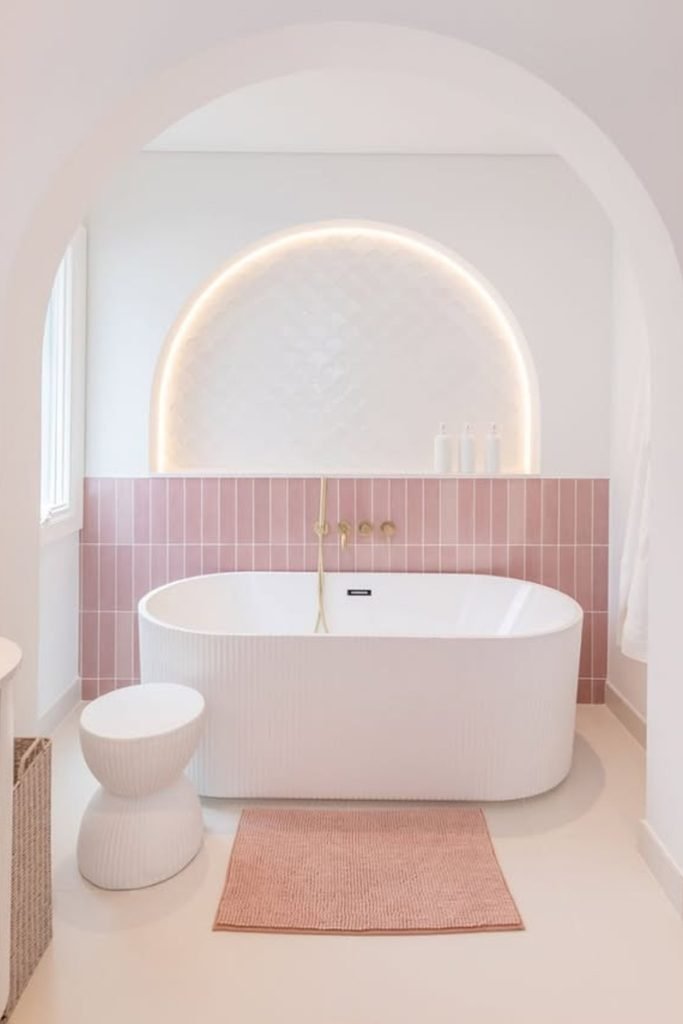
Give your bath its own pink backdrop with a tiled half wall, leaving the upper walls white to emphasize the curved alcove.
Repeat the arch in a recessed feature above the bath, then keep bottles along its ledge so the tub rim stays clear.
A ribbed white bath adds texture without introducing another pattern; this works especially well when you want pink concentrated around the bathing area.
Blush Cloakroom
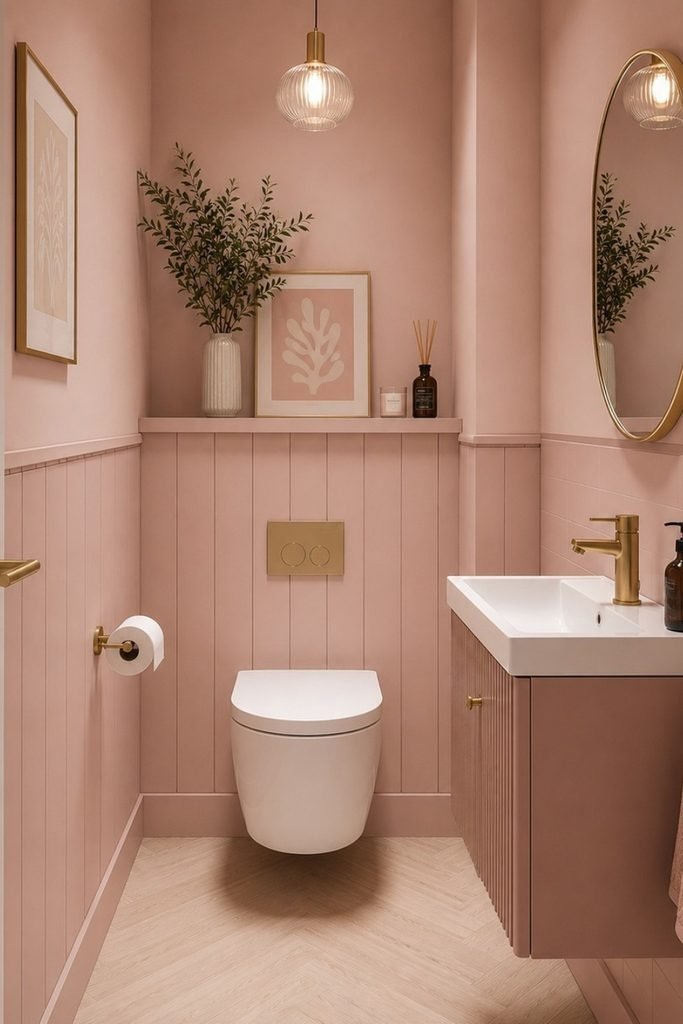
Painting the paneling and upper walls the same blush shade helps this compact cloakroom feel connected, while white fixtures provide a clear contrast.
Choose a shallow floating vanity with closed storage, then use an oval mirror to bring a softer shape into the narrow sink area.
The ledge above the concealed cistern offers display space; limit it to a few pieces so your small bathroom keeps its uncluttered look.
Leafy Tiles
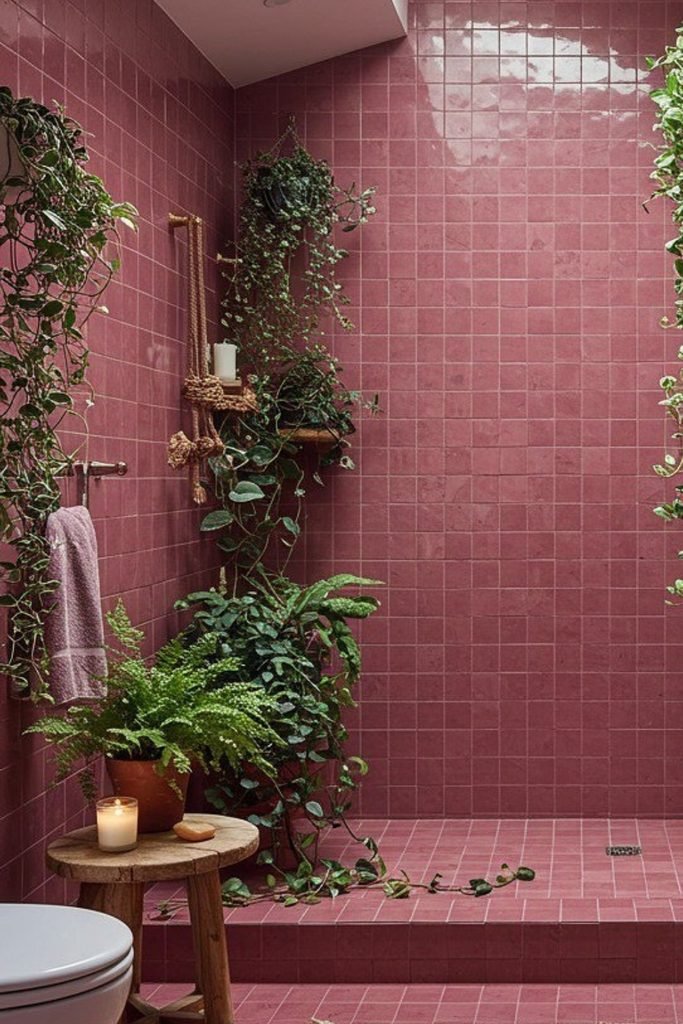
Trailing greenery breaks up the broad pink tiled walls, while the dark wood vanity gives this bathroom a stronger contrast than pale cabinetry.
Recreate the combination with rose square tiles and a few plants near available daylight, leaving the shower controls and walking area easy to reach.
Hang pots where you can water them comfortably, and keep loose stems clear of the drain so the greenery stays manageable during cleaning.
Retro Personality
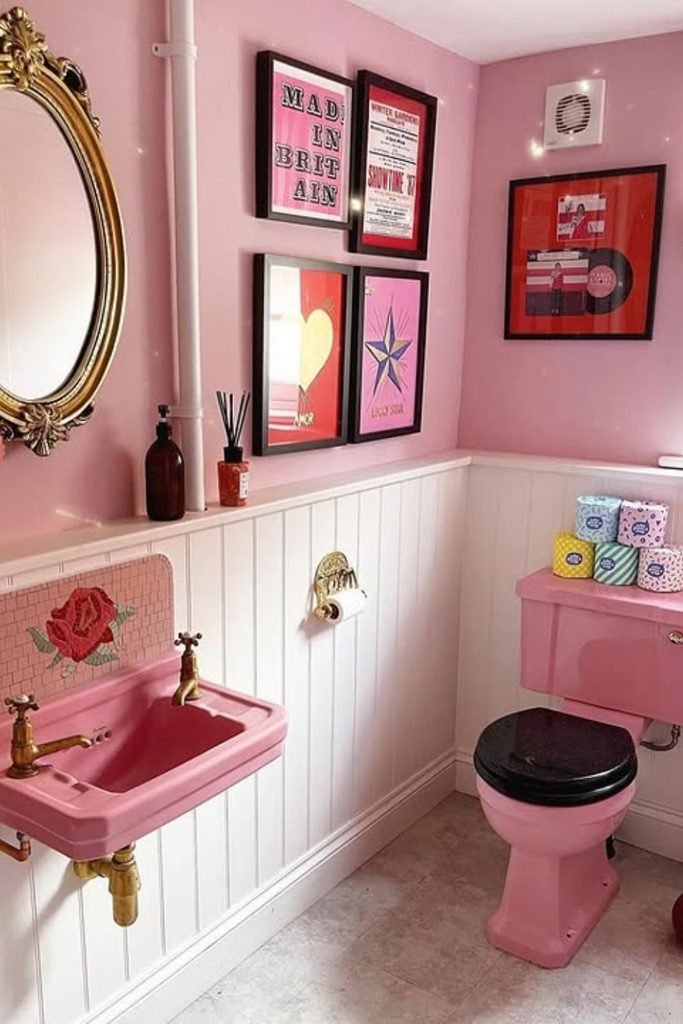
Keep a pink sink and toilet as the starting point, then use white paneling to separate their stronger color from the pink walls.
Black picture frames echo the toilet seat, giving the colorful prints a shared outline; choose artwork you enjoy rather than matching every accessory.
A striped pink blind repeats the fixtures without covering another wall in pattern, making this approach useful for refreshing an existing vintage cloakroom.
Muted Botanicals
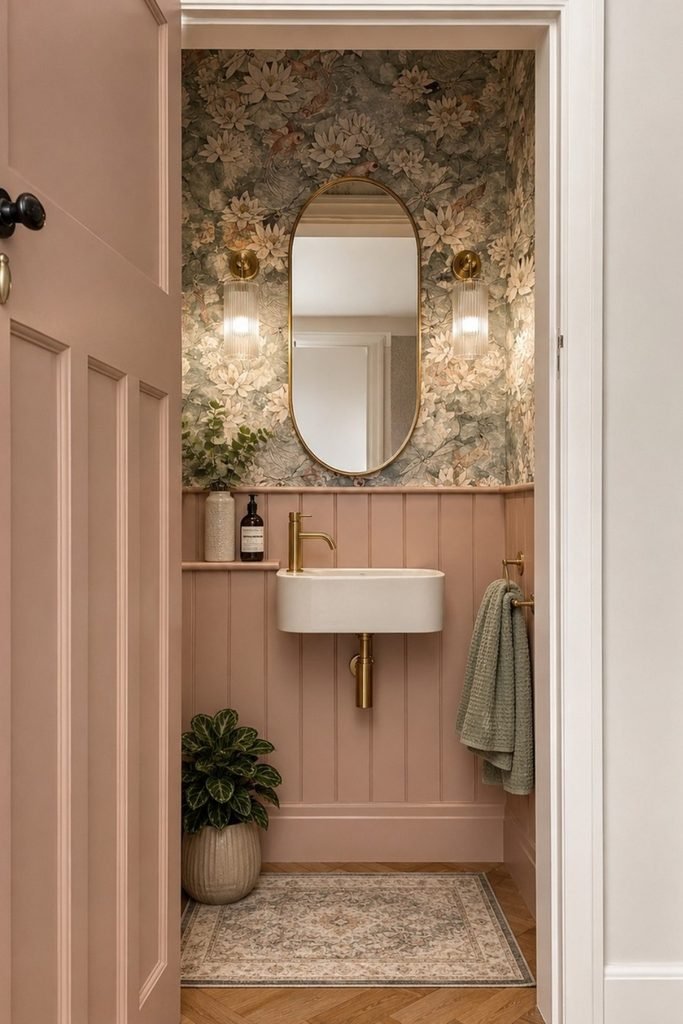
Choose dusty pink paneling beneath muted floral wallpaper when you want a small powder room to feel detailed without relying on bright colors.
Carry the paneling shade onto the door, then pick a green hand towel from the wallpaper palette to connect the two main colors.
A compact wall basin leaves space below, but you’ll need a nearby shelf for soap because its narrow rim offers limited storage room.
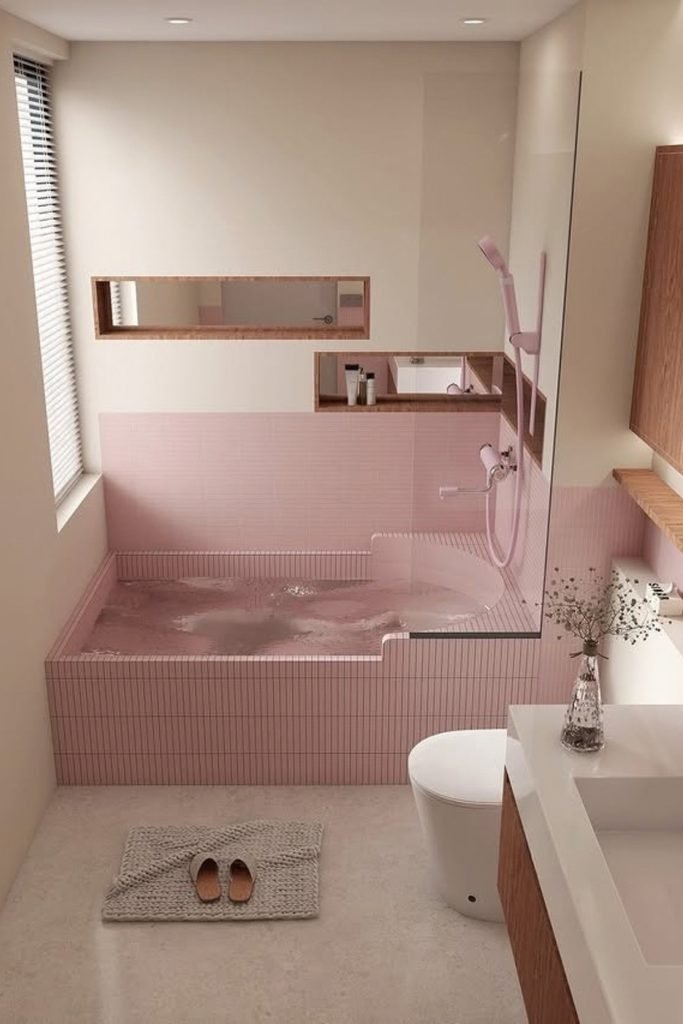
Tiled Soak
Concentrate pale pink around a built in bath, using slim tiles on its front and surrounding walls while keeping the upper room cream.
Wood trimmed recesses connect the bathing area to the vanity; plan their positions around your bottles and plumbing before deciding the tile layout.
This arrangement suits a compact bathroom where one bath handles soaking and showering; a clear screen keeps the pink surround visible from the entrance.
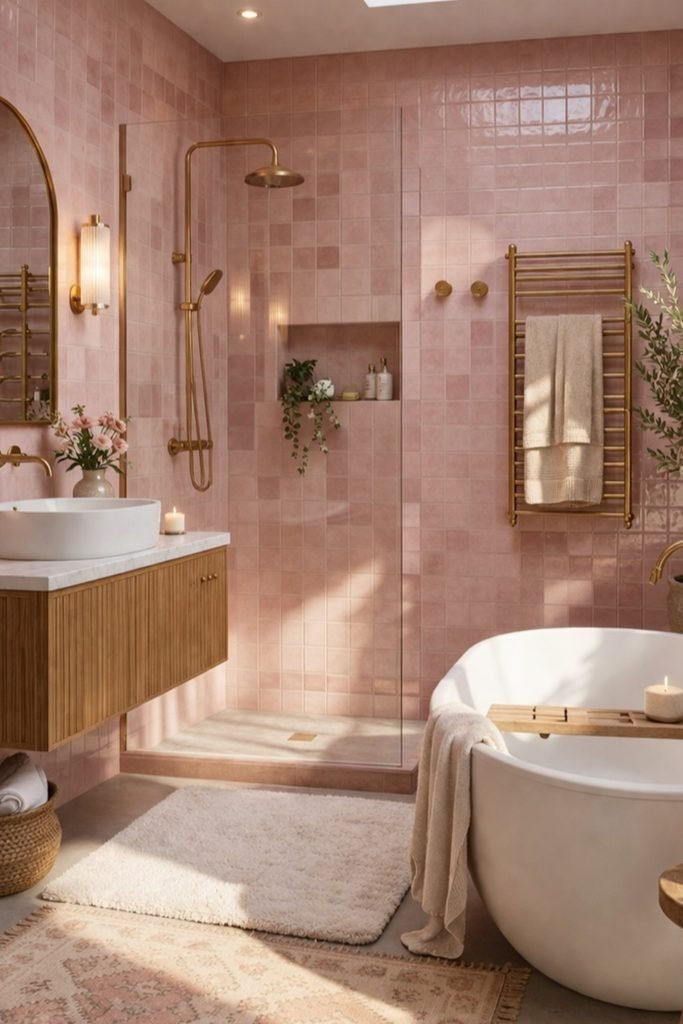
Soft Squares
Slight differences between these blush square tiles give broad pink walls texture, so you can keep the bath, basin, and towels simple.
Pair the tiles with a ribbed wood vanity and cream flooring; the wood adds warmth while the lighter surfaces break up the color.
In a bathroom with both shower and tub, repeat one brass finish across their fittings so the separate washing areas feel like one scheme.
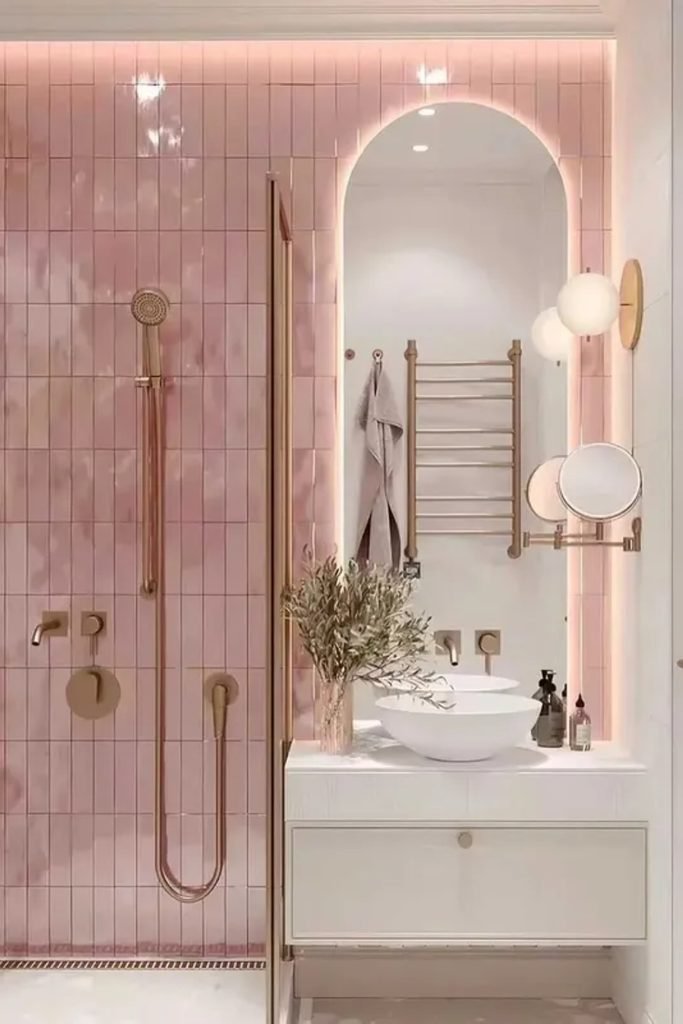
Tall Reflection
Extend the pink shower tiles behind the vanity to connect both areas, then use a tall arched mirror to interrupt the tiled surface.
A plain white drawer unit keeps this narrow bathroom from feeling crowded with finishes, while globe sconces repeat the curves of the basin.
Keep the countertop arrangement low enough to leave the mirror useful; store spare bottles in the drawer and reserve the top for daily essentials.
Sandy Blush
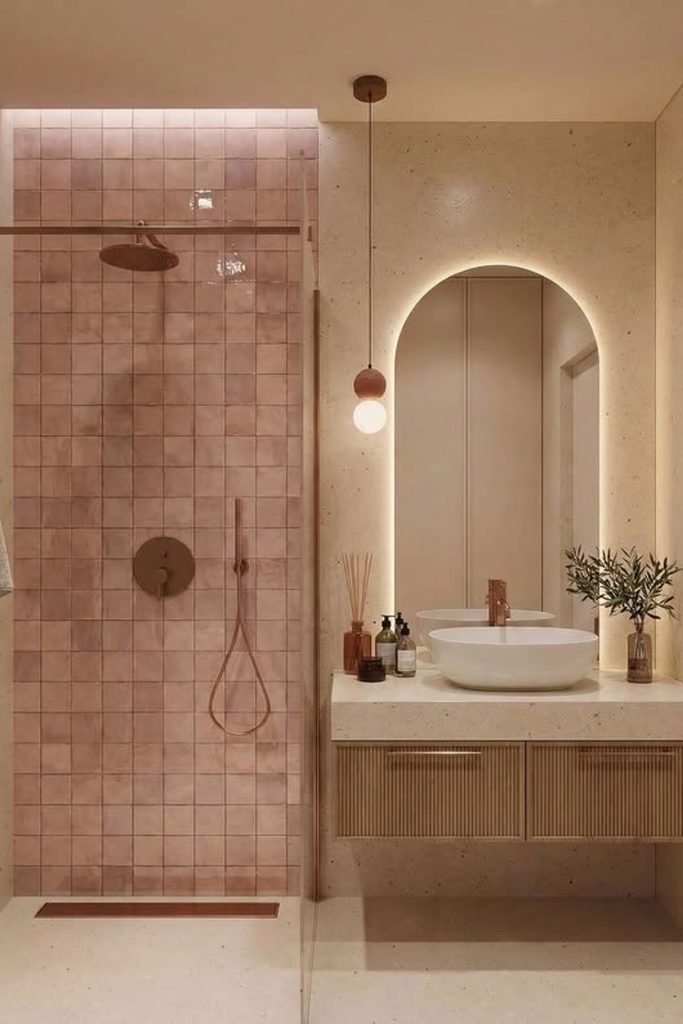
Give pink a quieter role by limiting it to the shower’s back wall, with sandy surfaces carrying the rest of your bathroom.
Choose blush square tiles with gentle shade variation, then pair them with a ribbed wood vanity to add texture without another strong color.
This combination suits a compact bathroom where you want subtle contrast; repeat the sandy tone on the countertop and keep your towels cream.
FAQs
Can You Mix Different Pink Shades in One Bathroom?
Yes, choose one main pink shade, then use a lighter or darker version on a smaller surface, such as your vanity or towels.
Keep the shades close in warmth; peachy pink and dusty rose can look quite different, so compare samples beside each other before buying.
Repeat a neutral color across the remaining finishes to connect the shades, giving your bathroom a clear palette without making every pink match.
How Can You Add Pink Without Changing Your Tiles?
Start with a pink shower curtain, towels, or artwork, choosing a shade that works with the floor and vanity you already have.
Spread the color across two or three small details so it feels connected, while leaving enough plain surfaces between the pink pieces.
If you want a bigger change later, paint a dry wall area pink before committing to more expensive updates like replacing your vanity.
