
24 Orange Bathroom Ideas
An orange vanity or a strip of rust-colored tiles can give your bathroom a look worth building the whole room around.
Keep it soft with peach and cream, or choose burnt orange with wood for a warmer, earthy feel.
In this article, you’ll find 24 orange bathroom ideas and practical ways to make the color work in your space.
Let’s jump in!
Is Orange Color Attractive For Bathroom?
Yes, orange can look attractive in a bathroom when you choose a shade that works with your tiles, flooring, and fixtures.
If you want a softer look, start with peach or muted orange and pair it with cream walls or light wood.
For a bolder finish, use bright orange on the vanity or one wall, then keep the surrounding surfaces simple.
Burnt orange works well with warm wood and off-white tiles if you prefer an earthy bathroom with a richer color palette.
Before you commit, check a sample beside your existing finishes in daylight and with the bathroom lights on.
Patterned Walls
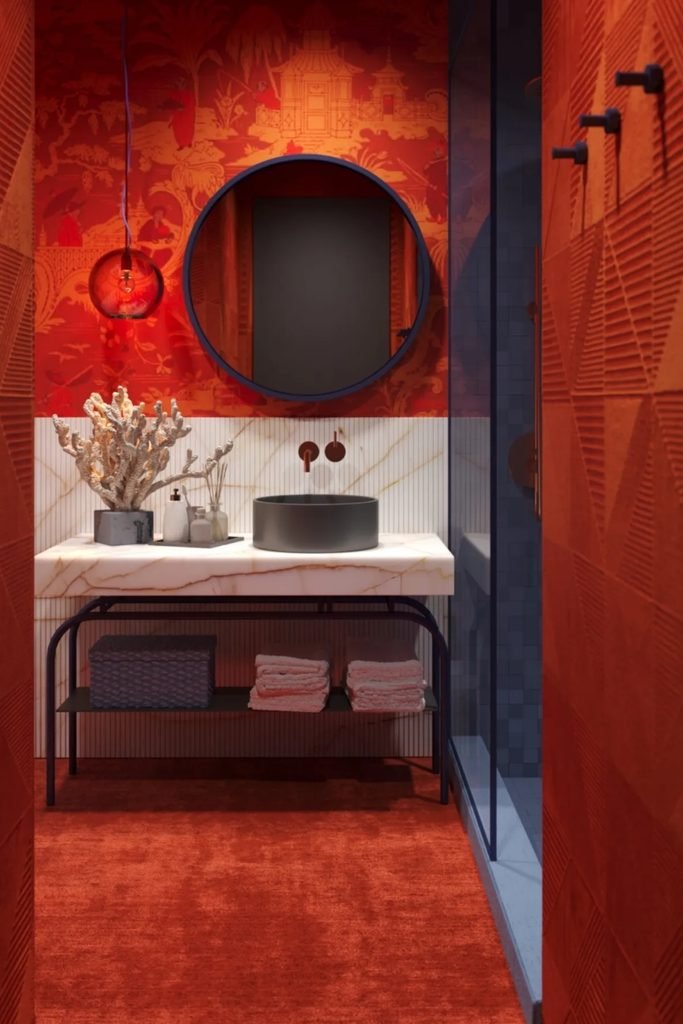
Give a narrow guest bathroom a bold entrance with textured orange side walls and a patterned vanity wall framed by dark blue details.
Keep the basin and mirror frame dark so their shapes remain clear against the pattern, then introduce a pale countertop for contrast.
Recreate the layered look with one decorative wall above the backsplash, leaving the lower vanity area simpler and using open shelving for towels.
Textile Refresh
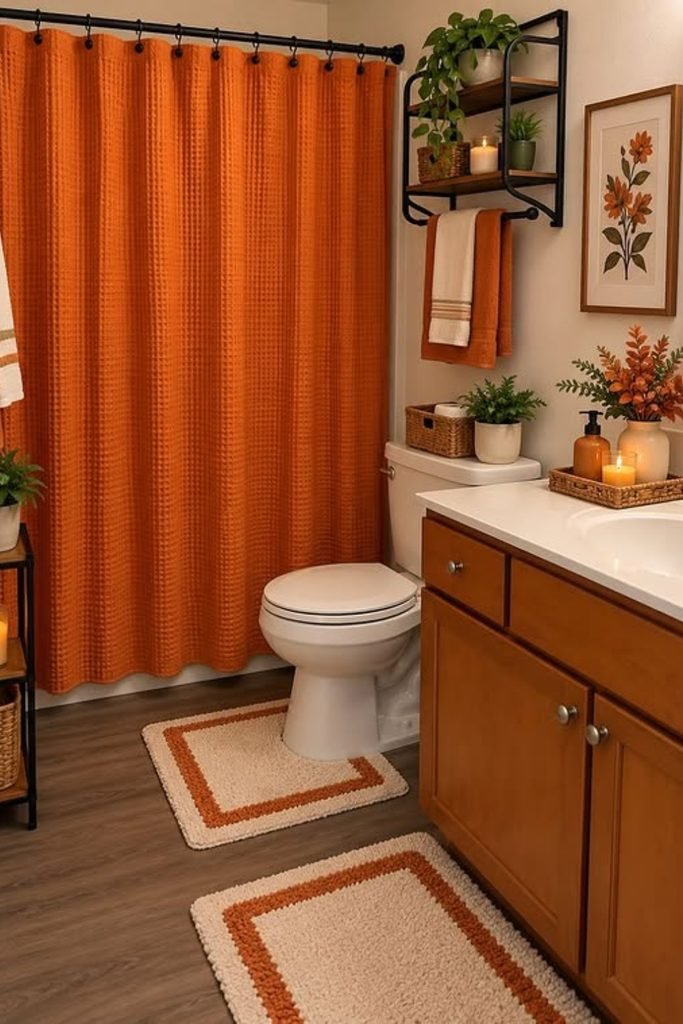
An orange shower curtain gives you a large block of color without repainting, making this approach useful when your existing bathroom finishes must stay.
Repeat its shade in towels and a bath mat border, while cream walls and white fixtures give the brighter fabric room to stand out.
Bring in wood shelves and woven baskets to connect the orange with your vanity, keeping everyday toiletries together so the counter stays usable.
Apricot Geometry
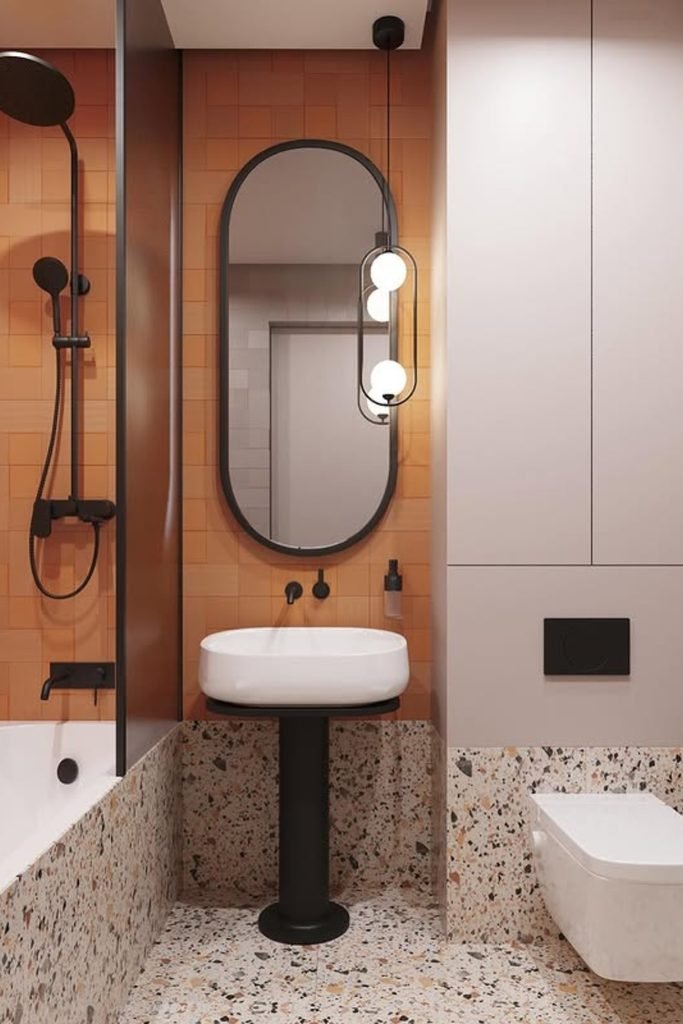
Match apricot wall tiles with orange flecks in terrazzo if you want the color to connect naturally across a compact bathroom’s different surfaces.
Carry the same wall tile from the bath surround behind the basin, then repeat black through the shower fittings and mirror frame.
Choose a slim basin and closed storage to preserve usable space, letting the tile texture provide detail without adding more objects around the sink.
Peach Arches
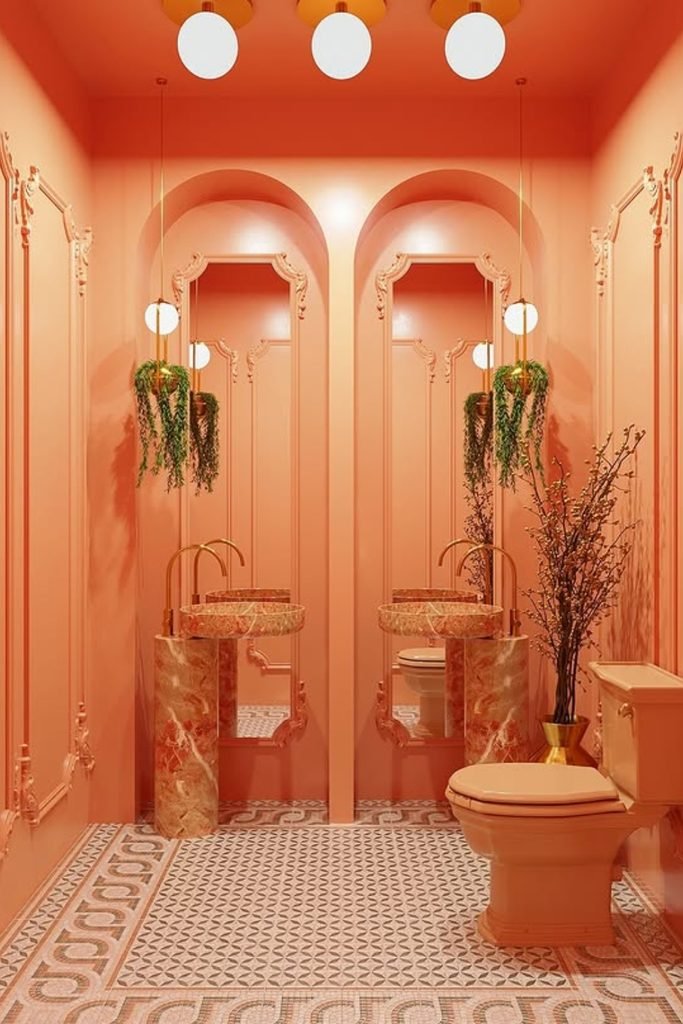
For a decorative peach bathroom, start with arched mirror recesses and wall molding, then use a deeper orange ceiling to emphasize the room’s height.
Keep the molding close to the wall color so its raised edges add detail, while veined pedestal basins introduce a stronger natural pattern.
This approach suits a spacious powder room; simplify it with one recessed mirror and a patterned floor border if your layout is narrower.
Golden Squares
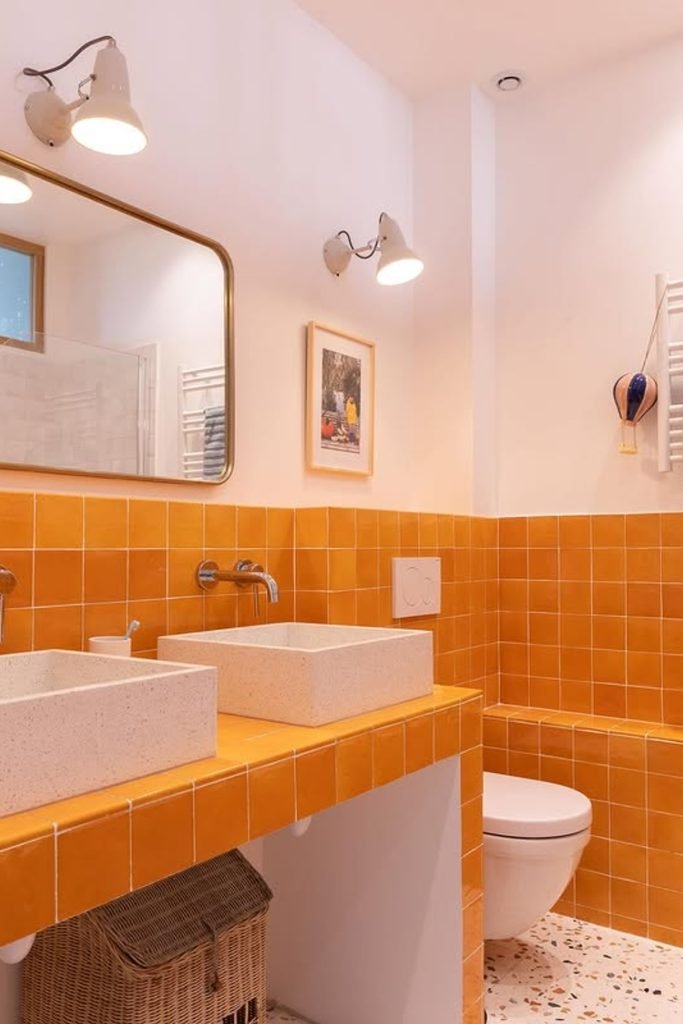
Wrap golden orange square tiles around the lower walls and vanity to connect a double basin setup without filling every surface with color.
Leave the upper walls white and choose pale rectangular basins so the orange stays prominent while the washing area feels light and clear.
For a shared bathroom, extend the tiled counter between both sinks and keep baskets underneath to store towels without crowding the usable surface.
Rounded Accents
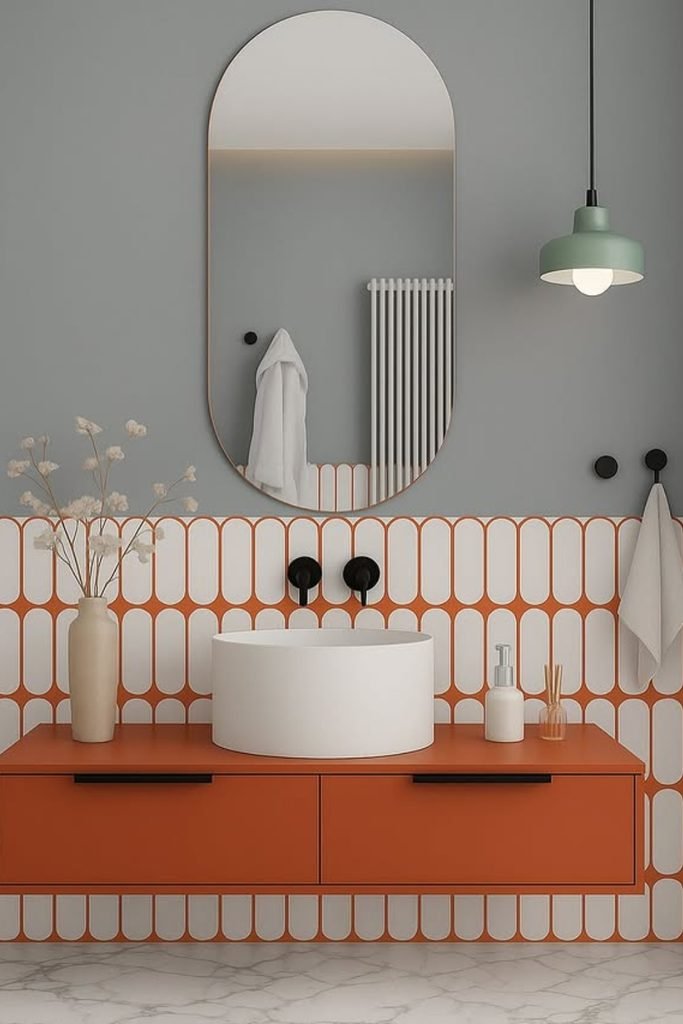
A floating burnt orange vanity gives this bathroom its main color, while white capsule tiles outlined in orange carry that shade up the wall.
Pair the cabinet with muted gray green walls if you want a softer contrast, then repeat rounded shapes through the basin and mirror.
Use this combination in a compact ensuite, keeping drawer handles slim and the floor beneath the vanity clear for easier access when cleaning.
Retro Balance
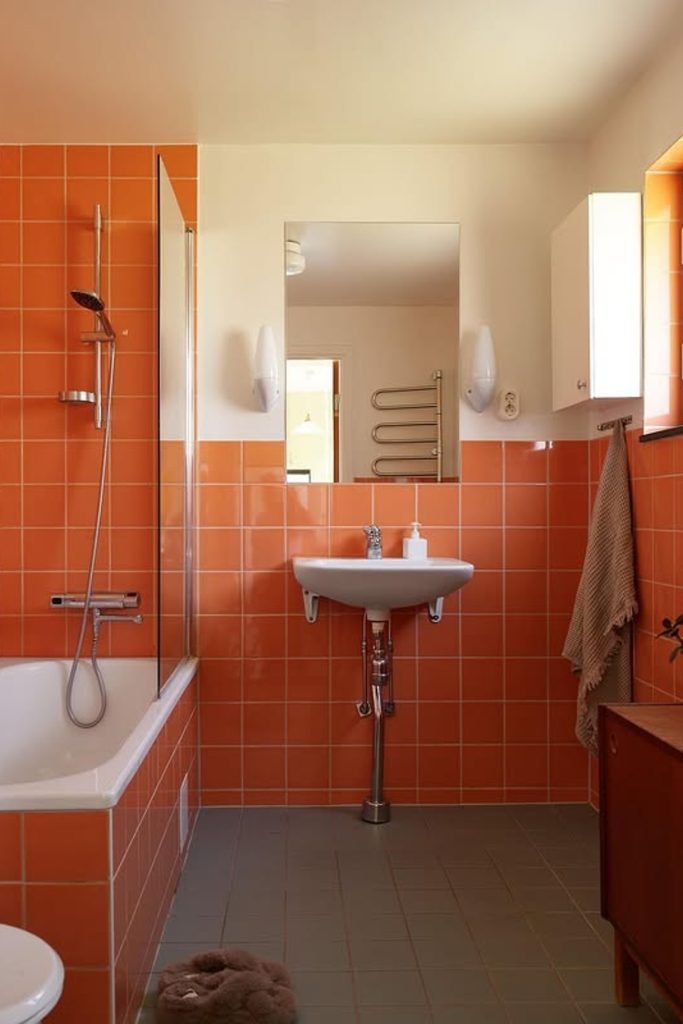
Already have orange square tiles around your bath? Keep them and refresh the upper walls with cream to give the existing color breathing room.
A simple wall mounted sink keeps more floor visible, while chrome fittings connect the bath and basin without introducing another strong accent color.
Follow the same tile height around the room where practical, and use a clear bath screen to preserve the view of the orange surround.
Rust Shower
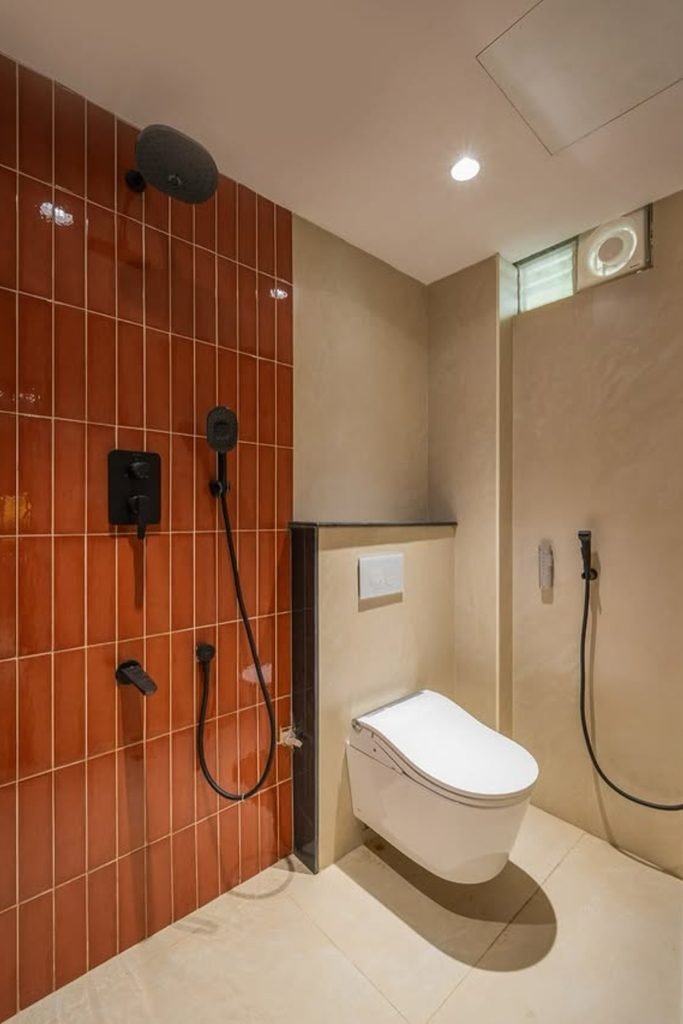
Concentrate deep rust orange tiles on the shower wall when you want a warm focal point in a bathroom with mostly beige surfaces.
Lay rectangular tiles vertically and use contrasting pale grout to emphasize their shape, then choose black fittings for a clear outline against the gloss.
For a compact layout, repeat the surrounding beige on the floor and keep the divider visually simple so the orange wall holds your attention.
Cool Contrast
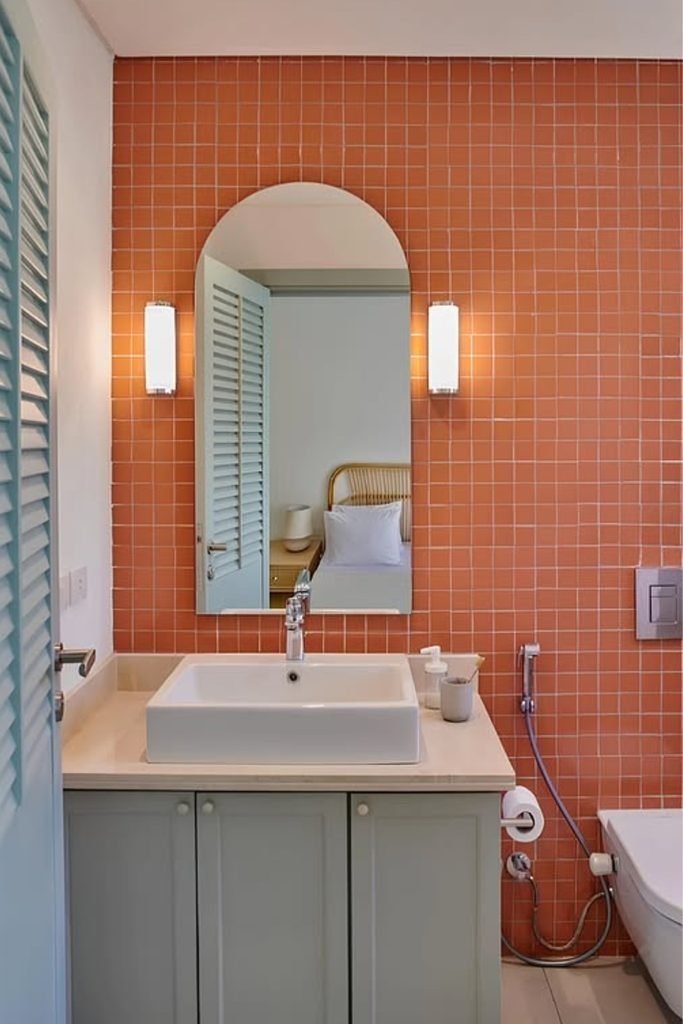
Give an orange tiled vanity wall a cooler companion with pale blue doors and muted cabinetry, especially in an ensuite connected to a bedroom.
Keep the countertop and basin light so the two colors remain distinct, and choose a tall arched mirror to interrupt the square tile grid.
Position matching sconces on either side of the mirror, leaving enough space between them and the cabinet edges for a balanced vanity arrangement.
Copper Layers
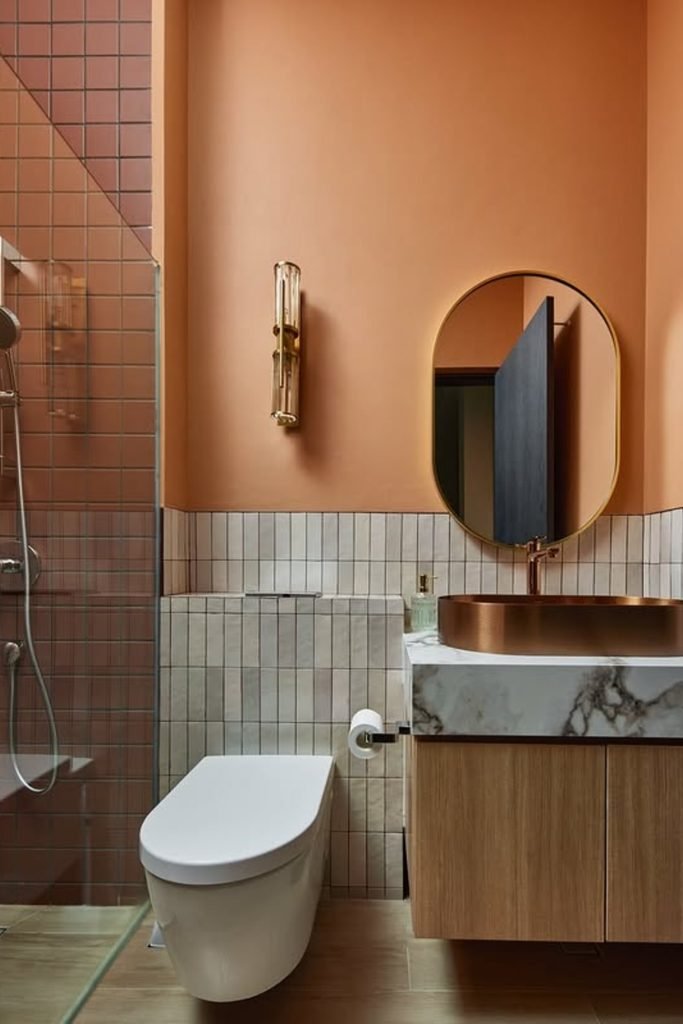
A copper basin can connect muted orange walls with a wood vanity, giving a small bathroom several warm tones without repeating the same finish.
Break up those warmer surfaces with pale vertical tiles below and a veined countertop, keeping the shower enclosure clear to reveal the tiled backdrop.
Choose your basin finish before selecting paint samples, then compare both beside the wood so the orange complements their undertones rather than clashing.
Peach Partition
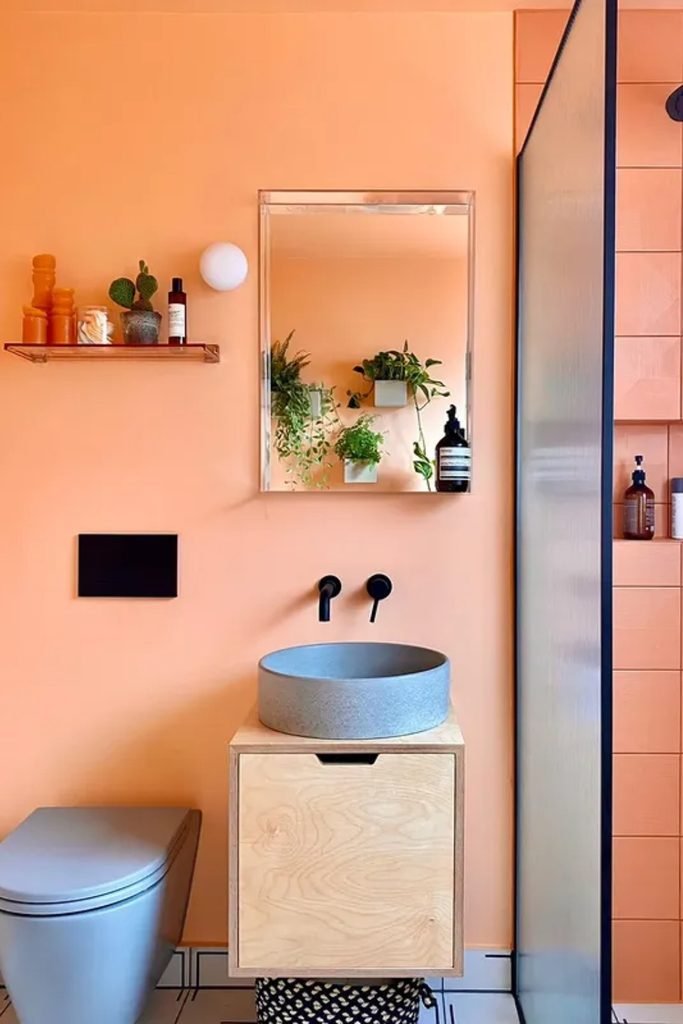
Soft peach walls and matching shower tiles let you carry orange throughout a compact bathroom while blue gray fixtures provide a cooler focal point.
Use a narrow wood vanity beneath the bowl basin, and keep its front plain so the color combination gets more attention than decorative details.
A ribbed glass partition adds privacy beside the sink; repeat its dark frame in the taps and showerhead to connect both bathroom zones.
Leafy Shower
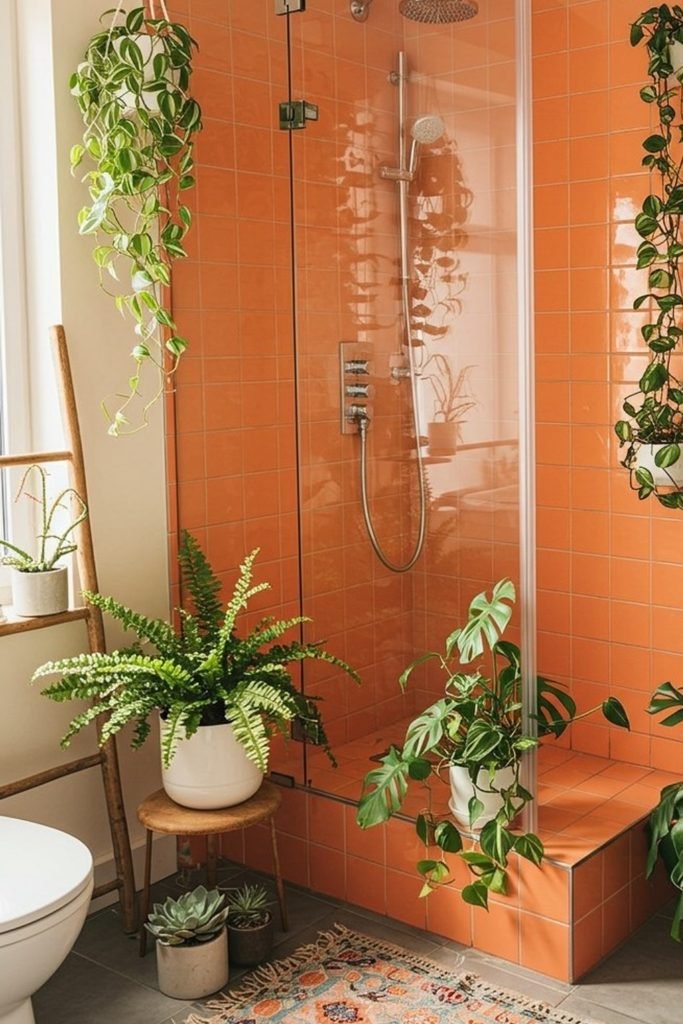
Orange shower tiles make a warm backdrop for trailing greenery, making this combination worth trying in a bright bathroom with room around the enclosure.
Start with one hanging plant near the window and a larger pot outside the shower, leaving the doorway and walking route clear.
Repeat orange in a patterned bath mat and add wood accessories nearby, keeping most surrounding walls cream so the plants and tiles stand out.
Mosaic Curves
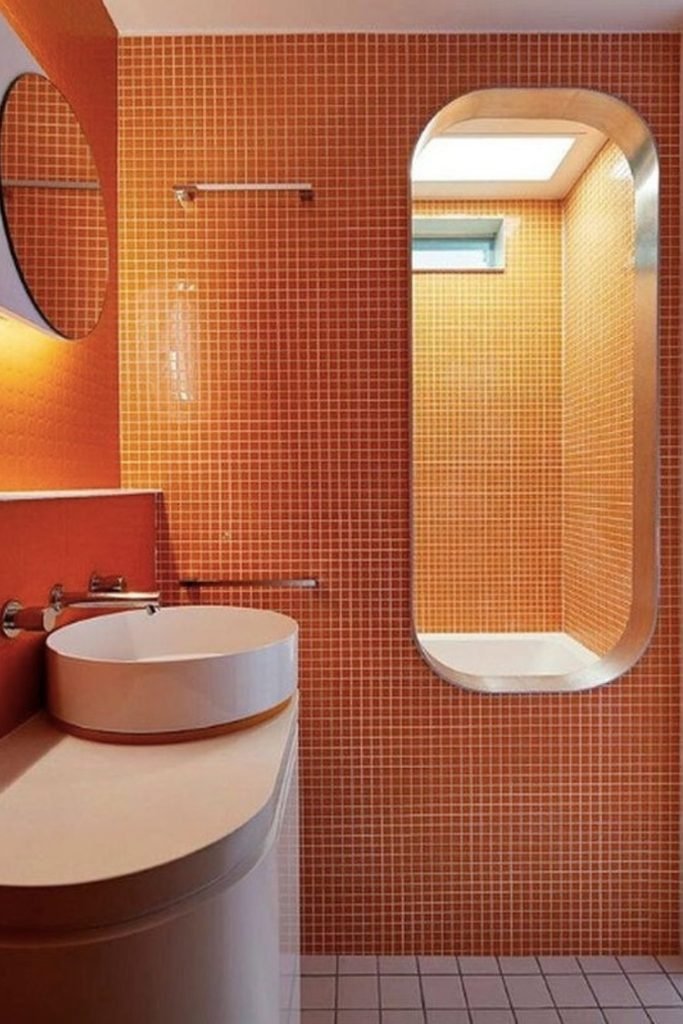
Small orange mosaic tiles give a narrow bathroom detailed color, while a curved vanity softens the layout where straight corners could feel crowded.
Pair the mosaic wall with a pale countertop and white basin, then repeat rounded edges in your mirrors to connect the different surfaces.
Choose this approach for a compact ensuite, planning the vanity depth first so you can reach the basin without squeezing through the doorway.
Sunlit Soaking
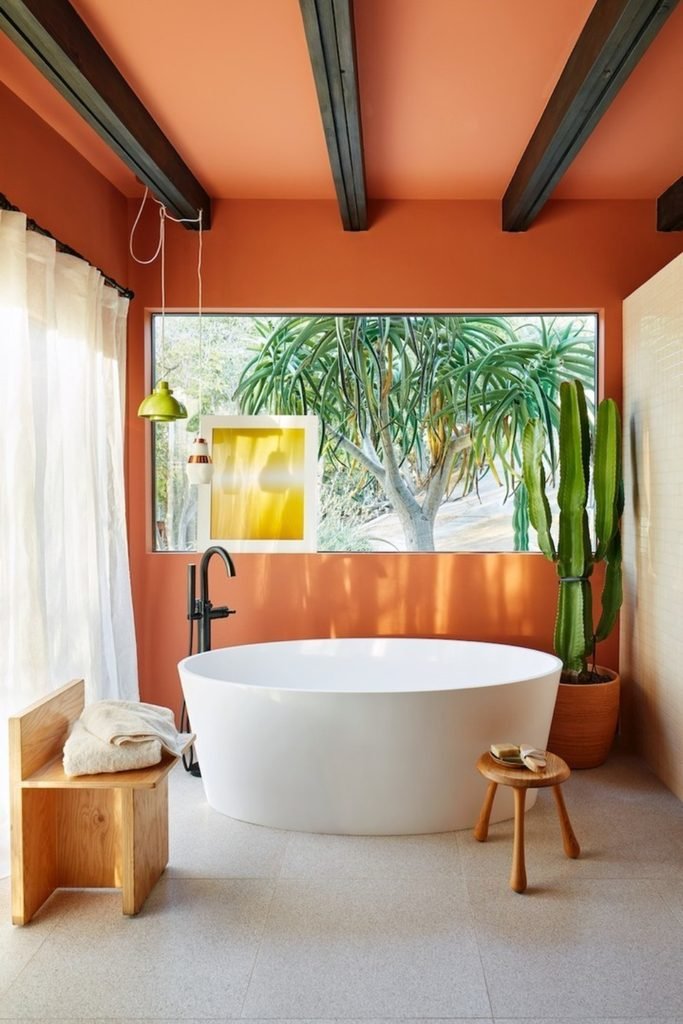
Let orange walls frame a garden view by placing a white freestanding bath beneath the window, giving the color a clear central feature.
Carry the orange onto the ceiling between dark beams if you want an enclosed, cozy feel, while keeping the floor pale and simple.
This layout works best with space around the tub; add a small wood stool within reach and sheer curtains where you need privacy.
Glossy Envelope
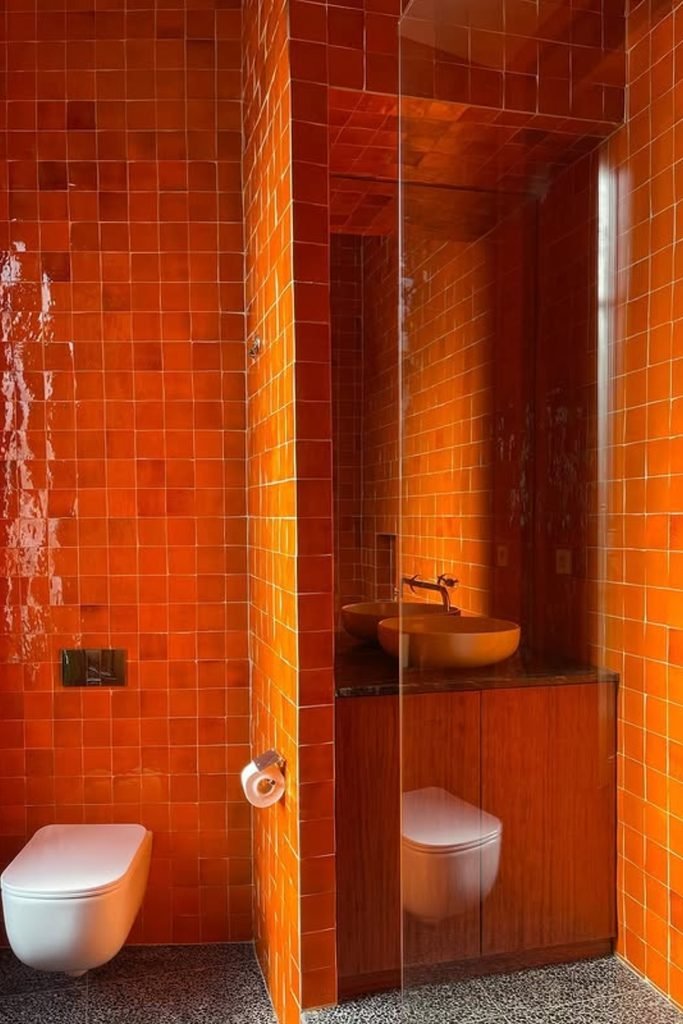
For a fully orange bathroom, glossy square tiles with slight shade differences give the walls depth without requiring a second pattern or color.
Extend the tiles around the vanity recess and choose wood cabinet fronts, allowing the grain to add texture beneath a darker countertop.
Reserve this stronger treatment for a deliberately bold scheme, and keep accessories minimal so the tiled walls remain the main detail you notice.
Artful Accents
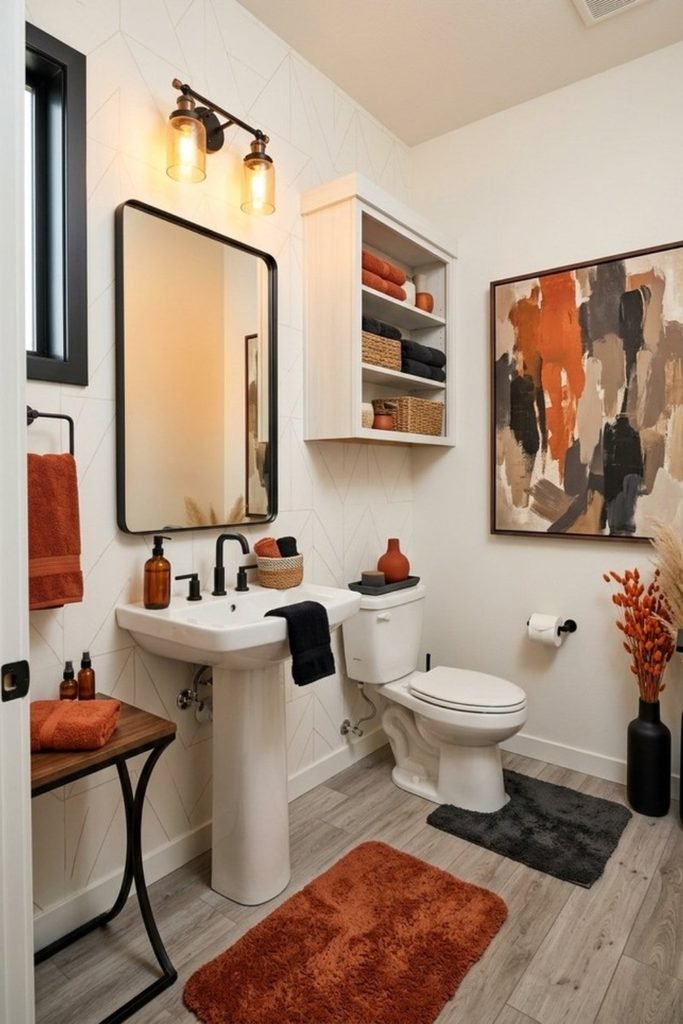
Pull your orange accents from one large artwork if you want to refresh a white bathroom while keeping its walls and fixtures unchanged.
Match towels and a bath mat to the painting’s rust tones, then repeat its black details through the mirror frame and smaller accessories.
Use an open wall cabinet to display folded towels, keeping spare supplies in baskets so the orange accents feel coordinated rather than scattered.
Jewel Florals
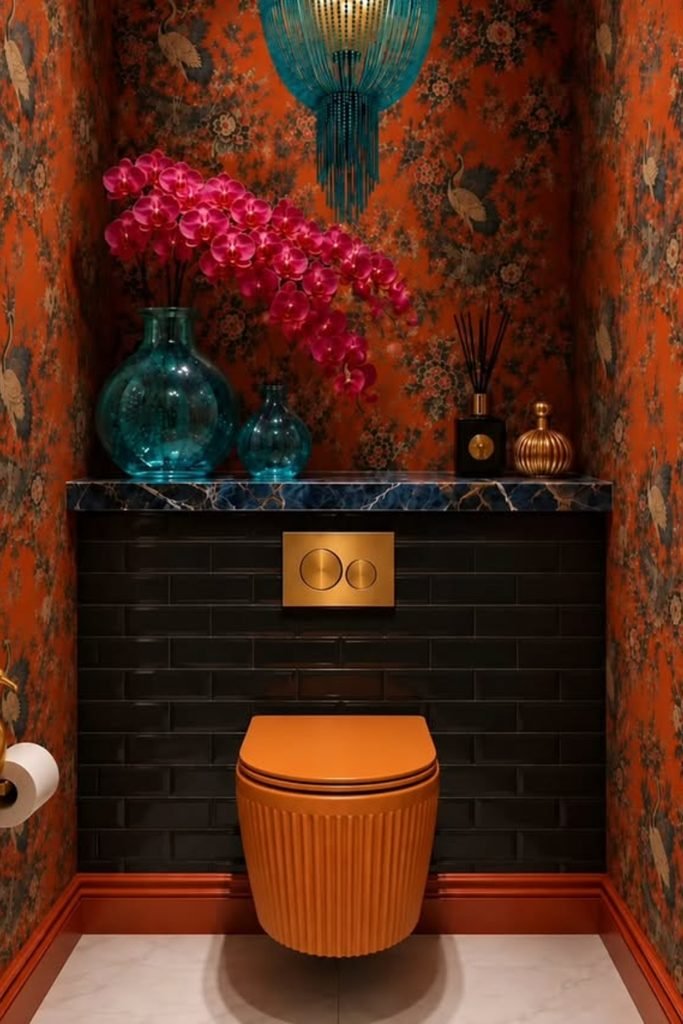
An orange toilet becomes a deliberate focal point when floral wallpaper repeats its color, making this combination suited to a bold guest cloakroom.
Ground the busy walls with a black tiled cistern enclosure, then introduce teal through a pendant or vase for a distinct contrasting accent.
Choose the wallpaper before buying accessories so you can pull out its existing colors, keeping the floor pale and the narrow ledge uncluttered.
Painted Band
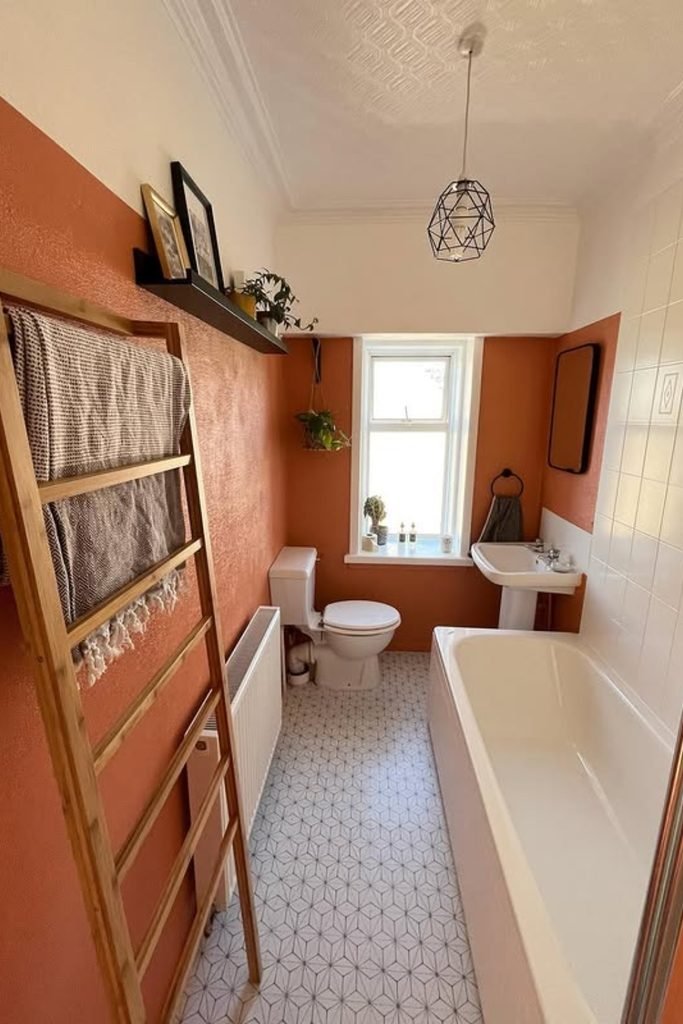
Painting the lower walls burnt orange lets you refresh a narrow bathroom while keeping the white bath tiles, ceiling, and existing fixtures in place.
Set a consistent paint line around the room, then leave a generous white section above it to separate the orange from decorative ceiling details.
A slim shelf can display artwork without taking floor space; position towel storage where it will not interfere with the passage beside the bath.
Vintage Suite
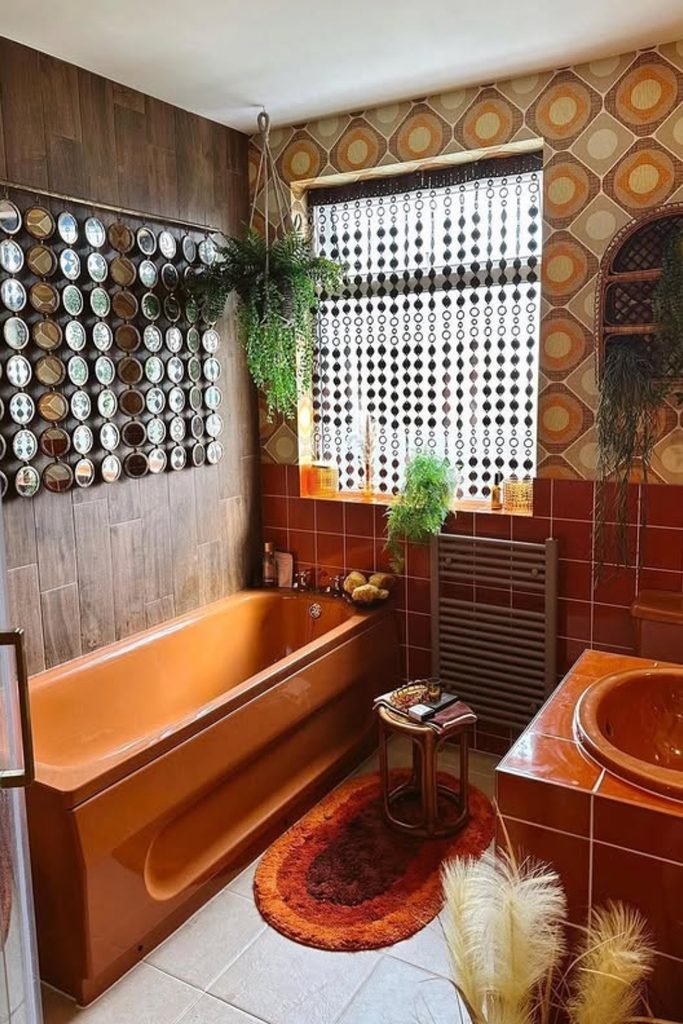
Keep an existing orange bath and basin together, then build a retro bathroom around their color with brown tiles and circular wallpaper patterns.
Limit the wallpaper to the upper wall so the solid tiles below provide a break, and repeat brown through the radiator or mirror.
If the room already has several strong patterns, choose plain towels and leave the bath edge clear to make the vintage fixtures stand out.
Speckled Surfaces
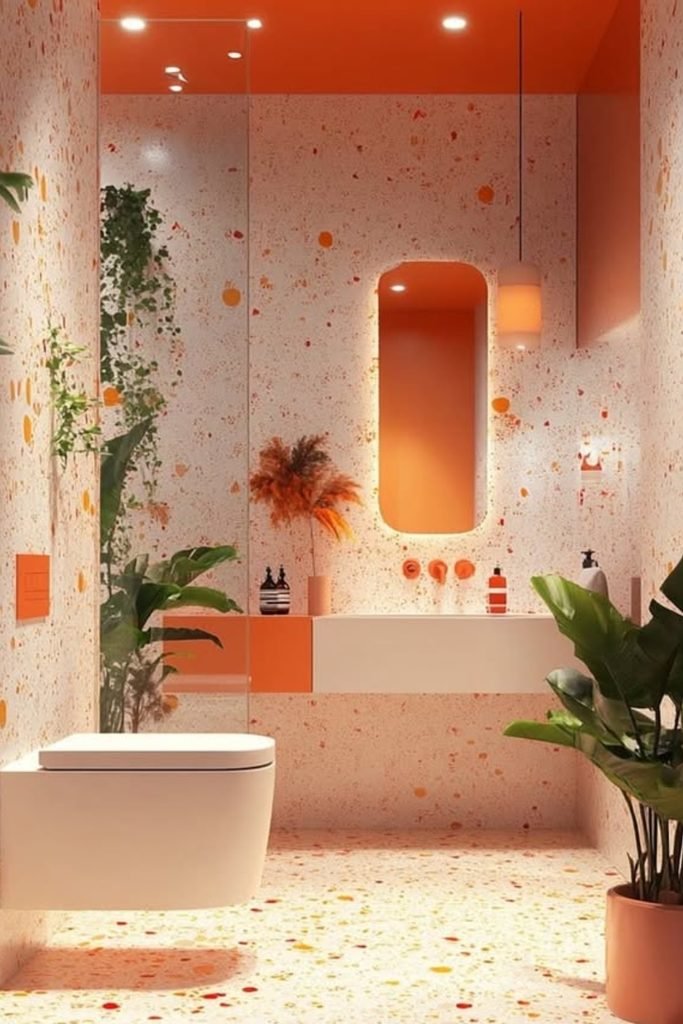
Pick pale terrazzo with orange chips if you want color throughout the bathroom, then echo those chips with an orange ceiling and fittings.
Keep the sink and toilet white to give your eye quieter shapes, while a rounded mirror softens the straight edges of the vanity.
This approach suits a coordinated renovation; compare terrazzo samples with your chosen orange first, and keep plant pots clear of the main walking route.
Glazed Backdrop
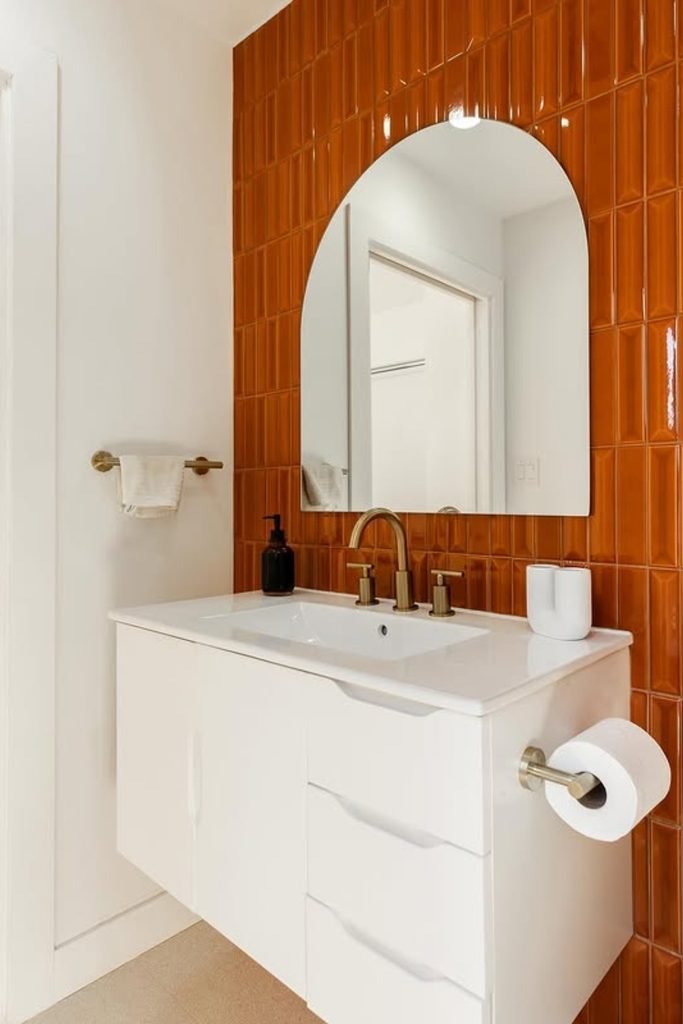
A glossy burnt orange tile wall gives a plain white vanity enough contrast to stand out, making this useful for a small bathroom refresh.
Choose narrow tiles with raised edges for extra detail, then keep the cabinet fronts and countertop smooth so the textures do not compete.
Center an arched mirror above the basin and repeat brass in the faucet and towel rail to connect the orange with a warmer finish.
Woven Warmth
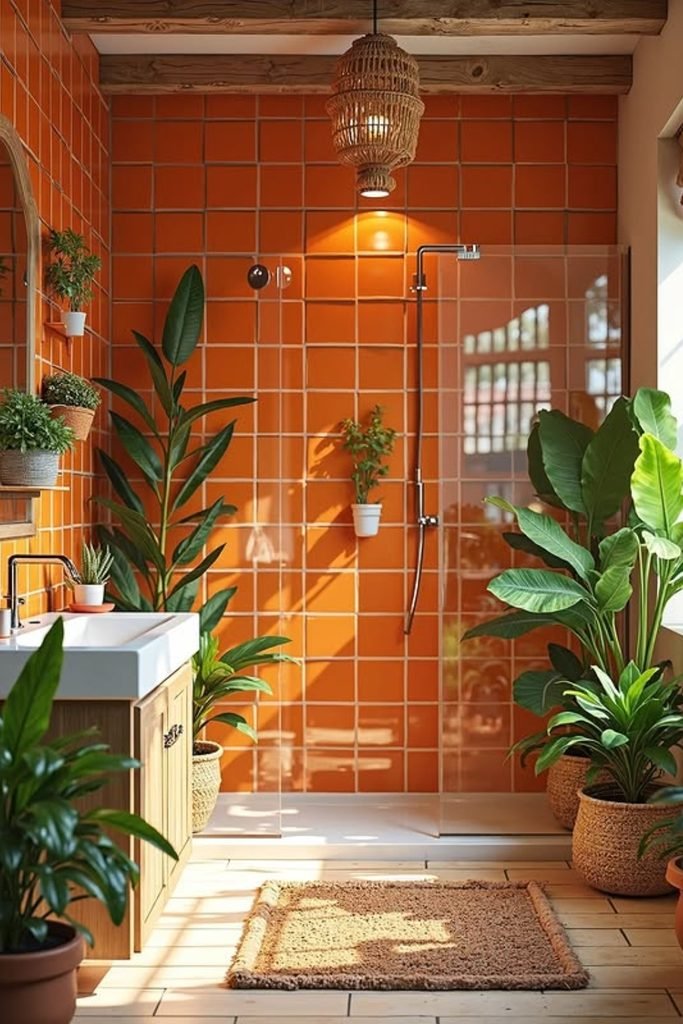
Balance a bright orange shower wall with woven shades and a wood vanity when you want a bathroom that feels relaxed and earthy.
A clear shower screen keeps the tile visible, while a pale shower tray separates the strong wall color from the lighter floor below.
Group plants beside the window rather than throughout the walkway, and repeat woven texture through baskets to connect the greenery with the window shade.
Garden Canopy
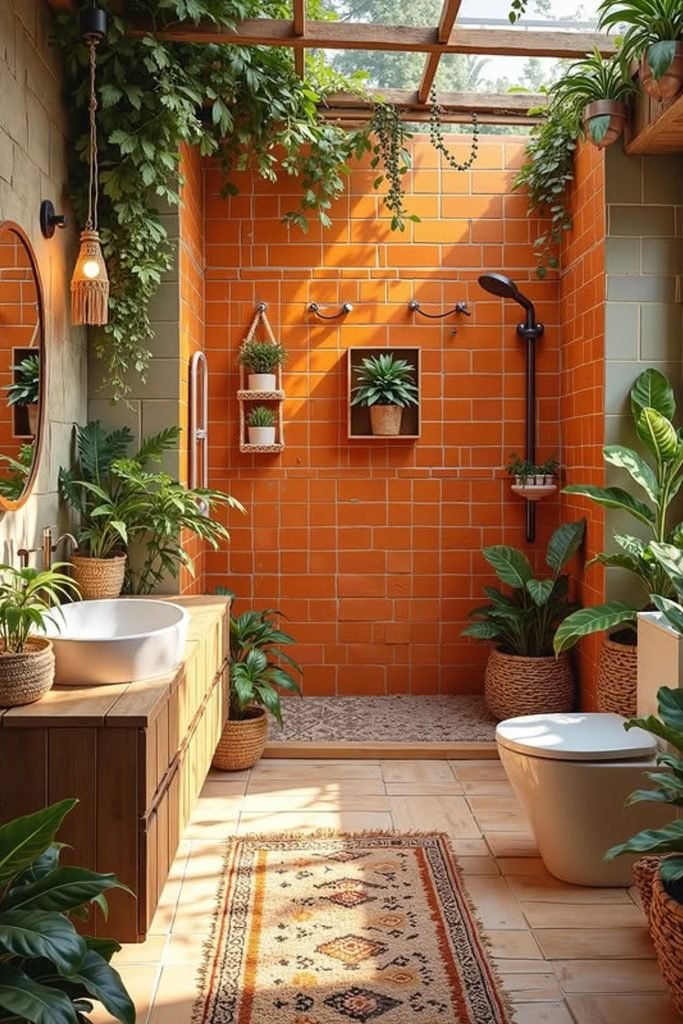
An orange tiled shower beneath a glazed roof can anchor a garden inspired bathroom, with muted green side walls carrying the planting theme further.
Recreate the color balance with orange at the far end and wood around the vanity, giving the room a clear focal point from the entrance.
Use high shelves for trailing plants where you can reach them for watering, and leave the central floor open instead of copying every pot.
Fluted Upperwalls
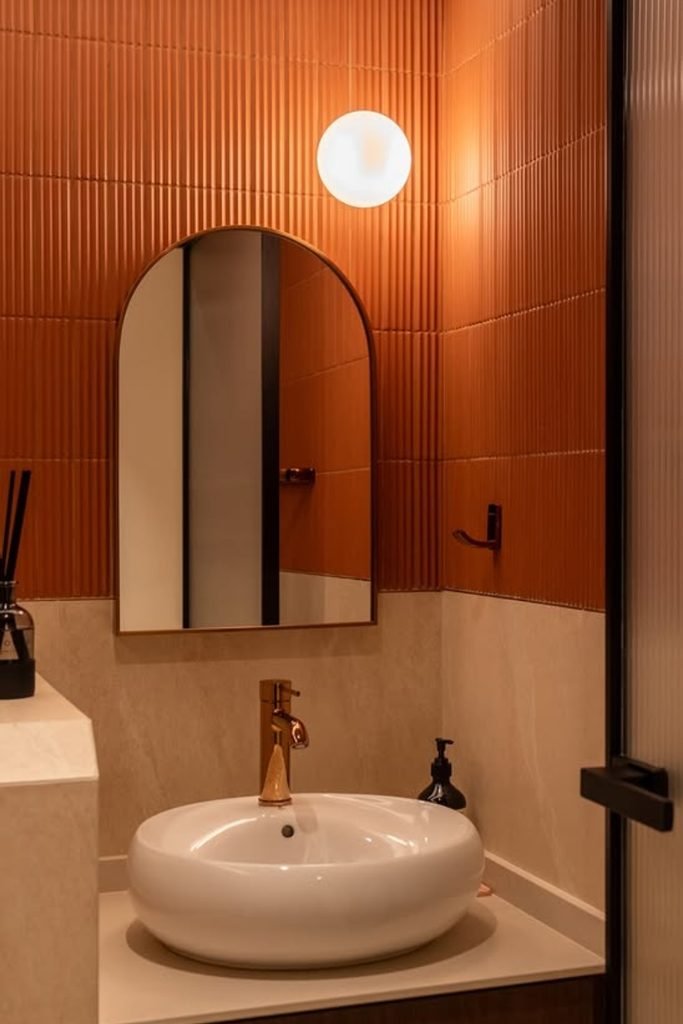
Keep fluted orange tiles above a pale lower wall if you want texture near eye level without surrounding the basin with strong color.
The vertical grooves add detail beside an arched mirror, while a round white basin repeats the softer shape against the straight tile lines.
For a small ensuite, choose a shallow vanity and place everyday soap within reach, letting the textured walls provide most of the decoration.
FAQs
What grout color works best with orange bathroom tiles?
Choose grout close to the tile color if you want a softer finish that lets the orange surface read as one continuous area.
Cream or pale gray grout makes each tile stand out, which works well when you want to highlight a square or stacked layout.
Compare grout samples beside your actual tiles before choosing, because the same grout can look different against bright orange, peach, and rust shades.
How can you try orange without changing your bathroom permanently?
Start with an orange shower curtain or towels so you can see how the color looks beside your existing walls, flooring, and fixtures.
Repeat the shade in one smaller detail, such as artwork or a soap dispenser, to connect the accents without filling every corner with orange.
Live with those changes for a while before adding more, and check whether you still enjoy the shade under daylight and your bathroom lighting.
