
22 Classic Kitchen Ideas
Some kitchens have a way of feeling familiar the moment you walk in, with warm materials and thoughtful details that never feel forced.
Classic kitchen style brings that feeling home through balanced colors, beautiful cabinetry, natural finishes, and practical touches you can actually live with.
In this article, you’ll find classic kitchen ideas that can help you create a warm, inviting space with lasting character.
Let’s jump in!
Differences Between Modern & Classic Kitchens
Modern kitchens keep things simple with flat cabinets, clean lines, smooth surfaces, and very little decorative detail.
Classic kitchens bring in more character through framed cabinets, natural materials, traditional hardware, molding, and warmer finishes.
If you want a sleek, uncluttered room, modern design gives you that cleaner look with most details kept out of sight.
If you want your kitchen to feel warmer and more established, classic design lets you layer wood, stone, glass, and subtle traditional details.
You can also mix both styles by keeping classic cabinetry while choosing simpler lighting, hardware, and finishes for a fresher everyday look.
Dark Cabinetry
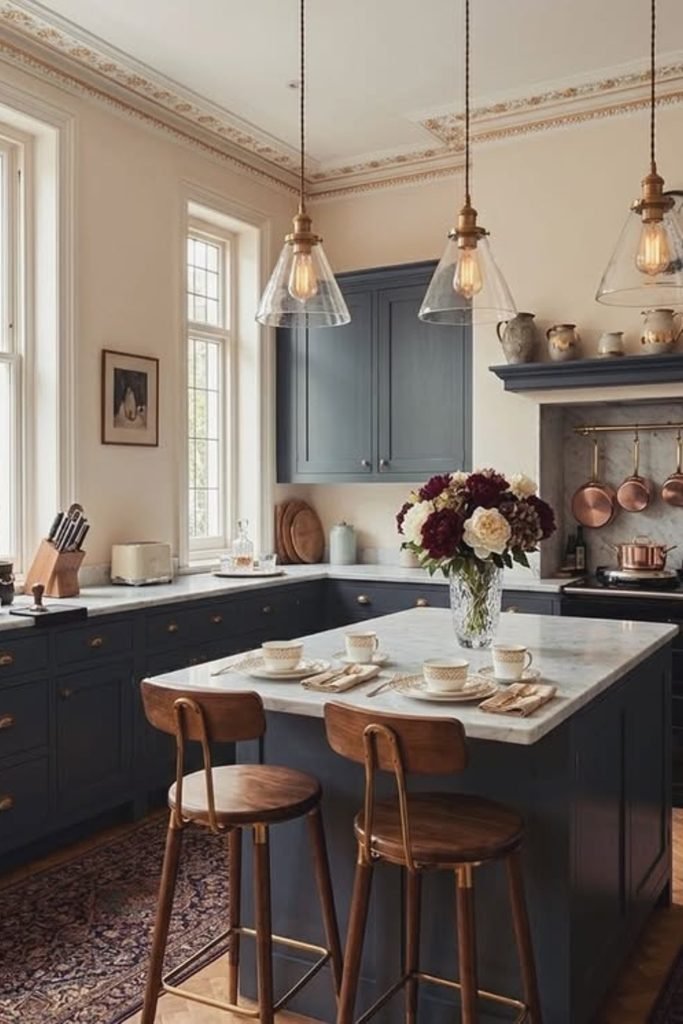
Dark cabinetry works beautifully when you want classic character without relying on white, especially in kitchens with tall windows and strong daylight.
Pair deep blue cabinets with pale stone counters and warm brass hardware, then bring in wood stools to keep everything inviting.
A marble-topped island gives you useful prep space while vintage rugs and copper cookware stop the darker palette from feeling too formal.
Refined Neutrals
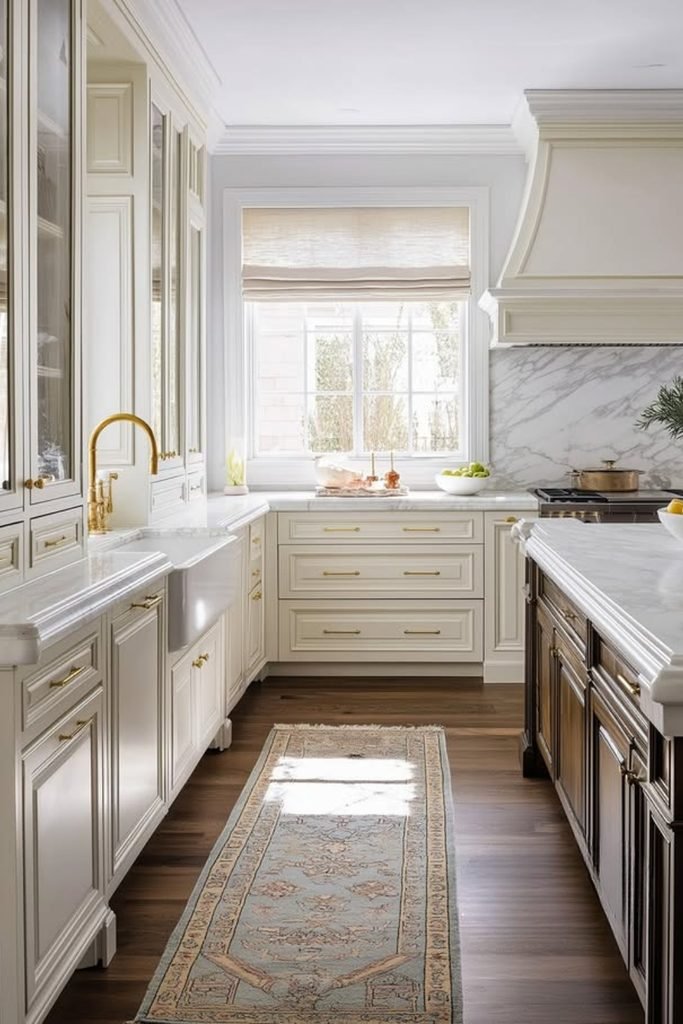
White cabinetry feels much richer when you build in traditional details, so use framed doors, crown molding, and substantial stone countertops.
Keep the larger surfaces quiet, then let brass hardware and a darker wood island introduce enough contrast to define each area.
This approach works especially well in bright kitchens where natural light can bring out the subtle depth of cream and marble.
Window Layout
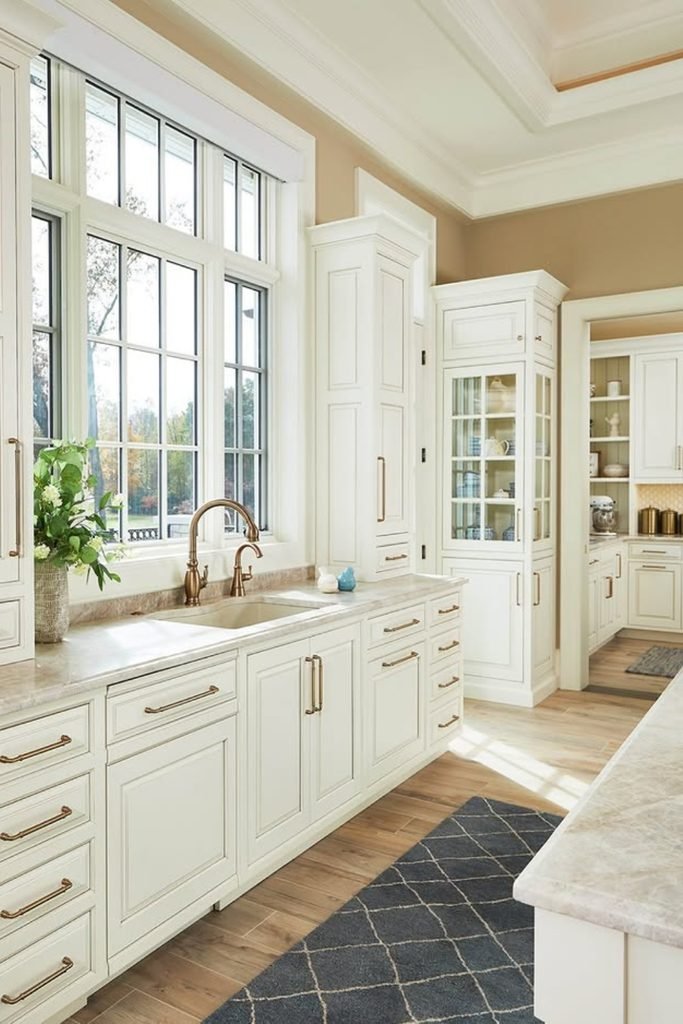
Large windows deserve to shape the kitchen plan, so keep the sink and working counter nearby instead of covering them with cabinetry.
Use warm white cabinets around the window, then add tall storage and glass-front sections where you need more function without visual heaviness.
Soft stone counters and aged brass hardware keep the pale palette from feeling flat, while wood flooring adds warmth under all that white.
Checkerboard Floor
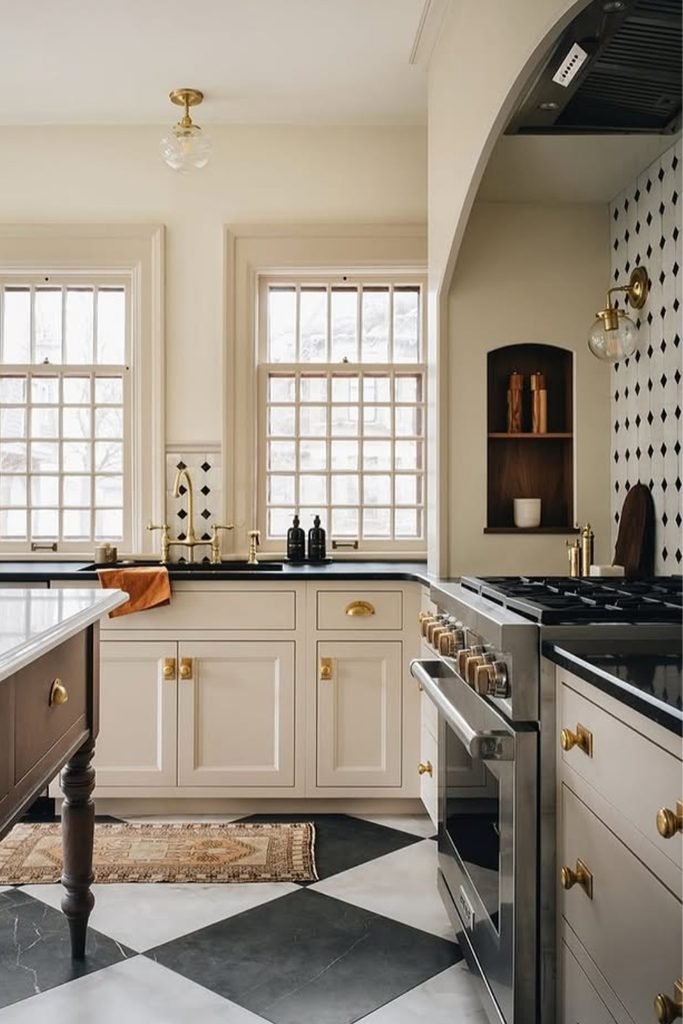
If you want a classic kitchen with stronger personality, start with one bold foundation such as a black-and-white checkerboard stone floor.
Keep the cabinetry cream and traditionally framed, then repeat warm brass on knobs, pulls, faucets, and lighting for a connected finish.
A dark wood worktable-style island is a smart match here because its turned legs soften the fitted cabinetry and make it feel collected.
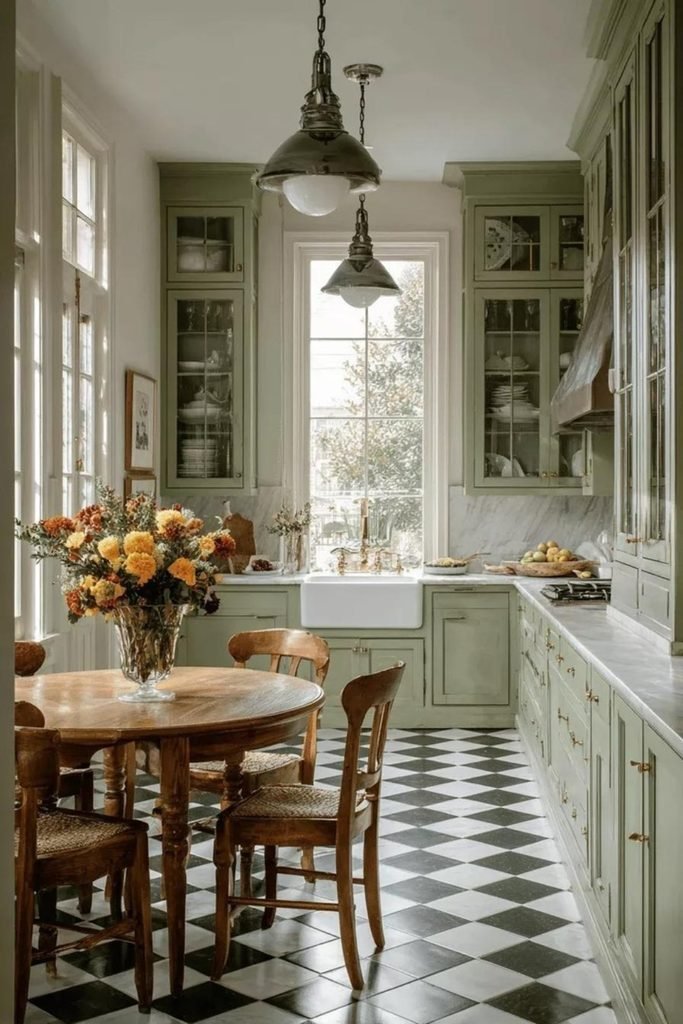
Sage Cabinetry
A soft sage palette is perfect when you want color without losing the calm, settled feeling that makes a classic kitchen work.
Carry the same shade across framed cabinets, then use marble counters and glass doors to keep tall storage from feeling too solid.
Bring in an old wood dining table and simple chairs so the kitchen feels collected over time rather than completely fitted.
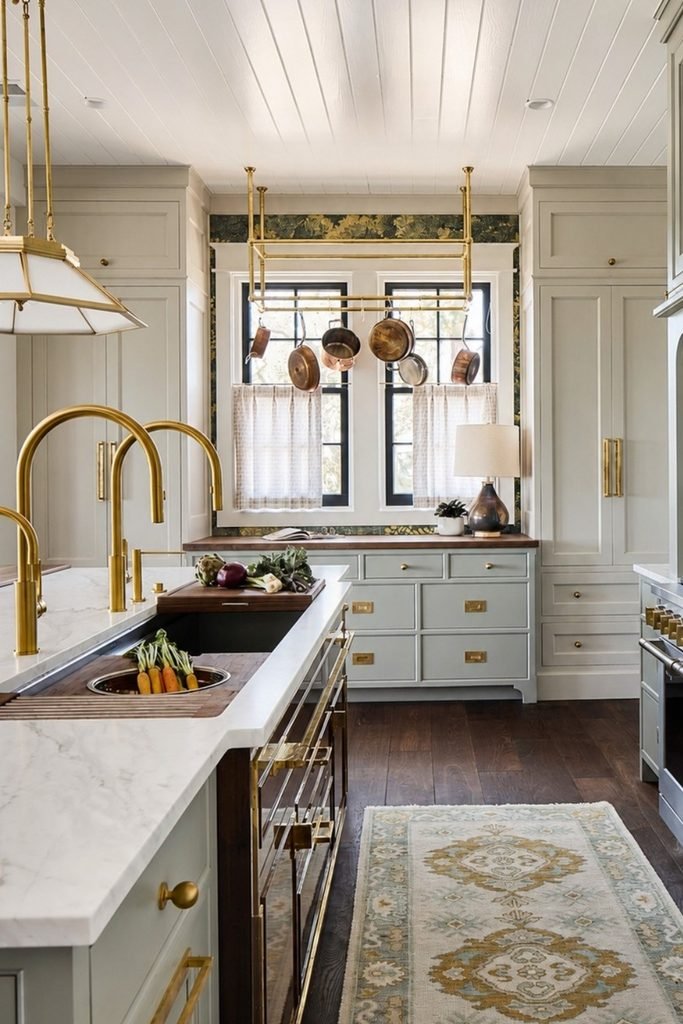
Built Storage
Good storage can still feel decorative when tall pantry cabinets, deep drawers, and framed doors are planned into the kitchen from the start.
Use muted gray-green cabinetry as the base, then repeat brass on faucets, rails, and handles to warm the cooler paint color.
Keeping the range inside a framed alcove gives the cooking zone definition while marble and dark wood add practical contrast nearby.
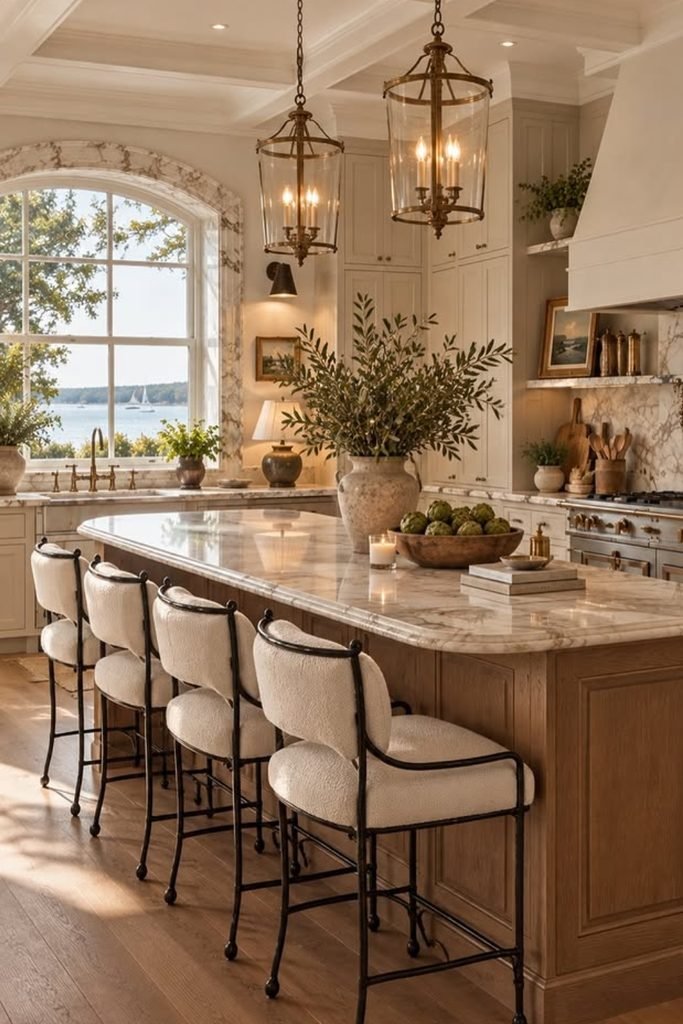
Gathering Island
If you have room for generous seating, let a wood island bring warmth instead of matching every cabinet in the kitchen.
Top it with softly veined stone, then keep surrounding cabinets creamy so the larger island feels grounded rather than visually heavy.
Lantern pendants and upholstered stools make this approach especially comfortable for an open kitchen where cooking and gathering happen together.
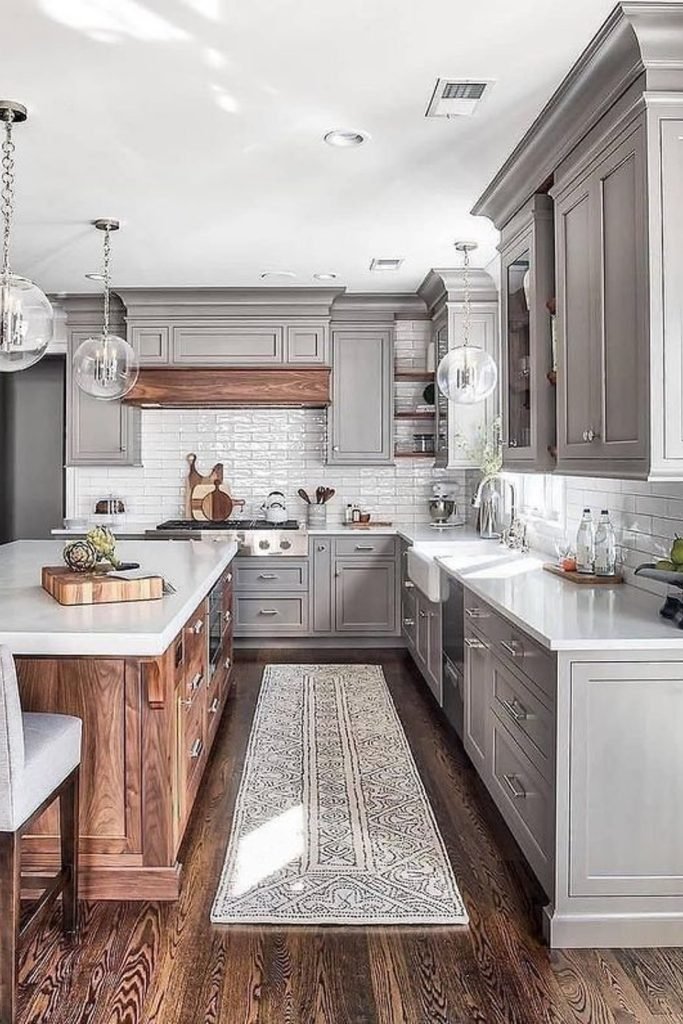
Wood Contrast
Gray cabinets become much less formal when you break them up with natural wood instead of carrying one finish across everything.
Try a wood island with open storage, then repeat that warmth through flooring or smaller details so the contrast feels intentional.
White counters and a simple tile backsplash brighten the darker palette, making this combination useful for long kitchens with limited natural light.
Copper Details
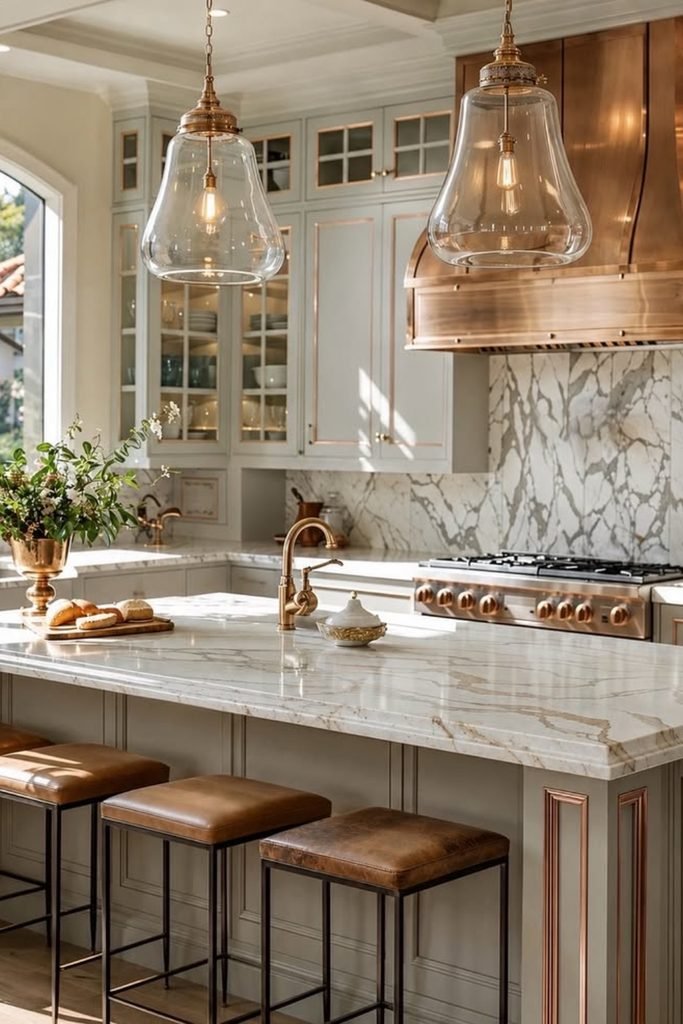
Let copper do the warming when your kitchen uses pale cabinetry, because a statement hood and matching accents create character without extra color.
For a balanced finish, keep marble on the counters and backsplash while leather stools bring another warm material around the island.
Large glass pendants work best over a generous island, giving you focused light without hiding the cabinetry or dramatic stone behind them.
Natural Oak
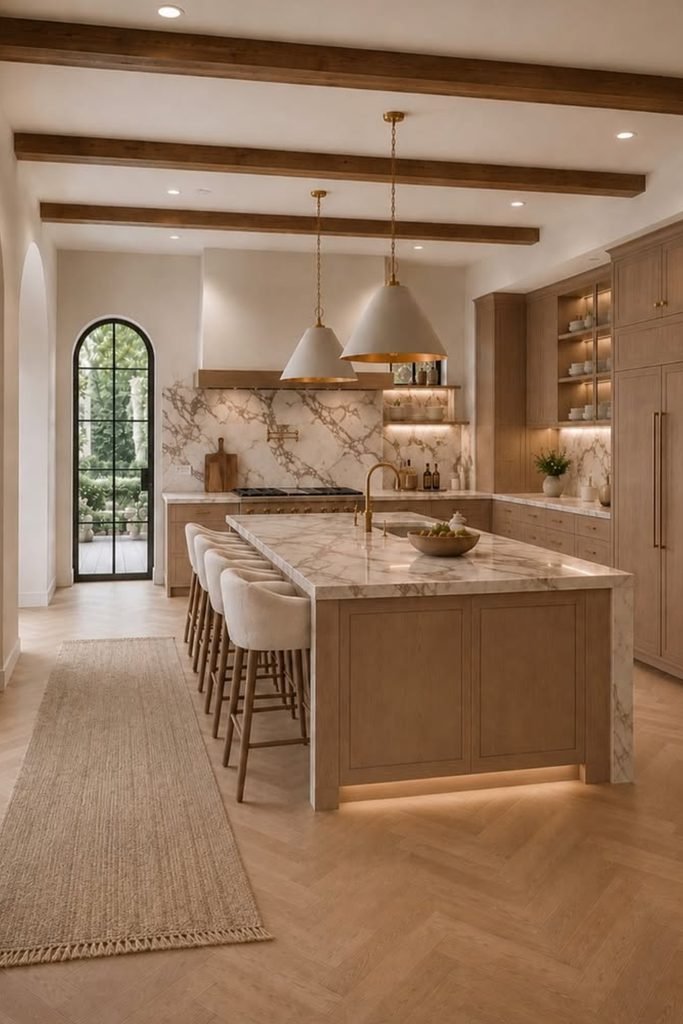
Natural oak can carry an entire classic kitchen when you keep the grain visible and avoid adding too many competing finishes.
Run the same wood across cabinets and island, then use strongly veined stone behind the range to break up the warm palette.
Ceiling beams and soft pendant lights suit this approach especially well, helping a long kitchen feel warmer without filling it with decoration.
Collected Character
Give a gray kitchen some history by mixing painted cabinetry with furniture-style wood details instead of making every fitted element match.
A wood-edged island with turned legs creates that collected feeling, while marble counters keep the work surface practical and visually lighter.
Carry darker window frames and checkerboard flooring around the room so the gray cabinets feel connected to stronger architectural details.
Dark Wood
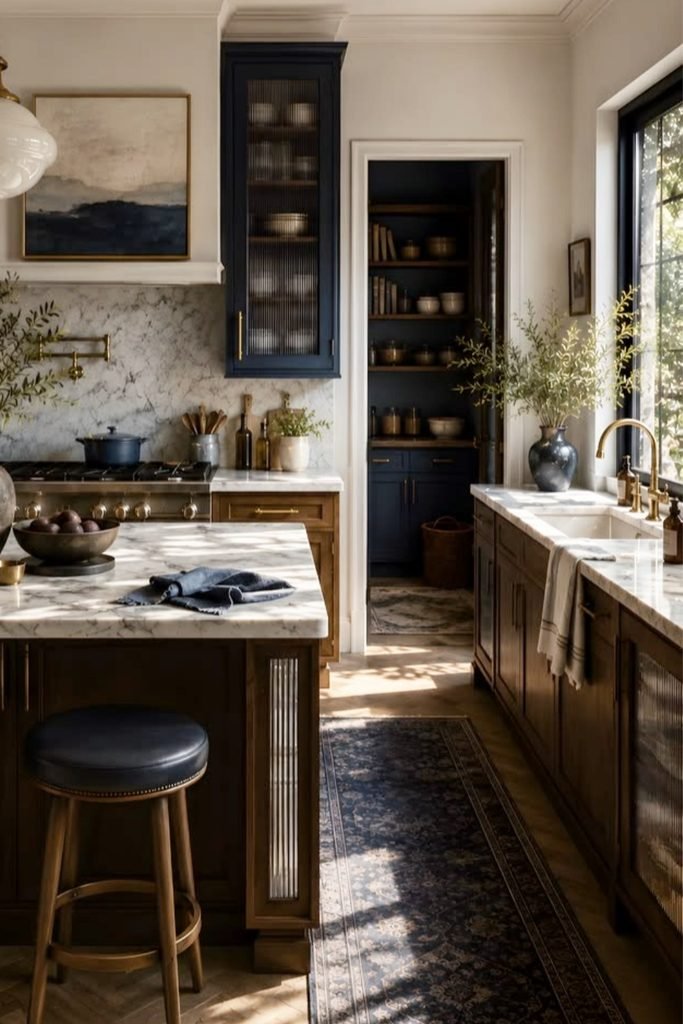
Dark wood works best when you give it enough light and contrast, especially if you want a classic kitchen with more depth.
Use marble counters and backsplash to brighten the cabinetry, then introduce navy display cabinets where you want storage to feel more decorative.
A nearby pantry can take everyday clutter away from the main kitchen, leaving open counters and glass-front storage easier to keep organized.
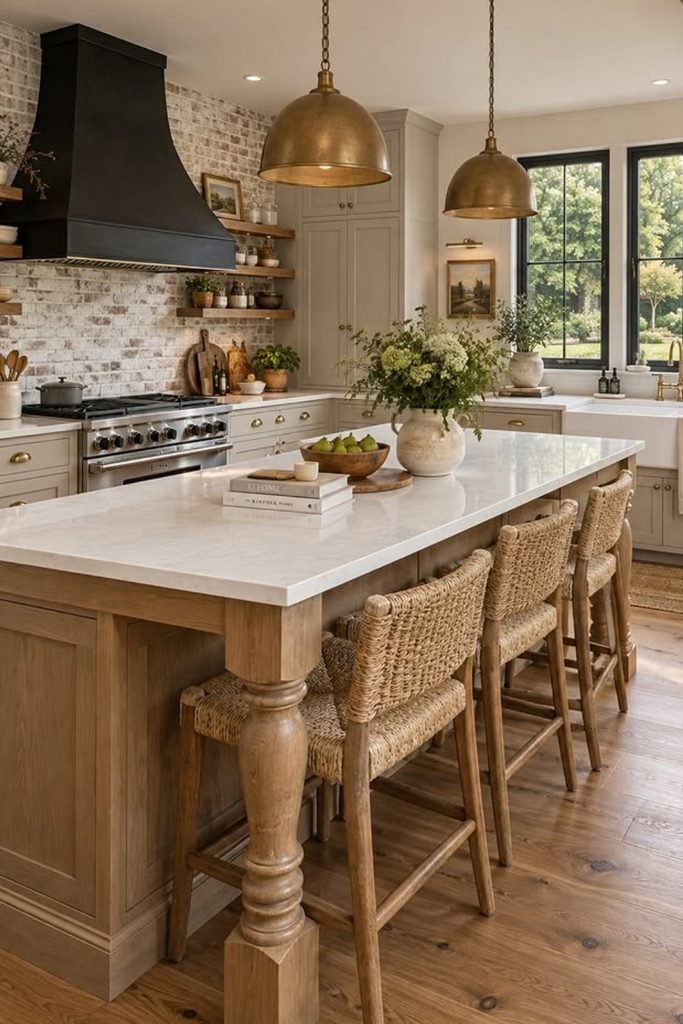
Rustic Warmth
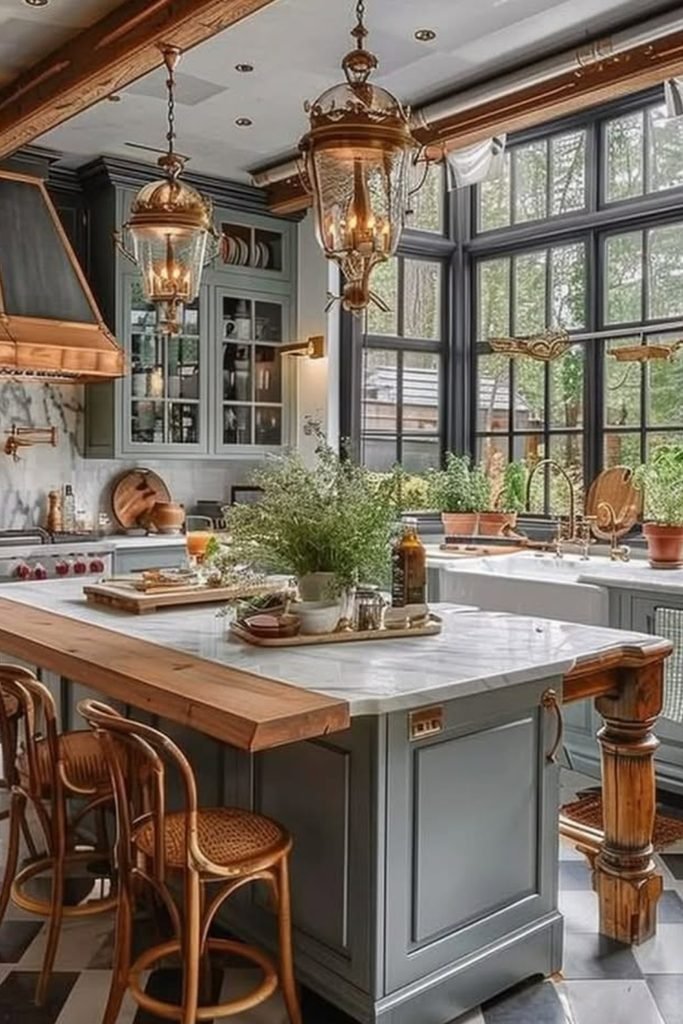
A classic kitchen feels more relaxed when you mix refined cabinetry with rustic wood, rather than keeping every surface perfectly polished.
Choose a natural wood island with turned legs, then pair it with woven stools to create an easy everyday gathering spot.
Warm brass pendants and a dark range hood add stronger contrast, while pale counters prevent all those earthy finishes from becoming heavy.
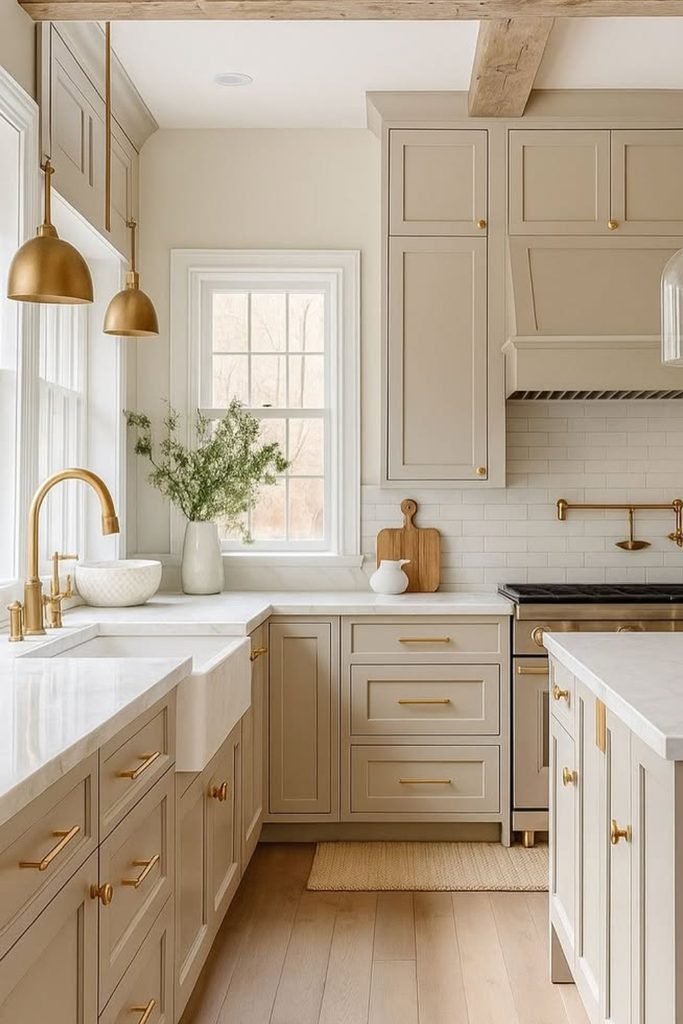
Soft Greige
Greige cabinetry gives you a softer alternative to bright white while still keeping a small classic kitchen open and easy on the eyes.
Take the cabinets close to the ceiling for extra storage, then use simple brass hardware to break up the neutral surfaces.
White counters and a farmhouse sink keep the working area bright, while exposed ceiling beams bring enough warmth to balance the palette.
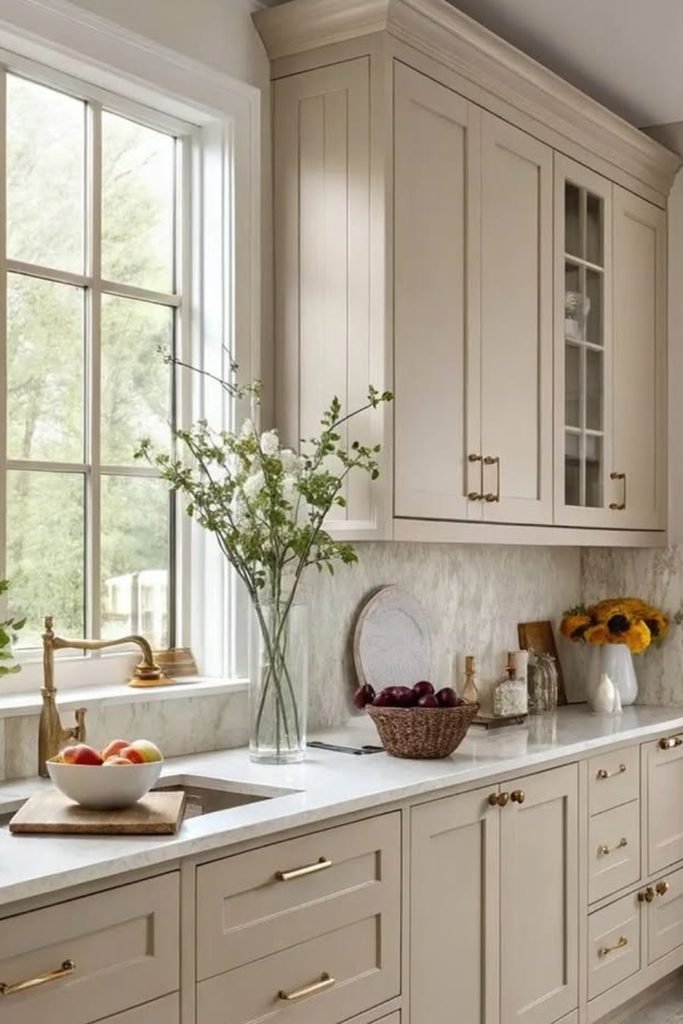
Window Counter
When you have a beautiful window, keep the counter beneath it simple so daylight becomes part of the kitchen instead of getting blocked.
Frame the area with tall cream cabinetry, then add a marble backsplash and slim brass hardware for detail without crowding the workspace.
This setup works especially well for a sink or prep zone, where open views can make everyday kitchen tasks feel less enclosed.
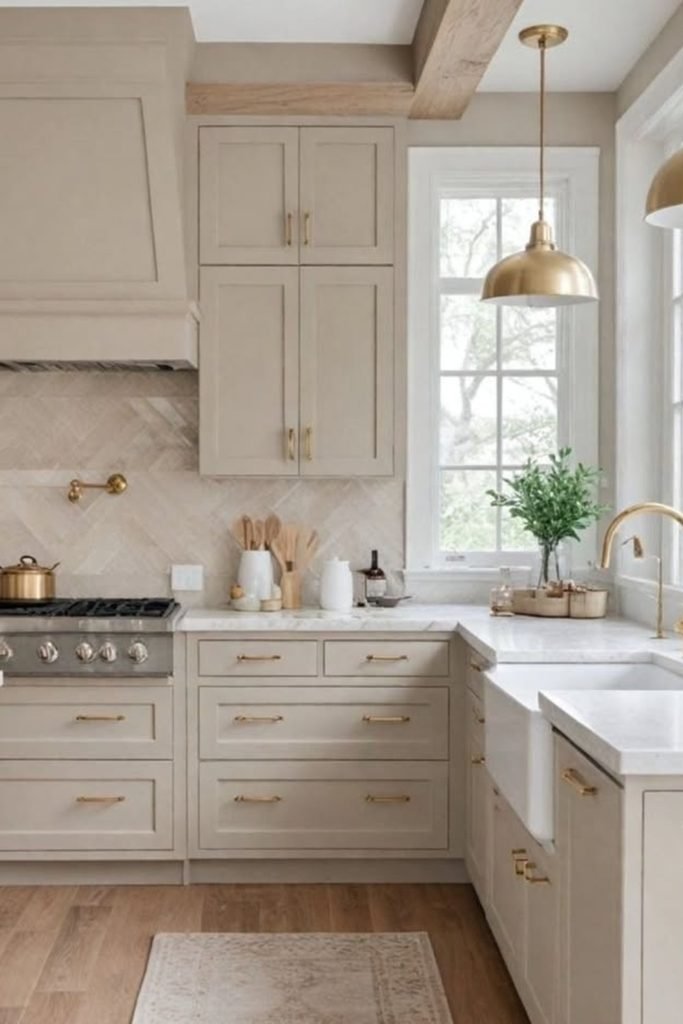
Herringbone Backsplash
A quiet neutral kitchen can handle more pattern when you keep it close in color, making herringbone tile an easy classic choice.
Use warm beige cabinetry around the backsplash, then choose pale counters so the angled pattern adds texture without taking over.
Brass hardware and pendants bring warmth higher through the room, while natural wood flooring keeps the soft neutral scheme from feeling washed out.
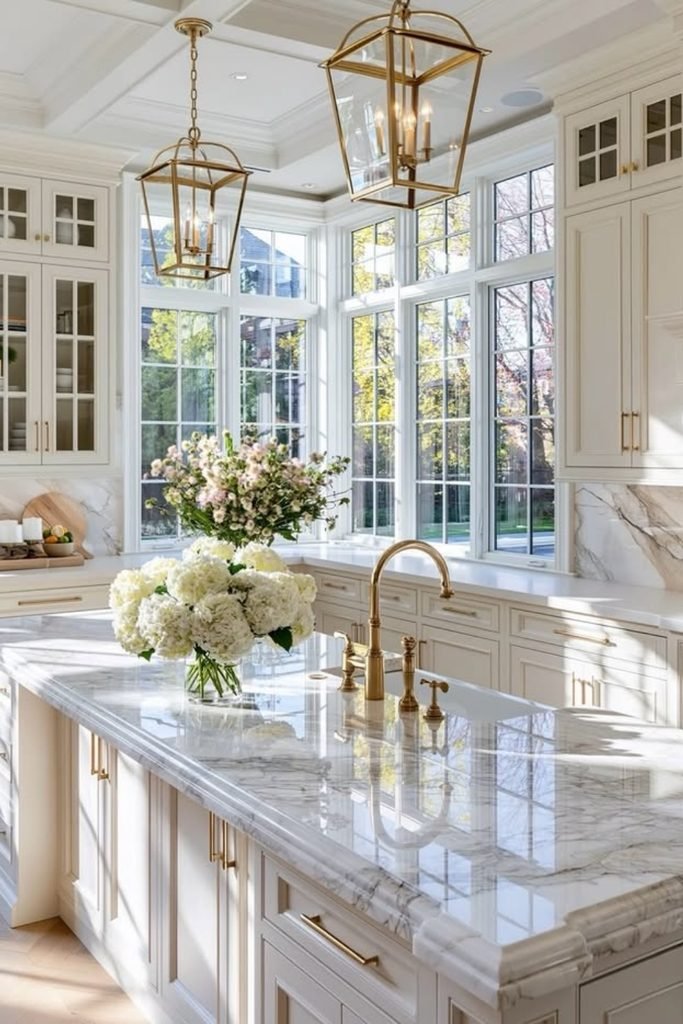
Marble Layers
When your kitchen gets plenty of daylight, you can use marble across the island and backsplash without making the room feel too busy.
Keep surrounding cabinets warm white, then choose brass lanterns and hardware to add enough warmth against the cooler stone surfaces.
Glass-front cabinets near the windows help tall storage feel lighter, while the oversized island gives you plenty of everyday working space.
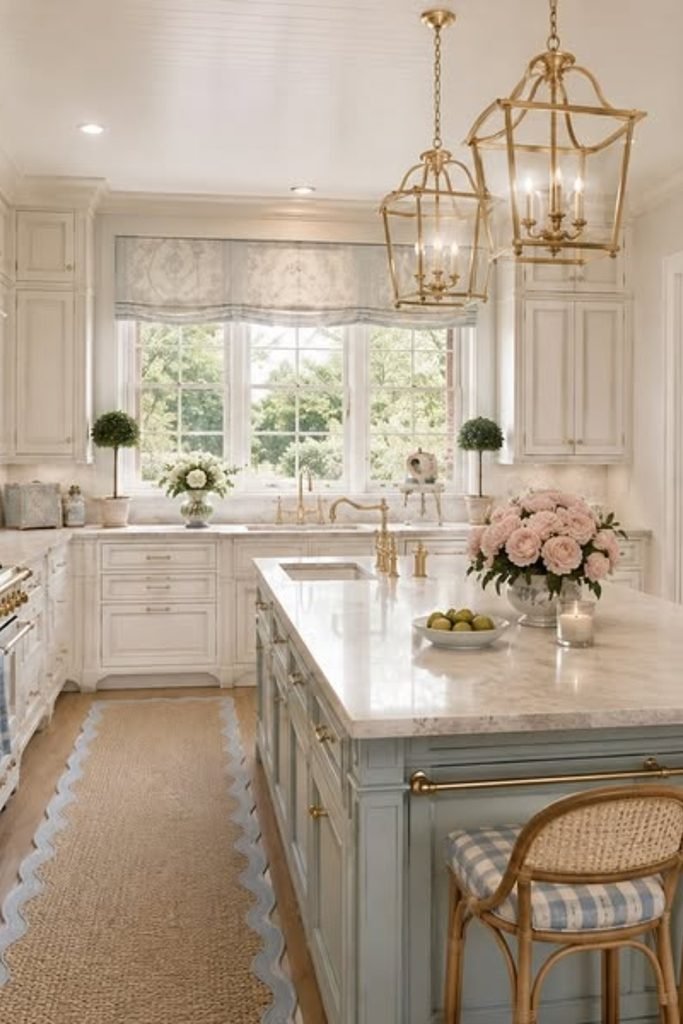
Blue Island
A muted blue island is an easy way to bring color into a classic kitchen without committing every cabinet to the same shade.
Keep perimeter cabinets creamy, then repeat brass through handles and lantern pendants so the contrasting island still belongs with the room.
Woven stools and a simple runner soften all the fitted cabinetry, making this combination especially comfortable for a family kitchen.
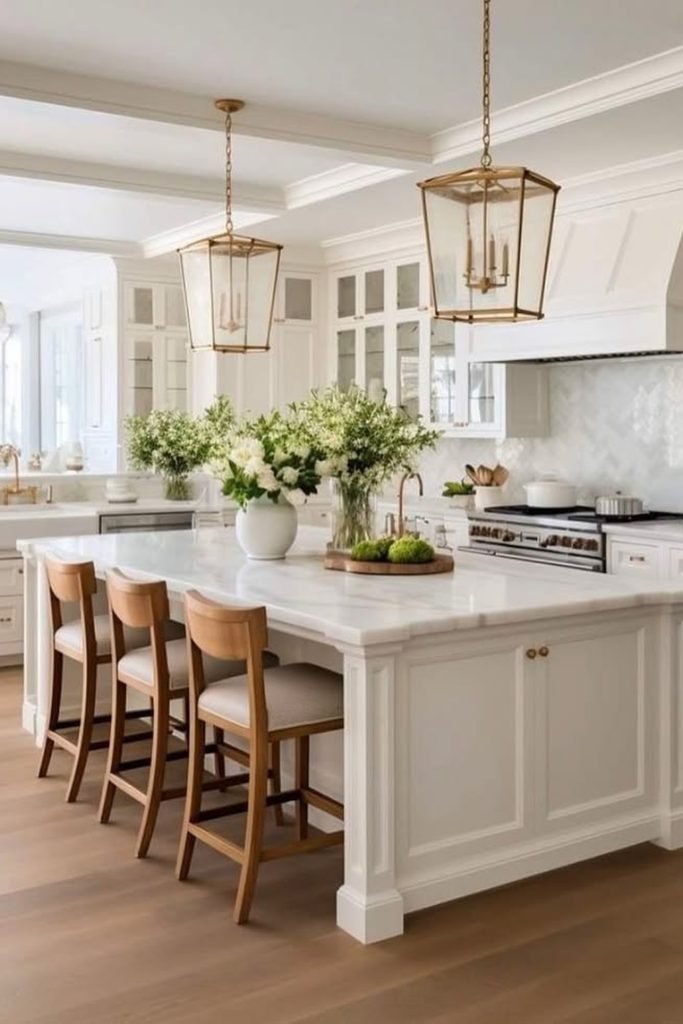
Simple White
You do not need heavy decorative details to make a white kitchen feel classic when the cabinetry already has strong proportions.
Use framed cabinet doors, a substantial island, and a traditional range hood, then keep your stone surfaces pale and quietly patterned.
Warm wood stools and brass lanterns break up the white surfaces naturally, giving you contrast without introducing another permanent cabinet color.
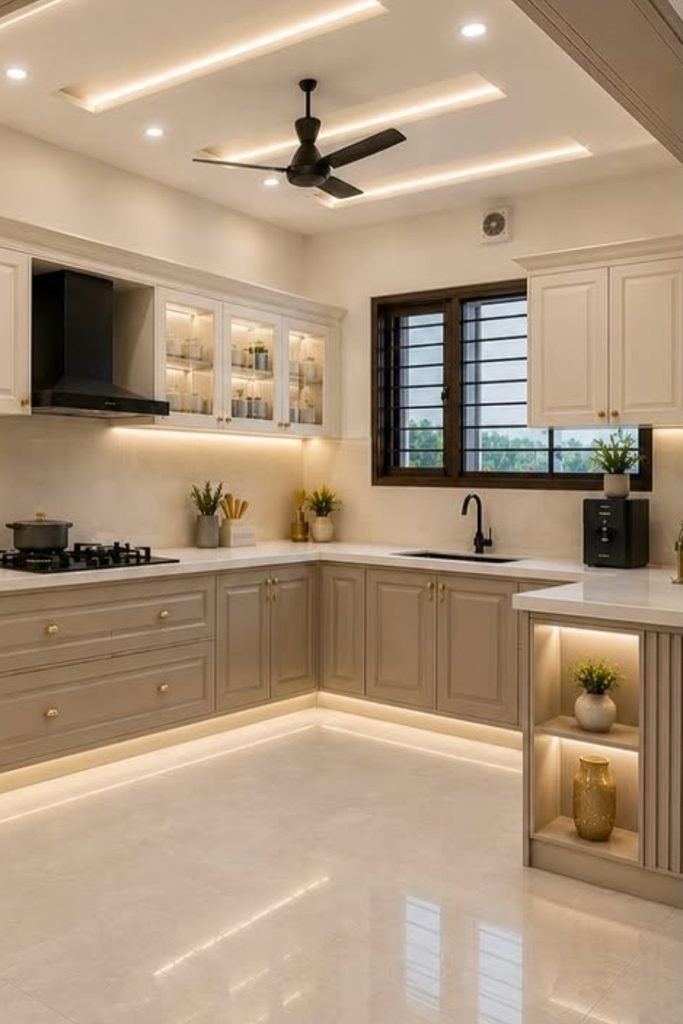
Layered Lighting
If your kitchen lacks strong daylight, layered lighting can keep classic cabinetry useful without forcing you into an overly bright color scheme.
Run warm task lighting beneath upper cabinets, then add light inside glass-front storage so shelves stay practical after daylight fades.
Keep recessed ceiling lights for general brightness, while the softer hidden lighting gives counters and display areas their own clear purpose.
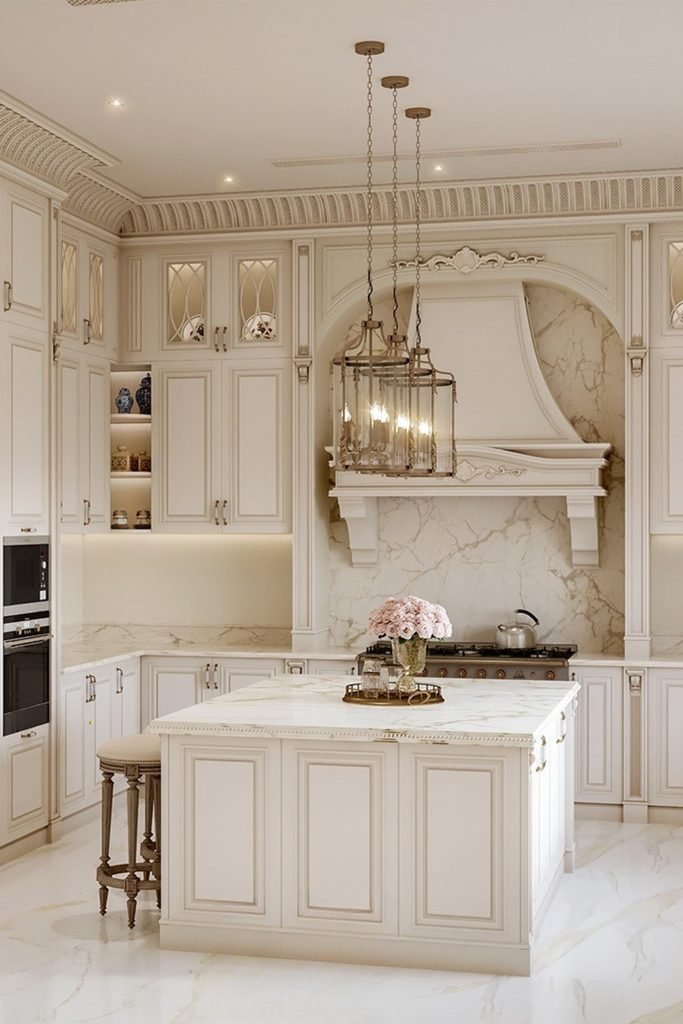
Ornate Cabinetry
If you love a more formal classic look, use carved molding and detailed cabinet fronts instead of adding decoration across every surface.
Keep the entire palette creamy so those ornate details remain easy on the eye, then let marble add gentle movement around the room.
This approach works best in larger kitchens where tall ceilings and generous walls give decorative cabinetry enough space to feel properly balanced.
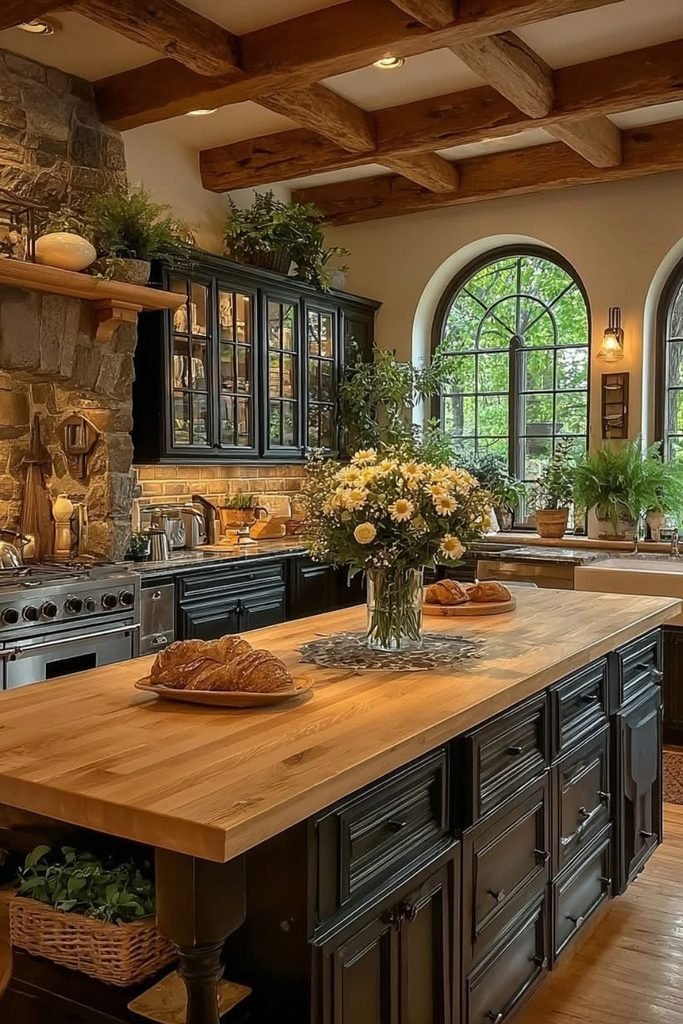
Rustic Beams
Old beams and stone can do most of the decorating for you, so keep the kitchen finishes simple when architecture already has character.
Deep painted cabinets work well against warm timber, while a thick wood island top continues that natural material through the working area.
Use arched windows and warm task lighting to brighten darker finishes, creating a kitchen that feels cozy without hiding its rustic structure.
FAQs
Can Classic Kitchens Use Dark Colors?
Dark colors can work beautifully in a classic kitchen when you balance them with lighter counters, warm metals, and enough natural light.
Try deep blue, charcoal, or dark wood on selected cabinets, then use cream walls or pale stone to soften the contrast.
If your kitchen receives limited daylight, keep darker finishes below eye level so tall surfaces do not make the room feel enclosed.
How Can You Update a Classic Kitchen Without Replacing Everything?
Start with the details that are easiest to change, especially when your existing cabinets are solid and still work well for you.
New hardware, lighting, counters, paint, or a simpler backsplash can shift the whole kitchen without requiring a complete renovation.
Keep any quality wood or traditional features you still love, then update surrounding finishes so older details feel intentional rather than dated.
