
24 Purple Bedroom Ideas
You love the idea of a purple bedroom until you start doubting yourself.
You should know that purple itself isn’t the problem. You just need to get the shade, lighting, and color pairings right.
In this article, you will see is purple really a good color to choose for your bedroom and then I will show you 24 purple bedroom ideas.
Let’s jump in!
Is Purple a Good Color for a Bedroom?
Yes, you can make purple a stunning choice for your bedroom but only if you pick the right shade and use it the right way.
You might go wrong when you grab a random purple you love from Pinterest, paint the whole room, and then wonder why it feels too dark or too loud.
You should know that purple isn’t a one-shade-fits-all color. You can use soft lavender to create a calm, airy space or deep plum if you want drama and warmth.
You see, those two shades give completely different moods, and you should choose based on the feeling you want in your room.
If your room is small or doesn’t get much natural light, you should go lighter.
You can try lavender, lilac, or dusty mauve and you will see how it keeps your space open and relaxing. Dark purple in a low-light room? You might find it feels heavy really fast.
When your bedroom gets plenty of sunlight, you can safely experiment with deeper shades like eggplant or royal purple.
You will notice that the natural light balances the depth and stops it from feeling gloomy.
You should also think about who the room is for. If you want a peaceful, sleep-friendly space, you can stick to softer tones.
But if you want something bold and cozy, deeper shades can work beautifully, especially when you add warm lighting and wood or brass accents.
So, is purple a good color for a bedroom? Yes, you just can’t treat all purples the same. You should choose based on your light, your room size, and the mood you want to create.
When you do that, you will get a room that feels completely yours.
Moody Plum Accent
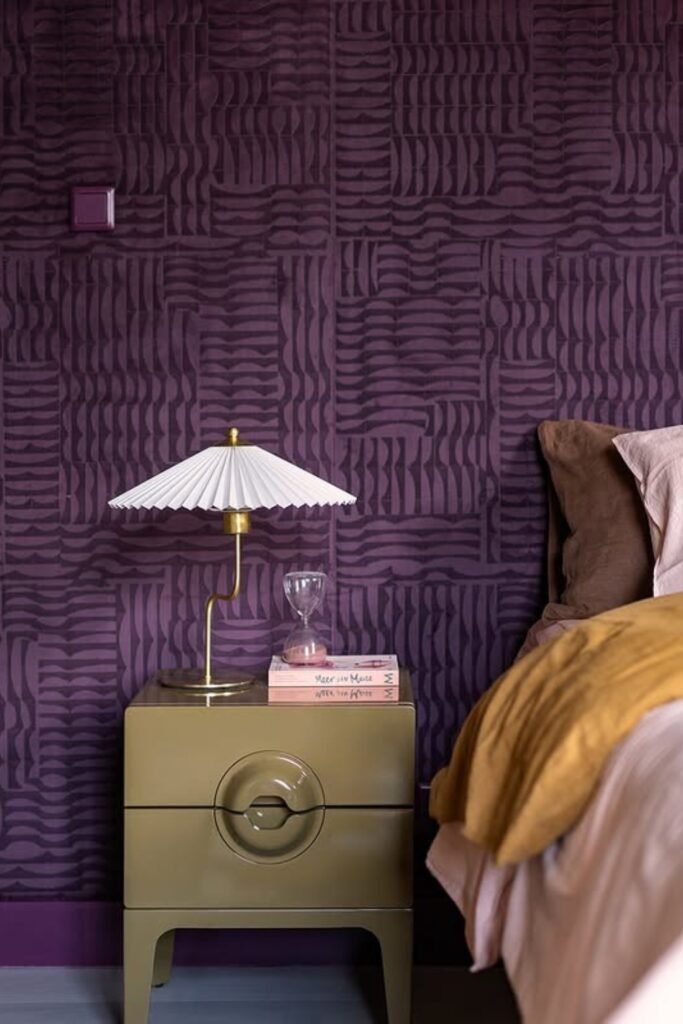
If you are scared of dark purple, you can still make it work. You might try a textured or patterned wallpaper in deep plum instead of flat paint.
You’ll notice how the pattern breaks up the darkness and adds movement, so the wall feels rich, not heavy.
You should pair it with warm tones like mustard bedding and brass lighting, and you’ll see how it softens the mood.
You can do this especially well in bedrooms with good natural light or strong bedside lamps to keep things balanced and cozy.
Deep Aubergine Backdrop
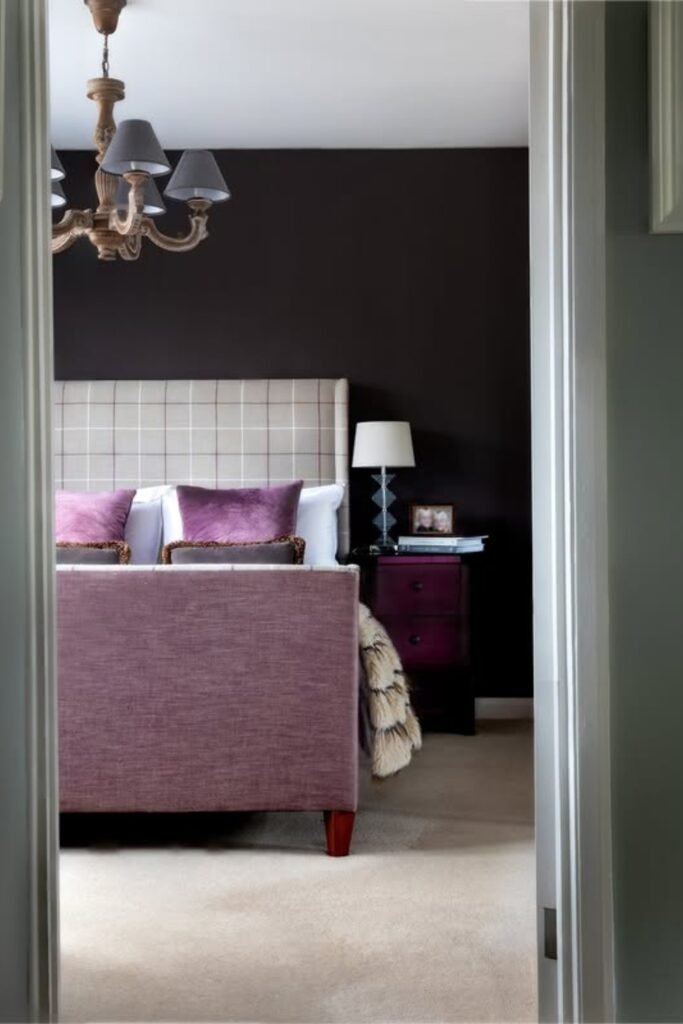
If you want drama without committing to painting the whole room, you could go darker on just one main wall.
You’ll see how a deep aubergine backdrop behind a soft upholstered bed instantly adds depth and makes lighter fabrics pop.
You might notice how blush and plum cushions soften the intensity. You can use this approach beautifully in master bedrooms where you want a cozy, hotel-like feel.
You should keep the other walls light so the space doesn’t feel closed in.
Modern Purple Luxury
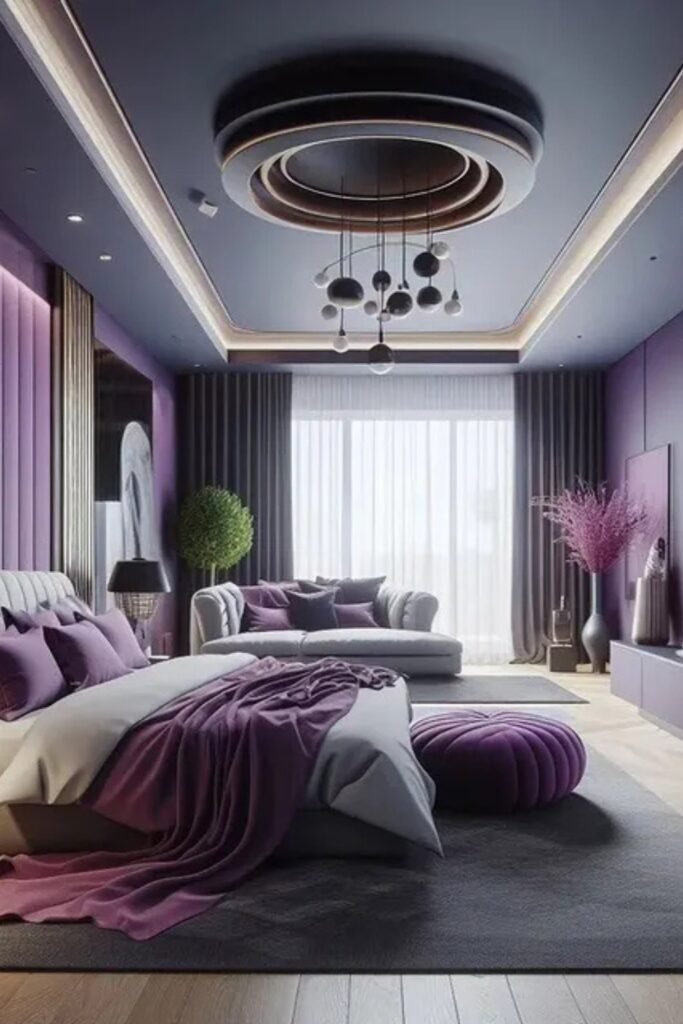
If you want purple to feel expensive, you should focus on layering. You can mix soft lavender walls with deep plum textiles to create depth without looking flat.
You should keep large furniture neutral and let purple show up in panels, pillows, and throws.
You might add warm lighting and metallic accents to avoid a cold look. This works best in spacious bedrooms where you want a bold, high-end, hotel-inspired vibe.
Soft Mauve Retreat
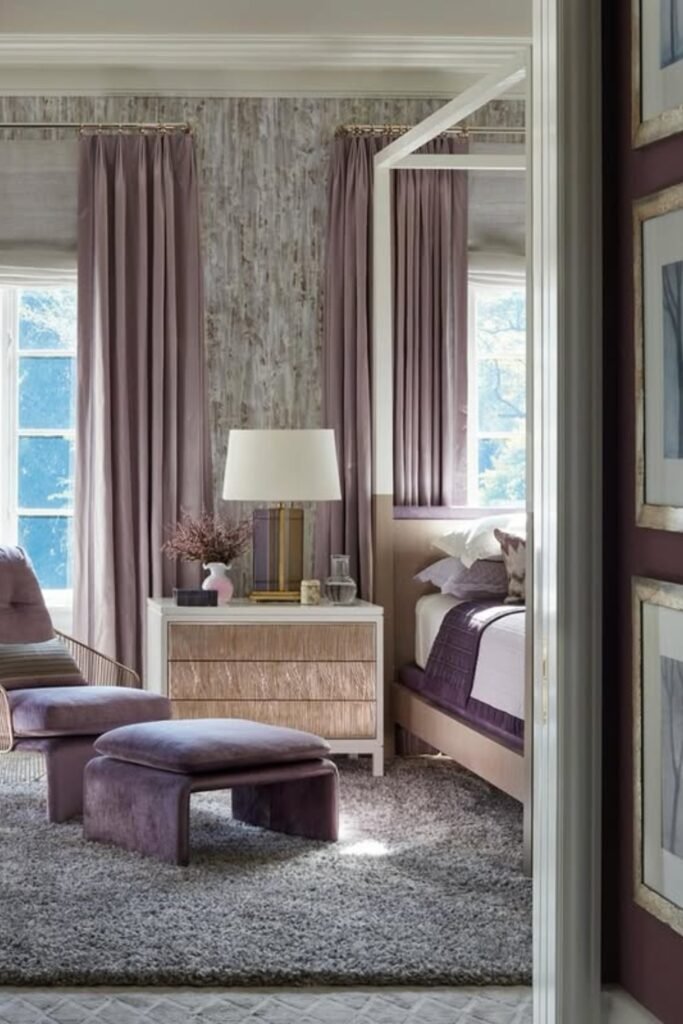
If you want purple to feel calm instead of bold, you could keep it muted.
You should try soft mauve in curtains, upholstery, and bedding and you’ll see how it adds warmth without overpowering the room.
You might notice how natural light and neutral walls balance everything. You can use this in smaller bedrooms or guest rooms where comfort comes first.
You should stick to dusty tones and mix in light wood and textured rugs to keep the space airy and relaxed.
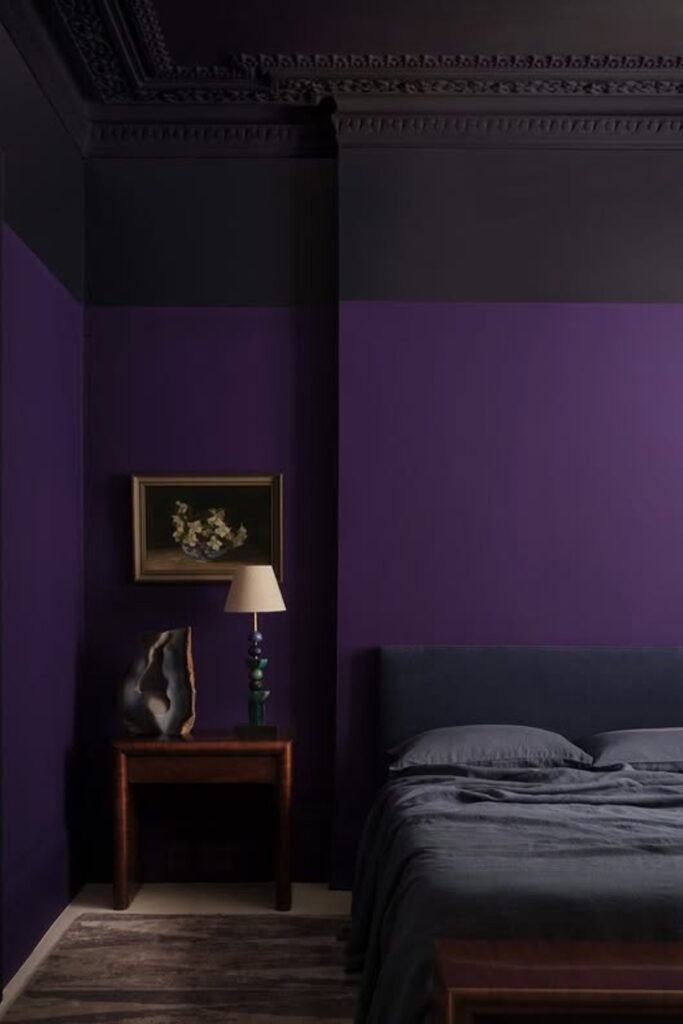
Two-Tone Purple Walls
You can create drama without overwhelming the room by splitting the wall.
A deeper purple on the lower half can ground the space, while a slightly lighter shade above keeps it from feeling boxed in.
You might find this especially effective in bedrooms with high ceilings and classic molding. You should keep bedding simple and darker to match the mood.
When you try this, make sure the line between shades is clean, that’s what makes it look intentional.
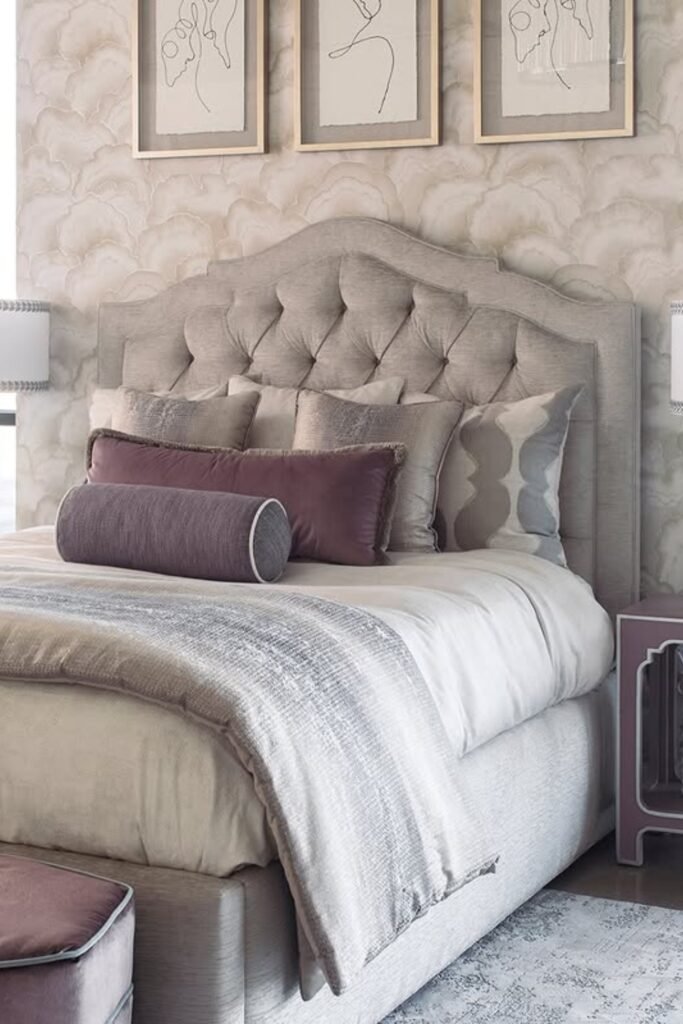
Soft Purple Accents
If you’re not ready to paint walls, you can start small. You could add a few plum-toned pillows, a matching bolster, or a painted nightstand to bring purple into a neutral room.
You should notice how this works especially well with beige, cream, or greige tones.
You can keep your base calm and let purple act as a highlight. If you ever want a change, you could swap textiles without repainting the room.
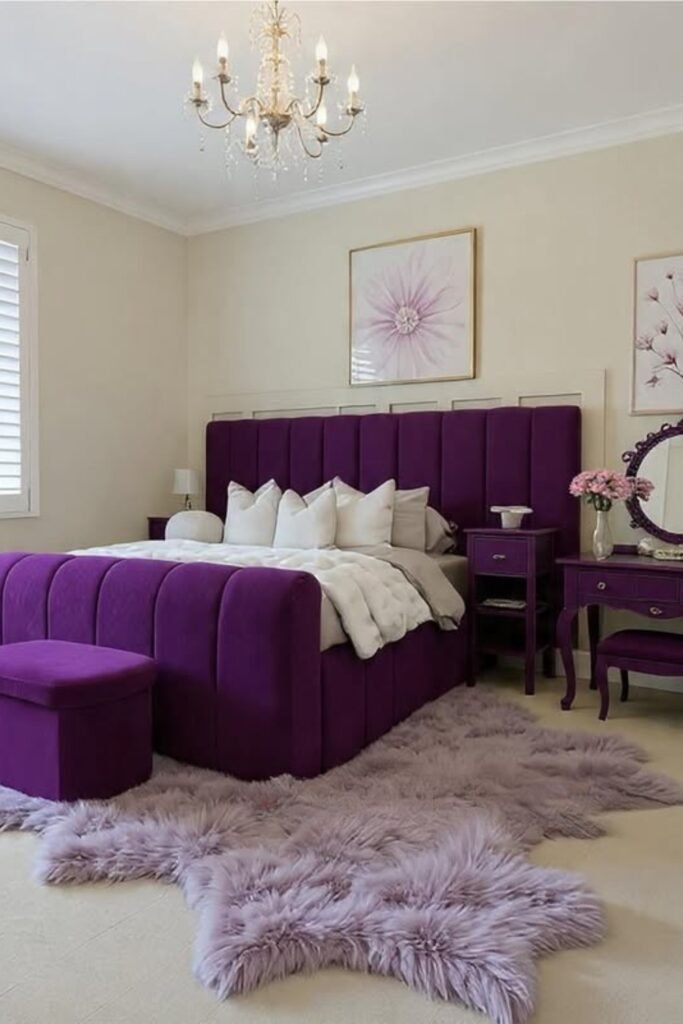
Bold Purple Statement
If you’re going purple, you should commit. You could choose a fully upholstered bed in rich violet, it instantly becomes the focal point and saves you from repainting walls.
You should keep the background neutral so the furniture stands out. You might add small matching pieces like a side table or bench to tie everything together.
You can try this in larger bedrooms where one strong statement piece can anchor the whole design.
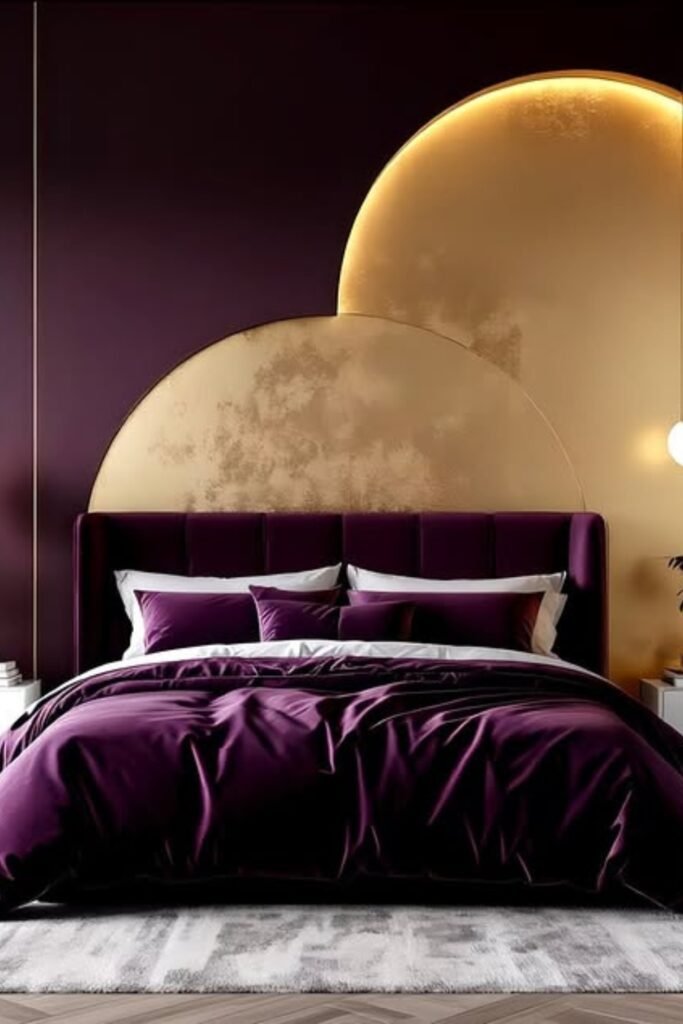
Dramatic Plum Glow
When you want your bedroom to feel bold and intimate, you can lean into contrast. You should pair a deep plum wall with warm backlighting for instant drama without clutter.
You might notice how golden arches and soft pendant lights balance the darkness. You can use this in modern spaces where clean lines keep things sharp.
If you try it, you should layer your lighting, overhead, bedside, and accent, so the purple feels rich, not flat.
Layered Lavender Modern
Purple doesn’t have to shout to stand out. You can use soft lavender across bedding, panels, and ceiling details to create a smooth, layered look.
You should notice how grey walls and warm LED lighting keep everything balanced. You might try this in modern bedrooms with clean lines and built-in lighting.
When you want this effect, you can repeat the same shade in different textures so your room feels cohesive, not busy.
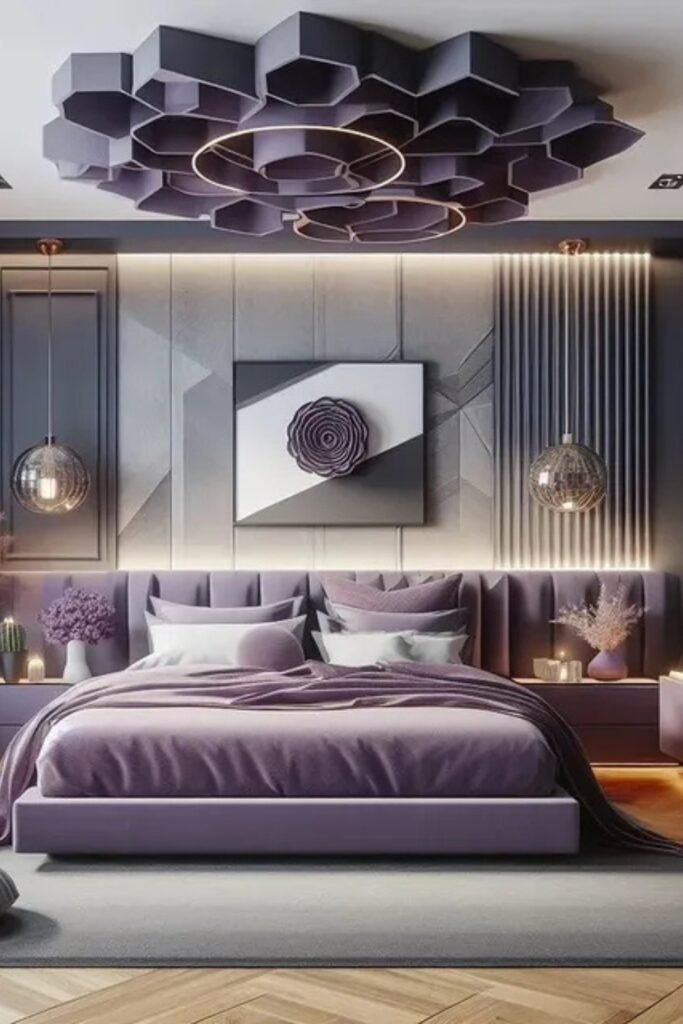
Gentle Lavender Nook
You don’t need bold walls to bring purple into a bedroom. You can paint the inside of shelves or a small nook in soft lavender for color without overwhelming the space.
You should notice how this works beautifully in kids’ rooms or cozy corners where you want a sweet, calm feel.
You could pair it with white furniture and light patterns so the purple stays playful. You can try this simple update, and it will feel thoughtful and intentional.
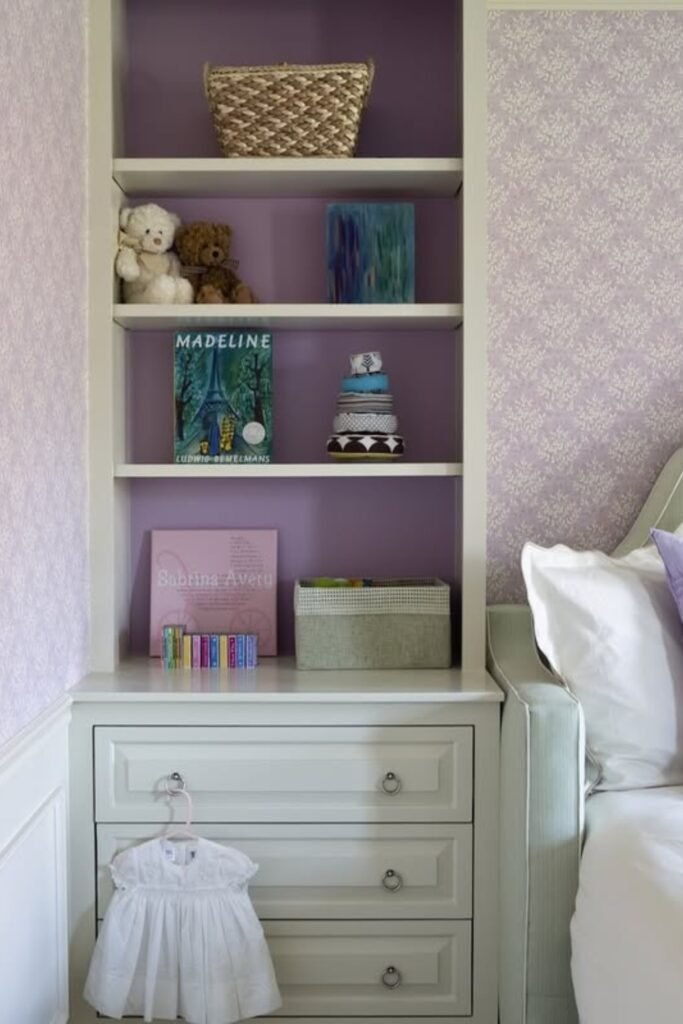
Purple With Pop
You don’t always have to be serious with purple. You could pair lavender walls and deep violet curtains with a bold accent like a coral chair, you’ll see how it instantly livens the room.
You should try this in bright bedrooms with large windows so natural light keeps the colors fresh.
When you try this mix, you should balance the bold tones with white bedding and simple furniture to keep the space playful, not chaotic.
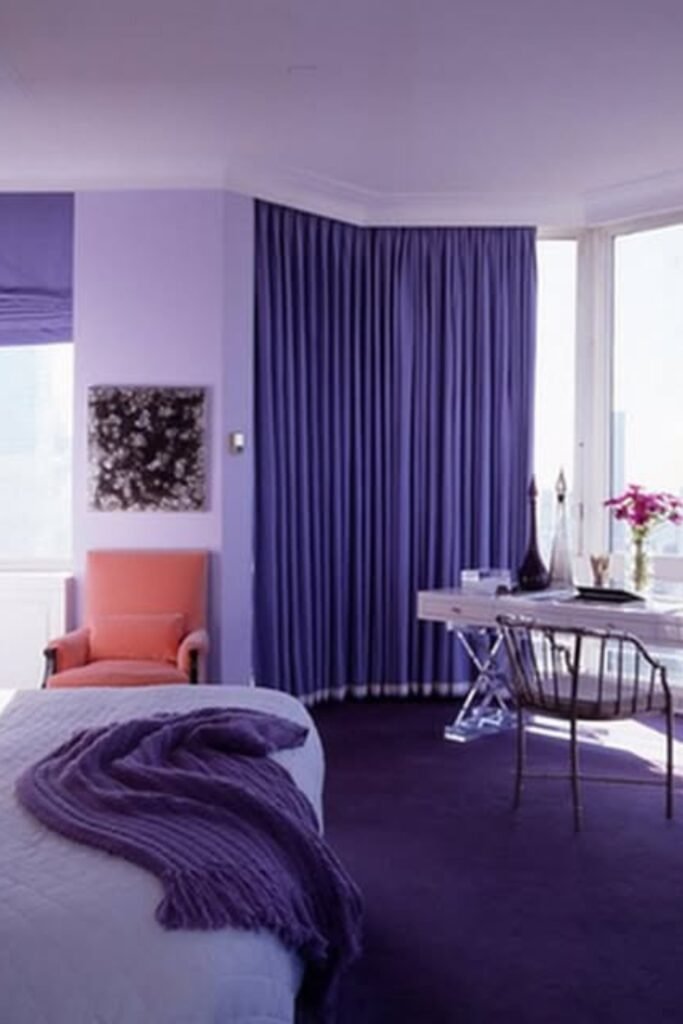
Patterned Purple Drama
If plain purple feels boring, you could go bold with pattern. You can add a floral or botanical wallpaper in plum tones to instantly add character and depth.
You should keep the bed and furniture simple so the walls stay the star. You might notice how this works best in bedrooms where you want personality, not minimalism.
When you try this, you should repeat one shade from the wallpaper in the headboard or curtains so everything feels connected.
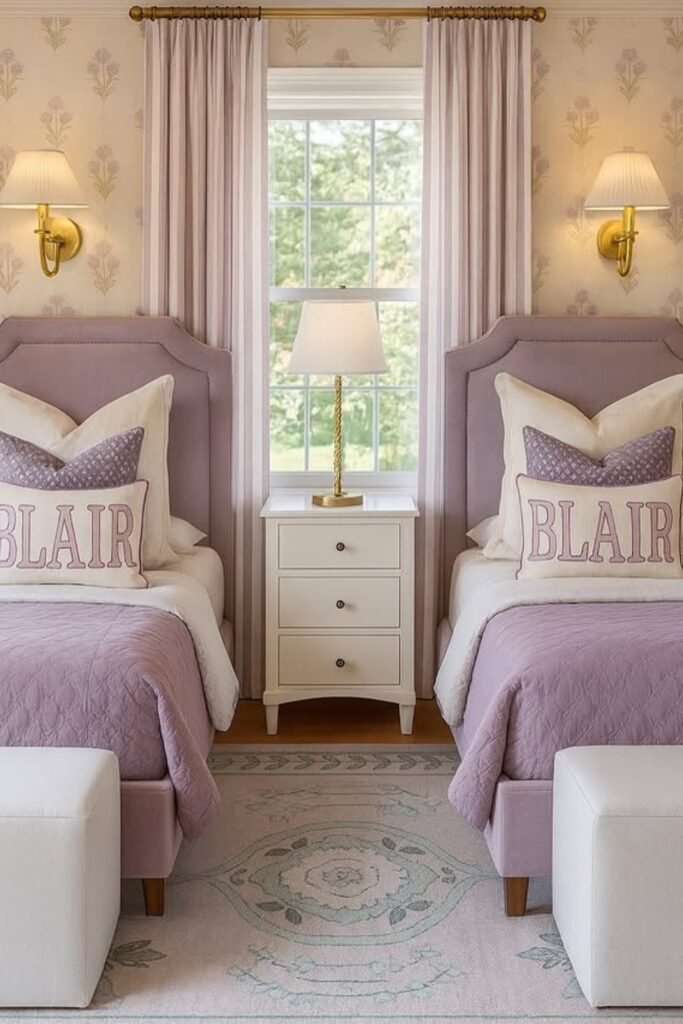
Soft Lavender Symmetry
If you want purple to feel sweet and polished, you should keep everything balanced.
You could match lavender headboards, quilts, and striped curtains to create a clean, pulled-together look.
You might notice how this works beautifully in shared bedrooms or guest rooms where calm and order matter.
You should stick to soft shades and mix in cream and brass so the space feels warm, not pastel-heavy. You can see how symmetry makes this style intentional, not busy.
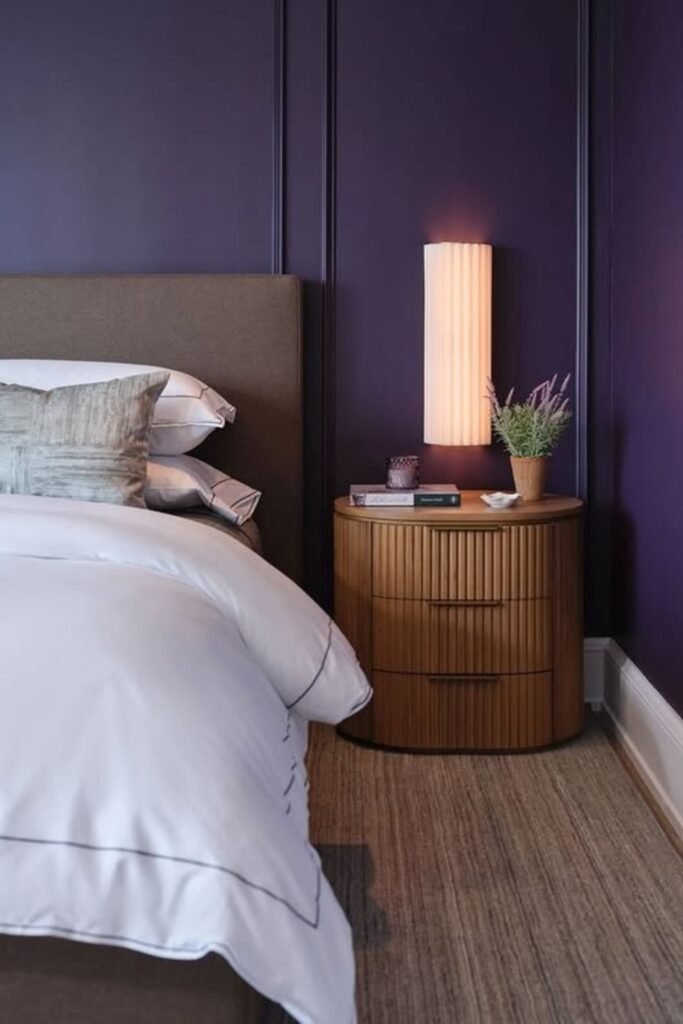
Moody Purple Panels
When dark purple feels too intense, you can add texture to soften it.
You should try wall panel molding in deep violet to create depth and structure, so the color looks refined instead of flat.
You could pair it with warm wood furniture and soft white bedding to keep things grounded.
You’ll notice this works especially well in adult bedrooms where you want a cozy, sophisticated mood without busy patterns.
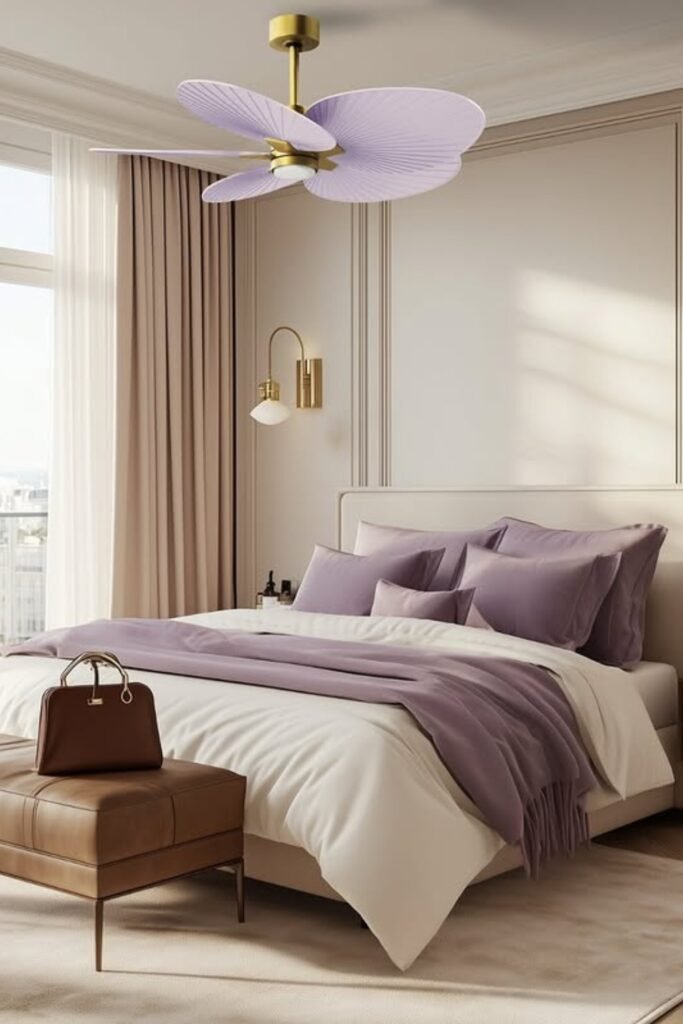
Subtle Lavender Touch
You don’t have to paint anything to bring purple into your bedroom.
You can layer soft lavender bedding over crisp white, and you’ll see how it instantly adds color without touching the walls.
This approach works especially well in bright, neutral bedrooms where you want a gentle update.
You might add warm metals like brass or a bit of leather to keep the space feeling mature. If you ever get bored, you can swap textiles easily and affordably.
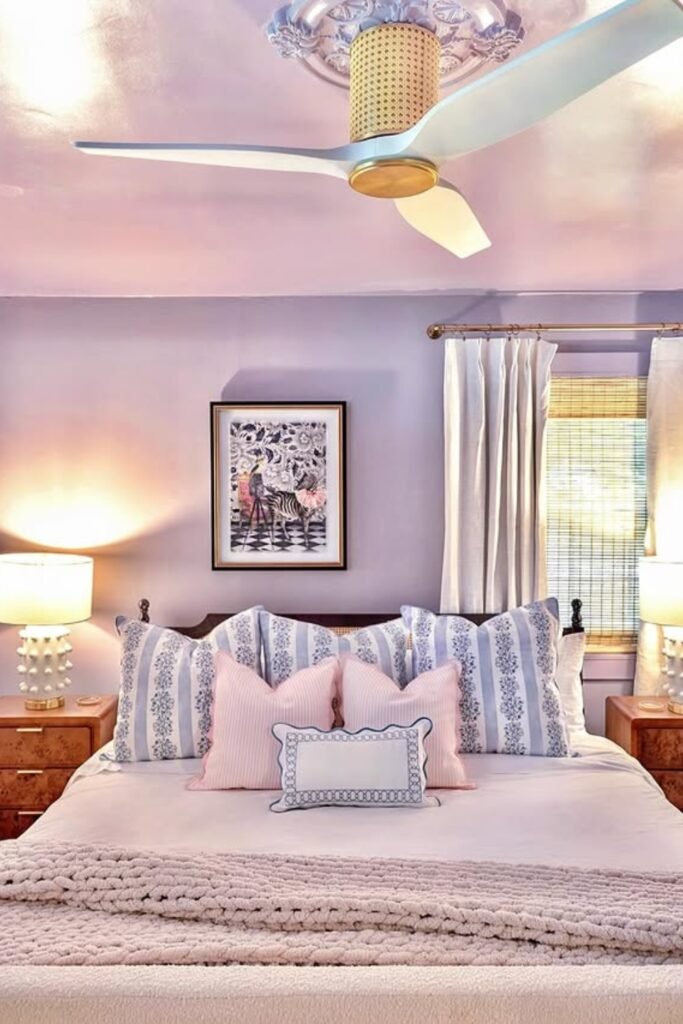
Blush Lavender Balance
If you’re nervous about purple feeling too strong, you could mix it with soft pink.
You can try a light lavender wall paired with blush pillows, and you’ll notice how it creates a calm, welcoming vibe without overpowering the room.
This works beautifully in smaller bedrooms where you want color but still need brightness. You should keep wood tones warm and add white lamps to soften the look.
You can focus on pale shades so everything feels fresh, not heavy.
Elegant Dusty Purple
If you want purple to feel grown-up, you should choose a dusty, muted tone instead of bright violet.
You might try upholstered panels behind the bed, and you’ll see how they add softness and make the color look refined.
You should pair it with gold accents and crisp white walls to keep the room light. This style works beautifully in master bedrooms where you want calm luxury, not drama.
You can stick to one main shade and repeat it in bedding for a clean, cohesive look.
Rich Plum Warmth
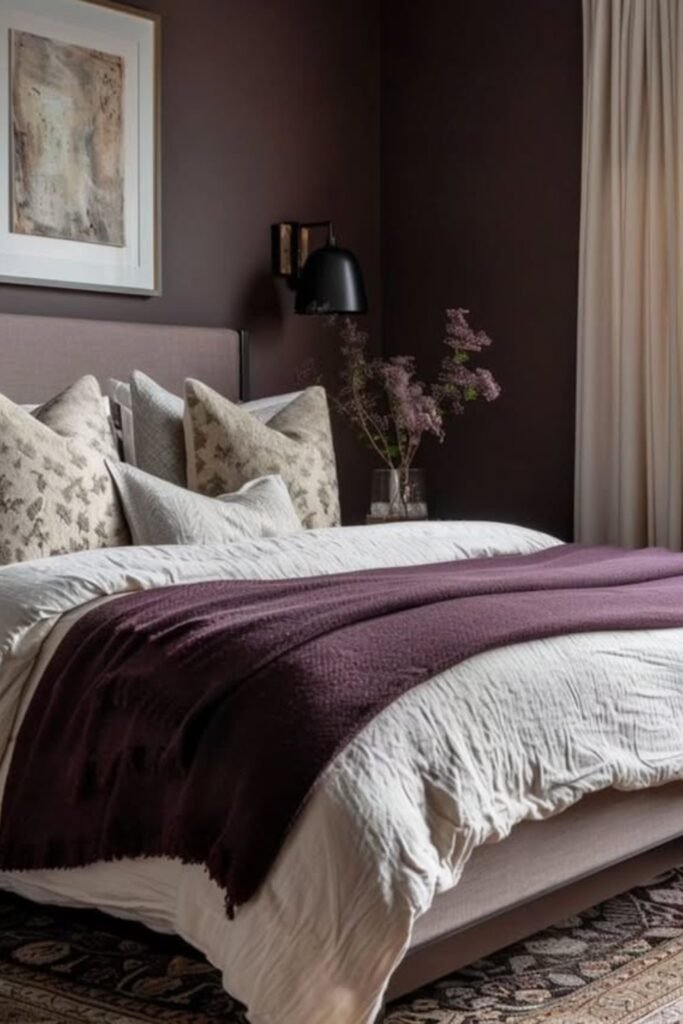
If you love deep purple but don’t want it to feel cold, you can pair it with warm neutrals.
You should try a rich plum wall behind soft beige bedding, and you’ll see how it creates contrast without looking harsh.
You might add cream curtains and textured pillows to soften the intensity.
You can use this approach in cozy master bedrooms where you want depth and comfort at the same time. Warm lighting is key, it keeps the purple inviting instead of dramatic.
Plum Garden Accent
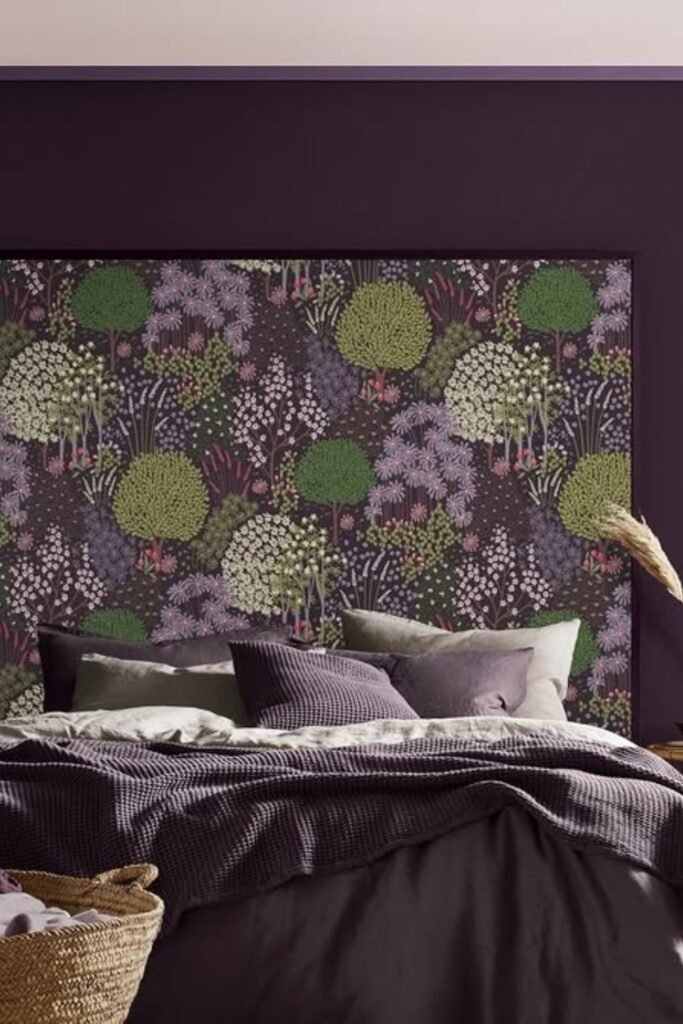
If you want dark purple without making the whole room heavy, you can frame it.
You could try a deep plum wall with a bold botanical panel behind the bed, and you’ll notice it creates a focal point that feels artistic, not overwhelming.
You should keep bedding in muted purples and soft greens to pull colors from the print.
This works best in bedrooms where you want personality and depth while maintaining balance and warmth.
Plum With Mustard
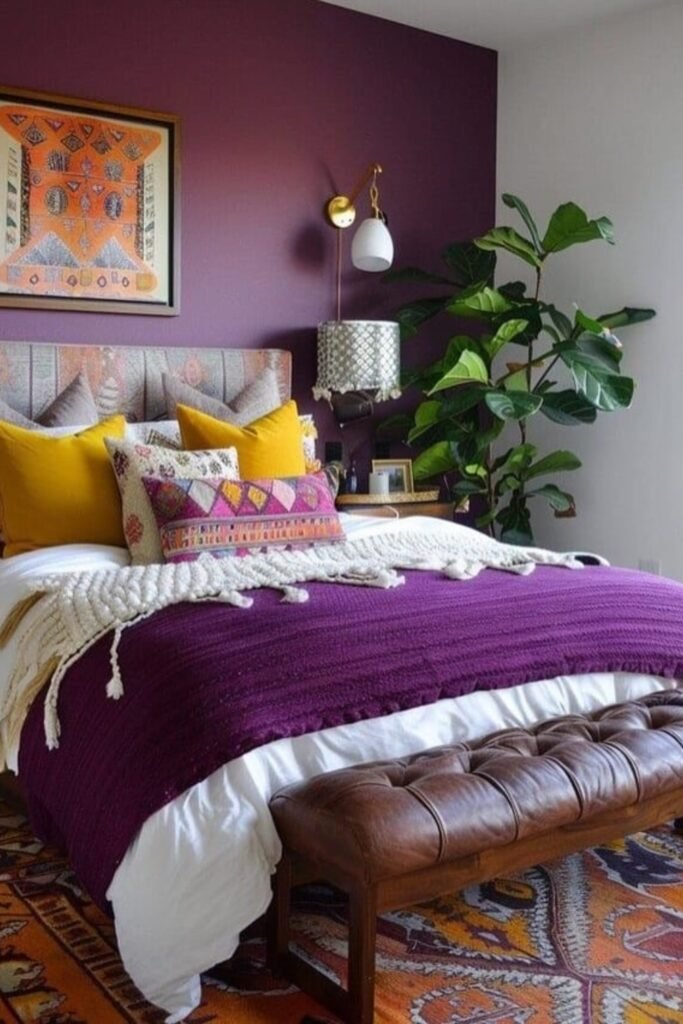
If your purple bedroom feels flat, you can add contrast.
You might try a deep plum wall paired with mustard pillows, and you’ll see how it instantly wakes up the space and makes it feel layered.
You can use this mix beautifully in eclectic or boho-style bedrooms where patterns and color already exist.
You should keep the base bedding white so the bold tones stand out.
You could add plants and warm wood to help the purple feel grounded instead of overpowering.
Modern Purple Cove
If you want purple to feel high-end, you can combine it with lighting.
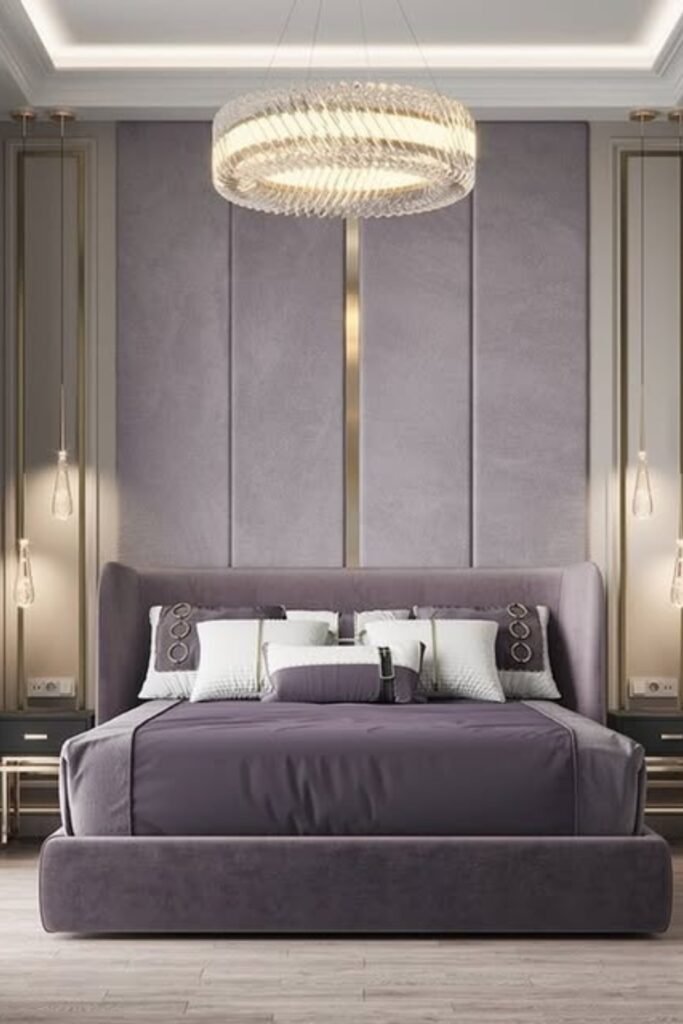
You should try vertical panels in a muted violet shade paired with hidden LED strips, and you’ll see how it instantly creates depth and mood.
This works best in contemporary bedrooms with clean lines and built-in furniture.
You should keep the palette tight, purple, grey, and warm wood, so the space feels intentional. Good lighting is what turns this from dark to dramatic.
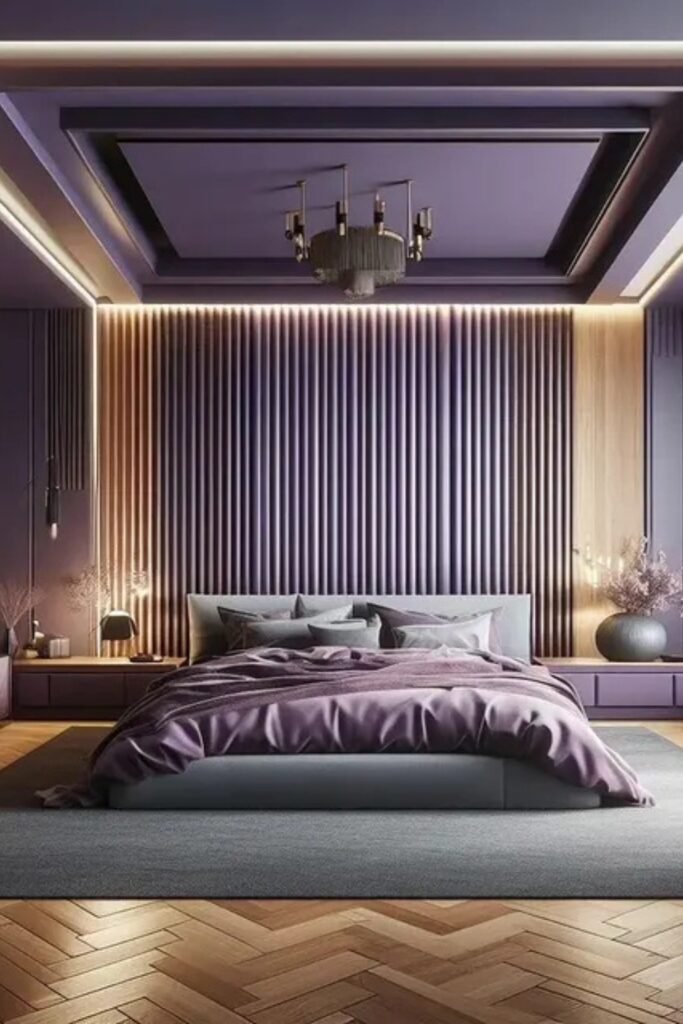
Glam Purple Contrast
If you want a dramatic, glam feel, you could pair purple with black and crystal details. You’ll notice how a dark wall makes lavender and plum accents pop instantly.
You should keep the bed light, white or soft grey, so the room doesn’t feel heavy. You might add texture through throws, velvet benches, and layered pillows.
This style works best in larger bedrooms where bold contrast and statement lighting can really shine.
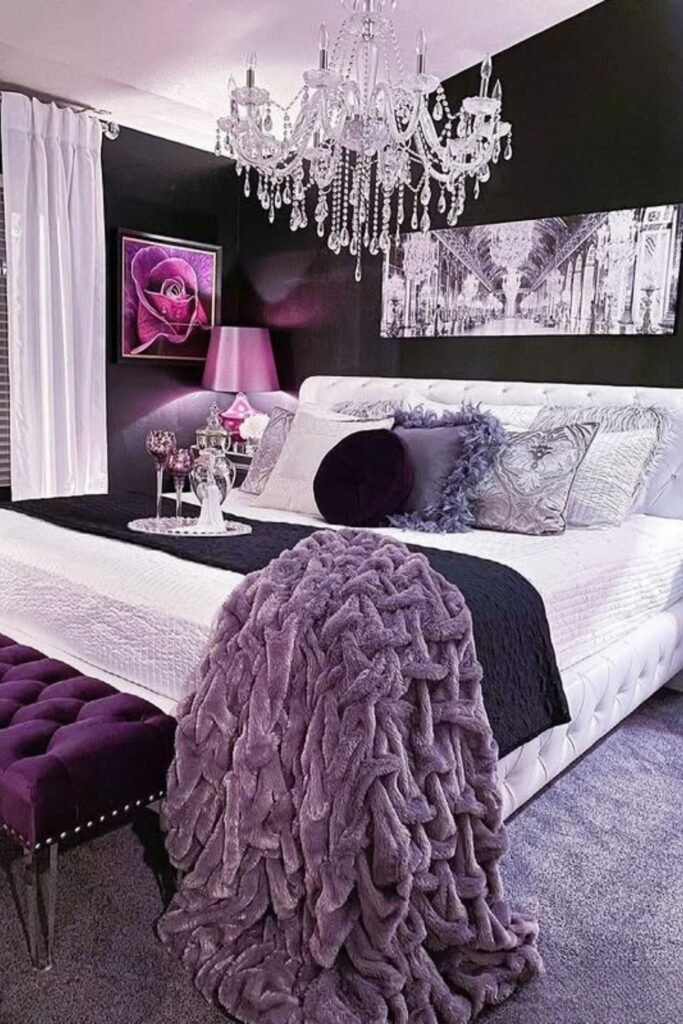
Playful Lilac Walls
Sometimes purple just needs to feel fun. You can try a soft lilac wall paired with pink bedding, and you’ll notice how it creates a light, youthful space without going overboard.
You should use this in kids’ or teen bedrooms where you want color but still need brightness. You could keep curtains neutral and let natural light do most of the work.
If you try this shade, you might test it first, lilac can look cooler or warmer depending on your lighting.
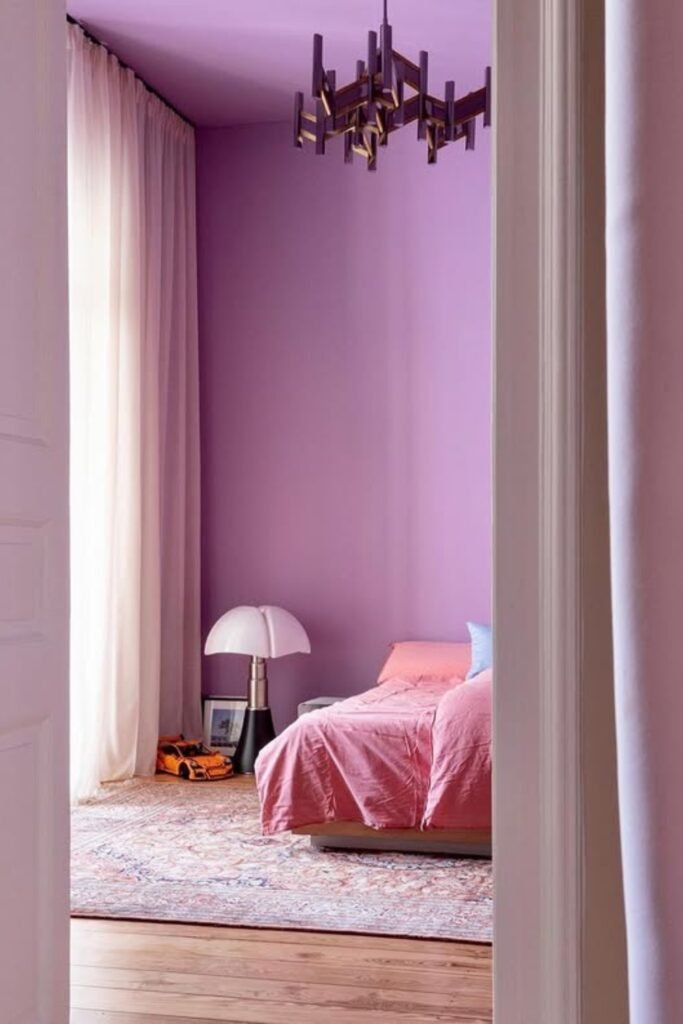
Airy Violet View
You don’t have to let purple make a room feel smaller.
You can use a medium violet wall in a bedroom with large windows and open views, and you’ll see how it actually frames the light beautifully.
You should keep the bedding mostly white and add one strong purple layer, like a throw or pillows, to tie it all together.
This works best in bright spaces where natural light can soften the color throughout the day.
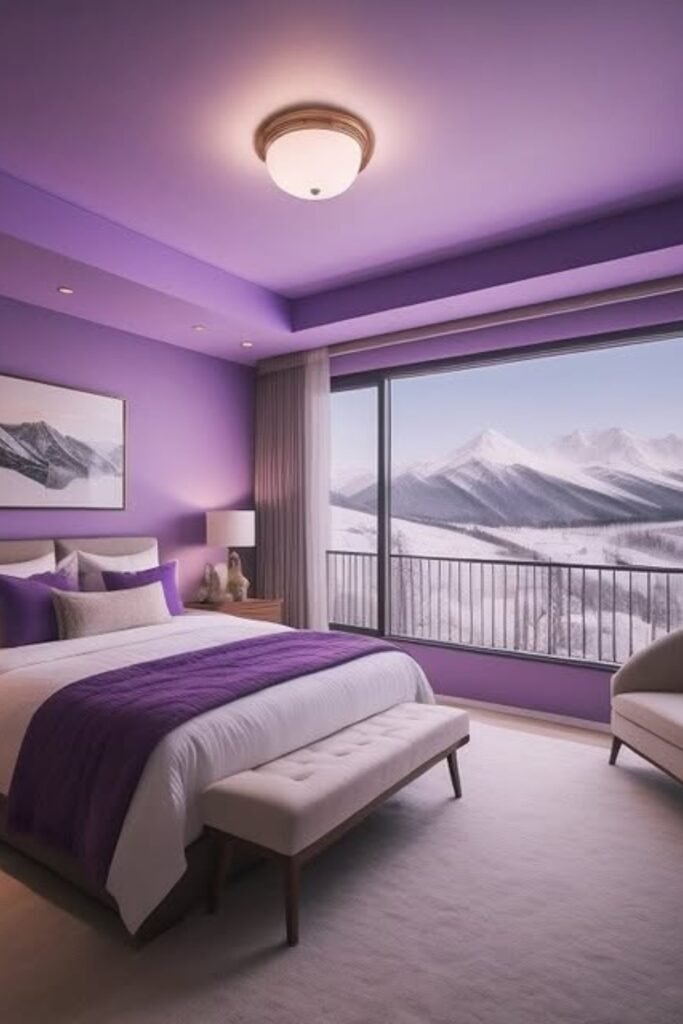
Frequently Asked Questions
Does purple make a bedroom look smaller?
If your space is compact, you should go with lavender or dusty mauve and keep your bedding light. You can also add mirrors and warm lighting, and you will see how it prevents the room from feeling boxed in.
What colors go best with a purple bedroom?
If you want some contrast, you could try mustard, blush, or soft green, and you’ll notice how it makes the purple pop.
You might add brass or gold accents if you want a luxury feel. You should focus on balance, let purple lead, but don’t let it take over every surface.
You may like to read!
