
24 Ottoman Decor Ideas
You buy an ottoman because everyone says it’s versatile, but once it’s in your room, it just sits there, looking either empty or awkward.
You can add decor, and it feels cluttered. Leave it bare, and it feels unfinished. That confusion is exactly why most ottomans never look quite right.
In this article, you will see how to decorate an ottoman step by step, based on how you actually use it, so it finally looks right instead of confusing.
Let’s jump in!
How Do I Decorate My Ottoman?
Decorating an ottoman is one of the easiest ways for you to boost both style and function in your living space.
You should start by thinking about how you use your ottoman, whether you sit on it, rest your feet, or use it as a coffee table alternative.
If you want it to be a centerpiece, you can place a decorative tray on top.
You’ll see that a tray helps organize your items and gives you a structured look, letting you display candles, books, small plants, or other decor without making the space feel cluttered.
You can also layer textures to make your ottoman more visually interesting.
You might add a folded throw blanket or a soft fabric runner, and you’ll instantly introduce warmth and contrast, especially if your ottoman has a smooth or leather surface.
You could even place a small stack of books or magazines alongside a scented candle or a vase of fresh flowers. You’ll notice this adds personality and makes your space feel lived-in and inviting.
If your ottoman is in a more functional spot, you should keep practicality in mind. You can use stylish storage boxes or baskets on top to hold remotes, coasters, or other everyday items.
You’ll also want to choose décor that matches your room’s color scheme and overall style, whether modern, rustic, or minimalist—so your ottoman blends seamlessly with the rest of your space.
Grounded Living Center
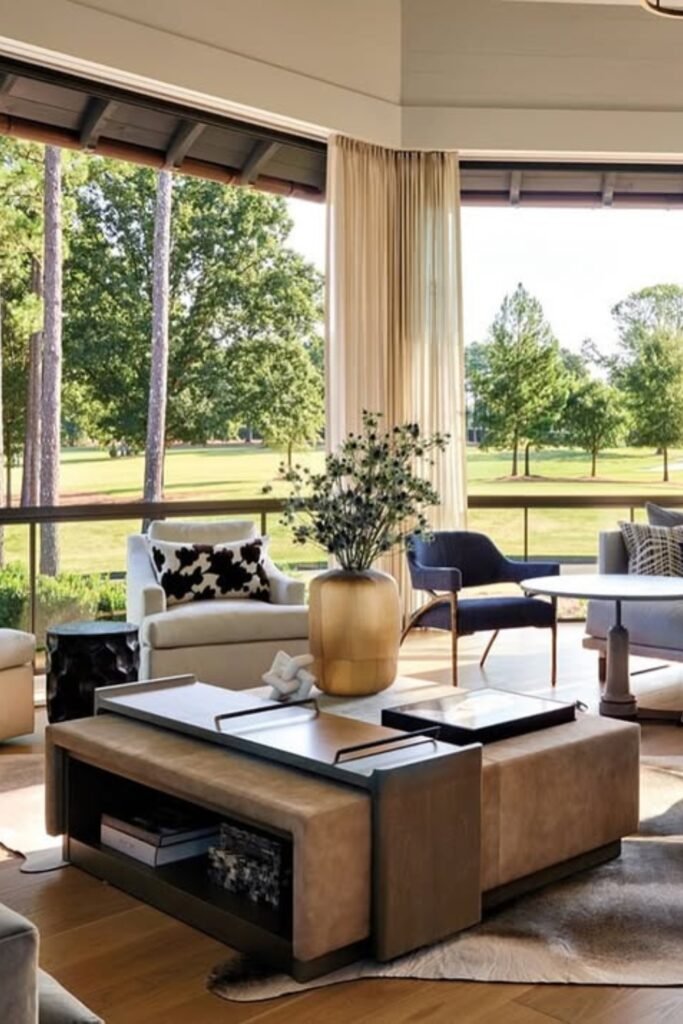
Natural light and open views call for an ottoman that feels solid but not heavy.
A low, square ottoman in the middle of the living room helps anchor the seating without blocking sightlines.
You can keep the top simple with a tray and one sculptural piece lets the room breathe while still feeling finished.
This approach works best in spacious living rooms where the ottoman acts as a calm center point, not the main attraction.
Cozy Sectional Anchor
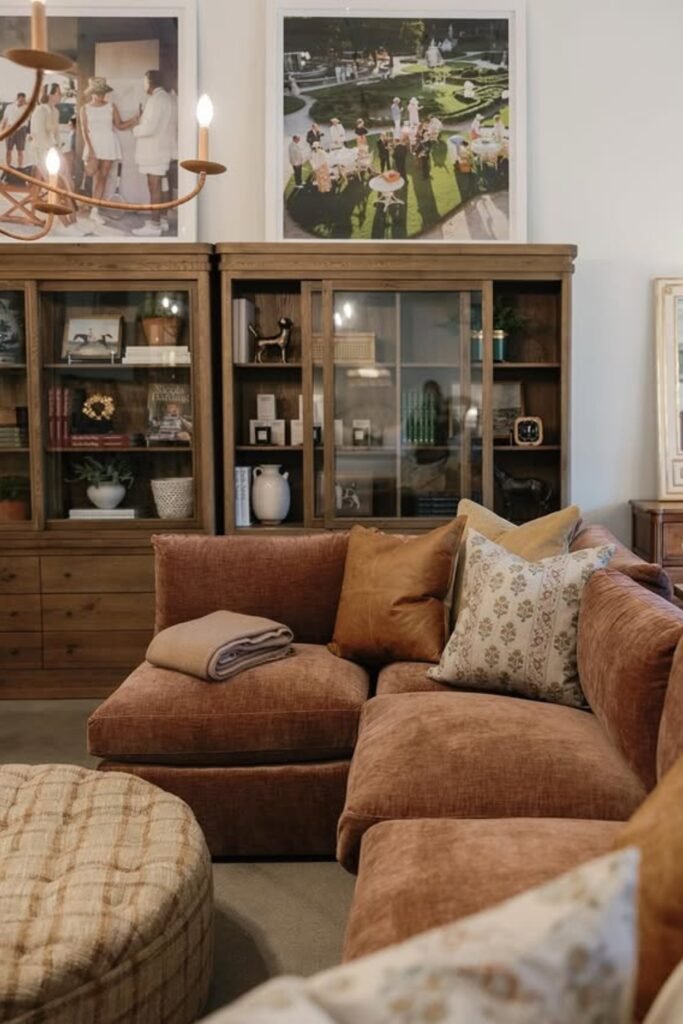
A soft, round ottoman works especially well in a living room built around a deep sectional.
Placing it slightly off-center keeps the seating arrangement flexible while still giving everyone an easy place to rest their feet.
This setup is ideal for casual living rooms where people lounge, stretch out, and move pieces around instead of treating the center of the room like a display zone.
Patterned Living Focus
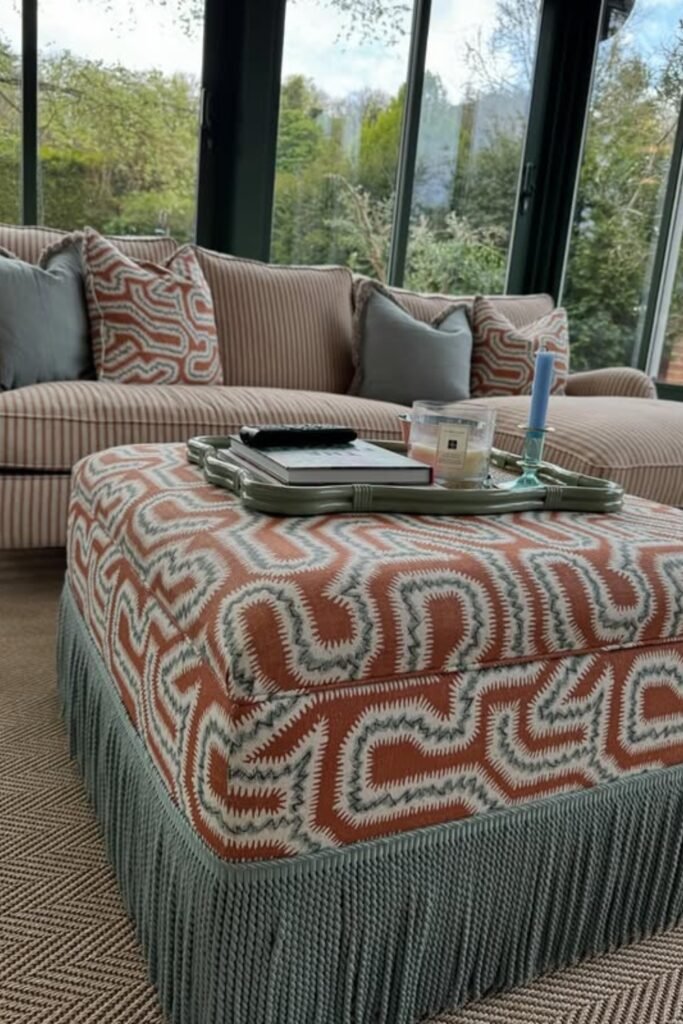
Bold fabric turns an ottoman into the main anchor of a living room without needing extra decor.
A patterned ottoman like this works best when the sofa stays relatively simple, letting the texture do the talking.
You can add a tray creates a stable surface for everyday items while still keeping the look relaxed.
This setup suits living rooms where you want warmth and personality without crowding the space with too many accessories.
Polished Bed End
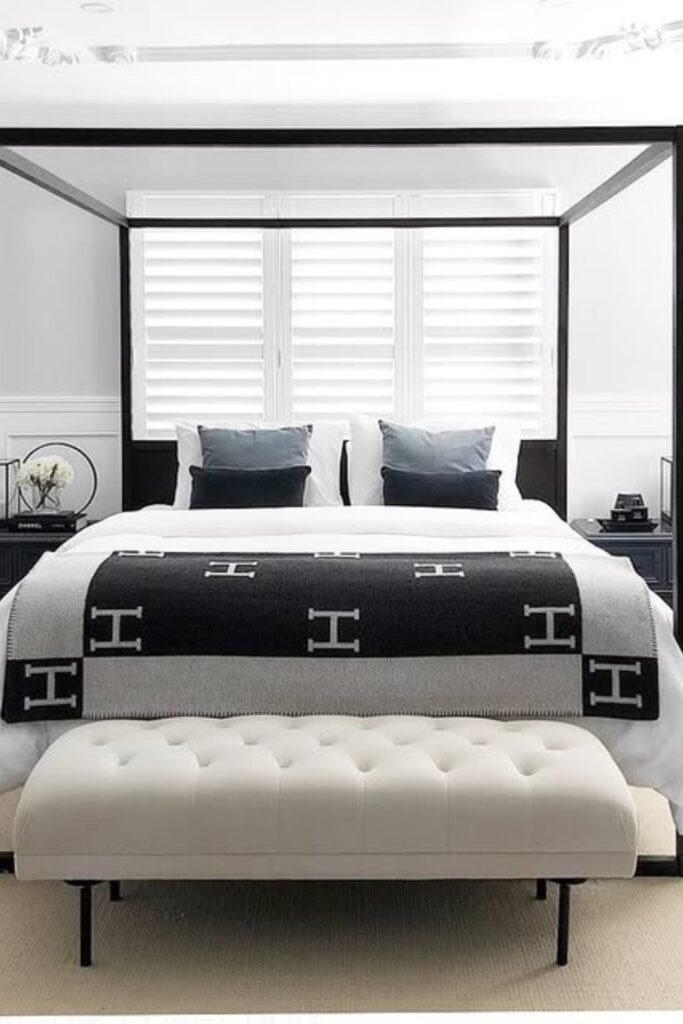
A clean, tufted ottoman at the foot of the bed adds function without stealing attention from the bedroom.
You can keep the shape simple and the color light helps it blend into a structured setup like a canopy bed.
This kind of ottoman works best as a spot to sit while getting dressed or to lay out a throw at night.
Soft Pattern Moment
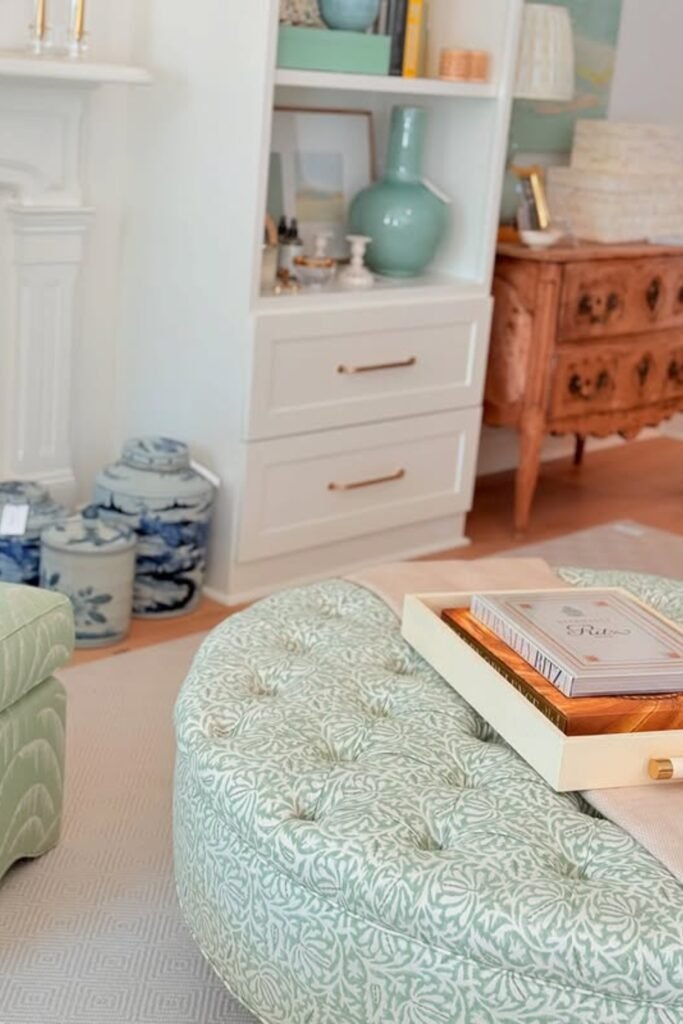
A round, tufted ottoman like this works best when the living room already has a calm, layered feel.
The patterned fabric adds interest without needing extra decor, so keeping the top simple with a tray is enough.
This kind of ottoman fits well in relaxed living rooms where seating feels informal and movable.
If the rest of the space leans neutral, a soft pattern helps break the monotony while still blending in naturally.
Formal Living Anchor
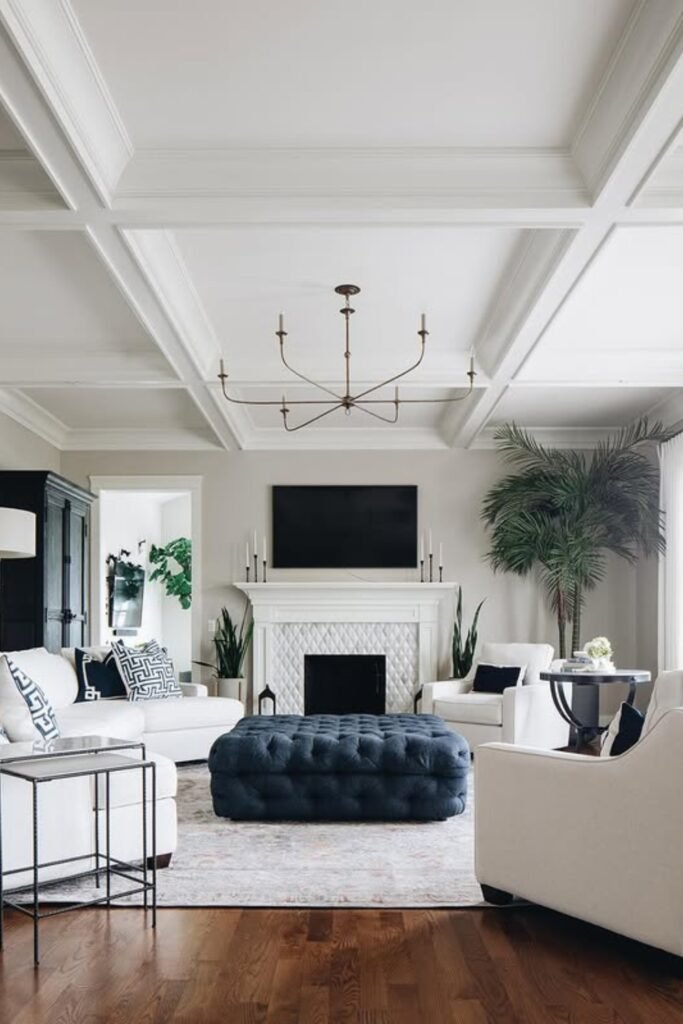
A deep, tufted ottoman placed at the center instantly grounds a formal living room where symmetry matters.
The dark fabric adds contrast against light seating and keeps the space from feeling flat or overly soft.
You can leave the ottoman mostly bare makes sense here, since the room already carries visual weight through architecture and furniture.
This setup works best in living rooms designed for conversation, where the ottoman acts as a shared resting point rather than a surface for everyday clutter.
Casual Living Pouf
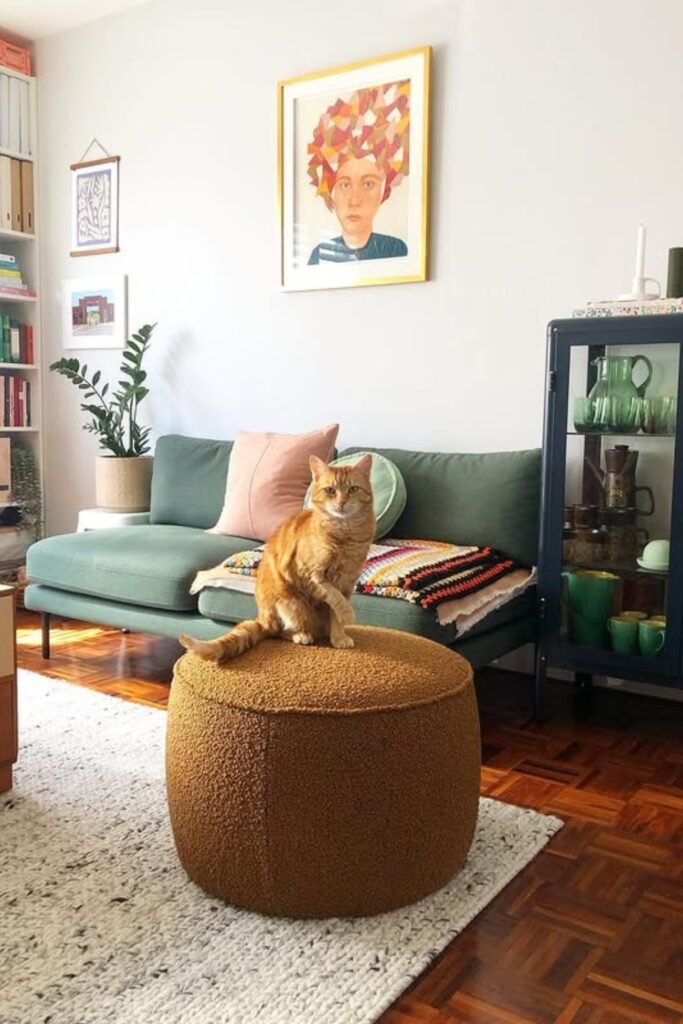
A small, round pouf like this fits perfectly in a relaxed living room where flexibility matters more than formality.
Lightweight ottomans are easy to move around, which makes them great for small spaces or homes where the layout changes often.
You can keep it free of decor lets it double as extra seating or a footrest without effort.
This kind of ottoman works best in lived-in living rooms where comfort, pets, and everyday use come first.
Textured Tray Balance
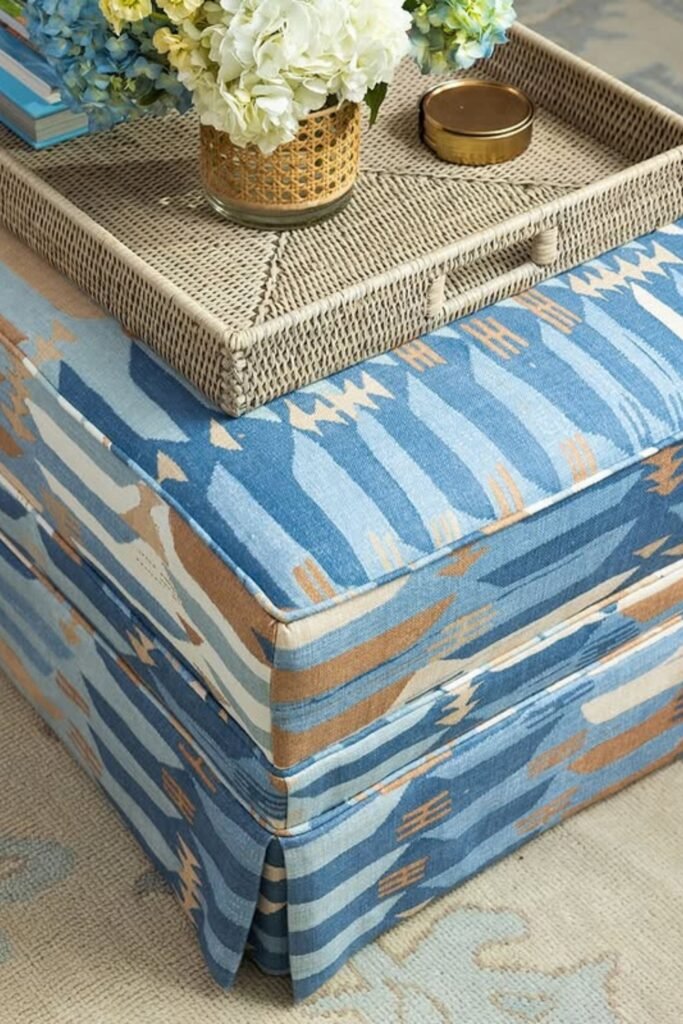
Patterned ottomans already bring enough visual interest, so the smartest move is adding control on top.
A woven tray creates a flat surface and keeps everyday items from feeling scattered.
This approach works well in living rooms where the ottoman doubles as a coffee table but still needs to feel soft and inviting.
You can keep the tray contents minimal, one floral element and one practical item is enough to make the setup feel intentional without hiding the fabric underneath.
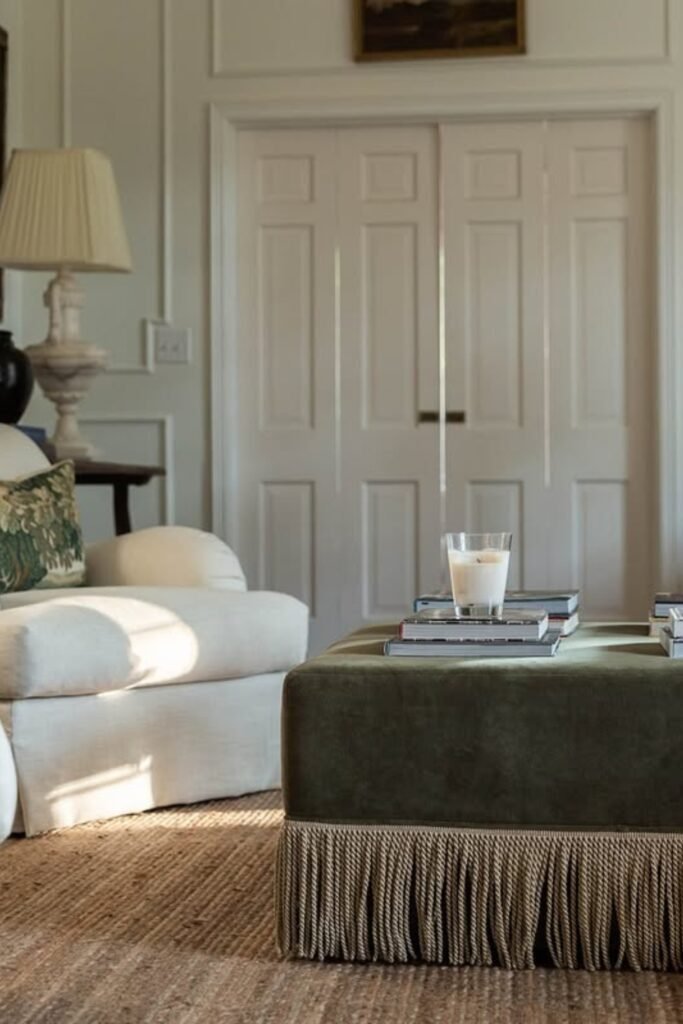
Relaxed Fringe Center
A skirted ottoman like this softens a living room that already leans classic or traditional.
The fringe detail adds movement, so keeping the top simple with stacked books and a candle prevents it from feeling busy.
You can use it as a low coffee-table alternative works best in rooms meant for slow mornings and conversation rather than constant traffic.
This style fits living rooms where comfort comes first and furniture is meant to feel settled, not sharp or overly styled.
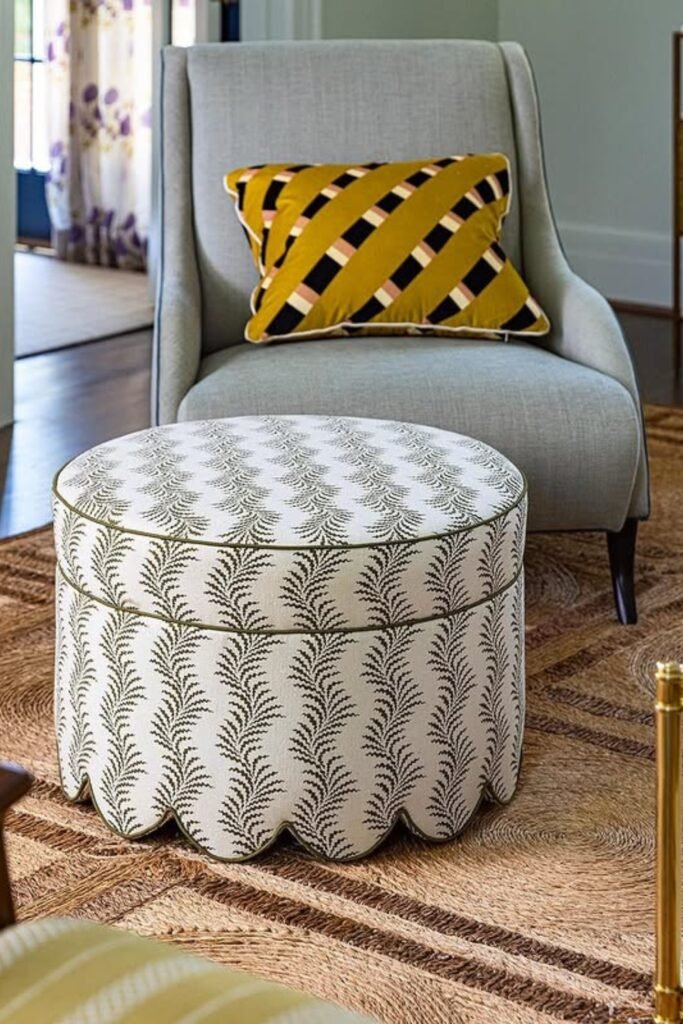
Playful Pattern Accent
A small, round ottoman with a bold pattern works best when the living room already has clean, simple furniture.
You can place it near an accent chair turns it into a flexible surface for resting your feet or setting down a book without committing to a full coffee table.
The scalloped edge and print add personality, so there’s no need to decorate the top.
This approach fits reading corners and compact living rooms where one expressive piece does the visual work.
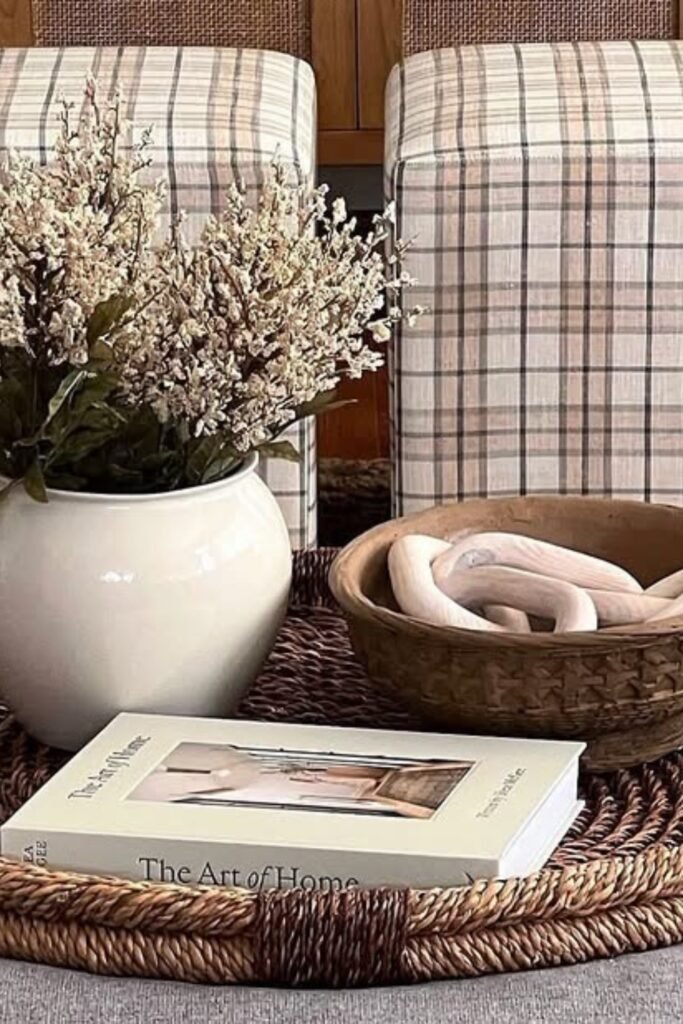
Layered Living Tray
A woven tray like this turns a soft ottoman into a usable surface without killing its comfort.
Grouping one solid piece, one soft texture, and one practical item keeps everything grounded and easy to move.
This setup works best in living rooms where the ottoman doubles as a coffee table but still needs to feel relaxed.
When you want the space to look finished yet lived-in, layering like this gives structure without making the room feel stiff.
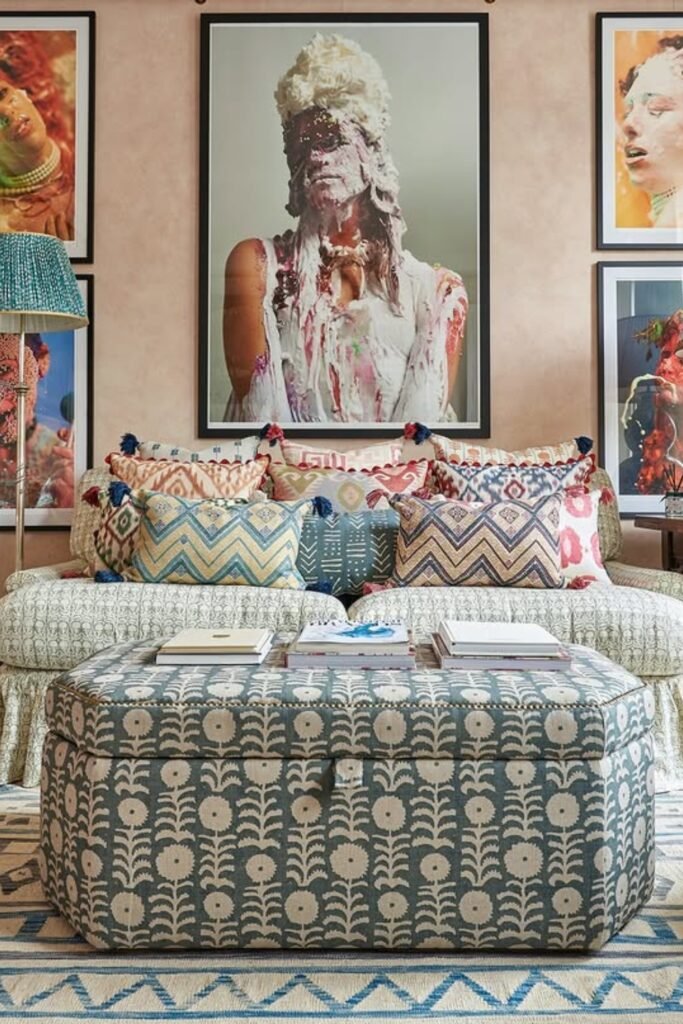
Bold Living Statement
Strong patterns work when the rest of the living room already embraces color and personality.
A large ottoman like this becomes the visual anchor, so everything around it can relax.
You can use it as a low coffee-table alternative makes sense in spaces designed for lounging rather than formality.
You can keep only books on top lets the fabric shine while still adding function.
This approach suits expressive living rooms where the ottoman isn’t trying to blend in, it’s meant to lead the room.
Neutral Living Anchor
Soft, light upholstery makes an oversized ottoman feel calm instead of bulky in a living room.
You can place it in the center of a sectional setup creates a natural gathering point without overpowering the seating.
A simple tray adds just enough structure for small decor while keeping the surface usable day to day.
This works best in cozy living rooms where the goal is comfort and balance, letting texture and scale do the work instead of bold color or heavy styling.
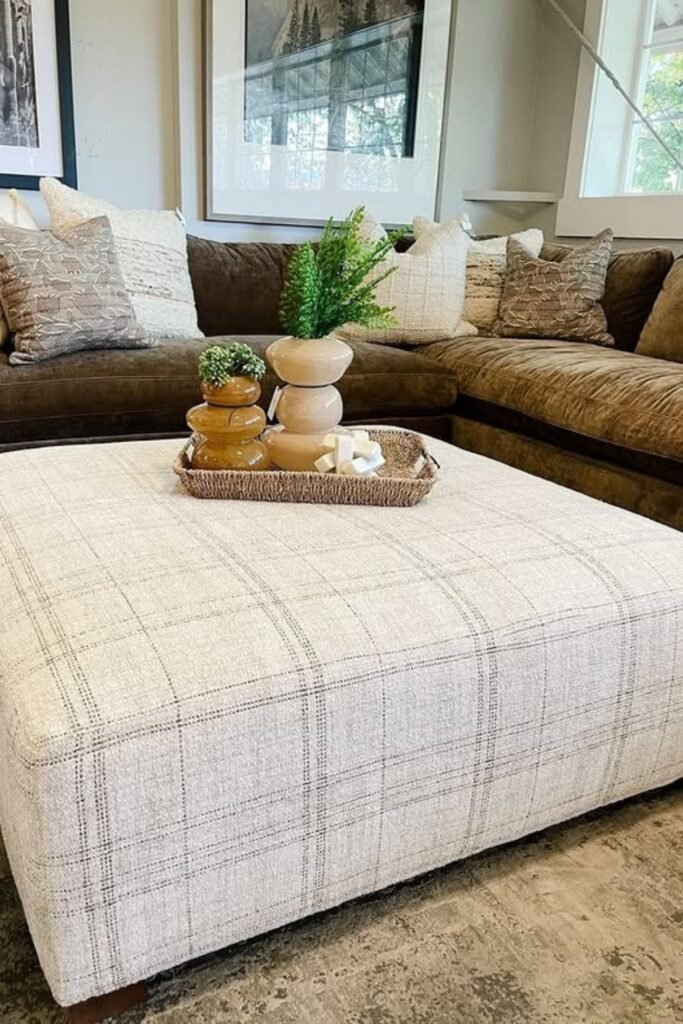
Soft Round Contrast
A round ottoman works well when your living room is full of straight lines and clean edges, like a sectional paired with a kitchen island behind it.
The curved shape softens the layout and keeps the space from feeling too rigid. Using a tray gives you a spot for everyday items without turning the ottoman into a hard coffee table.
This setup fits open-plan living rooms where comfort and flow matter more than formal symmetry.
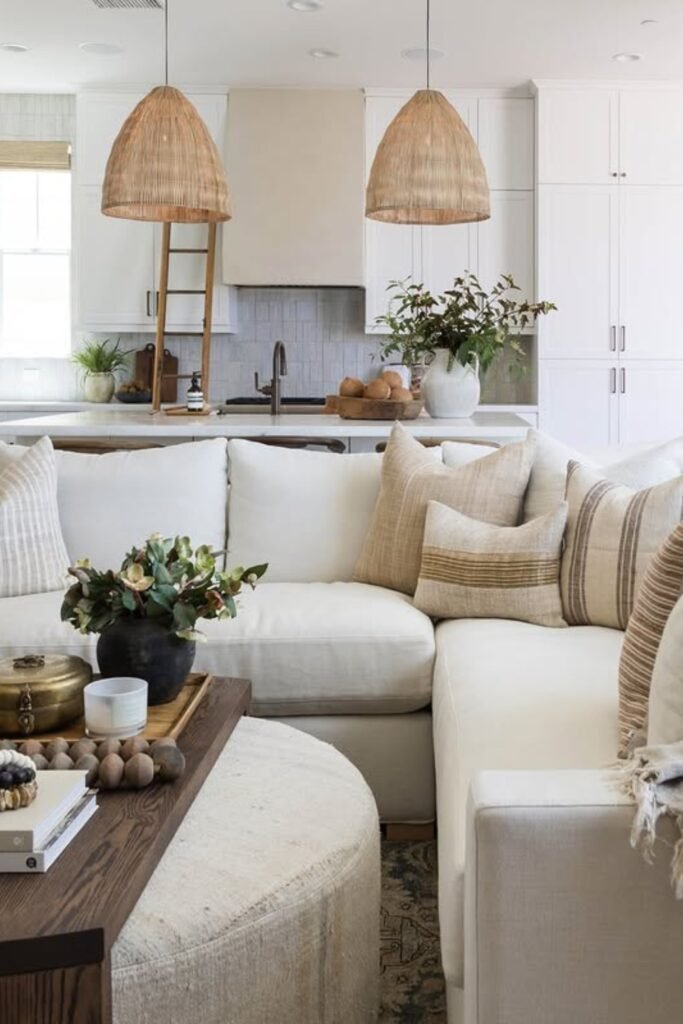
Light Living Balance
A small, round ottoman works best in a living room that already has strong features like a stone fireplace or bold ceiling lighting.
The simple shape keeps the center of the room open and easy to move through. Using a light color helps it blend in without competing with the surroundings.
This setup fits living rooms meant for quiet evenings and conversation, where the ottoman acts as a soft pause between seating instead of a dominant focal point.
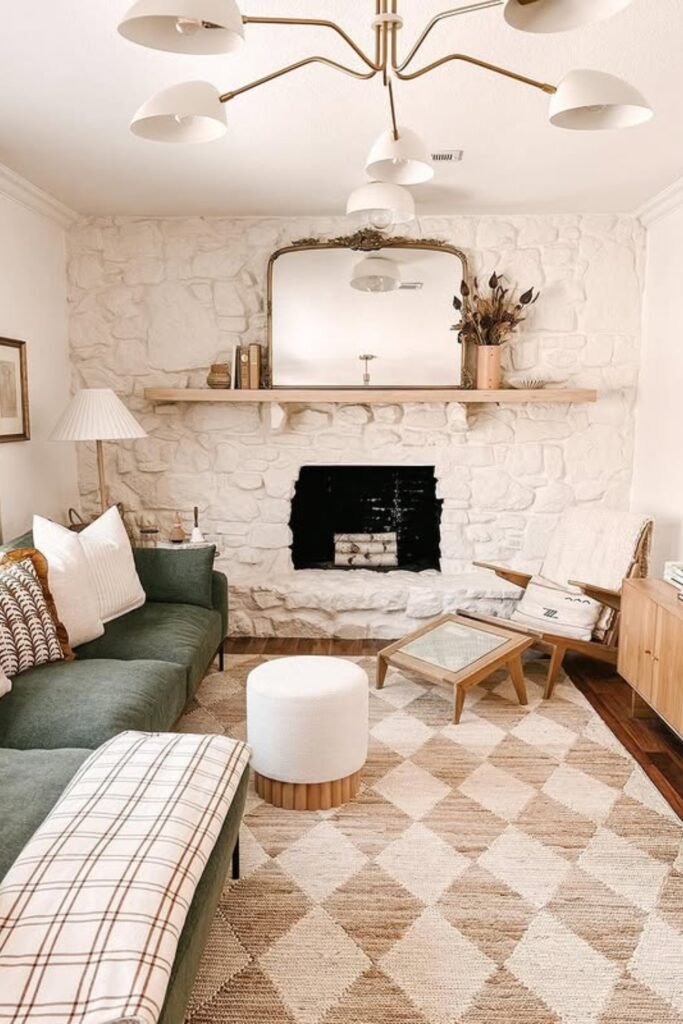
Warm Living Hub
Leather brings instant warmth to a living room, especially when the rest of the seating stays light and soft.
A round leather ottoman like this works best as a shared footrest that everyone can reach, instead of a surface meant for decor.
The smooth texture balances out fabric sofas and patterned rugs without adding visual noise.
This setup fits everyday living rooms where people gather, sit casually, and move around often, making the ottoman feel inviting rather than precious.
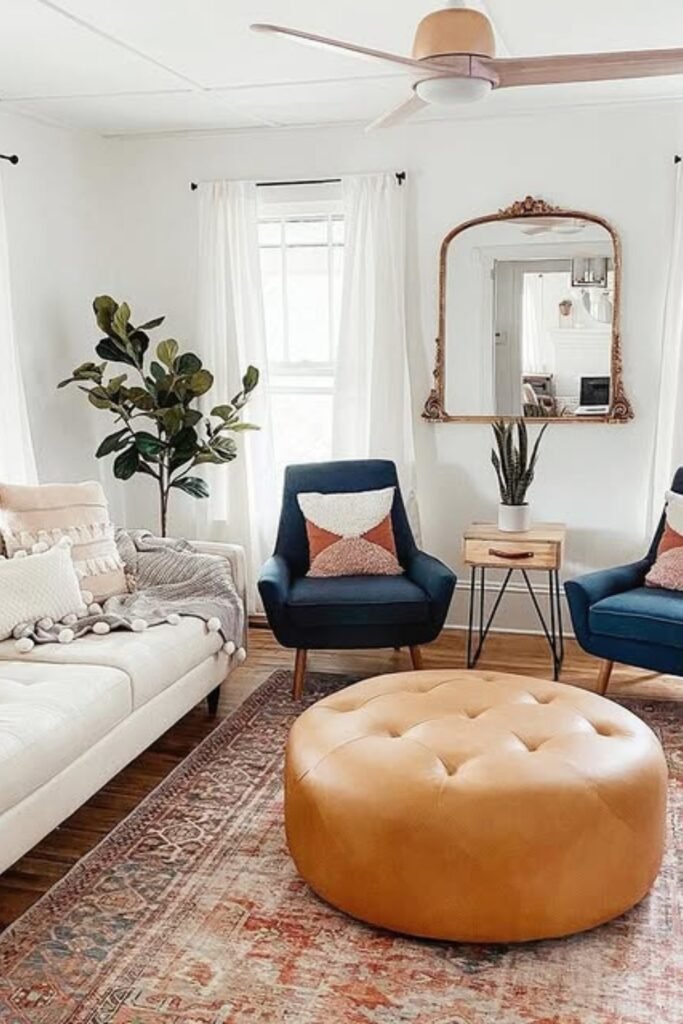
Natural Texture Anchor
Woven ottomans bring warmth into living rooms that lean neutral or farmhouse-inspired.
The chunky texture adds depth without needing bold color, which makes it easy to layer into an already soft setup.
Topping it with a simple tray gives you a stable surface while keeping the relaxed feel intact.
This works best in family living rooms where the ottoman gets daily use and needs to handle everything from coffee cups to tired feet without feeling too delicate.
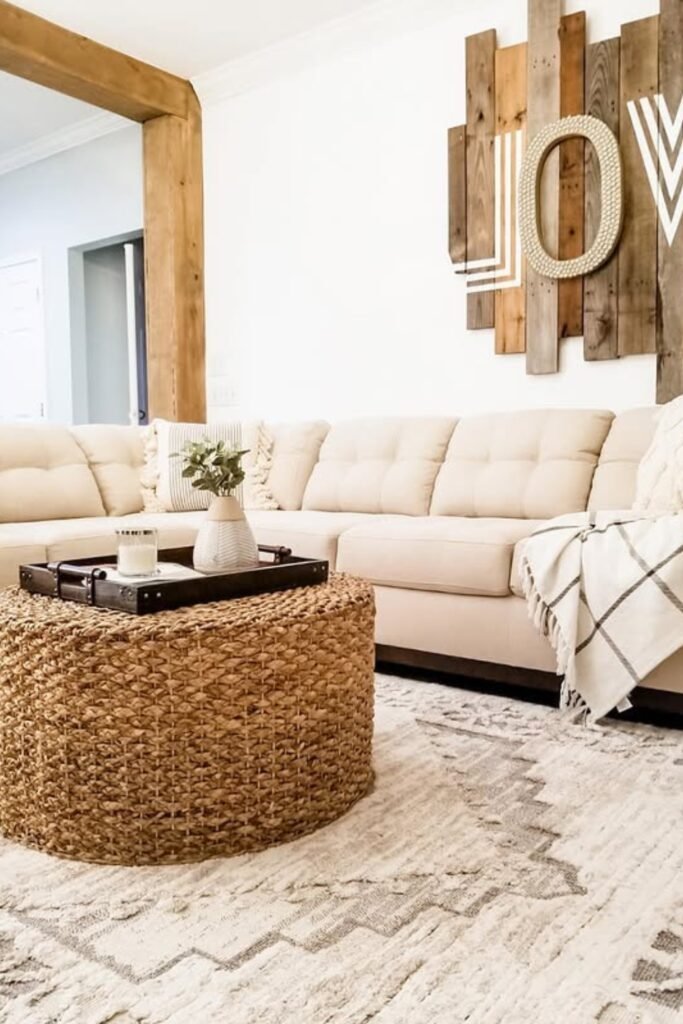
Styled Living Tray
Decor-heavy trays only work when the ottoman underneath stays simple and supportive.
Using a neutral ottoman lets you layer seasonal pieces, candles, greenery, small objects, without the setup feeling chaotic.
You can keep everything contained inside one tray makes it easy to clear when the ottoman needs to be used.
This approach suits cozy living rooms where styling changes often, but the base furniture stays the same, giving you flexibility without constant rearranging.
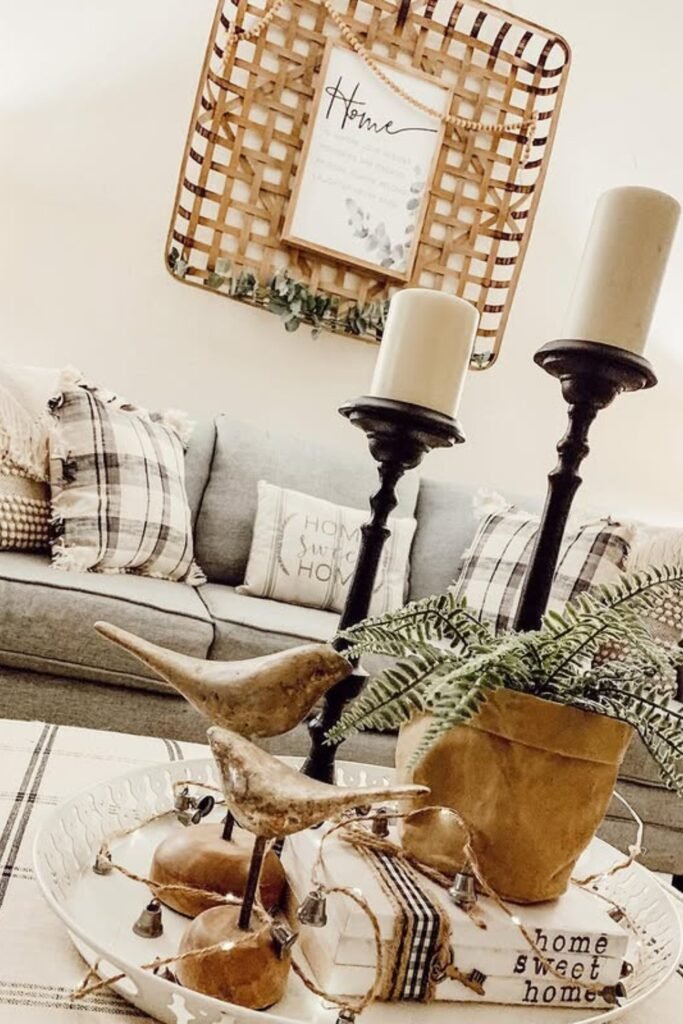
Collected Living Surface
Layering books and small objects works best when the ottoman itself stays neutral and textured.
A woven tray keeps everything contained and makes the setup easy to clear when the ottoman needs to be used.
Mixing a few hard pieces with one organic element, like greenery, keeps it from feeling stiff.
This approach suits living rooms where the ottoman acts as a daily coffee-table stand-in but still needs to feel warm, flexible, and lived in rather than styled once and left untouched.
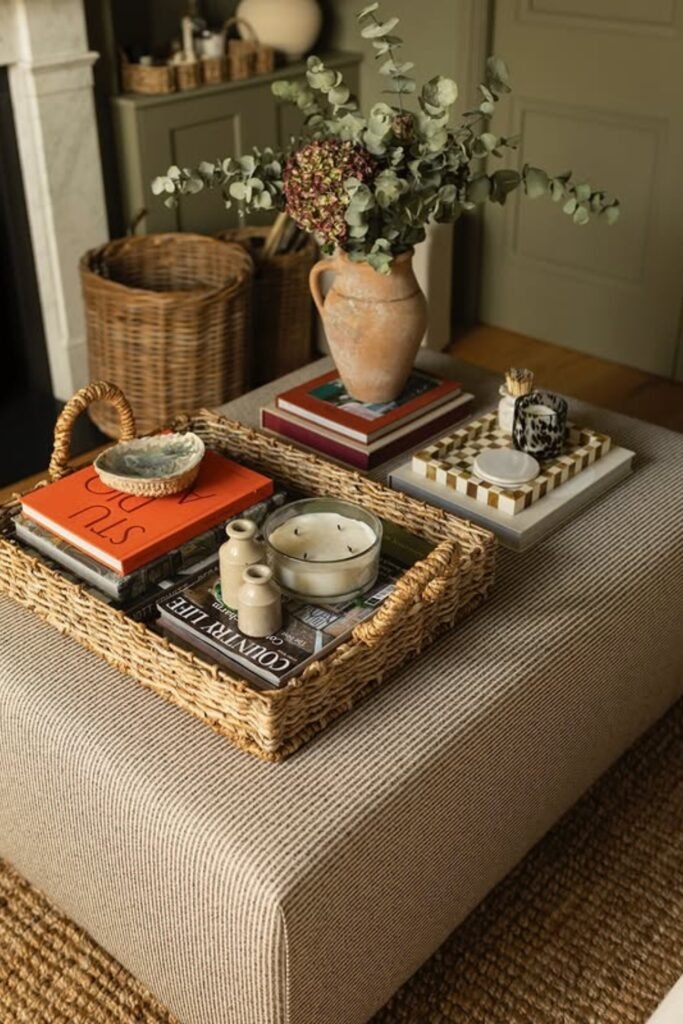
Calm Living Center
Soft texture and a neutral tone make an oversized ottoman feel grounded rather than heavy in a living room with mixed seating.
You can place it between a sofa and accent chairs helps connect the layout and keeps conversation flowing naturally.
A woven tray adds just enough structure for candles or books without turning the ottoman into a formal table.
This setup works best in relaxed living rooms where comfort, balance, and everyday use matter more than symmetry.
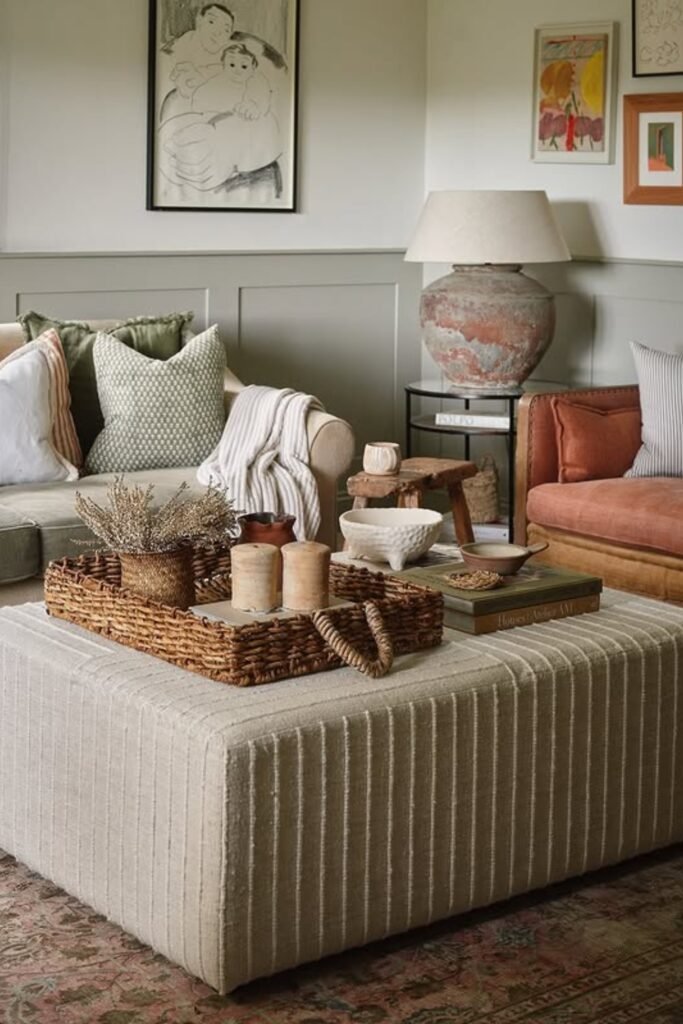
Solid Tray Control
A long, solid wood tray turns a soft ottoman into a reliable surface without losing comfort.
The weight of the tray keeps it stable, while the fabric underneath still softens the look of the living room.
This setup works best when the ottoman is used daily for drinks, remotes, or decor but still needs to double as a footrest.
Keeping everything contained in one tray makes the space feel organized without locking the ottoman into a purely decorative role.
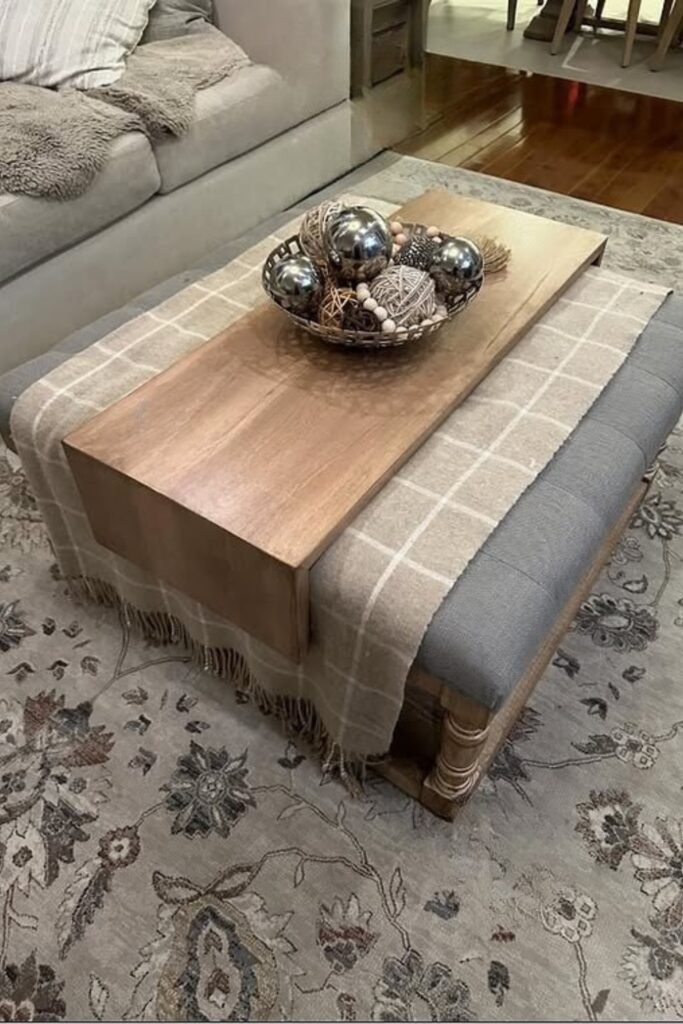
Soft Floral Focus
A floral ottoman like this works best when the rest of the living room stays calm and lightly colored.
Let the pattern do the heavy lifting and keep everything on top contained to one tray. Soft decor pieces and a single candle add charm without fighting the print.
This setup is ideal for cozy living rooms where you want a gentle, collected look and the ottoman doubles as a visual centerpiece instead of just a footrest.
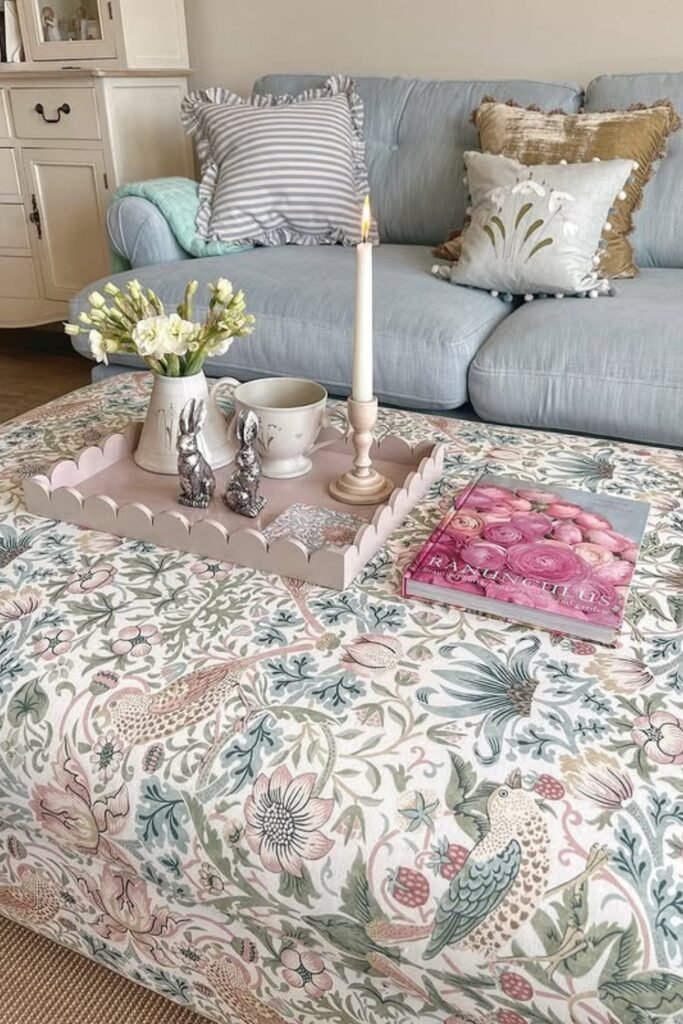
Color-Rich Living Anchor
When a living room already leans into bold color, the ottoman should support the story, not compete with it.
A patterned ottoman like this ties together different shades from the seating and shelving while giving the eye a place to rest at the center.
You can use a tray keeps the surface practical without hiding the fabric.
This works best in layered living rooms where personality matters and the ottoman helps connect all the colors into one grounded layout.
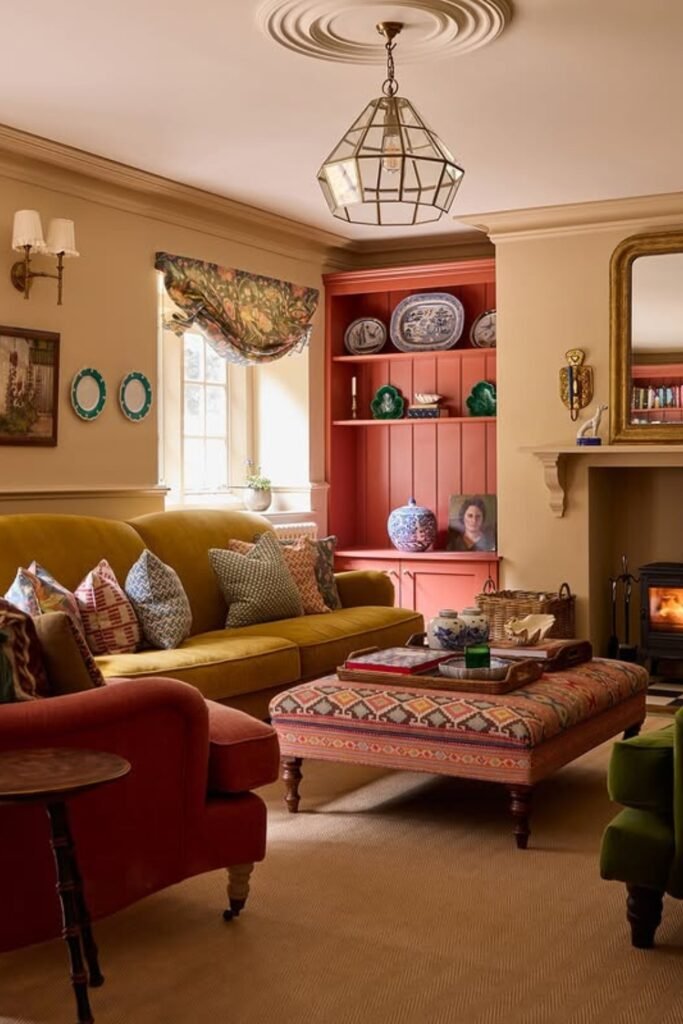
Relaxed Bed Accent
A low ottoman at the foot of the bed adds function without crowding the room.
Using a patterned piece like this brings warmth and ties in with the rug, so the space feels layered instead of flat.
This works best in bedrooms where you want a casual spot to sit, toss a throw, or ground the bed visually without adding another heavy furniture piece.
Frequently Asked Questions
Can you use an ottoman instead of a coffee table?
You can add a tray is important because it gives you a stable surface for drinks, books, and decor. If the ottoman is soft or gets used as a footrest daily, keep the styling light so it stays practical.
Should you decorate an ottoman or leave it empty?
If it replaces a coffee table or sits at the center of the living room, a simple tray with a few items helps it feel finished. The key is not to overdecorate something that needs to stay usable.
You may like to read!
