
25 Galley Kitchen Ideas
If your kitchen feels long, narrow, and frustrating to work in, you’re not alone.
Most advice online shows perfect photos but never explains why these kitchens work or why they don’t.
In this article, you’ll understand what a galley style kitchen really is, and then we will explore 25 gally kitchen inspirations.
Let’s jump in!
What Is A Galley Style Kitchen?
A galley style kitchen, often called a galley kitchen, is all about efficiency in a compact space.
You’ll see two parallel walls or countertops facing each other, creating a narrow walkway in between.
You might be surprised, but this design comes from ship kitchens, or galleys, where space is tight and every inch has to work hard.
In a galley kitchen, you can have your appliances, cabinets, and work areas on both sides, and you’ll find it’s easy for you to move between cooking, washing, and prepping food.
You’ll notice this setup keeps everything within reach, which makes it perfect if it’s just you or maybe two people, working in the kitchen at the same time.
You can use a galley kitchen in an apartment, a small home, or any narrow space, but you’ll also see it in larger homes where a streamlined, functional design is preferred.
Even though it’s compact, you’ll find that with proper organization, you can get excellent storage and workspace, making it one of the most practical kitchen layouts for you.
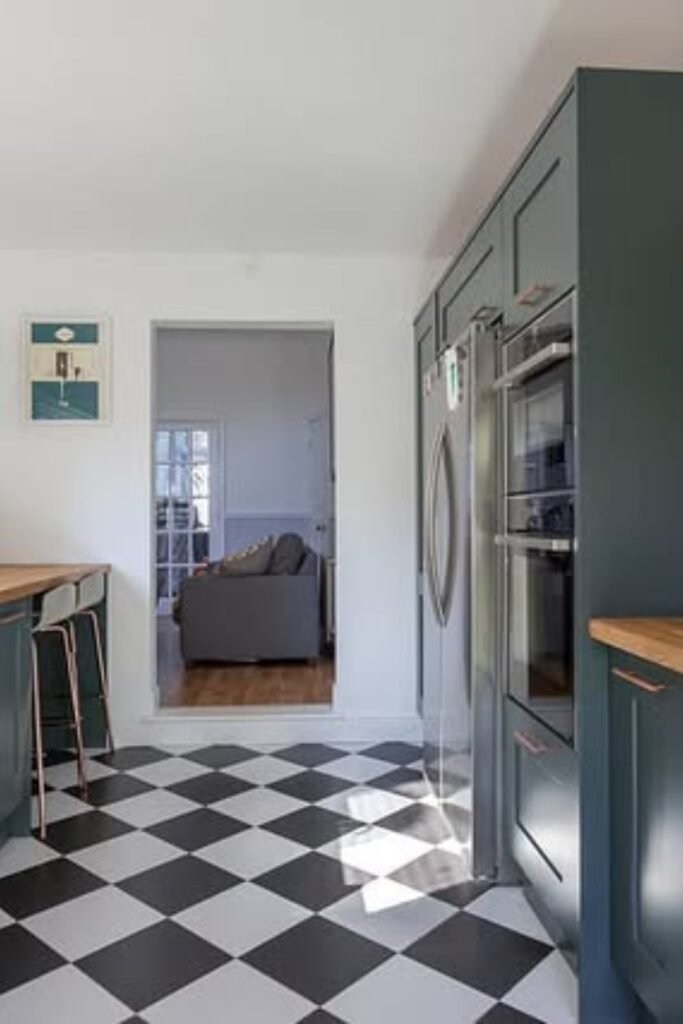
Deep Green Galley
Dark green cabinets instantly ground a narrow kitchen and give it personality without relying on patterns or decor.
What keeps this space from feeling heavy is contrast: white walls, a simple backsplash, and warm wood countertops break up the depth of color.
This approach works best in galley kitchens with a window or an open doorway that brings in natural light.
To recreate it, choose a matte or satin green, keep finishes minimal, and let wood surfaces soften the overall look so the kitchen feels calm, not enclosed.
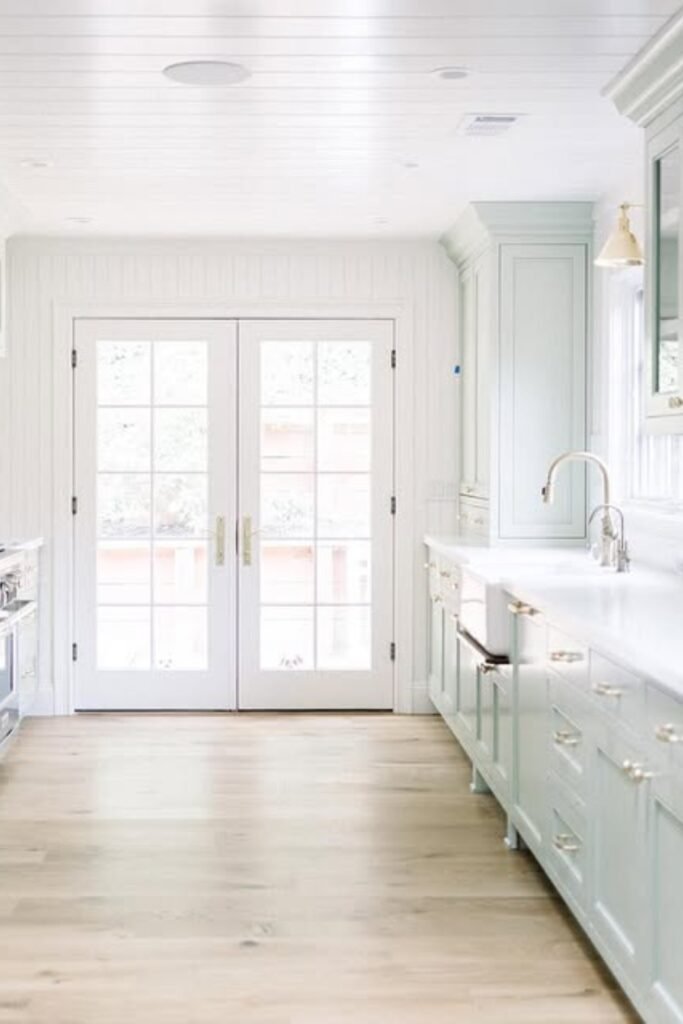
Soft Pastel Galley
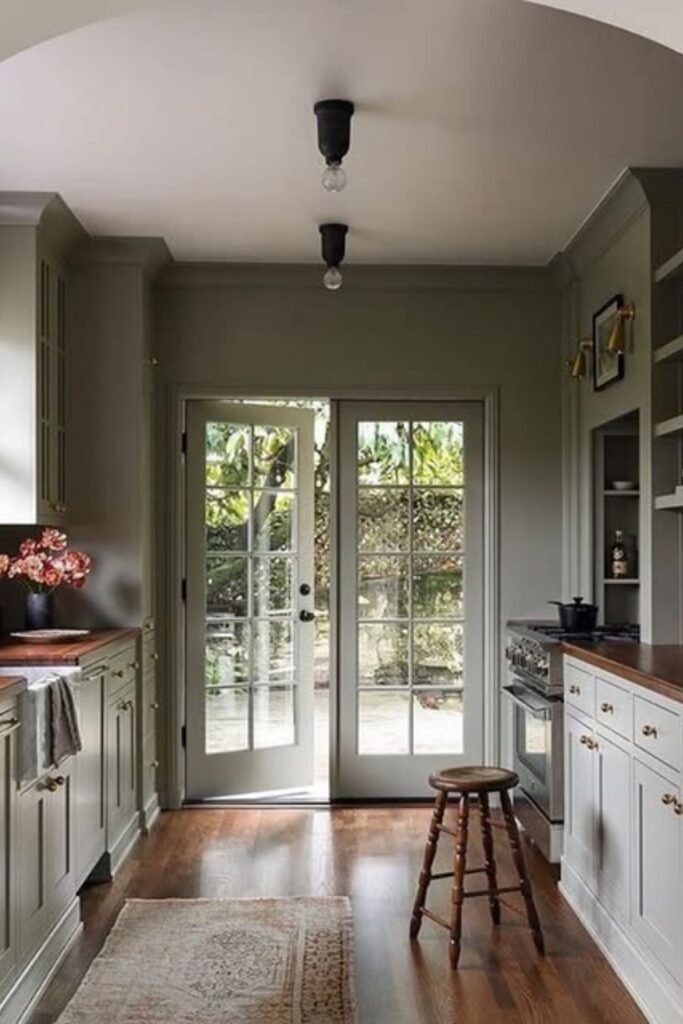
Soft pastel cabinetry makes a long galley kitchen feel calm instead of tight.
The light green tone reflects natural light coming from the doors and windows, which keeps the space open all day.
This works especially well in homes where the kitchen sits between two rooms or opens to the outdoors.
To recreate it, stick to pale colors, add simple brass hardware for warmth, and keep the counters light so nothing visually blocks the flow from one end to the other.
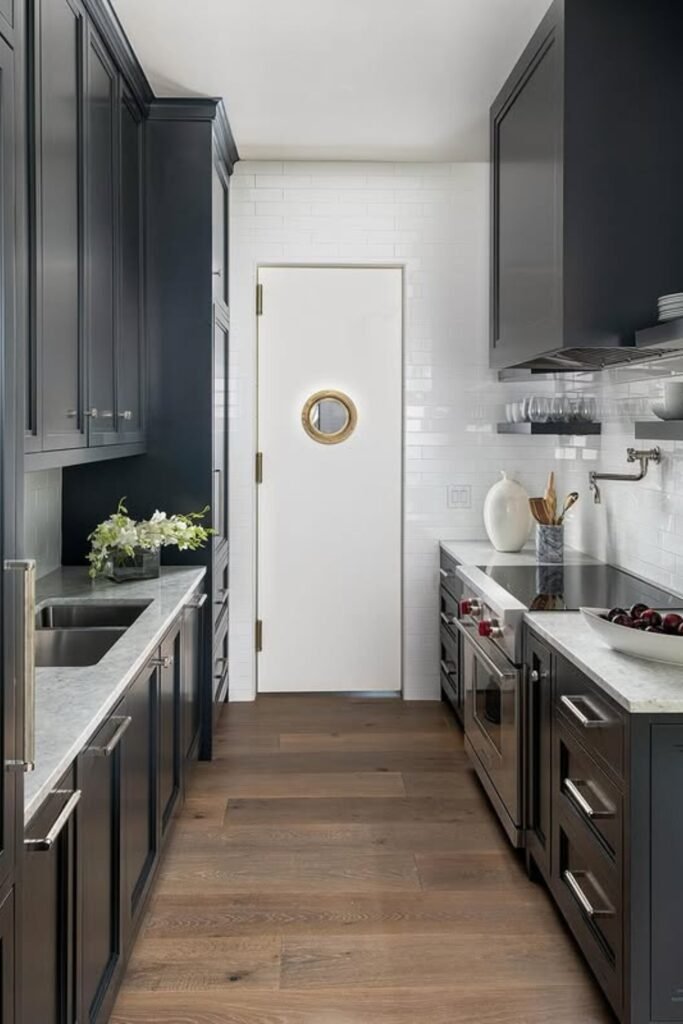
Moody Modern Galley
Dark cabinetry turns this narrow layout into a bold, confident space instead of something you try to hide.
The key move here is contrast: glossy white tiles and light countertops stop the kitchen from feeling boxed in.
This style works best if you like a dramatic look and don’t mind committing to it.
To recreate it, keep lines clean, skip busy patterns, and let one strong color run the length of the kitchen so everything feels intentional, not cluttered.
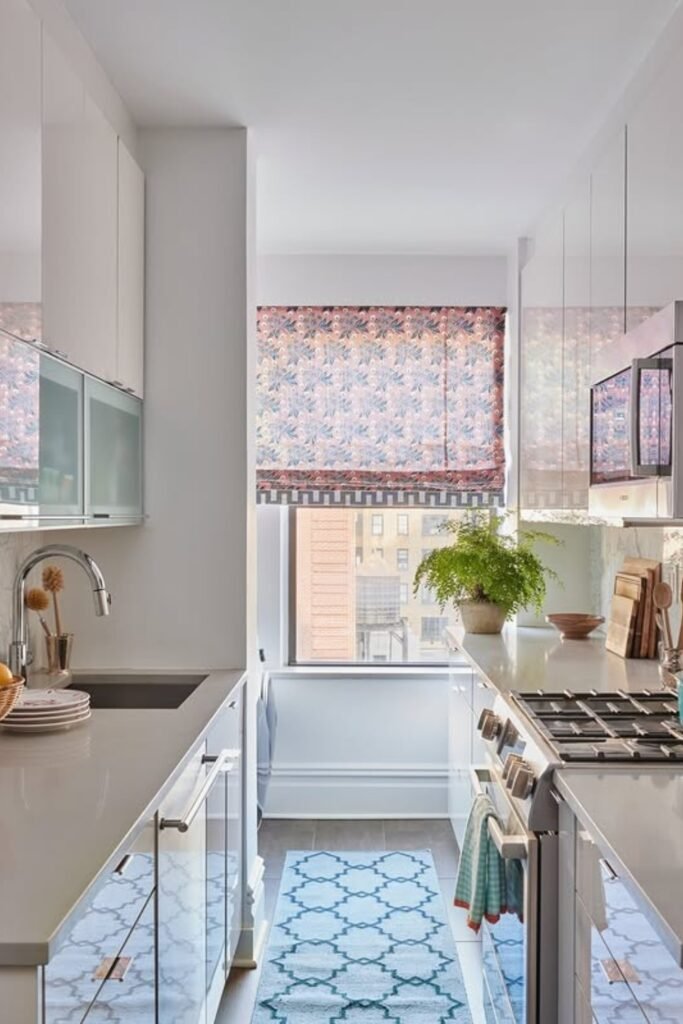
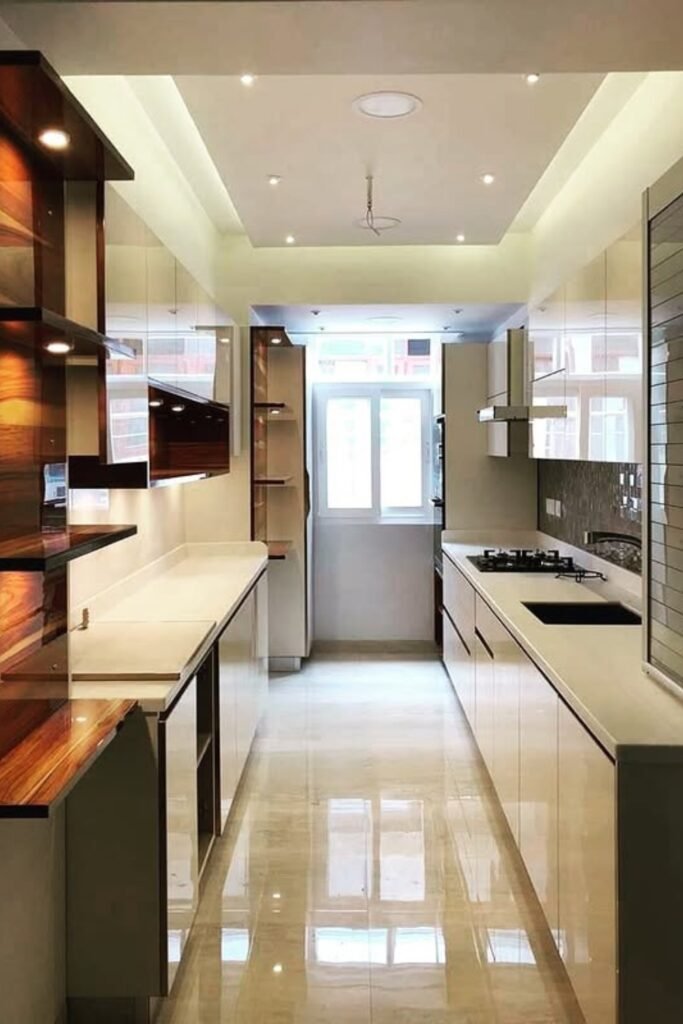
Light Gloss Galley
When space is tight, reflective surfaces do half the work for you. Glossy cabinets and polished counters bounce daylight around the room, making the kitchen feel wider than it really is.
This setup is ideal for apartment galleys with a single window at the end.
To pull it off, keep the color palette soft, avoid heavy hardware, and let one patterned element like the floor runner or window shade add personality without crowding the space.
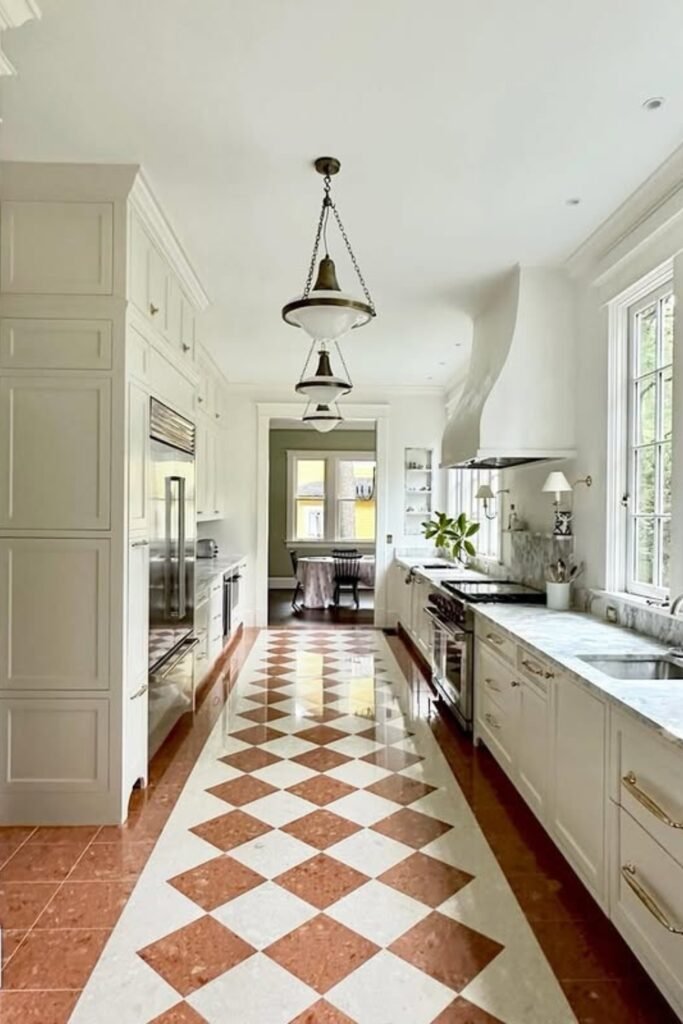
Patterned Floor Focus
A long galley instantly feels more intentional when the floor takes the lead.
The bold checker pattern pulls your eye forward, which visually stretches the space instead of highlighting its narrow width.
This works best in classic or transitional homes where you want character without cluttering the counters.
To recreate it, keep cabinets and walls calm and neutral, then choose a durable floor pattern that runs the full length of the kitchen so the layout feels purposeful, not tight.
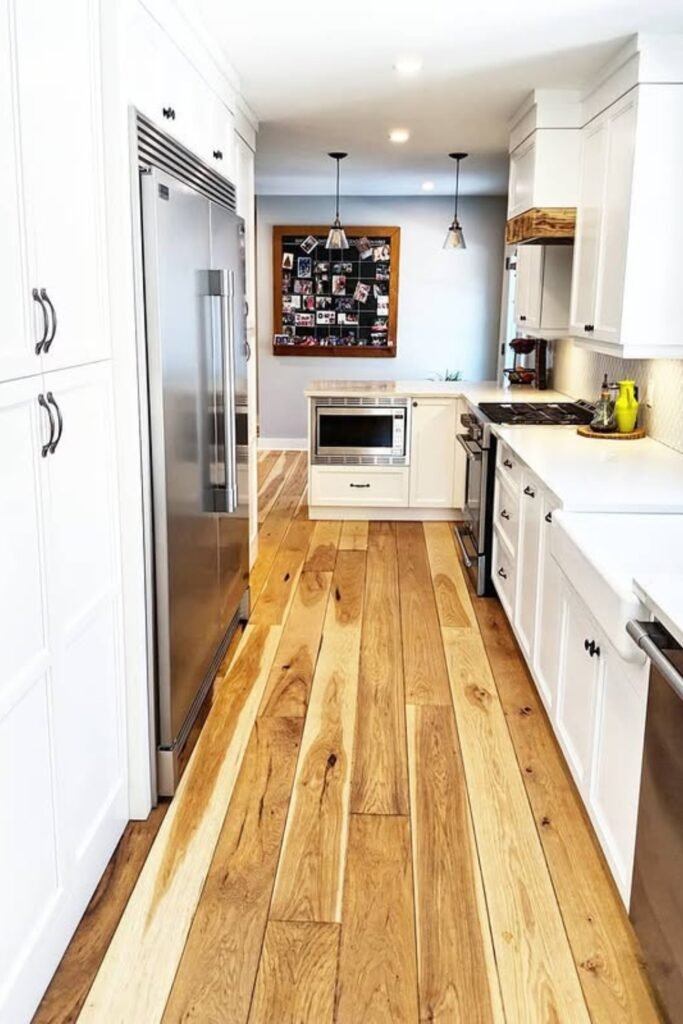
Warm Wood Flow
Wood flooring changes how a galley kitchen feels under your feet and in your head.
Instead of reading the space as narrow, your eye follows the planks straight through, which makes the kitchen feel longer and more relaxed.
This works especially well in open galleys that connect to living or dining areas.
To recreate it, run the flooring lengthwise, keep cabinets simple and light, and let the wood add warmth so the space feels lived-in, not clinical.
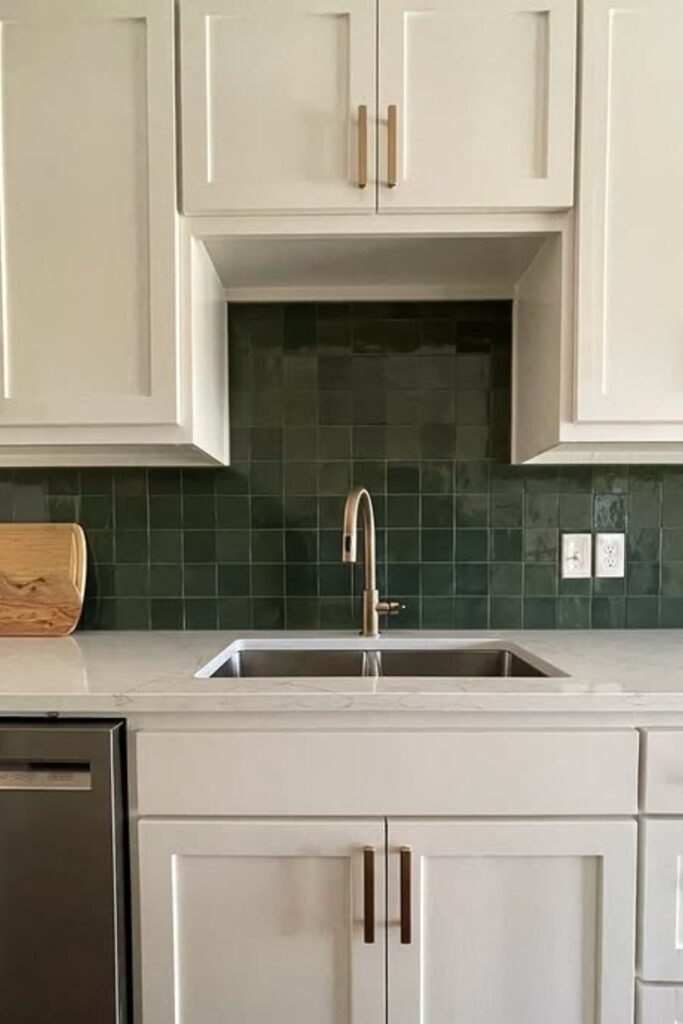
Tile Accent Focus
Sometimes one strong detail is all a galley kitchen needs. The deep green tile backsplash here adds personality without overwhelming the space, especially against clean white cabinets.
This works well in narrow kitchens where you want color but don’t want dark cabinetry closing things in.
To recreate it, keep everything else simple, choose a rich tile color with a subtle finish, and let that one surface become the visual anchor of the kitchen.
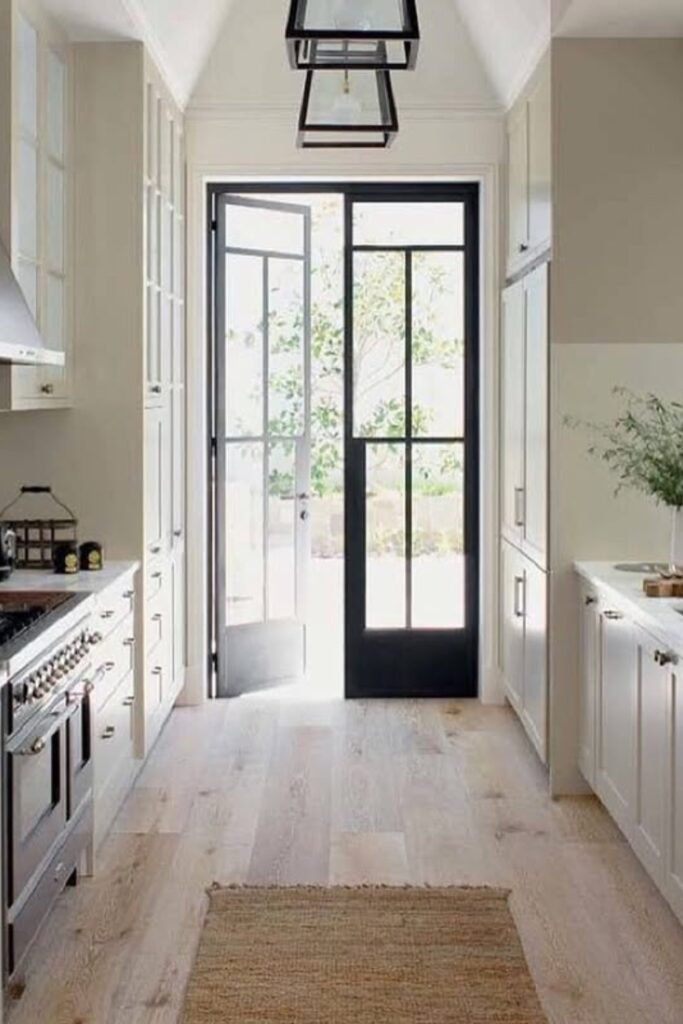
Light-Filled Galley
Natural light completely changes how a galley kitchen feels, and this layout proves it.
The glass door at the end pulls daylight straight through the space, so the kitchen never feels boxed in.
This works best in homes where the galley connects to a patio, garden, or backyard.
To recreate it, keep cabinetry light, avoid heavy window treatments, and use clear or glass-panel doors so light becomes part of the layout, not an afterthought.
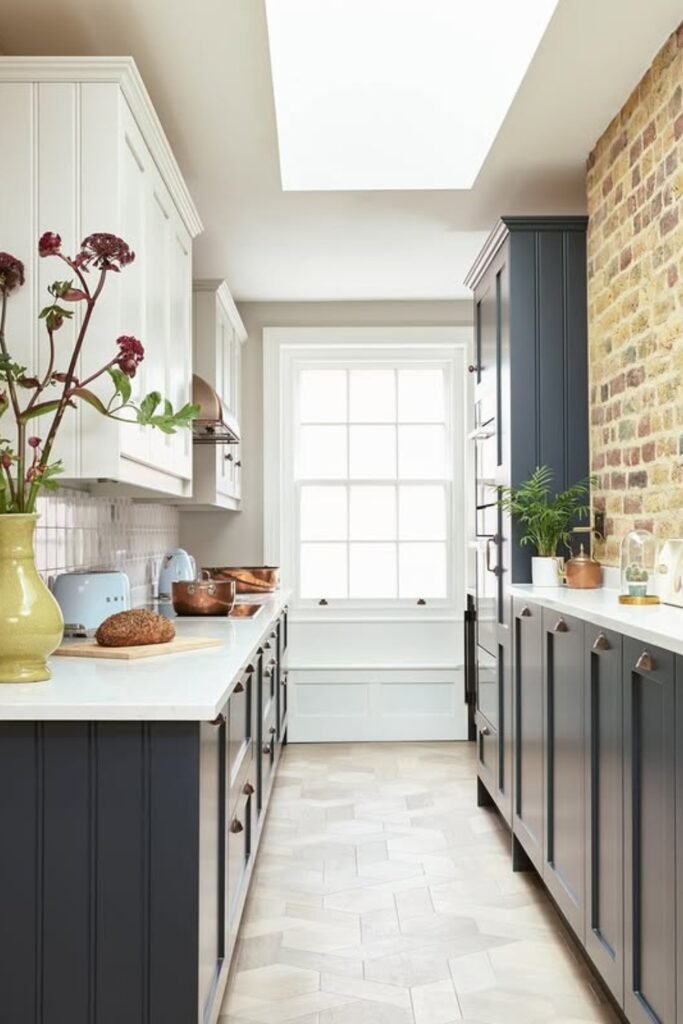
Skylight Brick Galley
Overhead light changes everything in a narrow kitchen, and the skylight here does the heavy lifting.
It pulls daylight straight down the center, which keeps the dark lower cabinets from feeling heavy.
The exposed brick wall adds texture without needing extra décor. This setup works best in older homes or extensions where roof access is possible.
To recreate it, pair a skylight with simple finishes and let one raw element like brick add warmth and character.
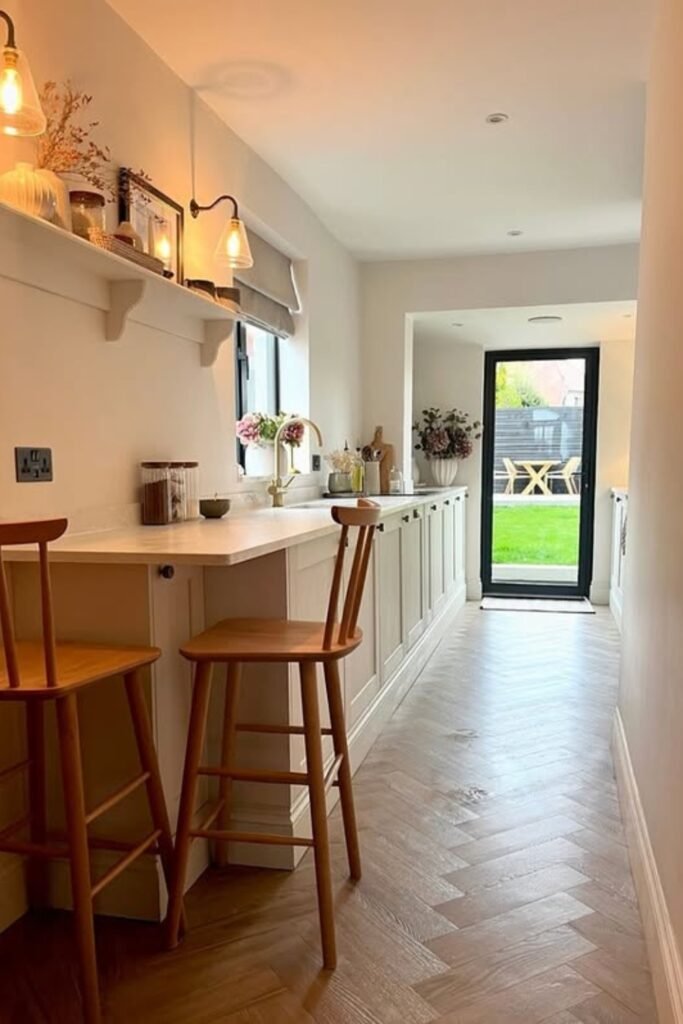
Casual Breakfast Galley
Turning part of a galley into a small seating zone makes the space feel lived-in, not just functional.
The slim counter and stools here work because they don’t block the walkway or interrupt the flow.
This setup is perfect for long, narrow kitchens where you want a casual spot for coffee or quick meals.
To recreate it, keep the counter shallow, use open shelving above, and choose warm lighting so the area feels inviting rather than squeezed in.
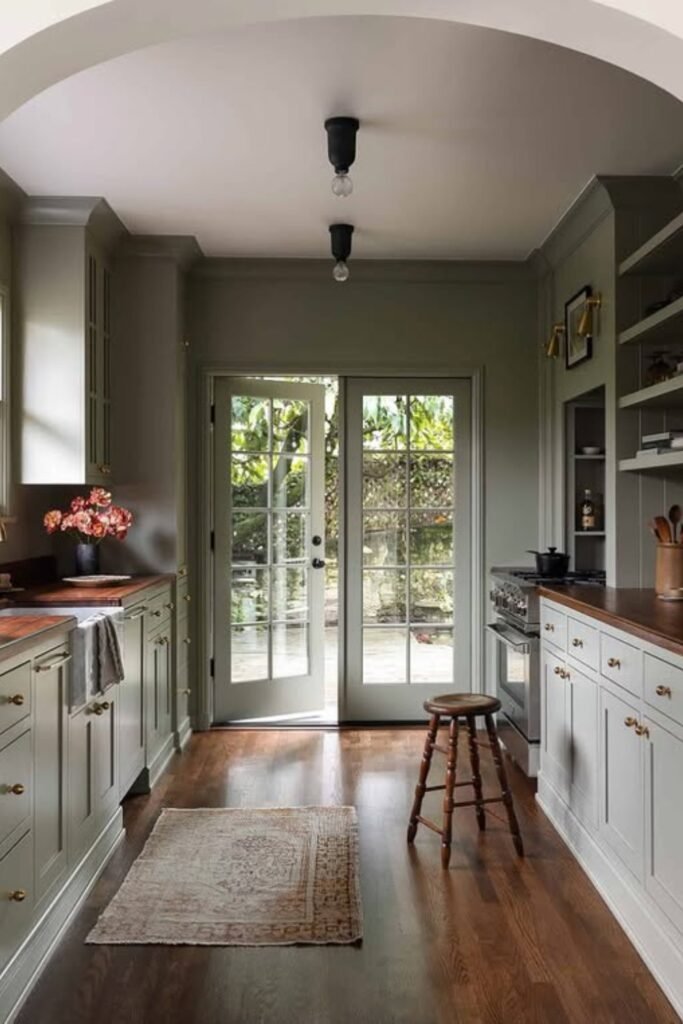
Arched Entry Galley
An arched opening instantly softens the straight, boxy feel most galley kitchens have.
It makes the space feel intentional, almost like a room you enter rather than a hallway you pass through.
This works especially well in older homes or period-style renovations.
To recreate it, keep the rest of the layout simple, use warm wood counters, and let the arch become the visual transition that makes the galley feel welcoming instead of narrow.
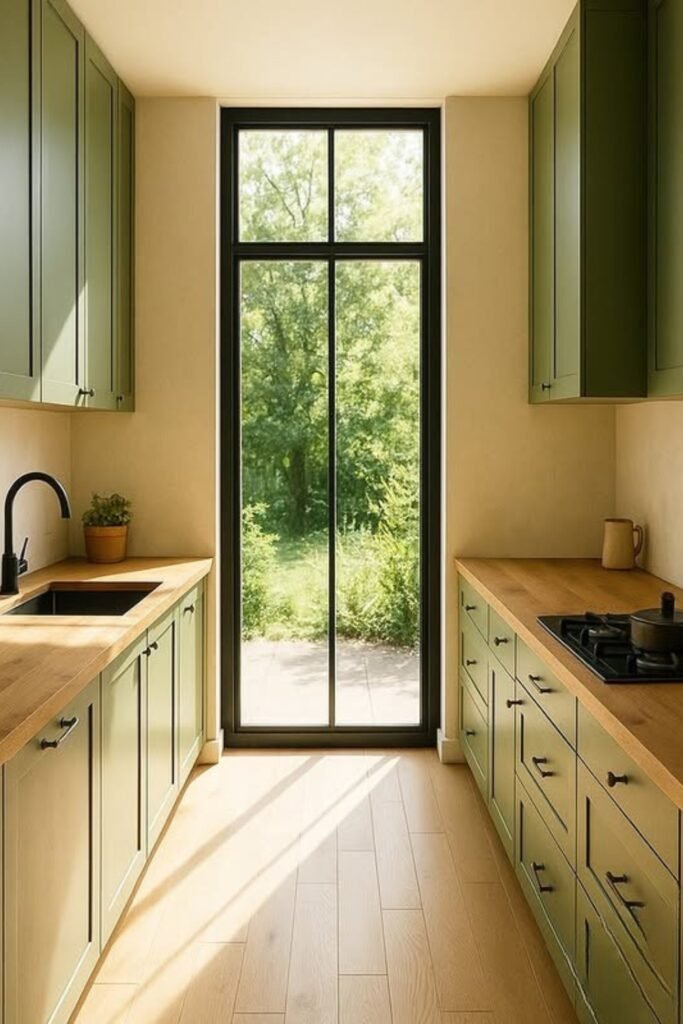
Nature Framed Galley
Letting the view lead the design makes this galley feel calm and open instead of narrow.
The tall window at the end pulls your eye outward, while soft green cabinets echo what’s outside.
This works best in homes with a garden, trees, or even a small patio view.
To recreate it, keep colors earthy, pair them with warm wood counters, and avoid visual clutter so the outside scenery becomes part of the kitchen experience.
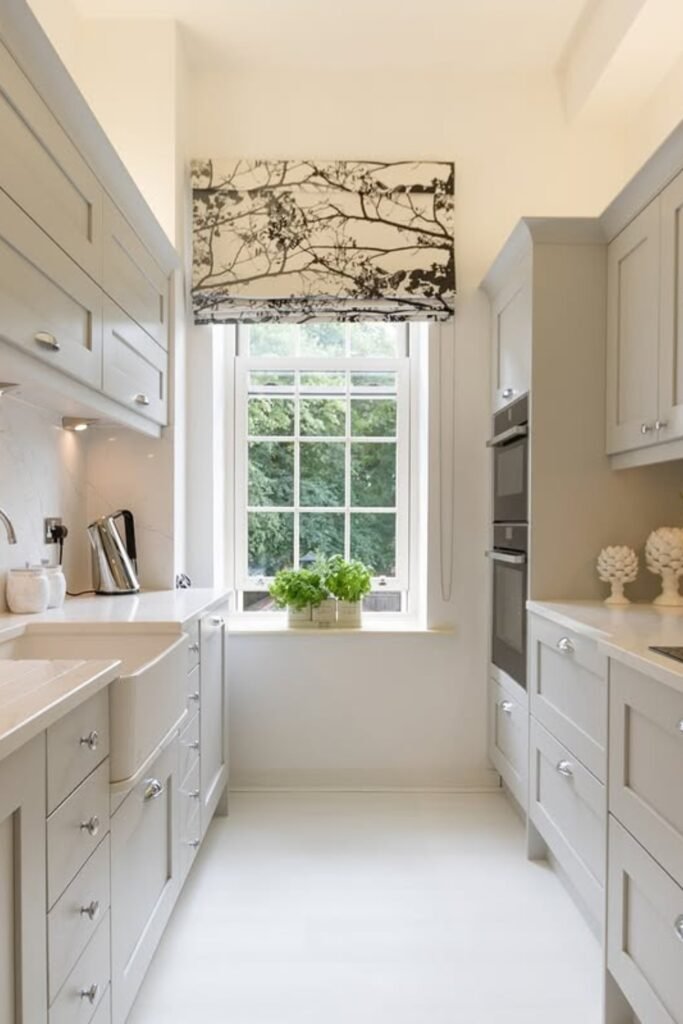
Calm Neutral Galley
Soft neutral tones make a narrow kitchen feel balanced and easy on the eyes.
The light cabinetry, pale floors, and simple counters keep everything visually quiet, so the space feels wider without trying too hard.
This works best in homes where you want a timeless look that won’t date quickly.
To recreate it, stick to one light color family, use subtle textures instead of bold contrast, and let small details like window treatments or plants, add warmth without breaking the flow.
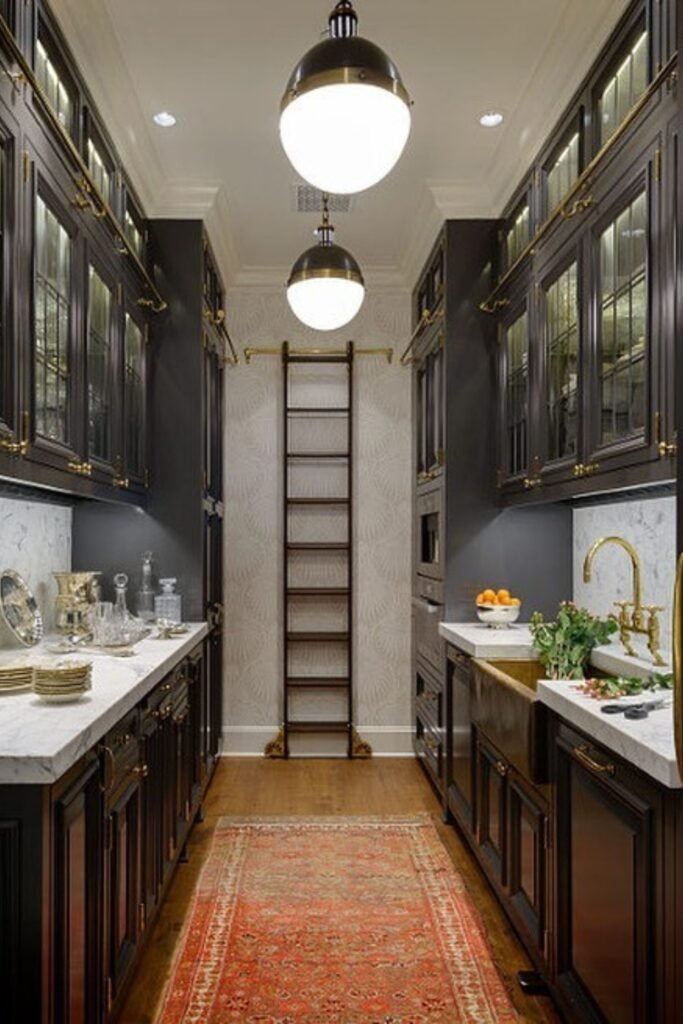
Luxe Storage Galley
When storage becomes part of the design, a galley stops feeling narrow and starts feeling intentional.
Tall, dark cabinets draw your eye upward, while glass fronts and internal lighting keep the space from feeling heavy.
This approach works best in galleys with high ceilings or homes where storage is a priority.
To recreate it, go vertical with cabinetry, add warm metals for contrast, and use layered lighting so the depth feels rich, not overwhelming.
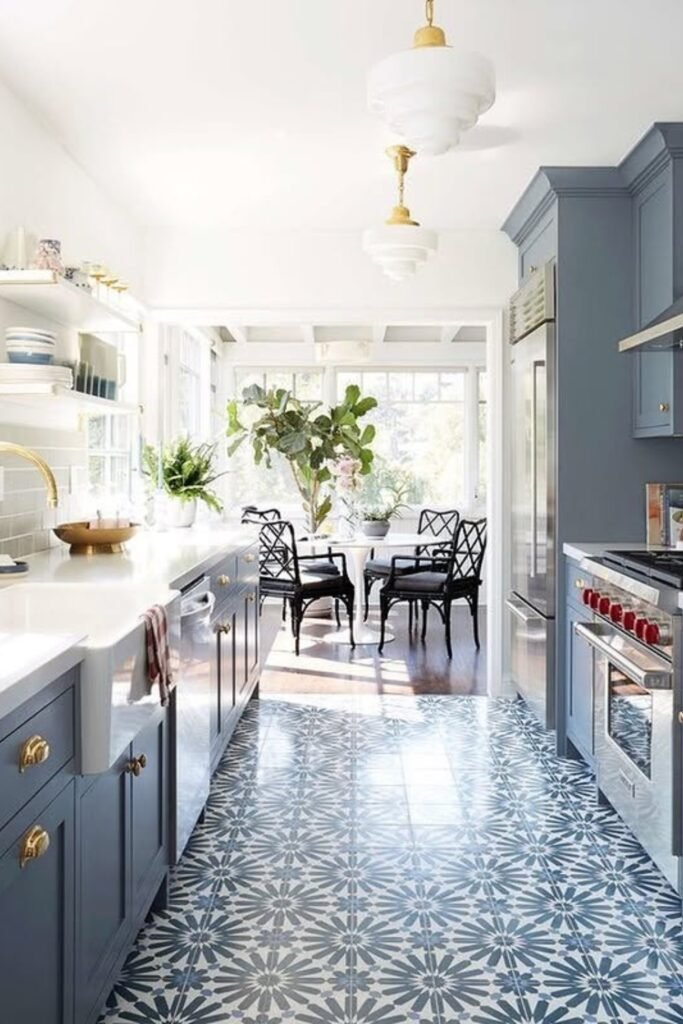
Pattern Meets Flow
Bold floor tiles turn a galley into a destination instead of a pass-through.
The repeating pattern pulls your eye forward and naturally leads into the dining area, which makes the whole space feel connected.
This works best in open galleys where the kitchen flows into another room.
To recreate it, keep cabinets simple, choose one standout pattern underfoot, and let natural light soften the contrast so the space feels energetic, not busy.
Bold Back Wall
Stopping a galley with a dark accent wall gives the space a clear visual endpoint.
Instead of feeling like a never-ending corridor, your eye lands on one strong moment. This works especially well in shorter galleys or rental kitchens where layout changes aren’t possible.
To recreate it, keep cabinets light, choose one deep color at the far end, and layer in art or decor so the wall feels styled, not heavy or boxed in.
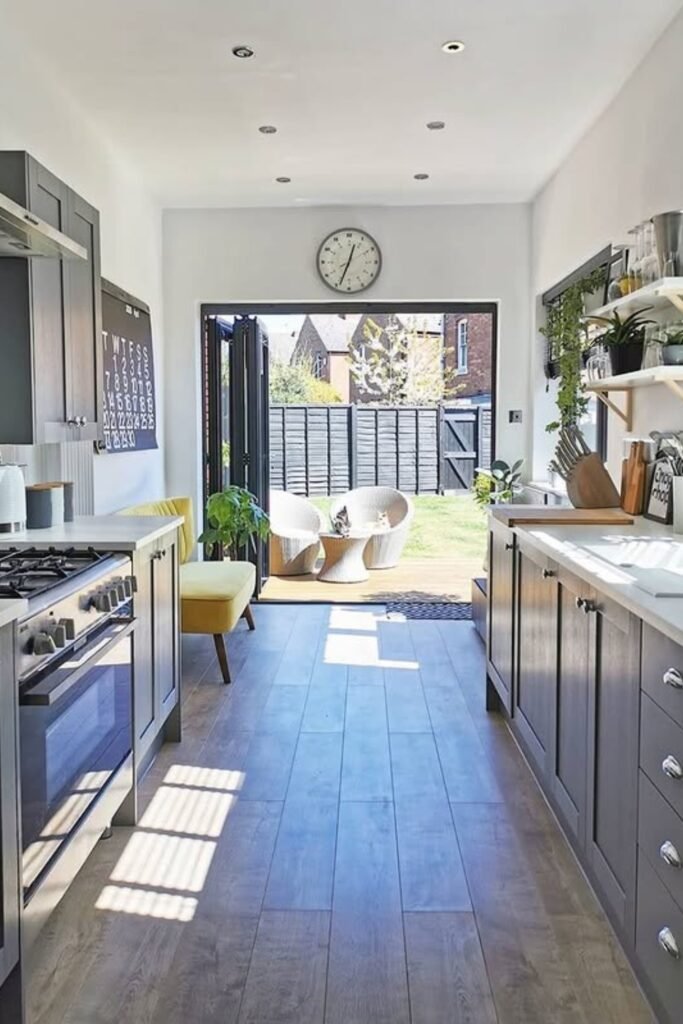
Open-End Galley
Opening the far end of a galley completely changes how it feels to use.
Instead of hitting a wall, your eye and movement flow straight outside, which makes the kitchen feel wider and more relaxed.
This works best in homes with a garden, patio, or deck access.
To recreate it, keep the layout streamlined, use consistent flooring, and avoid tall cabinets near the opening so the connection to the outdoors stays open and inviting.
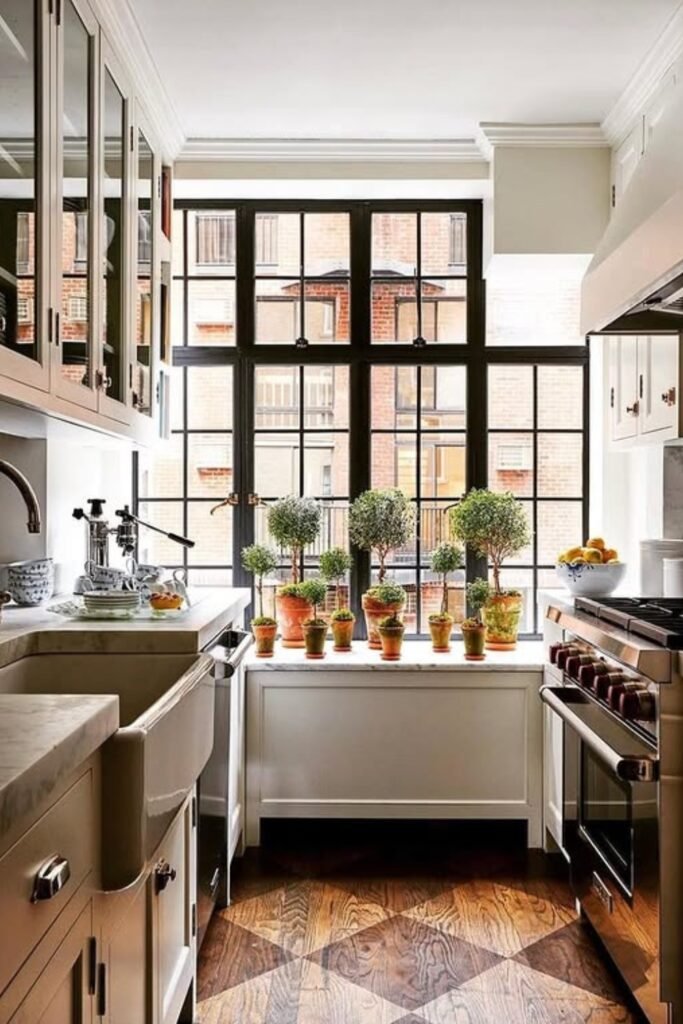
Window-Led Galley
Letting the window become the focal point makes this galley feel open instead of boxed in.
The large panes pull in daylight and give the eye a place to rest, which breaks the narrow tunnel effect.
This works best in city homes or apartments where outside views matter.
To recreate it, keep the window area clear, use light cabinetry nearby, and add a few plants so the natural light feels intentional, not just functional.
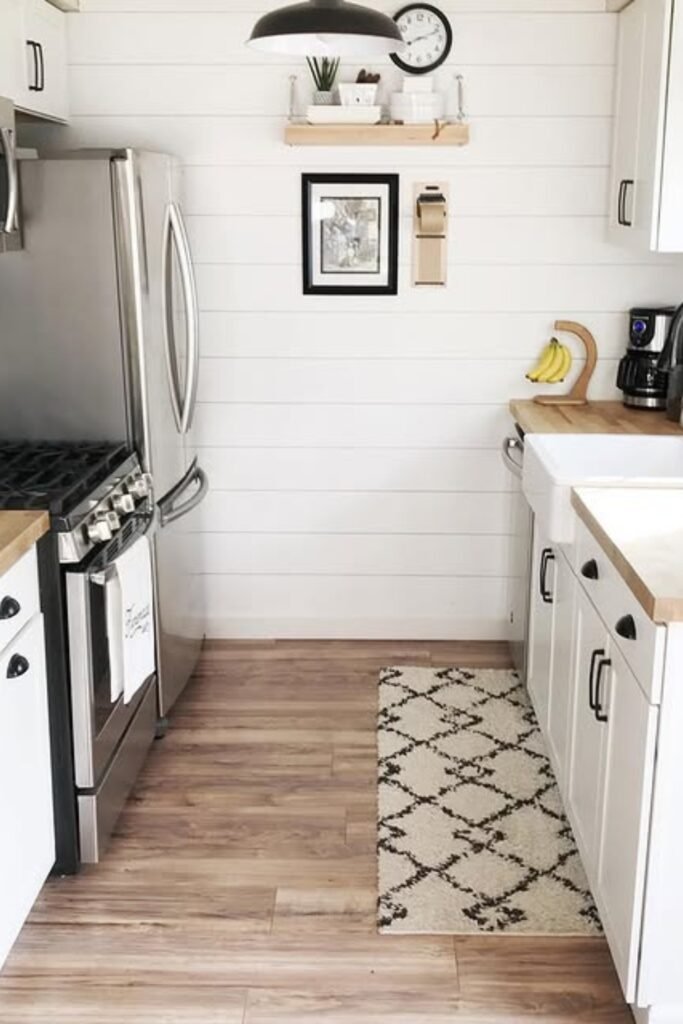
Simple Farmhouse Galley
Keeping everything straightforward is what makes this galley work.
White cabinets, butcher-block counters, and a shiplap wall create warmth without visual noise.
The space feels practical, not styled to death, which is ideal for smaller homes or rentals.
To recreate it, focus on durable basics, limit décor to one or two shelves, and use natural wood to soften the all-white look so the kitchen feels comfortable and easy to live in.
Balanced Bright Galley
Symmetry is doing all the heavy lifting here. Matching cabinets, equal counter depths, and a centered window make the space feel calm instead of cramped.
Your eye reads the kitchen as organized, which instantly makes it feel wider. This works best in classic galley layouts where both walls run the same length.
To recreate it, keep finishes consistent on both sides, avoid visual clutter, and let natural light hit the center so the whole kitchen feels evenly balanced.
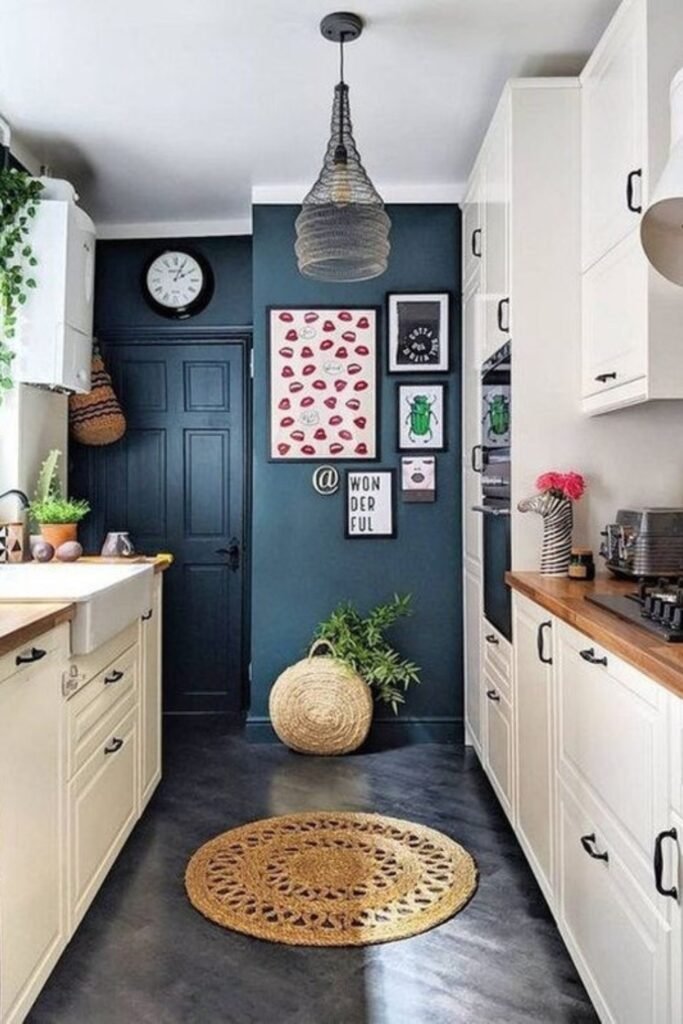
Styled End Wall
Giving the end of a galley a personality shift stops it from feeling like a dead end.
The dark wall here anchors the space, while art, plants, and texture make it feel intentional rather than closed off.
This works especially well when you can’t change the layout but want visual depth.
To recreate it, keep side cabinets light, choose one deep color at the back, and layer in a few personal pieces so the kitchen feels styled, not strict.
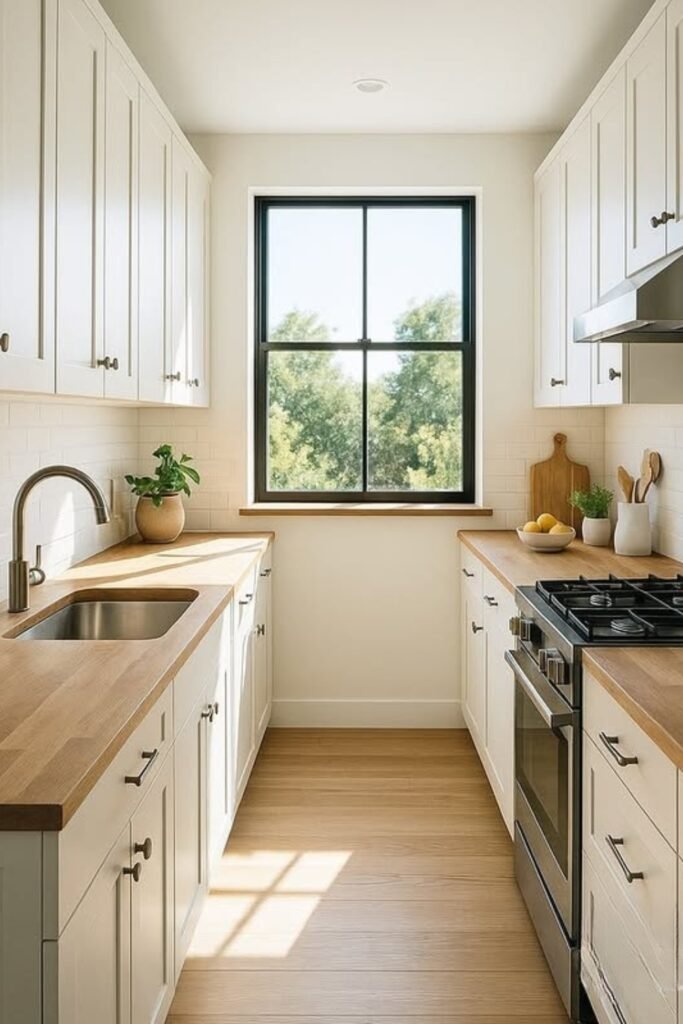
Brick Contrast Galley
Mixing clean cabinetry with an exposed brick wall gives this galley instant depth.
The brick adds texture and warmth, while the smooth cabinets keep the space from feeling rough or crowded.
This works especially well in period homes or renovations where original brick is already there.
To recreate it, keep one wall raw, choose simple cabinet fronts, and let light flooring balance the heavier textures so the kitchen feels layered, not narrow.
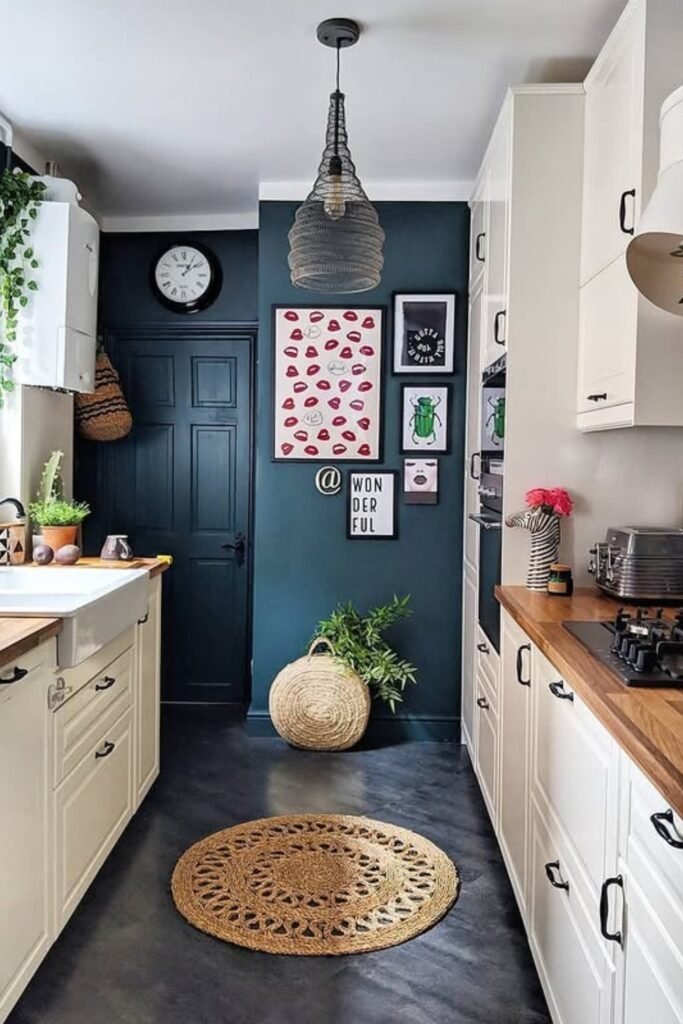
Open Shelf Galley
Open shelving changes how a narrow kitchen feels because it removes visual weight from the walls.
Instead of solid cabinets closing the space in, your eye can move freely across dishes, plants, and everyday items.
This works best if you’re naturally tidy or use your kitchen daily.
To recreate it, limit shelves to one side, keep colors cohesive, and store only what you actually use so the space feels airy, not cluttered.
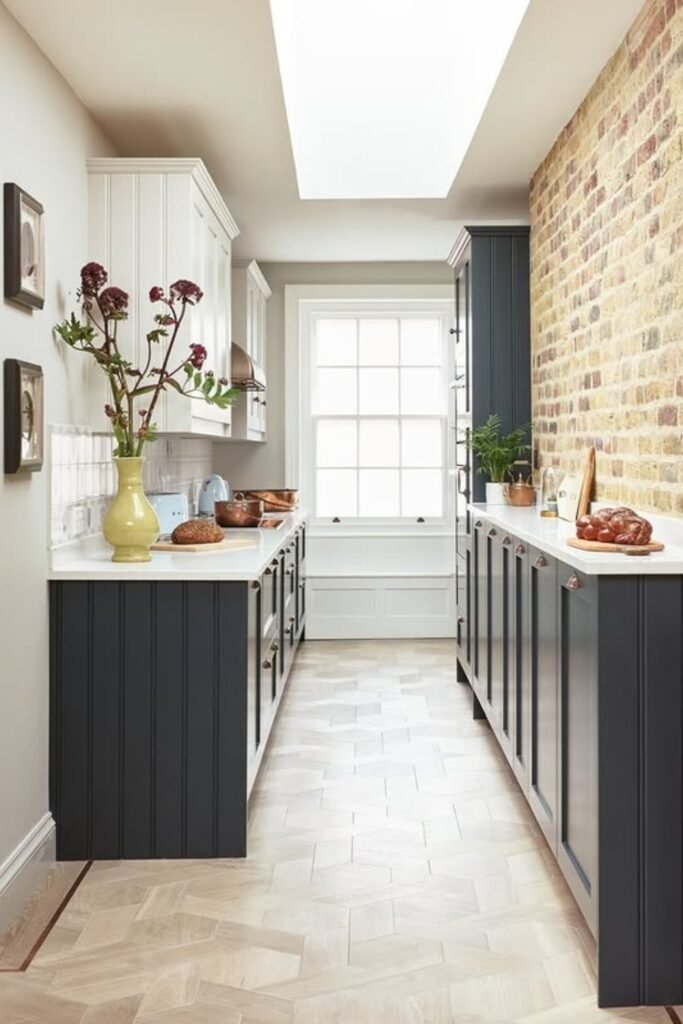
Framed Arch Galley
That arch changes how the whole kitchen reads.
Instead of feeling like a straight corridor, the curved opening gives the galley a clear beginning and end, which makes it feel more like a room than a passageway.
This works best in older homes or renovations where you want character without changing the layout.
To recreate it, keep cabinetry calm and cohesive, use warm wood counters, and let the arch act as the visual feature that softens the narrow shape.
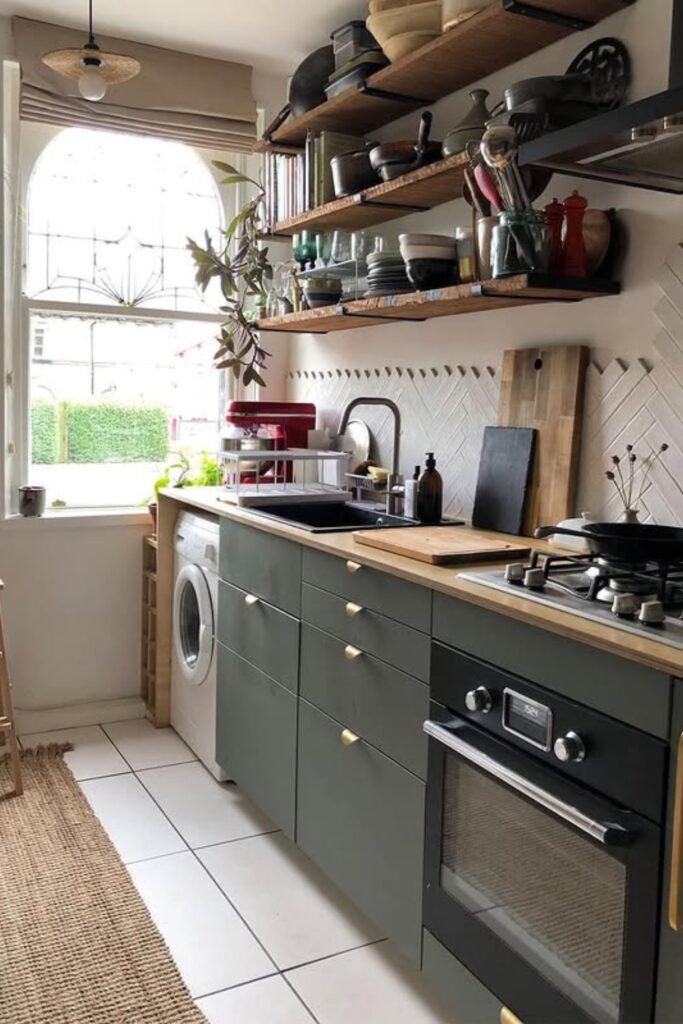
Classic Compact Galley
Nothing here tries too hard, and that’s why it works. Soft cabinetry, simple tile, and warm brass details keep the kitchen feeling calm instead of crowded.
The open doorway at the end stops the space from feeling boxed in and adds breathing room.
This style suits traditional homes or anyone who wants a timeless look.
To recreate it, stick to neutral colors, keep hardware understated, and make sure one end stays visually open so the galley never feels closed off.
Frequently Asked Questions
Is a galley kitchen good for small spaces?
You don’t waste space on extra walkways or corners, and the layout keeps cooking, cleaning, and prep close together.
When designed well, it’s one of the most efficient ways to use a narrow room.
How do you make a galley kitchen feel wider?
Light colors, consistent flooring, good lighting, and fewer upper cabinets help reduce the tunnel effect.
Keeping one end open or well-lit also makes a big difference.
You may like to read!
