
22 Long Rectangular Living Room Layout Ideas
If your living room is long and rectangular, you have probably moved the sofa more times than you can count and it still feels wrong.
But, once you understand how space, flow, and furniture size work together, you can stop fighting your room.
In this article, you will see exactly how you can maximize space, how to arrange furniture, how to decorate and 22 ideas to try.
Let’s jump in!
How Do You Maximize Space In A Rectangular Room?
You can maximize space in a rectangular room by stopping it from behaving like a straight line.
If everything runs along the long walls, the room will always feel narrow and stretched.
You can start by creating clear zones instead of one long setup.
You can use a rug to anchor the main seating area, then leave a clean walkway on one side so people can move freely without cutting through your furniture.
When you float the sofa slightly away from the wall, you can shorten the room visually and make it feel wider and more balanced at the same time.
How to Arrange Furniture in Long Rectuangular Living Room?
The furniture arrangement will become way more easy when you will stop thinking of the space as a one long line and start to treat it as a series of usable areas.
What most people do wrong is they push everything against the walls and it only make the long room more awkward.
So, your goal should be balance, flow, and purpose. For example you can start with movement first.
As the long rooms most of the time connect the doors, hallways, and open spaces, so you need a clear walkway from one end of the room to other end.
Once you declare a clear walkway now you can place furniture around it, and it will make your room feel easy to live in.
I already talk about it above now we have to create zones and in those the seating zone the first you should decied.
For sofa the best method is to float is away from the wall and face it toward the main focal point of your living room.
You can use the rug to anchor the seating area with at least front legs of all furnitue resting on it.
If your living room is still extra long, you can break it into two zones, one end can work as your main living room area.
How to Decorate Long Narrow Living Room?
If you want to decorate a long and narrow living room then you should watch this video from Lesley Myrick an interior designer.
In this video she provide 5 tips to decorate a long narrow living room.
Before you dive into the ideas and try them to your home I guess you should know basic rules for these kind of spaces.
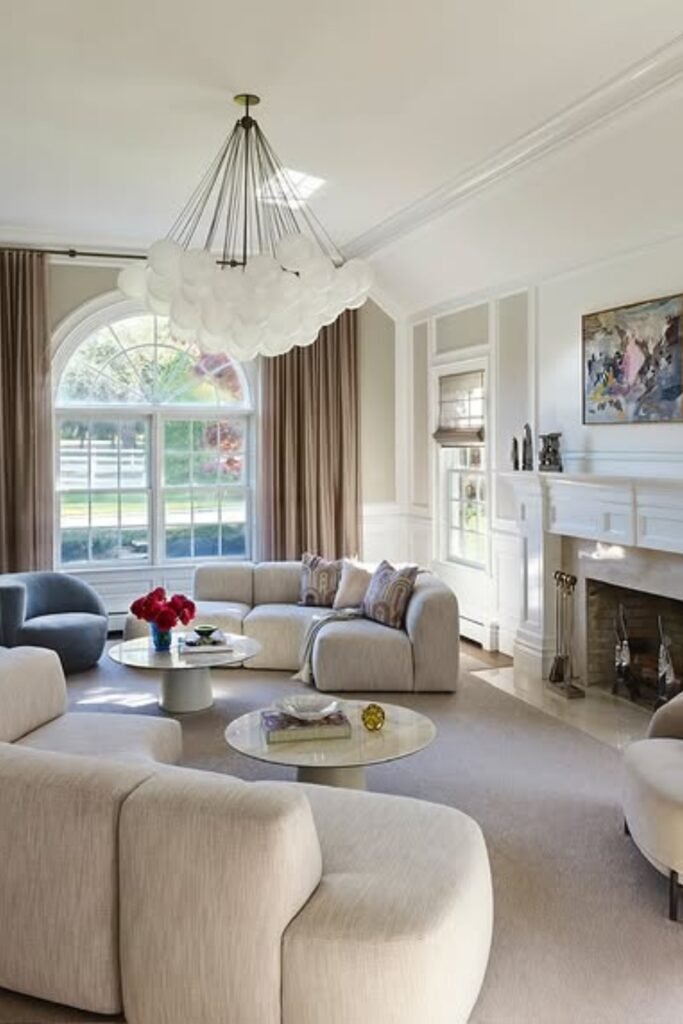
Soft Curved Seating
When you want a long room to finally feel balanced, seating that creates its own zone instead of lining the walls can help.
You can choose a curved sofa [Check on Amazon] paired with round tables to pull the focus inward and visually shorten the room.
A curved sofa paired with round coffee tables helps draw the eye inward, visually shortening the room and making it feel cozier.
The smooth lines also soften sharp architectural edges, adding warmth and flow.
This layout encourages conversation while maintaining elegance, resulting in a living area that feels intentional, harmonious, and beautifully designed rather than stretched or disconnected.
Defined Seating Zones
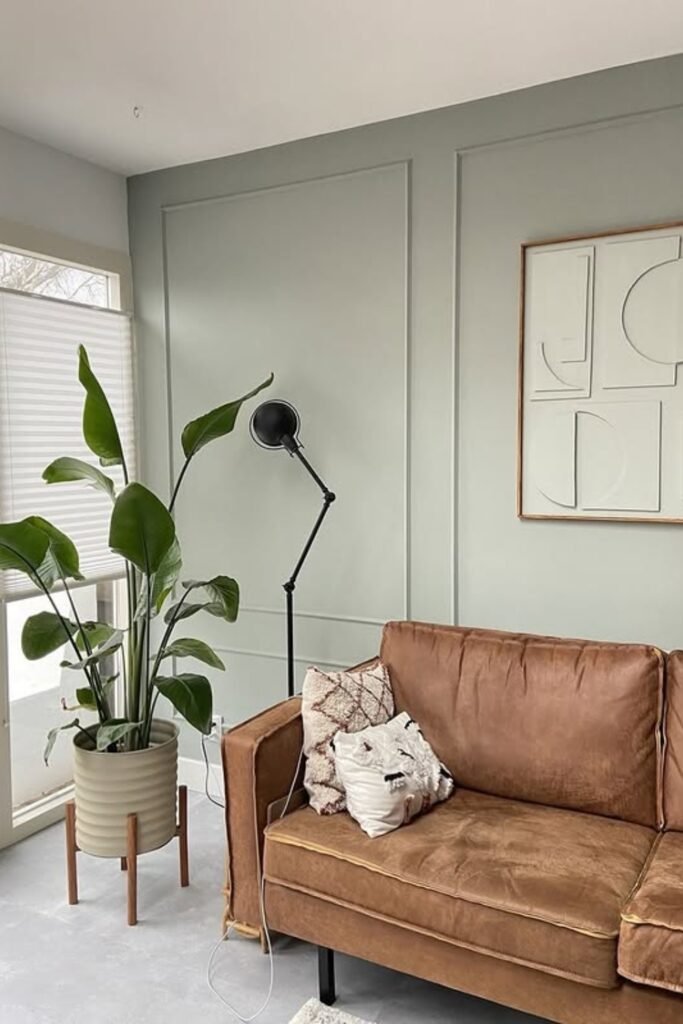
The long rectangular living room feels calmer when one wall does most of the visual work.
You can frame a wall to give your sofa a clear anchor so the room doesn’t stretch endlessly. This setup is perfect for narrow spaces where floating furniture isn’t an option.
A long rectangular living room instantly feels more organized when one wall becomes the visual anchor.
Framing a single wall with molding, paneling, or artwork helps ground the sofa and clearly define the seating area.
This approach prevents the space from feeling stretched or disconnected. By giving the eye a focal point, the room feels calmer and more intentional.
Wall Anchored Seating
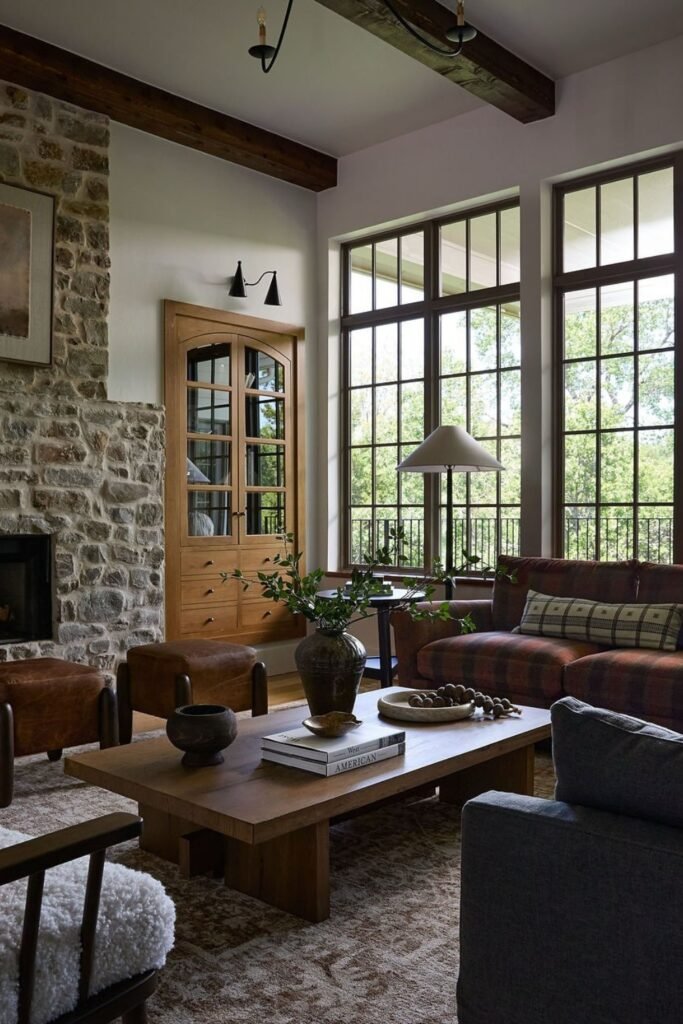
When your long living room has a strong fireplace, everything should work around it instead of competing with it.
You can balance the sofa with chairs across from it, keep a substantial coffee table [Check on Amazon], and let the fireplace shorten the room visually by acting as a natural stopping point.
A substantial coffee table in the center helps ground the arrangement and adds visual weight.
The fireplace naturally shortens the room by acting as a stopping point for the eye, preventing the space from feeling stretched.
By keeping furniture aligned with this focal feature, the room feels cohesive, structured, and inviting while maintaining warmth and architectural charm.
Fireplace As Anchor
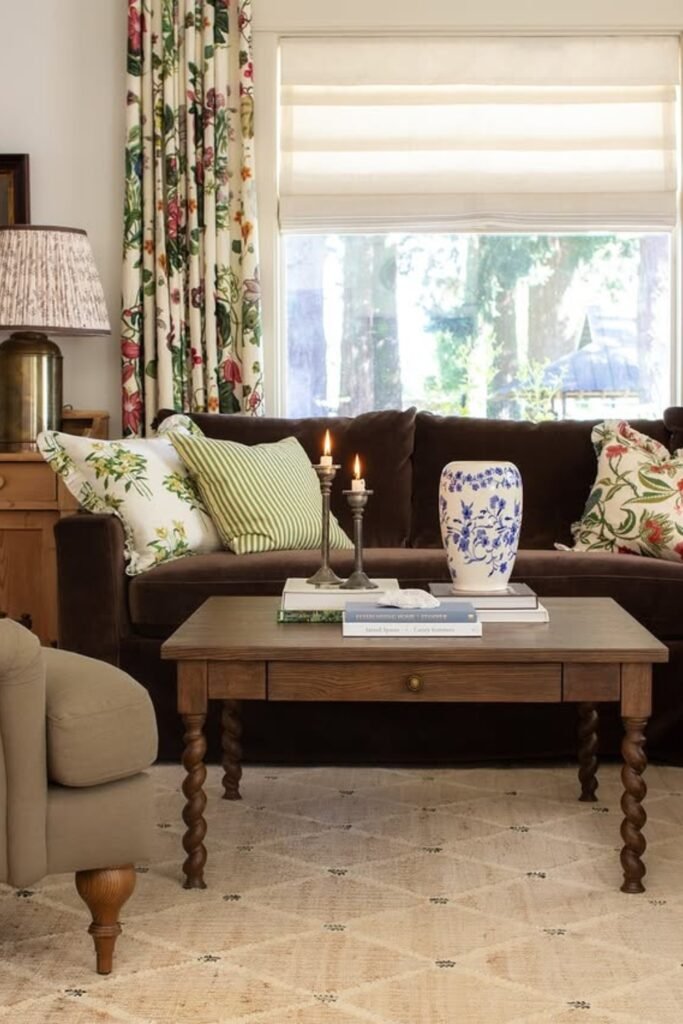
You can use matching pillows, paired decor, and a centered coffee table to pull attention sideways instead of down the length of the room.
You can keep the sofa centered under the window, use a solid rug to ground the setup, and let symmetry do the visual shortening for you.
A solid rug grounds the arrangement and clearly defines the seating zone. Symmetry plays a key role here, creating harmony and structure.
When everything feels aligned and intentional, the room appears cozier, more proportioned, and visually connected instead of narrow and endless.
Balanced Symmetry Setup
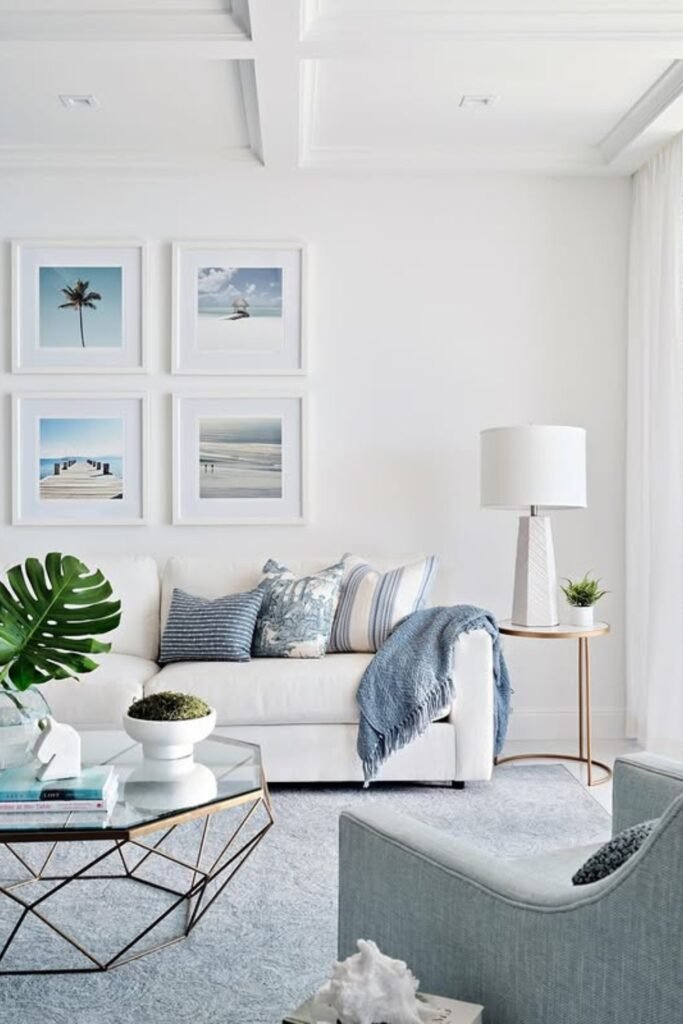
You can keep the sofa compact and light in color to prevent the layout from feeling stretched.
You can keep artwork arranged in a grid, anchor the seating with a wide rug [Check on Amazon], and let visual width do the heavy lifting instead of adding extra furniture.
A balanced symmetry setup helps a long living room feel wider and more proportioned.
A wide area rug anchors the seating zone and clearly defines the space without overcrowding it.
This approach keeps the room airy, organized, and visually expanded while maintaining comfort and style.
Visual Width Trick
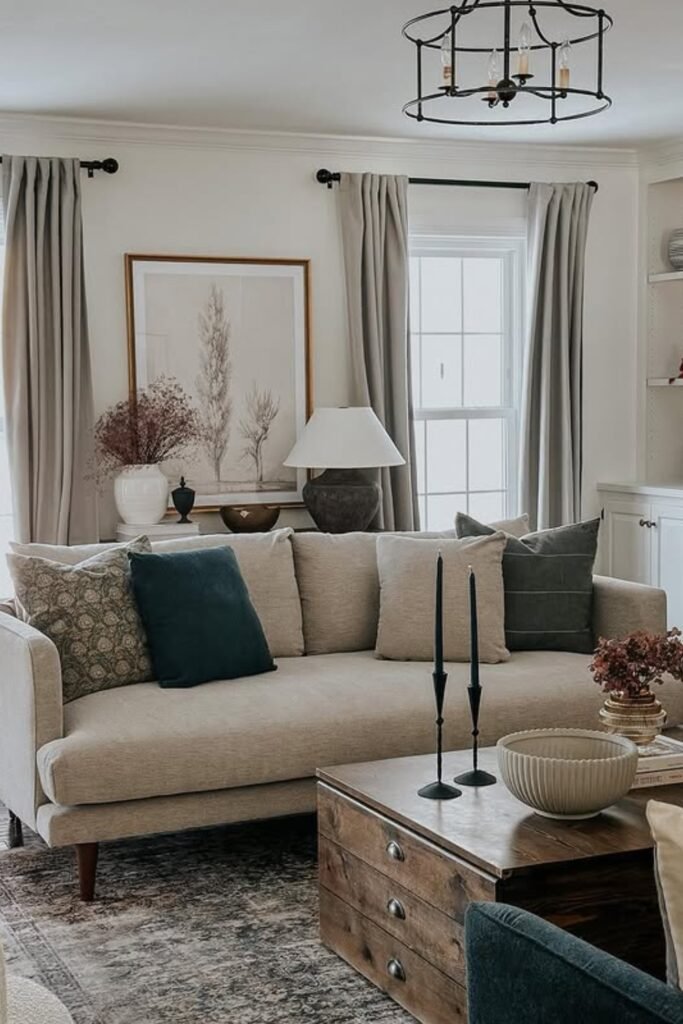
The long living rooms feel more controlled when the sofa stays centered between windows instead of chasing wall space.
You can pick a compact, straight sofa to keep the layout from stretching too far in either direction.
A long living rooms feel more balanced when the sofa is centered between windows rather than pushed to fill empty wall space.
Keeping the seating aligned with architectural features creates a sense of structure and prevents the layout from feeling stretched.
You can choose a compact, straight sofa helps control the proportions and keeps the room from extending too far in either direction.
Centered Sofa Balance
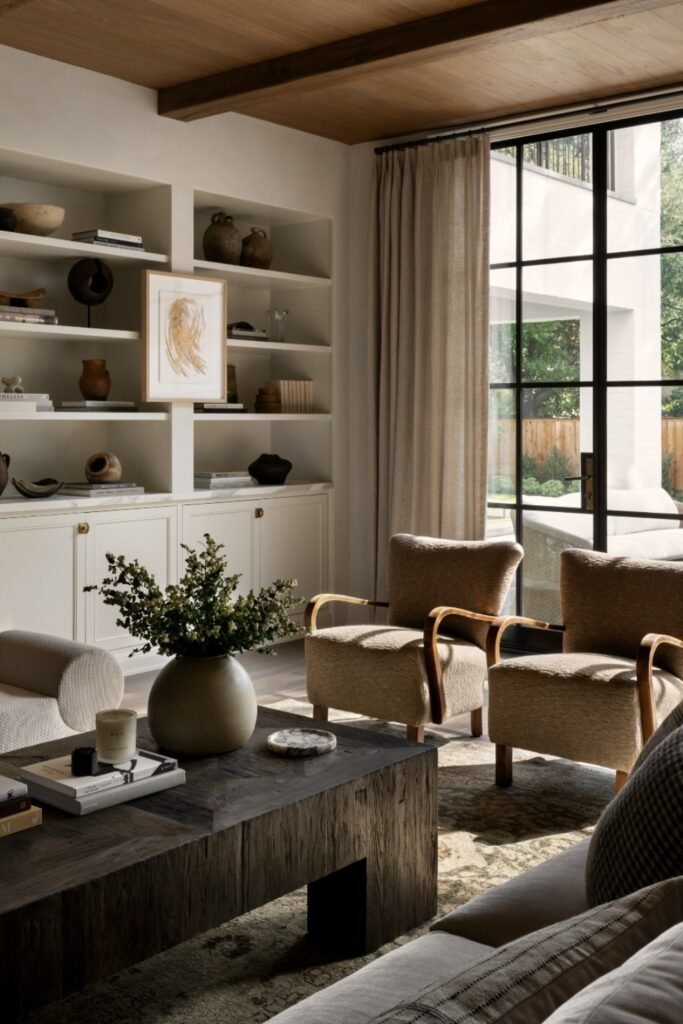
You can benefit from seating that stops hugging the walls.
When you pull chairs [Check on Amazon] into the center, you create a second seating pocket and break the room into zones.
You can keep the coffee table heavy to anchor the setup, and let built-ins handle storage so your floor plan stays open and flexible.
This approach forms a second seating pocket, adding depth and visual interest. A substantial coffee table grounds the arrangement and keeps the layout cohesive.
Built-in shelves or cabinetry can handle storage, allowing the floor plan to remain open and uncluttered.
The result is a balanced, flexible space that feels intentional, welcoming, and thoughtfully designed rather than long and disconnected.
Floating Furniture Layout
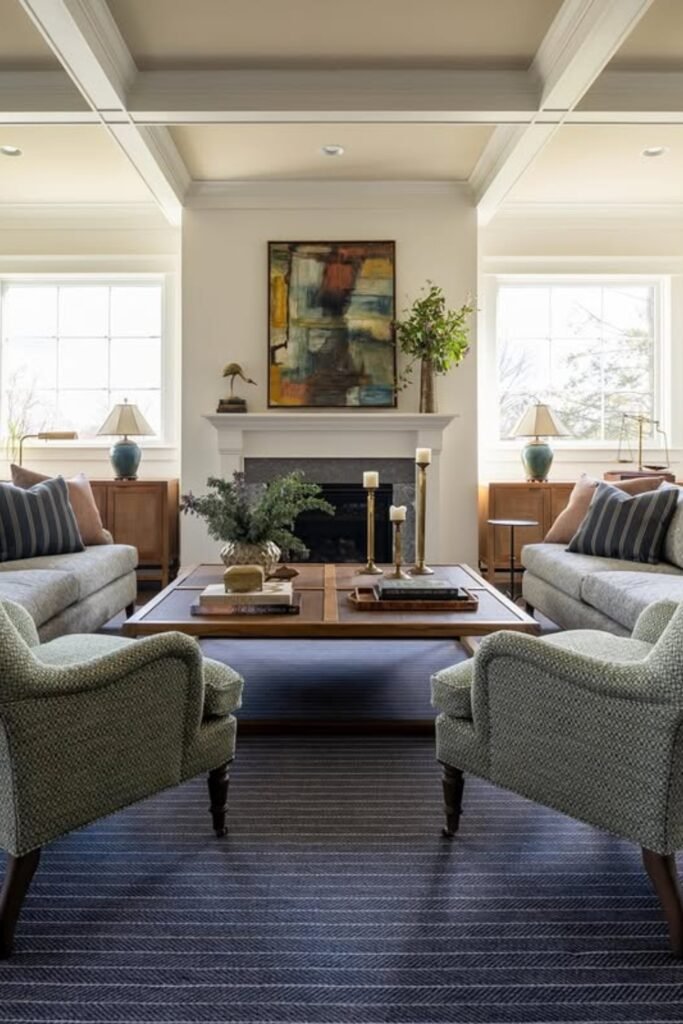
When you want to shorten a long living room quickly, nothing works better than equal visual weight on both sides.
You can place matching sofas facing each other to pull the focus inward and stop the eye from traveling down the room.
A floating furniture layout is one of the most effective ways to visually shorten a long living room.
Instead of lining everything against the walls, placing matching sofas facing each other creates balance and draws attention inward.
This equal visual weight on both sides prevents the eye from traveling straight down the length of the space.
Mirrored Seating Setup
You can use curved sofas and rounded tables to pull the layout inward and stop the space from feeling linear.
You can keep furniture grouped close, use a patterned rug to anchor the zone, and let curves replace straight sightlines.
You can group the furniture closely together strengthens the conversation zone and prevents the space from feeling stretched or disconnected.
A patterned rug beneath the arrangement anchors the seating area and visually defines its boundaries.
By replacing sharp angles with gentle curves, you interrupt the room’s length and guide the eye toward the center.
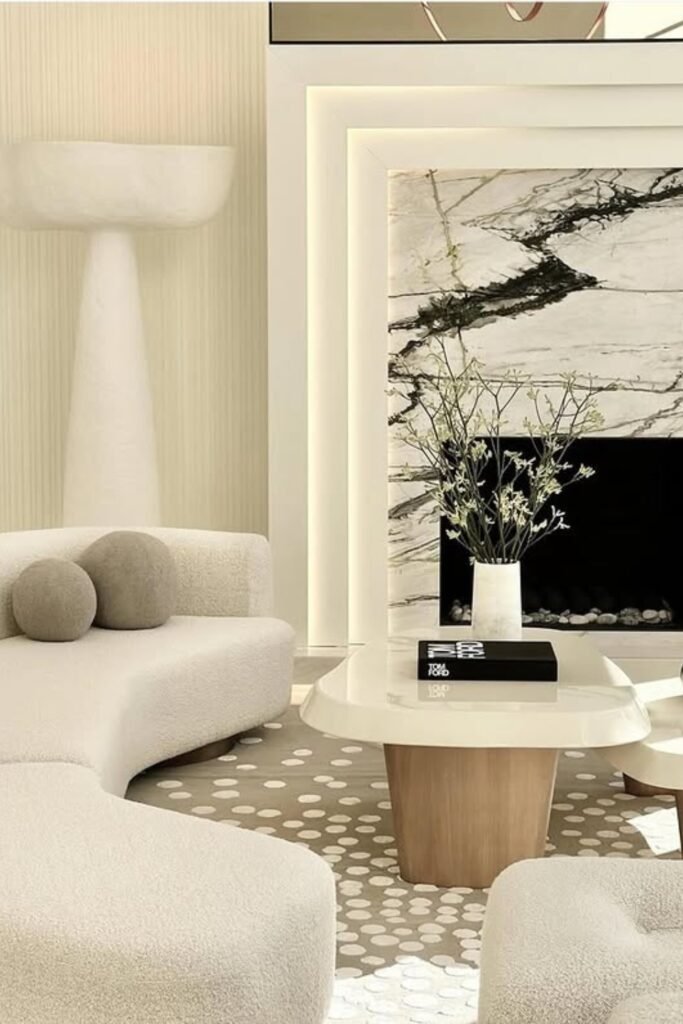
Rounded Furniture Shapes
When you add dark tones and built-ins, you can actually help a long living room feel grounded instead of stretched.
If one end carries visual weight, the room stops reading as a straight pass-through. This works best in rectangular spaces with good natural light.
Incorporating curved chairs, circular tables, or arched details breaks up rigid lines and encourages a more intimate layout.
When paired with darker tones and built-in shelving, the space feels grounded rather than stretched.
This approach works especially well in rectangular rooms with ample natural light, creating balance, warmth, and a more thoughtfully defined seating area.
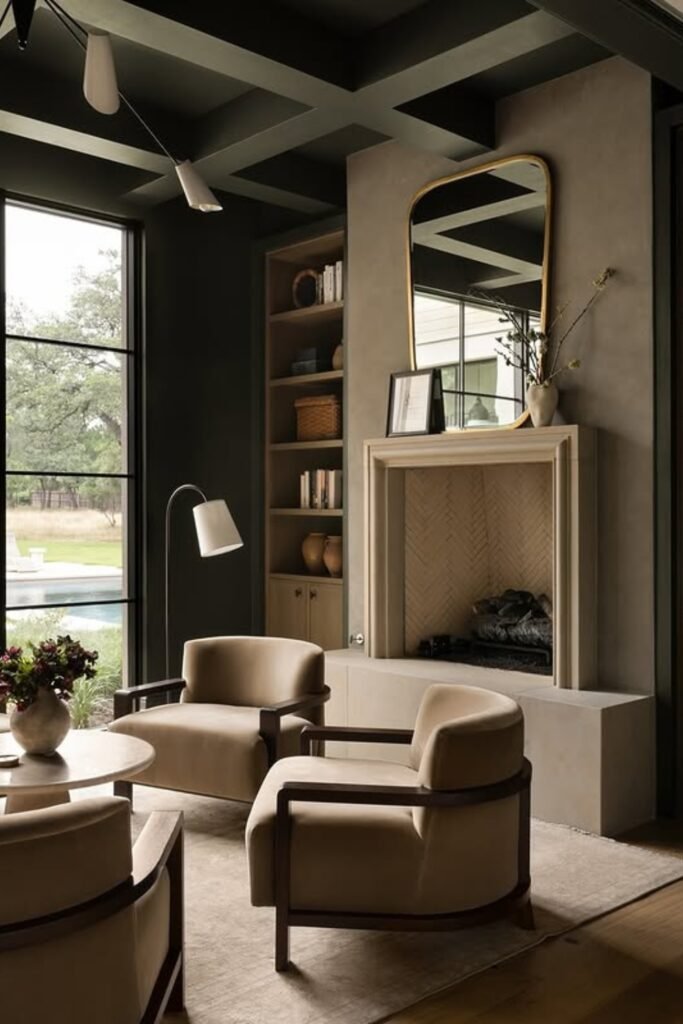
Depth Through Contrast
A long living room feels shorter when the TV stops acting like the only focal point. This works well in narrow rectangular rooms where the TV must sit on the long wall.
You can surround it with a gallery wall to spread attention across the width instead of pulling it forward.
A long living room can instantly feel shorter when the television is no longer the only focal point.
In narrow rectangular spaces where the TV must sit on the long wall, it often pulls attention straight ahead, emphasizing the room’s length.
This simple contrast softens the linear effect and makes the space feel more collected, intentional, and comfortably proportioned overall.
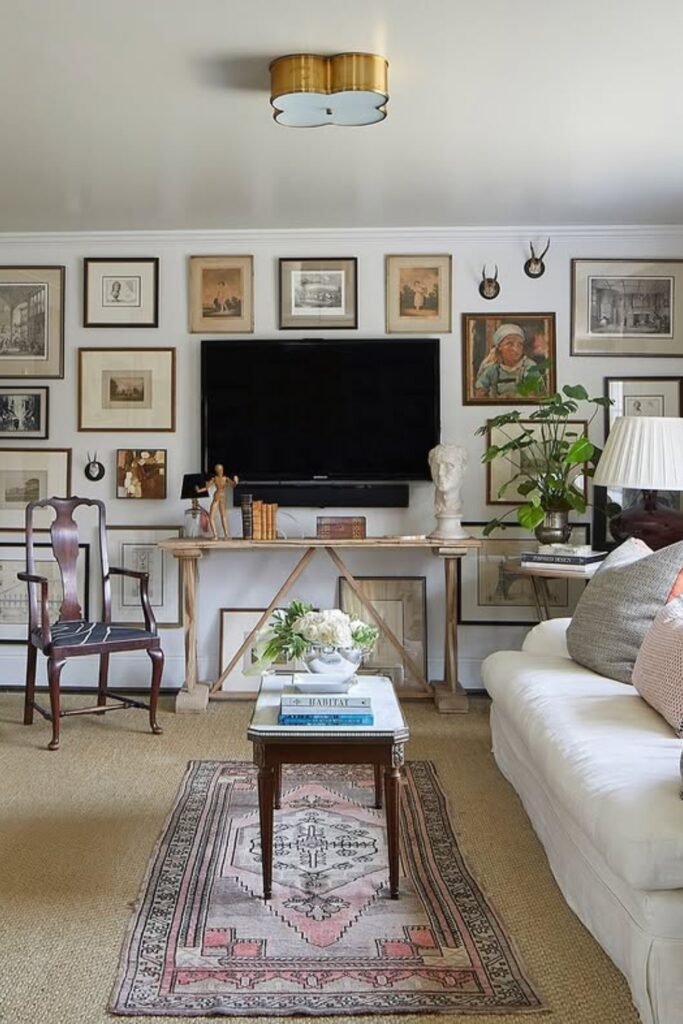
Gallery Wall Balance
The long living rooms work better when seating doesn’t block how you move through the space.
You can angle chairs toward the sofa to keep conversation tight while leaving clear paths around the edges.
Instead of lining furniture straight across, angling chairs slightly toward the sofa keeps the seating area intimate without blocking natural pathways.
This arrangement allows traffic to flow easily around the edges of the room, preventing it from feeling cramped or awkward.
When paired with balanced wall decor, such as thoughtfully placed artwork, the space feels cohesive and visually steady.
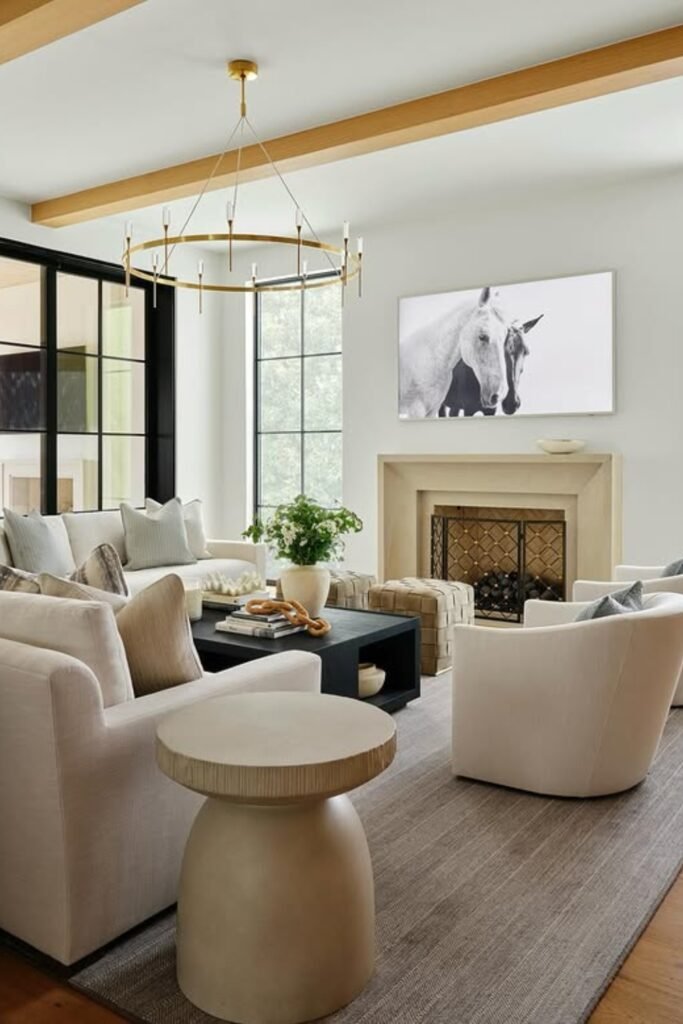
Clear Walking Paths
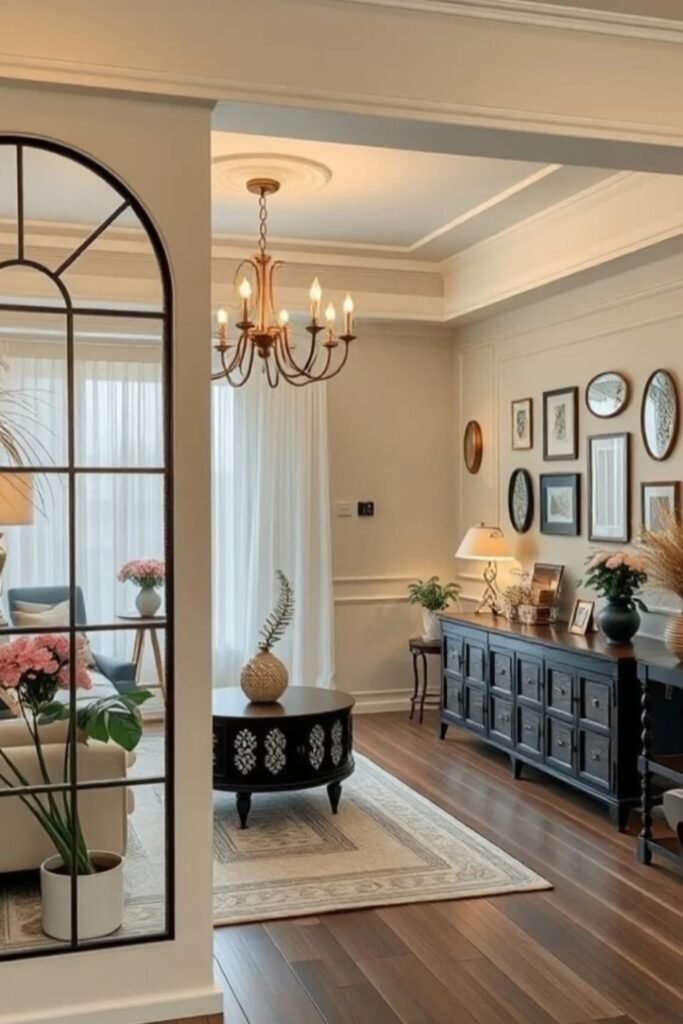
A console or sideboard [Check on Amazon] placed along one side creates a clear boundary while keeping your space open.
You can keep the living area anchored with a rug, let furniture face inward, and use the divider to stop the room from feeling like one long strip.
This subtle boundary keeps traffic flowing smoothly while preventing the room from feeling like one uninterrupted strip.
By arranging furniture to face inward, you encourage connection while maintaining openness around the edges.
The result is a balanced layout that feels organized, functional, and thoughtfully divided, rather than narrow or stretched from one end to the other.
Visual Room Division
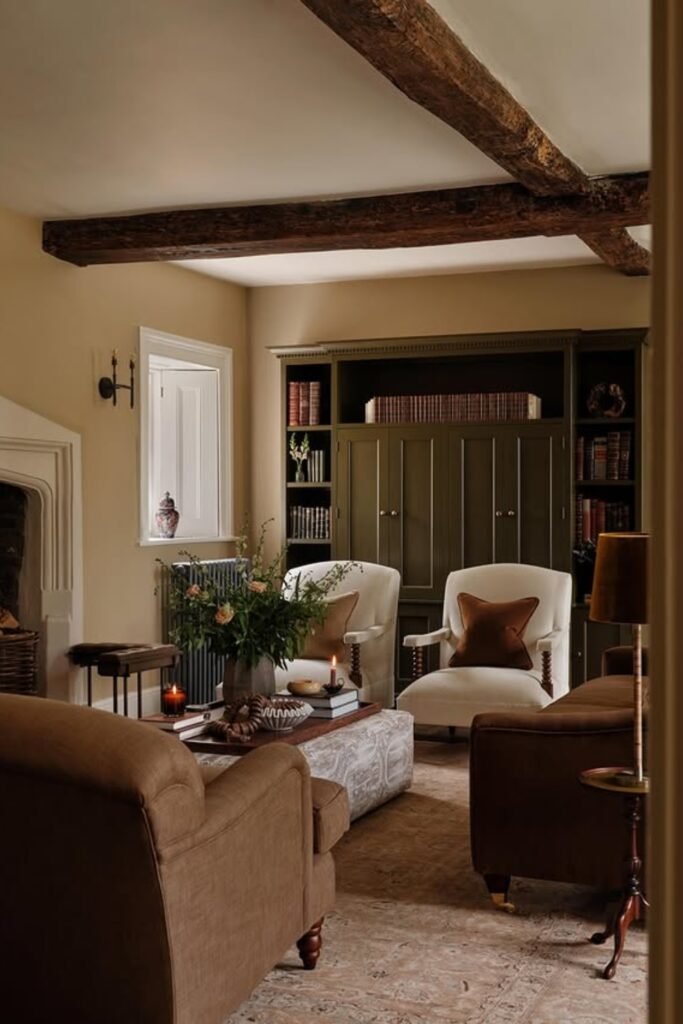
When you move furniture closer together instead of spreading it out, long living rooms start feeling comfortable.
You can group seating to create an intimate zone that stops the room from feeling endless. This works well in traditional or rustic rectangular spaces.
A central coffee table and layered rug can further anchor the arrangement, helping the room read as one purposeful area instead of a stretched corridor.
This approach works especially well in traditional or rustic rectangular spaces, where warm tones, built-ins, and textured fabrics enhance the sense of intimacy and balanced proportion throughout the layout.
Cozier Seating Cluster
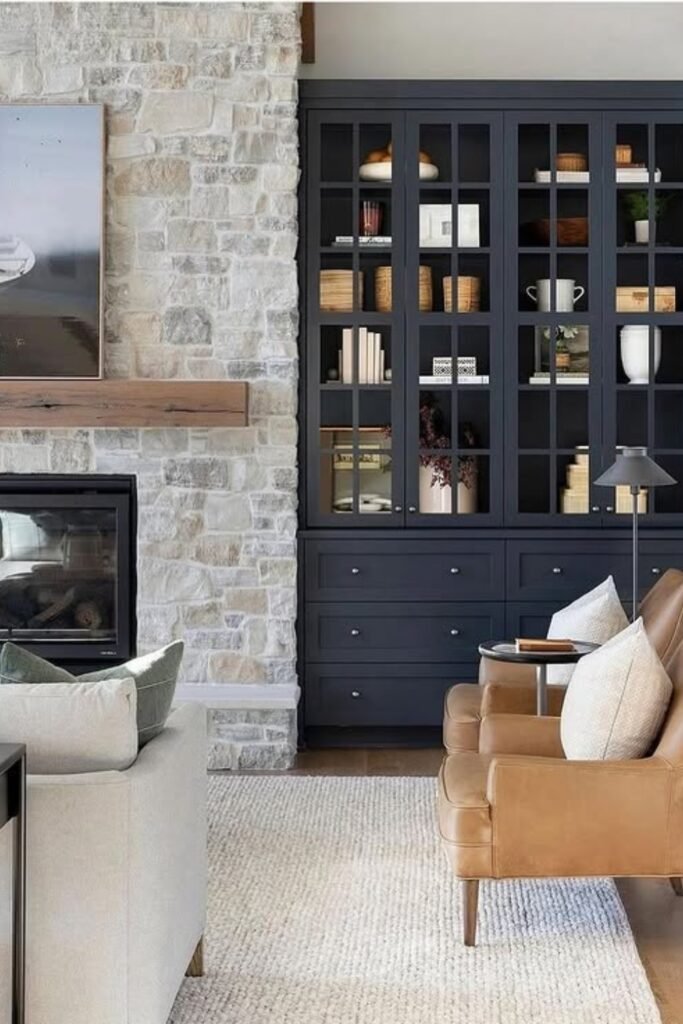
A long rectangular living rooms feel more grounded when one end carries visual weight. You can use built-in cabinets to stop the room from feeling unfinished or stretched.
You can keep seating facing the heavier wall, use a large rug to anchor the zone, and let the cabinetry act as a visual full stop instead of empty wall space.
By placing substantial cabinetry along one wall, you create a natural focal point that visually anchors the layout.
A large rug beneath the furniture further defines the conversation zone and keeps everything feeling connected.
Heavy Visual Anchor
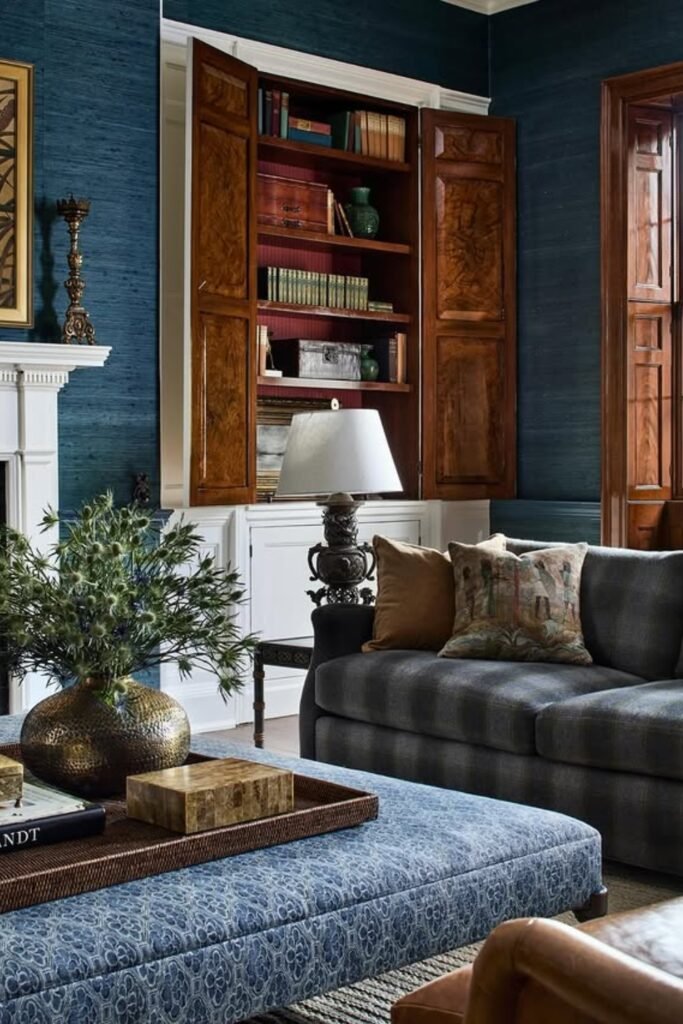
If you want your long living room to feel less exposed, let storage and seating work together along one side.
You can pair built-in cabinets with a grounded sofa to give the room a sense of enclosure, which visually shortens the space.
Pairing built-in cabinets with a substantial, grounded sofa creates a sense of enclosure that helps the space feel contained rather than stretched.
The combination of storage and seating along one wall provides structure and balance, giving the eye a clear stopping point.
Rich tones, layered textures, and solid furniture pieces further enhance this effect.
Instead of feeling open and endless, the room gains depth and definition, making the layout appear shorter, cozier, and more thoughtfully arranged overall.
Built-In Enclosure
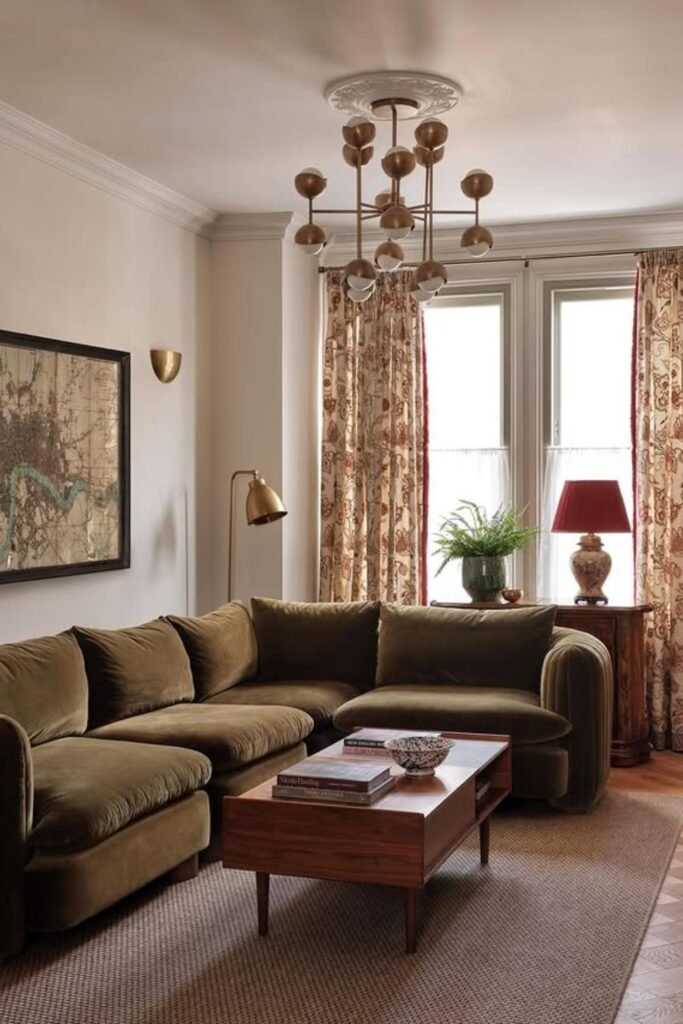
When corners matter, you can tuck a sectional into one end to pull the layout together and give the room a clear stopping point.
You can keep the coffee table compact, anchor everything with a rug, and let the sectional define the living zone instead of stretching seating across the entire room.
When corners are used intentionally, a long living room immediately feels more contained.
A well-sized rug anchors the arrangement, visually tying everything together.
By allowing the sectional to shape the space, the room feels cohesive, cozy, and thoughtfully divided instead of long and loosely arranged.
Corner Focus Layout
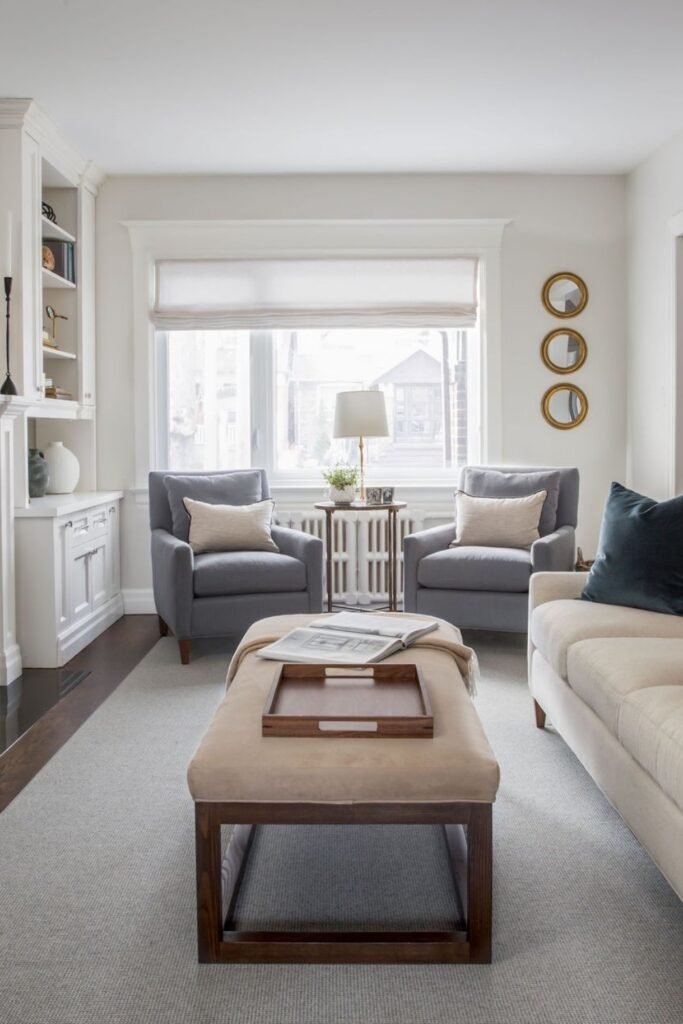
You can fix the balance problem in a long living room quickly by placing two chairs [Check on Amazon] side by side instead of adding another sofa.
You an face them toward the main seating pulls the layout inward and shortens the visual length.
You can quickly correct the balance in a long living room by placing two chairs side by side instead of adding another sofa.
A centered ottoman or coffee table can anchor the setup, while a rug ties everything together.
This simple adjustment helps the room feel cohesive, balanced, and far less stretched from one end to the other.
Paired Chair Seating
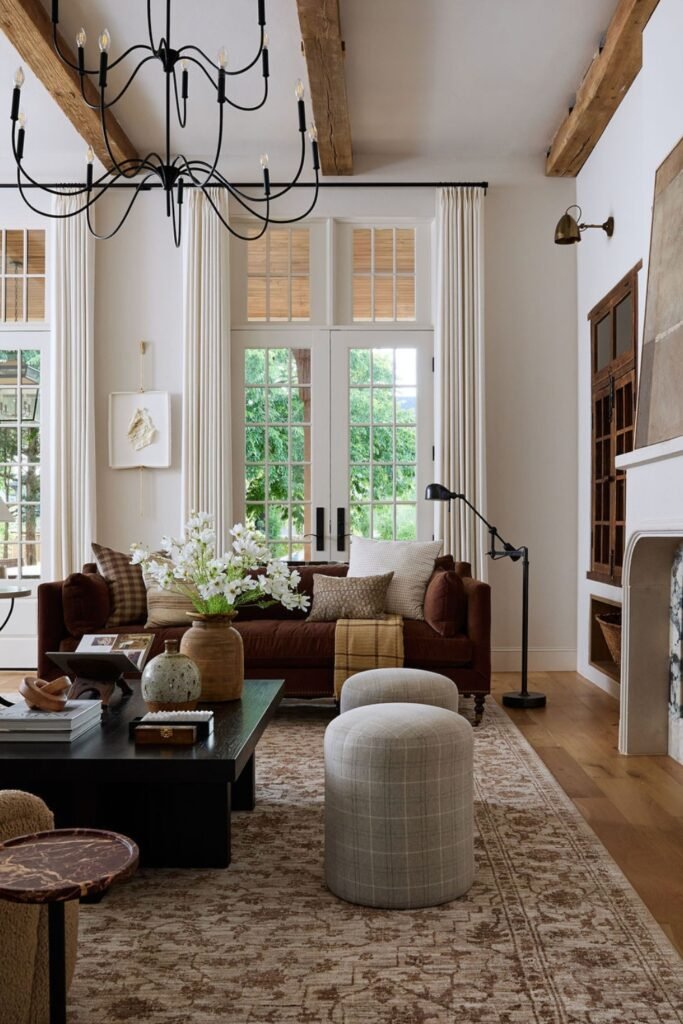
You can anchor a sofa at one end and pair it with soft ottomans [Check on Amazon] to create a relaxed gathering zone that shortens a long living room visually.
You can keep furniture close, use a generous rug, and let the center stay flexible so the room feels inviting, not oversized.
Keeping the furniture grouped closely together forms a defined gathering zone that visually shortens the room.
A generously sized rug further anchors the arrangement and ties everything together.
By leaving the center slightly open and functional, the space feels balanced, cozy, and thoughtfully scaled rather than overly long or oversized.
Conversation Focused Layout
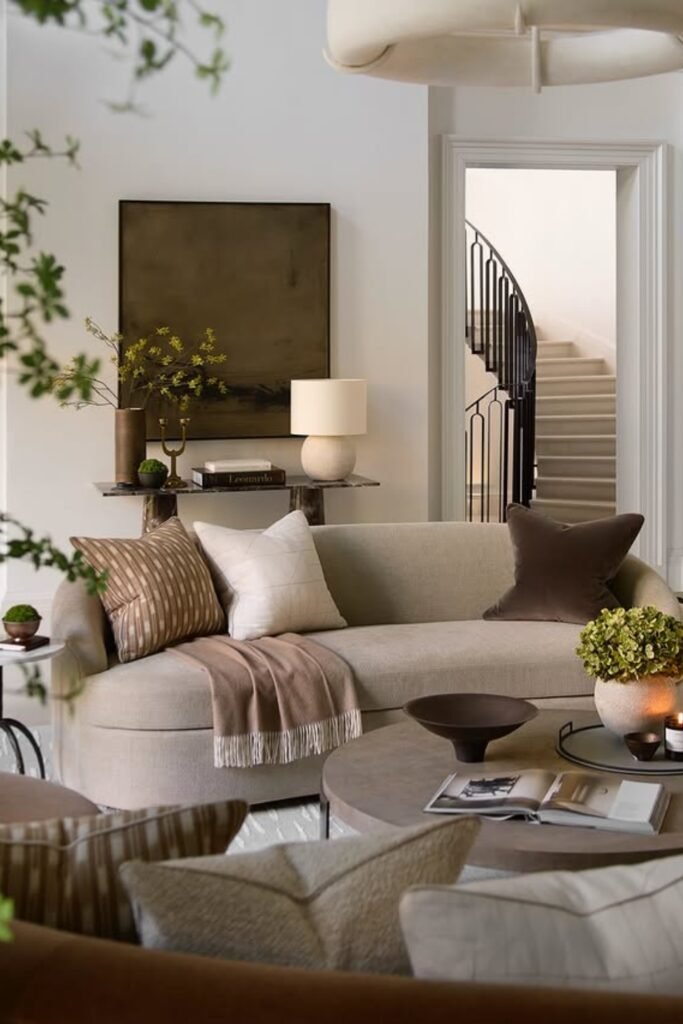
A sofa placed slightly away from doors or stairs creates that pause and stops your space from feeling like a passageway.
You an keep your furniture low and centered, use a round table to soften movement, and let this zone slow the room down instead of letting traffic define it.
When your living room sits near a staircase or doorway, it can easily start to feel like a hallway instead of a place to relax.
A round coffee table softens movement patterns and makes it easier to walk around without sharp corners interrupting the flow.
By grouping seating inward and away from circulation paths, you shift the focus to conversation and comfort, allowing the room to feel intentional, calm, and grounded instead of dictated by traffic.
Two Zone Layout
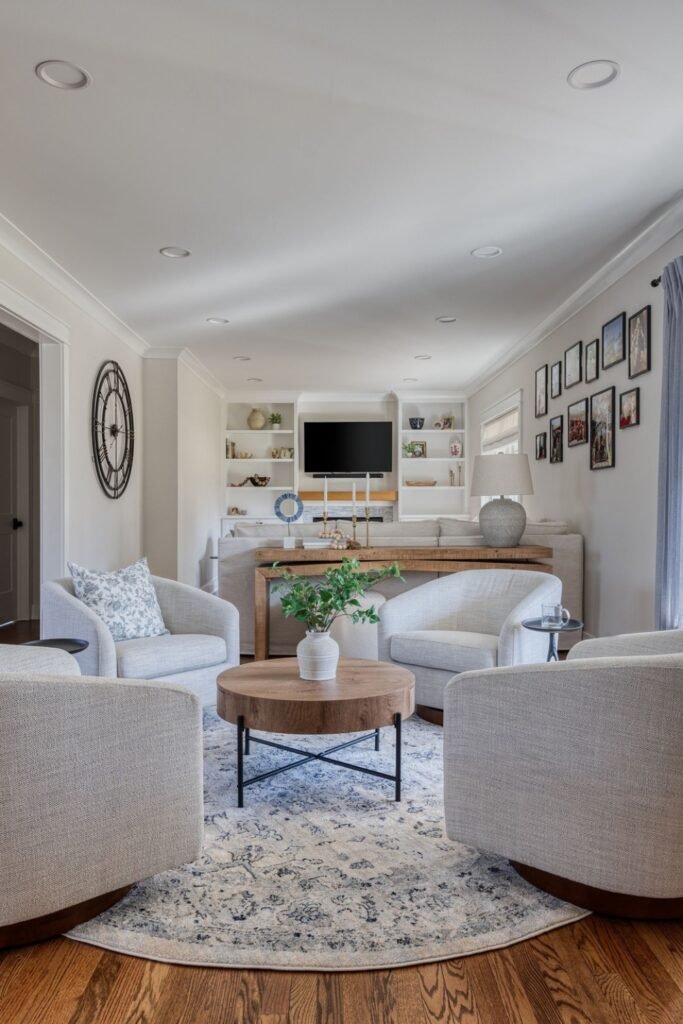
When you treat a long living room as two spaces instead of one, it stops feeling awkward.
You can create a seating circle at the front for a conversation zone, while the sofa behind it forms a second area for TV or lounging.
A long living room instantly feels more balanced when you divide it into two purposeful areas instead of forcing one stretched layout.
You can create a circular seating arrangement at the front establishes a dedicated conversation zone that feels intimate and welcoming.
By giving each end a clear function, the space feels intentional, organized, and far less narrow or awkward overall.
Circular Seating Plan
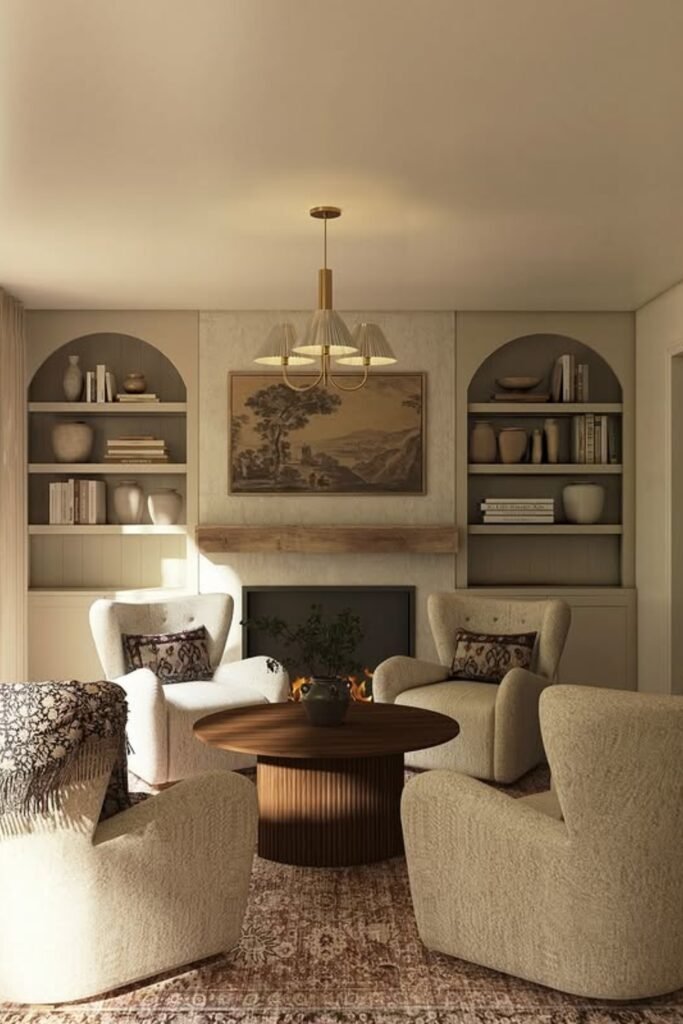
The straight layouts can make long rooms feel endless, which is why a circular seating setup works so well.
You can arrange chairs around a round table to pull everyone inward and visually cut the length.
The curved lines soften the room’s edges and interrupt long sightlines that can make the space feel endless.
A round rug beneath the grouping further reinforces the shape and anchors the zone.
This approach creates intimacy, balance, and flow, transforming a narrow rectangular room into a warm, welcoming area designed for gathering rather than passing through.
You may like to read!
