
22 Victorian Bathroom Ideas
A Victorian bathroom doesn’t need to look like a museum to capture the charm of traditional design.
From clawfoot tubs to patterned tiles and antique mirrors, the right details can bring old-world character into a modern home.
In this article, you’ll discover 22 Victorian bathroom ideas that combine vintage details with everyday comfort and help you create a beautiful space.
Let’s jump in!
What Is a Victorian Style Bathroom?
A Victorian-style bathroom takes inspiration from the 19th century, when decorative details, traditional fixtures, and rich colors gave bathrooms their distinctive character.
To create this look, start with a clawfoot bathtub, patterned floor tiles, or a pedestal sink that brings traditional charm into your space.
Choose deep green, burgundy, cream, or soft blue for your walls, then add brass fittings and an ornate mirror to complete the look.
You don’t need to replace everything because even small changes, such as vintage lighting or decorative wallpaper, can give your bathroom a Victorian feel.
The key is to balance these traditional features with modern storage, practical fixtures, and enough open space to keep your bathroom comfortable.
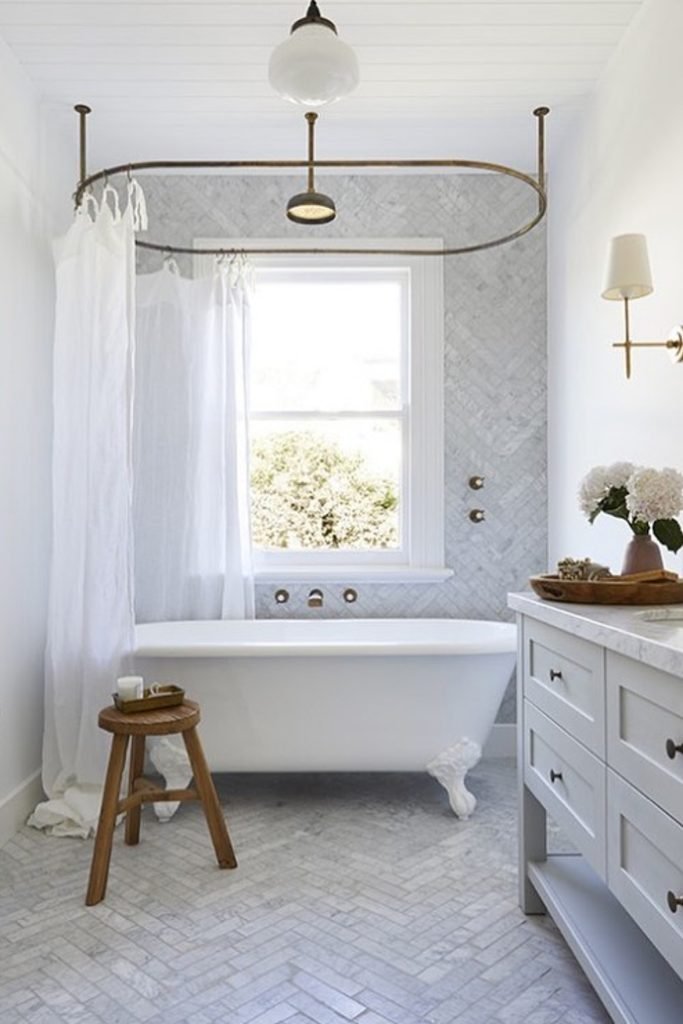
Marble Elegance
A white clawfoot bathtub beneath the window creates a classic Victorian setting, especially when paired with pale marble tiles and traditional brass fixtures.
If your bathroom has enough length, position the tub against the shorter wall and install a ceiling-mounted curtain for showering without bulky glass.
Complete the space with a marble-topped vanity, an arched mirror, and a vintage towel rail to keep the overall design traditional yet practical.
Heritage Wallpaper
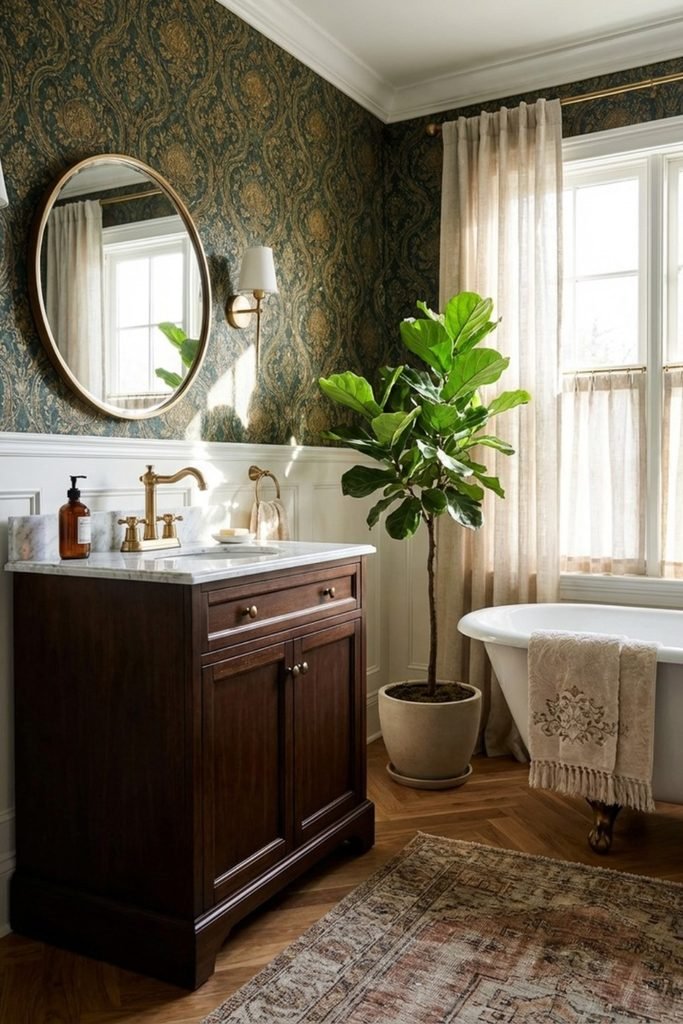
Dark botanical wallpaper can bring Victorian character into a spacious bathroom, particularly when you balance its intricate pattern with simple white wall paneling.
Choose a dark wooden vanity with a marble countertop, then introduce antique brass taps and an oval mirror to complement the wallpaper’s warm tones.
A freestanding bathtub near the window works beautifully here, while moisture-suitable wallpaper, soft curtains, and greenery help create a comfortable bathing space.
Ornate Flooring
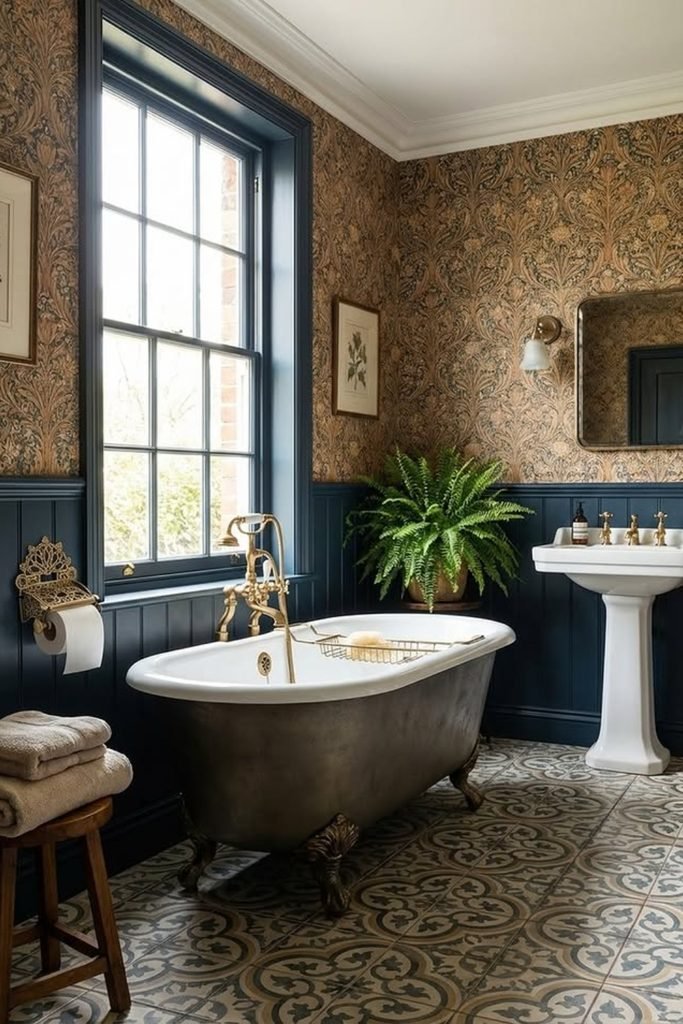
Give a traditional bathroom more character by pairing decorative patterned floor tiles with dark blue wall paneling and warm botanical wallpaper above it.
A freestanding bathtub with an aged metal exterior works especially well near a large window, where natural light highlights its beautiful traditional details.
Keep the pedestal sink white for contrast, then introduce brass fixtures and simple wall lighting to connect the different patterns without overwhelming everything.
Contemporary Heritage
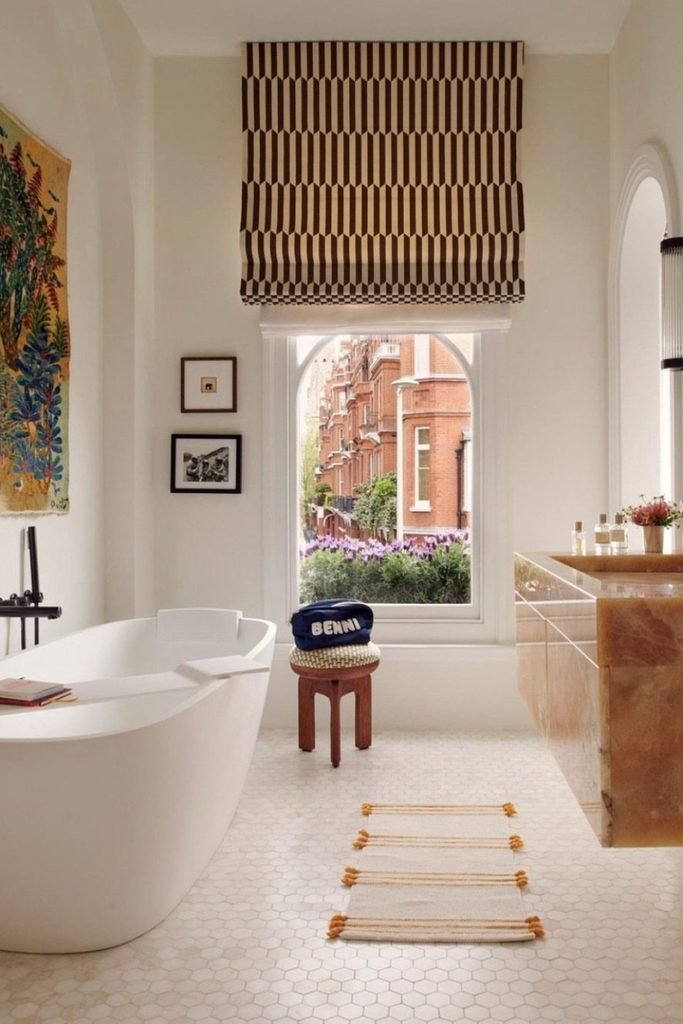
Victorian architecture doesn’t mean every bathroom fixture must look antique, especially when you want a brighter space with a more contemporary finish.
A sculptural white bathtub, warm stone vanity, and small hexagonal floor tiles create a balanced foundation without competing with the room’s architectural features.
Bring additional character through a geometric Roman shade, framed artwork, and an arched mirror, keeping the walls neutral so these details stand out.
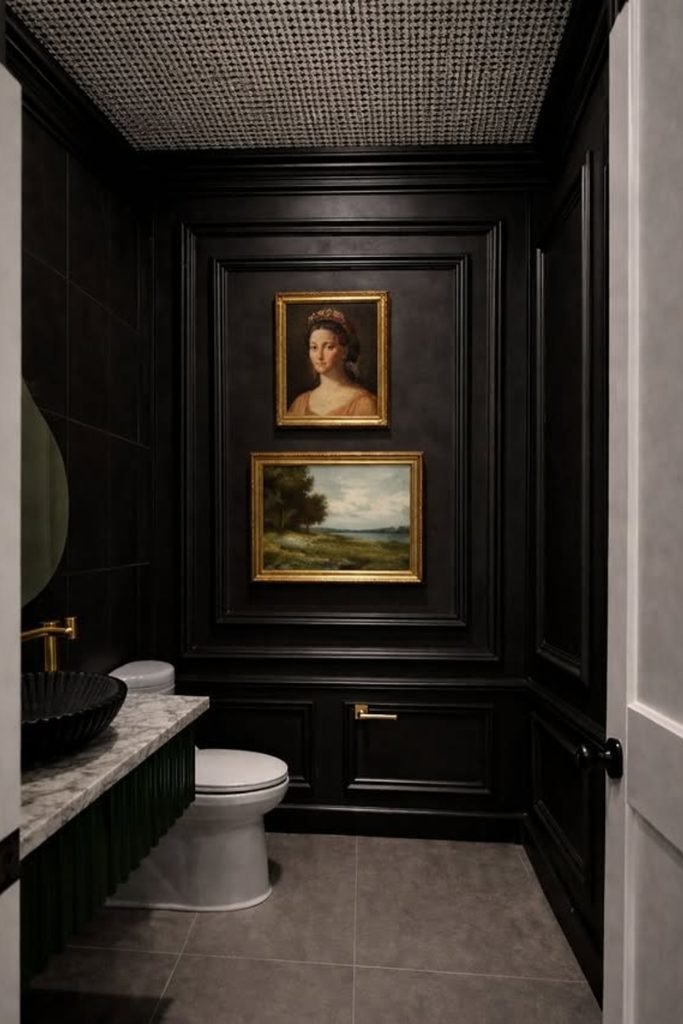
Dramatic Paneling
Black wall paneling can turn a compact Victorian powder room into a dramatic space, especially when you carry the dark finish across every wall.
Break up the darkness with a marble countertop, antique gold artwork, and a patterned ceiling that introduces detail without taking up valuable floor space.
A black vessel sink and traditional brass faucet complete the arrangement, while soft lighting helps the enclosed room feel comfortable rather than gloomy.
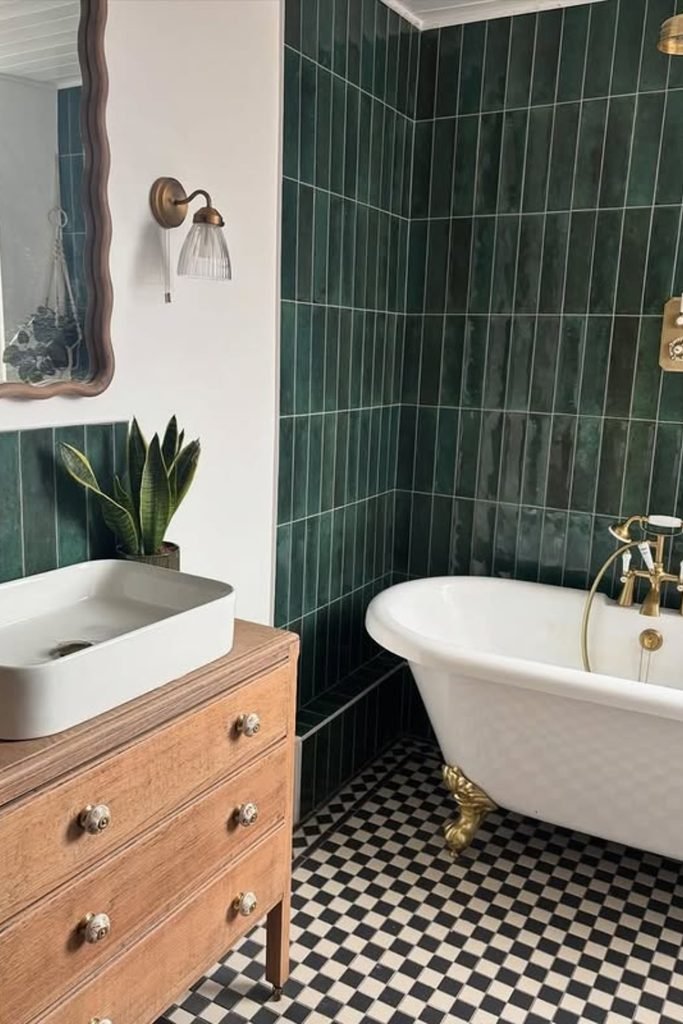
Emerald Tiles
Deep emerald wall tiles make a beautiful backdrop for a Victorian bathtub, particularly when you arrange them vertically to draw attention toward the ceiling.
Pair a white clawfoot tub with antique brass fittings and black-and-white checkerboard flooring to introduce traditional character without adding unnecessary decorative accessories.
For a practical finishing touch, repurpose a wooden dresser as your vanity and install a countertop basin, provided the furniture receives proper moisture protection.
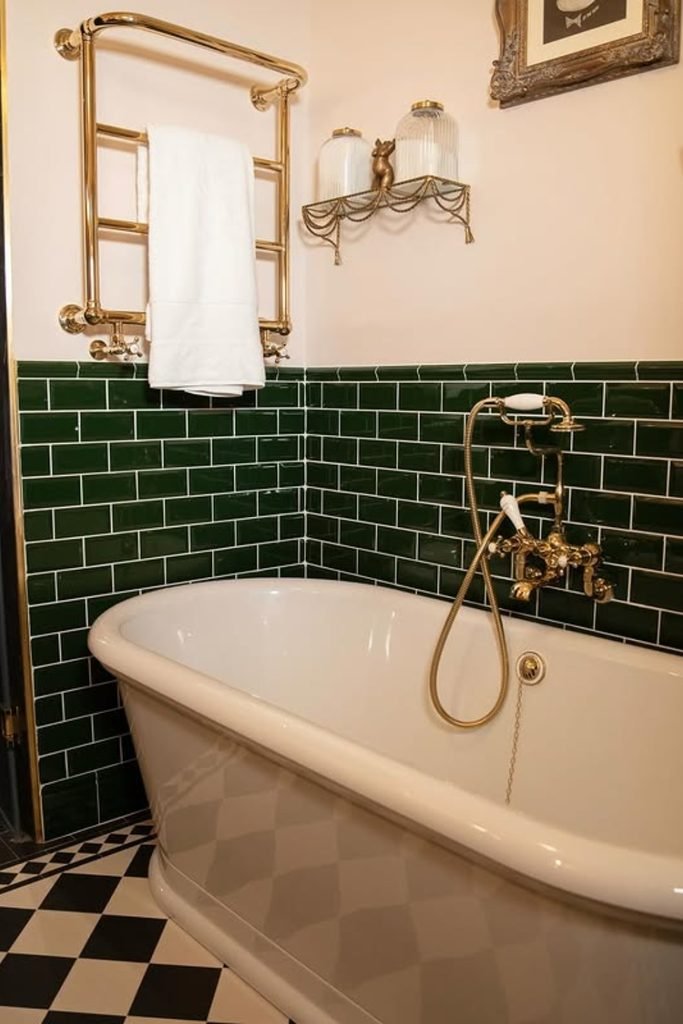
Classic Contrast
Black-and-white checkerboard flooring works beautifully with glossy green subway tiles, giving a Victorian bathroom a strong pattern without covering every available surface.
Install the green tiles halfway up the walls, then leave the upper section cream to balance the darker colors and maintain brightness.
An antique brass towel warmer, exposed bathtub faucet, and decorative wall shelf will complete the traditional setting while keeping everyday essentials easily accessible.
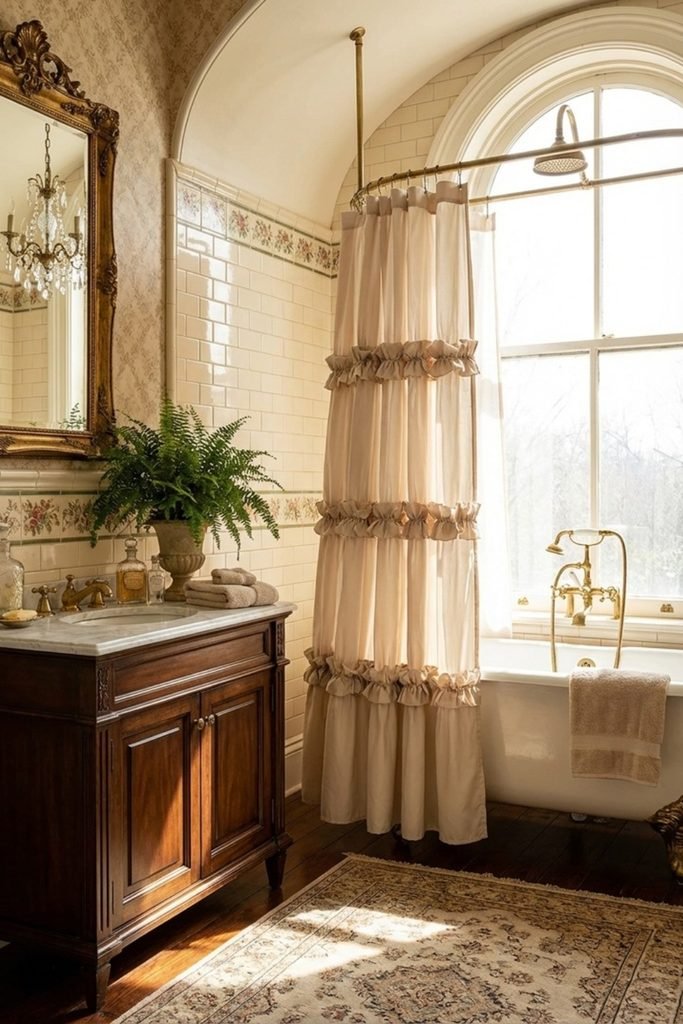
Romantic Details
A Victorian bathroom with an arched window deserves a softer approach, where cream wall tiles and delicate floral borders complement its original architectural features.
Choose a wooden vanity with a marble countertop, then introduce an ornate gold mirror to give the bathing area a more traditional appearance.
For a clawfoot bathtub that doubles as a shower, use a suitable lined curtain with decorative fabric detailing to combine privacy with practical water protection.
Botanical Retreat
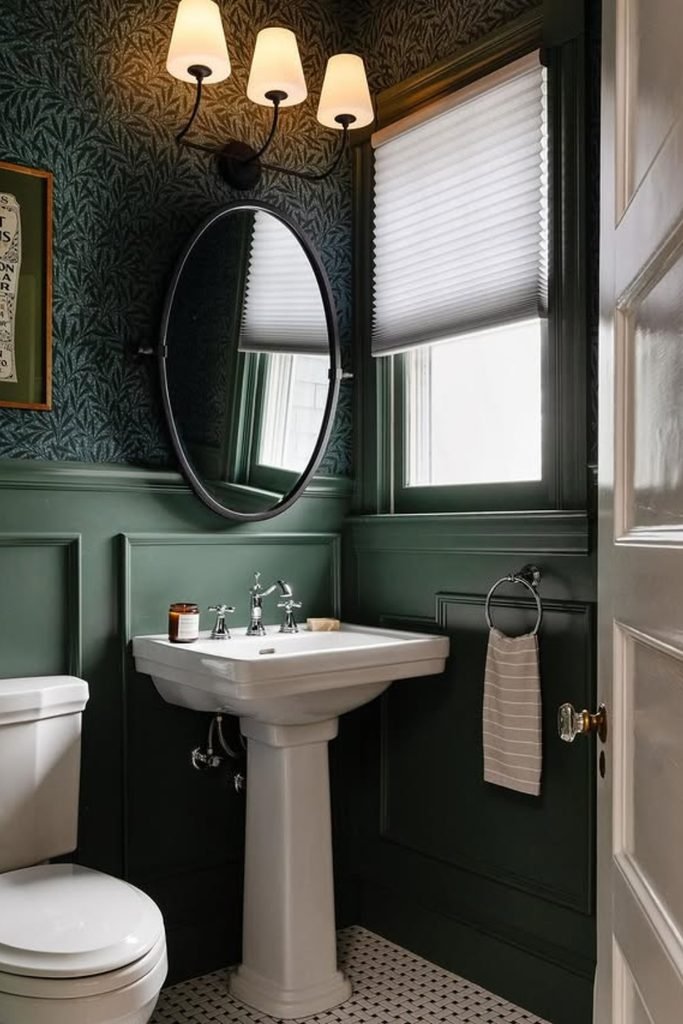
Small Victorian powder rooms can handle surprisingly dark colors, so pair deep green paneling with leafy wallpaper to create a rich, enclosed atmosphere.
A white pedestal sink keeps the layout open, while an oval black mirror and three-light wall fixture bring definition to the darker walls.
Finish with small mosaic flooring and simple chrome fittings, allowing the wallpaper to carry most of the decoration without crowding the limited space.
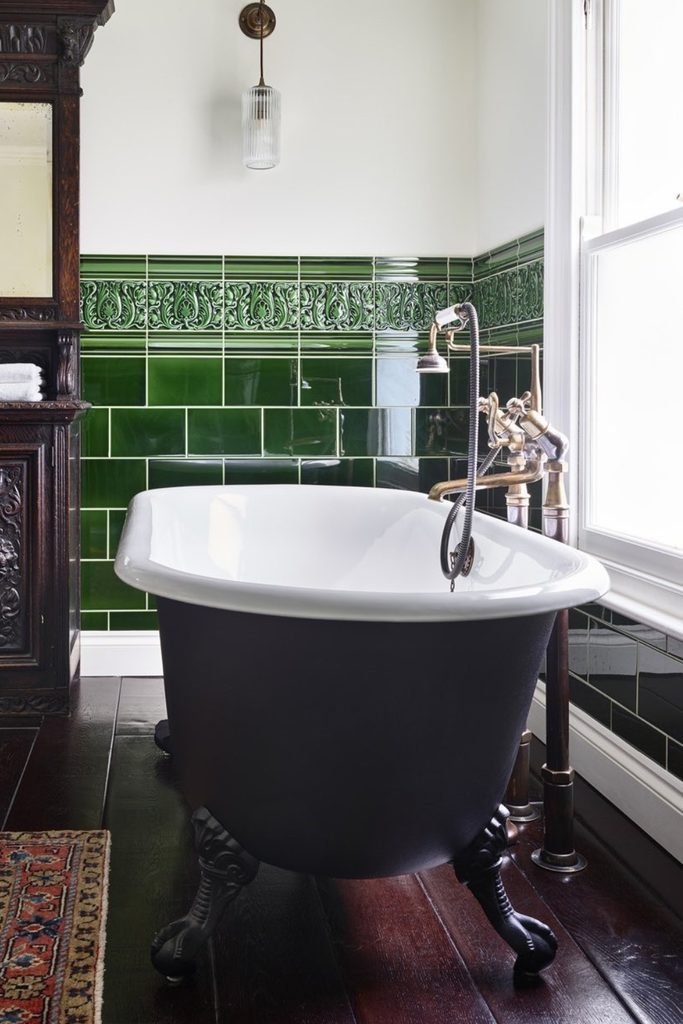
Carved Cabinetry
An antique carved cabinet can become the centerpiece of your Victorian bathroom, giving you storage and decorative character without relying on additional furniture.
Pair dark wood with glossy green wall tiles and a raised decorative border, keeping the upper walls white to prevent excessive darkness.
Position a black clawfoot bathtub near the window, then add a floor-mounted bath filler and vintage-style pendant to maintain the traditional appearance.
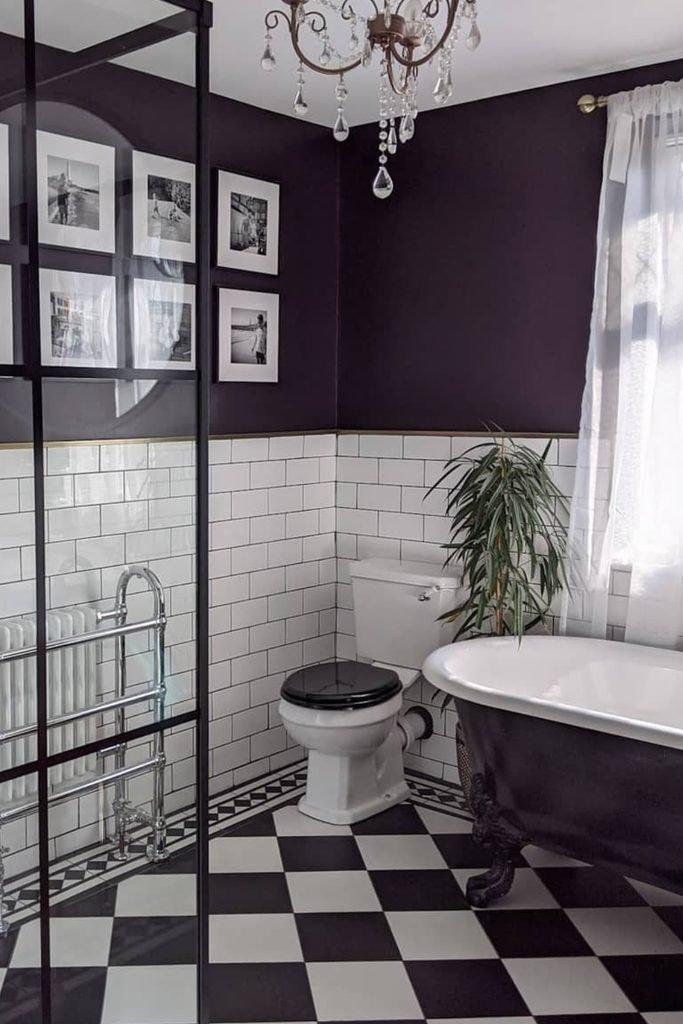
Monochrome Drama
Checkerboard flooring is especially effective in a Victorian bathroom when you repeat its black-and-white contrast through the bathtub, walls, and shower enclosure.
Keep the lower walls covered in white subway tiles, then paint the upper section deep plum to introduce warmth without losing definition.
A crystal chandelier and framed monochrome photographs add traditional character, while black-framed shower glass keeps the layout visually connected and practical for daily use.
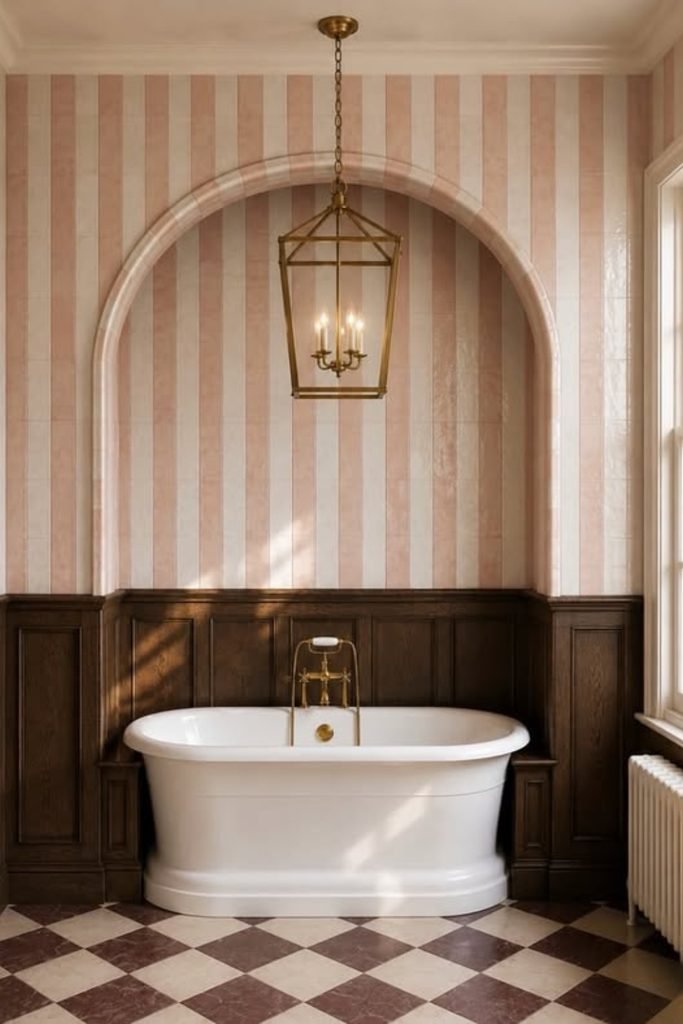
Striped Alcove
A recessed wall offers the perfect opportunity to create a Victorian-inspired bathing area, particularly when architectural arches already define the room’s layout.
Try soft pink striped wallpaper above dark wooden wainscoting, then position a white freestanding bathtub centrally to emphasize the alcove’s symmetrical shape.
Introduce a brass lantern pendant and diamond-patterned flooring for additional character, keeping the window treatment simple so natural light reaches the bathing area.
Arched Shower
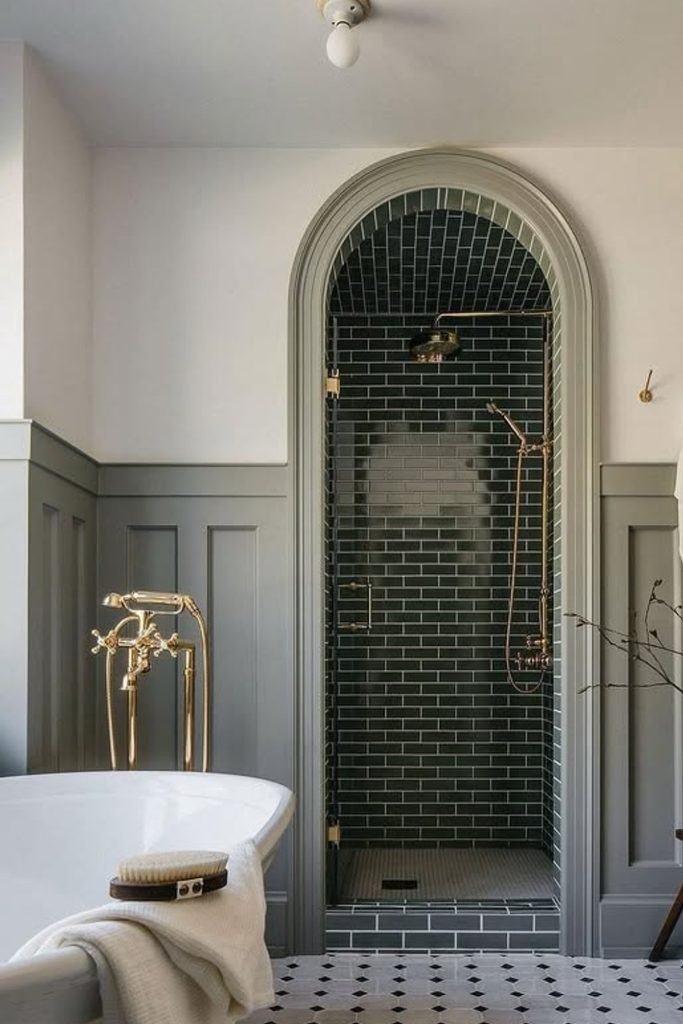
An arched shower entrance can give your Victorian bathroom architectural character, especially when you combine dark green subway tiles with muted gray paneling.
Keep the surrounding walls white and introduce small patterned floor tiles, allowing the curved shower opening to become the room’s main feature.
A white freestanding bathtub and traditional brass fixtures balance the darker shower area, making this arrangement practical for bathrooms with separate bathing zones.
Gilded Vanity
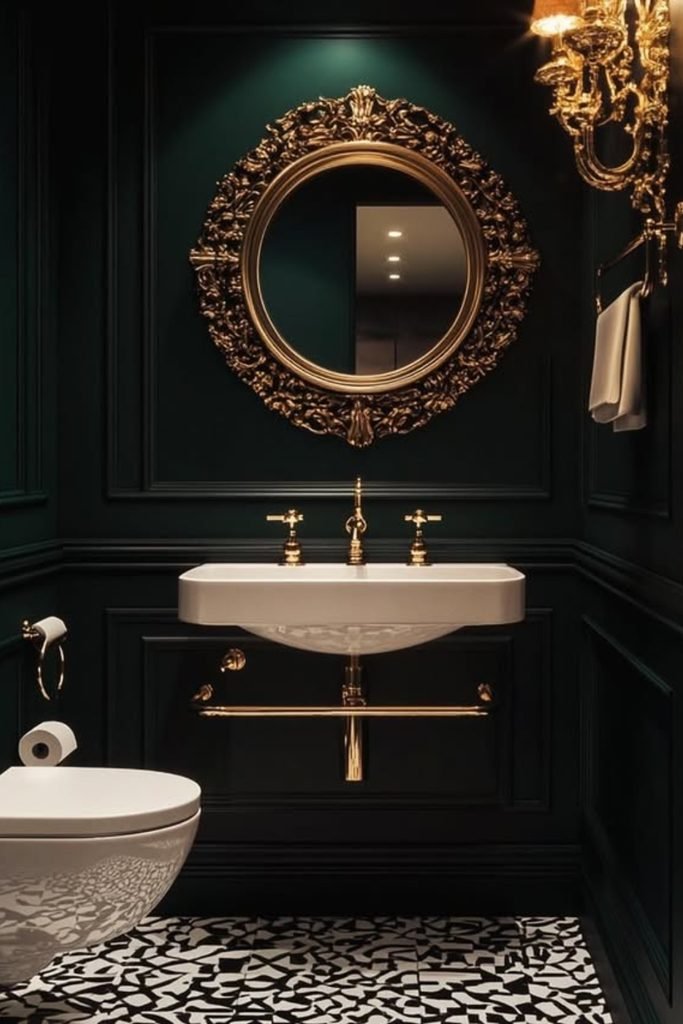
A small powder room can feel wonderfully traditional with an ornate gold mirror positioned above a simple white wall-mounted basin and exposed brass plumbing.
Paint the paneled walls deep forest green, then choose black-and-white floral floor tiles to create contrast without introducing too many competing colors.
Complete the design with decorative gold sconces and warm lighting, allowing the detailed mirror to stand out against the dark painted background.
Scenic Walls
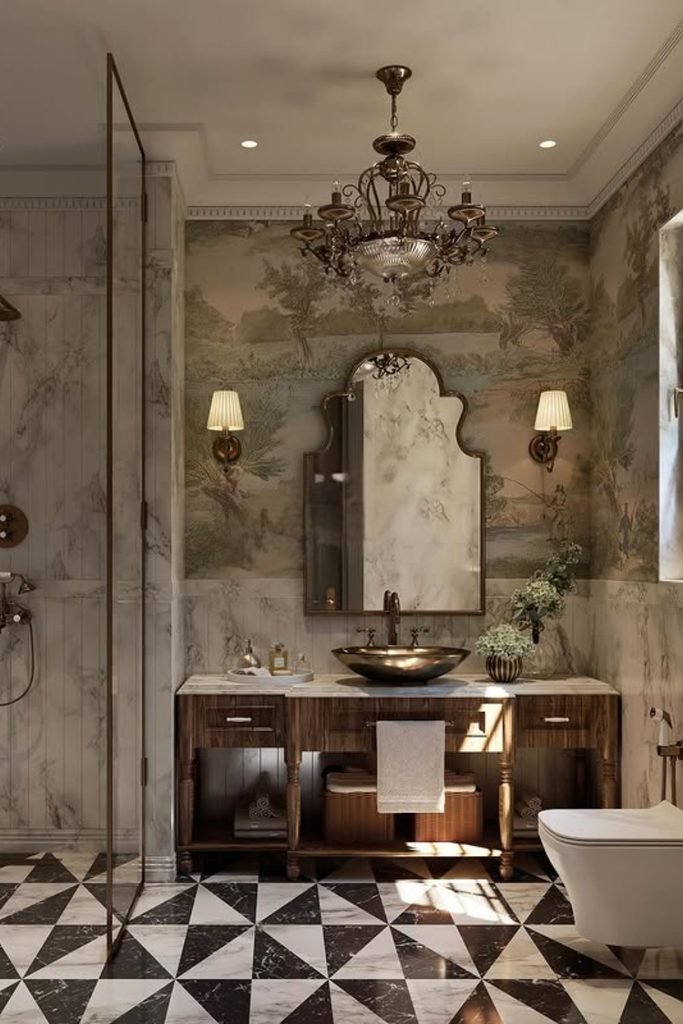
Traditional landscape wallpaper can bring a beautiful Victorian influence into a larger bathroom, particularly when you pair it with marble walls and flooring.
Introduce a dark wooden double vanity beneath an antique-shaped mirror, then use matching wall sconces to give the sink area a balanced appearance.
For modern comfort, add a glass shower enclosure with traditional-style fittings, while a decorative chandelier connects the room’s contemporary and historical elements.
Rose Luxury
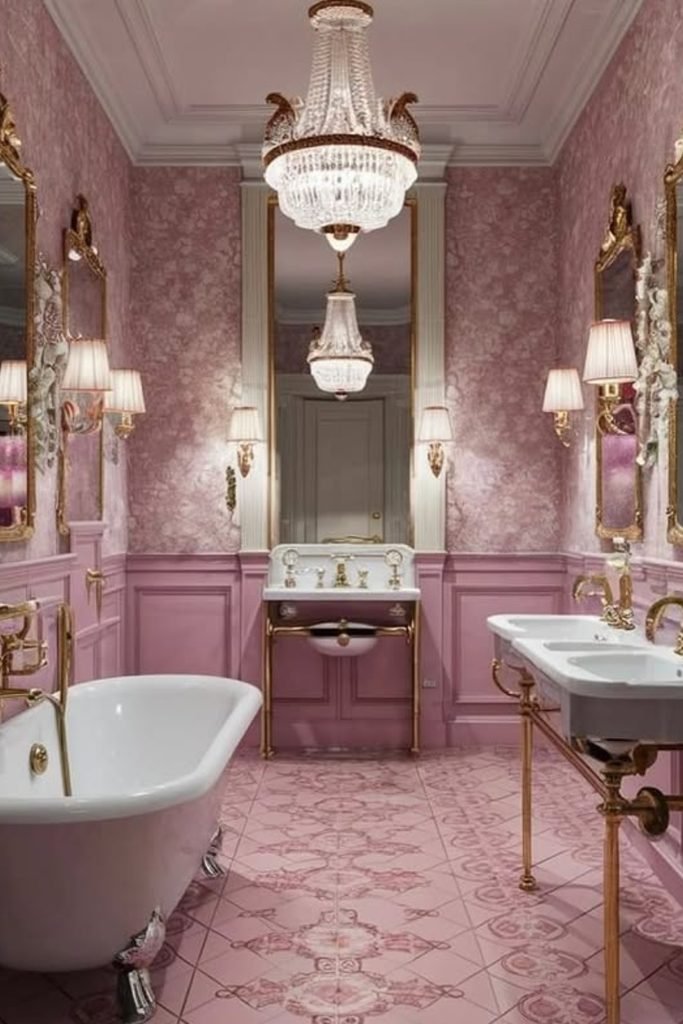
Pink can look surprisingly grand in a Victorian bathroom when you combine patterned wallpaper, matching wall paneling, and decorative floor tiles in similar shades.
A white clawfoot bathtub with exposed gold plumbing creates contrast, while ornate gilded mirrors and traditional basins bring additional character to the walls.
Choose a crystal chandelier as your central feature, then install matching wall sconces to maintain consistent lighting throughout this richly decorated bathing space.
Botanical Ceiling
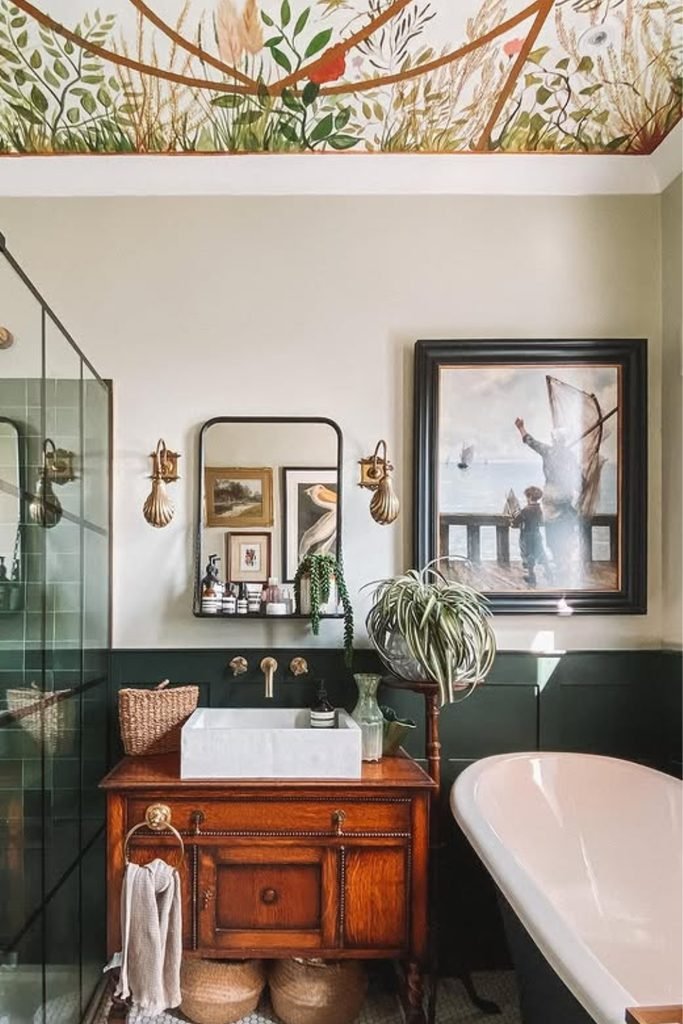
A botanical ceiling brings an unexpected Victorian touch to this bathroom, especially when dark green shower tiles anchor the decorative artwork overhead.
To recreate the look, pair a wooden antique-style vanity with a square basin, then repeat warm brass finishes across the shower fixtures.
Keep surrounding walls light and use framed vintage artwork near the bathtub, allowing the painted ceiling to feel intentional rather than busy.
Burgundy Paneling
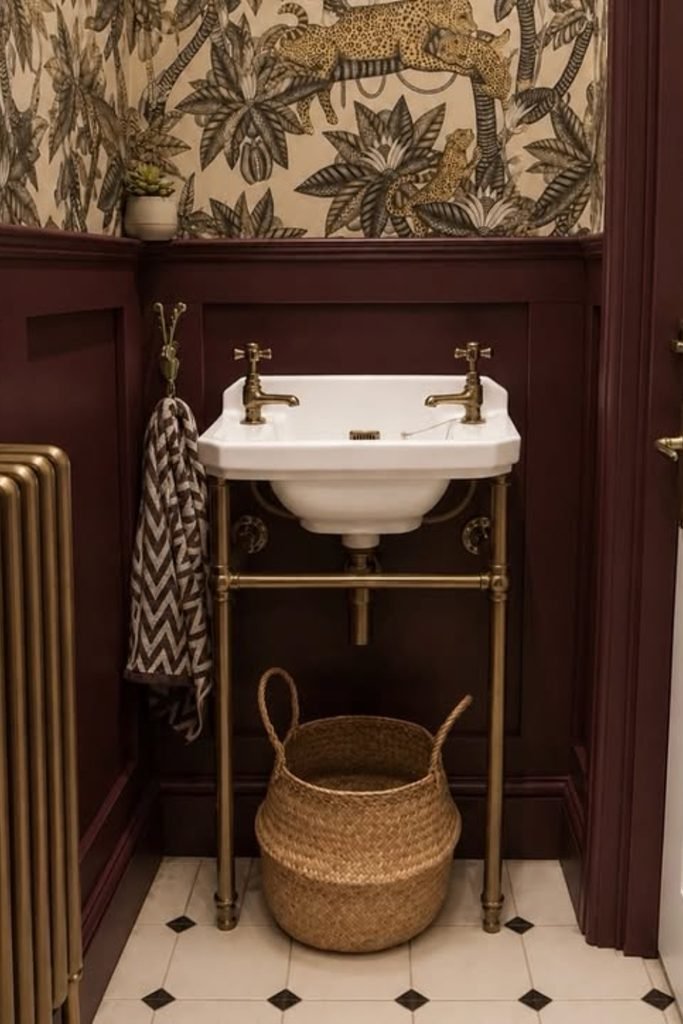
Give a narrow Victorian powder room personality with burgundy wall paneling and illustrated jungle wallpaper featuring detailed foliage and wild animals.
A slim porcelain washstand on brass legs leaves valuable floor space open, making this combination particularly useful in smaller downstairs bathrooms.
Match the radiator and taps in aged brass, then tuck a woven basket beneath the basin to keep spare essentials within reach.
Vintage Simplicity
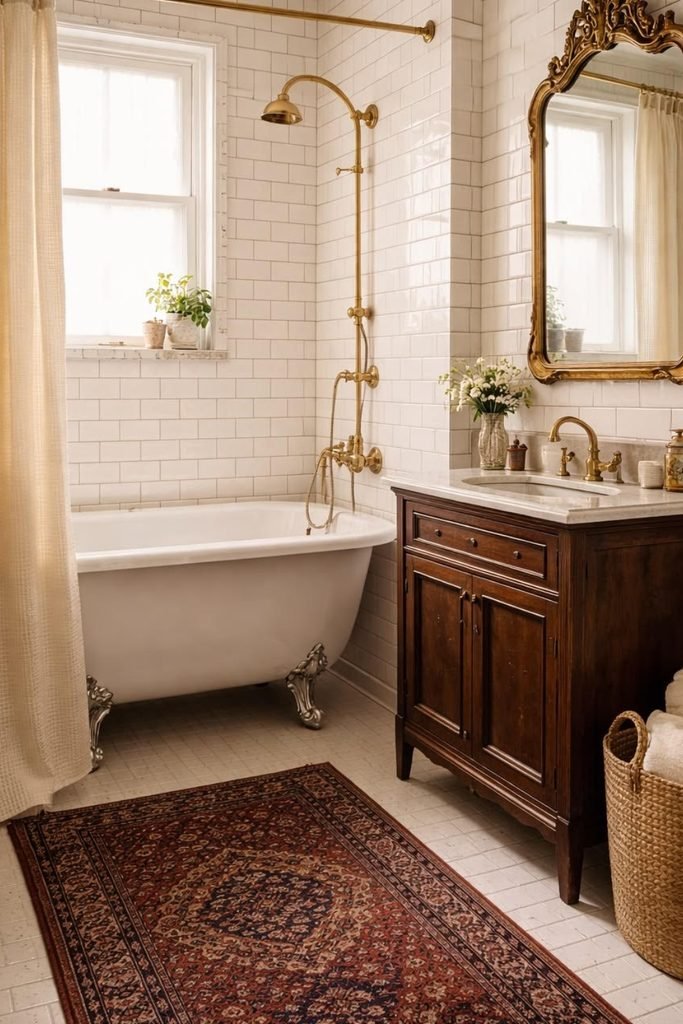
White subway tiles can still feel Victorian when you add a clawfoot bathtub, ornate gilded mirror, and warm brass shower fittings.
This arrangement suits a family bathroom where the bathtub doubles as a shower; install a proper curtain liner to protect surrounding surfaces.
Bring warmth through a dark wooden vanity and a washable vintage-patterned bath rug, keeping its placement clear of direct splashes and puddles.
Garden Sanctuary
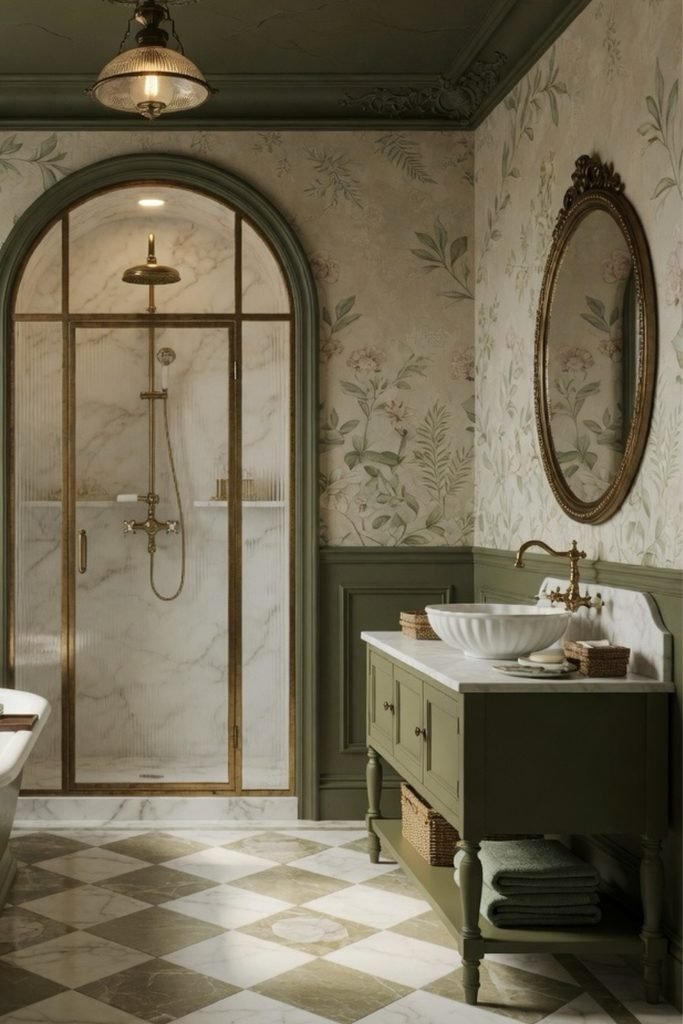
Soft botanical wallpaper and olive green paneling create a calmer Victorian bathroom, while a matching painted ceiling makes the design feel complete.
Frame the marble-lined shower with an arched opening and brass-trimmed glass to introduce architectural detail without relying on heavy decorative furniture.
A green freestanding tub and vanity tie everything together; use checkerboard stone-look flooring and an ornate oval mirror for balanced traditional character.
Navy Statement
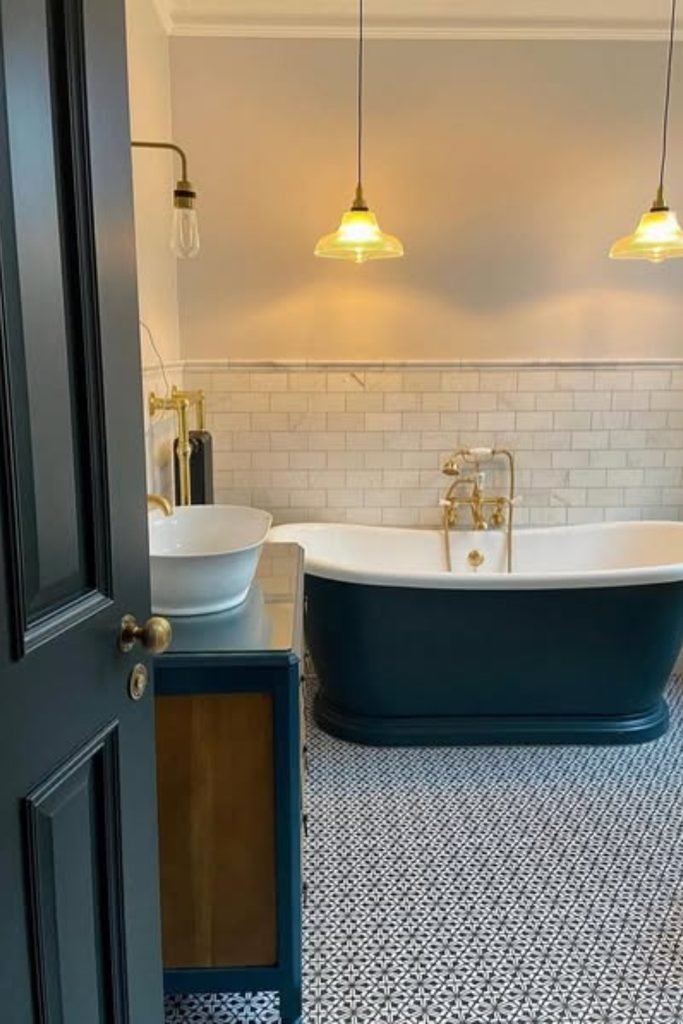
A deep navy freestanding bathtub can become the centerpiece of a Victorian bathroom, especially against cream walls and simple marble subway tiles.
Choose black-and-white geometric flooring to introduce traditional pattern, then install brass bath taps and matching pendant lights for a warm, coordinated finish.
This arrangement works particularly well in rectangular bathrooms where the bathtub can sit against the far wall without interrupting access to the vanity.
Mosaic Heritage
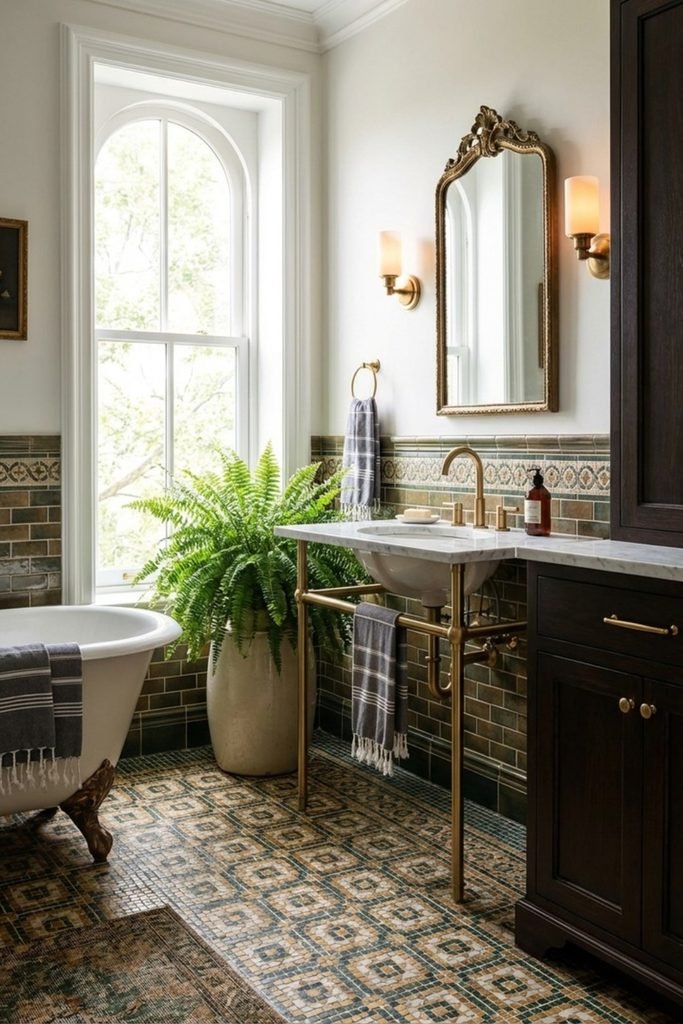
Intricate mosaic flooring brings an authentic Victorian influence into this bathroom, particularly when paired with green wall tiles and a decorative border.
Make use of a tall arched window by positioning a clawfoot bathtub nearby, then choose a brass washstand to keep the surrounding area open.
An ornate gold mirror above the marble basin and dark wooden cabinetry will complete the design while providing storage for everyday bathroom essentials.
FAQs
How Can You Make a Victorian Bathroom Feel More Spacious?
Choose light-colored walls, a pedestal sink, and a large antique-style mirror to introduce Victorian character without making your bathroom feel crowded.
Keep elaborate patterns limited to the flooring, and use slim fixtures that leave enough room to move comfortably around the space.
If you have a window, avoid heavy curtains and let natural light highlight the traditional details while maintaining privacy with suitable blinds.
Can You Mix Different Metals in a Victorian Bathroom?
Mixing brass, bronze, and polished nickel can add character to a Victorian bathroom, provided you keep one metal as the dominant finish.
For example, choose brass faucets and towel rails, then introduce an antique bronze mirror or nickel lighting fixture for subtle visual contrast.
Try to repeat your secondary metal at least twice through smaller accessories, so the combination feels connected rather than randomly put together.
