
Where to Hang Wall Art in Living Rooms
You hang a piece of wall art in your living room and expect it to pull the space together. But when you step back, something feels off.
It looks too high, too small, or just not connected to anything in the room. So you move it. Then move it again. And still, it doesn’t feel right.
This is the part most people get stuck on. It’s not that you don’t have good taste or good art.
The real problem is you don’t know where it should actually go so the room feels balanced and complete.
And when wall art is placed wrong, the whole living room feels unfinished, even if everything else is styled nicely.
In this article, you’ll figure out exactly where to hang wall art in your living room without guessing.
Let’s jump in!
What Should You Do If Your Wall Art Still Feels Out of Place After Hanging It?
If your wall art still feels wrong even after you’ve followed basic rules, the problem is usually not the art it’s how it connects with the rest of the room.
Start by checking spacing. If the art is too far from the furniture below it, it will always feel disconnected.
Bring it closer so it visually links with the sofa, console, or chair. Next, look at size. If the piece looks small compared to the wall or furniture, it will feel lost.
You can fix this by adding more frames around it or switching to a larger piece.
Also pay attention to balance. If one side of the room feels heavier, your art placement might be uneven.
Try adjusting the position slightly or pairing it with another element like a lamp or plant to even things out.
Sometimes the fix is simple , lower it a few inches, center it properly, or group it with other pieces. Small adjustments can make a big difference.
When it finally feels right, you’ll notice it instantly because the room stops feeling awkward and starts feeling complete.
8 Ways to Hang Wall Art Living Rooms
Following are the 8 ways to hang wall art living rooms.
1. Above the Sofa
This is the most reliable spot in any living room. Your sofa is already the visual anchor, so wall art naturally belongs above it.
If you place it here, your whole seating area starts to feel complete.
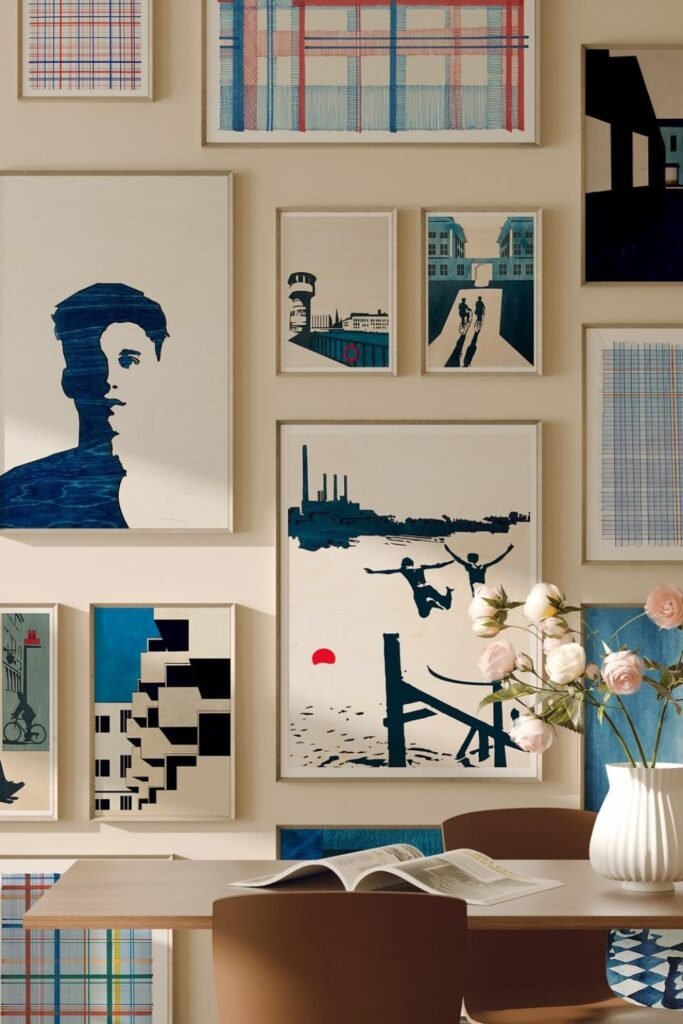
Keep the art centered and leave a small gap (around 6–10 inches) above the sofa. If you go too high, it feels disconnected.
If you go too low, it feels cramped. For a clean look, make sure the artwork is about two-thirds the width of your sofa.
2. On a Large Empty Wall
If you have a blank wall with no furniture under it, this is your chance to create impact.
A single large artwork or a well planned gallery wall works best here.
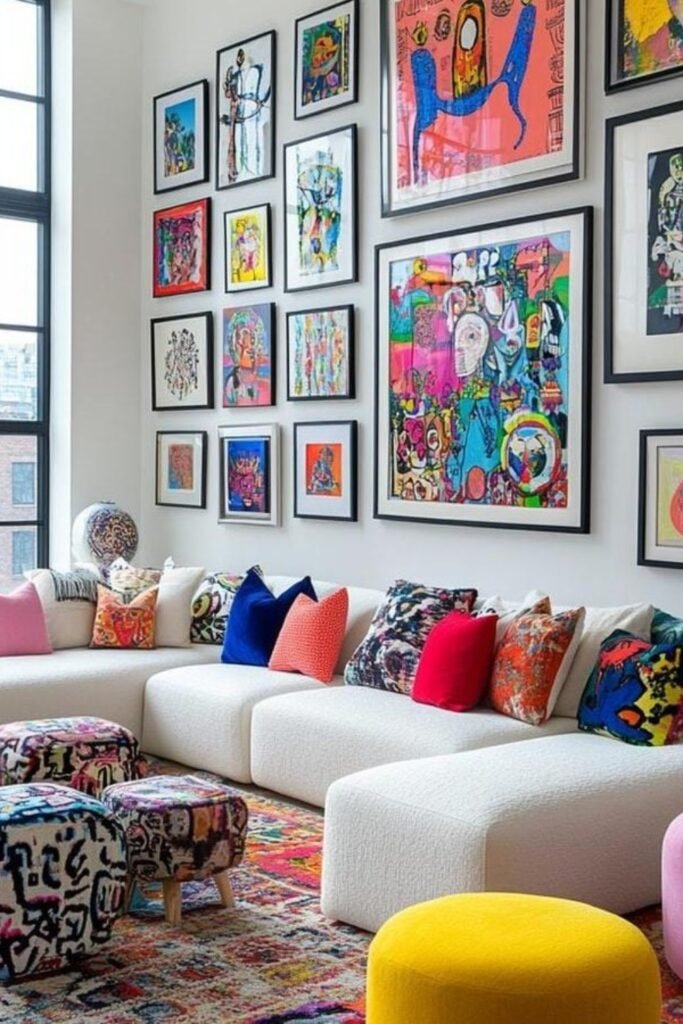
Don’t scatter small frames randomly. Either go big or create a structured layout.
This spot is perfect for making a strong style statement without cluttering the room.
3. Behind Accent Chairs
Small seating areas often feel ignored. Hanging art above an accent chair or reading nook fixes that instantly.
It creates a “mini zone” inside your living room and makes the space feel intentional.
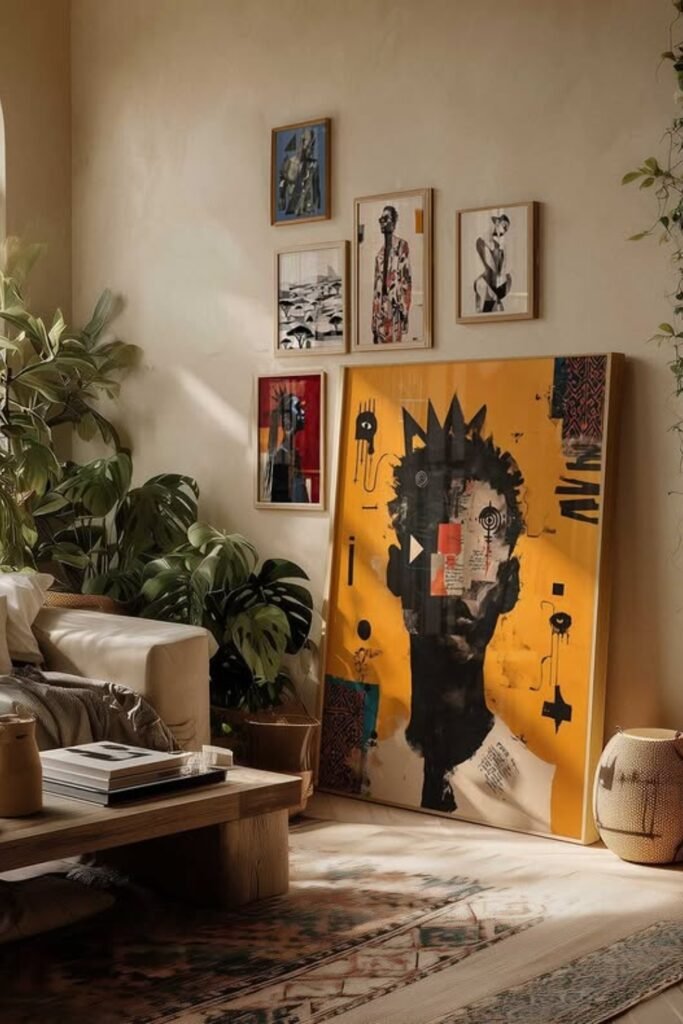
One medium or vertical piece works best here. Keep it simple so it supports the corner instead of overpowering it.
4. Around the TV Wall
The TV wall often looks plain and heavy. Wall art can soften it and make it feel designed instead of purely functional.
Place art on the sides or above the TV to balance the screen. Avoid making it compete with the TV.
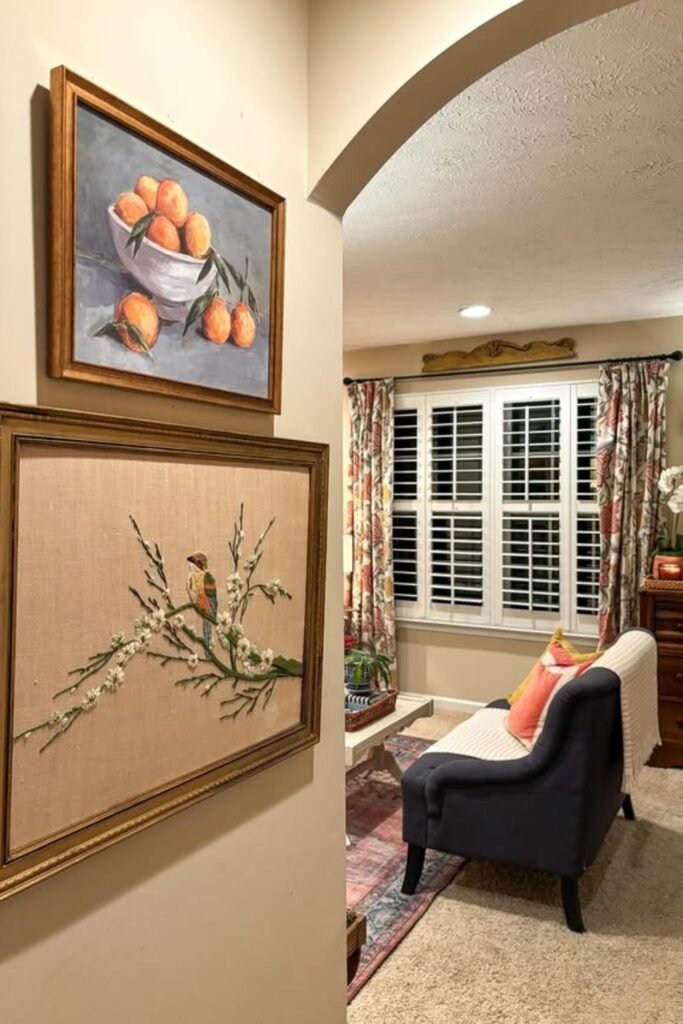
The goal is to reduce the harshness of the black screen and blend it into the room.
5. Above a Console Table
Console tables are perfect for styling wall art because they already create a base.
Hanging art above them connects everything visually.

You can either use one centered piece or layer multiple frames.
This setup works especially well in entry style living rooms or behind sofas placed away from walls.
6. In Corners or Tight Spaces
Corners are usually wasted space, but they’re great for vertical art.
A tall frame or a stacked pair of smaller pieces can make the corner feel alive.
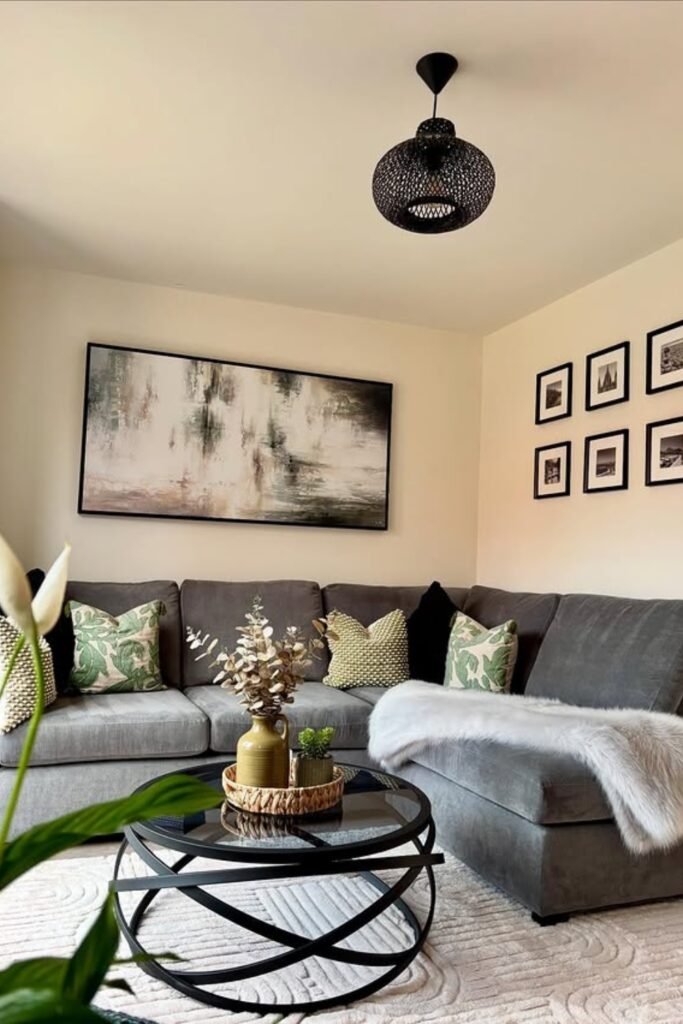
This works especially well in small living rooms where every inch matters.
It breaks the “empty corner” problem and adds subtle style without overwhelming the space.
7. Gallery Wall Arrangement
A gallery wall works when you have multiple pieces you want to display together.
Instead of treating each frame separately, think of it as one big shape on the wall.
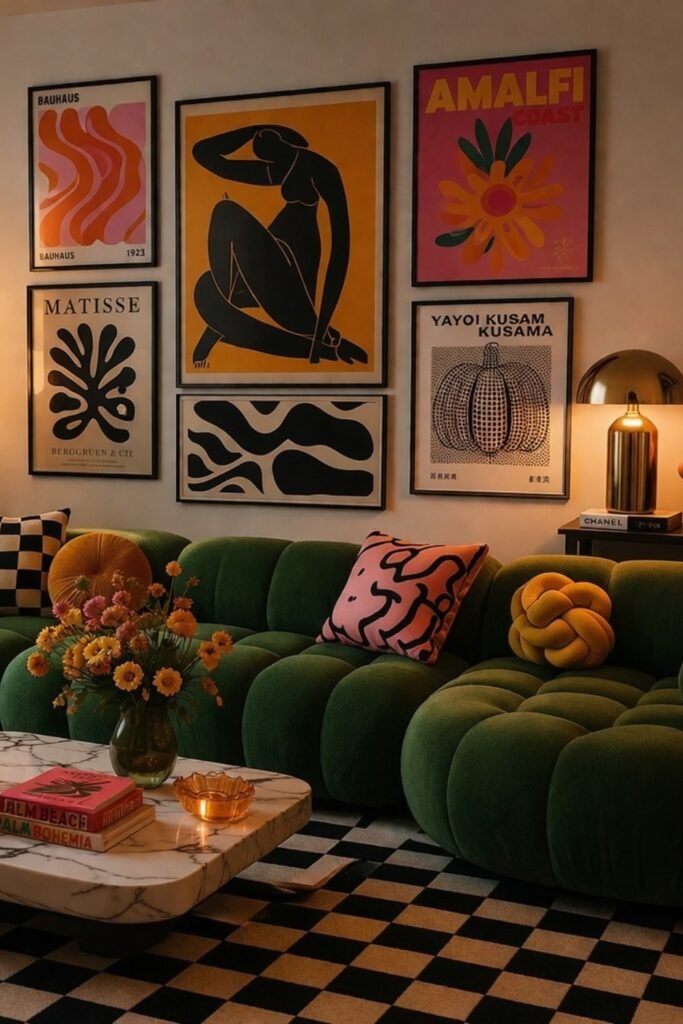
Keep spacing even and stick to a common theme like frame color or tone.
This works best on medium to large walls where you want personality and visual interest.
8. Floating Shelves With Leaned Art
Not everything has to be hung. You can place art on floating shelves or console tops and lean it against the wall.
This gives a relaxed, layered look and makes it easy to switch decor anytime.
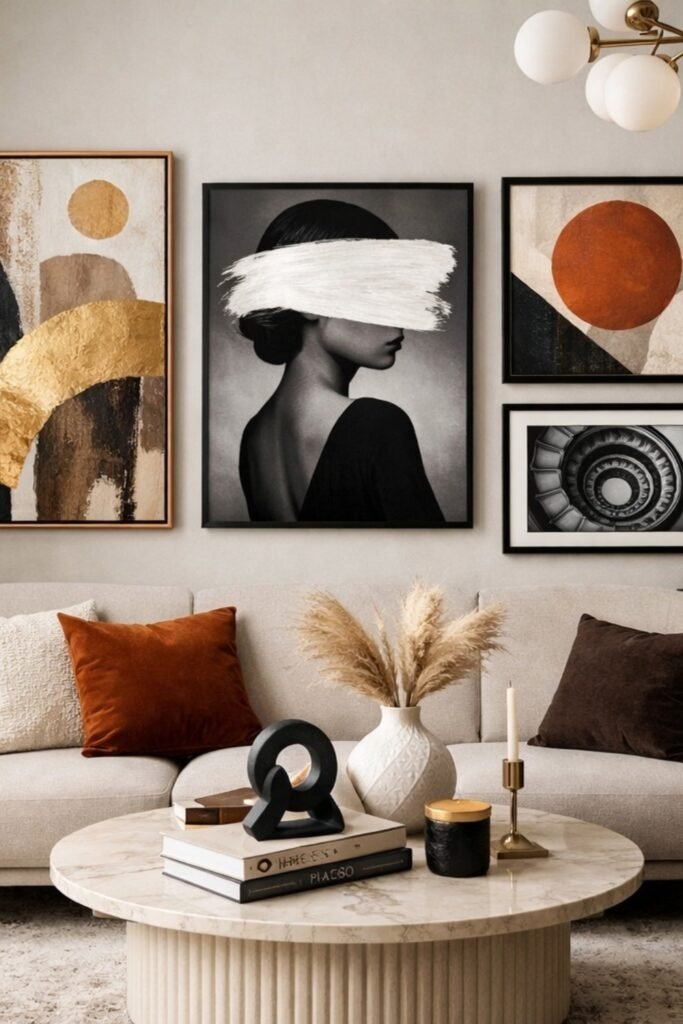
Add small objects like plants or candles to complete the styling. It feels modern, casual, and flexible without needing nails in the wall.
Why Does Wall Art Look Perfect in Stores but Wrong in Your Living Room?
Wall art often looks perfect in stores because it is shown in a controlled setup.
The lighting is balanced, the wall size is ideal, and the piece is styled to stand out on its own.
But your living room is different. It already has furniture, colors, and other visual elements competing for attention.
When you bring the same artwork home, it suddenly has to “fit in” with everything else. If it’s too small, it gets lost.
If it’s too high, it feels disconnected. If it doesn’t align with your furniture, the whole space feels unbalanced.
The real issue is not the art itself , it’s placement and scale. Stores don’t show you how it works in a real living room. That’s why it feels right there but wrong at home.
Once you understand how to match size, height, and furniture alignment, the same piece will start to feel intentional instead of awkward.
How Do You Know If You’ve Hung Wall Art in the Right Place or Not?
You can tell very quickly if your wall art is placed correctly just by looking at how your eye moves in the room.
If your eyes jump to the art naturally and then flow back to the furniture, it’s placed well. If it feels like it’s floating or disconnected, something is off.
A simple check is alignment. The art should feel connected to something below it, like a sofa, console table, or chair.
If it looks like it’s hanging in empty space with no relationship to anything, it will always feel random.
Another sign is balance. If one side of the room feels heavier or more crowded than the other, your art placement might be uneven.
Good placement doesn’t stand out as “extra decor” , it feels like part of the room structure itself.
Conclusion
Wall art isn’t just something you hang to fill empty walls. It’s what ties your living room together.
When it’s placed right, the whole space feels balanced, finished, and comfortable to look at. When it’s placed wrong, even a well decorated room can feel off.
The key is not guessing. It’s about simple placement logic , connect art to furniture, keep the right height, and match the size with your wall space.
Once you stop treating wall art as separate decor and start treating it as part of the room layout, everything becomes easier.
So instead of moving frames again and again, focus on where your eyes naturally feel balance. That’s where your wall art belongs.
You may like to read!
