
20 Retro 70s Bathroom Ideas
The 70s knew how to make a bathroom stand out, with avocado green tiles, warm wood, bold patterns, and colors you don’t see every day.
Bring those details into your home, and even a simple bathroom can have that unmistakable retro charm.
In this article, you’ll discover 20 inspiring 70s bathroom ideas and practical ways to bring these vintage details into your own space.
Let’s jump in!
What Were the Bathroom Trends in the 1970s?
Bathrooms in the 1970s were all about bold colors, playful patterns, and making every corner feel full of character.
Avocado green, mustard yellow, burnt orange, and earthy brown were popular choices, often paired with matching sinks, bathtubs, and toilets.
Walls featured colorful ceramic tiles, floral wallpaper, or geometric patterns, while wooden vanities added warmth to the space.
Round mirrors, globe lights, shaggy rugs, and brass fixtures brought in extra detail, giving even simple bathrooms a distinctive retro look.
If you want to recreate this style today, start with one signature 70s color, add vintage-inspired tiles, and balance everything with modern fixtures.
Playful Blue
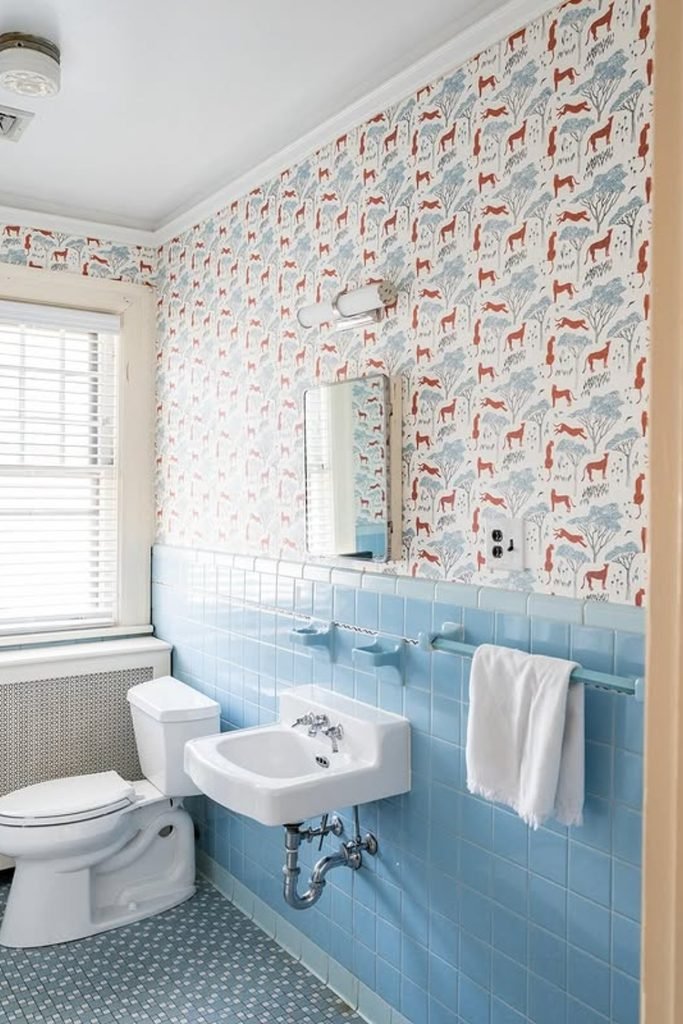
A soft blue tile wall gives this retro bathroom structure, while playful animal wallpaper keeps the upper half light and cheerful.
Use this mix in a small bathroom when you want vintage color without covering every wall in one bold finish.
Keep the sink, toilet, and trim white so the patterned paper and blue tiles remain the clear focus of the room.
Teal Geometry
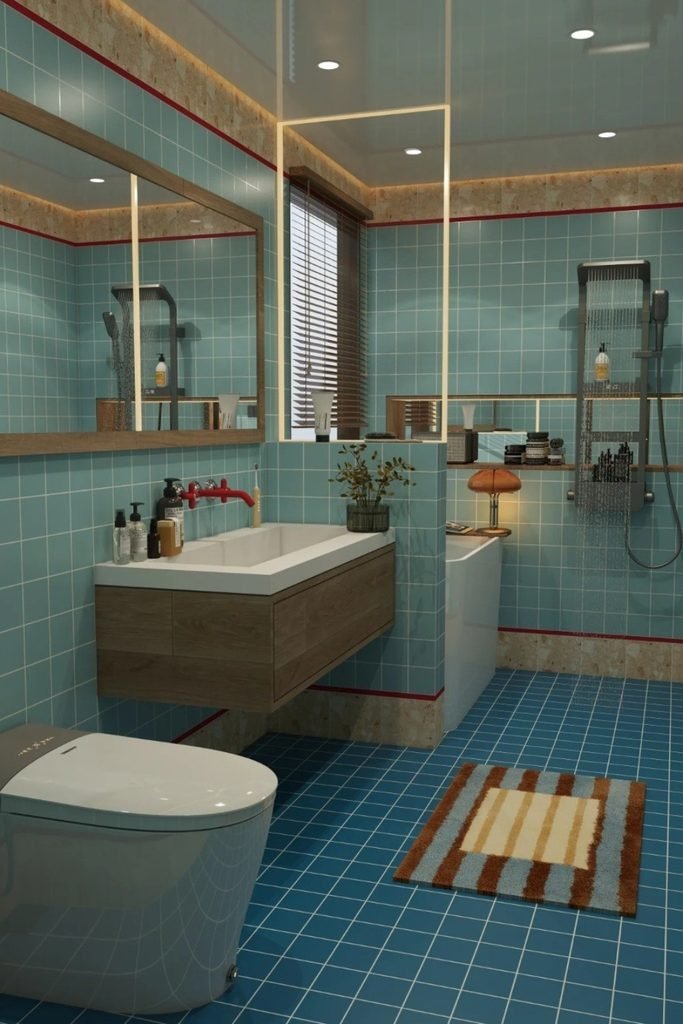
Floor-to-ceiling teal tiles make the bathroom feel intentionally retro, especially when thin red accents break up the large blocks of color.
Choose a warm wood vanity and simple white basin if you want the strong tile color to feel balanced rather than overwhelming.
This approach works best in longer bathrooms, where repeating the same tile across walls and floor can visually connect separate zones.
Carpeted Nostalgia
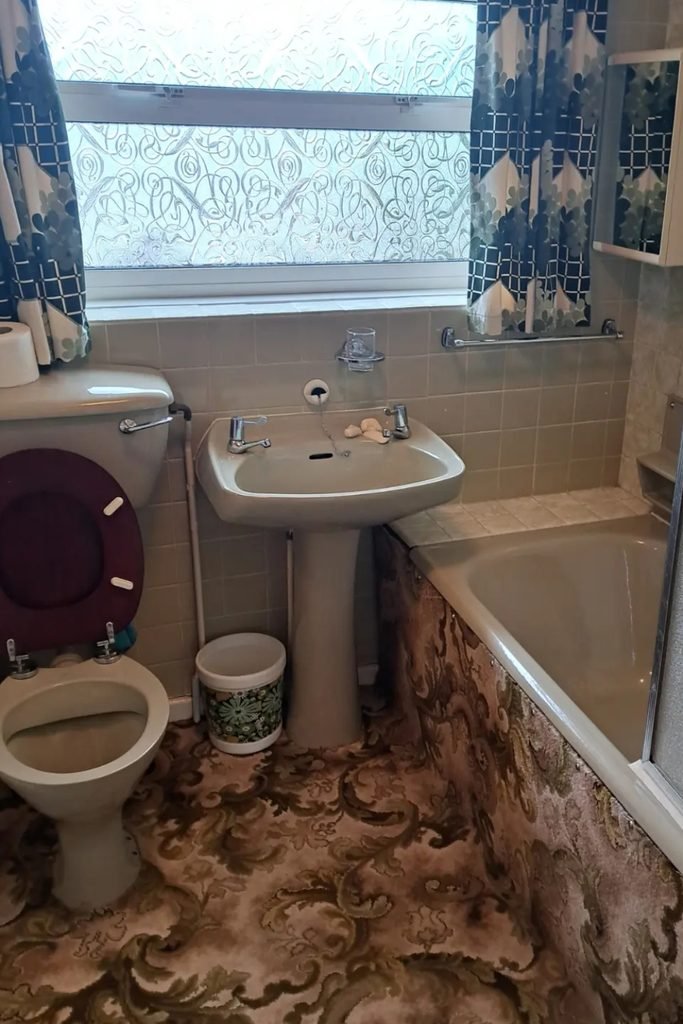
The beige suite and dense floral carpet capture a very specific seventies look, but the pattern matters more than copying every material.
For a safer modern version, keep the warm beige fixtures and bring the swirling brown pattern through washable rugs or wallpaper.
This idea suits homeowners preserving an original bathroom, because small surface changes can protect its character without recreating moisture-prone wall-to-wall carpet.
Amber Accents
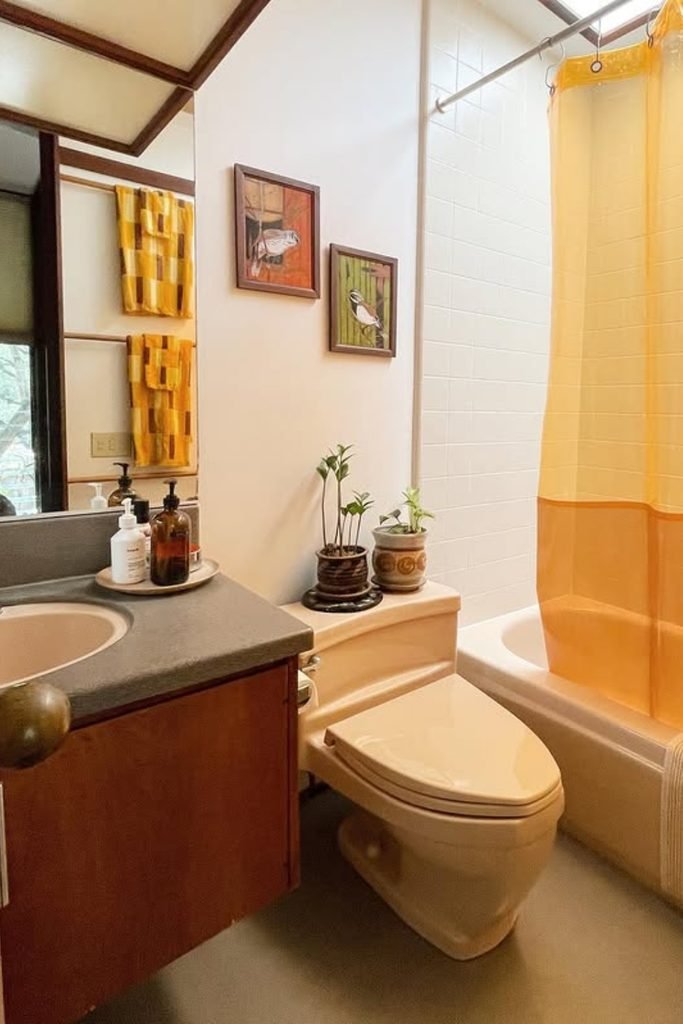
You do not need colored tiles everywhere to get a seventies feel; a golden orange shower curtain can carry most of it.
Pair it with a walnut vanity, cream fixtures, and dark wood trim to build warmth without making a compact bathroom feel busy.
Finish with small framed art and amber accessories, which are easy to change later while still giving the room clear retro character.
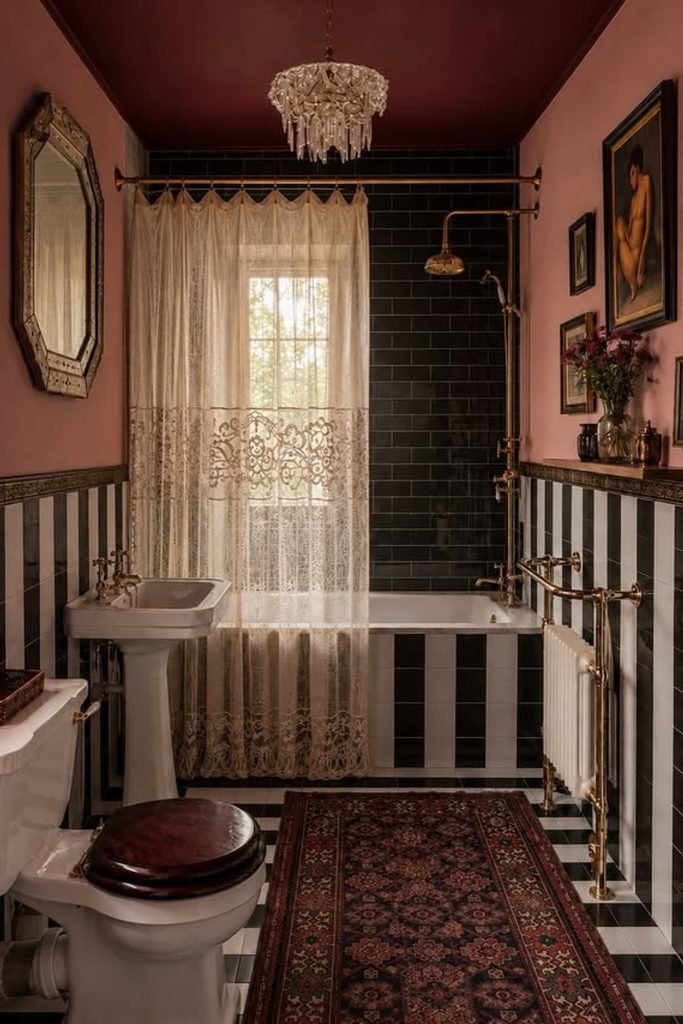
Moody Stripes
Black-and-white wall tiles become much warmer when you pair them with dusty pink walls, a burgundy ceiling, and aged brass fixtures.
Use this combination in a narrow bathroom, where vertical stripes can add height while the darker ceiling makes the room feel intimate.
Finish with lace curtains, framed artwork, and a patterned runner so the space feels collected instead of looking like a themed set.
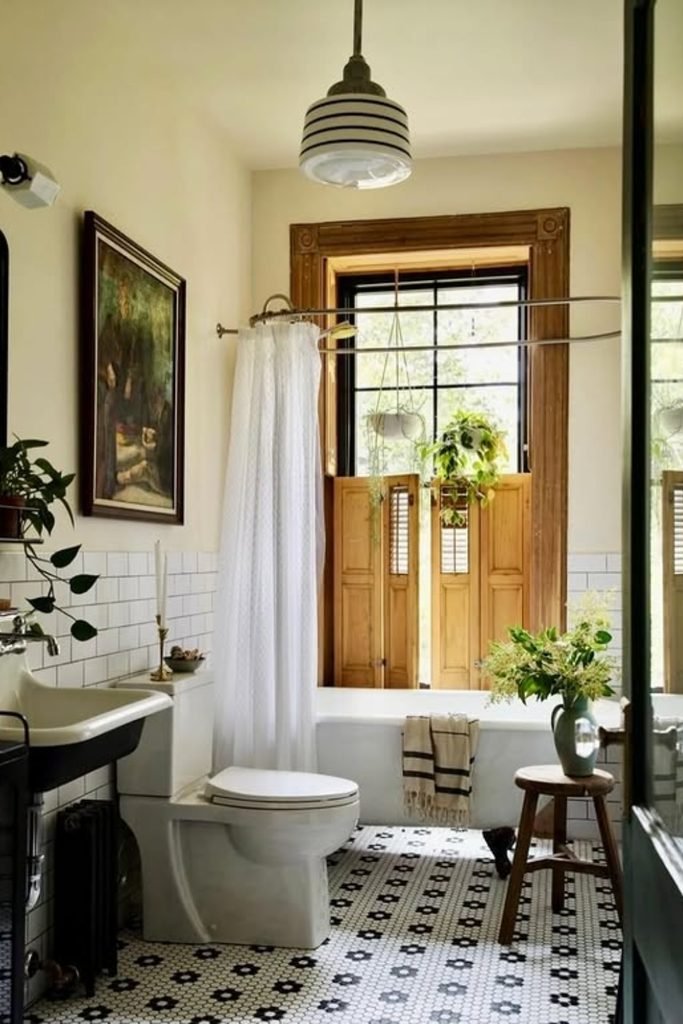
Woodland Contrast
Warm wood trim can give a mostly white bathroom its seventies character without asking you to commit to strong wall colors.
Keep the tile simple, then repeat black through the floor pattern, sink base, and lighting to stop the room feeling too plain.
A few leafy plants and a small wooden stool soften those hard surfaces, making this approach especially useful in bright older bathrooms.
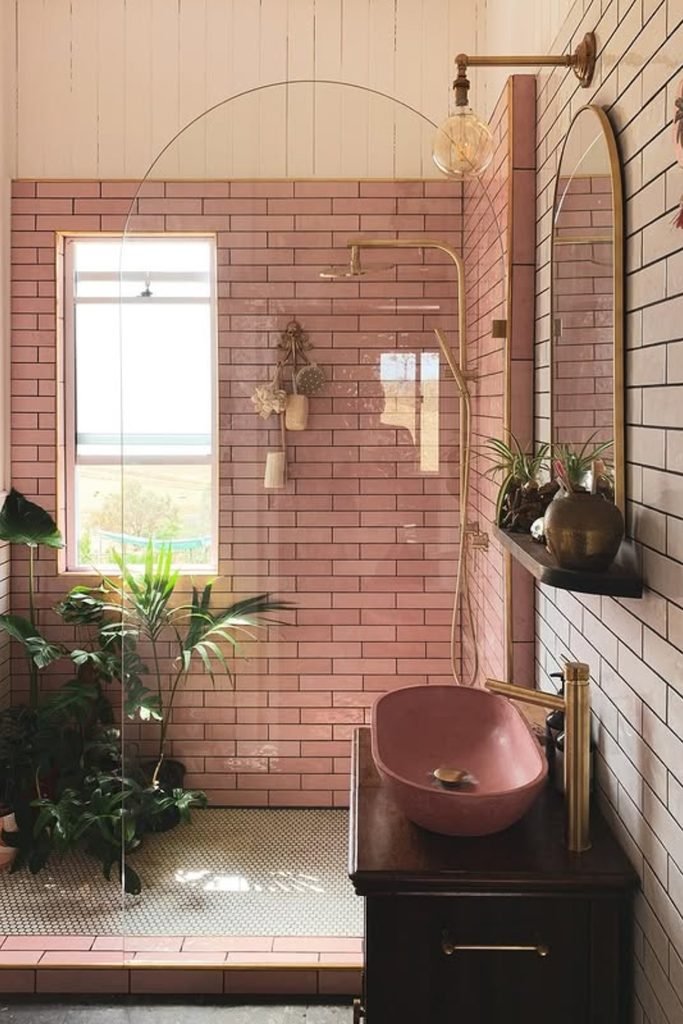
Blush Shower
Pink does not have to cover every surface; concentrate it inside the shower and repeat the color once at the basin.
White wall tiles around the rest of the bathroom keep the palette breathable, while brass fittings add the warmth seventies schemes need.
This works beautifully in a walk-in shower, where plants near natural light can soften the tile and make the pink feel grounded.
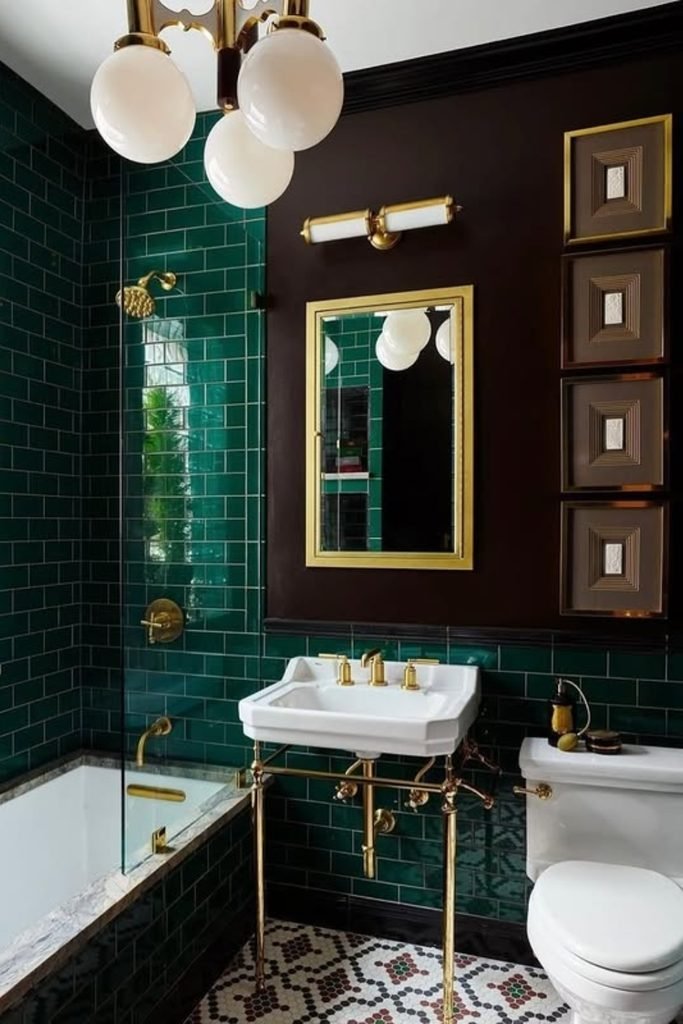
Emerald Drama
Deep emerald tile gives you a richer seventies look than avocado, especially when you surround it with dark brown walls and brass.
Let the green cover one main wall or bathing zone, then use white fixtures to keep the darker palette from closing in.
Globe lighting and a patterned mosaic floor add period character, but keeping their shapes simple prevents this bold combination from becoming overly busy.
Avocado Layers
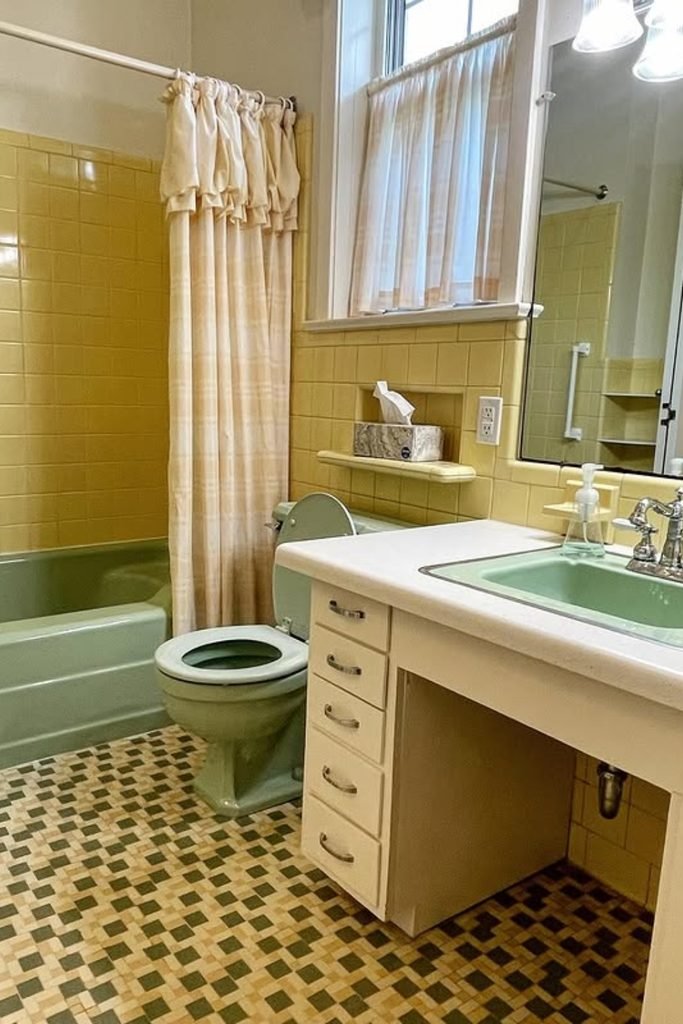
Yellow wall tiles and avocado fixtures create an unmistakable seventies palette, but the cream vanity keeps the room from feeling too heavy.
If you already have colored plumbing fixtures, build around them with patterned flooring and quieter cabinetry instead of replacing everything at once.
This approach works especially well in older bathrooms, where preserving one original color can make a simple refresh feel more intentional.
Amber Cocoon
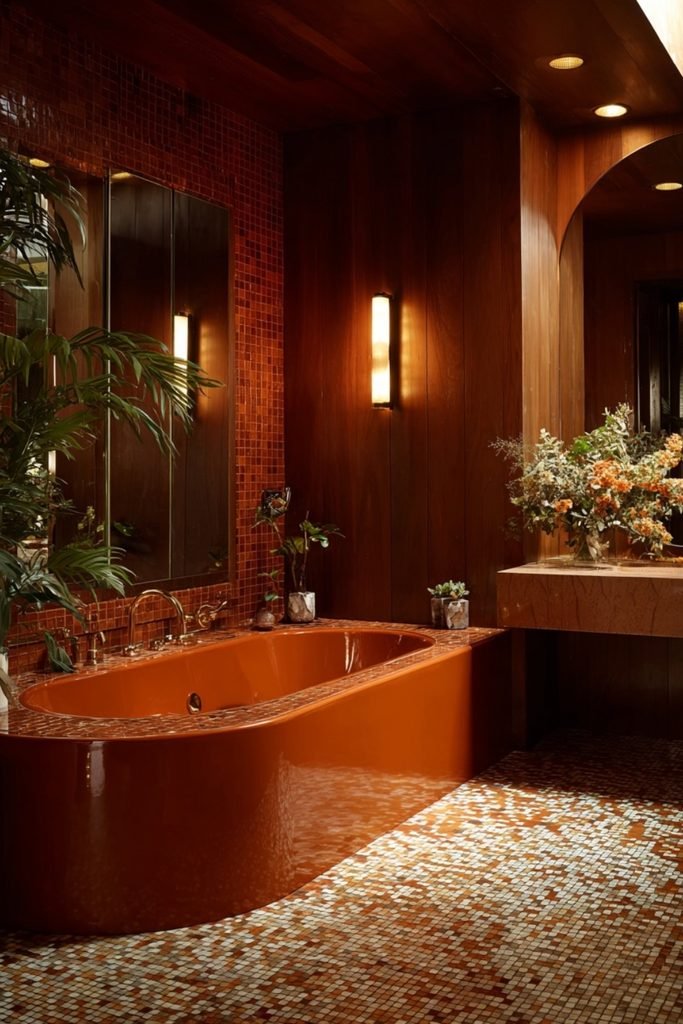
An orange soaking tub becomes the centerpiece when you surround it with dark wood paneling, warm lighting, and small mosaic tiles.
Use this richer palette in a larger bathroom, because deep wood and saturated orange need enough space to feel cozy, not cramped.
Plants and brass fittings soften the dark surfaces, giving the room a lived-in seventies mood without relying on extra patterns.
Powder Blue
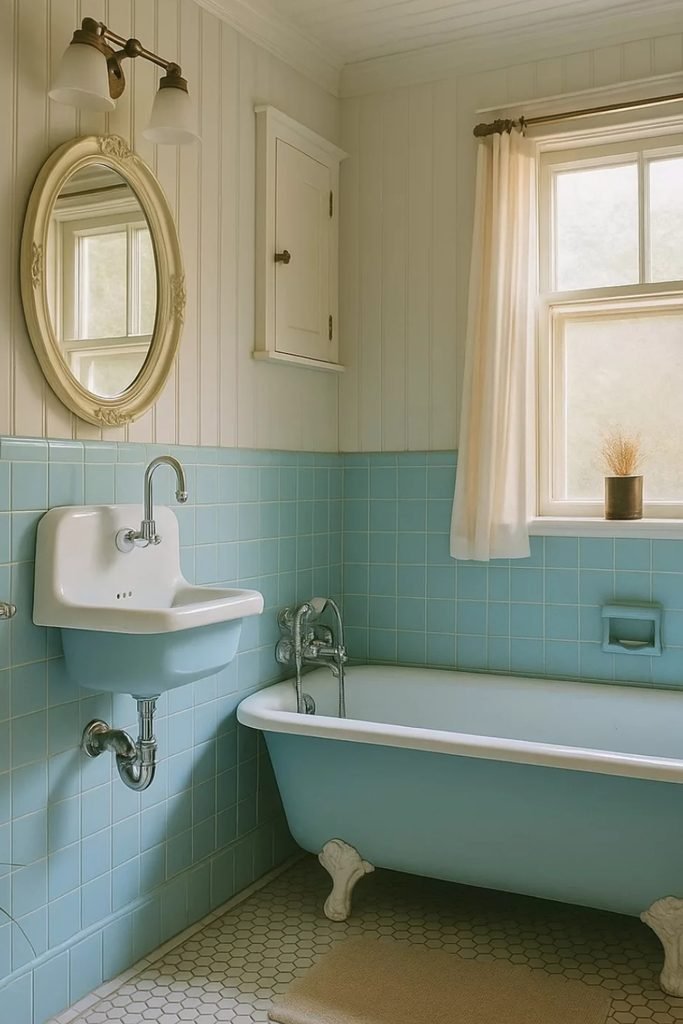
Powder blue tiles and a matching clawfoot tub give this bathroom color, while cream paneling keeps the upper walls light and calm.
If you want a softer retro look, repeat one pastel shade across two major surfaces instead of mixing several strong seventies colors.
An oval mirror, chrome fittings, and simple curtains finish the space gently, making this idea especially useful for bright, compact bathrooms.
Flower Power
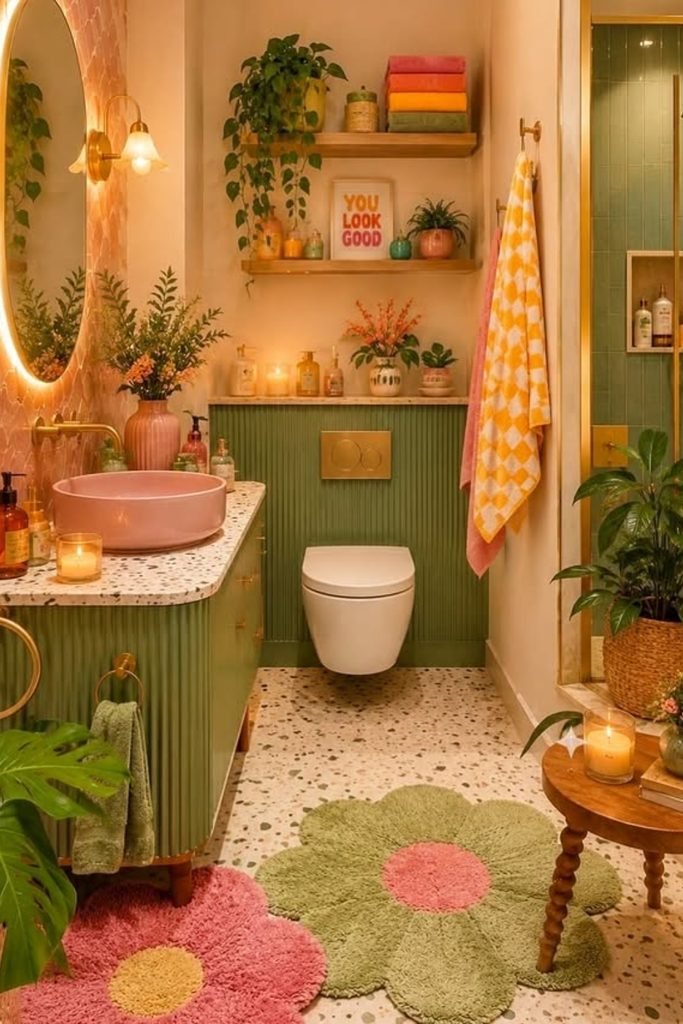
Pink and olive green bring instant seventies energy, especially when you repeat both colors through the vanity, towels, rugs, and shower.
Keep the larger walls warm and neutral so the playful palette stays cheerful, while terrazzo flooring gives all those colors breathing room.
This works best when you want a fun retro bathroom, because plants and flower-shaped mats make the theme obvious without permanent changes.
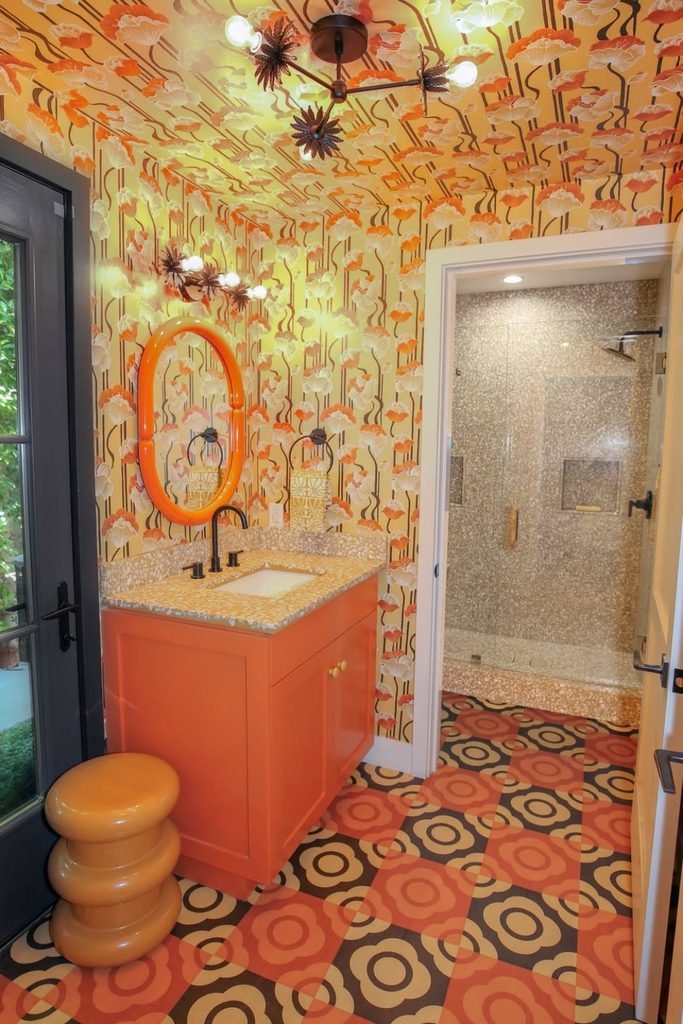
Orange Bloom
Bold floral wallpaper can carry the entire seventies look, especially when orange repeats through the vanity, mirror frame, and patterned floor.
Use this idea in a powder room or compact bath, where one strong palette can feel intentional instead of visually scattered.
Keep the shower finishes quieter so the wallpaper and flooring stay dominant, then add black hardware to sharpen all that warm color.
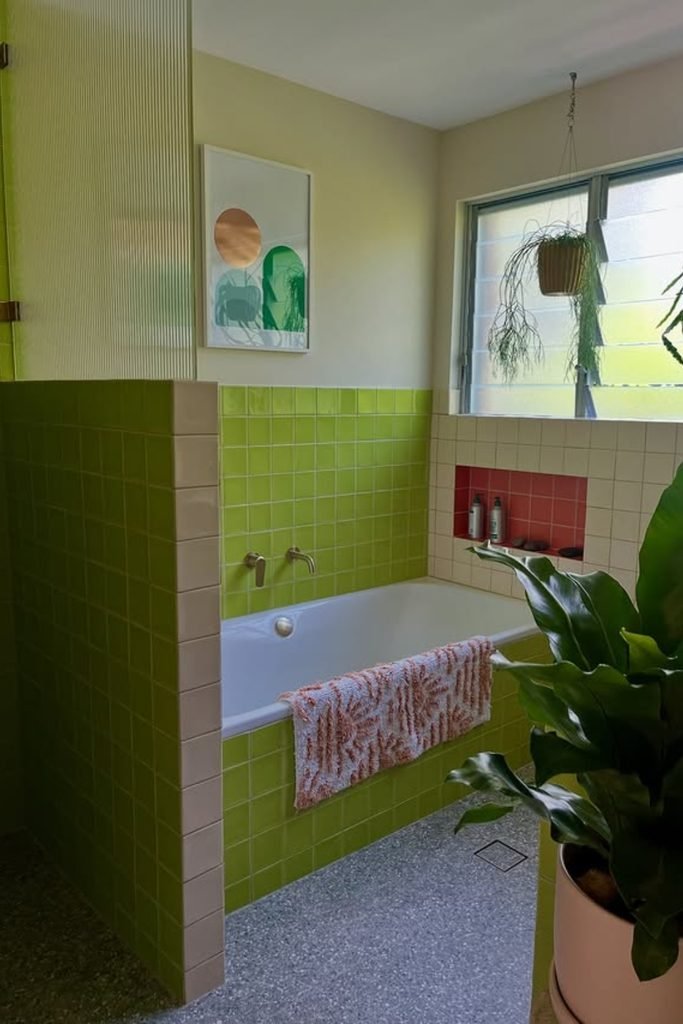
Lime Blocks
Bright lime tile feels unmistakably retro, but breaking it with cream sections keeps the bathroom from turning into one solid green box.
This works especially well around a tub, where you can use one saturated tile color and let the surrounding walls stay calmer.
Add a few large plants and a coral niche for contrast, giving the space more depth without introducing another complicated pattern.
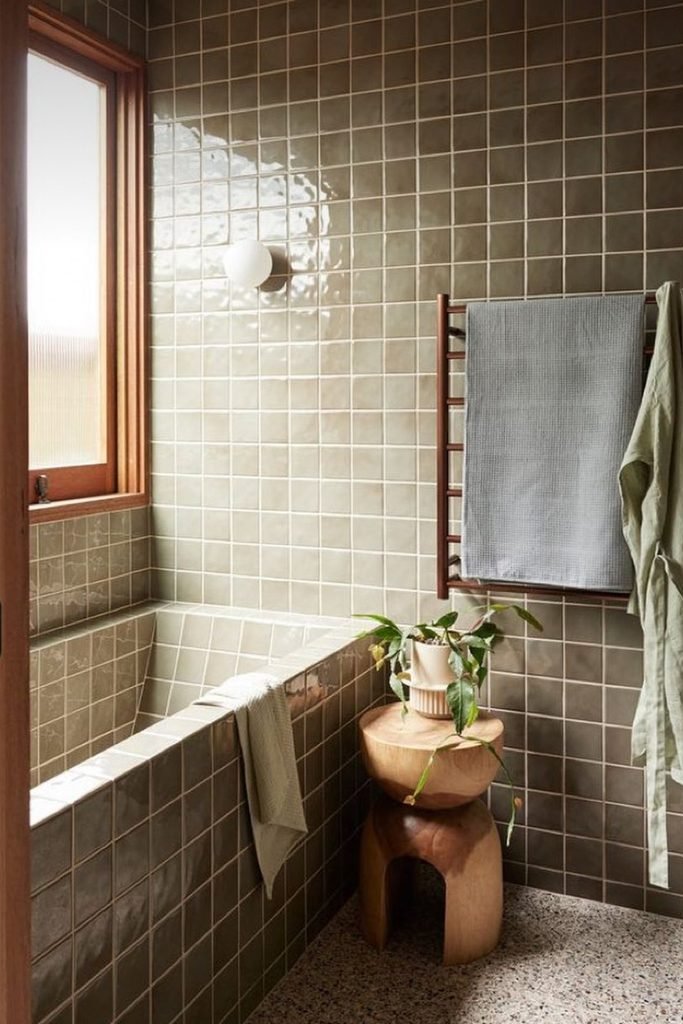
Olive Calm
Muted olive square tiles create a softer seventies mood, especially when you pair them with warm timber and simple textured flooring.
If you prefer retro style without bold color, keep the palette earthy and let natural wood provide most of the visual warmth.
This approach suits a walk-in bath or wet room, where repeated tile creates continuity while understated accessories keep everything relaxed.
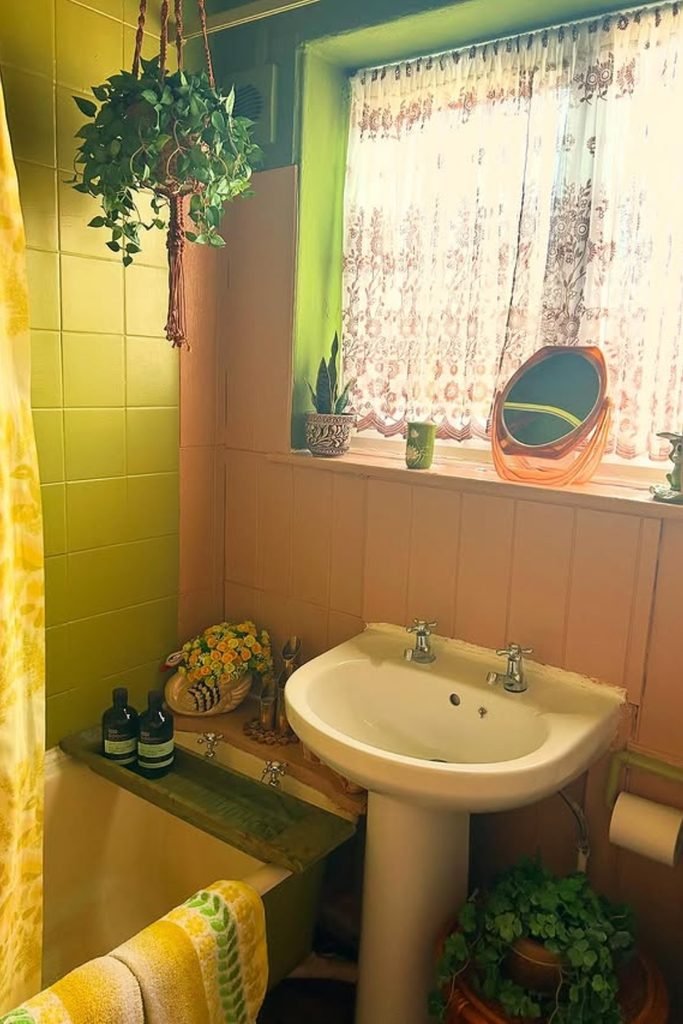
Citrus Mix
Lime green walls, blush pink paneling, and yellow textiles create a playful seventies combination that works best when each color has space.
Use one shade on the largest surface, then repeat the others through curtains, towels, planters, and a small statement mirror.
This is a good option for renters or easy makeovers, because most of the retro character comes from accessories rather than permanent changes.
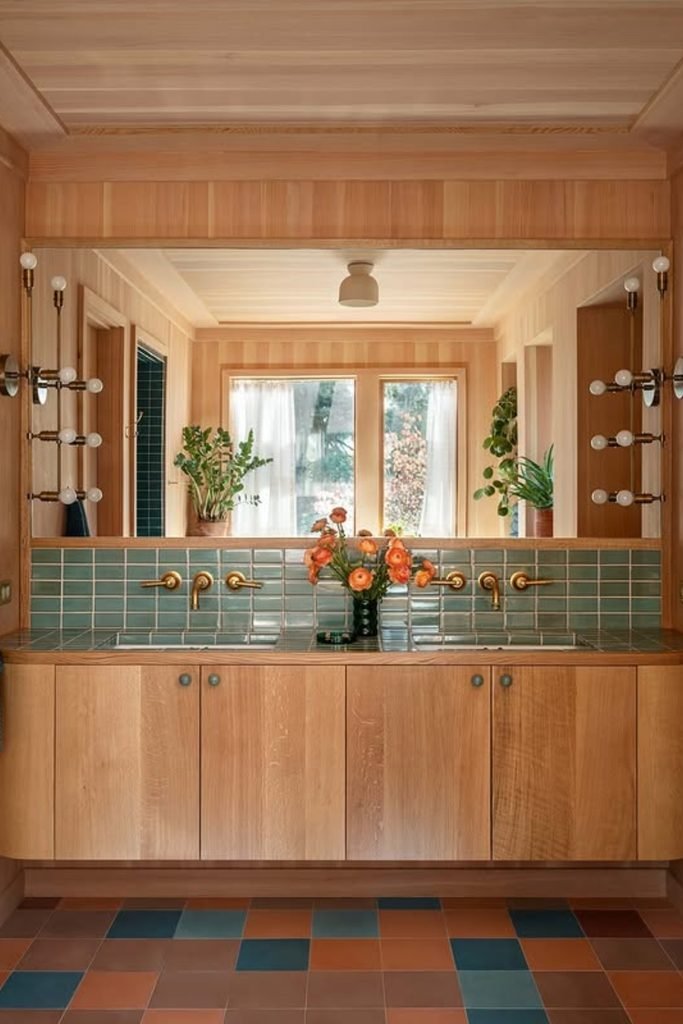
Timber Balance
Warm wood paneling turns the vanity wall into the main feature, while teal tiles stop the bathroom from feeling too monochromatic.
Use this combination in a larger bathroom, where natural wood can cover more surface without making the room feel visually heavy.
Carry the blue-green tile onto the backsplash, then repeat warmer rust tones underfoot to tie the whole seventies palette together.
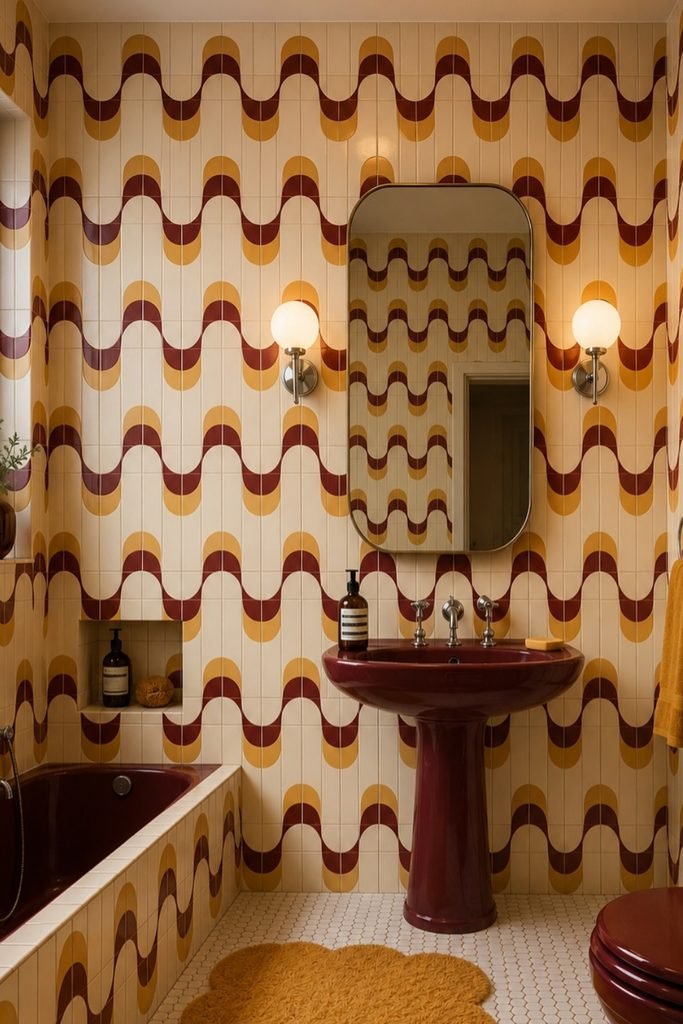
Wavy Pattern
A repeating wave pattern can create instant seventies drama, especially when mustard and burgundy run across every wall in the room.
If you choose a busy tile like this, keep the floor pale and let the fixtures echo only one deeper color.
This works best in bathrooms with simple layouts, because strong repetition already gives the space enough movement without extra decoration.
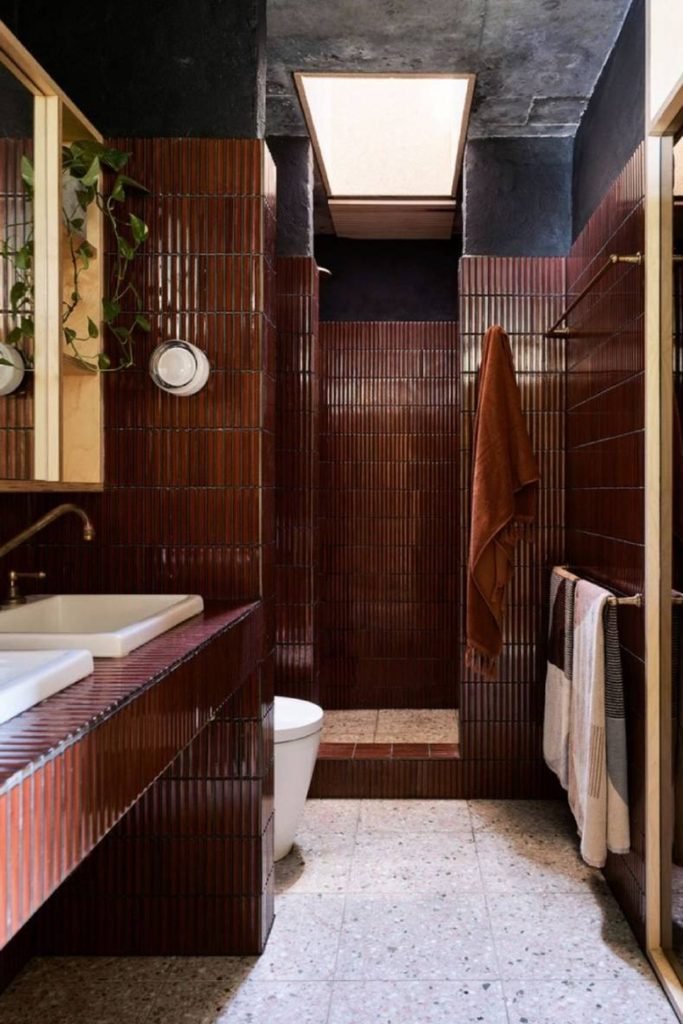
Burgundy Tiles
Glossy burgundy finger tiles bring depth without using a loud pattern, making them a strong choice for moodier retro bathrooms.
Pair them with pale terrazzo flooring and white basins so the darker walls feel grounded instead of swallowing the entire room.
A skylight or strong natural light helps this look most, especially when you want rich color in a compact bathroom.
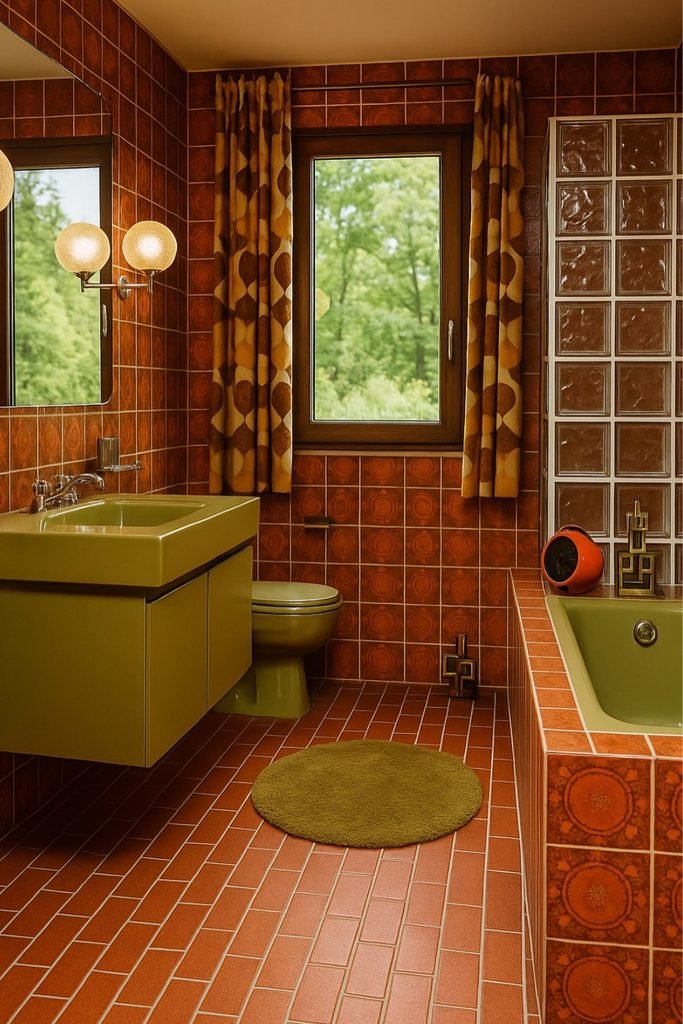
Avocado Orange
Burnt orange tiles and avocado fixtures create one of the clearest seventies combinations, so you do not need many extra accents.
If your bathroom already has colored sanitaryware, repeat that shade in one rug or towel instead of adding another permanent finish.
Patterned curtains and globe lighting add the final retro layer, while large mirrors help all those warm tones feel less enclosed.
FAQs
Can You Mix 70s Style With Modern Fixtures?
Yes, modern fixtures can work well with seventies colors and patterns when you keep their shapes simple and finishes warm or neutral.
Choose one retro feature, such as green tile or a colored basin, then let cleaner fittings keep the bathroom practical and balanced.
This mix is especially useful in renovated homes where you want vintage character without giving up easier cleaning, storage, or daily comfort.
Which 70s Bathroom Colors Are Easiest to Live With?
Olive green, dusty blue, warm brown, and muted mustard are easier to use daily than covering every surface in bright orange.
Pick one main color for tile or paint, then support it with cream, wood, white, or soft brass finishes throughout the room.
If you are unsure, start with towels, artwork, or a shower curtain before committing to permanent tile or colored sanitaryware.
