
21 Yellow Bathroom Ideas
A yellow bathroom can start with something as small as a butter-colored vanity or as bold as a mustard-tiled shower.
Pair your favorite shade with white, wood, or a touch of blue to give the room a look that feels like you.
In this article, you’ll find shade combinations, practical decorating tips, and 22 yellow bathroom ideas to help you plan your space.
Let’s jump in!
Is Yellow A Good Color For A Bathroom?
Yes, yellow works well in a bathroom if you choose a shade that suits your tiles, fixtures, and lighting.
For a softer look, use pale butter yellow on the walls and pair it with white tiles or a wooden vanity.
If you prefer mustard or lemon yellow, try it on the vanity or one tiled wall before adding more around the room.
Already have yellow tiles? Choose your wall paint and towels around their shade so everything feels connected.
Test paint samples during the day and with your bathroom lights on, because the same yellow can look different under each.
Golden Florals
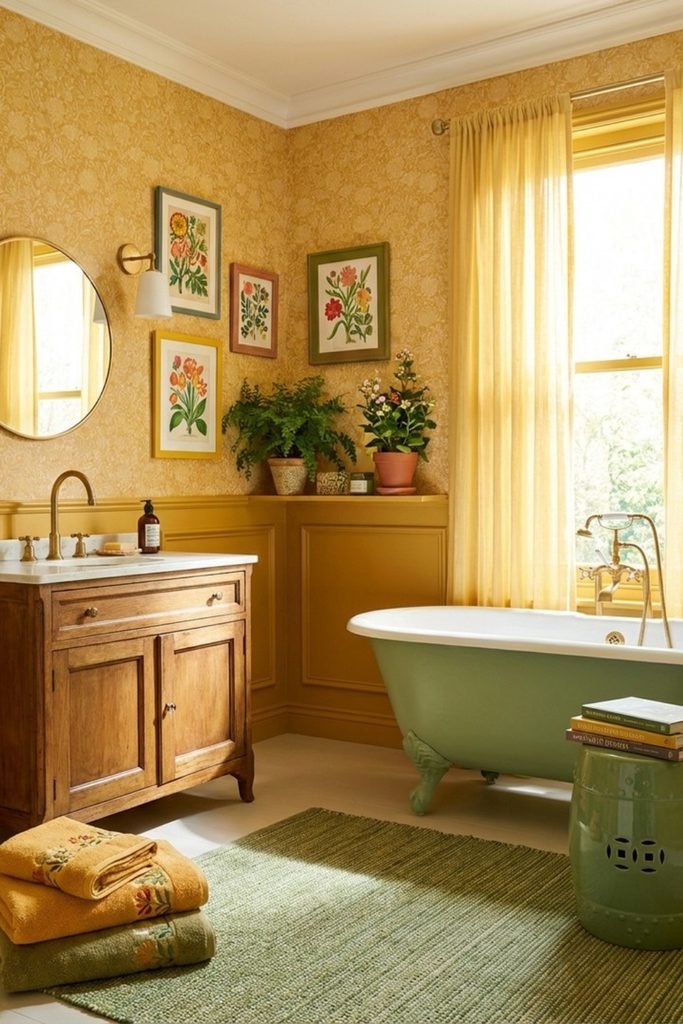
Give mustard paneling a softer partner with yellow floral wallpaper above it, especially if you want a bathroom with a cottage feel.
A wooden vanity connects the golden walls to natural materials, while a sage green tub gives your eye a break from yellow.
Repeat that green in towels or framed botanical prints, and keep the ceiling light so the patterned walls remain the main feature.
Tropical Mustard
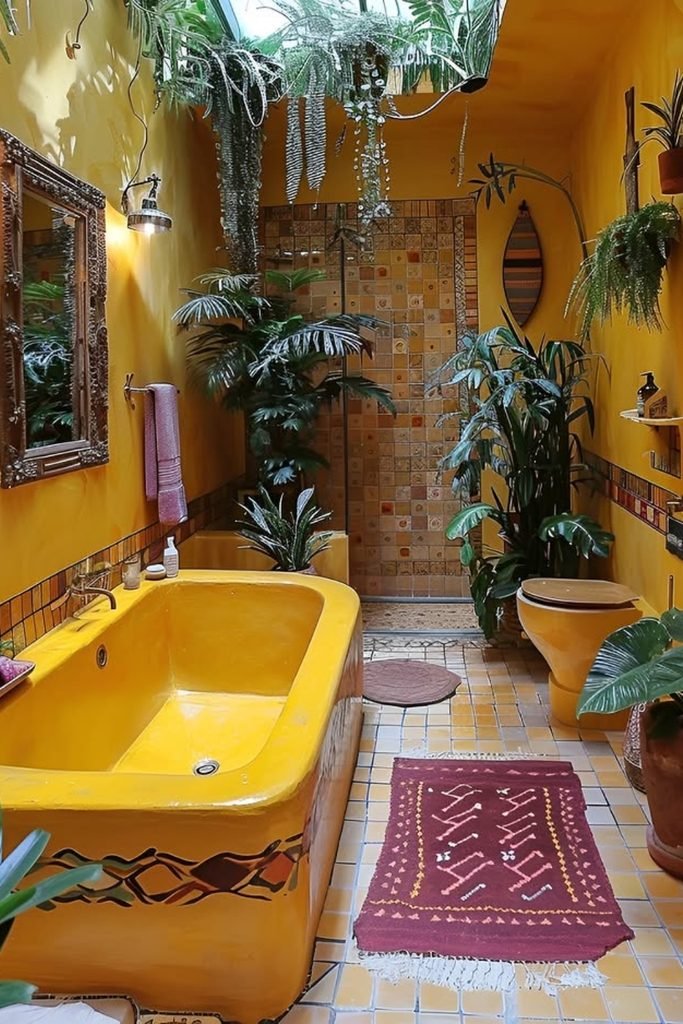
An existing yellow tub can anchor a tropical bathroom when you repeat its color on the walls and bring in leafy plants.
Use patterned tiles behind the shower to connect yellow with earthy browns, then introduce burgundy towels for contrast without another large colored surface.
Start with a few plants near available daylight, leaving the walkway clear so you can enjoy the greenery without squeezing past pots.
Framed Sunshine
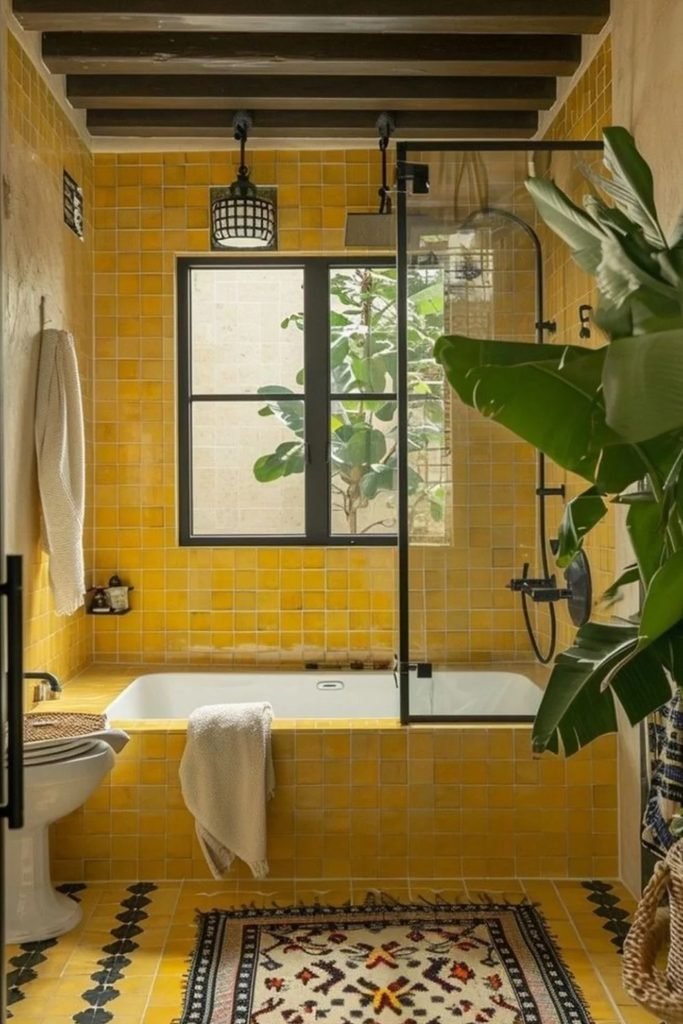
Black frames give these yellow square tiles a clear outline, making this approach useful when you want bold color with more definition.
Carry the same tiles across the tub panel to connect the bathing area, then choose plain cream towels to interrupt the repeated grid.
If your bathroom already has exposed beams, repeat their dark tone in the shower screen and window frame rather than adding another finish.
Sunny Shower
Keep yellow inside the shower for a strong focal point that leaves the rest of a narrow bathroom simple and easy to coordinate.
Choose tiles with slight color variation to give that single wall depth, then surround it with pale flooring and large neutral wall tiles.
A floating black vanity repeats the shower fittings and exposes more floor, while clear glass keeps the yellow wall visible from the doorway.

Honey Tiles
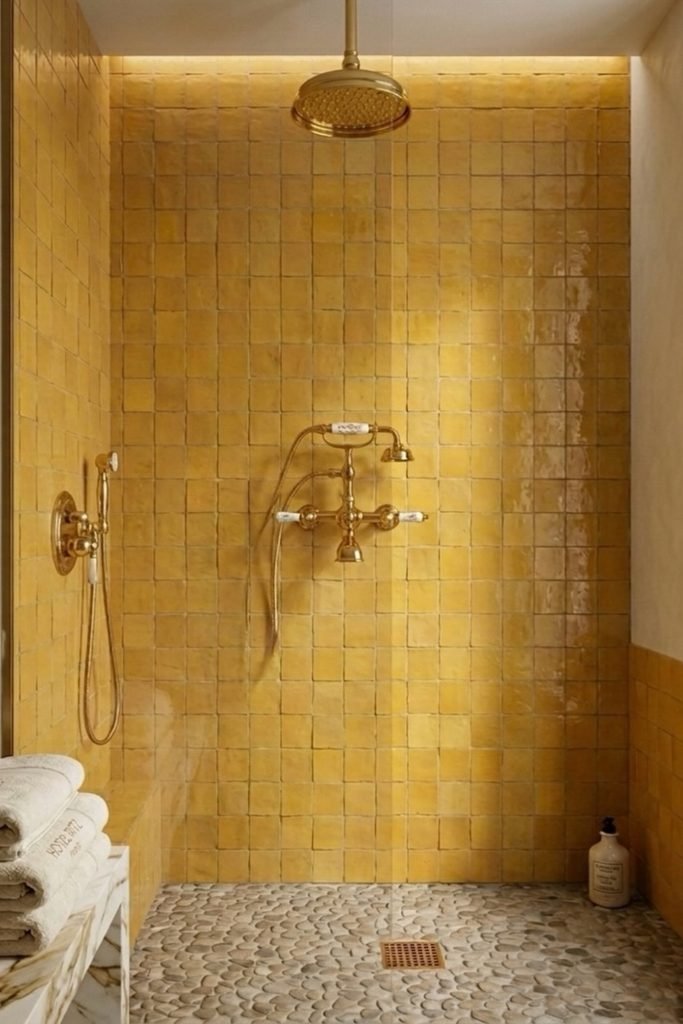
Honey yellow tiles with uneven tones give this shower depth, so you can keep the design simple without making the walls look flat.
Pair them with traditional brass fittings if you want a softer finish, and use cream on nearby walls to connect the surrounding space.
Keep the pebble floor within the same earthy palette, allowing its smaller pattern to add detail without competing with the yellow tiled walls.
Mustard Layers
A mustard wall beside patterned wallpaper gives you two ways to use yellow, especially in a bathroom with a separate freestanding tub.
Choose artwork that repeats the wall color alongside green and rust, then carry those smaller accents into towels rather than adding more patterns.
Leave the vanity wood visible and choose a plain countertop, giving your eye somewhere to rest between the wallpaper, artwork, and golden tub.

Colorful Paneling
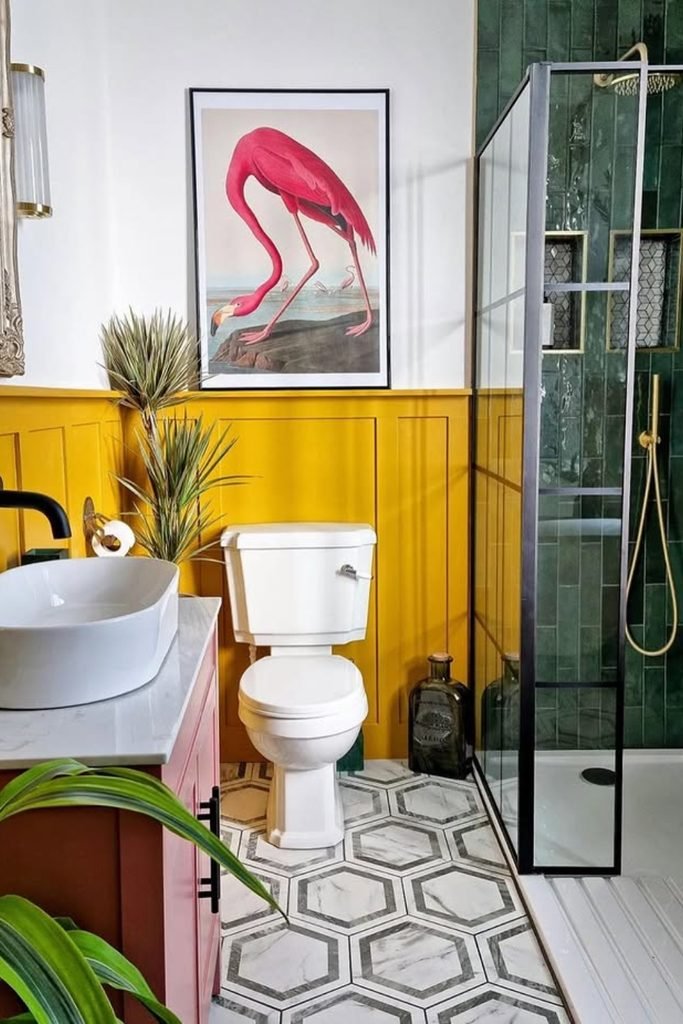
Yellow paneling can connect a pink vanity with a dark green shower when you leave the upper walls white to separate those colors.
Try this combination in a compact bathroom where each color belongs to one clear area, keeping the fixtures white for a consistent base.
Pick artwork that repeats the vanity color, and keep extra accessories minimal because the patterned floor already adds another layer to the room.
Golden Clawfoot
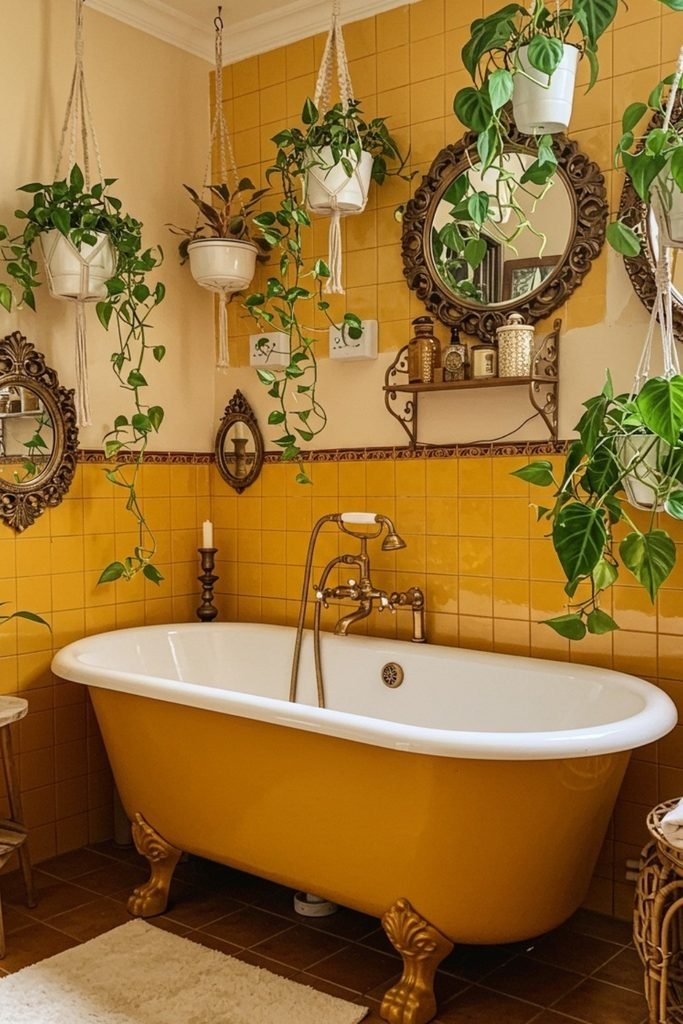
Matching a golden tub to yellow wall tiles makes the bathing corner feel connected, particularly when the tub has a bright white interior.
Bring in ornate mirrors of different sizes for a collected look, but leave enough bare wall around each frame to show its shape.
Hang trailing plants near the window instead of filling every surface, keeping their leaves clear of the taps and your route into the tub.
Attic Garden
Mustard shower tiles give this attic bathroom a clear color focus, while the pale sloping ceiling keeps yellow below the roofline visually.
Choose a floral shower curtain with small golden details to connect the enclosure, using a liner so the decorative fabric stays outside splashes.
Arrange plants on shelves near the skylight rather than around the shower entrance, leaving enough room to reach the taps and clean tiles.

Yellow Lattice
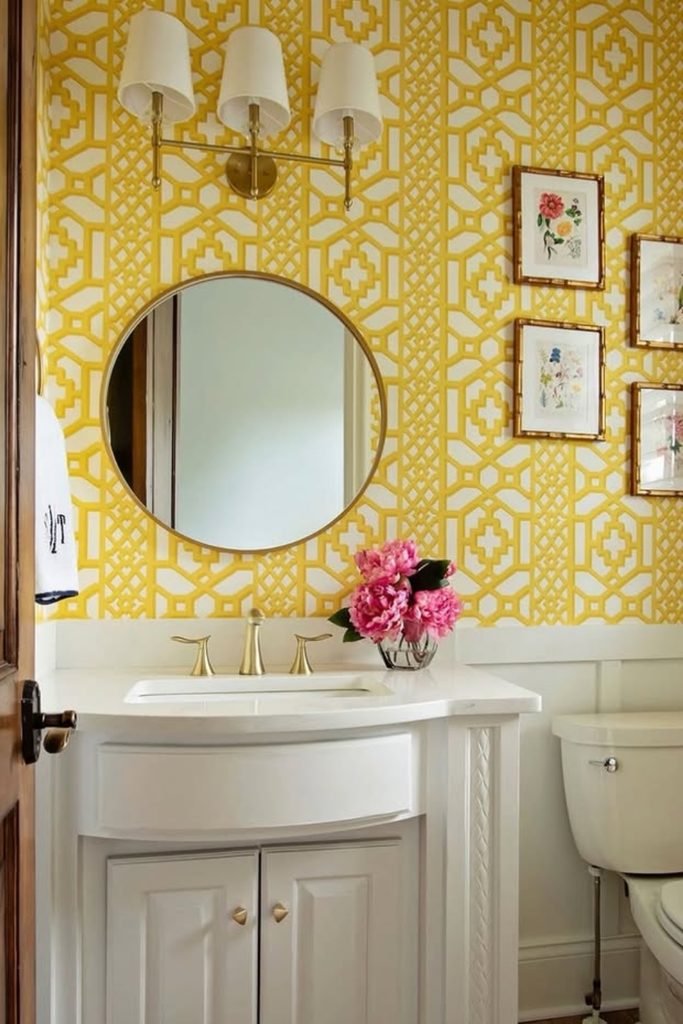
Yellow lattice wallpaper gives a small powder room plenty of pattern without changing its fixtures, especially when white paneling covers the lower walls.
Match the wallpaper background to your vanity before choosing the yellow, so the white surfaces feel connected instead of showing noticeably different undertones.
A round mirror breaks up the straight pattern; keep nearby floral prints small and simply framed so they sit comfortably beside the glass.
Vintage Cloakroom
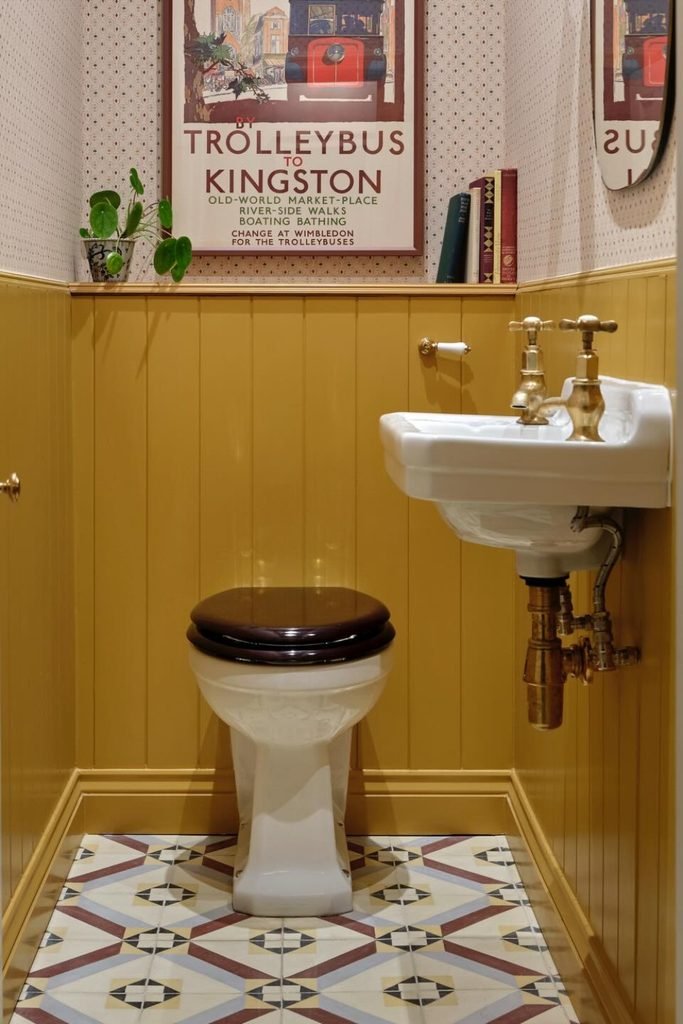
Mustard vertical paneling makes this tiny cloakroom feel considered, with a narrow ledge giving you display space without needing a separate shelf above.
Pair it with a compact wall basin to preserve walking room, and repeat brass across the taps and exposed plumbing for consistency below.
Let a vintage poster supply the accent colors, then choose flooring that picks up a few of those shades without copying every detail.
Butter Blossoms
Small yellow flowers on white wallpaper offer a gentle starting point when you want color throughout the bathroom without covering every wall solidly.
Pull a butter yellow from the print onto paneling, window trim, and door frames, testing it beside the wallpaper before painting those surfaces.
Keep the vanity and towels cream or white, then use matching brass lights on either side of the mirror to frame the basin.

Vanilla Layers
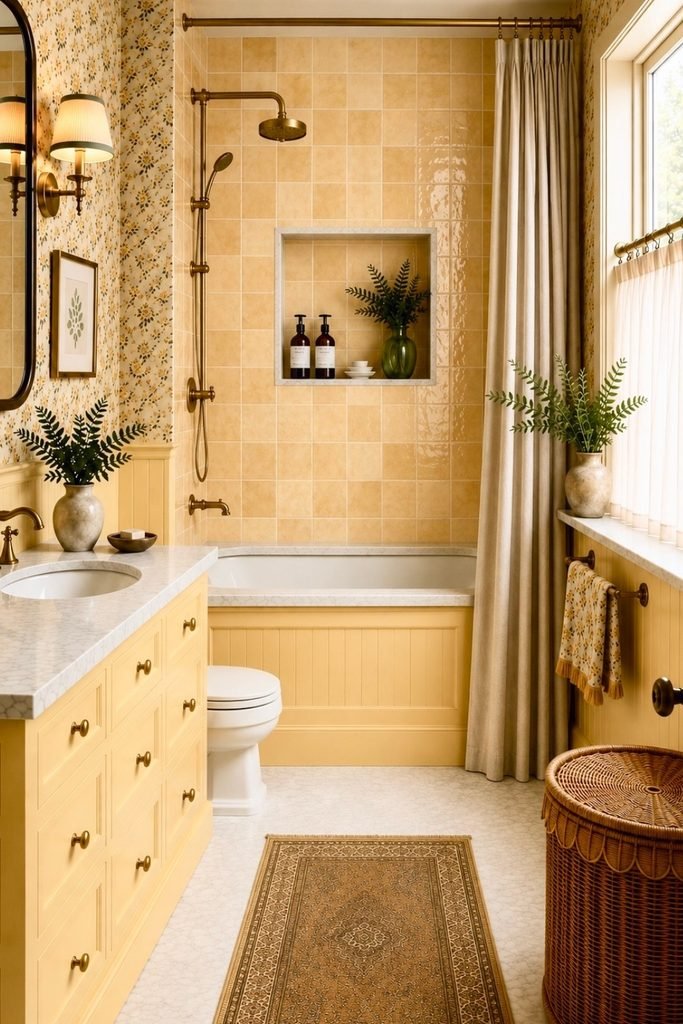
Pale yellow cabinetry and creamy shower tiles let you spread color through a narrow bathroom while keeping the differences between surfaces fairly gentle.
Use the same paint on the tub panel and lower walls, then choose a floral wallpaper that repeats yellow above the paneling.
Frame the shower niche with a light stone border to connect it with the countertop, and keep bottles grouped so the recess stays useful.
Emerald Contrast
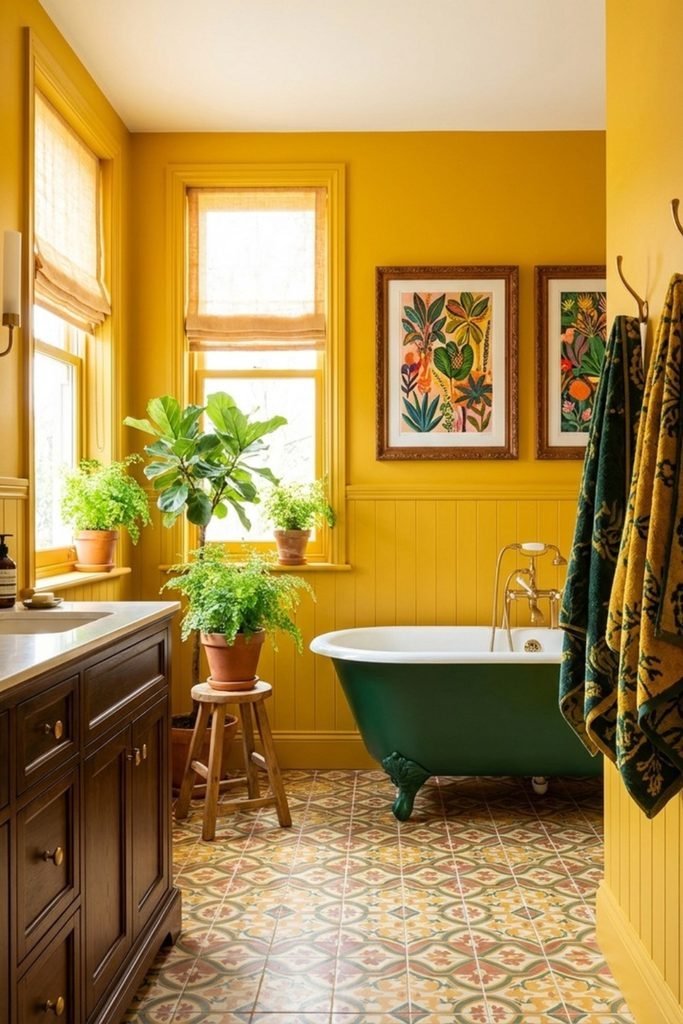
A deep green clawfoot tub gives these golden walls a contrasting center, making the combination worth trying if you enjoy stronger bathroom colors.
Choose your patterned floor first, then pull its yellow and green shades into painted surfaces so the room follows one connected palette.
Keep window coverings plain and leave the ceiling white, giving the detailed floor and botanical artwork enough space without adding another competing pattern.
Gingham Gold
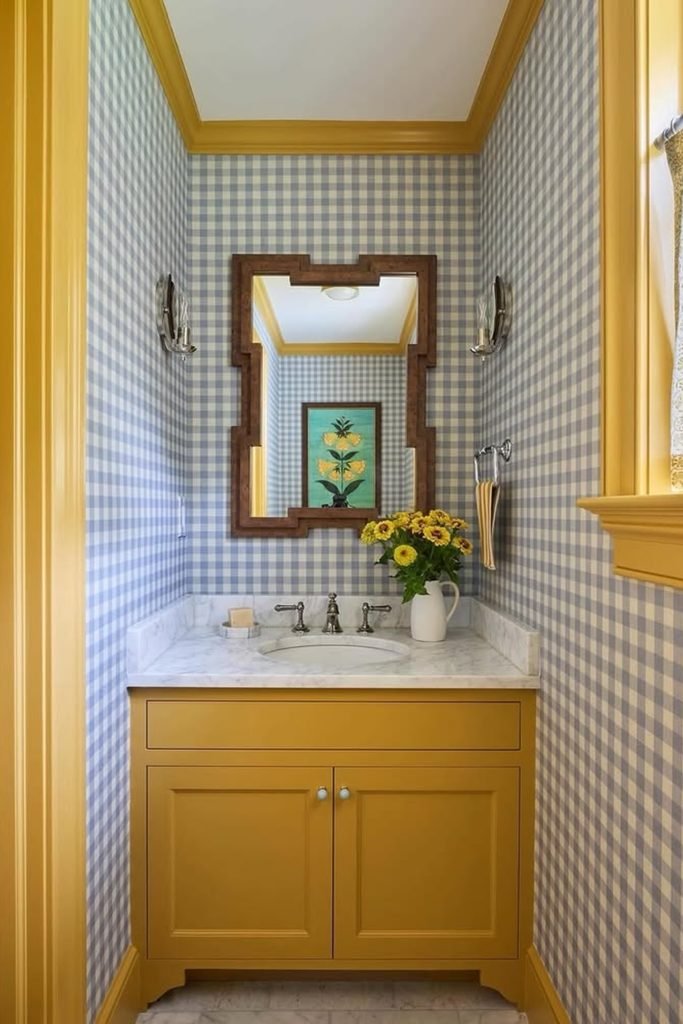
Blue gingham walls make a mustard vanity stand out, giving you a clear way to combine cool pattern with warmer painted bathroom features.
Repeat the vanity shade on window trim and crown molding to connect the edges, while keeping the countertop pale and its surface uncluttered.
Choose a substantial wooden mirror to interrupt the small checks, and use simple metal fittings so the wallpaper remains the main patterned element.
Lemon Brass
Yellow paint above cream subway tiles offers a straightforward update if you already have a traditional basin and want to keep the fixtures.
Carry a similar yellow into wallpaper in an adjoining toilet area, allowing the rooms to connect without repeating exactly the same wall treatment.
Use white towels and a simple basket beneath the open basin stand, leaving its brass legs visible rather than filling every available gap.

Golden Lines
Slim yellow shower tiles and a ribbed vanity front repeat the same vertical rhythm, making this pairing useful for a coordinated modern bathroom.
Separate those yellow features with broad cream surfaces, so the shower and basin each stand out without turning every wall into a feature.
Use black taps and a matching shower frame for definition, then keep towels white so the illuminated shelves remain simple places for storage.

Lemon Backdrop
A bright lemon wall across the end of a narrow bathroom draws attention forward, while neutral side walls keep the color clearly contained.
Lay rectangular tiles horizontally for this look, and choose a plain white vanity so its details do not compete with the patterned floor.
Repeat the floor pattern through the shower area to connect the layout, using a plain curtain when privacy or splash control is needed.

Zigzag Edge
White herringbone tiles create a pointed border against mustard paint, giving you a decorative transition without adding a separate strip of patterned tile.
Plan the tile height before placing the mirror and taps, keeping the zigzag edge clear of fittings so its outline remains easy to follow.
This suits a bathroom where you want yellow above the splash zone; repeat it in folded towels while keeping the shower mostly white.

Ochre Rust
Ochre shower tiles and a rust vanity create two warm focal points, with pale walls separating them so neither color fills the whole bathroom.
Borrow small accent colors from the speckled floor for your bath mat and towels, rather than introducing shades that appear nowhere else in the room.
Choose a countertop pattern with plenty of light background, letting it connect the vanity to the walls without competing with the shower tiles.

Muted Stripes
Muted yellow walls above alternating cream and tan tiles give this bathroom color without sharp contrast, especially beside a plain white freestanding tub.
Continue the striped tiles into the shower to connect both bathing areas, and use a slim brass screen that leaves the pattern visible.
Hang a small artwork grouping above the tile line, borrowing yellow from the walls and adding one green frame for a subtle change.

FAQs
How Can You Add Yellow Without Painting or Replacing Tiles?
Start with a yellow shower curtain or bath mat, choosing a shade that works with the floor and vanity you already have.
Repeat that shade in hand towels or a small framed print so the color feels connected rather than appearing in one isolated spot.
Keep your other accessories simple, and try these small changes before buying more so you can judge how much yellow you actually enjoy.
Should All the Yellow Shades in a Bathroom Match?
Your yellows do not need to match exactly, but placing samples together helps you see whether their tones work comfortably beside each other.
Try a pale yellow wall with deeper mustard towels, using cream or white between them to give each shade its own clear space.
If one yellow looks greenish beside another, swap the smaller item first rather than changing a wall color or tile you already like.
