
23 Wood Kitchen Ideas for 2026

This article may contain affiliate links: read full affiliate disclosure.
You’ve probably felt this already, you love the idea of a wood kitchen, but the moment you actually have to choose the wood, you start feeling stuck.
One person tells you solid wood is the best choice, while another warns you it could swell the moment you bring water anywhere near it.
When you search online, you read confident articles, but somehow they never explain what will really work for you in daily life.
And if you end up choosing the wrong wood, you might not notice the problem right away, you will see it slowly, and by the time you realize it, fixing it can cost you a lot.
In this article, you will understand which wood actually makes sense for your kitchen, where you can safely use it, and 23 unique kitchen ideas.
Let’s jump in!
Which Wood Is Best For A Kitchen?
There isn’t one single best wood that will work for every kitchen, and that’s usually where you might go wrong.
Your own cooking habits, the amount of moisture in your space, and your budget should matter more to you than the fancy name of the wood.
If you cook every day, you’ll need wood that can handle heat and water without swelling on you.
When your kitchen stays mostly dry, you can give yourself a little more freedom with your choice.
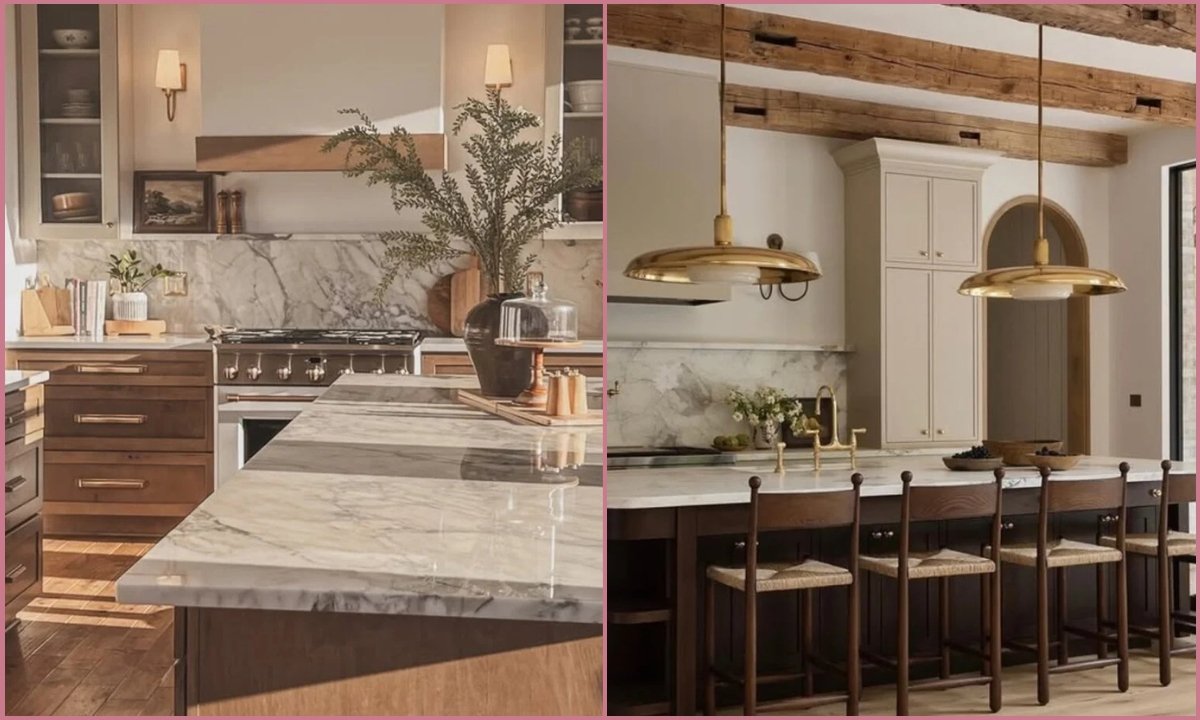
Warm Wood Balance
What really makes this kitchen work is how you hold back. You are using bold wood, but you’re not letting it take over everything.
You keep the darker wood grounded in the island, while lighter cabinets and stone help you avoid that heavy feeling.
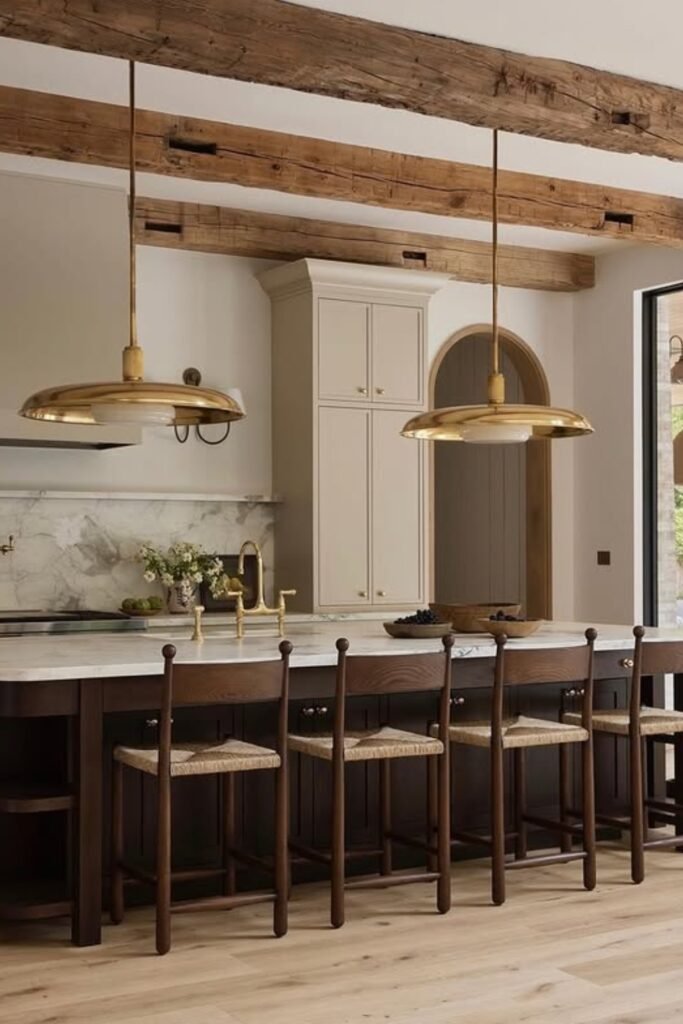
Soft Wood Contrast
You get warmth and weight from the lower cabinets, while lighter uppers and marble help you keep the space calm and bright.
If you want a cozy feeling but still need your kitchen to look clean and open, this setup can really work for you.
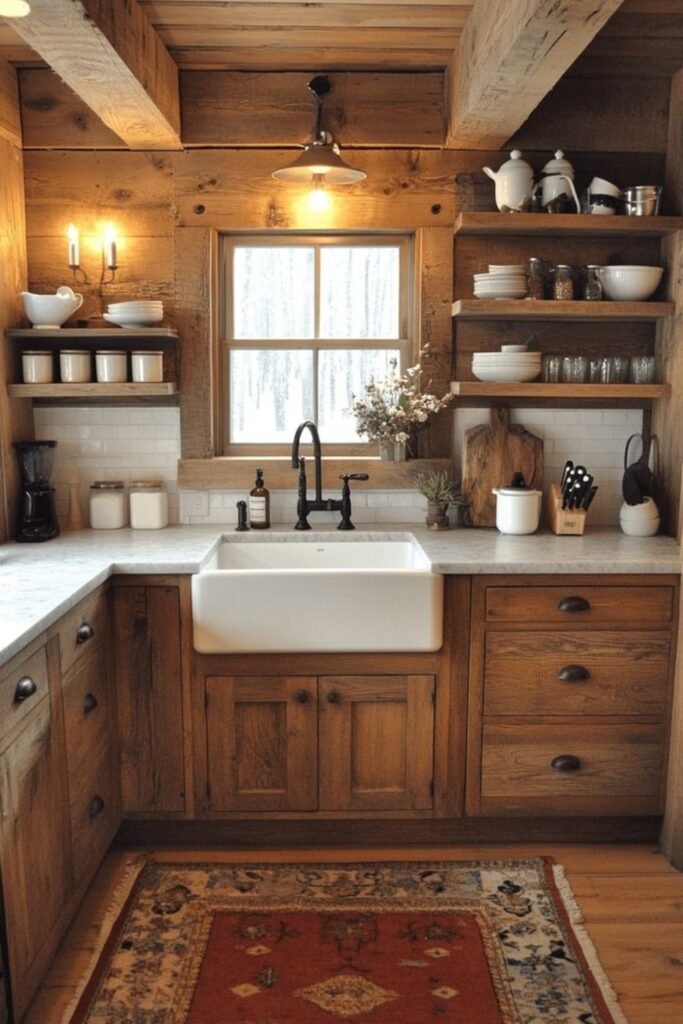
Cozy Cabin Kitchen
This is the kind of kitchen that makes you feel at home right away. The key is choosing a natural finish, so when scratches happen, they blend in instead of standing out.
When you wrap wood around everything, you create instant warmth, which works best if you live somewhere cold or if comfort matters more to you than a sleek look.
Seamless Wood Wall
Everything blends into one continuous wood surface, which works best in open-plan homes where you don’t want the kitchen to visually dominate the space.
You can choose a consistent wood grain, keep finishes matte, and let storage stay concealed so your kitchen feels calm, not busy.
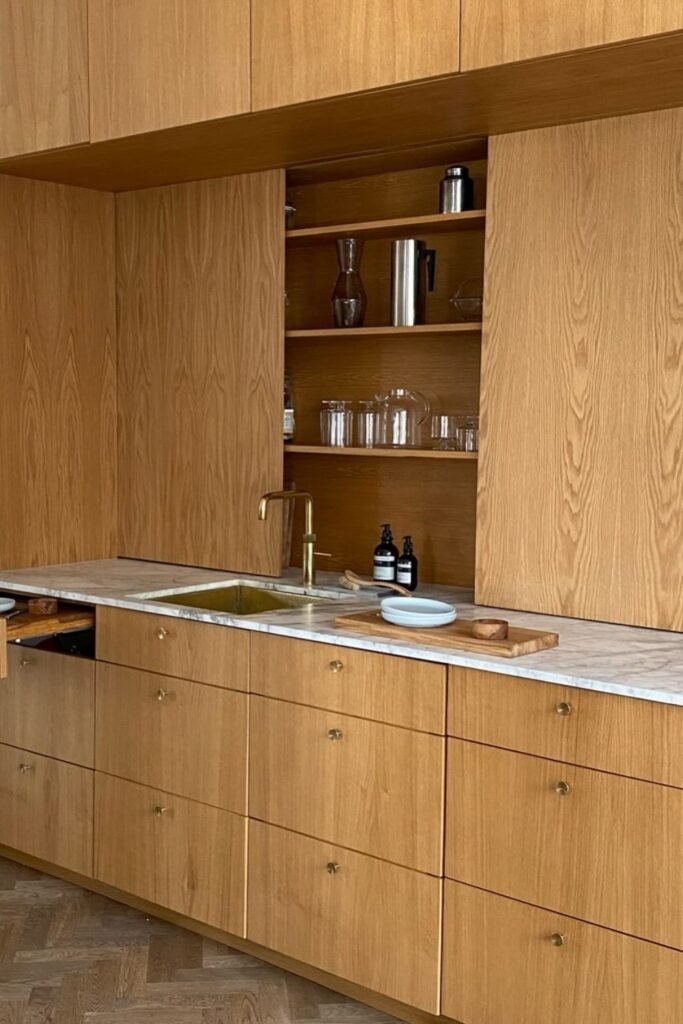
Classic Wood Cabinetry
This kind of kitchen feels familiar in a way you can trust. This works especially well if your kitchen gets daily use and you need it to age gracefully.
You get warmth from solid-looking wood cabinets, while lighter backsplashes and counters help you avoid a dated look.
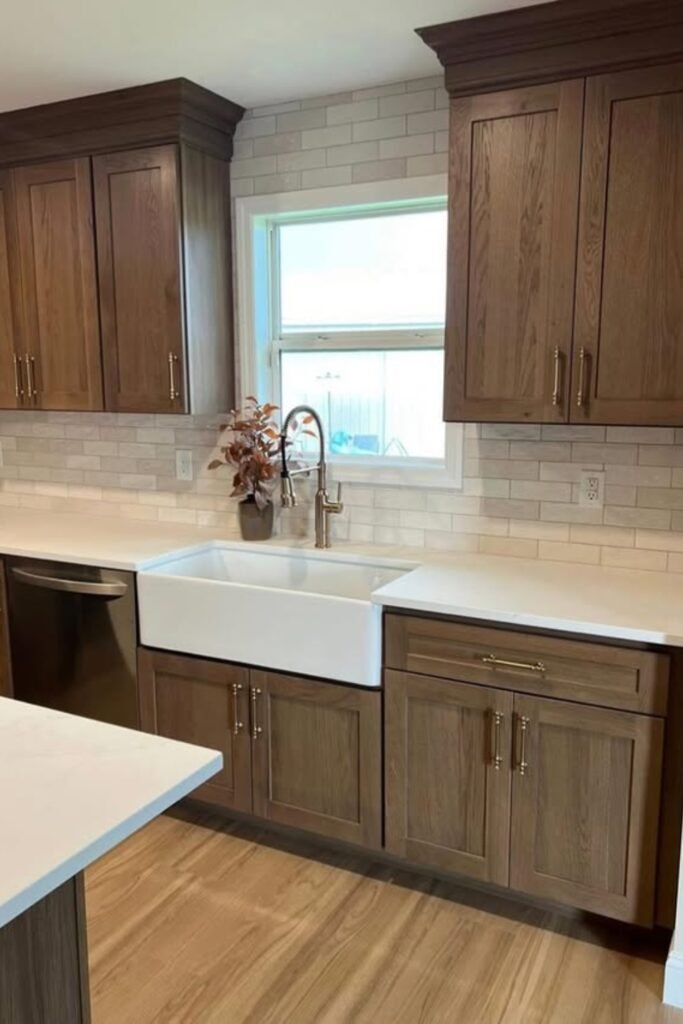
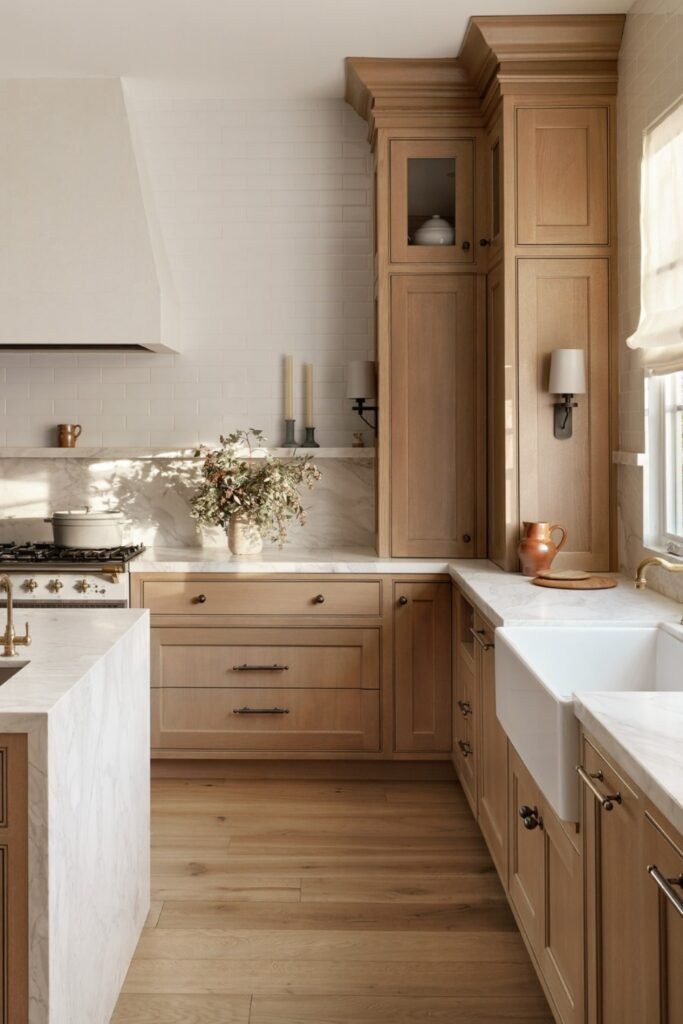
Light Wood Elegance
The light wood helps you maintain an airy feel, while marble and classic fixtures give you structure without making the space feel formal.
You should choose a soft wood tone with subtle grain, pair it with pale stone, and keep details traditional but restrained so nothing feels overdone.
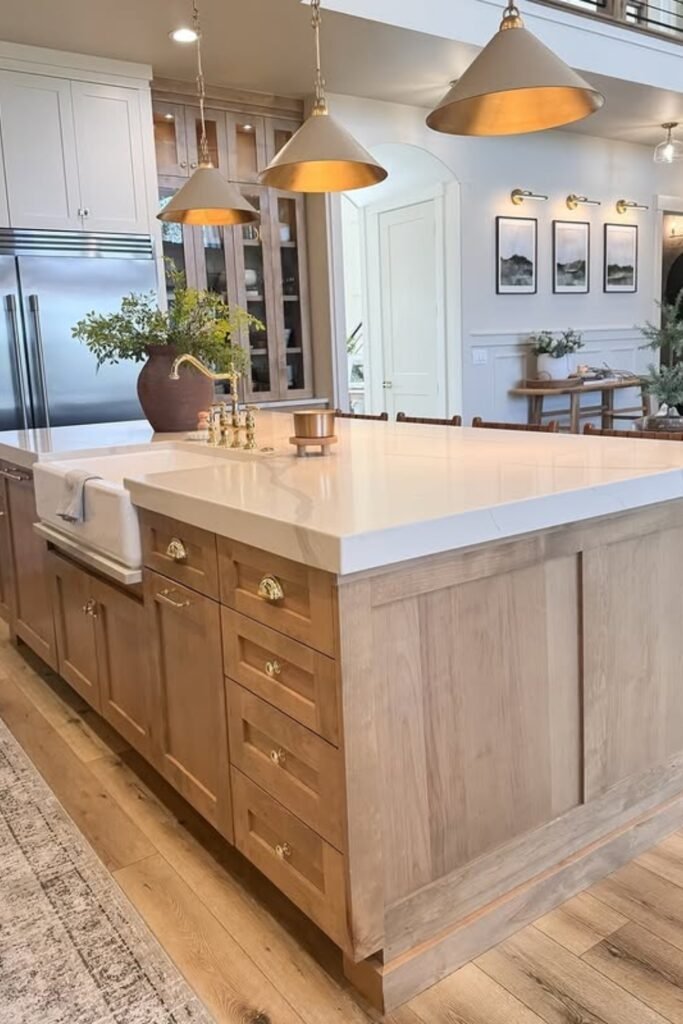
Soft Oak Island
When you use a soft oak island, you add warmth without overpowering the space, which is perfect if your kitchen opens into living areas.
You should keep the wood light, pair it with a clean stone top, and use warm lighting so everything ties together naturally.
Relaxed Wood Living
You can tell the wood has a more relaxed finish, which makes it forgiving and easy to live with. This works best if your kitchen is part of everyday life, not just a place you cook.
You should avoid high-gloss finishes, mix wood with simple open shelving, and let a few everyday items stay visible so the space feels natural, not staged.
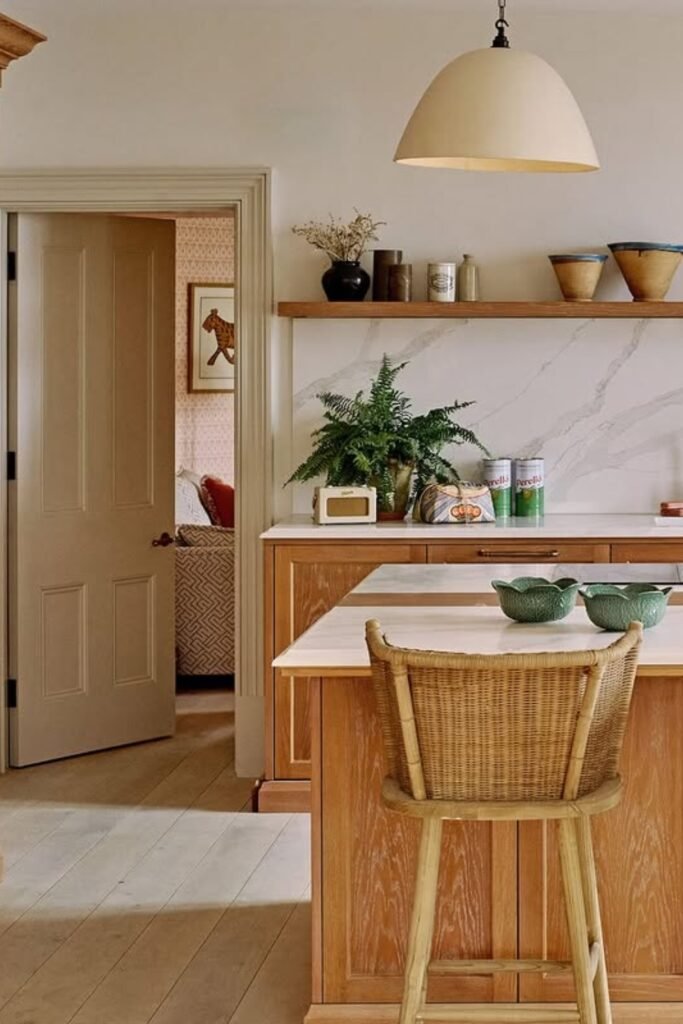
Light Wood Calm
The pale wood keeps the space soft and open, which is ideal for smaller kitchens or rooms that don’t get a lot of natural light.
You can choose light wood with minimal grain, keep hardware simple or hidden, and use open shelves to prevent the space from feeling boxed in.
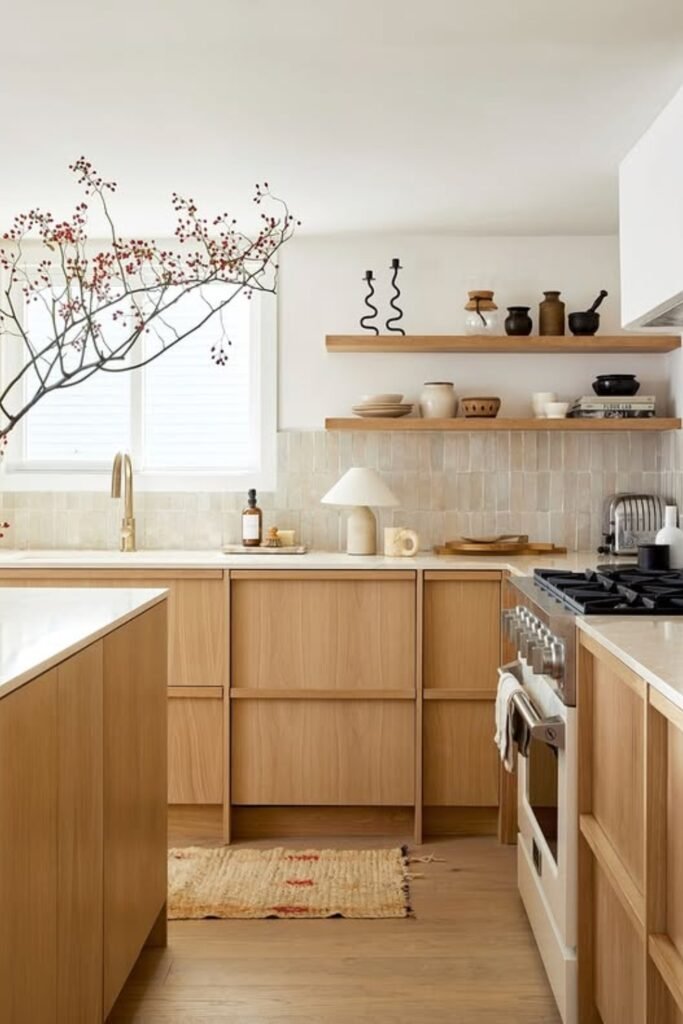
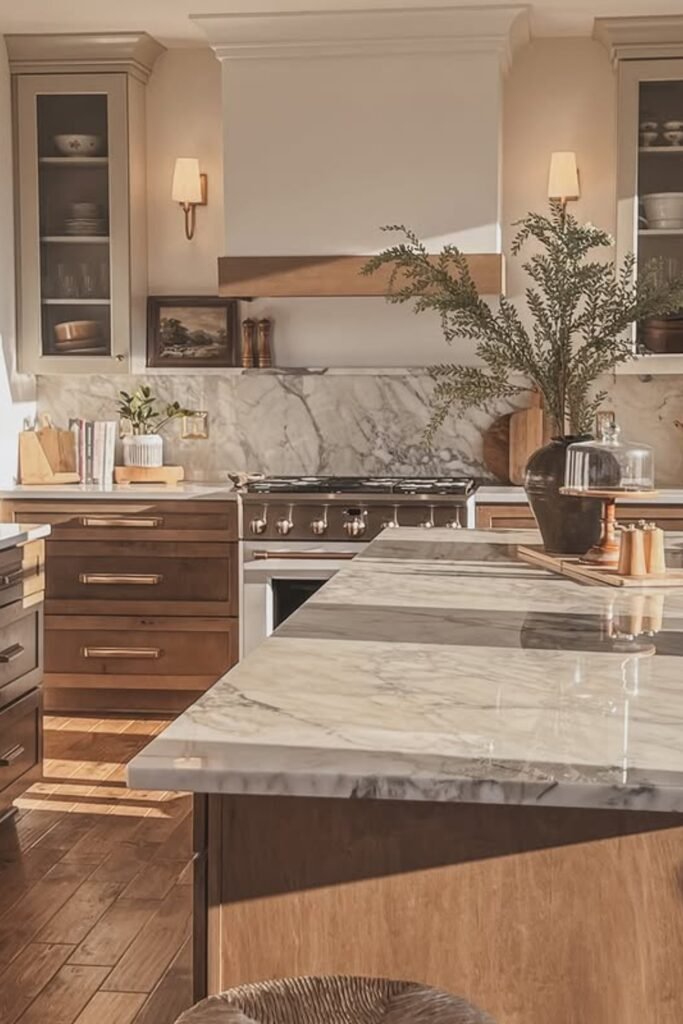
Sunlit Wood Kitchen
The wood feels warm and alive because sunlight hits it throughout the day, not because it’s dark or heavy.
This kind of kitchen works best if you have large windows or a skylight, without light, you won’t get the same effect.
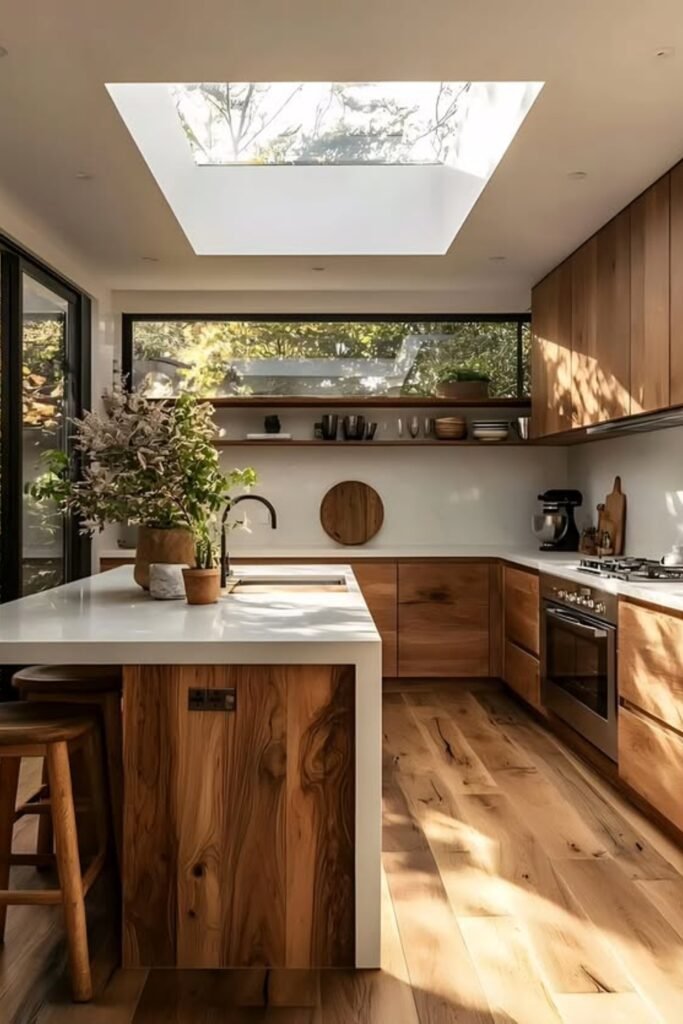
Warm Modern Wood
The clean lines keep it sharp, while the warm wood tone stops it from feeling flat. This works best in contemporary homes where you want character but still like things tidy and controlled.
You can stick to flat-panel cabinets, use one strong stone surface for contrast, and let your wood grain stay visible so the space feels designed, not decorative.
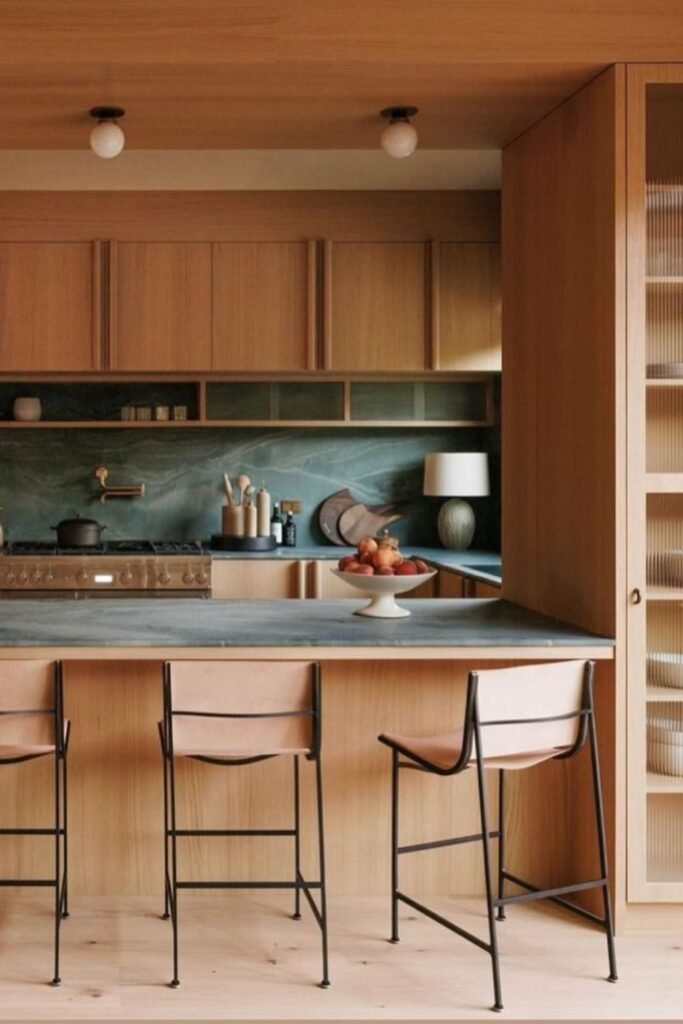
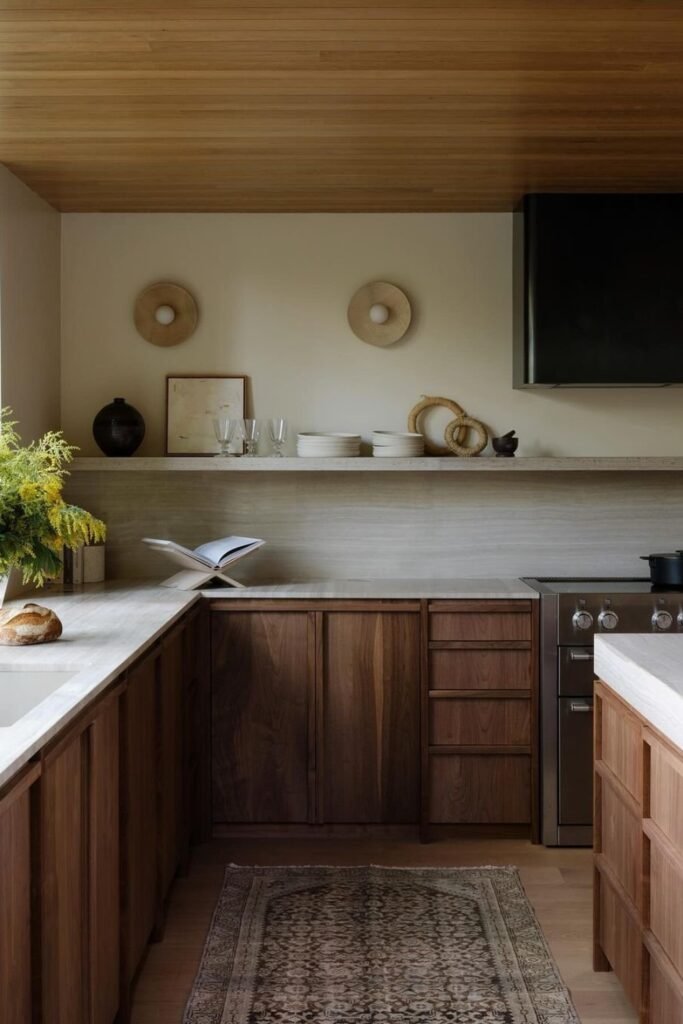
Grounded Wood Depth
You keep darker wood low and grounded, while lighter stone and open space stop the room from feeling closed in.
You should use deeper wood tones on base cabinets, pair them with a simple slab countertop, and avoid uppers so the kitchen feels relaxed and intentional.
Everyday Wood Modern
Light wood adds warmth, while white cabinets and open shelves help you keep things fresh and practical.
You can use wood on shelves, tables, or tall units, keep base cabinets simple, and mix in white surfaces so the space stays bright even with daily use.

Quiet Wood Storage
When everything has a place, the light wood cabinets feel calm instead of busy. This works best if you want your kitchen to look clean even on chaotic days.
You should choose flat or lightly detailed cabinet fronts, keep the wood tone consistent, and use simple hardware so storage blends in rather than breaking the flow.

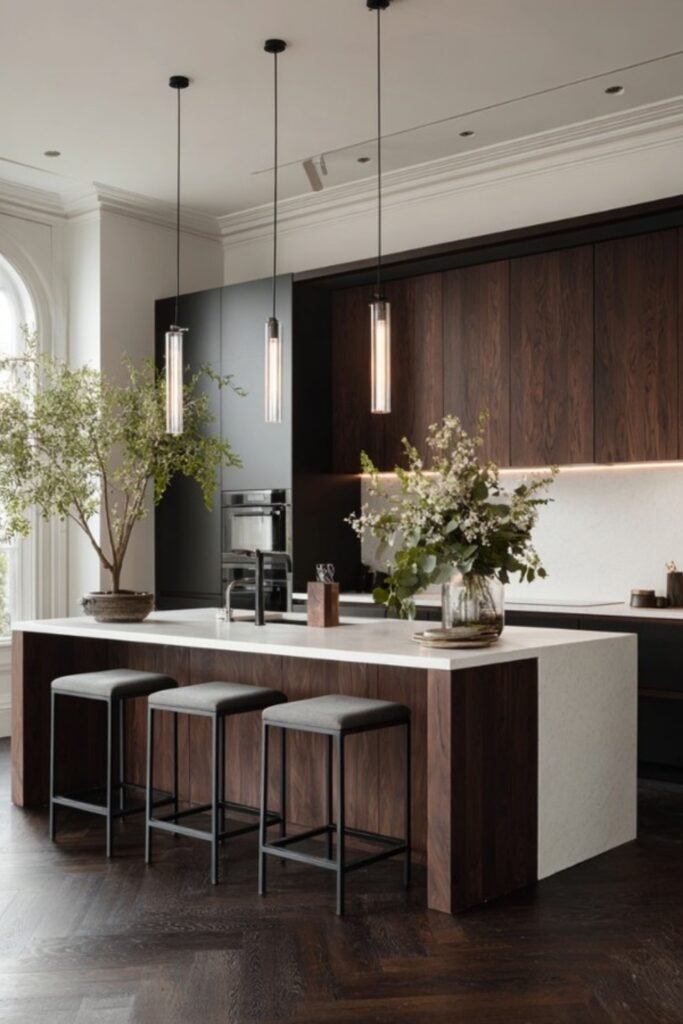
Dark Wood Statement
The deep wood adds drama and weight, while the clean stone island keeps it sharp and modern.
This style suits larger kitchens or homes with good natural light, where dark finishes won’t feel closed in.
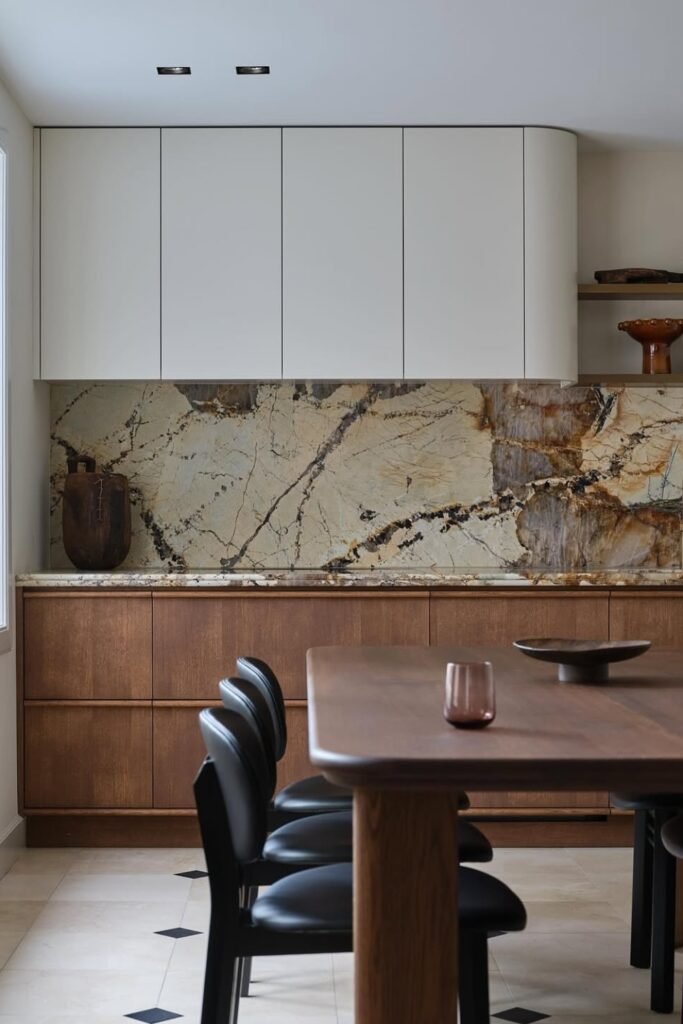
Wood Stone Contrast
Instead of competing, the wood supports the stone. The rich wood base cabinets ground the space, while a dramatic stone backsplash becomes the main feature.
You should keep wood finishes simple and matte, let one stone surface take the spotlight, and avoid adding extra textures.
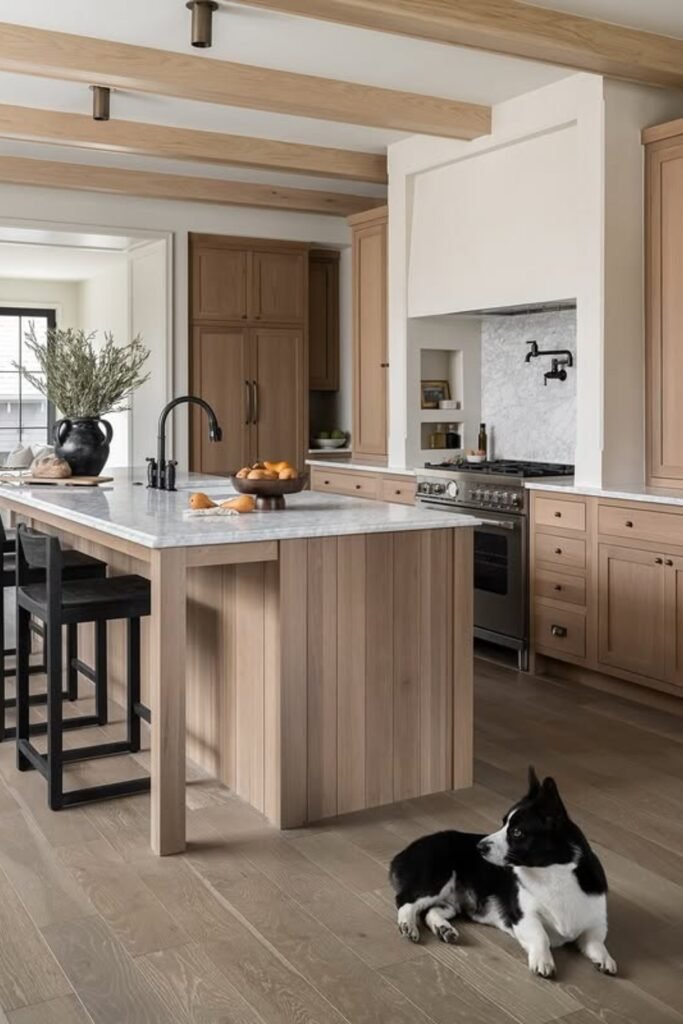
Airy Wood Framework
What keeps this kitchen feeling light is how you break up the wood, not how much you use. This works best if you have a larger kitchen and want structure without clutter.
Overhead beams add warmth, while pale cabinets and stone surfaces help you avoid heaviness.
Timeless Wood Comfort
The medium-dark wood adds richness, while the white countertops keep everything from feeling too formal or heavy.
This style works best if you want something that won’t date quickly and can handle everyday family use.
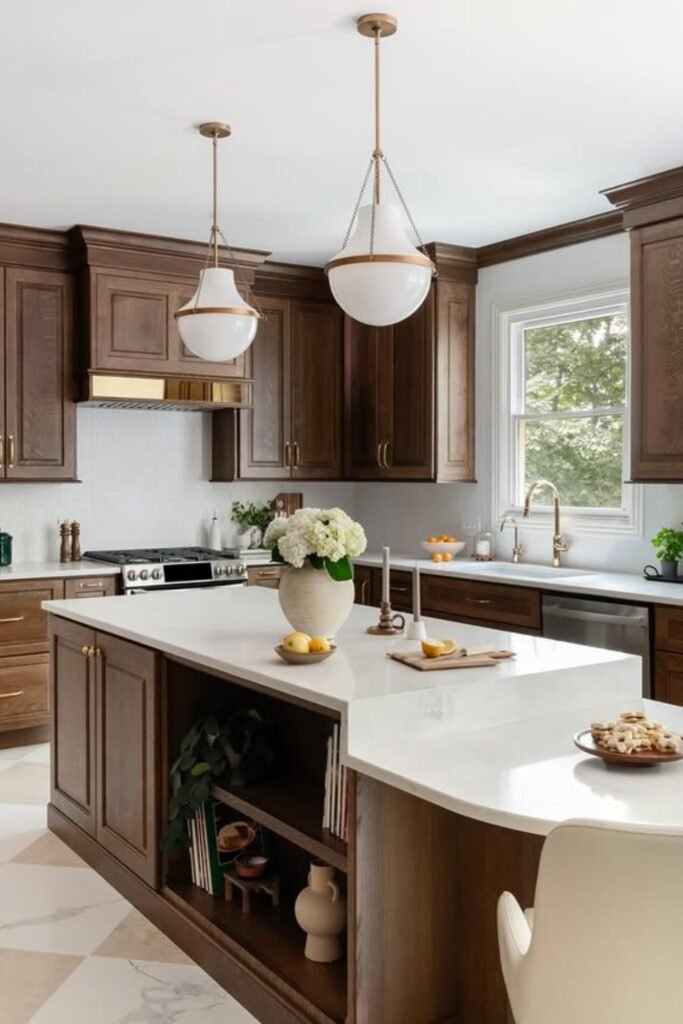
Mixed Wood Layers
You let darker wood ground the tall storage, while lighter cabinets above help you avoid that boxed-in feeling.
This approach is ideal when you have a lot of vertical cabinetry and one solid color would feel too heavy on you.
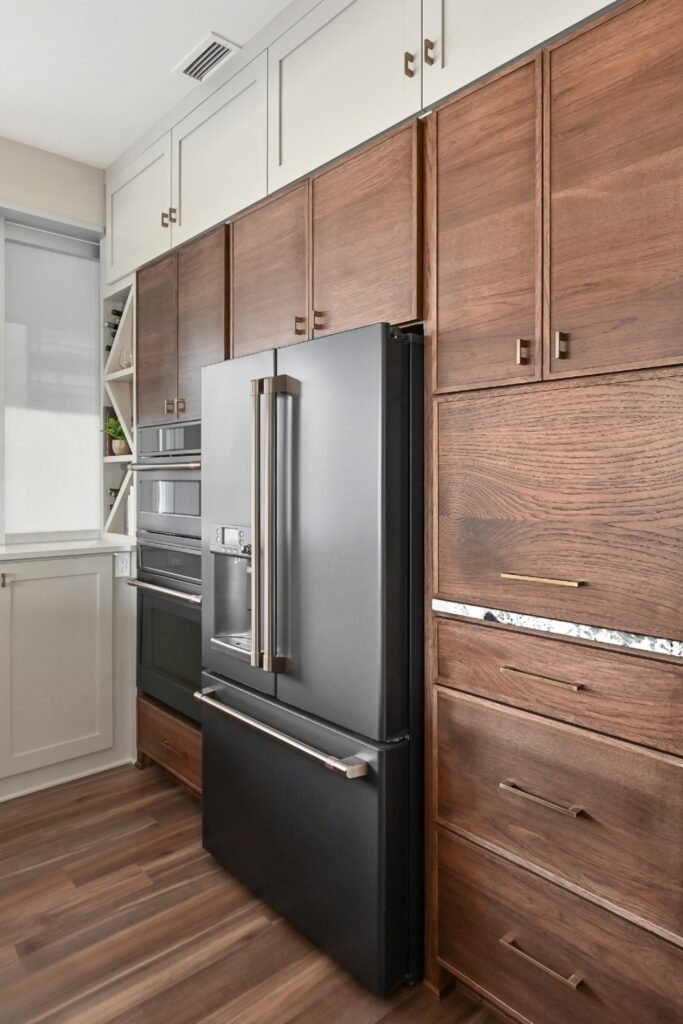
Sloped Wood Warmth
This kitchen feels welcoming because you let the wood follow the architecture instead of fighting it.
When the ceiling slopes, the wood naturally pulls your eye upward, while warm wood cabinets help you keep everything grounded.

Balanced Wood Modern
The wood feels rich, but you don’t let it take over, because you balance it with clean stone surfaces and plenty of open space.
You should use wood consistently on cabinets and islands, keep the grain simple, and rely on neutral countertops and walls to give the kitchen breathing room.

Deep Wood Classic
The deeper wood tone makes the space feel established and warm, not trendy.
This works best in kitchens where you want a sense of permanence and don’t plan to change finishes often.
You can use darker wood on most cabinetry, keep counters light for contrast, and add a few open sections so the kitchen feels layered instead of heavy.
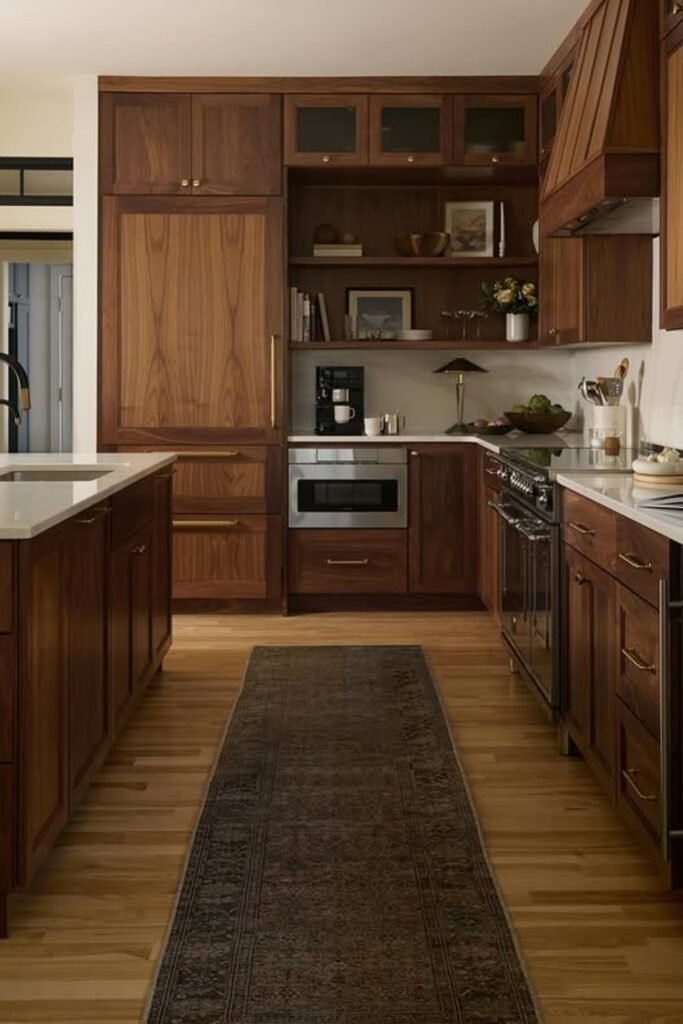
Warm Wood Utility
The wood is sturdy, the layout is straightforward, and everything looks built for daily use.
This style suits homes where the kitchen is used constantly, not treated like a showpiece.
You can choose durable wood cabinets with simple profiles, add good task lighting under uppers, and pair the wood with an easy-to-clean backsplash so maintenance stays simple over time.
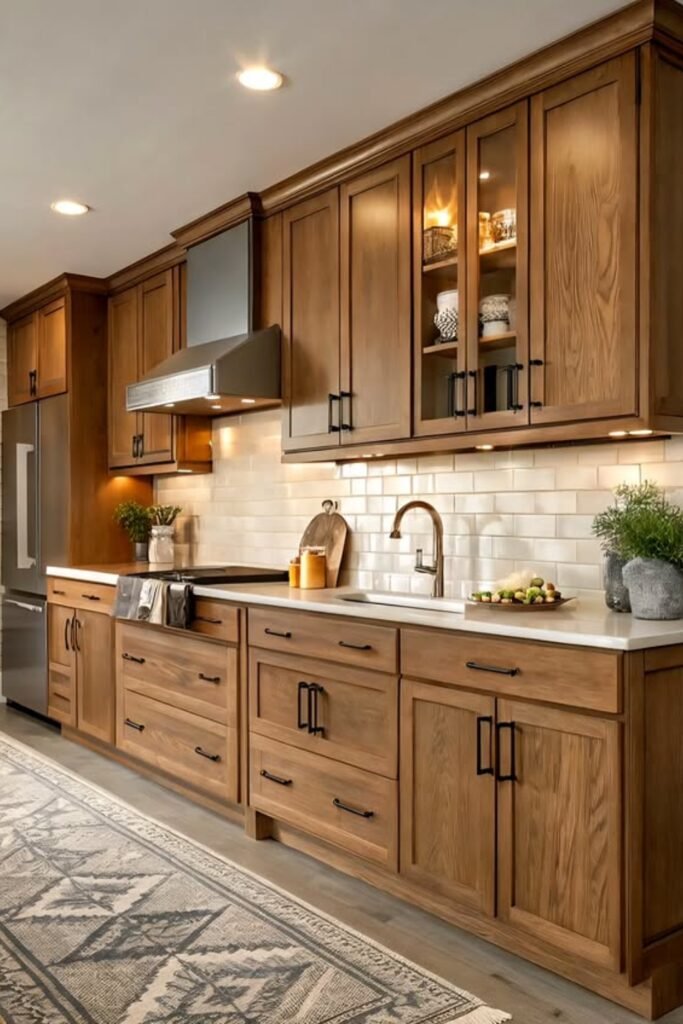
FAQs
Is a wood kitchen hard to maintain?
A wood kitchen isn’t hard for you to maintain, but you do need to give it the right protection.
When you make sure the wood is properly sealed and you clean up spills as soon as they happen, you will find daily care stays simple.
Most problems happen when you use raw or poorly finished wood near sinks and stoves.
If you choose the right finish and avoid letting water sit on the wood, you’ll see that it holds up beautifully in your everyday kitchen.
Can wood kitchens handle moisture and heat?
They can, if you make sure you use the right materials in the right places.
You will find that solid wood everywhere can be risky, but when you use engineered wood or plywood with a good finish, you’ll handle moisture much better.
When you’re near heat and water, you should focus more on protection than on the type of wood itself.
You may like to read!
