
24 Warm Neutral Bedroom Ideas for 2026

This article may contain affiliate links: read full affiliate disclosure.
You pick neutral colors because you want your bedroom to feel calm and cozy but somehow you still walk in and feel like it’s cold, flat, or unfinished.
You look at the walls, you see the bedding, and you tell yourself it’s safe, but it still doesn’t feel inviting.
If you have ever caught yourself thinking, Why doesn’t this look like the pictures? you should know you’re definitely not alone.
The thing is, it’s not that neutrals don’t work. You just need to use the right elements in the right order, and then your neutral bedroom can actually feel warm and welcoming.
In this article, you are going to see exactly how to warm up a neutral bedroom with 24 ideas you can try.
Let’s jump in!
How To Warm Up A Neutral Bedroom?
If your neutral bedroom feels cold, it’s usually not the color itself that’s the problem, it’s what’s missing around it.
You might not realize that warmth comes from contrast, texture, and the order in which you add things.
If you start with paint but skip the materials, your room will stay flat. If everything is the same shade, you’ll notice it looks dull no matter what.
To really warm up a neutral bedroom, you need to build it in layers: you add soft first, solid next, and details last.
When you understand what actually creates warmth, you’ll see how every choice you make, bedding, wood, lighting, can work together to make your room feel inviting.
Soft Layered Neutrals
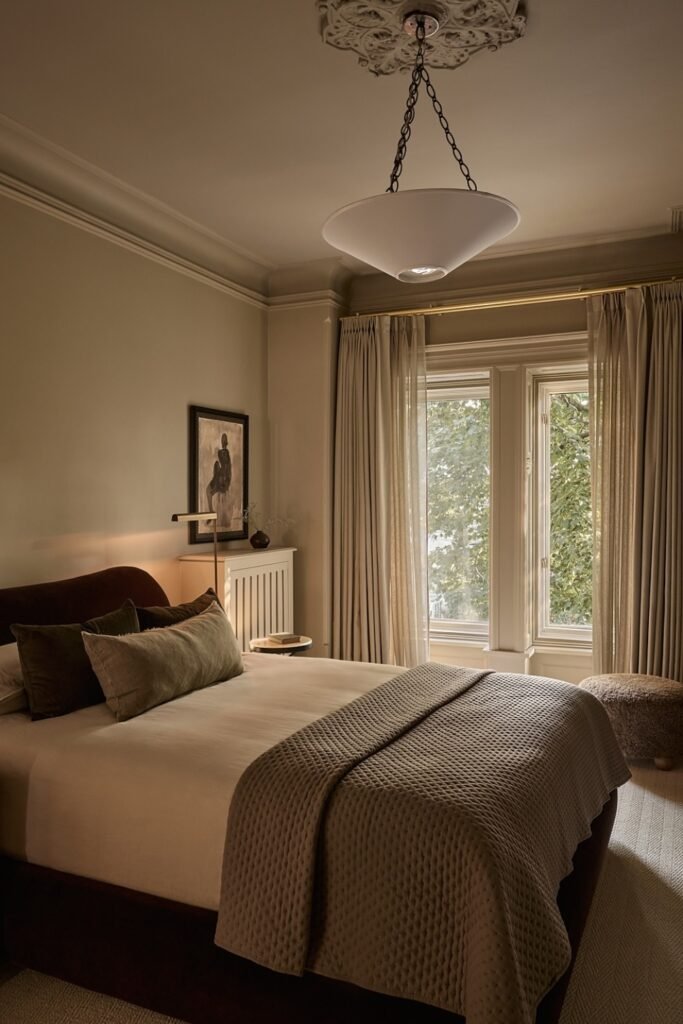
You’ll notice beige walls flowing into soft bedding, then into textured throws and curtains, so your eye never hits a hard stop.
You can make this work in your master bedroom or guest room where calm matters more than personality.
Warm White Layers
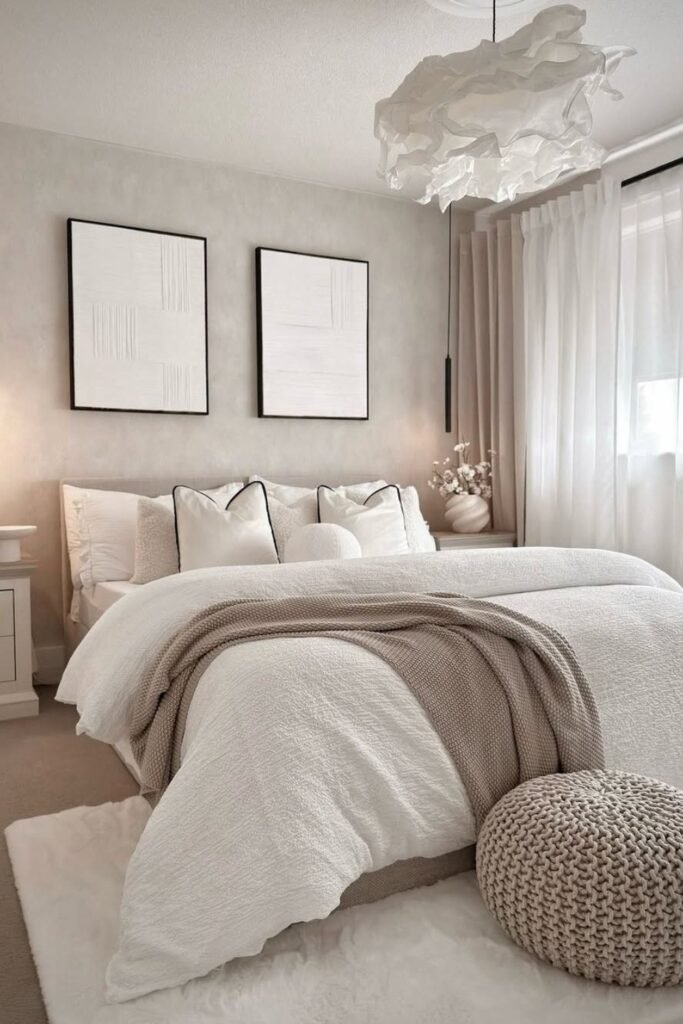
When you look at the bedding, you can see it’s plush instead of crisp, and the knit textures help slow the space down.
You can try this in smaller bedrooms or low-light rooms where darker neutrals might feel heavy.
Natural Wood Warmth
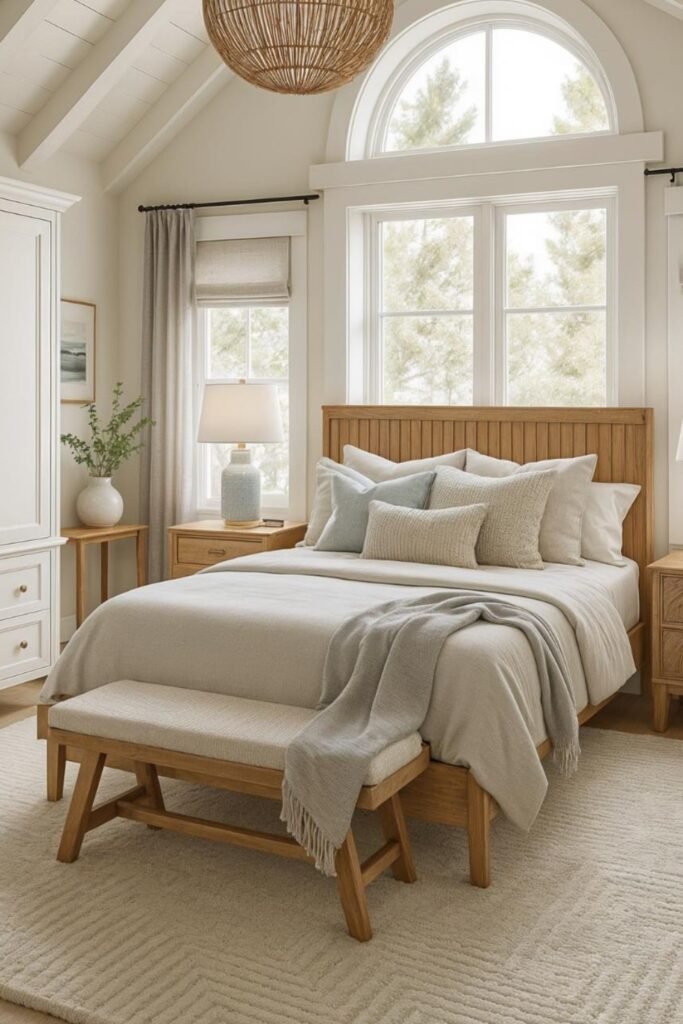
You’ll immediately feel warmth in this bedroom, and it’s because the wood does most of the work.
You can notice the light oak bed, bench, and nightstands adding depth that neutral walls alone can’t create.
Framed Neutral Depth
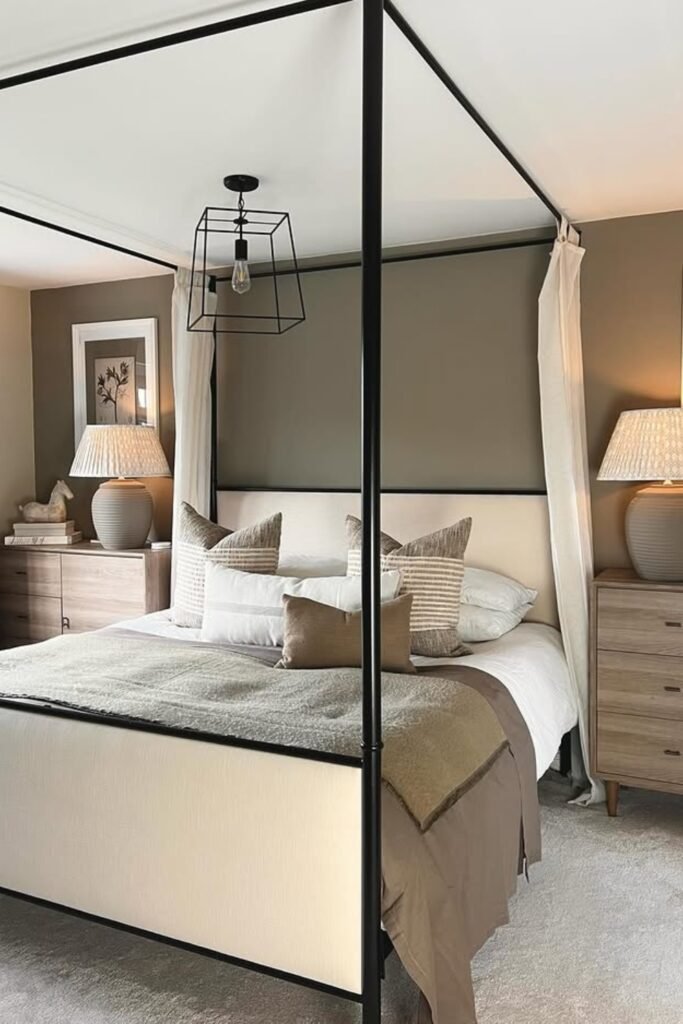
You can see the four-poster frame adding definition, while warm taupe walls keep the space cozy rather than dramatic.
This works especially well in medium to large bedrooms where you want a sense of balance and enclosure.
Cozy Neutral Contrast
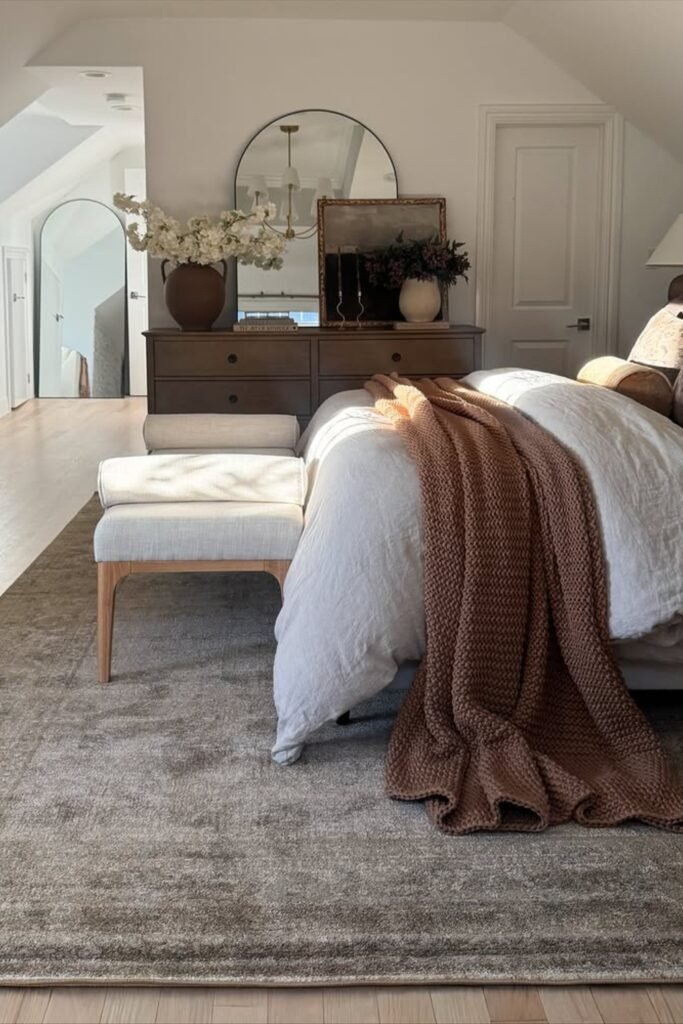
You’ll see soft whites balanced with deeper, earthy tones, especially that warm brown throw, which breaks the calm in just the right way.
You could add a throw, pillows, or a rug, and let contrast live in fabrics, not furniture, so your room stays relaxed instead of heavy.
Soft Modern Balance
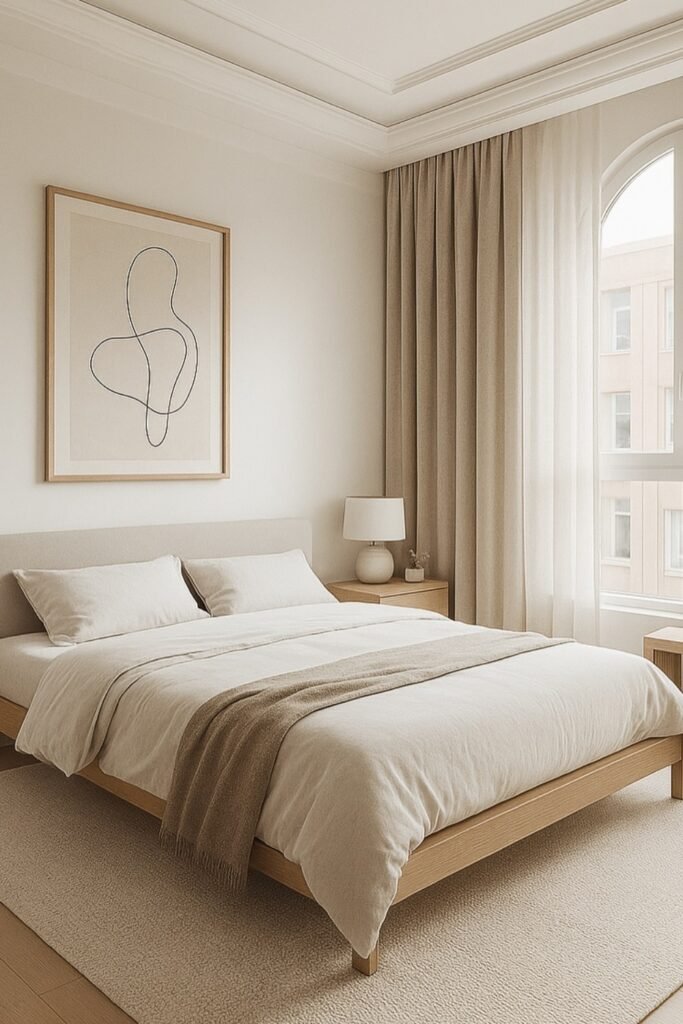
The trick is balance, you can use light wood furniture to ground the room, soft textiles to keep it comfortable, and neutral walls to let everything breathe.
This approach works especially well in apartments or modern homes where you want simplicity without sterility.
Grounded Neutral Calm
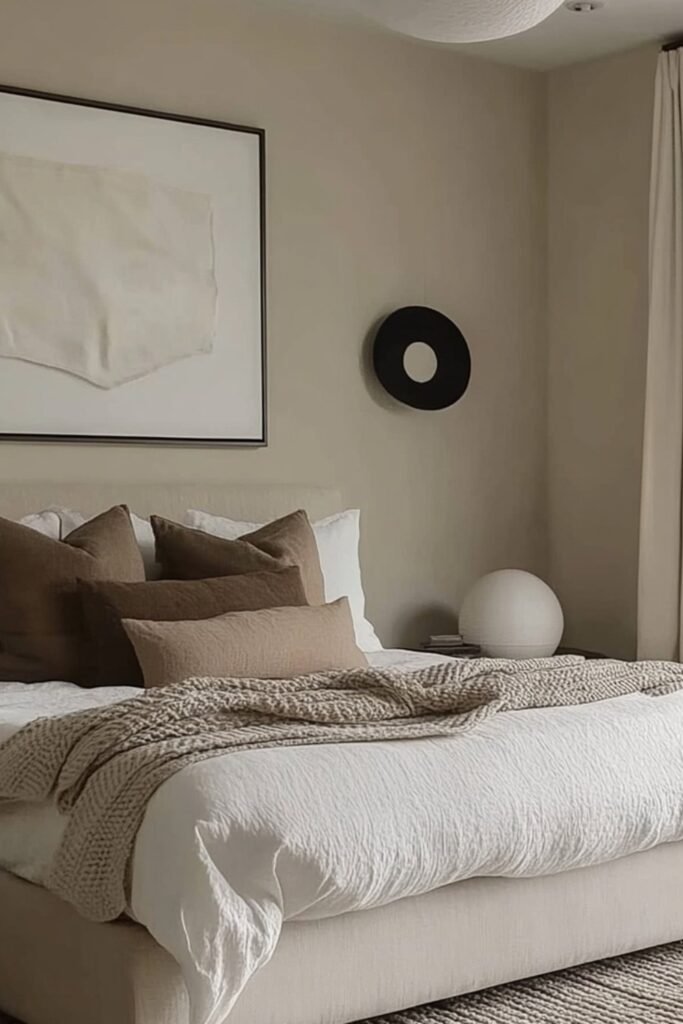
You can see that warmth here comes from depth, not decoration. Soft white bedding stays relaxed because you anchor it with earthy browns and gentle contrast.
Those darker pillows help stop your room from floating away, while a textured throw keeps everything approachable.
Warm Classic Layers
You will notice this bedroom feels inviting because it leans into warmth instead of fighting it.
This contrast works especially well in older homes or high-ceiling bedrooms where space can feel echoey.
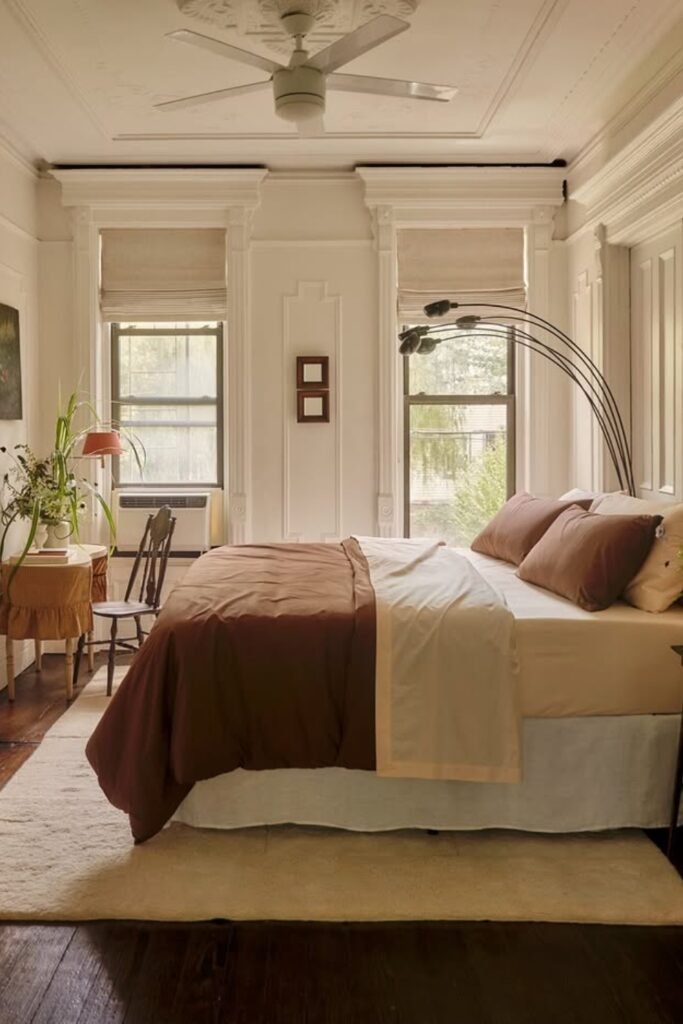
Balanced Neutral Layers
You can see that the warmth comes from balance, soft beige walls, layered bedding, and wood nightstands all sitting comfortably together.
You could try this setup in everyday family homes where you want cozy but still practical.
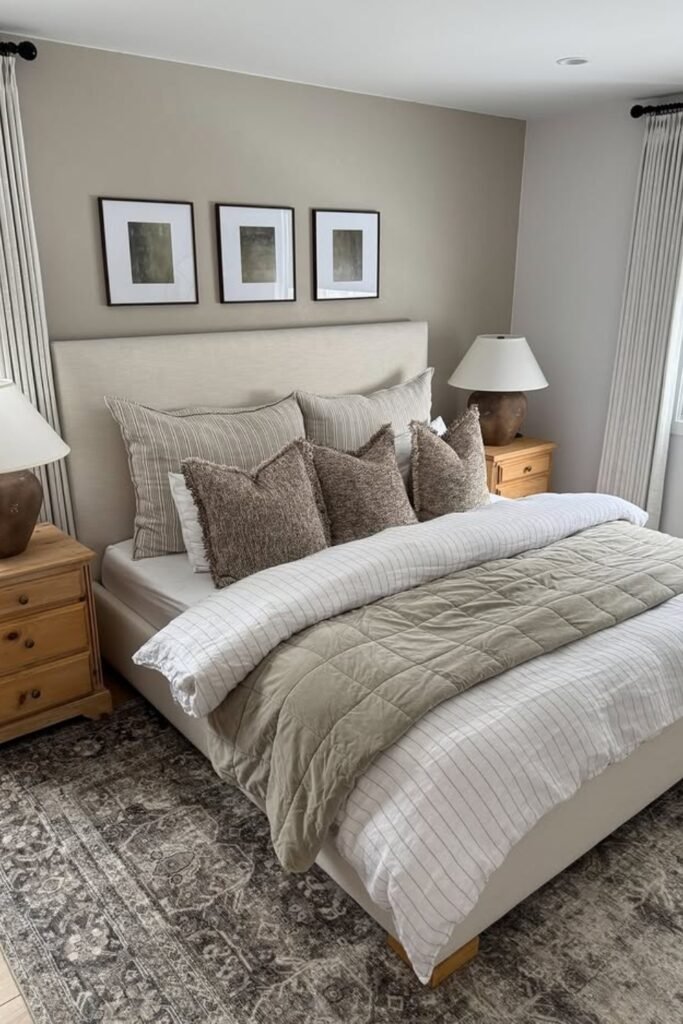
Soft Neutral Comfort
You can notice the padded headboard, ribbed bedding, and gentle wall color working together to remove any sharpness from the space.
You could try this in everyday bedrooms where comfort matters more than statement pieces. To recreate it, you should focus on touch first, choose fabrics that feel inviting, not crisp.
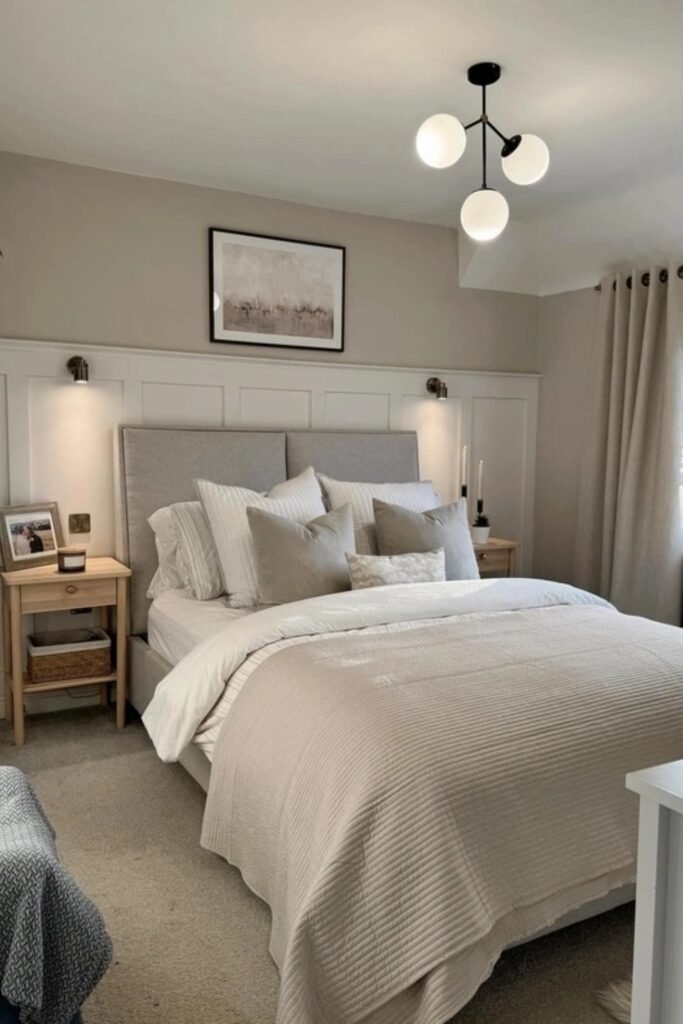
Warm Neutral Harmony
You’ll see that this bedroom feels welcoming because the warmth is spread evenly, not concentrated in one spot.
You might notice soft white walls keeping the space light, while blush and beige tones in bedding and stools add just enough depth.
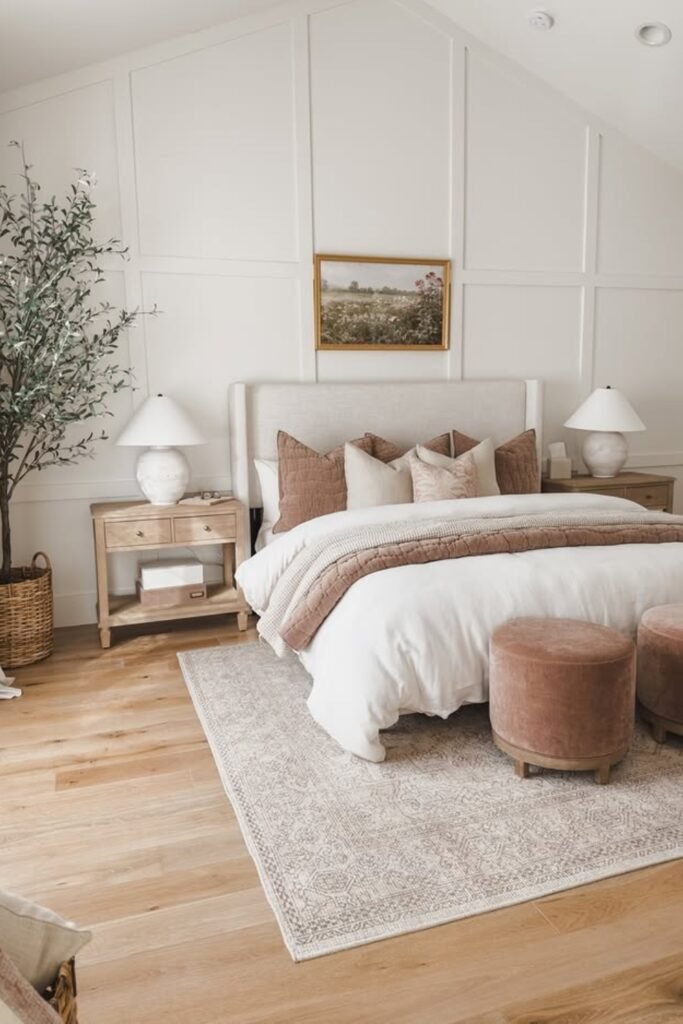
Airy Neutral Comfort
The warmth comes from fabric choices, washed linen bedding, a chunky knit throw, and curtains that fall gently instead of stiffly.
It adds one natural element like a wood bench or woven basket so the room feels lived-in, not styled for a photo.
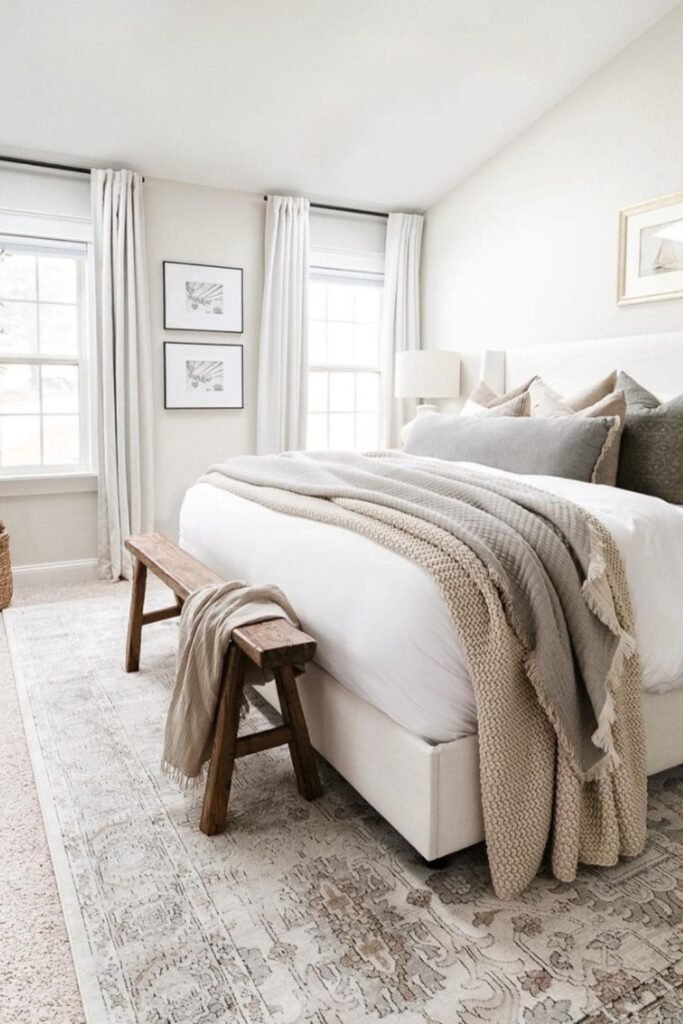
Subtle Neutral Warmth
Everything stays light, but nothing feels sharp. You’ll notice that this bedroom shows you don’t need much to make a neutral space feel warm.
You can see that softness comes from rounded shapes, padded textures, and warm undertones rather than extra color.
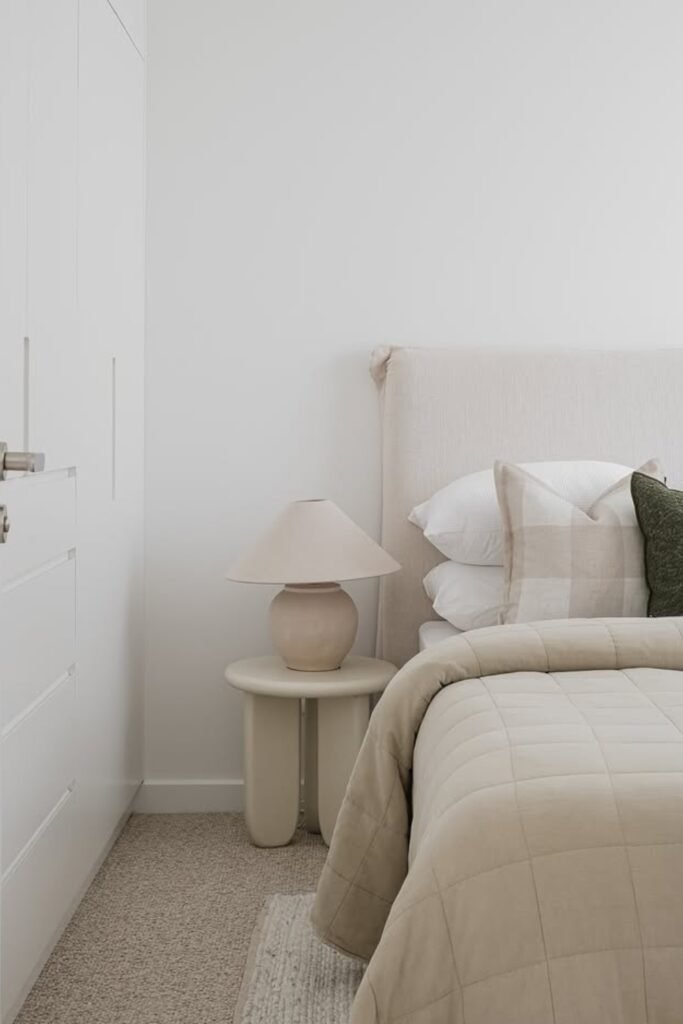
Organic Wood Calm
Light wood takes center stage—from the bed to the bench to the wall art, creating a steady, grounded feel.
You could try this in modern or minimalist bedrooms where you want warmth without visual clutter.
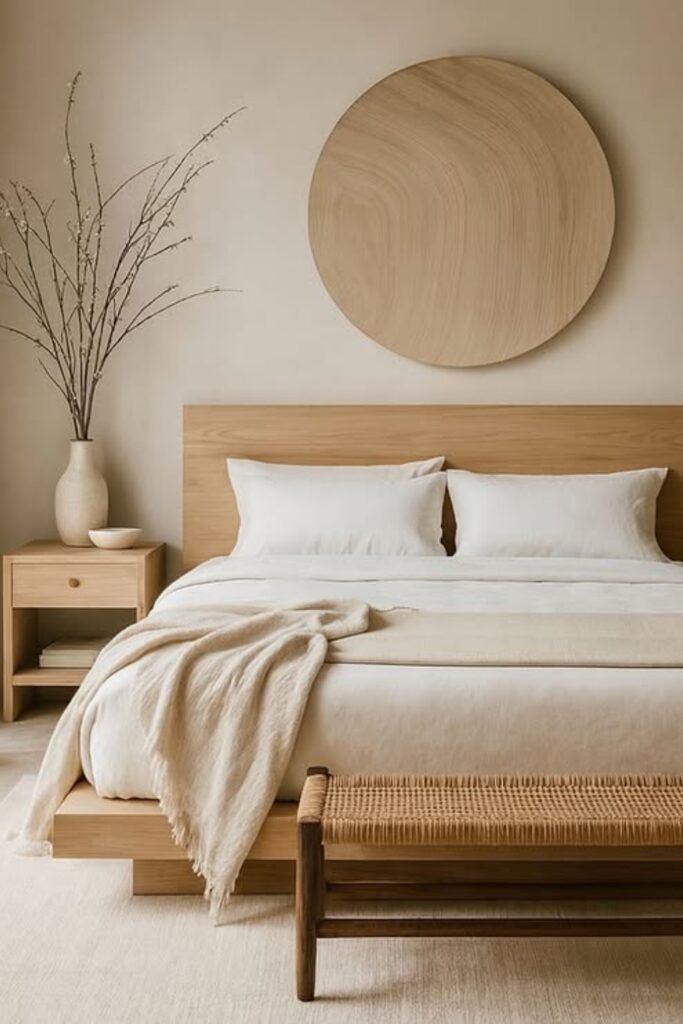
Soft Neutral Contrast
You can see crisp white bedding keeping the space fresh, while camel-toned pillows and a textured throw add just enough richness to ground it.
You can keep furniture low and simple, and use texture, not patterns, to bring everything together in a relaxed, natural way.
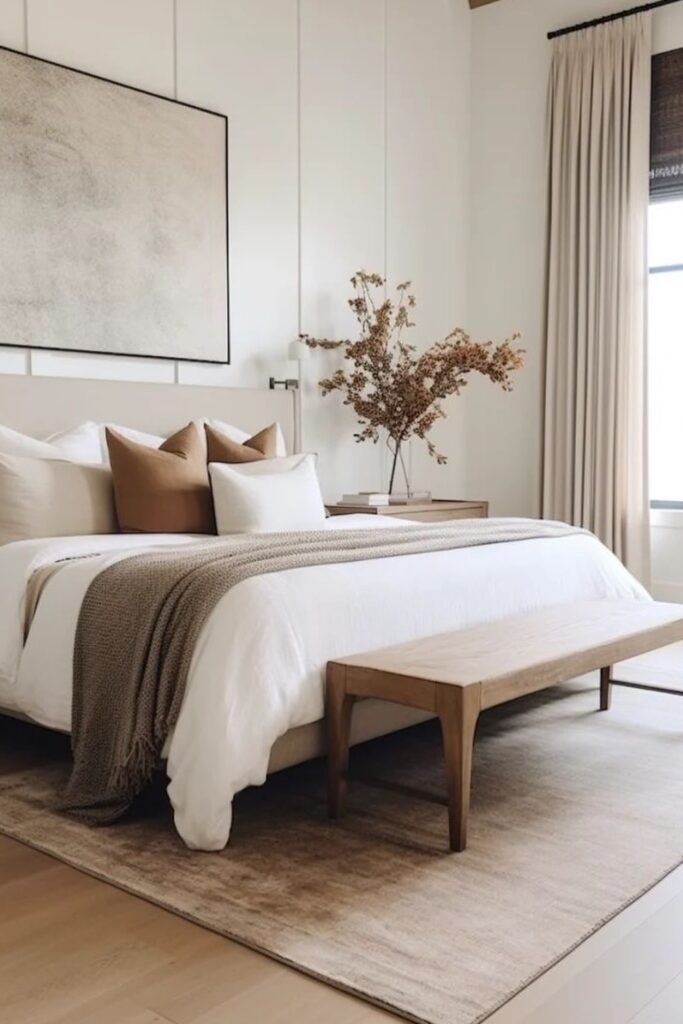
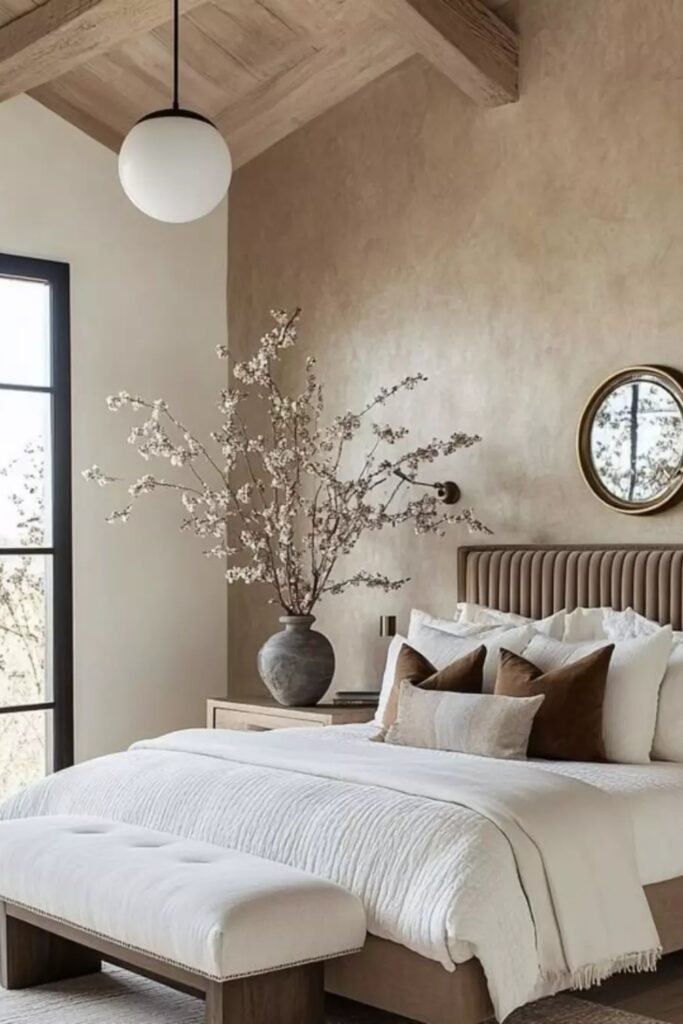
Earthy Neutral Depth
To recreate it, you should choose one warm wall color with texture or a soft plaster effect. You can keep bedding light so your room doesn’t feel heavy.
It adds warmth through wood beams, rounded furniture, and a few darker pillows to anchor the space without overwhelming it.
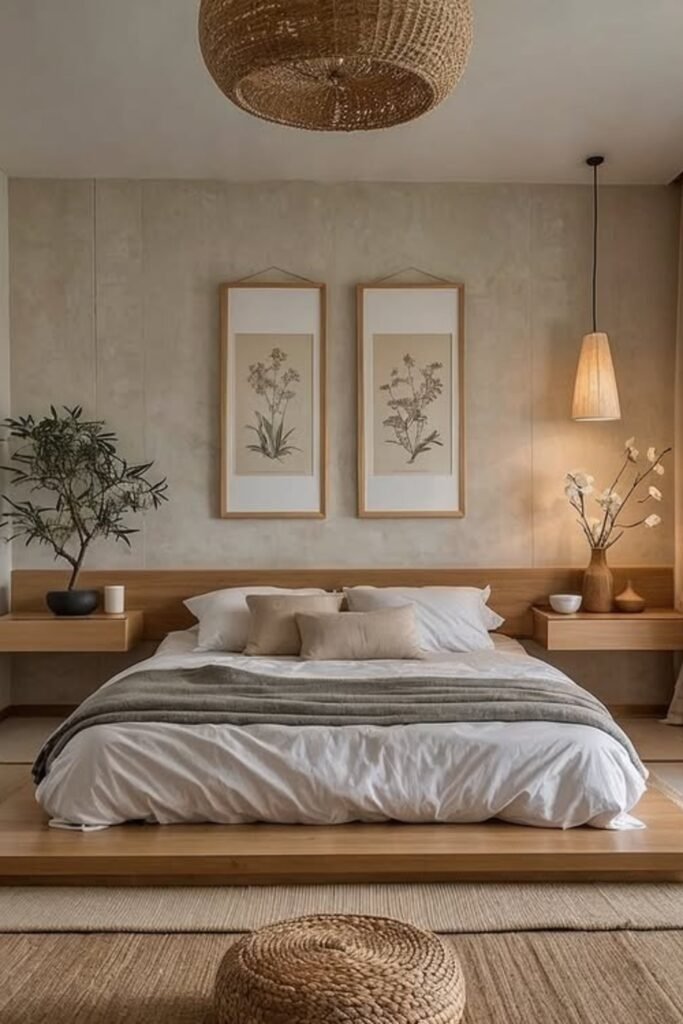
Grounded Natural Warmth
This bedroom feels calm because everything stays low, soft, and connected to your floor.
The low platform bed, warm wood tones, and woven textures keep the space grounded instead of airy or sharp.
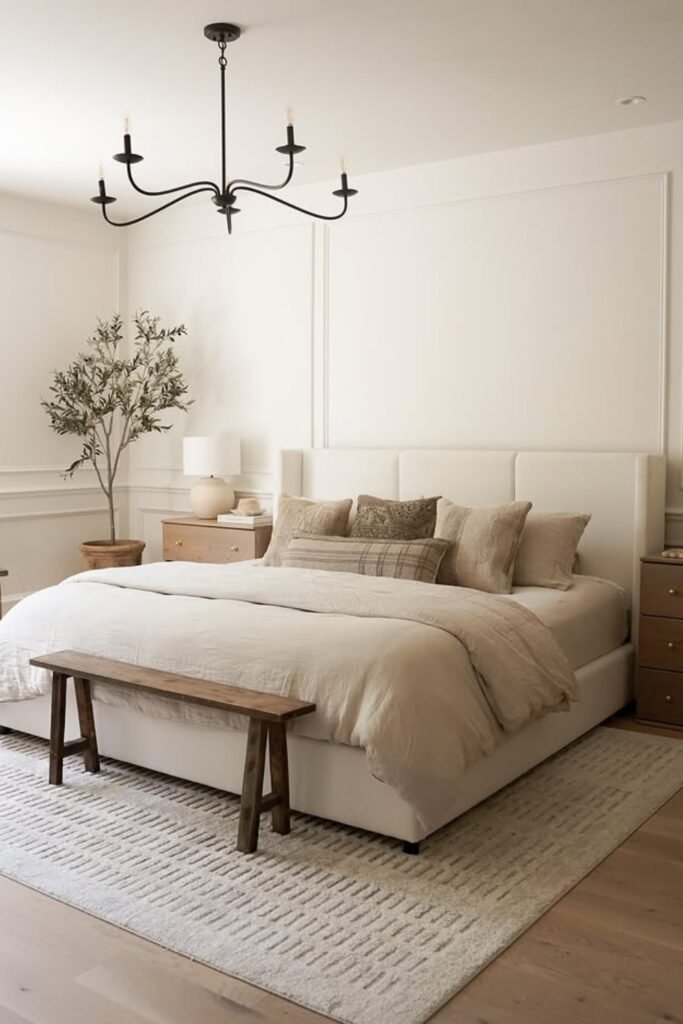
Soft Panelled Warmth
You’ll notice this bedroom feels inviting because the walls are doing more than just sitting in the background.
You can see the paneling adding quiet texture, which makes the neutral color feel warmer and more intentional.

Classic Neutral Ease
Clean wall molding gives your room shape, while the upholstered bed and layered bedding keep it relaxed.
The warmth comes from balance, light neutrals paired with natural wood and simple lines. This idea works well in larger bedrooms that need definition without feeling formal.
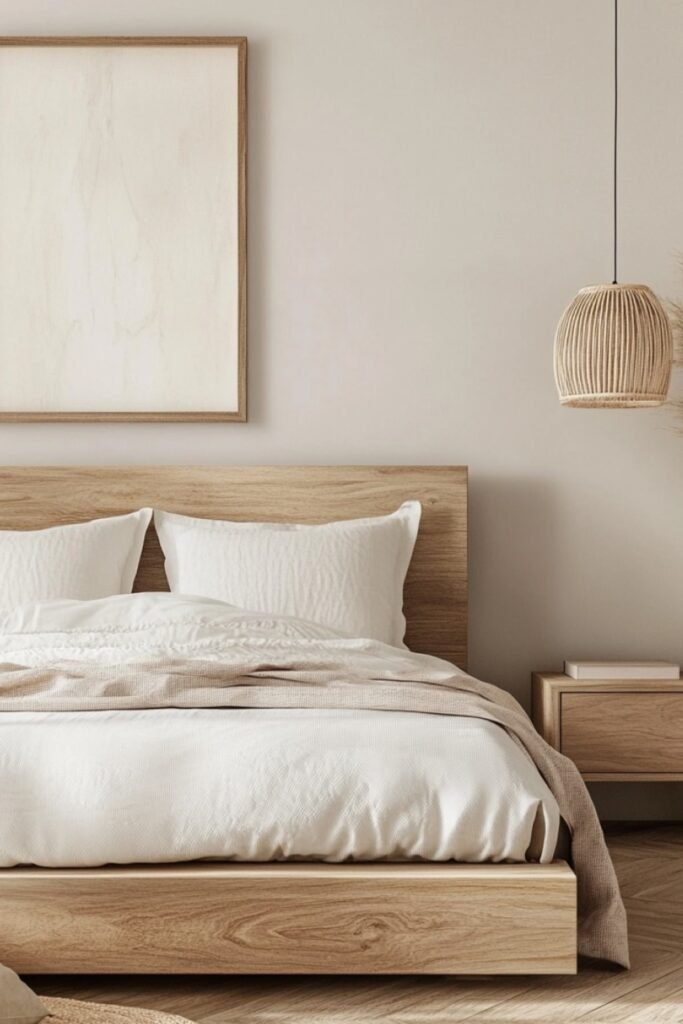
Warm Wood Simplicity
The light wood bed and nightstand quietly ground your space, while soft white bedding keeps everything calm and breathable.
A woven pendant or simple ceramic piece is enough to keep your room feeling lived-in, not empty.
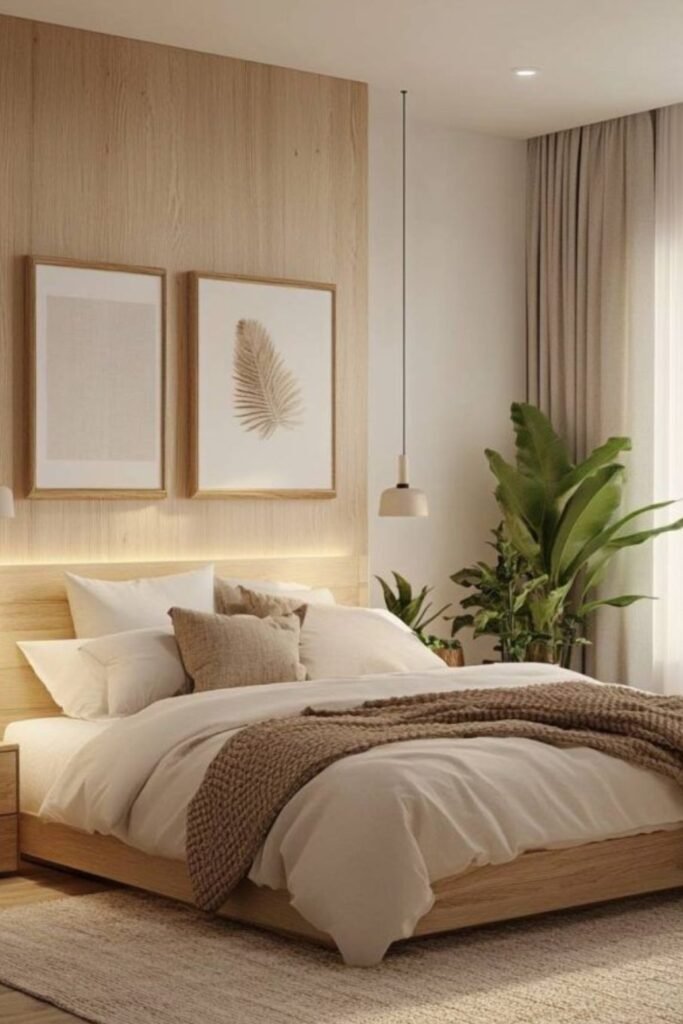
Wood Panel Warmth
You’ll immediately feel warmth in this bedroom because the wall behind the bed does more than just sit there.
You can see the wood paneling adding depth, texture, and a natural glow that plain paint can’t give. You might try this in modern bedrooms that feel flat or boxy.
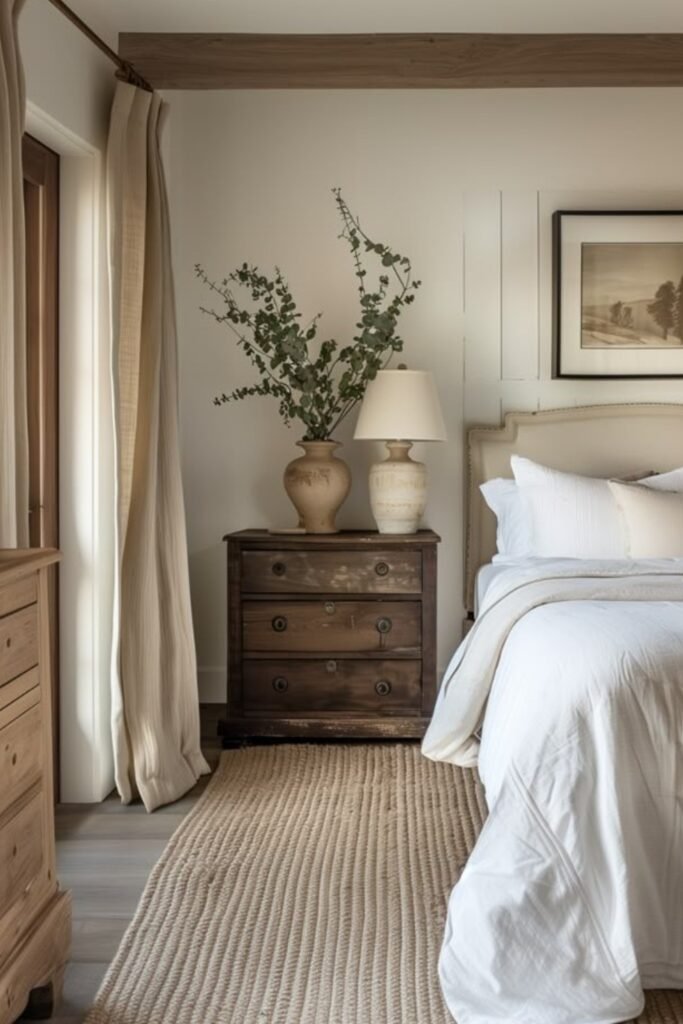
Rustic Neutral Calm
You can feel warmth in this bedroom because it leans into age and texture instead of polish. You could try this in homes where you want warmth without going heavy or traditional.
You might notice how soft white bedding with darker, timeworn wood keeps the space grounded and comfortable.
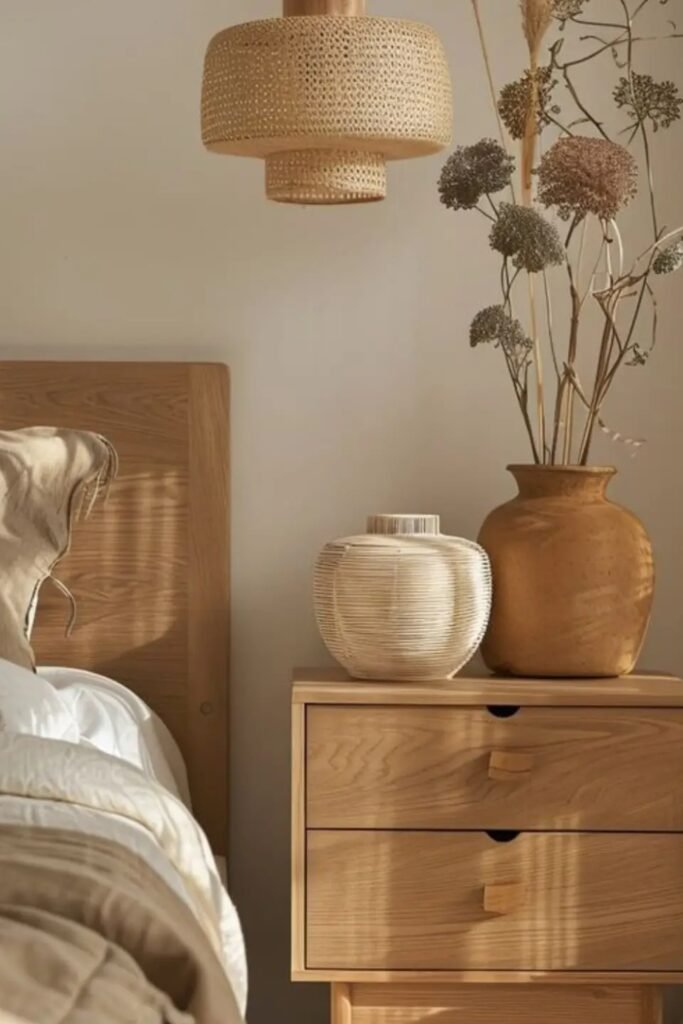
Natural Bedside Warmth
The wood nightstand, soft bedding, woven pendant, and ceramic vases all sit in the same warm family, so nothing feels random.
You can keep shapes simple and let light hit natural materials. When the bedside feels warm, the whole bedroom follows.
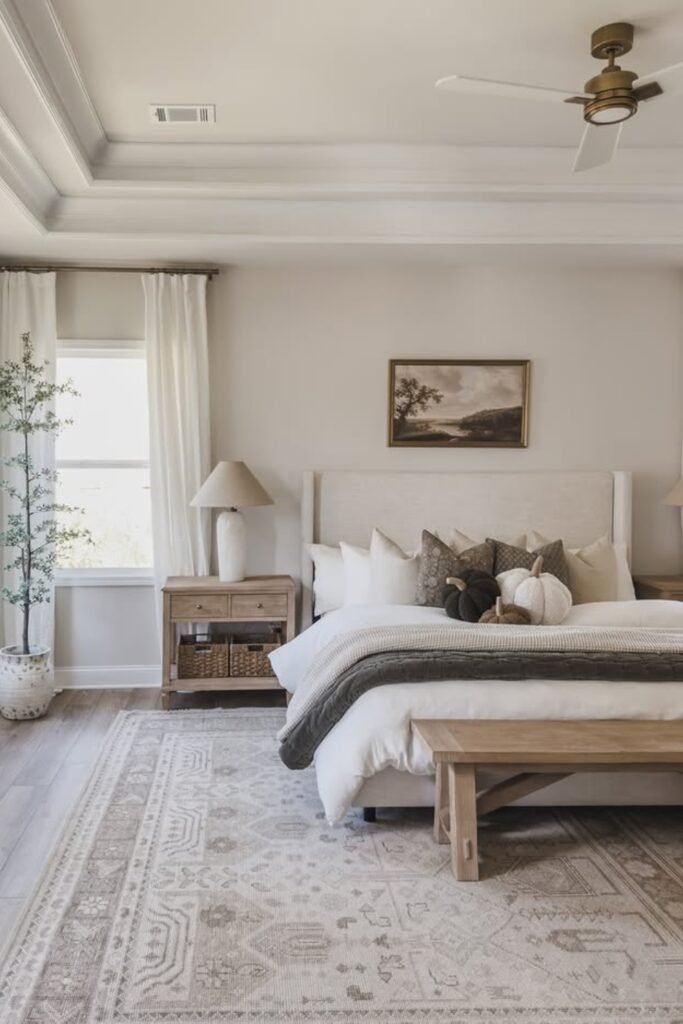
Soft Neutral Balance
This bedroom feels warm because everything is evenly spread, no single element tries to carry your room alone.
You can mix soft neutrals across surfaces, then anchor your room with wood at bed height and underfoot so the warmth stays grounded.
FAQs
Do warm neutrals make a bedroom feel smaller?
Not if you use them the right way. You can actually make warm neutrals work so your bedroom feels inviting instead of cramped.
You should focus on keeping the palette light and consistent. You could use warm whites, beige, or soft greige on large surfaces, then add depth with texture instead of relying on darker colors.
When the tones flow, you’ll notice your room feels calm and open rather than closed in.
How do you keep a neutral bedroom from looking boring?
A neutral bedroom only looks boring when you use the same finish everywhere. You should mix textures first, linen, knit, wood, ceramic, before you think about adding more color.
You could pick one slightly deeper neutral for contrast, like taupe or camel, and repeat it once or twice. You’ll see that small shift adds interest without breaking the calm.
You may like to read!
