
21 Walnut Kitchen Cabinets Ideas For 2026

This article may contain affiliate links: read full affiliate disclosure.
If you’re planning walnut cabinets, chances are you’re standing right where most people get stuck, choosing colors. You love walnut, but you still worry.
You start asking yourself if your kitchen might end up too dark, or if the colors you pick could clash and ruin the whole look.
And once you make the wrong choice, you know there’s no simple undo button. Walnut isn’t cheap, and you can’t afford to guess.
You can make walnut look stunning when you pair it with the right colors and yes, it can look heavy and dull when you don’t.
In this article, you will see exactly which colors work best with walnut with the help of 21 walnut kitchen cabinets ideas for 2026.
Let’s jump in!
What Colors Go Well With Walnut?
You can choose walnut cabinets usually feels like the easy win. The real challenge starts when you ask yourself what you should put next to them.
The walnut already brings a strong color and bold grain, so if you choose wrong, you can make your kitchen feel dark, busy, or slightly off.
If you’ve been standing there staring at paint samples and you still don’t feel sure, that’s completely normal.
The key is learning how walnut reacts to light and contrast when you place other colors around it.
Once you understand that, you’ll notice that choosing the rest of your palette becomes much simpler.
This section breaks everything down so you can make confident decisions and stop second-guessing yourself.
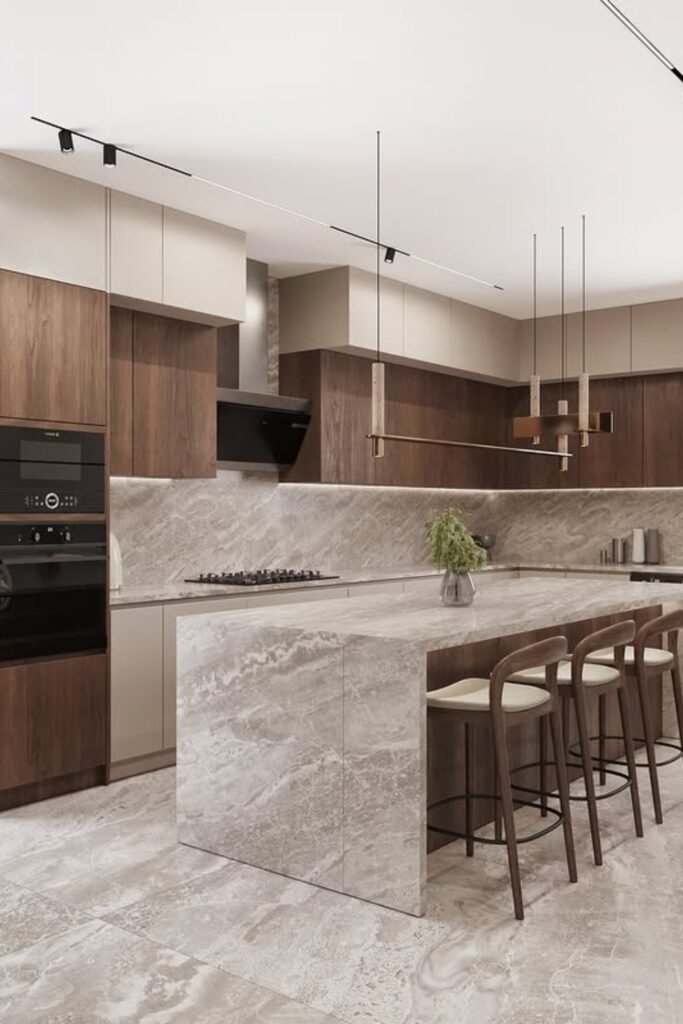
Light Stone Anchor
You let the light stone island and backsplash do the heavy lifting, so you can keep the space open and airy.
You should keep the cabinetry flat and clean, you can choose stone with gentle movement, and you’ll want to avoid adding extra colors that might fight with the wood.
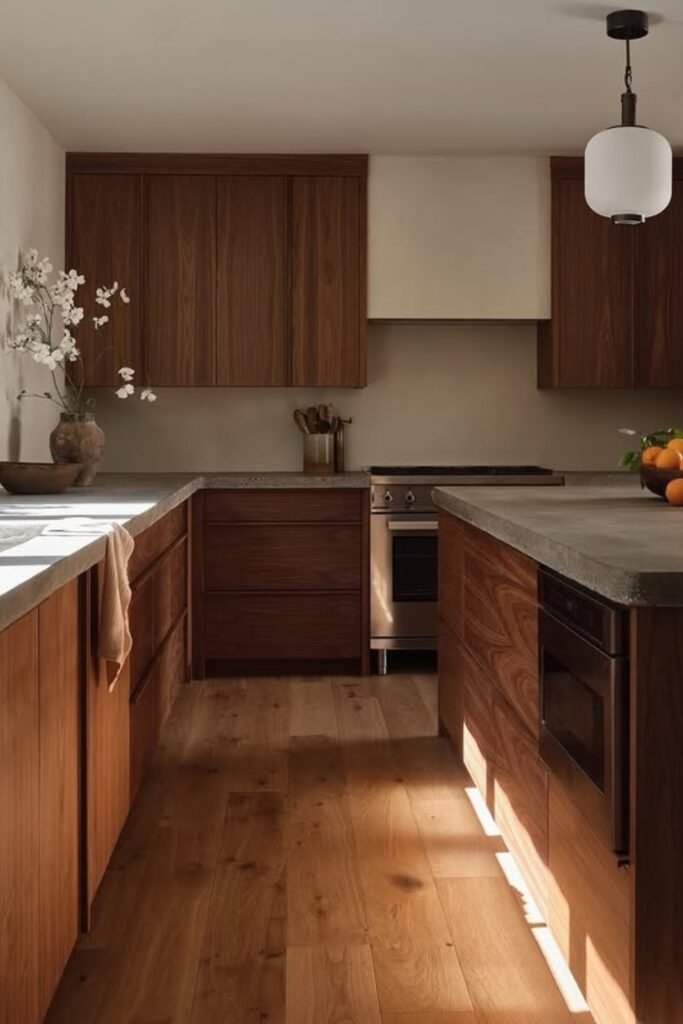
Warm Wood Harmony
To recreate it, you should stick to warm neutrals, you can skip bright whites, and you can let natural light do most of the work.
When everything shares the same warmth, you’ll notice walnut feels calm and welcoming instead of dark.
Soft White Relief
You do that here by using a white backsplash and light countertops, which give your eyes a break and stop the cabinets from taking over.
You should choose whites that feel soft, not stark, and you can let walnut stay the darkest element so the room feels balanced.

Brass Warms Walnut
When you add brass hardware, you instantly warm things up without stealing attention. This approach works best when your kitchen leans classic or transitional.
You should keep the cabinet color deep, you can choose simple door styles, and you’ll want to add brass in small, controlled amounts.
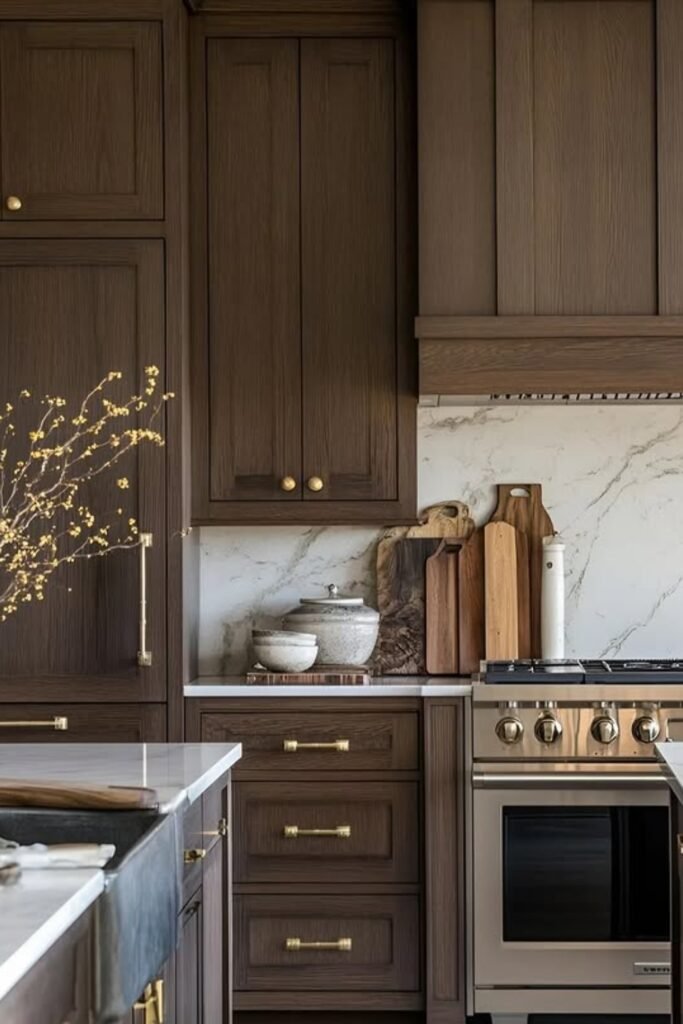
Stone Cuts Warmth
Even when you love wood, too much walnut can feel overwhelming. That’s where stone steps in and gives you a visual reset.
You use marble here to cool things down and give your eyes somewhere to rest. This works especially well when you use walnut on large wall runs.
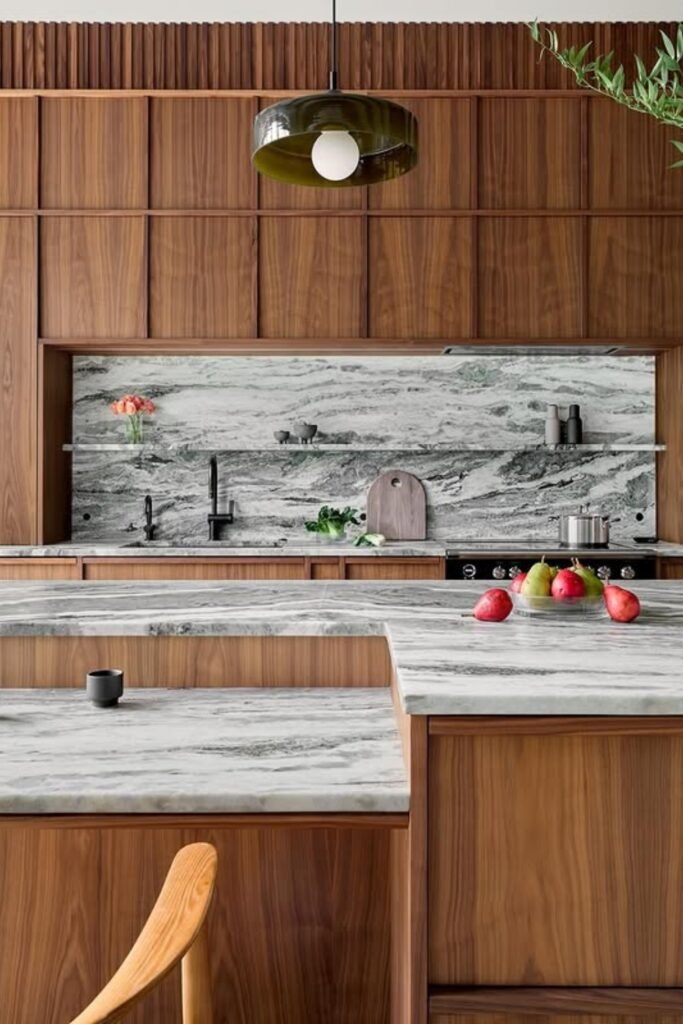
Soft Contrast Layers
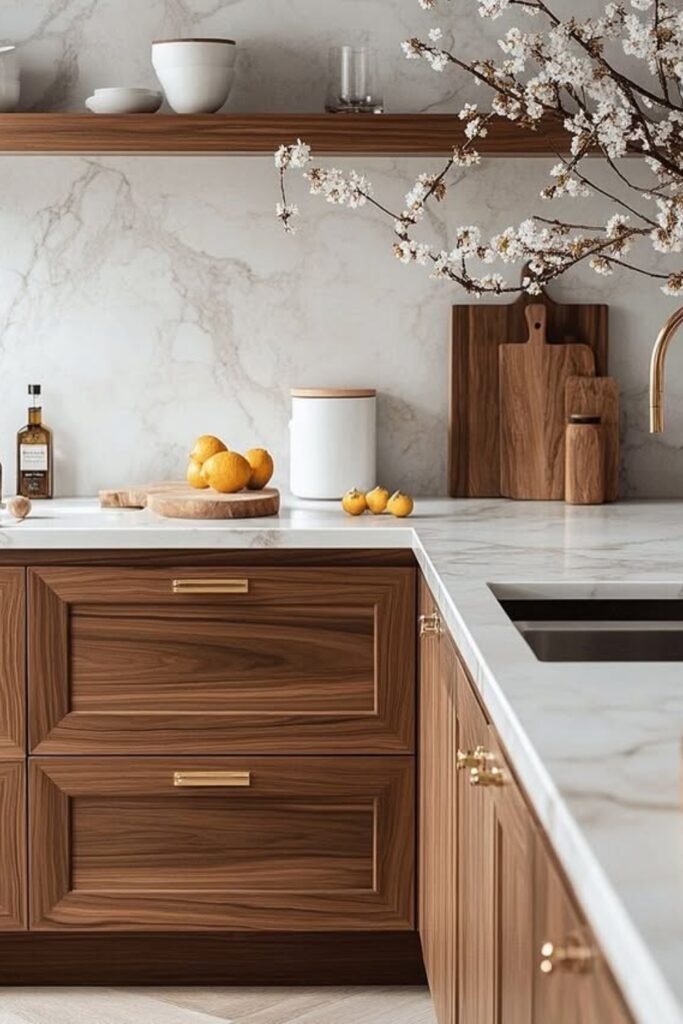
The white stone countertop and backsplash reflect light, while the open walnut shelf keeps the look connected rather than broken.
You have limit walnut to lower cabinets, use light stone with subtle veining, and add small wood accents instead of filling every wall with cabinetry.
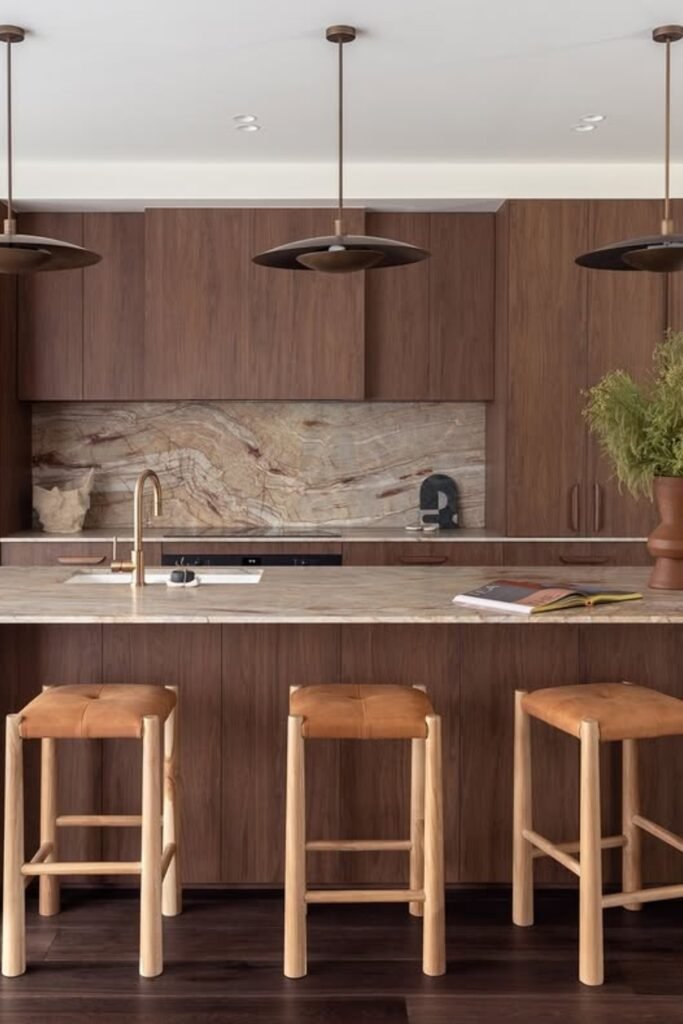
Tone-on-Tone Calm
You keep the cabinets, island, and stools in the same warm range, which helps the space feel calm instead of noisy.
You should keep the walnut finish consistent, you can avoid mixing wood tones, and you can rely on texture like stone or upholstery to add interest without changing the color story.
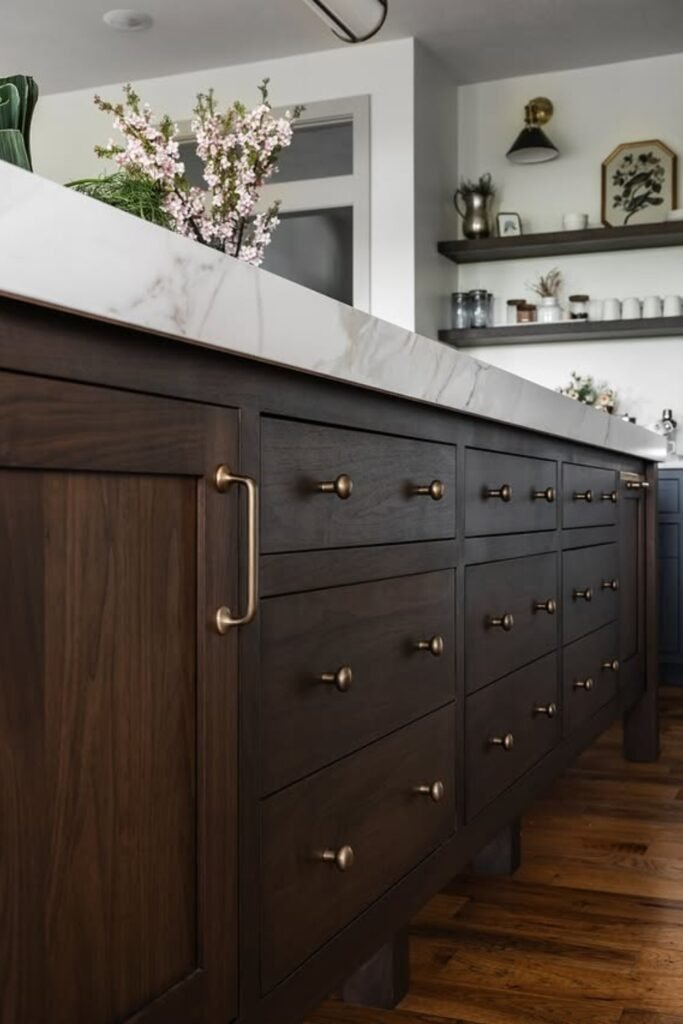
Dark Walnut Grounding
The light countertop and white walls lift the space, while brass hardware adds just enough contrast to keep things from feeling flat.
You can keep dark walnut on islands or lowers, pair it with light surfaces above, and use warm metals to break up the depth.
Light Counter Balance
You use the bright surface to reflect daylight, which keeps the island from looking bulky.
This works especially well when you have a large island or fewer wall cabinets.
You should use walnut on the base, you can choose a clean white or off-white counter, and you’ll want to keep surrounding walls light so the island feels like a feature, not a block.
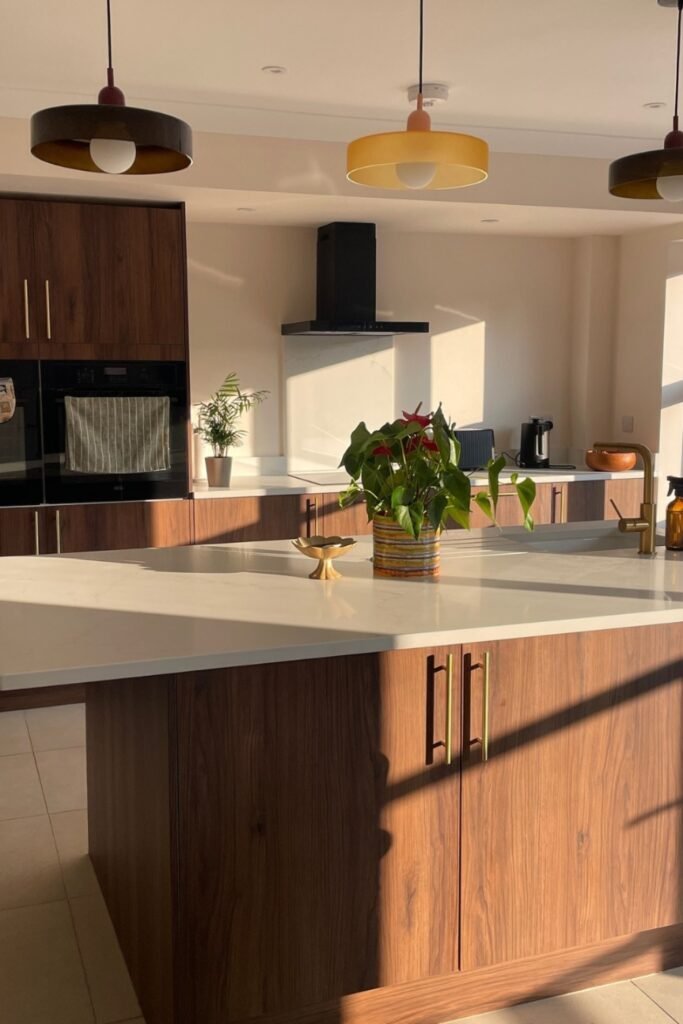
Green Softens Walnut
The soft green backsplash changes that instantly. It adds color without fighting the wood and makes the kitchen feel more relaxed and lived-in.
You can keep the walnut simple, choose a muted green, and balance it with light counters so the color feels calm, not loud.

White Lifts Walnut
What works here is the clear split between wood and white. You use white on uppers and horizontal surfaces to pull light through the room, while walnut stays grounded below.
You should keep walnut on vertical surfaces, you can use white for horizontal ones, and you’ll want to repeat that contrast so the space feels intentional.
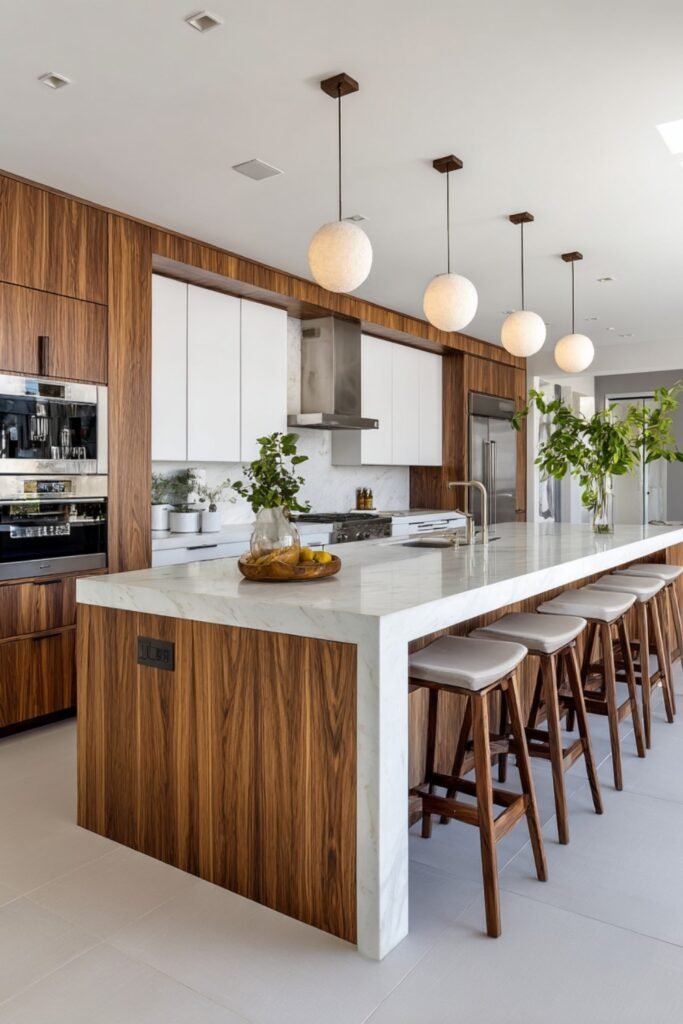
Clean White Backdrop
You let white walls and backsplashes push the cabinets forward without competing with them. This works best when light really matters, like in smaller kitchens or apartments.
You should keep the walnut finish simple, you can choose warm whites instead of icy tones, and you’ll want to avoid busy patterns so the wood grain becomes the star.
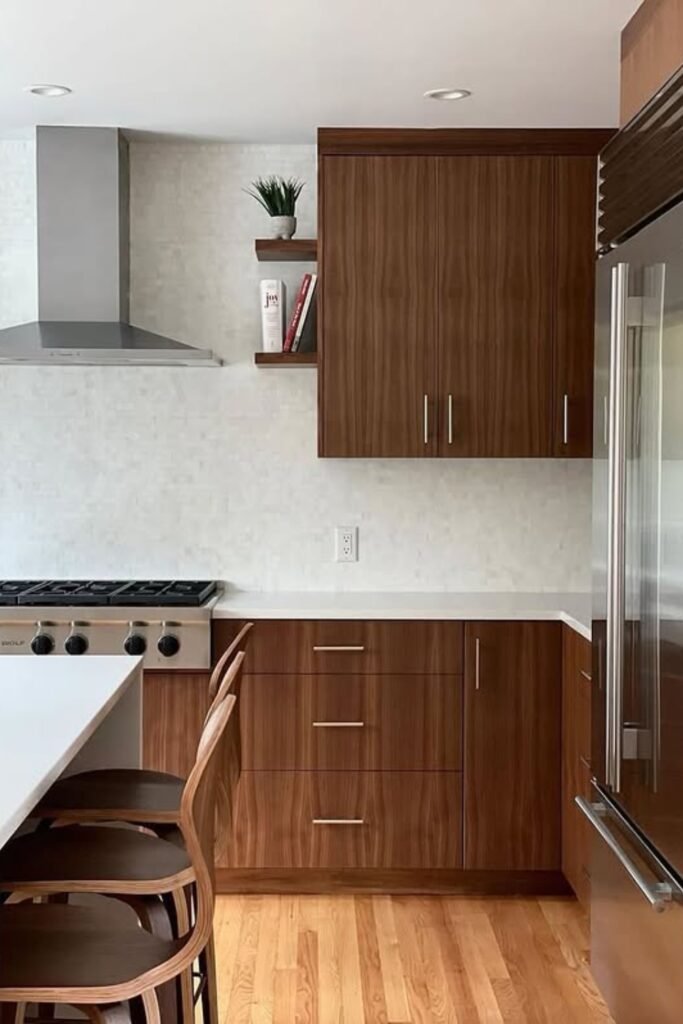
Warm Neutral Balance
The walnut feels rich here, but it doesn’t overwhelm the space because everything around it stays soft and neutral.
The light stone backsplash and countertops calm the wood and give the eye a place to rest. This works best if you want a cozy kitchen without it feeling dark or heavy.
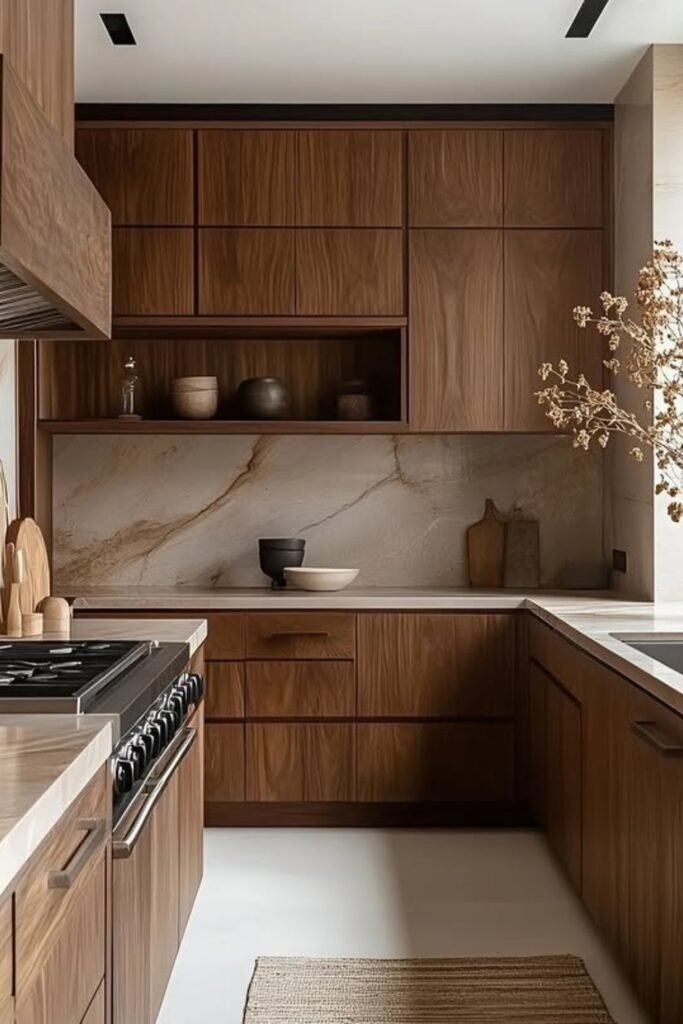
Classic White Reset
You fix that here with a white subway backsplash that breaks up the wood and reflects light. This works best when you have full-height cabinetry.
You should pair walnut with a simple white backsplash, you can choose counters with light movement, and you’ll want warm lighting so the space feels classic, not dated.
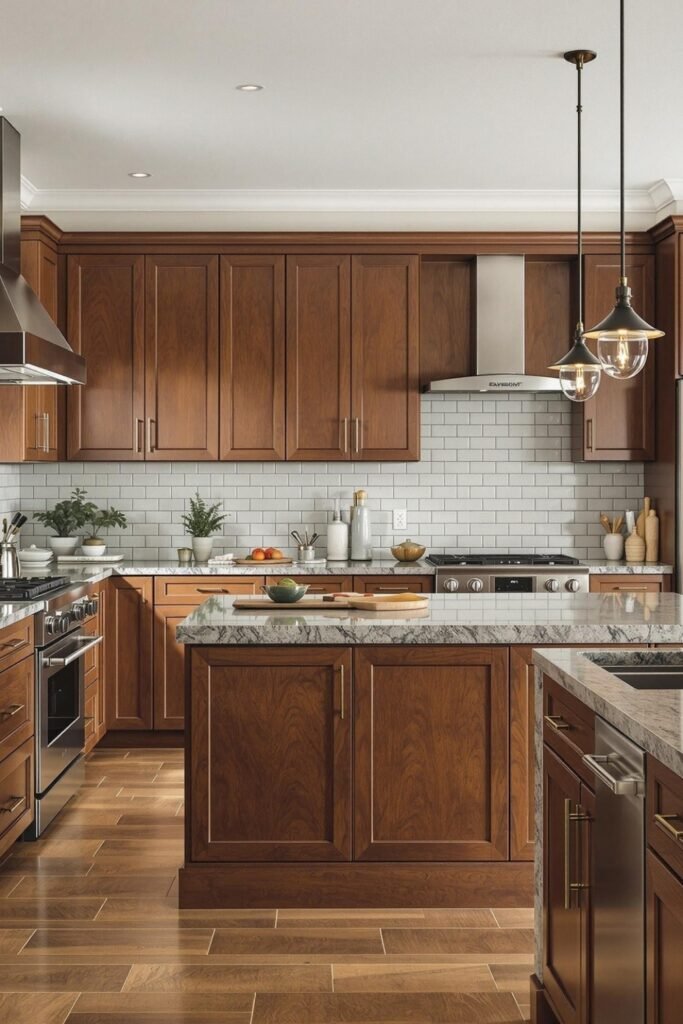
Walnut Wrap Effect
You can use the same wood on tall cabinets, storage walls, and base units makes the space feel built-in, not busy.
You can keep the walnut finish consistent, use simple door fronts, and pair it with light countertops or walls so your wood reads as a feature, not a block.

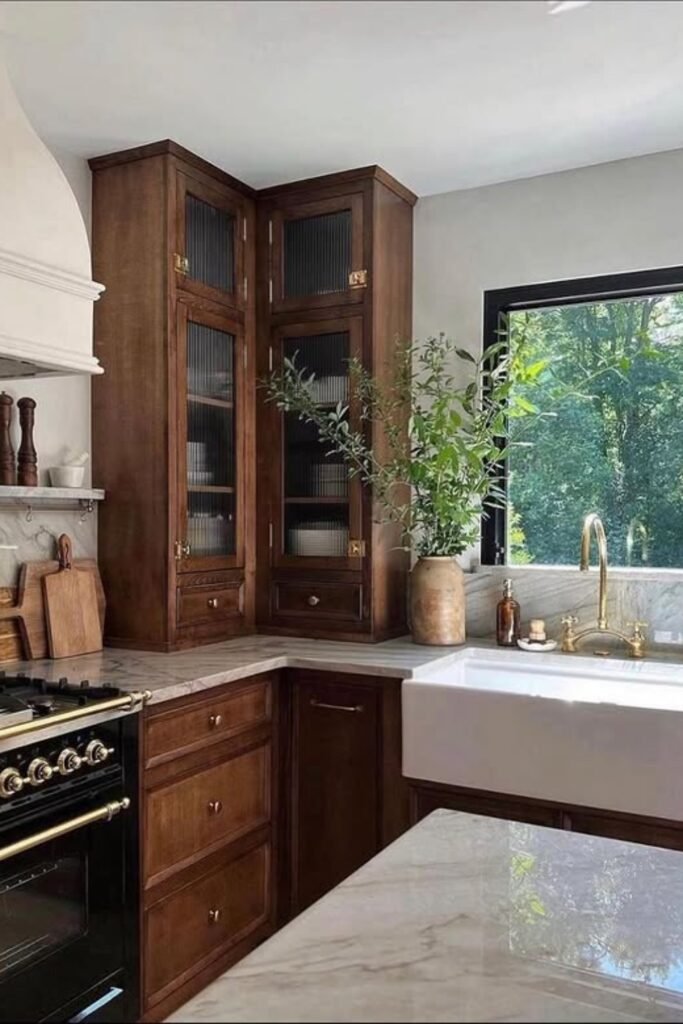
Classic Farmhouse Warmth
The farmhouse sink, marble counters, and warm brass fixtures keep the wood from feeling heavy or formal.
You can use walnut on cabinetry, choose light stone surfaces, add vintage-style hardware, and let natural textures like wood boards and greenery, make your space feel lived-in and welcoming.
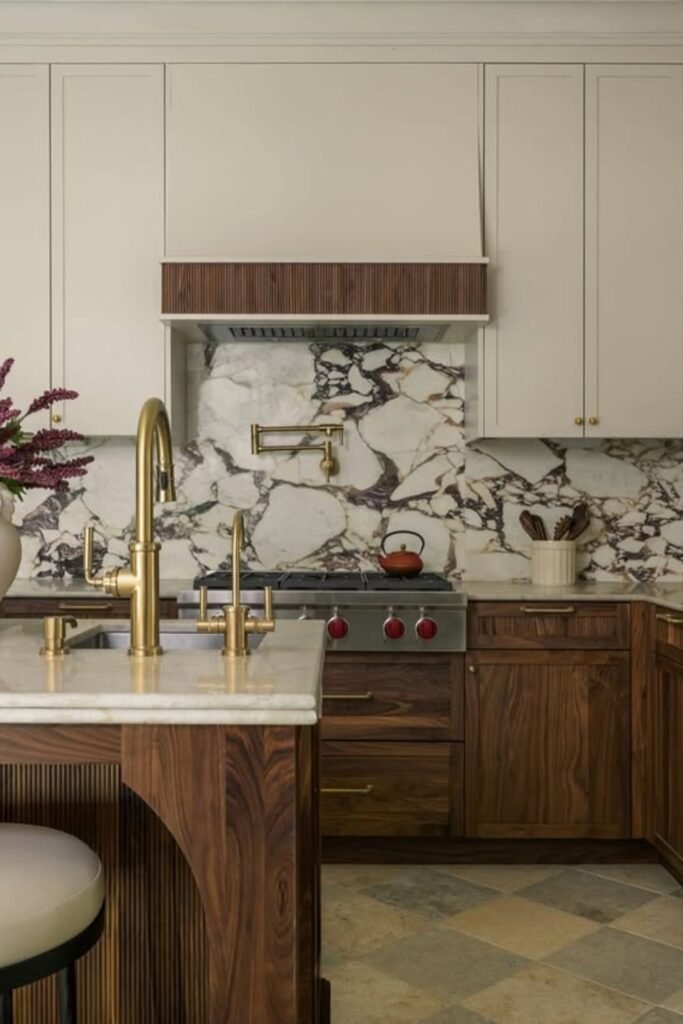
White Above Walnut
This setup works because you keep walnut exactly where it feels strongest, on the lower cabinets and the island, while you let white take over above.
That split helps you avoid a boxed-in feeling, even when you’re working with bold stone and rich wood. This is perfect if you love walnut but still worry about darkness.
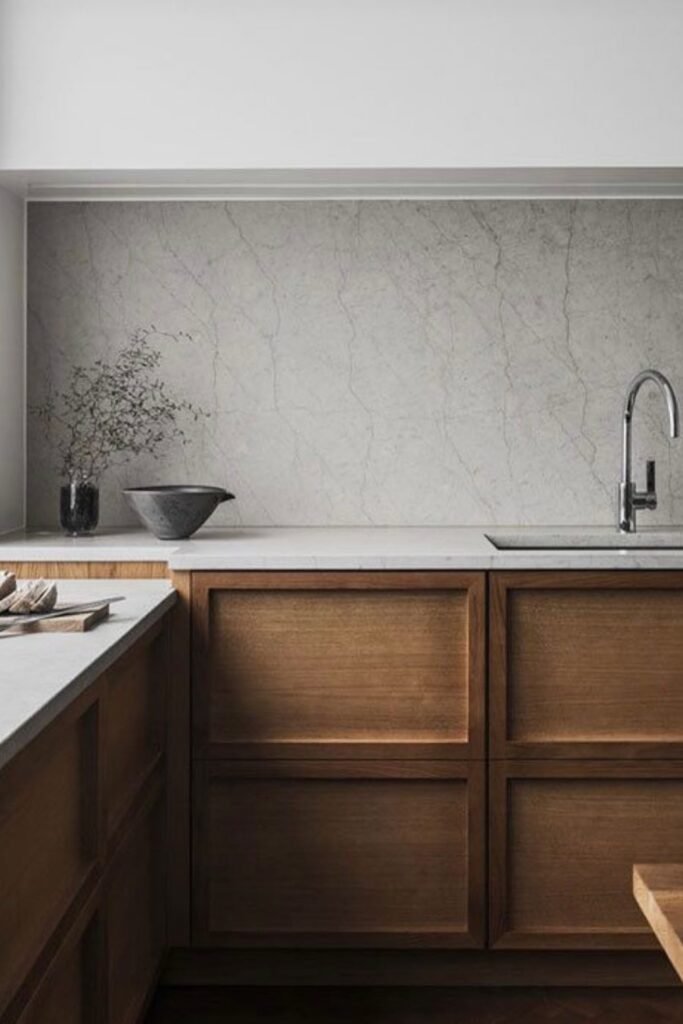
Soft Grey Balance
You lower the contrast with grey backsplashes and counters, which helps the wood look richer and more relaxed.
This works especially well when you’re designing a modern or minimalist kitchen and you want warmth without harsh edges.
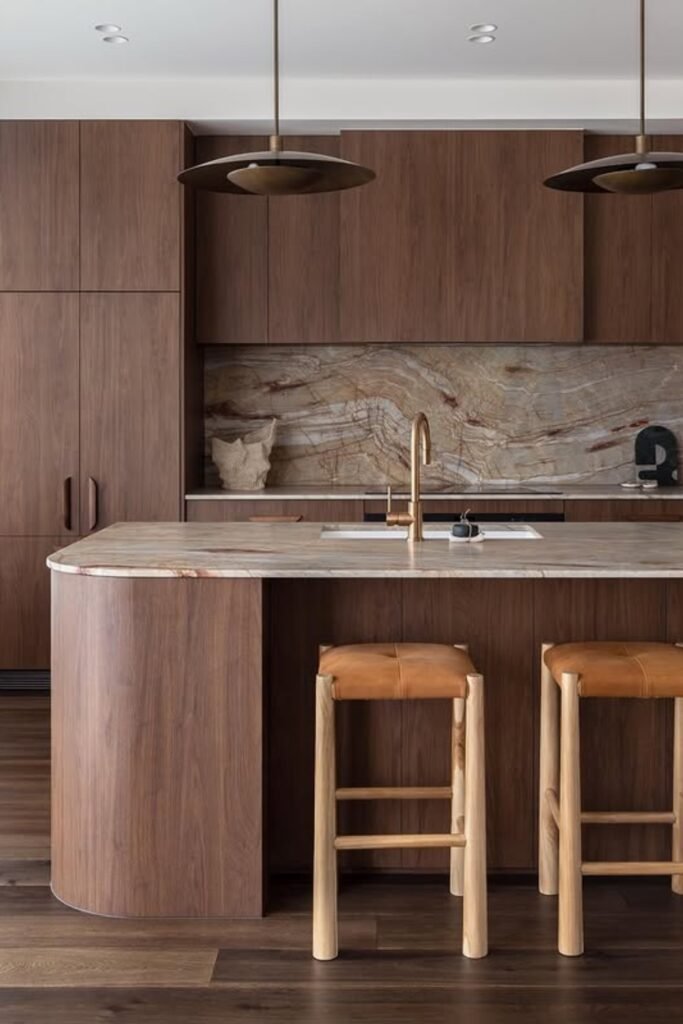
Curved Soft Contrast
You soften the overall look while still letting walnut stay in the spotlight. The light stone countertop helps brighten the center, so the wood never feels overpowering.
You should keep cabinetry simple, you can add just one curved element, and you’ll want to balance walnut with light stone to soften its depth.
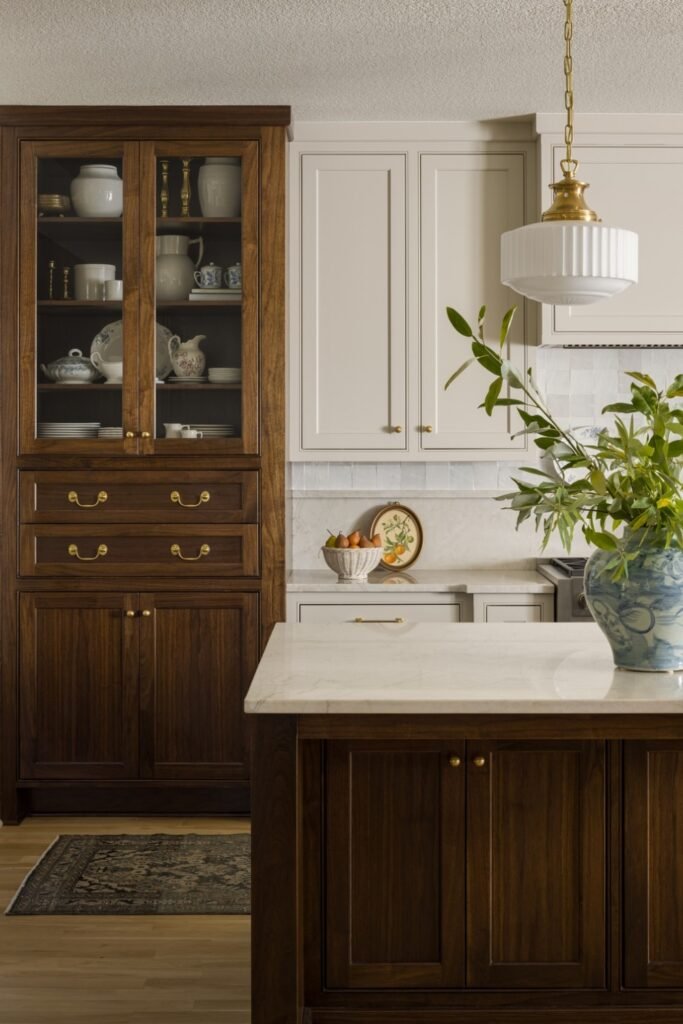
Traditional Two-Tone Balance
You let cream upper cabinets lift the space, while walnut grounds it and adds character.
This balance works perfectly if you love classic kitchens but don’t want them to feel dark or dated.
You should use walnut on tall storage or the island, you can choose soft off-white uppers, and you’ll want to finish it with warm brass hardware so everything flows naturally.
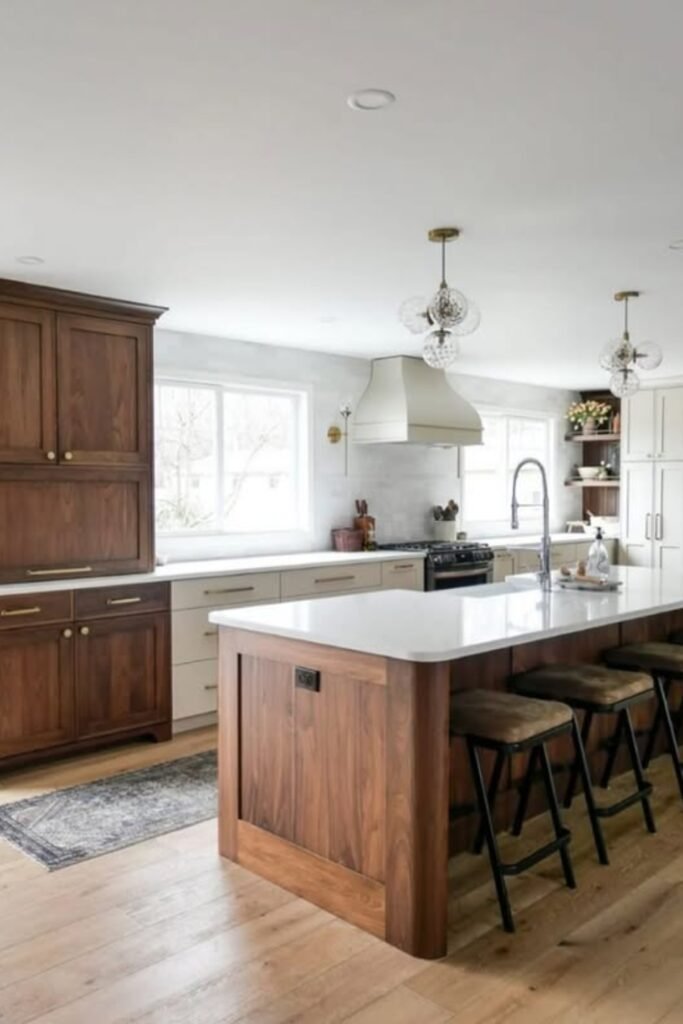
Bright Two-Tone Flow
You keep the perimeter cabinets white so the space stays bright, and you use walnut on the island and tall units where it adds the most impact.
This setup is ideal when you have an open layout or a family kitchen and light really matters. This kitchen works because you don’t let walnut take over every surface.
FAQs
Do walnut cabinets make a kitchen too dark?
Walnut can make your kitchen feel dark if you let it take over every surface. But you don’t have to worry, fixing it is easier than you think.
You can pair walnut with light countertops, soft-colored or white walls, and make sure your lighting works for you.
When you use walnut on just the island or lower cabinets instead of everywhere, you’ll see how the space stays warm without feeling heavy.
Are walnut cabinets hard to match with other colors?
Walnut is actually easier for you to work with than most dark woods. You’ll find it pairs beautifully with whites, creams, soft greys, greens, and natural stone.
The trick is to avoid strong, cool colors that fight with its warmth.
When you keep the surrounding colors calm and light, you’ll see how naturally walnut blends into your space and makes everything feel balanced.
You may like to read!
