
15 TV Stand Decor Ideas for 2026

This article may contain affiliate links: read full affiliate disclosure.
You have probably stared at your TV stand and felt like something was always off.
When you add decor, it looks cluttered. When you remove things, it feels empty and unfinished. Sound familiar? You’re not lacking taste, and your furniture isn’t the problem.
The truth is, TV stands don’t work like shelves or side tables, and most advice skips that part entirely.
In this article, you will see exactly what belongs on a TV stand, where to place it, and how you can arrange everything so it looks intentional, clean, and still works for your everyday life.
What To Put On The Sides Of My TV Stand?
You might think the sides of your TV stand are there to fill space, but they’re really meant to balance the screen.
If you place random small items on both sides, your TV can end up looking boxed in. You can fix this by using just one or two larger pieces that ground the setup.
When you pick a tall vase, a plant, or a table lamp for one side, and keep the other side lower with stacked books or a shallow tray, your stand looks intentional.
You will see that this contrast keeps the TV as the focus while making the stand feel styled, not crowded.
How Do I Arrange My TV Stand?
When you start, clear everything off the stand. If you don’t do this first, your setup never looks right. You can place the TV or soundbar where it naturally sits, then build around it.
You can start by adding the tallest item first to set balance, and then layer medium and low pieces beside it.
You can keep everyday items like remotes in one tray so they don’t spread out.
You can leave some empty space on purpose, you will see that this breathing room is what makes the whole arrangement feel clean, intentional, and easy on the eyes.
Frame The Television
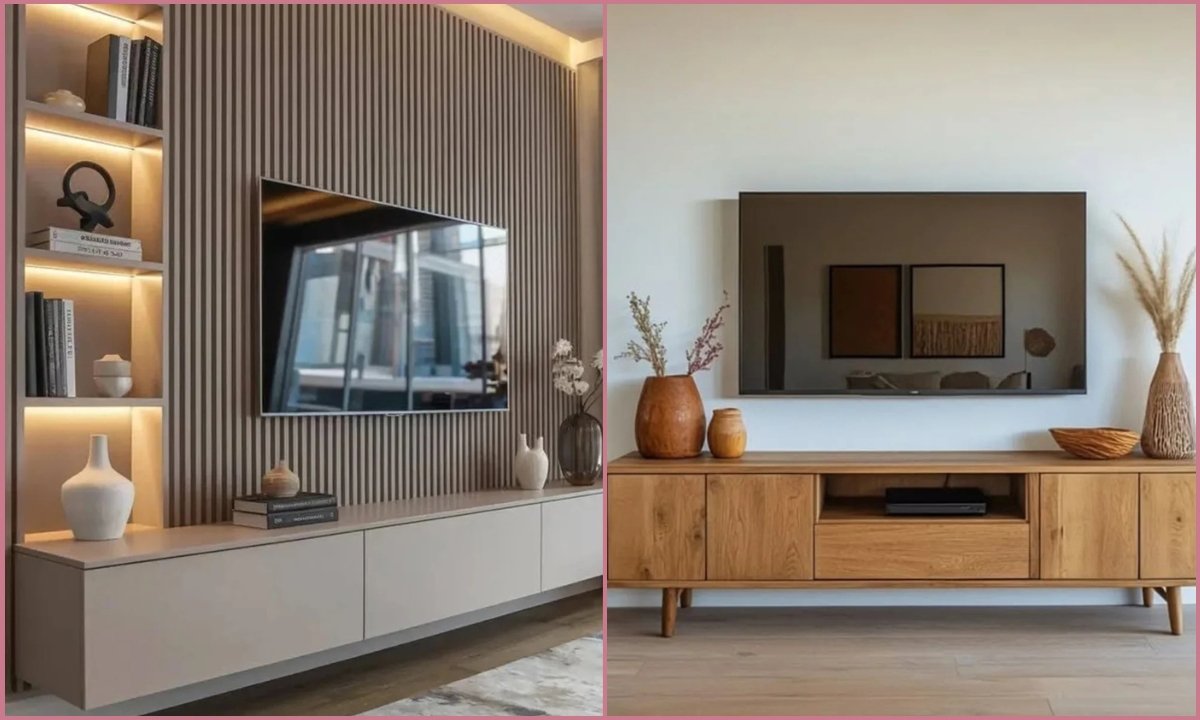
You can instantly turn your TV into part of the wall instead of a black box by adding vertical slat paneling.
When you do this, it works best in modern or minimalist living rooms where clean lines matter

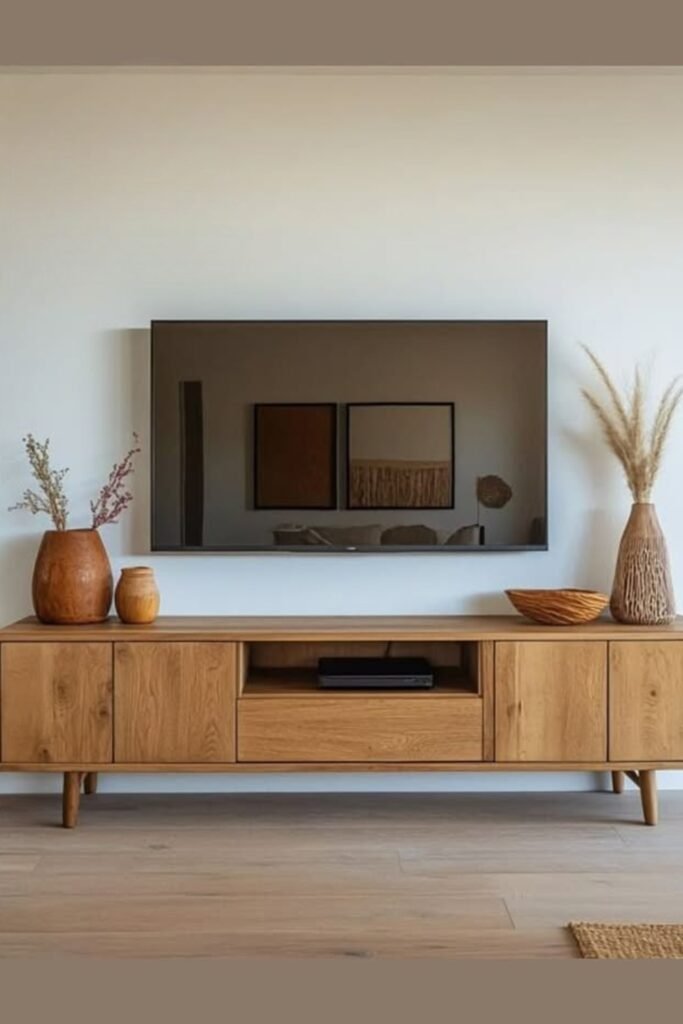
Ground With Wood
If your living room feels cold or the TV seems to float, natural wood can fix that instantly. You can use it to anchor the space and warm things up.
You can keep decor low and organic, like ceramic vases or dried stems, so your focus stays on texture.
Offset With Greenery
A tall plant placed at the end of a long TV stand breaks your straight line and pulls the eye away from the screen.
When the plant is slightly taller than the console, it adds vertical movement and pulls the eye away from the screen

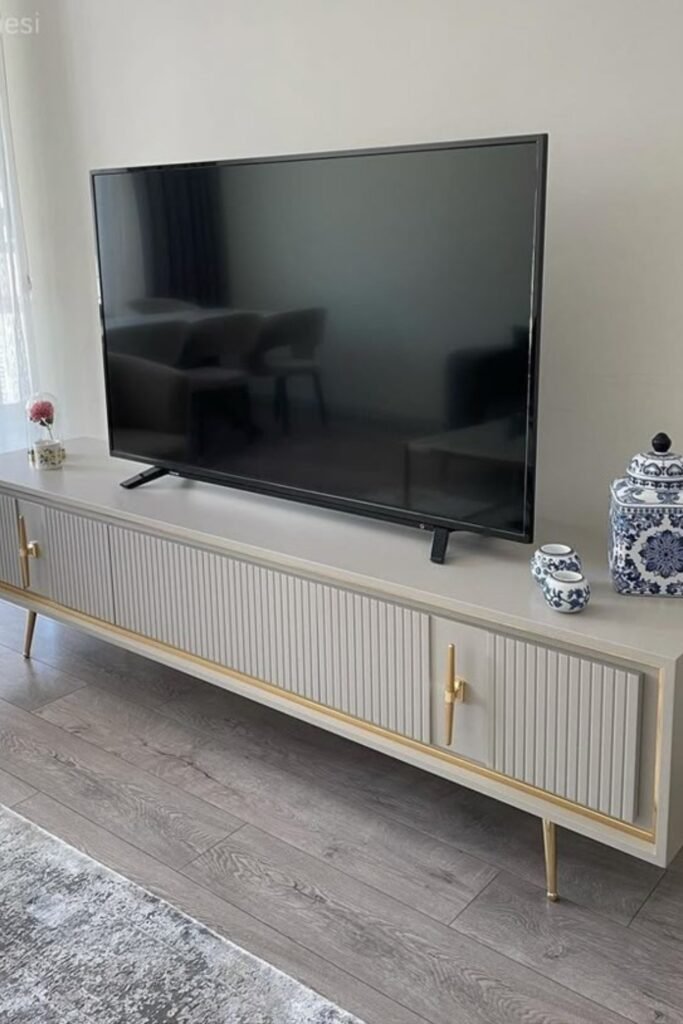
Style One Side
A statement jar or patterned vase works well here, especially in neutral living rooms where detail matters.
You can keep the opposite side almost empty so your TV doesn’t feel trapped between objects.
Let Space Breathe
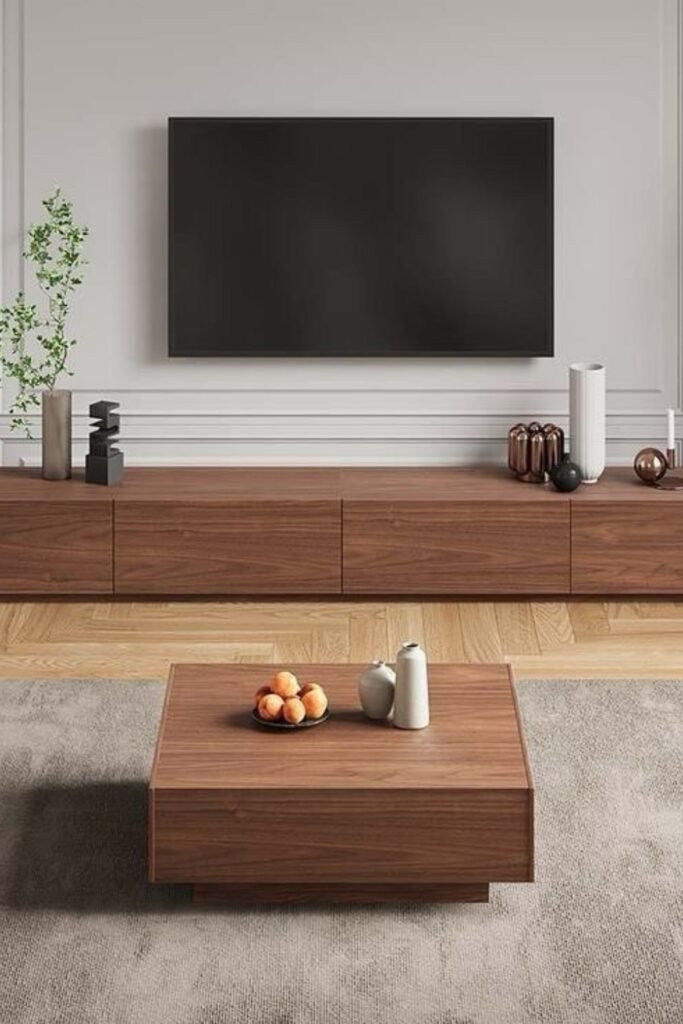
The long wooden console stays mostly clear, which keeps your wall calm and lets the TV settle naturally into your space.
It add just a few sculptural objects at the edges and resist the urge to fill your center.
Keep It Minimal
A slim console with open space underneath keeps your living room feeling light, not heavy.
This setup works best in open-plan homes where your TV wall shouldn’t dominate the space.
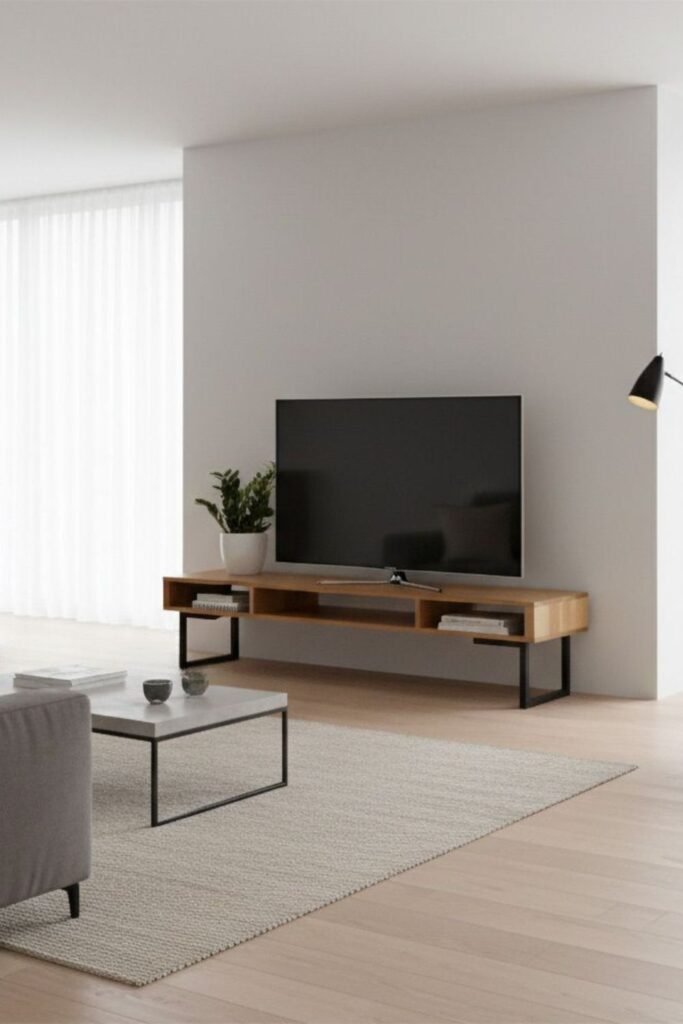
Break Hard Lines
You can soften dark consoles that feel heavy by breaking up straight, sharp lines. This works well in modern living rooms with clean wall paneling.
When you add a small branch arrangement or a curved sculpture, your setup feels balanced without clutter.
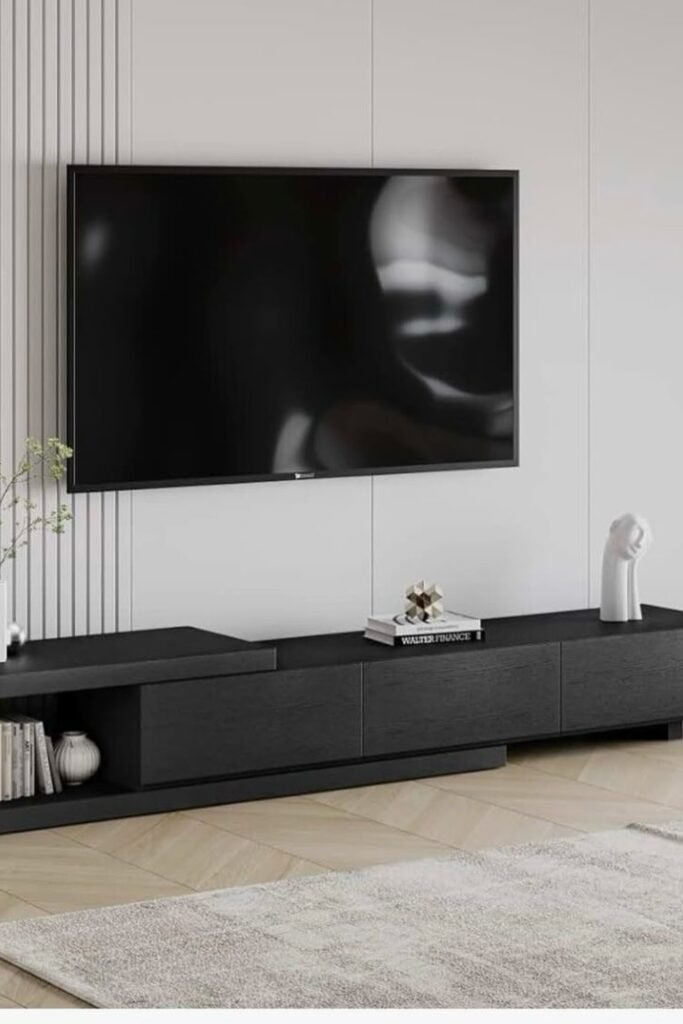
Layer Soft Lighting
If you want the TV wall to feel lived-in, warm lighting shifts attention away from the screen.
You can place a table lamp beside framed art in cozy living rooms where the TV shares space with decor.
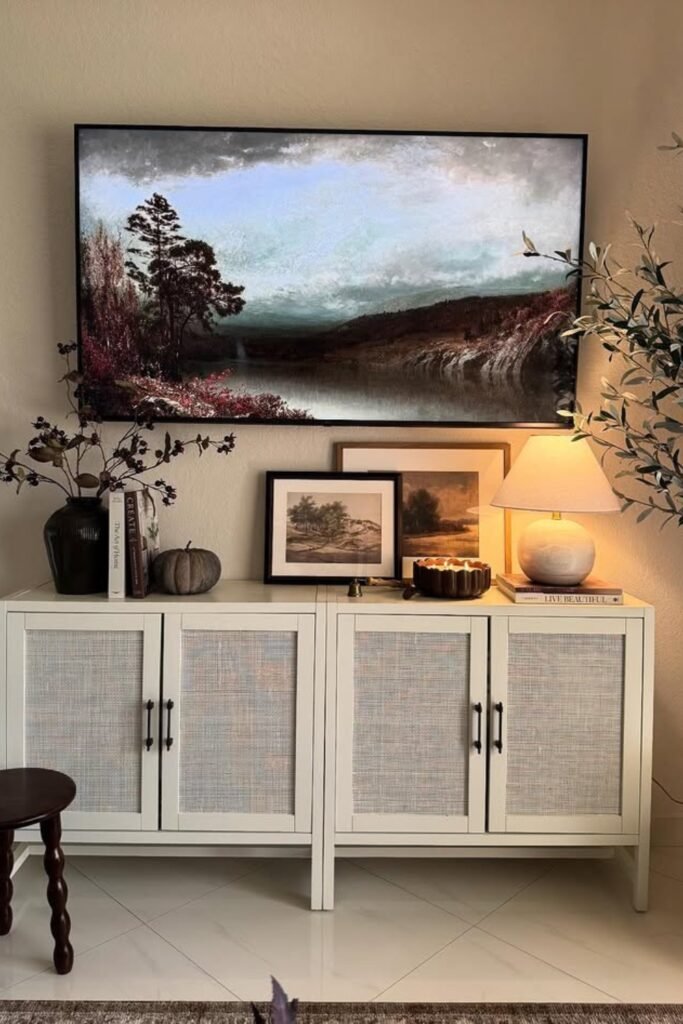
Balance Both Ends
You can stop the TV from feeling like it’s floating alone by adding tall elements on both sides.
When you place dried grass on one end and fresh flowers on the other, your living room feels balanced.
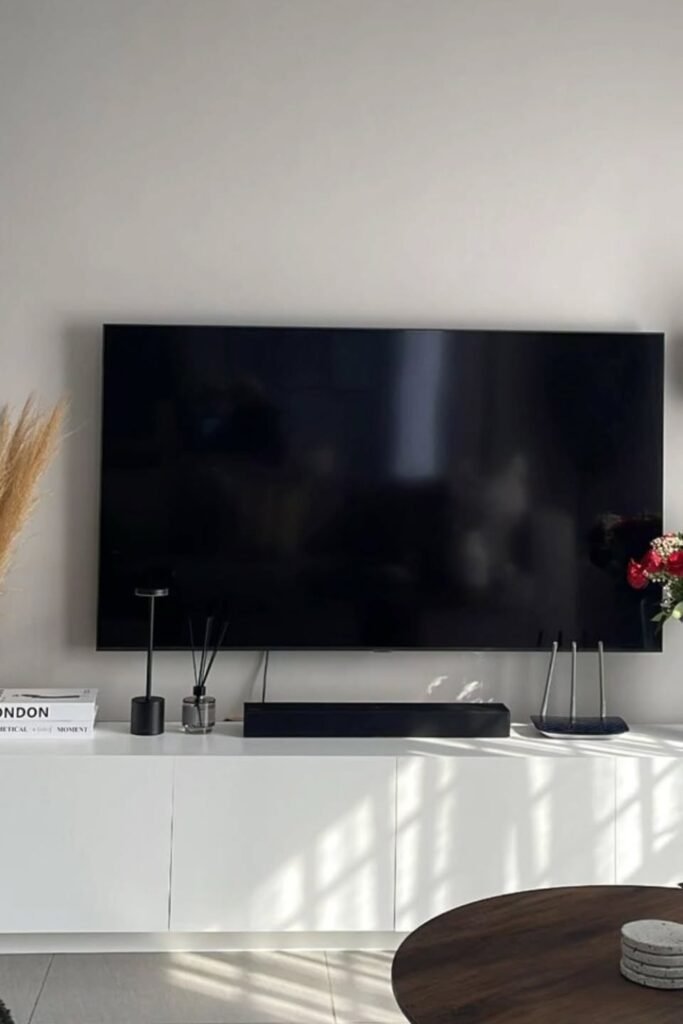
Use Vertical Texture
When slatted wall panels pull the TV into the architecture, your setup avoids floating on a blank wall.
You can use this in modern living rooms where you want the TV area to feel custom-built. A plant on one side adds softness without competing with the texture.
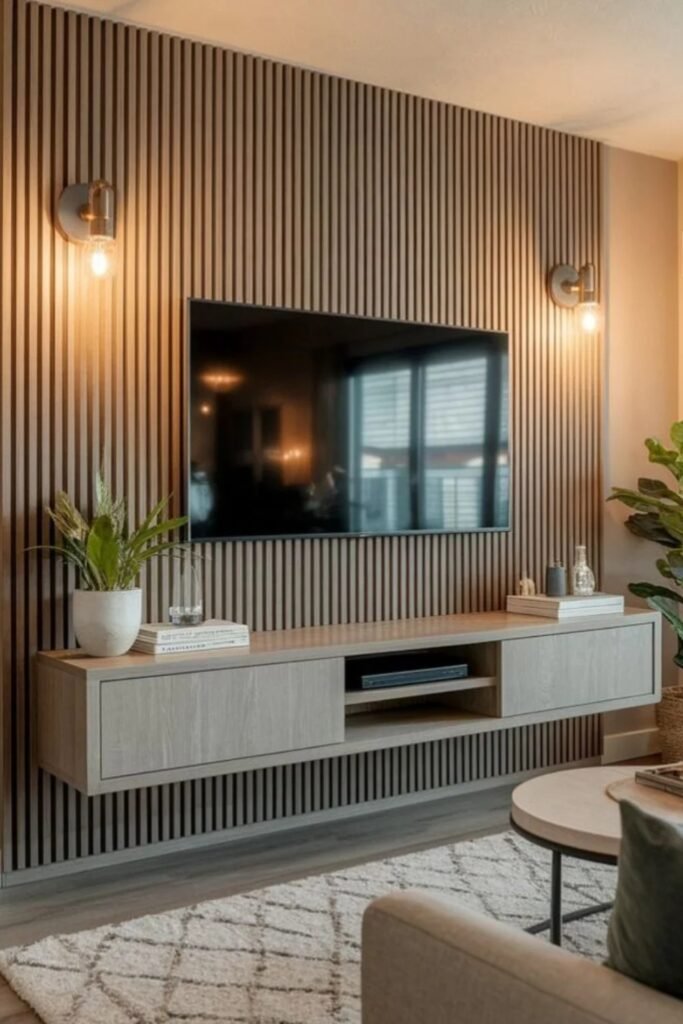
Frame With Shelves
You can pull attention sideways and prevent the screen from dominating by adding open shelves beside the TV.
This works best when one side of your TV wall carries more visual weight. The mix of storage and open space makes your setup feel designed, not just decorative.
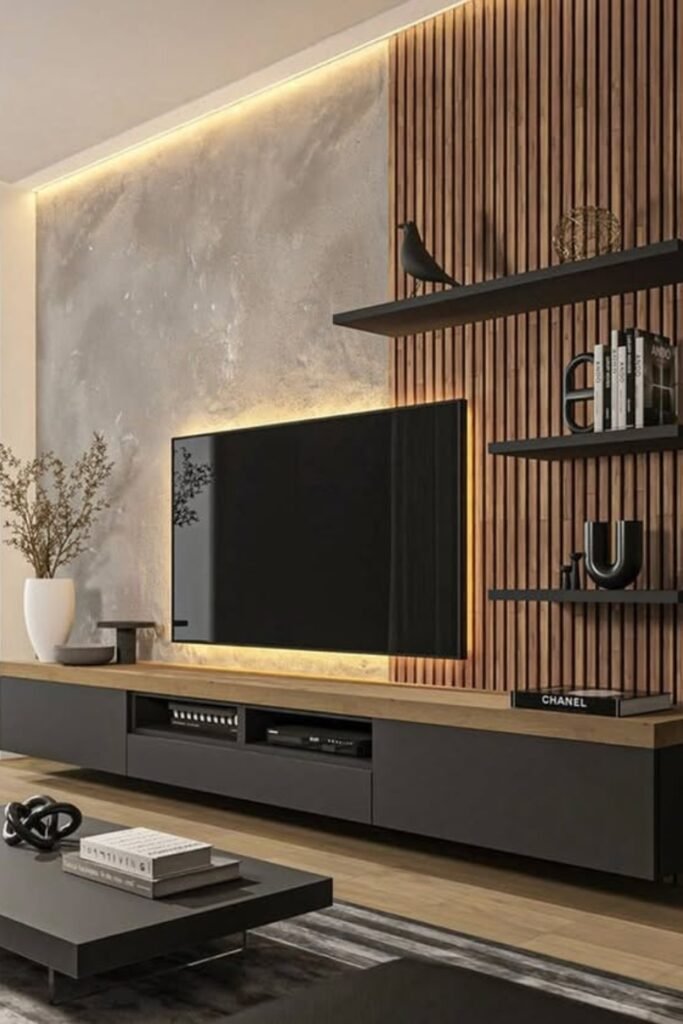
Soften With Greenery
You can make your TV wall feel alive by adding cascading plants. This works best in cozy or boho living rooms.
When you place trailing greenery on a shelf above the TV and echo it below with baskets or planters, your setup gains warmth without needing perfect symmetry.
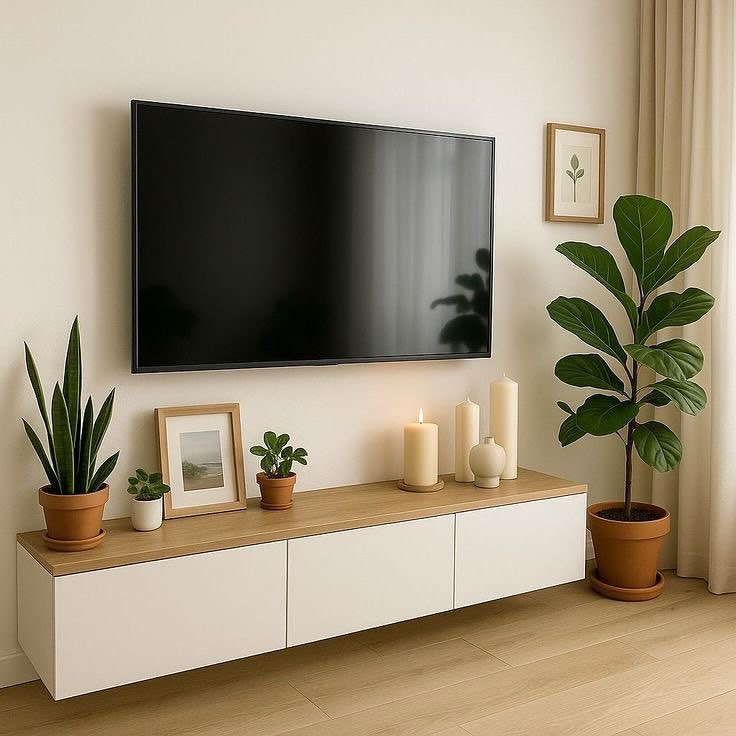
Calm With Neutrals
If you want the TV to feel part of the room without overpowering it, soft colors do the work for you.
You can use light wood, white cabinetry, and simple pottery to create a relaxed, airy vibe. A single floor plant adds height without making your setup feel busy or crowded.
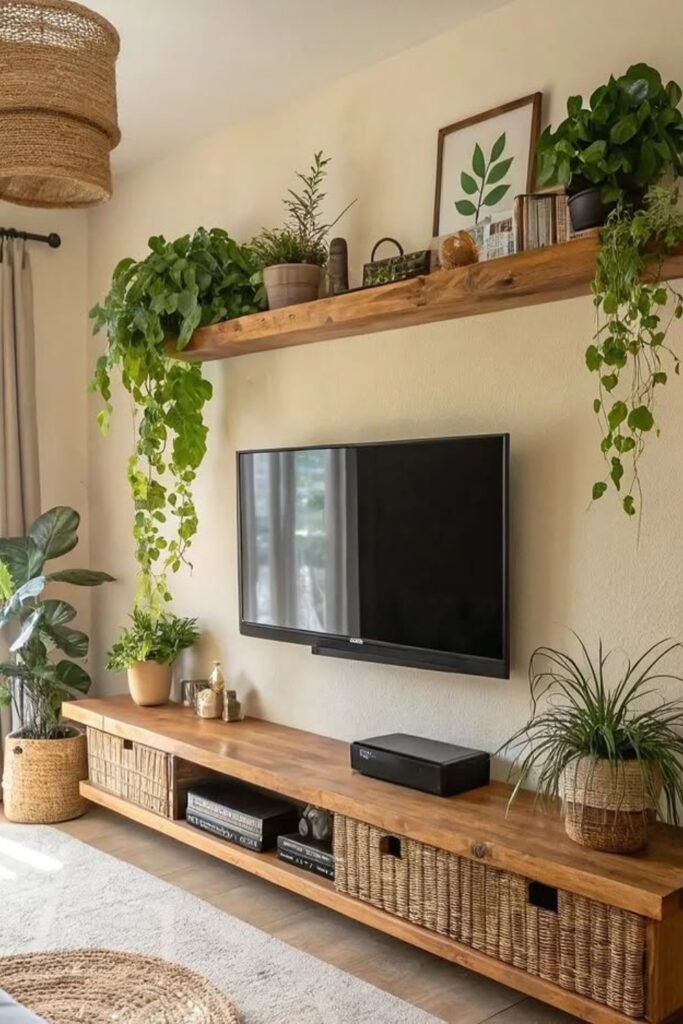
Hide Daily Clutter
You can keep your TV wall calm by letting storage do the heavy work. This setup works best in everyday family living rooms where the TV gets real use.
You can keep only one small tray or plant on top, then let your hidden storage keep everything else out of sight.
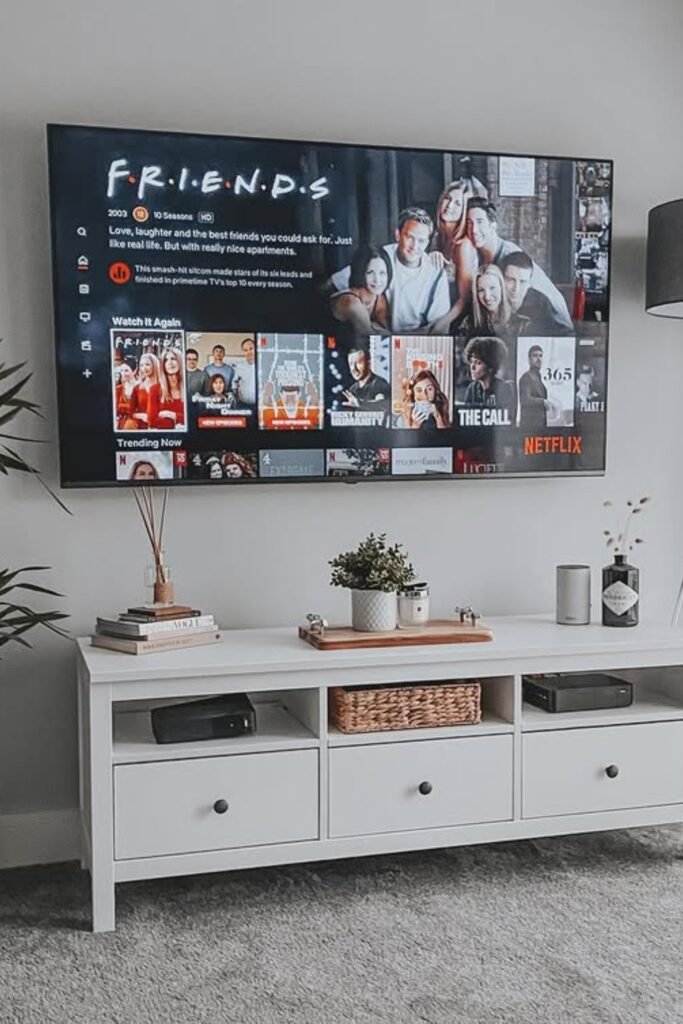
Anchor With Greenery
When you want your TV wall to feel grounded, a large floor plant gives it something solid to lean on visually.
You can place it slightly to the side, not directly under the TV, so it frames the setup naturally. This works well in bright living rooms where white furniture can feel flat on its own.
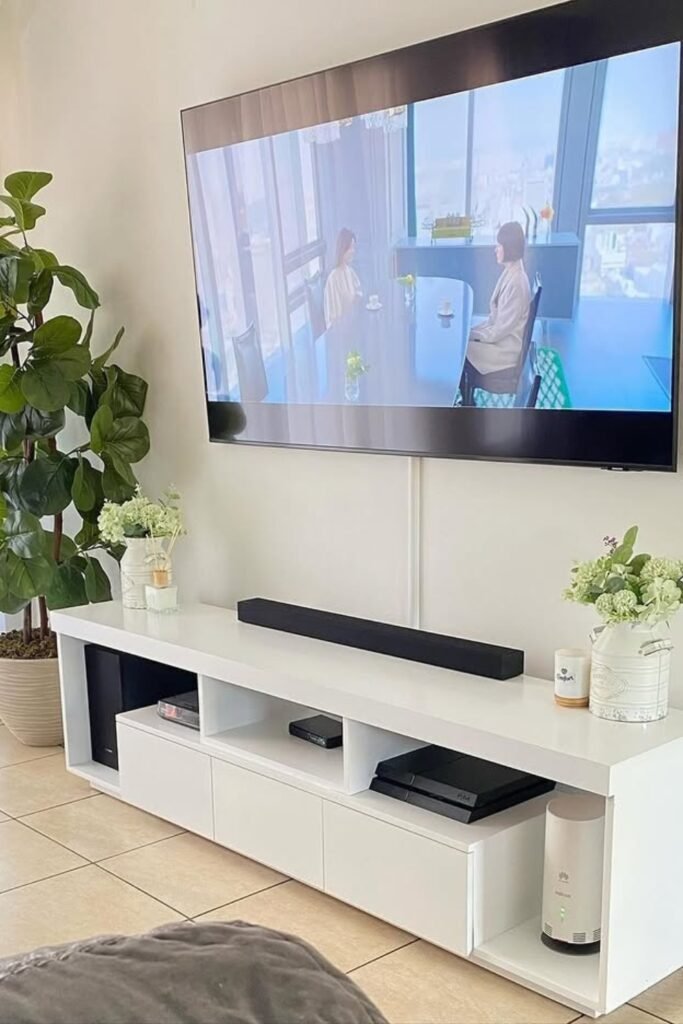
FAQs
Should I decorate both sides of my TV stand?
You don’t have to decorate both sides of the TV. When your stand is long and the room already feels balanced, both sides can work, but in smaller living rooms, styling just one side often looks cleaner.
You can choose one strong piece on a single side so your TV has room to breathe and your setup doesn’t feel crowded or forced.
How many decor items should go on a TV stand?
You might be surprised how little you actually need. Most TV stands look best with two to four items total, not counting your TV or soundbar.
When you add more than that, the surface starts to feel busy. You can focus on a few larger pieces instead of several small ones, and leave some space empty on purpose.
You may like to read!
