
23 Transitional Living Room Ideas For 2026


This article may contain affiliate links: read full affiliate disclosure.
You probably like modern living rooms, but when you picture them in your own home, you can feel how cold they might turn out.
You probably like traditional spaces too, yet you worry they could feel heavy or dated once you live with them.
So you search for transitional living room, hoping you’ll finally find that middle ground and instead, you keep seeing the same beige rooms with no real explanation.
That’s where the frustration comes in. Transitional style isn’t about playing it safe or copying someone else’s look.
In this article, you’ll see how you can mix styles the right way, with 23 unique transitional living room ideas.
Let’s jump in!
What Is A Transitional Style Living Room?
A transitional style living room sits right between traditional and modern, and it works really well for you if you want a space that feels comfortable and easy to live in.
You can take the familiarity of classic design but leave behind the heavy details that make a room feel old.
At the same time, you can borrow clean lines from modern design without making your living room feel cold or empty.
If you want your space to feel calm, balanced, and effortless, this style is perfect for you because nothing is trying too hard.
When you choose simple shapes, neutral colors, and mix old and new pieces, you’ll see how your room naturally feels timeless instead of just trendy.
Softened Industrial Living Room
The raw concrete ceilings and exposed brick set a strong tone, but the living room feels inviting because the furniture does the emotional work.
A deep leather sofa, soft rug, and warm wood tones balance the hard surfaces.
This approach works best in lofts or open-plan homes where structural elements can stay visible.
To recreate it, you can keep the architecture untouched and layer in comfort through seating, texture, and warm finishes so the space feels lived-in, not warehouse-like.

Calm Classic Balance
A soft green walls and tailored seating give the living room a relaxed, timeless feel without looking formal.
The mix works because classic elements like the fireplace and paneled trim are kept simple, while modern touches come through in clean furniture lines and minimal decor.
This setup fits best in traditional homes that need a lighter, fresher update.
You can choose one muted wall color, stick to neutral upholstery, and let natural light do most of the styling work.

Layered Cozy Living
The warm textures carry this living room more than color ever could. The mix of soft upholstery, woven baskets, and layered rugs creates comfort without clutter.
The patterned pillows and a chunky throw add depth while staying within a calm, neutral palette.
This idea works best in family homes or open-plan spaces where you want the living room to feel relaxed and welcoming.
You can layer different fabrics and finishes slowly, keeping the base furniture simple so the room feels cozy, not busy.
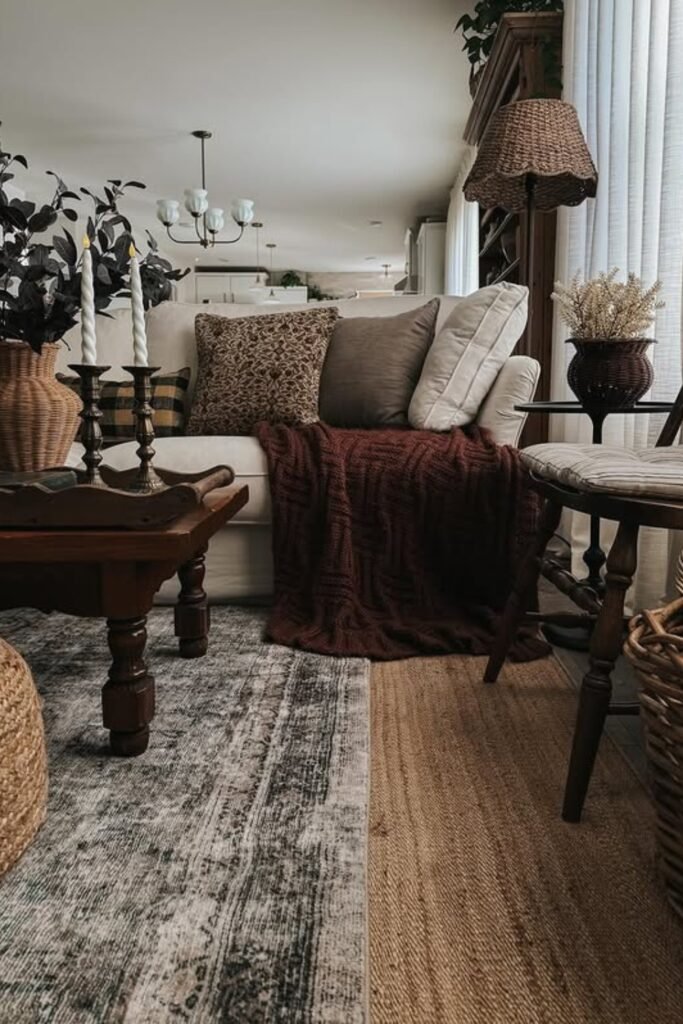
Modernized Traditional Living
The classic floral patterns and turned wood furniture give the living room a traditional foundation, but the layout and restraint keep it feeling current.
The key idea here is control. Patterns appear on pillows and curtains, not everywhere, so the room feels layered instead of busy.
This approach works well in older homes where you want to respect the architecture without freezing it in time.
You can keep the sofa solid, limit florals to soft furnishings, and balance them with clean-lined tables and neutral flooring.

Warm Neutral Living
The soft beige seating and a solid wood coffee table give the living room a calm, grounded feel that never goes out of style.
The warmth comes from texture, not color, layered pillows, natural wood, and subtle decor do all the work.
This setup fits perfectly in family homes where comfort matters as much as looks.
You can start with a neutral sofa, anchor the room with a substantial wood table, and keep accessories simple so the space feels relaxed, not styled.
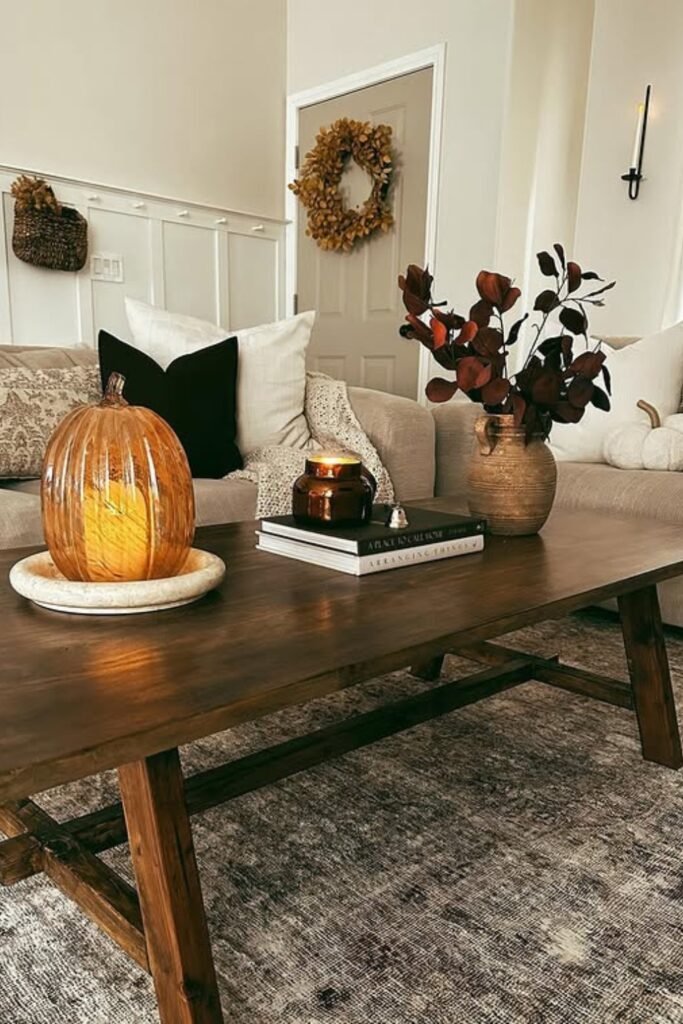
Light Natural Balance
The natural light does most of the heavy lifting in this living room.
A soft upholstery, woven textures, and airy curtains keep the space feeling open while classic wood chairs add structure.
The mix works especially well in homes with large windows where brightness is already an advantage.
You can start with a neutral sofa, layer in natural fibers like jute and cane, and use greenery to bring life into the room without overwhelming it.

Balanced Neutral Living
Nothing feels forced in this living room, and that’s exactly why it works.
The soft gray seating creates a calm base, while the black-framed mirror and dark coffee table add just enough contrast to keep the space sharp.
The balance suits modern family homes where comfort and order matter equally.
You can anchor the room with neutral upholstery, introduce one or two darker elements for definition, and keep patterns subtle so the space stays clean and timeless.

Refined Classic Living
The built-in arches and a detailed fireplace bring strong traditional character, but the living room feels fresh because everything else stays light and simple.
A striped upholstery, soft neutrals, and restrained decor stop the space from feeling formal.
This approach works best in homes with architectural features you don’t want to hide.
You can hhighlight existing details, keep the furniture tailored, and use subtle patterns instead of bold colors so the room feels elegant but easy to live in.
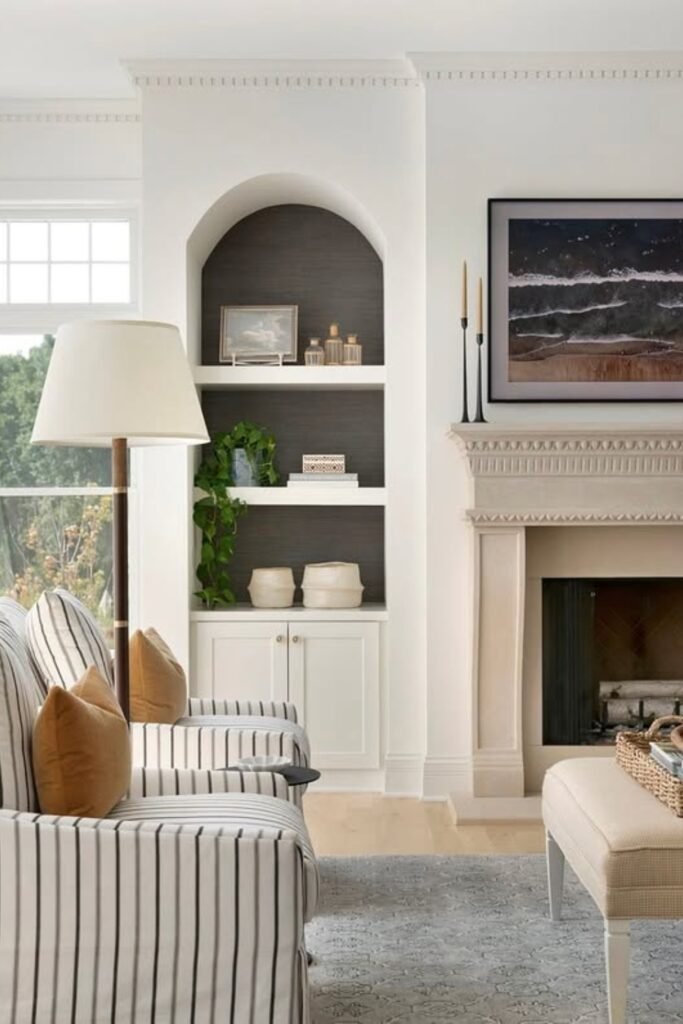
Soft Architectural Living
The architectural walls and ceiling details give the living room a strong traditional backbone, but the space feels current because the furniture stays relaxed and neutral.
A upholstered seating, light wood, and soft textures keep everything approachable instead of formal.
This style works especially well in newer homes that want character without heaviness.
Let architectural details lead the design, choose simple furniture shapes, and layer warmth through fabrics and natural finishes rather than bold color.
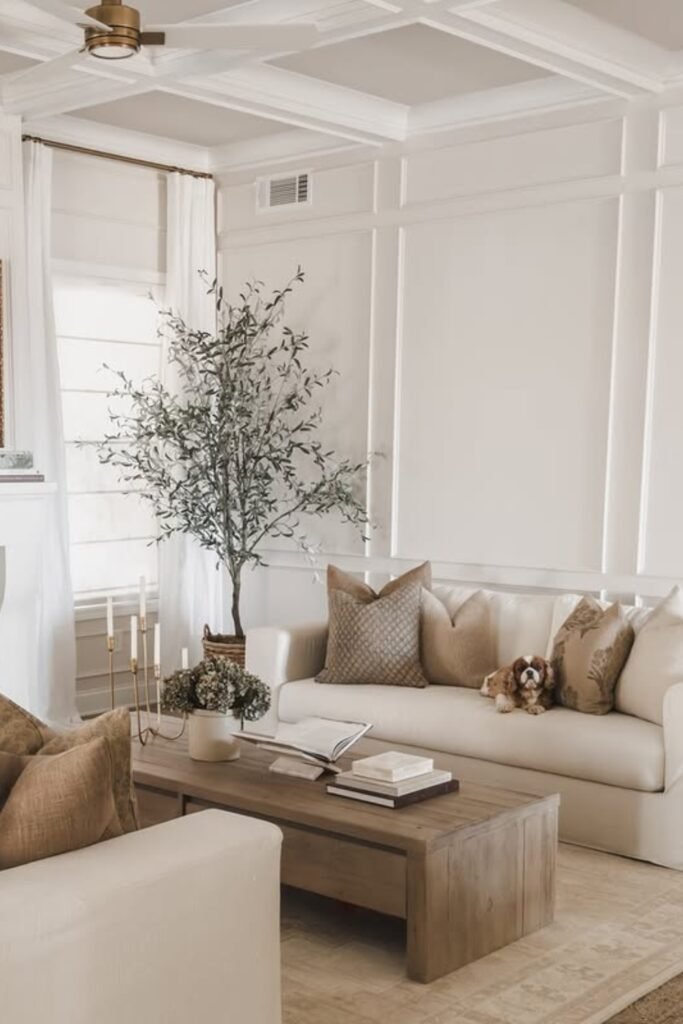
Soft Family Comfort
A large sectional instantly turns the living room into a place where people actually want to sit and stay.
The neutral upholstery keeps the space calm, while patterned pillows and woven baskets add just enough interest.
This setup works best in family homes or open layouts where the living room needs to handle everyday life.
You can choose one generous seating piece, keep the color palette light, and layer texture through rugs, cushions, and simple accessories instead of bold colors.
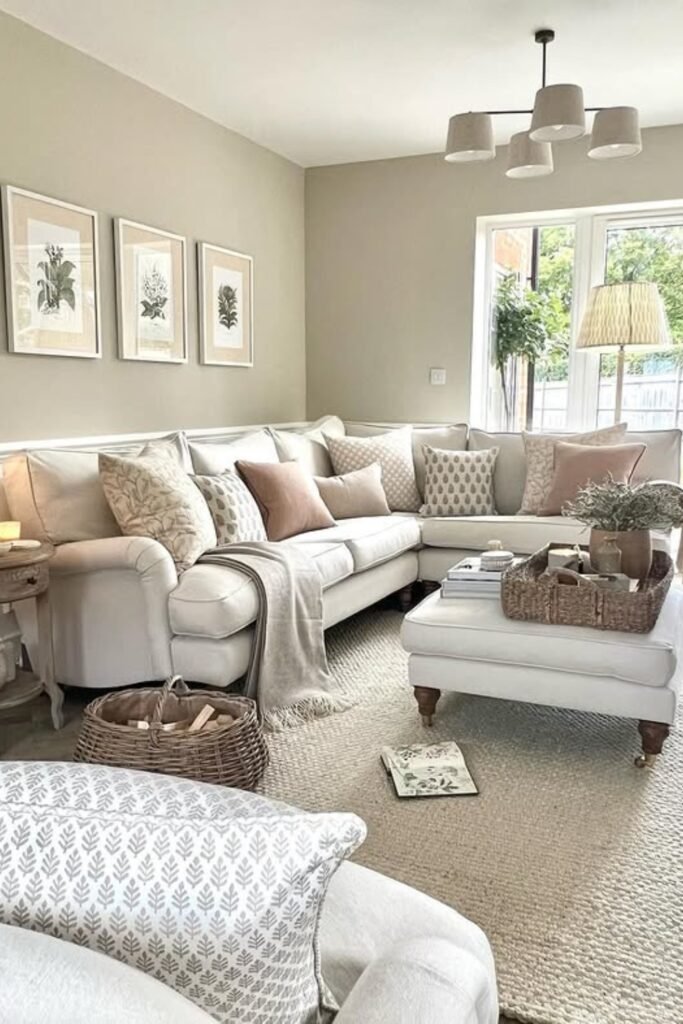
Curated Transitional Mix
You can plan the living room before buying anything makes all the difference, and this layout shows how pieces work together, not alone.
The clean-lined seating keeps the room modern, while wood furniture, woven textures, and classic lighting add warmth.
This approach suits anyone starting from scratch or refreshing a tired space.
You can choose one neutral sofa, anchor the room with a patterned rug, then layer storage, lighting, and accent chairs that lean slightly traditional so the room feels intentional, not random.
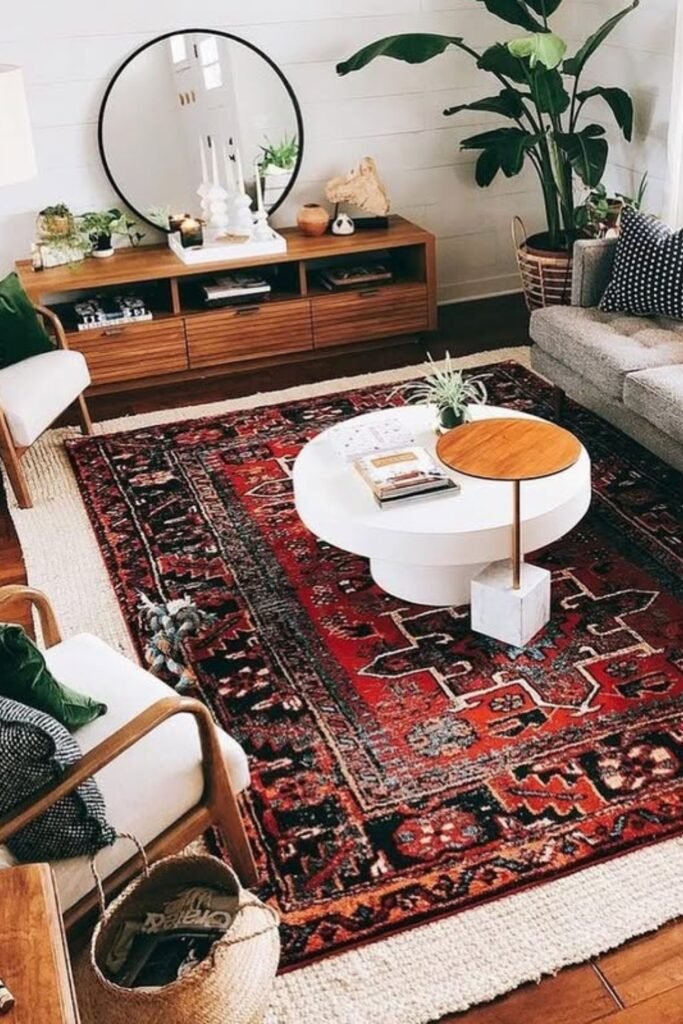
Modern Rug Contrast
A bold vintage rug instantly grounds the living room and keeps modern furniture from feeling flat.
The clean-lined seating and a simple round coffee table let the rug carry the character without overwhelming the space.
This idea works especially well in neutral or white-walled homes that need warmth and personality.
You can choose one statement rug, keep the sofa and chairs understated, and repeat natural wood or greenery so the room feels layered, not chaotic.
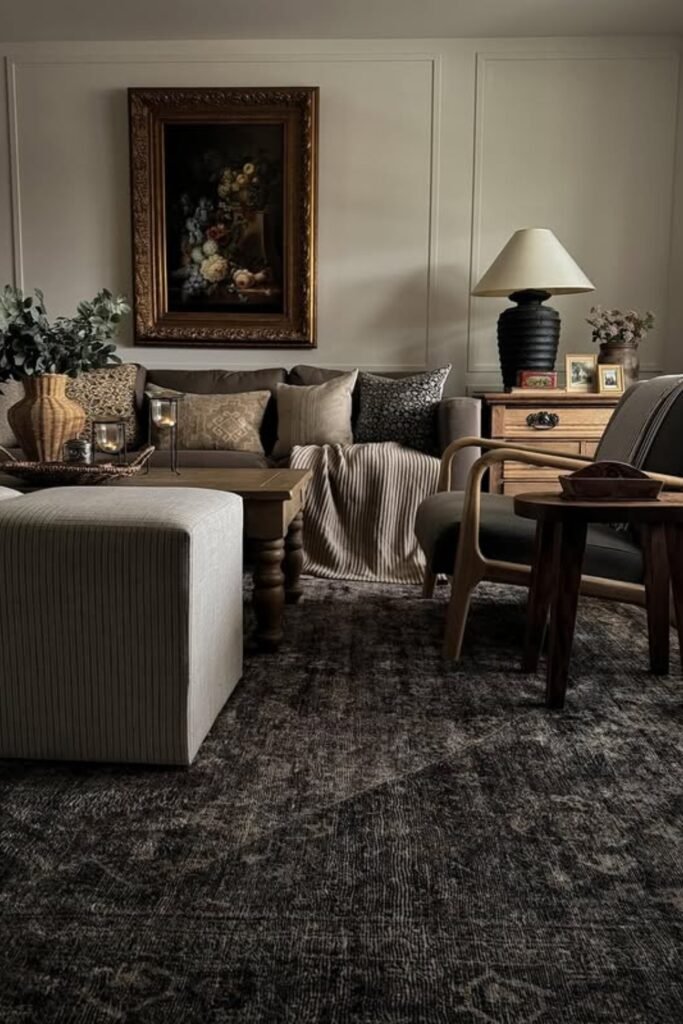
Moody Classic Comfort
The depth and warmth give the living room its character here. The darker walls, layered textiles, and a mix of classic wood furniture create a space that feels intimate without feeling heavy.
The traditional artwork and soft lighting add history, while clean furniture lines keep everything grounded.
This idea works best in homes where you want the living room to feel calm and cocooning.
You have to lean into deeper neutrals, layer throws and pillows generously, and balance darker tones with soft, warm lighting.
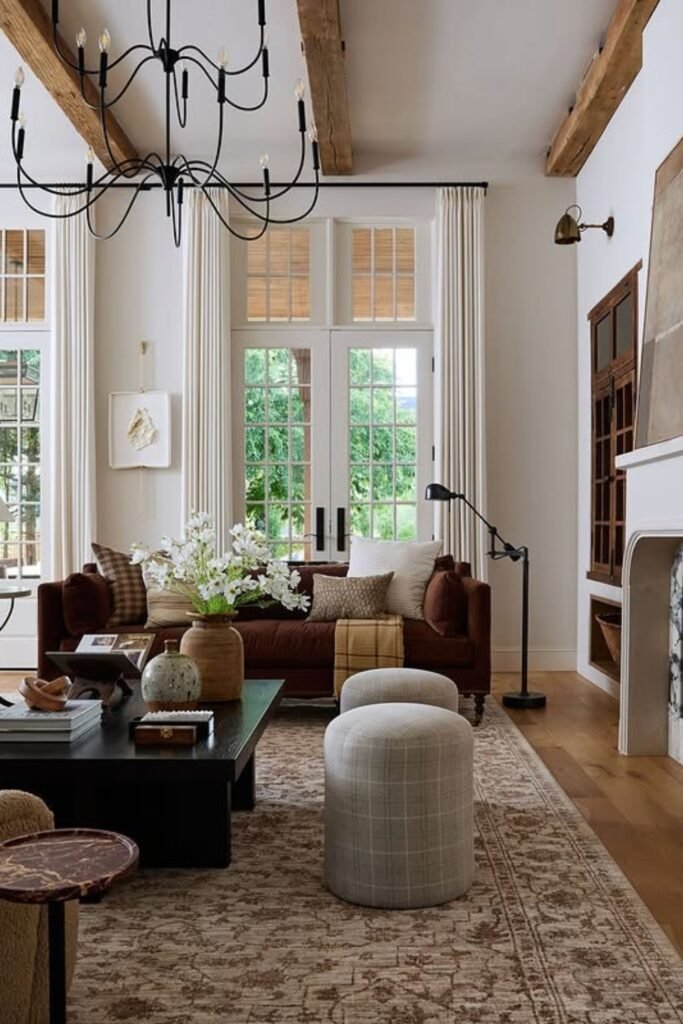
Elevated Rustic Living
It exposed ceiling beams and a sculptural chandelier set a strong first impression, but the living room stays grounded through soft seating and warm neutrals.
The mix feels intentional, not rustic-heavy, because classic architecture is balanced with clean furniture shapes.
This idea works beautifully in homes with high ceilings or original details you want to highlight.
Let one architectural feature lead the design, choose comfortable upholstered seating, and layer in muted patterns so the room feels refined rather than themed.
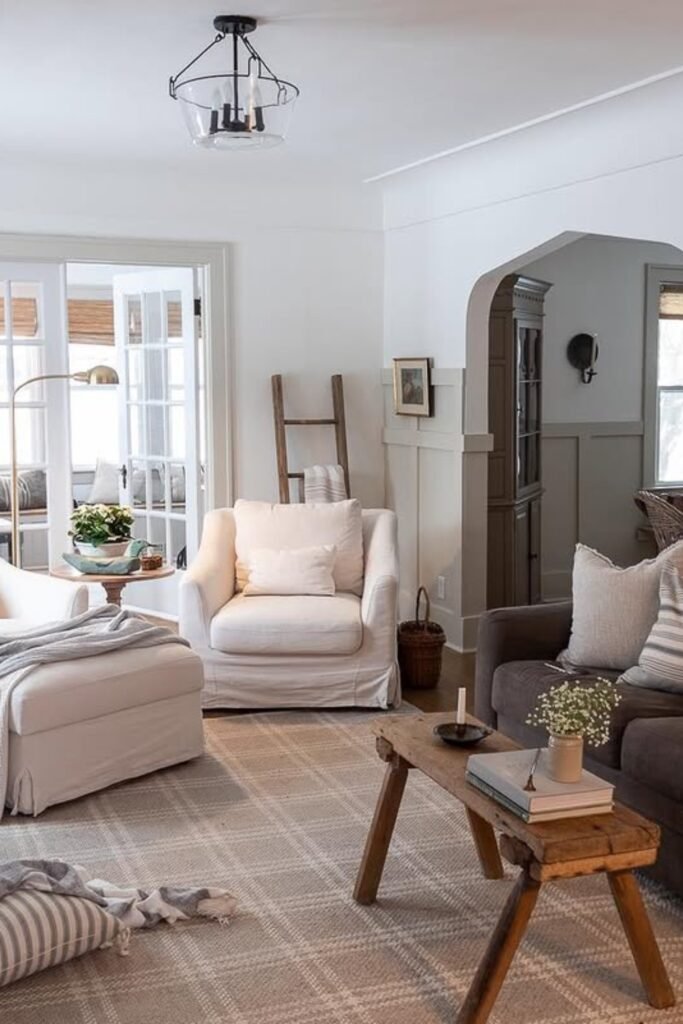
Relaxed Neutral Living
The comfort leads the design in this living room, and everything else follows.
The soft armchairs, slipcovered seating, and a muted rug make the space feel easy and welcoming rather than styled.
A traditional details like the arched doorway and wood accents add character without stealing attention.
This idea works well in everyday homes where the living room gets real use.
You can focus on comfortable seating first, keep colors light, and use simple wood pieces to add warmth without visual noise.

Elegant Transitional Living
The symmetry gives this living room its calm, polished feel.
The matching sofas, balanced lighting, and warm wood tones create order without making the space feel stiff.
This idea works best in larger living rooms where you want structure and flow.
You can center your layout around balance, repeat materials across the room, and keep colors soft so the space feels refined, not formal.

Airy Structured Living
You have strong architectural details give the living room its character, but the space stays light because everything else is kept simple and breathable.
The soft seating, a muted rug, and natural wood prevent the room from feeling formal or overdesigned.
The open shelving and subtle decor keep the look relaxed and functional. This idea works well in homes with molding or arches that deserve attention.
Let the structure shine, choose low-profile furniture, and keep the color palette calm so the room feels open and balanced.
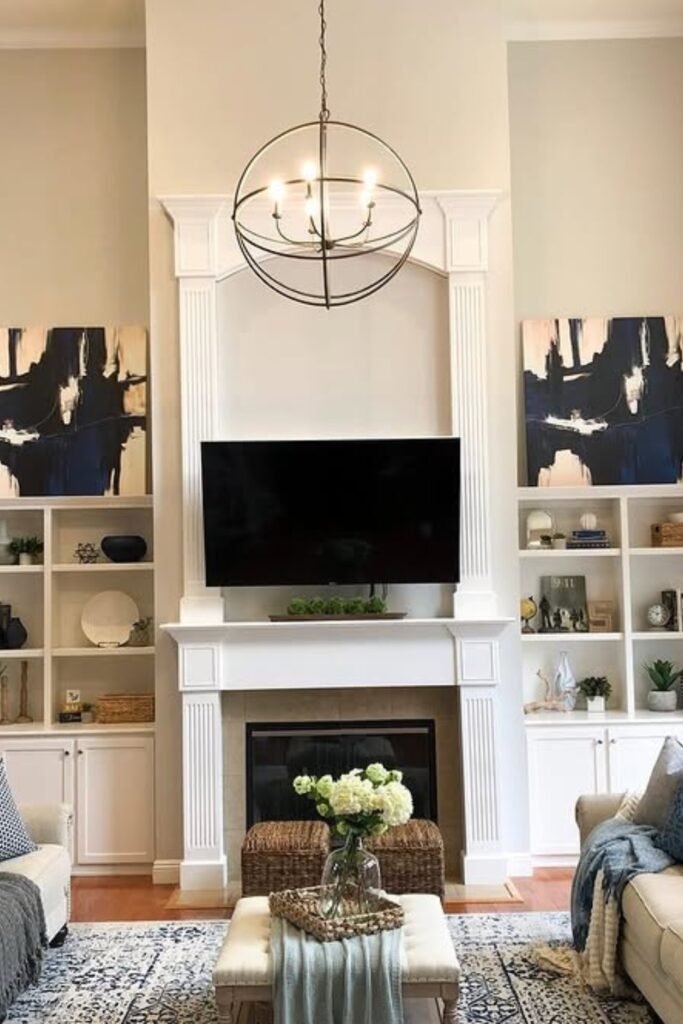
Centered Transitional Living
The living room feels pulled together because everything revolves around one strong focal point.
The fireplace and built-ins create structure, while the modern chandelier and abstract art keep the space from feeling traditional-heavy.
The symmetry brings calm, and soft seating keeps it livable. This setup works best in living rooms with a natural center wall.
To recreate it, you can anchor the room around one feature, keep built-ins simple, and mix classic architecture with modern lighting and artwork for balance.

Classic Art Balance
The traditional artwork sets the tone in the living room, but the space feels fresh because everything around it stays calm and controlled.
The light upholstery, a simple rug, and clean furniture lines stop the gallery wall from feeling heavy.
This idea works beautifully in living rooms with high ceilings or character details like beams.
You can anchor the room with neutral seating, group classic art intentionally, and keep the rest of the palette soft so the room feels elegant, not crowded.
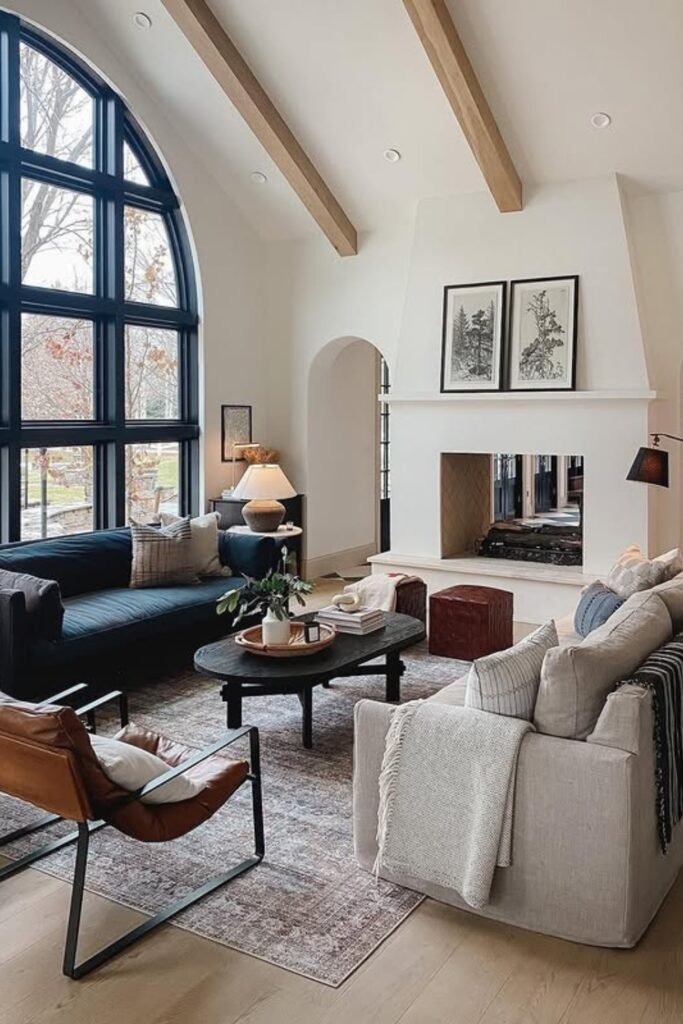
Bold Light Contrast
The living room feels dramatic without feeling heavy because light and dark are used with intention.
The large black-framed windows and a darker sofa add depth, while pale walls, soft textiles, and warm wood beams keep the space open.
This idea works best in rooms with high ceilings or oversized windows.
You can anchor the living room with one darker seating piece, balance it with light upholstery, and let natural light soften the contrast so the space feels bold but livable.
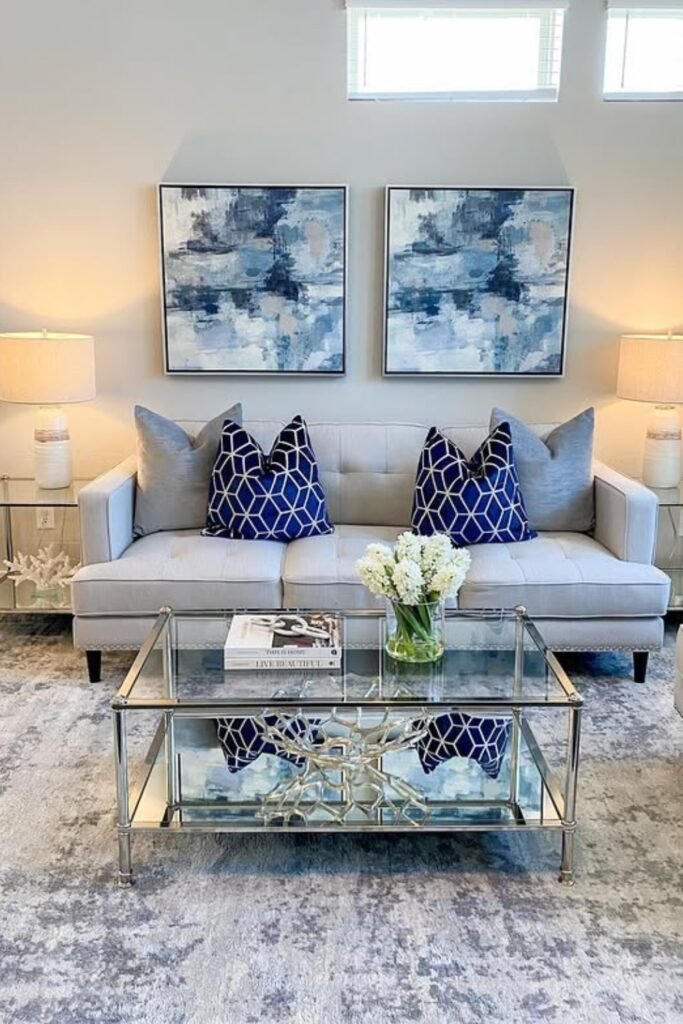
Polished Modern Balance
The clean symmetry makes this living room feel calm and intentional instead of cold.
The soft gray seating creates a neutral base, while blue accents and abstract art add just enough personality.
The glass tables and chrome details keep the space light and modern without overpowering the room.
You can center your layout around matching pieces, use one accent color throughout, and keep finishes reflective so the space feels open and refined.

Open Plan Balance
The open layouts can feel empty fast, but this living room stays grounded by clearly defining the seating zone.
The tailored sofas anchor the space, while soft textures and warm accents stop it from feeling showroom-like.
The clean lines work well in homes where the living room flows into the kitchen or dining area.
You can group seating tightly, use a substantial rug to mark the living area, and mix classic shapes with modern finishes so the space feels connected, not scattered.
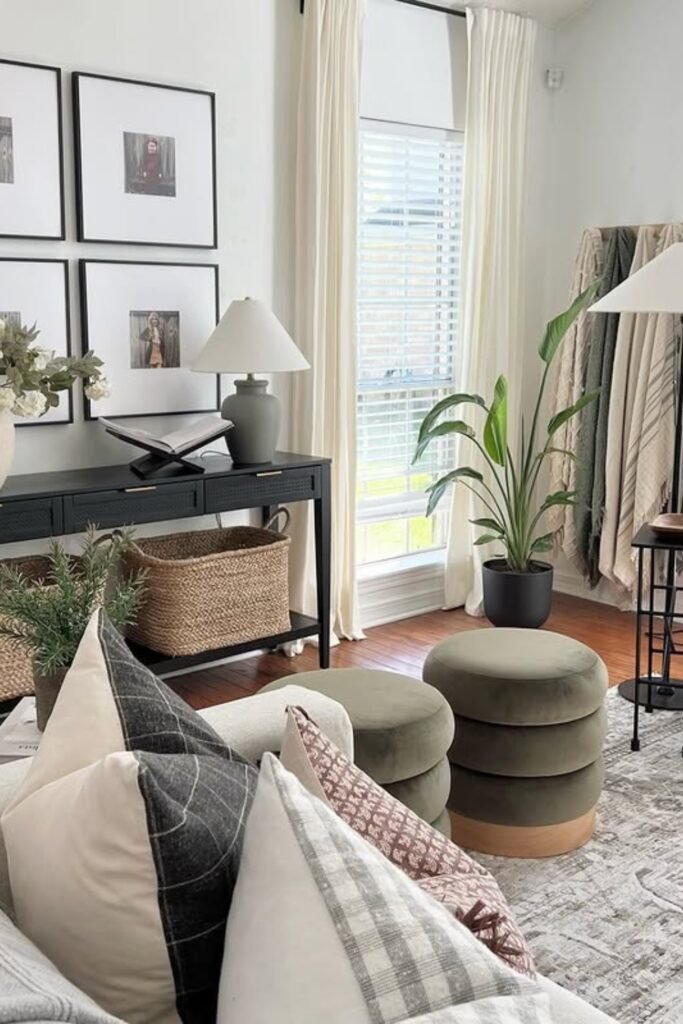
Functional Cozy Corner
The extra seating doesn’t have to crowd the living room when it’s planned with intention.
The low ottomans add flexibility, while a slim console and soft textiles keep the space practical and calm.
The mix of greenery, neutral fabrics, and simple black accents makes the room feel styled but usable.
You can swap bulky chairs for compact seating, keep storage visible but tidy, and use plants to soften the layout.
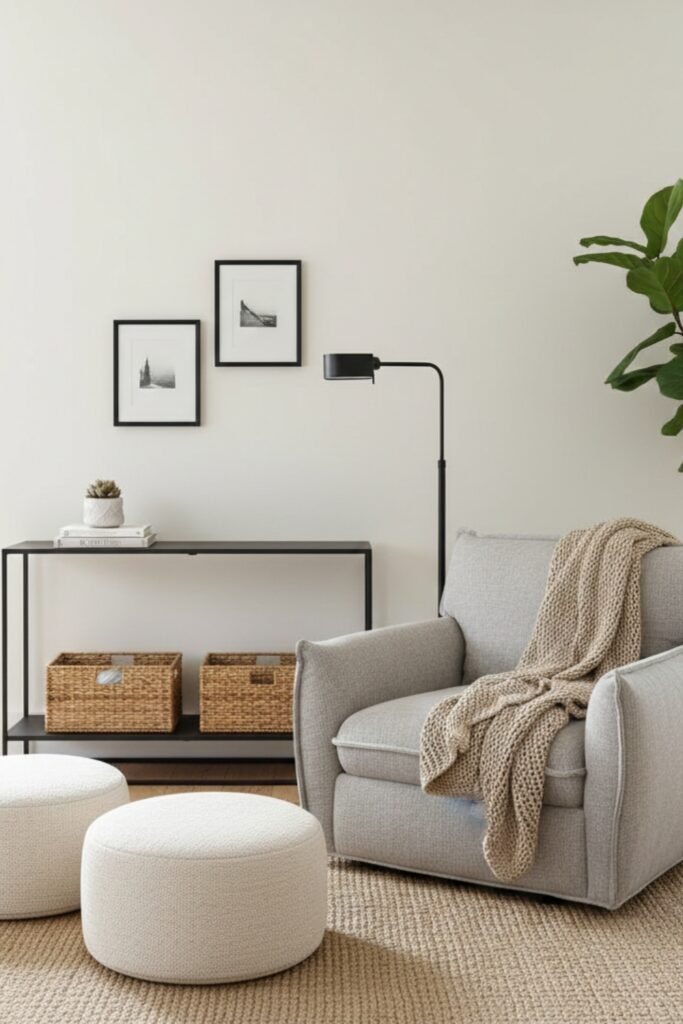
FAQs
Is a transitional living room modern or traditional?
A transitional living room sits right between traditional and modern, and it works really well for you if you want a space that feels both comfortable and structured.
You can take the warmth and familiarity of traditional design and pair it with the simplicity of modern pieces.
If your room already feels balanced, cozy, and not tied to one specific era, you’ll see that it usually falls into the transitional category.
How do you keep a transitional living room from looking boring?
You should focus on texture and contrast instead of just color.
You can mix soft fabrics with wood, metal, or stone, and you should add one or two statement elements like artwork or lighting.
When everything in your room is neutral but layered, you’ll notice how it stays interesting without ever feeling busy for you.
