
16 Transitional Bedroom Ideas for 2026

This article may contain affiliate links: read full affiliate disclosure.
You’ve probably saved a bunch of transitional bedroom photos because you love how they look, calm, elegant, balanced.
You might wonder why you’re drawn to them. You could be asking yourself: is it modern?
Is it traditional? And when you try to recreate it, you might find that your room feels either too cold or too heavy.
You can see the frustration, right? You might think transitional style is simple, but you won’t really know how to pull it off until someone breaks it down.
In this article, you will see exactly what makes a bedroom transitional, and then I will show you 16 ideas that you can try.
Let’s jump in!
What Is a Transitional Bedroom?
You should know that a transitional bedroom sits right between traditional and modern.
You can take the warmth and comfort of classic design and mix it with the clean lines of modern style, and you will end up with a space that feels calm, balanced, and easy for you to live in.
If traditional feels too detailed for you and modern feels too plain, you can see why transitional might feel just right for you.
You won’t find yourself surrounded by heavy carvings, dark ornate furniture, or bold trendy colors.
You also won’t see ultra-sleek pieces that make you feel cold. Instead, you will notice neutral colors, soft textures, and furniture with clean shapes and subtle details that you can enjoy every day.
When you decorate, you might use a tufted upholstered headboard, that’s your classic touch, and pair it with simple nightstands that you won’t get tired of, without fancy handles or legs.
If you choose brass lighting, you should keep it minimal so you can appreciate it without feeling cluttered.
If you use wood furniture, you can avoid heavy distressing to keep the room feeling just right for you. You will see that color plays a big role too.
You can start with a neutral base, cream, taupe, soft gray, or warm white, and then you can add depth through layers: linen bedding, a textured rug, or maybe a velvet bench that you will love.
Instead of using loud patterns, you can focus on texture and contrast, which you will notice makes the room feel alive without overwhelming you.
The key is balance, and you can feel it when you get it right. If you add one traditional element, you should balance it with something modern.
If your room starts to feel too formal, you can simplify it. If it feels too plain, you can add softness that you will enjoy.
That’s transitional style, and you can take this approach to make your bedroom feel like it’s perfectly yours.
You don’t have to pick a side, you can mix both worlds in a controlled, thoughtful way, and you will see how effortless it can feel for you.
Warm Wood Balance
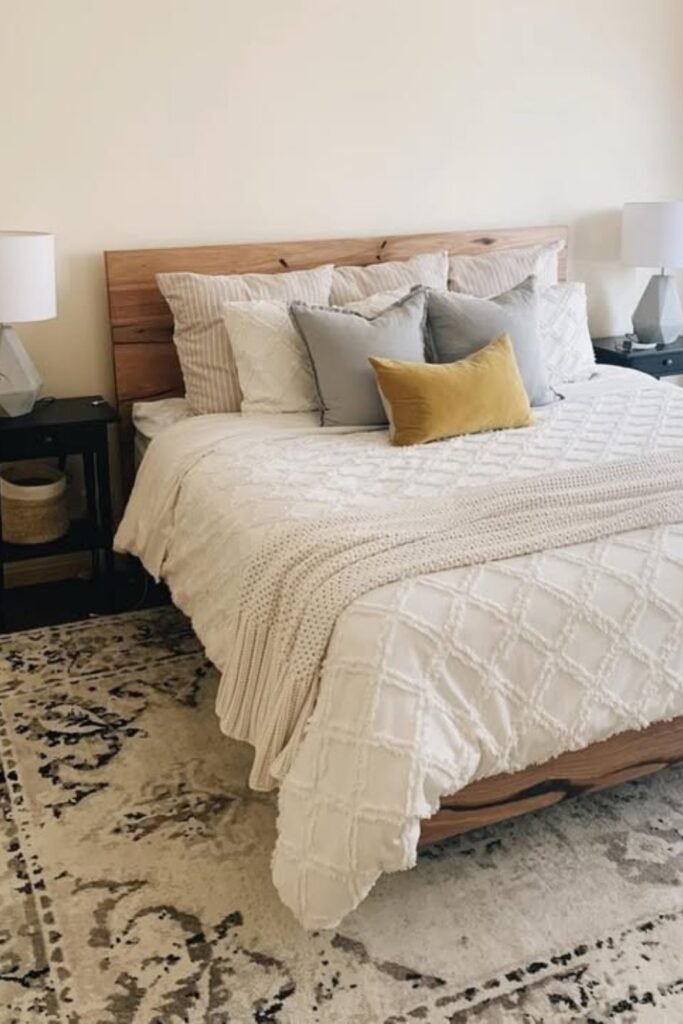
If your bedroom feels too plain, you can instantly fix it with natural wood. You might choose a simple wooden bed frame that adds warmth without making the room look too traditional.
You can pair it with layered white bedding so you keep everything light and fresh.
You should notice the contrast, when you add black nightstands, you will see how they ground the room and prevent it from feeling washed out.
You can also bring depth with textured pillows in soft gray or muted mustard. You will find this works best in rooms where you have good natural light.
You should keep the walls neutral, use soft lighting, and let texture do the work instead of bold patterns.
Vaulted Ceiling Drama
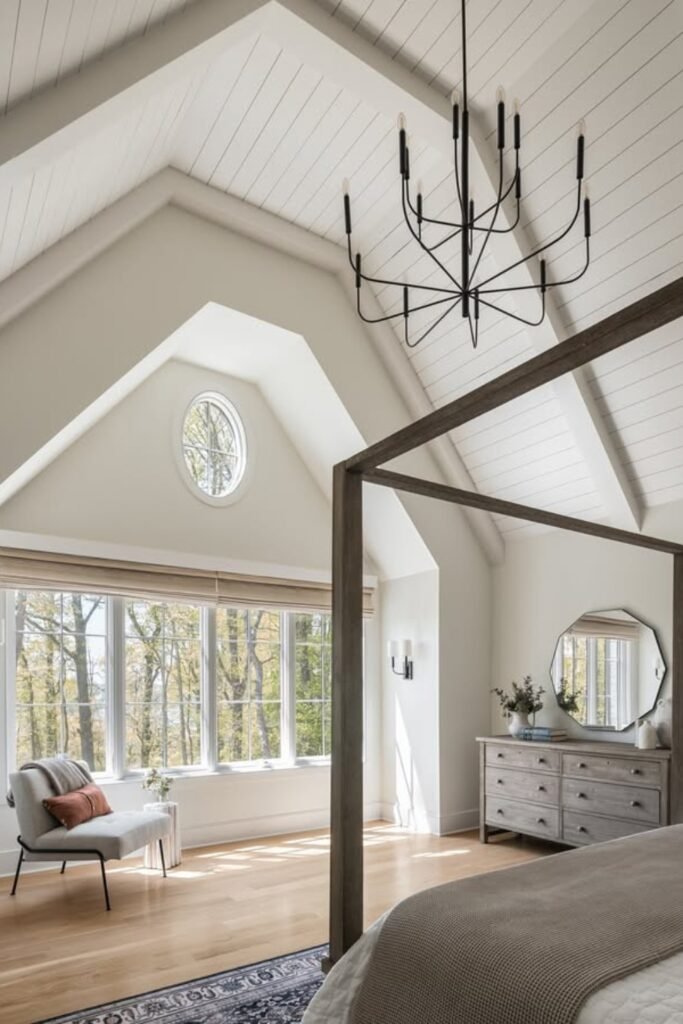
When your bedroom has height, you can’t ignore it, you should highlight it.
You will see that a vaulted ceiling instantly creates presence, but you can keep the balance by keeping everything else simple.
You can use light walls, wide-plank floors, and a clean-lined four-poster bed to stop the room from feeling busy.
You might add a black chandelier for a modern edge, but you should keep it subtle. You can stick to soft neutrals and let architectural details shine.
You should use minimal decor and larger furniture pieces so the room doesn’t feel empty.
You will notice this works beautifully in master bedrooms with tall ceilings where you want elegance without heaviness.
Classic Panel Contrast
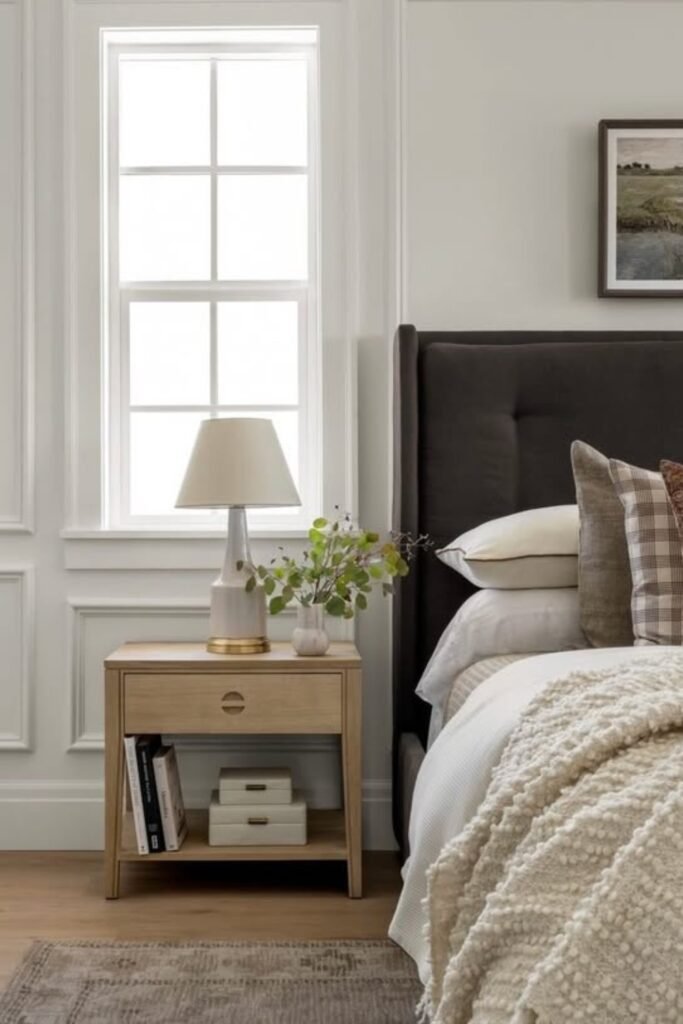
You might love wall molding because it instantly adds character, but you should be careful, it can feel too formal.
You can balance detailed panels with something clean and grounded, like a dark upholstered headboard.
You will see how that contrast keeps the room feeling balanced. You can stick to soft white or warm neutral walls and layer light bedding with subtle texture instead of bold prints.
You should pick a simple wooden nightstand and a classic lamp with minimal detailing.
You will notice this approach works beautifully in medium to large bedrooms where you want elegance, but still want the space to feel relaxed and easy to live in.
Statement Lighting Focus
Sometimes all you need is one bold piece to define the room.
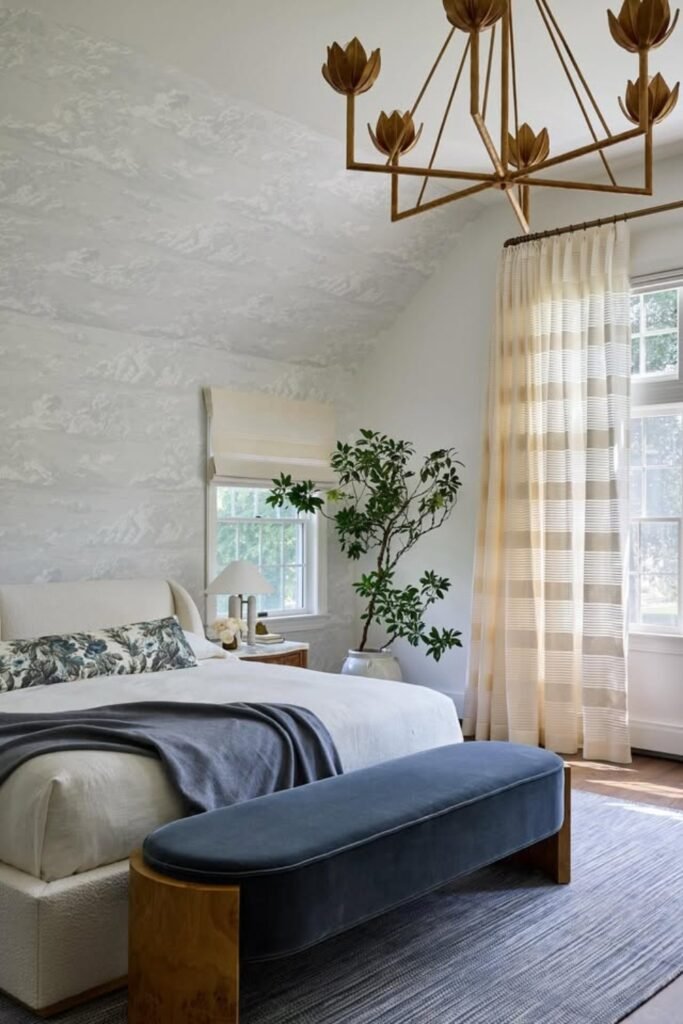
You can choose a sculptural brass chandelier that instantly pulls your eye up and adds a modern edge, while you keep everything else grounded with a soft upholstered bed and neutral palette.
You should notice the subtle wall texture adds interest without overwhelming the space.
You can recreate this look by picking one standout light fixture and keeping the rest of the room calm, you can use cream bedding, layered neutrals, and warm wood tones.
You should add a slim bench at the foot of the bed to bring function without bulk.
You will find this works beautifully in master bedrooms with higher ceilings where you want quiet drama without clutter.
Cozy Window Nook
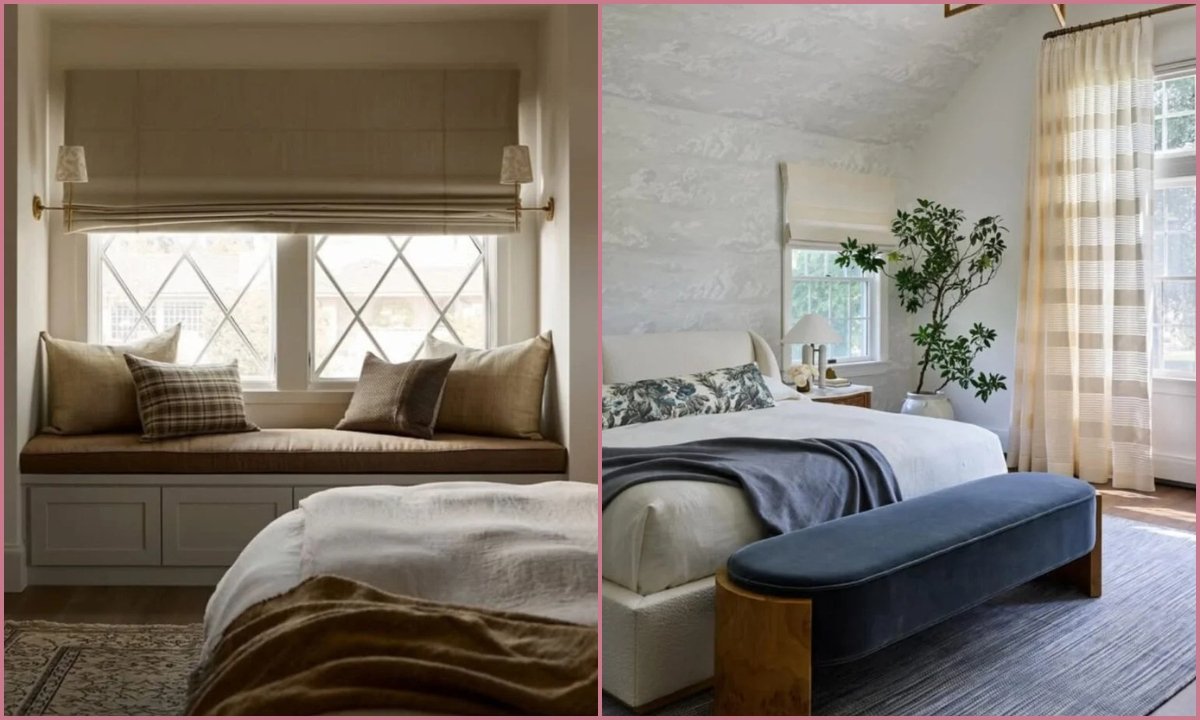
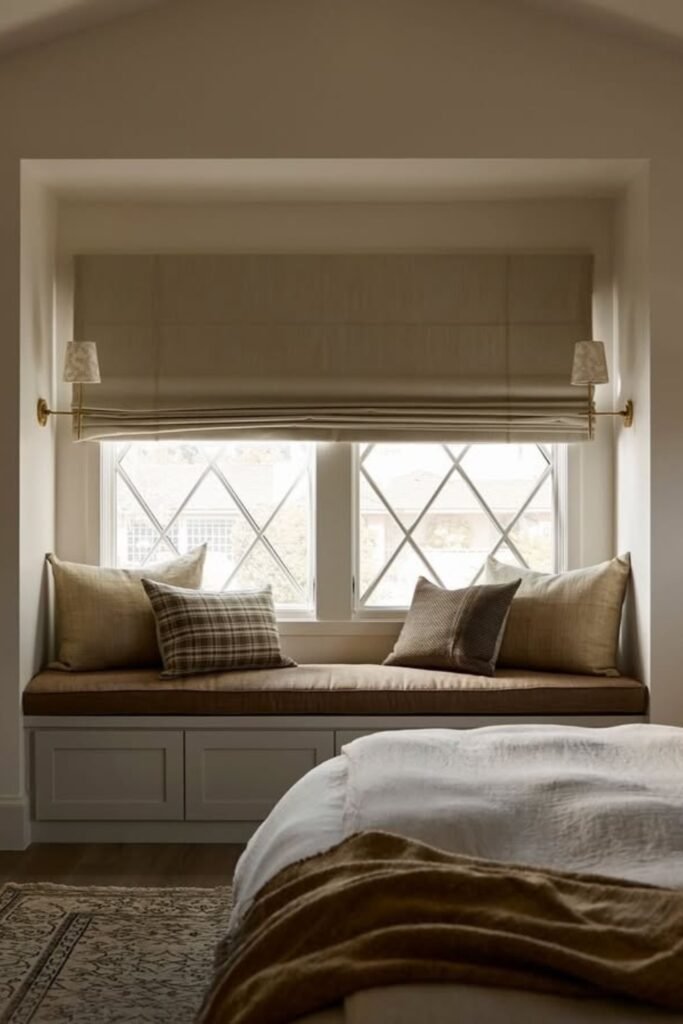
If you have an empty wall, you can turn it into your favorite corner with a built-in window seat.
You will see that the clean panel detailing keeps it classic, while simple cushions and neutral tones make it feel relaxed.
You can frame your window with subtle molding and add a slim bench with tailored cushions in warm beige or taupe.
You should stick to soft patterns like plaid or textured solids instead of bold prints.
You will find this idea works especially well in bedrooms with deep window recesses where you want extra seating without adding bulky furniture.
Layered Neutral Seating
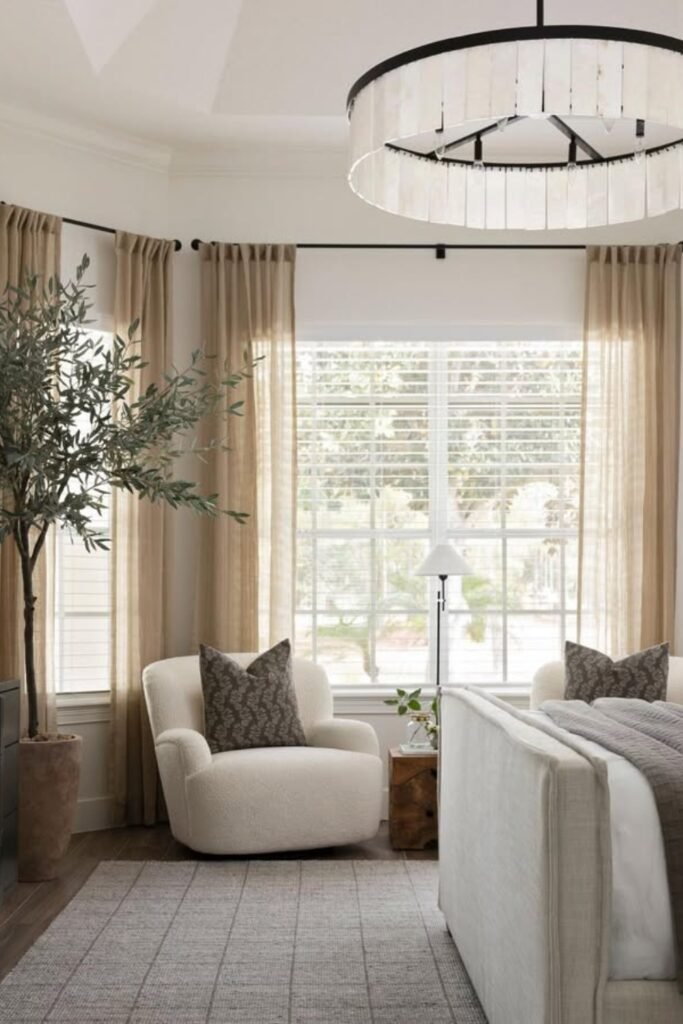
When your bedroom feels empty near the windows, you can add a small sitting zone instead of more decor.
You might place two soft armchairs in a warm cream to make the room feel intentional and welcoming.
You should keep the palette tight, beige curtains, textured pillows, and a subtle rug so nothing competes.
You can choose curved chairs to soften straight architectural lines. You should finish the setup with a slim floor lamp or small wood side table without clutter.
You will find this works beautifully in larger master bedrooms where you want a quiet place to read without breaking the calm, transitional flow.
Moody Panel Depth
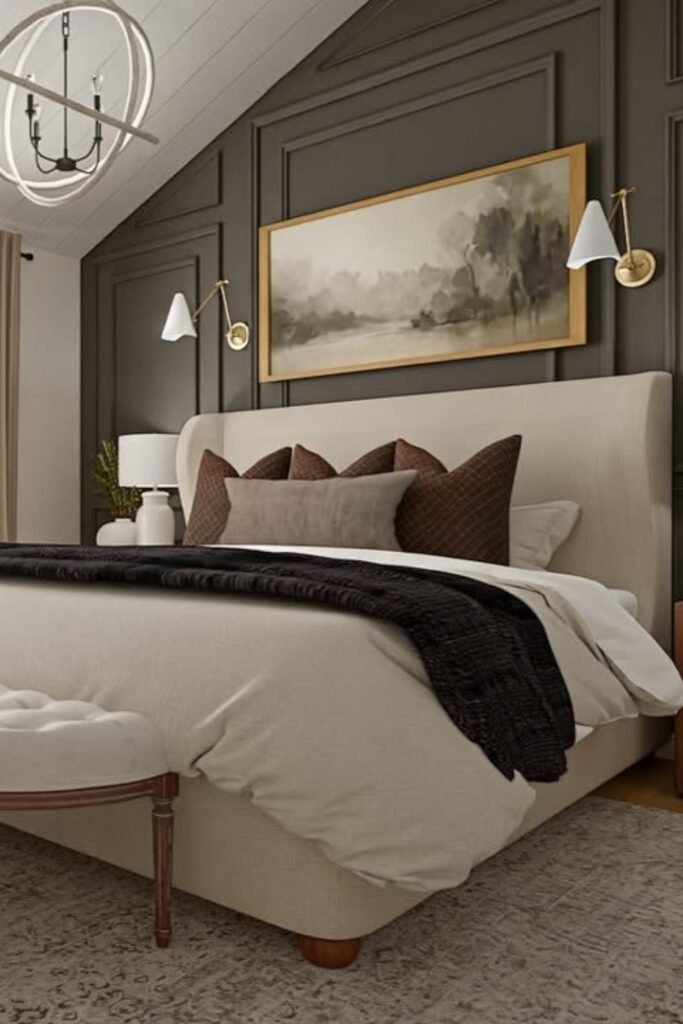
Dark walls can feel intimidating, but you can turn them dramatic in the best way by adding structured panel molding.
You will see that the deep charcoal backdrop gives the room weight, while the light upholstered bed keeps it from feeling heavy.
You can use warm wood nightstands and brass sconces to soften the contrast and add balance. You should pick one rich paint color and keep your bedding neutral and layered.
You can add warm metals instead of chrome to maintain softness.
You will notice this style works beautifully in larger bedrooms where you want a cozy, high-end feel without going overly traditional.
Modern Canopy Contrast
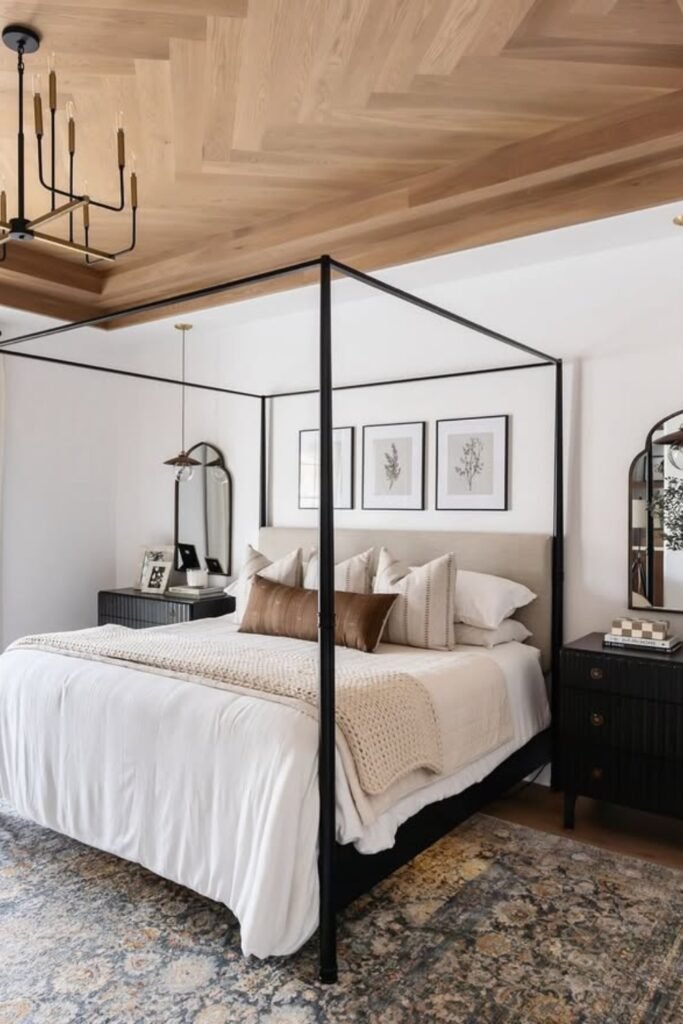
You can instantly add structure with a black canopy bed without feeling ornate.
You will see that the slim metal frame keeps it modern, while the soft upholstered headboard and neutral bedding add warmth.
You should notice how the dark nightstands echo the frame, creating balance across the room.
You can keep your walls light and your textiles layered, cream, beige, and soft brown work beautifully together.
You can add subtle artwork above the bed and warm wood tones in the ceiling or floor for depth.
You will find this setup works especially well in spacious bedrooms where you want a focal point that feels bold but still refined.
Bold Black Framework
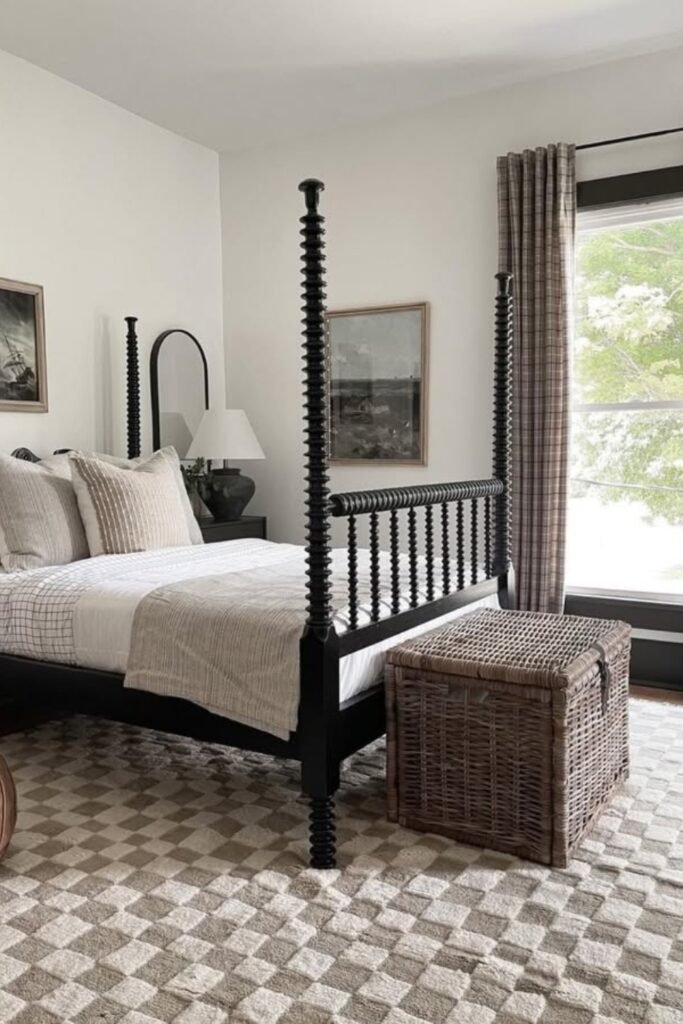
A dark four-poster bed can easily feel traditional, but you can make it read fresh by keeping everything around it light and simple.
You should see how the crisp white walls and neutral bedding soften the strong black frame, keeping the room balanced.
You can let one bold furniture piece lead the space and tone everything else down. You should use textured neutrals, subtle patterns, and warm wood accents to prevent it from feeling stark.
You can add plaid curtains and woven pieces for depth without clutter. You will notice this works especially well in rooms with plenty of natural light to offset the darker furniture.
Soft Green Accent
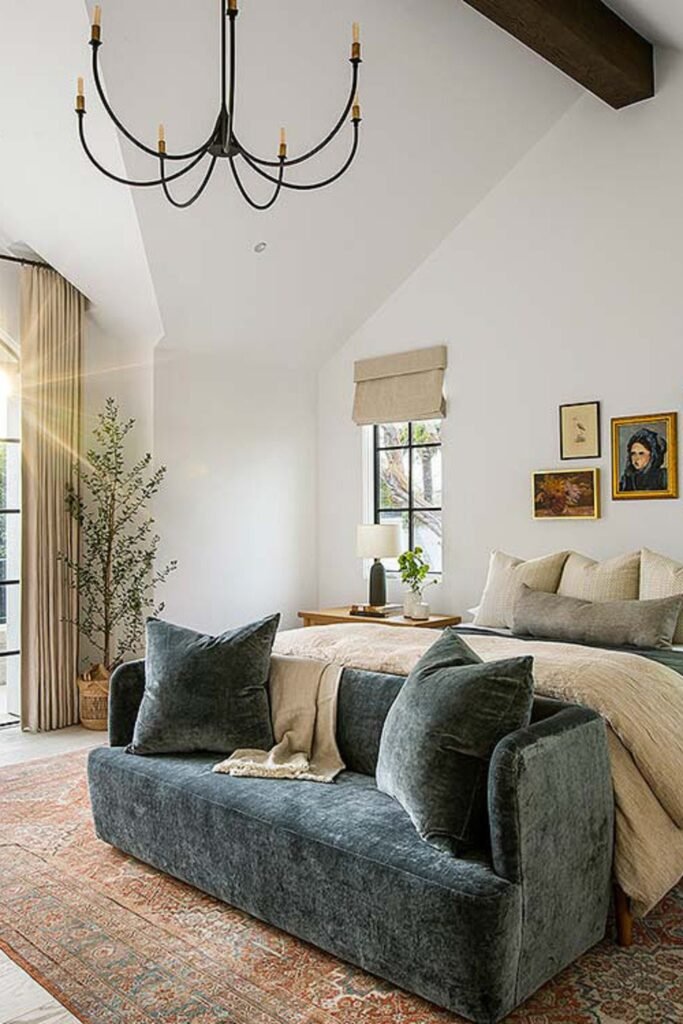
Color doesn’t have to be loud to make an impact, you can use muted shades for personality.
You might add a soft green bench and pillows to bring depth without breaking the calm, neutral base of the room.
You should keep white walls, simple bedding, and a classic chandelier to maintain balance, while a warm rug adds subtle richness.
You can start with a neutral foundation and introduce one soft accent color through upholstery or cushions.
You will see that this works beautifully in bedrooms with natural light where you want personality without overpowering the peaceful, transitional feel.
Warm Earth Layers
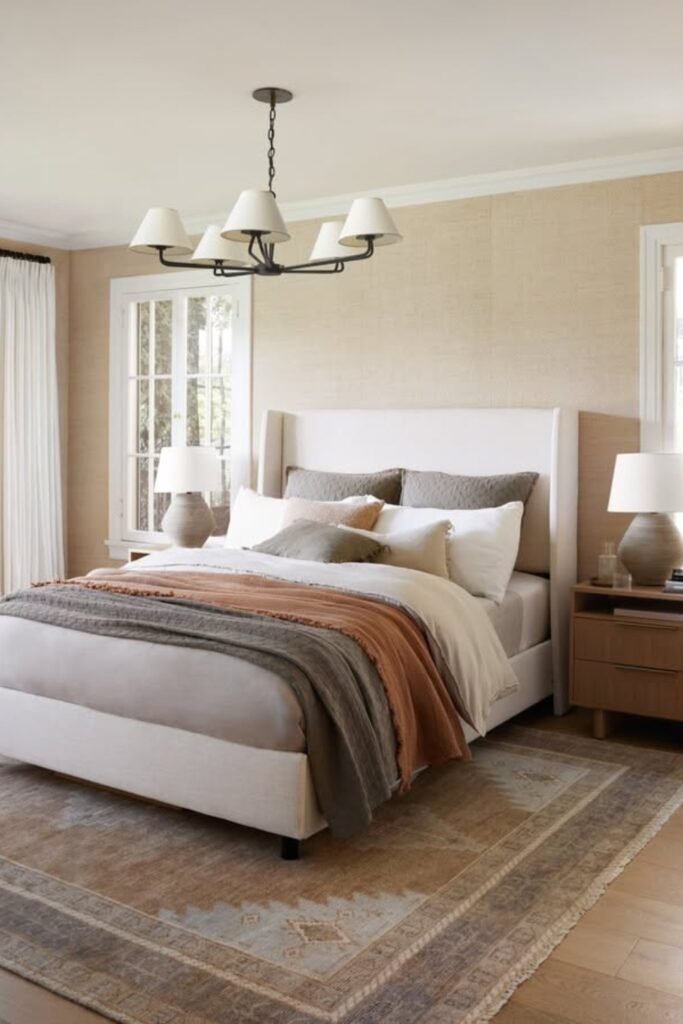
If your bedroom feels cold, you can swap bright whites for warm earth tones.
You might use soft beige walls and an upholstered bed to create a calm base, while layering throws in rust and taupe adds depth without overpowering the space.
You should notice how wood nightstands bring warmth without heavy detailing. You can stay within a warm neutral palette and layer different textures instead of adding bold patterns.
You should pick simple lighting with classic shades to keep it timeless.
You will find this style works beautifully in bedrooms where you want comfort first, but still want the space to feel refined and intentional.
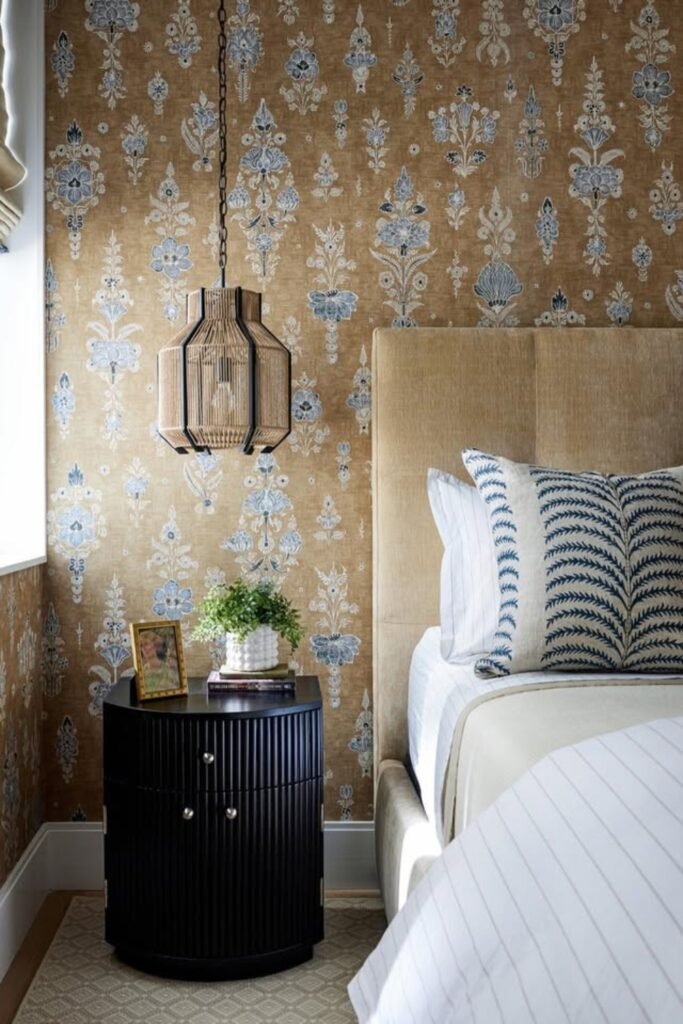
Patterned Wall Balance
Bold wallpaper doesn’t have to feel traditional, you can handle it with care.
You might add a warm patterned wall to give personality, but you should balance it with a clean upholstered headboard and simple white bedding.
You can limit a detailed print to one wall and keep the rest of the palette calm. You should pair it with modern lighting and streamlined furniture so the space doesn’t feel busy.
You will see how a dark nightstand adds contrast and structure.
You will notice this approach works especially well in smaller bedrooms where one statement wall can create depth without overcrowding the room.
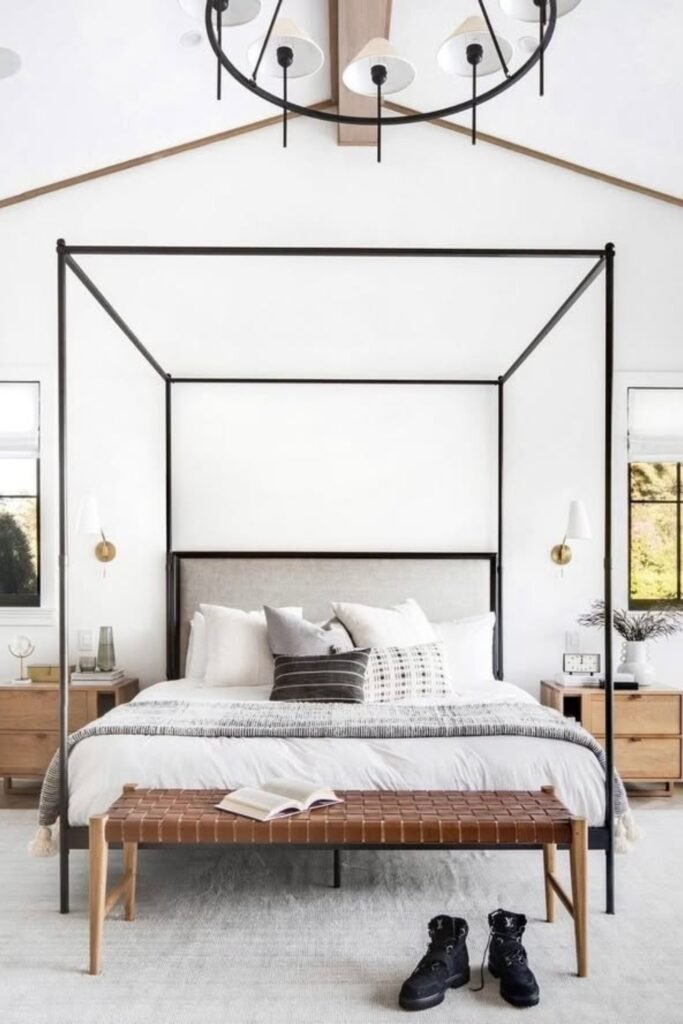
Airy Canopy Simplicity
When you have high ceilings, you can match them with a bed that makes a statement.
You might pick a slim black canopy frame that adds structure without blocking light, keeping the room open and breathable.
You should soften the metal lines with crisp white bedding, while warm wood nightstands and a woven bench add balance.
You can keep your walls bright and palette simple, white, light oak, soft black. You should choose clean-lined sconces instead of bulky lamps to maintain symmetry.
You will find this works beautifully in rooms with tall ceilings where you want impact without heaviness.
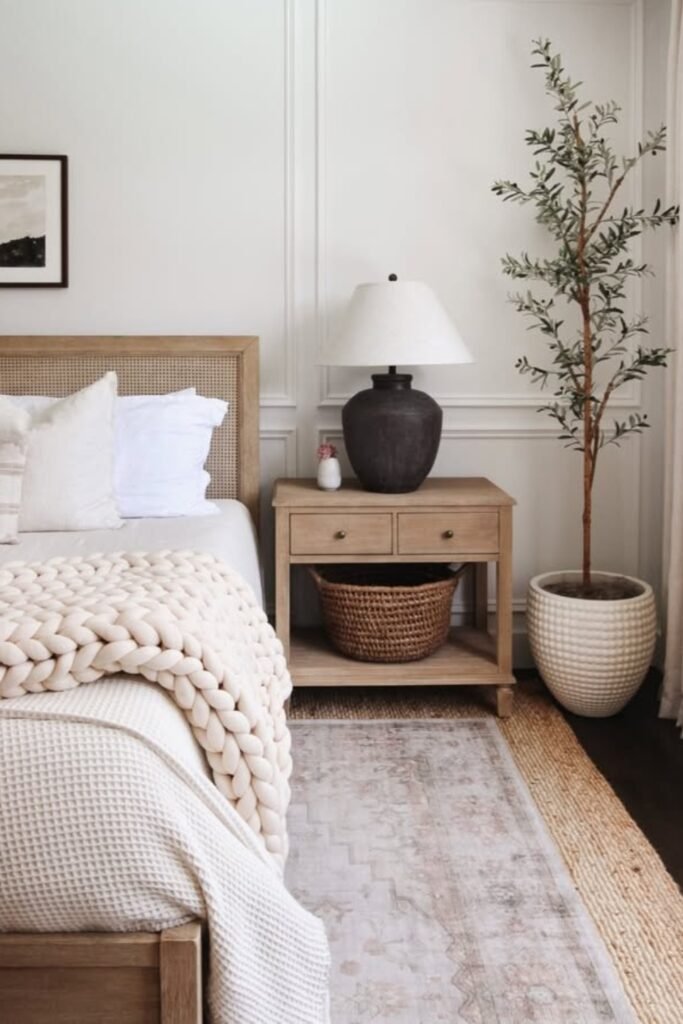
Natural Texture Layers
You can make a bedroom feel warm without adding bold shades just by using texture.
You might use a woven headboard, chunky knit throw, jute rug, and basket details to create depth while staying neutral.
You should layer at least three different natural materials, wood, woven fibers, and soft textiles. You can keep walls light and add subtle molding for structure.
You should add a tall plant to soften corners and bring life. You will notice this works especially well in smaller bedrooms where you want coziness without visual clutter.
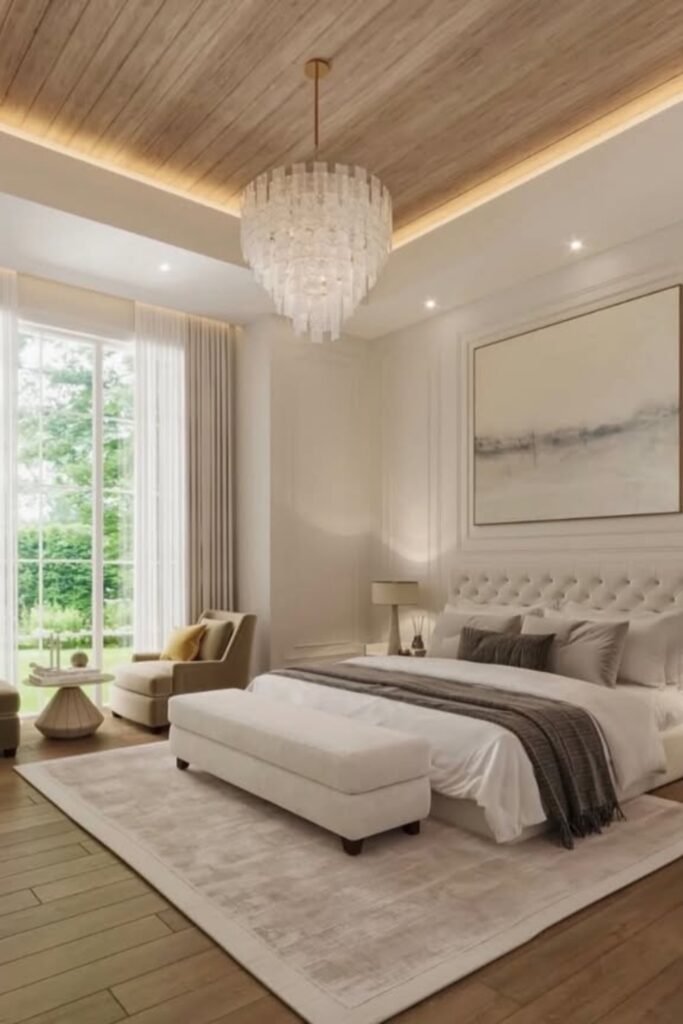
Soft Luxury Glow
Lighting can completely change how your bedroom feels. You might use layered ceiling detail with warm strip lighting to add depth, while a chandelier brings elegance without looking heavy.
You should keep everything else calm, tufted headboard, neutral rug, soft drapery, so the glow becomes the highlight.
You can focus on layered lighting: recessed lights, soft bedside lamps, and one statement fixture.
You should keep your palette warm and cohesive so the space feels serene, not flashy.
You will notice this style works beautifully in larger master bedrooms where you want a refined, hotel-like atmosphere without losing comfort.
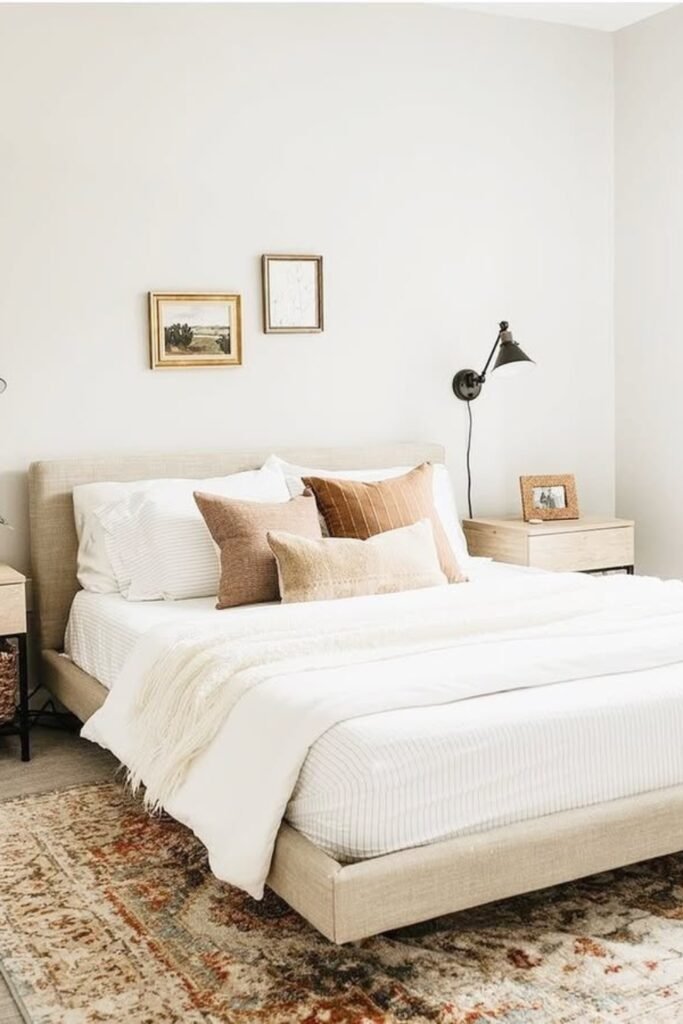
Simple Symmetry Style
When you keep things symmetrical, your whole room instantly feels calm.
You should notice how matching nightstands, balanced wall sconces, and centered artwork create order without making the space look formal.
You can use a soft upholstered bed to keep everything comfortable, while warm accent pillows and a vintage-style rug add just enough character.
You should start by placing your bed in the center and mirror both sides with similar lighting and tables.
You can stick to neutral bedding and add one or two earthy tones for depth.
You will notice this works especially well in smaller bedrooms where structure makes the space feel bigger and more put together.
FAQs
Is a Transitional Bedroom Going Out of Style?
No, and that’s exactly the point, you should see that transitional design is all about balance, not trends.
You can mix classic elements with clean modern lines, and you will notice your room won’t lean too far in one direction.
If you keep your base neutral and avoid trendy colors or overly decorative pieces, you will see your bedroom stay current for years.
You might even find that it’s one of the safest styles if you want something timeless that you can enjoy without constantly updating.
Can You Add Color to a Transitional Bedroom?
Yes, but you should keep it controlled. You can start with a neutral foundation, and then you might add one or two muted accent colors through pillows, a bench, or artwork.
You could think about earthy greens, warm rust, or soft blues, not bright neon shades. If you find the color feels overpowering, you can scale it back and add texture instead.
You will see that balance is what keeps your bedroom feeling truly transitional.
You may like to read!
