
25 Taupe Bedroom Ideas for 2026

This article may contain affiliate links: read full affiliate disclosure.
Most people don’t regret bold colors, but you might regret the safe ones. You think taupe is simple, neutral, easy and you might tell yourself it will just work.
But when you paint the walls, you notice it feels flat or purple or darker than you expected.
You start wondering: did you pick the wrong shade? Is it the lighting? The flooring? You might even feel a little panic creeping in.
You could be choosing and styling it the wrong way if you don’t understand the undertones and the contrast.
In this article, you’ll see exactly how you can style a taupe bedroom and 25 taupe bedroom ideas to try.
Let’s jump in!
How Do You Style A Taupe Bedroom?
You can start with the undertone, that’s where you usually go wrong. You might think taupe is just light brown, but you’ll see it’s not that simple.
Some shades lean warm and cozy, and you can make your room feel inviting if you pick the right one.
Others lean cool and gray, and you might notice your room feels off if you ignore that.
If your flooring has warm tones, oak, walnut, or beige carpet, you should go for a warm taupe. If you have cool flooring like gray tile or ash wood, you’ll want a cooler taupe.
When you let the undertones fight each other, you’ll feel the room is off, even if you can’t explain why.
Next, you need to build contrast. You’ll notice taupe on its own can look flat, and you should add lighter and darker elements to give it depth.
If your walls are medium taupe, you can use lighter bedding, cream, soft white, or warm ivory.
Then you might add something darker like black lamps, bronze hardware, or deep wood furniture. You’ll see how contrast makes taupe feel intentional and styled.
You want your room to feel three-dimensional, and you can do that by adding linen curtains, a chunky throw, an upholstered headboard, or a textured rug.
If everything is smooth and the same tone, you’ll find taupe can feel dull. Texture fixes that instantly, and you’ll notice the difference.
Finally, control your lighting. You can bring out the brown in taupe with warm bulbs and make it cozy.
Cool white bulbs can pull out gray or even purple undertones, and you might not like that.
If your room doesn’t get much sunlight, you should stick to lighter taupe shades so you don’t feel the space is heavy.
When you balance undertone, contrast, texture, and lighting, taupe stops feeling safe and you’ll see how it can finally feel styled, warm, and inviting, just the way you want it.
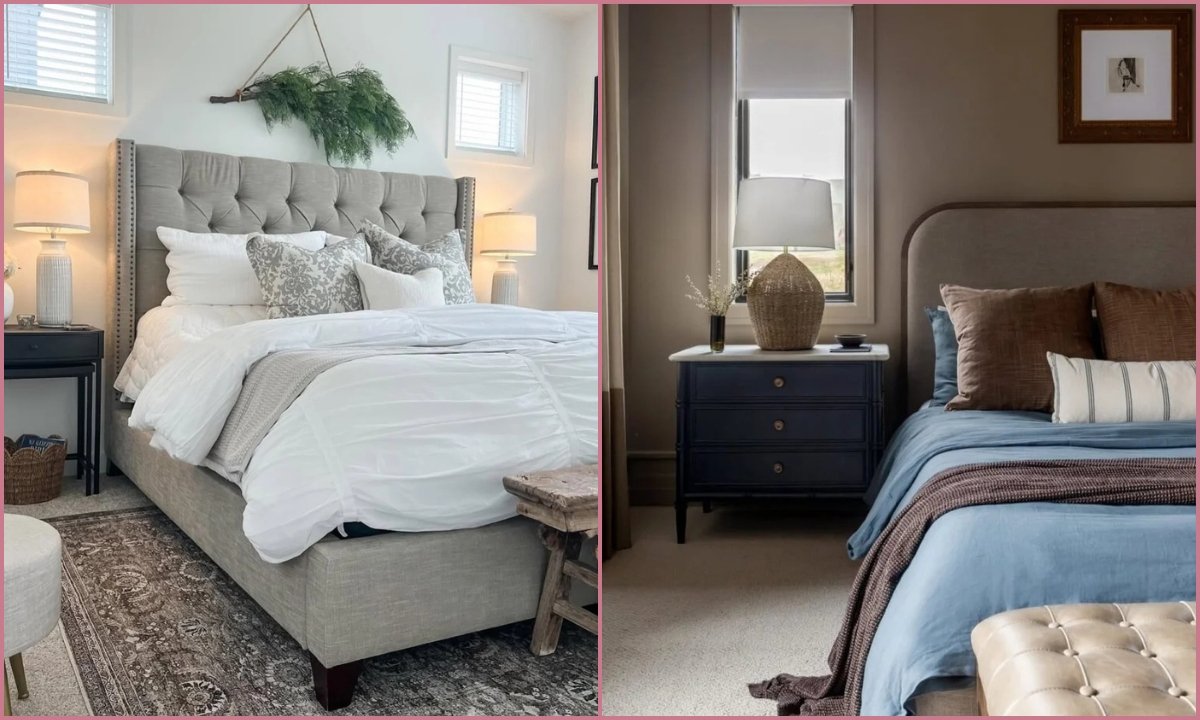
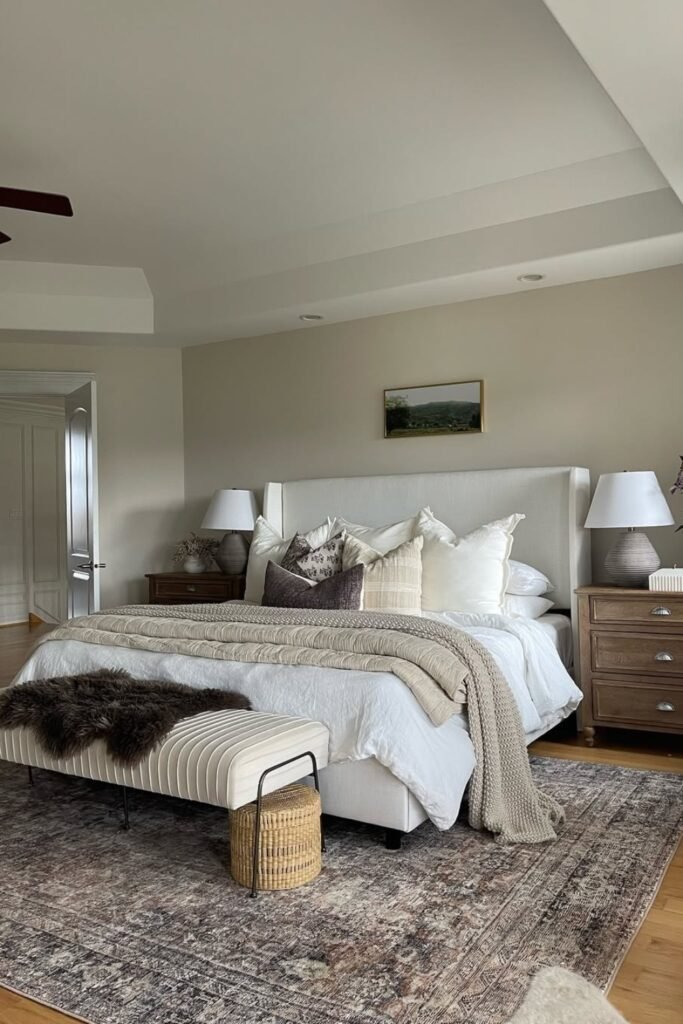
Calm Hotel Layers
If you want your bedroom to feel expensive but effortless, you’ll want to keep your palette tight.
You’ll see how the soft taupe walls blend into the upholstered headboard, and you’ll notice that crisp white bedding keeps everything bright.
You can add warm wood nightstands and a patterned rug to stop the room from feeling flat. Even the bench adds another soft layer without breaking the calm.
If you have a larger bedroom with wood flooring, you’ll find this works perfectly.
You just need to stay within warm neutrals and focus on layering texture, you don’t have to add more colors.
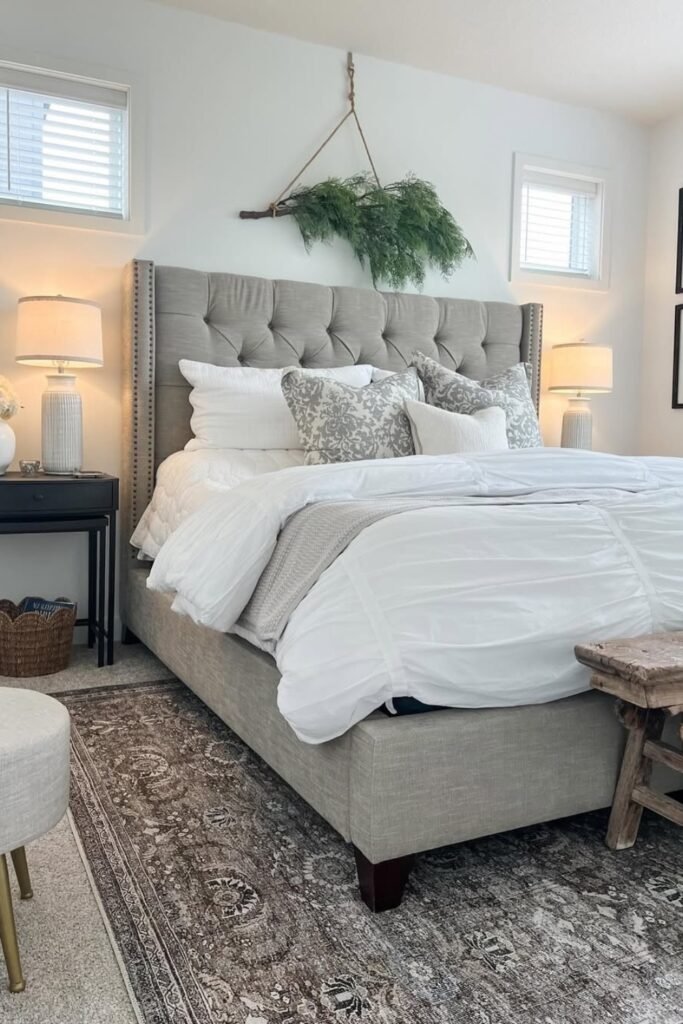
Airy Taupe Balance
When your room feels small, you’ll let taupe stay soft and let white do the heavy lifting.
You’ll see how the taupe upholstered bed grounds the space, but you can rely on crisp white bedding to keep it light and open.
You should add a black nightstand to create contrast so everything doesn’t blur together. Even the patterned rug adds subtle depth without darkening the room.
You’ll notice this setup works perfectly in compact bedrooms, use taupe on larger furniture pieces, and you can keep walls and bedding bright to maintain that airy feel.
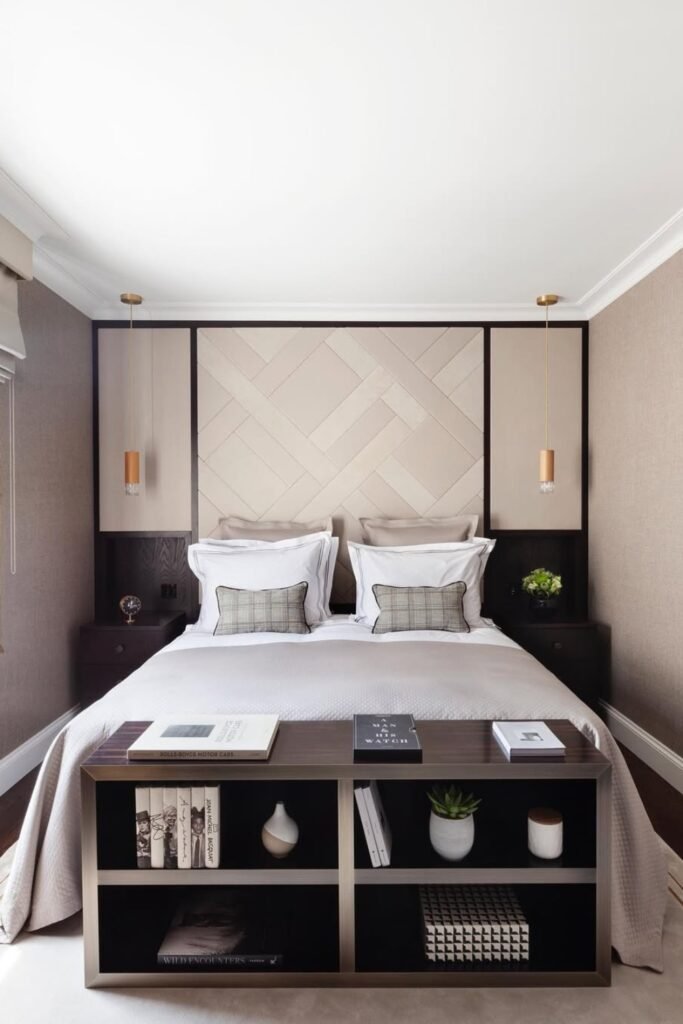
Structured Modern Taupe
You don’t have to let taupe feel soft and traditional. When you frame it with dark wood and clean lines, you’ll see it turns sharp and modern.
You’ll notice how the paneled headboard wall adds texture without adding color, and how black built-ins create strong contrast so your beige tones stay intentional.
Even your simple bedding keeps the focus on structure.
You can use this approach in narrow bedrooms, anchor taupe with dark framing and symmetry to make the space feel tailored and polished.
Warm Moody Layers
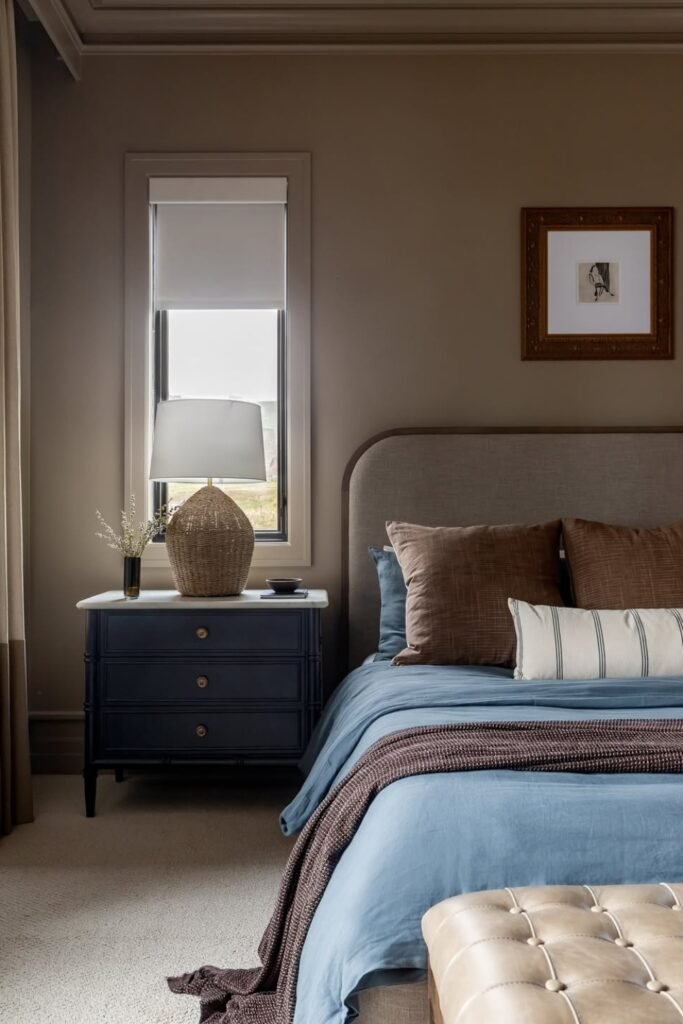
When you’re tired of light neutrals, you can let taupe go deeper. You’ll see how warm taupe walls create a cozy backdrop, but the blue bedding keeps the room from feeling too brown.
You should add rust pillows and a woven lamp to bring warmth without blending into the walls. The dark nightstand anchors everything and gives your palette structure.
You’ll find this works best in bedrooms with decent daylight. You can pair deep taupe with one cool tone and one earthy accent to keep it balanced.
Soft Minimal Taupe
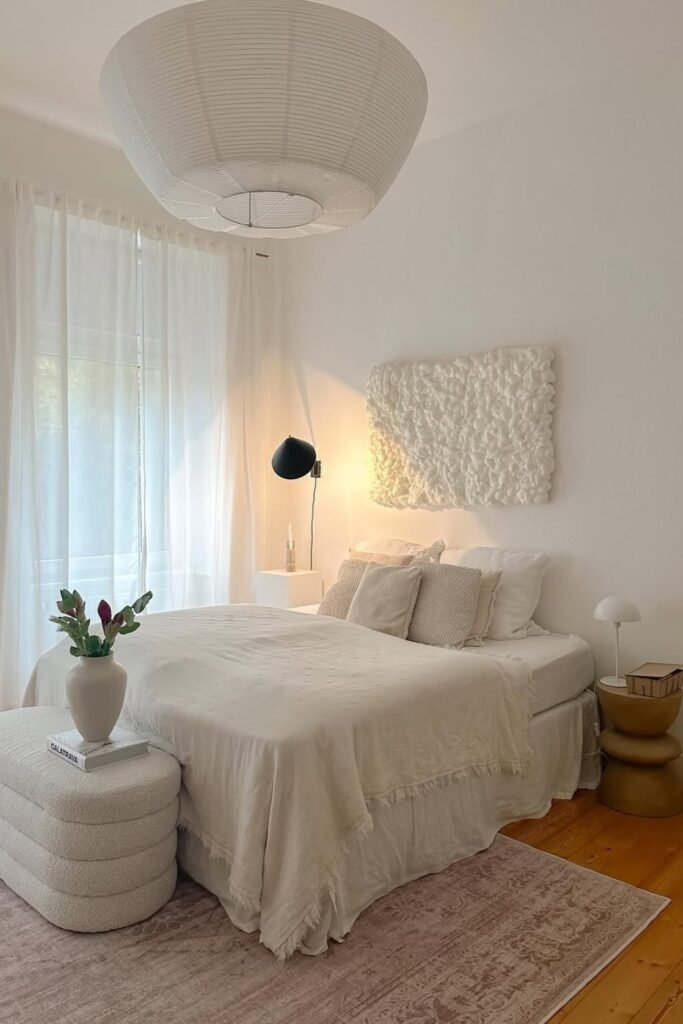
If you love calm spaces but don’t want them to feel empty, you can keep taupe light and let texture do the work.
You’ll see how creamy taupe walls blend into the bedding, creating one soft canvas.
You don’t need bold colors, the room relies on layered fabrics, a textured wall piece, and warm wood flooring for depth.
You’ll notice this look fits small bedrooms perfectly. Stick to one neutral family, add subtle texture, and avoid heavy contrasts, you’ll keep the space airy and peaceful.
Taupe With Green Accents
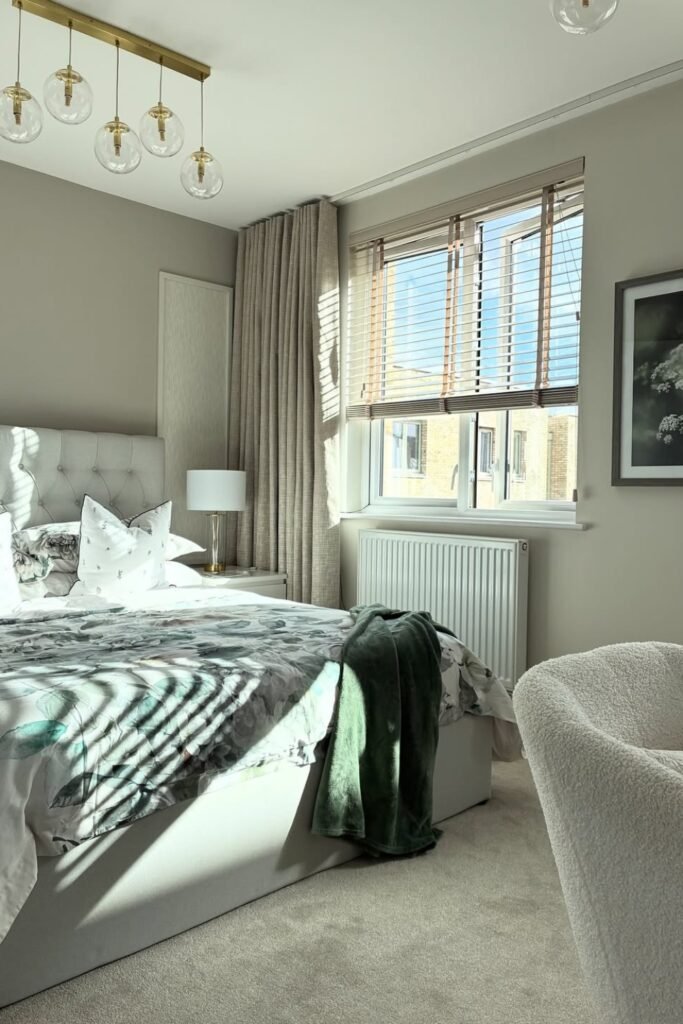
If taupe ever feels too safe, you can bring in green. You’ll see how soft taupe walls stay neutral, but leafy bedding and a deep green throw instantly add life.
You can use brass lighting to warm the space, while textured curtains keep it layered.
You won’t have to worry about clashing because green naturally complements taupe’s earthy base.
You’ll find this works beautifully in sunlit bedrooms, keep your walls calm, then add botanical prints or one rich green accent to wake the room up without overpowering it.
Taupe With Black Contrast
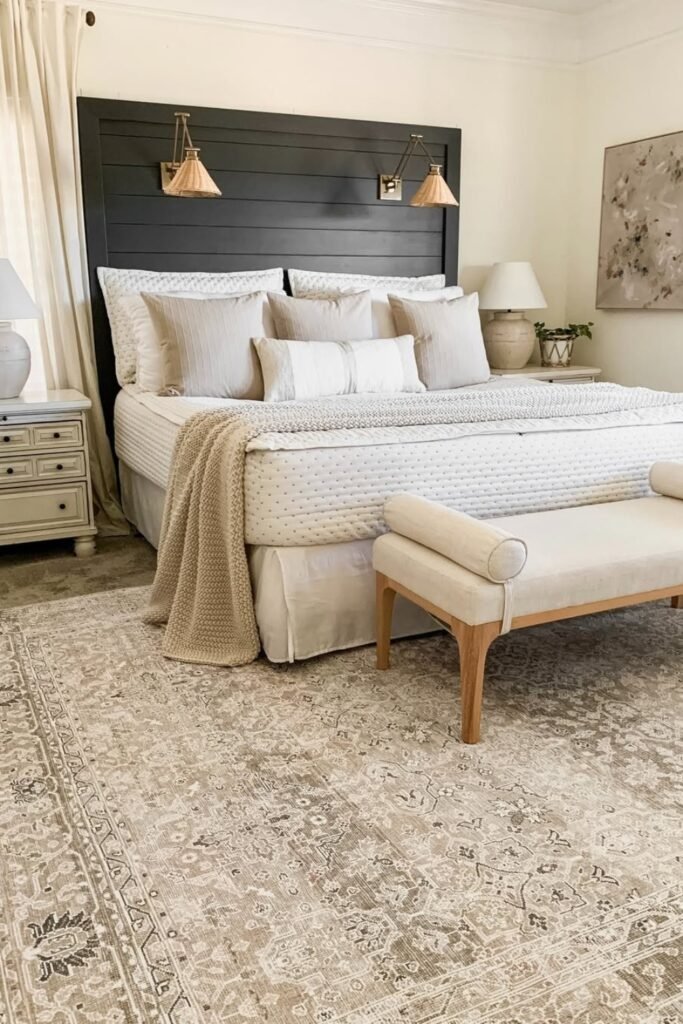
If your taupe bedroom feels too soft, you should add black. You’ll notice how the dark shiplap headboard instantly sharpens the creamy taupe layers and gives the room structure.
You can see that neutral bedding stays light so the black doesn’t overpower the space. Brass sconces warm it up and stop the contrast from feeling harsh.
You’ll find this look works best in larger bedrooms—use black on one strong element, like a headboard or wall, to frame taupe without making the room feel heavy.
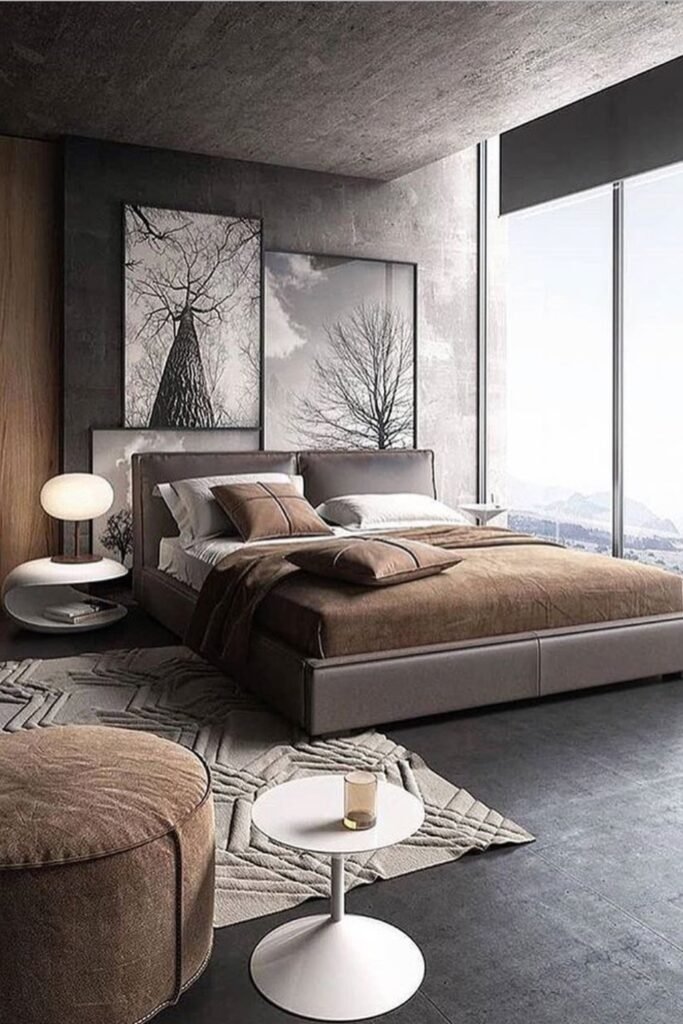
Modern Taupe Edge
You don’t have to think of taupe as always soft and cozy. When you pair it with concrete floors, dark walls, and clean-lined furniture, you’ll see it turns sleek.
You can use the taupe bed and bedding to warm up the cool gray surfaces so your room doesn’t feel cold.
You might add brown accents to bring depth without introducing new colors. You’ll notice this style works best in modern apartments or rooms with large windows.
You should keep the palette tight, taupe, gray, and one warm brown to create a sharp but balanced look.
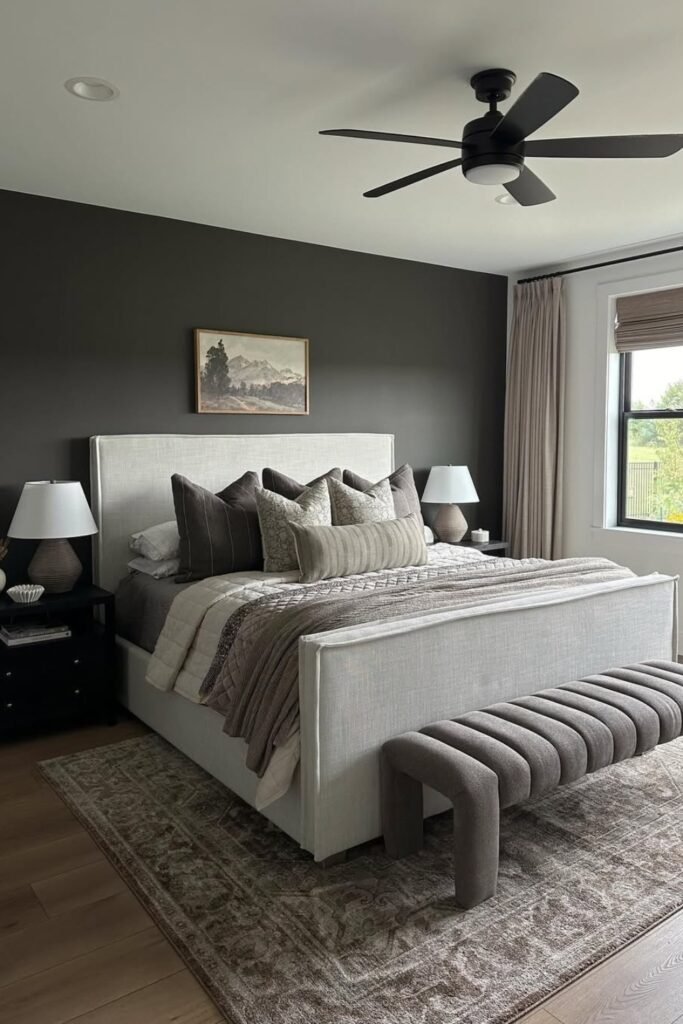
Bold Taupe Contrast
If you think taupe can’t handle drama, you can add a dark wall behind it.
You’ll see how the black accent wall makes the soft taupe bed and layered bedding stand out instead of blending in.
You’ll notice how the rest of the room stays neutral so the contrast feels controlled, not chaotic.
You’ll find this works well in medium to large bedrooms, use one deep shade behind the bed and keep the remaining walls lighter to maintain balance.
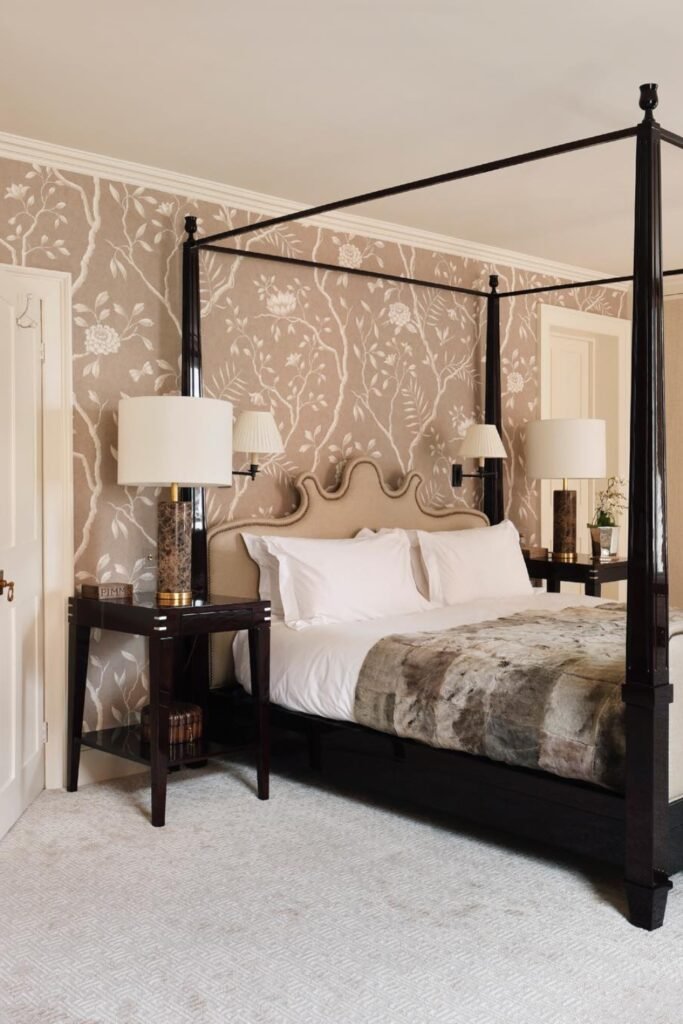
Classic Taupe Elegance
If you want taupe to feel timeless, you should pair it with pattern and dark wood.
You’ll see how taupe floral wallpaper adds movement without overpowering the room, while a deep wood canopy bed frames everything with strength.
You can keep crisp white bedding to maintain freshness so the space doesn’t feel heavy.
You’ll find this look works beautifully in traditional or older homes, choose a soft taupe pattern, anchor it with dark furniture, and keep textiles light to maintain balance.
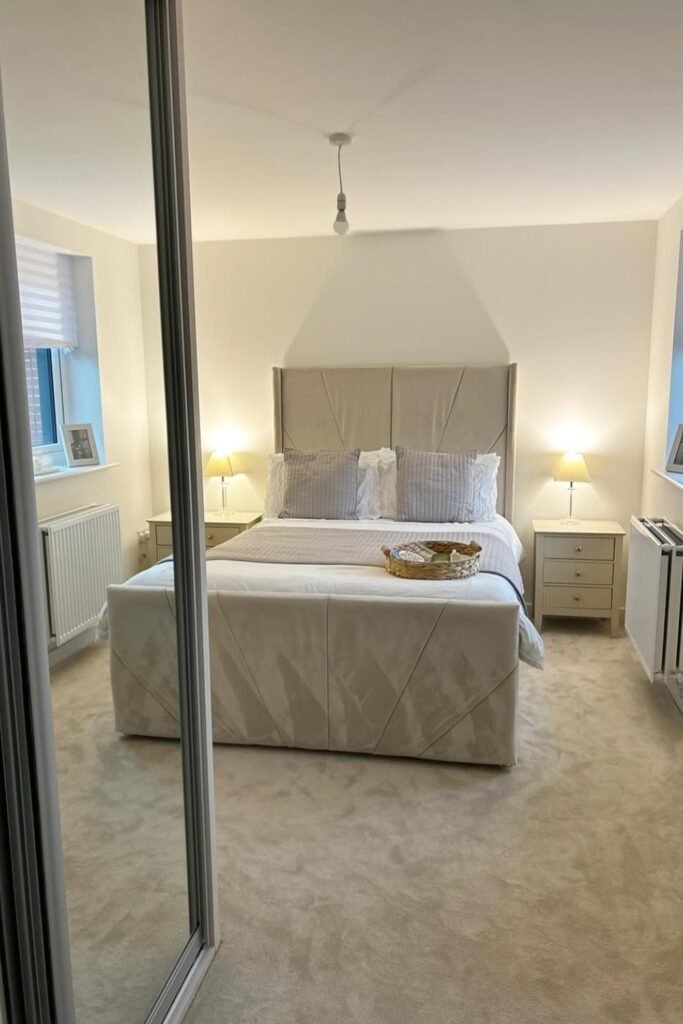
Light Taupe Serenity
If your bedroom feels tight, you’ll want to keep everything in one soft taupe family.
You’ll notice how the walls, bed, and carpet flow together, and you’ll see how that makes the room feel larger and calmer.
You can add matching bedside tables and warm lamps to create symmetry without adding contrast. Nothing fights for attention, and you’ll love how the space feels clean.
This works especially well in smaller bedrooms, you should stick to pale taupe tones, simple furniture lines, and warm lighting to create a smooth, uncluttered look.
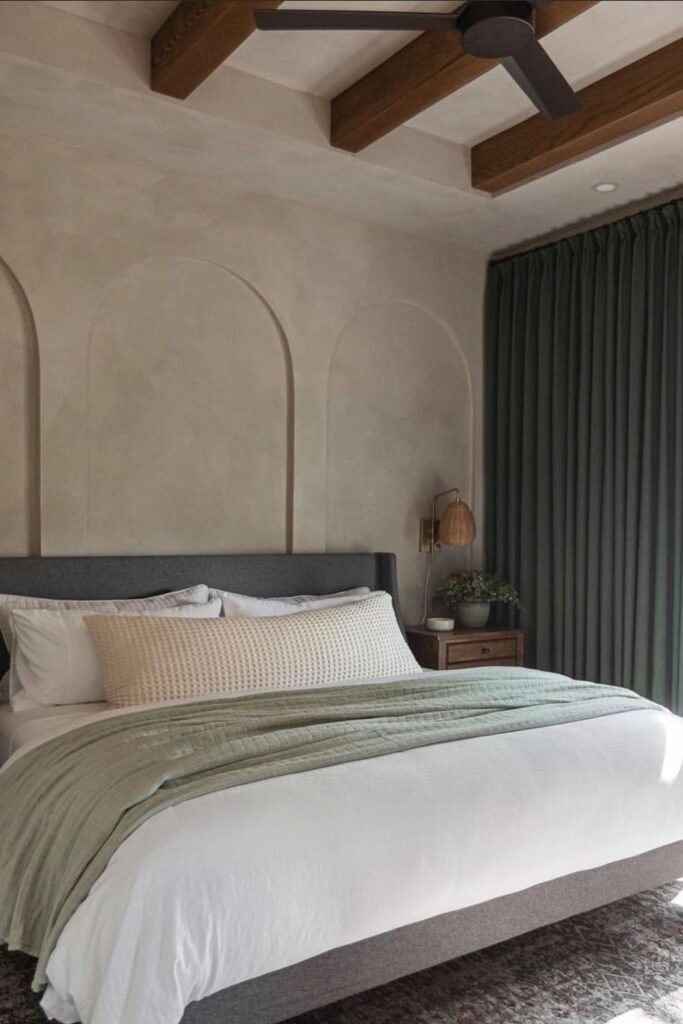
Earthy Taupe Layers
You can make taupe feel grounded when you pair it with nature tones.
You’ll see how the soft taupe wall arches add quiet detail, while deep green curtains and a sage throw bring life without overpowering the room.
You might add dark wood beams and bedside tables to anchor everything and stop the palette from feeling washed out.
You’ll find this look works beautifully in rooms with wood elements, mix taupe with muted greens and warm wood, and you’ll create a calm, earthy bedroom that still feels rich.
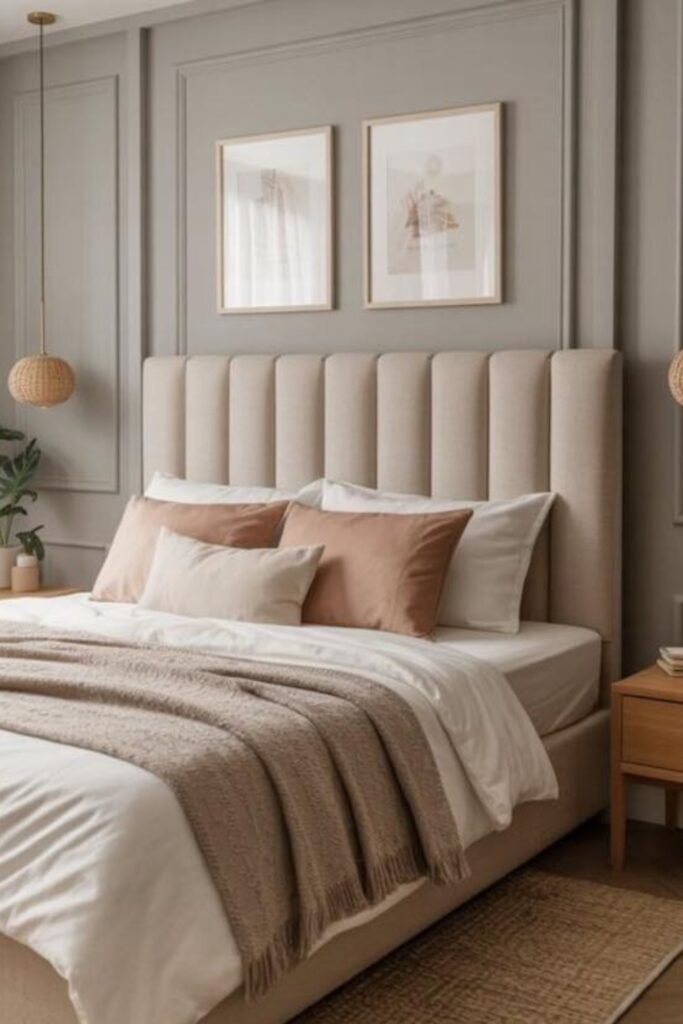
Refined Taupe Panels
Plain taupe walls can feel flat, but you can add subtle panel molding and suddenly the whole room looks finished.
You’ll notice how the soft gray-taupe backdrop frames the upholstered headboard without overpowering it.
Warm wood nightstands and woven pendant lights keep the space from feeling cold, and blush-toned pillows add just enough warmth.
You’ll see this style works well in medium bedrooms where you want elegance without drama.
Keep the palette tight, and you’ll let architectural detail elevate the taupe instead of adding bold color.
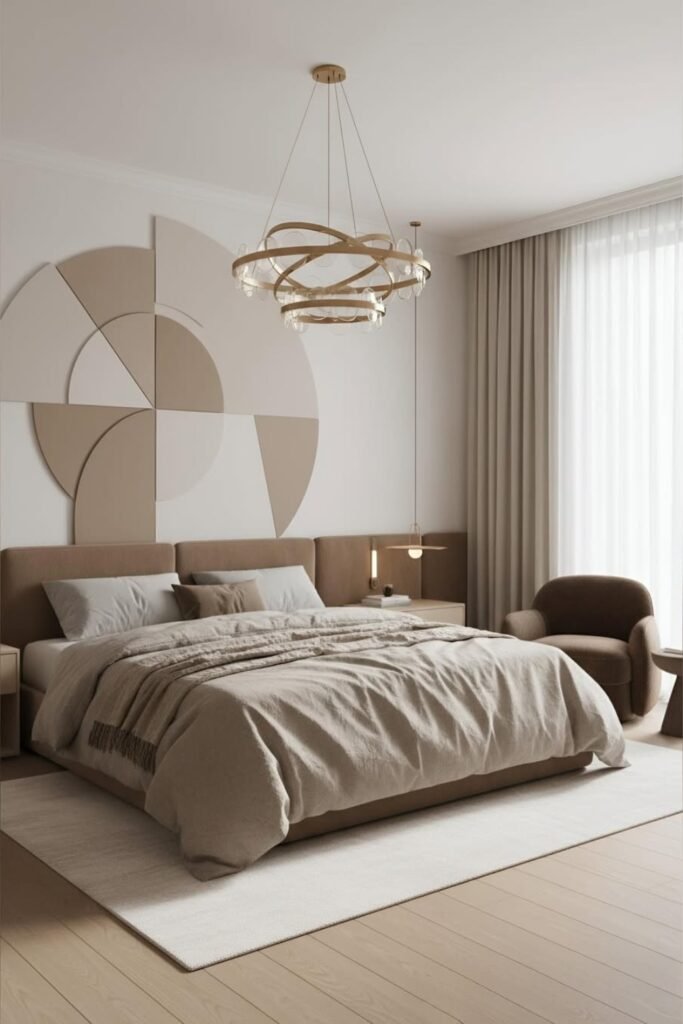
Sculpted Taupe Statement
If you think taupe is plain, you can add shape instead of color. You’ll notice how oversized geometric wall panels turn a simple taupe palette into a focal point without breaking the calm.
Layered bedding in close shades keeps everything soft, and you might add a gold chandelier for quiet warmth.
This works best in modern bedrooms with high ceilings, you should stick to one neutral family, then introduce bold forms through wall art or lighting to make taupe feel designed, not basic.
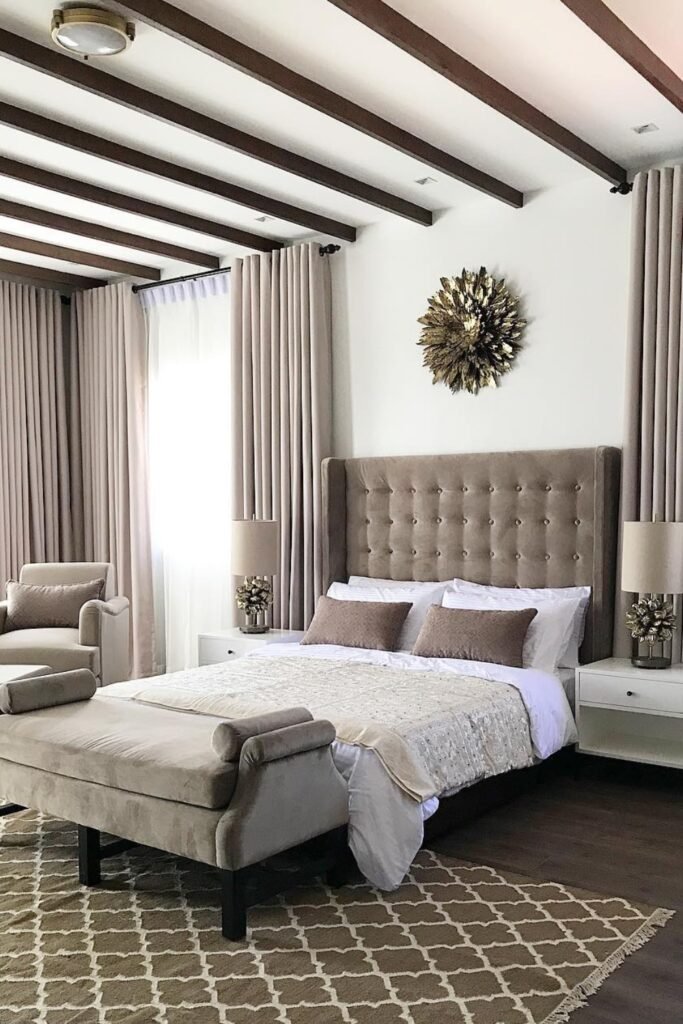
Taupe With Height
When your ceiling has beams, you can let taupe soften the structure.
You’ll see how the tall upholstered headboard draws the eye up, while full-length taupe curtains add vertical flow and make the room feel taller.
White nightstands help keep the space from feeling too heavy against a dark floor. You’ll notice even the patterned rug ties the palette together without adding new colors.
This works well in rooms with high ceilings, you should repeat taupe in fabric layers to balance strong architectural details.
Warm Taupe Glow
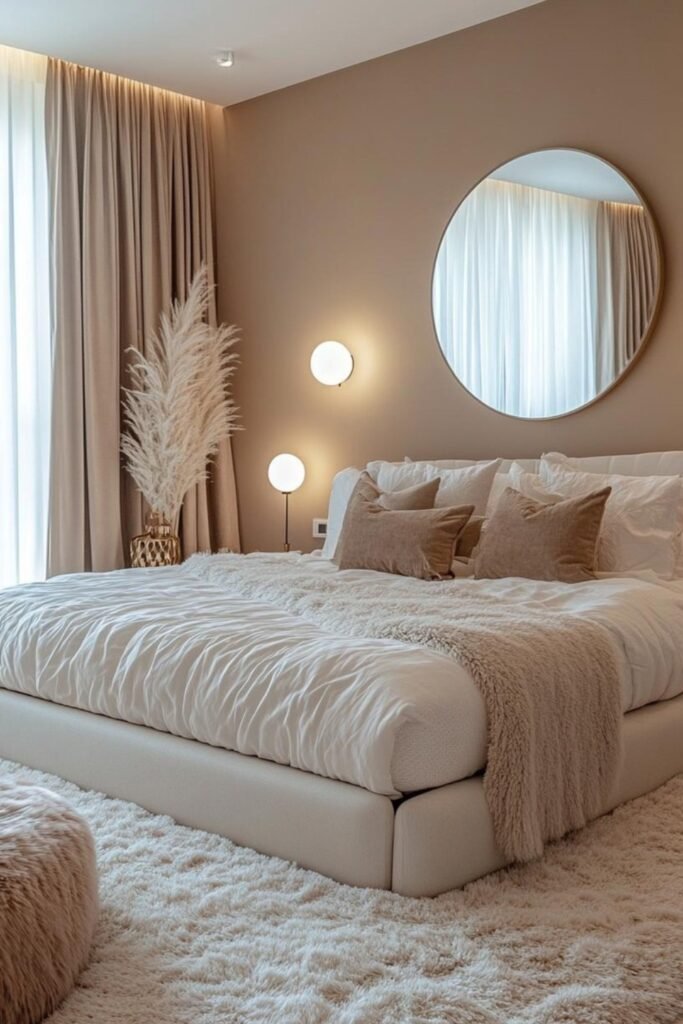
If you want your bedroom to feel instantly cozy, you can lean into warm taupe and soft lighting.
You’ll notice how the rich taupe wall wraps the space, while creamy bedding keeps it from feeling dark.
The round mirror reflects light and breaks up the solid wall color. You might add layered curtains and a plush rug for comfort without adding contrast.
This look works best in bedrooms where you want a calm, evening vibe, choose warm bulbs and keep everything within one warm neutral range.
Soft Traditional Taupe
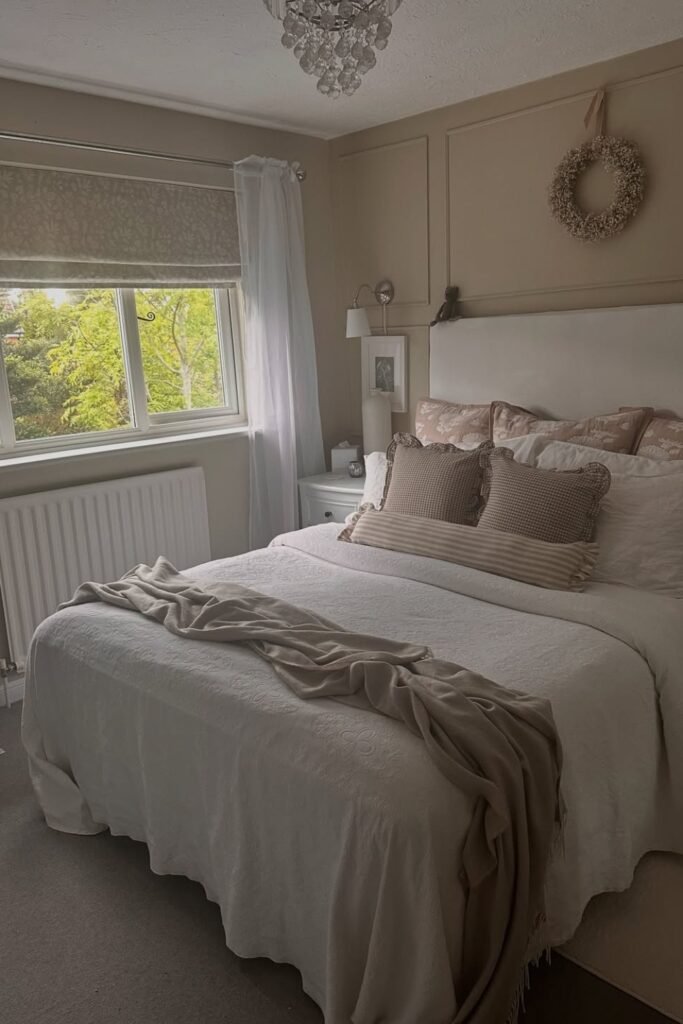
If you want taupe to feel cozy and lived-in, you’ll want to layer soft patterns instead of bold contrast.
You’ll see how the paneled taupe walls add structure, while floral and gingham pillows keep the bed from looking flat.
White bedding brightens the space, and sheer curtains soften the light.
This style works beautifully in smaller bedrooms, you should stay within warm taupe tones, mix subtle prints, and keep furniture light so the room feels inviting, not heavy.
Luxe Taupe Drama
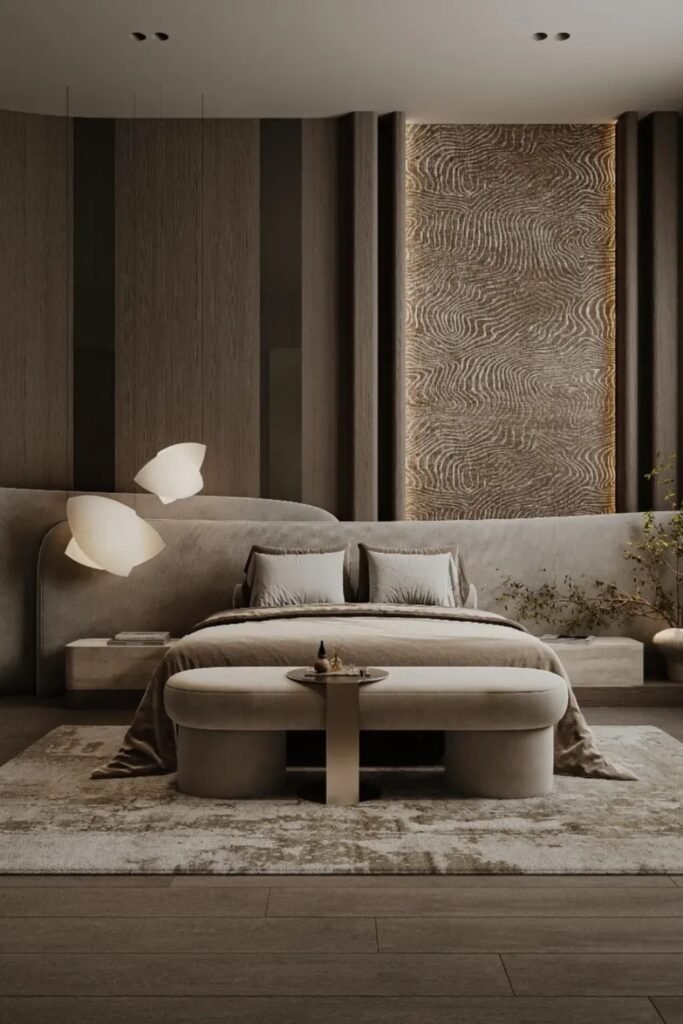
You can make taupe look powerful when you deepen the layers.
You’ll notice how rich taupe walls, textured panels, and dark wood create a cocoon effect that feels upscale, not gloomy.
The curved upholstered bed softens the strong vertical lines, and subtle lighting keeps the mood warm.
This style suits spacious bedrooms with high ceilings, you should stick to tonal taupes, add one statement texture behind the bed, and use soft lighting to keep the drama refined, not overwhelming.
Minimal Taupe Calm
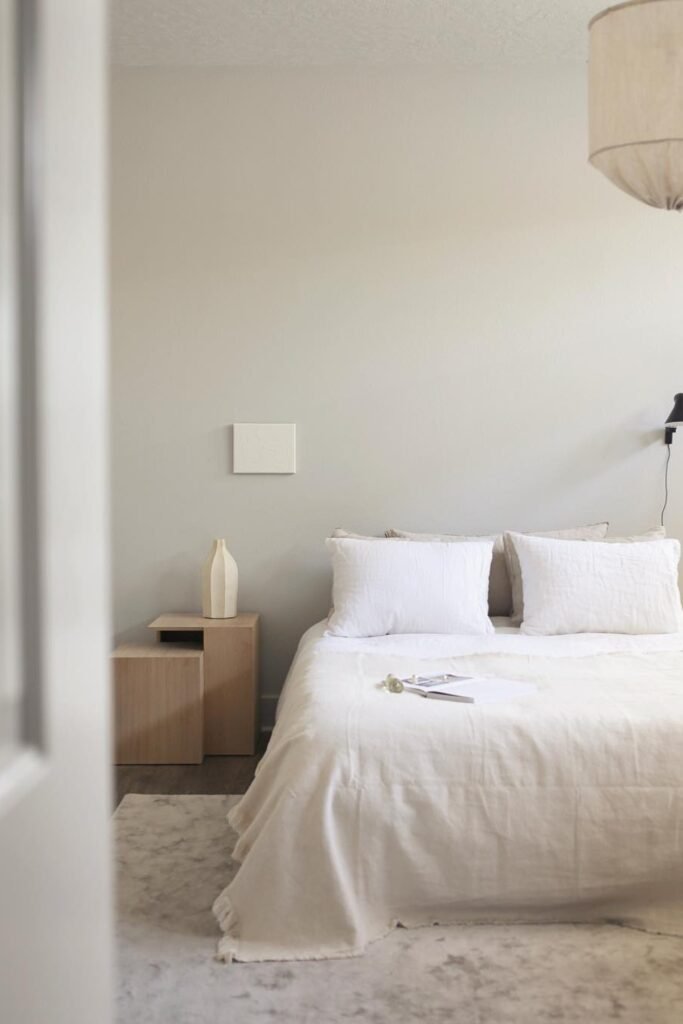
If clutter stresses you out, you can keep taupe almost invisible. You’ll see how the soft taupe wall blends into creamy bedding so the room feels quiet and open.
Simple wood nightstands add warmth without drawing attention, and one small black wall lamp gives just enough contrast.
Nothing competes for focus, and you’ll notice how peaceful the space feels.
This look works best in small bedrooms or apartments, you should stay within two or three light neutrals, keep decor minimal, and let empty space become part of the design.
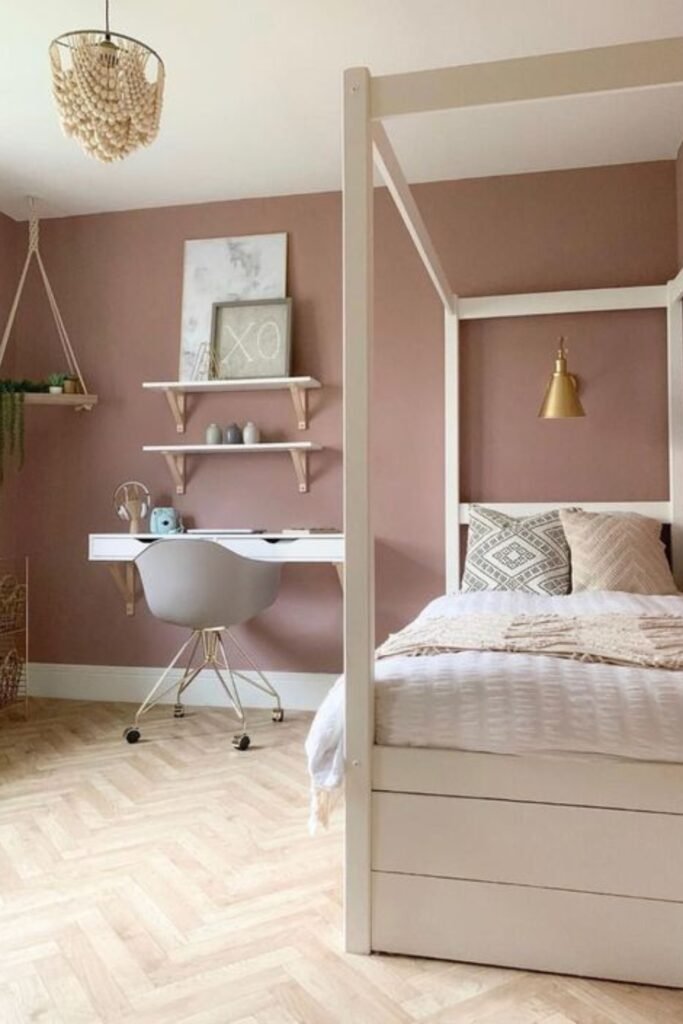
Blush Taupe Warmth
If plain taupe feels too safe, you can shift it slightly toward blush. You’ll see how the dusty rose-taupe walls warm up the whole room without turning pink.
White furniture keeps it fresh, and light wood flooring stops it from feeling heavy. Even the gold accents add a soft glow instead of sharp contrast.
This works beautifully in teen bedrooms or creative spaces, you should choose a warm taupe with a hint of pink and balance it with clean white and pale wood.
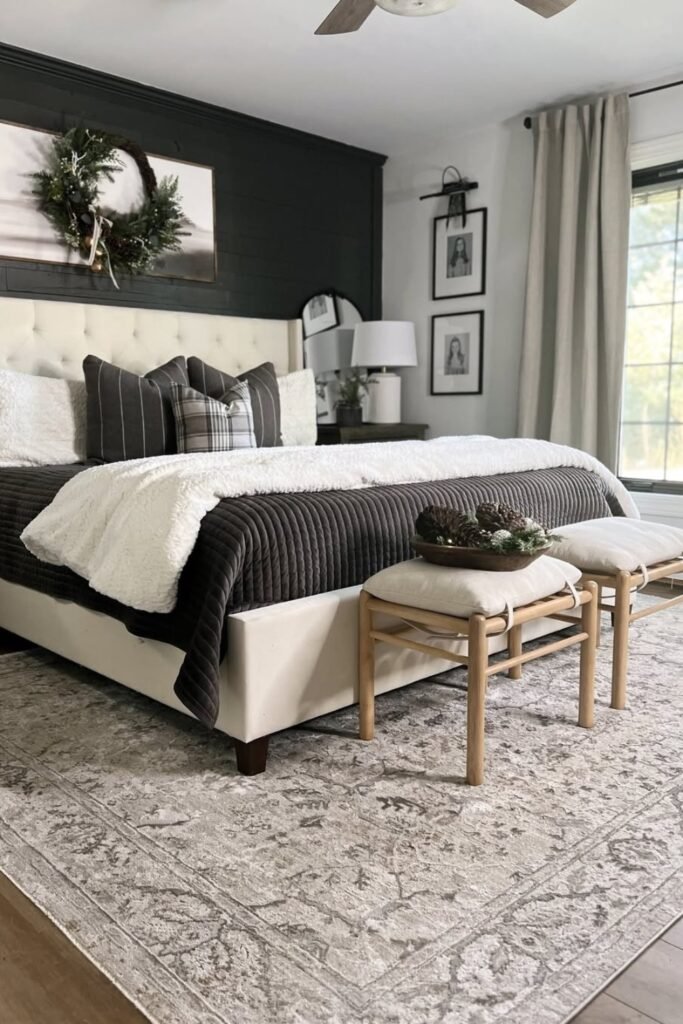
Taupe With Depth
You’ll see how light taupe bedding can handle a darker backdrop. You can let a deep charcoal wall make your creamy taupe bed stand out instead of blending in.
Layered black and gray pillows add weight, and you’ll notice how the patterned rug keeps the floor from feeling empty.
Natural wood stools soften the contrast so you don’t feel the space is cold.
This look works well in larger bedrooms, you should use one dark wall to frame taupe and keep the rest of the palette neutral and balanced.
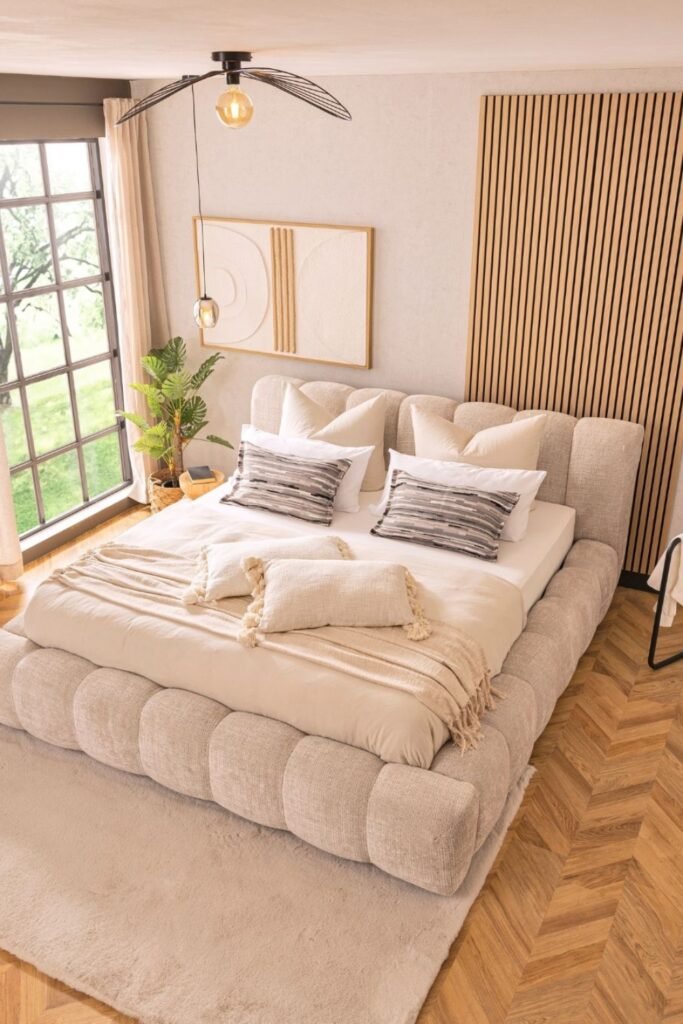
Warm Taupe Textures
If your taupe bedroom feels flat, you can add texture before adding color.
You’ll see how the upholstered bed, layered throws, and wood slat panel bring depth without breaking the neutral palette.
You can notice how warm wood flooring and soft beige curtains keep everything cohesive. Even the black accents stay minimal so you don’t interrupt the calm.
This works well in modern homes, you should stick to warm taupe tones and mix fabric, wood, and subtle pattern to create interest without clutter.
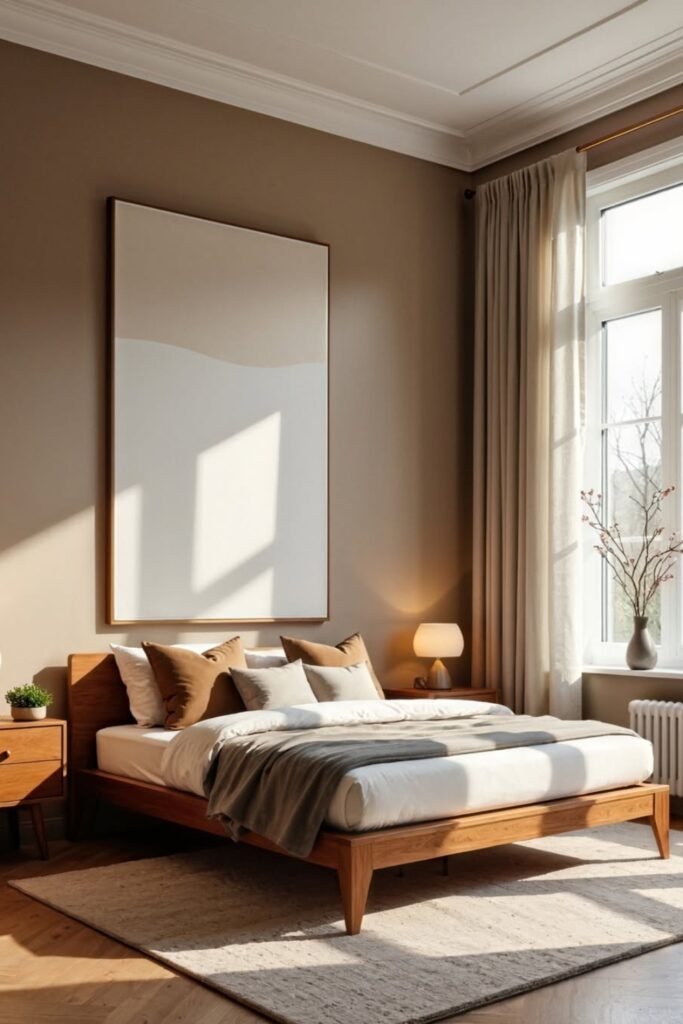
Warm Taupe Simplicity
Sometimes you’ll find taupe works best when you let sunlight do the styling.
You’ll notice how the warm taupe walls glow in natural light, while mid-tone wood furniture keeps the room grounded.
You should use white bedding to prevent the space from feeling heavy, and a single oversized artwork can add focus without clutter.
This setup fits bedrooms with large windows, you can pair warm taupe with natural wood and soft linen curtains, keeping decor minimal so the color feels calm, not crowded.
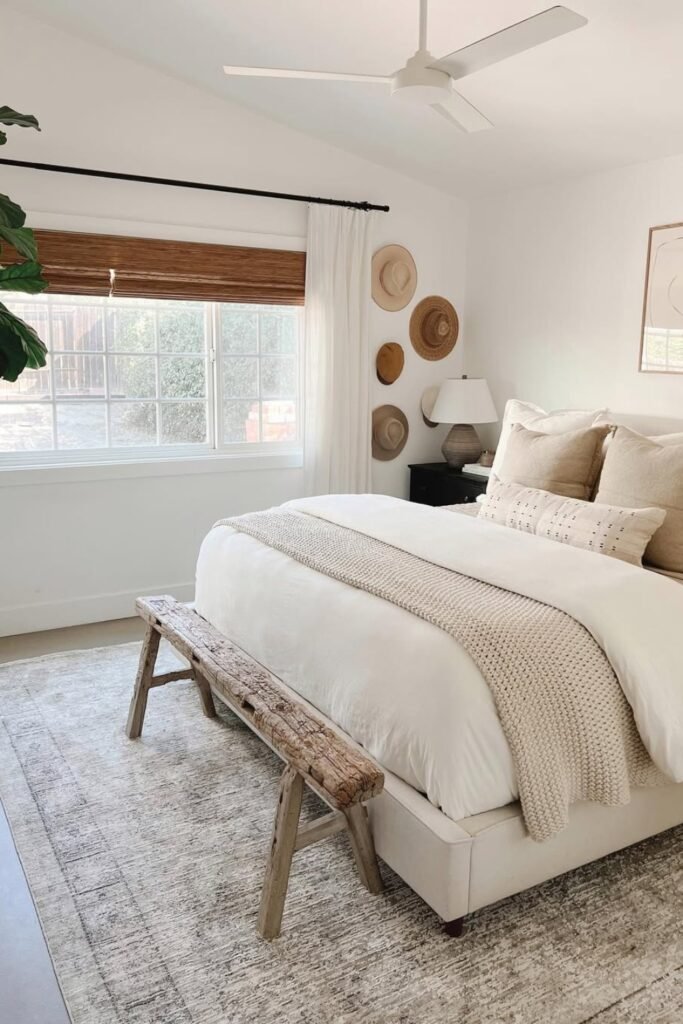
Neutral Taupe Retreat
When you want your bedroom to feel light but not cold, you can mix soft taupe with natural textures.
You’ll see how the creamy taupe bedding blends with the rug, while woven wood blinds and a rustic bench add warmth.
You can rely on white walls to keep the space bright, and layered pillows prevent it from feeling plain.
This look works well in smaller rooms with good daylight, you should stick to warm neutrals, add one organic wood piece, and keep contrast gentle for a relaxed feel.
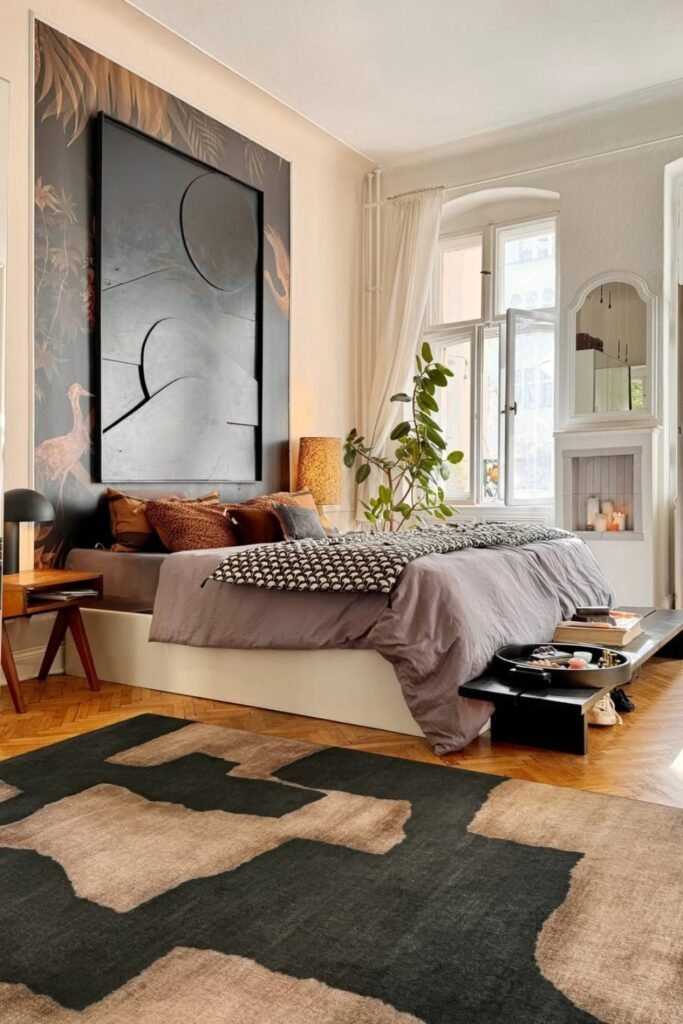
Artistic Taupe Layers
If you want taupe to feel bold, you should anchor it with oversized art.
You’ll notice how muted taupe bedding stays neutral, but dramatic black-framed artwork and patterned wallpaper create a strong focal point.
Rust pillows warm the palette, and dark accents on the rug and side table keep it grounded.
FAQs
Is taupe a good color for a bedroom?
Yes, you can make taupe work if you choose the right undertone.
You’ll see how taupe feels warmer than gray and more modern than beige, and you’ll notice it creates a calm backdrop without looking stark.
You just need to make sure the undertone matches your flooring and lighting. When your room is warm, you should pick warm taupe.
When your room is cool, you’ll want a cooler taupe. You’ll find that when the undertones align, taupe feels soft, luxurious, and expensive instead of dull.
What colors go best with a taupe bedroom?
You’ll see how taupe pairs easily with creamy whites, soft greens, muted blues, and warm wood tones.
If you want contrast, you can add black or deep charcoal. If you want warmth, you should add rust or blush.
You just need to keep the palette tight, and you’ll want to repeat each accent color at least twice so your room feels intentional, not random.
You may like to read!
