
18 Sofa Placement Layout Living Room Ideas 2026

This article may contain affiliate links: read full affiliate disclosure.
You move the sofa to one wall, and you feel the room go empty. When you pull it forward, you notice it starts blocking the walkway.
You turn it toward the TV, then you face it toward the window, then you try the fireplace and you still feel something is off.
That’s not because you have a bad living room. It’s because you are usually placing the sofa backward.
If you start with where the sofa fits instead of where it should work, you will always feel stuck.
In this article, you will see how you can position your sofa step by step, and I will provide you 18 ideas to try in your living room.
Let’s jump in!
How To Position A Sofa In A Living Room?
When you position your sofa the right way, you can completely change how your living room looks, feels, and works.
The first thing you should do is identify the focal point of your room. You might already have one, a TV, a fireplace, a big window, or even a statement wall.
When you place the sofa facing or slightly angled toward that focal point, you naturally create a space where you and others want to gather.
If you have more than one focal point, you should choose the one you use most and let the sofa follow that choice.
Next, you need to look at the size and shape of the room. If you are working with a small space, you can place the sofa against a wall so you get more floor space and smoother movement.
When you have a larger living room, you shouldn’t push everything to the walls.
Instead, you can float the sofa in the center so you create a cozy seating area. You might add a console table behind it so you get extra storage and visual balance.
Then, you must think about traffic flow. You should make sure you can walk around the sofa comfortably without squeezing.
When you leave about 2-3 feet for walking paths, you will notice the room feels easier to move through.
You shouldn’t let the sofa block doorways or the paths you naturally use every day.
Balance also matters more than you might think. You should pair your sofa with chairs and tables that match its size so you don’t overwhelm the room.
If you place a large sofa in a small space, you will feel cramped, and when you use a small sofa in a big room, you may feel like something is missing.
You can use a rug to anchor everything so you clearly define the seating area.
You should pay attention to lighting. When you place the sofa where you can enjoy natural light without screen glare, you instantly feel more comfortable.
You might add a floor lamp or table lamp nearby so you create a warm, welcoming mood.
When you get the placement right, you will notice how much easier, calmer, and more inviting your living room feels.
Calm Corner Sectional
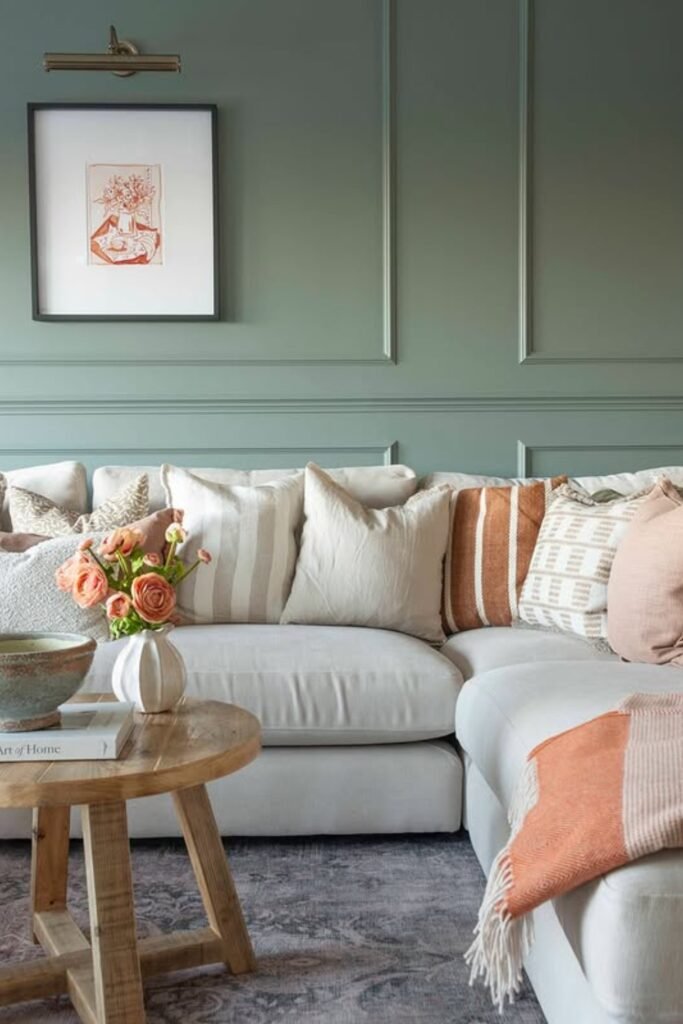
When you need structure without blocking movement, you can rely on a corner sectional.
You tuck the sofa neatly into the corner, and you instantly keep the center of the room open and usable.
If you choose soft colors and layered cushions, you can avoid a heavy look. Then you should balance it with a small round table so you feel relaxed, not boxed in.
This setup works best when you care more about comfort than showing off space.
Window-Facing Warmth
When you have strong windows, you should let natural light guide where you place the sofa.
You turn the seating slightly toward the window, and you notice the room feels open and lived-in instead of TV-focused.
You might choose a deep, warm-toned sofa because you know sunlight will soften bold colors during the day.
If you add a soft ottoman or a low table, you can anchor the seating without blocking light or views.

Light-Led Sofa Placement
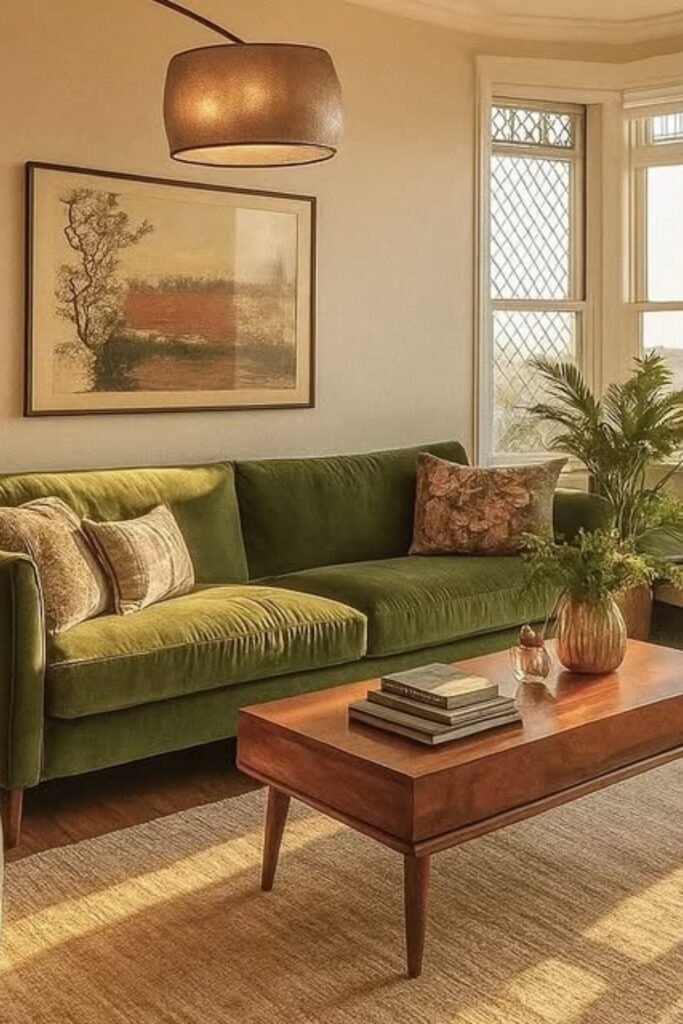
When you have bright corner windows, you can let sunlight decide where you place the sofa.
You position the seating along the brightest wall, and you keep the space feeling open and welcoming instead of heavy.
You should go for a low-profile sofa so you don’t interrupt the flow of light.
If you pair it with a solid coffee table, you can ground the layout, and when you add plants nearby, you soften the edges naturally.
Snug Corner Living
When you let the sofa take ownership of an awkward corner, you stop fighting the layout.
You can nestle the seating into an angled or tucked-away spot, and you instantly define a cozy zone without wasting floor space.
If you keep the sofa compact and raised on legs, you won’t feel boxed in.
You should add a narrow rug and minimal side pieces so you keep movement fluid, which you will appreciate most in smaller or architectural-heavy rooms.

Centered Sofa Strategy
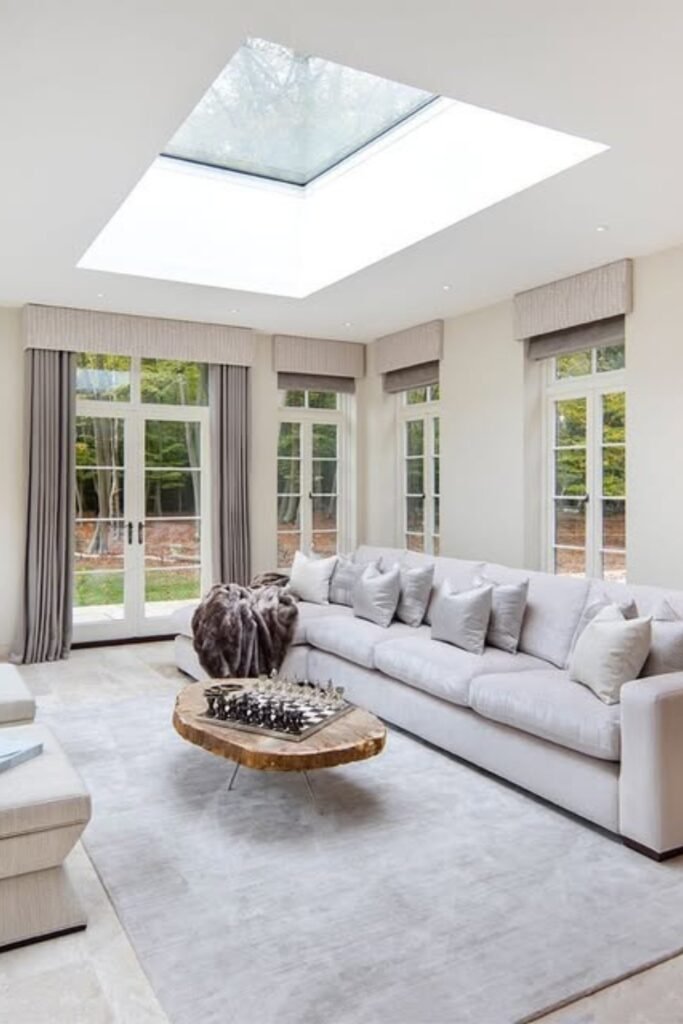
When you have a large, bright living room, you don’t need to push furniture to the edges.
You can pull the sofa slightly inward, and you create a clear seating zone while keeping the space grounded.
If you have multiple windows or skylights, you already have light doing the work for you.
You should anchor the sofa with a generous rug, then you can keep surrounding pieces low so you don’t end up with a room that feels empty.
Soft Symmetry Setup
When you work with a neutral living room, you can keep things calm by staying simple and balanced.
You will notice an L-shaped sofa works best when you run it cleanly along two walls.
If you keep everything low and light, you avoid heaviness, especially near windows.
You can use matching wall lights so you don’t need bulky side furniture, and you keep the layout airy and uncluttered.

Balanced Facing Layout
When you have enough width, you can place sofas directly across from each other and instantly create a conversation zone.
You will find this works best when you want TV time and talking to coexist.
If you pull the seating slightly in from the walls, you can let the rug anchor everything.
You should choose a long, narrow coffee table so you guide movement through the center without breaking the flow.

Art-Centered Seating Plan
When you have strong architectural details, you shouldn’t let the sofa compete with them.
You can keep the seating low and close to the wall so you let artwork and ceiling details shine.
If you choose a sectional, you keep the room grounded without losing symmetry.
You should keep the coffee table simple and mid-sized so you get a curated feel, not a crowded one.
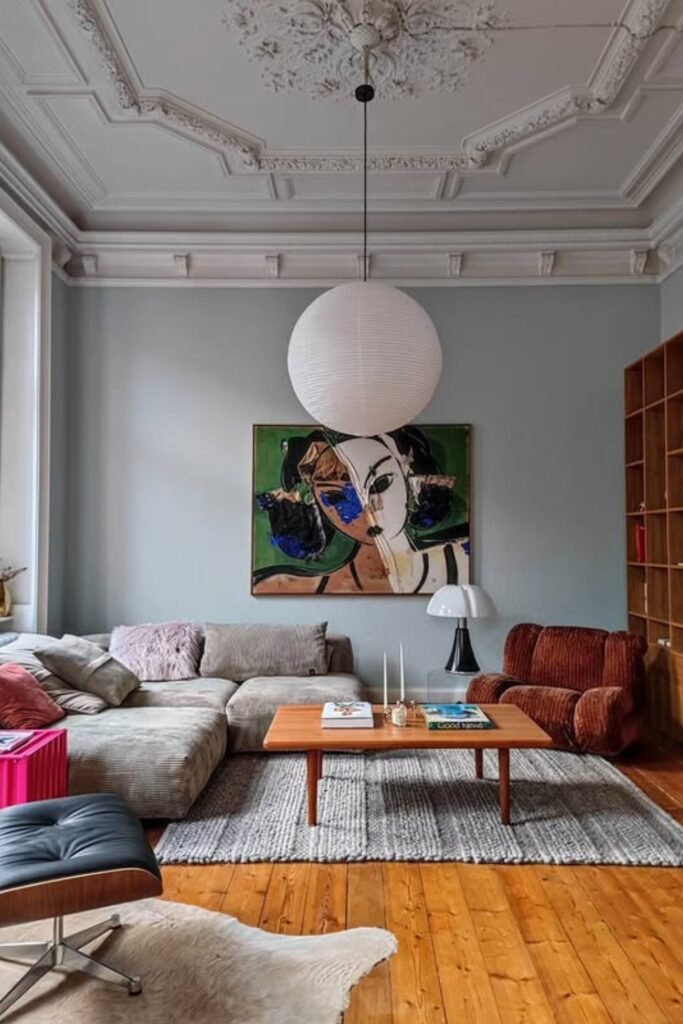
Sunlit Corner Seating
You should place an L-shaped sofa along the window wall so you keep the center open.
When you have a small living room, you can make it feel bigger by leaning into the light.
If you keep the seating low and compact, you won’t overwhelm the space.
You can add a round coffee table and a few plants so you soften the layout without adding clutter.

Divider Sofa Placement
When you live with an open-plan layout, you can let the sofa quietly define zones.
You should position it with its back toward the dining or kitchen area so you create a boundary without walls.
If you keep the sofa slim and raised, you allow light and movement to pass through.
You can add a narrow console behind it so you reinforce separation without crowding the space.
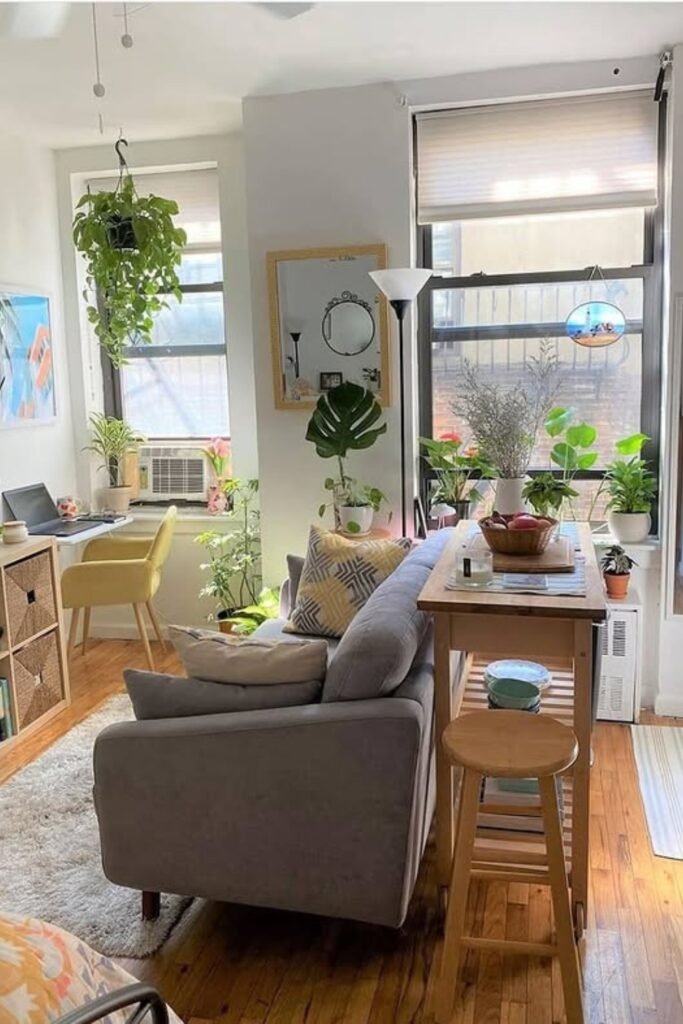
Window-Centered Seating
A living room with a strong window doesn’t need the TV to lead the layout.
You can place the sofa directly under the window shifts focus to light and views, making the space feel calmer and more open.
You can balance the sofa with a pair of chairs facing inward to create a social zone rather than a screen-focused one.
A round coffee table keeps movement easy and stops the layout from feeling rigid or boxed in.

Fireplace-Led Layout
When a living room has a fireplace, let it lead the seating plan.
You can position the sofa to face the fireplace instantly gives the room a clear purpose and a natural gathering point.
You can keep some distance so the seating doesn’t feel crowded, then balance the opposite side with a chair to avoid a one-sided layout.
This approach works best in traditional or cozy living rooms where conversation matters as much as comfort.

Window-Side Grounding
When you have long windows, you already have a natural anchor.
You can place the sofa alongside them and keep the room calm and balanced.
If you keep the sofa low and solid, you ground the space without stealing focus.
You might add a sculptural floor lamp or side table so you get function without clutter.

Conversation-First Arrangement
A living rooms built around talking need seating that faces people, not walls.
You can position the sofa to anchor one side while chairs face inward creates a natural conversation loop.
You can keep the coffee table central and reachable from every seat so no one feels left out.
This setup works best in family living rooms or homes with fireplaces, where comfort and interaction matter more than perfectly symmetrical layouts.

Soft Zoning Sofa
When you have an open-plan living room, you don’t need hard breaks, you need gentle boundaries.
If you pull the sofa slightly away from the wall, you can define the living area while you still keep the dining space connected.
You should choose low, modular seating here because you won’t block light or sightlines.
You can place a rug under the sofa to lock it in, then you should keep nearby pieces minimal so you feel the room stay calm, intentional, and easy to move through.

Symmetry Without Sofa
Not every living room needs you to let the sofa lead the layout.
When you use two matching chairs opposite the sofa, you can create balance without making the space feel heavy.
You’ll notice this works especially well when you have a compact or more formal room where walking space matters.
You should keep the ottoman centered so you feel every seat works the same, then you can let a fireplace or built-ins frame the setup.
You end up with a room that feels calm, intentional, and easy to live with.

Wall-Length Lounging
When you have a long sofa, you can let it stretch along one wall and allow the room to breathe.
You’ll find this works best if you are dealing with narrow or minimalist spaces where clutter quickly kills comfort.
You should add soft textures and layered cushions so you don’t feel the layout go flat.
You can ground it with a simple coffee table placed close enough for daily use, so you keep movement clear while the room feels relaxed and naturally lived-in.

View-First Placement
If you are lucky enough to have a strong view, you should let the outside lead the design.
When you angle the sofa inward instead of pushing it against the glass, you can keep sightlines open while you still create a cozy seating zone.
You’ll see this works best in apartments with floor-to-ceiling windows where you don’t want to block light.
You can anchor the sofa with a soft rug and you should keep furniture low so you enjoy the view from every seat.

FAQs
Should a sofa always be placed against the wall?
No, you only want to push the sofa against the wall when you have a narrow living room or when you already have clear walking paths.
In bigger rooms, you should pull the sofa slightly forward so you can define the seating area and you make the space feel more intentional.
If you push it back and you notice the center feels empty or awkward, that’s usually you getting a sign that you need to let the sofa float instead of forcing it to the wall.
How far should a sofa be from the TV?
Most living rooms feel best when you place the sofa about 7 to 9 feet away from the TV, depending on the screen size you have.
If you sit too close, you can feel overwhelmed, and when you place it too far back, you might find viewing uncomfortable.
A simple rule is to sit far enough that you don’t have to move your head to see the whole screen, when you find that spot, you know it works.
