
21 Small Master Bath Ideas for 2026


This article may contain affiliate links: read full affiliate disclosure.
If you are calling it a master bath but it barely fits a vanity, a toilet, and you, you’re not alone.
A lot of homes label a bathroom master even when it feels more like a hallway with plumbing. That’s where the confusion starts.
You don’t know what’s actually possible, what’s a bad idea, and what will just make the space feel even smaller.
In this article, you will see how small a master bath can realistically be and how to make it work without wasting space or money.
Let’s jump in!
How Small Can A Master Bath Be?
A master bath doesn’t need to be big, but it does need to work. In real homes, a master bathroom can be as small as 40 square feet and still function well if the layout makes sense.
The problem isn’t the size, it’s trying to force the wrong features into a tight space.
When you understand what must fit, what can be skipped, and how each decision affects movement and storage, even a small master bath can feel comfortable instead of cramped.
Narrow Layout Works
If your master bath is long and narrow, this kind of layout works better than you think. Keep everything in a straight line and avoid bulky pieces.
A slim vanity, wall-mounted light, and a clear walkway make the space usable, not cramped. The window at the end pulls your eye forward, which makes your room feel longer.

Double Vanity Possible
You can fit a double vanity in a small master bath, but only if you control the depth and layout.
This works because the vanity stays tight to the wall and everything above it stays light and open.
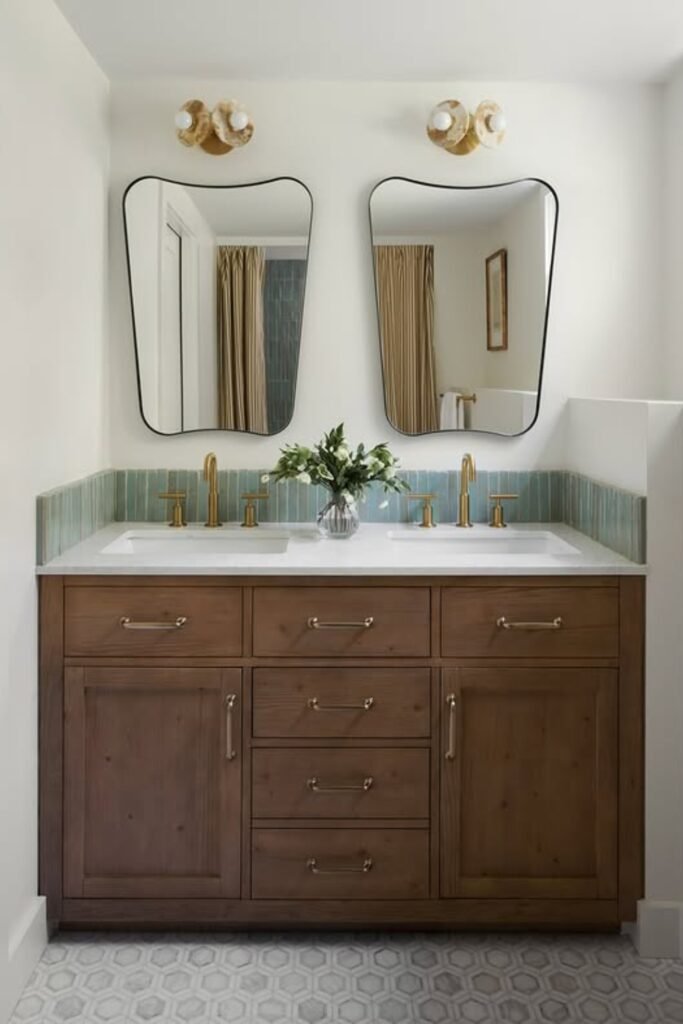
Storage First Vanity
A vanity like this works because it gives you deep drawers and closed cabinets without taking extra floor space.
The drawers keep daily items easy to reach, so counters stay clear. If you skip storage and choose a pretty open vanity instead, clutter will show up fast.
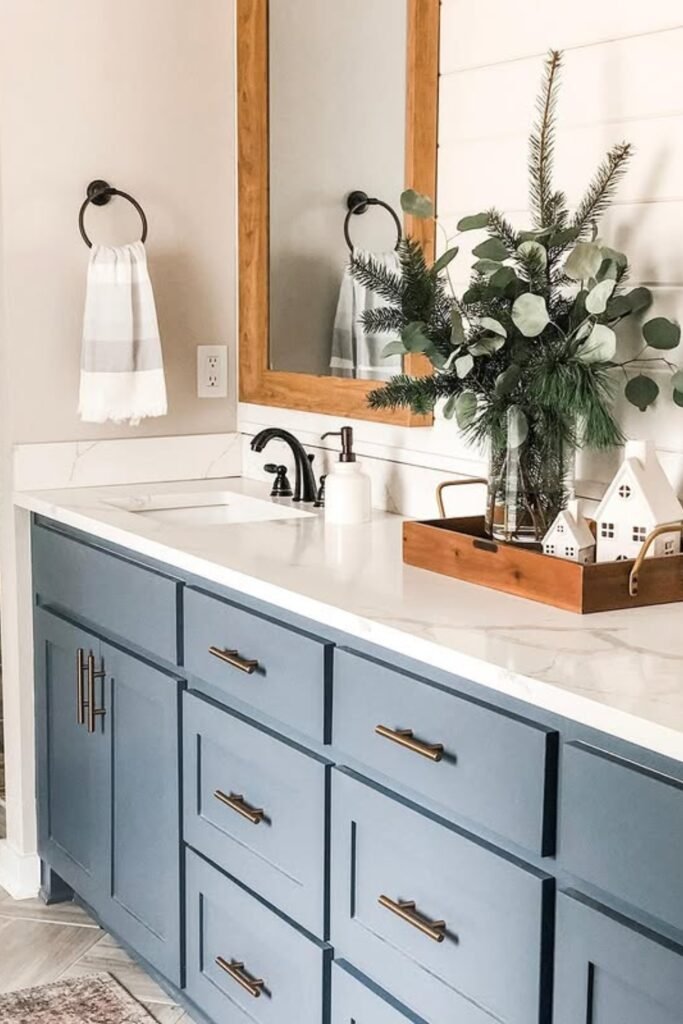
Floating Vanity Advantage
A floating vanity makes a small master bath feel instantly bigger because it exposes the floor. When you can see more floor, your brain reads the room as more open.
This only works if you keep plumbing tight and skip bulky legs or panels. You can pair it with a simple mirror and wall-mounted fixtures so the wall stays light.
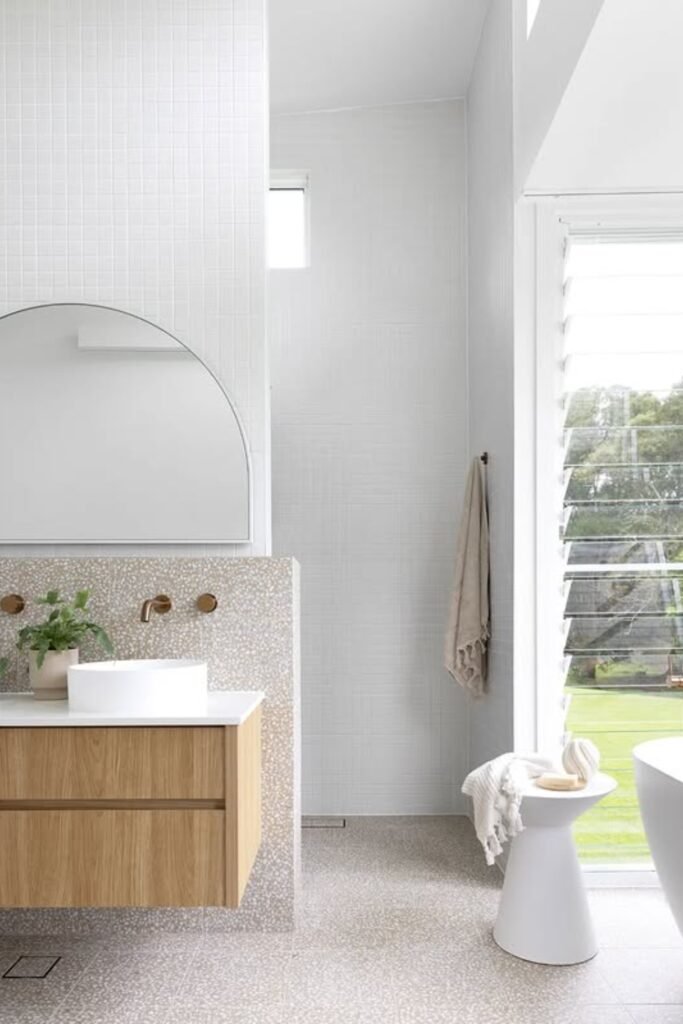
Shower Over Tub
In a small master bath, a walk-in shower almost always works better than a tub. It saves floor space and makes the room easier to move through every day.
A clear glass panel keeps the sightline open, so the bathroom doesn’t feel boxed in. If you add a built-in niche, you avoid extra shelves that stick out.
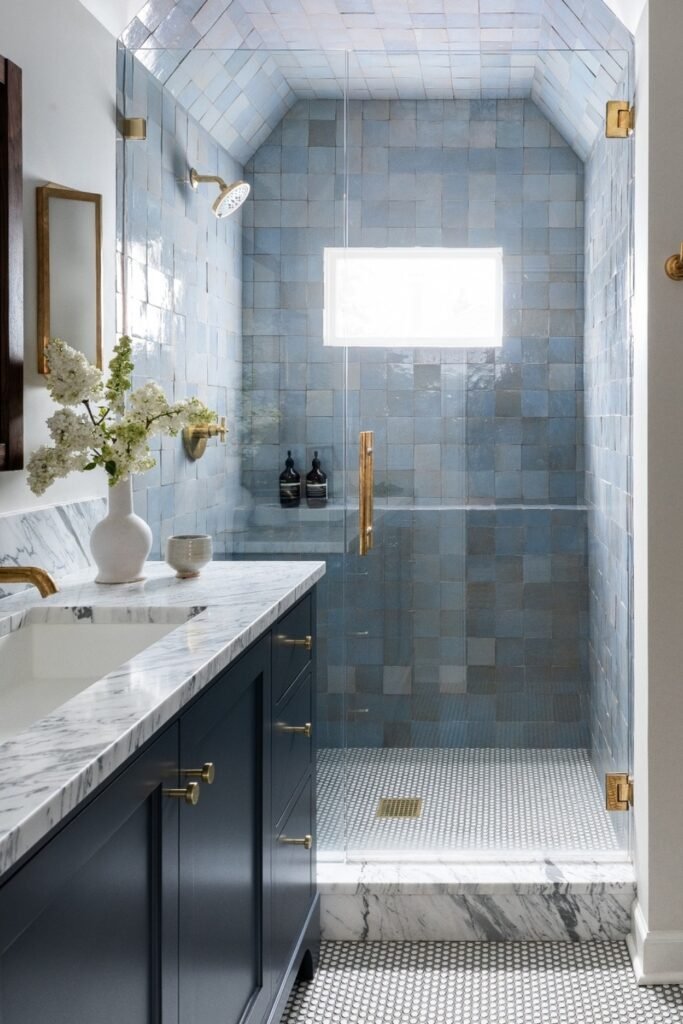
Built-In Storage Wins
If space is tight, built-in storage beats add-ons every time. A vanity with deep drawers and a tall cabinet beside it lets you store daily items without crowding the room.
Everything stays flush to the wall, so the layout feels clean and intentional. You can plan storage as part of the layout, not something you fix later.

Vertical Storage Strategy
When floor space is limited, you have to build upward. A tall cabinet gives you serious storage without widening the vanity or blocking movement.
If you stop short or add open shelving instead, you lose usable space and invite clutter. This works best when the cabinet stays flush to the wall and reaches close to the ceiling.

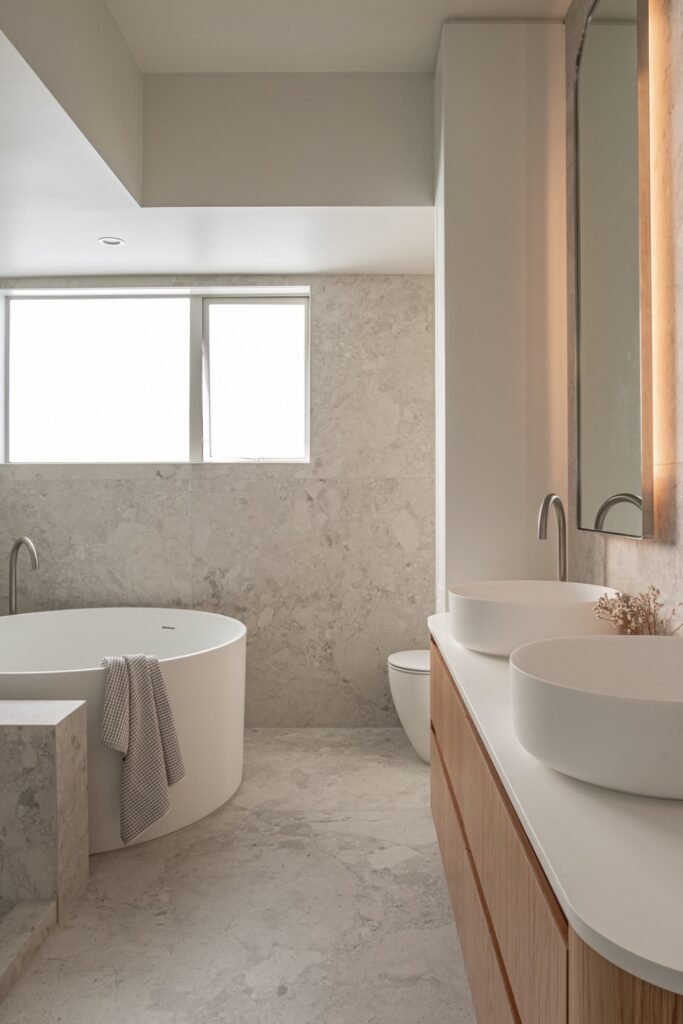
Tub Needs Space
A tub can work in a small master bath, but only if the room has enough breathing room. This layout works because the tub sits against one wall and doesn’t block the main walkway.
If you try to squeeze a tub into a tight layout, it steals space from everything else and makes your room hard to use.
Full-Height Cabinets
The full-height cabinets work well in small master baths because they use space you already have but usually waste.
By running storage from floor to near ceiling, you avoid adding extra furniture that crowds your room.

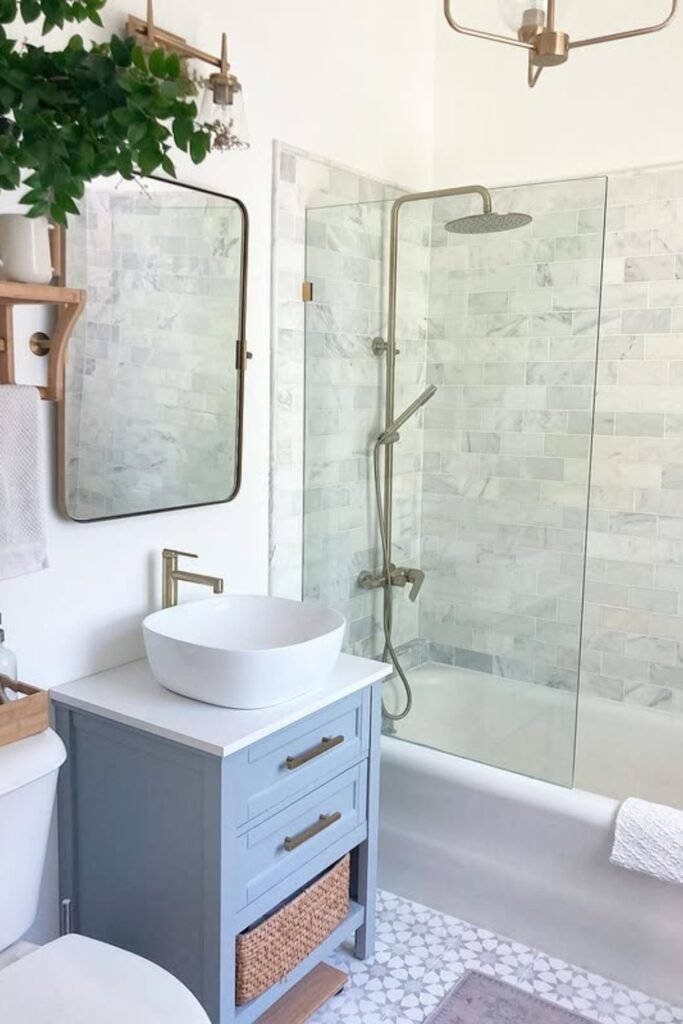
Compact Tub Combo
If you need a tub in a small master bath, a tub-shower combo is the most realistic option. This setup works because everything stays within one footprint.
A clear glass panel keeps the space feeling open instead of boxed in. You can keep the vanity narrow and storage vertical so the tub doesn’t dominate the room.
Small Vanity Smartly
A compact vanity works best in a small master bath when it’s planned, not downsized by accident.
A wall-mounted mirror and slim lighting keep the upper half light, so the vanity doesn’t feel heavy.
If you choose a small vanity with poor storage, you’ll gain floor space but lose function fast.

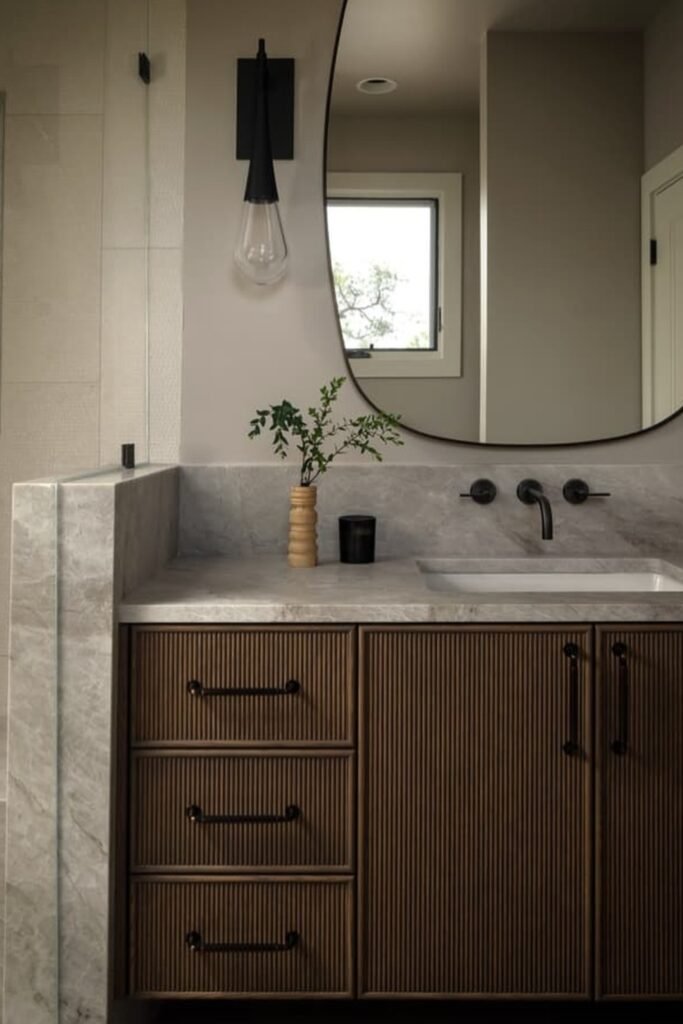
Counter Space Control
This setup works because the sink is integrated cleanly and the counter wraps just enough to be useful without sticking out.
You can keep only what you use daily on top, and let drawers handle everything else. The clear counters make the whole bathroom feel calmer and bigger.
Mirror Wall Effect
You can use one long mirror across the vanity is one of the easiest ways to make a small master bath feel bigger.
It reflects light, doubles the visual width, and removes breaks that make walls feel chopped up. This works especially well with a long counter or double sinks.

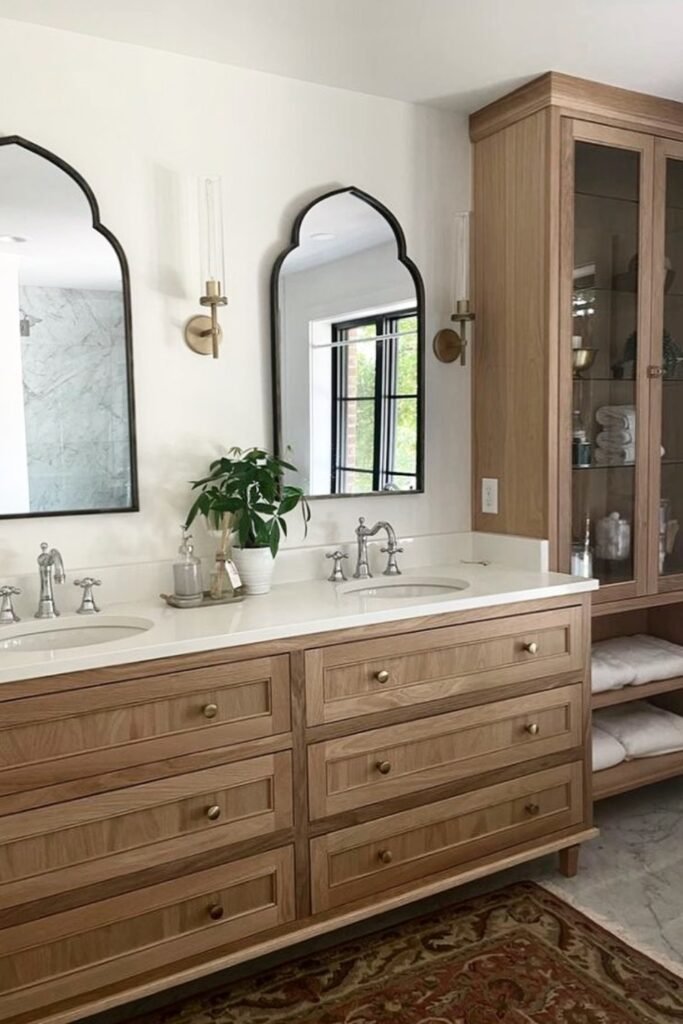
Balanced Storage Zone
This setup works because storage is planned as one complete zone instead of scattered pieces.
The long vanity handles daily-use items with drawers that keep everything hidden and easy to reach.
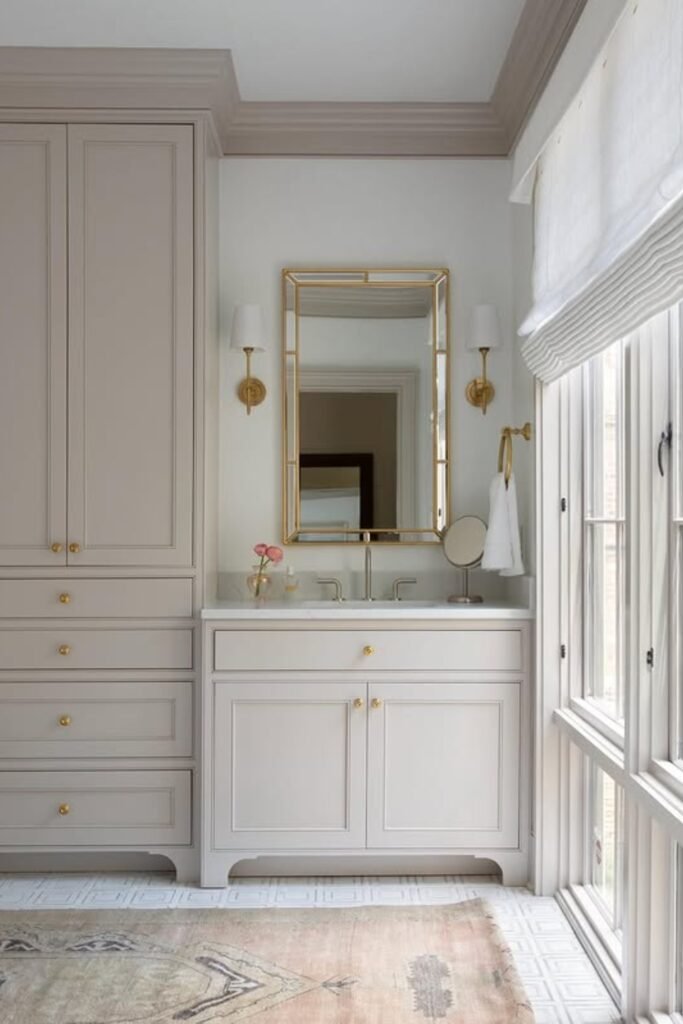
Window Side Vanity
You can place the vanity near a window is one of the easiest ways to make a small master bath feel larger and brighter.
You can keep storage built into the vanity or adjacent cabinets rather than adding pieces near the window.
Shared Vanity Station
A shared vanity works in a small master bath when you treat it like one clean work zone instead of two separate ones.
The key is keeping the middle area open so both people can use it without bumping into drawers or doors.

Keep Path Clear
In a small master bath, the walking path matters more than anything else. This layout works because the vanity stays tight to the wall and leaves a clean, open lane through the room.
You can move from sink to tub without squeezing or turning sideways. That’s the difference between a bathroom that feels calm and one that feels stressful.
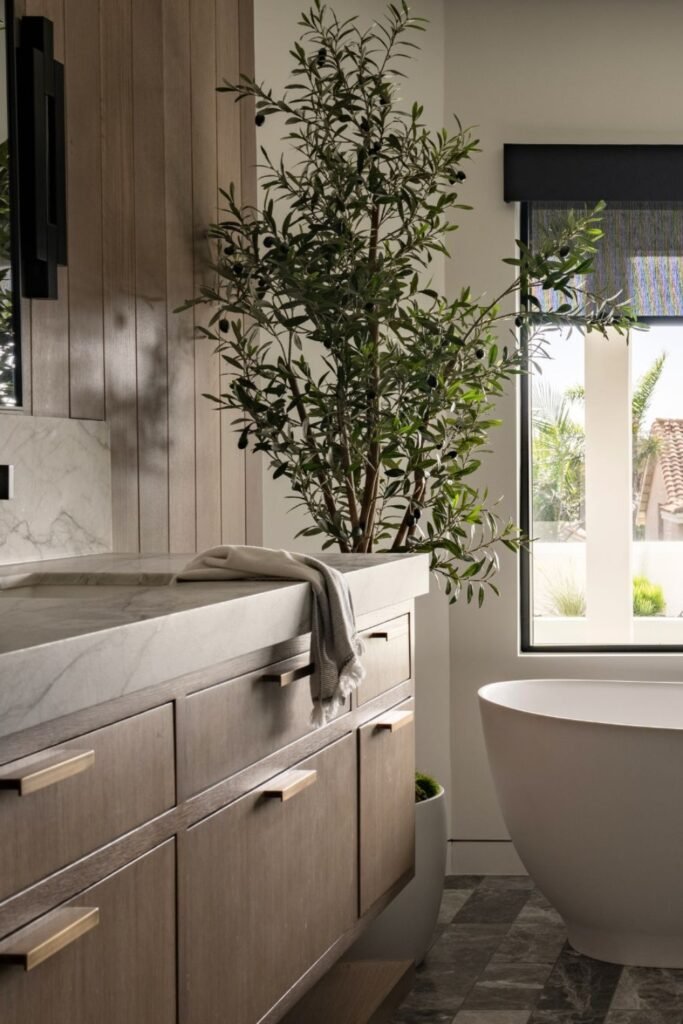
Wall Space Balance
This setup works because the mirror and lighting stay slim and centered, leaving the wall feeling open instead of crowded.
If you overload this area with shelves, heavy frames, or large fixtures, your bathroom starts to feel boxed in.

Light Visual Fixtures
The open-leg sinks and slim fixtures can work in a small master bath if the rest of the layout is simple.
The setup feels lighter because you can see through and under the sinks, which keeps the room from feeling boxed in.

Wall Cabinet Storage
A wall-mounted cabinet like this solves one of the biggest problems in a small master bath, storage without crowding the floor.
By lifting storage off the ground, you keep the room feeling open while still gaining space for toiletries, backups, and cleaning supplies.
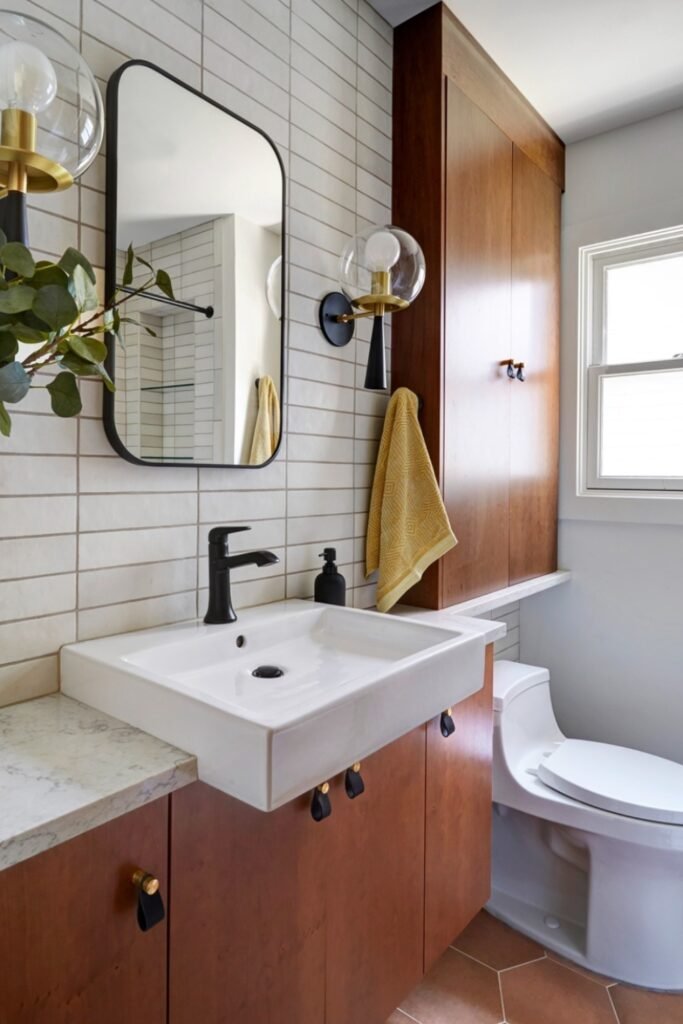
Tub Placement Matters
A freestanding tub can work in a small master bath, but only when it’s placed with intention. Always place tubs where circulation stays clear and the room can breathe.
This layout works because the tub sits near natural light and doesn’t block the main walkway or vanity access.
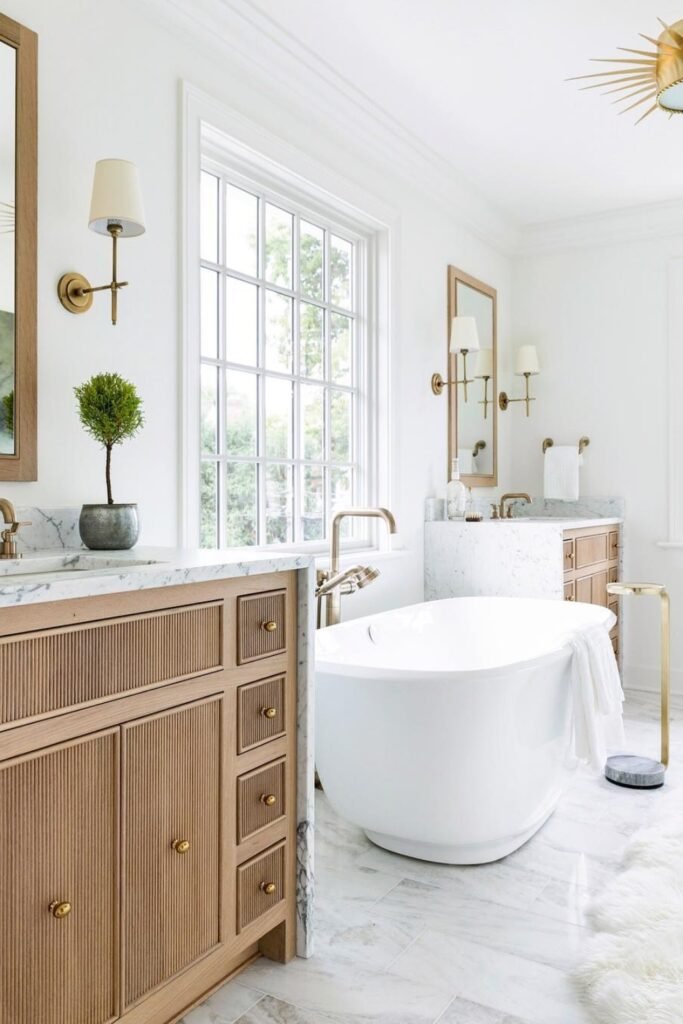
FAQs
Can a master bath be very small?
Yes, you can have a small master bath and still make it work really well. Many functional master bathrooms for you can fall right around 40-60 square feet.
What matters most isn’t the size you have, but how you use it.
When you place fixtures in a straight line, build storage into the space, and keep your walking area clear, you can make a small master bath feel comfortable instead of cramped.
Is a tub necessary in a small master bath?
No, you don’t need a tub in a small master bath. If you shower daily, you’ll usually find that a walk-in shower works better for you.
Tubs only make sense when you actually have enough space to place them without blocking your movement or your storage.
When your layout is tight, skipping the tub can improve how usable the space feels for you.
You may like to read!
