
19 Shelf Decor Living Room Ideas for 2026

This article may contain affiliate links: read full affiliate disclosure.
You buy vases, books, frames, even plants… and yet you look at your living room shelves and you wonder why they still feel messy, empty, or just a little off.
One day you feel like they’re overcrowded, and the next day you notice they look awkwardly bare.
If that sounds like your space, you should know you are definitely not alone.
You might think shelf styling is tricky, and that’s because nobody ever teaches you the simple rules behind it.
In this article, you will see exactly what you can put on your living room shelves and 19 unique decor ideas you can try yourself.
Let’s jump in!
What To Put On Shelves In A Living Room?
If you just throw random items on your shelves, you will always feel like they look messy.
You need a mix that gives your space structure, depth, and personality so you can actually enjoy looking at it. You can start with books to build a solid base.
Then you might add one or two vases or bowls to give some height. You should use a small plant to bring life and freshness.
Don’t forget to drop in one personal item so the shelves feel like your home, not like a store display. If you want your shelves to feel calm, you can keep the color palette tight.
And if you want a bit of drama, you should repeat one bold color across different shelves so you get a cohesive, intentional look.
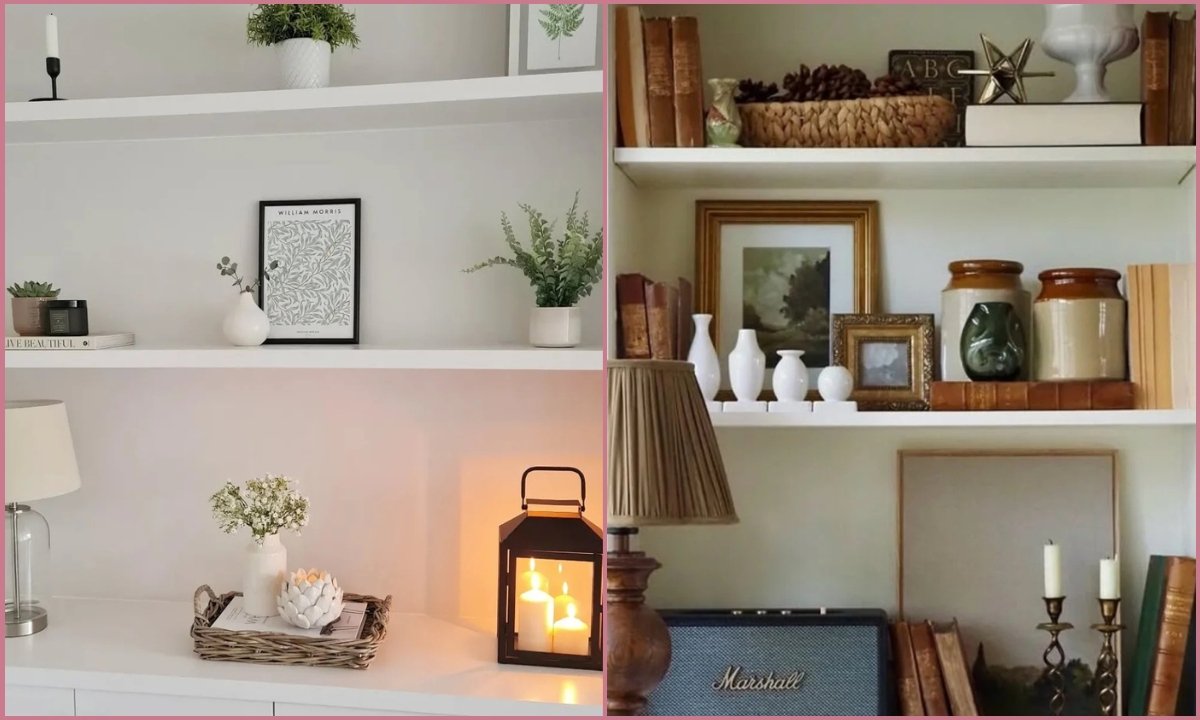
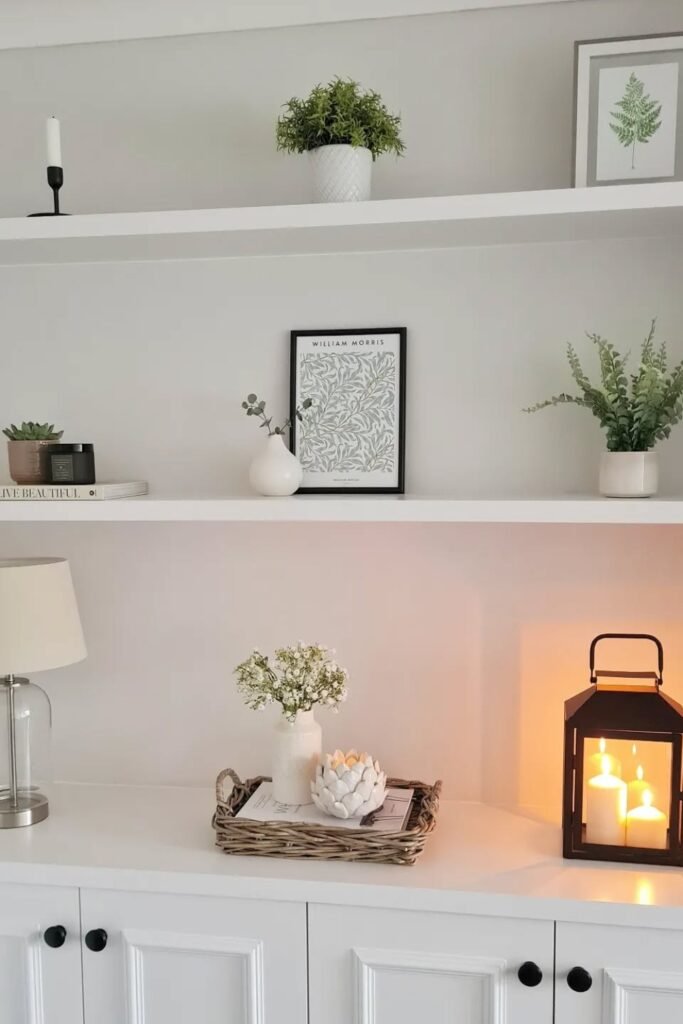
Warm Minimal Balance
You can keep your upper shelves calm by spacing out greenery and adding just one framed print so you don’t feel visual chaos.
If you want to recreate this, stick to two colors and let one glowing light source do all the work for your mood.
Frame the Sofa
You can add depth by treating your shelves like a backdrop for your seating.
When you layer books and framed art behind your couch, your living room feels anchored instead of floating.

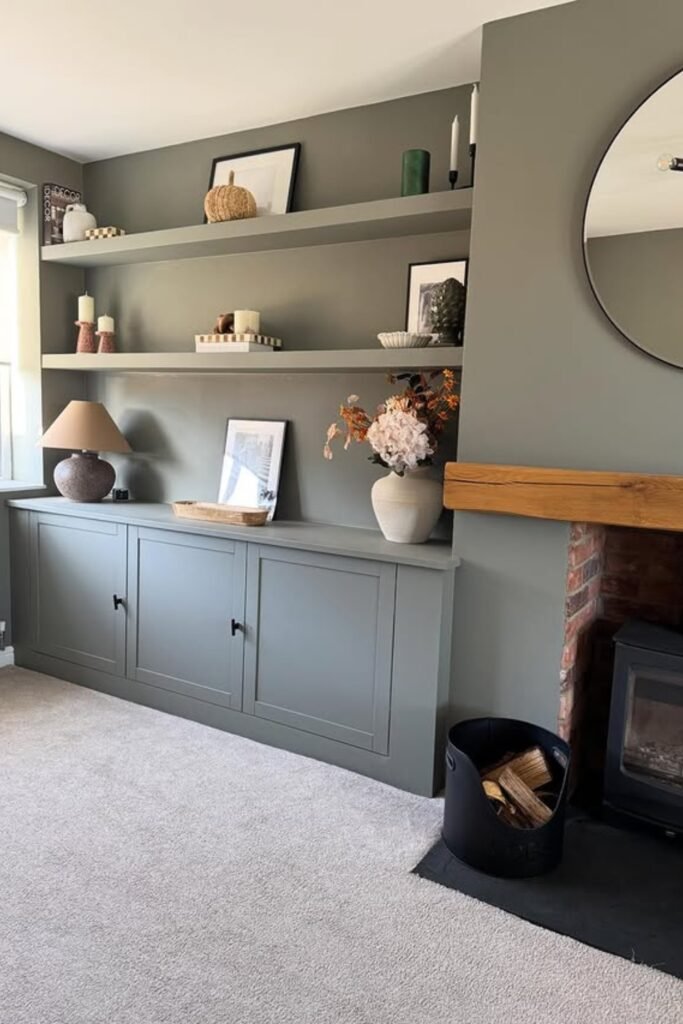
Fireplace Flow
Let the shelves echo your fireplace wall so the whole living room feels like one calm zone.
You might build this look with soft ceramics, one low lamp, and framed art leaned instead of hung.
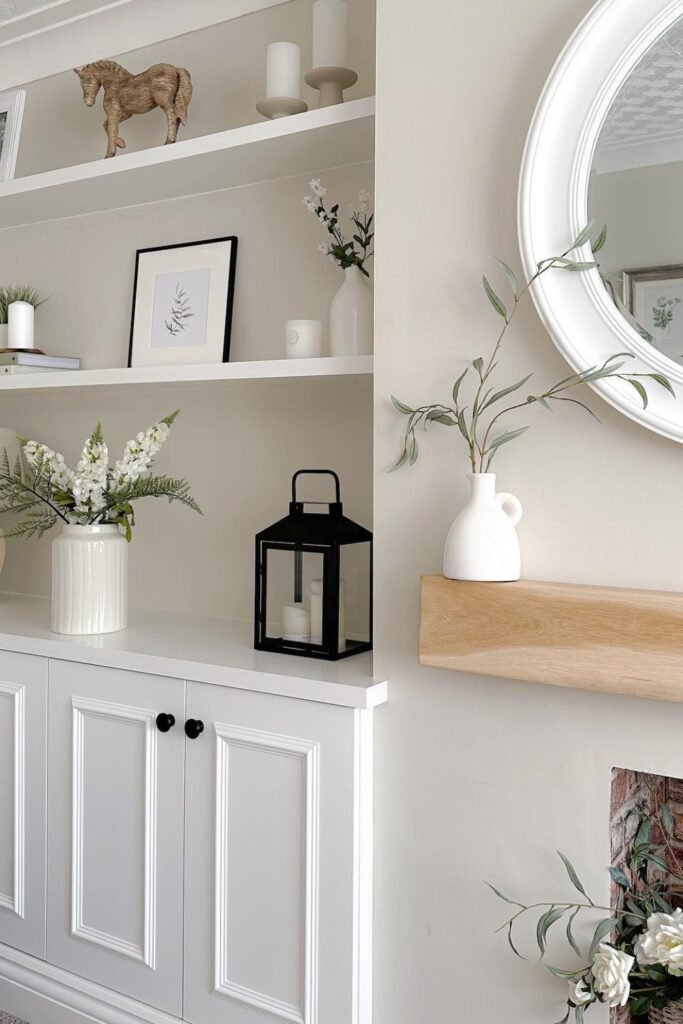
Soft Neutrals Give Calm
You should mix smooth ceramics, light wood, and simple greenery so your living room feels relaxed instead of sterile.
You can build the base with closed cabinets and keep shelf items light in color and well spaced.
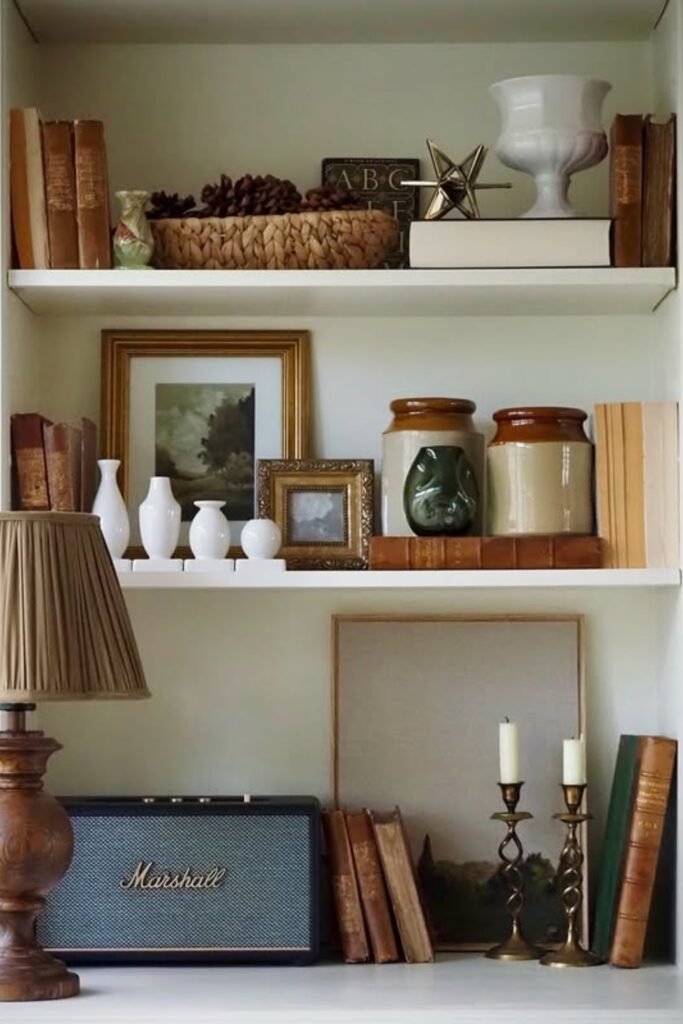
Vintage Layers
You can tell a story on your shelves with old books, ceramic jars, and brass touches.
Let heavier, darker items sit low so your space feels grounded, then place lighter frames and small vases higher up.
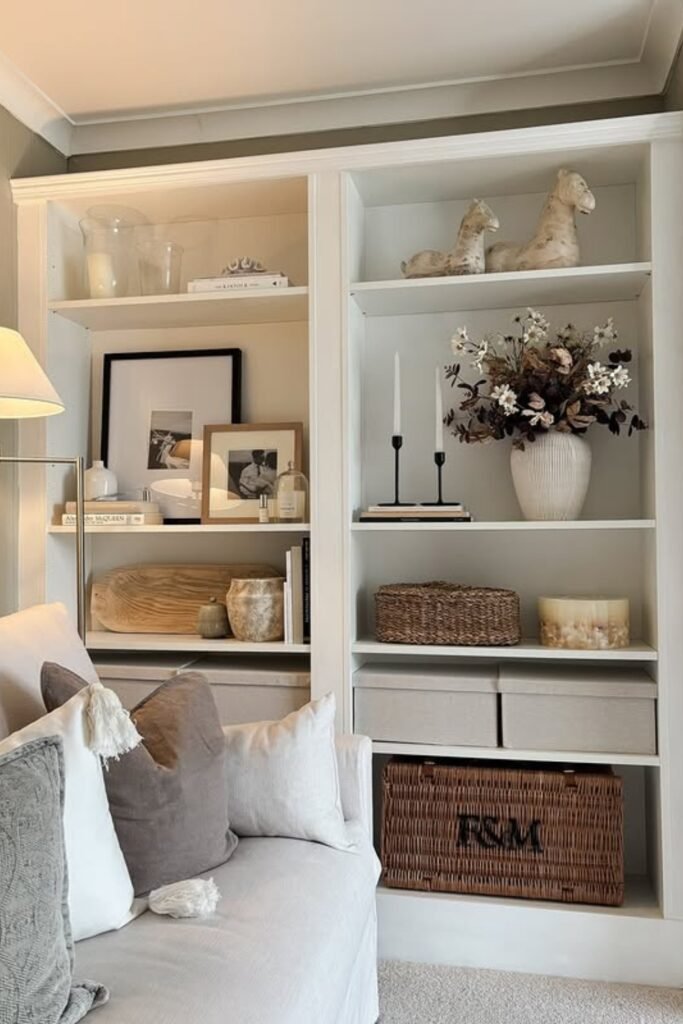
Cozy Built-In Corner
When shelves are wrapped right beside your seating, they can make the living room feel warm instead of showroom-clean.
You should use soft baskets to hide clutter at the bottom and keep lighter decor at eye level for balance.
Collected and Calm
You can make your living room feel layered but not loud by mixing books with small art, pottery, and one soft basket to keep the look relaxed.
If your shelves feel busy, you can remove one item from each row and let the decor breathe.

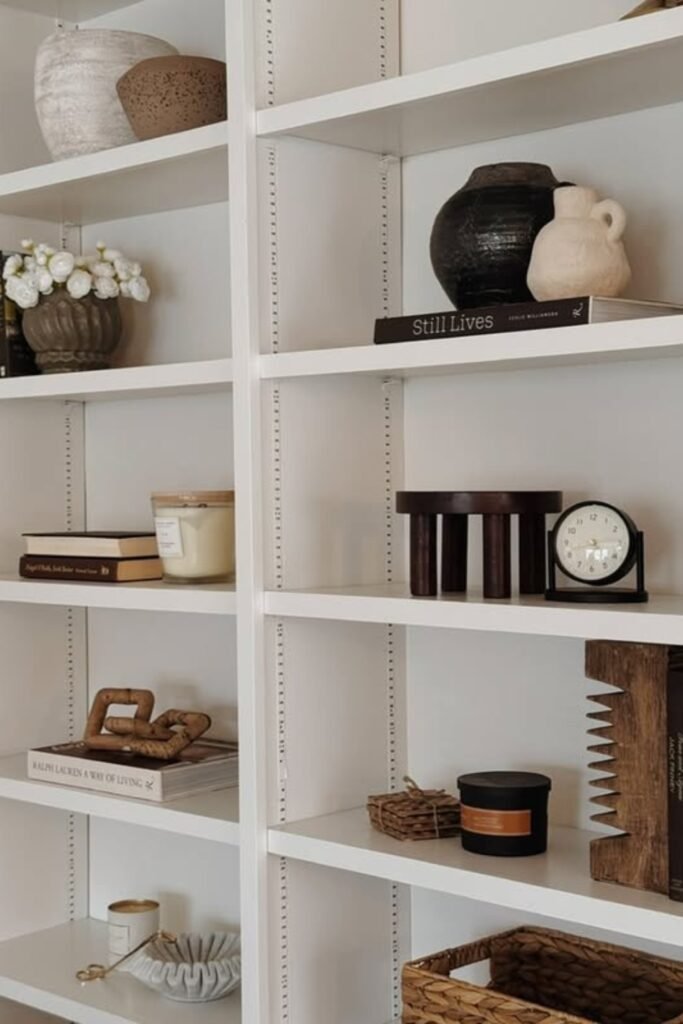
Let White Space Work
You should separating pottery, books, and small accents across wide gaps can stop your shelves from feeling crowded.
When everything has room to breathe, even the simplest decor can feel intentional and high-end.
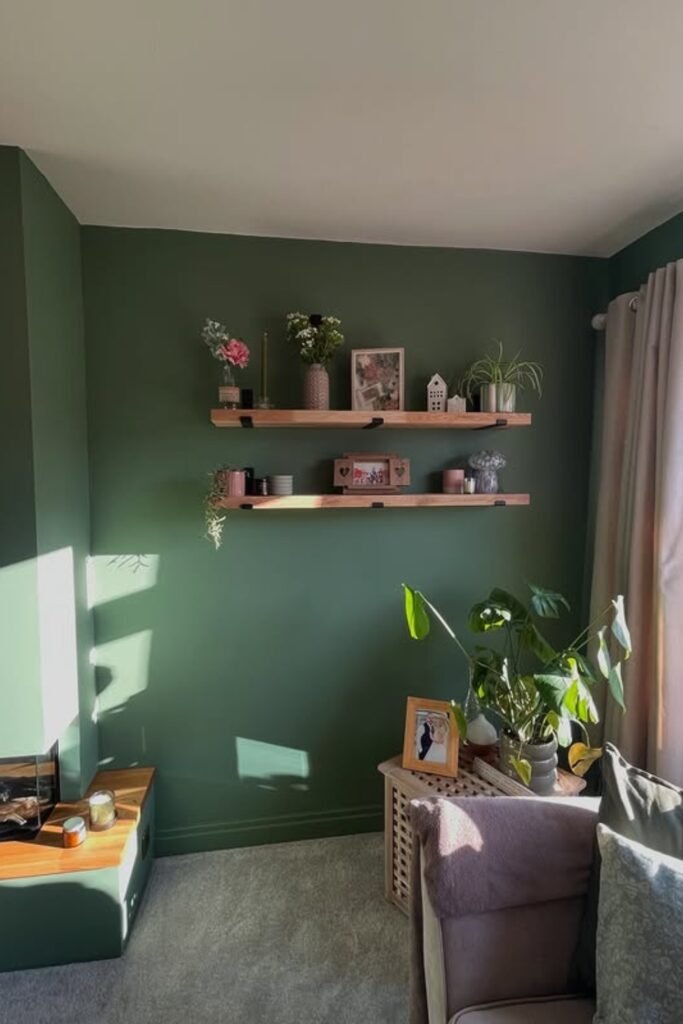
Float Above the TV
When you have bold green walls, you can keep your shelves light and airy to balance the drama.
If your wall color is bold, you should let your shelf decor stay simple so your room feels balanced instead of heavy.
Warm Seasonal Layers
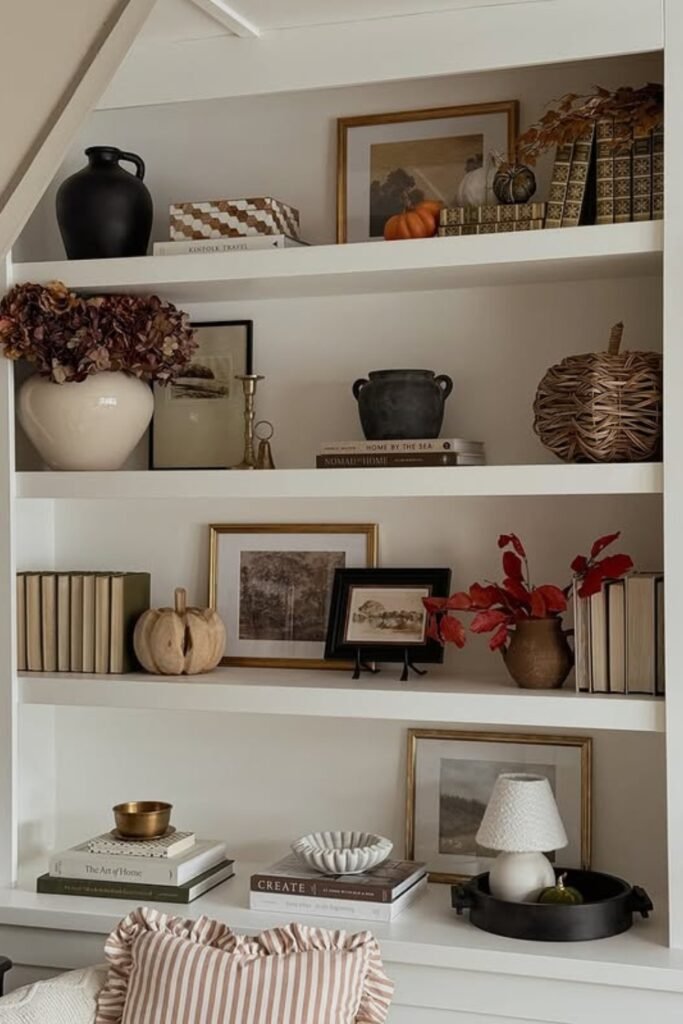
You can make autumn tones steal the spotlight and give your shelves a cozy, lived-in pull.
You should anchor each shelf with books first, then add only two seasonal accents so your shelves feel rich, not overcrowded.
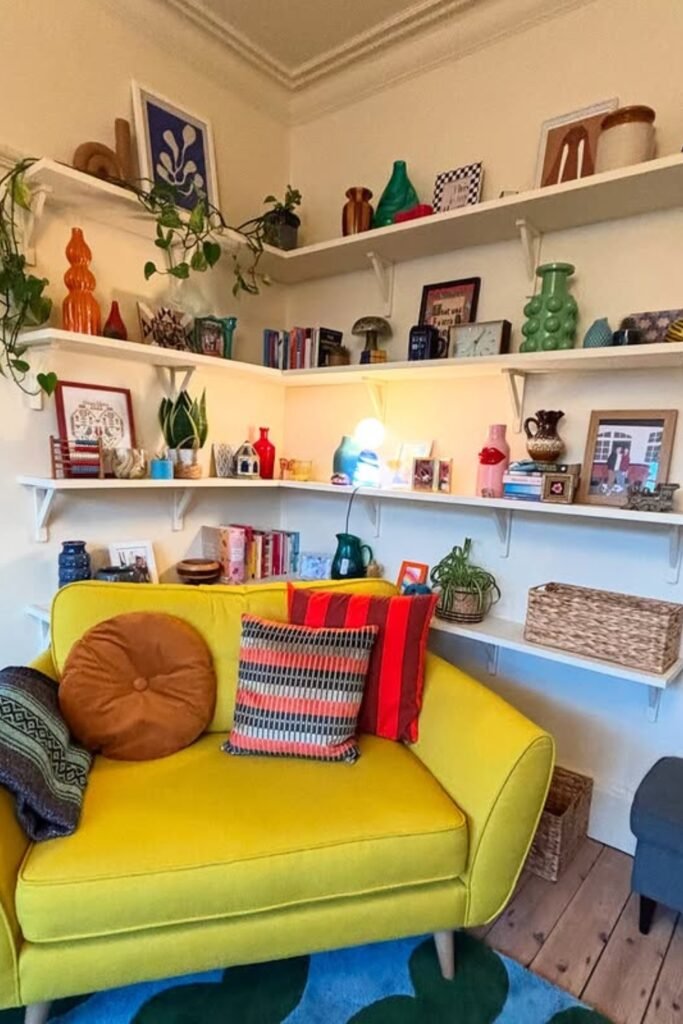
Color With Control
You can use a bold sofa to set the tone and then repeat smaller pops of that color across your shelves so the chaos feels intentional.
If you want it to work for you, pick one main color, echo it three times in your decor, and balance everything else with white shelving and neutral floors.
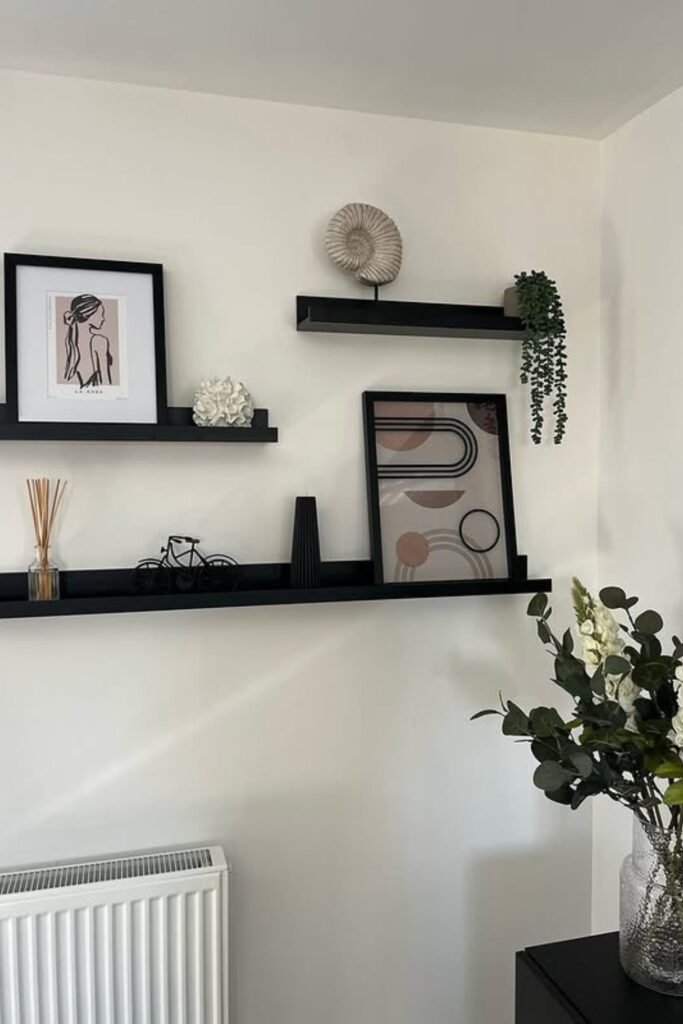
Sharp Contrast Pops
You can make black shelves instantly sharpen a soft living room. The dark lines pull art and small décor forward without needing heavy styling.
You should keep items slim, one framed print, one small object, one trailing plant, so the wall feels clean.
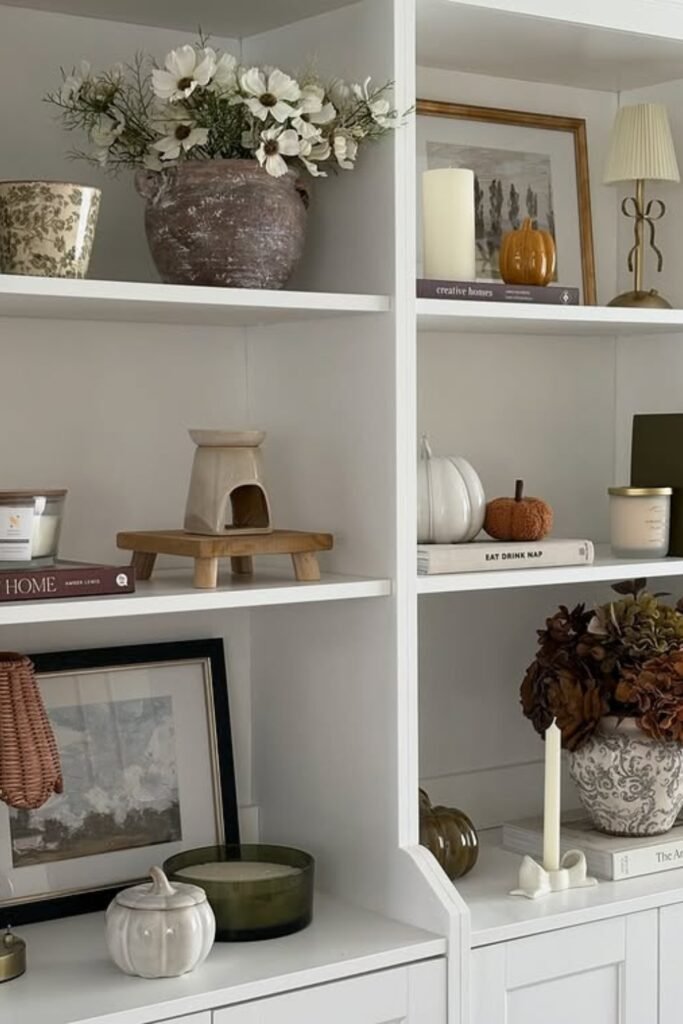
Soft Fall Touches
You should use books to create a base, then layer one candle and one textured piece on top for contrast.
When you recreate it, stick to two warm tones only and repeat them across shelves so everything feels intentional, not scattered.
Built-In Comfort Glow
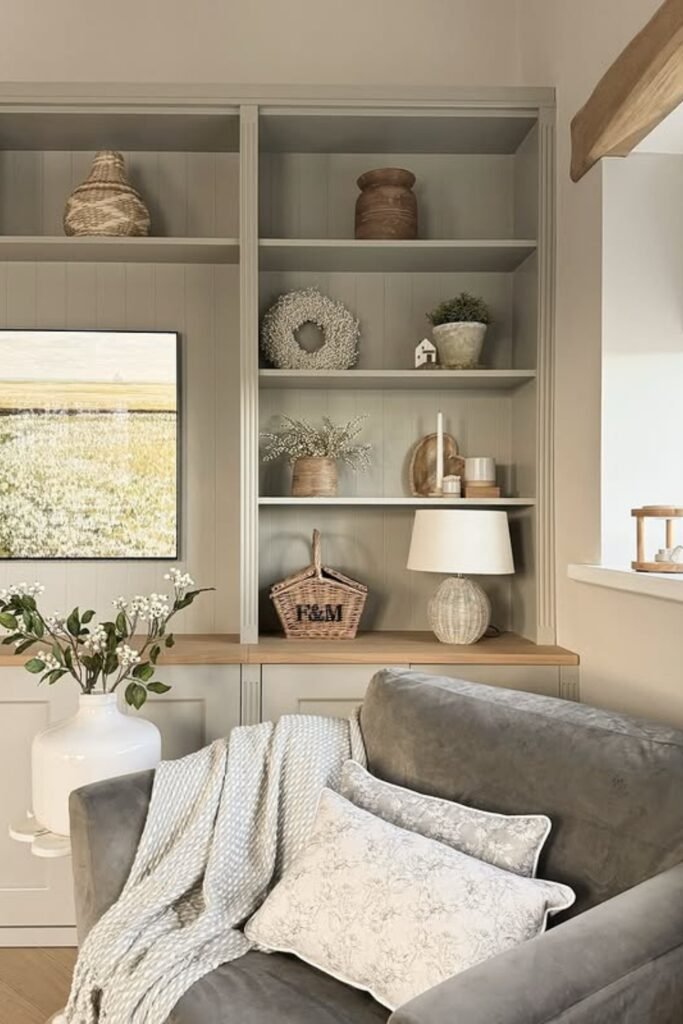
You can use woven baskets, rounded lamps, and simple greenery to soften the screen without stealing focus.
You should keep heavier textures on lower shelves and lighter accents up top so your space feels balanced instead of visually top-heavy.
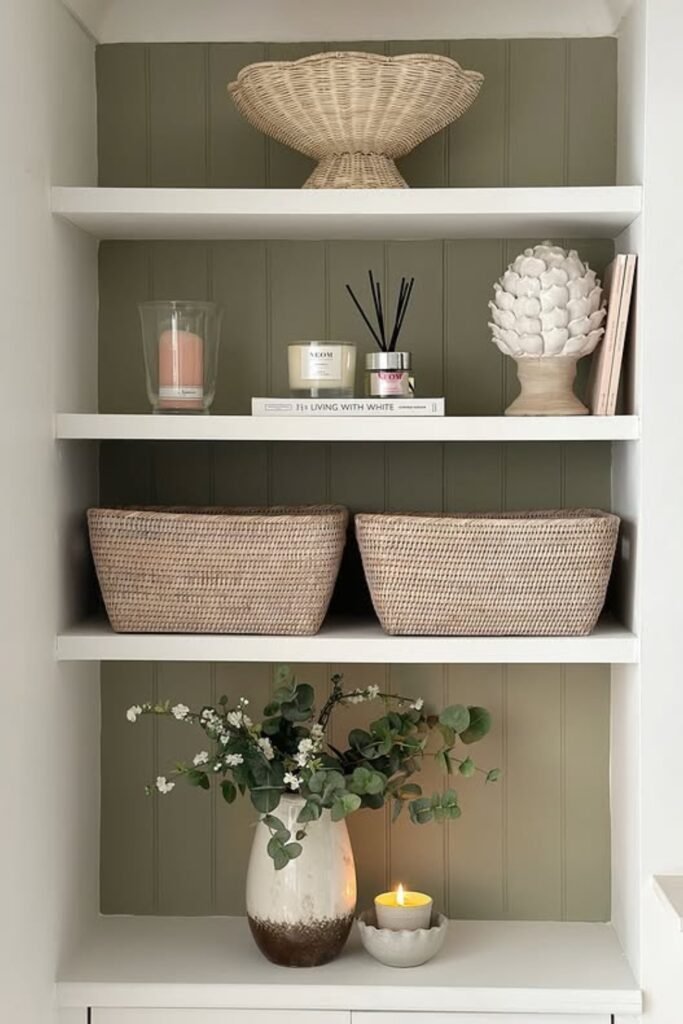
Texture Over Color
You can let natural texture do all the work instead of relying on bold colors.
You should keep your bottom shelf for glow and weight, and the upper shelves light and airy so your room feels layered but relaxed.
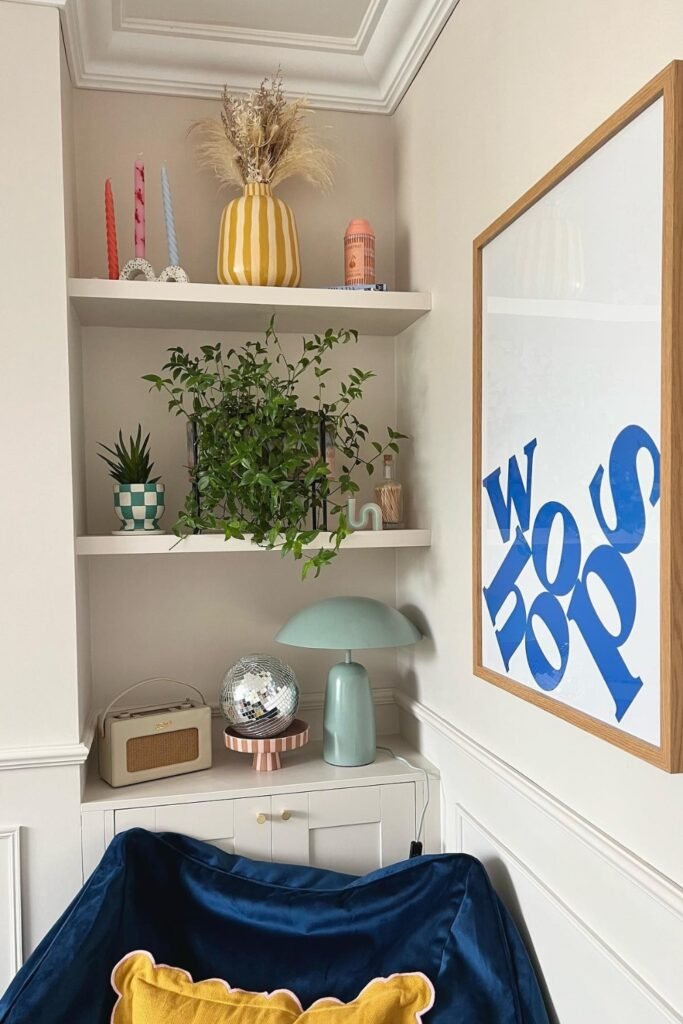
Playful Corner Pop
A bold chair sets the mood, then shelves echo that energy with plants, bright candles, and one glossy accent.
Let one fun color lead and keep the wall and cabinet calm so your corner feels styled, not chaotic.
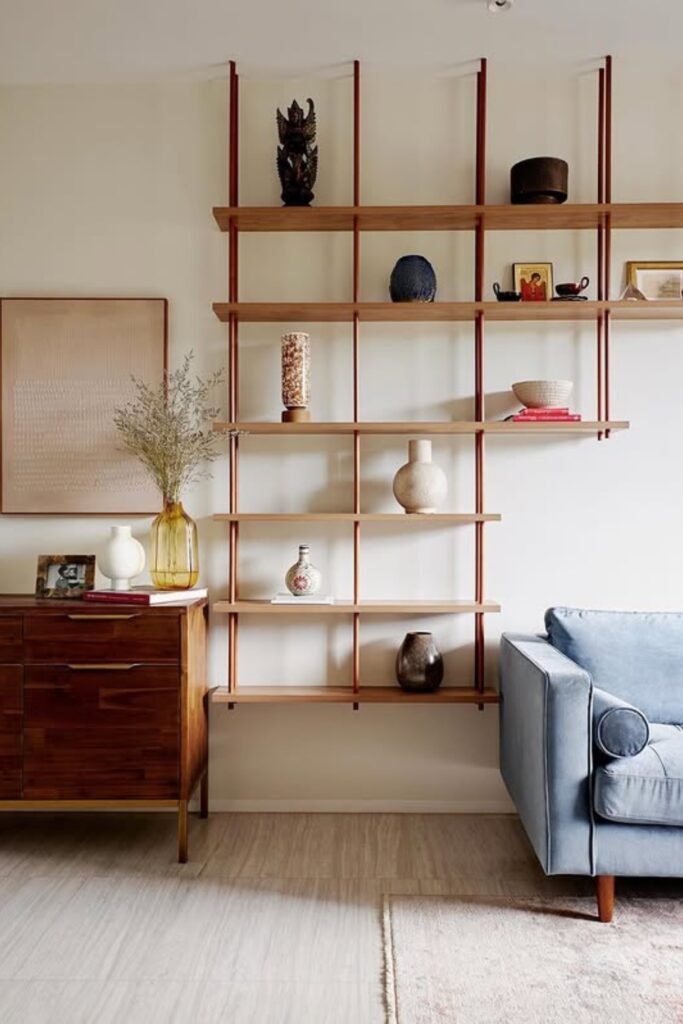
Open Grid Statement
It adds one taller vase, one rounded object, and one small framed moment per row.
If you fill every space, the grid loses its whole impact and starts to look heavy instead of modern.
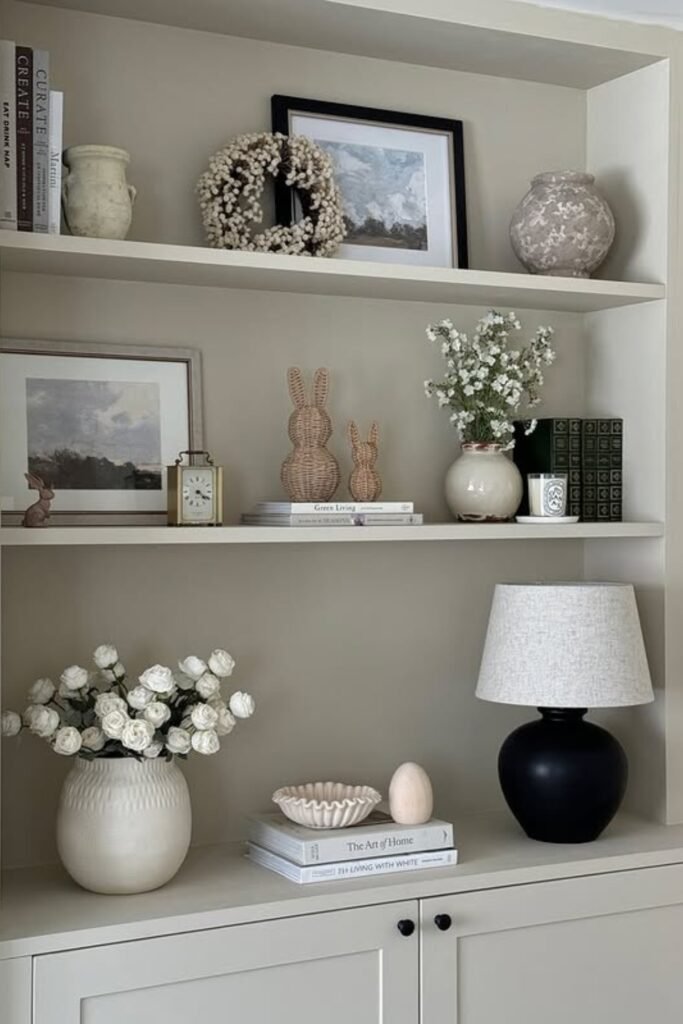
Soft Symmetry Reset
You can make calm shelves feel balanced without having them look perfectly mirrored.
You might pair one framed piece with one rounded object, then soften the rest with flowers or a small wreath
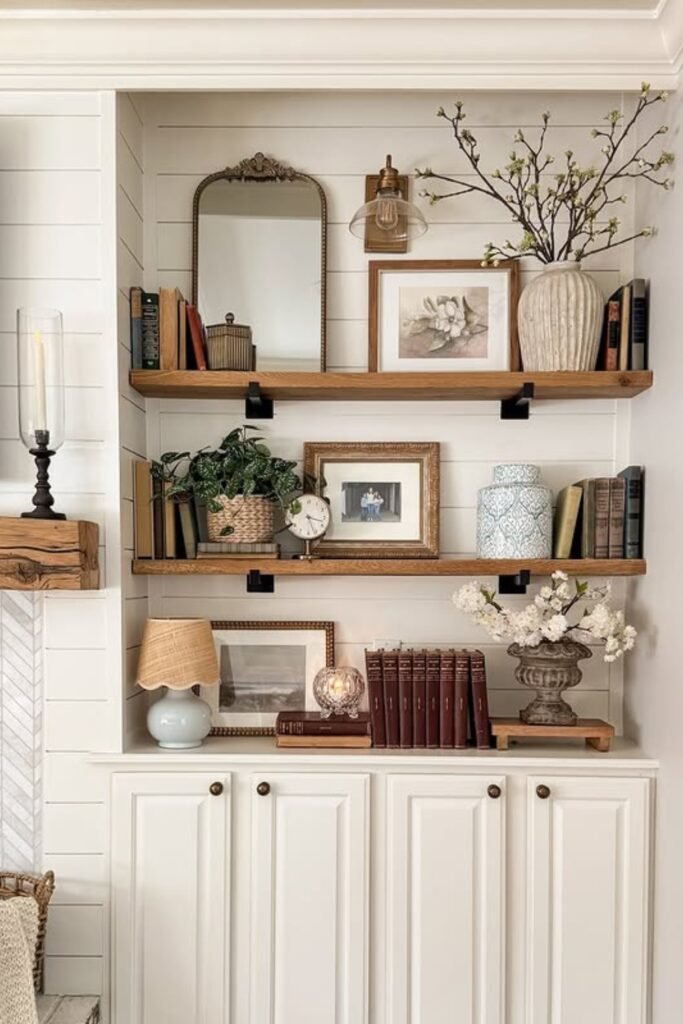
Classic Shelf Stack
You can use warm wood shelves to instantly ground a bright living room and make your books feel like intentional decor instead of clutter.
You should let one mirror or framed art lead each row, then flank it with books and a soft object for balance.
FAQs
How do I decorate living room shelves without making them look cluttered?
You should limit each shelf to a few strong pieces instead of filling it with many small ones.
You can start with books to give your shelves structure, then add one statement item for height and one soft piece for balance.
If you ever feel like a shelf is too busy, you should remove one item first before adding anything new.
You will see that open space is actually part of the design, it helps everything else feel intentional and thoughtfully placed.
How often should I change my shelf decor in the living room?
You don’t need to do a full makeover every month.
You can make small swaps each season like changing flowers, switching a tray, or rotating artwork, to keep your shelves feeling fresh.
If you notice your shelves starting to feel invisible to you, that’s usually your cue that it’s time for a quick refresh, not a full redo.
You may like to read!
