
24 Sage Green Bedroom Ideas for 2026

This article may contain affiliate links: read full affiliate disclosure.
You probably love sage green because it feels calm the moment you look at it, and you like how soft and easy it feels on your eyes.
But when you actually try to bring it into your bedroom, you might start feeling a little confused. Should you paint all the walls first, or should you start with bedding and decor?
What if the shade you pick looks dull when the lights are low? And why do some sage green bedrooms feel warm and cozy while yours starts looking flat?
If you are stuck liking the color but not knowing how to use it the right way, you are definitely not alone.
In this article, you will learn exactly why sage green works so well in bedrooms & 24 sage green bedroom ideas.
Let’s jump in!
Why Sage Green Works So Well In Bedrooms?
Sage green works so well in bedrooms because when you use it, you get a calm feeling without your space ever feeling cold, and you get softness without things looking boring.
It sits right between green and gray, which means it doesn’t shout for your attention or overpower the room.
When you bring it into your bedroom, you might notice how your eyes can actually relax, especially when you’re winding down at the end of the day.
You will also like how easily it works with things you already have, whether that’s wood furniture, white walls, or neutral bedding.
If you want a color that feels peaceful but still looks stylish and grown-up, you’ll find that sage green helps you strike that balance without much effort.
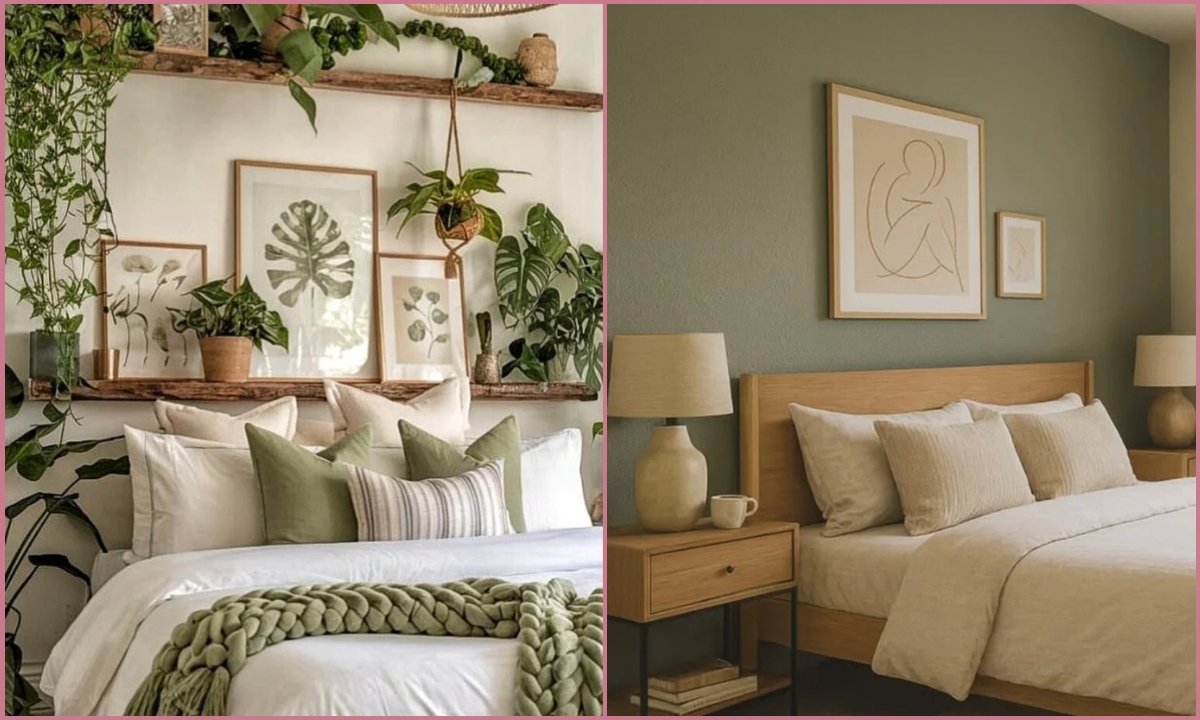
Calm neutral base
When you start with a calm, neutral base, you’ll notice how sage green can feel effortless instead of overpowering.
You let light walls, soft textures, and pale furniture do most of the work, so you can bring sage green in quietly through cushions or a throw.
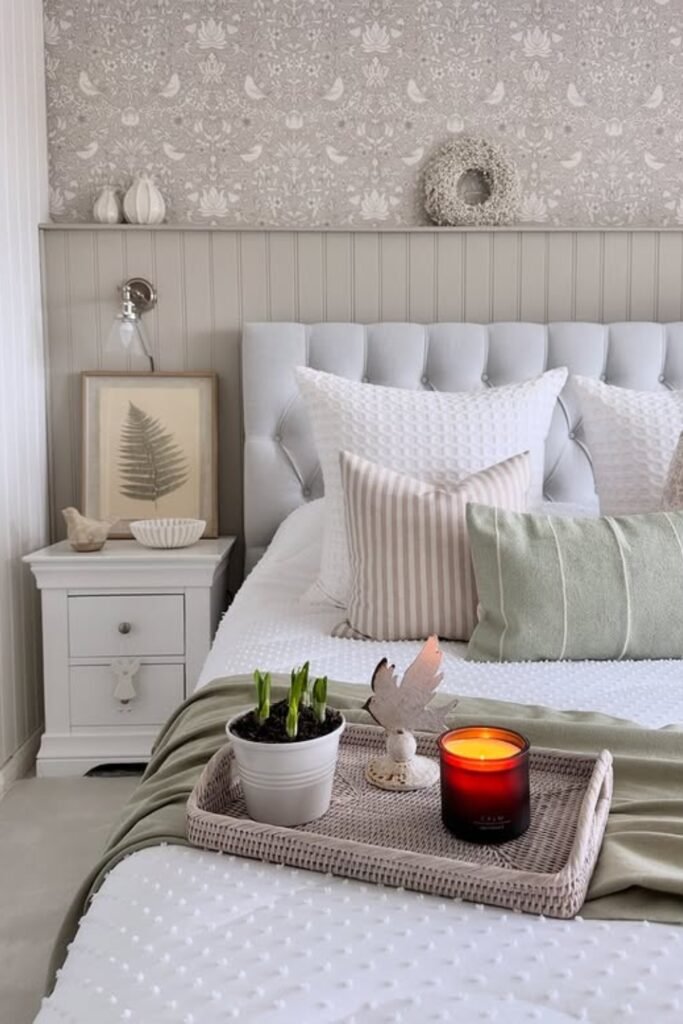
Statement accent wall
You’ll notice how the arched pattern adds depth without making the space feel busy, which can work especially well if your bedroom is medium to large.
To recreate this look, you should keep your bed, side tables, and bedding soft and neutral so the wall stays the focus without overwhelming you.
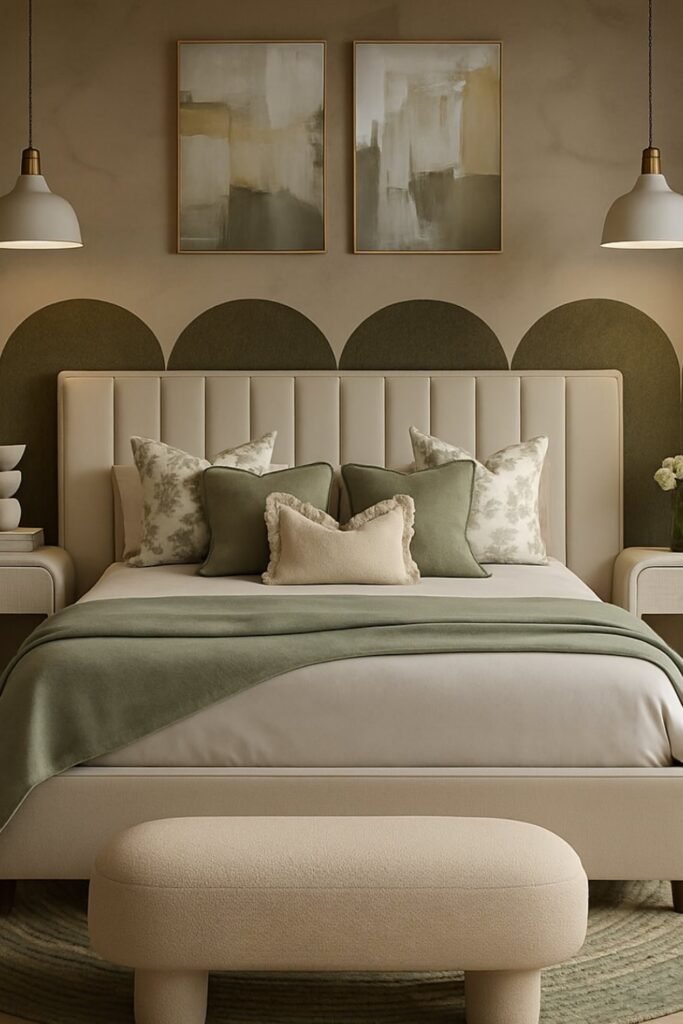
Warm wood balance
When you let sage green handle the calming side, you’ll want warm wood to stop the room from feeling cold.
A full sage green wall behind your bed can create a soft backdrop, especially when you pair it with light wood furniture and neutral bedding.
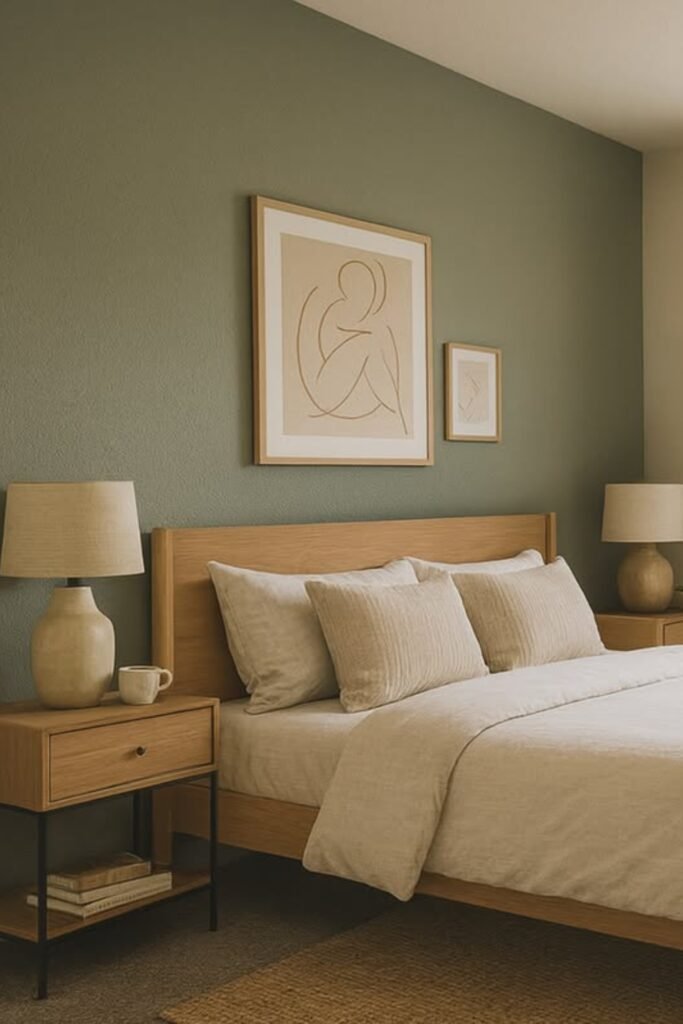
Half-wall calm
When you stop sage green halfway up the wall, you give your bedroom structure without making it feel heavy.
You’ll notice how paneling adds quiet detail, while the lighter upper wall keeps the room feeling open and bright.
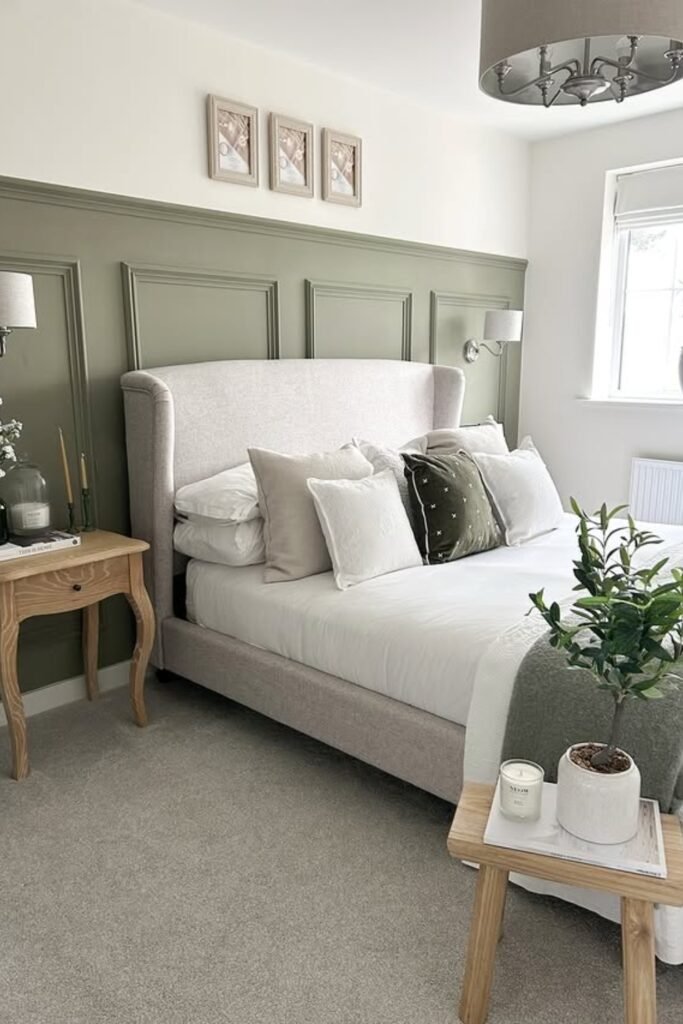
Cozy cottage paneling
You might notice how the color wraps around the bed area and makes it feel protected, almost like a quiet retreat.
When you use sage green paneling, you instantly give your bedroom a snug, lived-in feeling without relying on heavy decor.
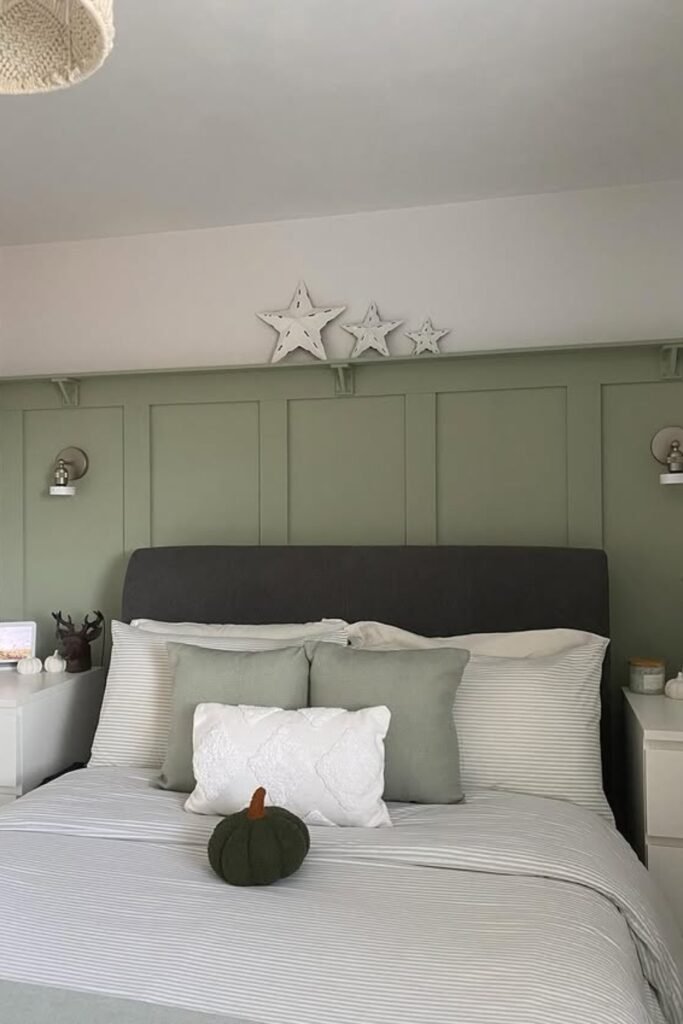
Soft tonal layering
You will see how the paneled wall blends into the space instead of standing out, which helps the bed feel more settled and grounded.
You should choose a muted wall shade, use textured bedding, and repeat sage through pillows so everything feels connected rather than styled.
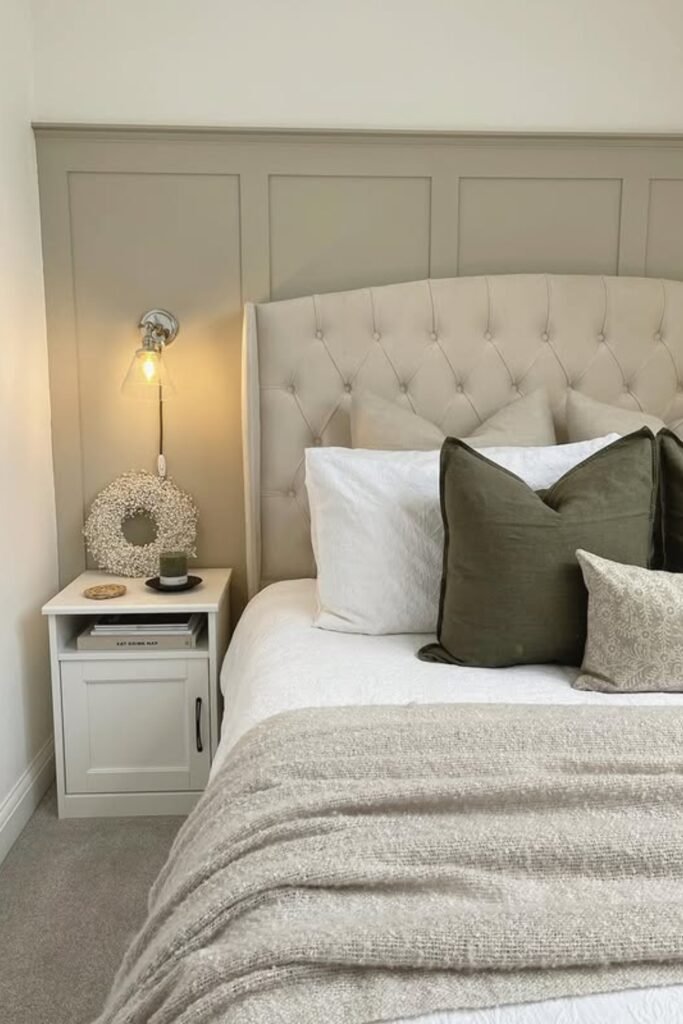
Grounded classic paneling
When you add sage green paneling behind your bed, you give the room weight and structure, especially if you pair it with white furniture.
You get a calm feel from the color, while the panel detail keeps the wall from looking plain. This works best if your bedroom is larger and you want the bed area to feel anchored.

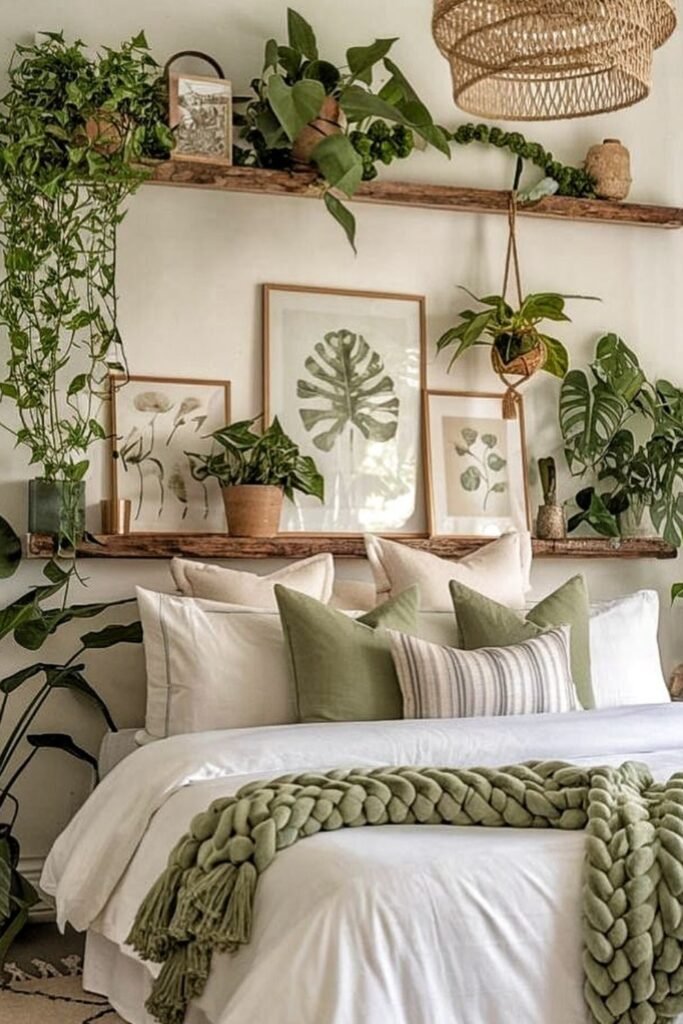
Nature-led layering
When you pair sage green with real greenery and warm wood, you let the color blend naturally into the room.
You will notice the repeating green tones through plants, shelves, and soft textiles makes the bedroom feel alive but still calm.
Soft grid backdrop
You will see the soft lines give the wall presence, while the muted color keeps everything calm. This works well if your bedroom already feels neutral but a little flat.
You should pair the wall with light wood furniture, simple bedding, and one tall plant so the room stays relaxed and balanced.
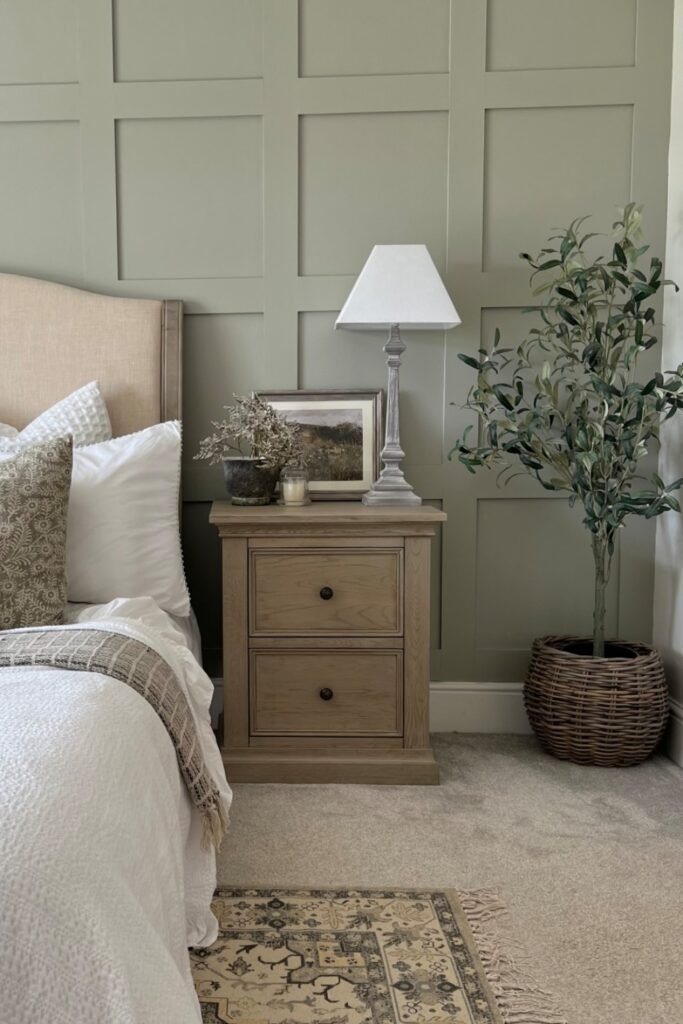
Calm green anchor
When you paint the wall behind your bed in sage green, you instantly ground the room and give yourself a clear focal point.
You get that soft, muted calm without the space feeling heavy, especially when you balance it with white bedding and light furniture.
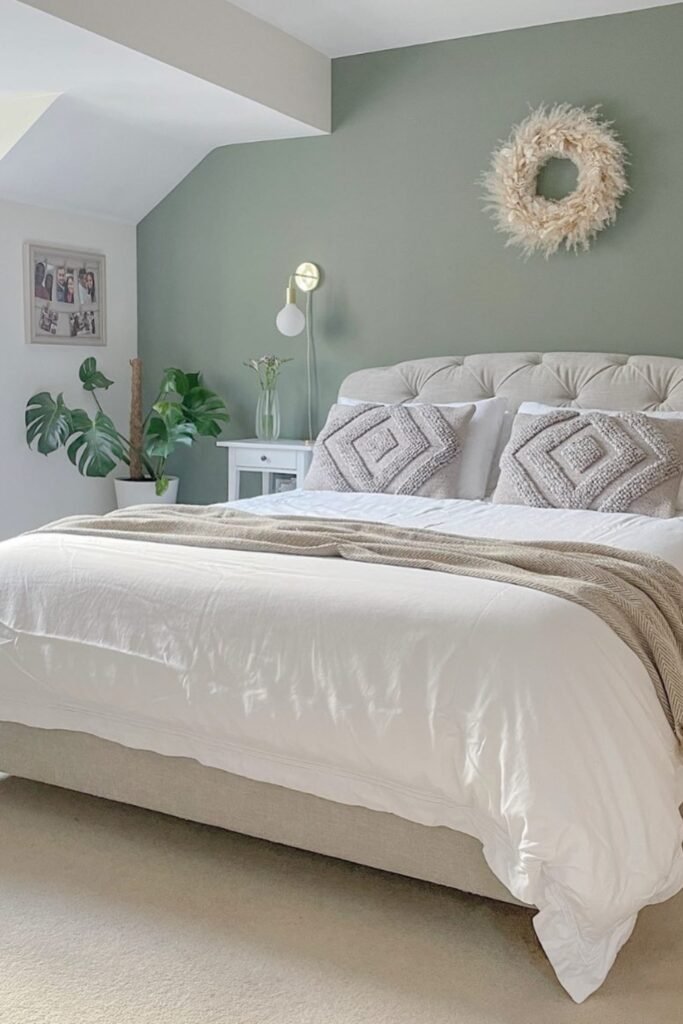
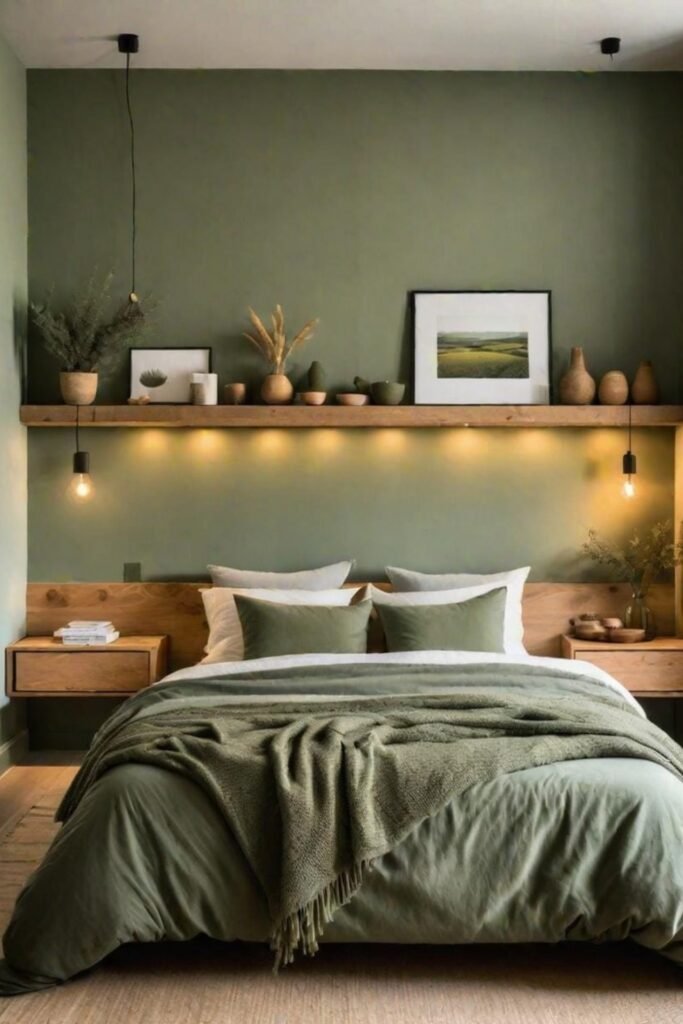
Warm shelf focus
You get space to layer art, pottery, or soft lighting without crowding your bedside tables. This works best if you want warmth without heaviness.
To recreate it, you should keep the shelf low, use warm bulbs, and repeat sage green through your bedding so the wall feels intentional, not separate.
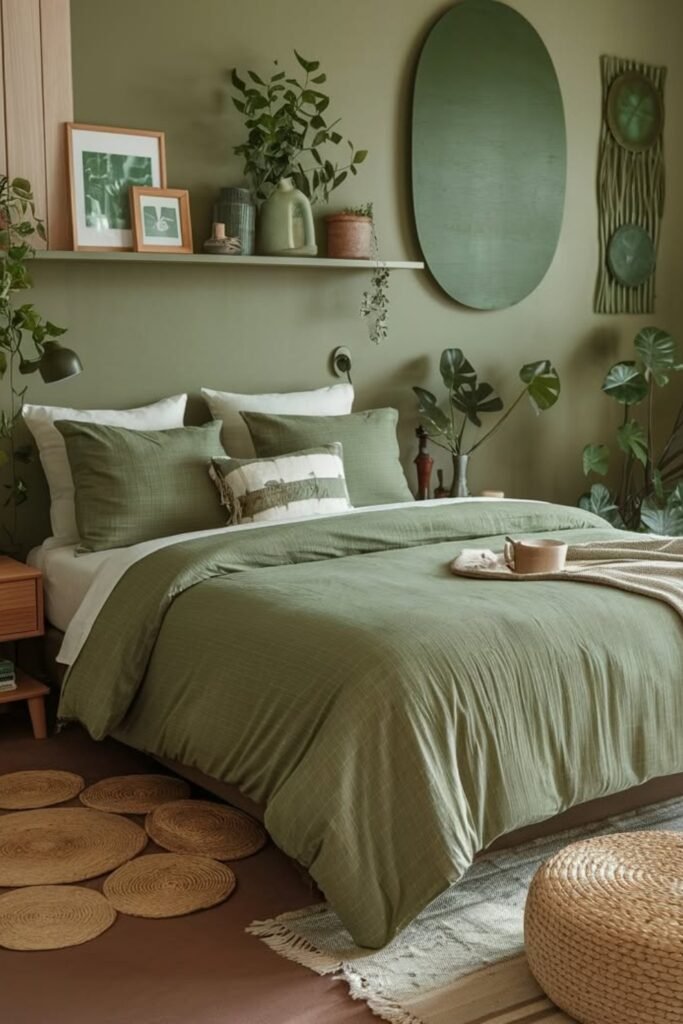
Layered green retreat
When you use sage green across your walls, bedding, and decor, you create a bedroom that feels wrapped and calm instead of like a single bold statement.
You will notice how repeating green tones feels more intentional once you soften them with woven rugs, linen bedding, and plants.
Balanced green warmth
You let the color set the mood, while wood tones and brass lighting stop the space from feeling cold or flat. This works well if you have good natural light.
You should keep the walls matte, choose simple botanical art, and repeat sage green in your bedding so everything feels connected.

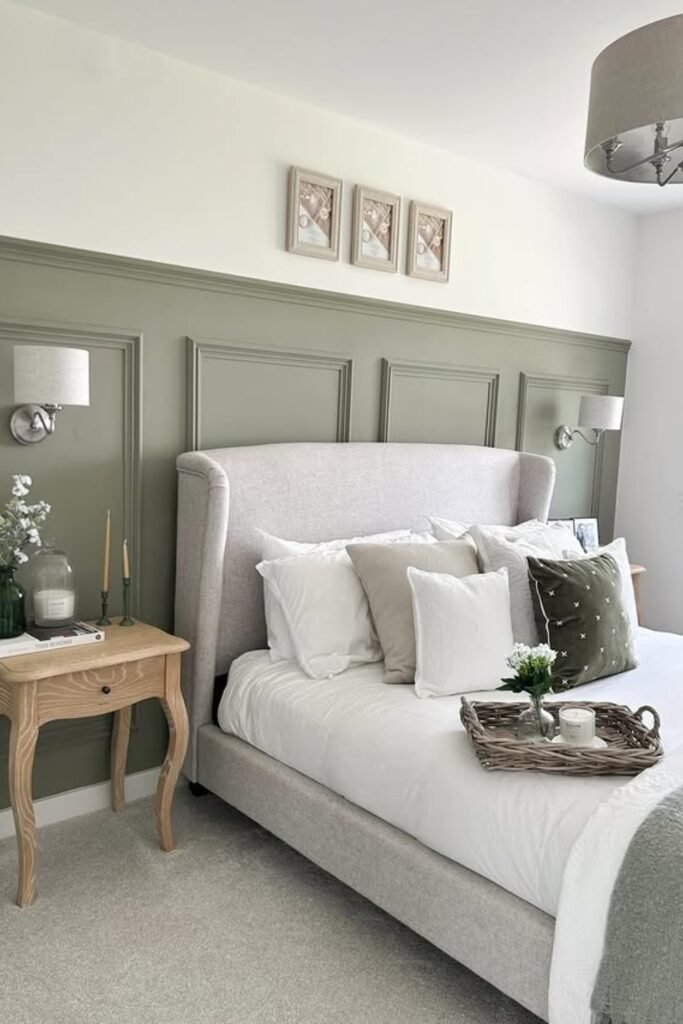
Framed sage paneling
When you frame sage green paneling halfway up the wall, you give your bedroom structure without closing it in.
You keep the space bright with a lighter upper wall, while the lower sage section grounds the bed and makes it feel intentional. This works especially well in modern or transitional homes.
Soft country balance
You should keep the green muted, choose traditional furniture shapes, and rely on patterned textiles instead of bold decor.
You let the color stay quiet while textures like gingham bedding and soft lighting bring in warmth. This works best in family homes or classic interiors.

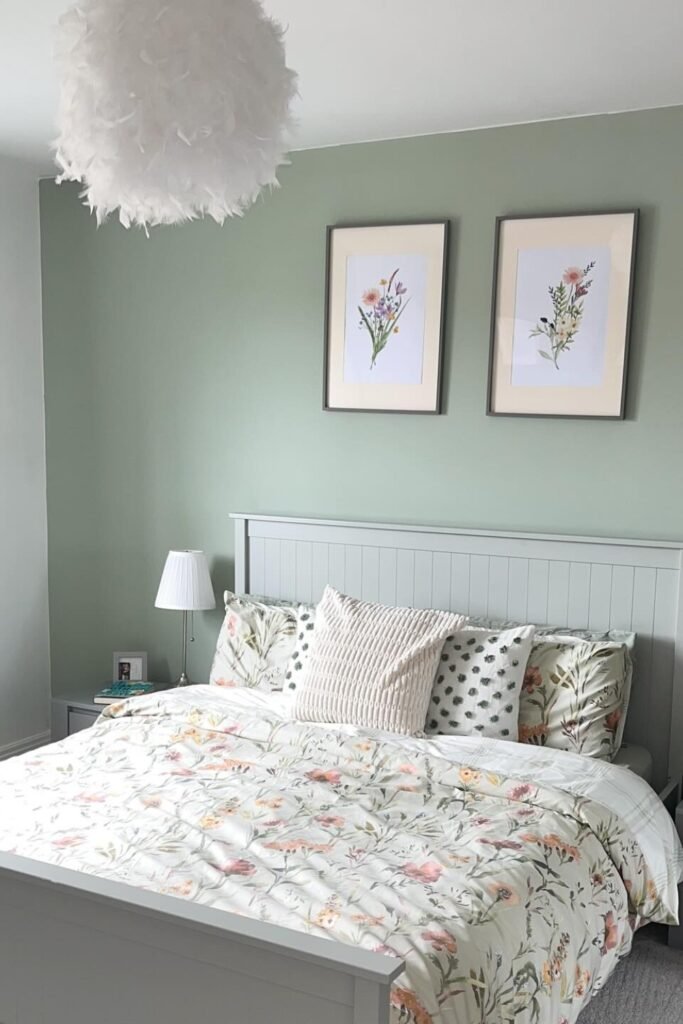
Soft floral calm
When you use sage green on the walls, you give floral bedding room to breathe instead of compete.
You will notice the color keeps patterns from feeling busy and helps the room stay calm, even with prints in play.
Sloped ceiling calm
When you use sage green in a bedroom with angled ceilings, you soften sharp lines and help the space feel more settled.
You let the color wrap the room without drawing attention to the slope, while warm wood beams and neutral bedding keep things grounded.

Earthy boho depth
You will see how woven wall hangings, plants, and layered textiles soften the darker green and make the room feel cozy and grounded.
You can keep your palette tight, use handmade textures, and balance the depth of green with plenty of natural light.

Light sage backdrop
A light sage green panelled wall gives your bedroom color without stealing attention from the bed.
It works especially well when you want the space to feel calm, clean, and slightly warm at the same time.
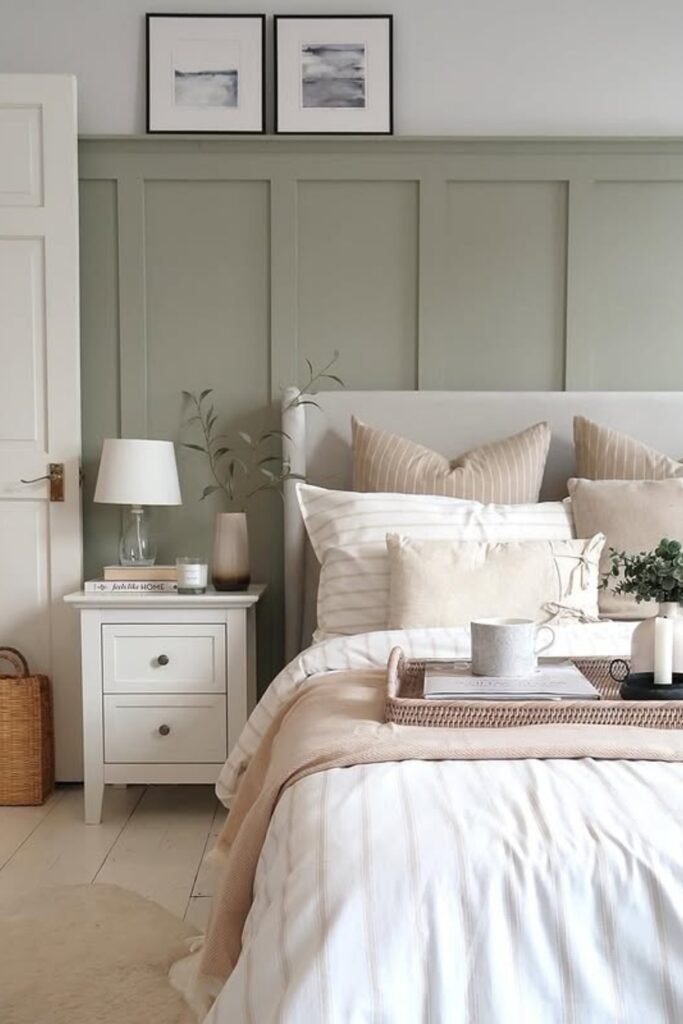
Gentle half contrast
When you paint sage green on the lower half of your wall, you give your bedroom color without ever feeling overwhelmed.
You will notice the lighter upper wall keeps the space open, while the green grounds your bed and makes it feel intentional.
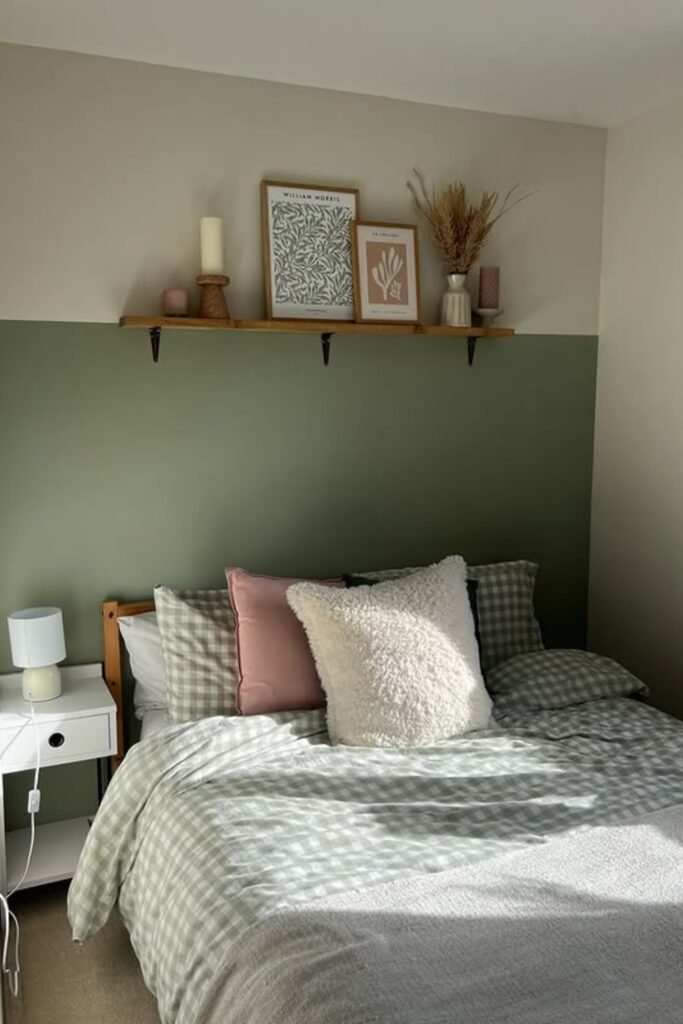
Gallery wall focus
You let the color pull together different frame sizes and prints so your bed stays grounded even with art above it.
You should keep your art palette soft, space frames evenly, and repeat sage green in your bedding so the wall and bed feel like one complete, harmonious setup.

Sculpted sage arch
When you place a sage green arch behind your bed, you instantly turn the wall into architecture rather than just decoration.
You will notice the curved shape softens the room, while the textured finish adds depth without needing bold color everywhere.

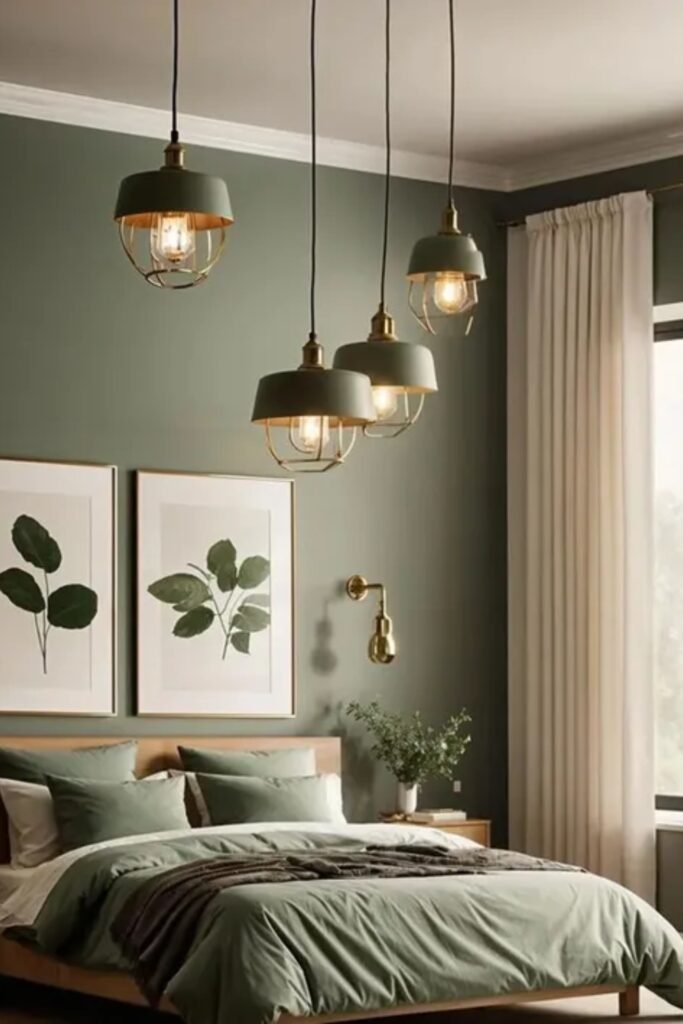
Mood lighting harmony
You can let warm pendant lights soften it, especially in the evening, so it doesn’t lean grey. This works best if your bedroom’s lighting is part of the overall design.
To recreate it, you should choose warm bulbs, keep curtains light, and let sage green wrap the walls so the glow feels even, soothing, and calm.
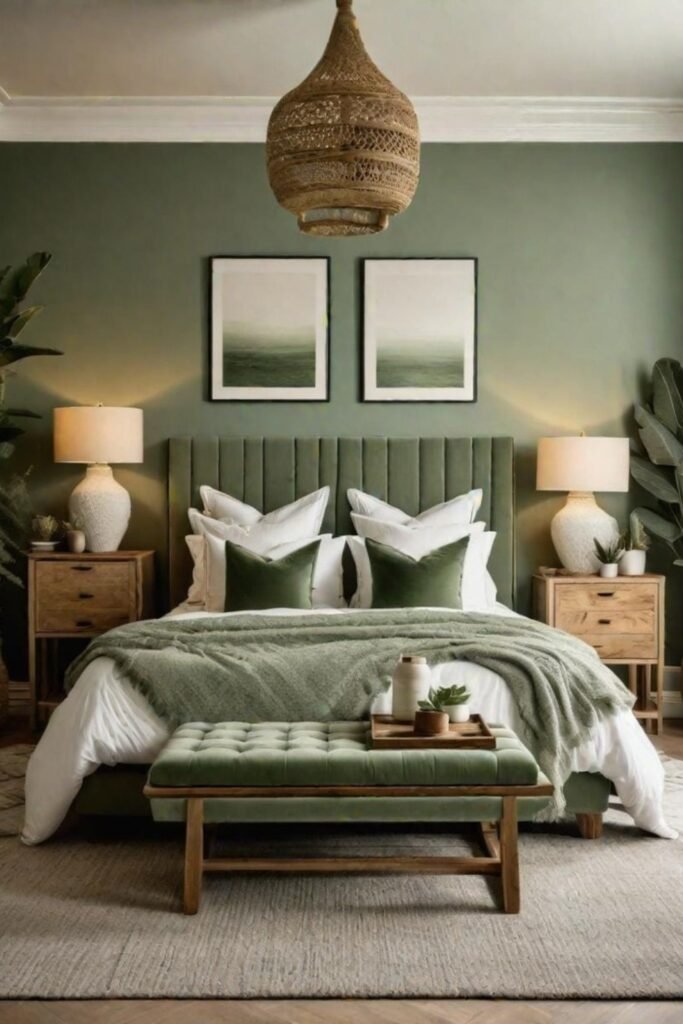
Symmetry with warmth
When you place sage green behind your bed in a symmetrical layout, you’ll see how the color quietly balances the room.
You let matching lamps, side tables, and artwork do the rest of the work, making your space feel settled instead of stiff.
FAQs
Is sage green good for a bedroom?
Sage green works so well in bedrooms because when you use it, you get a calm, restful feeling without ever making the room feel cold.
You will notice how it helps your space feel relaxing at night while still looking fresh and inviting during the day.
Since it sits right between green and gray, you don’t have to worry about it overwhelming your room, even if you cover large walls or place it behind your bed.
What colors go best with sage green in a bedroom?
Sage green pairs beautifully with warm whites, soft creams, light wood, and muted neutrals.
You will see how these tones keep your room balanced and stop the green from looking flat or dull.
You can also bring in small touches of black, brass, or earthy textures to give your space extra depth, all while keeping the calm, relaxed vibe you want.
You may like to read!
